Abstract
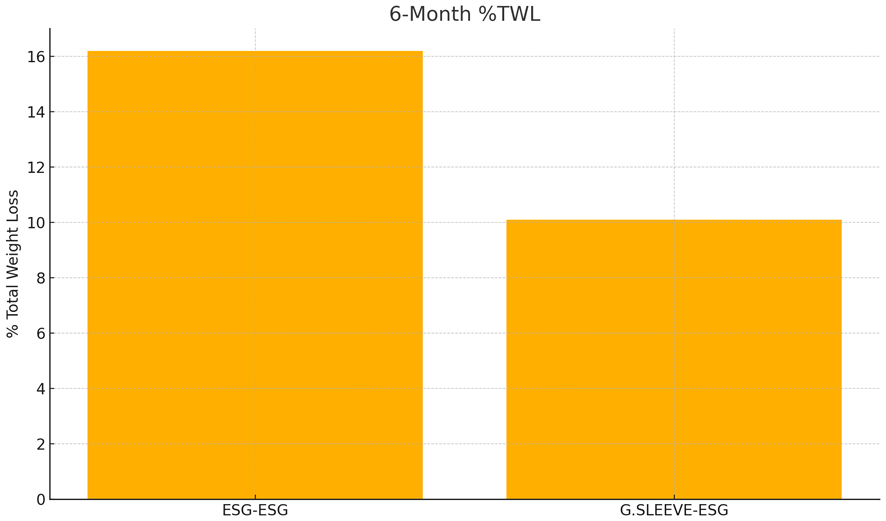
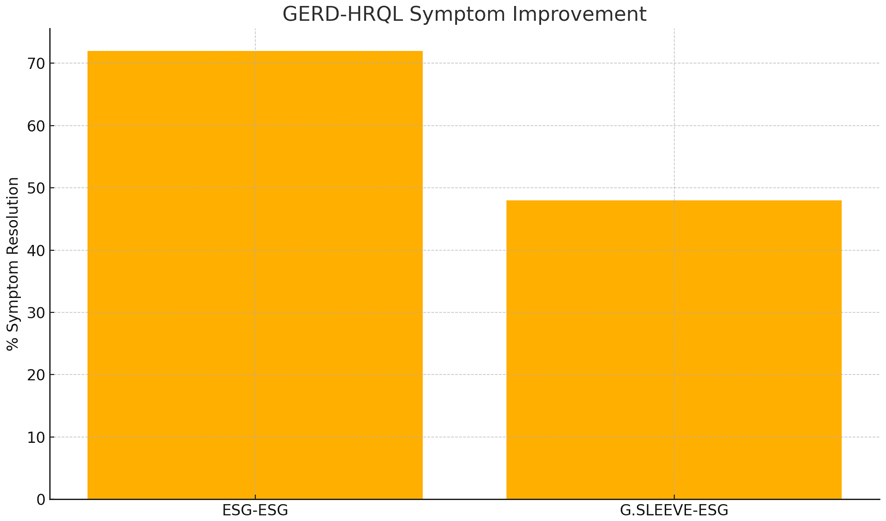
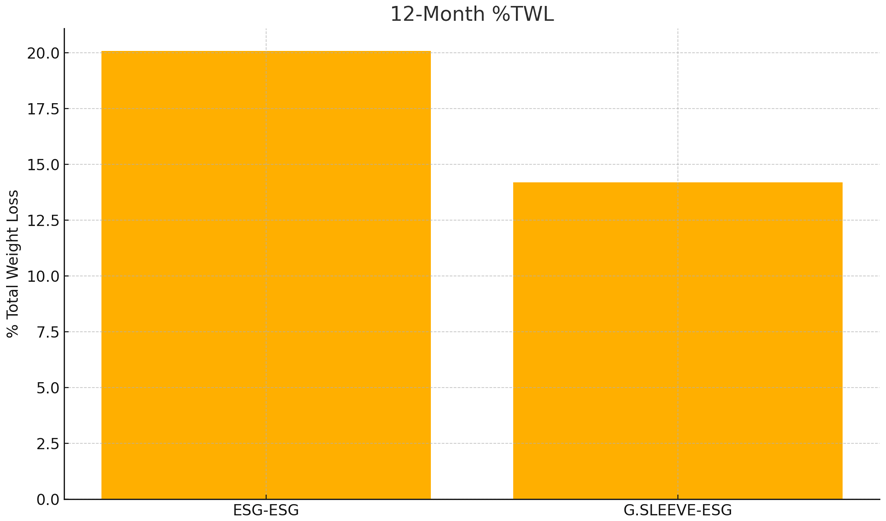
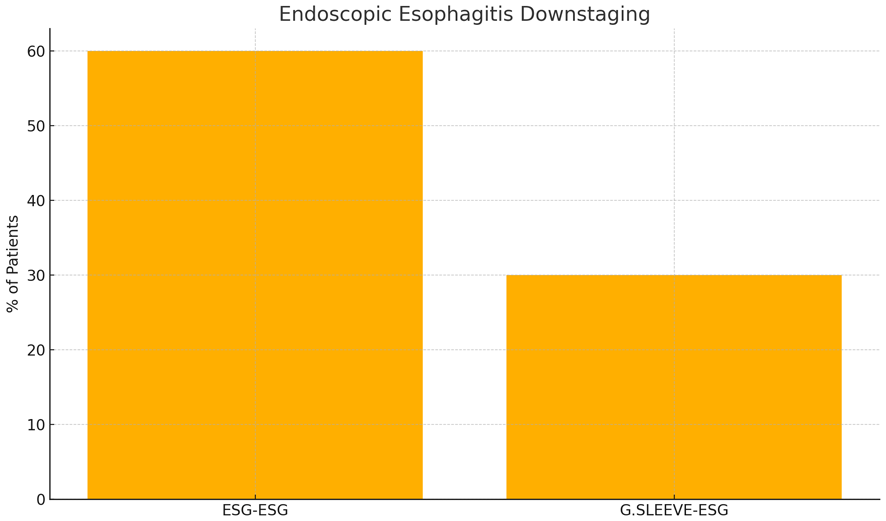
Revisional endoscopic sleeve gastroplasty (ESG) has emerged as a minimally invasive option for patients with weight regain after bariatric surgery. However, there is limited comparative data evaluating outcomes of revisional ESG following previous ESG versus laparoscopic sleeve gastrectomy. This study aimed to assess weight loss, GERD improvement, and safety at 12 months using a randomized controlled trial design. Fifty patients with BMI 30–45 kg/m2 and ≥8–10% weight regain were enrolled and randomized 1:1 to undergo revisional ESG after prior ESG (ESG-ESG) or sleeve gastrectomy (G.SLEEVE-ESG). All procedures were performed using the OverStitch™ system with a standardized U-shaped suture pattern. Primary outcome was percent total body weight loss (%TWL) at 6 and 12 months. Secondary outcomes included GERD-HRQL improvement, endoscopic esophagitis staging (Los Angeles classification), procedural safety, and duration. At 12 months, ESG-ESG patients achieved greater mean %TWL compared to G.SLEEVE-ESG (20.1% vs. 14.2%, p=0.02). GERD-HRQL scores improved in both groups, with higher resolution in ESG-ESG (72% vs. 48%, p=0.04). Endoscopic follow-up showed esophagitis downstaging in 60% of ESG-ESG cases. No major complications occurred. Mild, self-limiting nausea and epigastric discomfort were more frequent in ESG-ESG. Mean procedure time was 24 minutes. Revisional ESG is a safe and effective treatment following both ESG and sleeve gastrectomy. Patients undergoing ESG-ESG achieved significantly better weight loss and GERD symptom improvement at 12 months. These findings support ESG-ESG as a highly effective revisional strategy. Further long-term studies are ongoing.