







Abstract
The project, ‘Body of Hands’, explores how human hands, when paired with mundane, everyday objects and captured in black and white, can convey emotional, narrative and cultural meaning. Presented as a photo essay back in 2015 for my master’s photography specialisation, this work steers away from convention by isolating hands and objects, without focusing on faces and backgrounds, to challenge how feelings and stories are communicated. Each photograph is intentionally ambiguous, carrying both universal cultural associations and personal, subjective interpretation. From a tightly clenched cigarette to a gently held origami swan, these associations function as powerful multimodal signs where gesture and materiality narrate a story. The practice highlights technical choices, DIY low-key lighting, a monochrome aesthetic, and tactile attention, while also reflecting on the meaning of material loss: the printed photo essay booklet, the sole surviving object after digital images were lost. Through critical reflection and photograph-led analysis, this work sheds light on the unique expressive capacity of hands and objects when paired together, representing their significance in multimodal and non-verbal storytelling.
Introduction
Materiality and loss: The booklet of photographs as artefact
This reflection begins with what remains of the project rather than with the photographs themselves. Only a single printed booklet survived (see Figure 1), as all the digital files of Body of Hands were lost in a hard drive malfunction. The booklet, marked by signs of wear, now stands as the only material record of my work, and its continued presence changes the way I approach this collection today. This booklet represents what Banks (2001) describes as a photograph’s dual role, not only as an image but as a tactile, material artefact, a point that resonates with Sontag’s (1977) reflections on the physical and cultural presence of photographs. The booklet’s tactile qualities, its paper, creases, and tears, encourage an engagement that is both visual and material. The visible marks of wear, made clearer after digital scanning, add another layer of time and texture. These traces tell stories that digital images might not. In a sense, the project is defined by both absence and survival, suggesting that artistic practice is shaped by creation as well as by loss. Cover page of ‘body of hands’ booklet.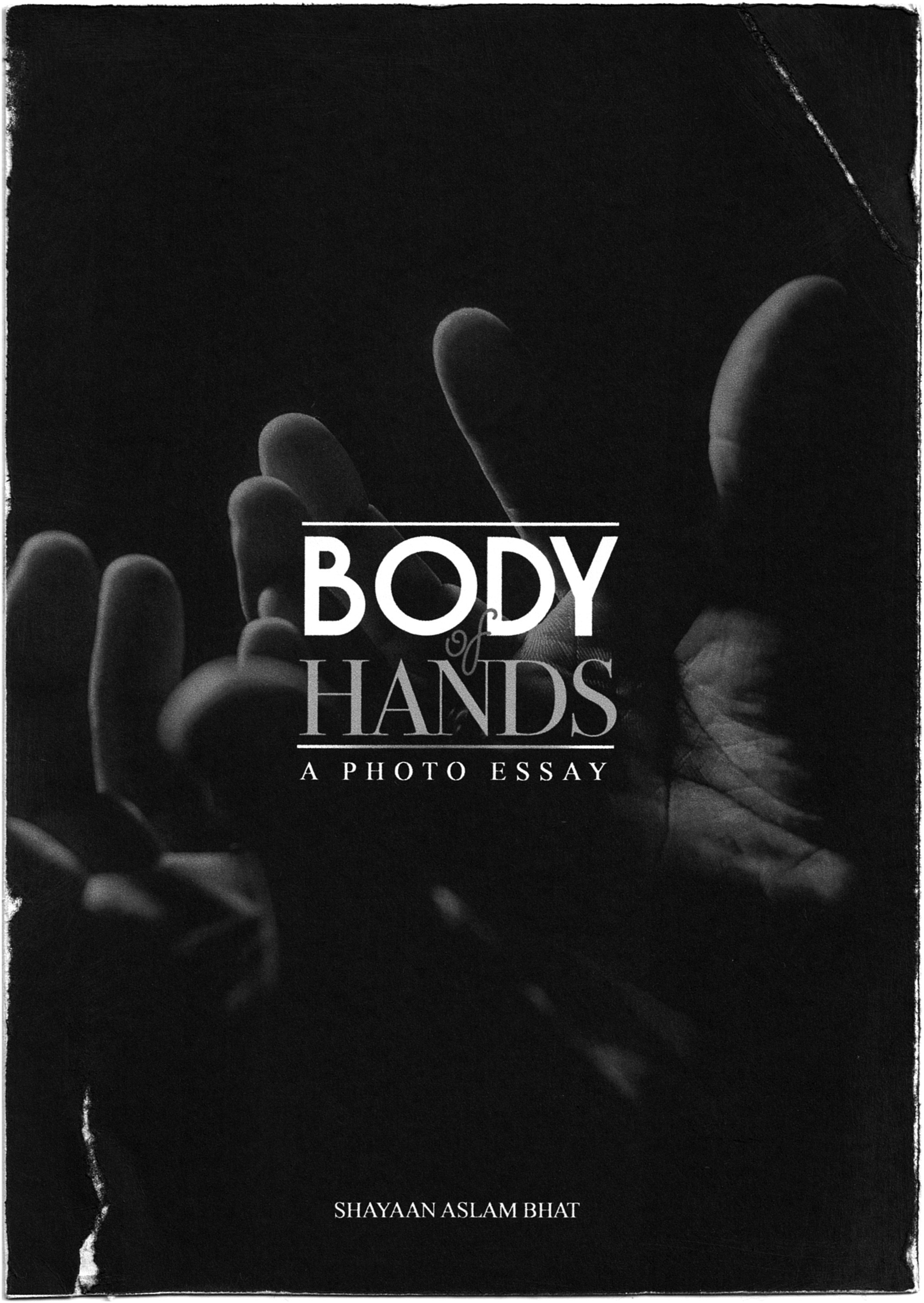
I came across this booklet while clearing out a cardboard box full of belongings from my college years. After spending years away from photography while focusing on music and video direction, I chose to share this rediscovered piece of work to remind myself that some things are worth keeping.
Hands and objects: Form, touch, and multimodal expression
During my master’s degree, one of my main subjects was photography. We were given a semester-end exercise to present a photo essay, no text, just a series of photographs telling a story. While most students captured portraits or cityscapes, I decided to take an unexpected path: by focusing mainly on human hands and day-to-day objects. The question was, how much could be expressed without faces, words, or contextual hints. Drawing on Kress and Van Leeuwen’s (2001) concept of multimodality, hands can work across several modes at once, by shaping and expressing meaning through their movement, morphology, and interaction. When carefully paired with objects, hands can signify layers of affect and ambiguity.
There is precedent for approaching the body in this manner. John Coplans’ A Body of Work: Self-Portraits (1987) isolates parts of the body, such as hands, feet, rear and torso, presenting the photographs detached from the whole figure. By removing surrounding context, Coplans illustrated how fragments can convey presence, vulnerability and narrative (Coplans, 1987). This work is the closest precedent to Body of Hands, as both projects highlight how isolating body parts generates meaning. While Coplans’ work emphasised the traces of ageing by photographing his own body, my project pursued the expressive potential of hands in relation to objects. Though I was unaware of Coplans’ work when creating the photo booklet, the title and thematic resonance are noticeable. While Coplans set the fragments of his body against white backgrounds to highlight surface detail, I used black backgrounds to put focus on the interaction of hands and objects through shadow and contrast, with both projects framed through black-and-white photography.
The monochrome (black-and-white) aesthetic was equally deliberate. Without the distraction of colours, I sought to draw attention towards form, shadow, and texture, elements essential to visual storytelling. Each photograph in this photo essay was captured using a basic set-up, relying on hands, a construction flood light, and personal objects, inviting myself and the viewers to “read” the story in form, contrast and composition. Through these photographs, I hoped “to say a lot without saying something,” allowing gesture and material to act as primary sources of multimodal communication.
Smoking as surrender: Gesture as social, gesture as personal
As shown in Figure 2, both hands are wrapped firmly around a cigarette, reflecting a dual meaning. Universally, it depicts addiction, risk, and recklessness; personally, to someone, it might suggest struggle, comfort or compulsion. Barthes (1964: 158) distinguishes between denotation (literal meaning) and connotation (cultural and personal meaning); here, both are at play. While on the surface, it might just seem like a smoker holding a cigarette, the gesture and texture of the hands, the monochrome aesthetic and the composition infer a deeper narrative of years of compulsion and submission to the addiction. Hands holding a cigarette, photographed by Shayaan Aslam Bhat.
Black-and-white aesthetic directs the attention to contrast, form and texture. This makes the photograph both accusatory and vulnerable, inviting the viewers to see and read simultaneously.
Creativity and creation: Hands with a swan origami
Origami, the act of folding paper, is a practice of patience, creativity and transformation. In Figure 3, cupped hands cradle a delicate swan origami. The swan carries multiple meanings across cultures: spiritual wisdom in Indian traditions, purity and love in Europe, transformation in Celtic myth and loyalty in East Asian symbolism. Here, the shape is created simply by folding paper. For some, it might not be more than just origami; for others, it has carried symbolic weight for centuries. A swan origami in cupped hands, photographed by Shayaan Aslam Bhat.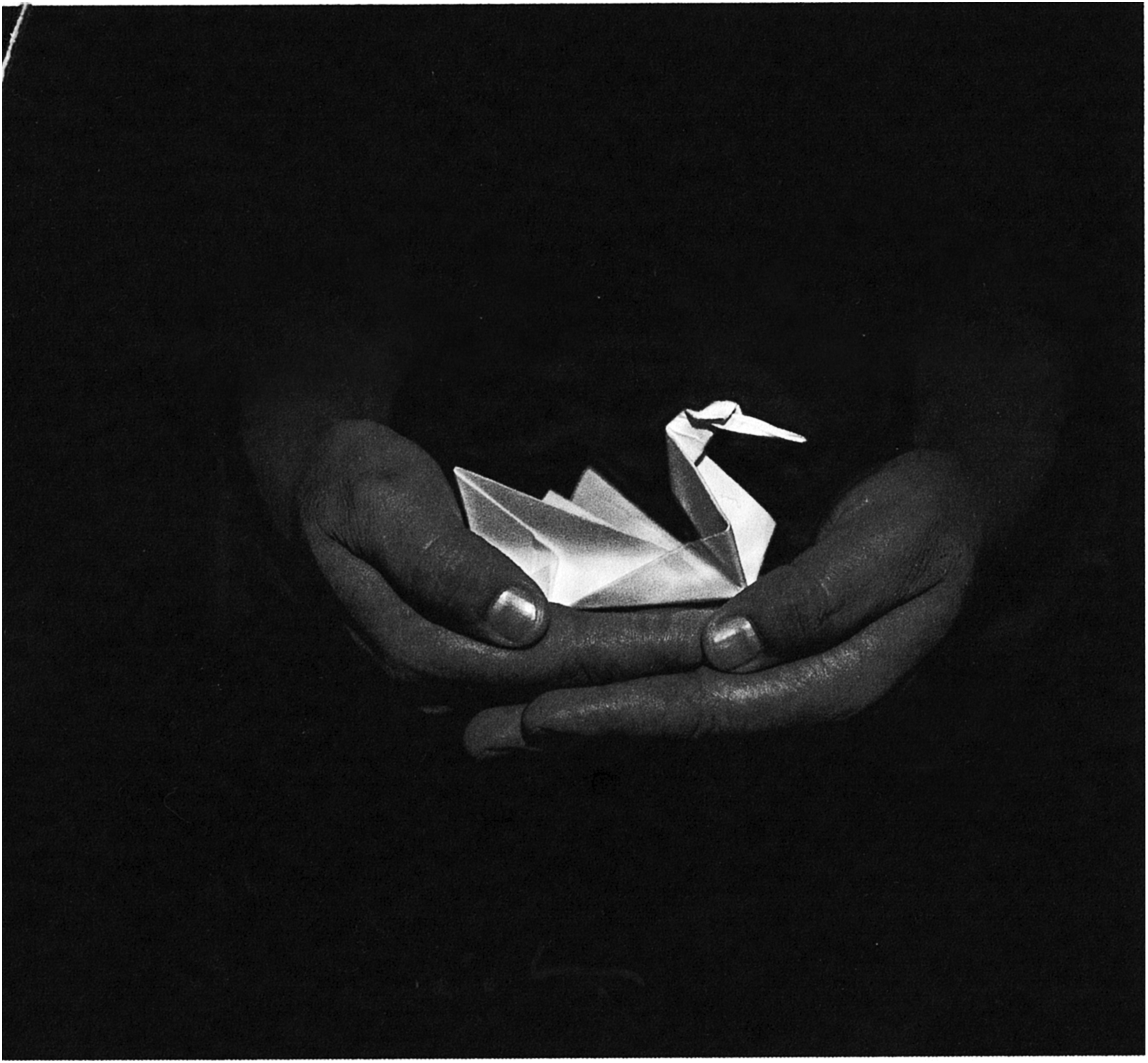
The creative process of origami relies on precision without cutting or glueing, much like the photograph itself, which suggests how meaning is shaped by detailed gestures, repetition and care. The hands are not only its protectors but also its creators, highlighting art’s significance in turning ordinary (paper) into extraordinary (origami swan).
The photograph displays itself as a visual poem narrating a story of creating and holding, reminding us that the symbols walk across cultures and contexts, holding both universal meanings and personal interpretations.
Provisional acts: Hands, scissors and the uncertain cut
In Figure 4, scissors embody ambiguity. Held with both hands, they represent the potential to shape, sever or threaten. In this photograph, the grip is firm, with the scissors and hands in sharp focus, and a dark, indistinct background. The gesture becomes a point of tension. Are these hands ready to cut something? Or do they suggest the start of creation, the making of something new? The two-handed grip might seem threatening to some, but for me it recalls cutting of ribbons at inaugural ceremonies, an act that marks new beginnings. Hands holding scissors, photographed by Shayaan Aslam Bhat.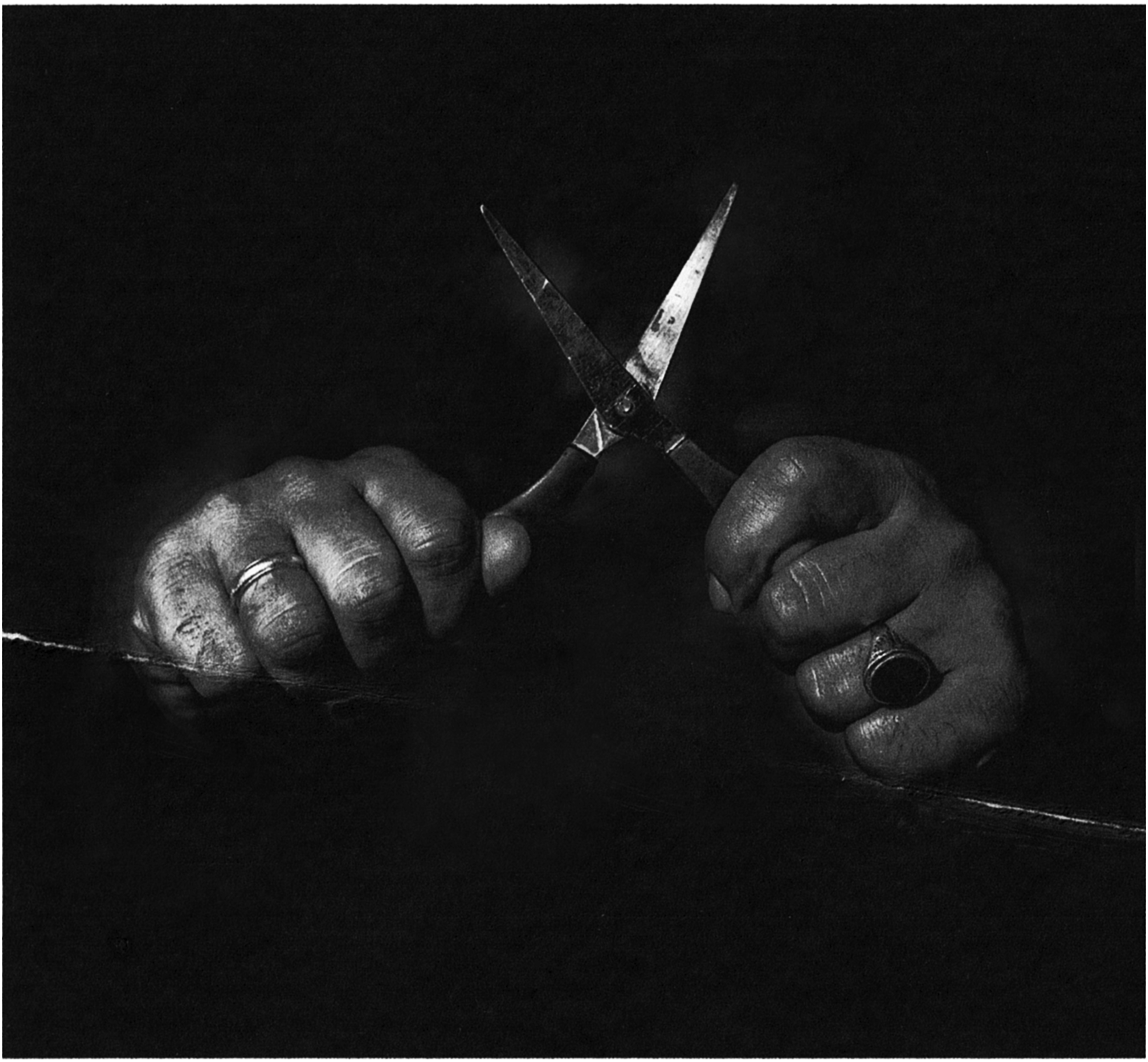
The technical choices of using a fast shutter speed, floodlight, and asymmetric composition heighten this sense of uncertainty and show how material processes can mirror emotional states. Every element in the photograph feels provisional, as if the story could turn with any possible movement of the hands.
Rituals of faith: Holding, grasping, doubt
As seen in Figure 5, both hands are tightly interlocked, holding prayer beads, making faith visible as both anchor and unpredictability. The grip is not tender but distressed, highlighting only the fingers and prayer beads while the hands dissolve into darkness. Along with gesture and object, negative space also plays a vital role in meaning-making. It isolates the hands and the prayer beads, just as a person is isolated in getting closer to or away from God. As Rose (2016: 38) notes, “the formal arrangement of elements of a picture will dictate how an image is seen by its audiences.” In this photograph, the viewer is given a choice to interpret the tension between holding on and letting go. Hands interlocked with prayer beads, photographed by Shayaan Aslam Bhat.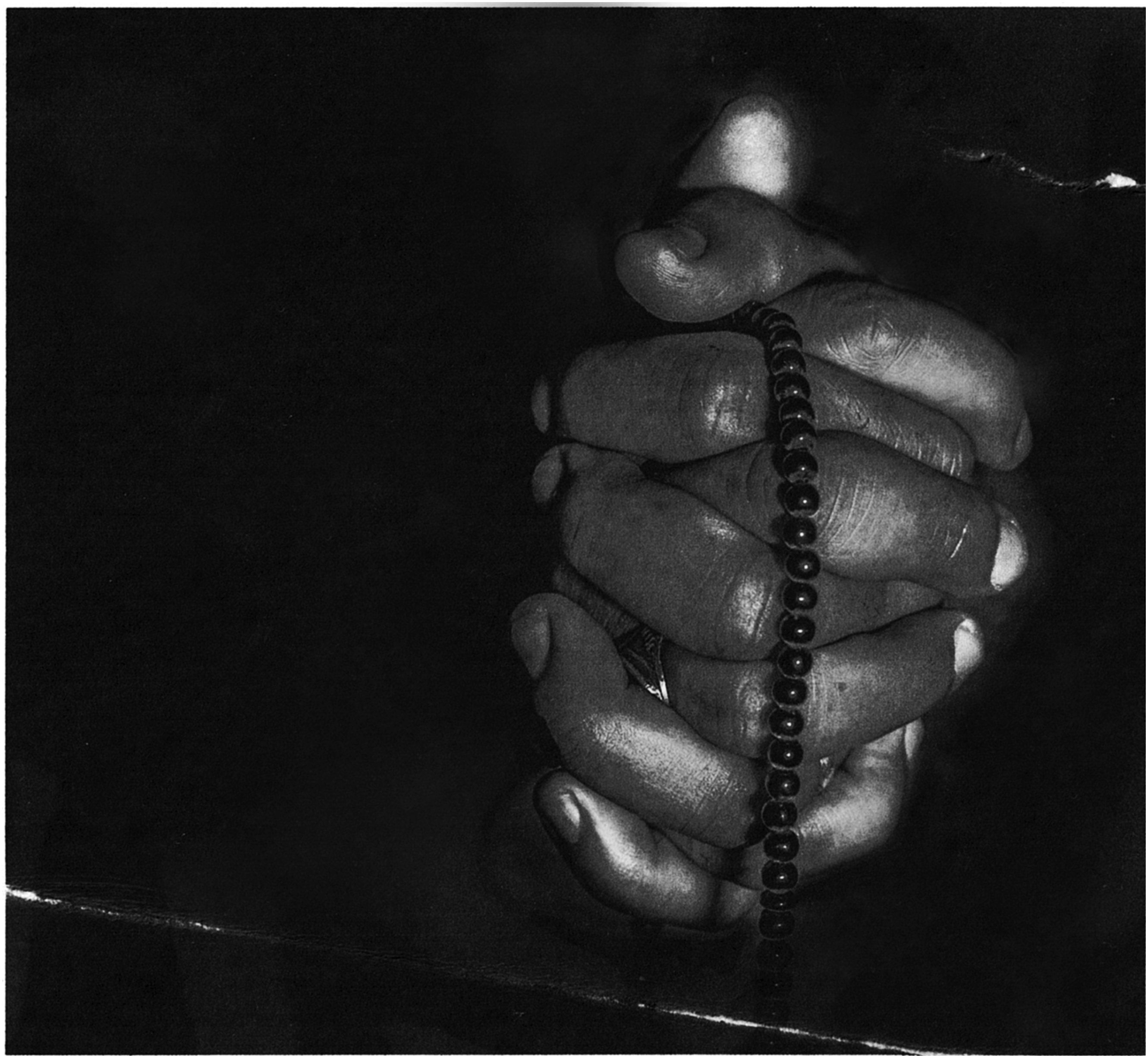
The ambiguity is deliberate. The absence of facial features or clothed body shifts the belief from a personal to universal struggle, resonating with anyone oscillating between conviction and doubt.
Hurt and healing: Hands as archives of trauma
Figure 6 presents a bruised fist wrapped with a bandage, portraying both hurt and healing and giving the photograph a dual message: vulnerability and resilience reflecting from a single image. As Banks (2001) notes, visual methods can foreground the ‘embodied marks’ of lived experience, making material traces like marks, scars, and injuries become visual testimony to narratives of struggle and endurance. Hand wrapped with a bandage, photographed by Shayaan Aslam Bhat.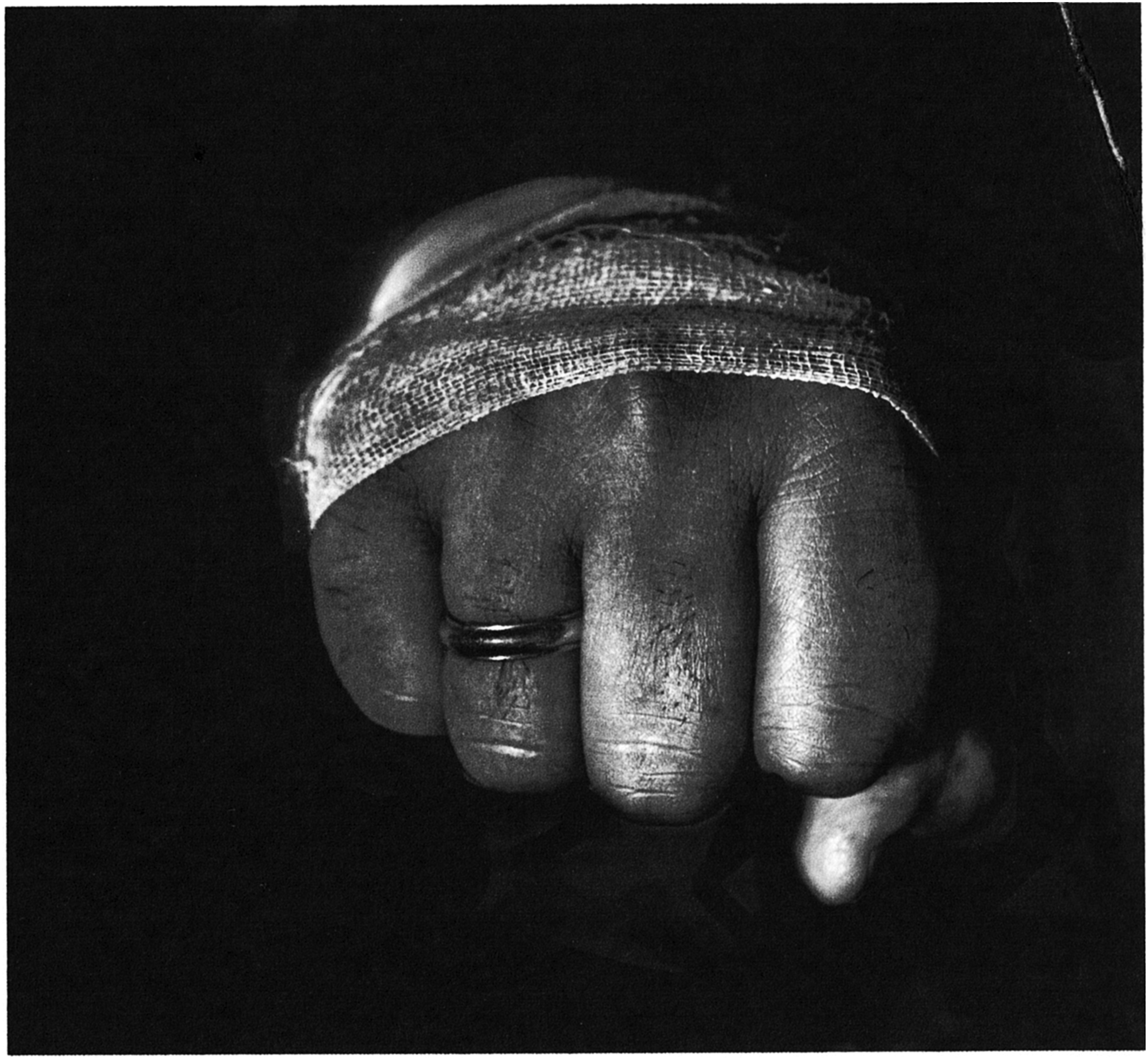
Some may interpret this as aggression or violence, but revisiting this photograph led me to a deeper reflection: those who inflict pain are often themselves wounded. The black-and-white aesthetic, the off-centre composition and sharp focus on the knuckles expose the paradox of life itself, where the trauma one endures becomes the trauma one inflicts, sustaining a continuous cycle.
Entwined boundaries: Love, restraint, and connection
In Figure 7, on the left, two different hands are interlocked, creating a spiral that acts as a metaphor for love’s intimacy, dependence and perpetuity. While on the right, barbed wire cuts through the frame, suggesting that love, while knowing no bounds, can just easily create boundaries in the form of limits set in the name of care and decisions taken with relation to one another. Two hands locked in a spiral beside barbed wire, photographed by Shayaan Aslam Bhat.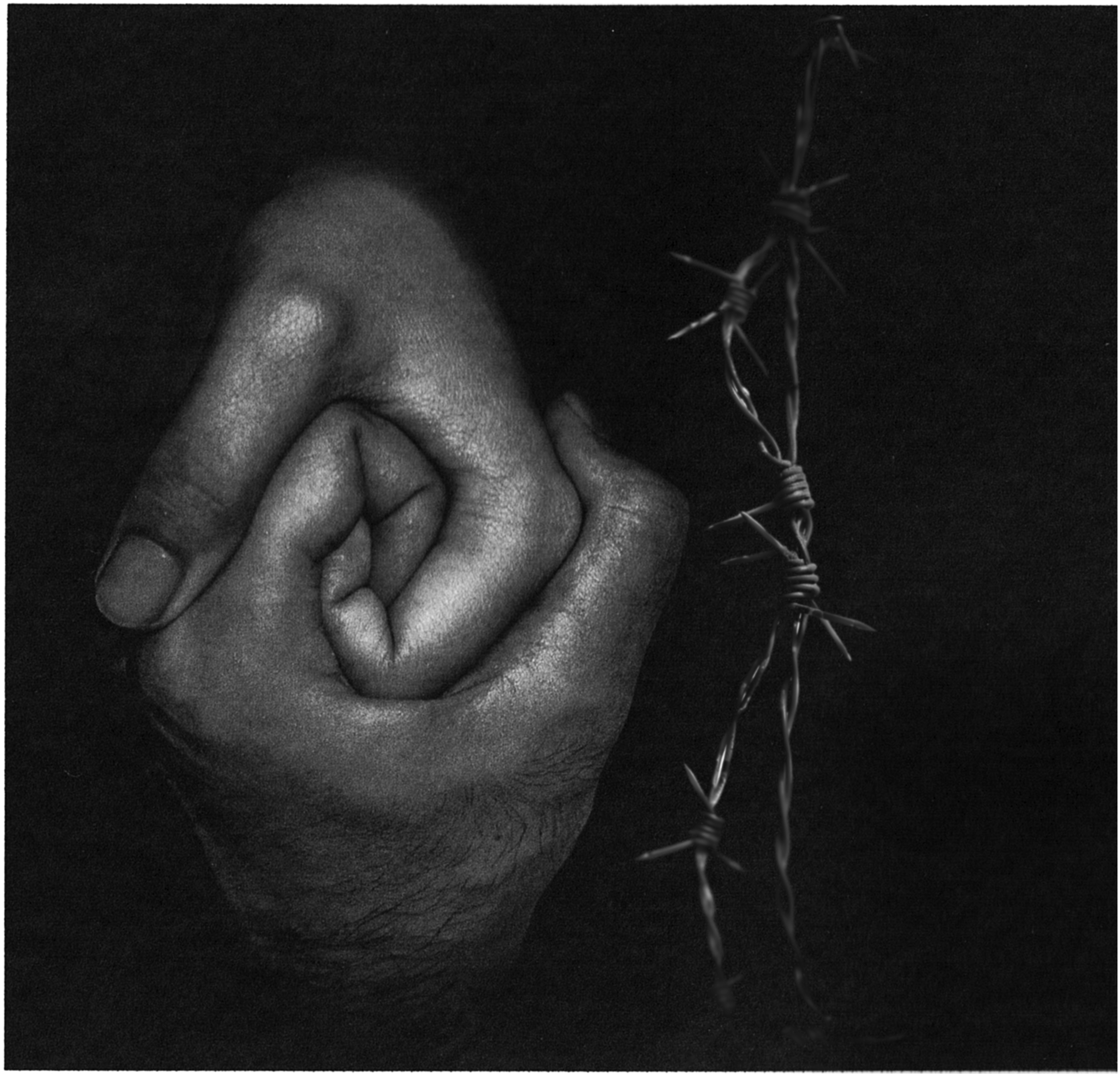
As Pink (2013) reminds us, tactile and embodied images evoke an effect in ways that exceed language. In this photograph, the juxtaposition of skin and metal, one delicate, the other sharp, highlights how the gesture of proximity can also enclose, showing both care and constraint together.
The caption “Entwined Boundaries” shapes how the photograph is interpreted. Whereas the photograph alone might suggest either tenderness or threat, the caption guides an interpretation in which intimacy and restriction coexist. The caption directs interpretation yet keeps the ambiguity open, illustrating how text and image work together as a multimodal act. In this way, this photograph, like others in the series, converges linguistic, visual and gestural modes to shape narrative possibilities.
Reflections and looking forward
Body of Hands strengthened my awareness of ambiguity, empathy and the active role of viewers in shaping meaning. Building on Kress’s (2010) concept of multimodality, this project demonstrates that meaning in visual practice is not one-dimensional, but arises from the interaction of multiple modes. In this case, through the interaction of gesture, object, material, text, space and interpretation. The printed booklet of photographs also reminded me how the ‘physical nature’ of objects can shape reception, involving sight, touch and imagination, which I believe the digital files can not. The signs of wear became especially visible after digitally scanning these photographs, adding yet another temporal layer to their meaning.
Each photograph invited interpretation not only through sight, but also through the felt presence of the hand gestures and objects, highlighting that multimodal communication is more than just combining media. It is about the dynamic interaction between visual, gestural and material modes.
Working with constraints, such as repurposed props and make-shift lighting, and the loss of all digital files, revealed that limitation can stimulate creativity rather than restrict it. Imperfections became productive, with marks of wear and tear opening up new meanings. The photographed hands, though motionless, suggest movement, tension, or warmth, indicating that gesture survives within the static frame as embodied memory.
If I revisit this concept in the future, I would include a wider range of hands to expand the narrative and enrich multimodal dialogue. For practitioners, this emphasises the importance of valuing non-verbal communication, embracing imperfection, and realising that creative opportunities can emerge from constraint and material scarcity.
Finally, this project demonstrates how photography focused on hands and objects can pave the way for layered, multimodal storytelling, inviting viewers to connect through emotion, memory and embodied experience.
Footnotes
Acknowledgements
I would like to thank Nausheen Khan for helping me with the setup for this project. Also, thanking Amin Chaudhary and Nausheen Khan for acting as hand models for the photographs.

Funding
The authors received no financial support for the research, authorship, and/or publication of this article.
Declaration of conflicting interests
The authors declared no potential conflicts of interest with respect to the research, authorship, and/or publication of this article.
Data Availability Statement
This study is based on my own photographs. No datasets were generated or analysed during the study.