






Abstract
Academic environments heavily restrict movement and sensory exploration. However, researchers in multiple disciplines have challenged this instructional norm, showing the role of bodily action in developing concepts (embodied learning in the learning sciences) and of sensory experiences in regulating affect (sensory regulation and sensory seeking in occupational therapy/psychology). Drawing on embodiment theory, I problematize the intersection of these two perspectives to propose an integrative framework for inclusive pedagogical design that fosters bodily action as both sensory/affective and embodied/conceptual, centering the somatic senses: sensory-adaptive embodied design (SA-ED). I present findings from a task-based interview study with sensory-neurodiverse children exploring a proof-of-concept SA-ED: Balance Graphing. Balance Graphing invites bodily movement, specifically rocking on balance boards, as means of both exploration of math concepts through dynamic graphing activities, and of dynamic sensory regulation through flexible-intensity activation of the vestibular sensory modality. Findings suggest that SA-ED can (1) allow children to adapt stimulation to their sensory needs, (2) legitimize and amplify movement as a meaningful dimension of thinking and communication.
Keywords
Introduction
10-year-old student Ellie sits in a stiff plastic chair, under the hum of overhead lights. Lunch is still an hour away. She tilts her chair back onto its rear legs; the feeling wakes her up. “Stop that,” her teacher admonishes.
Classroom sensory experiences and norms shape learning opportunities for students like Ellie. These norms reflect the cultural assumption that certain sensory channels—vision and audition—are epistemically relevant (Abrahamson et al., 2019), whereas others— proprioception (body-in-space), vestibular function (balance, rotation, and acceleration), tactility, and interoception (internal signals such as respiration), which I will refer to as the somatic senses—are irrelevant distractions: commonly backgrounded, circumscribed, and minimally stimulated. The somatic senses strongly impact affective experience (Rodriguez and Kross, 2023), and are epistemically central for some learner populations, such as many blind and neurodivergent people.
Emerging theoretical perspectives on the role of movement (Varela et al., 1991) and affect (Storbeck and Clore, 2008) in cognitive activity problematize the neglect of the somatic senses in the study of learning, and the assumed effectiveness of limited and standardized somatic engagement for fair inclusion of all children.
In response, drawing into dialogue work on bodily movement as central to sensory regulation and to embodied learning, I propose a new pedagogical approach to systematically integrate the somatic senses into educational experiences: sensory-adaptive embodied design (SA-ED). This study tests SA-ED assumptions through a study exploring a proof-of-concept SA-ED: Balance Graphing (Figure 1), tested with sensory-neurodiverse children ages 5-13. Results analyze how children engaged the vestibular sense for affective (sensory regulation) and epistemic (embodied cognition) functions during mathematical explorations. Informed by this exploration, I conclude with design principles and preliminary implications for sensory-informed pedagogy. Balance graphing: Amplitude exploration activity. Note. Two children rock on sensor-equipped balance boards to generate graphs within a projected digital graphing environment (left child: upper graph, right: lower graph).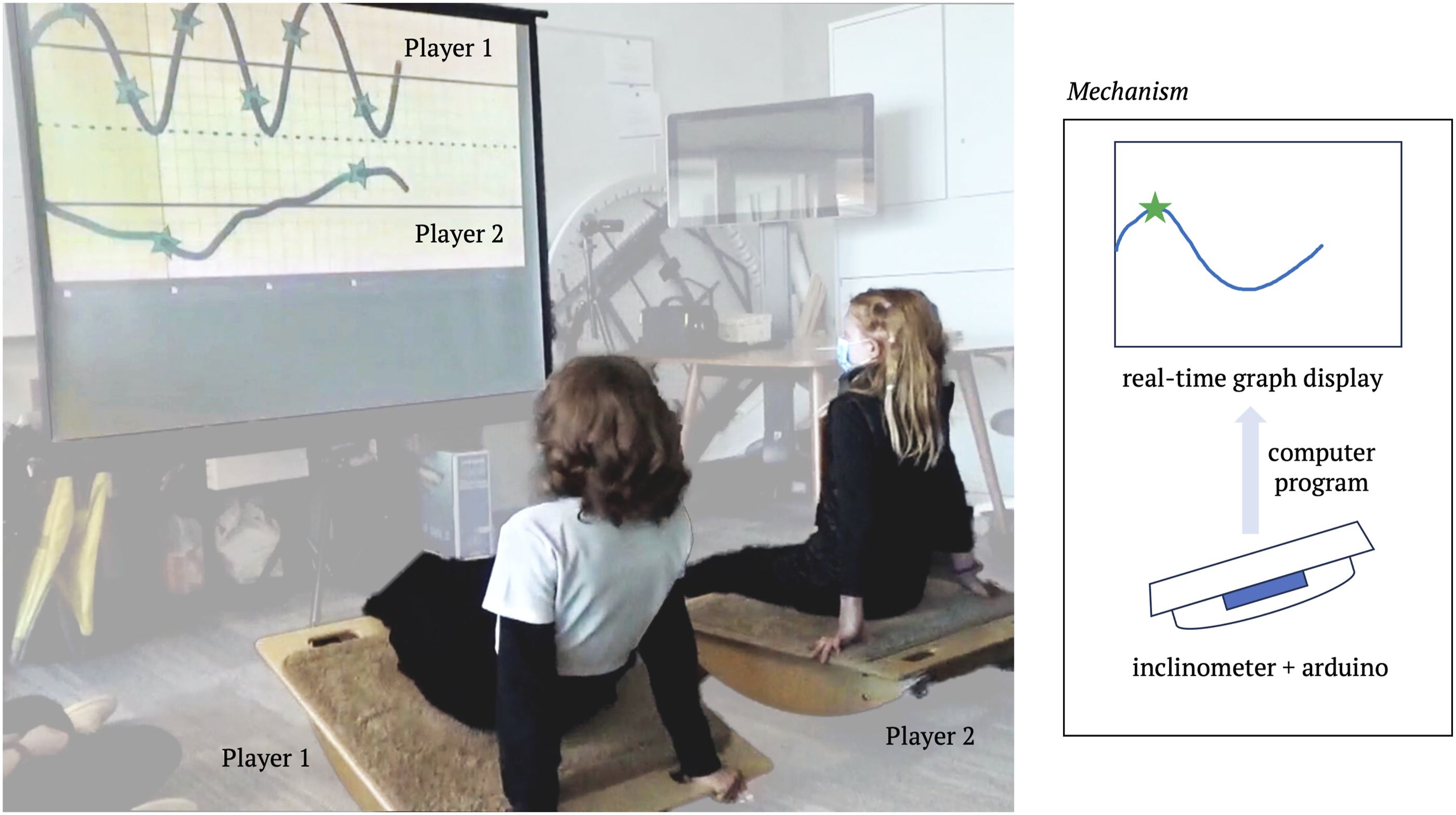
Rationale for sensory-adaptive embodied design: Sensory minoritization
Prevailing views of the senses shape opportunities for inclusion (Howes and Classen, 2014). The somatic senses are favored means of exploration for many sensorially marginalized people. For example, tactile media is widely used by blind people, and repetitive stimming bodily movements, such as bodily rocking, have been described as semiotic and exploratory within autistic phenomenology (Nolan and McBride, 2015). Thus, when educators and education researchers assume that only limited sensory activity is epistemically relevant, this assumption poses an issue of epistemic injustice (Fricker, 2007; Tancredi et al., 2022), inadvertently neglecting the resources and modes of exploration that different learners bring to bear.
The degree and consequences of learner–environment misfitting differ for learners with different bodies (Alper, 2023). One important source of such misfitting is mismatch with learners’ neurological sensitivity to sensory input (Dunn, 1997). Some individuals are neurologically tuned to seek out greater levels of sensory stimulation (Dunn, 1997; Piccardi and Gliga, 2022). The extremely limited vestibular stimulation offered by sitting still most of the day, as expected in many educational settings (Dunn et al., 2012; Miller Kuhaneck and Kelleher, 2015), may be feasible for many children, but stifling for others. Sensory seeking actions eliciting greater stimulation, such as Ellie’s rocking, are one way to bridge the gap. Such sensory seeking can support cognition: for example, fidgeting movements facilitate working memory performance for children with ADHD (Sarver et al., 2015).
I propose that we consider variation in neurological sensitivity to sensory input as an axis of neurodiversity (Bertilsdotter Rosqvist et al., 2020): human neurological variation that deserves recognition, acceptance, and accommodation. Such a view recontextualizes findings that sensory profile predicts mental health (Dean et al., 2018), and academic performance (Ashburner et al., 2008) as consequences of sensory minoritization engendered by extant norms and environments.
Given sensory neurodiversity, and the relationship between sensory profile and thriving, one must reimagine sensory norms of instruction to meet diverse sensory needs. Special education categories are imperfect tools towards such a goal in that two identically-labelled children may have opposite sensory profiles (Tomchek et al., 2018). What is needed, then, is not specialized sensory experiences for specific populations, but rather an instructional approach capable of accommodating the range of sensory profiles across general and special education populations. We need instruction that can flex to offer different intensities and types of stimulation: instruction that is sensory-adaptive. To envision this, a first step is to mobilize and integrate theories concerning the body and learning.
Theorizing the learning body: Embodied cognition and sensory regulation
To understand the impact of sensory experience on learners, a first step is to clarify the relationships among sensation, perception, and cognition in learning contexts. These are modeled differently in research on embodied learning and on sensory regulation; I examine each perspective considering the other.
Sensory regulation
Sensory regulation is the process by which sensation shapes the nervous system’s capacity for adaptive physiological responses through affect regulation (Ayres, 1974; Dunn, 1997). Sensory experiences, such as sensory seeking, impact arousal (Dahl Reeves, 2001), which, in turn, mobilizes neuronal and physiological resources to support task-appropriate alertness and to organize adaptive behavior (Schaaf and Miller, 2005). Sensory regulation heavily involves the somatic senses (Lane et al., 2019): for example, bodily rocking modulates alertness (Byrne and Horowitz, 1981) through impacts on brainstem and cortisol activity (Sailesh et al., 2018). Sensory opportunities and preclusions within learning contexts are always impacting the neural, physiological, and affective resources available to learners.
Embodied cognition
Cognitive science’s embodiment turn highlights the role of movement and interaction in cognition (Shapiro, 2014). Key theoretical tenets include that (1) cognition is enacted, such that cognitive structures arise from repeated patterns of perceptually-guided activity (Varela et al., 1991), and (2) that cognition is a complex dynamical system, embedded within and open to the environment (Thelen and Smith, 1994). In the embodiment view, perception, action, and bodily interactions with the environment are centrally constitutive of math cognition and learning (Abrahamson and Sánchez-García, 2016; Alibali and Nathan, 2012; Hall and Nemirovsky, 2012; Lakoff and Nuñez, 2000).
Embodied cognition perspectives dialogue with several strands of multimodality research regarding perception and discourse. Ecological psychology illuminates the specific role of bodily sensation and action systems (modalities) in perceiving possibilities for action (Gibson, 1979), which has been applied to conceptualize learning as embodied (Abrahamson and Sánchez García, 2016). In parallel, multimodal discourse research highlights how meanings are constituted through coordination among multiple semiotic modes that engage bodily modalities in different ways, including gesture, movement, and gaze (Kress and Van Leeuwen, 2001; Mondada, 2014), bringing forth different semiotic potentials. Thus, the moving body forms a nexus of perception, action, cognition, and semiosis, constraining and constrained by modal affordances, in interaction with collective practices, tools, and technologies (Jewitt, 2008).
Domain analysis: Movement siloes
Research on sensory regulation and on embodied cognition inform distinct movement-focused tools and practices to support learners. Let us examine the possibilities and limitations of each approach from each theoretical perspective, towards a proposed integration.
Sensory interventions: Movement for regulation
School-based supports for sensorially minoritized children currently include access to sensorially-rich, regulatory “sensory diet” activities (Pingale et al., 2019; Wilbarger and Wilbarger, 2002), and/or sensory therapies (Ayres, 1974). Some receive academic accommodations, such as access to fidget toys or alternative seating on an exercise ball chair (Bundy and Lane, 2019). Given the earlier Ellie’s vestibular tilting, she might be invited to use a vestibular tool such as a wobble cushion during or between activities. Studies on such tools suggest their efficacy depends upon fit between sensory profile and tool: for example, only vestibular-seeking students responded well to therapy ball seating (Bagatell et al., 2010). Sensory interventions exemplify strategically adapting stimulation to children’s sensory profile.
Embodied design: Movement for learning
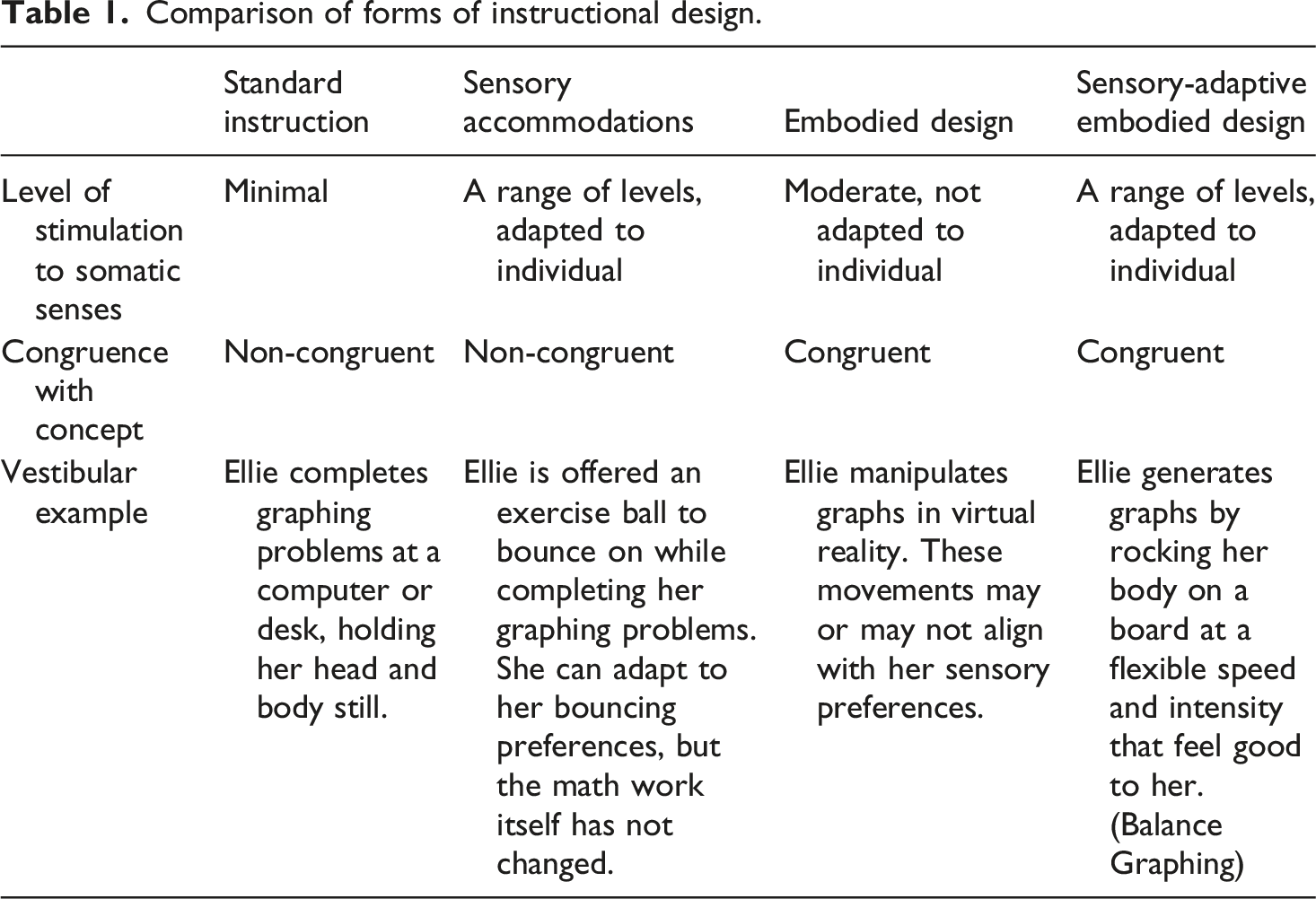
Learning scientists, inspired by embodied cognition, design to foster sensorimotor engagement as the basis for learning through embodied design (Abrahamson et al., 2020), such as by grounding math concepts in solutions to perceptuomotor coordination problems (Abrahamson, 2014; Shvarts et al., 2021). Actions within embodied design can be characterized by their congruence with concepts being learned (Johnson-Glenberg and Megowan-Romanowicz, 2017): non-congruent actions bear an arbitrary relationship to the concept; congruent actions bear structural relevance, positioning movement as a mode of mathematical meaning-making, for example, balancing one’s body to balance an equation. Within congruent action, there are different possible action–concept mappings. In teaching about graphs, for example, past designs have explored moving a button relative to a distance sensor (Nemirovsky et al., 1998), or tracing a graph’s slope in VR (Chatain et al., 2022). These designs map movement onto different aspects of graphs to foster exploration of different mathematical concepts.
Embodied designs generally involve the somatic senses more substantively than traditional instructional methods, as with large-scale gestures (Nathan and Walkington, 2017), physical constructions (Palatnik and Abrahamson, 2021), tangibles (Lambert et al., 2022), and gross-motor activity (Kelton and Ma, 2018). In particular, embodied design has been mobilized to expand instructional modalities and semiotic modes to support accessibility (Tancredi et al., 2022). Embodied designs exemplify congruent movement as the grounding for mathematical concepts.
Moving together
Embodied design emphasizes movement as a means of exploring concepts (for example, walking along a number line); sensory regulation approaches emphasize movement as a means of regulating one’s arousal state to support ongoing engagement (for example, bouncing on an exercise ball). Key features of sensory interventions include (1) engagement of the somatic senses, and (2) adaptation to learners’ specific sensory profile. The former is still uneven in embodied design at present, and the latter is unexplored; sensory intensity remains standardized within current embodied designs. Analyzing sensory solutions from an embodied cognition perspective, meanwhile, congruence is notably lacking; sensory stimulation is not aligned with focal concepts.
Comparison of forms of instructional design.
Proof-of-concept: Vestibular SA-ED for learning mathematics
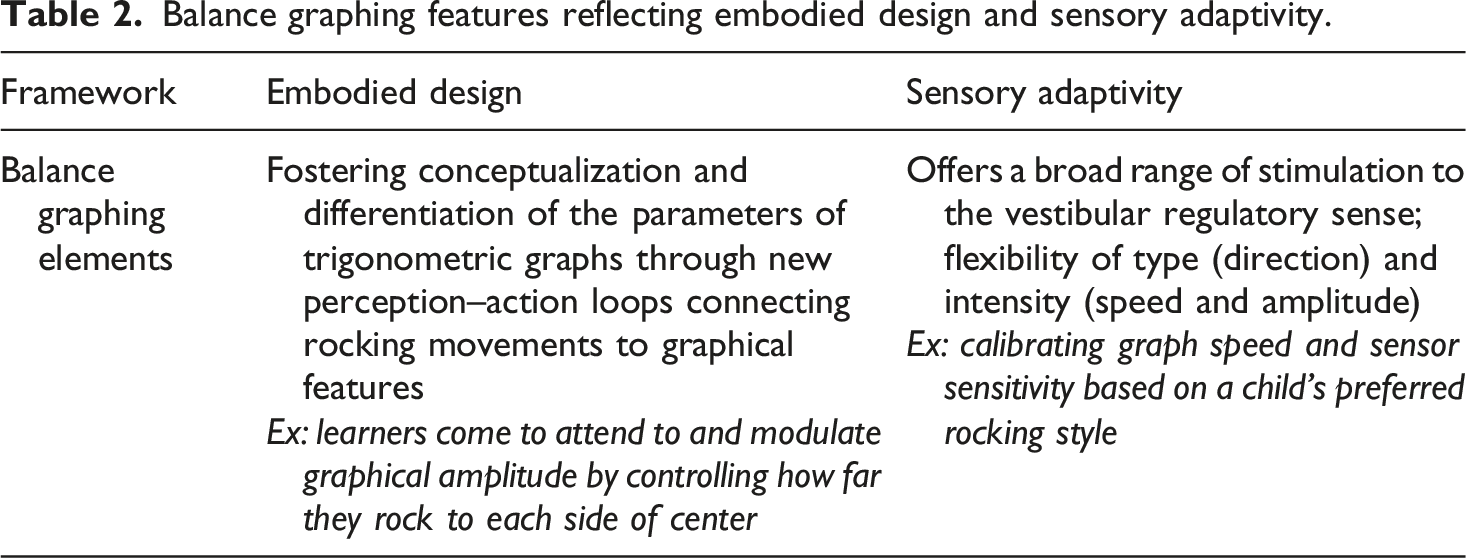
Balance Graphing (Tancredi et al., 2022) is a proof-of-concept SA-ED that investigates the possibility of making vestibular stimulation both regulatory and congruent with mathematical concepts. This design was developed within a larger design-based research (Cobb et al., 2003) project, Balance Board Math, which investigates vestibular activity as a resource for grounding mathematical concepts (Tancredi, 2024).
Design conjecture and research questions
Balance Graphing’s design conjecture is that incorporating opportunities for adaptive-intensity, congruent vestibular stimulation into math instructional tools can support learning by: (1) enabling learners’ sensory regulation through adaptive vestibular stimming; and (2) establishing vestibular explorations as epistemic actions (Table 2). To evaluate these conjectures, I examine the following research question: (1) How do children engage in vestibular-activating movement in a vestibular SA-ED environment? (a) Does vestibular sensory profile predict the intensity of vestibular stimulation children seek out? (conjecture 1) (b) What role do vestibular-activating movements such as rocking play in children’s exploration of math concepts? (conjecture 2) Balance graphing features reflecting embodied design and sensory adaptivity.
Balance Graphing design
Balance Graphing (Figure 1) is a motion-graphing embodied learning environment (Duijzer et al., 2019) explorable through bodily rocking. Learners rock seated on large balance boards, a common vestibular sensory regulation tool. Shifts in the board’s balance are detected with a sensor to generate real-time graphs within digital activity environments.
To instantiate design conjecture 2, learners ground concepts in congruent rocking actions. A set of digital graphing environments present tasks designed to foster discovery of different parameters of periodic sinusoidal functions: amplitude, period, and phase shift (i.e.,
For example, the “Amplitude Exploration” activity invites learners to try to “make green stars”: the stars appear only at a specific high amplitude. A high amplitude graph is generated by rocking far to either side of center, congruent with amplitude’s span and symmetry. In the “Frequency Exploration” activity, learners are invited to try to “make the whole screen green.” Each time they complete one period through the congruently cyclical action of rocking to each side and back to center, that graphical period turns a color, and a sound is generated expressing how close its frequency is to a target frequency. As learners tune their rocking to produce more green, they come to attend to one period as a unit and to reason about the relationship between frequency (how fast they rock) and period (how many graphical periods fit within a given timespan), differentiating these from amplitude. In these activities, movement features, such as degree of tilt and rocking speed, map onto graphical features such as amplitude and frequency, rendering movement a cognitive and semiotic resource for exploring these features and the relationships among them. The activities seek to foster new perception–action loops (Varela et al., 1991) that connect bodily action with properties of graphical inscriptions, to enculturate learners into mathematically valued ways of perceiving graphs, such as parsing one graphical period as a unit.
To generate graphs in these activities, tilting the front of the board downwards corresponds to negative y-values
1
, and upwards, positive y-values. This mapping between board and graph is inspired by findings that experts are more likely to gesture about graphs as if “being-the-graph,” riding over its surface (Gerofsky, 2011). BG activities are high-ceiling low-floor: they invite learners of all ages and prior knowledge levels to explore sinusoids. For example, in the Function Addition activity, young children might explore the result of rocking in-phase or anti-phase with each other, whereas adults may try to generate equation-specified sum functions such as
To instantiate design conjecture 1, Balance Graphing, offers users continuous availability of sensory-regulatory rocking, and flexibility to control the intensity of vestibular stimulation. Sensor sensitivity and graphing speed 2 are adjustable to each user’s comfortable rocking speed and span. Task design further enables flexibility in non-focal parameters; for example, the girls in Figure 1 rock at similar amplitudes to fulfill the task aims, but at different preferred frequencies. Learners can also select the orientation of the board 3 and use any posture. In sum, vestibular sensory stimulation is adaptable to each learner’s sensory needs and preferences.
Participants and data collection
The present study examines children’s vestibular-activating movements during semi-structured, task-based interviews. Children explored Balance Graphing activities during a single interview (18–48 minutes) individually (N = 6) or in pairs (N = 14). Interviews took place in a university lab, a cubicle at an afterschool learning center, and a mixed-use space at an alternative school 4 . Informed consent was attained from guardians, and assent from all participants. The study was approved by a university institutional review board in the western United States.
20 children in U.S. grades K–8 participated in the study (age 5–13, average grade: 4, SD: 2), including autistic (N = 3) 5 and non-autistic children. Per the parent-reported Sensory Processing Measure 2 (SPM-2) questionnaire (Glennon et al., 2017), participants showed broad sensory neurodiversity (16–99th percentile), with 5 participants’ overall sensory scores and 2 participants’ balance/motion scores in the range clinically described as “moderate to severe difficulties,” suggesting high mismatch with common sensory demands.
Video-recorded task-based interviews began with calibration of sensor sensitivity and speed to a child’s preferences. Children then produced graphs using 3–4 Balance Graphing activities, which they could try as many times as desired. For each graph produced, children were invited to share their thinking with questions including, “Did it work how you expected?” and “What could you try next time?”
My positionality in this study is that of a sensory-neurodivergent learning sciences and critical special education researcher with a background working with 5–18-year-old neurodiverse children and their instructors in afterschool learning centers.
Data analysis
Hierarchy and description of qualitative codes for rocking.
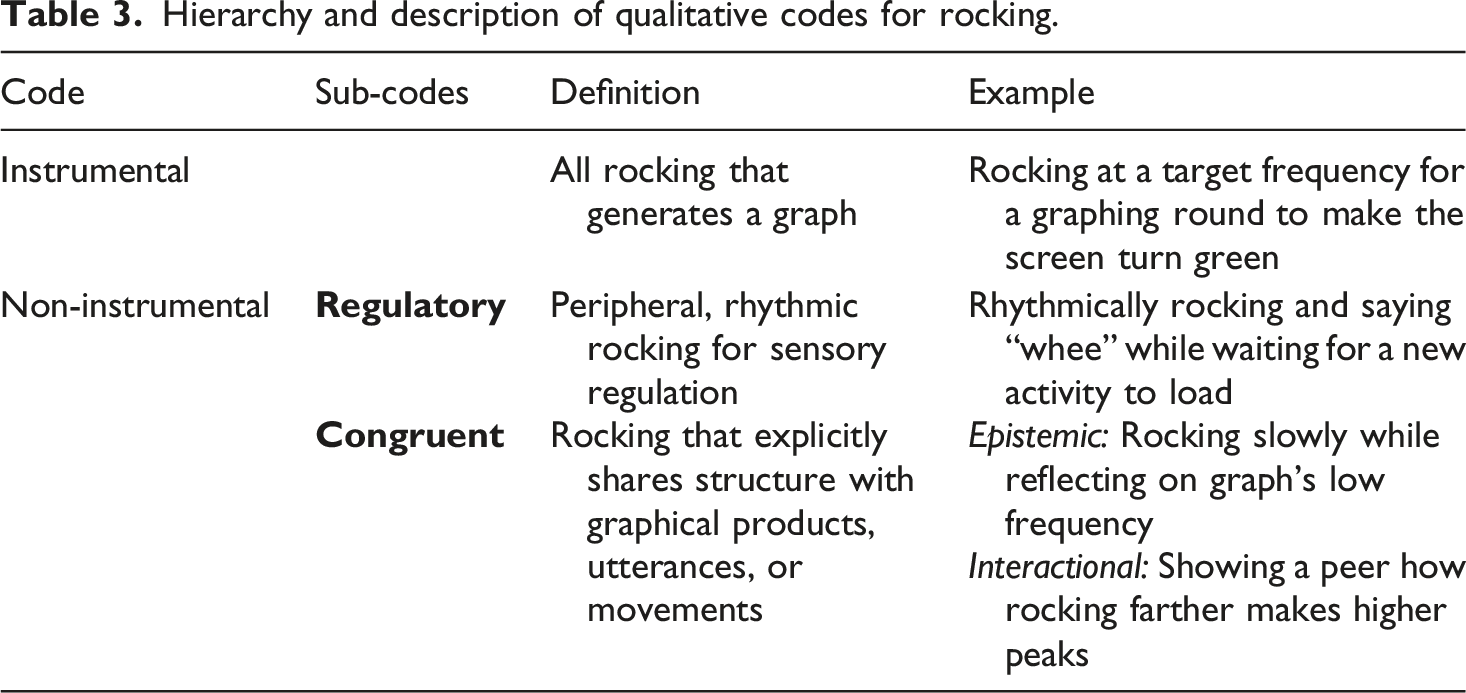
To answer RQ1a, I calculated summary statistics for the frequency of each rocking type coded above across participants. I first compared the regulatory rocking frequency of vestibular-seeking (N = 4) to non-vestibular-seeking children (N = 10). I used parental ratings of occasional or higher on the SPM-2 item, ‘this child rocks, sways, or squirms when seated” as a proxy for vestibular seeking. Next, I tested the correlation between amount of regulatory movement (as coded above) and balance-motion sensory percentile on the SPM-2.
Second, I examined the relationship between regulatory movement and balance-motion percentile, a measure of vestibular atypicality, for all learners with SPM-2 questionnaires (N = 14). I generated a scatterplot of regulatory movement against balance-motion percentile, distinguishing autistic 6 and non-autistic participants. I then tested the correlation between regulatory movement and balance-motion percentile score using a Pearson’s correlation test for all students, and for all non-autistic students 7 .
To check if age could be a confounding factor in analyzing sensory profile, I checked for a correlation between grade and balance-motion percentile (r (12) = −0.28, p = 0.32) and between grade and percent of time regulatory rocking (r (12) = −0.15, p = 0.60), and did not find any statistically significant correlation.
Results
All participants were able to use balance boards to generate graphs, discovering and controlling focal parameters of the graphs they generated. I will first overview how learners rocked (RQ1a), then analyze how rocking functioned for learners (RQ1b).
Overview of rocking
Learners engaged in iterative rounds of instrumental rocking to generate graphs, often requesting to try another round to test or refine an idea. Learners spent an average of 22% of the interview (range: 3-35%, median: 21%) engaged in instrumental rocking. All children also exercised the vestibular stimulation affordance of the board through unprompted, intermittent NI rocking during reflection, discussion, and transitions (average: 31% of the time, range: 2–60%) (Figure 2). An average of 7% of NI rocking was explicitly congruent with ideas being explored or discussed (range: 0–22%). On average, learners tended to spend about a fifth of the time rocking to generate graphs, about half the time not rocking at all, and about a third of the time rocking in spontaneous ways. These findings show both the ubiquity and the variety in children’s movement in an environment that can accommodate it. Density plot of codes for an example participant. Note. The y-axis on this image is time (31 minutes). Surrounding intermittent rounds of instrumental rocking to generate graphs, this highly vestibular-seeking learner exhibited varied-length NI rocking bouts, including clusters of rocking congruent with movement and graphical features being discussed.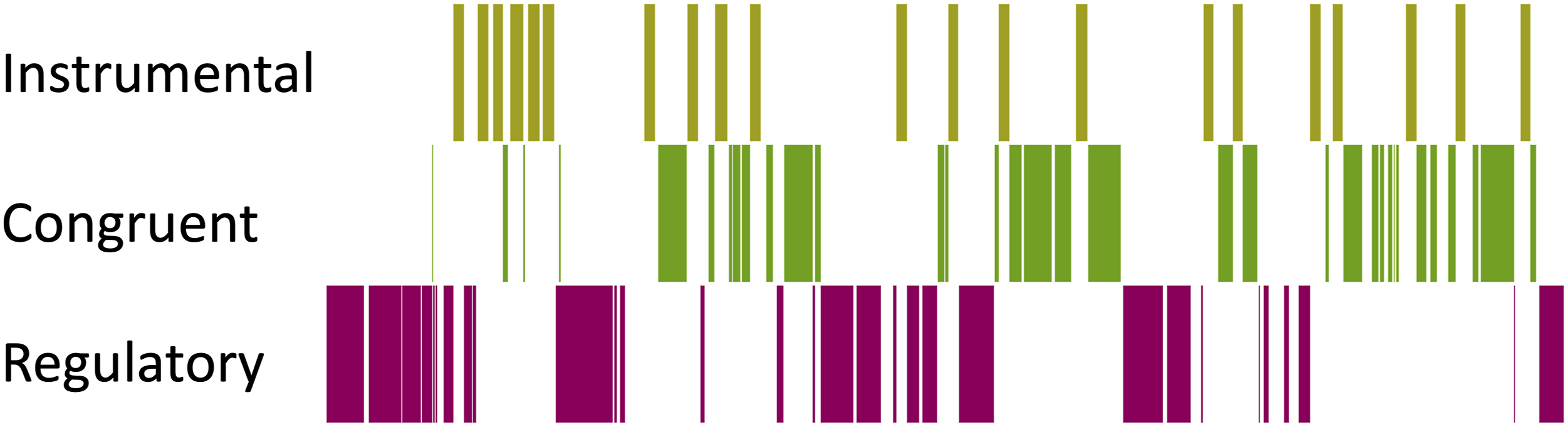
Postural variation and rocking styles
Children leveraged the sensory flexibility of the Balance Graphing design to rock in different orientations that provided different types of vestibular stimulation (front-to-back or left-to-right), and at widely different speeds and amplitudes (from subtle tilts to rocking all the way to the bumpers) (Figure 3). Children also used different rocking postures, providing different types of proprioceptive feedback (cross-legged, legs extended, kneeling, or prone) and stabilization methods (gripping different parts of the board: handles, sides of the board, front of board, or no grip). Examples of participants’ varied rocking postures and styles.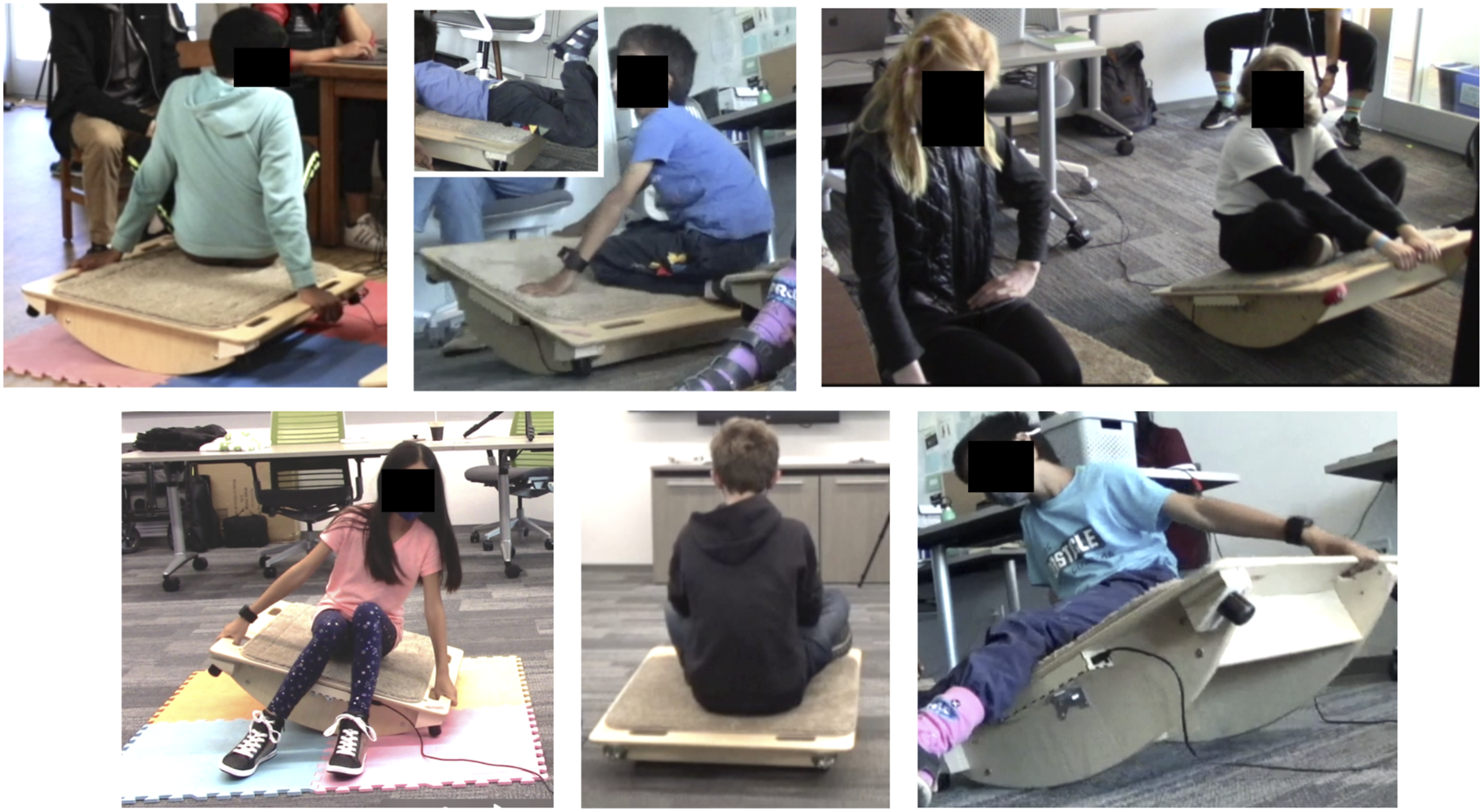
Relationship between rocking and sensory profile (RQ1a)
Vestibular seekers engaged in more frequent NI rocking (median: 41%, SD 22) than non-seekers (median: 25%, SD: 15). Additionally, NI rocking frequency strongly correlated with SPM-2 balance-motion percentile among non-autistic participants (r (9) = 0.74, p < 0.01, 95% CI: [0.24, 0.93]). Time engaged in NI movement increased as balance-motion percentile increased (Figure 4). Scatterplot of percent time regulatory rocking versus balance-motion percentile. Note. Autistic participants are shown with non-filled circles, and non-autistic participants are shown with filled circles. The best-fit line for non-autistic participants is shown with the solid line.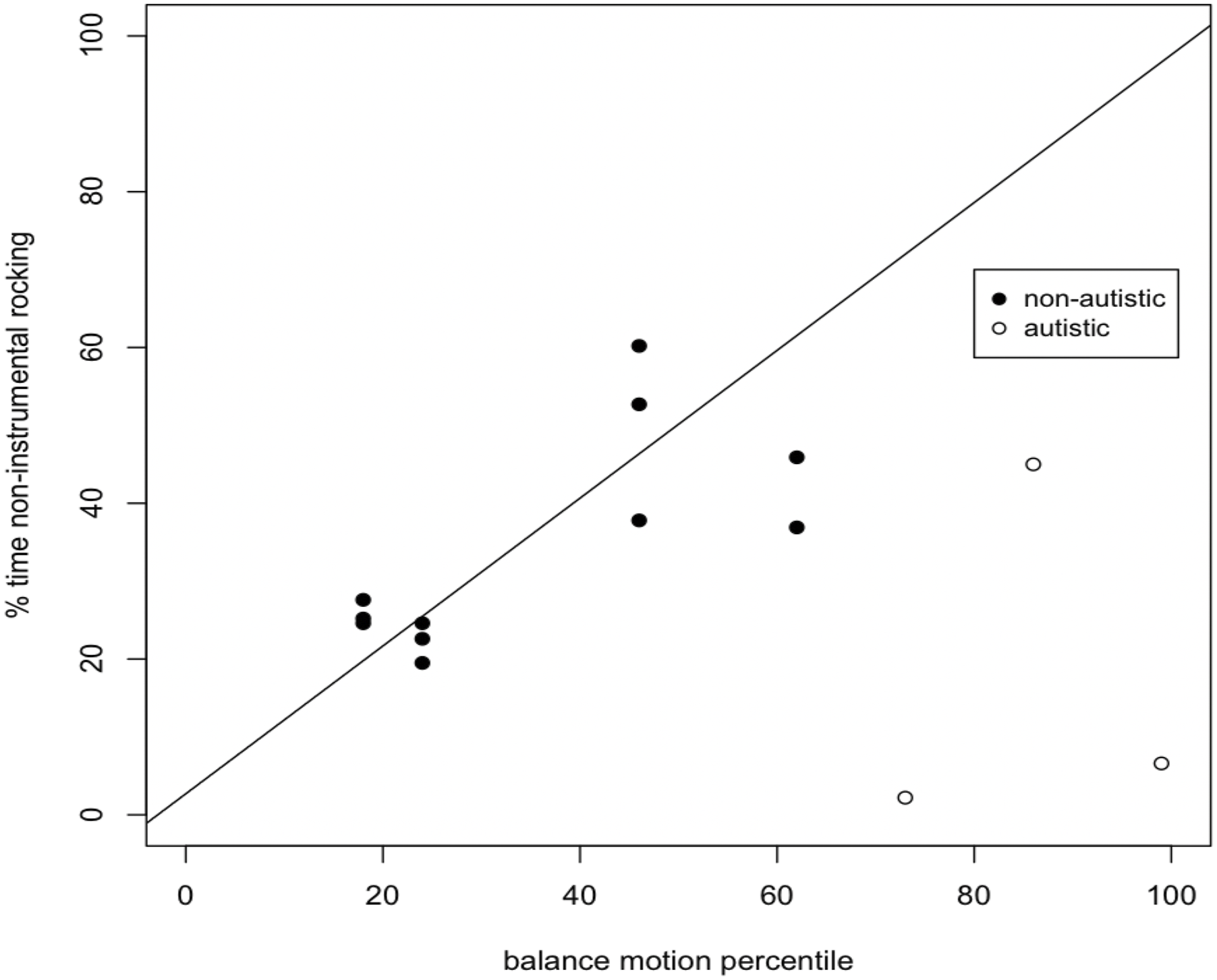
This trend did not hold for autistic participants. The 3 autistic participants had the highest balance-motion percentile scores, and lower relative percent time NI rocking (Figure 4). That is, autistic participants had the most atypical vestibular profiles among participants in the study but did not engage in rocking for self-regulation as frequently as the same degree of vestibular atypicality would predict among non-autistic participants.
Rocking in multimodal discourse (RQ1b)
Rocking played varying functions within multimodal mathematical discourse, flowing in and out of the background.
Sensory seeking as rhythmic structure
Ian’s NI rocking as punctuating patterns of activity.
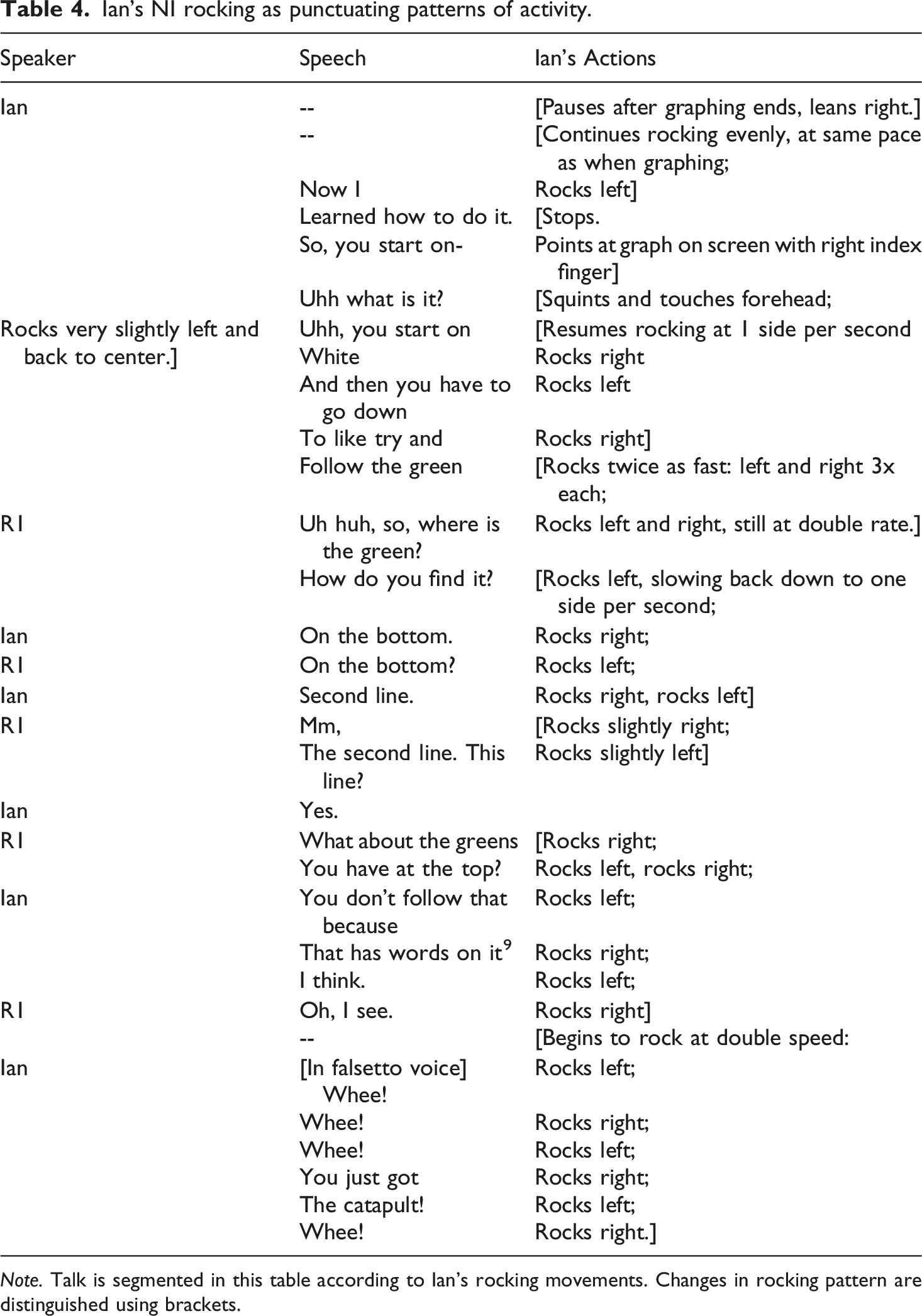
Note. Talk is segmented in this table according to Ian’s rocking movements. Changes in rocking pattern are distinguished using brackets.
After generating a graph that elicited green feedback, Ian introduced and clarified a hypothesis about “follow[ing] the green” (referring to where the line color changes when hitting the focal amplitude) “at the bottom” (several units below the x-axis) through dialogue with a researcher. Throughout this interaction, Ian exhibited bouts of highly rhythmic, NI rocking. Some of his spontaneous rocking synchronized with, or perhaps shaped, the flow of his verbal utterances, and some occurred during his interlocutor’s speech turns, or between speech turns. Most of his rocking reprised the rate of rocking he used to generate the graph he now observed. He modulated this rate by slowing or pausing during key moments in the discussion, such as when asking himself, “where is it?” Notably, his rocking speed doubled once after he had finished articulating his hypothesis on how to “follow the green”, and once again when he had finished clarifying this hypothesis for the researcher. This acceleration seems to express finality, and perhaps, a freeing up of attention to bring towards vestibular exploration and play (“Whee! You just got the catapult!”).
As observed in Ian’s reprise of the same rhythm used to generate his graph, and the timing of his faster rocking bouts, children’s spontaneous, peripheral rocking was not independent of what they were doing cognitively and interactionally. Rocking exhibited dynamic changes related to children’s active task and thinking. This observation complicates models of sensory regulation as an independent, parallel process of maintaining optimal sensory stimulation levels.
Rocking as epistemic action
Kay’s rocking as an emerging idea.
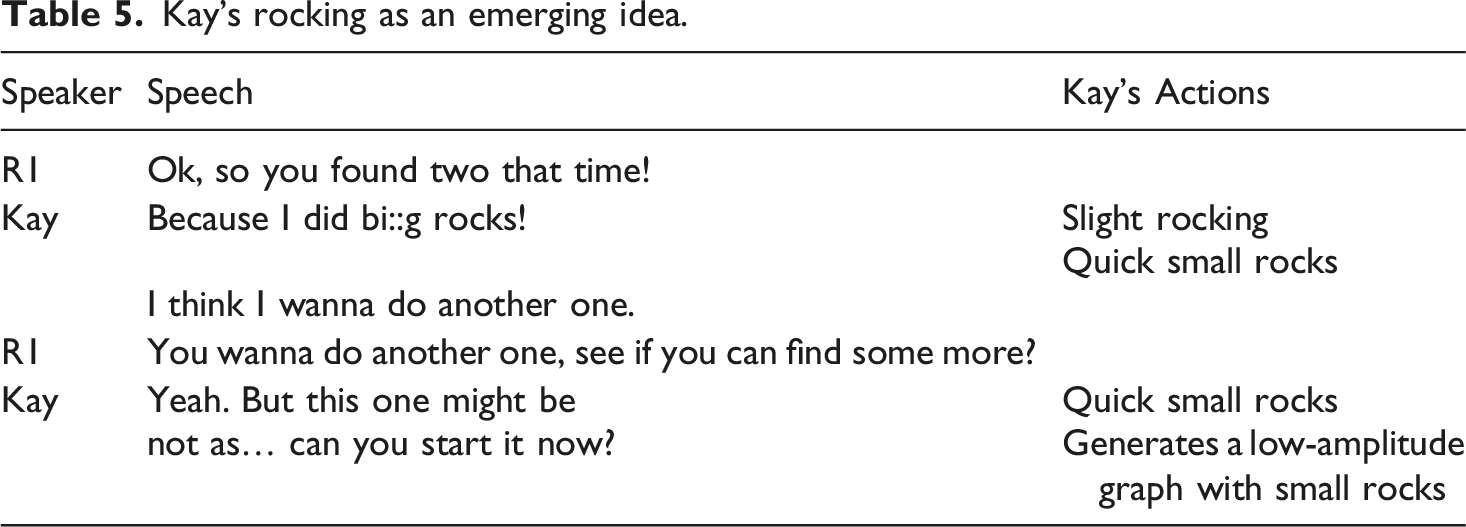
Treating Kay’s new form of rocking as an embodied cognitive resource, this instance is reminiscent of the hallmark gesture–speech mismatch of a transition in thinking (Church and Goldin-Meadow, 1986). Kay’s new rocking form is not arbitrary; it is a form of gesture-for-conceptualization (Kita et al., 2017) of an emerging idea Kay will explore: that of modulating the graphical property of amplitude. Rocking here appears to reflect the edge of his thinking, beyond what he is yet able to verbalize. Rocking served as an epistemic resource reflecting on graphical parameters.
Rocking as an interactional resource
Rocking also participated in interactions between learners. Children spontaneously attuned to and synchronized with each other’s NI rocking. For example, as the researchers prepared an activity, two brothers spontaneously began to rock in antiphase with each other, tapping the edge of each other’s boards while making sound effects during each in-swing. Two friends made eye contact and began to synchronize their rocking, and one would introduce sudden playful changes in her rocking speed or direction. NI rocking did not remain an individual act, but became a collaborative, playful form, recalling the improvisational potential of autistic stimming (Chen, 2024).
John and Anthony’s rocking as dialogue.
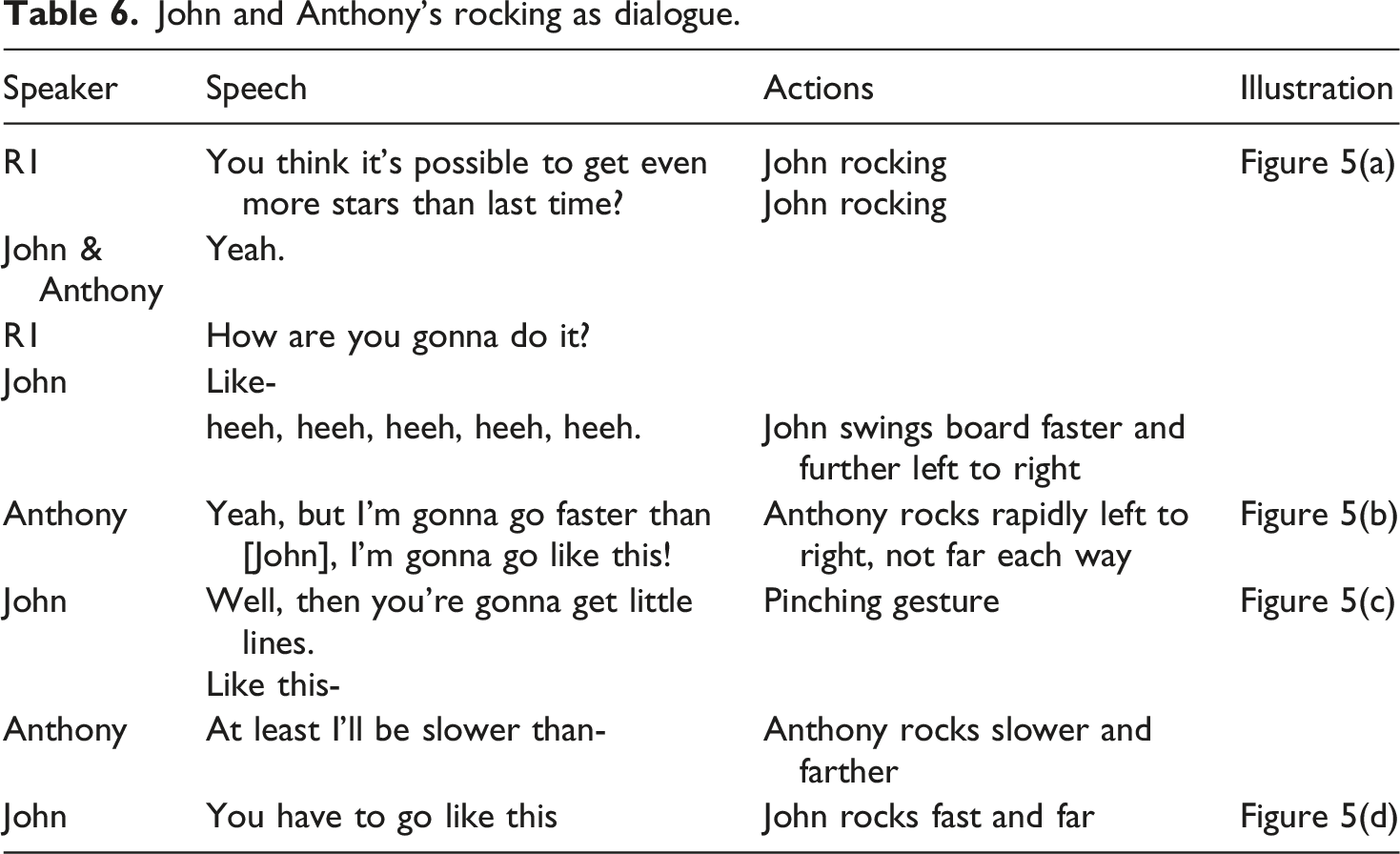
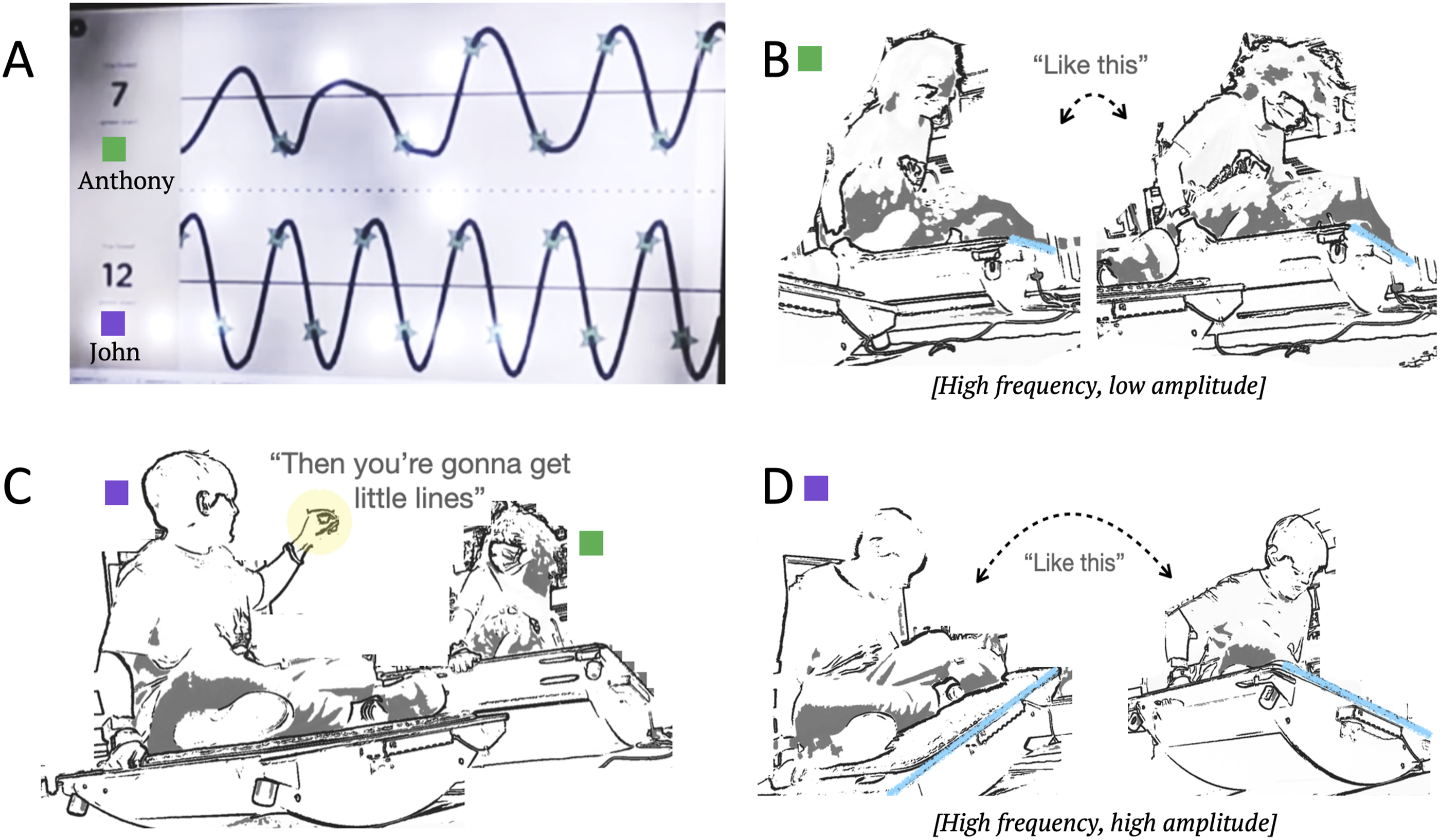
John and Anthony’s Rocking as Dialogue 10 .
Anthony modulated the speed of his rocking action to express his idea of generating a high frequency graph that would fit many periods within the timespan. Anthony’s initial rocking constituted part his multimodal thinking-for-speaking (Slobin, 1987) and multimodal expression. John recognized an unverbalized aspect of his peer’s thinking inherent in his rocking action: Anthony, in centering the graphical parameter of frequency, was ignoring that of amplitude. In response, John explicitly expressed the relationship between Anthony’s low-amplitude rocking and the low-amplitude graph that would result, showing with a manual gesture how this aspect of Anthony’s movement would drive changes in his graph: low graphical amplitude (“little lines”). John then used rocking as a gesture to convey a contrasting movement pattern with salient high amplitude. This rocking served to guide Anthony to attune to the graphical feature of high amplitude that elicits green stars. Here, the Balance Graphing context enabled rocking to become an interactive resource tacitly bearing frequency and amplitude modulated conversational ethnomethods (Mondada, 2014) informing the generation and interpretation of trigonometric function parameters. This episode illustrates how Balance Graphing potentiated vestibular activity as a semiotic resource for facilitating joint meaning making about mathematical ideas.
Discussion
In the context of Balance Graphing, a vestibular-focused SA-ED, children across the sensory spectrum engaged in vestibular-activating movements. Children rocked instrumentally to generate graphs, modulating the amplitude and timing of their rocking to develop new movement patterns in relation to features of graphs. Additionally, children rocked non-instrumentally an average of 31% of the time, suggesting that the design facilitated rocking for purposes such as sensory regulation. In addition to the rhythmic, repetitive rocking form seen in typical stimming, NI rocking was fundamentally contextualized within ongoing activity and thought: it rhythmically mapped different phases in expression and thought, reflected recent movements and features of graphs, instantiated or responded to peer’s statements, and anticipated emerging thoughts and ideas. In this context, rocking became available as an interactional resource, dynamically enfolded not only into children’s thinking, but also their communication, preceding, illustrating, or complementing the ideas they expressed verbally. Thinking was intertwined with sensory regulation rhythmically, affectively, and conceptually.
As hypothesized, children self-differentiated sensory stimulation levels during Balance Graphing through modulation of their rocking posture, frequency, and intensity. Rocking frequency correlated with balance-motion profile, consistent with learners self-differentiating stimulation for sensory regulation. This correlation appeared not to hold for autistic participants 11 . This study underscores the need for future work disentangling neurodivergence and sensory sensitivity in predicting sensory exploration preferences.
Overall, the Balance Graphing context rendered visible children’s sensory regulation processes, and the relationship between peripheral sensory regulatory activity and central tasks. Children’s ubiquitous, spontaneous, often-joyful, rhythmic rocking suggests that by facilitating the common sensory seeking activity of rocking, Balance Graphing offered the affordance for vestibular sensory regulation, consistent with its design conjecture. By doing so, it legitimized children’s vestibular stimming as not only a form of sensory regulation, but as a form of multimodal reasoning that, once liberated and welcomed, became an individual and interactional resource for students’ mathematical learning. Balance Graphing highlights the intertwinement of affective and cognitive processes by showing how sensory regulation can be intertwined with thinking throughout moment-to-moment learning explorations.
The findings from this study suggest that it is possible to offer adaptive sensory regulation within learning activities through flexible-intensity incorporation of the somatic senses. Next steps towards expanding SA-ED will include designing and testing SA-EDs for other populations, other conceptual domains within mathematics, and eventually other disciplines. Expanding SA-ED will require careful attention to how different regulatory sense experiences could serve as resources for different conceptual contexts: for example, vestibular sensing of bodily rotation in learning about angles, or of bodily acceleration in learning calculus, and tuning of the forms and intensities of these experiences. Close collaboration and co-design with neurodiverse and sensory-marginalized individuals will be invaluable to designing for full-spectrum sensory experiences.
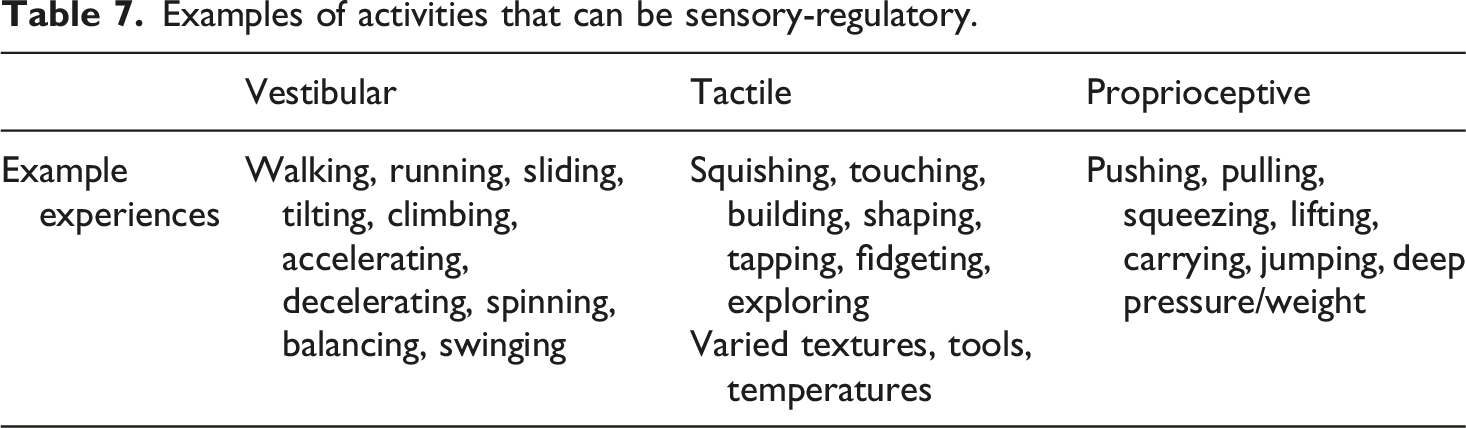
Examples of activities that can be sensory-regulatory.
Conclusion
Balance Graphing instantiates SA-ED through a first form of sensory regulation, rocking, in the academic domain of mathematics, specifically sinusoid graphs. When rocking-based vestibular stimulation was made inherent to math instructional design, children rocked for sensory regulation, thinking, and communication. The Balance Graphing context constitutes an example of synergistic stimulation of a somatic sense (here, the vestibular sense) integrally for both conceptual exploration of sinusoid parameters and sensory regulation. The findings suggest that instructional design can render visible, and facilitate sensory-seeking movement as regulatory, epistemic, and interactional. This challenges the presumed independence of two bio-epistemic processes pertaining to educational research, theory, and practice: sensory-regulation and cognition. The findings suggest that sensory-regulatory and cognitive processes may interact, or indeed that the very definition of cognition may need to expand to incorporate regulatory activity (Tancredi and Abrahamson, 2024). Learners across the sensory spectrum were able to make use of multimodal reasoning for their mathematical learning in a context that legitimizes such explorations.
Balance Graphing offers a proof of concept for SA-ED as a proactive, inclusive education approach. SA-ED treats sensory regulation as part of instruction. Principles of SA-ED are to: (1) expand opportunities to engage the somatic senses within learning activities; (2) establish congruence between regulatory sense experiences and focal concepts; (3) ensure flexibility of the intensity of sensory opportunities to adapt to each learners’ sensory regulation needs.
Like a volume slider that enables each user to adjust settings to their personal needs, vestibular sensory-adaptive instruction offered each child the opportunity to adjust the intensity of vestibular stimulation to their personal sensory-regulation needs. For children whose vestibular needs are at odds with standard instructional practice, sensory-adaptive design can normalize their stimming, recognizing, endorsing, and elevating their sensorimotor activity as relevant to disciplinary discourse (Tancredi and Abrahamson, 2024). For children whose vestibular needs are already met within standard instructional practice, sensory-adaptive designs like Balance Graphing could offer them more fine-tuned sensory regulation opportunities, as well as another way of thinking about concepts and sharing their thinking with peers across the sensory spectrum. SA-ED contributes to endeavors to improve mainstream education through flexible and proactive accessibility (CAST, 2024).
I have proposed that lack of accommodation for sensory regulation is a question of accessibility. The empirical findings suggest that integration of sensory regulation into instructional design is possible. Without sensitivity to sensory experience, embodied design could unwittingly institute a new set of restrictive bodily norms that perpetuate or exacerbate accessibility and equity barriers for learners with non-majority sensory profiles. However, if developed to be sensory-adaptive, embodied design, with its focus on the body as a vehicle of interactive sensorimotor learning, could lead the way towards more sensorially-equitable instruction.
Footnotes
Acknowledgments
I thank Kimiko Ryokai and Dor Abrahamson for their substantial design and conceptualization contributions to Balance Graphing and the broader Balance Board Math project, and Gloria Soto for thoughtful comments on an earlier draft of this manuscript. This work would not have been possible without the Balance Graphing design team: Helen Li, Julia Wang, and Carissa Yao, and their work developing and implementing the design and collecting initial data, and research team Johnny Serrano, Genna Macfarlan, May Sar-Israel, Yuqian Liu, and Evelene Zhang for their work collecting, processing, and coding BBM data. I would also like to thank the Embodied Design Research Lab, the Embodied Underground, and Gesture and Multimodality Group for insightful discussions of Balance Graphing data.

Ethical considerations
The San Francisco State University Institutional Review Board reviewed and approved this study (approval number: H20-002R1).
Consent to participate
Informed consent to participate was obtained from all participants (assent) and their guardians (written consent).
Consent for publication
Informed consent for publication was provided by the participant(s) or a legally authorized representative.
Funding
The author disclosed receipt of the following financial support for the research, authorship, and/or publication of this article: During this research, the author was supported by the National Science Foundation under Grant #1938055. Balance Board Math also received funding from two Jacobs Institute Innovation Catalyst grants. Any opinions, findings, and conclusions or recommendations expressed in this material are those of the authors and do not necessarily reflect the views of funders.
Declaration of conflicting interests
The author declares no potential conflicts of interest with respect to the research, authorship, and/or publication of this article.
Data Availability Statement
Anonymized quantitative data from coding is available upon request. Video data may be available upon request, bound by limitations specified by guardians in the study media release.