







Abstract
The Extended Producer Responsibility (EPR) scheme is a key policy approach for advancing circular economy objectives in packaging waste management, yet its effectiveness depends on robust reporting, monitoring, and compliance assessment. In Vietnam, gaps between regulatory requirements and practical implementation pose challenges for both producers and enforcement authorities. This study translates legal obligations into practical guidance to support compliance and regulatory oversight. The findings provide complementary guidelines for businesses, focusing on producer report completion, inspection readiness, and compliance risk management, and for authorities, addressing due diligence in reviewing recycling performance reports, anticipated errors in inspection reporting, and challenges in applying evaluation and scoring tools. The proposed guidance contributes to more effective EPR implementation by obligated companies and governmental staff and provides a transferable approach to improving circular economy governance.
Introduction
Data on plastic collection and recycling indicate that Extended Producer Responsibility (EPR) systems play a significant role in increasing plastic packaging recycling rates across many countries worldwide (Prevent Waste Alliance, 2020a; Tumu et al., 2023). By transferring waste management costs from government agencies to producers and by encouraging more environmentally sustainable product design, EPR schemes are widely regarded as a key component of circular economy strategies (GACERE and OECD, 2022; Majić and Majić, 2025). However, international experience has shown that the effectiveness of EPR schemes is dependent on a precise definition of manufacturers, as well as the ability of regulatory systems to monitor compliance and enforce requirements consistently and transparently (OECD, 2024).
In recent years, Vietnam has implemented an EPR framework for packaging waste as part of broader environmental governance changes (The National Assembly, 2020). The Vietnamese EPR scheme establishes reporting obligations, financial responsibilities, and compliance requirements for producers and importers placing packaging on the market (The Government of Vietnam, 2022). While the legal framework provides the foundation for EPR implementation, practical challenges remain in translating regulatory provisions into administrative practice. These challenges include fragmented reporting processes, limited verification capacity, inconsistent inspection procedures, and uncertainty among regulated entities regarding compliance expectations (Löhle et al., 2021; Tran et al., 2025a). Such implementation gaps risk undermining data reliability, regulatory credibility, and the overall effectiveness of the EPR scheme.
Previous studies on EPR implementation mainly concentrate on policy design, stakeholder engagements, and environmental impacts, while relatively limited attention has been given to the operational governance tools that authorities use to conduct monitoring and compliance procedures in practice (Arbelaez-Estrada et al., 2025; Lacang et al., 2025; Lifset and Vartanian, 2025; Lu et al., 2026). This gap is particularly relevant in developing and emerging countries, where administrative capacities and enforcement mechanisms are still evolving (Islam, 2025; Kaytan, 2025). From the perspective of regulatory compliance literature, successful policy implementation requires not only clear legal obligations but also applicable implementation strategies (Tezera, 2019).
Existing literature highlights that monitoring and compliance assessment mechanisms are needed to effectively implement EPR schemes, particularly in developing and emerging economies (European Commission, 2014; Prevent Waste Alliance, 2020b; Watkins and Gionfra, 2019). For supporting EPR implementation in Vietnam, Tran et al. (2025b) proposed a practical toolbox comprising standardized forms designed to support EPR monitoring and compliance assessment for packaging waste. The toolbox operationalizes key stages of the EPR compliance cycle, including reporting, inspection, violation reports, and compliance evaluation. However, the effectiveness of such a toolbox ultimately depends on how it is applied in practice. Without clear guidance, standardized forms alone might not be sufficient to ensure consistent use, correct interpretation, or effective integration into existing administrative processes.
Based on the above considerations, this article aims to develop an operational framework for the practical application of the EPR toolbox developed by Tran et al. (2025b). However, rather than offering step-by-step guidance on form completion as policy guidance, the study identifies common errors and key points to consider when using the forms. Specifically, the study aims to (i) develop practical guidance to assist producers and importers in accurately reporting EPR obligations, preparing for inspections, and managing compliance risks, (ii) provide a guide for authorities to conduct inspections and compliance evaluations using standardized tools, and (iii) identify common errors and challenges in reporting, inspection, and evaluation processes and propose measures to improve consistency and regulatory effectiveness. These objectives can be reached by answering the following three questions: (1) “How can the EPR toolbox developed by Tran et al. (2025) be applied in practice by producers and importers?” (2) “How can the EPR toolbox developed by Tran et al. (2025) support competent authorities in conducting more consistent and credible compliance assessments?” (3) “What common errors and operational challenges arise in EPR reporting, inspection, and evaluation, and how can these be addressed through targeted guidance?”
This article includes five sections. To begin, the Introduction describes the research background and objectives. Next, an overview of the EPR compliance cycle is provided. Then, the Methodology section illustrates information about the study’s research methods. Following, the fourth section reports and discusses the major findings, policy implications, and transferability. Finally, the conclusion summarizes the main findings, the study’s limitations, and outlines directions for future research.
EPR Compliance Cycle for Packaging Waste in Vietnam
The effectiveness of EPR initiatives for waste management is influenced by a combination of institutional, administrative, and regulatory factors. Previous studies emphasize many factors, especially the importance of reporting systems, engagement of local authorities, collective compliance programs, and policy and regulatory support mechanisms (Canadian Council of Ministers of the Environment, 2022; Environmental Protection Agency, 2023). In practice, EPR implementation has been hindered by fragmented information flows and inadequate institutional coordination, particularly in developing economies. These challenges often result in underreporting, uncertainty in the regulations and obligations governing EPR, and limited feedback for policy improvement (Nishat et al., 2024; Ribeiro and Kruglianskas, 2020; Sharma et al., 2025). Therefore, EPR compliance needs to be conceptualized as a continuous and iterative cycle encompassing reporting, verification, inspection, enforcement, and evaluation (Fig. 1). Conceptualizing compliance in this manner also aligns with regulatory governance literature.
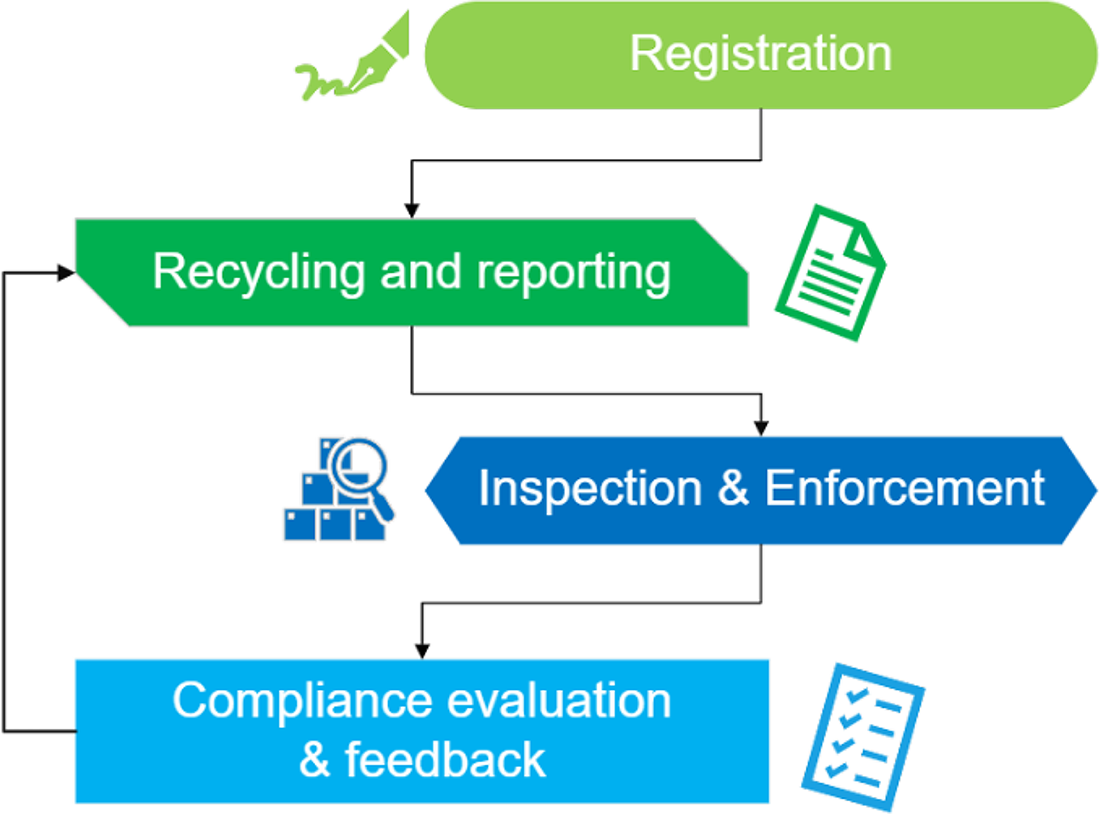
EPR compliance cycle.
In Vietnam, the EPR scheme for packaging waste is formally established under the Law on Environmental Protection (2020) and further specified through Decree No. 05/2025/ND-CP and Circular No. 07/2025/TT-BTNMT, which define producer responsibilities, reporting requirements, and compliance mechanisms (The Government of Vietnam, 2025; Ministry of Natural Resources and Environment of Vietnam, 2025; The National Assembly, 2020). The compliance cycle begins with the registration of obligated enterprises, allowing competent authorities to identify regulated entities, define the scope of EPR obligations, develop recycling plans, and maintain an up-to-date registry to support monitoring and prevent free-riding behavior. Following registration, producers, importers, or PROs are required to submit periodic reports on the types and quantities of packaging placed on the market and recycling results. These reports constitute the primary information base for calculating financial contributions and assessing recycling activities. Reported data are subsequently subject to documentary verification, during which authorities compare declarations with supporting documents such as invoices, customs records, and financial statements. On-site inspections by local authorities provide an additional mechanism to verify reported information against actual operational practices. The compliance cycle concludes with compliance evaluation, whereby authorities assess overall EPR performance using predefined criteria. Importantly, evaluation results inform subsequent reporting, inspection planning, and enforcement actions, reinforcing the iterative nature of EPR implementation under Vietnam’s regulatory framework.
In conclusion, the EPR compliance cycle demonstrates the relationship between regulatory obligations and administrative practice. By structuring EPR compliance as a continuous process rather than a series of isolated actions, the cycle supports the adaptive governance of packaging waste management systems.
Methodology
This article is the final component of a broader research project developing the implementation of the EPR for packaging in Vietnam. The project was conducted in three phases. The first phase reviewed international literature and national regulations to understand the current status and design features of packaging EPR in the world and Vietnam, identifying key governance characteristics and implementation challenges of adopted EPR schemes. The second phase investigated practical implementation through surveys, assessing compliance behavior, administrative capacity, and risks such as free-riding among producers and importers. This phase highlighted operational difficulties encountered during early implementation. The third phase developed a comprehensive toolbox tailored to national conditions, aimed at supporting authorities in monitoring, inspection, and compliance assessment of packaging waste management.
Building on these stages, this article focuses on operationalization. Previous work identified research gaps, evaluated implementation challenges, and designed monitoring and assessment instruments; the present study explains how these tools can be applied in practice within Vietnam’s EPR framework. The authors expect that the findings will enhance the effectiveness of EPR implementation at the beginning stage in Vietnam.
Research approach
This research is based on a design science research approach, which focuses on developing and refining practical solutions to complex real-world problems (Venable and Baskerville, 2012). By formalizing how monitoring and compliance assessment can be operationalized within an EPR program for packaging waste, the research advances design knowledge instead of testing causal hypotheses.
Data collection
This study draws on multiple sources of information to support the development of operational guidance for monitoring and assessing EPR compliance in Vietnam. The primary sources include Vietnamese EPR regulations, the monitoring and compliance assessment toolbox developed by Tran et al. (2025b), and practical insights obtained from previous stages of the research project.
To ensure that monitoring and compliance assessment processes are standardized, legally enforceable, transparent, and administratively feasible, Tran et al. (2025) designed a toolbox for monitoring and assessing EPR compliance. It consists of five standardized administrative forms designed to operationalize the EPR compliance cycle for packaging waste, as described in Table 1. This study treats the toolbox as the core operational artifact within the design science research framework. Each form represents a structured instrument intended to facilitate specific regulatory functions within the EPR system. Rather than generating new administrative tools, the present study focuses on translating the toolbox into practical implementation guidance that supports consistent application by both regulated entities and competent authorities.
Toolbox Structure
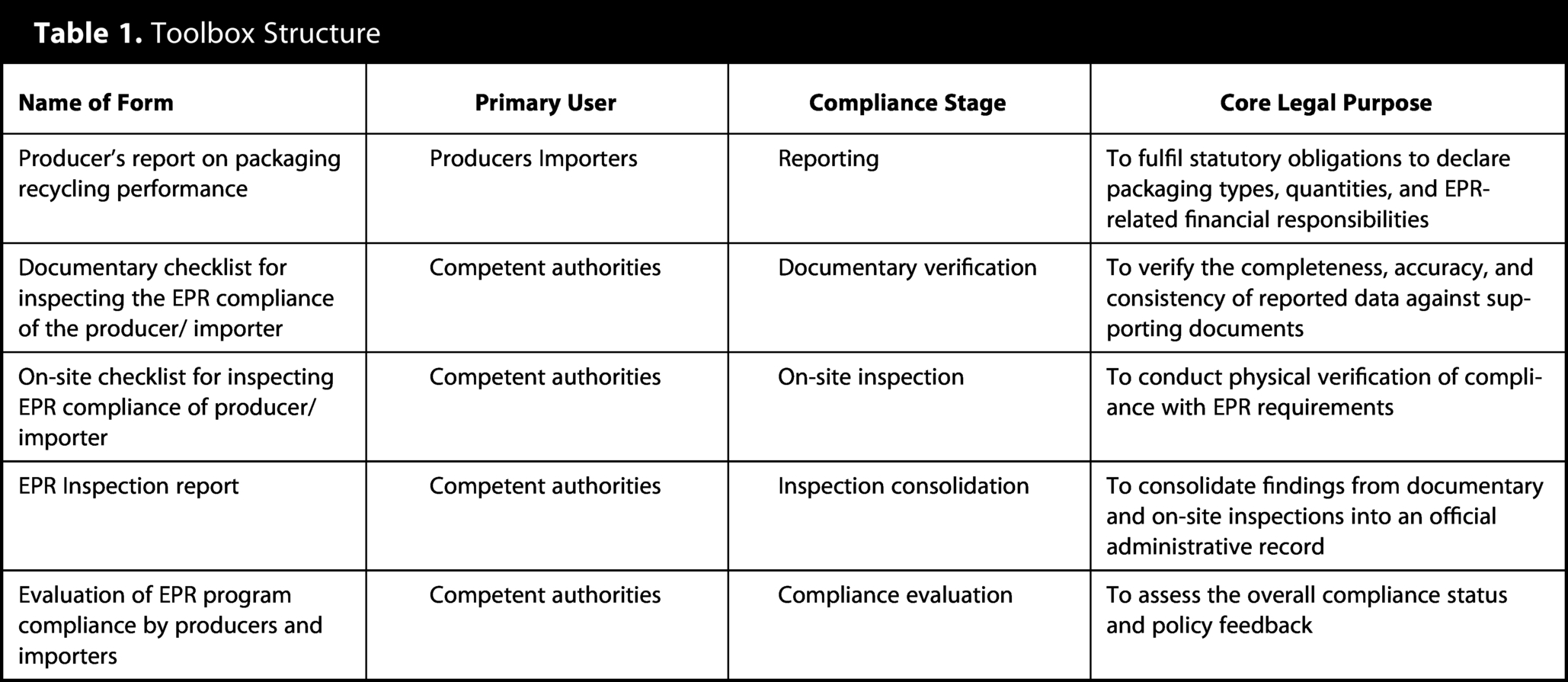
Within this research, the toolbox forms constitute the primary analytical material. By examining the functional roles, procedural requirements, and interactions among these forms, the study develops systematic guidance for their practical application in the Vietnamese EPR system.
Data analysis process
The development of operational guidance for applying the EPR monitoring toolbox follows an analytical process including three main steps.
First, the functional role of each toolbox form is examined in relation to the EPR compliance cycle described in the section “EPR Compliance Cycle for Packaging Waste in Vietnam.” This step aims to clarify how each form contributes to specific stages of regulatory oversight, including reporting, verification, inspection, and compliance evaluation. Through this analysis, the responsible actors (e.g., producers, importers, or competent authorities) and the expected outputs associated with each form are identified.
Second, the procedural requirements embedded within each form are systematically analyzed. This involves identifying the key information inputs, administrative preconditions, and logical dependencies necessary for completing and applying the forms. Particular attention is given to the relationships between different forms within the compliance cycle, as well as their alignment with relevant EPR regulations in Vietnam.
Third, based on the functional and procedural analysis, practical guidance is developed to support the consistent application of the toolbox. The guidance is structured to address the needs of two primary user groups: (1) producers and importers subject to EPR obligations and responsible for reporting packaging and recycling data, and (2) competent authorities responsible for monitoring, inspection, and compliance evaluation. This differentiation ensures that the guidance reflects the distinct roles, responsibilities, and information requirements of each stakeholder group within the EPR system.
Scope of research
Instead of redesigning the toolbox itself, the objective of the study is to develop systematic and practical guidance that enables consistent and effective use of the toolbox by both regulated businesses and competent authorities. Furthermore, the research does not include large-scale empirical testing or quantitative impact assessment.
Figure 2 displays the framework of this research.
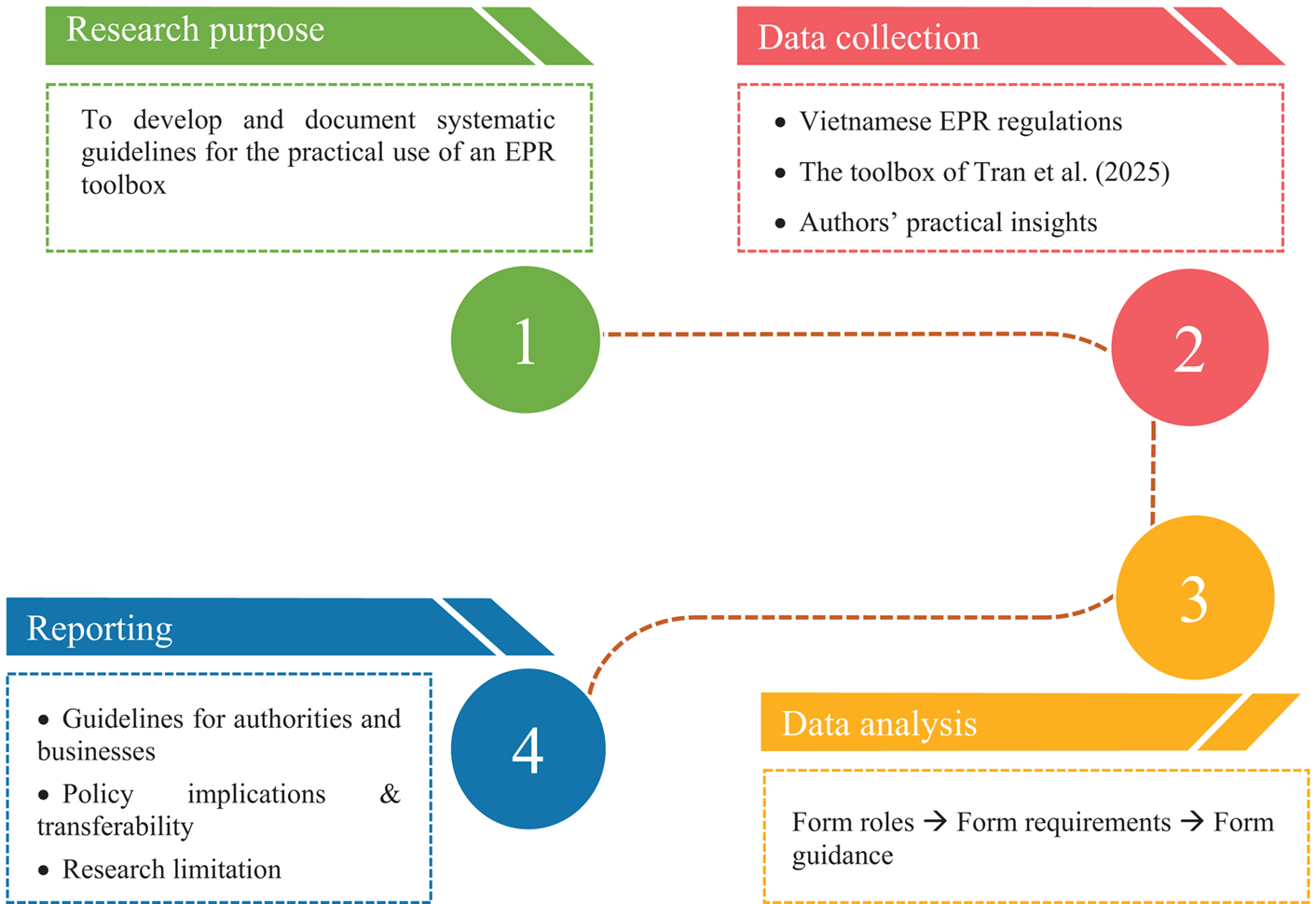
Main steps of the research process.
Results and Discussion
The implementation of EPR schemes in countries, particularly in developing countries, is frequently associated with governance challenges, including limited regulatory capacity for monitoring and enforcement, corruption and mismanagement, regulation overlap, inconsistent information between regulators and producers, and the formalization of the informal waste sector (OECD, 2024; WWF Germany, 2019). These constraints might complicate compliance assessment and reduce the effectiveness of EPR programs, particularly during the early stages of policy implementation. In the Vietnamese context, such challenges have been examined in detail in previous research, which highlighted the need for practical mechanisms to support monitoring and compliance assessment within the packaging EPR framework (Tran et al., 2023). As a result, instead of re-examining these issues, this study focuses on operational guidance for applying the proposed EPR toolbox. The findings are intended to assist authorities and producers in implementing easier and consistent compliance practices.
Guidelines for businesses using the EPR toolbox
Completing the Producer’s Report
Instructions from a case study
This section is for obligated producers and importers who need to report their recycling results under Vietnam’s EPR scheme. To fulfil their recycling obligations under the EPR framework, mandated enterprises might choose among several compliance options, including (1) self-recycling, (2) hiring a licensed recycler, (3) financial contribution to Vietnam Environment Protection Fund (VEPF), (4) relying on Producer Responsibility Organizations (PROs), or a combination of them. Except for enterprises that comply through the authorization of a PRO, producers are responsible for submitting their EPR reports (Ministry of Natural Resources and Environment of Vietnam, 2025). In the current Vietnamese context, businesses are generally reluctant to undertake recycling activities directly due to a lack of the required capacity to organize the recycling efforts (ISPONRE, 2021). Therefore, the following example is created for businesses that use licensed recycling companies to fulfil their recycling obligations.
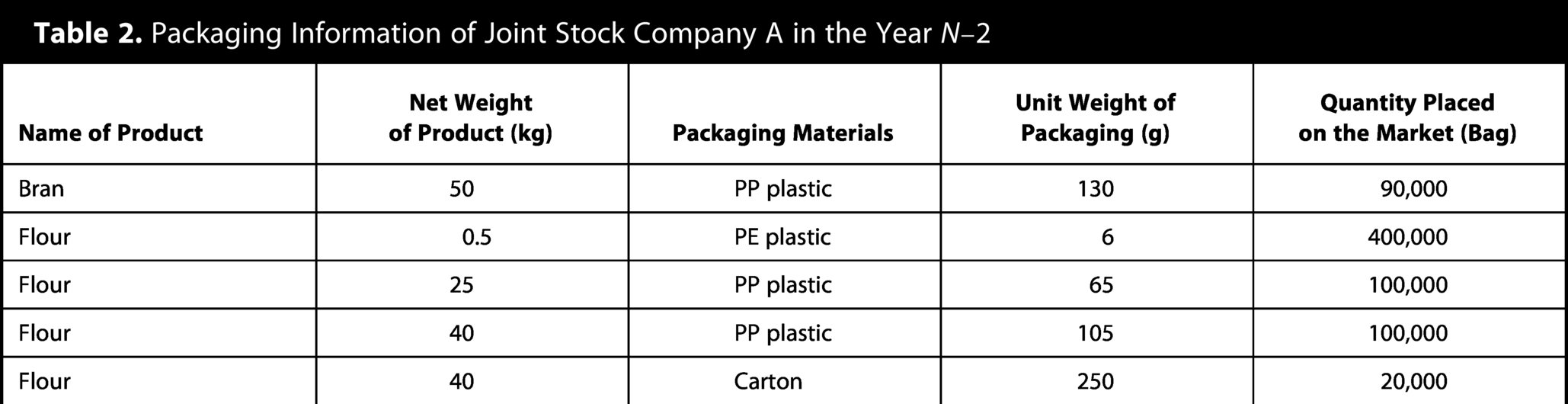
In this article, a food producer operating in Vietnam is used for illustrative purposes. The company name has been changed and is referred to as A Joint Stock Company to protect confidentiality and to ensure that the illustrative example is not interpreted to assess the compliance performance of a specific company. This company specializes in the production and sale of flour used as a raw material for a wide range of processed products, including bread, noodles, vermicelli, sponge cakes, sandwiches, cakes, steamed buns, and bran supplied to animal feed manufacturers. Established in 2007 and officially operational since 2008, the company supplies its products exclusively to the Vietnamese market and does not currently export. Currently, it has nearly 100 employees and an annual income of almost 200 billion VND (equivalent to USD 7.691.720). This company chose the option of recycling through a recycling company to meet the EPR requirement for the reason of being budget-friendly and for the management procedure. Except for information related to the kind of product, packaging material, unit weights, and quantities of products placed on the market (Table 2), other data presented are hypothetical and do not represent actual company data.
Packaging Information of Joint Stock Company A in the Year N–2
A model for the report is provided in Supplementary Appendix SA1.
Common reporting errors
Reporting errors by the producer poses serious issues of EPR performance (MoEFCC and EMC, 2023). The analysis of the reporting structure and regulatory requirements reveals several common sources of reporting error that may undermine the reliability of EPR monitoring data.
Misinterpretation of reporting periods, especially between the year of report submission (year N), the recycling performance year (year N–1), and the year packaging is put on the market (year N–2), could be a mistake. Such misalignment can lead to incorrect packaging quantities or recycling results being reported, complicating verification and inspection processes. Another issue might be incorrect packaging classification. Reporters might apply inappropriate packaging codes, combine different packaging materials into a single category, or misclassify packaging. These errors affect the application of mandatory recycling rates and can result in under- or overestimation of EPR obligations. Inconsistent or incomplete quantitative data also might occur (European Commission, 2014). Reported packaging quantities might not match internal production, sales, or procurement records, often due to insufficient internal reconciliation before submission. In some cases, packaging associated with exported products or internal use is mistakenly included, despite being outside the scope of EPR obligations in Vietnam. In addition, inaccuracies in reported recycling rates might arise from periodic regulatory revisions, as mandatory recycling rates are updated every three years. The use of outdated or incorrect recycling percentages can lead to miscalculation of required recycling obligations and, consequently, to inaccurate assessment of companies’ EPR performance. A further error involves the over-reporting of recycled quantities. Producers might include recycling volumes that do not meet eligibility requirements, such as recycling conducted outside the reporting year, or quantities not supported by verifiable documentation from licensed recyclers. Moreover, insufficient supporting documentation might be a cause of compliance concerns. Missing recycling certificates, incomplete contracts with recyclers, or a lack of traceable weight records can delay documentary verification and weaken the evidentiary basis of reported data. Finally, producers often provide limited or unclear explanations for deviations between required and achieved recycling amounts. The absence of a clear justification for shortfalls or surpluses in recycling might lead to misunderstandings for competent authorities.
Addressing these common reporting errors through internal data checks and improved coordination with recycling partners, Producer Responsibility Organizations (PROs) can significantly enhance the quality and reliability of EPR reporting.
Supplementary Appendix A2 (Supplementary Table S3) is a checklist designed to help producers and importers avoid typical reporting mistakes before submission.
Internal data management recommendations
The extended responsibility mandates impose new data requirements on producers. They should oversee the specific data for their EPR report and the monitoring procedure by the appropriate parties (McCracken and Bell, 2004). Therefore, producers are advised to establish robust internal data management procedures. Below outlines key suggestions in the context of Vietnam.
First, producers are advised to maintain internal records on packaging unit weights and quantities placed on the market, categorized by packaging type and regulatory code. These data should be calculated using production and sales records for the correct reporting year (year N–2). Furthermore, recycling performance data should be managed separately and aligned with the recycling year (year N–1). Recycling quantities reported in the form should be traceable to licensed recyclers through contracts, recycling certificates, and weight records, ensuring that only eligible recycling volumes are included. Thirdly, producers should document internal explanations for deviations between required and achieved recycling amounts, as required in the narrative sections of the report. Maintaining short internal notes on data collection methods and operational constraints facilitates consistent reporting and supports documentary verification. Finally, all supporting documents referenced in the EPR report should be systematically archived for access and to facilitate EPR inspection.
Careful and systematic management of internal data, informed by these recommendations, can facilitate effective EPR reporting and ensure regulatory compliance.
Preparing for Inspection
The documentary checklist and on-site checklist included in the toolbox of Tran et al. (2025b) are not intended for direct use by producers and importers. However, these entities can refer to the information contained in the checklists to prepare in advance for inspections conducted by competent authorities. Such proactive preparation can reduce verification time, limit follow-up requests, and lower the risk of non-compliance findings.
For documentary preparation, producers should ensure that all core administrative and operational documents are complete, up to date, and readily accessible. This includes business licenses, product and packaging lists, tax and financial reports, production process descriptions, inventory and delivery records, and purchasing or import documentation. Attention should be given to documents directly supporting EPR compliance, such as EPR registration records, contracts with recyclers or PROs, recycling reports, eco design, and evidence of financial contributions to the Vietnam Environmental Fund or payments to recyclers. Internal regulations, monitoring procedures, and records of corrections to previous reports should also be clearly documented, as these are explicitly reviewed during inspection. For producers that outsource recycling, documentation demonstrating the traceability and legitimacy of recycling activities is critical. Contracts with licensed recyclers, recycler permits, recycling certificates, and supporting records, such as test reports and material usage invoices, should be well organized to enable clear attribution of recycling quantities to the producer’s EPR obligations.
For on-site inspection preparation, self-recycling producers should ensure that operational conditions align with reported information. Inspectors assess waste segregation practices, labeling of collection areas, adequacy of storage facilities, and the operation and maintenance of recycling equipment. Environmental and occupational safety conditions, including cleanliness of waste storage areas, availability of protective equipment, and staff training on waste management and EPR requirements, are also evaluated during site visits.
Therefore, each obligated company might need to designate a responsible inspection focal staff or team, conduct internal pre-inspection checks using the same documentary and on-site criteria applied by local authorities, and ensure consistency between reported data and on-site practices. Aligning internal preparation with inspection forms facilitates compliance assessment and supports consistent enforcement of EPR requirements.
Managing Compliance Risks and Improving Compliance Level
The form titled “Evaluation of EPR Program Compliance by Producers and Importers”, developed by Tran et al. (2025b), is also not designed for direct application by producers and importers. Nevertheless, it might serve as a valuable reference tool.
The analysis of the evaluation framework indicates that compliance assessment is heavily weighted toward criteria related to the “availability and accuracy” and “efficiency”, which together account for approximately 70 percent of the total assessment score. In contrast, “transparency” and “sustainability” are assigned lower individual weightings. This distribution of weights suggests that the framework prioritizes immediate administrative performance and measurable outputs over longer-term systemic outcomes.
Accordingly, awareness of these factors enables producers and importers to better understand regulatory expectations and to strategically align their internal management systems with the assessment practices of competent authorities.
Guidelines for authorities using the EPR toolbox
Among the five forms proposed by Tran et al. (2025b), the “Documentary checklist for inspecting the EPR compliance of the producer/importer” and the “On-site checklist for inspecting EPR compliance of the producer/importer” are not examined in depth in this study, as their application is relatively straightforward and primarily operational in nature. Instead, this research concentrates on the “Report on packaging recycle performance”, “EPR inspection report”, and the “Evaluation of EPR program compliance by producers and importers”, as these forms play a more substantive role in monitoring compliance and supporting systematic performance assessment by competent authorities.
Due Diligence Guidance for Recycling Performance Report
Document validation
The screening and validation of recycling performance reports submitted by obligated producers and importers represent a core regulatory function. It is essential for achieving collection and recycling targets and for assessing the progress of EPR implementation over time (MoEFCC and EMC, 2023). Competent authorities are required to conduct a careful review to verify the accuracy, completeness, and legal conformity of reported data on packaging recycling performance.
The validity of a producer’s report rests on several core principles. Reported information must be accurate, complete, and internally consistent, faithfully reflecting actual recycling activities and supported by verifiable records. Data should be traceable and transparent, enabling competent authorities to cross-check reported figures against administrative and third-party sources. All declared quantities and practices must conform to applicable legal definitions and eligibility criteria. Reports should be submitted on time and formally endorsed by an authorized representative (Central Pollution Control Board, 2023).
To support this process, a structured to-do list is provided below to guide them in the consistent and rigorous assessment of EPR reports. By using the checklist in Supplementary Appendix A3, the overall effectiveness of the screening and validation procedure can be enhanced.
Risk-based prioritization
Given the volume of the “Report on packaging recycling performance” submitted nationwide, competent authorities should apply a risk-based prioritization approach to screening and validation to allocate regulatory resources efficiently and proportionately. Rather than subjecting all reports to the same level of scrutiny, the governing body should differentiate the depth and intensity of review based on indicators of potential non-compliance embedded in the reported data.
Risk prioritization should first consider quantitative risk signals derived from the recycling information in the reports. Reports indicating unusually low or high achieved recycling rates, significant unfulfilled recycling responsibilities, or large fluctuations in packaging quantities or recycled volumes should be classified as higher risk. Conversely, reports consistently showing recycling performance well above mandatory requirements, particularly where large surplus quantities are repeatedly carried forward, may warrant closer examination to assess the credibility and eligibility of declared recycling activities.
A second prioritization should focus on classification risks. Misalignment between declared packaging types, packaging codes, and the producer’s stated business activities may signal misclassification intended to reduce obligations. Similarly, discrepancies between the scale of declared packaging placed on the market and the entity’s reported manufacturing capacity or market scope should elevate the report’s risk profile (Central Pollution Control Board, 2024).
Another prioritization should focus on products and packaging streams with the greatest potential environmental impacts (OECD, 2016). Reports involving packaging types associated with high leakage risk, low recyclability, or significant volumes placed on the market present environmental consequences in cases of non-compliance or not fulfilling enough compliance. Producers operating in sectors such as single-use plastics, composite or multilayer packaging, and products generating difficult-to-recycle waste should therefore be subject to more intensive screening and validation.
Fourthly, repeated late submission of EPR reports constitutes a risk indicator warranting closer regulatory attention. While delays may result from transitional or administrative challenges, multiple late submissions over successive reporting cycles may indicate limited internal compliance capacity or a low prioritization of EPR obligations within the organization. In this context, this potential signal justifies enhanced scrutiny, targeted guidance, or follow-up inspections.
Finally, authorities should compare reported data with information from customs, taxation, and business registration databases (Dominic et al., 2020; Hilton et al., 2019). Significant differences between declared packaging quantities and import volumes, or financial indicators, are strong signals of underreporting or free riding. They should trigger priority validation, including targeted audits or on-site inspections.
By systematically applying these risk-based criteria, competent authorities can focus validation efforts on reports most likely to contain material non-compliance while reducing administrative burdens for low-risk producers.
Common Obstacles in Documenting EPR Inspection Findings
The “EPR inspection report” is an instrument to support competent authorities in documenting and assessing compliance with EPR obligations for packaging waste. Despite the availability of structured inspection items, several recurring issues may reduce the reliability and regulatory value of inspection findings. Below are the predicted common errors that should be recognized when using this form, which can help authorities improve the quality and consistency of EPR monitoring and assessment.
A frequent error is the overreliance on documentary submissions without sufficient verification through on-site inspection or cross-checking. Documents provided by regulated entities may reflect declared compliance but not actual implementation. Authorities should therefore avoid treating complete documentation as conclusive evidence in the absence of corroborating observations or verification.
Additionally, another recurring limitation is the insufficient documentation of evidence sources, such as missing references to photographs, records, or third-party information used to support findings. Inadequate documentation may constrain the use of inspection results for follow-up actions or enforcement proceedings.
Errors may also occur in the documentation of inspection methods, particularly when multiple methods are applied. The form distinguishes between documentary review, on-site inspection, and interviews, yet inspectors may not consistently link specific findings to the method through which they were obtained. As a result, it may be unclear whether a finding is based on verified evidence, direct observation, or statements provided by the inspected entity. This reduces the evidentiary clarity of the report.
Finally, inspection reports may insufficiently specify corrective actions, timelines, and follow-up measures. Recommendations may remain generic without being explicitly linked to identified findings. This limits the form’s effectiveness in supporting subsequent regulatory actions, including re-inspection, compliance monitoring, or application of administrative sanctions.
Uncertainties and data gaps are inherent to EPR inspections, particularly in complex supply chains. Recognizing these errors helps ensure the inspection form is used properly, ultimately improving the reliability and efficiency of EPR inspections.
Key Challenges in Filling the Evaluation Form and Their Solutions
The “Evaluation of EPR program compliance by producers and importers” form is designed to translate legal requirements into measurable performance indicators. It is a need, as evaluation indicators are vital for measuring the performance and influence of EPR frameworks (MoEFCC and EMC, 2023). The application of the evaluation form reveals several practical challenges faced by competent authorities when assessing EPR compliance. Therefore, this section identifies the main difficulties encountered in completing the form and suggests corresponding solutions to support consistent comparison and assessment of EPR compliance.
One major difficulty relates to the limited availability and uneven quality of evidence (OECD, 2014). Evaluation indicators, particularly those concerning recycling efficiency, data accuracy, and sustainability practices, rely heavily on information provided by producers and importers. In practice, supporting documentation may be incomplete, inconsistent, or difficult to verify, constraining the evaluator’s ability to assign scores with confidence. A practical response is to explicitly document evidence gaps within the evaluation form and reflect such limitations in the scoring outcome.
A second challenge concerns the scoring. Although the scoring system is defined through predetermined criteria, sub-criteria, a three-level scale (0–2), and weighting factors, inspectors may still encounter borderline cases that require interpretation, especially when assigning intermediate scores. Therefore, clear documentation of the reasoning underpinning such judgements and evaluation outcomes may increase transparency and traceability, thereby enhancing their credibility and usefulness for subsequent review or enforcement actions.
Authorities may also face difficulties arising from time and resource constraints. Completing the evaluation form in a thorough manner requires careful review of reports, supporting documents, and contextual information, which may not always be feasible within limited inspection or desk-review timeframes. A solution is to apply the evaluation form in a risk-based manner, focusing detailed assessment on high-risk criteria groups while using lower-risk indicators primarily for screening purposes.
Finally, difficulties may arise from data fragmentation (Dominic et al., 2020). Effective evaluation often requires cross-checking information with customs, taxation, or licensing authorities, yet such data may not be readily accessible or routinely shared. Strengthening inter-agency coordination mechanisms and progressively integrating administrative data sources can significantly enhance the accuracy and credibility of evaluation outcomes.
Overall, while the evaluation form provides a structured and usable tool for assessing EPR compliance, its effective use depends on adequate evidence and consistent interpretation. Understanding and addressing these challenges through capacity-building and institutional coordination can substantially improve the form’s practical utility.
Stakeholder implications
From a theoretical perspective, the study advances understanding of EPR implementation as a socio-administrative process that depends not only on legal obligations but also on monitoring instruments, interpretive guidance, and institutional coordination. Methodologically, the research develops practice-oriented approaches for analyzing environmental regulation. Future research may build on this work by empirically testing the effectiveness of the toolbox and implementation guidance, comparing its application across places, or adapting the approach to other EPR streams or policy contexts.
At the policy level, the research illustrates how the guideline can function as a governance tool rather than purely an administrative device. The use of this research enables policymakers to identify systemic weaknesses, specific challenges, and capacity gaps within the EPR system. This evidence can help to improve management guidance, calibrate regulatory requirements, and prioritize policy interventions, all of which contribute to more adaptive and effective EPR governance.
Regarding regulatory practice and enforcement, this research provides practical value for competent governmental staff responsible for monitoring and enforcing EPR obligations. By developing regulatory requirements into inspection checklists and anticipated errors or obstacles, the study enhances the application of the toolbox. Its application can improve inspection efficiency and strengthen the evidentiary basis for follow-up actions, including re-inspection and sanctions.
For producers and importers, the study clarifies regulatory expectations and common compliance dangers, thereby reducing uncertainty associated with EPR reporting and inspections. The guidance encourages improved internal data management, traceability, and strategic integration of EPR obligations into business operations. By highlighting typical errors and compliance risks, the research supports a shift from inactive compliance towards proactive compliance management and continuous improvement.
Overall, this research highlights the role of operational guidance in bridging the gap between regulatory design and implementation. Policymakers and researchers are encouraged to further develop such tools to enhance the effectiveness and consistency of EPR systems.
Transferability to international EPR governance contexts
Beyond the Vietnamese context, the guidance presented in this study may also be relevant for other countries that will adopt, or are in the process of adopting, EPR schemes for packaging waste with similar regulatory structures. Specifically, EPR systems share common features, including mandatory producer registration, inspection and enforcement by public authorities, compliance evaluation based on administrative data, and have challenges related to obtaining reliable data, strengthening institutional capacity, updating legislation, enhancing monitoring mechanisms, and formulating clear and comprehensive regulations. This guidance on the use of the EPR toolbox contributes to strengthening institutional capacity for EPR implementation. In particular, it helps authorities conduct more consistent and easier compliance verification and helps producers meet EPR requirements more effectively. While specific legal provisions and enforcement powers might vary across countries, the underlying logic of the guidance might be supportive to other EPR systems seeking to strengthen compliance monitoring and regulatory effectiveness.
Conclusions
This study translates legal obligations into practical guidance to support compliance and regulatory oversight. The findings provide complementary guidelines for businesses, focusing on producer report completion, inspection readiness, and compliance risk management, and for authorities, addressing due diligence in reviewing recycling performance reports, anticipated errors in inspection reporting, and challenges in applying evaluation and scoring tools. More broadly, the study highlights the role of standardized tools and interpretive guidance in strengthening transparency, accountability, and risk-based regulation, which are critical for advancing circular economy objectives. While further empirical testing is needed, the proposed approach offers a practical and transferable framework for improving EPR initiatives and supporting sustainable materials management in emerging circular economy contexts.
Despite its contributions, this study is subject to several limitations that must be considered. First, the EPR toolbox and associated guidance are developed based on regulatory analysis rather than empirical testing across many inspection or evaluation cases. As a result, the effectiveness of the proposed tools in improving compliance outcomes has not yet been quantitatively assessed. Second, the study focuses on the Vietnamese regulatory and institutional context; therefore, legal definitions, reporting thresholds, and enforcement powers might require contextual adjustment when applied beyond the studied framework.
Therefore, building on the findings of this study, future research could explore how monitoring and compliance assessment approaches developed for packaging waste under Vietnam’s EPR scheme may be transferred to, or adapted for, other product streams subject to the EPR scheme, such as electrical and electronic equipment, batteries, and end-of-life vehicles. Moreover, future research could investigate how the EPR toolbox and guidance can be adapted across other developing countries with similar obligated EPR systems. Finally, a quantitative assessment of compliance outcomes before and after adoption of the toolbox with guidance would provide valuable evidence of their effectiveness.
Ethics Approval
The Griffith University Human Research Ethics Committee (GUHREC) approved the research methodology, information sheet, invitation letter, and consent forms on January 11, 2024, with reference number 2024/004.
Authors’ Contributions
T.Y.A.T. proposed research methods, collected data, analyzed, and wrote the original draft. S.H. proposed research methods, reviewed, and edited the content. and P.K. reviewed and edited the content. All the authors had approved the final version.
Footnotes
Author Disclosure Statement
The authors declare that they have no conflict of interest.
Funding Information
This study was funded by the Griffith University Postgraduate Research Scholarship (GUPRS) from Griffith University in Australia and the Project 89 Scholarship from the Ministry of Education & Training (MOET) in Vietnam.
Supplemental Material
References
Supplementary Material
Please find the following supplemental material available below.
For Open Access articles published under a Creative Commons License, all supplemental material carries the same license as the article it is associated with.
For non-Open Access articles published, all supplemental material carries a non-exclusive license, and permission requests for re-use of supplemental material or any part of supplemental material shall be sent directly to the copyright owner as specified in the copyright notice associated with the article.
