






Abstract
Meaningful family–teacher collaboration within individualized education program (IEP) meetings is essential to establish effective educational programming for students. However, parents and guardians (referred to as family) do not consistently report positive experiences in IEP meetings, often reporting playing a passive role in the IEP process. However, despite innumerable challenges, COVID-19 revealed an opportunity to enhance collaborative family–school partnerships within the IEP process through videoconferencing. For this reason, this paper aims to present recommendations for educators to integrate videoconferencing within the IEP process: preparation before the IEP meeting, facilitation and moderation during the IEP meeting, and follow-up and follow-through of commitments after the IEP meeting.
“Because of its versatility, videoconference IEP meetings can help schools invite families more fully into the collaboration and co-development of these critical educational plans. Key to empowering families as equal partners in the IEP process is ensuring that they are present and active members of IEP meetings. A well-organized virtual IEP meeting needs careful planning, deliberate actions during the meeting, and strong postmeeting documentation and follow-up”
Individualized Education Programs (IEPs) are considered the cornerstone by which a student with a disability receives a free and appropriate public education (FAPE) and is co-developed and delivered by the student’s educational team, formally known as the IEP team (Bateman, 2017; Mueller & Vick, 2019). This team is required to include (a) at least one special education teacher, (b) at least one general education teacher, (c) a representative of the public agency, (d) an individual who can interpret instructional implications of evaluation results and (e) the parents or legal guardians of the child (hereafter referred to as family) (IDEA 34 C.F.R. § 300.321). The law also requires, at a minimum, educators invite students with disabilities (SWD) to attend their IEP meetings starting no later than age 16. Student participation and involvement in the IEP process can include contributing to the development of the IEP and planning and participating in the IEP meeting, which has increased self-determination, communication skills, decision-making, and goal development (Howard, 2023; Howard et al., 2021; Papay & Bambara, 2013). However, students with significant support needs, defined as a student with “a severe physical or mental impairment which seriously limits one or more functional capacities (such as mobility, communication, self-care, self-direction, interpersonal skills, work tolerance, or work skills)” (Rehabilitation Act, 1973, §7[21][A]), are often excluded from participating in their IEP meeting (Howard, 2023; Howard et al., 2021; Shogren & Plotner, 2012). This lack of student participation is troublesome, given that students with significant support needs have abysmal transition and postschool outcomes (Butterworth & Migliore, 2015; Grigal et al., 2014; Howard, 2023; Howard et al., 2021).
The literature surrounding IEPs point to numerous factors that could impact students with significant support needs and special education teachers when supporting student participation in the IEP process including (a) interventions and curriculum design (e.g., Lee et al., 2011; Wehmeyer et al., 2011); (b) teacher preparation and working conditions (e.g., Ruppar et al., 2016; Williams-Diehm et al., 2014); (c) readability of procedural paperwork (More & Hart, 2013); (d) communication abilities of students (Da Fonte et al., 2022; Sigafoos et al., 2016); and (e) family and professional expectations (Francis et al., 2014; Howard, 2023; Qian et al., 2020). Specifically, poor outcomes of students with significant support needs can be attributed in part to low expectations from special education teachers and families (Francis et al., 2014; Hirano et al., 2018; Howard, 2023; Howard et al., 2021). As a result, these low expectations of students with significant support needs influence transition-related goals, opportunities, and student outcomes following graduation (Howard et al., 2021; Qian et al., 2020). To forge a pathway for students with significant support needs to be productive adults (Newman et al., 2016), families of students with significant support needs and school staff must establish collaborative partnerships through the IEP process before students transition to postsecondary. Meaningful family–school collaboration in IEP meetings, characterized as shared communication, collaboration, decision-making, and assessment, is imperative to establish effective educational programs for students (e.g., Blackwell & Rossetti, 2014; Fish, 2008; Sanderson & Goldman, 2022). This collaboration was especially true during the COVID-19 pandemic, which resulted in approximately 50.8 million American students learning at home with the support of their families (Steed et al., 2021), about 14% of whom were students with disabilities (Hirsch et al., 2021). Although instruction pivoted to virtual platforms such as Blackboard and Google Classroom, schools remained responsible for offering virtual services to provide FAPE and adhering to all procedural timelines, including annual IEP meetings (Markelz & Nagro, 2022). Despite the Individual Disabilities Education Act’s (IDEA, 2004) specific permission to conduct IEP meetings in alternative formats, traditionally, IEP meetings are held face-to-face with all required members at the same location (Patterson et al., 2007).
However, due to school closures, IEP meetings were conducted using teleconferencing or another form of remote communication, such as Zoom (Scheef et al., 2023). Videoconferencing can enhance collaboration between schools, students with disabilities, and their families. Because of its versatility, videoconference IEP meetings can help schools invite families more fully into the collaboration and co-development of these critical educational plans. However, there is a paucity of empirical research regarding implementing videoconferencing to enhance collaborative family–school partnerships in the IEP process. Thus, the purpose of this paper is to provide readers recommendations for integrating videoconferencing within the IEP process in three distinct steps: preparation before the meeting, facilitation and moderation during the IEP meeting, and follow-up and follow-through after the IEP meeting to increase the school-to-family collaborative partnership within the IEP process.
Face-to-Face IEP Meetings
According to Markelz and Bateman (2022), the IEP is “both a process and a product that is outlined in IDEA (2004). There are procedural requirements guiding the process when developing an IEP, and there are substantive requirements establishing the contents of an IEP” (p. 70). Both procedural and substantive requirements must be adhered to, or the IEP could be determined as inappropriate and, thus, directly violate a student’s FAPE (Markelz & Bateman, 2022). Per substantive requirements, IDEA (2004) stipulates the following components in every student’s IEP: (a) present levels of academic and functional performance; (b) measurable goals and short-term objectives; (c) special education, related service and supplementary services; (d) method for measuring and reporting progress; (e) necessary accommodations for classroom and/or statewide assessments; (e) explanation of the extent the student will not be educated with nondisabled peers in the general education setting; and (f) the date of service initiation, frequency, duration, and location (IRIS Center, 2019).
The critical need for families to be involved in the special education process has been emphasized in U.S. educational policy (Freeman & Kirksey, 2022). IDEA (2004) includes a provision that legally requires schools to ensure that families actively participate in all aspects of educational decision-making regarding their child’s evaluation and eligibility, IEP development, and discipline (Bateman, 2017; Fish, 2008; Williams-Diehm et al., 2014). Similarly, the Every Student Succeeds Act (ESSA, 2015) incorporates provisions to promote family engagement (Scheef et al., 2023). These federal laws reflect the research that links family involvement, including collaboration in IEP development, to positive school outcomes for students with disabilities (Freeman & Kirksey, 2022; Mazzotti et al., 2015). According to Freeman and Kirksey (2022), family involvement:
has been identified as a predictor of high school graduation (Doren et al., 2012), postsecondary enrollment (Chiang et al., 2012; Newman, 2005), and postschool employment outcomes (Test et al., 2009), which is especially critical as these students traditionally have poorer educational and postschool outcomes than their peers without disabilities (Newman, 2005). (p. 198)
Although the importance of including all IEP members is well-documented, barriers exist in family engagement, which can be exacerbated by a student’s disability, the family’s socioeconomic status, and the family’s racial/ethnic background (Scheef et al., 2023; Wagner et al., 2012). Families have emphasized playing a passive role in the IEP process and report lacking ownership and opportunities to contribute to the development and implementation of the IEP (Blackwell & Rossetti, 2014; Sanderson & Goldman, 2022; Stanley, 2015; Williams-Diehm et al., 2014). Furthermore, families often feel judged or unheard regarding their child, which can further marginalize a family’s role in the process (Beneke & Cheatham, 2016; Feeney et al., 2024). Families who are culturally and linguistically diverse (CLD) have reported feeling discriminated against and disempowered when advocating for special education services compared to English-speaking families (Burke et al., 2020). Linguistic barriers are commonly considered an impediment to family–school involvement and relate to the family’s decreased confidence in those settings (Alba et al., 2022; Durand, 2011; Sanderson & Goldman, 2022). Despite federal legislation requirements, families have been marginalized into information recipients rather than active contributors, which could result in an unequal power structure (Alba et al., 2022; Blackwell & Rossetti, 2014; Fish, 2008; Sanderson & Goldman, 2022; Scheef et al., 2023; Trainor, 2010).
Videoconference IEP Meetings: Challenges and Opportunities
Key to empowering families as equal partners in the IEP process is ensuring that they are present and active members of IEP meetings. However, requiring families to attend IEP meetings at physical school locations may pose significant challenges to working adults, families without transportation to and from school locations, and families with young children who require child care (Patterson et al., 2007). Recognizing the need for flexibility as the means to encourage family involvement in the IEP development and implementation process, the 2004 reauthorization of the IDEA specifically granted permission for “alternative” formats for IEP meetings, including conference calls and videoconferences (Catagnus & Hantula, 2011; IDEA, 2004; Patterson et al., 2007).
In the 20 years since, face-to-face meetings have remained the predominant form of collaboration between IEP teams, except during the forced closure of schools due to the COVID-19 pandemic. The COVID-19 pandemic precipitated additional need and interest in videoconferencing to support special education students’ needs while physical campuses were closed (Graham-Clay, 2024; Scheef et al., 2023). While the experiences during COVID-19 showed some limitations with virtual IEP team collaboration (Alba et al., 2022; Hirsch et al., 2021), studies regarding the benefits of videoconferencing reveal its potential to encourage family participation in the IEP process and naturalistic interventions (Catagnus & Hantula, 2011; Douglas, 2012; Gibson et al., 2009; McDuffie et al., 2013; Patterson et al., 2007; Rule et al., 2006; Subramaniam et al., 2016) and particularly in IEP meetings where family involvement is critical for student achievement (Blackwell & Rossetti, 2014; Freeman & Kirksey, 2022; Sanderson & Goldman, 2022). Figure 1 provides an overview of the advantages and disadvantages of in-person and videoconference IEP meetings.
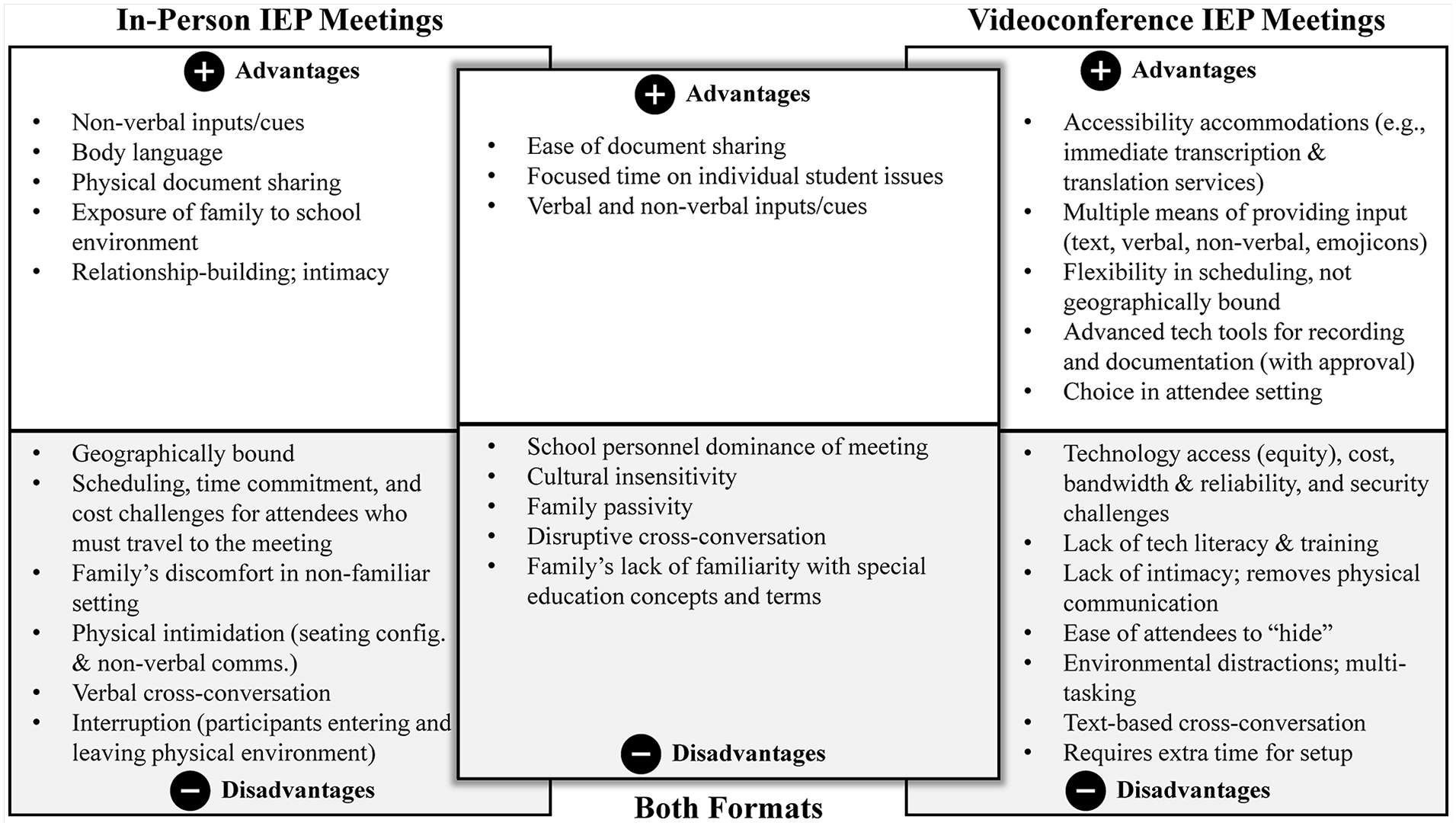
Advantages and Disadvantages of In-Person and Videoconference IEP Meetings
Existing literature about employing videoconferencing for aiding students with significant support needs and their families, regardless of whether videoconferencing was being used because of the pandemic school closures or not, consistently identifies technology access, useability, reliability, and security as its most significant limitations (Alba et al., 2022; Bruhn et al., 2022; Hirsch et al., 2021; Rule et al., 2006; Tenore, 2022). Indeed, technological barriers must be identified and mitigated prior to selecting a videoconferencing format for an IEP meeting. To participate in a virtual IEP meeting, all team members, especially family members, must have access to a secure and consistent high-speed internet or a strong wireless broadband signal and a computer or mobile device with a video camera and audio connection. (Dial-in access can be provided for participants who prefer to use the phone for their audio connection.) Furthermore, they must be familiar with or have access to training about participating in videoconferences. Once technical limitations are addressed, most of the disadvantages of virtual IEP meetings are similar to or the same as face-to-face ones, as Figure 1 shows.
Outside of technical difficulties, most objections to virtual IEP meetings are that they lack the personalization, human connection, and intimacy of face-to-face discussions (Bruhn et al., 2022; Patterson et al., 2007; Tenore, 2022). While capturing the physical aspect of in-person meetings in online settings is impossible, many other positive aspects of on-site IEP meetings can be emulated or advanced in online videoconferences. For example, during in-person meetings, participants can read the body language of other attendees. How the participants sit in their chairs, move their feet, tilt their heads, and adjust their facial expressions communicates their emotions and thoughts. This nonverbal communication can build intimacy (or cause conflict) between families, students, and school staff.
It is, however, wrong to assume that videoconferences lack nonverbal communication through body language. If each individual on an IEP team uses their own video camera feed, participants’ critical upper body language is still communicated in the virtual setting. In addition, attendees who are shy to speak up can use the videoconference chat to express their thoughts and emotions. Some research has uncovered that participants feel virtual meetings are less personal and prevent families from becoming familiar with school environments (Bruhn et al., 2022; Patterson et al., 2007; Tenore, 2022), but others favor videoconference meetings because families are less likely to be intimidated by the unfamiliar meeting rooms at the school and the awkwardness of pre- and postmeeting conversations (Patterson et al., 2007; Tenore, 2022; Weller, 2017).
There is no perfect solution to holding an IEP meeting. Both IEP meeting formats have distinct benefits and drawbacks. The value of the relationship-building that can happen in face-to-face meetings is only possible if attendees have the transportation means and time to come to a physical school location. The flexibility of virtual meetings is only beneficial if the technology being used is reliable. Both meeting formats require preparation and a concentrated effort by all team members to maximize the advantages and minimize the disadvantages of the format in which the meeting is being held. Furthermore, regardless of whether the IEP meeting is in-person or online, participants must communicate openly and honestly, collaborate effectively, and be active and focused throughout the meeting. Only then will the meetings be productive.
Considerations for Determining the Format of an IEP Meeting
Given the opportunities and limitations of both IEP meeting formats, IEP teams should consider several factors before deciding whether videoconferencing is a viable solution for all parties involved. Figure 2 offers guiding questions that the school team and families should consider to determine whether to hold in-person or videoconference IEP meetings. If the answers to the questions posed in Figure 2 suggest that videoconferencing is a more convenient and feasible format for the IEP team than in-person meetings at the physical school location, team members should be aware of the technology risks associated with videoconferencing and plan ahead to proactively address these issues through following some practical guidelines.
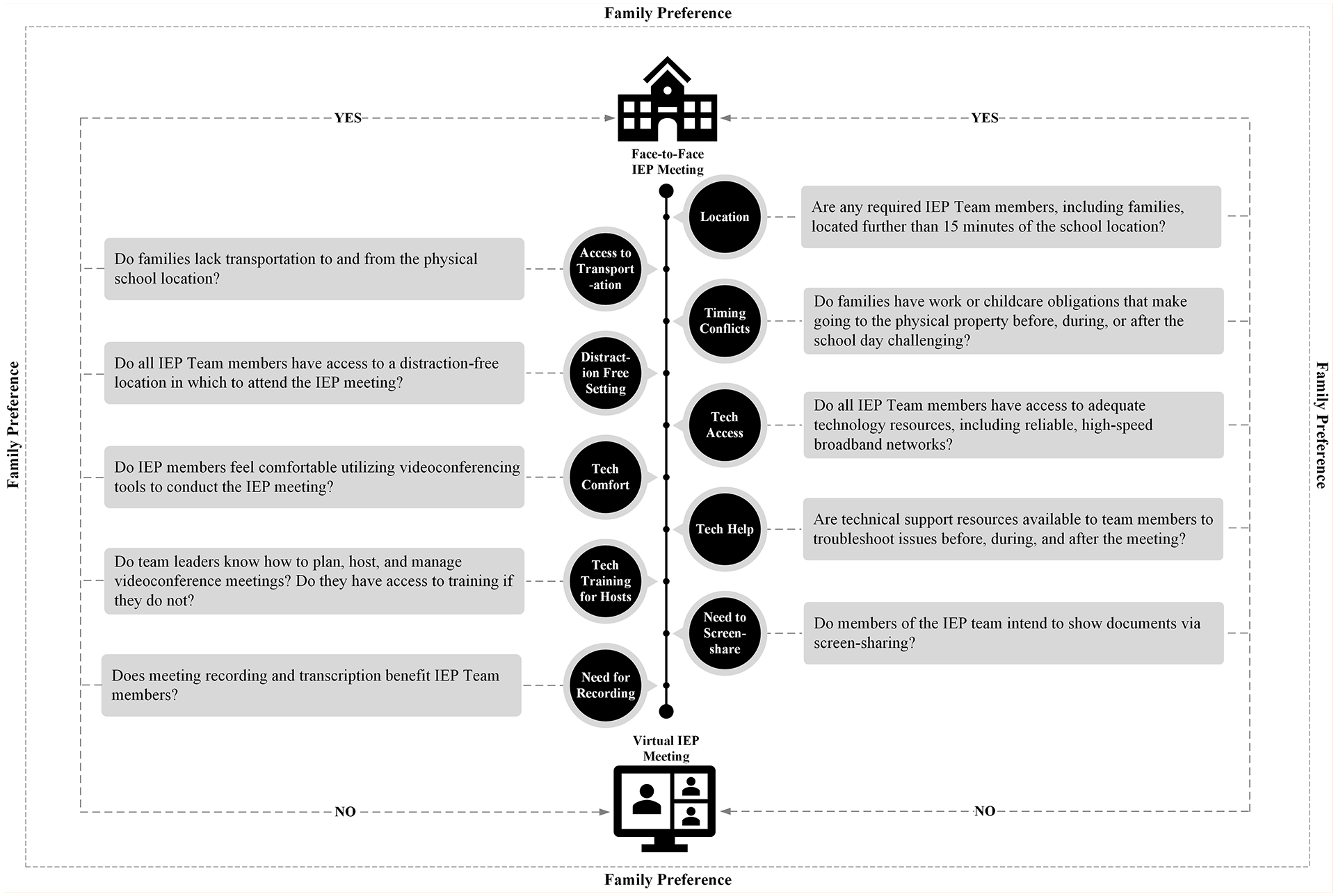
Questions to Consider When Determining Whether to Hold Face-to-Face or Videoconference IEP Meetings
Figure 3 outlines recommended practices that team members adhere to when planning and conducting videoconference IEP meetings. Most importantly, families must opt into a videoconference meeting format. Even if families answer yes to all the questions in Figure 2, they may still prefer onsite meetings. However, if virtual formats are selected, assessing the technology tools and technology support resources available to the team before the meeting and establishing etiquette guidelines and strategies that should be adhered to during the meeting will help ensure that meetings run smoothly. For example, establishing procedures for when a team member loses connectivity during an IEP meeting will minimize disruptions and ensure that everyone on the team can remain active participants in the meeting. The Center for Parent Information & Resource, a site funded by the Office of Special Education Programs (OSEP) at the U.S. Department of Education, has valuable resources and a tip sheet authored by Kupper (2020) to guide IEP teams in conducting virtual IEP meetings (website: https://www.parentcenterhub.org/virtual-iep-meeting-tip-sheets/).
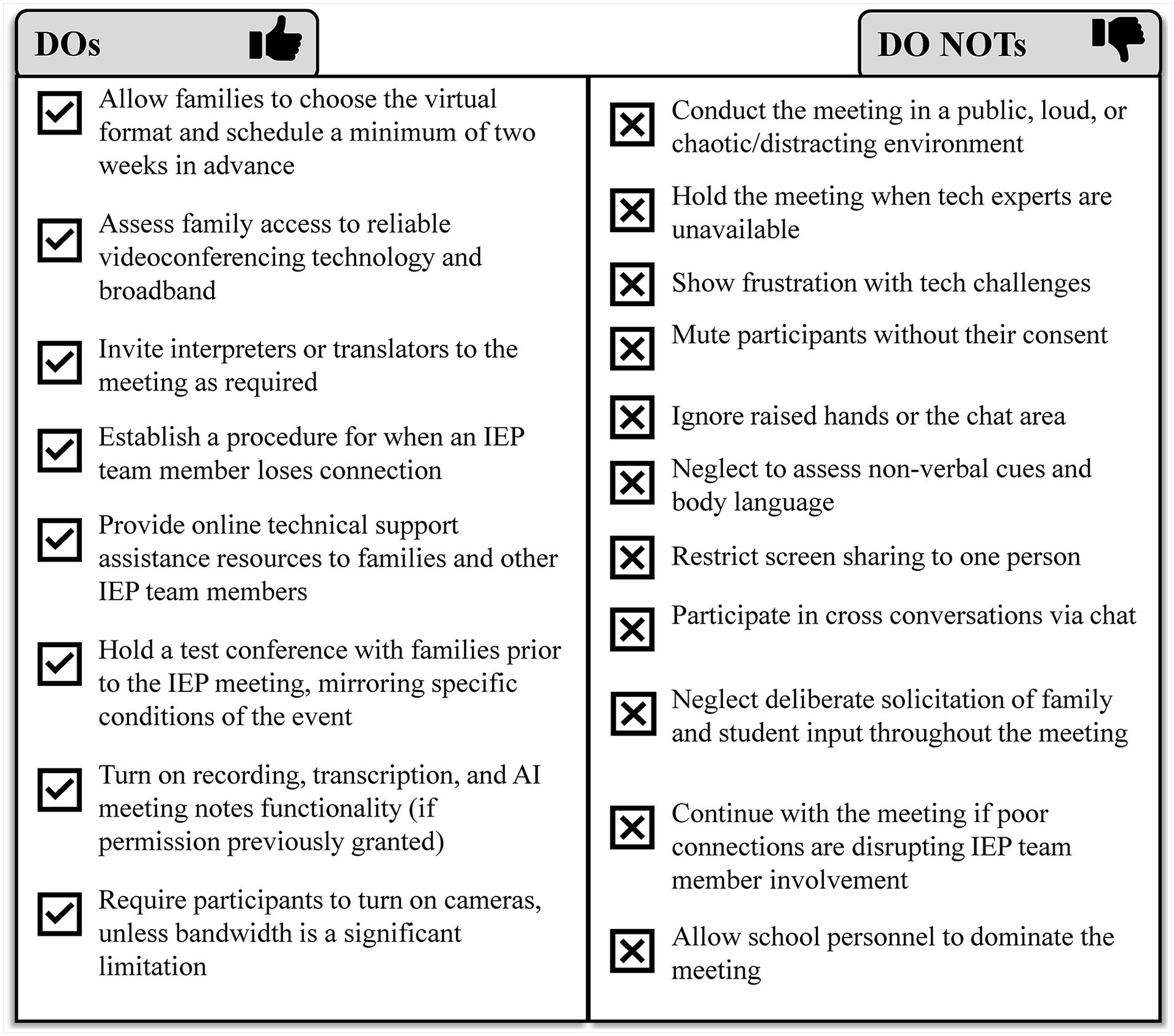
Technology Dos and Do Nots of Videoconference IEP Meetings
Recommendations for Successful Videoconference IEP Meetings
As Figure 1 highlights, there are considerable benefits to providing the option for virtual IEP meetings, and many of the drawbacks can be mitigated through thoughtful and thorough preparation, including ensuring that proper technology supports are available throughout the process. Holding these crucial meetings in a distance format requires planning and structure to ensure families actively participate in the IEP meeting. Still, given the significant benefits, especially to working families, K-12 schools should consider continuing to offer the option of holding IEP meetings using videoconferencing. A well-organized virtual IEP meeting needs careful planning, deliberate actions during the meeting, and strong post-meeting documentation and follow-up. Thus, the following subsections offer strategies for implementing videoconferencing within the IEP process. See Figure 4 for the condensed recommendations for practice.

Recommendations for the Successful Implementation of Videoconference IEP Meetings
Preparation Before the Meeting
The first step in planning the IEP meeting is to consult with the student’s family to determine preferred dates, times, and, using Figure 2 as a guide, the meeting format. If videoconferencing is selected, the school team must confirm that the family has access to the required technology, such as a videoconference-capable device and an internet connection (Feeney et al., 2024; Tenore, 2022). Videoconferencing enables families to participate and share information using platform features (Jimenez et al., 2020), but for this to be effective, families must have access to the technology and know how to use it. If the family has smartphones, the school team can offer coaching to help them set up the necessary videoconferencing platform before the meeting.
In addition, if families are unfamiliar with using technology tools, the school team can include “how-to” video resources in both English and the home language to learn how to use the tools (Feeney et al., 2024). Technical support resources, in addition to the IEP meeting agenda, attendee list (to include roles, responsibilities, and participant expectations), meeting goals, and student-specific materials for review, should be shared 5 to 10 days prior to the meeting and in the native language for the family.
Before the IEP meeting, families must be provided with procedural safeguards that outline their rights mandated by IDEA (2004). In addition to the physical copy of the procedural safeguards that families receive, the school team can provide a guide with options for modalities (e.g., written explanation, narrated video in both English and their native language) that explain terminology and concepts in family-friendly language. School teams can ensure that interpreters are available to support the discussion of these rights and responsibilities in depth (Tran et al., 2018). This practice helps to ensure that families are knowledgeable and confident to participate in the IEP meeting and express their desires, questions, or concerns before, during, or after the meeting (Feeney et al., 2024).
Finally, special education teachers must consider how to engage the family as an active participant. Special education teachers can prepare questions, allowing the family to share their child’s hopes, dreams, goals, and concerns. Questions that could be prepared before the meeting include “How can I make meetings as comfortable as possible for your family? What are three words you would use to describe (insert student’s name)? What are your goals for (insert student’s name)?” (Francis et al., 2023). These questions could be sent to the family beforehand, allowing them ample opportunity to think, process, and develop a response that can be incorporated into the student’s IEP.
During the IEP Meeting
The IEP process itself epitomizes a collaborative process between stakeholders. Before delving into the IEP itself, it is essential to welcome families into a virtual space (Feeney et al., 2024). The school team can engage the family in social questions to build rapport, which helps establish partnerships built on trust and respect (Fierros & Bernal, 2016). Then, due to the unique nature of the case manager position, the special educator may serve as the moderator, who initiates the start of the IEP meeting. The moderator can begin by reviewing online meeting etiquette, providing an overview of technology features, and giving permission to record the session. Then, the moderator can ensure that each individual on the platform changes their name to reflect their role within the IEP team (e.g., Ms. Philip/Assistant Principal) (Tenore, 2022). According to Feeney et al. (2024), “the intentional name and role “allows each participant to have an equal footing in the IEP meeting by providing much needed context as to the role of each participant in the meeting” (p. 282).
Furthermore, the moderator may have other roles specific to videoconference, such as monitoring the chat/reactions, ensuring closed captions (cc) are on and transcription tools in the family’s home language, and intentionally pausing the meeting to review the chat and ensuring the family has opportunities to ask questions or voice concerns. Due to the nature of the meeting format, additional roles can be assigned before the meeting, including timekeeper, notetaker, agenda follower, etc. These roles ensure the IEP meeting is equitable, organized, structured, and follows compliance guidelines. Furthermore, moderators ensure that all IEP team members are provided opportunities to share and contribute. Virtual platforms do not allow organic conversations in which multiple speakers talk simultaneously. However, the moderator can review IEP members’ participation options, including the chat feature, hand raise feature, emoticons, and unmute buttons (Feeney et al., 2024). These options can provide purposeful speaking procedures to ensure all team members contribute. Furthermore, the IEP team can establish that families always have access to the microphone while the remaining school team members remain muted, changing the power dynamics to empower families to share their voices (Alba et al., 2022; Freeman & Kirksey, 2022). At the end of the meeting, conclude with a summary of decisions and expectations for the next steps.
Post IEP Meeting
Following the IEP meeting, the family–school partnership must be maintained. Before consenting to the IEP, it is essential to provide the family additional opportunities to ask questions or articulate any further concerns regarding the proposed IEP draft (Feeney et al., 2024; Tenore, 2022). Families can receive the IEP meeting recording and transcription using a secure, password-protected method within 24 hours of the meeting time. The family can exercise their preferences when communicating their concerns or questions via phone, text, email, or follow-up videoconference meetings. This collaborative process of the school team encouraging the family to discuss their thoughts in their preferred manner outside of the meeting reinforces the value of the family–school partnership (Feeney et al., 2024; Gerzel-Short et al., 2019). Although the IEP meeting occurs annually, family–school communication and collaboration around student development and progress should occur consistently over the school year.
Conclusion
IEPs are required, and family involvement is essential despite continued documentation of lack of participation. The COVID-19 pandemic demonstrated that IEPs can effectively be conducted virtually, and there are benefits to leveraging videoconferences. Even without mandated virtual learning in a post-pandemic world, videoconferencing can provide equitable access for stakeholders to attend and actively participate in meetings. Collaborative and active participation before, during, and after IEP meetings through the use of videoconferencing can be achieved through numerous strategies such as co-creation of resources to be shared and utilized at the meeting and employing virtual platform functions (i.e., raise hand, chat box, screen share, reactions) that guarantee that all members of the IEP team are equitable and active members during the meeting. Holistically, videoconferencing enhances the efficiency, accessibility, and inclusivity of IEP meetings, leading to better outcomes for students with disabilities.
Footnotes
Conflict of Interest
The author(s) declared no potential conflicts of interest with respect to the research, authorship, and/or publication of this article.
Funding
The author(s) received no financial support for the research, authorship, and/or publication of this article.

Author Biographies
Anna Macedonia, PhD, is an education specialist at the U.S. Department of Education and an adjunct professor at Marymount University with over 10 years of experience in education, including roles as a visual arts teacher, special education teacher, and assistant principal. Her research centers on the connection between special education teacher preparation across local, state, and federal levels and its impact on teacher retention, particularly in relation to administrative support. She also explores the intersections of special education and educational leadership, focusing on how to better prepare school-based administrators to support special education teachers.
Christine Valadez, EdD, with nearly 25 years of leadership experience in educational technology and eLearning, is the senior vice president of Instructional Services for Keypath Education and an adjunct professor at Marymount University. She holds a doctor of education from Marymount University, a master of education in educational technology from Northern Illinois University, and a bachelor of arts in English from Northwestern University. Her research focuses on the impact of educational technology and online learning on faculty and student experiences, with current studies exploring technology leadership, artificial intelligence (AI), and online clinical-based education.
Alexandra S. Reed, PhD, is an instructor in the special education program at George Mason University. Her research interests are focused on individuals with significant disabilities and creating accessible and equitable environments in education, research, employment, and community organizing. Dr. Reed is currently the academic coordinator for the Mason LIFE program at George Mason University. Dr. Reed earned her PhD from George Mason University.
Maureen Howard, PhD, is an adjunct professor in the special education program at George Mason University. Her research interests are focused on transition for students with significant disabilities, with a specific interest in studying teacher experiences regarding student involvement in their individualized education program process. Dr. Howard is currently a lead teacher at a special education career center in Northern Virginia. Dr. Howard earned her PhD at George Mason University along with her MEd and her bachelor of arts at the College of William and Mary.