







Abstract
Background
Menstruation in Nepal is shaped by intersecting factors of caste, ethnicity, religion, geography, and generational norms, with practices ranging from subtle restrictions to overt seclusion. Despite being a natural biological process, menstruation is deeply stigmatized, affecting women’s dignity, safety, and daily activities.
Purpose
This study explored menstrual practices and intergenerational knowledge transmission among mothers and grandmothers in a rural far-west Nepali village.
Research Design
Using Collaborative Filmmaking – a participatory visual method – women participated in the study as filmmakers, co-researchers, and storytellers. Thirteen women, aged 23–68, from diverse caste and ethnic backgrounds co-created two films, 8-Day Journey and Stay Away, which documents daily routines, restrictions, and rituals in Kanchanpur.
Results
Findings revealed persistent limitations around sacred spaces, kitchens, water sources, and interpersonal contact, and highlighted evolving practices such as greater autonomy in sleeping arrangements, nutrition practices, and menstrual product use. Religious traditions were especially enduring even as other taboos declined. Participants reported enhanced comfort, hygiene, and agency due to increased access to menstrual products and knowledge, yet intergenerational tensions persist, with younger women challenging norms while elders maintain tradition.
Conclusions
The films provide visual insight into the subtle negotiation, reinterpretation, and resistance of restrictive practices, which illustrate both tradition and adaptation. These findings underscore the importance of multi-generational engagement, culturally and religiously sensitive interventions, and creative participatory approaches to amplify local voices. Integrating these strategies can inform policy, advocacy, and programmatic efforts to reduce menstrual stigma, enhance autonomy, and promote holistic health and well-being for women and girls in Nepal.
Keywords
Introduction
Menstrual Practices, Stigma, and Taboos in Nepal
Menstruation in Nepal is a deeply layered phenomenon with health, education, and human rights implications. Despite being a natural biological process,1,2 menstruation remains shrouded in stigma, taboos, and silence. 3 This often leads to the adoption of exclusionary practices that compromise the dignity, safety, and opportunities of women and girls.4–7 In Nepal, experiences of menstruation are shaped by caste, religion, geography, and generational norms.8–11 The diversity and intensity of menstrual practices across Nepal reveal a complex landscape where beliefs about ritual impurity and pollution persist, particularly in rural and marginalized communities.12,13
While global media and policy narratives often center on chhaupadi—a tradition in which menstruating women and girls are secluded in menstrual or animal huts and follow a range of restrictions—this narrow focus can obscure the broader spectrum of menstrual beliefs and behaviors across the country. 14 As Baumann et al. argue in Beyond the Menstrual Shed, menstrual seclusion in Nepal should be understood within a continuum, ranging from subtle exclusions to overt isolation, rather than as a singular or static tradition. 8
Foundations and Frameworks of Our Community-Engaged Research
Conventional academic research often collects data from communities with limited participant involvement beyond data collection. In contrast, this study employed Collaborative Filmmaking, a participatory visual method in which local women co-created, analyzed and screened films that explore menstrual traditions and beliefs among mothers and grandmothers in their community. 15 Through this process, participants shared their narratives—expressing advice, concerns, stigmas, and hopes for future generations. By centering the lived experiences of older women, the study provides new insights into how menstrual norms are formed, maintained, and contested, and how they might be reimagined in more supportive and equitable ways.
This research emerges from the Dignity Without Danger (DWD) research project, an interdisciplinary study (2018–2022) funded by the British Academy’s Global Challenges Research Fund. DWD examined the origins, diversity, and impacts of menstrual practices in Nepal, aiming to promote menstrual dignity and advance women’s sexual and reproductive health rights. Drawing on Douglas’s (1966) work on purity and social order, the project underscores the importance of understanding menstrual stigma within Nepal’s diverse sociocultural landscape.11,16
The project arose from long-standing collaborations between UK and Nepali universities and civil society organizations, bringing together academics, activists, practitioners, artists, and community members.
Visual, Creative, and Participatory Methodologies
Central to this study, and to the broader DWD project, was a commitment to co-developing outputs with key stakeholders to ensure practical advocacy impact. Grounded in a participatory theoretical framework, the research centered participants’ lived experiences and recognized that collaborative methods are essential for meaningful engagement. 11 Acknowledging Nepal’s cultural diversity and the absence of a single, unified narrative on menstruation, the DWD project aimed to produce a range of creative outputs that considered diverse social and geographic contexts. In this spirit, the team adopted Collaborative Filmmaking to explore menstrual traditions among women in far-west Nepal.
This work draws on a rich history of participatory action research (PAR), community-based participatory research, as well as foundational scholarship in visual and creative methods and principles.17–23 It positioned women not as research subjects but as co-researchers, filmmakers, and storytellers. It applies creative tools—such as film, storytelling, song, and drama—to express deeply held beliefs and practices in accessible and culturally resonant ways. Such participatory methods proved powerful in revealing hidden or “secret” knowledges, challenging menstrual taboos, and co-producing contextually grounded advocacy resources that amplify women’s voices and perspectives.
Study Objectives
Previous Collaborative Filmmaking research in Far-West Nepal revealed a wide range of menstrual practices among adolescent girls, shaped by caste, ethnicity, religion, internalized fears, and family tradition. 8 Building on this foundation, this study extends the inquiry to older generations—specifically mothers and grandmothers living in the same community. Although some prior work has explored experiences across generations, 24 older women’s voices remain largely absent from existing literature. This research addresses that gap by exploring the beliefs, practices, and messages transmitted by older women who act as key custodians of menstrual traditions.
Using Collaborative Filmmaking, we examined the complexity of menstrual practices across caste, ethnic, religious, and generational lines within a single village in rural southern Nepal. The study pursued two aims: - Document prevailing menstrual traditions and beliefs among mothers and grandmothers from diverse social backgrounds; and - Explore the advice, concerns, stigmas, and aspirations these women share about menstruation and implications for future generations.
Methods
Study Site and Recruitment
This study was conducted in Nepal’s Far-Western lowland Tarai region, within Kanchanpur District. Kanchanpur was selected to build upon earlier research with adolescent girls in the region, 8 extending the focus to mothers and grandmothers. The study community includes multiple caste and ethnic groups, making it a valuable site for examining the diverse menstrual experiences known to vary across these social categories.
Fieldwork began with a site visit in January 2020 by core team members (Baumann, Parker, Bhatta, Dhital). Participant recruitment was facilitated through local partnerships; Nirmala B. led community outreach based on her prior collaboration with Baumann in 2019. Using purposive sampling, we sought a heterogeneous group of women representing different caste and ethnic identities, age groups, and educational backgrounds.
Interested participants attended an initial two-day workshop introducing the study and the Collaborative Filmmaking method, after which they were invited to enroll (Figure 1). The final cohort comprised 13 women, aged 23–68, hereafter referred to as “the filmmakers.” Although the formal study period concluded in December 2022, the research team remains in contact with participants and continues to explore opportunities for disseminating their films. Collaborative Filmmaking training. (Top left) A participant attended the training with her two daughters; her older daughter contributed by illustrating the storyboard used to plan the film. (Top right) Members of the research team introduce the Collaborative Filmmaking process. (Middle) Filmmaking tips generated during the workshop and discussed with participants (illustration by Parker). (Bottom) Participants practiced creating short films within their community; these were subsequently screened in a group setting, followed by structured feedback from trainers (photos by Baumann).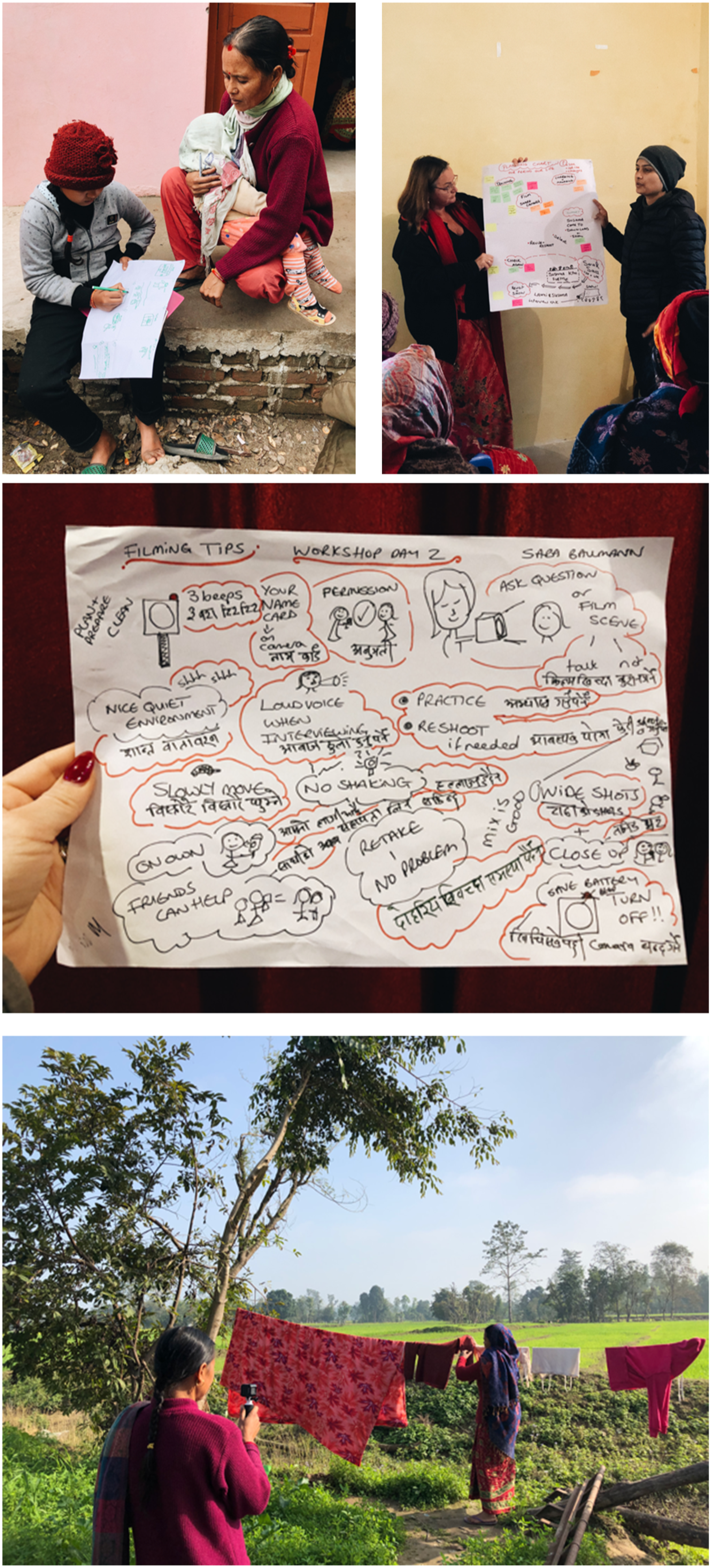
COVID-19 Pandemic
The onset of the COVID-19 pandemic in early 2020, shortly after data collection began, significantly impacted the project timeline. Prioritizing participants’ safety, the team adapted methods and extended the study period. While the pandemic caused delays, it also offered unexpected benefits: filmmakers had additional time to plan their films, and ongoing virtual engagement via Zoom and Facebook Messenger deepened trust and collaboration. This sustained, iterative process ultimately strengthened the authenticity of the final films, which reflect how the women chose to represent themselves and their communities. As such, we are confident that the final films meaningfully reflect the ways in which they wished to represent themselves and their communities.
Collaborative Filmmaking Research Method and Data Collection Procedures
Collaborative Filmmaking Steps.
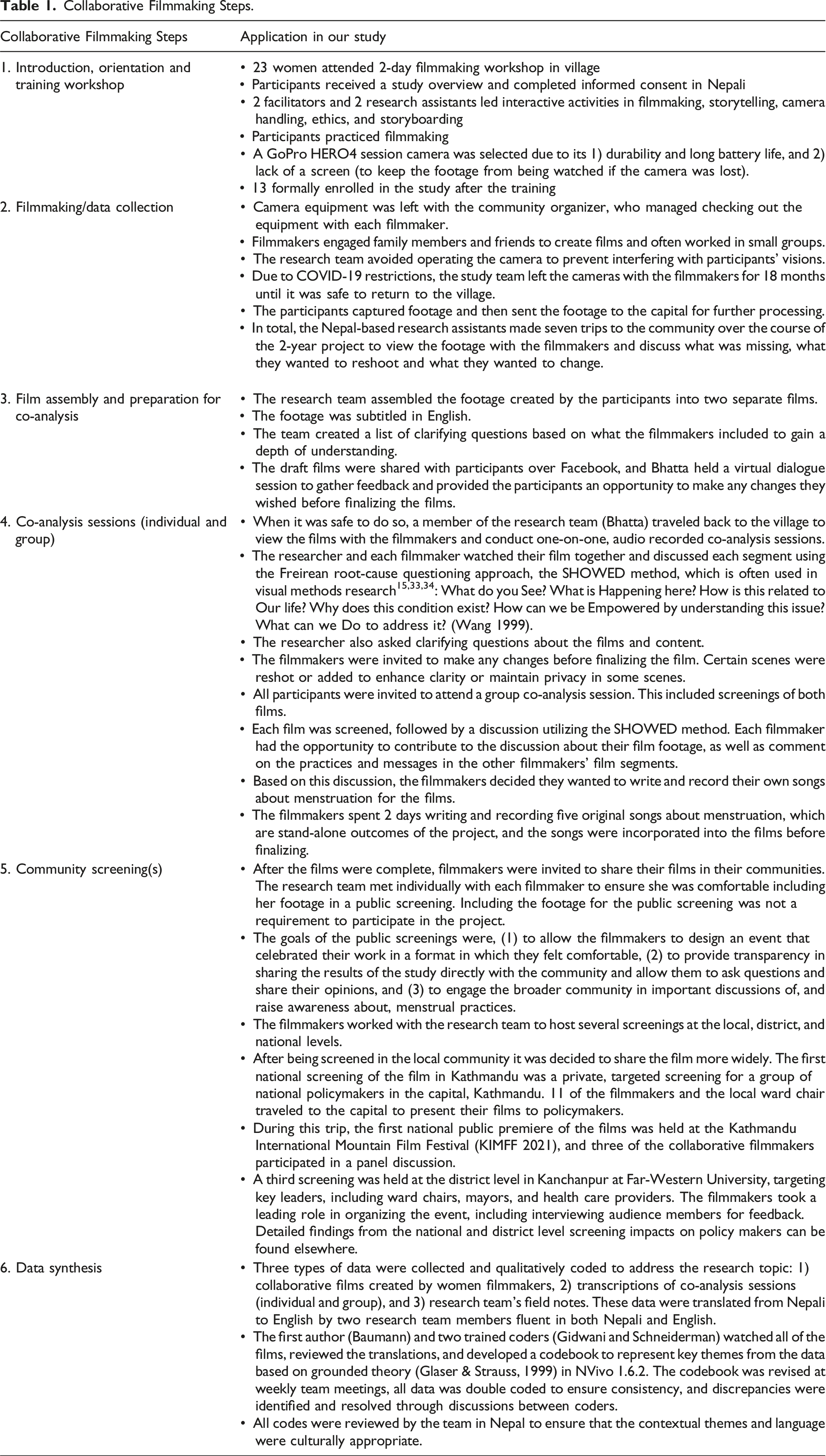
In this study, filmmakers were invited to respond to the prompt: “Reflect upon your environment and how menstruation has impacted your daily experiences. Think about how you can capture this on film.” Reflections and lessons learned from this study are detailed in a separate methods-focused publication (in review).
Ethical Considerations
This study was approved by the Nepal Health Research Council. Written informed consent was obtained from all participants prior to study initiation, along with verbal consent recorded on video before each film’s creation. To protect privacy, participants were advised not to film individuals outside the study. Consent was treated as an ongoing, iterative process: participants could re-record, remove, or revise footage at any stage. At the study’s conclusion, filmmakers completed a final consent process to authorize inclusion of their footage in a publicly shared compilation film. All participants agreed to public sharing and requested to be named in the final version and related presentations. Participants received 1,000 Nepali rupees (USD 7) for the initial training and 1,000–1,500 rupees (USD 7–11) for subsequent activities, consistent with comparable participatory research in Nepal.
Research Team Positionality
This research was conducted by a multidisciplinary team whose academic, professional, and personal backgrounds collectively informed the study’s design, implementation, and interpretation. The broader team includes professors, research coordinators, medical students, and undergraduate assistants, each contributing unique disciplinary perspectives and lived experiences. The team remained critically aware of how positionalities—as researchers affiliated with academic institutions—carry power and privilege that shape engagement with participants and data interpretation. To mitigate these dynamics, we practiced ongoing reflexivity and employed a team-based, iterative approach to thematic analysis, centering and honoring the voices, insights, and lived realities of the filmmakers throughout the research process. • Sara Baumann is a cisgender white, public health researcher and filmmaker who has studied menstrual traditions and gendered public health issues in Nepal for over a decade. She has expertise in qualitative, embodied, and arts-based methods and is the creator of Collaborative Filmmaking. She has prior experience in the study community, speaks Nepali at an intermediate level, and divides her time between Nepal and the United States. She is a wife, a mother to two children under the age of five, and experiences menstruation regularly. • Sara Parker is a cisgender white British woman, a wife, mother of two children and menstruated until menopause. She has been conducting research on gender participation education and gender-based violence in Nepal for over 30 years. She speaks local village Nepali and lived in a Gurung village for six months in 1992 where she didn’t experience any menstrual restrictions. She is an activist academic who regularly visits Nepal and works with a range of stakeholders on social issues. • Sushma Bhatta is an unmarried Brahmin researcher who menstruates regularly. She is from the Far-Western region of Nepal, speaks English, Nepali, and doteli (native to the Far-Western region of Nepal) languages. She is a keen photographer who travels across the country documenting and writing stories about people’s lives. • Korrina Gidwani is a South Asian woman who is interested in the intersection of global health, social medicine, and culture. She has contributed to several research projects that explore community health through a multidisciplinary lens. • Katarina Schneiderman is a nonbinary white family medicine resident physician whose clinical interests center on sexual and reproductive health as well as care for underserved populations. Xe one day hopes to be a maternal and child health fellowship trained specialist. Xe previously menstruated for 10 years, does not have any children, and currently works with Lakota speaking indigenous populations in the American Midwest. • Laxmi Dhital is a Nepali woman, a wife and a mother of two daughters, and an independent researcher with extensive experience applying visual methods in qualitative research. Laxmi worked as a Research Associate for the DWD project and collected stories of menstrual restrictions in various communities across Nepal. She worked for nearly five years for REFLET, an education and awareness program in Sikles, a Gurung village in Kaski. She personally has not experienced menstrual restrictions while living in the Gurung community. • Madhusudan Subedi is a professor of social science, identifies as a Nepali male and has been engaged in teaching, research and training since 1993. He was project lead of the DWD project in Nepal and is a father of two children.
Results
Participant Demographics.
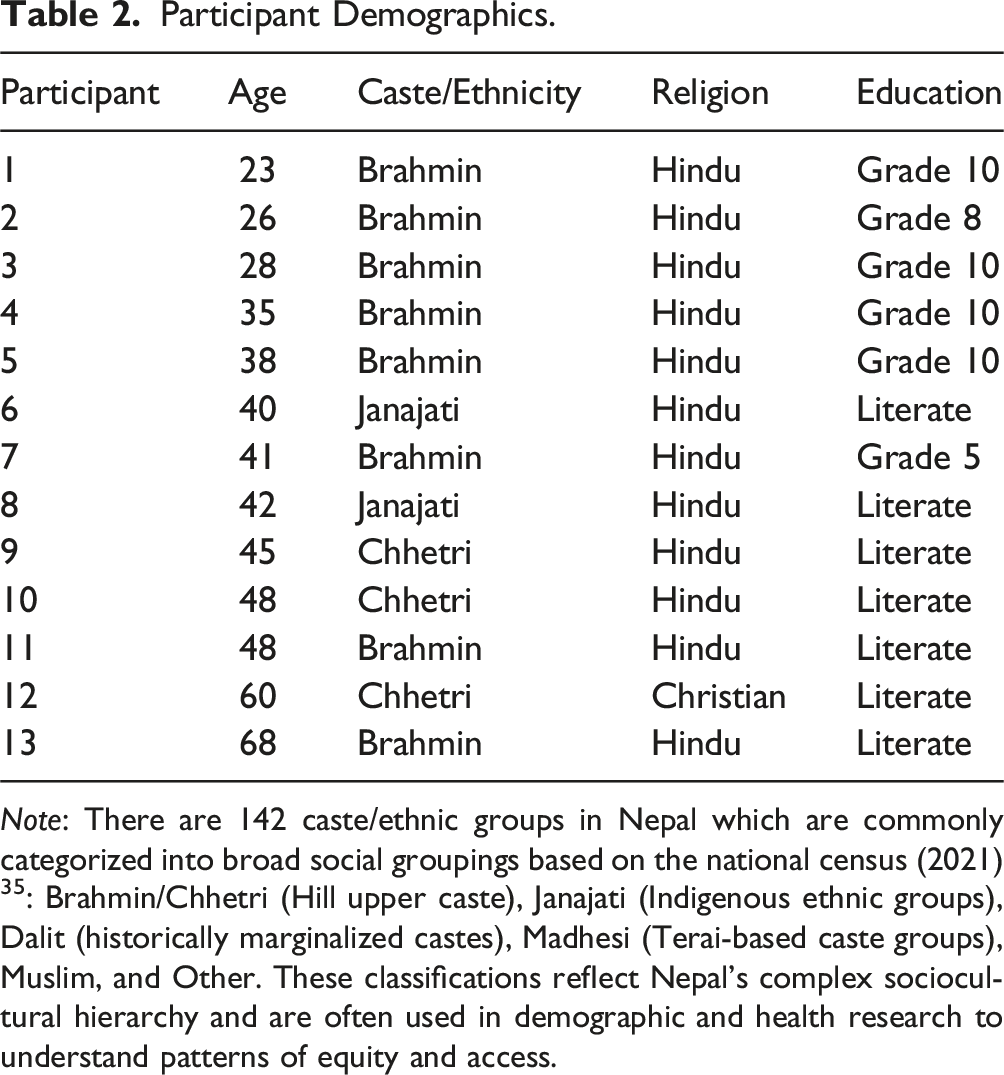
Note: There are 142 caste/ethnic groups in Nepal which are commonly categorized into broad social groupings based on the national census (2021) 35 : Brahmin/Chhetri (Hill upper caste), Janajati (Indigenous ethnic groups), Dalit (historically marginalized castes), Madhesi (Terai-based caste groups), Muslim, and Other. These classifications reflect Nepal’s complex sociocultural hierarchy and are often used in demographic and health research to understand patterns of equity and access.
Synopsis of “8-Day Journey”: Documentary Film
This 37-min documentary (Figure 2), co-created by 13 women from a single village in Far-West Nepal, offers an intimate portrayal of menstrual experiences across caste, ethnic, religious, and generational lines. Centered on the “8 days” of menstrual traditions every month, the film captures the filmmakers’ daily routines and reflections, revealing both shared and divergent practices within the same community. Title cards for the two collaborative films. Graphic design by Sophie Maliphant.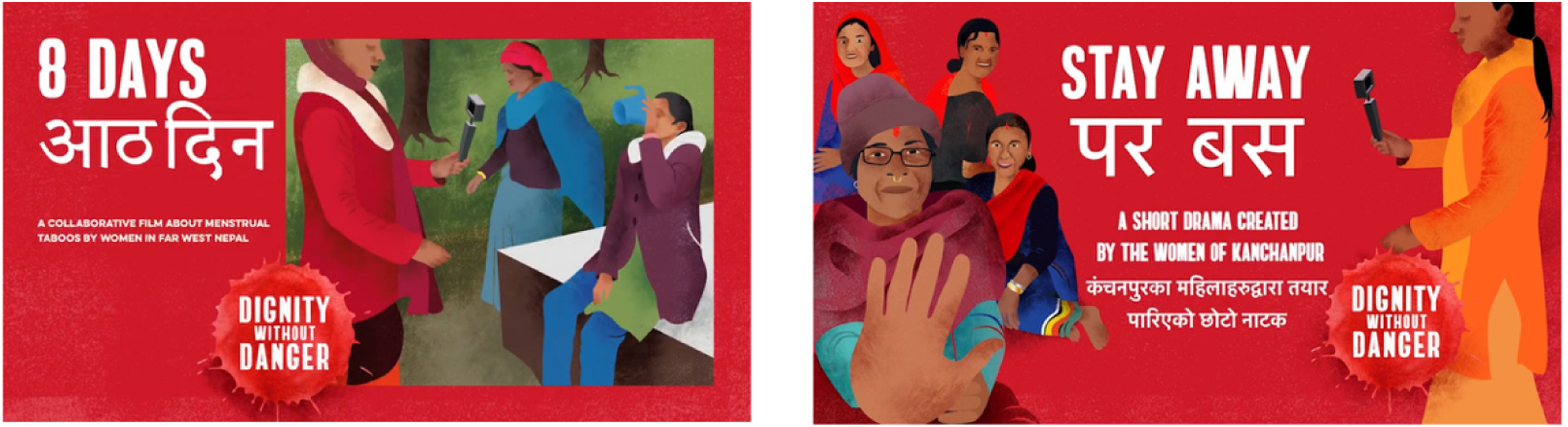
The documentary depicts a wide spectrum of menstrual restrictions—such as eating and sitting separately, avoiding cooking, using separate water sources or toilets, and refraining from household chores like washing dishes. Paradoxically, while barred from domestic work, many women continue physically demanding labor in the fields and forests, including harvesting mustard, cutting grass, and collecting firewood. Some participants also documented their past use of chhau goth (menstrual huts), providing visual insights into the now declining chhaupadi (menstrual seclusion) practice (Figure 3). Although none of the filmmakers currently sleep in huts, their accounts highlight both the persistence and transformation of menstrual seclusion. In the 8-day Journey documentary, women captured footage of the chhau goth where they used to sleep during menstruation (Source: 8 day Journey, 8:41).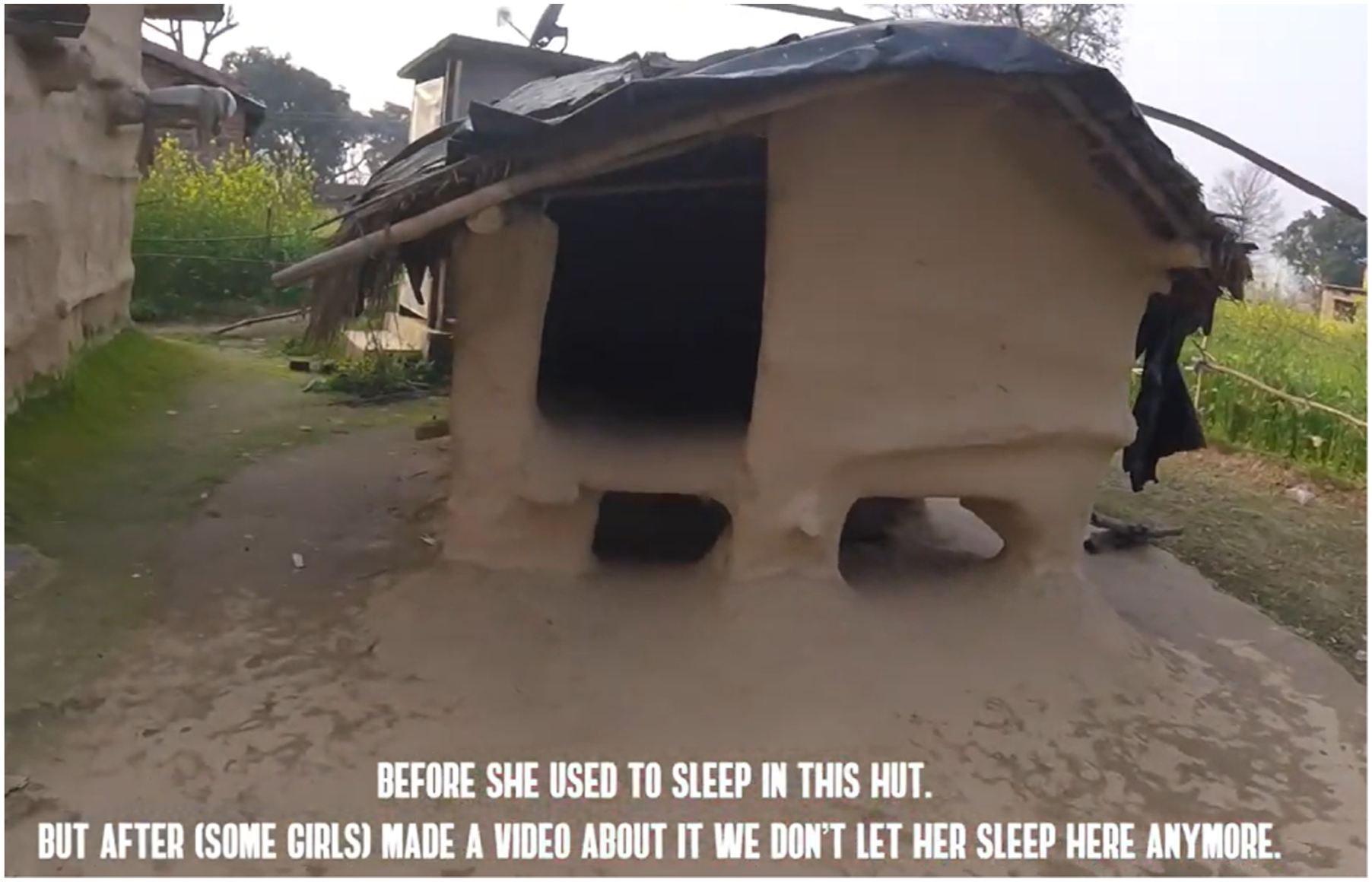
The film further portrays cleansing rituals marking the end of menstruation, which include washing clothes and dishes, purifying spaces with gaut (holy cow urine), and visiting Hindu temples after completing these rites. Yet, a few participants reported no longer observing them, underscoring the coexistence of tradition and change within one community.
Throughout the film, women share candid reflections on their experiences, expressing feelings ranging from frustration and resignation—“What can I do? Society is like this.”—to hope for change. Many contextualize their narratives through the lens of motherhood, contrasting their own restrictions with the greater freedom they now allow their daughters: “We don’t let our daughters do heavy work [during their period] out of fear they may bleed more… they are busy with their studies. We take good care [of them] and give them good food and everything.” These stories reveal subtle yet meaningful intergenerational shifts toward care and empowerment.
Employing video diaries, interviews, and reenactments, 8-Day Journey offers an authentic and deeply personal portrayal of women’s lived experiences. Conceived, directed, and filmed entirely by the participants, the documentary exemplifies the participatory and feminist ethos of the Collaborative Filmmaking method. The full film is available at: https://www.youtube.com/watch?v=cLrc2_tV500&t=215s.
Synopsis of “Stay Away”: Drama Film
Co-created by the 13 women filmmakers, Stay Away is a 15-minute drama set in a Far-West Nepali village (Figure 2). It tells the story of a beloved grandmother who believes she has been cursed after being touched by a menstruating woman, and explores themes of purity, pollution, and the tension between traditional beliefs and biomedical care.
The film opens with a women’s savings group meeting, where conflict arises when a menstruating woman arrives. Urged to sit apart, she resists exclusion, saying, “I feel hated… just because [I] don’t practice these traditions.” Appearing in the film, Figure 4 visually represents the recurring narratives and messages that menstruating women and girls encounter each month in relation to menstrual pollution. These messages, rooted in shame, restriction, and exclusion, are often internalized and contribute to harmful perceptions of the body and self-worth. In the end, the women’s decision to sit with the group prompts a village grandmother to fear contamination, symbolizing the deep stigma that persists surrounding menstruation. The following day, the grandmother falls ill and attributes her sickness to the incident. Rejecting hospital care, she undergoes purification rituals using cow urine, but her condition worsens. Eventually when taken to the hospital, she learns from a nurse that her illness is due to high blood pressure and infection, not menstrual contact. Still skeptical, she visits a traditional healer, who echoes the nurse’s advice. Gradually, the grandmother accepts and takes her medicine and later reflects that she will “never again blame menstruating women” for illness; though she continues her personal practice of purification, revealing how old and new beliefs often coexist. Language used to describe menstruation, which is featured in the film, illustrates how divisive beliefs can be, and their impact on women’s self-perceptions and sense of worth.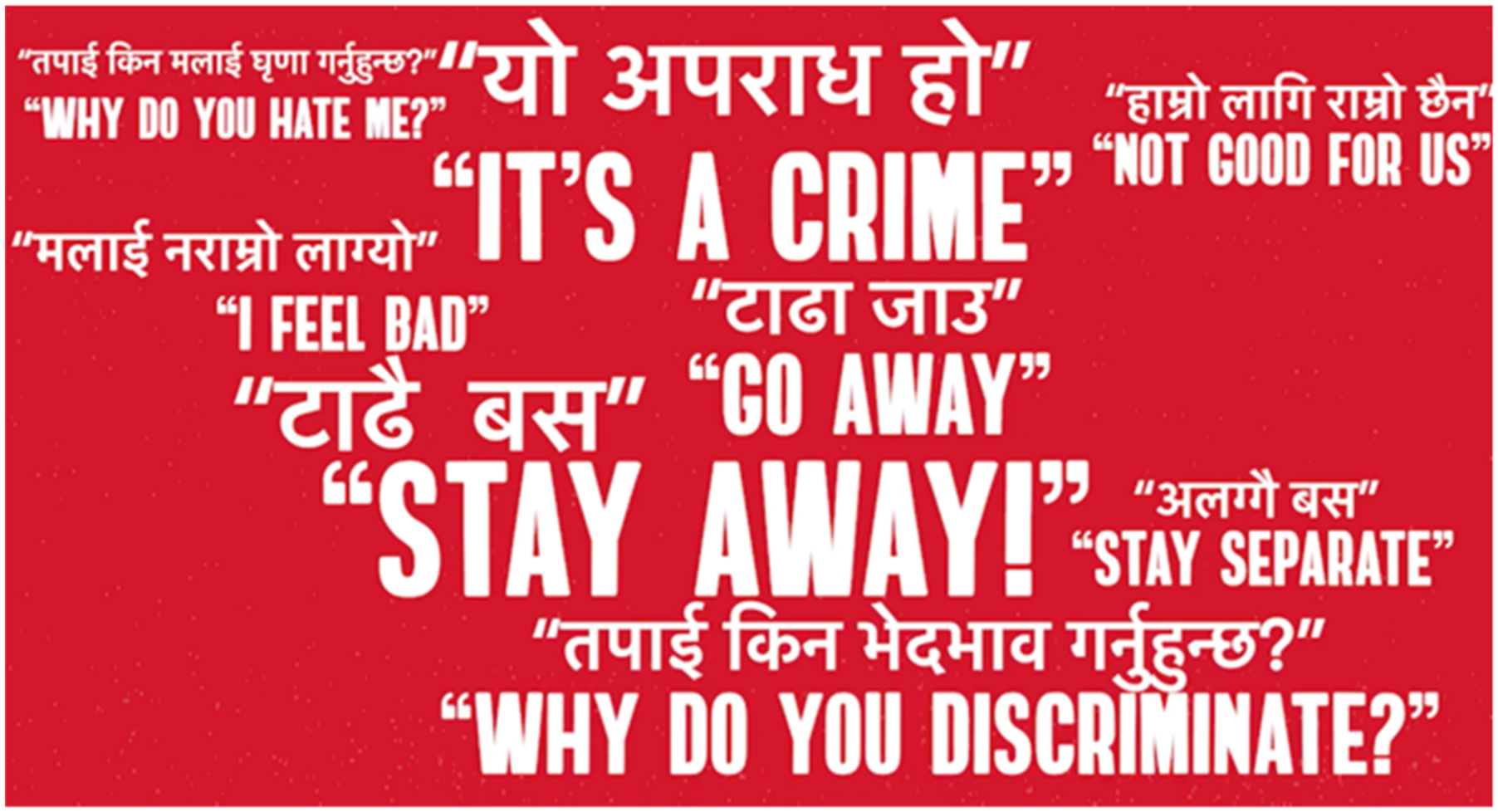
Through this narrative, Stay Away highlights the emotional and social consequences of menstrual stigma while depicting moments of dialogue, learning, and transformation within the community. The full film is available at: https://www.youtube.com/watch?v=ca1fjxVrepA.
Lived Geographies and Negotiating Menstrual Boundaries in Everyday Life
Boundaries of the Body: The Emotional and Physical Costs of Keeping Distance
For many women—and those they care for—menstruation shapes patterns of social and spatial avoidance. Historically, and in some cases still today, even leaving the home was discouraged. One mother recalled that during menstruation her daughters would stay indoors and avoid daily tasks such as cutting grass. For others, going outside was permitted but subject to restrictions around specific places, with avoidance of markets, schools, tube wells, fruit trees, and firewood collection areas. As one woman reflected, “Before, while menstruating, we didn’t use to go to school.” Avoiding school during mensturation in this area is no longer the norm, highlighting a gradual relaxation of certain practices, particularly among younger generations.
During the group co-analysis, participants discussed the long-standing prohibition against touching water sources such as tube wells. Some maintained that menstruating women have caused the water to dry up or attract insects, while others dismissed this as superstition. Religious and social sensitivities also influenced these practices. One non-Hindu woman noted, “We don’t go to their [referring to Hindu neighbors] tube well if we are menstruating, and they also don’t come to ours.” In some villages, women created practical adaptations, such as piping water to separate washing areas to avoid conflict while still maintaining hygiene.
Women also described navigating restrictions around trees and plants. In one film, a woman pointed to her vegetable garden and said, “They say the vegetables will rot if a menstruating woman touches them… If the plants are dry, I can go, but now there is dew and it is wet. They say if we go now, it will rot, so I don’t touch it.” Different trees had reasons for being avoided, ranging from concerns about fruit ripening to fears of angering the gods. Pointing to the amala tree, one stated, “According to our religion, this tree is a god/goddess, so we do not touch it.” While collecting firewood was commonly cited as a permissible activity during menstruation, cutting firewood was sometimes avoided because it requires touching a living tree to break branches. However, only some menstruating women considered climbing a living tree to cut wood unacceptable.
Rules surrounding bathroom use varied. Some families designated separate toilets or required women to use nearby rivers, while others permitted shared facilities when necessary. One mother explained her daughters’ practices as situational: in emergencies, they were allowed to use the toilet, but since a river was nearby, they were generally asked to relieve themselves there.
Both the 8-Day Journey film and group discussions revealed shifting practices around menstrual seclusion. In the past, menstruating women slept apart in chhau goths (menstrual sheds, Figure 3), were denied milk or curd, and subjected to humiliation. Today, most families allow women to sleep inside their homes, though separate sleeping arrangements persist in some households.
Interpersonal contact during menstruation ranged from unrestricted to highly controlled. Some women avoided all touch until a fourth-day cleansing ritual, motivated by beliefs that their “impurity” could harm others. Others described seclusion as a form of self-protection during a perceived vulnerable state. One woman explained, “During menstruation, we should stay protected,” referring both to physical fragility and risks such as sexual violence or snake bites faced by women sleeping outside.
The avoidance of people infused the filming with a compelling tension. Although women were expected to keep their distance due to numerous restrictions, they still had to interact with others to receive food and assistance to some extent. One woman was particularly adamant about maintaining menstrual restrictions in all aspects of life. She chose to film her cleansing ritual and repeatedly chastised the woman who brought her water and cow urine, insisting that she should not come close or touch her (Figure 5). (Left) Non-menstruating women take on the responsibility of providing water to other women during menstruation. (Right) A girl collects cow urine for purification rituals. (Source: 8 day Journey, 28:38 and 30:04).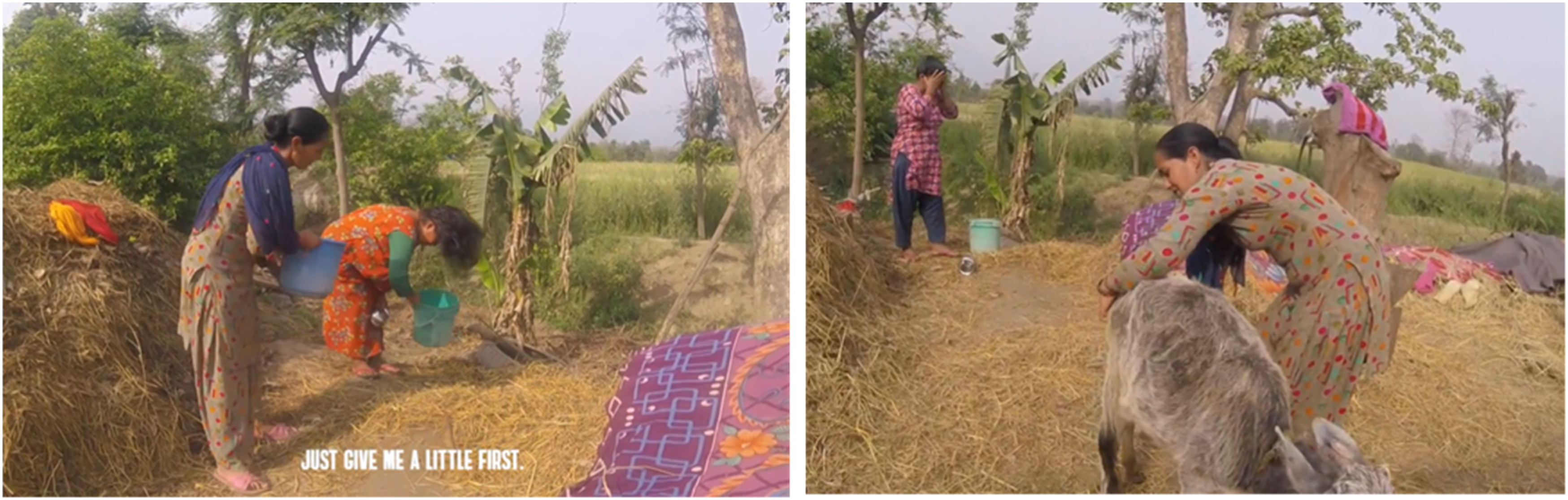
In one scene from the 8-Day Journey, a woman is shown crouching in a field to receive food, saying, “I feel bad, but what can I do? Society is like this.” Another woman, isolated during a village wedding, echoed this quiet resignation, murmuring, “What to do?” These moments capture the emotional weight of exclusion and internalized acceptance of restrictive norms (Figure 6). Despite these hardships, women’s reflections also reveal change. “Before, it was a big part of the tradition,” one participant shared. “Now, this mentality has largely diminished in my community.” Another added, “We used to feel shy about going in front of people. Now, we can move freely.” Examples of menstrual isolation. (Left) General social exclusion. (Right) Wedding exclusion. (Source: 8 day Journey, 0:38 and 10:30).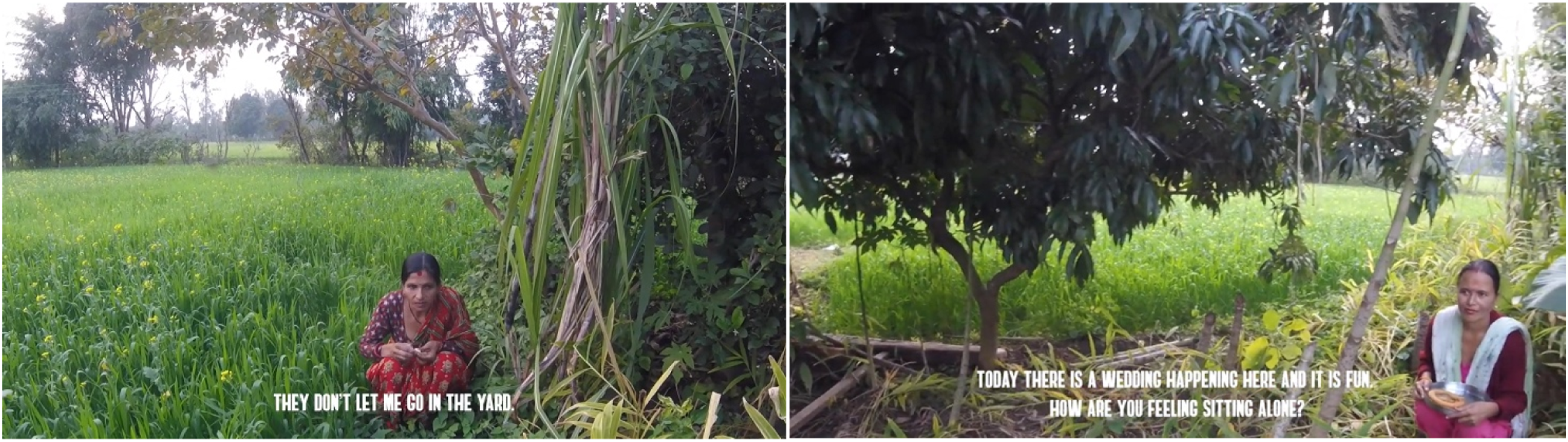
Participants also discussed the health consequences of exclusionary practices. Restricted kitchen access often led to malnutrition—“We used to eat a small portion of raw rice… that’s why we were admitted to the hospital.” Others described fear for their children while sleeping in open sheds, recounting incidents of pneumonia, snakebites, sexual violence, and even tiger attacks. These accounts underscore that menstrual restrictions are not only cultural but also pose serious risks to children's and women’s physical and emotional well-being.
Between Burden and Relief: The Paradox of Menstrual Rest
In 8-Day Journey, one filmmaker documents her work on the fourth day of menstruation as she walks to the fields to harvest mustard. A recurring theme across participants’ narratives is the contrast between restrictions on indoor labor and expectations for outdoor labor during menstruation. While many women are prohibited from performing household tasks such as cooking or washing dishes, they are expected to engage in physically demanding agricultural work. This includes cutting dry grass, collecting firewood, and harvesting crops. As one woman explained, “During our period, there is no work to do at the house. The only work is to cut grass and wood.” Another affirmed, “We can’t do household work… we can only work in the field” (Figure 7). One participant clarified that her avoidance of indoor spaces was less about contact with household objects and more about maintaining distance from others, such as her husband and in-laws. Thus, menstrual restrictions extend beyond spatial or labor-based boundaries; they shape and reflect social relationships within the household. (Left) A woman climbs trees and cuts wood during menstruation. (Right) Women collect firewood in the jungle, a labor-intensive activity. (Source: 8 day Journey, 5:43 and 6:43).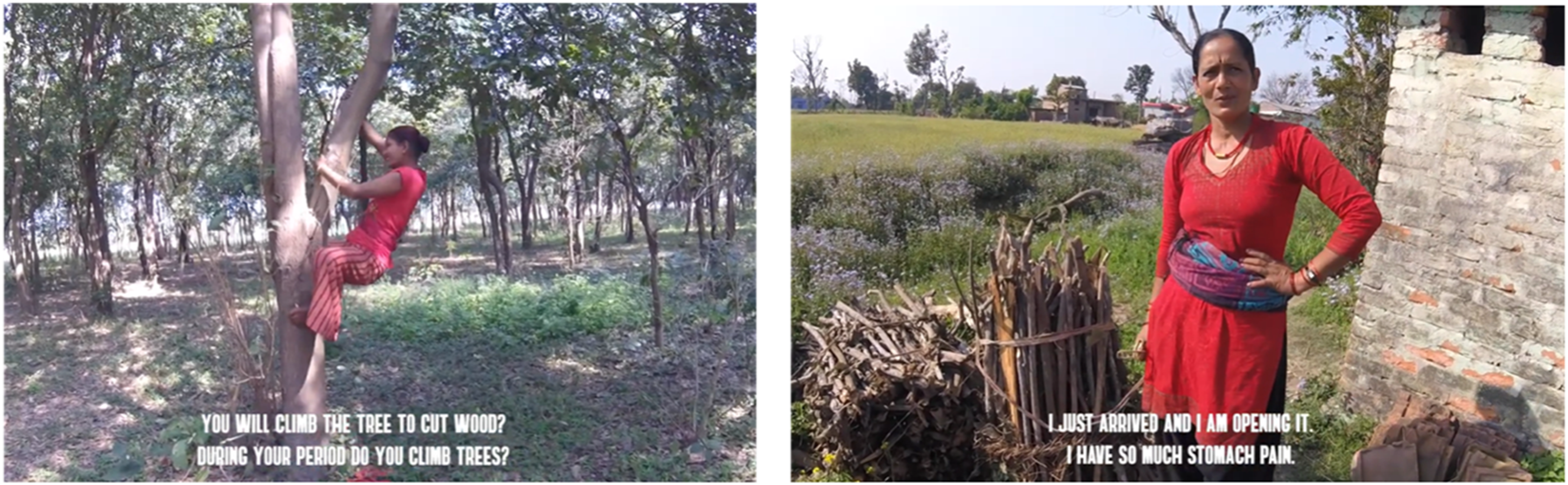
Previous scholarship has suggested that exemptions from household chores during menstruation may offer women a period of rest. In this study, one filmmaker noted that women are occasionally allowed to rest from work during menstruation if they are unwell. She shared, “When I menstruate, my head aches, my hands and legs hurt, I feel dizzy… it feels good to get a chance to rest.” However, most of the findings from this study complicate this assumption. One participant described being required to collect firewood from a distant location starting at 5 am as a substitute for her usual kitchen duties (Figure 7). She reported fatigue and abdominal pain and emphasized that she would not expect her daughters to perform such labor while menstruating.
During the group co-analysis session, women discussed the challenges of meeting their families’ needs during the first four days of menstruation, when they are typically prohibited from entering the kitchen or fetching water. 8-Day Journey visually depicts these constraints: a non-menstruating woman delivers water, collects cow urine, offers soap, and pours additional water for a menstruating woman’s use (Figure 5). These scenes highlight a clear gendered and generational division of labor, wherein caregiving responsibilities for menstruating women fall on other non-menstruating women within the household or community. Notably, no men were observed performing these tasks—such as fetching water or preparing food—despite participants in the co-analysis session asserting that “during the first four days of menstruation, men should also help with the work.”
Between Separation and Sustenance: Menstrual Taboos Around Food and Cooking
The kitchen emerged as a central symbol in many women’s conceptualizations of menstrual impurity. Frequently filmed standing at the thresholds of cooking spaces, filmmakers described a pervasive belief that their presence during menstruation could contaminate food or sacred areas. One stated, “This is the kitchen. I do not go inside [while I’m menstruating]. I will go inside after I’m pure.” While many women supported their own and their daughters’ participation in previously restricted behaviors—such as sleeping in their own beds, going outside, and consuming a range of foods including milk, curd, meat, fish, ghee, eggs, and vegetables—the kitchen and places of worship remained enduring sites of perceived risk. Some women received meals in the fields (Figure 6), while others cooked separately outdoors to avoid the household kitchen altogether.
In 8-Day Journey, participants expressed wide variation in dietary customs during menstruation. Some described relaxed norms, noting that they gathered vegetables, cooked, and ate with their families. One mother stated, “I give everything, including milk and curd, fish, meat, cheese, eggs, and vegetables.” Others adhered to more rigid rules, avoiding certain rooms, abstaining from rice until the third day, or reentering the kitchen only after purification rituals. These accounts illustrate a spectrum of menstrual food-related practices, ranging from complete rejection of taboos to strict, day-by-day observance.
During the group co-analysis session, women debated whether restrictions on cooking provided rest or reinforced inequality. Some appreciated that these customs occasionally prompted men to assist with household work, while others argued that participation in menstrual traditions should be a personal decision. The group ultimately agreed that “[women] should make [decisions] according to their own rules,” signaling a growing sense of individual agency in interpreting menstrual norms.
Generational shifts were also evident. Older women reflected that they had avoided foods such as milk and curd during menstruation but hoped their daughters would “eat properly and learn.” Others emphasized that adequate nourishment prevents physical weakness, advocating for less restrictive diets. These perspectives, echoed in 8-Day Journey, underscore a broader movement toward choice, nutrition, and self-determination.
Purity Performed: The Ritual Labor of Becoming Pure
In 8-Day Journey, several women emphasized the significance of purity and cleansing rituals during menstruation. Cows and buffaloes hold both religious and economic importance in Nepali communities, symbolizing holiness and sustenance. Menstruating women follow specific practices related to these animals. On the fourth day of menstruation, women bathe and sprinkle cow urine, believed to have sacred purifying properties (Figure 5). After this ritual, they may offer water to their buffalo and wash clothes and bedsheets used during the early days of menstruation, also purifying them with cow urine. Women reported that they are considered pure after completing these rituals, though views on the timing of full purity varied: some indicated the fifth day, while others suggested it occurs only by the eighth day. Following cow urine purification, women could touch certain objects intermittently but were often restricted from entering the kitchen until after the sixth day.
Group co-analysis discussions revealed that purity practices are evolving and differ between families. One woman explained that she was not allowed to serve or eat food until her surroundings had been purified with cow urine, though she noted that some households no longer strictly follow these practices. Another participant highlighted intra-household differences in belief: “Though we try to change, the older generation doesn’t agree… [if] I am standing here menstruating, the whole area of that house is considered impure because it is associated with me.” These accounts underscore both the ritual importance of purification and the variation and gradual transformation of menstrual practices.
Lived Practices With Menstrual Products
Women described significant changes in menstrual management and perceptions of related traditions in recent years, largely due to greater access to menstrual products and improved hygiene knowledge. Reflecting on the past, one woman recalled, “…they would be in a dirty situation… [but now] the women do cleaning, take baths, and wash daily… people before used to be dirty, used to stink; blood would flow and be visible outside.”
Another woman shared her personal experience: “We were poor. We couldn’t buy underwear, and we were illiterate. I didn’t use pads—only cotton cloth. But now, things have changed. People wear underwear and use cotton pads...” She emphasized teaching these practices to her daughters, a sentiment echoed by many participants, who expressed that they would have adopted cotton pads earlier if they had the knowledge.
The women’s films documented continued use of cloths for menstrual blood capture. One demonstrated washing her menstrual cloth at a nearby stream to reuse for the next period, while another displayed her cloth drying in plain view, stating, “Even if people see it, I don’t feel anything,” signaling reduced shame and evolving norms around menstrual hygiene.
Visual Portrayals of Menstrual Stigma
As women documented their multi-day journeys through menstruation, the personal impacts of societal stigma became evident. Each participant highlighted different ways menstrual traditions shaped daily life and constrained agency. One filmed herself receiving food in isolation, seated alone in a field (Figure 6); another depicted exclusion from wedding festivities (Figure 6); a third showed her sleeping space tucked beneath the stairs of her family home. One woman used a river for bathing and laundry, explaining that she could not touch the family’s water tap. When asked where she slept, she said, “I sleep in a small hut… [if I ask to sleep in my room] they don’t allow it, even if I wish for it,” illustrating the lack of autonomy women experienced.
Another film segment also captured community perspectives around a local temple. Two menstruating women were filmed sitting outside its boundaries, explaining, “We can’t go to the temple, so we are sitting here. Our friends are [at the temple], but we are here as we are on our period today.” They remained physically segregated from others and sacred spaces (Figure 8). (Left) Two women sitting outside the temple due to their status as menstruating. (Center) A man explaining the need for women to bathe before visiting the temple. (Right) A group of men stressing that after the 8th day of menstruation, visiting the temple is allowed. (Source: 8 day Journey, 35:30, 34:34, and 34:52).
During the group co-analysis session, women reflected on the emotional toll of societal stigma. One recalled, “…it used to be so much like hatred. People used to hate. People used to say, ‘yuck!’” Another shared, “I cried for two nights by myself. There used to be so many bad thoughts from society when they saw us. What had we done wrong? What kind of thinking is this?” These accounts underscore how deeply ingrained beliefs about menstrual impurity are internalized and experienced.
Sacred Landscapes and Navigating Religious Tradition while Menstruating
Based on the women’s films and reflections during the group co-analysis session, religion—particularly Hinduism—plays a central role in shaping menstrual practices. However, participants emphasized considerable variation in observance. As one woman noted, “We are also Hindus, though the traditions of theirs and ours are separate.” Another reflected, “The biggest thing is tradition rather than God,” suggesting that menstrual practices are often rooted more in localized cultural norms than formal religious doctrine. These findings highlight that shared religious beliefs do not lead to uniform menstrual practices; interpretations and behaviors vary widely.
Among all restrictions, avoiding temples and worship spaces emerged as the most consistently observed practice. Unlike rules governing kitchens or water sources, this restriction was rarely accompanied by explicit rationale, appearing instead as self-evident, embedded in the moral and spiritual fabric of community life: “We follow this same tradition… We are sleeping inside. We just don’t touch the hand pump and enter the worship room.” While some practices, such as sleeping in menstrual sheds, have declined, avoidance of sacred spaces remains largely intact, reflecting deep emotional and cultural attachment, viewed as essential rather than negotiable. Men in the community echoed this perspective, acknowledging changes in some practices but reaffirm the importance of religious customs: Man 1: In the news we heard the menstruation huts were destroyed. [Now they] share the same house and don’t face discrimination. Man 2: We eat and sleep in the same house. We do not discriminate for menstruation. Man 1: We don’t keep women out of the house. Man 3: Destroying the menstrual hut doesn’t mean they have to visit the temple. We should not leave our religion. We should not leave our truth.
During menstruation, women are generally separated from non-menstruating individuals and refrain from religious practices. One filmmaker explained, “We don’t go to the worship room. We don’t even sleep in that room too.” Another emphasized the perceived longevity of these norms: they have existed “since the beginning,” and violating them could bring misfortune. In contrast, a Christian participant described how her menstrual practices changed after converting from Hinduism: “We were Hindu, but now we are Christian. So, we do not follow any menstrual restrictions. It was hard before. Our God was extremely strict,” highlighting the ways religious affiliation shapes menstrual customs.
Tradition in Transition: Temporal and Generational Shifts
Many participants described current menstrual practices as an improvement over past conditions. One filmmaker recalled, “[We] used to say don’t go inside the kitchen until the eighth day.” Others described the hardships of previous restrictions, especially during adverse weather: “We used to stay without food… stay hungry… if rainfall occurred for five days… we could eat only raw grains or raw rice.” During the group co-analysis session, women emphasized their desire to meet basic needs—such as eating, drinking, and maintaining physical safety—while minimizing practices that cause shame or humiliation. One participant observed that isolating women from the kitchen or worship spaces was inherently unequal and should be discontinued.
For some, breaking cycles of harm for the next generation was a priority. One woman shared, “After menstruating, it is important not to discriminate against our daughters. If my mother-in-law gave torture, now we shouldn’t pass it on.” She further reflected on encouraging others to challenge stigma: “As I myself had slept in the cowshed… may my sisters not have to face problems like this—that was my thought. I want to make my sisters move forward. I told my sisters, ‘It’s not like this, menstruation is good in fact.’ We shouldn’t be scared to move forward. We should move forward by our own thoughts.”
These reflections highlight a collective aspiration to create more equitable and supportive conditions for future generations.
While filmmakers emphasized the desire for change, their films also illustrate the persistence of societal pressure, particularly from elders. Generational differences in attitudes toward menstrual restrictions are evident. In one scene, a menstruating girl asked her grandmother for water. Her grandmother responded, “Wait dear, I will give you in a while since I am washing clothes.” As the girl grew thirsty, she countered, “My friend’s mom does not follow anything,” prompting her grandmother to express caution, “You know how our gods are.” When the disagreement escalated, the grandmother exclaimed, “Why are today’s people insisting so much? Do not insist! Go away.” This interaction exemplifies the tension between younger individuals questioning restrictive norms and older generations maintaining them as cultural or religious duty.
Another filmmaker recounted trying to relax restrictions at home, only to be met with resistance: “[My father-in-law] said, ‘Now you have started being mad…’ and became angry. Though we try to change and convince, the elders don’t agree.” Fear of religious authority was also noted: “The dhami [faith healer] won’t be saying not to practice menstrual traditions.” These experiences underscore that even as younger generations push for change, entrenched familial and spiritual authority continues to sustain restrictive practices.
Discussion
Menstrual traditions in Nepal are marked by a complex interplay of taboos, cultural and religious beliefs, and vary depending on the local context and belief systems. The findings and Collaborative Films presented highlight that even at the micro level there is no single narrative; practices vary according to several intersecting factors such as age, religion, caste and ethnic group as well as influence of younger generations and their exposure to alternative menstrual narratives. This study provides an in-depth exploration of lived geographies of women and negotiating menstrual boundaries in everyday life in one community in rural, Far-West, Nepal. By centering the voices of mothers and grandmothers—key custodians of menstrual traditions—our research builds on prior work with adolescent girls,8,10,25–27 and illuminates the intergenerational dynamics that shape the lived experiences of menstruation.
The films offer visual insights into the fact that menstruating women connect over shared experiences of exclusion, however, they resist in diverse, context-specific ways. While previous studies have largely emphasized adolescent girls’ experiences, this study demonstrates that older women play a central role in maintaining, negotiating, and transmitting these norms, which aligns with previous research. Avoiding kitchens, following separate sleeping arrangements, restrictions on touching water sources, and engagement in ritual cleansing vary widely, even among women sharing the same faith and household.8,28 This intra-community variation underscores the limitations of oversimplified accounts of menstrual seclusion and highlights the interplay of cultural, religious, and familial factors in shaping behaviors. Previous studies also highlight the complexities of menstrual narratives,8,9 and our study only amplifies this, with a focus on the older generations.
Notably, restrictions around sacred spaces, including temples and religious sites, remain the most consistently observed practice. Unlike household or food-related taboos, these restrictions were rarely rationalized, appearing as deeply embedded norms. This aligns with prior research showing that religious practices often persist even as other menstrual taboos erode, and research highlights the importance of incorporating religious and spiritual leaders within interventions.13,29 A study by Barini et. al (2024) found that among menstrual discriminatory practices, religious restrictions were the most prevalent. 30 Furthermore, a study conducted among the Nepali diaspora in the United States highlighted that women often hold on to the religious dimensions of menstrual restrictions even if they move away from other practices. 31
A key contribution of this study is the exploration of temporal and generational shifts in menstrual practices. Participants emphasized improvements over past conditions, particularly regarding physical comfort, autonomy, and access to menstrual products. Increased availability of pads, underwear, and hygiene knowledge has enhanced women’s agency and reduced internalized stigma. Across Far-Western Nepal and beyond, many have reinterpreted or challenged restrictive customs, sometimes subtly, through quiet negotiation, and sometimes boldly, through public activism or education. In 8-day Journey, one filmmaker showcases where she used to sleep, compared to where she sleeps now. Her story demonstrates that change is possible, but it is often slow. Discussions with the filmmakers uncovered that change requires strong community engagement, intersectoral collaboration, and resilience and transformation within their socio-cultural realities. Some women feel courageous to take bold action directly in their homes, while others must navigate carefully and incrementally within households with evolving social norms. Often, change is shaped by individual agency. At the same time, intergenerational tensions remain evident. While younger women are more willing to challenge restrictive norms, resistance from elders and religious authorities continues to uphold certain practices, reflecting the enduring influence of familial and spiritual hierarchies. Other studies highlight the role of elders and the desire to respect and uphold traditions that have been passed down by elders.30,32
Beyond their analytic value, the films generated through this project have been actively used as tools for policy engagement and advocacy at local, district, and national levels. Our team has screened the films with community leaders, district health officials, and national stakeholders as a means of grounding policy dialogue in women’s lived experiences of menstruation and chhaupadi (Figure 9). These screenings have created accessible entry points for discussion, fostering empathy, reducing stigma, and enabling policymakers to engage with sensitive issues in culturally resonant ways. Importantly, the Collaborative Filmmaking process itself offers a scalable model for community-based messaging within anti-stigma campaigns, as it centers local voices while producing tangible materials that can be integrated into sexual and reproductive health training, advocacy initiatives, and public awareness efforts. In this way, the films function not only as evidence, but also as actionable tools that bridge community knowledge and policy discourse, supporting more contextually informed menstrual health interventions. Collaborative filmmakers traveled to the capital, Kathmandu, to present their films to national policymakers.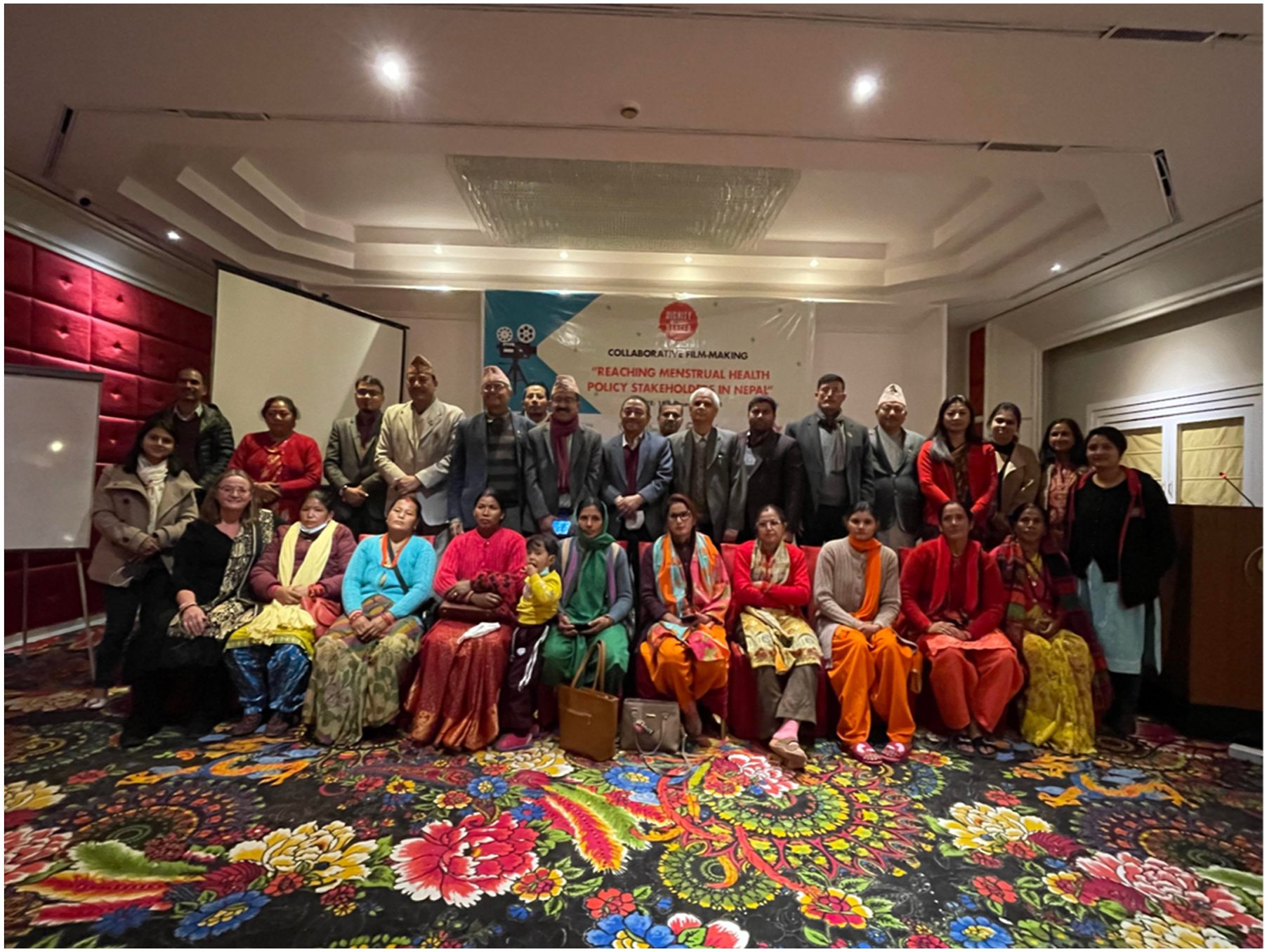
While a sample size of 13 from one community limits the generalizability of the study findings, the results of the films and associated interviews and discussions captured over the course of two years provide nuanced, rich, detailed information about variations in menstrual experiences over time. Moreover, data collection and community engagement were delayed due to COVID-19–related restrictions, which impacted the study timeline; many of the community-engaged research activities had to shift to online and telephone communication, which represents a limitation. However, these limitations also provided an opportunity for long-term interaction with the study participants and offered opportunities for research participants to take a leading role in the community-based activities. Overall, the research team is confident that the sample reflects numerous complexities of menstrual practices situated in this geographical context. Future work is needed to capture additional, diverse representation of menstruation experiences across Nepal, especially among marginalized groups such as those with disabilities and Dalits.
Conclusion
This study underscores the complex interplay of tradition, religion, and generational dynamics in shaping menstrual practices in Far-Western Nepal. By centering the voices of mothers and grandmothers through Collaborative Filmmaking, we reveal both enduring norms and evolving practices, highlighting how women navigate restrictions, negotiate agency, and transmit knowledge across generations. Findings emphasize that access to menstrual products and education alone is insufficient to challenge stigma; meaningful change requires engaging families, communities, and religious authorities, and incorporating participatory approaches that amplify local voices. These insights challenge policymakers, advocates, and practitioners to consider where authority over change resides. Menstrual equity cannot be secured through technnocratic solutions alone; it requires sustained engagement with cultural meanings, relational dynamics, and lived realities that shape menstrual practices. When interventions are grounded in dialogue and shared ownership, they move beyond reform toward transformation.
Footnotes
Acknowledgements
We extend our deepest gratitude to all the Collaborative Filmmakers and community members who generously participated in the development and production of the films for this project. Their voices, stories, and contributions are the foundation of this work. Special thanks are also extended to Kalpana and Parbati, daughters of the Collaborative Filmmakers who participated in a previous Collaborative Filmmaking study. Their decision to return and continue engaging with our team—and with the Collaborative Filmmaking method—demonstrates a deep level of trust and commitment. We are profoundly grateful for their invaluable support during the training process. We are also grateful to Ganesh Bahadur B.K., Ward Chairperson in 2020, for his ongoing support. His presence at the Kathmandu International Mountain Film Festival (KIMFF) film premiere in 2022, and his advocacy alongside the women filmmakers in conversations with policymakers significantly contributed to efforts addressing harmful practices and promoting community health and wellbeing. We acknowledge the essential technical and editorial support provided by Mingma Sherpa (Yak Productions), Jay Paudel (Stories of Nepal), and Sipee Kaphle, who translated the song lyrics associated with the collaborative films. Finally, sincere thanks to Sophie Maliphant of Wild Creativity for her thoughtful graphic design contributions that helped bring this work to life visually.

Funding
The authors disclosed receipt of the following financial support for the research, authorship, and/or publication of this article: Dignity without Danger was funded by the British Academy Global Challenges Research Fund (GCRF) Sustainable Development 2018 research programme. The project was given a two year no cost extension in 2022 due to the impact of the COVID-19 pandemic and additional funds were secured from Liverpool John Moores University GCRF funds for graphic design, translation costs, and editing support. Sara Baumann is supported by the Fogarty International Center of the National Institutes of Health under award number K01TW012424. The content is solely the responsibility of the authors and does not necessarily represent the official views of the National Institutes of Health.
Declaration of Conflicting Interests
The authors declared no potential conflicts of interest with respect to the research, authorship, and/or publication of this article.
Declaration of Generative AI Use
During the preparation of this work the authors used ChatGPT to improve clarify of language and succinctness. After using this tool/service, the authors reviewed and edited the content as needed and take full responsibility for the content of the published article.