







Abstract
Sixty years after Jamaica’s independence, remnants of imperialism are visible. It has been argued that the education system has not escaped these roots and that the system encourages and thus maintains the pre-independent tiered class structure and perpetuates education as an elitist entitlement. A brief review of the genesis of primary schools reveals they resulted from donations of the rich plantocracy and so curriculum, ethos, and job preparation were based on Eurocentric beliefs and approaches that sought to “civilize” newly freed slaves. Post-independent Jamaica continues to depend on and pander significantly to persons of a higher socioeconomic status, invariably marginalizing those who are not. This has had implications for access to and equity in education. Through a review of several educational policies implemented by the government of Jamaica, this paper critically examines the Jamaican education system at the primary and secondary levels to evaluate how policy interventions over the last three decades have laid the foundation for and align with the Ministry of Education’s current mantra of “Every Child Can Learn, Every Child Must Learn.” Furthermore, the paper will recommend approaches that engender social justice and may mitigate against children being further marginalized.
The Jamaican education sector is an amalgamation of financial, social, and political decisions that emerged over several decades (Chunnu, 2016; Miller, 1999). There have been changing administrations with consequent evolving policies, initiatives, and programs and, therefore, a series of transitions before becoming what is now education’s status quo. The Ministry of Education Youth and Information’s (MoEYI) mission of securing education for all students may be a deliberate attempt to uproot the seeds of class-determined education were planted by the country’s colonial forefathers. This paper spotlights the programs and policies that various governments have implemented to improve the education system vis a vis improving standards, broadening access, and increasing accountability across the sector.
Access to education is not limited to access to a physical structure but includes other economic and social factors which have prevented students from being able to attend school (Vasconcellos, 1997), especially in a developing country such as Jamaica. Some of these factors include access to nutritious meals, affordable school supplies, and reliable transportation. The policies discussed in this paper explore the different dimensions of educational access and argues that solving inequity needs to account for and address various aspects of exclusion. Therefore, to foreground the discussion, this paper provides a historical look into Jamaica’s education system to indicate how disparities emerged.
Context/background
Jamaica’s education system
Jamaica has been independent for 59 years and so it has predominantly existed under a regime of European dominance and accompanying class stratification. This dominance began with Spain in the 1500s, which decimated Jamaica’s original inhabitants, the Tainos. Britain followed Spain in the 17th century, bringing African enslaved people to the Caribbean to work on plantations. Following Emancipation on 1 August 1838, formerly enslaved Africans found their immediate socioeconomic position was, as before, significantly below that of slave owners. These former owners demonstrated their superiority by either requesting rent or commanding emancipated persons to vacate residences they had built as slaves. These demands forced the former slaves to accept low wages in exchange for accommodations, even though the Emancipation Act provided former slaves rent free accommodation for 3 months after gaining freedom (Gardner, 1971).
Faced with falling sugar production because of the labor shortage, the plantocracy had to find creative alternatives to restore pre-Emancipation production levels. One such attempt was made by the Governor of 1846, James Bruce, and involved the development of industrial schools. These schools were not focused on improving freed slaves’ socio-economic standing but on encouraging the production sector’s profitability. The push for education, therefore, in the newly emancipated British colony was to provide a solution to the dismal economic situation or as Johnson and Moore (2004) assert, a way to “preserve the status quo of white dominance and black servitude” (p. 1). The thinking was that if education was centered around technical skills and development of new technologies, the colony would be able to enhance agricultural production, increase importation to the home country and allow them to take advantage of the former slaves while maintaining their standard of living.
The incentives, then, for educational institutions were primarily financed through allocations made to the church (Gardner, 1971; Whyte, 1977). The parochial vestries expended £30,906 for church purposes, and £4603 for what they called education. Additionally, of the approximately £60,000 that various charities donated to the treasury between 1843 and 1847, only £4600 was spent each year on education.
At the Wolmer’s school in Kingston in the 1800s, for example, the annual cost of education was under 30 shillings a head (equivalent to approximately J$36,000 today). By the mid-1800s, the grants which the imperial government had allocated for the education of newly freed slaves had ended. Churches sustained a few schools which had a reputation for being the most expensive and least efficient in the island. Jamaica, therefore, had a system in which education was motivated by a desire to improve profits for rich landowners. The imperial government, however, did not directly support the education of the people but instead funded churches which then decided on the allocations for education. School quality was largely influenced by contributions made to churches and the vested interest in education was motivated primarily by a colonial interest in industrial development. The curriculum was shaped by the plantocracy through the imperial government and the church and was prompted by what the ruling class regarded as beneficial (Altink, 2019; Miller, 1999; Woolcock, 1984). Additionally, colonial schools that churches operated contained “poor buildings, large classes, poor and untrained teachers, and senseless methods of rote learning” (Whyte, 1977: p. 19). This resulted in a practical-based education intended to facilitate agricultural development and civilize the “half-educated vagabonds” (Johnson and Moore, 2004, p. 217).
The economic cost of education
The colonial government’s objective was to provide basic numeracy and literacy (Johnson and Moore, 2004) to the majority Black population (Brown, 1979); therefore, the rich aristocracy invested in education that would impact industry and lead to increased production. For example, the education of lower-class children was briefly referenced in an 1833 Factory Act which stated, “every child restricted to the performance of forty-eight hours of labour in any one week shall attend some school” (Great Britain, 1810–1828). In 1843, £1000 was allocated for educational purposes and distributed among 40 Wesleyan and six Presbyterian schools. In 1844, the grant was increased to £2000 and remained in this region for several years. Between 1864 and 1870, education was largely inaccessible to the masses as the allocated amounts could not sustain meaningful education and there appeared no demonstrated interest in educating the peasantry. Additionally, these limited grants had no fixed premise on which their distribution was based nor any defined standard either of efficiency or numbers. By 1867, a system was introduced in which grants were allocated based on school achievement and numbers of students enrolled (Ferguson, 1947; Gardner, 1971).
School stratification
In the mid-1800s, schools were divided into three levels. The lowest class was given £10 while the first-class schools were given £20. Schools were given additional funds if numbers exceeded 20 and attendance was good. This method served to eliminate inefficient schools. In 1871, 408 schools were examined, and of these, six passed in the first class, 68 in the second, and 239 in the third, with grants being £54, £34, and £20, respectively (Gardner, 1971). This represents a 170% greater support between the best and worst performing schools.
Eventually, as the education system expanded, there was a marked difference between the types of schools that offered opportunities for students. White and light-skinned students attended private preparatory and traditional (elite) secondary schools, while poor and lower middle-class students attended primary schools, often at a later age than their upper-class counterparts. These traditional schools had mostly British teachers who instilled White upper- and middle-class norms. Consequently, it was difficult for dark-skinned Jamaican children to gain access as these schools were few in numbers, mostly located in urban areas and fees and entrance requirements were exorbitant (Altink, 2019; Miller, 1999).
The government introduced technical, vocational, and senior schools to accommodate students aged 12–15 years, which were not selective like private and traditional high schools. The curriculum was broader and included vocational offerings. However, the funding that facilitated technical and vocational education came from the World Bank and had the opposite effect of creating greater spacing issues (Henry, 2012; Kelly, 2020) for students who could not easily matriculate into traditional high schools after age 15. Senior schools were extensions of primary schools and allowed students to transfer to a technical, vocational, or traditional high school once they completed their primary education. This process created a link between primary and secondary schools, especially for lower-class students. Meanwhile, the demand for traditional high school spaces increased, but less than 10% of poor and lower middle-class students attended traditional high schools (Altink, 2019; Miller, 1999; Woolcock, 1984). Notably, both the JLP and PNP governments allocated more of their budget to traditional high schools, while vocational and technical schools lacked the necessary resources such as workshops or qualified staff to teach subjects such as woodwork and metalwork (Altink, 2019).
With the introduction of the Common Entrance Examination (CEE) in 1957, students aged 10–13 at the primary level had to compete for limited secondary school spaces. Although the government allocated free places in these schools, many students could not take advantage of them because of additional fees for items such as books, uniforms, and transportation that their parents could not afford (Altink, 2019; Miller, 1999; Woolcock, 1984). Scholarships were allocated based on students’ performance in the CEE which consisted of English, arithmetic, and verbal reasoning. The exam, which was modeled off the Moray House Intelligence Test employed in England, assessed a child’s vocabulary, their facility with standard English and their reading ability (Altink, 2019).
Though the government’s goal through the establishment of the CEE was to ensure that more poor students could access secondary education, primary school students were less likely to take the exam and had reduced chances of getting a scholarship than private preparatory school students. These students (mostly White and light-skinned from the upper and middle-class) attended schools in urban areas, had better resources, and trained teachers. Further, they attended school earlier than dark-skinned, lower-class children, who often missed school to help parents with domestic or field work. Therefore, secondary education “remained the privilege of a selected few whose socioeconomic circumstances were key differentiating characteristics” (Woolcock, 1984: p. 51). In the early 1960s, due to the disproportionate amount of the free places being awarded to students from private (preparatory) schools, Edwin Allen introduced the 70:30 policy to secure 70% of the places for those from primary schools. Despite these interventions there were still many students who could not obtain a place and the introduction of the Grade Six Achievement Test (GSAT) in 1999 was intended to provide all primary level students a place in secondary school (Jamaica Observer, 2015a).
It was not until 2000, that the government sought to rationalize schools and the different types of secondary-level schools (technical, secondary, and comprehensive) were repealed and all commonly referred to as “high” schools (World Bank, 2004). Under this rationalization, all high schools would use the same curriculum and receive books supplied through the National Textbook Programme, facilitating more equitable access for students. However, negative societal attitudes and perceptions persisted about non-traditional schools due to the disparities in resources, infrastructure, and support between traditional and non-traditional schools (Jennings, 2020). Parents still wanted their children to attend traditional schools and made significant personal sacrifices to make this a reality (Altink, 2019; Miller, 1999).
The first 50 years after emancipation set the stage for school stratification in Jamaica. Past and recent research also highlight the influence of race and skin color on access to household amenities and educational attainment in Jamaica, underscoring the continued and complex role of race and skin color in stratification throughout the society (Gordon, 1991; Kelly, 2020; Kelly and Bailey, 2018; Smith, 1961). Specifically, darker-skinned Jamaicans have access to significantly fewer household amenities and overall years of education than lighter-skinned or White Jamaicans (Kelly, 2020), while the latter enjoy significantly higher levels of education and job status (Kelly and Bailey, 2018). As Chunnu (2016) contends, “educational problems in Jamaica derive from how the Jamaican school system has been structured historically” and “is vital to understanding some of Jamaica’s school system failures” (p. 34). The structure of the current system that emerged will be discussed next.
The current education system
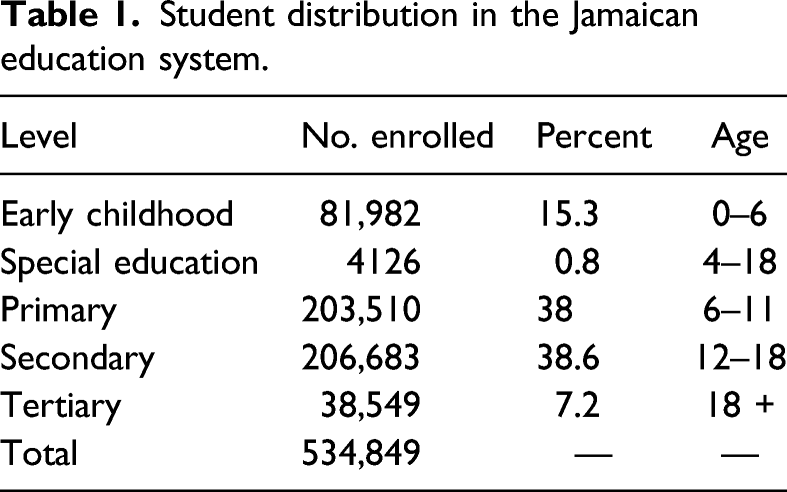
Student distribution in the Jamaican education system.
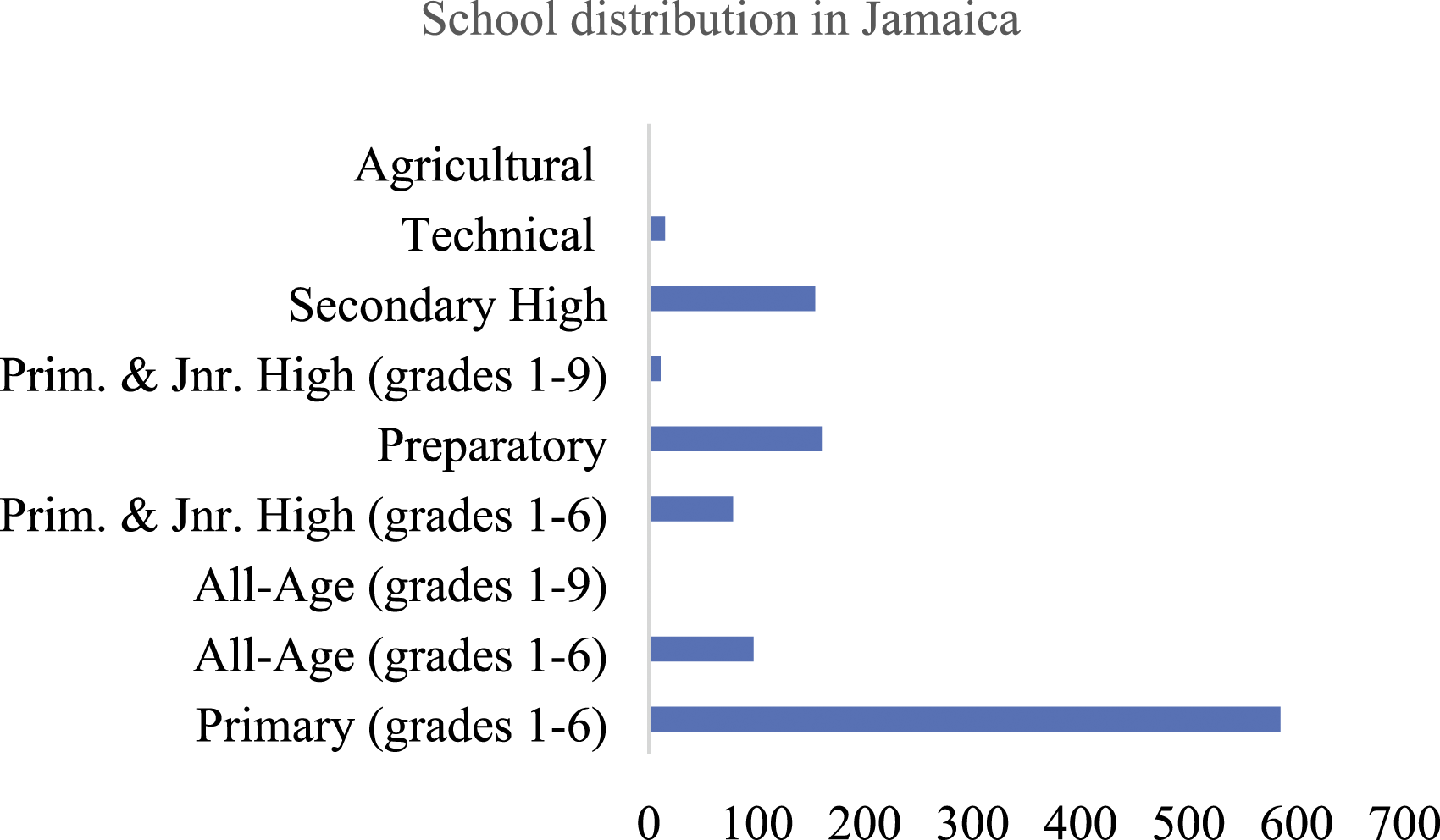
School distribution in Jamaica.
Current Expenditure:
An analysis of the spending in the education sector for the 2018/19 fiscal year shows that approximately J$74,967,875,000 was spent on the primary, special, and secondary sectors and represents an average government allocation of J$180,942 per student. This is 69.5% of the total education budget for the 2018/19 fiscal year. The total allocation to the MoEYI, as shown in the estimates of expenditure for the fiscal year 2018/2019, amounted to approximately J$107.8B. The education and youth portfolios were allotted J$104.7 billion and J$175.4 million, respectively, and the information portfolio was allotted J$347.9 million. Additionally, J$2.6 billion was allotted to the Child Protection and Family Services Agency (MoEYI, 2019a).
The total ministry budget included appropriations of J$826.8 million and represented a 3.1% increase when compared to the 2017/2018 financial year. This does not represent the total spend in some public institutions, however, as there are secondary institutions that ask parents to contribute annually to schools. These amounts are used to supplement the government’s subvention that schools receive, which in turn allow schools to offer supplementary programs and even additional incentives to teachers.
Support areas such as child protection and family services and youth development only account for approximately J$3.1 million dollars (2.9%) of the spend. The 2019/20 estimates of expenditure have an allocation of J$371 million for school upgrades including building new classrooms to alleviate overcrowding and reduce the number of schools on the shift system. Such budgetary allotments support research which links overcrowding to inequity and evidence shows that insufficient amenities reduce educational options (Ready et al., 2004).
In addition to increased spending to improve educational outcomes for students, the Government of Jamaica (GOJ), through the MoEYI and its agencies, has implemented various initiatives since independence which have attempted to address specific challenges experienced by marginalized groups within the society, including, but not limited to school-aged children. This paper argues that the Jamaican education system has historically been centered around inequity which, if remains unchallenged, will result in widening disparities in access and outcome for students (Evans, 1998).
In reviewing the MoEYI’s approach to improving the sector, there have been several initiatives, programs, and proposals, each with varying levels of impact and many dependent on or colored by the political party du jour. It was difficult to find the consistent thread of equity interwoven throughout the programs in a manner that would routinely facilitate inclusion, accept, and accommodate students’ diverse backgrounds, and reduce or remove barriers to learning. The upcoming section is a brief description of the paper’s theoretical framework, which undergirds the lens through which the policies are examined.
Theoretical framework
Social justice
Defining social justice remains problematic as it is a contested term (Bogotch, 2002; Sturman, 1997; Theoharis, 2009). Ball (2007) asserts that it is “equal participation of all groups in a society... mutually shaped to meet their needs…” (p. 1), while Gewirtz (1998) indicates that social justice involves disrupting systems and processes which exclude and marginalize. Goldfarg and Grinberg (2002) take a similar view as Gewirtz (1998) but contend that social justice includes advancing inherent rights such as equality, equity, and justice at the personal, social, economic, and educational levels.
Conversely, Fraser and Honneth (2003) conceptualize social justice from a frame of recognition and redistribution, arguing that they are “co-fundamental and mutually irreducible dimensions of justice” (p. 10). In other words, it is critical for marginalized groups within society to be recognized and, where appropriate, for the economic and social scales to be balanced in their favor. This recognition, they opine, will eventually accord previously marginalized groups the ability and means to be more empowered and participate in the decisions which directly affect their lives (Young, 1990). Dantley and Tillman (2006) relate social justice specifically to education, advocating for a change in school policies and structures which “perpetuate social inequalities and marginalization due to race, class, gender and other markers of otherness” (p. 19). Reich (2002) submits that social justice should create a system in which children receive an education that facilitates their development, enabling them to participate as equal citizens in the society.
Within any given society, part of the grand narrative may be that specific groups of persons who are unable or opt not to play by the rules of those in power will encounter “exclusion, marginalization, or silencing” (North, 2006: 513). Lopez (2001) defines marginalized as “people, voices, perspectives, identities, and phenomena that have been left out or ‘excluded’ from the center of dominant society” (p. 417). Freire (1990), incidentally, articulates that schools produce and replicate oppression and suggests that education’s purpose should be to reverse oppression and produce individuals who can challenge and oppose systems and institutions that create oppression in different ways.
Scheurich and Skrla (2003), in defining social justice in education, advocate for creating schools in which there are equitable and excellent practices. Furthermore, they state: “We are aiming to create schools in which virtually all students are learning at high academic levels. We are aiming for schools in which there are no persistent patterns of differences in academic success or treatment among students grouped by race, ethnicity, culture, neighborhood, income of parents, or home language. In other words, we are aiming to foster schools that literally serve each and every student really well.” (p. 2)
Critics of social justice discourse in education argue that there is an inherent paradox when the focus is primarily on practices that target underachieving students and improving their performance on high stakes tests (Bowers, 2001; Furman and Gruenewald, 2004). Consequently, they suggest that a myopic focus on accountability and performance reinforces a system of losers and winners (Furman and Gruenewald, 2004), creating greater challenges for the marginalized populations education is expected to serve (McNeil, 2000).
Accordingly, we propose that to dismantle the colonial confines within which the Jamaican education system has developed, it is essential to create schools that exemplify practices that facilitate student achievement regardless of status. Furthermore, there should be holistic systems within and beyond education that recognize inequities and provide appropriate balancing mechanisms. Successive Jamaican governments have implemented various policies and programs aimed at addressing this chasm. Subsequently, we discuss these various initiatives within the context of the MOEYI’s mantra and offer possible solutions where we believe gaps persist.
Through a review of the Jamaican education system, we interrogate the policies and programs that respective Jamaican governments have implemented, after gaining independence to facilitate a greater understanding not only of the genesis of the education system, but also to track the development and facilitate an understanding of the factors affecting policy directions. This paper focused then on policies and programs that based on their own expressed philosophy or explicitly stated mandate were envisioned to reduce barriers and increase access to education. Studies on access to education in developing countries (Andrew and Orodho, 2014; Orodho et al., 2013) postulate that access to education in developing countries is influenced by complex multidimensional and multifaceted social, economic, and political factors. Consequently, this paper seeks to highlight policies that address both in school and out of school factors that serve as barriers for students. These are described in detail in the following section.
Programs and initiatives
The MoEYI has sought to achieve various strategic objectives through a range of programs, policies, and initiatives operationalized by various agencies within the Ministry, while some involve external collaboration with multiple agencies. The nature of the varied plans and the multisectoral approaches adopted highlight the complexity of solving problems of access in the education sector.
School feeding
In 1973, the GOJ created a school feeding program to address malnutrition among school children (NPL, 2020). The program was monitored through the School Feeding Unit within the MoEYI in recognition that approximately 40% of students were malnourished and 30% had no food (Simeon, 1998). Initially, the program targeted about 50,000 students in government operated early childhood and primary schools. The Unit’s provision of meals envisions enhanced school attendance with an attending improvement in learning capacity. Free breakfast is provided to approximately 70% of the cohort and at minimal cost to others (NPL, 2020). This program is a subset of a wider governmental plan that recognizes that basic needs must first be met if students are to capitalize on educational opportunities. Currently, about 1000 schools receive nutrition support through the program (Simeon, 1998).
An extension of school feeding was facilitated through the Programme of Advancement Through Health and Education (PATH). PATH is a conditional cash transfer (CCT) initiative implemented in 2002 through the Ministry of Labour and Social Security (MLSS) along with the World Bank. PATH aims to improve social service delivery (health and education) to society’s most vulnerable groups (the elderly, pregnant/lactating women, children, persons with disabilities and poor adults aged 18–59 years) and alleviate poverty within those groups. Continued participation in PATH is contingent upon beneficiaries ensuring there are regularly scheduled health visits as well as children aged 6–17 years attend school at least 85% of the total number of school days each month (MLSS, 2020). Additionally, students access meals at least 2–3 times weekly and receive monetary assistance with transportation. This program serves to facilitate the provision of an enabling environment for students by ensuring they are properly nourished and have access to transportation and other critical resources. Providing students with these resources may help to mitigate against absenteeism from school and allows the MOEYI to move closer to its goal of increased engagement.
Curriculum support
In 1984, the GOJ launched the national textbook loan scheme and the primary textbook program to provide for primary and secondary level students who could not afford all their textbooks. This program also sought to replace textbooks that reflected predominantly industrialized and first world experiences by introducing books written by local and regional educators with more relatable contexts (Miller, 1999). The scheme involved books which adequately covered the curriculum, thereby reducing or eliminating the need for students to purchase additional books. In 2014, the MoEYI spent J$973.5 million on the program, while that figure was estimated to be J$817 million for the 2019/20 academic year (JIS, 2014). Significantly, the list excludes literature texts which are mandatory at some high schools. In 2017, the education minister noted that costly literature books posed an insurmountable barrier for the poorest students. Consequently, for the 2017/18 academic year, literature books were included on the list for PATH students. The students who could afford to would continue to purchase those books (JIS, 2017).
With the universal advancement in technology and the need to ensure relevancy, it was increasingly important for the education sector to twin traditional tools with emerging technologies and introduce the use of appropriate educational software to facilitate teaching and learning. This was achieved through e-Learning Jamaica Company Limited, an agency of the Ministry of Science, Energy and Technology. Specifically, they launched the “Tablets in Schools” project in 2014 as a collaborative effort between the MoEYI and the Universal Service Fund (USF) targeting access to learning for all students via technology. Computer tablets were distributed to approximately 24,000 students and 1200 teachers in six pre-primary, 13 primary, five all age and junior high, and 12 high schools, one teacher’s college, and one special education institution (JIS, 2020). By 2018, a new phase was launched with an investment of US$30 million to facilitate the training of approximately 12,500 teachers, the issuing of 91,000 tablets, interactive whiteboards, multimedia projectors and laptops.
In March 2020, the Cabinet approved the procurement of 40,000 tablet computers for students and 25,000 devices for teachers. Additional support such as offline servers and charging carts would mitigate against students having to take devices home with security concerns and poor internet connection hampering content download (JIS, 2020). Ultimately, the program would ensure large scale penetration into the education sector so technology would be integrated in the teaching and learning process, thereby allowing for “digital inclusion.”
Consistent with its multi-pronged approach and with the global acknowledgement of the need for critical thinking skills and greater inclusion in education, the National Standards Curriculum (NSC) was introduced in 2016 for students in grades 1–9. Using student-centered approaches, learners are required to ask questions, develop, and use models, analyze and interpret data, and engage in evidence-based argument. The government supported this approach by establishing STEM Academies, investing millions of dollars to build laboratories and establish linkages with industry leaders. This provided underserved students the opportunity to develop highly demanded skills in areas identified as having considerable potential for economic impact (Hylton et al., 2019).
These initiatives were strengthened by the National Literacy Team which has been functioning since 2008 and consists of reading coaches for grades 1–3 and literacy specialists for grades 7–9. These students are primarily those who have been placed in low-performing schools and consequently require reading and English language support. The restructuring of the mathematics curriculum through the National Mathematics Policy also saw the deployment of mathematics coaches in under-resourced schools to enhance capabilities at the primary and secondary levels in the teaching and learning of mathematics.
Partnership approach
The GOJ has also provided resources for other critical stakeholders in education. The National Parenting Support Commission (NPSC) was established in 2013 and has instituted 125 Parent Places in primary schools across the country. Parent Places, in conjunction with UNICEF and USAID, facilitate access to resources for parents from marginalized households that may assist them in providing the necessary scaffolding for their children. This support may be fora for discussing parenting issues and workshops on numeracy and literacy skills. A key objective of this initiative is to reduce absenteeism and dropout rates (JIS, 2015).
An additional component to the partnership approach was the creation of school alliances. This emerged from the awareness that some schools were outperforming others and had access to inordinately greater resources. To reduce inequity between schools, the Ministry has sought to encourage the sharing of best practices and resources. The Twinning Schools initiative includes the pairing of a traditional high school with a non-traditional school and seeks to expose students in the latter to academic and extracurricular opportunities unavailable at their institutions. Initially, 54 schools were enrolled in the program which is expected to last 2 years (Radio Jamaica, 2019). The Ministry also engaged in various partnerships to facilitate the inclusion of children with special needs. In collaboration with the Jamaica Association on Intellectual Disability (JAID), support is provided for the operation of schools such as Windsor School of Special Education, Carberry Court School of Special Education, and the Randolph Lopez School of Hope. Technical and financial support is also provided to private institutions that provide services to this category of students (Jamaica Observer, 2015b).
Quality assurance and accountability
The National Task Force Report on Educational Task Force on Educational Reform and Jamaica (2004) marked a shift in focus to augmenting education quality and accountability. The Report recommended the formation of several agencies tasked with policy making and oversight, school improvement planning, design and implementation, formation and enforcement of teacher standards and professional development, principals’ leadership development and assessment of school performance.
Within the framework of raising education standards, the National Education Inspectorate (NEI) was established to evaluate school quality and performance against established accountability criteria. The goal was to create a transformed education system at the primary and secondary levels with students who are making suitable progress during the learning process. Furthermore, the NEI would “make recommendations to support improvement in the quality of the provision and outcomes for all learners” (NEI, 2020).
The NEI conducts school inspections based on eight quality indicators: leadership and management, teaching support for students’ learning, students’ academic performance, schools’ and students’ progress over time, students’ personal and social development, the quality and use of human and material resources, curriculum and enhancement programs and students’ safety, security, health, and wellbeing (NEI, 2020). The NEI’s role as a MoEYI agency is critical to ensuring that all students make adequate progress and can access quality teaching and learning opportunities.
Leadership development and teacher training
In addition to the NEI, the Jamaica Teaching Council (JTC) was created to formulate regulations to boost teaching standards. Moreover, the JTC facilitates mentorship and capacity building opportunities for new teachers and specifies licensing and registration requirements. These agencies are considered critical components in terms of an upgraded education system.
Another agency established following the recommendations of the Task Force Report was the National College for Educational Leadership (NCEL). Stakeholders within the education sector recognized that traditionally, many principals were appointed with limited experience in and knowledge of management or leadership principles. This was problematic since principals were responsible for significant financial resources and expected to impact student achievement and drive school performance. NCEL’s primary goals through its principal training programs are to facilitate the supply of highly competent school leaders, develop leadership for school improvement and student performance, deliver high-quality services grounded in research and based on education policies, as well as create a better balance between knowledge and skills in leadership development. Initiatives and programs around curriculum support, quality assurance, accountability, and leadership development and training were all geared to toward facilitating a general improvement across the educational sector. These programs align squarely with set policy priorities of quality education and training articulated by the MOEYI.
These policies and programs are not intended to be exhaustive, but represent banner initiatives that sought to address inequity, facilitate uniformity in quality and to incorporate in one form or another, those stakeholders who may be on the fringes of the education system. Furthermore, they also represent an awareness that for every child to learn, all stakeholders must be involved. Importantly, the paper will discuss these initiatives through a social justice lens, which follows in the discussion.
Discussion
In 1909, Dewey (1909) argued that perpetual stratification in an education system (and society) would result in persistent competition and the ranking and sorting of students. This, he argued, would only be countered in a system where the needs of each student are met and that one could not separate an educational system from the society. This description seems apt in our local context where the wider Jamaican society continues to demonstrate a class separation stemming primarily from high poverty rates and differences in socio-economic status (World Bank, 2020), which then shapes the education system. Additionally, colorism and language attitudes play a significant role in marginalizing a certain demographic of the population (Gabriel, 2007). So influential is colorism, that it has led to a proliferation of bleaching practices predominant among those of a lower economic status (Gabriel, 2007). Similarly, negative attitudes toward Jamaican Creole (Patwa) are a vestige of slavery and its “subordination” to British English, which Patrick (2004) argues remains today with education and economic impacts.
Today, poverty is a significant contributor to the divide that exists in education, such that poverty rates are higher in rural areas (PIOJ, 2019). Poor students traditionally have access to less support, exhibit high levels of absenteeism and typically end up in lower quality schools (World Bank, 2004). Data from the Jamaica Survey of Living Conditions shows that only 60% of the poorest students had full attendance (attended school for all 20 days in a reference month), compared with 87% of students in the richest quintile. The Kingston area had the highest attendance rate of 90%, while rural areas had 74%. Moreover, 20% of students cited financial issues as their main reason for absenteeism (PIOJ, 2017). This typically leads to higher dropout rates for poorer students and those from rural areas. Consequently, they tend to achieve lower levels of education which reduces access to higher paying jobs, perpetuating a cycle of unemployment and poverty (World Bank, 2004).
As of January 2020, the MoEYI asserts that its mission is to “provide quality care and education in an innovative, inclusive and enabling environment thereby creating socially conscious and productive Jamaicans.” Of the twelve (12) strategic objectives highlighted by the Ministry, this paper focuses on those below which are related to issues of access: 1. To minimize the number of children and youth at risk through public education, needs-based intervention and programs for the safety, security, growth, and development of children and young people. 2. To maximize the percentage of Jamaican children aged 3–18 who have access and/or attachment to quality education (MOEYI, 2020).
As stated previously, the GOJ has implemented several programs and initiatives to improve the education sector. These programs have targeted areas such as nutrition, school attendance, parental involvement, curriculum improvement, teacher quality, and leadership development. This paper seeks to discuss these programs within the context of social justice, but more importantly, against the MOE’s own stated objectives of increasing access to quality education for all children.
The MOEYI’s mantra is predicated on the recognition that the student population is diverse such that each student has their own unique combination of cognitive ability as well psychosocial and economic fingerprint. Therefore, approaches contemplated for implementation by the Ministry considers these variations to ensure that all are engaged with the appropriate support and academic expectations adjusted accordingly. The “Every child Can Learn, Every Child Must Learn” serves to summarize the MOEYIs’ mission of providing a caring, inclusive and enabling environment in which every child accesses quality education and is therefore empowered to impact the world around them. The Ministry has, for example, facilitated teacher training in the management of behaviors associated with autism, emotional disorders and intellectual disability and has modified the content of the NSC to align with the cognitive abilities of students with moderate to severe disabilities. In fact, the importance placed on providing the support to enhance equity in access is evidenced by strategic objectives such as—maximizing the number of children who are safe and secure and minimizing number of at-risk youth (MOEYI, 2020). The Ministry is essentially indicating that if you provide children with suitable support (one that contemplates that they have diverse circumstances and equally diverse needs)—and ensure they access a quality teaching and learning environment, they will learn.
From the review of the different programs, it appears that the GOJ’s implementation of the various initiatives stems from the understanding that “every child can learn, every child must learn” is a process that cannot be achieved exclusively in the classroom or solely with educational policies. It requires social, cultural, and financial capital (Bordieu, 1986; Fischer, 1982; Lin, 2000) support to facilitate a child’s learning process. This is evidenced by the evolution of the PATH program since its inception, which reflects the GOJ’s responsiveness to recommendations as well as its commitment to ensuring program improvement and achievement of stated objectives.
Previous evaluations of PATH identified a few program successes such as the strength of the proxy means test in identifying beneficiary families (Gibbison, 2001; Innerarity and Risden, 2010), targeting effectiveness (Levy and Ohls, 2007, 2010; Mathematica, 2004), increased school attendance and the increased use of preventive healthcare services (Levy and Ohls, 2010). Although this initiative was predicated on improving school attendance for the poorest students, in 2008, the GOJ introduced the Steps-to-Work initiative as part of its strategy to help families obtain and preserve employment, increasing their ability to transition from PATH (MLSS, 2018). Through this initiative, individuals can access training and job readiness skills or in some cases, receive grants to start their own business to reduce and eventually eliminate the need for welfare benefit. There is also a partnership with other government agencies to provide training for beneficiaries, with funding assistance from the World Bank (JIS, 2011).
Between 2014 and 2019, the GOJ has spent more than $23.5 billion in benefits to eligible families, increasing benefit payment since the program’s inception by almost 53% (The Gleaner, 2020). This has been because of repeated complaints that benefits are insufficient to meet rising costs such as transportation and lunch (Marques, 2011). Most recently, the GOJ allocated an additional $380 million to offer transportation grants to schools for 7500 student beneficiaries across 94 public schools. This amount is a 25% increase in allocation to PATH (Loop Jamaica News, 2019). Additionally, students leaving high school to enroll in tertiary studies can also access a grant of $100,000 per academic year, which is paid directly to the institution on their behalf to defray tuition expenses (MLSS, 2018).
These developments in the PATH program, mirror what Fraser and Honneth (2003) indicate is an important element of social justice, that of recognition and redistribution, which are instrumental in creating opportunities for marginalized students to gain autonomy and agency (Reich, 2002). While prior studies have indicated increased access to education and school attendance through such programs, others argue that there is no indication of improved school performance for PATH students and the impact on dropout rates (Garcia and Saavedra, 2017), learning, quality of instruction and school improvement and other long-term school outcomes such as future wage earnings (Levy and Ohls, 2010).
We argue that the equitable education of a developing nation is a complex, dynamic, and multifaceted issue that cannot be achieved through a single program or initiative, and therefore, it becomes necessary to create multiple and integrated programs to holistically address the existing gaps in the education system. To achieve well-implemented programs with successful results, there must be a comprehensive approach to improving schools. Integrated student support, expanded learning time and opportunities, family and community engagement, and collaborative leadership practices matter; moreover, they appear to reinforce each other (Oakes et al., 2017).
Additionally, program monitoring and evaluation should involve relevant data collection and analysis that will more accurately determine the impact, if any, PATH has on those areas. Fundamentally, though, the program is designed to provide support for the most vulnerable students so that they can attend school regularly and therefore have an opportunity to consistently engage with peers and the educational system en route to positively impacting their own lives and society. We also posit that while PATH monetary allocations are insubstantial, the net effect results in an increase in the number of students who can attend school, an important obstacle to overcome. The program also attempts to treat the issue systemically, rather than superficially providing grants to individuals. Consequently, the emphasis is not primarily on the grant but what it represents. It presents an opportunity for an otherwise marginalized individual to access and leverage educational opportunities (Ball, 2007; Lopez, 2001).
Poverty is a consequence of several factors such as low educational attainment which results in limited access to high payment jobs. If we accept Hulme and Shepherd’s (2013) analysis that poverty is deprivation of not only income but also education, health, human and civil rights, then we recognize that simply “throwing money” at individuals would be treating symptoms instead of the cause. The approach taken in PATH aims to provide a leap pad not only for the students but for their caregivers who are then able to provide support and facilitate their movement through the system. PATH therefore includes, in theory, some key components. PATH recognizes that money is essential to provide resources such as transportation and food and serves to get students to school and feed them, so they are better prepared to learn. It provides additional support to facilitate enhanced health and earning opportunities—all critical elements in exiting poverty.
Essentially, school attendance is one aspect of creating a system that facilitates the development of all students (Reich, 2002). What is required is a system that not only brings a student to a physical space, but it must also provide critical engagement with quality programs and support which do not marginalize or alienate (Dantley and Tillman, 2006). Once students are in schools, they are invariably exposed to resources such as specialized reading teachers and computer centers on the one hand, or insufficient classrooms and furniture to accommodate classes on the other. The schools with greater resources are typically those with a large majority of the students from a higher socio-economic background (Miller, 1999) who are usually already performing at higher levels (Altink, 2019). Typically, this means these students have greater access to tutors and extracurricular experiences that enhance learning and, therefore, approaches geared at ensuring equity in the educational system must consider the unevenness in individual backgrounds. Bell (2018) refers to this as a kind of oppression which manifests in a system of advantage and disadvantage depending on group membership, membership which Harro (2018) asserts occurs because of our social identities from birth.
The Ministry sought to address this imbalance through the NSC, NEI, textbook programs, and tablets in school. Despite these efforts, stratification and disparities persist because of the significant and pervasive socio-economic differences in the wider society that manifest within schools. Schools with students in the richer quintile have access to greater resources and can support students beyond the Ministry’s capability; therefore, they continue to outperform others in their cohort. In fact, over the last 20 years, ten of the Rhodes Scholars have come from Campion College. The top 10 schools with respect to performance in the Caribbean Secondary Education Certificate (CSEC) examinations have remained largely unchanged over the last 10 years and these are all schools referred to as traditional high schools, with girls consistently outperforming boys.
Gender disparity
The latest Jamaican census indicates that there are almost 29,000 more females than males in the population (STATIN, 2011). The 2018/19 registration figures at the primary level indicate that there are 5360 more males than females. Figure 2 shows that this reverses by the time the students enter high school where there is a 9.6% decline in male registration and only a 4.2% drop in female registration. While this paper will not focus on the tertiary level, it is interesting to note that by the time students arrive at this level, there are approximately twice as many females as males enrolled. At the levels being interrogated in this paper, there is a marginal difference between male and female enrollment. By the time, however, students get to the tertiary level, only 18.7% of the cohort moves to pursue studies and the number of women is double that of males. This is significant considering a STATIN (2017) report that indicated women are being employed 11 times more than their male counterparts, indicating a significant marginalization of men in the education sector. Our approach to inclusion cannot be limited to an ad hoc program, but rather, should entail a change in mindset undergirded by a set of beliefs which help to guide the decisions surrounding teaching and learning practices within schools (Theoharis and Causton-Theoharis, 2008). Distribution by sex in the Jamaican education system (2019).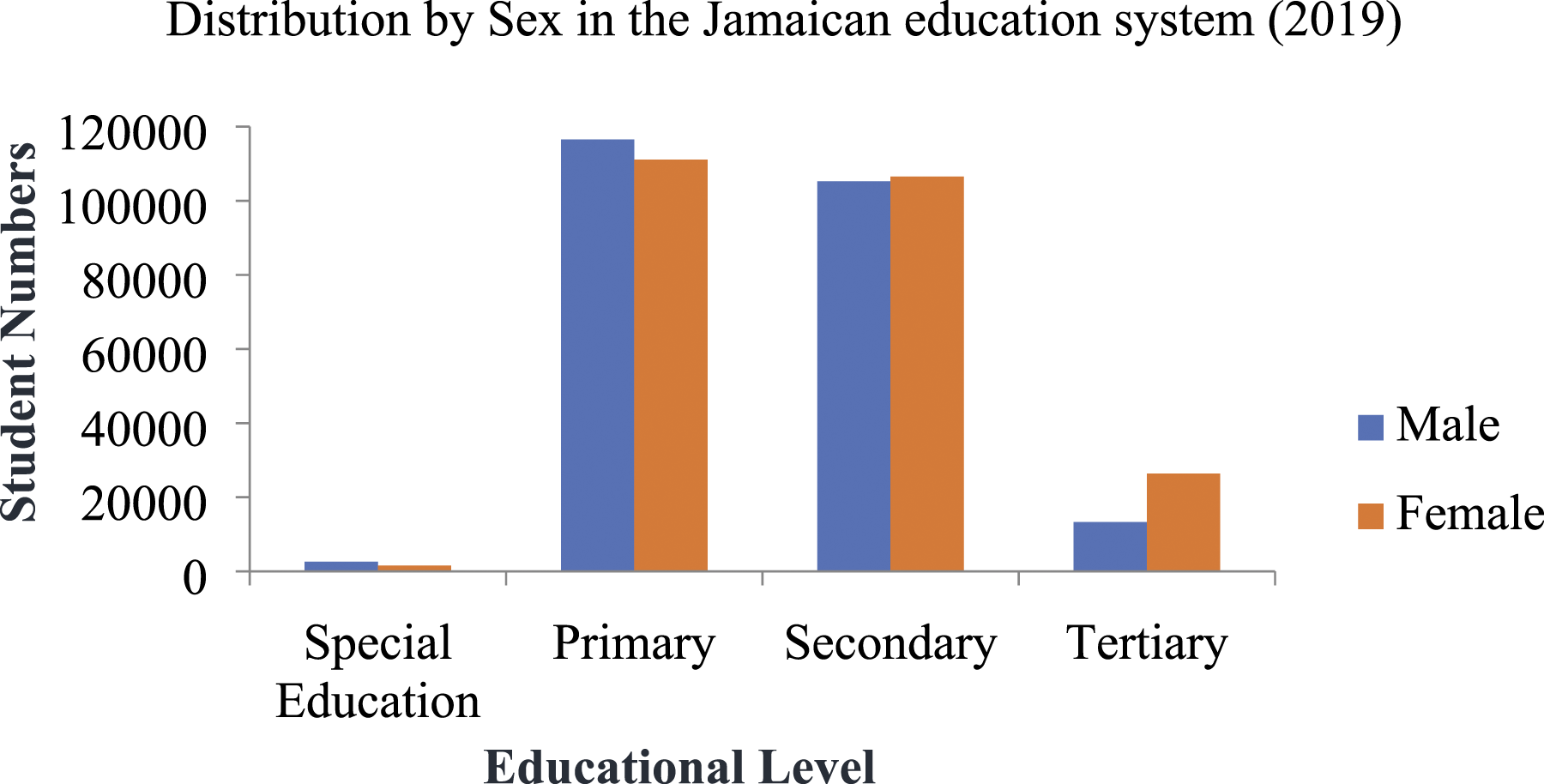
Consequently, the MoEYI has established certain policies to enhance the instruction of boys through professional development workshops for teachers and principals to reduce marginalization. Furthermore, through NCEL, modules within their Effective Principals’ Training Programme (EPTP) specifically include boys with emphasis on brain development, how males learn and activities that increasingly engage them in learning. NCEL’s response in this regard underscores Freire’s (1990) argument of undoing oppressive systems. Although men are not perceived as marginalized generally in society, the data provided here indicates that they are experiencing educational disadvantages.
“Education for all” (EFA) is a philosophy advocated by the United Nations Educational, Scientific and Cultural Organization (UNESCO). It is aimed at creating an educational environment that is favorable to all students by addressing issues of marginalization and exclusion. This inclusive education strategy is mirrored in the MoEYI’s mantra and has implications for the existing education structure at all levels. The combination of policies and programs undertaken by the Ministry of Education is also reflective of the approach the Task Force on Educational Reform (2004) recommended, against the background that it is “the synergy of focused implementation” (p. 4) that will redound to the success of the education sector. Important to its success are an effective support system that includes, but is not limited to, creation and implementation of realistic policies, adequate physical and technological infrastructure, competently trained personnel, and the development of continuous assessment mechanisms to guarantee attainment targets that may result in a child from a poor community attending school less often. Ensuring that schools are properly resourced depends on school leadership that not only shares that vision but also espouses social justice values.
It is well acknowledged that UN member states, especially one such as Jamaica, are guided by UN declarations regarding human rights and social justice. Increasingly, it has become incumbent upon member states, particularly those categorized as developing countries, to adhere to such declarations and to implement policies as a matter of law to secure international funding or loans at attractive rates where provided. Within the Caribbean, education has been designed to preserve the “inherited system of elitism which for all practical purposes is steeped in a culture of exclusion” (Brown and Lavia, 2013: 8). Theoharis and Causton-Theoharis (2008) note that a mindset change is necessary to challenge administrators’ positionality as emancipators rather than oppressors so that schools become places in which all students succeed.
Ultimately, educators must be proactive, actively seek ways to disrupt the status quo and create schools in which all students can access quality education (Dantley and Tillman, 2006). There must be a conscious effort to recognize students’ strengths and create an environment in which they are valued for their uniqueness and the contribution they can make to society. Social justice dictates that educational leaders focus on “inequities in educational opportunities and outcomes” (Furman, 2012: 194) but perhaps more importantly, engage in continuous reflection that acknowledges and intentionally works toward ending those inequities (Lewis, 2016).
Conclusion
Jamaica’s education system was built on a colorful past which has led to much of the inequity that continues to pervade the system, particularly at the primary and secondary levels. This paper has argued that within the context of the MoEYI’s mantra of “every child can learn, every child must learn,” changes in policy and school assessment are insufficient if those changes are not grounded in principles of social justice. Administrators have a responsibility to advocate for students, especially those who are disadvantaged. Moreover, school systems should create services that provide students with the requisite support in the general classroom, a plan which augurs well for all students. School leaders need to develop critical consciousness (Freire, 1990) around the ways in which they may inadvertently affirm messages of oppression and marginalization and think instead of disrupting those power imbalances that exclude instead of include students based on their assumptions and biases about their “abilities” (Theoharis and Causton-Theoharis, 2008).
Additionally, teacher beliefs, attitudes and practices toward inclusion must be addressed through targeted professional development and rigorous discussion. A change may also be needed in the curriculum to evaluate ways in which students in the general classroom may have been excluded from various conversations because of their background or experiences. While the NSC represents a national move to infuse contextually relevant information in the teaching and learning process, ultimately, school leaders and practitioners are responsible for enacting the curriculum in ways that ensure that students’ external environment is valued and their home knowledge and interests are incorporated into classroom activities (White et al., 2014). Consequently, “teachers are crucial for implementing and embedding social justice practices at schools” to transform students’ lives (Miller et al., 2019: 112). The reality is that while the Ministry has done much to ensure that every child has the opportunity to learn, various external factors (socioeconomic status, parent’s educational background, et cetera) create advantage for some students.
If educational leaders do not systematically evaluate and confront how things currently operate, some students may leave school not recognizing their own value, regardless of their socio-economic status, home background, gender, or language ability. Instead, they may be filled with cynicism and a clear understanding about quality education being the purview of some, rather than for all. This paper asserts that while every child can learn, some must overcome greater barriers than others due to colonial artifacts. Consequently, the objectives that the MoEYI articulates must extend beyond the classroom (Blackman and Maynard, 2010; UNICEF, 2002) to fulfill its mandate of “every child can learn, every child must learn.”
Footnotes
Declaration of conflicting interests
The author(s) declared no potential conflicts of interest with respect to the research, authorship and/or publication of this article.
Funding
The author(s) received no financial support for the research, authorship and/or publication of this article.
