







Abstract
This study investigates race equality at The University of Sunderland in London through an analysis of practices and perspectives. Interviews were conducted with Black, Asian, and Minority Ethnic (BAME) students, staff, and affiliated individuals, revealing seven major themes: Curriculum, Covid, Diversity, Personal Sphere, Institution, Belonging, and Technology. These themes offer valuable recommendations for fostering a more diverse and inclusive environment, improving the academic experience in UK Higher Education Institutions. To promote diversity, it is essential to ensure balanced student representation in classes and incorporate diversity considerations in recruitment and allocation processes. Creating a culture of equality, diversity, and inclusion is crucial for a positive learning environment. Mentorship programs can facilitate inclusivity, pairing BAME students with experienced staff. Policies should be reviewed to ensure inclusivity and non-discrimination. Increasing representation of people of colour in senior management roles enhances staff diversity. Staff training on creating an inclusive environment is important. Transparent and fair recruitment processes are necessary to avoid bias. Implementing these recommendations can contribute to a more inclusive and equitable higher education landscape, benefiting both students and staff.
Introduction – Racism and education in higher education in the UK or England
The benefits of racially diverse universities and classrooms are well-documented (Borg, 2001; Tsuo, 2015). Diversity among students in education has a direct impact on their achievement and performance. Working in a diverse environment enables students to work better and achieve greater outcomes as they concentrate and push themselves further when they work and interact with people of other backgrounds (Gurin et al., 2002). In diverse environments, students are exposed to a wide range of perspectives, experiences, and ideas. This exposure fosters a richer learning experience by challenging preconceived notions and encouraging critical thinking. Collaboration with peers from different backgrounds can lead to more innovative problem-solving approaches. BAME students, in particular, may benefit from varied perspectives when tackling complex issues. Moreover, Interacting with individuals from diverse backgrounds enhances cultural competence (Kaihlanen et al., 2019). Black, Asian, and Minority Ethnic (BAME) students can develop a deeper understanding of different cultures, which is invaluable in our increasingly interconnected world (Sue et al., 2022). In addition, diversity in education has been indicated to promote students’ creativity, as well as better education, as those with differing viewpoints are able to collaboratively create solutions (Borg, 2001).
Regarding the observation of students ‘they concentrate and push themselves further when they work and interact with people of other backgrounds’, this can be justified with references to relevant studies that have explored the positive impact of diversity on academic performance and personal growth. For example, you could reference research papers or reports from educational institutions that discuss the benefits of diversity on student outcomes.
In summary, a diverse academic environment offers numerous advantages to students, including BAME students, by providing exposure to diverse perspectives, enhancing problem-solving abilities, promoting cultural competence, motivating students, reducing stereotype threat, and fostering valuable social support networks.
Diversity in education, particularly on university campuses, has been shown to improve students’ academic skills (e.g. critical thinking, problem-solving, and writing), intellectual engagement, citizenship, self-motivation, and cultural engagement for students of all races (Tsuo, 2015). Despite all these well-established benefits, the education system privileges and disadvantages certain racial and ethnic minority groups, that is, students of Black, Asian and Minority Ethnic (BAME) heritage, in the UK. This is shown in attainment gaps across specific racial and ethnic groups, experiences of racism among students and staff, and disproportionate rates of exclusion (Show Racism the Red Card, 2020; Swiszczowski, 2022; Universities UK, 2019; Universities UK, 2022).
Schools and universities must have policy frameworks and strategic equality that are reflexive and subject to regular evaluation and review, which is a legal requirement under the Equality Act 2010; Hancock, 2007). Previously, schools had a legal obligation that mandated them to take active measures in addressing racial discrimination, as well as advancing opportunities for equality and fostering positive race relations. The Equality Act has since substituted this obligation with the general equality duty and specific duties, which are outlined in chapter 5 of the Equality Act (Department for Education, 2014).
This enables educational institutions to foster educational systems, institutions, and environments that promote race equality. These legal requirements play a significant role in how schools operate and should therefore ensure that race equality is embedded and normalized within them and how they can address the experiences of ethnic minority students. (Alexander et al., 2015). However, racial inequalities are still reported as a significant issue within higher education (Advance HE, 2022; Wong et al., 2021).
UK higher education can only reach its full potential when individuals from all ethnic backgrounds can benefit equally from the opportunities it offers and it can benefit from the talents of the whole population (Advance HE, 2022). Across UK higher education, concerns are reported about differential degree outcomes, also known as attainment gap or the ethnicity awarding, which refers to the difference in the proportion of White and Black, Asian and Minority Ethnic (BAME) students awarded a ‘good’ degree (a first or upper-second class degree classification) (Wong et al., 2021). This degree outcome difference varies significantly within minority ethnic groups (BAME). The disparity in the attainment of First-class honours is particularly alarming, with a notable gap of 9.5% between white and BAME students, rising to 19.3% for Black students in the academic year 2020–21 (Universities UK, 2022). This gap is often attributed to microaggression, unconscious bias, and inadequate attention to access, support, and wellbeing for minority ethnic students (Botticello and West, 2021). Institutions, despite their dedication to eliminating the awarding gap, exhibit uncertainty about the effective strategies for doing so, making it unlikely for them to successfully achieve this goal (Andrews et al., 2023).
Furthermore, poverty rates among minority ethnic groups remain higher than those of the White British population (Mirza and Warwick, 2022; Mahmud and Gagnon, 2023). The Department for Education (DfE) has found that there is a persistent gap between the proportions of disadvantaged students entering higher education compared with non-disadvantaged students (Hubble et al., 2021). The substantial and enduring disparity between White and BAME individuals in higher education persistence and achievement is of such significance that the Office for Students has explicitly charged UK universities with the responsibility of ‘Eliminating the unexplained gap in degree outcomes’ through proactive measures (Andrews et al., 2023; Arday et al., 2022).
These inequalities demonstrate the need for further action to address race and ethnic disparities in higher education. Universities must take steps to improve access and support for ethnic minority students in order to ensure that everyone has an equal chance of success.
The Office for Students (2020) highlighted a continued need for a sector response to the issue of attainment for Black, Asian and Other Minority Ethnic (BAME) students, ensuring that all students can get the most from their studies. Race equality in higher education is linked to the concept of inclusivity. Inclusivity in academia is an issue that has been debated more and more in the last years and according to Wray et al. (2013), it needs equity reflections being embedded within all the departments of the institution and it must be handled as a continuing practice of quality improvement. To drive a change of such importance there is the need for cultural and systemic change at a strategic and operational level. The aspiration to foster a tolerant, engaged, and caring organization that possesses the capability to defy non-inclusive positions and activities stands at the core of a Higher Education Institution (Cameron, 2018). Higher education institutions are encouraged to carry out research (highlight challenges, what work and areas for improvement), show strong leadership, have conversations about race and racism, race equality to create racially diverse and inclusive environments for students (Office for Students, 2020, 2018). Inclusive learning and teaching in higher education are linked to the pedagogical methods utilized in the institution (Hocking, 2010). Moreover, the way curricula and assessment are planned and implemented should include students’ active involvement and participation (Snelling et al., 2019; Cabral et al., 2023). Therefore, improving race equality, and the curriculum by diversification and inclusiveness necessitates higher education professionals and stakeholders to take time to reflect on and challenge their own academic milieu under a sociocultural and historical perspective and change their standpoint (Darlington, 2008).
This paper aims to seek perceptions of unique population of BAME students at the University of Sunderland in London to explore best practices on how to embed race equality to enhance students' attainment, achievement and inclusivity as well as how to support students to enhance attainment, achievement and inclusivity as well as how to support students to ensure practices are inclusive for all.
The University of Sunderland in London context
The University of Sunderland in London campus (UoSiL) is a campus hosting circa 5000 students, located in the busy industrial and financial area of Canary Wharf. The UoSiL campus is fortunate enough to accommodate one of the most diverse communities of students in the UK, with BAME students consisting of around 53% of the total number. More specifically, about 23% of the students are Black/African origins, 20% are Asian, and 10% are mixed/any other background. Regarding the staff composition, a considerable proportion of the employees come from minority ethnic backgrounds, accounting for around half of the workforce (Data source: Author’s elaboration).
In terms of attainment, the University has seen some improvement in the percentage difference in degree attainment (1st and 2:1) for BAME students compared to White students, which decreased from 13% (in 2016) to 5.3% (in 2021).
Given the unique population of BAME students at the UoSiL, the academic programmes here include regular Student Staff/liaison Committees (SSLCs) that represent a safe space for students to explore their academic experiences and needs, which will enable the UoSiL community to better support their diverse student population. This paper reports one of the university initiatives that reflects the rationale that calls for a profound and critical challenge of the status quo and the systems of higher educational institutions. It is a compelling need to regenerate the learning structures and systems to give equal opportunities to all students, resetting the barriers that negatively impact the learning experience for BAME students.
Methodology and design
Research purpose
This study aimed to investigate the perceptions and experiences of BAME students at the University of Sunderland in London concerning race equality within the university and its curriculum. To achieve this, the research utilized semi-structured interviews to gather qualitative data.
Data collection method
Semi-structured interviews were chosen as the primary data collection method. This approach allowed the researchers to obtain open-ended responses, enabling an in-depth exploration of participants’ emotions, thoughts, and beliefs regarding race equality within the university and curriculum. Semi-structured interviews are particularly valuable for addressing personal and sensitive subjects (DeJonckheere and Vaughn, 2019). This method is especially used in educational studies, highly regarded for its effectiveness, flexibility, and adaptability (Ruslin et al., 2022). In total for the present study, 150 interviews were conducted.
Participant demographics
The participant pool was diverse, reflecting various ethnic backgrounds: 14% were Black/African/Caribbean/Black British, 40% were Asian/Asian British, 8% were from Mixed/multiple ethnic groups, and 38% belonged to the white non-British ethnic group. In terms of course of studies, 87% of participants studied Business and Management, 6% studied Tourism and Hospitality, 7% studied Health and Social Care. In terms of relation with the institution, 13% of the respondents were Alumni member of staff.
The researcher conducted the interviews with support from the Personal Academic Tutors.
Timeline
The research was conducted in a cross-sectional manner, spanning from the end of 2020 to 2021.
Sampling strategy
The study employed random sampling, ensuring that each individual within the population had an equal chance of being selected. This approach was chosen to provide a representative sample of the BAME student body at the University of Sunderland in London.
Recruitment
Participants were recruited through multiple channels, including email invitations, social media outreach, and direct phone calls. Due to the COVID-19 pandemic, all interviews were conducted remotely via Zoom or telephone.
Data transcription
After each interview, thorough verbatim transcriptions of the recordings were created. This step was essential to maintain data accuracy and enhance the trustworthiness of the research (Ruff et al., 2005).
Data analysis
Data analysis was carried out both manually and with the assistance of NVivo software. The manual analysis involved a detailed examination of the transcribed interviews, while NVivo facilitated the organization and coding of data to identify emerging themes.
Ethical considerations
The research received ethical approval from the University of Sunderland in London ethics committee, ensuring that it complied with ethical standards and confidentiality policies. Strict adherence to these regulations was maintained throughout the study.
This comprehensive description provides a clear understanding of the research’s methodology and design, including the rationale behind the chosen methods and the steps taken to ensure the quality and rigour of the study.
Results
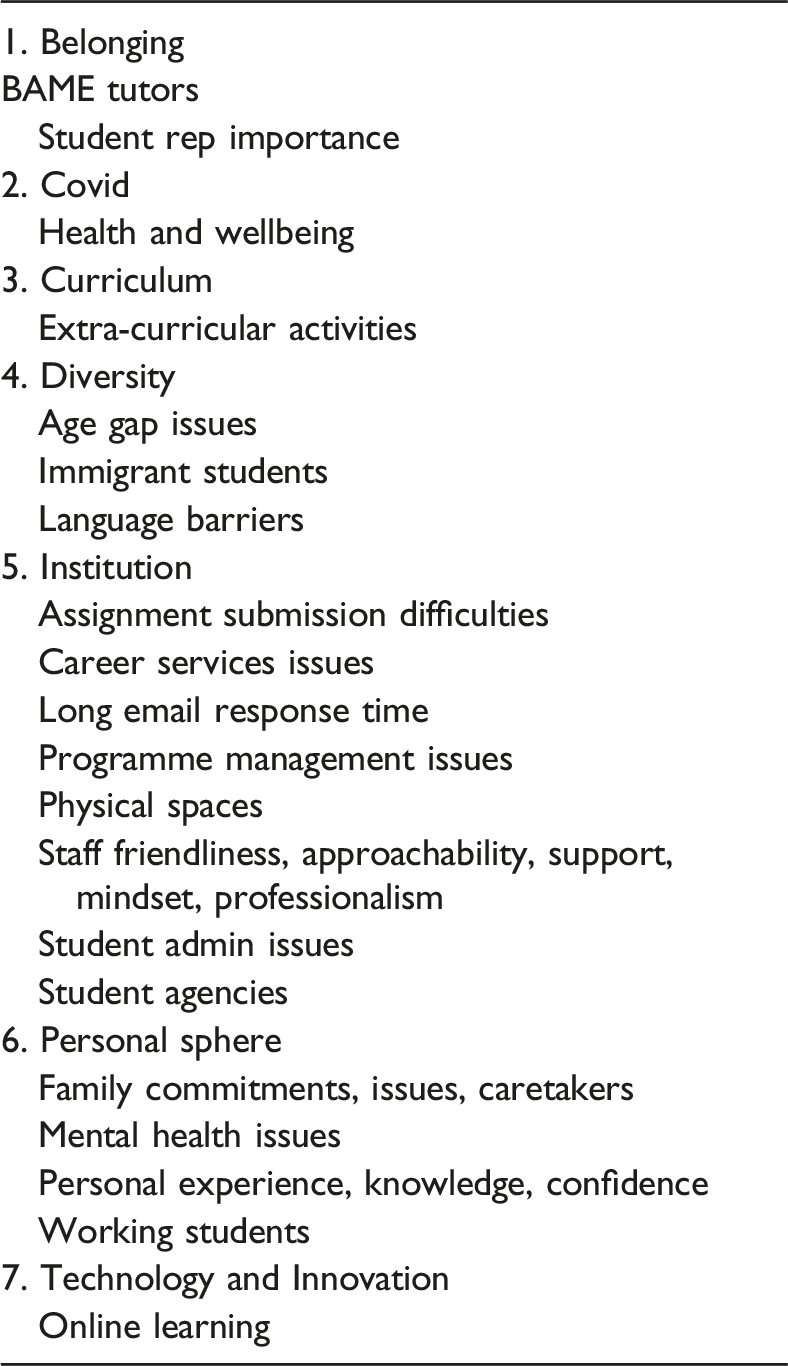
The following themes have been identified from the analysis of the research data. Each word listed represents a distinct theme that emerged during the data analysis.
In the infographics presented below, we have illustrated the connections among these themes using a conceptual representation reminiscent of bubbles and connectors. This visualization moves from the inner to the outer sphere. At the core are two central bubbles, one denoting the ‘personal sphere’ and the other representing the ‘institution’. These central bubbles draw inspiration from the concept of ‘social determinants of health’, symbolizing the pivotal roles of personal experiences and institutional factors in shaping the overall context.
This explanation clarifies that the listed words represent distinct themes, and the visual representation in the infographics depicts the interrelationships among these themes, with a focus on the personal and institutional spheres, inspired by the concept of social determinants of health.
Word frequency
In the interviews, the five most recurring words have emerged to be: • Help • Class • Students • University • Work
The analysis of the word cloud can help us analyze under a different perspective the issue here in object of embedding race in the academic curriculum. A word cloud is a graphic representation of the frequency of words emerged in an interview. The more frequently the term comes up in the text being examined, the larger the representation of word will be shown in the chart generated. Word clouds are progressively being utilized as a further instrument to recognize the focal point of qualitative data (Atenstaedt, 2012).
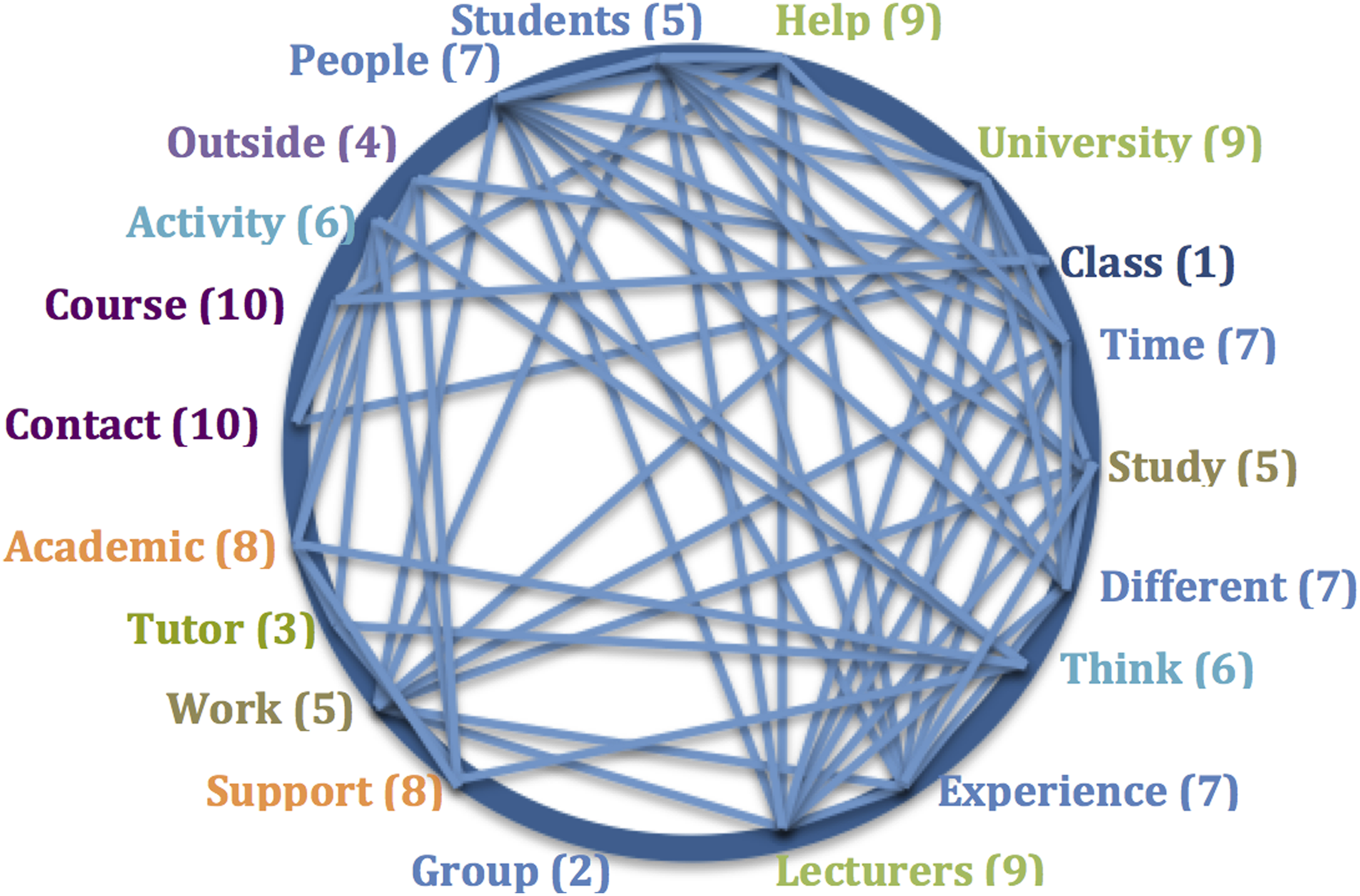
Another useful analysis is the cluster analysis which can be appreciated in the figure below. In this case we have analyzed the 20 most frequent words, in order to allow for more clarity of the diagram. A cluster analysis of the most frequent words in interviews with university students serves as a valuable tool in the exploration of diversity within the academic setting. By scrutinizing the prevalent themes and patterns arising from students' responses, this analytical approach unveils nuanced insights into the multifaceted aspects of diversity.
Through the identification of clusters, the research gains a deeper understanding of subgroups among the student population. This segmentation facilitates a more comprehensive examination of the varied perspectives and experiences that contribute to the overall diversity within the university community.
Cluster analysis not only highlights commonalities but also underscores the inherent variations in the ways students articulate and perceive diversity. It moves beyond simplistic frequency counts, offering a sophisticated exploration of the intricate diversity landscape within the university.
The insights derived from cluster analysis play a pivotal role in informing policies and interventions. By discerning the diverse perspectives and experiences of students, researchers can guide the development of targeted initiatives aimed at fostering inclusivity, addressing specific challenges, and cultivating a more supportive academic environment for all.
Furthermore, this analytical approach serves as a means of validating or challenging existing assumptions about diversity within the university. By allowing the data to guide the exploration, researchers can uncover unexpected patterns or nuances that may not have been immediately apparent through other methods.
This visual representation of clusters, adds an additional layer of accessibility to the findings. These visualizations can effectively communicate complex patterns in the data, facilitating a broader understanding of diversity dynamics among diverse stakeholders, including policymakers, educators, and the university community.
Moreover, the analysis facilitates comparative examinations between different clusters. This comparative approach enables researchers to discern how various factors, such as demographics or academic majors, intersect with diverse perspectives. Such comprehensive analyses contribute to a more profound comprehension of the intricate interplay between different elements and their impact on diversity within the university context. In essence, a cluster analysis enriches our understanding of diversity, paving the way for informed and targeted strategies that promote inclusivity and equity within the academic environment.
Discussion
Personal sphere
Personal Sphere is a theme that emerged in the research, linked to the students’ health. Some students interviewed have admitted having faced mental health issues especially during COVID, such as anxiety, depression, and loneliness.
This is confirmed by the literature, as per McManus et al. (2016) the Adult Psychiatric Morbidity Survey (APMS) established that Black men were more likely than their White counterparts to experience a psychotic disorder, moreover, Forte et al. (2018) found out that non-European immigrant women, in particular young South Asian women, were a high-risk group for suicide attempts.
More recently, a study conducted by Mind (2020) has found out that increasing inequalities for BAME people worsened their mental health during the pandemic, affecting more BAME than white people, more specifically regarding various issues such as employment risk, housing, finances.
Institution
This theme emerged as one of the most discussed during the interviews, both in positive and negative aspects. The staff preparation and friendliness has turned out to be important for students.
One student stated ‘my overall impression was fantastic as I feel like we had the appropriate support given the COVID-19 circumstances. The lectures were very professional and very supportive’.
Another student stated ‘I didn’t encounter any barriers while trying to access academics outside of the classes and I admired their dedication and willingness to help and to go above and beyond the expectation. They were excellent and brilliant, making a positive impact on student journey by helping them to succeed’.
From the results appears that for many students the first point of contact are the lecturers and according to most of the students ‘were very supportive, empathetic and cooperant. They provided advice and guidance during that time, and I was amazed by their level of involvement, professionalism and proactive attitude’.
For many students, the first points of contact for academic and social support are their lecturers (Hassel and Ridout, 2018). Lectures can be a way to model attitudes and behaviours that the instructor values, such as careful weighing of evidence and presentation of argument. Educators also play a critical role in the emotional wellbeing of their students and are often the first point of contact for students. Additionally, teachers can help their students with homework by creating a supportive environment, providing guidance on how to complete assignments, and encouraging them to take responsibility for their own learning.
Also, the feedback regarding student admin was largely positive, ‘everyone from the administration staff is very knowledgeable and supportive. From being a single letter or helping in issue with the student canvas (VLE) or what so ever they always sorted it out for all the students without delaying it even for a second’.
On the other hand, some issues were raised by students, regarding submission, career services, email response, programme management, the use of physical spaces, student admin issues and the presence of student agencies, which are a well-known issue in the UK education sector.
Students at universities have a number of priorities related to the use of physical spaces, such as access for minority groups, the physical environment of schools, and disability inclusion on campus.
Access for minority groups can be an important issue in academic institutions, with students advocating for improved access as campuses face restrictions on movement and physical space usage. The physical environment of schools is affected by school funding and local policy in the surrounding neighbourhoods in which the schools are located.
The Academic Development Centre (ADC) of the University of Sunderland in London is working toward improving all these aspects by considering the comprehensive feedback supplied by the students and implementing the appropriate actions in order to resolve some issues raised and facilitate an improved student experience. Students’ feedback is crucial in the formulation of better-informed policies and regulations that are more student-centred and can improve academic life.
Belonging
This research focused on the integration of race-related issues in academia, and one of the most significant themes to have emerged is the sense of belonging among students.
This highlights that in the context of incorporating discussions about race in academic settings, the research has identified a key theme, which is the feeling of belonging that students experience. This theme emphasizes the importance of creating an inclusive and supportive environment for students, particularly those from diverse racial backgrounds, within the academic community (Thomas, 2012).
Sense of belonging is associated with academic achievement, retention, and persistence in college (Rainey et al., 2018). Women and people of colour often struggle to feel a sense of belonging in STEM fields due to negative cross-racial interactions and the ‘inclusion tax’ they are expected to pay. Factors contributing to a sense of belonging include representation within one’s STEM sub-discipline, as well as students’ perceptions of the educational environment. Therefore, it is important for educators to create an inclusive environment where all students can feel accepted and valued.
One of the students brought light to this theme by saying that ‘if I had had a Latino tutor, my experience would be more positive, because it is easier to have contact with someone of the same nationality, because of the language, the charisma, the relationship is better’. This was confirmed by another interviewee who stated, ‘having a tutor which matches some of the individual characteristics can have a positive impact on student experience by shaping their identity’. Another interviewee helped establish the idea that having a tutor from the same background as a student could ensure that ‘the student can find familiarity and help him to surpass any academic challenge they have’.
An important contribution in this sense has been one of a former student representative that said that ‘being an ambassador for my class, I tried together with the academics to make everyone feel welcomed and to create that sense of belongings to that group of students’.
The importance of the figure of the student representatives has been confirmed by other students, who usually interface with student reps on a daily basis and contacted student rep to address many issues faced in class or in the wider institution.
More specifically, The ADC crafted a series of targeted strategies to improve the sense of belonging for academically at-risk students, including BAME students. The UoSiL is working towards improving the sense of belonging by ensuring the boards contain adequate students representation and tackling the belonging issue with a program that includes the figures of Personal Academic Tutors (PATs). This program will help increase the sense of belonging, with the support of one tutor per programme, everyone will enhance the diversity of the staff by bridging the gap between BAME students and the institution.
Curriculum
The investigation has brought to light the theme of curriculum, a facet that has garnered attention in recent academic discourse. A number of scholars, including McNair et al. (2020), Arday et al. (2021), and Fuentes et al. (2021), have provided strategic directives aimed at enhancing curricular frameworks within the Higher Education context. The outcomes of our study align with the recommendations posited in their respective research endeavours, thereby contributing to a collective body of work that furnishes pragmatic counsel concerning the formulation and implementation of transformative strategies within the campus landscape, with a specific focus on realizing equitable outcomes.
In general, the curriculum is accepted well by the students, ‘the courses offered by the university are of great help to my future study and work. At the same time, it also helps me to fully understand myself and find my advantages and shortcomings’.
On this note, with the implementation of a new strategy, the university is working towards decolonizing the curriculum, implementing initiatives that aim at broadening the perspectives that form the curriculum at UoSiL, and inviting more BAME guest speakers to classes, that enrich the student’s experience, next to an already diverse BAME staff representation, one of the highest in the UK HEI.
To better reflect the unique needs of the BAME student groups, the ADC has included in the strategy the development of further SSLCs, a revamped Student Union, a mentoring scheme that intends to help students through the several stages of the academic path, and a wide range of LED Talks (Learn, Engage, Dialogue Talks), as well as tutoring and leading staff in the process of decolonizing the curriculum.
Diversity
Some students highlighted age gap issues; this could be due to the high average age of our campus (around 37 years).
More specifically one student experienced that being ‘the youngest student in my class, and I felt strange with so many classmates who were much older than me, or who were more experienced than me, at the beginning. But our teachers had tried to mix the people when it came to group work’.
This was confirmed also by another more mature interviewee, they said that ‘I had a sense of belonging since I am mature student and most of the students were mature. Actually, younger students could feel a bit of awkwardness’.
This emerged also in another student’s response who said ‘It was very difficult for me as I was probably among the youngest in a class full of mature students. I’d have probably worked best in an environment with students like me and my age range’.
Given these considerations on age gap issues, it is important to create the right mix in class, and it is vital at institutional level to take this into consideration in the recruiting stage and when allocating students to classes. This will facilitate a dynamic learning process involved in class, with sense of process that is channelled into the cultural exchange between one age grouping and another (Brooks, 2005).
Diversity within a group can be beneficial for certain tasks, and teachers may need to assign students to groups themselves before class. Creating the conditions that foster student success in college has never been more important, as up to four-fifths of high school graduates enrol in postsecondary education. School, family, and community partnerships are also essential for student success.
Teachers should consider professional development opportunities such as examining their beliefs, attitudes and practices; teacher appraisal and feedback; and school environment when creating effective teaching and learning environments. This will help ensure that students are placed in the best possible learning environment.
The feedback suggests it would also be beneficial to think about how interactions between younger and older students could be stemming from the dynamic between younger and older people in many ethnic minorities, which doesn't typically allow young and older people to interact with each other the way they would in their more natural circumstances. That is, calling elders by their first name, showing assertiveness in group settings or even taking on a leadership role among people who may be older.
Many of the BAME students are 1st generation immigrants, and this has been reflected in our research. As stated by a student ‘immigrants are people with less opportunities as most of them might have to struggle with immigration matters and spend lots of money to get settled. Also, with less opportunities due to language barrier and status situation’.
Language is repeatedly mentioned as one of the barriers for immigrants, as per an immigrant student said that ‘because I’m an immigrant, I wasn’t used with English language that much, and I did ask for help’.
Another student confirmed that ‘If there were someone for me to explain me in my language, for example, at the beginning, in my first year, how to write an essay or an assignment according to the standards from here, I could have better grades and avoid putting myself down that I was good enough for an abroad university’.
Some problems encountered by immigrants regard the academic system in the UK, more specifically ‘The most challenging part here was the assignments as being an Asian student I never had the experience of writing assignments and all of a sudden, I had to work on assignments worth post-graduation level’.
In general, this is in line with the fact that immigrants in the UK face a variety of challenges when it comes to the academic system. One of the main issues is integrating newly arriving refugees and immigrants into mainstream education. Schools with a sizeable migrant students’ intake can experience difficulties in providing adequate support for these students, as they may be unfamiliar with some aspects of the UK education system. Immigrant students may also struggle to settle into their new environment, which can lead to difficulties in adapting to the educational system.
Also, another student admitted that ‘The Romanian educational system is different than here, so I had to adapt to the submission and report system here in the UK. For some things is easier, on the other hand is more difficult. Also doing a report is quite difficult when you are immigrant’.
The University is working toward improving students support and on the implementation of a channel for immigrant students with foreign languages taught modules.
Covid
The pandemic of 2020 has been the most important event that has impacted everyone’s life on many different levels. This emerged evidently in our research, several students stated that due to Covid-19 unfortunately were not available to participate actively in university projects.
During 2020 the pandemic caused by Covid-19 that swept over the world has highlighted an even greater gap in attainment for BAME students than what already existed. There are various reasons for this, but as per Frings et al. (2020), BAME students could have less ‘resources or time for instance, a religious identity may require one to be at a certain place at certain times or a cultural identity may require siblings to engage in childcare duties’.
Students from BAME backgrounds have been affected disproportionately from the virus (Institute of Fiscal Studies, 2020). Possible root causes for this could be the over-representation of BAME individuals in lower socio-economic fringes, living conditions in intergenerational or highly dense multi-family households, and the relatively higher employment of BAME individuals in frontline or key-worker roles (Razaq et al., 2020).
Also, other students declared that when there was face-to-face teaching it were quite interesting and afterwards in pandemic it just became difficult for them.
Technology and innovation
Technology can serve as a tool for connecting the themes, in fact in Figure 1 it is represented by the connectors that link the different bubbles representing institution, COVID, diversity and the curriculum. When effectively leveraged, technology has the potential to bridge existing gaps; however, inadequate policy formulation may engender adverse consequences (Rafalow, 2020). There are important digital inequalities that need to be taken into account, as features such as connectivity, device, and software access inequalities, skills and usage are still heterogeneous and this has an impact on students experience (Robinson et al., 2020). The seven themes emerged under a conceptual framework.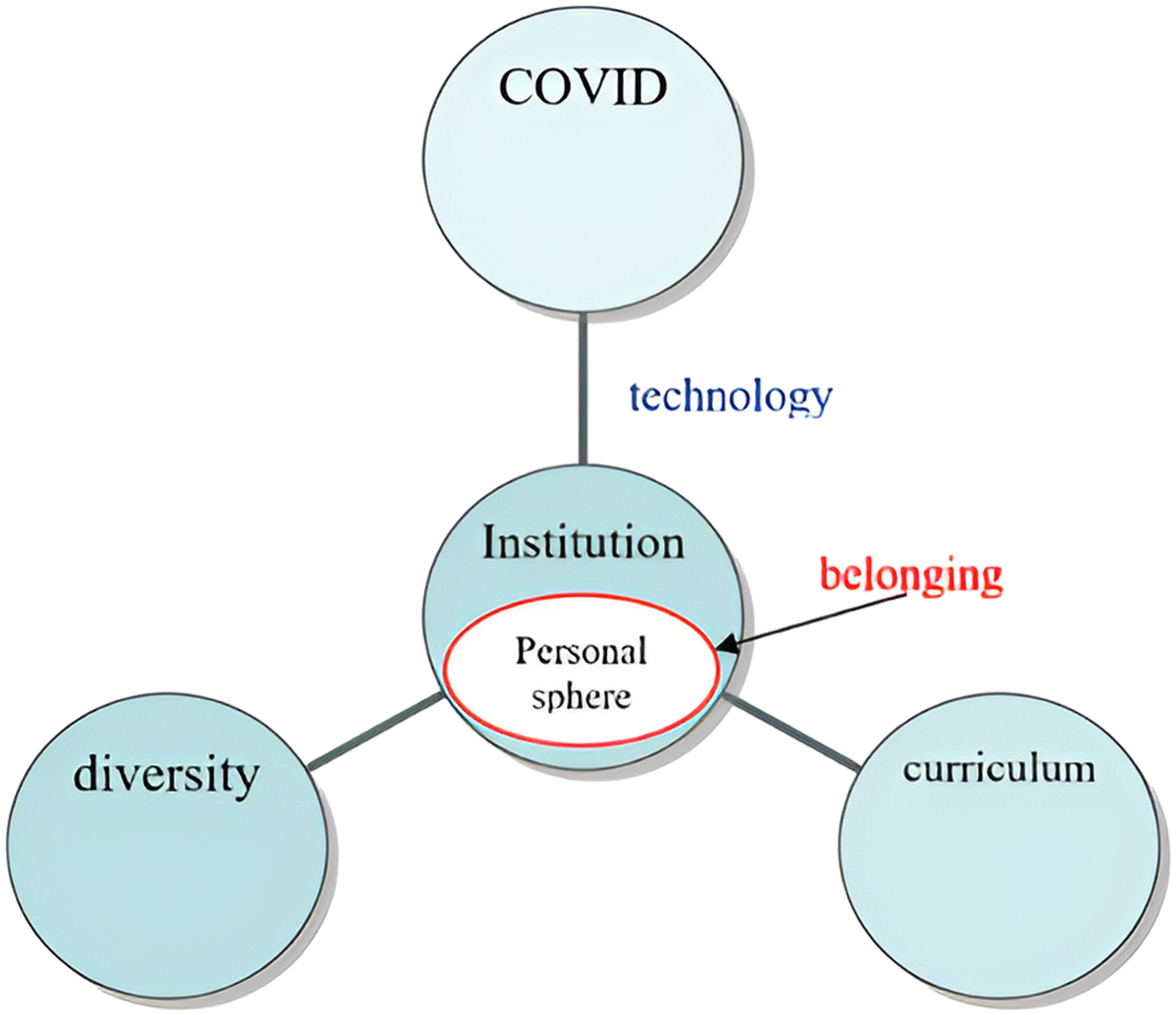
The importance of technology has been highlighted even more in the last months as a response to the pandemic, since all the Education sector has innovated itself because of the pandemics, considering a global health crisis, higher institutions had to adapt to the situation by coming with interesting and innovative technology-based solutions. Some students, especially working students, who have admitted, ‘We can schedule better our commitments thanks to the online studies, have embraced this positively. You can be anywhere and study at the same time. Online delivery is more efficient under so many aspects’.
Technology can aid diversity, in the sense that many students coming from minority backgrounds can overcome many barriers, for example, the language, thanks to technology. The higher the technological literacy the student has, the more likely will overcome issues such as problems that can emerge from isolation, some factors that could hinder their student experience. Therefore, the better the use of technology, the more the students can feel empowered, and the higher will be the inclusivity. Technology can serve as an aid to access support services as well since nowadays most of services are provided online.
Technology can play an important role in promoting diversity and inclusion in education settings. Technology can help to bridge cultures together by providing more personalized learning experiences for students of all backgrounds. It can also provide alternatives for learning, such as mobile phones and digital books, which can be used to support learners with disabilities. Additionally, technology can enable the development of an inclusive environment by providing access to digital literacy training and affordable Internet service. Teacher training is also key to successful inclusion, as it helps teachers understand how to use technology effectively in order to promote diversity and inclusion in their classrooms (Figures 2 and 3). Word cloud generated from the interviews. Cluster analysis created from the 20 most frequent words from the interviews.
Currently, some adult students still rely on help from support services for completing some basic tasks such as online submissions. Supporting the technological literacy and confidence of these students could help them to have a better academic experience and offer them more chances to succeed.
Conclusions and recommendations
In conclusion, the findings derived from semi-structured interviews with BAME alumni, staff, and affiliated individuals associated with the University of Sunderland in London have elucidated seven salient themes. These thematic elements underscore critical considerations for enhancing diversity and inclusion within Higher Education Institutions (HEIs) in the UK. The subsequent recommendations and actions emanating from these themes are intricately aligned with prevailing literature and research in the field.
Firstly, the research emphasizes the significance of fostering a diverse mix of students within classroom settings. This underscores the imperative for HEIs to proactively integrate considerations of diversity into both recruitment processes and the subsequent allocation of students to classes.
Secondly, the institutional level is identified as a crucial juncture for incorporating diversity considerations, particularly during the recruitment phase. It is posited that institutional practices should deliberately address and mitigate barriers to diversity, thereby cultivating an environment conducive to inclusive learning, in line with the research of Graham (2020).
Thirdly, the need to embed a culture of equality, diversity, and inclusion within the institutional ethos is underscored. This recommendation underscores the fundamental role of the educational institution in shaping a cultural environment that recognizes and values diversity (McNair et al., 2020).
The potential efficacy of mentorship programs emerges as a fourth theme, where junior scholars from minority backgrounds are paired with senior staff. Drawing from extant literature, the recommendation here is to institute mentorship initiatives specifically tailored to BAME students, thereby leveraging the proven benefits elucidated in scholarly discourse (Rana et al., 2022).
Moreover, the research underscores the criticality of reviewing existing institutional policies to ensure they are both inclusive and free from discriminatory elements. This recommendation aligns with current literature emphasizing the importance of policy frameworks that actively promote diversity and inclusivity (Marginson, 2019).
In addressing the imperative to enhance the diversity of BAME staff, the inclusion of more individuals of colour in senior management roles emerges as a pertinent consideration. This recommendation resonates with existing research highlighting the positive impact of diverse leadership on institutional inclusivity. This is in line with recommendations found in current literature (Seo et al., 2022).
The necessity of providing staff with training on creating an inclusive learning environment is identified as a sixth theme. It is recommended that HEIs invest in comprehensive training programs to equip staff with the requisite skills to foster inclusivity in educational settings (Carter et al., 2020).
Finally, the research emphasizes the importance of ensuring fair and transparent recruitment processes that preclude discrimination against any demographic group. This recommendation aligns with extant research advocating for transparent and equitable recruitment practices, as evidenced in the work of Koutsouris et al. (2022).
In essence, the recommendations derived from the identified themes are firmly grounded in academic discourse, reflecting evidence-based best practices for advancing diversity and inclusion within the higher education landscape.
Limitations of the study comprise the fact that during the pandemic, it was not possible to do in-person interviews therefore it could have affected the answers since it is likely that personal interactions may have led to different responses. Also, the limitation of working with one institution has impacted the generalizable nature of the results, and we should also note the limitation of the transferability of the model to other institutions located in different geographical areas, with different demographics, and different dynamics.
Future studies could focus on quantitative methods using regression analysis, finding correlations between the themes that emerged in this study linked to students' attainment indicators, such as BAME attainment and attainment gaps.
Footnotes
Declaration of conflicting interests
The author(s) declared no potential conflicts of interest with respect to the research, authorship, and/or publication of this article.
Funding
The author(s) received no financial support for the research, authorship, and/or publication of this article.
