







Abstract
Junior secondary plane geometry requires students to coordinate diagrams, properties, and reasoning, yet classroom assessments often provide limited diagnostic information beyond total scores. Cognitive diagnostic assessment (CDA) can provide fine-grained evidence about students’ mastery, but its classroom-based application to plane geometry remains limited. This study used the sequential generalized deterministic inputs, noisy “and” gate (seq-GDINA) model to analyze responses to a school-based midterm examination in plane geometry completed by 534 grade 8 students at a junior secondary school in China. It examined students’ mastery of five cognitive attributes and inferred possible learning paths from the diagnosed knowledge states of 207 students in four focal classes. Diagnostic interpretation was supported by evidence of test quality, model fit, and attribute-level classification accuracy. The results indicated uneven mastery across the five attributes. The students showed stronger mastery of triangle concepts and axial symmetry but weaker mastery of congruent triangles, polygons and their interior angles, and especially angle-bisector properties. Subgroup and individual analyses showed that students with similar total scores could differ markedly in their geometric profiles. In the four focal classes, the diagnosed knowledge states suggested a dominant inferred path from no stable mastery, through triangle concepts and axial symmetry, then polygons and congruent triangles, and finally to full mastery of all five attributes. This path can be interpreted as a classroom-level inference. The study shows how CDA can help interpret students’ knowledge mastery and guide remedial instruction in plane geometry.
Keywords
1. Introduction
Plane geometry is a key topic in junior secondary mathematics. At this stage, students begin to move from intuitive work with figures to more formal reasoning about geometric properties and relationships. They are expected not only to recognize shapes but also to interpret diagrams, use given conditions, and justify their conclusions (Gal & Linchevski, 2010; Stylianides et al., 2024). This transition is often difficult for students, especially when geometric tasks require multistep reasoning or proof-related thinking (Kuzniak & Rauscher, 2011). Previous studies have shown that geometry learning involves spatial thinking, visual interpretation, and abstract reasoning at the same time (Hawes et al., 2023). In this complex situation, students with similar total scores may differ greatly in their actual understanding of plane geometry.
Educational assessment plays an important role in understanding student learning and improving instruction (Schildkamp, 2019). However, traditional tests usually report a single total score and provide limited information about the specific knowledge and skills behind students’ responses (Leighton & Gierl, 2007; Zhang et al., 2022). This limitation is particularly important to address in mathematics education, where teachers need to identify students’ specific difficulties and design targeted remedial instruction (Zhang et al., 2022). Cognitive diagnostic assessment (CDA) offers a more fine-grained approach by identifying students’ mastery of specific attributes and providing more detailed feedback for teaching and learning (Tang & Zhan, 2021; Zhan et al., 2021).
In recent years, CDA has been increasingly applied in mathematics education, demonstrating its value in revealing students’ mastery patterns across broad mathematical competencies and specific mathematical topics (Mi et al., 2025; Xu et al., 2023). However, classroom-based applications to junior secondary plane geometry remain limited, even though geometry tasks often require students to coordinate diagram reading, property use, and deductive reasoning within the same task (Guven, 2012; Hawes et al., 2023).
A second issue concerns the scoring of students’ responses, since many geometry items involve several sequential steps, and dichotomous scoring may lack diagnostic information about partial understanding (Ravand & Baghaei, 2020). The sequential generalized deterministic inputs, noisy “and” gate (seq-GDINA) model uses ordered score categories to describe students’ intermediate levels of understanding in multistep tasks (Ma & de la Torre, 2016). The present study applies the seq-GDINA model to a school-based midterm examination in foundational plane geometry to examine students’ mastery characteristics and infer plausible learning paths for remedial instruction.
2. Literature review
2.1 Plane geometry learning
Plane geometry is a distinctive domain in junior secondary mathematics. Students need to interpret geometric objects both as visual figures and as conceptual objects governed by definitions and properties (Fischbein, 1993), and coordinate verbal conditions with visual representations, apply geometric properties, and justify their claims (Gal & Linchevski, 2010; Weigand et al., 2025). Previous studies have shown that difficulties in geometry often arise when students move from perceptual apprehension of figures toward more formal discursive reasoning (Kuzniak & Rauscher, 2011; Michael-Chrysanthou et al., 2024), especially in tasks involving geometric configurations and transformations (Aktas & Ünlü, 2017; Uygun, 2020).
This transition can also be described in terms of geometrical paradigms. In the distinction proposed by Houdement and Kuzniak (2003), Geometry I (GI) is closer to natural or figure-based geometry, where reasoning may rely on perception, construction, or empirical verification. Geometry II (GII) is closer to natural axiomatic geometry, where conclusions are justified through definitions, properties, and deductive relations. Junior secondary plane geometry is often located between these two forms of work; students are still supported by figures but are increasingly expected to justify conclusions using formal properties and theorems.
This transition has direct implications for assessment. Students with the same total score may differ in whether they can recognize a configuration, use definitions, link figure information to known properties, or organize a proof-related argument (Stylianides et al., 2024). The Mathematical Working Spaces framework provides a complementary lens for interpreting such geometrical work because it explains how meaning is constructed through semiotic, instrumental, and discursive geneses (Kuzniak et al., 2016). In the present study, this perspective helps interpret diagnosed attributes and knowledge states not only as statistical profiles but also as different forms of students’ geometrical work.
2.2 Cognitive diagnostic assessment in mathematics education
CDA provides a way to obtain fine-grained information about students’ mastery of mathematics knowledge. Rather than evaluating performance as a single score, CDA identifies students’ mastery of specific attributes and provides feedback that can support instruction and remedial teaching (Deonovic et al., 2019; Ravand & Baghaei, 2020; Tang & Zhan, 2021). Recent studies have used CDA to examine both broad mathematical competencies and topic-specific learning needs, including mathematics performance in the Programme for International Student Assessment (Wu et al., 2020), mathematical competency (Xu et al., 2023), addition of time (Chin et al., 2022), number and operations problem solving (Li et al., 2020), statistics and probability (Arican & Kuzu, 2020), and knowledge of sets (Mi et al., 2025).
The usefulness of CDA also depends on task format, particularly in constructed-response and proof-related mathematics tasks that contain ordered steps. When students complete earlier steps correctly but fail later ones, dichotomous scoring may lack useful information (Kuo et al., 2016; Ravand & Baghaei, 2020). The seq-GDINA model is suitable for such tasks because it allows partial-credit categories to be mapped to the attributes required at each processing step (Ma & de la Torre, 2016). Beyond identifying individual attributes, CDA can also organize diagnosed knowledge states into possible learning paths, which is important when diagnostic results are used to inform teaching and remediation (Chen et al., 2017; Wu et al., 2021).
2.3 Learning paths and remedial instruction
In mathematics education, learning trajectories, learning progressions, and learning paths describe possible developments in students’ mathematical understanding and the instructional support needed for such development (Clements & Sarama, 2004). Simon (1995) introduced the construct of a hypothetical learning trajectory to bridge teachers’ learning goals and instructional tasks with students’ evolving mathematical understanding. Clements and Sarama (2004) conceptualized learning trajectories as frameworks linking goals, developmental progressions, and instructional activities. From this perspective, learning paths are not merely sequences of content but tools for interpreting student thinking and planning instruction.
Recent CDA research has extended this idea to the construction of learning paths and learning progressions. Chen et al. (2017) showed that cognitive diagnostic approaches can be effectively utilized to develop and validate a hypothesized learning progression by integrating attribute specification, hierarchical structures, and empirical response data. Wu et al. (2021) proposed a systematic construction method, arguing that CDA offers a robust, data-driven foundation for formulating both individualized learning paths and broader learning progressions. Related trajectory-based studies have also shown that diagnostic information can support classroom decision-making and adaptive instruction (Confrey et al., 2017, 2020; Harris et al., 2022).
For the present study, the literature also points to a key methodological boundary. When learning paths are inferred from diagnosed knowledge states in a cross-sectional assessment, they should be understood as analytical reconstructions based on attribute relations and observed response data rather than as longitudinal evidence of individual development. In this study, diagnosed knowledge states are used to identify possible transitions in plane geometry that may inform remedial teaching, not to validate a universal developmental sequence.
Taken together, the literature shows the need for diagnostic assessment in plane geometry, and suggests that CDA can provide fine-grained evidence about students’ mathematical understanding and support cautious inferences about possible learning paths. The present study applies CDA to examine grade 8 students’ understanding of plane geometry and to explore how diagnostic information may support remedial instruction. It addresses the following research questions:
What does CDA reveal about students’ learning in plane geometry? What plausible learning paths can be inferred from students’ diagnostic results, and how can these paths inform targeted remedial instruction in plane geometry?
3. Methods
3.1 Participants
The participants were drawn from 10 grade 8 classes at a high-performing junior secondary school in China. According to the school's balanced class allocation policy, students were distributed across classes in a way intended to reduce major differences in prior academic performance. A total of 534 valid scripts were collected, with approximately 50–55 students in each class. All participants had completed the first three chapters on plane geometry in the People's Education Press (PEP) Mathematics Textbook for Grade 8 (Volume 1) before taking the examination (PEP, 2013). Participant information is summarized in Table 1.
Participant Information.
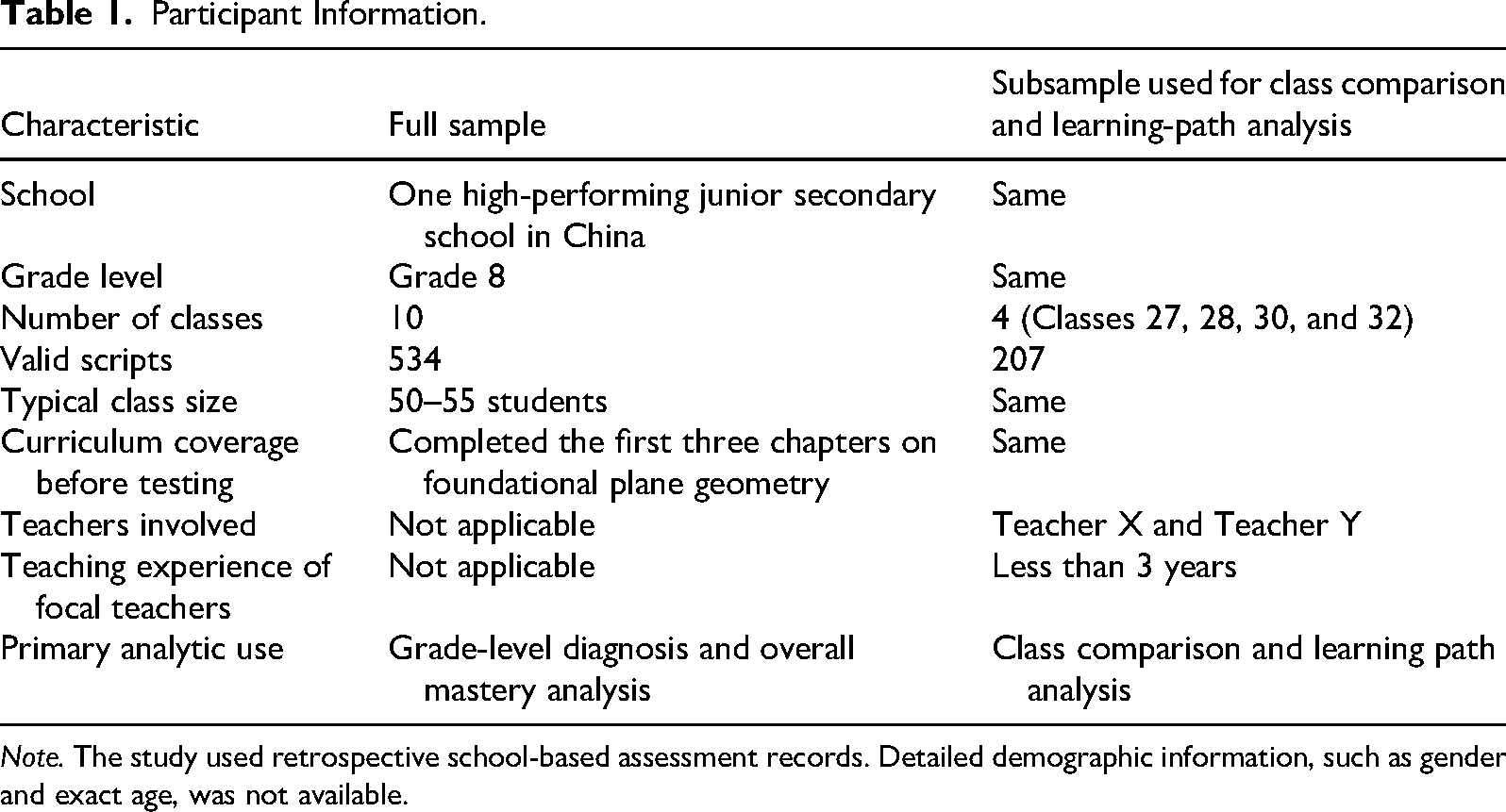
Note. The study used retrospective school-based assessment records. Detailed demographic information, such as gender and exact age, was not available.
For class comparison and learning path analyses, Classes 27 and 28, taught by Teacher X, were combined as Group A, and Classes 30 and 32, taught by Teacher Y, were combined as Group B. Both teachers were early-career mathematics teachers with less than 3 years of teaching experience. Because the four classes came from the same school and class allocation system, they were treated as broadly comparable for subgroup analysis.
3.2 Instrument
The assessment analyzed in this study was a school-based midterm examination prepared by the grade 8 mathematics teaching team of the participating school for routine instructional assessment. This examination was used as an authentic classroom-based assessment of foundational plane geometry. It was selected because it was administered to a full-grade cohort, was closely aligned with the local curriculum sequence, and formed part of the students’ regular midterm assessment, making it more likely to reflect students’ usual classroom assessment performance than a separate researcher-designed test.
The examination consisted of 19 items, with a full score of 120 points and a testing time of 2 h. It included six multiple-choice items, two fill-in-the-blank items, and 11 problem-solving items. During administration, all students completed the examination independently under the supervision of their class teachers and in accordance with the school's standard examination procedures. These conditions helped preserve the authenticity of the response data and supported the subsequent cognitive diagnostic analysis.
3.3 Cognitive attributes and their hierarchical relationships
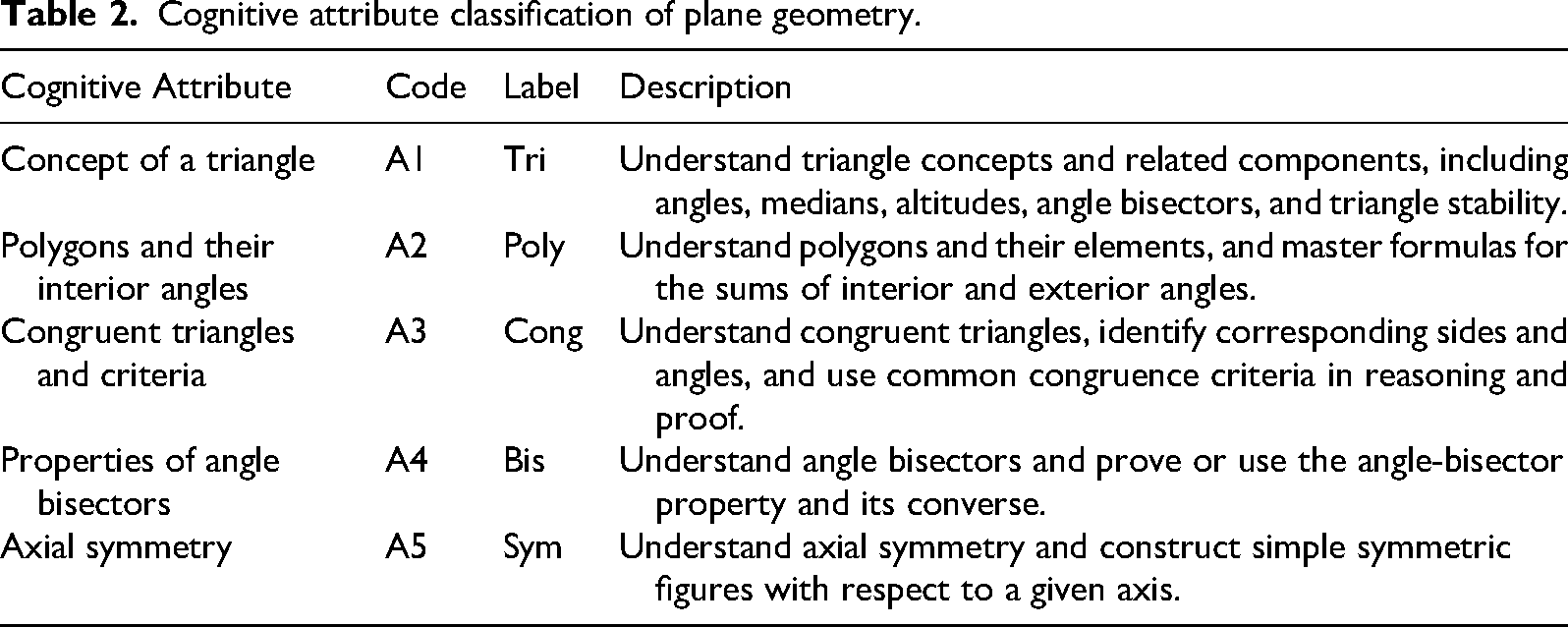
Cognitive attributes refer to the underlying psychological structures—such as knowledge, skills, and competencies—of students being assessed, and cognitive diagnosis evaluates their mastery of these attributes (Leighton & Gierl, 2007). In the present study, the cognitive attributes for foundational plane geometry were identified with reference to two sources: the Mathematics Curriculum Standards for Compulsory Education (Ministry of Education of the People's Republic of China, 2022) and the PEP Textbook for Grade 8 (Volume 1). In addition, five practising grade 8 mathematics teachers were consulted to refine the attribute definitions and reduce overlap among them. Through this process, five cognitive attributes were identified for the domain of plane geometry, as summarized in Table 2.
Cognitive attribute classification of plane geometry.
The hierarchical relationships among these five attributes were then determined on the basis of the curriculum sequence, textbook structure, and the logical dependencies among the relevant knowledge points. An initial hierarchy was first drafted by the research team according to the instructional order and prerequisite relations implied in the curriculum materials. This preliminary structure was then discussed with the five teachers, who reviewed whether the proposed relationships were consistent with their teaching experience and with the usual sequencing of these topics in classroom instruction.
The final hierarchical structure shown in Figure 1 was used as the hypothesized attribute hierarchy for the subsequent analysis. In this structure, A1 (Tri) represents the foundational knowledge of triangles and related concepts. A2 (Poly) and A3 (Cong) build on this foundation, as they require students to use their earlier knowledge of triangles in more advanced contexts. A4 (Bis) is more closely related to A3 (Cong), since understanding and proving the properties of angle bisectors often depends on prior knowledge of triangles and congruent triangles, and A5 (Sym) was treated as a relatively independent attribute. Although it is connected to other geometric ideas, its mastery does not rely as directly on the prerequisite chain represented by A1-A4. For this reason, axial symmetry was retained as a separate cognitive attribute in the present study. This hierarchical structure was then used to support the specification of the Q-matrix and the later interpretation of the students’ diagnosed knowledge states.
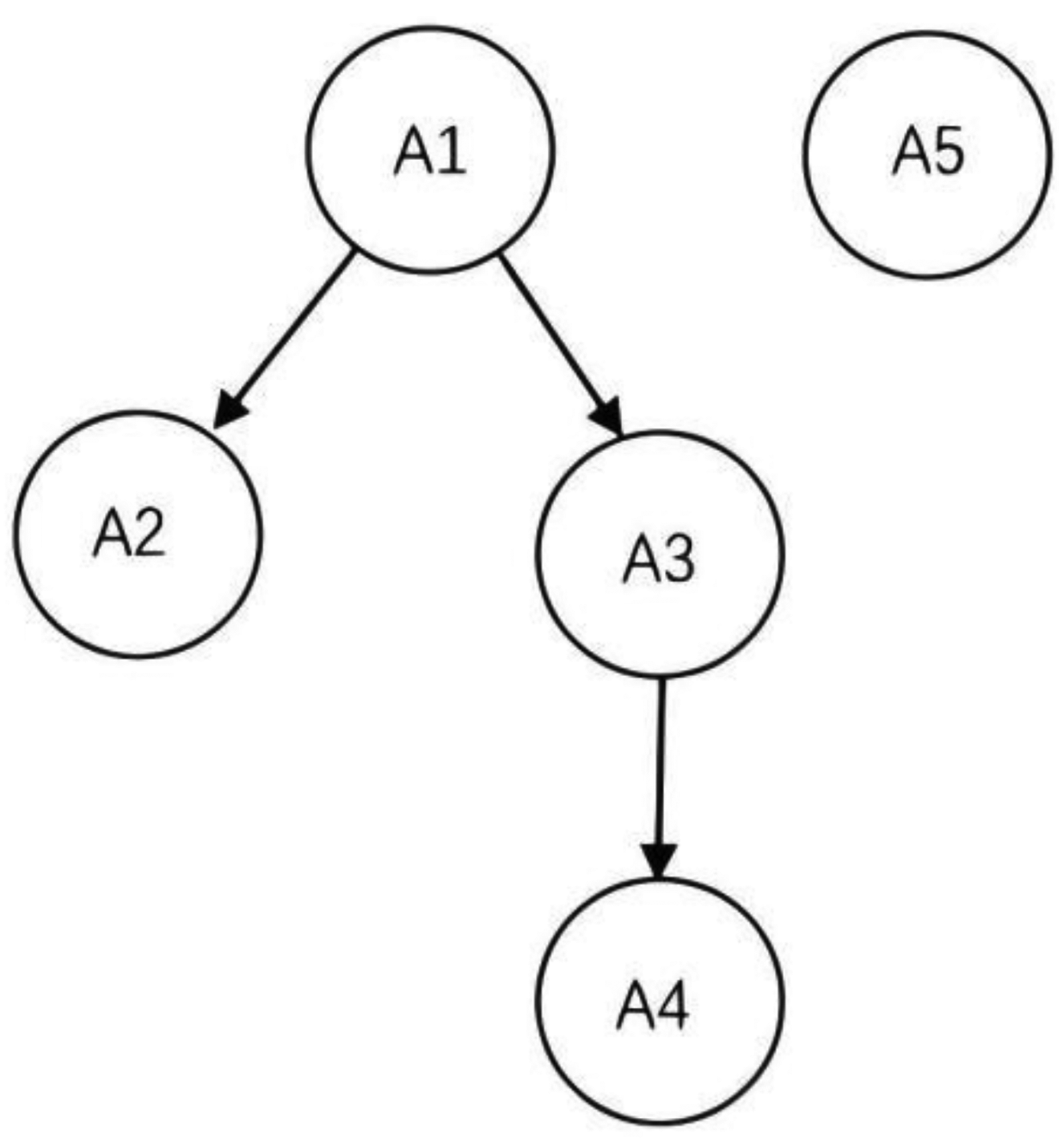
Hierarchical structure of cognitive attributes of plane geometry.
3.4 Q-matrix construction
Based on the cognitive attributes and their hierarchical relationships, the prerequisite relationships among the five attributes were represented through a reachability structure. Under this hypothesized hierarchy, the 32 possible mastery profiles were reduced to 14 admissible patterns after profiles that violated the prerequisite relationships were excluded. These admissible patterns were used to support the specification of the Q-matrix and the interpretation of diagnosed knowledge states.
The initial Q-matrix was reviewed item by item with five grade 8 mathematics teachers, focusing on whether the mapped attributes matched the main knowledge and reasoning demands of each item, especially for multistep geometry tasks. Disagreements were resolved by discussing the item content and stepwise solution process until consensus was reached. Because a formal inter-rater agreement coefficient was not recorded, the review process is reported qualitatively. The final Q-matrix used for analysis is presented in Table 3.
Q-matrix of plane geometry.
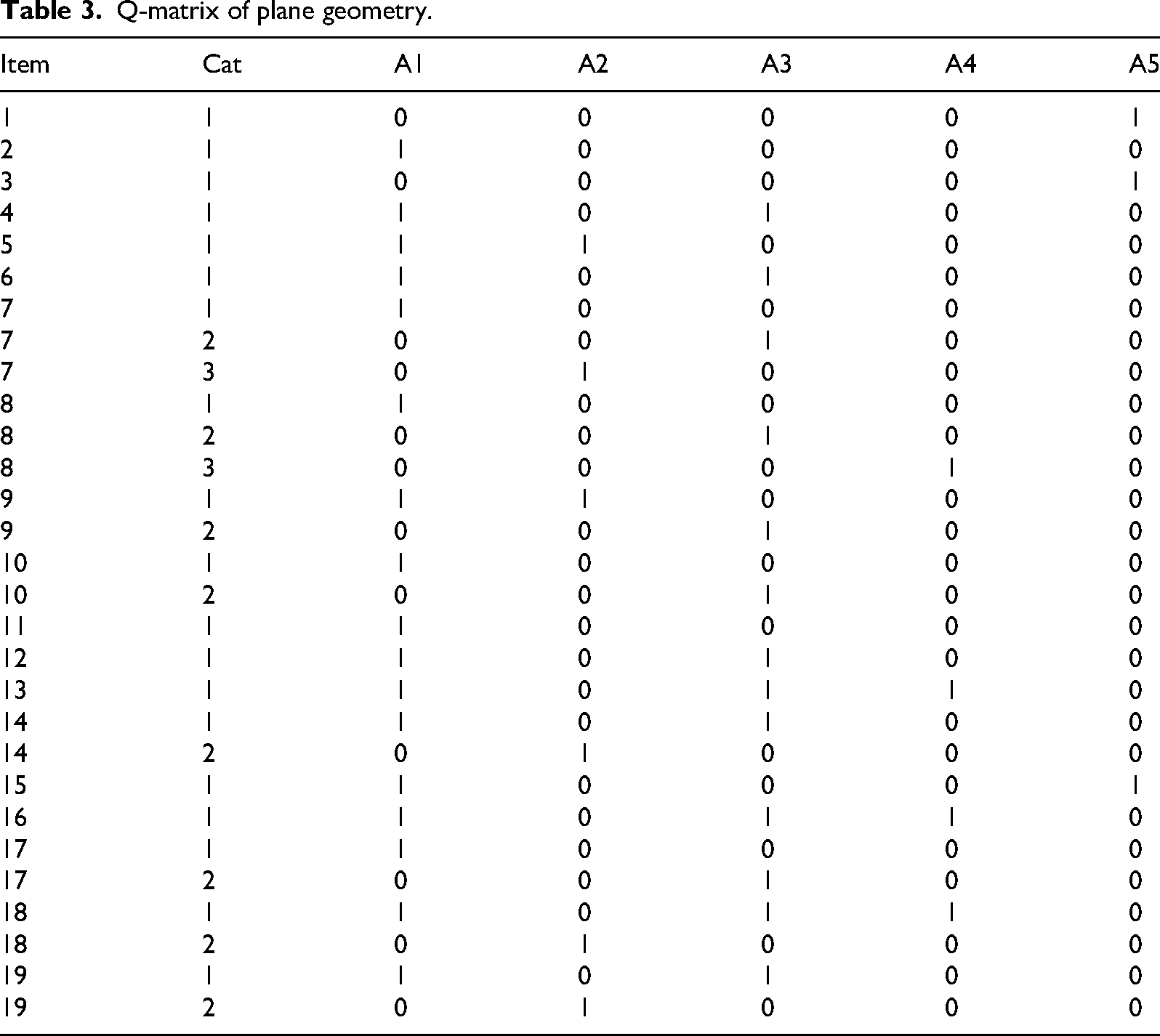
Because the present study used a multilevel scoring model, the Q-matrix differs from a conventional dichotomous Q-matrix (Ma & de la Torre, 2016). In addition to the item number, it includes a category column (“Cat”) to indicate the attribute pattern assessed at each score level or solution step. For example, in Item 9 (Figure 2), the first scoring step requires the attribute pattern (11000), indicating that triangle concepts and polygons and their interior angles are involved at this stage. The second scoring step then requires additional mastery of congruent triangles, represented by the pattern (00100). In this way, the multilevel Q-matrix allows each step of a geometry item to be linked to the corresponding cognitive attributes more precisely.
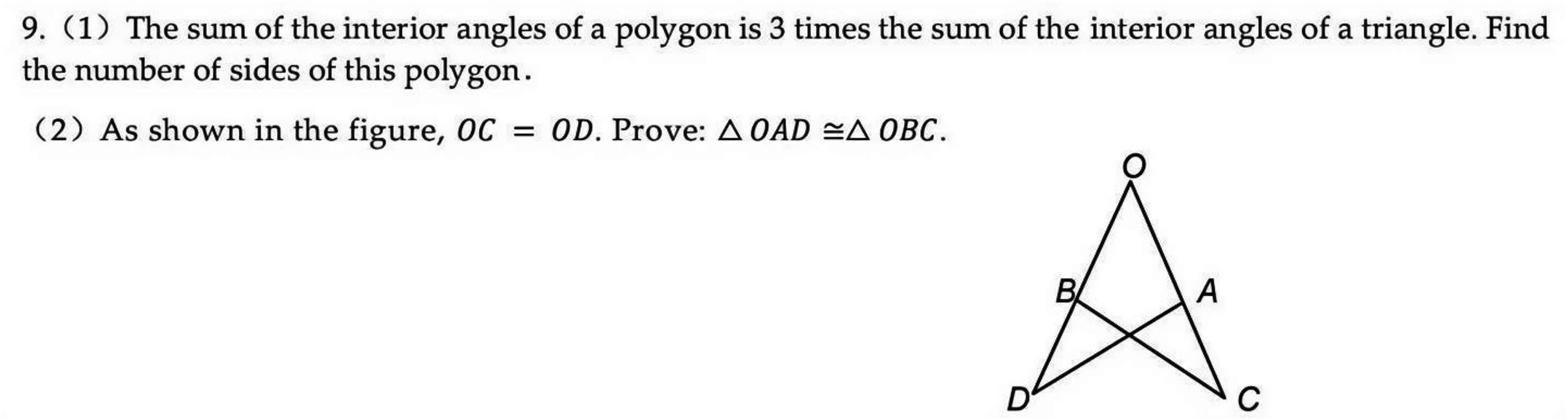
Item 9 from the diagnostic test.
In the present study, the grade 8 geometry content examined was interpreted as transitional between GI and GII, that is, between figure-based geometrical work and more formal property-based reasoning (Houdement & Kuzniak, 2003). Item 9 illustrates this transition. The first scored step mainly requires students to read the diagram together with the given conditions and to identify a polygon–angle relationship, whereas the second step requires a more discursive justification using congruent-triangle reasoning. From the perspective of the Mathematical Working Spaces framework, information extraction in this written item was interpreted as relying mainly on semiotic reading of the figure and theorem-based reasoning rather than on physical instrumental action with measuring tools (Kuzniak et al., 2016).
3.5 Test quality and model fit
To evaluate whether the examination was suitable for cognitive diagnostic analysis, several indicators were examined, including internal consistency (Tavakol & Dennick, 2011), item difficulty and discrimination (de la Torre, 2009; Templin & Henson, 2006), hierarchical consistency (Cui et al., 2006), absolute model-data fit, and attribute-level classification indices. The examination showed good internal consistency (Cronbach's α = 0.90), a broad range of item difficulty values (0.20–0.99, mean = 0.63), and acceptable item discrimination (mean = 0.48). The average Hierarchical Consistency Index was 0.73, suggesting that the proposed attribute hierarchy was broadly consistent with the item structure. The limited-information model-fit indices were M_ord = 352.311, df = 67, p < .001, RMSEA2 = 0.0893, 90% CI [0.0802, 0.0986], and SRMSR = 0.0991. Taken together, these results suggest that the examination provided an acceptable basis for subsequent analysis (Maydeu-Olivares & Joe, 2014; Wu et al., 2025).
Attribute-level classification accuracy was also examined because it provides evidence regarding the reliability and interpretability of diagnostic classifications (Templin & Bradshaw, 2013). The classification accuracy values were 0.980 for triangle concepts, 0.945 for polygons and their interior angles, 0.956 for congruent triangles and related criteria, 0.991 for angle-bisector properties, and 0.946 for axial symmetry, with a mean of 0.964. Although axial symmetry was measured by only three items, its classification accuracy suggested that this attribute remained diagnostically interpretable in the present analysis. Nevertheless, the findings related to this attribute should still be interpreted with additional caution because of its relatively limited item coverage.
3.6 Data analysis
First, the response data of the full sample (N = 534), together with the specified Q-matrix, were analyzed using the seq-GDINA model. The main diagnostic results, including students’ attribute mastery probabilities and most likely knowledge states, were obtained from the flexCDMs platform (Tu et al., 2023), whereas the limited-information model-fit indices were calculated using the GDINA package in R (Version 2.9.12). Based on these results, the study examined the overall mastery rates of the five cognitive attributes and the distribution of the observed knowledge states.
Subgroup analyses were then conducted for the four focal classes. Classes 27 and 28, taught by Teacher X, were combined as Group A, and Classes 30 and 32, taught by Teacher Y, were combined as Group B. SPSS 27.0 was used for the statistical analyses. Because the relevant variables did not meet the assumption of normality, a nonparametric procedure was adopted. The Kruskal–Wallis test was used to examine whether the two groups differed significantly in their mastery of the five cognitive attributes (Kruskal & Wallis, 1952).
A learning-path analysis was conducted for the 207 students in the four focal classes. Students with the same diagnosed knowledge state were grouped, and the observed knowledge states were then organized according to the hierarchical relationships among the five cognitive attributes. On this basis, inclusion relationships among the observed states were used to identify plausible progression patterns within the four focal classes for classroom-level interpretation and remedial planning.
4. Results
This section reports the findings at two levels. Using the full sample of 534 grade 8 students, we first describe the overall mastery characteristics and areas of weaker mastery in foundational plane geometry. We then turn to a focused subsample of 207 students from four focal classes to examine subgroup variation and infer plausible learning paths for classroom-level interpretation and remedial planning.
4.1 Grade-level mastery characteristics and areas of weaker mastery
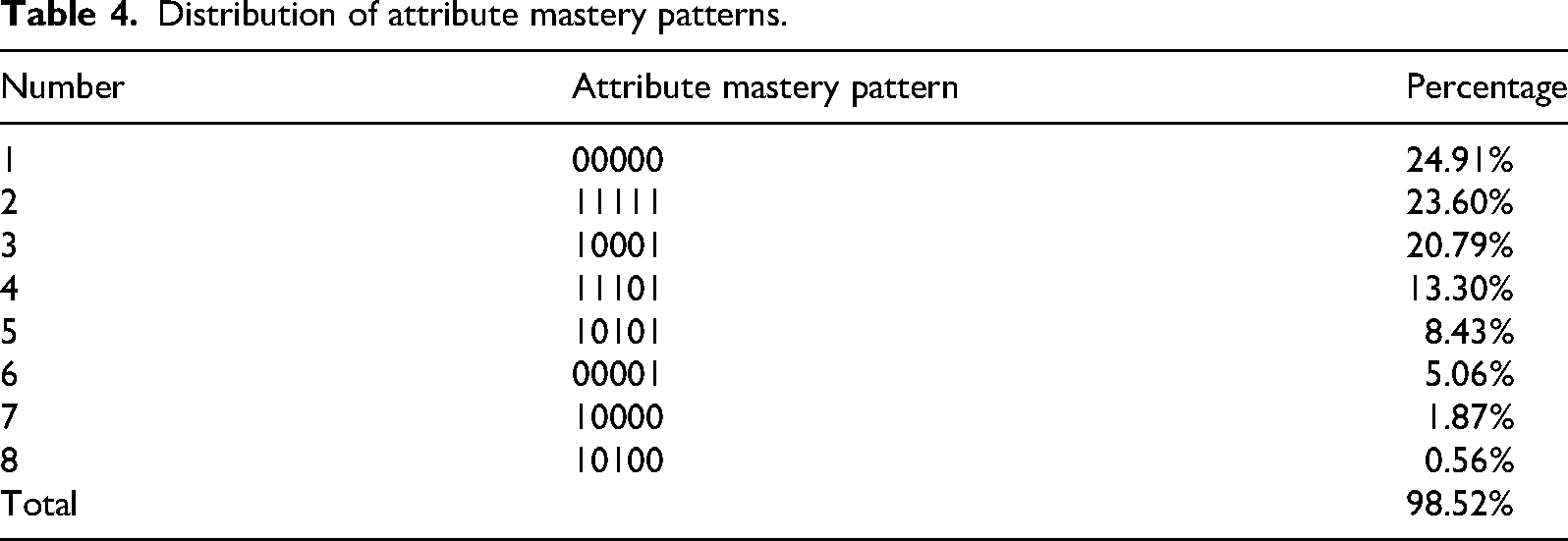
The attribute mastery patterns of the whole grade are presented in Table 4. The diagnosed knowledge states were concentrated in eight dominant mastery patterns, which together accounted for 98.52% of the full sample. Among these patterns, 00000, 11111, 10001, and 11101 were the most common, indicating that the students’ mastery of the five cognitive attributes was not evenly distributed across all possible states.
Distribution of attribute mastery patterns.
As shown in Figure 3, there was substantial variation across the five attributes. Students showed stronger mastery of triangle concepts (A1: 69%) and axial symmetry (A5: 72%), but weaker mastery of polygons and their interior angles (A2: 37%), congruent triangles (A3: 47%), and especially angle-bisector properties (A4: 24%). These results suggest that many students struggled with content requiring the coordination of geometric properties, multistep reasoning, and proof-related understanding.
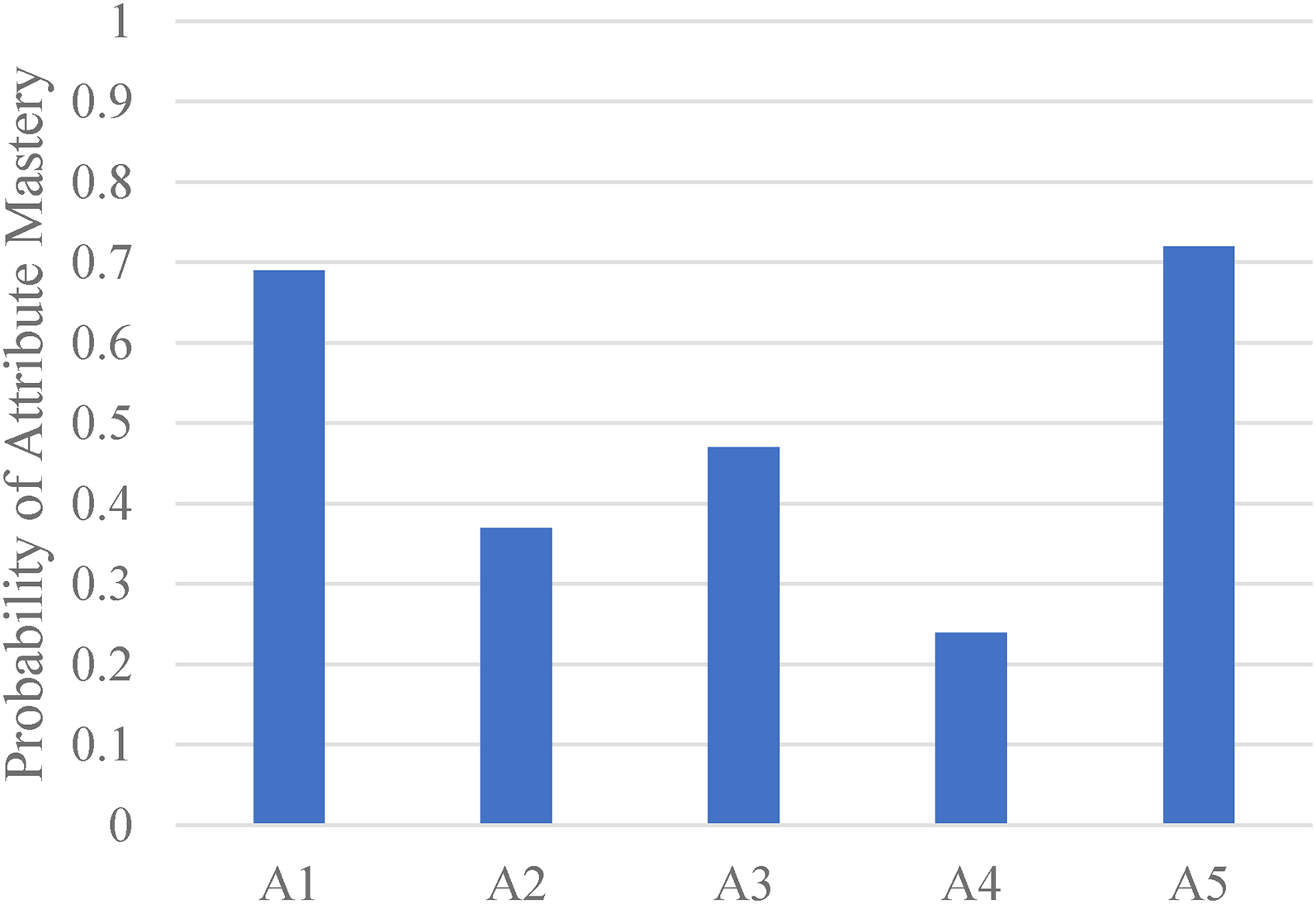
Grade-level overall mastery rates.
4.2 Variation across groups and individuals
To further examine heterogeneity in students’ geometry learning, subgroup differences were analyzed using a focused subsample of 207 students from the four focal classes. The average probabilities of mastering polygons and their interior angles (A2/Poly) in Groups A and B were 0.47 (SD = 0.48, median = 0.16, IQR = 1.00) and 0.30 (SD = 0.30, median = 0.01, IQR = 0.90), respectively, while those for angle-bisector properties (A4/Bis) were 0.38 (SD = 0.38, median = 0.06, IQR = 0.60) and 0.19 (SD = 0.34, median < 0.01, IQR = 0.30). Here, IQR refers to the interquartile range, calculated as Q3–Q1.
The Kruskal–Wallis test showed that students in Group A had significantly higher mastery of polygons and their interior angles (H = 6.44, df = 1, p = .011, ε2 = 0.03) and angle-bisector properties (H = 5.74, df = 1, p = .017, ε2 = 0.03) than those in Group B, while no significant differences were found for the other three attributes. These results indicate that class-level differences were selective rather than global, appearing mainly in polygons and angle-bisector properties rather than across all five attributes.
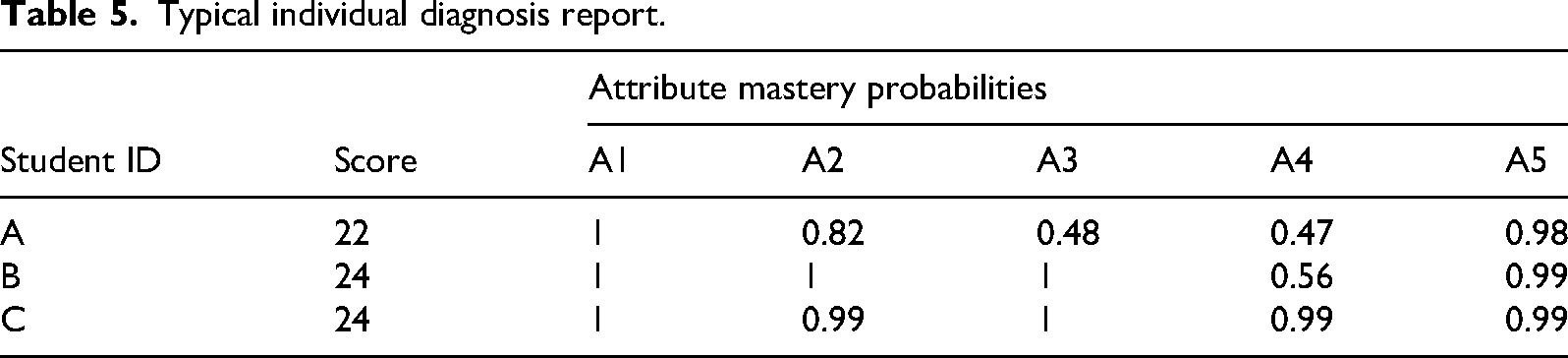
Table 5 and Figure 4 further illustrate individual-level variation. Student A showed good mastery of triangle concepts and axial symmetry but weaker mastery of congruent triangles and angle-bisector properties. Students B and C obtained the same total score (24 points) but differed markedly in their mastery of angle-bisector properties, demonstrating that students with similar observed scores may have substantially different underlying geometry profiles.
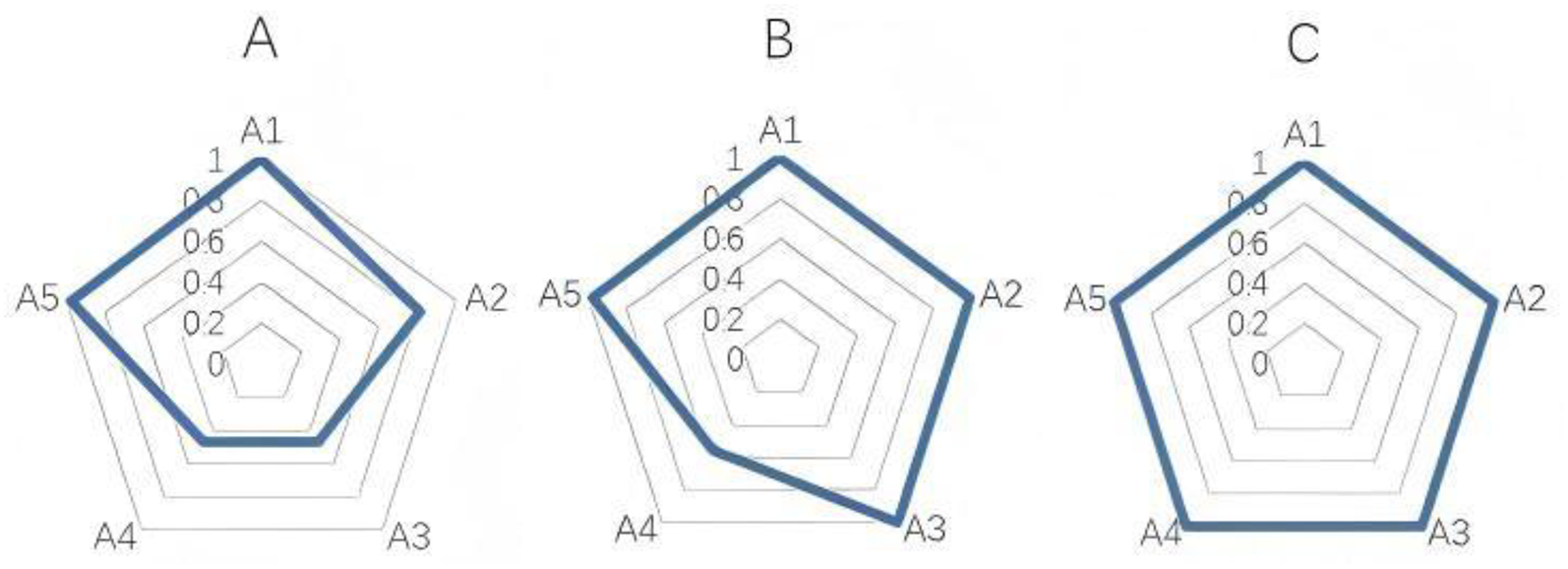
Radar plots of typical individuals.
Typical individual diagnosis report.
4.3 Inferred learning paths in the four focal classes
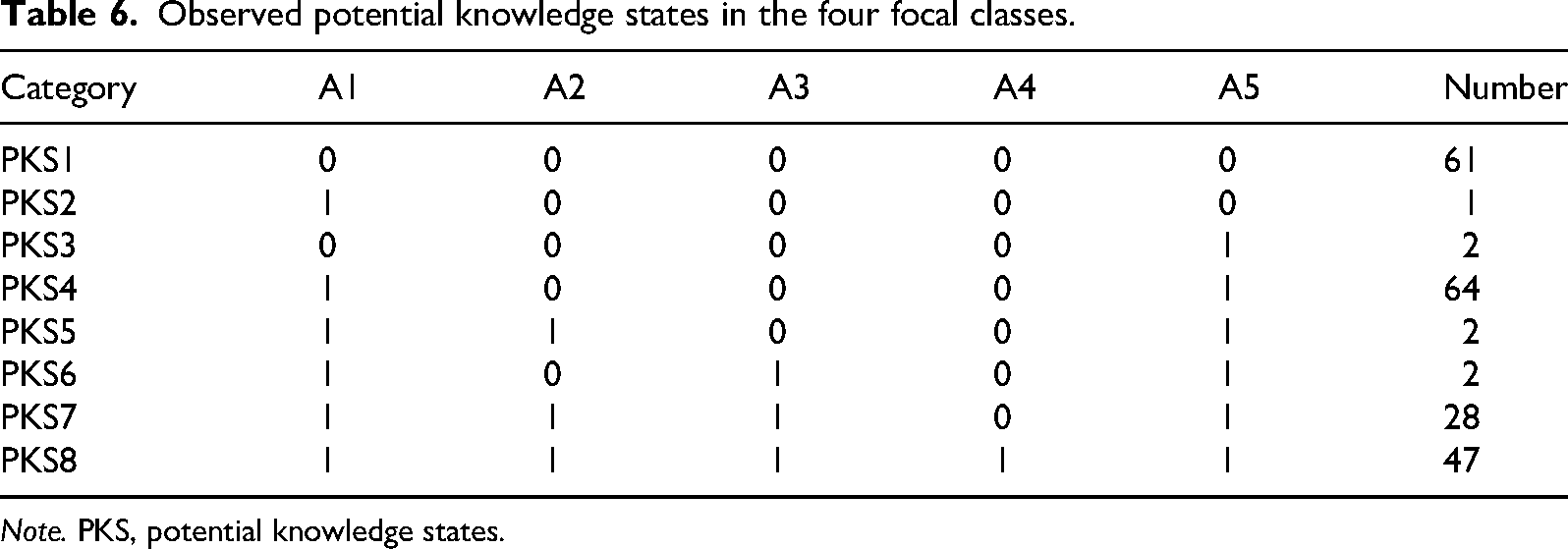
Based on the attribute mastery patterns diagnosed by the seq-GDINA model for each student in Groups A and B, those with identical patterns were categorized together. The resulting knowledge-state clusters and the corresponding numbers of students are presented in Table 6 as potential knowledge states (PKS).
Observed potential knowledge states in the four focal classes.
Note. PKS, potential knowledge states.
This analysis focused on the 207 students from the four focal classes because the progression patterns were intended for classroom-level interpretation and remedial planning. The routes were inferred from the hypothesized prerequisite relationships among attributes shown in Figure 1 and from the observed frequency distribution of diagnosed knowledge states in these four classes. Accordingly, this part of the analysis was intended to identify plausible progression patterns rather than directly observed longitudinal learning trajectories.
As shown in Table 6, the distribution of PKS was uneven. Most students were concentrated in four dominant states: no diagnosed mastery, mastery of triangle concepts and axial symmetry, further mastery of polygons and congruent triangles, and full mastery of all five attributes. These states correspond to PKS1, PKS4, PKS7, and PKS8 in Table 6. The remaining states, PKS2, PKS3, PKS5, and PKS6, were represented by only a small number of students. This indicates that the diagnosed knowledge states of the four focal classes were organized around a limited number of central nodes rather than being evenly distributed across all possible states.
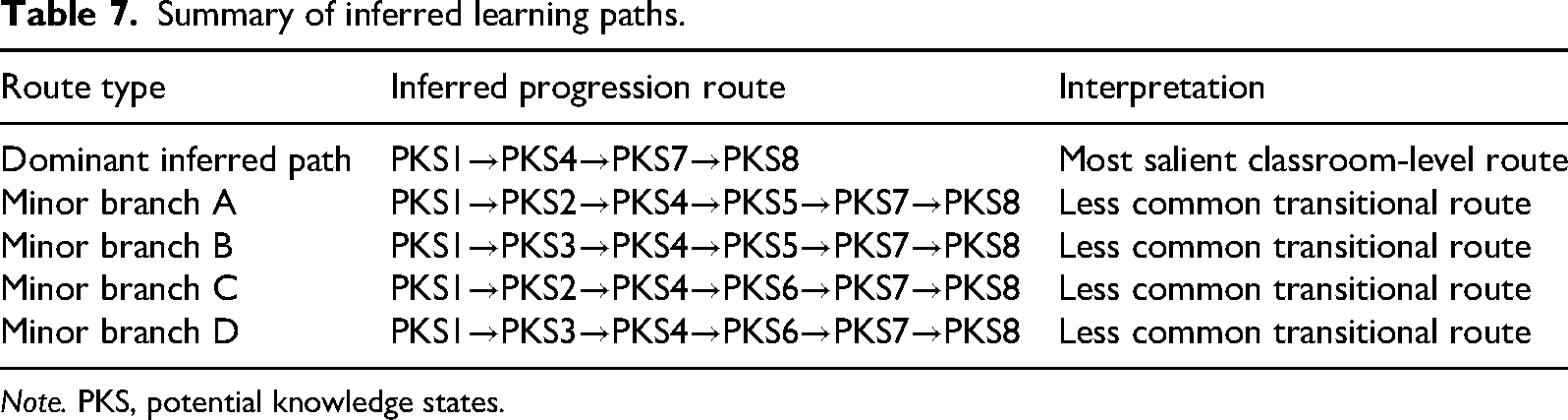
A network representation of the eight observed knowledge states was constructed using inclusion relationships (Figure 5), and the inferred routes are summarized in Table 7. The most salient route was PKS1→PKS4→PKS7→PKS8, corresponding to movement from no diagnosed mastery to mastery of triangle concepts and axial symmetry, then to mastery of polygons and congruent triangles, and finally to full mastery. The remaining routes were interpreted as less common transitional variants. These paths should not be understood as actual routes followed by every student, but as instructionally useful relationships among the observed knowledge states in the four focal classes.
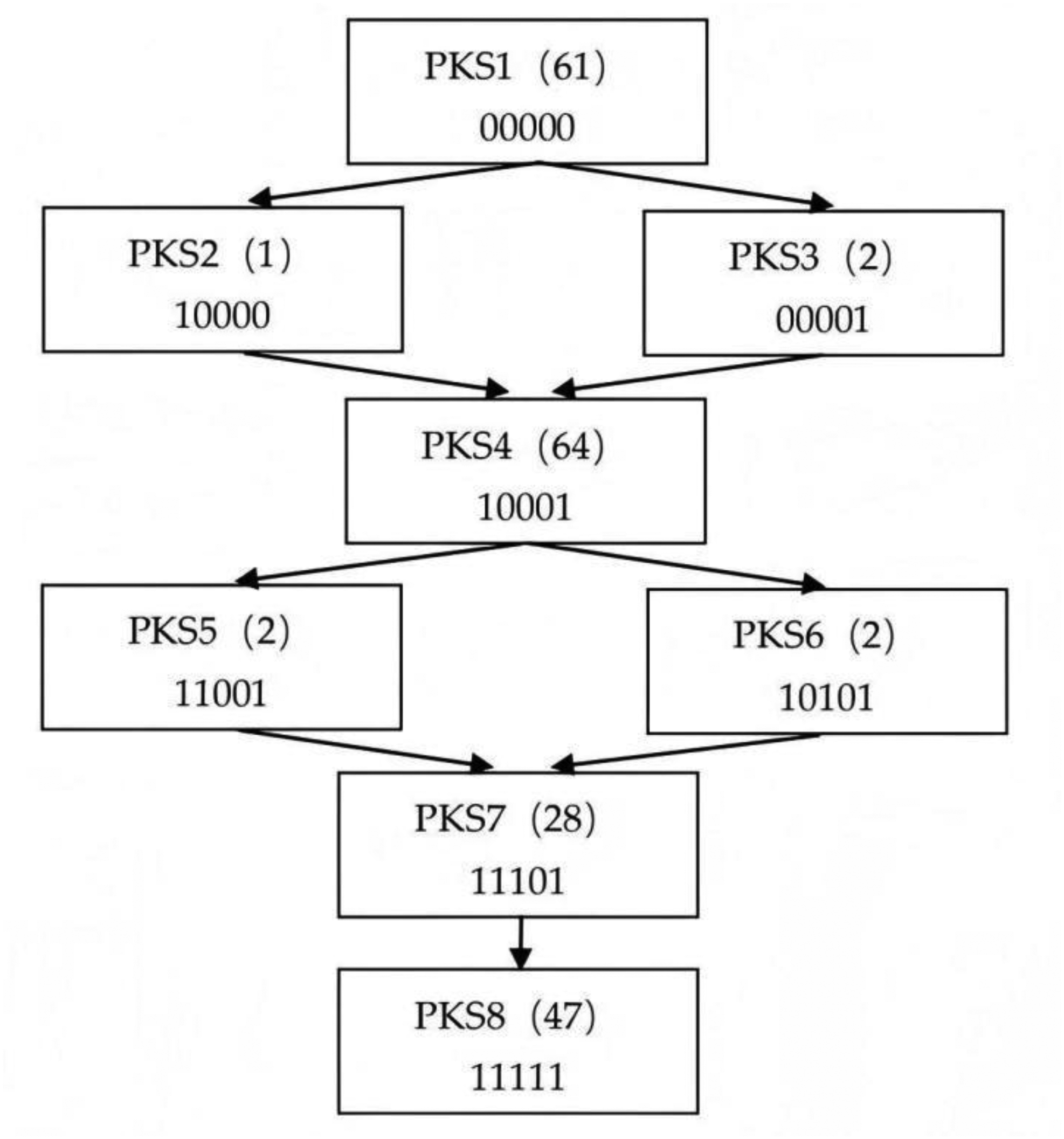
Inferred progression network of observed knowledge states.
Summary of inferred learning paths.
Note. PKS, potential knowledge states.
5. Discussion
This study used the seq-GDINA model to analyze responses to a school-based midterm examination in plane geometry, focusing on grade 8 students’ mastery characteristics and the plausible learning paths inferred for remedial instruction. The discussion focuses on three aspects: uneven mastery across the five attributes, diagnostic heterogeneity across groups and individuals, and the dominant inferred path identified in the four focal classes.
5.1 Mastery characteristics in plane geometry
The students showed stronger mastery of triangle concepts and axial symmetry but weaker mastery of polygons and their interior angles, congruent triangles, and angle-bisector properties. This imbalance should be understood not as simply a difference in item difficulty but as reflecting differences in the forms of geometrical work required. Triangle concepts and axial symmetry are more closely connected to foundational knowledge and visually accessible configurations, whereas polygons, congruent triangles, and angle-bisector properties require students to coordinate geometric properties, use given conditions, and organize multistep reasoning.
This interpretation is consistent with studies showing that students’ difficulties in geometry often become more apparent when they move beyond visual recognition and begin to coordinate figures, properties, and deductive reasoning (Kuzniak & Rauscher, 2011). Recent work also suggests that students’ apprehension of geometric figures involves not only perceptual recognition but also operative and discursive dimensions of geometrical activity (Michael-Chrysanthou et al., 2024). From this perspective, weaker performance on polygons, congruent triangles, and angle-bisector properties indicates that many students found it difficult to move from reading or recognizing a figure to organizing a property-based justification.
This transition is especially important in proof-related geometry tasks. Research on proof and proving has emphasized that success in geometry depends not only on obtaining correct results but also on coordinating statements, relationships, and logical structures in a meaningful argument (Stylianides et al., 2024). Compared with triangle concepts and axial symmetry, congruent triangles and angle-bisector properties require students to relate given conditions to theorems, coordinate several pieces of information, and sustain reasoning across the solution process. In the language of geometrical work, the central difficulty therefore appears to lie in coordinating visual, conceptual, and justificatory elements in a stable way (Kuzniak et al., 2016).
5.2 Diagnostic heterogeneity across groups and individuals
The cognitive diagnostic results revealed heterogeneity across groups and individuals. At the group level, significant differences between Group A and Group B appeared only in polygons and angle-bisector properties, suggesting that class-level variation was selective rather than global. Similar findings in cognitive diagnosis research have shown that students with comparable overall performance may differ in the stability of specific knowledge components (Leighton & Gierl, 2007; Zhang et al., 2022).
At the individual level, Students B and C obtained the same score but differed in their mastery probabilities for angle-bisector properties. This result shows that equal observed performance does not necessarily imply equal understanding. From an assessment-for-learning perspective, such fine-grained information can help teachers move beyond total-score comparisons and identify more specific learning needs (Tang & Zhan, 2021; Zhan et al., 2021). The value of cognitive diagnosis lies not only in producing detailed reports but also in revealing differences in geometrical understanding that remain hidden behind similar total scores (Deonovic et al., 2019).
5.3 Inferred learning paths
The inferred learning paths identified should be understood as classroom-level interpretations of observed knowledge states rather than longitudinal learning trajectories. In cognitive diagnosis research, diagnosed knowledge states can provide useful evidence for describing possible progression patterns, but such patterns remain analytical reconstructions based on attribute relations and empirical response data rather than direct records of how each student actually learned over time (Chen et al., 2017). For this reason, the dominant route identified in the four focal classes is better understood as an instructionally salient inferred path than as a fixed or universal learning trajectory (Wu et al., 2021).
The dominant inferred path helps describe how the main learning difficulties were organized in the four focal classes. It begins with no stable mastery, then progresses to mastery of triangle concepts and axial symmetry, followed by polygons and congruent triangles, and finally, full mastery of all five attributes. Read in geometrical terms, this path reflects a movement from basic figure-based understanding toward the coordination of multiple properties and more explicit justificatory reasoning. This pattern is consistent with prior research showing that a central difficulty in school geometry lies in moving beyond the recognition of figures toward more structured property-based reasoning (Kuzniak & Rauscher, 2011).
This interpretation also helps explain why angle-bisector properties emerged as the most demanding attribute. Even when students reached the state associated with mastery of polygons and congruent triangles, mastery of angle-bisector properties had not yet been fully established. This suggests that angle-bisector properties functioned as a later threshold in the observed progression structure. Compared with triangle concepts or axial symmetry, this attribute requires students to coordinate relevant geometric relations within a more sustained proof-related process. The late appearance of angle-bisector properties in the dominant inferred path is consistent with the broader difficulty of moving from intuitive understanding to formal geometrical justification (Stylianides et al., 2024).
The position of axial symmetry offers another important insight. In the inferred structure, axial symmetry appeared relatively early and remained somewhat independent from the main chain linking triangle concepts, polygons, congruent triangles, and angle-bisector properties. This aligns with the hypothesized hierarchical knowledge structure in Figure 1 and with the mathematical organization of the topic because axial symmetry is more directly connected to figure-based perception, intuitive configurations, and transformational understanding than to the proof-oriented chain associated with congruent triangles and angle bisectors. From the perspective of geometrical work, axial symmetry seems to involve a different balance among visual, conceptual, and discursive elements than that of the main progression route (Kuzniak et al., 2016). Its relative independence should not be interpreted as a lack of importance but as evidence that not all attributes in plane geometry belong to the same prerequisite chain.
The minor branches in the state network should also be noted. Although the four minor states shown in Table 6 involved only small numbers of students, they suggest that the progression structure was not completely linear. For teaching purposes, the dominant inferred path remains the most useful starting point because it captures the most prevalent organization of learning difficulties, while the minor branches remind us that students’ geometrical development may still follow more than one plausible route.
5.4 Implications for remedial teaching
The findings suggest that remedial teaching in plane geometry should focus not only on whether students answered correctly but also on the kinds of geometrical work they were able to carry out. The weaker performance on polygons, congruent triangles, and angle-bisector properties indicates that many students need support in coordinating geometric properties, linking given conditions to theorems, and sustaining multistep reasoning. Remedial instruction should therefore help students move gradually from figure-based recognition to property-based explanation and justification (Tang & Zhan, 2021).
The diagnostic results also point to the need for differentiated remediation. Students with similar total scores may differ substantially in their geometry profiles, so whole-class remediation based only on average scores may overlook individual learning needs. Attribute-level diagnosis can help teachers identify unstable geometric relations and select follow-up tasks more precisely (Zhan et al., 2021). For example, students who have mastered triangle concepts and axial symmetry but not polygons or congruent triangles may require further support in these areas, whereas students approaching mastery of polygons and congruent triangles may need help with the proof-related demands of angle-bisector properties. The dominant inferred path can therefore be used as an instructional reference for prioritizing central transitions, while the minor branches remind teachers that some students may require support through less common intermediate states.
Finally, remedial teaching may benefit from making students’ reasoning processes more visible. For attributes such as congruent triangles and angle-bisector properties, students need opportunities to explain how a figure is interpreted, which properties are relevant, and how these properties are connected within a justification. Carefully sequenced examples, comparisons of similar configurations, visual supports, and dynamic geometry environments may help students test, compare, and refine geometric relationships before expressing them more formally (Guven, 2012).
5.5 Limitations and future directions
Several limitations should be acknowledged. First, the inferred learning paths were derived from cross-sectional data rather than longitudinal observation. They therefore indicate plausible relations among observed knowledge states but cannot show whether individual students moved through these states in the same order over time.
Second, the progression analysis was based on a focused subsample of 207 students from four focal classes. This design supported classroom-level interpretation and remedial planning, but the inferred routes should not be treated as fully representative of the entire grade or other school contexts. In addition, the assessment was an authentic school-based midterm examination rather than a purpose-built diagnostic instrument, and the Q-matrix was refined through consensus-based expert discussion rather than a formal inter-rater procedure. Although the test quality indicators supported the interpretability of the analysis, the fine-grained findings should be interpreted cautiously.
Finally, axial symmetry was measured by only three items, so the findings related to this attribute should be interpreted carefully. Future research should use longitudinal designs to examine whether the dominant inferred path remains stable over time, evaluate remedial interventions based on attribute-level diagnosis, and develop purpose-built diagnostic instruments for plane geometry with more systematic attribute coverage.
6. Conclusion
This study applied the seq-GDINA model to a school-based midterm examination in foundational plane geometry completed by 534 grade 8 students in China. It examined students’ mastery characteristics and explored how diagnosed knowledge states may suggest plausible learning paths for remedial instruction. The students demonstrated stronger mastery of triangle concepts and axial symmetry and weaker mastery of polygons and their interior angles, congruent triangles, and angle-bisector properties. The considerable heterogeneity observed across groups and individuals indicates that students with similar total scores could differ substantially in their underlying geometry profiles. These results suggest that students’ performance in plane geometry cannot be fully understood from total scores alone because different attributes involve different forms of geometrical work. The diagnosed knowledge states of the four focal classes suggest a dominant inferred path from no mastery to mastery of triangle concepts and axial symmetry, then to mastery of polygons and congruent triangles, and finally to full mastery. This path should be understood as a plausible classroom-level reconstruction rather than as evidence of a directly verified longitudinal learning trajectory. Taken together, the study shows that CDA can help teachers identify areas of weaker mastery in plane geometry and use diagnosed knowledge states as a more informative basis for classroom-level remedial support.
Footnotes
Acknowledgements
The authors are sincerely grateful to the reviewers and the editorial team for their comments that substantially improved the article.

Ethical Approval
This study was performed in line with the principles of the Declaration of Helsinki and approved by the Ethics Committee of Central China Normal University, Wuhan, China (01 August 2024/No. 2024070101). All surveys were conducted in accordance with the relevant laws and regulations of the People's Republic of China.
Consent for Publication
All authors agreed with the content and gave explicit consent to submit.
Informed Consent
The written informed consent regarding participation, data use, and consent to publish was obtained from all participants on August 20, 2024. Before completing the test, researchers also obtained explicit consent from the teachers. All teachers were provided with full details: the study was carried out exclusively for research purposes, their involvement was voluntary, and the procedures involved no harm or risk. Throughout the research, participants were guaranteed confidentiality and anonymity.
Contributorship
JG initiated the project, conducted the research, and drafted the manuscript. YZ supervised the study, provided important ideas for the research, and revised the draft. NL supervised the study, provided important ideas for the research, and revised the draft. All authors read and approved the final manuscript.
Funding
The authors disclosed receipt of the following financial support for the research, authorship, and/or publication of this article: This work was supported by the 2025 Key Project of the Hubei Provincial Education Science Planning Program (Grant No. 2025GA067), the 2025 General Project of the Hubei Provincial Education Science Planning Program (Grant No. 2025GB431), and the Fundamental Research Funds for the Central Universities (Grant No. CCNU25ZZ1112025).
Declaration of Conflicting Interests
The authors declared no potential conflicts of interest with respect to the research, authorship, and/or publication of this article.
Data Availability Statement
The data presented in this study are available upon request from the corresponding author due to privacy concerns.