






Abstract
This scoping review maps ethnomathematics research in Philippine mathematics education and identifies similarities and differences of patterns with selected international literature. Guided by JBI methodology and PRISMA Extension for Scoping Reviews, 45 studies were analyzed to examine how ethnomathematics is represented and characterized using the lenses of ethnomathematical activities and curriculum typology. The mapped studies show an increase in publications over time, with a shift from ethnographic documentation toward instructional design and classroom applications. Four recurring themes in the reported educational contributions of ethnomathematics were identified: contextualization through Indigenous Knowledge Systems and Practices, teacher agency in lesson co-design, reported student engagement, and conceptual or reflective work. Designing and measuring are the most frequently represented activities, while integration and insertion are the most common at the curriculum level. In relation to selected international literature, the Philippine corpus shows a similar emphasis on mathematical domains and educational levels, particularly geometry and the secondary level. Cultural practices emphasize weaving, fishing, and farming, in contrast to the focus on architecture in some international studies. The review identifies gaps in coverage and highlights the need for broader representation and stronger links between research and curriculum development.
Keywords
1. Introduction
Mathematics plays an essential role in modern society. It helps people understand and respond to the quantitative demands of their personal, civic, and professional lives (Organization for Economic Co-operation and Development, 2018). Because these demands are shaped by social and cultural contexts, how mathematics is taught matters as well. Culturally responsive teaching (CRT) emphasizes that academic learning becomes more meaningful when it connects to learners’ lived experiences and cultural frames of reference (Gay, 2002). One approach that seeks to bridge school mathematics and everyday practice is ethnomathematics, introduced by D’Ambrosio (1985), which foregrounds mathematical practices as they emerge within cultural activities and social contexts. Ethnomathematics challenges the view of mathematics as culture-free by documenting how mathematical ideas and forms of reasoning develop within cultural practices and histories (Barton, 1999; Gerdes, 1988). Over time, it has developed into a pedagogical and critical movement that examines inclusion, power, and the relationship between academic mathematics and mathematical knowledge in communities (Knijnik, 1993; Vithal & Skovsmose, 1997).
In the Philippine context, ethnomathematics has emerged as both a research field and a pedagogical framework that links classroom instruction with Filipino culture and Indigenous Knowledge Systems and Practices (IKSP). Scholars such as Alangui (2017), De Villa et al. (2013), and Vistro-Yu (2010, 2022) have emphasized its potential to promote equity, cultural identity, and relevance in mathematics education. However, translating these aims into classroom practice remains uneven. Despite supportive policy discussions, many teachers still lack adequate training and context-specific instructional materials to integrate cultural content into lessons. As a result, mathematics instruction often remains disconnected from learners’ lived experiences (Hortelano & Roleda, 2024).
This uneven implementation underscores the need to clarify what evidence currently exists on ethnomathematics in Philippine mathematics education. International review literature, particularly from Indonesia, reports a growing body of published work on ethnomathematics and CRT, including reviews that systematically map research trends, research designs, and instructional approaches (Kabuye Batiibwe, 2024; Sunzuma & Umbara, 2025). In contrast, Philippine literature appears relatively fragmented and less systematically documented. Alabat and Oledan (2024) and Adaro and Roble (2025) reviewed studies published between 2004 and 2024, mapping national research trends and identifying recurring themes related to cultural practices and mathematical competence. These reviews provide baseline mappings. However, their analyses remain descriptive, with limited examination of pedagogical approaches and classroom-level curriculum implementation.
These patterns point to the need for a more focused review that examines the pedagogical and curricular dimensions of ethnomathematics in the Philippines. The country's cultural diversity provides a strong basis for this inquiry. There are currently 110 ethnolinguistic groups and 434 elements of intangible cultural heritage, including weaving, tattooing, navigation, and architecture (Philippine Development Plan, 2017; UNESCO Intangible Cultural Heritage, 2024). Many of these practices involve mathematical ideas such as pattern, symmetry, proportion, and spatial reasoning. However, these practices and their connections to mathematics instruction remain insufficiently documented.
Given the breadth of the topic and the need to map how ethnomathematics has been examined in educational contexts, this study undertakes a scoping review to examine the extent of the literature and identify gaps for future research. Specifically, it examines how ethnomathematics is represented in Philippine mathematics education, including documented cultural practices, educational levels, and reported educational contributions. The review also draws on Bishop's (1991) formulation of ethnomathematical activities as an analytical lens to examine mathematical practices in cultural and educational contexts, and on De Villa et al.'s (2013) curriculum typology to assess the level of cultural integration in mathematics instruction. In addition, patterns in the Philippine literature are compared with those in selected international review studies. Thus, the following review questions are as follows:
What local communities, cultural practices, educational levels, and reported educational contributions of ethnomathematics are represented in the Philippine ethnomathematics literature? Which of Bishop's ethnomathematical activities are most frequently represented in the literature? What is the distribution of studies across the ethnomathematical curriculum typology? What research gaps are evident in the Philippine ethnomathematics literature? What are the similarities and differences between Philippine ethnomathematics and selected international contexts?
1.1 Review of International Ethnomathematics Literature
Ethnomathematics and CRT have been examined in several contexts as approaches for linking mathematics learning with learners’ cultural backgrounds and experiences. A synthesis of literature, largely situated in the United States, shows that CRT can support student engagement and critical awareness when instruction draws on learners’ social and cultural experiences. However, it also highlights the need for stronger empirical evidence linking these approaches to measurable student outcomes (Aronson & Laughter, 2016). In mathematics education, this line of work treats culture as a factor that shapes how learners interpret mathematical ideas and develop reasoning strategies.
In other international literature, the development of ethnomathematics is also documented in specific national and regional contexts. In Indonesia, for example, recent reviews report an increase in publications since the mid-2010s. Iffah et al. (2025) and Sunzuma and Umbara (2025) both document this growth. Sunzuma and Umbara (2025), in particular, synthesize 23 studies on digital culture-based instructional media and describe the frequent use of development-oriented design models, such as design-based and development research approaches. Their review shows that ethnomathematics research most often focuses on geometric concepts within cultural practices. Iffah et al. (2025) provide a broader synthesis of 182 studies and report that cultural contexts such as buildings and traditional architecture are commonly analyzed as sources of mathematical ideas. Across both reviews, research is most frequently conducted at the secondary level. They also identify gaps, including limited representation across educational levels and uneven coverage of mathematical content areas, and recommend expanding research to other topics and levels (Iffah et al., 2025; Sunzuma & Umbara, 2025).
At a broader scale, selected cross-regional reviews report patterns across multiple regions. Kabuye Batiibwe (2024) analyzed 61 studies distributed across Asia (39), Africa (18), North America (3), and Europe (1). The review shows that cultural games and weaving are the most frequently examined contexts, while other areas, such as architecture and symbolic calculations, are less examined. Geometric concepts are the most addressed mathematical domain. The review also reports that many studies offer limited guidance on translating cultural knowledge into classroom instruction, contributing to variation in implementation across contexts. In addition, several studies lack key instructional details, such as educational level, which limits their applicability for teaching practice.
An international systematic review in mathematics teacher education further shows that while teacher education programs often increase awareness of CRT, sustained classroom implementation remains limited (Reyes, 2025). Research across multiple national contexts indicates that both preservice and in-service teachers benefit from preparation that includes lesson modeling, reflective dialogue, and field-based engagement. However, Reyes (2025) also identifies a lack of studies that explicitly integrate cultural responsiveness within specific mathematical topics or examine the long-term effects of instructional changes. This selected body of literature shows how ethnomathematics has been conceptualized and implemented in contexts outside the Philippines. They serve as the basis for identifying comparisons, focusing on cultural practices, mathematical domains, educational levels, research gaps, and reported educational contributions.
1.2 Bishop's Ethnomathematical Activities
Bishop (1991, 1992) proposed six ethnomathematical activities: (i) counting, which involves recognizing, grouping, and representing quantities; (ii) locating, which involves orientation, position, and movement in space; (iii) measuring, which involves comparing, ordering, and quantifying attributes such as length, time, or weight; (iv) designing, which refers to creating and structuring patterns, forms, and objects; (v) playing, which involves strategic activity, rule-governed interaction, and exploration; and (vi) explaining, which involves describing relationships, justifying actions, and communicating meaning.
These activities connect cognitive processes with social practices and environmental contexts and describe how mathematical meaning develops through everyday activity. Bishop (1991, 1992) further argued that although mathematical expressions vary across cultures, these activities are present across societies and form a common basis for mathematical thinking. Because learners already engage in these activities in daily contexts, they provide concrete entry points for instruction that link formal mathematics with familiar practices. In this review, the framework serves as an analytical lens to examine how ethnomathematical activities are represented in the Philippine literature and used in culturally responsive mathematics instruction.
1.3 Ethnomathematics Curriculum
De Villa et al. (2013), as cited in Alangui (2017), identified five curriculum typologies that describe how IKSP are incorporated into Philippine schools. These typologies range from minimal inclusion to community-centered curriculum approaches. At the first level, Insertion introduces cultural references into existing lessons without altering the lesson structure. Addition of a Separate Subject treats IKSP as an independent course outside mathematics instruction. Integration in the Curriculum embeds cultural content within lessons aligned with Department of Education (DepEd) competencies across subject areas. At the higher levels, the Indigenized Curriculum and the IPs Curriculum position community practices and ancestral knowledge as the primary basis for instruction, with Indigenous competencies guiding learning alongside, or in some cases taking precedence over, national standards. These typologies describe a continuum of curriculum approaches that reflects tensions between adherence to DepEd requirements and the integration of IKSP in mathematics education (Alangui, 2017; De Villa et al., 2013).
Alangui (2017) noted that while these curriculum approaches create space for culturally grounded mathematics, teachers often remain at the level of contextualization and do not extend to lesson design or curriculum restructuring. This concern aligns with Vistro-Yu (2010), who argues that although ethnomathematics provides a framework for capacity building, the translation of cultural practices into sustained mathematical instruction depends on teachers’ pedagogical decisions and available institutional support. Vistro-Yu (2022) further explains that these difficulties persist because ethnomathematics is often implemented through isolated examples or surface-level contextualization rather than through structured instructional design. She instead advocates approaches that involve teacher reflection, community collaboration, and curriculum development grounded in documented cultural practices. These perspectives provide an additional lens for examining whether the Philippine literature remains at the surface-level localization or moves toward more substantive, less tokenistic forms of curriculum integration.
2. Methods
This scoping review was conducted in line with Joanna Briggs Institute (JBI) methodological guidance (Peters et al., 2020) and reported according to the PRISMA Extension for Scoping Reviews (PRISMA-ScR) (Tricco et al., 2018).
2.1 Search and Screening Process
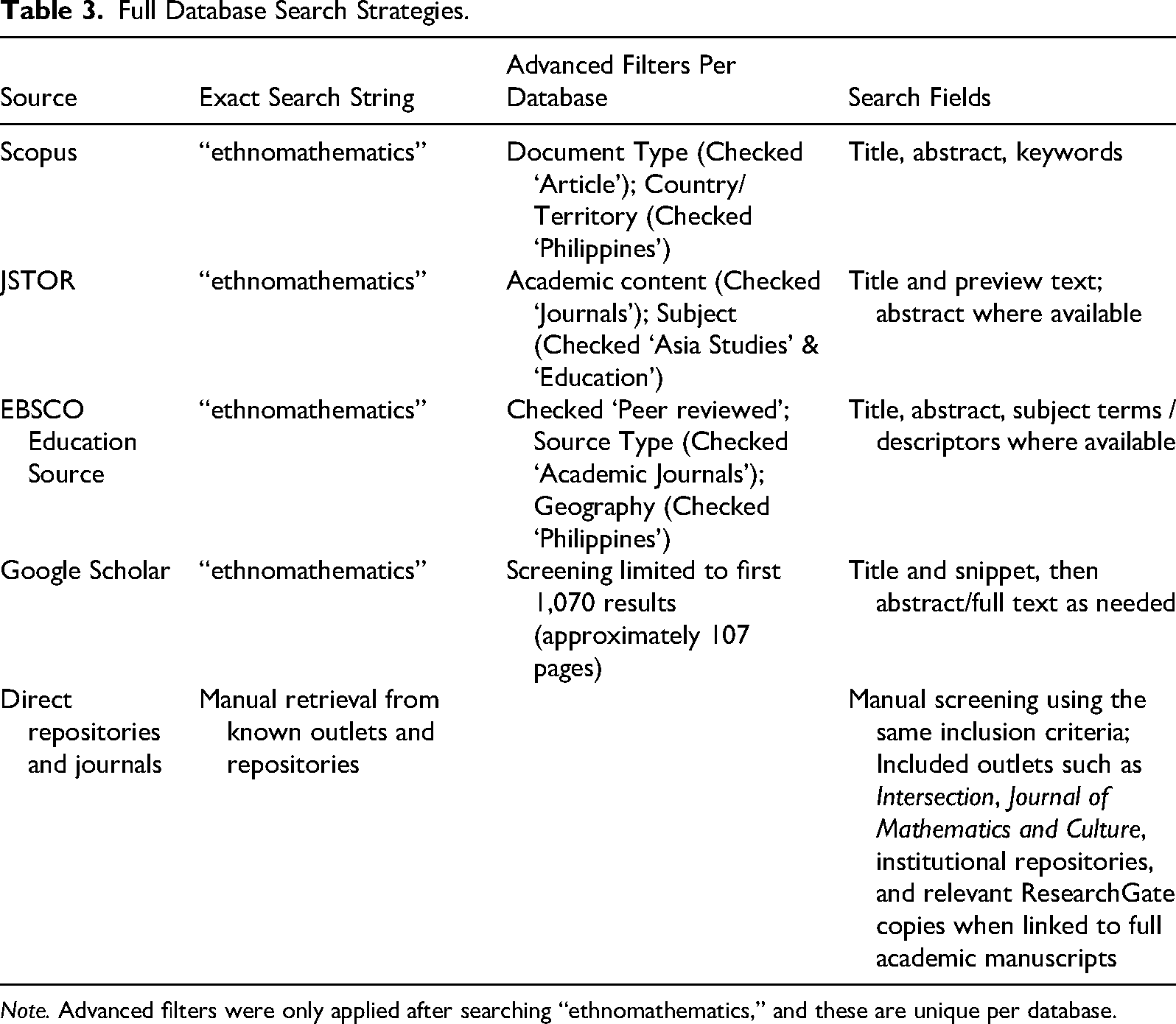
2.1.1 Search Strategy and Sources. The search was conducted across Scopus, JSTOR, EBSCO Education Source, and Google Scholar. These sources were selected to capture records from the fields of education and social science. Searches were conducted between June 15 and July 21, 2025. No publication year restriction was applied to include both early and recent records. The primary search term was “ethnomathematics.” Database-specific search tools and advanced filters were used to restrict records to those situated in the Philippine context. The number of records identified per database is presented in Figure 1. In Google Scholar, the initial search yielded 28,600 records. Because results are ranked by relevance, only the first 1,070 records (approximately 107 pages) were screened to ensure feasibility while retaining the highest-ranked results. Supplementary searches included citation tracking of included and closely related records and targeted searches of journals and repositories known to publish Philippine ethnomathematics research, such as Intersection, the Journal of Mathematics and Culture, institutional repositories, and ResearchGate copies of records when these corresponded to full academic manuscripts. In line with PRISMA-ScR, the full database search strategies are provided in Table 3 in the Appendix.
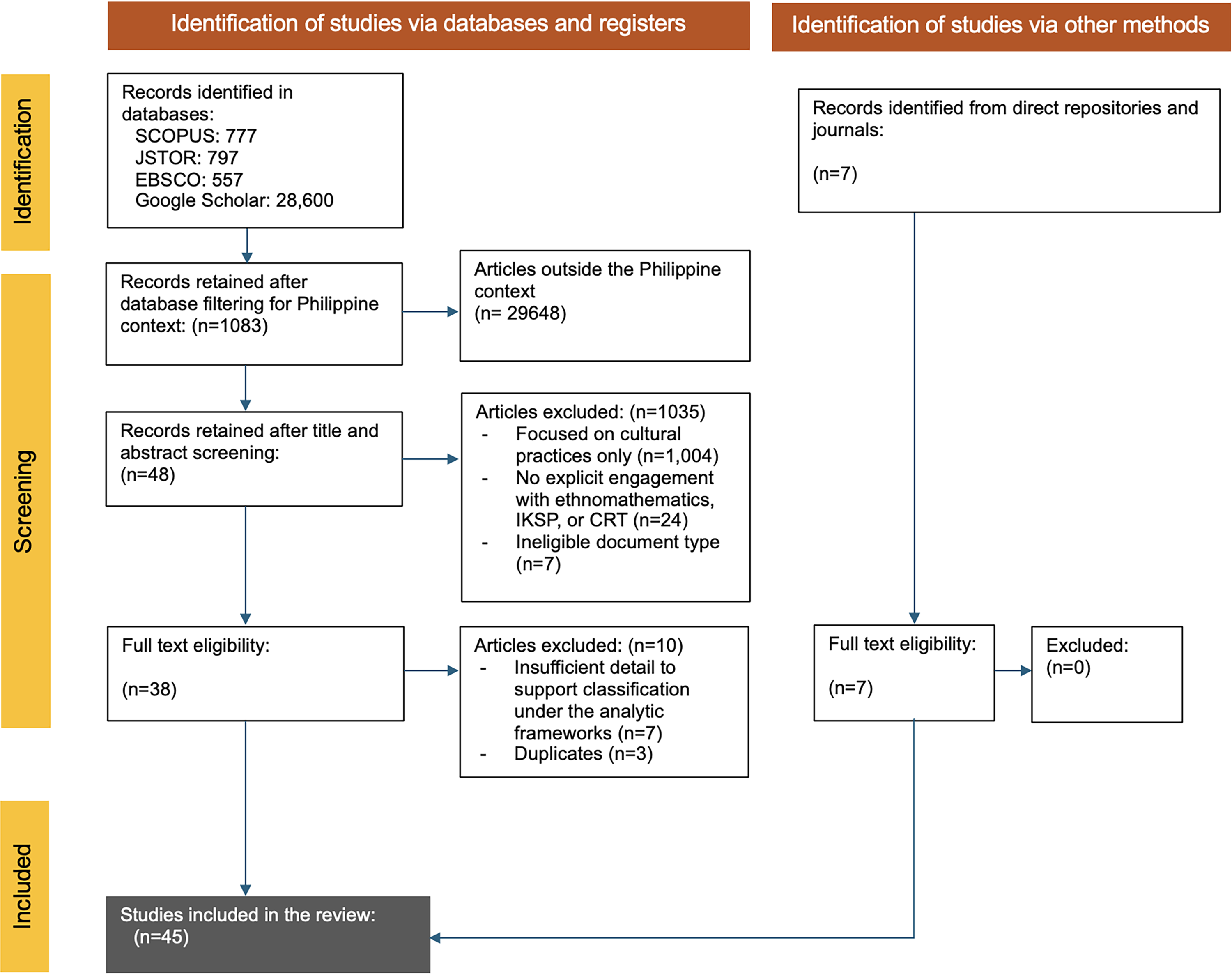
PRISMA-ScR search and screening process (Tricco et al., 2018).
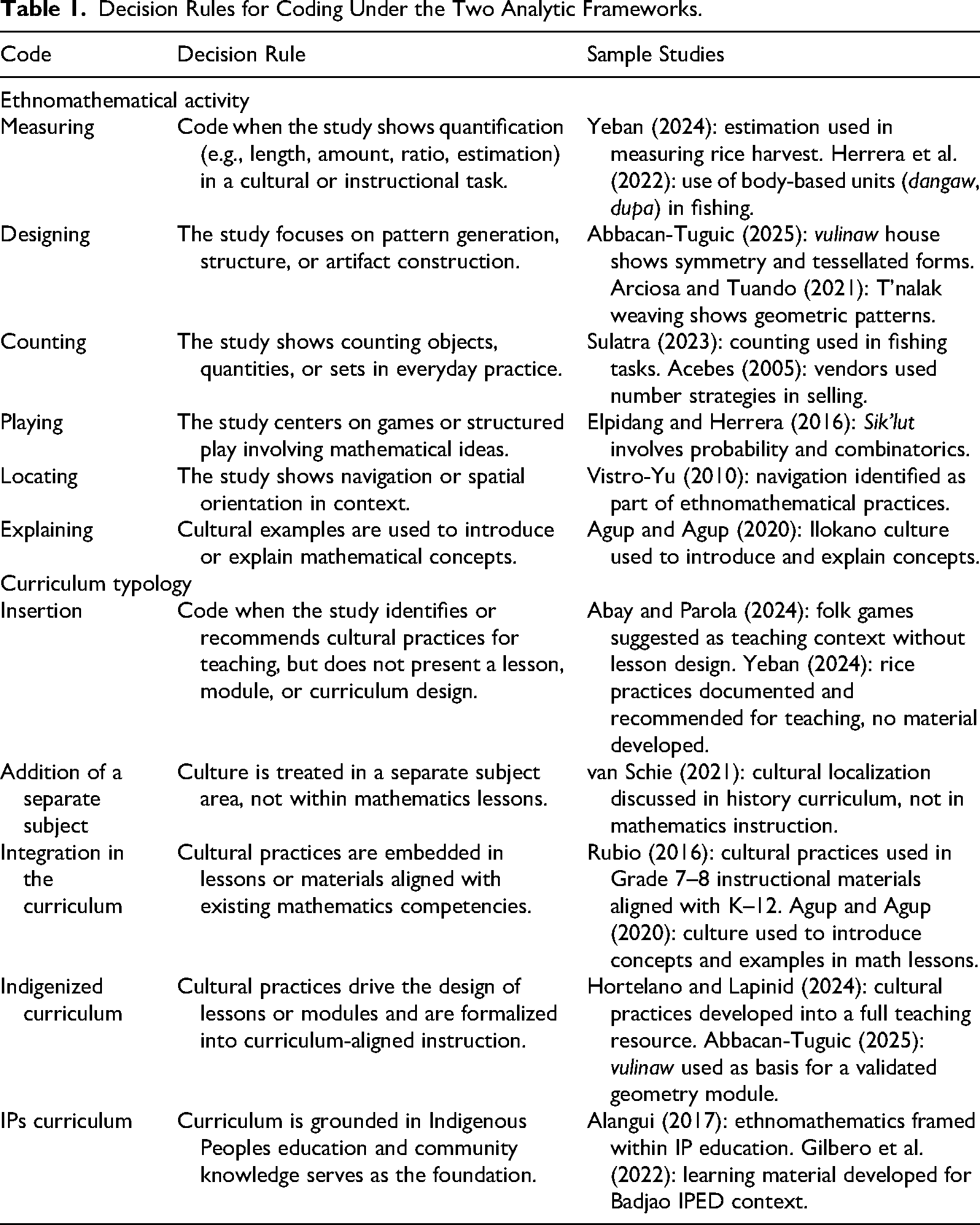
Decision Rules for Coding Under the Two Analytic Frameworks.
2.1.2 Inclusion and Exclusion Criteria. Sources were included if they met all of the following criteria. First, they were situated in the Philippine context based on participants, communities, educational settings, or cultural practices, and were published in Filipino or English. Second, they focused on mathematics education, including teaching, learning, curriculum, instructional materials, or teacher education. Third, they explicitly engaged with ethnomathematics, IKSP, or CRT. Fourth, both empirical and conceptual studies were included, with conceptual and reflective studies retained only when they provided clearly described examples of ethnomathematics studies. Records were excluded if they were outside the Philippines, did not focus on mathematics education, or did not explicitly engage with ethnomathematics, IKSP, or CRT. Editorials, opinion pieces, blog posts, news articles, slide presentations, abstracts without accessible full text, and other non-scholarly materials were also excluded. After title and abstract screening, records underwent full-text review to determine whether they provided sufficient detail to be classified under the analytical frameworks used in this study. Included studies needed to contain enough information to support classification using ethnomathematical activities (Bishop, 1991, 1992) and curriculum typology (De Villa et al., 2013). Studies that referred to culture only in general terms, without describing specific practices or instructional applications, were also excluded.
2.1.3 Screening. Records were organized and screened in stages, and the process was reported in accordance with PRISMA-ScR. Initial database-level filtering (e.g., by territory and document type) was applied before consolidation to remove clearly irrelevant records. The remaining records were compiled in Microsoft Excel for screening. Record screening followed a two-stage process. In the first stage, the primary researcher and an independent reviewer screened titles and abstracts against the inclusion and exclusion criteria. In the second stage, full texts of retained records were reviewed to confirm eligibility and to remove duplicate or overlapping records based on titles and bibliographic information. The final set of included studies (n = 45) reflects this stepwise screening process, as summarized in Figure 1.
2.2 Analysis
To address RQ1, data charting was conducted (Peters et al., 2020; Tricco et al., 2018). Charted data included bibliographic information (author/s, year of publication, publication type, and journal or outlet) and study characteristics (cultural practices and communities, educational level, research design, and data sources). To examine reported educational contributions, thematic analysis was conducted following Braun and Clarke (2006). The analysis began with repeated readings of the studies to familiarize with the dataset. During coding, text segments describing the reported educational contributions of ethnomathematics were identified and coded, with emphasis on the results, discussion, and conclusion sections. Codes were grouped into candidate themes representing recurring educational contributions. These themes were reviewed across studies to ensure consistency, then defined and labeled, and used to map the educational contributions of ethnomathematics in Philippine mathematics education.
For RQ2, the researcher and an independent reviewer conducted deductive content analysis using Bishop's (1991) six ethnomathematical activities as predefined analytic categories. Each study was coded based on explicit evidence of these activities in reported cultural practices or instructional tasks. Coding decisions were guided by predefined operational definitions and decision rules for each activity. A study could be assigned multiple codes when more than one form of mathematical engagement was identified. Frequency counts and accompanying descriptions were used to identify which activities appeared most frequently and how they were implemented across studies.
For RQ3, studies were analyzed using De Villa et al.'s (2013) curriculum typology. Because most studies did not explicitly state their curriculum level, classification was based on how IKSP or cultural practices were used in instructional or curricular descriptions. Each study was reviewed in full, and relevant sections were summarized into analytic notes describing the role of IKSP. These notes were used as the basis for classification. When multiple levels were present, classification followed the dominant pattern of IKSP use in the study, and disagreements were resolved through discussion and consensus. A summary of the decision rules for RQ2 and RQ3 is provided in Table 1.
Lastly, RQ4 and RQ5 involved interpretive synthesis to identify patterns across the included studies. For RQ4, research gaps were identified by examining underrepresented educational levels, cultural practices, and mathematical domains. For RQ5, an interpretive analysis was conducted to identify patterns of similarity and difference between the Philippine corpus and selected international review studies.
3. Results
3.1 Overview of the Selected Studies
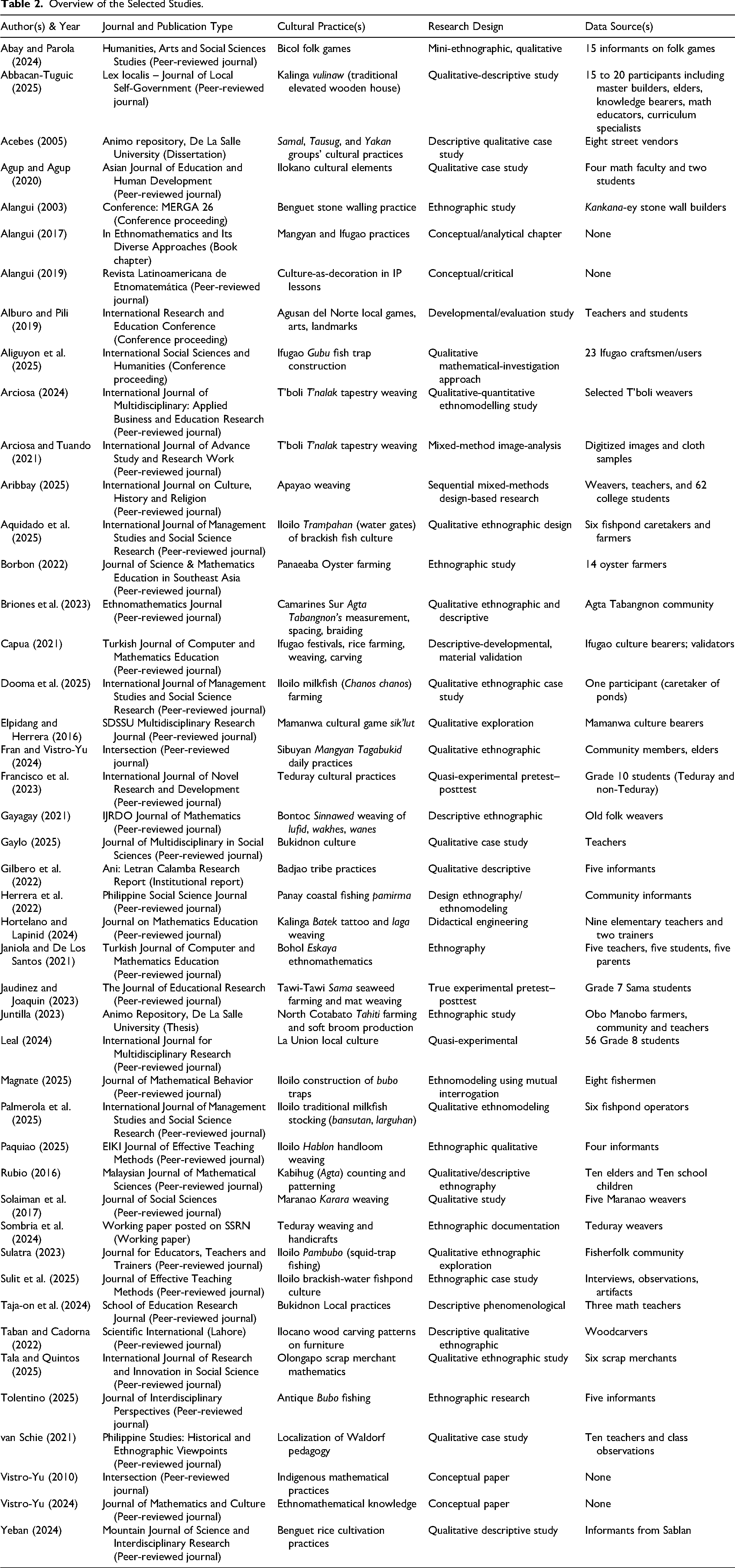
Table 2 maps the scope, study characteristics, and geographic distribution of the 45 studies included in the review, addressing RQ1. The studies were drawn from multiple publication types, including peer-reviewed journals, conference proceedings, and institutional repository outputs. Across the studies, mathematical practices were documented in relation to weaving, fishing, farming, games, architecture, and measurement across the three major island groups of the Philippines: Luzon, Visayas, and Mindanao. This distribution is illustrated in Figure 2. Among the studies, 38% were conducted in Luzon (e.g., Kalinga, Benguet, Ilocos, Camarines Sur, and La Union), 34% in the Visayas (e.g., Iloilo, Antique, and Romblon), and 28% in Mindanao (e.g., South Cotabato, Lanao del Sur, Sultan Kudarat, Agusan del Norte, and Bukidnon). Several provinces, particularly those in Iloilo and nearby areas, were represented in more than one study.
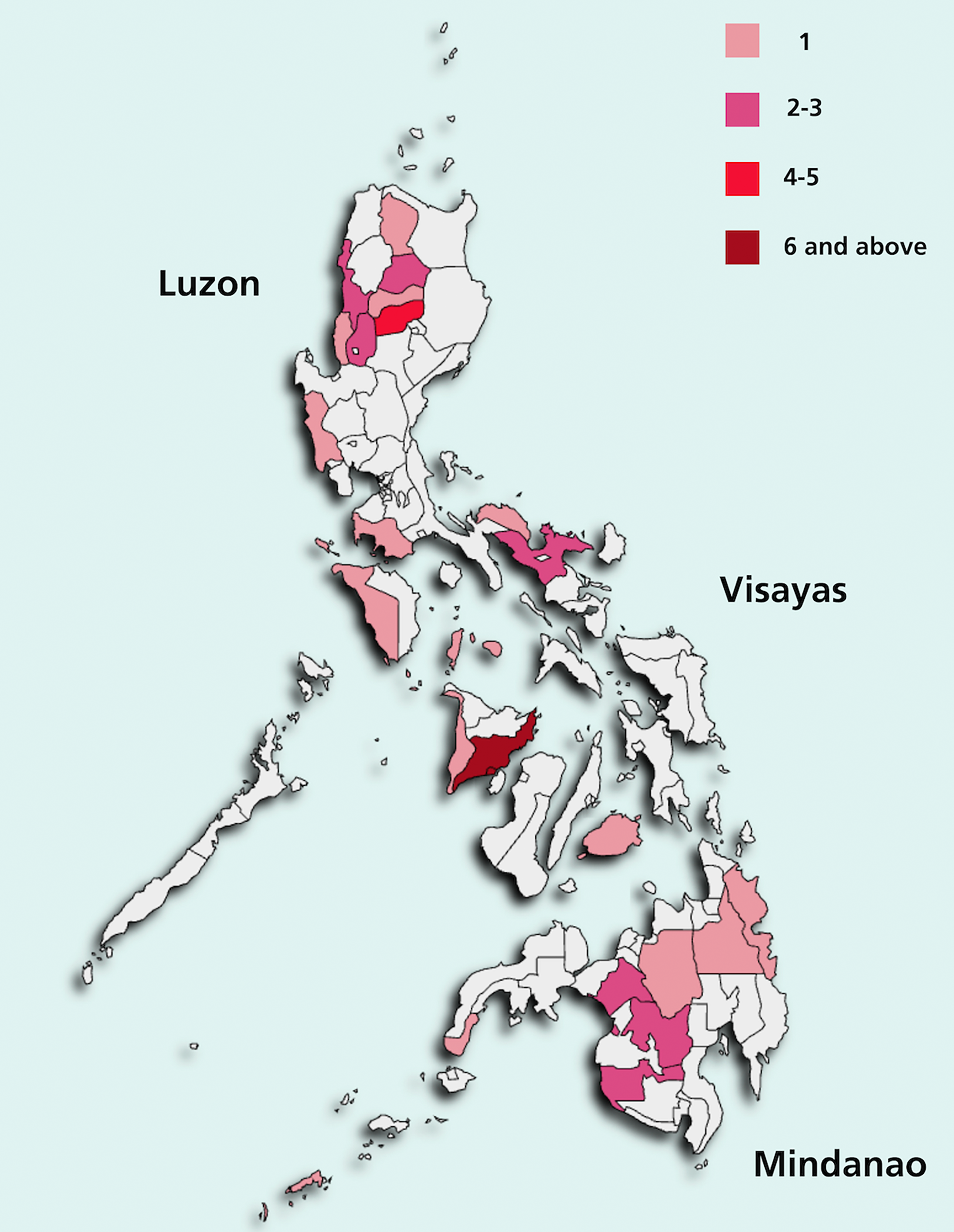
Provinces in the Philippines where ethnomathematical studies have been conducted.
Overview of the Selected Studies.
In terms of research design, qualitative approaches were most frequently used. Ethnographic studies accounted for 47% of the corpus, while descriptive designs comprised 30%. Quasi-experimental and experimental studies represented 6% of the total, and design-based or didactical engineering approaches accounted for 4%. Conceptual and policy-oriented studies constituted approximately 13% of the included studies. Regarding data sources and participants, approximately 60% of the studies involved Indigenous cultural bearers, artisans, or community elders. Around 20% focused on teachers or preservice educators, and 15% involved students in classroom-based contexts. A small proportion of studies (approximately 5%) involved multiple stakeholder groups, such as teachers, community members, and curriculum or policy actors.
Regarding trends in publication year and educational level, Figure 3 presents the distribution of the 45 included studies, published between 2003 and 2025. The number of publications shows an upward trend over time, with a higher concentration of studies in more recent years. In addition to elementary, secondary, and tertiary levels, the review identified studies situated in teacher education, community contexts, and policy or conceptual work. Studies classified under teacher education focused on teacher professional development and instructional material design, while community-based studies documented mathematical practices within cultural and livelihood activities. Policy and conceptual studies addressed theoretical frameworks and system-level issues related to ethnomathematics.
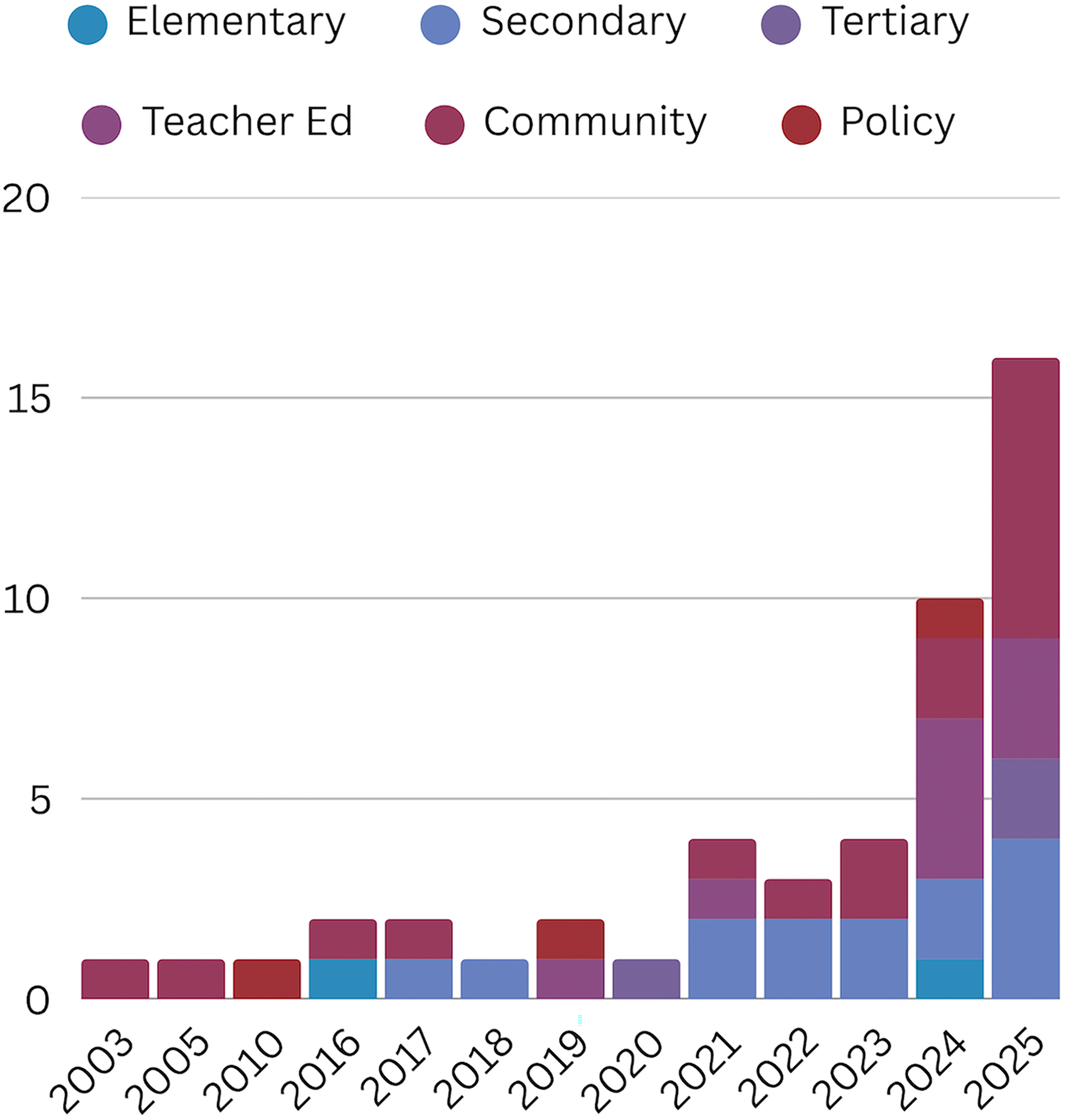
Distribution of the studies according to educational level and year of publication.
From 2003 to 2017, most studies were conceptual or community-based, with limited representation of classroom-based research. From 2018 to 2021, more studies examined classroom contexts, particularly in secondary education and teacher preparation. Between 2022 and 2025, studies were distributed across multiple educational levels, including teacher education, community research, secondary education, and tertiary education. Across the 22-year period covered by the review, community-based studies constituted the largest group, with 18 of the 45 studies. Secondary education accounted for 12 studies. Teacher education was represented by five studies, while four studies focused on elementary education and four on policy or conceptual analysis. Only two studies were situated primarily in tertiary mathematics education.
3.2 Reported Educational Contributions of Ethnomathematics in the Country
This section presents the reported educational contributions of ethnomathematics across the included studies and further addresses RQ1. Some studies were coded under more than one theme, and four recurring themes were identified:
Contextualization through IKSP: This was the most frequently identified theme, appearing in 33 studies. These studies documented, analyzed, or incorporated IKSP into mathematics instruction and the K–12 curriculum. Common contexts included local livelihood activities such as weaving (e.g., Paquiao, 2025; Solaiman et al., 2017; Sombria et al., 2024), fishing and aquaculture (Aliguyon et al., 2025; Borbon, 2022; Palmerola et al., 2025; Tolentino, 2025), farming (Juntilla, 2023; Yeban, 2024), and wood carving and architecture (Abbacan-Tuguic, 2025; Taban & Cadorna, 2022). Across these studies, mathematical concepts such as symmetry, ratio, estimation, counting, and spatial reasoning were identified within documented community practices. Several studies examined cultural artifacts and crafts as sources of mathematical ideas, including the Ifugao gubu fish trap (Aliguyon et al., 2025), Ilokano wood carvings (Taban & Cadorna, 2022), and the T’nalak tapestry (Arciosa, 2024). Other studies analyzed agricultural and ecological activities in relation to resource use patterns and environmental cycles (Sulatra, 2023; Yeban, 2024). Earlier studies primarily focused on ethnographic documentation (e.g., Acebes, 2005; Agup & Agup, 2020), whereas recent studies more often included instructional design or classroom-based applications. Teacher Agency in Lesson Co-Design: Teacher agency was reported in 12 studies. These studies examined teachers’ roles as curriculum designers, facilitators of cultural knowledge, and collaborators with researchers and community members. Several studies described structured lesson development processes involving teachers, researchers, and cultural knowledge bearers (e.g., Aquidado et al., 2025; Aribbay, 2025; Hortelano & Lapinid, 2024; Tala & Quintos, 2025). Other studies focused on how teachers adapted ethnomathematical content for classroom use (Arciosa & Tuando, 2021; Taja-on et al., 2024). Some also positioned teachers as intermediaries between policy and practice, documenting processes such as material validation, revision, and collaborative planning (Alburo & Pili, 2019; Herrera et al., 2022). Student Engagement: Student engagement was reported in 11 studies. These studies examined student participation, motivation, and achievement in mathematics lessons that incorporated ethnomathematical contexts. Several experimental and quasi-experimental studies reported changes in student performance or attitudes following the use of culture-based instructional materials (Briones et al., 2023; Francisco et al., 2023; Jaudinez & Joaquin, 2023; Leal, 2024). For example, Jaudinez and Joaquin (2023) reported changes in mathematical thinking among Sama students following the implementation of EthnoSTEM-based modules. Other studies described instructional approaches such as the use of digital tools to support CRT (Gilbero et al., 2022) and the integration of weaving patterns into geometry instruction (Aribbay, 2025). Reflections: Eight studies presented conceptual, critical, or reflective analyses of ethnomathematics. These studies examined issues related to the nature of mathematics, culture, and knowledge (e.g., Alangui, 2003, 2019; Vistro-Yu, 2024). Some introduced additional conceptual frameworks, such as “cultural statistics,” to analyze mathematical structures in cultural artifacts (Arciosa, 2024). Other studies focused on issues related to inclusion, epistemology, and teacher meaning-making in the use of ethnomathematical approaches in educational settings (Fran & Vistro-Yu, 2024; Taja-on et al., 2024).
3.3 Distribution of Ethnomathematical Activities in Philippine Studies
To address RQ2, designing was the most frequently identified ethnomathematical activity appearing in 28 studies (32.9%), shown in Figure 4. Many of these studies analyzed the visual and structural features of cultural artifacts and practices as the basis for mathematical tasks. Across these studies, geometry was the most frequently represented mathematical domain, with cultural practices examined in terms of patterns, symmetry, proportion, and spatial structure. Examples included weaving practices (Gayagay, 2021; Paquiao, 2025; Solaiman et al., 2017), architectural forms and wood carving (Abbacan-Tuguic, 2025; Aribbay, 2025; Taban & Cadorna, 2022), and fishing and aquaculture practices (Aliguyon et al., 2025; Sulit et al., 2025; Tolentino, 2025). In teacher education and instructional material development contexts, several studies described how cultural forms were translated into instructional materials and learning tasks (Alburo & Pili, 2019; Capua, 2021; Hortelano & Lapinid, 2024).
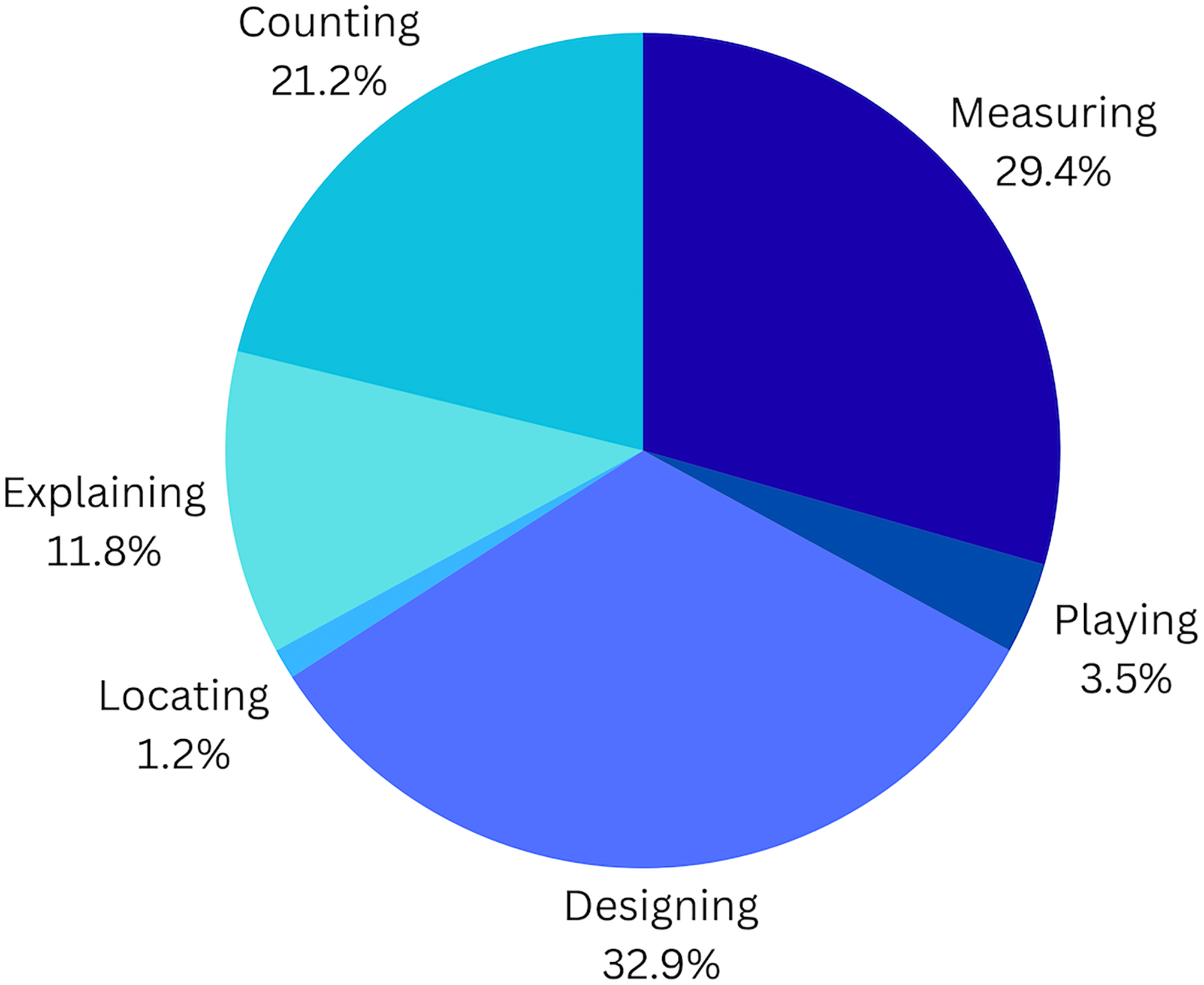
Distribution of 45 Philippine ethnomathematics studies across Bishop's six ethnomathematical activities.
Measuring was the second most identified activity appearing in 25 studies (29.4%). These studies documented spatial, proportional, and quantitative reasoning in cultural and livelihood practices. Several described body-based and object-based units of measure, such as dangaw (handspan) and dupa (arm's length), used in farming and fishing communities (Herrera et al., 2022; Sulit et al., 2025; Tolentino, 2025; Yeban, 2024). Other studies examined measurement in agricultural and aquaculture practices, including feed ratios, stocking practices, and yield estimation (Aliguyon et al., 2025; Fran & Vistro-Yu, 2024; Palmerola et al., 2025). Studies on weaving and material production documented the use of measurement and proportion in artifact construction (Juntilla, 2023; Paquiao, 2025). In classroom studies, measurement tasks were incorporated into geometry lessons (Alburo & Pili, 2019; Capua, 2021).
Counting was third, reported in 18 studies (21.2%), and was often examined alongside measurement. Several studies described informal numeration practices in trade, pricing, and estimation (Acebes, 2005; Aliguyon et al., 2025; Briones et al., 2023). Others examined counting in farming, resource management, and production processes (Dooma et al., 2025; Fran & Vistro-Yu, 2024; Yeban, 2024) and analyzed number systems and classification practices used in communities (Janiola & De Los Santos, 2021). Explaining was identified in 10 studies (11.8%) and appeared primarily in conceptual and reflective works. These studies analyzed how cultural knowledge and mathematical ideas were described, justified, or used to explain concepts in educational contexts (Acebes, 2005; Agup & Agup, 2020; Alangui, 2017, 2019; Fran & Vistro-Yu, 2024; Vistro-Yu, 2024).
Playing was identified in three studies (3.5%). These studies examined cultural games that involve mathematical ideas such as probability, combinatorics, and strategic reasoning (Abay & Parola, 2024; Alburo & Pili, 2019; Elpidang & Herrera, 2016). Locating was identified only in one study (1.2%). This study examined navigation and spatial orientation as forms of ethnomathematical practice (Vistro-Yu, 2010).
3.4 Curriculum Typologies in Philippine Ethnomathematics Studies
As shown in Figure 5, the largest group of studies was classified under the Integration level curriculum, with 20 of the 45 studies (44.4%), addressing RQ3. These studies incorporated cultural practices into lessons, instructional materials, or curriculum-aligned activities while maintaining alignment with existing mathematics competencies. Examples include Rubio (2016), which developed instructional materials based on Kabihug practices for Grades 7 and 8, and Agup and Agup (2020), which used Ilokano culture to introduce concepts and provide examples in mathematics instruction.
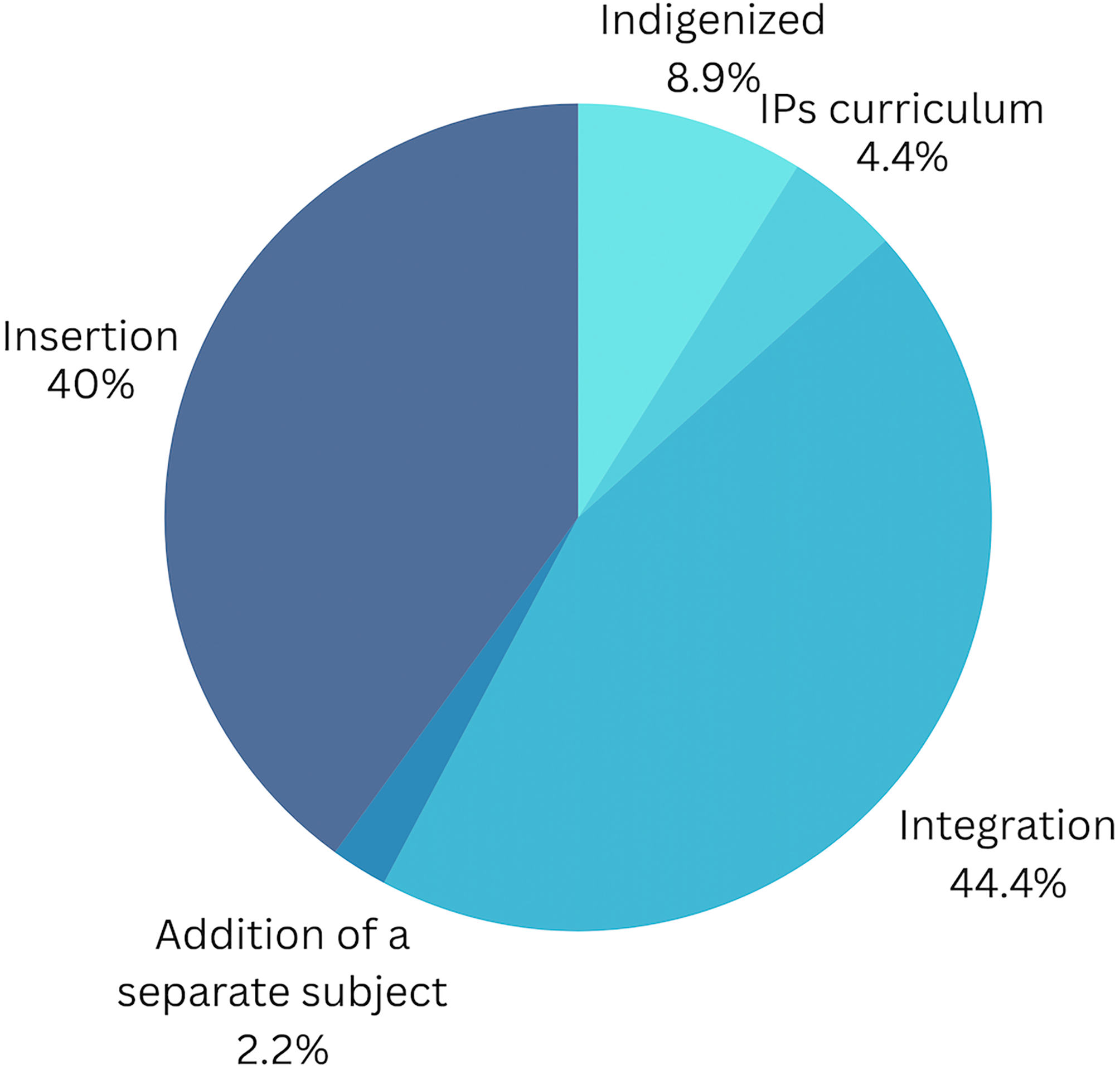
Distribution of the studies across curriculum typologies.
Insertion was the second most common typology, comprising 18 studies (40%). These studies identified or recommended cultural practices as instructional contexts or resources but did not present structured lesson designs, modules, or curriculum materials. Examples include Abay and Parola (2024), who proposed folk games as teaching contexts, and Yeban (2024), who documented rice cultivation practices for potential use in mathematics instruction. Four studies (8.9%) were classified as Indigenized Curriculum. In these studies, cultural practices informed lesson or module design and were formalized into curriculum-aligned instructional materials. Examples include Hortelano and Lapinid (2024), which recontextualized Kalinga batek and laga into a teaching resource, and Abbacan-Tuguic (2025), which used the vulinaw as the basis for a validated geometry module.
Two studies (4.4%) were classified under IPs Curriculum. These studies positioned community knowledge and Indigenous Peoples’ education as the foundation of the curriculum, as shown in Alangui (2017) and Gilbero et al. (2022). Only one study (2.2%), van Schie (2021), was classified under the Addition of a Separate Subject, in which cultural content was taught in a distinct subject area rather than integrated into mathematics lessons.
4. Discussion
The results of this scoping review show that research on ethnomathematics in the Philippines has increased over time, with studies examining selected local communities and cultural practices to identify mathematical concepts and inform instructional design. However, this growth is uneven. While the studies cover Luzon, the Visayas, and Mindanao, their geographic distribution does not reflect the full range of the country's cultural diversity. Many communities and cultural practices remain underrepresented, indicating that the field, although expanding, still has limited coverage and representativeness.
The mapped studies primarily rely on qualitative and ethnographic methods. They account for most of the corpus, documenting cultural practices and their instructional applications, while quasi-experimental and experimental studies make up only a small proportion. Several studies report changes in student engagement, participation, or performance following the use of ethnomathematical materials. The limited intervention studies in the review suggest that integrating cultural practices into mathematics instruction may support students’ mathematical thinking and attitudes toward mathematics while encouraging greater participation in classroom activities.
The analytical lenses applied in this review clarify the focus and depth of ethnomathematics research in the country. Analysis using Bishop's (1991) ethnomathematical activities shows a concentration on designing and measuring. These activities are commonly documented in livelihood and craft practices such as weaving, farming, fishing, and artifact production. This pattern indicates that ethnomathematics research in the country centers on mathematical reasoning grounded in material and practical activities. This is consistent with the emphasis on geometric concepts in the reviewed studies, where cultural practices are analyzed in terms of patterns, symmetry, proportion, and spatial structure. In contrast, playing and, particularly, locating appear in a small number of studies, indicating limited examination of games, spatial navigation, and orientation as mathematical activities. Explaining is present but appears more frequently in conceptual and reflective studies rather than in classroom applications.
Analysis using the curriculum typology shows that most studies are situated at the integration and insertion levels, where cultural practices are used as instructional contexts or resources within existing mathematics curricula. Fewer studies adopt indigenized or IPs curriculum approaches, in which cultural practices structure lesson design or serve as the foundation of the curriculum. This distribution reflects a broader pattern in the literature, where IKSP is primarily used to support contextualization within existing curricular frameworks rather than to develop curricula grounded in community knowledge and practices. This pattern is important because conceptual and policy-oriented studies continue to emphasize the need to move beyond “tokenistic” application and to position IKSP as a basis for mathematical reasoning, rather than as illustrative examples.
4.1 Comparison Between the Philippine and Selected International Literature
In relation to the selected international reviews on ethnomathematics, similarities and differences can be identified. First, geometry is the most frequently examined mathematical domain in the Philippine corpus. This pattern is consistent with selected reviews from Indonesia, where geometric topics are also reported as the primary focus (Sunzuma & Umbara, 2025), and with the broader review by Kabuye Batiibwe (2024), which also reports the predominance of geometry. At the level of cultural practices, however, the Philippine literature shows a different distribution. In this review, weaving, fishing, and farming are the most frequently documented contexts of mathematical activity, whereas Iffah et al. (2025) report that buildings and traditional architecture are the most common contexts. The Philippine pattern is more closely aligned with Kabuye Batiibwe's (2024) broader review, which also frequently represents weaving. In terms of educational level, the Philippine literature is largely concentrated at the secondary level, with fewer studies at the elementary and tertiary levels, a pattern also observed in the Indonesian context.
The reported educational contributions reveal several shared and distinct patterns. In the Philippine literature, studies most frequently report contextualization through IKSP, teacher agency in lesson co-design, student engagement, and conceptual or reflective contributions. The emphasis on student engagement is also observed in Aronson and Laughter's (2016) synthesis, which shows that CRT can foster student engagement when instruction is grounded in learners’ cultural experiences. The emphasis on teacher agency and lesson co-design is also observed in Reyes (2025), who highlights the role of teacher preparation and lesson modeling but also reports limited evidence of sustained classroom implementation. Regarding research gaps, the Philippine context shows similar patterns to those reported in the Indonesian context and in the broader review by Kabuye Batiibwe (2024). Philippine ethnomathematics shows uneven representation across educational levels (e.g., limited studies in tertiary education) and in other mathematical domains (e.g., algebra and trigonometry).
5. Implications of the Scoping Review
The patterns identified in this review have implications for research, teacher education, curriculum, and policy in ethnomathematics. The mapped literature remains dominated by qualitative and ethnographic studies and is concentrated on documenting cultural practices and their instructional applications. Future research may therefore extend this work through longitudinal, mixed-methods, and design-based studies that examine how ethnomathematics influences student learning over time. The review also identified limited representation of playing and locating, as well as relatively few studies situated at the indigenized and IPs curriculum levels. These areas warrant further investigation, particularly through collaborative partnerships among educators, researchers, and cultural knowledge bearers involved in the co-development and evaluation of culturally grounded instructional materials.
For teacher education, the findings indicate that community engagement, ethical documentation of cultural knowledge, and task design can be considered core teaching competencies. Mentoring structures and collaborative learning communities may support more sustained implementation of CRT. For curriculum developers, the findings highlight the need to move beyond using cultural practices primarily as instructional contexts and toward designing learning materials that position these practices as sources of mathematical investigation and reasoning. Greater attention may also be given to developing instructional resources that place community knowledge and cultural practices at the center of lesson and curriculum design, including modules and learning materials based on locally documented cultural practices and developed in partnership with communities and cultural knowledge bearers. For policymakers, the findings point to the importance of supporting school-community partnerships, teacher professional development in ethnomathematics, and pilot implementations of culturally grounded curriculum initiatives in schools serving Indigenous and culturally diverse communities. These initiatives should include systematic evaluation of student learning, engagement, and cultural relevance to inform future curriculum and policy decisions.
6. Limitations
This scoping review has limitations. First, it relies on published, publicly accessible sources, so unpublished reports, internal curriculum documents, and community-based materials may not be included. Second, the review does not assess study quality or risk of bias, and only a small proportion of the Philippine corpus consists of quasi-experimental or experimental studies. For this reason, the findings should be interpreted as reported contributions in the mapped literature rather than as evidence of effectiveness. Third, all included studies were treated equally regardless of publication type. Fourth, international literature is based on a selected set of studies and does not represent all national contexts. Lastly, comparison is limited to specific aspects mentioned above. These limitations need to be considered when interpreting the scope and implications of the review.
Footnotes
Acknowledgements
The author would like to thank Dr. Melinda A. Gagaza for helping with the coding process during the analysis.

Ethical Approval and Informed Consent
Ethical approval and informed consent were not required because this scoping review used publicly available published literature and did not involve human participants.
Consent for Publication
Not applicable
Author Contributors
JCH is the sole author of this manuscript. He conceived and designed the study, conducted the literature search, screened and analyzed the included studies, interpreted the findings, drafted and revised the manuscript, and approved the final version for publication.
Funding
The author received no financial support for the research, authorship, and/or publication of this article.
Declaration of Conflicting Interests
The author declared no potential conflicts of interest with respect to the research, authorship, and/or publication of this article.
Data Availability Statement
The author will provide the data supporting the review upon reasonable request.
Author Biography
Appendix
Full Database Search Strategies.
| Source | Exact Search String | Advanced Filters Per Database | Search Fields |
|---|---|---|---|
| Scopus | “ethnomathematics” | Document Type (Checked ‘Article’); Country/Territory (Checked ‘Philippines’) | Title, abstract, keywords |
| JSTOR | “ethnomathematics” | Academic content (Checked ‘Journals’); Subject (Checked ‘Asia Studies’ & ‘Education’) | Title and preview text; abstract where available |
| EBSCO Education Source | “ethnomathematics” | Checked ‘Peer reviewed’; Source Type (Checked ‘Academic Journals’); Geography (Checked ‘Philippines’) | Title, abstract, subject terms / descriptors where available |
| Google Scholar | “ethnomathematics” | Screening limited to first 1,070 results (approximately 107 pages) | Title and snippet, then abstract/full text as needed |
| Direct repositories and journals | Manual retrieval from known outlets and repositories | Manual screening using the same inclusion criteria; Included outlets such as Intersection, Journal of Mathematics and Culture, institutional repositories, and relevant ResearchGate copies when linked to full academic manuscripts |
Note. Advanced filters were only applied after searching “ethnomathematics,” and these are unique per database.