







Abstract
Introduction
Childhood cancer affects all ethnic, gender, and socioeconomic groups, with more than 40,000 children undergoing treatment for cancer annually in the United States (Children's Oncology Group, n.d.). Children with life-threatening conditions (LTCs) such as cancer and serious blood disorders usually require rigorous and complex specialty care and are often at increased risk for cognitive and physical suffering, as they frequently endure incapacitating pain and other complex physical and psychological symptoms resulting from side effects of treatment and disease sequela (Barrera et al., 2020; Duran et al., 2020; Linder & Hooke, 2019; Momani et al., 2016; Pan et al., 2017; Steineck et al., 2019; Varni et al., 2002). Thus, children and adolescents undergoing treatment for cancer or life-threatening blood disorders often suffer decreased quality of life (QOL). QOL is a multidimensional construct, encompassing domains of physical, social, and psychological functioning (Barrera et al., 2020; Pan et al., 2017; Varni et al., 2002). Treatment may disrupt all of these domains, with substantial negative psychosocial consequences in addition to the physical complications (Laing et al., 2017).
Animal-Assisted Intervention (AAI)
AAI in addition to conventional treatment is a promising option for improving QOL. AAI is a unique nonpharmacologic, cost-effective approach that may be used to address the physical and psychological symptoms in hospitalized children with an LTC (Gilmer et al., 2016). AAI in healthcare settings involving visits with live therapy dogs has been shown to improve overall well-being, with physiological and psychological benefits to help children cope with the demands of treatment and hospitalization (Branson et al., 2017; Hinic et al., 2019). Urbanski and Lazenby (2012) examined the physiological and psychological benefits of AAI in the treatment of distress among inpatient children with cancer. Results included decreased pain and fear, change in vital signs, distraction, increased socialization and pleasure, and decreased emotional distress. Since then, a growing body of evidence on the effects of AAI for hospitalized children continues to show strong promise to improve physical and psychosocial outcomes with enhanced QOL, decreased cortisol levels, improved mood, decreased anxiety, and increased activity (Chubak et al., 2017; Jennings et al., 2021; McCullough et al., 2017; Silva & Osorio, 2018). However, patients are usually excluded from AAI interactions when they are in isolation, as is often the case for children with cancer and those undergoing bone marrow transplant (Chubak & Hawkes, 2016). Virtual alternatives to deliver AAI to these young people are warranted and may be beneficial.
Virtual AAI
One novel form of virtual AAI is Youth and Pet Survivors™ (YAPS), a pen pal program created by the principal investigator (PI) for children and adolescents with cancer or undergoing bone marrow transplant to engage in visits with a dog or a cat through letter writing and photos. In this way, the letters and photos serve as the virtual platform to connect with a real animal, though not via an online format as is the more common meaning of “virtual.” The creation of YAPS was inspired by the fact that these children were excluded from receiving live therapy dog visits due to isolation precautions. A unique feature of YAPS not typically found in traditional AAI is that the animal pen pals have also been treated for cancer or a serious illness. The humans with whom the animals live assume the personality and voice of their animal companion when corresponding with a child or teenager and are provided letter-writing guidelines once accepted into YAPS. To date, YAPS has operated at a single pediatric center for cancer and blood disorders in a large children's hospital in the western United States.
A qualitative descriptive study with 15 children and adolescents participating in YAPS explored their experiences of exchanging letters with dogs and cats (Gillespie & Neu, 2020). The findings of this preliminary YAPS study suggested that letter writing with a dog or a cat who has a shared experience of cancer and/or medical challenges offers the opportunity for development of an ongoing friendship, a source for connection, shared experience, fun, and processing the cancer experience. The results also supported the emerging field of virtual AAI with pen pals as an option for children with cancer or a blood disorder to access therapeutic benefits of AAI regardless of setting, circumstance, or hospital protocols. These study findings raised more questions for further study: How does exchanging letters with a canine or feline pen pal influence perceived QOL? How is the human–animal bond (HAB) expressed in letters? What theoretical or conceptual frameworks guide AAI research?
The HAB and Social Support in AAI Research
The HAB has been hypothesized to fit within the framework of social support (Beck, 2014; Guerin et al., 2018). Interactions with companion animals may be a source of social support for humans and reduce loneliness (Guerin et al., 2018). Social behaviors that bring comfort between people such as talking, feeling less lonely, the joy of caring and nurturing, and finding reasons to laugh, are experienced when people are with companion animals; all of these lessen feelings of stress (Beck, 2014). This hypothesis may extend to virtual expressions of the HAB.
Conceptual Framework
One theory or concept cannot explain the scope of virtual AAI with animal pen pals who have a shared diagnosis. A conceptual framework was needed to guide this research, one that integrates the concepts of children and adolescents with an LTC such as cancer or a blood disorder, social support, the HAB, and AAI through letter writing with animal pen pals. These concepts together create a unique framework to guide virtual AAI research (Figure 1).
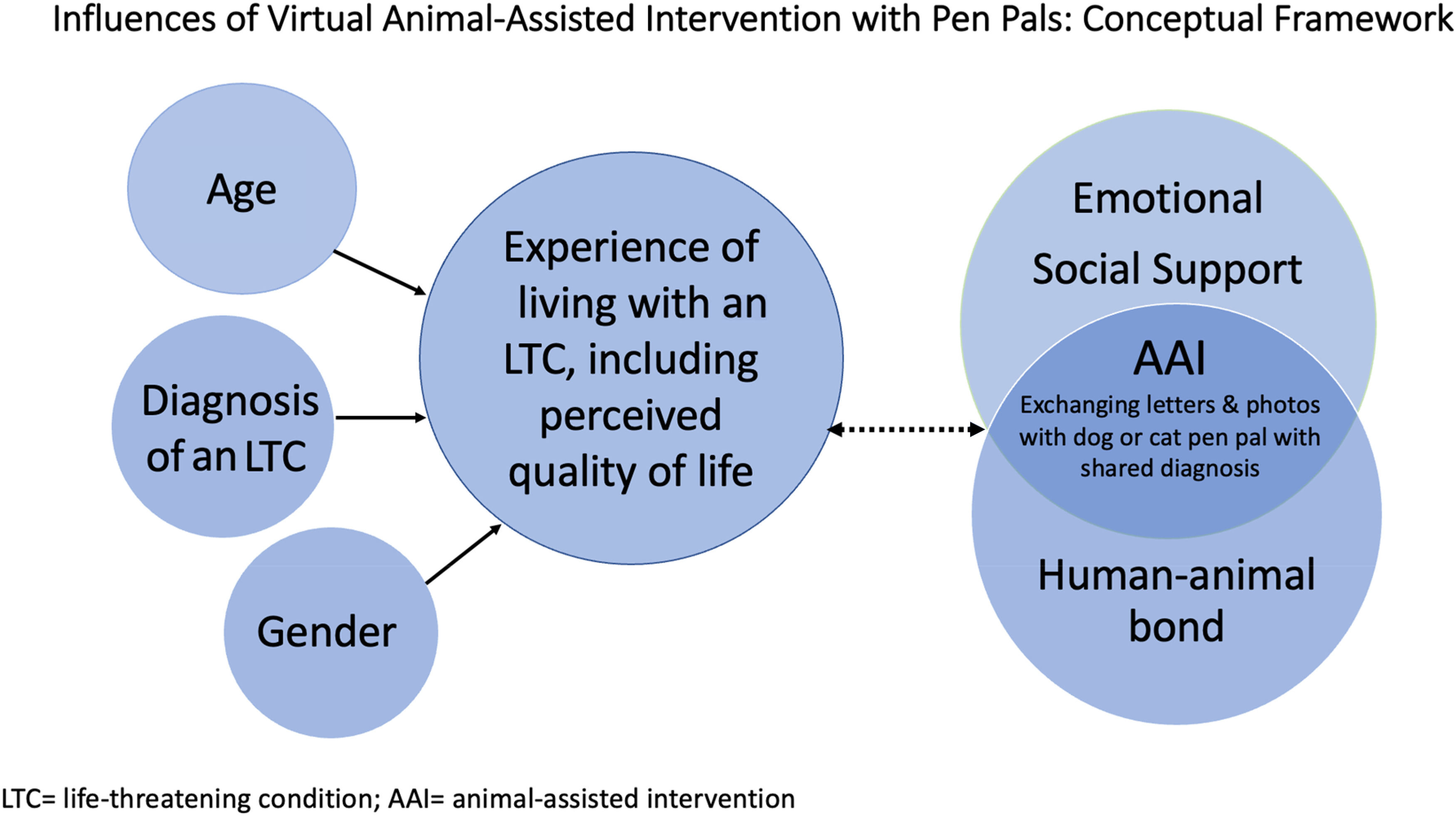
Conceptual framework: virtual AAI research.
Purpose
Building on the findings of the preliminary YAPS study (Gillespie & Neu, 2020), which began to suggest why YAPS works, the aims of this research study are to understand how YAPS works, as the essential next step in moving the field forward. To better understand virtual AAI with animal pen pals for young people with cancer and blood disorders, three research questions guided this inquiry:
Research Question 1: How does letter writing with a canine or feline pen pal influence experiences of living with an LTC, including perceived QOL, in children and adolescents?
Research Question 2: How is the HAB expressed in the narratives within the letters?
Research Question 3: How do perceptions of QOL, social support, and the HAB diverge and/or converge among individuals, age groups, and genders?
Method
Riessman's approach to narrative analysis (1993, 2002, 2003, 2008) guided this study of a secondary dataset consisting of letters and qualitative interview text data from the YAPS virtual AAI intervention.
Sample and Setting
The study sample for analysis consisted of 157 letters collected from 16 child and adolescent participants in YAPS from September 2012 through December 2022. Two adolescent girls who began in early 2018 are still participating, now in their fifth year, one with a dog and one with a cat. A total of 18 interviews among eight participants from the preliminary YAPS study (Gillespie & Neu, 2020) are also included in the sample for secondary analysis (Heaton, 2008); those specific participant interviews were included because those eight participants also had sets of letters for analysis in this study. All participants were treated at a pediatric center for cancer and blood disorders in a large children's hospital in the western United States, the same hospital where YAPS was originated and operated.
Sets of letters containing three or more letters written over 4 months or longer by an individual were included, in order to capture experiences over time. Each set of letters was written by the same child over time, from 4 months to 5 years, in response to their animal pen pal's letters. Sets consisted of three to 39 letters written by an individual child, with at least as many letters from the animal pen pal; in some cases, the animal wrote two letters for every one the child wrote, to encourage the child to write back and to provide support. Most letters were handwritten, and some were typed. A summary of participant and animal pen pal characteristics, including diagnosis, type of treatment, number of letters written, and length of participation are presented in Table 1.
Participant Characteristics
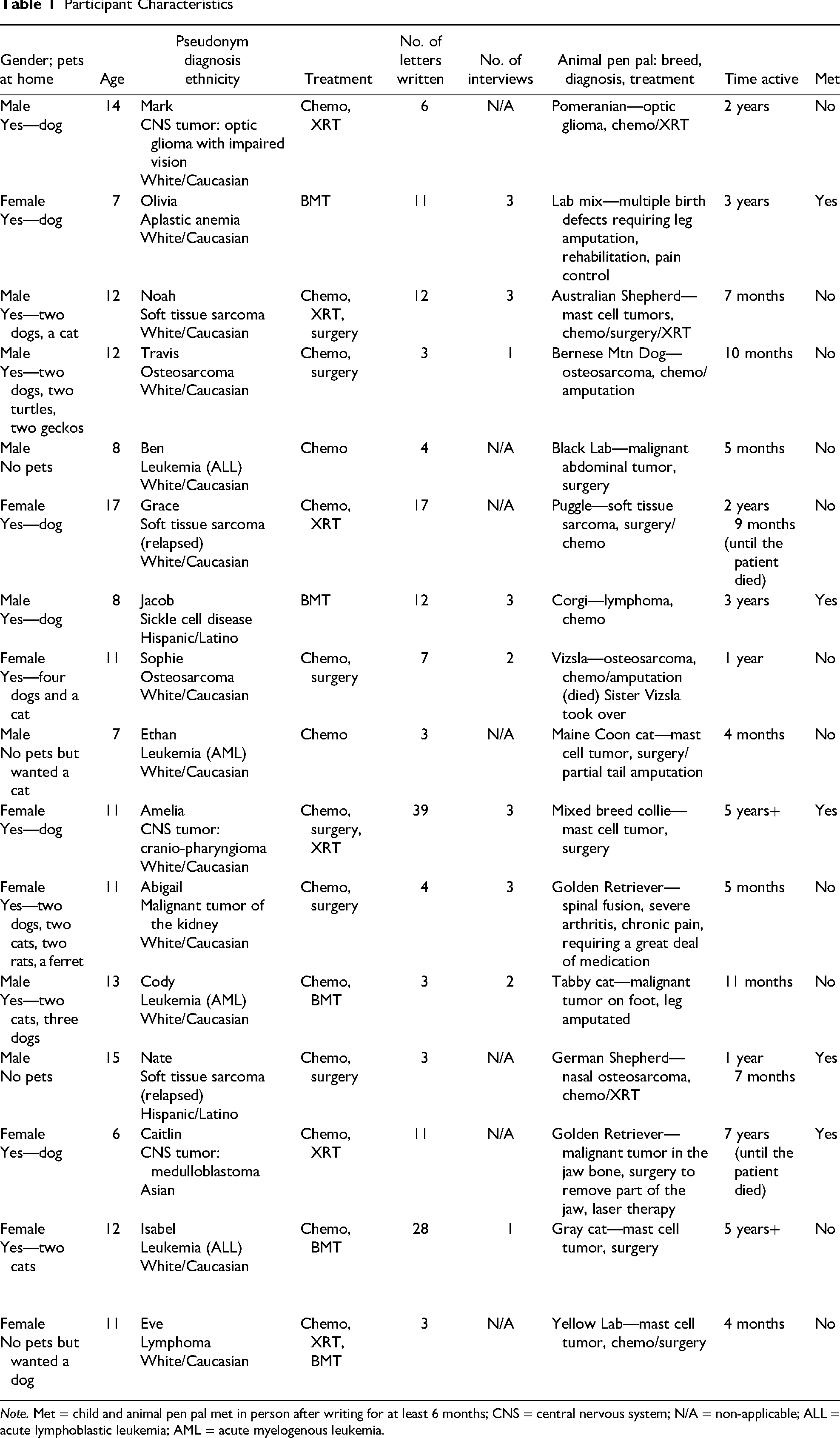
Note. Met = child and animal pen pal met in person after writing for at least 6 months; CNS = central nervous system; N/A = non-applicable; ALL = acute lymphoblastic leukemia; AML = acute myelogenous leukemia.
Text Data
Existing data comprised of 157 letters, and 18 interviews from the previous study, were used. The letters and interviews were deidentified and all participants were assigned a pseudonym. This study was approved by the Colorado Multiple Institutional Review Board (COMIRB 22-1503) as secondary research.
At the time children enrolled in YAPS and chose an animal pen pal, verbal consent and assent were given by both the children and their parent(s). It was explained to them that copies of their letters would be sent to and monitored by YAPS personnel and would become the property of YAPS. Letter collection began in 2012 as a safeguard to monitor for any potential issues of concern that might be written by a child, such as intent to harm self or others, in which case the child's social worker and primary physician would have been notified. Fortunately, no such events occurred. Every time a person who wrote on behalf of their dog or cat received a letter from their child pen pal, they scanned it via email, along with their animal's letter, to the YAPS email address. The scanned copies of the letters are stored electronically on a password-protected, secure server in the PI's locked office.
Data Analysis
Letters and interview texts were sorted into sets from the same individual and then organized in temporal sequence. The corresponding animal pen pal letters were included with each set, also in temporal sequence. A multidimensional approach using thematic narrative analysis (Meraz et al., 2019; Riessman, 1993, 2002, 2003, 2008) was used to analyze the letter and interview texts, enabling a detailed view of the data and all its facets. The thematic narrative analysis approach allowed a focus on “what” was written in entire sequences of the personal narratives, and the context in which it was written.
Consistent with Riessman's narrative analysis approach (1993, 2002, 2003, 2008) the stories within and across letters and interviews are considered a cocreation among the child, the animal, the human who is writing on their animal's behalf, and the researcher who analyzed the narratives within the letters and the interview texts; without this attention to cocreation, they are simply just letters and interviews. As narrative sequences in each letter were analyzed, and each interview text reexamined, giving privilege to the child's experience, the overarching questions asked were: (a) What is the main idea or theme (directly or indirectly stated) among these letters between child and animal pen pal? (b) What are the dominant stories? (c) What was the response of the animal audience, and how did it influence what the children wrote? In other words, why does the child write their letter this way with this dog or cat?
The analysis was a deeply immersive process by the PI, involving numerous interactions with the data over several months in collaboration with two qualitative research experts. Field notes were kept for each participant as their set of letters were read initially. Next, letters and interviews were read again in depth, multiple times, in temporal sequence. This stage of analysis focused on the abundance of detail contained in sequences in the narratives within letters and interviews (not just words or segments), especially the sequences within several letters written by the same individual over time. At this stage of analysis, guided by the study's conceptual framework (Figure 1), narrative sequences that contained QOL experiences, expressions of the HAB, expressions of social support, and other expressions were organized in tables and labeled for each child. Each domain was separated into specific components: for example, QOL included school, pain, anxiety, perceived physical appearance, and so on. This allowed the authors to see specifically what children wrote about, and when. This also allowed specific gender and age narratives to be in one table, making comparisons easier. Age and gender as relevant biological, social, and developmental variables were compared for common and unique experiences among different groups: boys and girls ages 6–10 (school age) and ages 11 and older (adolescents). The American Academy of Pediatrics (2017) defines adolescence as 11–21 years of age, thus the rationale for these two age groups.
As a final step, the four groups of children were compared according to what they wrote about: for example, how many children in each of the four age and gender groups wrote about their perceived physical appearance? How many drew pictures of their animal pen pal? This detailed examination enabled a view of where experiences converged and diverged. The temporal sequence of letters allowed a witnessing of changes in written perceptions of living with cancer or a blood disorder within the children's letters over time, for example, during and after treatment, in some cases, over a period of years. This also enabled an understanding of the experience of children and adolescents at different time points in their treatment trajectory, both during and after treatment, and for one adolescent girl, experiences of living with refractory cancer until her death.
This entire analysis process, which occurred over 6 months, allowed the authors to become intimately familiar with the data. The letters were mostly handwritten, colorful, and many included photos and drawings. These photos and drawings were not visually analyzed separately but included as part of the overall narrative of each child. Throughout the analysis, the relationships between writer (child/adolescent) and audience (animal pen pal, their human proxies, and the PI) were brought to bear in interpretation. Because the letter narratives were written in response to letters from the animal pen pal, the animal audience was an essential part of the genesis of the narrative.
Trustworthiness
Trustworthiness as a narrative researcher begins with honest reflexivity: the researcher's critical self-awareness of biases and aims in shaping the interpretation of data (Riessman, 2008). Reflexivity means taking full responsibility for the meaning-making of the narratives (Josselson, 2006).
The PI practiced reflexivity by being cognizant of and responsible for the professional and personal contexts through which the data were perceived and interpreted, such as philosophical framework as a nurse; affinity for animals; decades of clinical experience with children with cancer and blood disorders; and being the founder of YAPS, among other perceptions. The PI continuously set aside any a priori preconceptions about what might be found, and read the narratives with an open mind, guided by the research questions and the virtual AAI conceptual framework.
Additionally, during the 6-month analysis phase, the PI met regularly with two coauthors, both qualitative research experts, for discussion of the meaning and sense-making of the interpretive work of narrative exploration. This helped lessen bias not only because of their expertise in narrative analysis but because they brought alternative perspectives given that they have different backgrounds, neither with pediatric oncology nor AAI. Working with these experts is consistent with Riessman's (2008) encouragement to “connect with other researchers to gain support and constructive criticism for your work” (p. 200).
Part of the thematic narrative analysis of the letters was identifying points where individuals’ accounts of perceived QOL, expressions of the HAB, and emotional social support experiences converged, thereby creating a “community of experience,” and points of divergence, where the experiences split apart. This supports trustworthiness by making sense analytically of both convergence and divergence (Riessman, 2008). This comparative approach through interpretation of similarities and differences among participants’ letters enhances validity of the findings (Riessman, 2008).
Riessman (2008) repeatedly emphasizes the importance of validity, or trustworthiness, which she describes as “the story told by a research participant and the validity of the analysis, or the story told by the researcher” (p. 184), and states that researchers can ground their claims for validity by carefully documenting the process they used to collect and interpret data. The steps taken—from how the letters and interviews were collected, to how they were analyzed—have been clearly documented as a means of demonstrating trustworthiness.
Results
Stories of the HAB
The letters exchanged between the young people and the animals in this study, and the interview texts that were reexamined and subjected to new questions, illustrate cocreated stories of the HAB. While some letters and interview texts appeared on the surface to be nothing more than random thoughts or a string of facts, and others contained detailed accounts, they collectively embody the story of the HAB, told in ongoing correspondence with an exclusive cat or dog pen pal. The human proxies for the dogs and cats wrote the first letters, which served to set the tone for how their child or adolescent pen pal might respond, inviting them by example to share their illness stories and also what they liked to do for fun. The exchanging of letters equated to a conversation between child and animal, a story told over time in the context of the HAB. The letters were a back-and-forth written discourse with an animal that served as a nonjudgmental companion who encouraged, empathized, loved, and listened; who elicited laughter, joy, and excitement; who provided a source of emotional social support; and who received the same from the child in return. The interviews added another dimension to the story, often substantiating the stories within the letters, and in some cases, contributed new insights.
All letters contained stories about experiences of living with either cancer or a blood disorder, but those were not the primary stories; rather, the bond between child and animal prevailed as the dominant storyline. The children’s illness stories moved to the background as letters over time became more about their triumphs, hopes, dreams, and what they did for fun. The bond that grew between the child and their animal pen pal transcended the shared experience of illness to encompass other areas of life, even for those who were faced with relapse and ongoing cancer treatment, and in other cases, life after cancer treatment.
Embedded in the cocreated stories of the HAB were three main themes and three subthemes. The three main themes represent the dominant cocreated stories of the HAB, while the subthemes were present within these three overarching HAB themes. A diagram was designed to illustrate the relationships between the 16 cocreated stories of the HAB and the themes and subthemes within and across narratives; the themes often overlap and are interconnected (Figure 2). Themes and supporting quotes are provided (Table 2).
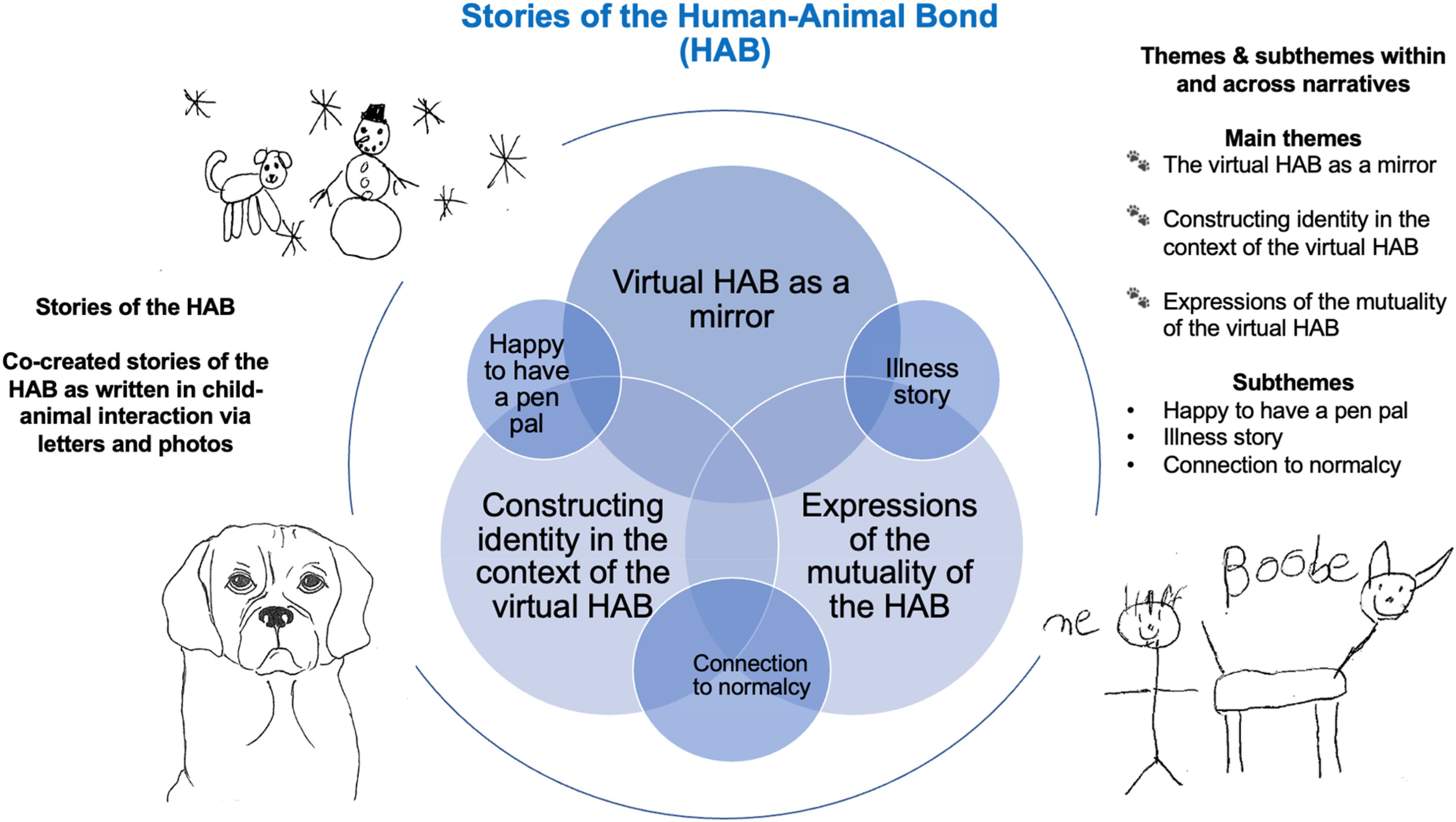
Stories of the HAB with themes and subthemes.
Themes and Supporting Quotes
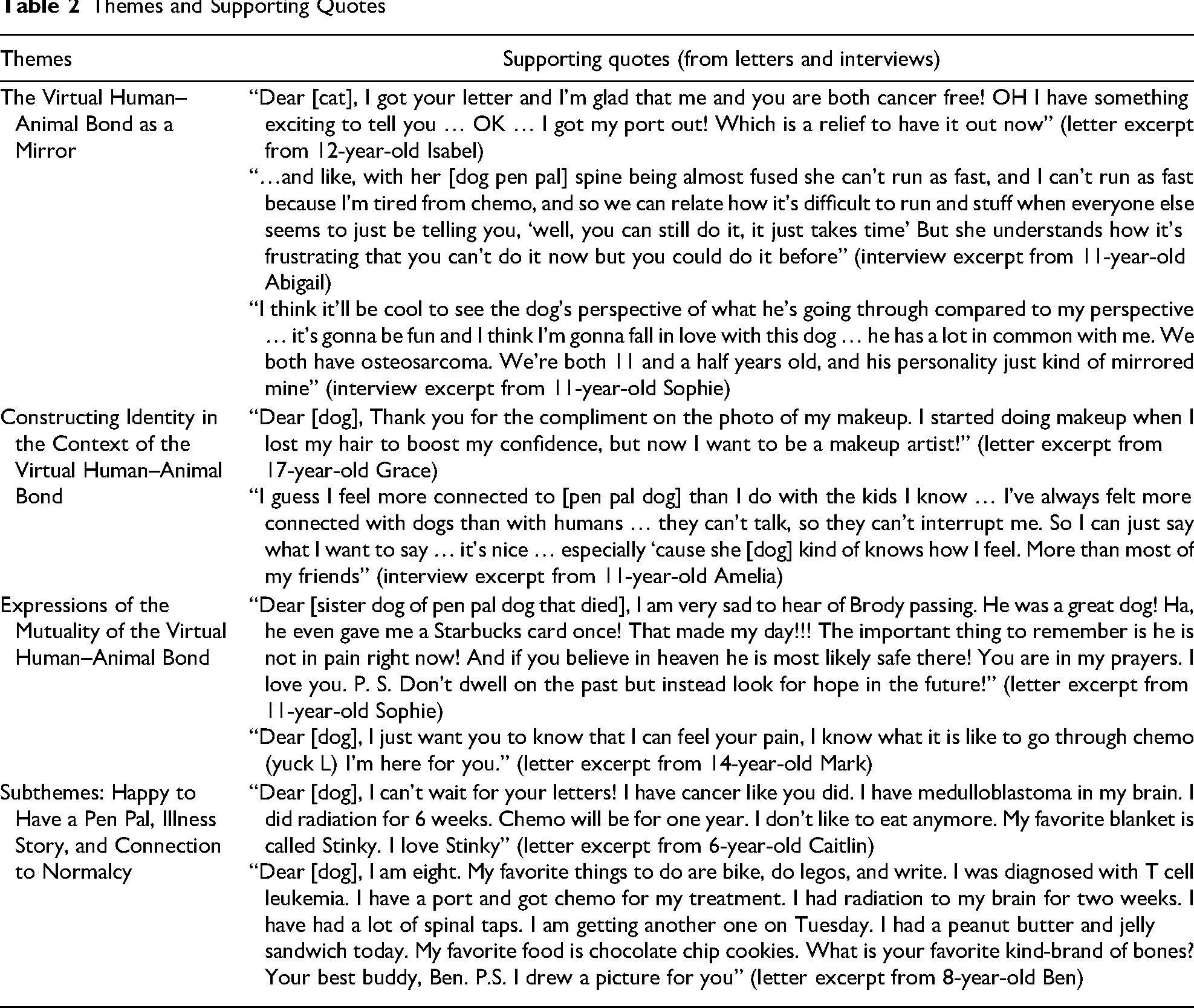
Theme 1: The Virtual HAB as a Mirror
The shared experiences between a child and their animal pen pal, as expressed in letters and photos, were a source for children’s self-reflection. This was evident in varying degrees within the letter narratives (and in some interview texts) across all ages and genders. This self-reflection began at the time a dog or a cat pen pal was chosen, as children looked at different animal bios and photos and chose the one they most related to, based on their preferences and attraction to the animal. They saw themselves in the animal.
The virtual HAB as a source for ongoing self-reflection was evident as letters were exchanged over time. The letters were written from the animal's point of view, inviting the child to write back from their point of view, to tell their stories. In this way, the dogs and cats became anthropomorphic beings who encouraged self-reflection.
Theme 2: Constructing Identity in the Context of the Virtual HAB
In the context of the HAB, the children and adolescents wrote about their own experiences in a way that speaking circumvents and human interaction may suppress. They wrote letters in the privacy of their home, at their own pace. They were free to construct identities, revealing to their animal pen pal exactly what they wanted the animal, and the human who was writing for the animal, to see. It was an opportunity for them to be vulnerable in the safe context of the HAB, and also create whomever they wished to be in the eyes of their pen pal, as they chose what photos of themselves to send and what details to share about their lives.
Theme 3: Expressions of the Mutuality of the Virtual HAB
The mutuality of the virtual HAB was expressed among the letter narratives in a variety of ways: through written expressions of empathy, support, and affinity; through art; through gifts exchanged; in children’s written requests to meet their pen pal; and, in how the death of an animal pen pal was experienced. Just as a physically present dog or cat can provide a source of unconditional love, support, friendship, and fun, dog and cat pen pals may do the same. Ongoing mutual support came not only from the animals to their child pen pal but from the children to their dog or cat pen pal.
Subthemes: Happy to Have a Pen Pal, Illness Story, and Connection to Normalcy
The three subthemes—Happy to Have a Pen Pal, Illness Story, and Connection to Normalcy—are best illustrated simultaneously, as they consistently run through the narratives, and in particular, they are present across all ages and genders regardless of the length of the narrative (Figure 2). Younger children’s narratives (ages 6–10 years) were much shorter than adolescents’ narratives, contained more artwork, and did not have the same level of emotional expression and descriptions as the adolescents’ narratives did, which is an expected developmental difference as younger children are unable to access and use language in the same way as adolescents. Still, the subthemes in the narratives across ages and genders were similar: they all shared their illness story with their dog or cat pen pal (sometimes, this was simply their diagnosis and type of treatment). Over time, children’s illness stories tended to become less prominent, while narratives about how happy they were to have their pen pals, and the ways they engaged in activities that brought normalcy to their lives, continued and became more prominent.
Research Questions
The cocreated stories of the HAB and the embedded themes and subthemes informed the answers to this study's research questions and began to operationalize the influence of the virtual HAB (Table 3). In the context of the virtual HAB, young people with an LTC wrote stories of their experiences, feelings, fears, and hopes. The cat's and dog's responses to their child pen pal's experiences helped alleviate the child's stress, brought joy and happiness to their days, provided emotional social support, and facilitated adjustment to illness; this was consistent across all ages and genders. The HAB, while typically experienced as an in-person phenomenon, is by definition a mutually beneficial and dynamic relationship between people and animals that includes, among other things, emotional and psychological interactions of people and animals (American Veterinary Medical Association, 2022). As demonstrated by the expressions of the HAB in letter narratives and interview texts, the HAB can also be articulated and experienced in a virtual way to provide emotional social support and bring happiness to a child's life while also affording an opportunity for the child to do the same.
Research Questions Answered
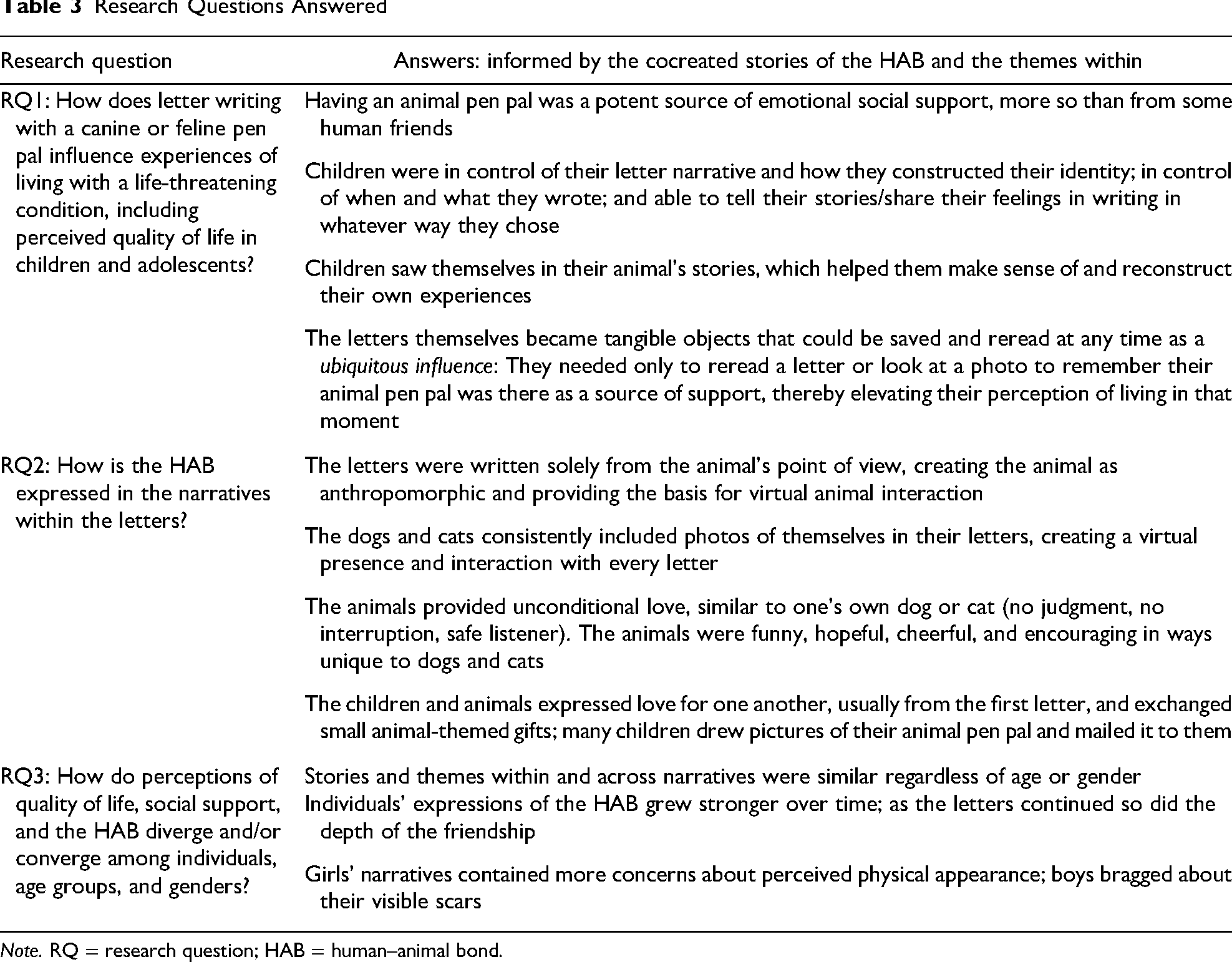
Note. RQ = research question; HAB = human–animal bond.
Discussion
The virtual presence of a much-loved dog or cat pen pal in the form of letter narratives and photos achieved improved QOL outcomes similar to those found in the presence of a live therapy animal, such as improved mood, distraction, and overall decreased emotional distress (Chubak et al., 2017; Jennings et al., 2021; McCullough et al., 2017; Silva & Osorio, 2018). This is consistent with Holder et al. (2020), who suggest that in AAI, the HAB defines a patient's mutual connection to a specific therapy animal, in ways similar to the advanced relationship between a person and their pet. Unlike live therapy dog visits, however, an exclusive animal pen pal provided an ongoing, ubiquitous influence as the child needed only to reread a letter or look at a photo to remember their animal pen pal was there as a source of support, thereby elevating their perception of living in that moment. As 19-year-old Grace wrote in one of her final letters to her dog pen pal before her death, “Even though I cry almost every day the one thing I can always count on to make me happy are your letters. You always bring a smile to my face!”
Young people with cancer have a profound desire for others to know what it was like, and opportunities to tell one's story helps them work through the trauma of diagnosis and treatment, enabling them to move forward with their lives (Kuntz et al., 2019; Laing et al., 2017). Having an animal pen pal provided emotional social support by giving young people with an LTC a way to talk about their illness and offered unconditional acceptance, companionship, and a sense of belonging. It helped them write about their hopes, dreams, and future aspirations as a way to balance their illness story. It helped to alleviate the imposed “social voicelessness” (Das Gupta, 2007) inherent in being a child or an adolescent receiving treatment for cancer or serious blood disorder. As witnessed in the cocreated stories of the HAB in this study, some young people shared that their animal pen pal understood what they were going through better than their human friends; they were seen, known, and heard by their dog or cat pen pal. This is consistent with Holder et al. (2020) in their discussion of the “social support hypothesis” of AAI, in which the therapy animal becomes a beneficial part of a patient's social network, offering emotional support that may be different than traditional human interactions, for example, nonjudgmental listening.
The animal pen pals also understood what treatment for cancer or a serious illness was like and more importantly, how to have hope and fun along the way, and how to live in the moment; this is an aspect of how children saw themselves in the animal. The letters and interviews among the children and adolescents in this study captured lived experiences with illness and its effect on their lives both as they were happening in the child's world, as well as remembered experiences, all in the context of the HAB as a means of self-reflection. This helped children make sense of their experiences in real time within the context of the HAB. They reconstructed their own illness story through interaction with their dog or cat pen pal. The animals’ generally optimistic and playful perspective provided emotional support, as did their ability to validate the children’s feeling and experiences. Emotional validation was a key component of emotional support in most of the animals’ letters, further serving as a mirror for self-reflection; for example, if a child expressed being scared about an upcoming scan or a treatment, their animal pen pal would validate that in their next written response and offer encouragement. Other topics, too, such as school concerns or feeling sad about something or someone would be acknowledged by the animal in the next letter with unconditional support, empathy, and encouragement.
The children and adolescents in this study shared vividly and undeniably in their letter narratives the psychosocial and physical toll of treatment for, and living with, an LTC in real time. For the PI, a pediatric oncology nurse with decades of experience, some of the narratives in the cocreated stories of the HAB were surprising, as the process of immersion with the narrative sequences elucidated the depth of suffering as written by children and adolescents. On the other hand, just as striking were the many influences of the animal pen pal's letters on improving mood and enhancing perceived QOL, highlighting the effectiveness of this virtual AAI with pen pals.
The findings of this study also address significant gaps in the literature in four areas of inquiry that have limited published studies to date: (a) virtual AAI for children and adolescents with an LTC, (b) existence of conceptual frameworks to guide virtual AAI research, (c) letter-writing interventions with others for children and adolescents with an LTC, and (d) published stories written by children/adolescents with cancer or other LTCs. Thus, the findings of this study contribute new and essential scientific knowledge to the emerging field of virtual AAI with animal pen pals, and show strong promise for dissemination as a viable nurse-led intervention for young people with cancer and blood disorders.
Strengths and Limitations
Limitations include the fact that all the letters were written by participants who enjoyed writing and had a strong attraction for animals, creating a selection bias. The limited ethnic diversity in the study sample may limit transferability. Strengths include the balanced distribution of boys and girls within both age groups. There was a diverse range of diagnoses and illness trajectories. The rare set of children's epistolary narratives among 16 young people, and the 18 interviews for secondary analysis, provided an unprecedented opportunity to study how virtual AAI with animal pen pals influenced perceived QOL in young people with an LTC. A new conceptual framework for virtual AAI research is now available for others to use. As such, the findings contribute new knowledge to an emerging field, supporting innovation in nursing practice and research.
Implications for Future Research
More evidence is needed to build on the findings of this study. Virtual AAI with animal pen pals is potentially applicable to other pediatric populations as well as adults and could be studied for feasibility. Randomized controlled trials (RCTs) are essential in order to move the field forward and quantify the virtual HAB. The possibilities for RCT designs to study virtual AAI are numerous; for example, an RCT could include several arms comparing different types of virtual AAI (such as having a pen pal vs. Zoom visits with a dog/handler team) with usual care. In addition to quantitative measures with self-reports and biomarkers, qualitative measures should always be incorporated as well, to directly capture the vivid lived experiences of young people engaged in different types of virtual AAI.
Studying the QOL of parents of children engaged in virtual AAI is another area for exploration, as parents’ stress is tied to that of their child. Little is known about parental perspective on the benefits of AAI participation for children with advanced cancer, and even less about virtual AAI, although parents of five children in this study mailed letters to animal pen pals thanking them for providing joy to their child. A recent study by Cowfer et al. (2021) used semi-structured interviews to assess parent and child perceptions of in-person AAI sessions with children with cancer; children and parents found AAI desirable with the only negative aspect reported as too little time with the dog. This study could be replicated with parents and children in YAPS.
As the field of virtual AAI moves forward, the conceptual framework used in this study may be modified to inspire and guide other virtual AAI studies. The use of consistent theoretical or conceptual frameworks across AAI studies will expand the field's ability to develop an evidence base for virtual AAI to explain and operationalize its influences.
Conclusion
Themes and key outcomes for virtual AAI with canine and feline pen pals are now better understood through the cocreated stories of the HAB. The findings of this study begin to scientifically establish virtual AAI with pen pals as an effective nurse-led intervention for enhancing QOL and facilitating adjustment to illness for young people with an LTC. The virtual HAB may be a potent source of emotional social support for this exceedingly vulnerable population and is accessible regardless of setting, circumstance, or hospital protocols. This study's findings provide compelling evidence for global dissemination of this novel AAI intervention, leading the way for others in the virtual AAI movement with a new conceptual framework and many opportunities for future research to continue to advance the field.
Footnotes
Acknowledgments
The authors would like to acknowledge the participants in Youth and Pet Survivors™: the child and adolescent pen pals, the dog and cat pen pals, and the humans with whom the animal pen pals lived, who wrote on behalf of their pet. The stories shared in your letters about living with a life-threatening condition ranged from hilarious to heartbreaking, and we are honored and humbled to witness the depth of the human–animal bond through your written lived experiences.
Declaration of Conflicting Interests
The authors declared no potential conflicts of interest with respect to the research, authorship, and/or publication of this article.
Funding
The authors received no financial support for the research, authorship, and/or publication of this article.
