







Abstract
Objective
To assess the clarity, acceptability, and relevance of a digital “Nutrition Guide” designed to communicate principles of healthy eating in an accessible and engaging format for lay audiences.
Design
This mixed-methods study employed survey data collection through the General Nutrition Knowledge Questionnaire (GNKQ-R) and individual qualitative interviews with community members to inform revisions to the Nutrition Guide.
Setting
The study was conducted in the Washington, DC metropolitan area and focused on community engagement through community-engaged research methods.
Participants
A total of 36 adult participants without formal nutritional of medical training participated in the study. Twenty-six completed the GNKQ-R, and ten participated in qualitative interviews. Thematic saturation was reached with interview participants.
Results
Survey results demonstrated foundational nutrition knowledge, notable gaps existed, including food labels and added sugar. Interviews revealed widespread appreciation for the Guide’s visual layout, cultural inclusivity, and whole foods focus, and highlighted a desire for deeper content on gut health, supplements, and practical meal planning. Participants frequently sought more technical information than the Guide was designed to provide, raising important questions about scope, depth, and audience segmentation.
Conclusions
This study highlights the value of community-engaged design in creating accessible and appropriate nutrition educational resources. It also underscores the tension between simple content and nuanced scientific information in public resources, raising further considerations for opportunities in nutrition communication.
Introduction
The biological connection between diet and health outcomes has been studied for decades. Poor diets lead to high rates of obesity and diet-related chronic illness, including cardiovascular disease, hypertension, cancers, and diabetes. 1 We additionally know that chronic health conditions account for approximately half of all United States of America (USA) deaths annually. 2 There is unequivocal evidence showing dietary patterns can achieve and maintain good health and reduce chronic disease, yet most Americans subsist on a diet made up of foods that are ultra-processed, high calorie, and low in nutritional value.3,4 In the USA, 74% of adults have obesity or are overweight, the highest rate is in the age range of 40-59, while a staggering 40% of children and adolescents also fall into these categories. 5
With the established link between good dietary habits and reduced risk of chronic disease, all-cause mortality, cardiovascular disease, bone health, and certain types of cancers, it is increasingly crucial that nutrition education is made available broadly. At the federal level, the Dietary Guidelines for Americans (DGA) provides a recommended standard for nutrition and dietary intake for individuals in the USA. 5 Higher intake of vegetables, fruits, legumes, whole grains, lean meats, seafood, nuts, unsaturated vegetable oils, and less consumption of processed meats, sugary foods/beverages, and refined grains are repeatedly correlated with positive health outcomes, and form the cornerstone of the DGA. This was confirmed by a recent analysis published in Nature Medicine, finding that such “dietary patterns rich in plant-based food, with moderate inclusion of healthy animal-based foods” were associated with healthy aging and its domains. 6 This is the largest study (n = 9771) with such extensive follow-up (30 years) and is congruent with the totality of the evidence. Despite the strength of recommendations from the DGA or similar guidelines, adoption among the public and clinical professionals remains suboptimal. 7 Studies commonly find that as little as 10% of the USA population adheres to the DGA.8,9 The reasons for this poor uptake of the DGA are many and varied, with previous research suggestion that limited health literacy among the average American, the relative complexity and length of the DGAs, and the challenges people have in translating the information in this federal document to day-to-day practice are core barriers.10,11
The purpose of this study was to measure the clarity and acceptability of a short-form “Nutrition Guide,” a digital e-Magazine (eZine), developed by the George Washington University (GW) Resiliency & Well-being Center (R&WC) to provide lay community members with important information on healthful eating and guidance on sustainable eating habits. 12
Methods
Study Design
Study Procedures

To protect participant confidentiality, all participants were assigned pseudonyms and raw study data were housed in a password-protected cloud storage server.
Study Inclusion and Exclusion Criteria

Phase One
Development of Preliminary Nutrition Guide
The senior researcher (R4) developed the initial Nutrition Guide for the R&WC in response to the general concerns and knowledge gaps among members of the Washington, DC metro area and in alignment with best practices in public health nutrition and nutrition counseling. R4 is an internationally recognized expert in nutrition, with more than 2 decades of experience in whole-person health, nutrition science, and public health including training and faculty appointments at the Johns Hopkins Bloomberg School of Public Health. An independent communications expert used 2 years of presentations and documents from R4 and the R&WC to develop a rough draft of the Nutrition Guide. This draft was reviewed and edited by R4 to be in keeping with the evidence base in alignment with the Dietary Guidelines for Americans and adapted material from the Harvard Health Eating Plate, a tool previously developed by an independent team at Harvard University (led by the renowned Walter Willett) based on the nutrition science evidence base.14-19 Then, the draft was reviewed by the team at the R&WC from the vantage point of their expertise, utility as healthcare providers, and responsiveness to their patient population: employees and trainees of the GW academic medical enterprise. All feedback was incorporated into an initial guide, which was immediately implemented as a clinical tool at the R&WC and publicly available on the Center’s website. This original guide is an eZine, an online-only 15-page magazine with a mix of text and visual depictions.This design decision was made to ensure that lay consumers of the guide understood the content within the document. All content is evidence-based, and citations and resources are provided where appropriate.
Modified General Nutrition Knowledge Questionnaire (GNKQ-M)
The GNKQ-R is a validated tool to assess knowledge of key nutrition concepts at the individual level. The original version of this instrument was developed by Parmenter and Wardle and later revised to reflect current dietary guidelines.13,20 The revised iteration, the GNKQ-M, evaluates nutrition knowledge across multiple domains, including an understanding of general dietary recommendations, knowledge of food groups, understanding of nutrient functions, and knowledge related to the relationship between diet and health. 13 Consistent with best practices in survey research, we did not create a new tool, adjust, or modify this survey given its relevance to the research question and internal and external validity. 21 Collected data was analyzed using descriptive statistics, categorical performance breakdown, and response time analyses.
Phase Two
Community-Engaged Data Collection, Nutrition Guide Review, and Commentary
Upon development of the initial Nutrition Guide, we entered the second phase of the study. This phase began with deliberate community engagement to review the Nutrition Guide and provide initial feedback on design, usability, and acceptability. Community-engaged research is important for lifestyle medicine because it actively involves community members and patients in the research process, ensuring that findings are relevant, culturally responsive, and actionable. 22 This type of research enhances trust and engagement, particularly in underserved populations who may be wary of traditional research in medicine and the health sciences. 23 By integrating individuals who can share their lived experiences and local knowledge, community-engaged research improves the accuracy and acceptability of health tools, which can ultimately encourage more sustainable behavior change and provide healthcare practitioners with information informed by the priorities of real people.24-26 Moreover, these methods empower communities by fostering self-efficacy and collective action, which are essential for long-term health improvements. 22
Recruitment Method
Participants were recruited through a combination of emails to members of the local community, via physical flyers posted throughout the medical campus, and word-of-mouth referrals from community gatekeepers. Participants were all residents of Washington, DC and had an existing relationship with the GW R&WC or clinical affiliates (eg, the GW Center for Integrative Medicine). This multi-pronged approach was designed to reach a broad range of individuals.
Individual Interviews
A semi-structured interview guide was developed in response to data collected during the first phase of this study, wherein participants were invited to complete the GNKQ-R and the study team reviewed the literature related to lay understanding of nutrition. Three members of the research team (R1, R2, and R3) conducted individual interviews with participants using the Zoom video conferencing software. Importantly, none of the researchers had preexisting relationships with study participants. Once participants indicated interest in interviewing, copies of the study’s Informed Consent document and a PDF of the Nutrition Guide were provided via email. Particpants were encouraged to review the informed consent document and the guide in advance of the scheduled interview. Before begining the Zoom interview, researchers again reviewed the informed consent document with participants, discussed the aims and scope of the study, and solicited questions prior to beginning the semi-structured interviews. During the interview, participants were asked to provide their initial feedback on the Nutrition Guide before completing a think-aloud exercise wherein they reviewed the Nutrition Guide with the interviewer. All interviews lasted 45-60 min.
Data Analysis
Data analysis was conducted using Dedoose, a cloud-based application for managing, analyzing, and presenting qualitative data. 27 This process included a hybrid approach to coding. Deductive coding, or the process of using predetermined codes, was pursued during the initial stages of data analysis. The senior researchers (R1 and R4) designed a codebook to specify ideal areas of common nutrition knowledge, sources of information and misinformation, and suspected issues in response to gaps identified by the 2020-25 DGA. The larger research team (R1, R2, R3, R4) then began coding the data. Deductive coding is a useful initial approach to the data because it allows researchers to systematically apply predefined concepts to the dataset, facilitating structured analysis and ensuring consistency in identifying key themes relevant to the study objectives. 28 The research team also coded inductively to identify unusual, unexpected, and important issues that were not initially included in the codebook, allowing for the inclusion of novel insights from the participants. To ensure intercoder reliability, the research team initially reviewed the same 2 transcripts and met to discuss the process, areas of agreement and divergence, and to clarify expectations. Following this initial team meeting, ongoing spot-checking was conducted by the senior researchers (R1, R4) in advance of regular research team meetings.
Phase Three
Nutrition Guide Redesign
In the final phase of this study, data collected through participatory review of the Nutrition Guide and follow-up individual interviews were analyzed to make meaningful edits to the document. The high-level information available in the updated Nutrition Guide is discussed at length below, and the final version of this guide is available as an appendix to this paper.
Results
Participant Recruitment
Qualitative Participants Demographic Data
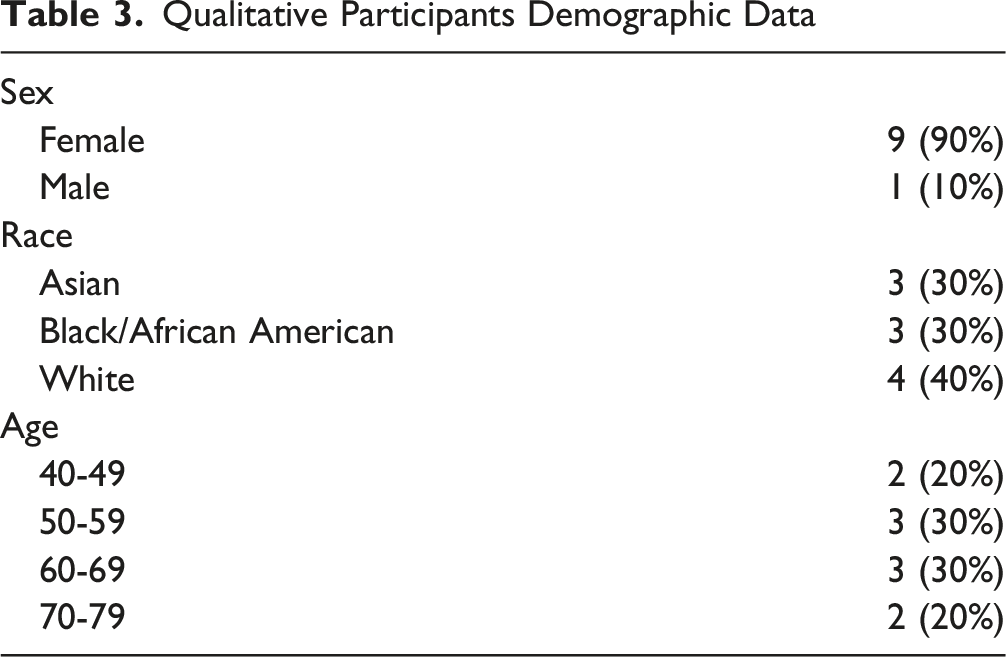
Enrollment for the qualitative data collection was closed at ten participants due to reaching thematic saturation, or the point by which feedback was repetitive and largely in agreement regarding necessary improvements to the Nutrition Guide.32,33 To ensure that saturation was adequately achieved, 3 peer coders (R2, R1, R3) independently reviewed and coded transcripts, met regularly to compare findings, resolve discrepancies, and identify patterns. All 3 coders agreed that no substantially different insights were emerging and that participants were largely reiterating previous content and suggestions. This agreement across coders provided methodological confidence that saturation was reached.
Modified General Nutrition Knowledge Questionnaire
The GNKQ-R (n = 26) was used as an initial tool to assess baseline nutritional knowledge among community members. The results from this questionnaire provided key insights into concept areas where specific resources may be beneficial to consumers.
We conducted basic descriptive statistics, response time analysis, and categorical performance breakdown by key concepts measured through the GNKQ-R.
GNKQ-R Response Time Analysis
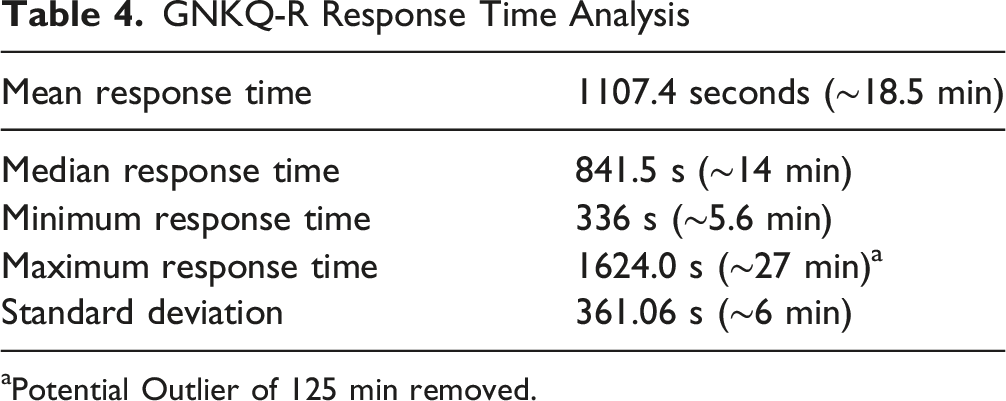
aPotential Outlier of 125 min removed.
Histogram analysis revealed a right-skewed distribution, indicating that while most participants completed the questionnaire within 10-20 min, a few outliers exhibited significantly longer response times. Further boxplot analyses confirmed the presence of a high-end outlier (n = 1, t = 125 min), which has been removed from Table 3 to give a better understanding of completion time and standard deviation of the group. Ultimately, these outlier times may be attributed to distractions, time away from the computer, or participants conducting research before providing their responses. Consistent with online surveys, response time were examined as an indicator of data quality and to understand the relative cognitive effort required to complete this activity, as opposed to an indicator of participant knowledge. 34 We used these patterns to identify potential challenges in completing the GNKQ-R instrument and to assess overall engagement during survey completion and to function as a mark of quality assurance as opposed to a specific finding.
• • • • • • • • •
These results suggest that access to nutritional education remains important, even in areas that suggest a strong general understanding of healthy eating. This initial survey helped inform the design of the community-engaged review of the existing Nutrition Guide and the individual interviews that follow. Ultimately, this data provided the researchers with a foundation for further data collection.
Community Feedback on Nutrition Guide & Interview Findings
Community review of the Nutrition Guide occurred during individual interviews to provide detailed and in-depth reflection on both the content of the resource as well as additional areas of question and reflection relevant to members of the community and their general understanding of nutrition.
General Content and Approach of the Nutrition Guide
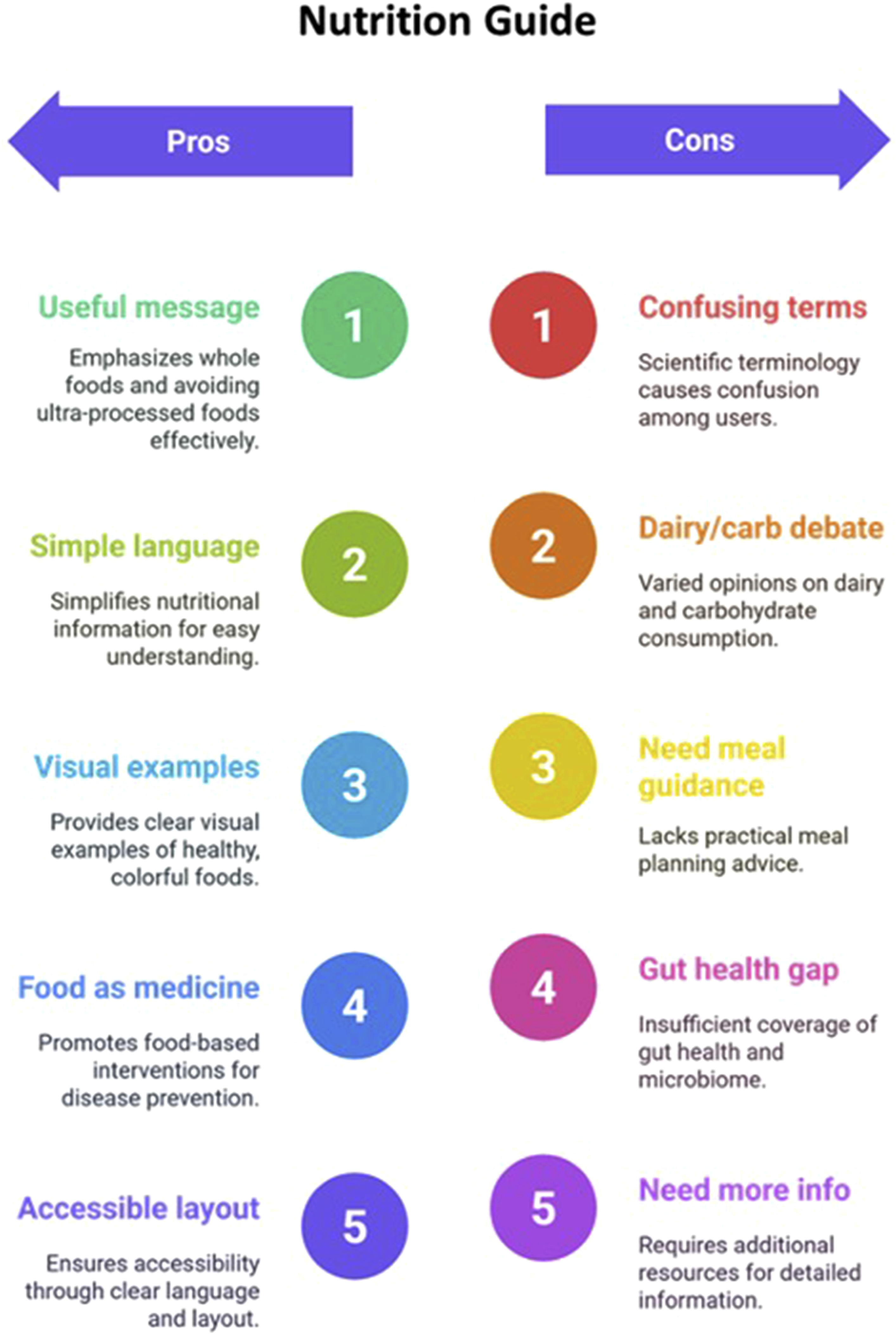
All participants noted that the overall message of the Nutrition Guide was useful, particularly the emphasis on consuming whole foods and avoiding ultra-processed foods. The principle of “eating the rainbow” as a simple heuristic for incorporating a diversity of foods was frequently referenced in interviews. One respondent noted that, “[t]he idea of ‘eat the rainbow’ is something I actually try to do with most of my meals” (Ruth). Another participant commented on the utility of this approach: “I really like the examples of all the different things that you could eat that are the different colors” (Steph). By providing simple language alongside visual examples of healthy, colorful foods, the Nutrition Guide provides a useful template for individuals to begin exploring different ways of eating.
Participants also appreciated the guide’s work to simplify nutritional information and noted the importance of accessibility in both language and layout. One individual remarked, “Nutrition doesn’t have to be hard—it’s just a few guidelines, and those guidelines are kind of throughout this guide” (Cathy).
Appreciation for the “Food as Medicine” Approach to Preventative Care
Multiple interview participants (7/10) discussed the significance of good nutrition in disease prevention and health promotion. A common theme across interviews was a preference for food-based interventions over pharmaceutical treatments, particularly for the prevention of chronic lifestyle conditions such as hypertension and diabetes. One participant succinctly noted that, “[f]ood is my medicine, and medicine is my food. I live by that motto” (Lynn). Others expressed interest in expanding the discussion of how dietary choices impact specific medical conditions through the Nutrition Guide or by access to supplemental resources curated by the research team: “I wish I understood more about how food can prevent and improve certain conditions” (Ruth).
Confusion Over Scientific Terminology and Requests for Improved Clarity
Multiple participants (4/10) had some confusion regarding terms used in the Nutrition Guide and expressed concern over a lack of clarity as to where they could turn for more information. For example, the term phytochemicals was flagged as unclear by three respondents. One participant admitted, “I don’t know what a phytochemical is, but it sounds like something we want” (Steph). Another acknowledged that they“know the term, but … don't recall what they actually do” (Cathy). These responses suggest a need for further clarification, additional resources, or simplified explanations of technical concepts.
Dietary Recommendations
While most respondents endorsed the general dietary guidance, there were differences in perspectives regarding specific food groups, particularly regarding the appropriateness of dairy and carbohydrate consumption. Some participants supported the inclusion of dairy, whereas others questioned the categorizations employed within the guide. For example, one individual asked, “I had never seen the distinction between fermented and other dairy before, and I don’t know why one should be avoided over the other” (Steph). Steph also asked, “What’s the distinction between aged and fermented dairy? Cheese is aged, but is it fermented?” Similarly, the Nutrition Guide’s carbohydrate recommendations were a source of discussion. While some participants advocated for reducing carb consumption, others felt restriction was unnecessary, and others were unsure of the benefits of carbohydrates at all. A respondent shared, “I cut out grains completely except for steel-cut oats, but I know that’s not for everyone” (Lynn), whereas another stated, “I try to avoid white rice, but it’s very delicious. I still eat it occasionally” (XW). These responses highlight the variability in individual dietary preferences and the need for adaptable dietary guidance and suggest that a glossary, explanatory section, or QR code for additional resources may be necessary to provide additional context and detail.
Inclusion of Practical Meal Guidance
Five participants suggested that the Nutrition Guide would benefit from the inclusion of practical meal planning advice. One participant recommended, “It would be helpful to include simple meal ideas that follow these principles” (Linda). Others proposed expanding the content to include information on food sourcing and preparation, with one respondent stating, “A guide on how to grow nutrient-rich foods would be a great addition” (Precy).
Expanded Discussion on Gut Health
Gut health emerged as a recurring area of interest, with multiple participants expressing interest in more in-depth coverage of microbiome health. One respondent stated, “There should be more about microbiomes and gut bacteria—it’s really important but not covered in enough detail” (Debbie). This suggests a need for additional sections addressing probiotics, prebiotics, and their role in overall health.
Sources of Nutritional Knowledge
The researchers asked participants where they go when they need accurate and reliable information on nutritious foods; responses were varied. Participants reported obtaining nutrition information from a wide range of sources, including books, online resources, medical professionals, and personal experience. However, there was notable variation in the perceived reliability of these sources, and many participants were unaware of how to identify “good” information from misinformation. One participant stated, “I read a lot from different places—news, books, blogs, but you never really know what’s right.” (XW) Another noted, “I follow registered dietitians on social media to make sure I’m not getting misinformation.” (Ruth) A few respondents mentioned formal education as their primary source: “I had nutrition courses in nursing school, so I feel like I have a strong foundation.” (Precy) Despite diverse sources of knowledge, participants expressed difficulty navigating contradictory dietary advice and the perceived ever-changing nature of nutrition science. Linda summed this concern up well in commenting, “Every few years, nutrition science changes. What was good for you in the ‘80s is bad for you now.”
Supplements and Nutritional Deficiencies
The existing Nutrition Guide does not discuss supplements or the management of nutritional deficiency; instead, it recommends that readers have informed conversations with their healthcare providers. Despite this note, participants asked the researchers multiple questions about supplementation. In discussions with participants, the researchers found a wide variety in perceptions of supplementation. Some participants, like Precy, noted, “I take supplements because I know I don’t get everything I need from food.” However, other participants expressed some skepticism over their relevance and health benefits. “Doctors push supplements, but I’m not sure they’re always necessary. I’d rather get my nutrients from real food” (Steph). Kim G summed up the concerns of most participants quite well in stating, “I wish I knew more about what’s actually needed versus what’s just marketing.”
Nutrition Guide Redevelopment & Improvements
Ultimately, data collected through this study resulted in multiple improvements to the Nutrition Guide. The original version and the updated document are available as supplements to this paper appendix. Overall, the concept and initial draft of the Nutrition Guide were well-received, with strong support for its emphasis on whole foods and simple dietary guidelines presented in both text and visual formats (Figure 1). The Nutrition Guide was also positively received for the diverse range of foods presented and the use of images that reflected the racial and cultural identities of community members. One respondent noted, “I love that there’s a representation of diversity in the pictures, both in people and of food” (Ruth). A second participant echoed this comment, stating, “the pictures are great, very inviting and relevant to the theme” (Precy). Ensuring a representative guide is important to encourage use and trust among community members, so this feedback was of particular interest to the researchers. Variability in dietary preferences and understanding of dietary recommendations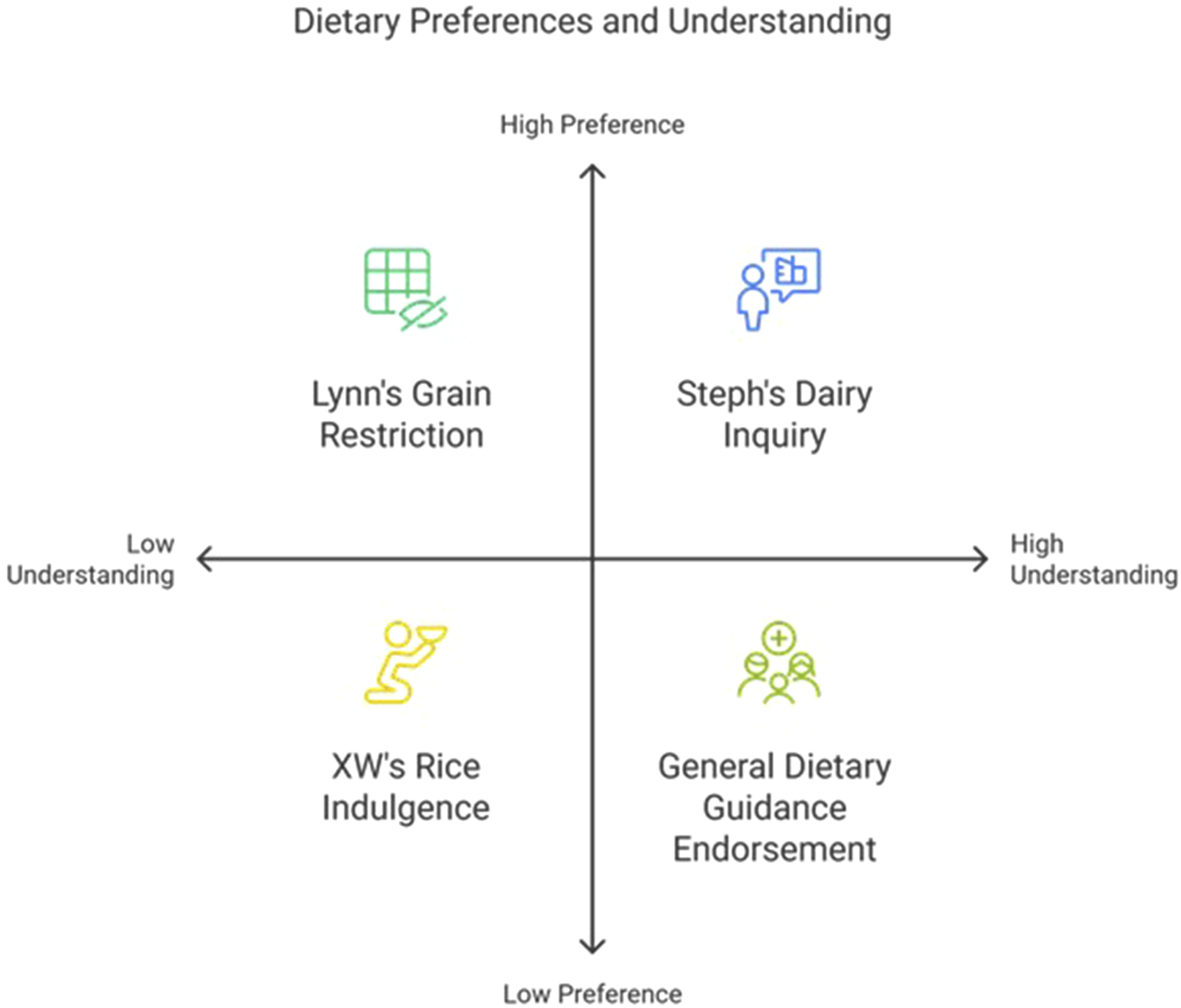
Participants identified several common areas for improvement, as described in detail above, include simplifying language in certain section of the document or defining it (eg, adding a glossary), providing external resources for complex scientific concepts (ie, providing accurate academic resources for individuals interested in learning more detail beyond the scope of the Nutrition Guide), and expanding the existing discussions on the gut microbiome and health. These recommendations were reviewed and incorporated in the updated Nutrition Guide with additional support from university instructional designers to ensure the resource aligned with the Standards for Accessible Design and the Web Content Accessibility Guidelines.35,36
In reviewing feedback from community members, the research team utilized a structured decision-making process aligned with the principles of community-engaged research. Specifically, the team reviewed feedback to determine its alignment with the overall goals of the Nutrition Guide (ie, to communicate clearly the fundamentals of nutrition), the feedback’s consistency with the evidence-base (eg, the DGAs), and the feasibility of making changes without expanding the Guide beyond its original intended scope of serving as a short-form introductory resource. Importantly, all recommended changes were reviewed by the senior reviewer (R4) to ensure that these changes were grounded in science. Ultimately, suggestions that improved clarity, simplicity, cultural representation, and ease of use (eg, adding definitions of terms, providing links to trustworthy external resources for complex information) were adopted, whereas edits that required significant scientific detail, clinical nuance, or substantial content expansion were not included in the update. A number of these recommendations were developed into simple visuals (Figures 2 and 3). Additioanlly, this feedback was used to inform the development of supplemental online materials and educational events sponsored by the R&WC. Concern over how to identify “good” information from misinformation Summary of the pros and cons of the Nutrition Guides as reported by participants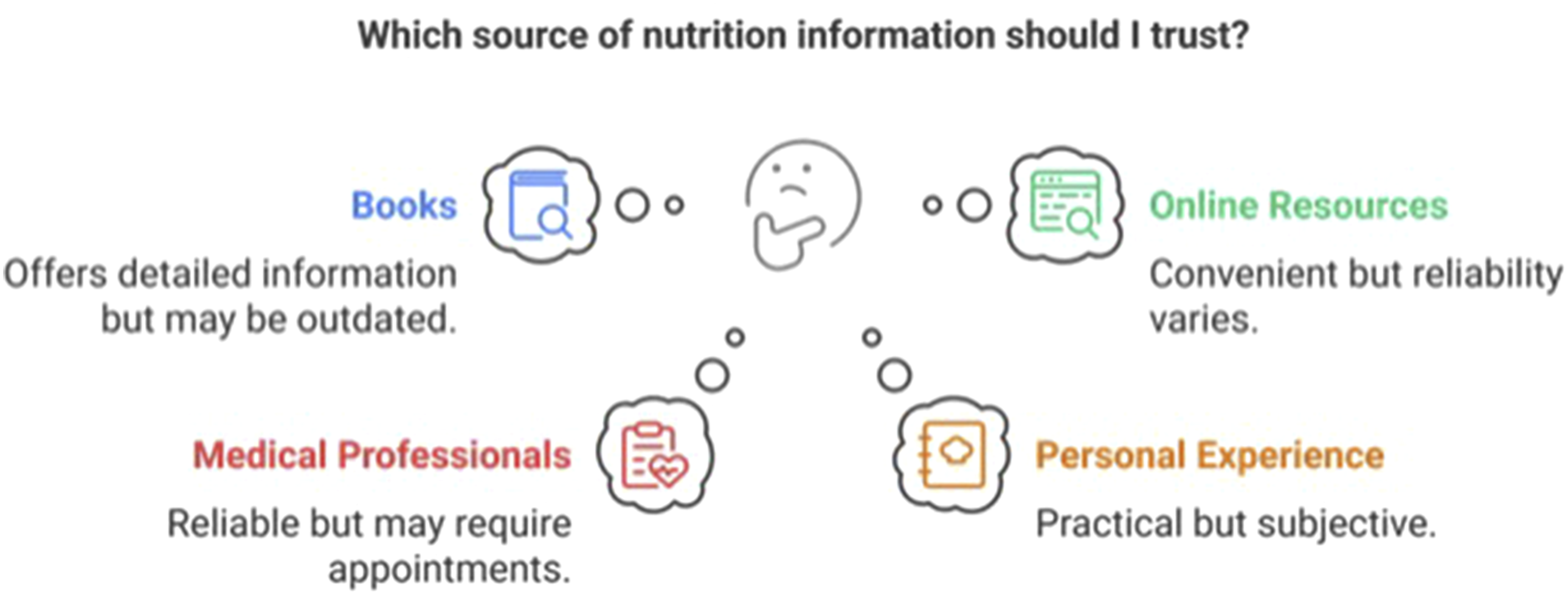
Discussion
The findings of this study affirm the importance of providing accessible nutrition information and conducting ongoing, community-engaged improvement efforts to shape healthy behavior change. Results from the GNKQ-R reveal a moderate understanding of dietary recommendations and healthy eating habits, and also highlight important knowledge gaps related to the function of various nutrients, the evaluation of nutrition labels, and understanding added sources of sugar. These findings largely agree with published research, which found that general populations understand basic dietary principles but apply this knowledge in inconsistent ways. 13 The results from the GNKQ-R, particularly participants’ poor understanding of nutrition labels and food marketing practices, highlight the ongoing need to provide clear, simple, and accessible evidence-based information to lay communities.
As this relates to the Nutrition Guide, there is a sort of hierarchy of information (Figure 4), which must be addressed. The Nutrition Guide was originally intended to provide basic dietary principles–the foundation of nutrition knowledge. While there are some detailed examples, these are to drive home the core principles: diversity of diet (eg, eat the rainbow), diet quality (ie, avoiding ultra-processed foods, refined grains, and sweetened beverages), moderation (eg, some fat, mostly healthy, liquid forms), and mindful eating (eg, making thoughtful choices and savoring). These core principles have remained unchanged, despite evolving science, which is why the intention of the Nutrition Guide has been to focus on these core principles to the exclusion of other principles and details. Further, these core principles are relevant in any setting and with all cultural dietary patterns. However, the participants in this study frequently requested information at a higher order than these core principles (Figure 4). To sufficiently cover all such topics, the Nutrition Guide would either have to become a book or a series of eZines, which could potentially limit its audience to those looking for more in-depth information (not the quick guide it was originally intended to be). The question remains how to prioritize this information and what length the Nutrition Guide should be given its intention. Knowledge requested by participants was often at a higher order than the intention of the Nutrition Guide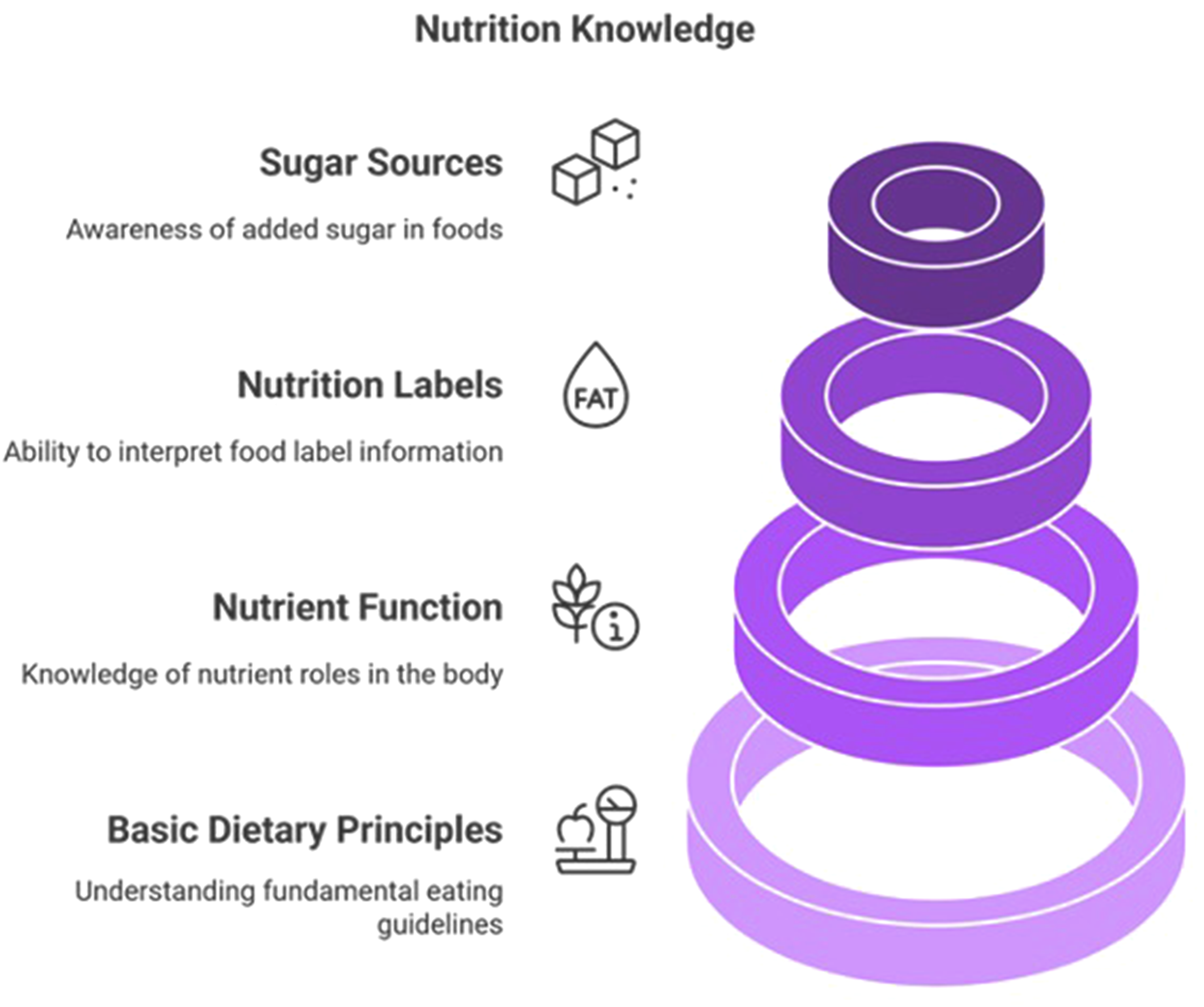
The community-engaged approach to this study, wherein community members were key partners in reviewing and improving the Nutrition Guide, is an important translational takeaway from the study. Community members were eager to support this work and provided great insights into the acceptability of the guide as well as helping to identify areas of confusion or inconsistency. Our community partners appreciate the intent of the guide and were instrumental in ensuring clarity of language, appropriateness of images, and areas for additional exploration that were beyond the researchers’ view. Not only does this work align with best practices in promoting health literacy by ensuring that educational materials are tailored to the intended audience. 23 but it also provides a useful model for clinicians and public health practitioners to engage members of the community.
The semi-structured interviews provided the researchers with further insights into the dietary patterns of community members and their sources of nutrition information and misinformation. Participants frequently cited social media, popular online influencers, members of their family, friends, and inherited traditions as core sources of dietary knowledge. These findings underscore the need for credible, accessible, evidence-based resources that can both support good information and counteract the proliferation of nutrition misinformation. These interviews provided additional rich content that improved both the Nutrition Guide and supplemental resources available on the R&WC website.
Ultimately, this study affirms that while knowledge is necessary to encourage positive behavior change, it is not enough to make sustained change on its own, consistent with the Transtheoretical Model of Health Behavior Change. 37 Effective and appropriate nutrition information must be engaging, practical, simple, and tailored to the needs of the intended audience. We should not communicate with community members in the same way that we communicate with clinicians or academicians. Instead, we must focus on useful and actionable information that is supported by evidence, but not so overwhelming as to disengage people. The latter has been and will continue to be crucial as we attempt to respond to the requests of participants for additional detail in the Nutrition Guide. We have attempted to weigh the inclusion of detail with clear messaging focused on the core dietary principles at the heart of the intention of the Nutrition Guide.
Limitations of the Study
While this study provides important insights into community-based nutrition education resources, it is not without its limitations. First, the Nutrition Guide was developed in response to feedback from a small community of individuals who live within a relatively small geographic location. While Washington, DC is a largely diverse city, the majority of individuals who interact with the Center are representative of an older, and well-educated community. Additionally, the majority of participants (90%) identified as female. The lack of gender diversity may have influenced the results. Further, this study did not specifically collect measures of socioeconomic status (eg, annual income). Consequently, the results of this study will not be entirely reflective of the needs and priorities of more diverse communities or communities with fewer financial resources. This is particularly true for communities and places that share different cultural norms, socioeconomic conditions, or variable access to food resources (eg, farmers markets, full-service grocery stores). Additional research is necessary to test the appropriateness and acceptability of the Nutrition Guide for a more diverse audience
Conclusion
This study affirms the importance of accessible and community-driven nutritional resources in promoting long-term health. The Nutrition Guide presents important strengths and gaps, particularly in areas related to understanding nutrition labels, the balance between lay language use vs definition of terms (eg, in a glossary), recommendations for specific meal choices, and, more broadly, depth and breadth of information included in this tool. The community-baed approach to this study proved instrumental in ensuring that the resource was both evidence-based and user-friendly. Feedback from community members highlights the need to simplify language, define terms where appropriate, and provide additional external resources for more comprehensive information on areas of interest and complexity. While the Nutrition Guide serves as a valuable tool in improving nutrition literacy and informational accessibility, it is important that this resource continues to undergo iterative, continuous improvements in response to community interest and the changing landscape of scientific research while staying true to its intention to provide core dietary principles as a first-line tool. Ensuring that community voices have a central role in this ongoing improvement, we can create more effective, culturally responsive tools that leave individuals feeling empowered and in control of their dietary choices. Future research should explore the long-term impact of resources like the Nutrition Guide, the benefits of more concise vs more expansive versions in various settings, and efforts to expand the guide to larger and more diverse communities.
Supplemental Material
Supplemental Material - From the Page to the Plate: Designing an Accessible Nutrition Resource Through Community-Engaged Research
Supplemental Material for From the Page to the Plate: Designing an Accessible Nutrition Resource Through Community-Engaged Research by Patrick G. Corr, Aleandra Andrews, Robert Andrews, Leigh A. Frame in Global Advances in Integrative Medicine and Health
Footnotes
Acknowledgments
The authors would like to acknowledge Ashley Drapeau for her invaluable help in developing the Qualtrics survey and supporting participant recruitment. We also thank Dr. Mikhail Kogan for his support in the recruitment of participants. Without the support of these individuals, this project would not have found momentum.

Ethical Considerations
This study was conducted according to the guidelines laid down in the Declaration of Helsinki and all procedures involving research study participants were approved by the George Washington University Institutional Review Board (NCR235355).
Consent to Participate
All participants provided written consent to participate in the research as approved by the George Washington University IRB.
Author Contributions
Funding
The authors received no financial support for the research, authorship, and/or publication of this article.
Declaration of Conflicting Interests
The authors declared no potential conflicts of interest with respect to the research, authorship, and/or publication of this article.
Supplemental Material
Supplemental material for this article is available online.
References
Supplementary Material
Please find the following supplemental material available below.
For Open Access articles published under a Creative Commons License, all supplemental material carries the same license as the article it is associated with.
For non-Open Access articles published, all supplemental material carries a non-exclusive license, and permission requests for re-use of supplemental material or any part of supplemental material shall be sent directly to the copyright owner as specified in the copyright notice associated with the article.
