







Abstract
In recent years, subsistence farmers and pastoralists in Benue Valley villages in Nasarawa South, Nigeria, have lost access to wetlands because of their acquisition by large-scale agro-industrial projects. The paper employs political ecology and political opportunity theories and uses in-depth interviews to examine the dynamics of resistance to the wetland acquisitions. It shows that the large-scale appropriation of lands in villages in the study area has led to loss of land access, pollution of land, and displacement of farmers and herders. We argue that despite their impacts, these acquisitions typically face no strong collective resistance because of the local perception of these projects as “bringing development” to local communities that have overshadowed any critiques of such project impacts, including inadequate compensation for the acquired lands. However, if a local community perceives that it is targeted for displacement, perhaps because only the lands of its members are marked for acquisition among diverse groups, it may afford less importance to the development discourse, prompting collective action against the acquisition. We argue that these findings can be useful to debates about when and how discourses become critical factors shaping resistance dynamics in multi-ethnic agrarian settings.
1. Introduction
The adverse impacts of large-scale land acquisitions (LSLAs) on local communities have been widely documented in academia and policy discussions. LSLAs can threaten indigenous communities whose livelihoods rely on customary land access (Conroy, 2014; Moreda, 2017b). They can exacerbate farmland inequality, lead to reduced income, wealth, and worsen food insecurity (Oluwatayo et al., 2019; Sullivan et al., 2023), while also leading to environmental and land tenure threats (Oluwatayo et al., 2019; Onoja & Achike, 2015) and resource conflicts (Balestri & Maggioni, 2021; Bottazzi et al., 2016). However, Hufe and Heuermann (2017a) noted that LSLAs can have positive (employment creation, public goods provision) as well as negative (inadequate compensation, land conflicts, environmental degradation) impacts on local livelihoods. Nevertheless, the literature on agrarian-related resistance in Africa predominantly focuses on local opposition to LSLAs for corporate or agriculture investments (Gagné, 2019; Martiniello, 2017b; Mkodzongi, 2018; Ndi & Batterbury, 2017; Prause & Billon, 2021; Verweijen & Marijnen, 2018).
This literature suggests that locals deploy overt and covert forms of resistance and counter-resistance and combine them in various proportions depending on what works (Martiniello, 2017a, 2017b). Also, overt resistance can be deployed when covert forms do not achieve the intended outcomes (Martiniello, 2017a, 2017b). According to Dorondel and Şerban (2019), “peasants” employ different resistance strategies tailored to a different source of dominance or threat, using covert strategies to resist powerful actors like the state and overt tactics against less powerful actors like companies. However, research into what weakens resistance to LSLAs for agro-industrial projects, and despite their detrimental impact on the livelihood of peasants, is much more limited. This perspective merits further investigation as it can inform policy directions and contribute to debates on agrarian resistance.
Therefore, this paper explores the factors underpinning weak collective resistance to large-scale wetland acquisitions for agro-industrial projects in southern Nasarawa, Nigeria. Drawing data from in-depth interviews, the study employs political ecology alongside political opportunity theories to guide the investigation of the primary research question: How can the weakness of collective resistance to the agro-industrial projects be explained? We find that herders feel aggrieved by the expansion of crop fields caused by LSLAs, which have constrained their grazing. Likewise, there is resentment among some crop growers who feel they have been inadequately compensated for losing their land or for soil contamination linked to aerial application of herbicides and pesticides by these projects. However, overall, there is weak collective resistance to the agro-industrial projects within these communities. We argue that this can be attributed to a lack of counter-discourses challenging the dominant discourses surrounding land acquisition in the area that frames these as bringing “development.” This “discourse of development” circulating within the communities presently overshadows individuals’ or families’ resentments, which may otherwise have triggered collective protest and even mobilization against the acquisition. Thus, when “development” is introduced, resistance toward the companies involved in LSLAs is reduced because the greater number of community members who want the company to stay outnumber those who complain—this makes the small number morally disadvantaged to complain. This signifies a form of moral repression where those who benefit from specific modern patterns of development in a community make it difficult for the voices of the few who are dissatisfied to be heard, as they are seen as enemies of the community.
However, we argue that the influence of this development narrative is not absolute and can easily be undermined when a group perceives it is under threat of displacement because only the lands of its members have been marked for acquisition, while those of neighboring groups have not. We contend that it is important to consider when and how narratives become critical factors shaping resistance in discussions of the dynamics of resistance in multi-ethnic agrarian settings. These findings are essential to understanding the agency of rural actors and the socio-political processes shaping rural change. In this regard, framing the LSLAs as “development” informs how powerful discourses and ideology shape rural societies and their responses to structural transformations. The following sections review pertinent debates in the literature, outline the theoretical approach and methods used in this study, present and discuss the results, followed by a brief conclusion.
2. Review of the literature
Studies on LSLAs have focused on five broad themes, namely the diverse impact of such projects on local communities, the gendered dimensions of such impacts, the interaction between local, regional, and state authorities regarding LSLAs and their effect (Manda et al., 2019; Moreda, 2017a; Moreda & Spoor, 2015), the resistance of local communities against the LSLAs investments and the role of discourses therein (e.g., Gagné, 2019; Martiniello, 2017a, 2017b; Mkodzongi, 2018; Moreda, 2017b; Sullivan et al., 2022). Studies on how discourses shape resistance to LSLAs are relatively few compared with those focusing on these other factors. Studies on the impact of LSLAs show that they can lead to rapid land use changes, displacement of various production systems impacting local incomes and food security, and appropriation of water resources, leading to long-term land alienation from local communities and limited employment opportunities (Ablo & Bertelsen, 2022; D’Odorico et al., 2017; Marfurt et al., 2016; Moreda, 2017b; Onoja & Achike, 2015; Sullivan et al., 2022, 2023). According to Hufe and Heuermann (2017), LSLAs can also have positive impacts, which include employment creation and provision of public goods, for example, as well as the more widely discussed negative impacts on local livelihoods and environments, such as inadequate compensation, land conflicts, and environmental degradation.
Some studies have compared the effects of domestic and foreign LSLAs. Ayamga et al. (2023) found that households exposed to domestic LSLAs in northern Ghana had significantly less farmland access than those exposed to foreign LSLAs. Yengoh and Armah (2016) reported that LSLAs in Southern Sierra Leone, especially the foreign-owned SOCFIN Agricultural Company, specialized in oil palm cultivation, typically disregard community needs, deprive locals of essential land resources, and call for land planning that ensures food security and respects local demands. Some older studies have emphasized the connection between LSLAs and violent conflicts in Sub-Saharan Africa, particularly in regions with domestic acquisitions and less egalitarian societies (Balestri & Maggioni, 2021), such as in rural Sierra Leone (Bottazzi et al., 2016) and Ethiopia’s Gambela region (Mamo, 2017).
Studies that have explored the gendered dimensions of the impact of LSLAs on local communities have highlighted factors such as reducing interpersonal trust. Women affected by LSLAs are found to have less trust in family members, in particular, because they are typically excluded from consultation processes and compensation payments (Fonjong et al., 2016; Wegenast et al., 2022) despite the feminization of smallholder farming (Porsani et al., 2019). Studies on resistance to LSLAs have also become prominent in recent debates on LSLAs and their impacts (Gagné, 2019; Martiniello, 2017a, 2017b; Mkodzongi, 2018; Ndi & Batterbury, 2017; Prause & Billon, 2021; Verweijen & Marijnen, 2018).
The literature on agrarian-related resistance in Africa generally focuses on peasant resistance to LSLAs for corporate or agricultural investments (Gagné, 2019; Martiniello, 2017a, 2017b; Mkodzongi, 2018; Ndi & Batterbury, 2017; Prause & Billon, 2021; Verweijen & Marijnen, 2018). According to Martiniello (2017a, 2017b), affected communities deploy overt and covert forms of resistance and counter-resistance and combine them in various proportions depending on their effectiveness, with overt resistance often being deployed when covert forms fail to achieve the desired results. Dorondel and Serban (2019) argue that peasants deploy different resistance strategies tailored to different sources of dominance or threat, using covert strategies to resist powerful actors like the state and overt tactics against less powerful actors like companies. They can deploy covert strategies, such as minor stealing from public property, evasion of a specific kind of work, dishonest reporting to supervisors, and overt strategies, like open protests, blocking roads or occupation of offices, mining sites, or farms (Fung & Lamb, 2023; Vinthagen & Johansson, 2013).
The importance of discourses in shaping the emergence and nature of resistance and counter-resistance has also been explored (Hindeya, 2018; Verweijen & Marijnen, 2018). Verweijen and Marijnen’s (2018) study focused on rural inhabitants’ reactions and opposition to armed conservation programs in the Virunga National Park, Democratic Republic of Congo. The study also explored the rural inhabitants’ resistance to the discursive construction of their resistance to the illegal extraction of natural resources as “violence” and a “criminal” act instead of recognizing it as informed by the grievances caused by loss of livelihoods. Thus, their discourses of resistance are shaped by their access to livelihoods and a long history of successive and overlapping processes of violent enclosure and agrarian change. Hindeya (2018) shows how grassroots movements such as the Solidarity Movement for a New Ethiopia (SMNE), the Anywaa Survival Organization and individual activists and international organizations such as Human Rights Watch (HRW), the Oakland Institute, GRAIN and Survival International through counter-discourse coalitions that frame LSLAs as an existential threat to ethnic groups in the lowland peripheries, “destroying the cultural identities of indigenous peoples, local livelihoods and the environment” have motivated various kinds of resistance by the locals, such as “grazing inside investors’ plantations, damaging assets, or setting fire to crops of investors” (p. 29-30), against massive agricultural land transfers in Ethiopia.
Prause and Billon (2021) examined community-level resistance to large-scale agro-industrial and mining projects in Senegal. They found that prospects of economic development and growth dominated the pro-mining discourses as promulgated by state actors and mining companies, while discourses around food security were crucial in legitimizing agro-industrial projects as deployed by the Senegalese government. Resistance movements often take up these issues and reinterpret them to delegitimize these discourses, reflecting what Gidwani (2008, p. 101) refers to as “counter tales” (e.g., Hindeya, 2018). These studies show that investigations into LSLAs have predominantly focused on their diverse impacts on local communities, the gendered dimensions of these impacts, and the effects of the interaction between local, regional, and state authorities and elites. The locals’ resistance to the LSLAs has also received some attention. However, how discourses shape resistance has been relatively underexplored. This current study examines the role of discourse in the dynamics of resistance to LSLAs in Nasarawa South, particularly why collective resistance to LSLAs may be weak.
3. Theoretical approach
Resistance herein defined following Cupples (2009, p. 370) can be generally seen “as the political and cultural struggles carried out by social actors to challenge dominant workings of power.” It can be “organized and highly visible” or subtle and less visible occurring as “part of the practices of everyday life” (Cupples, 2009, p. 370). According to Lilja and Vinthagen (2018, p. 211), “resistance is about forming assemblies, individual protests, manipulations or it can be about desperately opposing one’s precariousness” in which power relations are involved and performed “by individuals or groups in local, national or transnational spaces.” Resistance is typically motivated by grievances or perceived injustices (Hollander & Einwohner, 2004; Scott, 1985; Taylor & Van Dyke, 2004). Resistance actions against LSLAs for agricultural projects are diverse, ranging from confrontational actions like blockades and street protests to covert actions such as illegal harvesting, with more emphasis on the latter in conflicts over agro-industrial projects (Hindeya, 2018; Martiniello, 2015; Moreda, 2015; Prause & Billon, 2021).
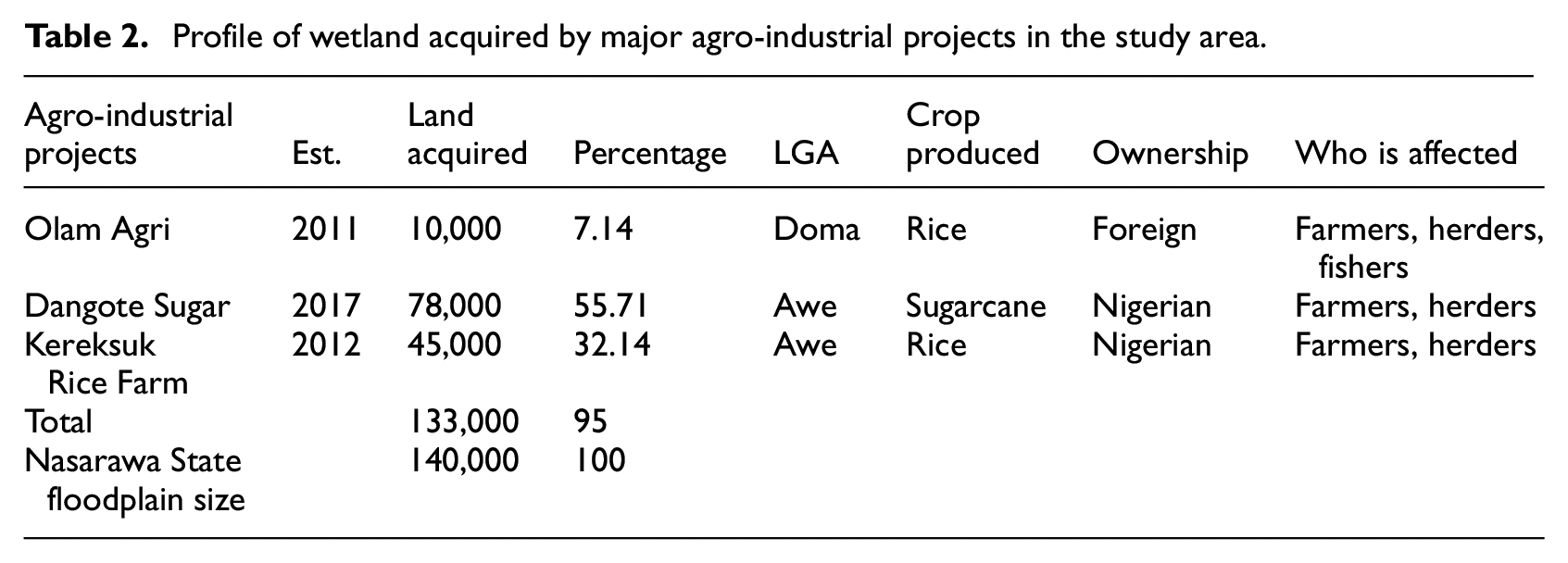
In Nasarawa State, Nigeria, large-scale agricultural projects have appropriated approximately 90% of floodplains for rice and sugarcane production since 2011 (Nwankwo, 2025a). However, to date, these LSLAs have not provoked widespread collective local resistance. This paper examines the factors behind this weakness of collective resistance by local communities in our study area of Nasarawa South. We argue that while some community members resent these acquisitions, due to associated land/grazing scarcity and pollution, there is weak collective resistance to them. In addition to some compensation provided to local landowners by the companies that acquired the land through the Nasarawa State government and some development projects (e.g., schools, street lights) embarked upon as part of their corporate social responsibilities (CSRs) in their host communities, we argue that the weak collective resistance can be attributed to the discourse of “bringing development” surrounding the acquisitions. For this reason, the theoretical framework must account for the role of discourse in shaping the nature and emergence—or not—of resistance. For example, Prause and Billon (2021) suggest that a theoretical framework to examine resistance to large-scale land investments, specifically how discourse shapes such resistance, should integrate contentious politics and political ecology theories.
Contentious politics framed around political opportunities emphasize that resistance is shaped by interactions among protesters, targets, and authorities (Tilly & Tarrow, 2015). According to Tarrow (1998, p. 10), contentious politics arise when people see new opportunities or new limitations in the political system. Individuals may join the contention based on beliefs, material incentives, group ties, and loyalties, while others may join for no clear reasons. In other words, resistance can arise both when there are opportunities and when there are limitations constraining people, such as LSLAs. When the resistance is supported by strong social networks or shared socio-cultural ideas about how and why resistance should occur, the resistance can be sustained even against very powerful actors.
Political opportunities influence the types of resistance groups that can initiate and their success (Tarrow, 2014). These opportunities, influenced by state structures and interactions, also involve discursive aspects that shape narratives, identities, and movement goals (Ayanian et al., 2025). According to Prause and Billon (2021), the contentious politics approach has overlooked the material and spatial dimensions of resistance. Hence, integrating insights from political ecology studies which have explored how specific material factors impact discourse, practices, and protest outcomes (Dougherty & Olsen, 2014; Leitner et al., 2008) can be helpful. This integration enriches the understanding of socio-environmental relations in land investments, particularly in the agriculture sector (Prause & Billon, 2021). Discourse has been understood as the assemblage of ideas, concepts, and categorizations through which meaning is assigned to physical and social phenomena using language and knowledge systems that are produced, reproduced, and transformed in a particular set of practices, often reflecting and reinforcing unequal power relations (Escobar, 1984; Grydehøj et al., 2021; Huggins, 2025). The discussion of this framework begins with the perspective of political ecology.
Political ecology frames resistance as locally rooted yet connected to broader power relations and material transformations (Nwankwo, 2024a, 2024b; Peluso & Watts, 2001). Thus, it often draws on political economy while adding insights offered by ecology. The political economy approach to LSLAs emphasizes that large-scale land investments have become “part of an ongoing political and economic process of primitive accumulation that reconfigures patterns of land use and ownership” (Attah, 2021, p. 113). A political economy approach to resistance to LSLA, such as that taken by Meckelburg and Wardana (2024) and De Grassi and Ovadia (2017), proposes that LSLAs are often facilitated with the argument that they will bring economic growth and opportunities for local communities, but in fact often lead to dispossession of locals from lands that were previously used and controlled by or readily accessible to individuals and communities. LSLAs may therefore contribute to conflict over access to and control of land, which can spark resistance (Meckelburg & Wardana, 2024; Odoemene, 2015).
A political ecology approach, which draws on political economy, helps to examine uneven power relations and distributional conflicts across economic, ecological, and cultural dimensions of resistance to LSLAs. Political ecology acknowledges the significance of materialities in shaping resource appropriation for capitalist accumulation (Bakker & Bridge, 2006). This materialist perspective helps identify the motivations of resistance movements and their connection to specific material conditions and spatial expressions in conflict processes (Kaup, 2008; Le Billon & Duffy, 2018). Materialities, alongside discursive elements, influence the legitimacy of capitalist accumulation processes such as LSLAs (Özen & Özen, 2018).
Resistance to land investment projects often stems from past experiences of economic dispossession, marginalization, or feelings of relative deprivation, compounded by unfair compensation or limited access to job opportunities (Bond & Kirsch, 2015; Christensen, 2019; Haslam & Tanimoune, 2016). Studies on environmental resistance show environmental impacts, land loss affecting cultivation or grazing areas, and the loss of religious or ancestral lands, community deprivation, limited livelihood alternatives, and corporate/government behaviors as critical factors motivating resistance to LSLAs (Alonso-Fradejas, 2017; Conde & Le Billon, 2017; Gerber, 2011; Gingembre, 2017; Larder, 2015; Middeldorp & Le Billon, 2019).
In addition, discourses play a vital role. The framing of issues by media, NGOs, or affected communities, as well as political opportunities, also influences motivations for resistance (Engels, 2018; Middeldorp & Le Billon, 2019). Discourses play a pivotal role in mobilizing support and articulating grievances, with themes of food sovereignty, the defense of land rights, human rights violations, and threats to food security being prevalent in resistance against agro-industrial projects (Alonso-Fradejas, 2017; Conde, 2017; Gingembre, 2017; Martinez-Alier et al., 2016; Prause, 2019). The suppression of discourses framing LSLAs as perpetuating harms can be a key factor in explaining why there may be no motivation to resist such acquisitions. Resistance discourses have been framed around environmental justice, which has become a central concern for affected groups (Olumba, 2024), who organize resistance movements around issues such as distributional concerns, human rights, indigenous territorial rights, the sacredness of nature, and alternative development visions (Rodríguez-Labajos & Özkaynak, 2017). In the next section, we discuss the methods for the study, and following that, we will present the results.
4. Methods
The study collected data using semi-structured interviews, and a thematic analysis was employed. The research was conducted in Awe and Doma Local Government Areas (LGAs) in Nasarawa State (Figure 1), where a number of large-scale agro-industrial projects are present, particularly Olam Agri and Dangote Sugar. The communities where the projects are located are Rukubi in Doma LGA and Tunga in Awe LGA. This research is part of a broader study examining resource conflicts in the Benue Valley, conducted between January and July 2022. The University of Leicester’s ethics committee granted the study’s ethical approval. The study was conducted with the full comprehension and consent of all participants, who were informed of the research goals, methods, and procedures. Key ethical practices adhered to included informed consent, confidentiality, voluntary participation, and the right to withdraw from the study at any time.
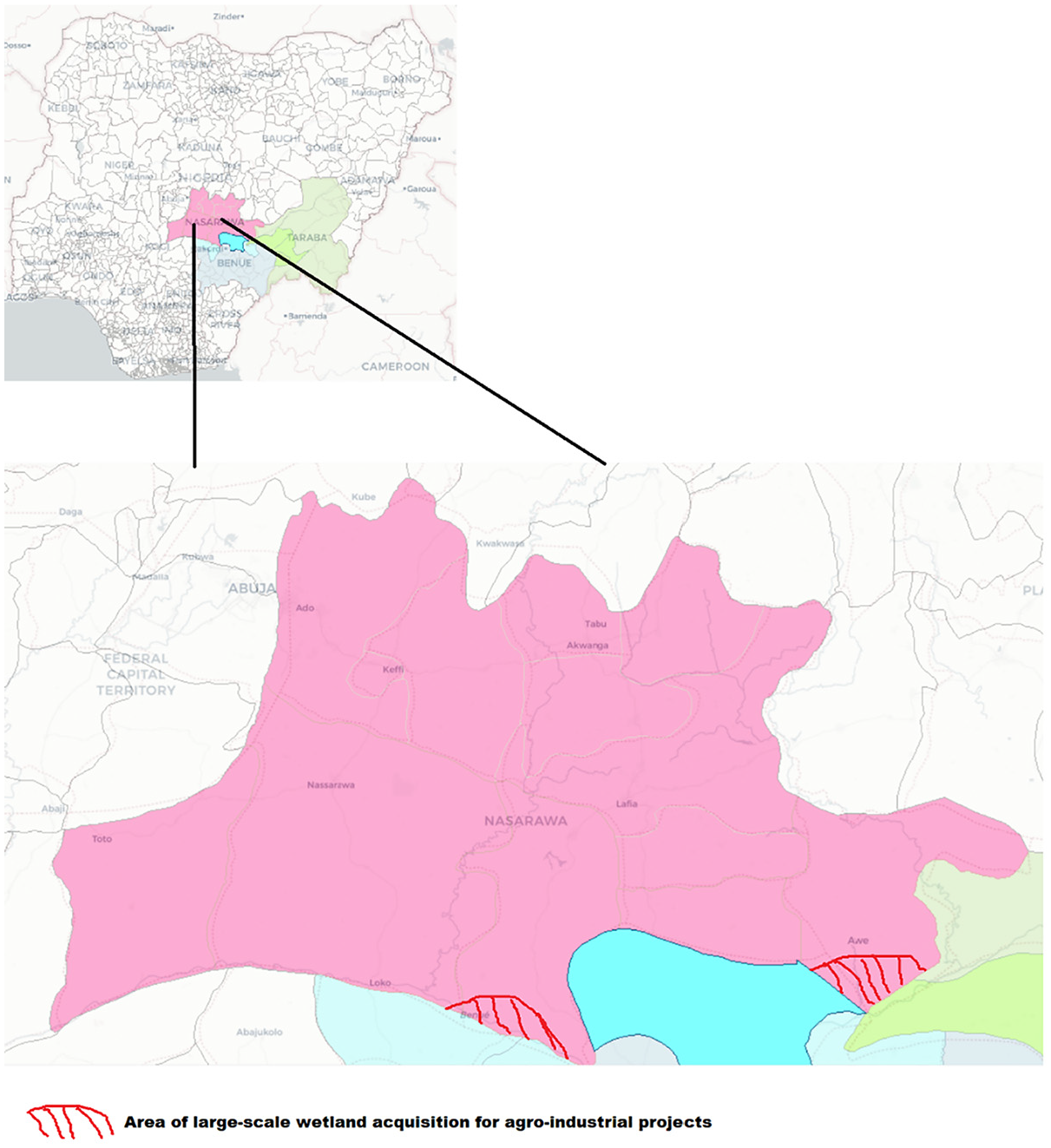
The study area.
The larger study conducted a total of 92 interviews, of which 20 were directly relevant to the issues discussed in this paper and form the basis of the subsequent analysis. The interviews were conducted in Doma and Awe townships, where representatives from NGOs and traditional rulers were interviewed. Additional interviews with farmers, herders, and their chiefs were conducted in the villages where the LSLAs are located, as well as in nearby areas, namely Rukubi and Loko in Doma LGA, and Tunga in Awe LGA. The interviewees’ profile is provided in Table 1. Interviews with company representatives were not undertaken as part of this research, as efforts to interview them proved abortive. Nonetheless, publicly available information in newspapers and their websites was used to supplement the data from other interviewees. In total, there were 18 males and 9 females from 25 interviews, as some interviews included multiple participants. For instance, one interview involved three participants. Through contacts established during the fieldwork, additional telephone interviews were conducted with five persons (four males and one female) who used to cultivate the acquired lands to clarify their perspectives.
Profile of interviewees.
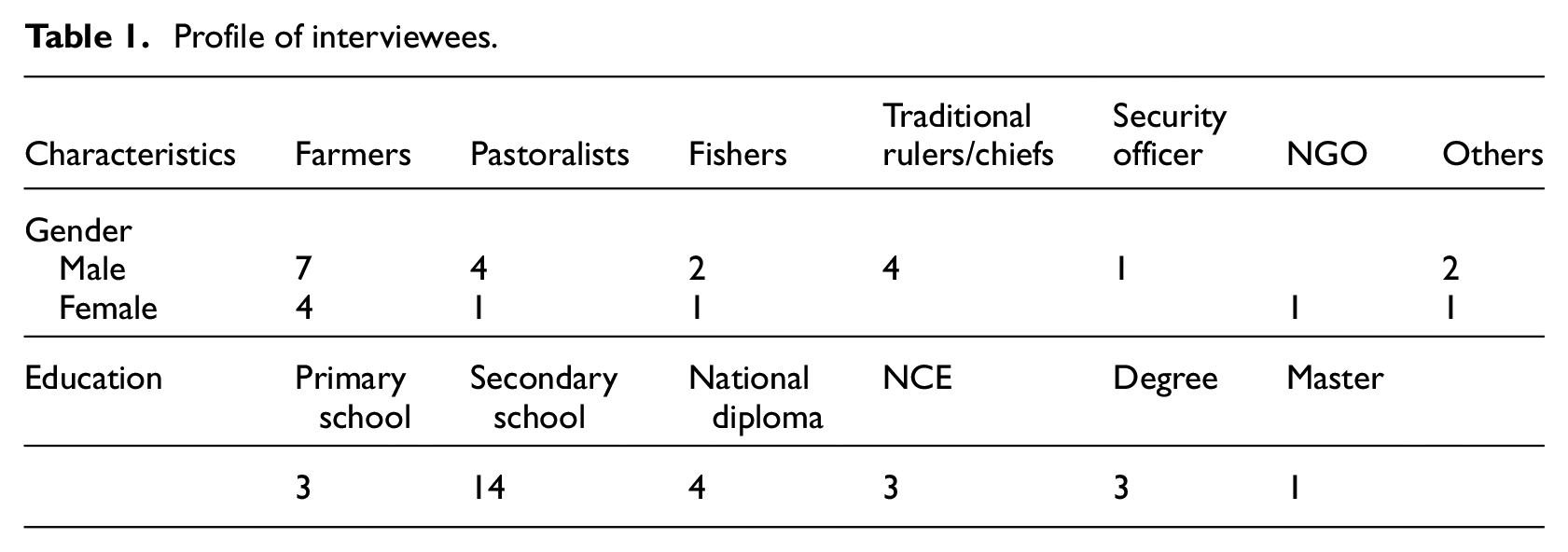
The gender disparity in the number of interviewees is attributed to the fact that only males held the positions of chiefs and traditional rulers. Participants’ ages ranged from 25 to 73 years, and their educational levels varied from primary school to master’s degree, but the majority had secondary school education (14). The primary occupation of the villagers is farming. Petty trading, transportation, and others exist typically as secondary livelihood strategies, with farming being the main one. A few people take farming as a secondary occupation. Thus, most people combine farming with other occupations such as fishing, trading, transport, prostitution, and metal work. The Fulani herders sometimes engage in crop farming but rarely combine herding with any other occupation, and are a very minority in terms of population. Apart from traditional rulers, chiefs, and villagers who used to cultivate the acquired lands, who were selected purposively due to their knowledge of the subject, other participants were interviewed based on availability, willingness to participate, and convenience by moving along streets in the studied villages.
Two key questions were asked during the interviews, followed by further probing: (1) What challenges do you face in your village regarding your source of livelihood? (2) What are your thoughts on the presence of this company in your village? The interviews were primarily conducted in English, though some were conducted in Pidgin English, with on-the-spot interpretations provided for participants who spoke Hausa, Tiv, or Idoma. The interpreters were chosen by the participants and were usually educated community members. Participants who had a basic understanding of English and Pidgin flagged any incorrect interpretations through gestures. The interviews were recorded using a voice recorder and transcribed verbatim for thematic analysis. Each interview lasted between 30 and 45 minutes.
Thematic analysis is a qualitative research method that involves identifying, analyzing, and reporting repeated patterns or themes within a dataset (Braun & Clarke, 2006). It provides a flexible approach to examining data and can be applied to diverse research questions, designs, and sample sizes (Nwankwo, 2024c; Kiger & Varpio, 2020). Themes are abstract entities derived from the data and can be either semantic (explicit) or latent (underlying) (Clarke & Braun, 2017; Nowell et al., 2017). Thematic analysis can be utilized across various theoretical frameworks and operates without strict paradigmatic boundaries, making it suitable for post-positivist, constructivist, or critical realist research approaches (Clarke & Braun, 2017; Kiger & Varpio, 2020; Nowell et al., 2017). For post-positivists, thematic analysis aids in understanding individual experiences to develop conjectural knowledge, while for constructivists, it helps to illuminate socially constructed meanings (Boyatzis, 1998; Clarke & Braun, 2017; Nowell et al., 2017). This flexibility makes thematic analysis particularly appropriate for this study, as it integrates two diverse frameworks—political ecology and political opportunity—to explain the dynamics of resistance to LSLAs.
Thematic analysis shares similarities with other qualitative methodologies like grounded theory and ethnography, particularly in its emphasis on coding and theme identification (Braun & Clarke, 2006). Researchers can use either inductive or deductive approaches to identify themes, with the inductive approach allowing themes to emerge from the data, and the deductive approach relying on pre-existing theories (Kiger & Varpio, 2020). This study employed a deductive approach, identifying themes related to established theories. The data for this study included interview transcripts, which were part of a larger ethnographic research project involving field observation. A major theme that emerged from the thematic analysis of the data is the framing of the agricultural investments as contributing to development, a discourse that dwarfs alternative views on the negative impacts of the projects. The results are discussed in the next section.
5. Land acquisitions and resistance
The Benue-Nasarawa border region has increasingly attracted agricultural investments due to the fertile soils of its floodplains. The floodplains of the Benue River Valley have drawn large-scale agro-industrial projects focused on the cultivation of rice, sugarcane, and other crops supported by this environment (Nwankwo, 2024d). The geophysical characteristics of this region, including floodplains with alluvial soils and shallow aquifers, make it highly suitable for agricultural production (Nwankwo, 2024d). The availability of rivers and the quality of the floodplain soils have attracted both commercial farmers and large-scale companies to invest in rice and sugarcane production (Nwankwo, 2024d). Geographically, Nasarawa State benefits from its proximity to the Benue River, which is a significant drainage area within Nigeria (Nwankwo, 2024d). The Benue Valley consists of the river, its associated floodplains, and the higher-lying lowlands. The floodplains, covering approximately 1.3% of Nigeria’s total land area, are particularly conducive to rice cultivation and have been extensively utilized for this purpose. Within Nasarawa State, various companies have acquired significant tracts of land for agricultural activities.
As shown in Table 2, Olam Agri controls 10,000 hectares in the Rukubi area (Figure 2), while Dangote Sugar operates a sugarcane farm and refinery on 78,000 hectares in Tunga (Figure 3), Awe LGA, and Kereksuk Rice Farm occupies 45,000 hectares near the floodplain in Awe. Specifically, these companies control 133,000 hectares out of the 140,000 hectares of floodplain land in Nasawara state, representing 95% of the total floodplain area. In addition, the Nasarawa State Government is in negotiations with the Dangote Group to acquire 50,000 hectares of land in both Doma and Nasarawa LGAs to expand rice production (This Day Newspaper, 24 September 2019). Furthermore, the Nasarawa State government has allocated 270,000 hectares of upland for commercial agriculture, to generate foreign exchange through initiatives such as the Africa Continental Free Trade Area (AfCFTA). These large-scale agricultural investments, particularly those located near major rivers like the Benue, have significantly impacted grazing lands, fishing grounds, and the livelihoods of local farmers and pastoralists since 2011 (Nwankwo, 2024d).
Profile of wetland acquired by major agro-industrial projects in the study area.
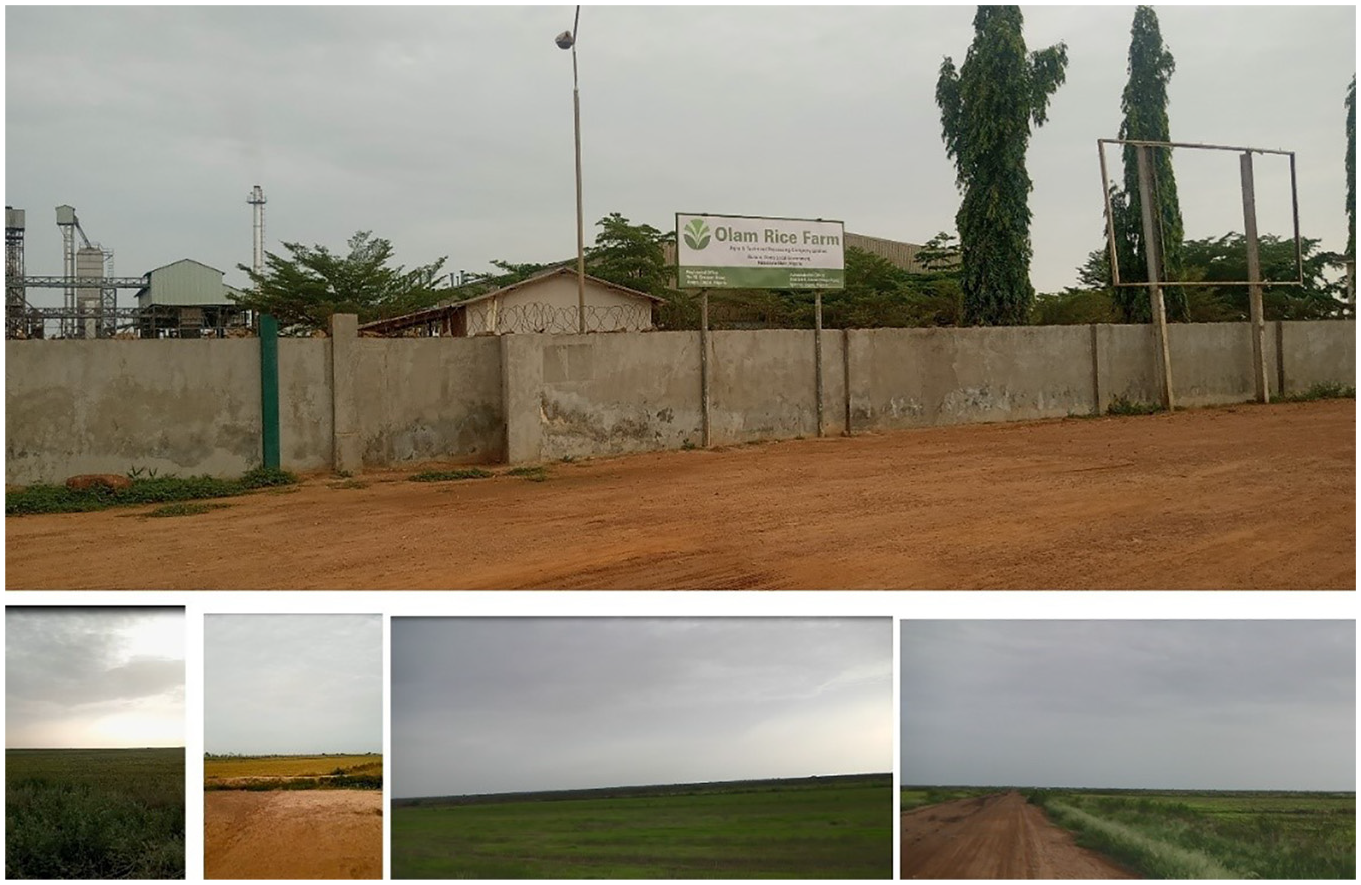
Olam Agri factory and acquired wetlands in Rukubi village, Doma, LGA.
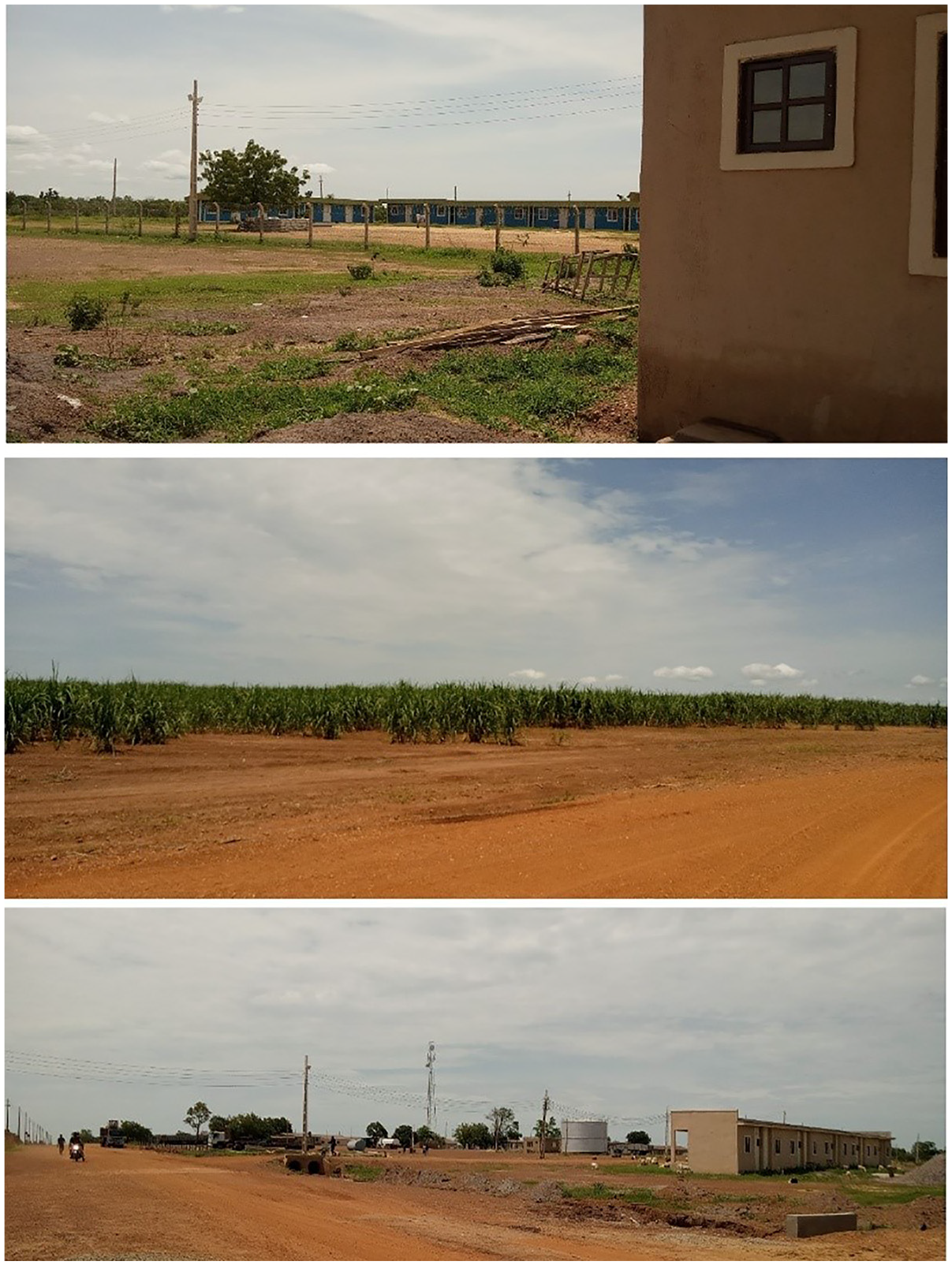
Dangote Sugarcane farm and factory in Tunga, Awe LGA.
The lands acquired for these projects in Rukubi and Tunga are owned by many farmers and fishers’ families based on customary rights, and linked to their status and identities as members of local indigenous groups, namely Alago, Eggon, Tiv, and Hausa. The Fulani pastoralists present in the area are mostly not recognized by these groups as indigenes, but often seek permission for grazing from these same indigenous groups. Land tenure is highly fragmented into individual portions, which could be a few plots or more, with a plot typically measuring up to 120 by 60 meters. Compensation practices varied across companies. Specifically, in the case of Olam, during the acquisition, a flat rate per hectare was paid to all those farmer and fisher families who had plots according to their number of hectares in their land portion. After reaching agreements with the village traditional leaders and chiefs, the chiefs identified and verified the individuals who owned the portions, and their compensation was paid through the state government by the company. Both the chiefs and the farmers interviewed refused to disclose how much the villages and the farmers received as compensation for Olam Agri. The company officials also refused to mention it. We searched publicly available information about the Olam Agri acquisition but found no publicly available records.
Of all the 11 farmers interviewed, four criticized the company. However, none called for the removal of the company. One of the farmers claimed that their “ability to farm has been severely disrupted, leading to widespread poverty, hunger, and even family breakdowns as spouses leave in search of livelihoods elsewhere” (Interview AW26). Others whose lands were not acquired claim that the “chemicals used by Olam have led to poor crop yields, health issues (e.g., stomach pains and skin irritation), and environmental degradation” (Interview AW 15, 22, 26). Olam officials argued that the use of chemicals is controlled to avoid impacting locals’ farms. These cases have not led to any serious collective resistance to the company, such as demanding their exit from the area. Local resentment appears to stem primarily from poor compensation for the pollution of some farmers’ land.
However, the case of Dangote is different. In 2017, the Dangote Group disbursed over ₦850 million as compensation to landowners affected by their project. The Emir of Tunga argued that out of 4,000 affected farmers, 2,000 received full compensation without complaints in the first phase, and with the second and third phases to follow (Vanguard, 2017). However, a few landowners were not satisfied with the compensation, particularly the flat rate paid per hectare by Dangote. In 2019, Badan Enterprises Ltd., whose 500 acres of land was part of the land Dangote acquired, filed a lawsuit against Dangote Sugar Company and the Nasarawa State Government. Badan Enterprises claims that the acquisition was devoid of transparency, and funds meant for compensation were diverted by land racketeers (Abogonye, 2024). Reports indicate that the state government paid ₦25,000 per hectare, which some landowners claim is significantly below the market value of ₦100,000 to ₦120,000 per hectare (Abogonye, 2024). In 2018, one Alhaji Abubakar Gambo, who claimed he owned lands measuring 302.17 hectares of the acquired land, filed a lawsuit against Dangote and the Nasarawa State government for proper compensation (Nasarawa Eye, 2018). The lawsuit is ongoing, and no outcome has yet been reached.
Local Fulani herders were generally indifferent to the LSLAs in the study area. According to their leaders and others interviewed in Doma and Awe, they were unhappy with any form of farmland expansion, which limited their grazing. However, herders do not distinguish between companies’ farmlands and individual subsistence farmers, but resent land acquisition that limits grazing, irrespective of the parties concerned. For example, as argued by the Manager of a cooperative association in Awe, “they [herders] grazed on the cooperative association farm in Awe, which resulted in a fine of about 700,000 naira by the Awe Traditional Council” (Manager of the Interview AW8). In one instance, a Fulani herder encroached on the Olam Rice farm in Rukubi, grazing on their rice, leading to his arrest and prosecution. In Doma, a “farmer got a court judgment demanding a herder to pay 1-million-naira compensation to the farmer after they graze on his crops” (Interview AW23, Alago farmer).
Since herders are mostly not recognized as indigenous to these villages, they did not get compensation for the land acquisition. They are affected by the acquisitions because the acquired lands are mainly close to the rivers, which were essential for grazing because of lush pasture and access to water. Hence, they begrudged the expansion of crop fields by the companies. Pastoralists in Nasarawa State are compelled to seek alternative grazing areas in neighboring states, particularly Benue, which has led to clashes with farmers there. A pastoralist in Loko, a town opposite Agatu LGA close to the fadama (floodplain), stated that “there is no land to graze, and the grazing routes have been covered by crop farms. That is the major challenge for us here” (Interview, DM30, herder. Interpreted from Hausa). The herder further noted, “Grasses are available for rearing in Benue because there are enough land and enough grass” (Interview, DM30, herder. Interpreted from Hausa).
Generally, all the cases of resistance described above were enacted by individuals, such as the lawsuit against Dangote by Alhaji Abubakar Gambo, or by a small company in the case of Badan Enterprises Ltd, also against Dangote. There is little evidence of collective resistance by a community, with the exception of Tiv’s resistance to the Nasarawa State Government’s acquisition of 10,000 hectares of their land in Agwatashi village in Awe LGA for the Jangwa Rice Project, which affected more than 2000 Tiv farmers (Johnson, 2025). In Agwatashi, it is the Alago people who claim to be the original indigenes. However, Tiv and other tribes such as Hausa, Fulani, and Eggon also dwell there. Unlike other acquisitions by Dangote and Olam, which have not witnessed collective organized protest, the Tiv community in Agwatashi collectively protested the LSLA on 3 April 2025, by marching across Agwatashi and camping in the palace of the traditional ruler for hours, and also issuing a press statement. The leader of the protest argued that “We are interested in knowing how the state government acquired the 10,000 hectares of land because no one came to us (Tiv farmers) for any negotiation to acquire it or talked about compensation with any of the communities” (Agwam, 2025).
It is important to understand the Tiv rivalry with the other ethnic groups in this area, particularly the Alago, for a better contextualization of the situation and why the Tiv did not protest the LSLA by Olam in Rukubi and Dangote in Tunga, for example, but did resist this particular government-led LSLA. The resistance is because the Tiv argued that their lands were “marked for appropriation by the government, [as part of] … a deliberate effort to displace them given the historical rivalry over land between them and Alago” (Interview B18). Alago and other tribes often contend that Tiv are not indigenes of Nasarawa State, and therefore have no land tenure rights (Nwankwo, 2025b). Thus, while the Tiv protested loss of their lands in Agwatashi, other tribes were indifferent because they did not lose land at all in this particular acquisition. This rivalry can be seen in the rejoinder press release by the Alago, designed to debunk Tiv claims of indigenous land rights and being targeted for displacement, through reference to them as “settlers”: The Alago further noted that the Tiv entered the region as settlers, having been granted land by local traditional rulers and paying taxes in return. They expressed concern over the Tiv’s ongoing claims to ancestral lands in Keana, Obi, and Agwatashi, which they argued undermined the authority of Alago traditional rulers (Leadership News, 2024).
While the Tiv protested, the traditional ruler of Agwatashi, who is an Alago, lied that there was no protest, perhaps to discredit the Tiv protest since other groups did not participate and argued that the land in question was for a good cause, namely “agricultural development.” Thus, the development discourse does not resonate with the Tiv in this case, but seems to resonate with other local groups. Despite these few cases of resistance, why is the resistance not gaining momentum across all communities and not strong enough to force the companies or the government to comply with the demands of those who have resentments against the LSLAs and their effects? In the next section, we argue that there is no widespread collective resistance, given that most people consider the projects on the acquired lands as bringing development to the villages.
6. LSLAs and discourse of development
In the theoretical framework section, we have discussed how discourse also contributes to whether or not resistance actually emerges, stemming from the integration of contentious politics and political ecology theories (Prause & Billon, 2021). In this section, we demonstrate how discourse, specifically the discourse of agro-industrial projects as bringing “development,” is shaping resistance practices in the study area. As noted above, some farmers have grievances concerning LSLA projects because of the negative impacts on their lives and livelihoods. Nonetheless, and as argued below, the idea that these acquisitions are bringing development to the villages has contributed significantly to the weakness of the collective overt forms of resistance to them. We acknowledge that the CSR that companies have engaged in has also contributed to therein. The companies have engaged in several CSR-related activities such as awarding scholarships to students, construction of classrooms at government schools, and employment of locals as staff. They have also provided basic infrastructure such as access roads, boreholes, and solar lighting in various communities. The companies also claimed that during a flood in 2019, for example, Olam assisted in evacuating victims from four submerged communities and distributed hygiene supplies during the COVID-19 pandemic.
Throughout the study area, complaints about land scarcity for both farming and grazing are common among both farmers and herders. However, there is limited discourse from and among farmers, herders, and fishers viewing these LSLAs as responsible for this land scarcity. The dominant discourse promulgated by the companies and the government, as well as locals, is that the large companies that acquired the floodplains are “bringing development” to local communities through infrastructure development, job creation, and collaboration with local farmers, who have been able to increase their production levels. For instance, in a statement on the Dangote website titled “Dangote Sugar’s $700million BIP investments will promote infrastructure development,” the company indicated that 90 MW power will be generated for both the company’s use and host communities, some 500 km roads in all will be constructed to ease transportation within the vicinity of the communities and that the company has been carrying out CSR projects in the communities pointing out that so far the company has constructed boreholes, schools, Clinic and awarded scholarship among other CSR services. (Dangote, 2025)
Evidence suggests local chiefs are buying into and promoting these discourses among local land users: What we are experiencing now is not like before. We thank God for the coming of this company. Although we struggle for land now, and even the people that fish their ponds all now are rice farms, we still thank God that our village is opening. At least we can find jobs, and our market is moving. The company is a good thing for us, and nobody talks bad about it because we are getting something like a job, the market is moving gradually and people are getting more money than previously (Interview AW9, chief in Rukubi, Doma). This Dangote farm in Tunga has taken many lands that farmers and even Fulani herdsmen use, but that has not caused the people to fight or quarrel with the company because we will benefit from it. Nobody can go there to fight or complain because the benefit is there. Before, no company was in this entire Awe, but by the time the company is employing, we will get jobs, business will move better, and development will come. So, the company is not doing the wrong thing and if anybody wants to cause trouble for the company, he or she will be seen as wrong because we are getting the opportunity to develop (Interview AW11, Hausa farmer in Awe).
The presence of these agro-industrial projects is thus perceived by village leaders and others as a sign of development, making any form of resistance against them by those who are aggrieved, either from lack of adequate compensation in the case of Dangote or for pollution allegedly caused by Olam seem like an attack on the communities themselves. As many of the local farmers interviewed emphasized, companies such as Olam Agri and Dangote have led to the opening up of their villages, with an influx of real estate investors providing housing for company workers, increased sales in retail stores, and other economic activities. For example, one farmer-turned-restaurant owner noted how the presence of the companies has improved his business and the overall local economy: Previously, I struggled with farming because the market was not moving [not profitable]. No buyer or people that will buy will price too much [offering to pay lower prices]. Now, I am making it better than before. My food day sells well because plenty of workers hear chop [many workers from the company patronize his restaurant]. See, as everywhere is opening up, buildings and businesses are coming. Some years back, e no dey [was not] like this. All here na [are] bush. We are seeing development gradually (Interview DM31, Alago restaurant owner and farmer].
The store owner and landlords claim that their income has increased. As previously stated, this area is the Benue Valley, which is the agricultural hub in Nigeria with one of the best soils. Yet, land tenure can be very fragmented, with, for example, the 60,000 hectares of land acquired by Dangote previously owned by approximately 4000 farmer households. Thus, most farmers in the area are subsistence-based and cannot produce large volumes of crops for commercial purposes. Furthermore, for most farmers, trading any surpluses in local villages was not profitable as there were few customers able to buy their goods. The entry of the companies with their large staff has provided customers for farmers’ produce, traders, restaurant owners, landlords, etc. Also, locals are comparing not just their past income but the features they see in towns to what is now happening in their villages, such as the construction of new housing apartments, the springing up of retail shops, restaurants, schools, etc. This helps explain why the morale and incentive for collective overt resistance is low, even for those experiencing displacement.
Locals see towns as more developed compared to villages, given the better socio-economic opportunities, such as jobs, better housing, and more favorable trading and business opportunities. So, generally, even if clean air, water, and fertile soil are important to development, they did not typically translate into better economic fortunes for local people prior to the companies’ arrival. The companies have provided employment opportunities for many villagers, while some farmers have scaled up their production through partnerships, such as Olam Agri’s initiatives. Olam Agri engaged approximately 3,000 farmers to produce and supply rice from their rice paddies to its factory, boosting the company’s production capacity. Some of these farmers have been able to raise moderate funds to diversify their income source by venturing into other economic activities, such as trading, food vending, and offering accommodation services.
Many farmers and residents of Rukubi and Tunga villages construct the acquisition as beneficial, seeing it as “bringing development” compared to the gains they made from farming the land as individuals. For example, a farmer who used to harvest up to 50 bags of rice in his farm and would have to store them for months before he could sell for a decent profit, now sells the same for a higher profit in a very short time to the company and other visitors. (Interview AW25, Alago farmer)
Some farmers also rent their spare rooms to the companies’ customers on business trips, providing additional income. Consequently, when these acquisitions occurred, they did not deviate significantly from the villagers’ expectations, as indicated in this interviewee’s comments: You need to go to Tunga and see the Dangote farm and even this Olam extension behind us here. The main Olam is in Doma. Before, there was nothing like a company in this Awe; people only do farm work, even graduates. But now, some people are getting jobs, and even some people sell their rice to Olam and get money instead of waiting for customers. You know we are in Awe, and even as I heard, people in Doma are benefiting, too. Awe is the land of rice now. We are one of the places where you will get plenty of rice, and this company, Olam sef [in particular], helps people do plenty of rice farming. If you go to the market on Friday, you will see plenty of rice (Interview AW19, Hausa farmer).
The absence of a dominant collective counter-narrative makes it difficult for a collective impactful resistance to emerge against these projects. Apart from the employment of the community members and the payment of royalties and compensation, which are standard practices documented in the literature, the companies have some other agreements, which might have contributed to the weak collective overt resistance to the projects. For example, in addition to the compensation paid to the landowners, there is an agreement between Olam and the riverine villages for passage through the farms to reach their villages.
The literature on agrarian-related resistance in Africa suggests that local land users often mobilize against large-scale agricultural projects (Gagné, 2019; Martiniello, 2017a, 2017b; Mkodzongi, 2018; Ndi & Batterbury, 2017; Prause & Billon, 2021; Verweijen & Marijnen, 2018). In resistance movements against such projects, counter-narratives are deployed to challenge the dominant discourses. In this section, we have shown that the discourse of “bringing development” currently dwarfs alternative views that construct the acquisitions as harmful to the livelihoods of farmers and pastoralists. This situation contributes significantly to the weak collective overt resistance to the agro-industrial projects.
7. Discussion
This paper has examined why there is weak collective resistance to LSLAs by agro-industrial projects in Nasarawa South. The perception of these projects as “bringing development” to local communities has overshadowed any substantive critique of the projects’ impact on land availability, pollution, and health, or resentment about inadequate compensation for the acquired land. Herders, who rely on wetlands during the dry season, are now struggling to access these areas due to the acquisition of over 90% of the wetlands by these projects (Nwankwo, 2024d). This has escalated conflicts with subsistence farmers, as both groups compete for diminishing land resources (Nwankwo, 2025a). These land acquisitions reflect the political economy/ecology perspective, which highlights imbalanced power relations and the impact of global capitalism through large-scale agricultural investments and conservation programs on local populations, resulting in resource-related conflicts (Benegiamo, 2020; Bergius et al., 2020; Bukari & Kuusaana, 2018; Hennings & Prause, 2015; Nwankwo, 2024d).
Contrary to expectations that farmers and pastoralists would resist the projects (Gagné, 2019; Martiniello, 2017a, 2017b; Prause & Billon, 2021), they have not collectively mobilized against them, despite losing access to floodplain wetlands and adjoining uplands. Collective resistance may ensue if powerful counter-narratives are framed. The discourse framing these companies as “bringing development” to villages has effectively suppressed collective overt resistance because it overshadows the resentment of individuals who felt poorly treated or not compensated for their loss of land and livelihood. The experience of “development” for many people in real terms compared to the past condition of their villages amplifies the vigor of the discourse of “development” circulating in the villages. This discourse currently dwarfs the alternative views of loss of land and pollution impacts caused by the projects, which limits the local agency and the moral case for a collective overt resistance to the projects. However, we have also shown that if a particular community perceives that it alone, among a range of diverse communities, is targeted for displacement, for example if only the lands of its members are marked for acquisition, it may challenge the development discourse, prompting collective action against the acquisition, as in the case of the Tiv in Agwatashi.
While the companies face weak collective resistance at this time, we do not dismiss the possibility of the emergence of stronger resistance in the future. Given that some individuals already have grievances, strong resistance may be in its incubation period. However, it is notable that Olam, which has spent about 15 years in the community, for example, has yet to face any such strong collective resistance. Other companies, such as Dangote, that made entry into Tunga in 2017, are approaching a decade of establishment, again with little evidence to suggest that such resistance is brewing. We cannot speculate and can only wait to see what happens in the coming years.
8. Conclusion
This paper has explored the acquisition of wetlands in Nasarawa South of Nigeria and considered why there is no strong, collective resistance to them despite the loss of land and livelihood by thousands of farmers and hundreds of pastoralists affected. The paper has shown that although some individuals and corporate bodies have sought better compensation for their loss of access to the lands and pollution, their resentment does not resonate with the wider community. We argue that this stems from the absence of counter-narratives challenging the dominant discourse that equates the presence of these companies with development, thus discouraging resistance. The paper contributes to the literature first by concluding that even though individuals may have resentment stemming from perceived injustice in land appropriation, the success of any collective overt resistance may be affected by the discourse or belief the wider community holds about such acquisitions. In this case, the circulation of a development discourse about the agro-industrial projects contributes significantly to the limits of the resentments some members of the communities hold against the projects. This finding can be useful for thinking more broadly about the agency of locals’ resistance to neoliberal land grabs in Africa.
Second, the potency of the development discourse can be shaped by identity politics, as in the case of the Tiv protest in Agwatashi. The Tiv community perceives that they have been singled out among diverse groups for land acquisition. Although not all members of the Tiv community in Agwatashi are affected, the development rationale did not resonate with the wider Tiv community anymore, prompting collective resistance by the Tiv group. Thus, the paper brings essential ideas into the conversation about local communities’ resistance to LSLAs. These findings are essential to understanding local resistance dynamics and the socio-political processes, powerful discourses, and ideology shaping locals’ responses to rural change. Unlike existing studies that focus more on resistance to land acquisitions, this paper introduces the idea of when and how discourses become critical factors shaping resistance—or its non-emergence—in a multi-ethnic setting, offering new insight into rural political dynamics and their socio-cultural foundations.
Footnotes
Funding
The authors disclosed receipt of the following financial support for the research, authorship, and/or publication of this article: The study from which this paper was derived was funded by the Commonwealth Scholarships Commission in the UK with grant number NGCA-2020-76.
Ethical approval
The study received ethical approval from the University of Leicester’s Research Ethics Committee. The members of the committee are Professor Martin Philips and Dr Elizabeth Hurren. The approval number is 31980.

Data availability statement
The data are available from the corresponding author upon reasonable request.