







Abstract
Multi-sensory environments (MSEs), or sensory rooms, are widely used in schools to support pupils with additional learning needs. While commonly accessed by autistic pupils, no research has directly explored their perspectives. Focussing on the impact of MSEs on wellbeing, we investigated autistic pupils’ self-reported experiences of MSE use. Thirteen autistic pupils (11–15 years) from mainstream schools participated. They completed semi-structured interviews with an autistic interviewer about their experiences, as well as a five-minute self-directed MSE session, which was video recorded. Reflexive thematic analysis of the interviews, conducted by one autistic and one non-autistic researcher, found that autistic pupils believed self-directed MSE use supported their mental wellbeing, learning, and ability to manage sensory overwhelm. Participants valued the flexibility to adapt the space according to their individual and context-dependent needs. While sensory equipment was frequently used, pupils also described engaging in a broader range of activities. Analysis of behaviours observed in the videoed session identified three themes: Turning Off and Relaxing; Sensory Seeking and Defence; and Stimming. Overall, findings suggest that autistic pupils experience MSEs as beneficial for both wellbeing and learning. The findings highlight the importance of self-directed, individualised approaches to sensory support and the value of creating autistic-informed spaces in schools.
Lay Abstract
Sensory rooms are spaces filled with things like lights, sounds and objects, which people can look at, touch and explore. In schools, these rooms are often used by autistic pupils. However, we do not know much about why sensory rooms help autistic people, and no one has asked autistic pupils about what they think about sensory rooms. In this study, we spoke with thirteen autistic pupils, aged 11–15 years, who use a sensory room at their mainstream school. They took part in interviews with an autistic researcher and also spent five minutes in their school's sensory room, which we video recorded. Two researchers, one autistic and one non-autistic, looked closely at what pupils said and did. Pupils said it was important to be in control of how they used the room so they could make it work for their own needs. They felt the rooms helped them with things like stress, learning, and sensory overwhelm. While they enjoyed using sensory equipment, they also used the room for other things, like reading. From the video recordings, we noticed pupils spent a lot of time relaxing, exploring or avoiding sensory input, and stimming. Overall, pupils felt that sensory rooms supported them with wellbeing and learning, especially when they could use it in their own way. Our research has shown that it is important for autistic pupils to have autistic spaces in school.
Introduction
Multi-sensory environments (MSEs) are controlled environments containing sensory equipment (Mount & Cavet, 1995; ®). They are often used with autistic pupils in schools (Unwin et al., 2021; Williams et al., 2024), despite limited research on their effects (Unwin et al., 2021). Critically, no research has directly asked autistic pupils if and how school-based MSEs are beneficial.
Autistic people experience sensory processing differences compared to non-autistic people (American Psychiatric Association, 2013; Charlton et al., 2021; Chen et al., 2024; Griffin et al., 2022; Marco et al., 2011; Tavassoli et al., 2014, 2016; Tomchek & Dunn, 2007). Sensory differences have been observed in approximately 74% of autistic people (Kirby et al., 2022). Autistic adults have described these differences as involving hyper-reactivity, such as feeling pain in response to stimuli like bright lighting or strong smells (MacLennan et al., 2022). They also describe hypo-reactivity, such as not feeling pain and temperature (MacLennan et al., 2022), or not noticing external stimuli when hyper-focused (Taels et al., 2023). Sensory differences in autistic people are also often described in terms of seeking and defence. Sensory seeking reflects behaviours that typically intensify or prolong a sensory experience, such as showing fascination with particular sounds or lights (Baranek et al., 2018). Sensory defence reflects active avoidance of a sensory input, which is often associated with hypersensitivity (e.g. putting hands over the ears to block out noise, or being unable to wear certain clothes; Kyriacou et al. (2023)).
Autistic pupils have described that school environments elicit sensory overwhelm (Price & Romualdez, 2025), contributing to negative experiences of mainstream secondary schools (Humphrey & Lewis, 2008). Autistic pupils, their parents and teachers additionally reported that these difficult sensory experiences, and the wider school sensory environment, negatively impact wellbeing, learning, and lesson engagement (Jones et al., 2020; Price & Romualdez, 2025; Sproston et al., 2017; Urbaniak & D’Amico, 2025). Reflecting this, autistic adults and adolescents have described that access to environments, including sensory environments that meet their needs, is important for positive mainstream school experiences (McKinlay et al., 2025). For some autistic young people and their parents, the sensory demands of school environments, and the difficulty with coping with these demands, have also been identified by as a factor contributing to their school exclusion (Brede et al., 2017; Sproston et al., 2017).
The recognition that sensory differences impact classroom learning for autistic pupils likely partly explains why MSEs have become popular in schools. In the United Kingdom, MSEs are recommended in special education schools and specially resourced provisions in mainstream settings, as part of a range of flexible, pupil-supportive spaces (Department of Education, 2015). In a broader study that evidenced how negative sensory experiences in classrooms can impact on the learning of autistic pupils, parents and teachers reported that specialist spaces that support sensory needs, including MSEs, help with learning (Jones et al., 2020). Similarly, a mixed-methods study of practitioners’ opinions found practitioners believed MSEs could enhance attention, mood, social interaction, communication, relationships, and motivation (Unwin et al., 2021). Practitioners emphasised that MSEs work best when tailored to pupils’ needs and supported by staff. However, they also noted challenges, such as pupils becoming distressed when asked to leave the MSE.
Practitioners also noted that having control over MSE equipment helped autistic pupils better modulate their environment, leading to enhanced comfort (Unwin et al., 2021). Reflecting this, when autistic children had control over MSE sensory equipment in a lab, they showed reduced restricted and repetitive behaviours and reduced sensory behaviours, suggesting better self-regulation (Unwin et al., 2022). Further research found that different MSE equipment associated with different sensory profiles, supporting a role for MSEs in meeting sensory needs (Unwin et al., 2024).
The idea that MSEs can support sensory comfort aligns with their potential for promoting wellbeing. Autistic young people experience high rates of mental health conditions (Kent & Simonoff, 2017; Lai et al., 2019), including at school age (Hebron & Humphrey, 2014; Thiele-Swift & Dorstyn, 2026), which are linked to increased school absence (Nordin et al., 2024). Given that autistic people have identified both mental wellbeing and accessible education as research priorities (Cage et al., 2024), it is important to explore how MSEs may support mental wellbeing in autistic pupils. MSEs have reduced distress (Novak et al., 2012) and supported emotion regulation and empowerment (Barbic et al., 2019) in acute inpatient psychiatric settings, indicating their capacity for supporting wellbeing.
So far, reports from practitioners (Unwin et al., 2021) and observational studies (Unwin et al., 2022, 2024) suggest that MSEs may support autistic pupils in education and enhance wellbeing. However, direct input from autistic pupils is lacking. Given the value of centring the autistic voice in research (Milton & Bracher, 2013; Pellicano et al., 2022; Robertson, 2009), it is vital to understand how autistic pupils themselves experience and use MSEs in school.
The current study used a mixed-methods approach to explore the experiences of autistic pupils (aged 11–15 years) in mainstream schools. At the centre of the study were qualitative interviews with pupils about their school MSE. These were supplemented by five-minute self-directed MSE sessions, which were video recorded. Reflexive thematic analysis (Braun & Clarke, 2021) was used to explore these complementary datasets, alongside basic quantitative data on emotional states relating to MSE use. We aimed to address two research questions:
RQ1: How do MSEs impact autistic pupils’ mental wellbeing? RQ2: How do autistic pupils choose to use MSEs?
Methods
Participants
Thirteen autistic pupils (seven male; six female; mean age = 14.04; range = 11 years 6 months–15 years 11 months) participated. Participants were from three mainstream secondary schools with autism bases in South Wales, UK, and were identified by teachers as potential participants. Exclusion criteria were no autism diagnosis and/or a disability that restricted MSE use. All participants had fluent speech. We did not collect data about whether participants had additional diagnoses.
Two schools had one MSE and one had two MSEs. Teachers completed questionnaires characterising participants’ MSE use, which were completed for 11 participants from two schools. Of these, all had accessed their school's MSE for at least one month, and four had accessed it for over twelve months. No participants used MSEs daily, with five using it once a week or more, four once a month or more, and two less than monthly. There was variation in the duration of typical MSE use: 5–10 min (n = 1), 10–15 min (n = 2), 15–20 min (n = 3), 20–60 min (n = 3). Two participants had more variable usage.
Ethical approval was given by the Cardiff University School of Psychology Research Ethics Committee. Schools received gatekeeper letters upon initial contact. Consent was received from participating teachers, parents and participants. Participants were given either long or short versions of information sheets, consent forms, and debrief forms, depending on which their teacher deemed most appropriate. The short versions also included simpler language. On the day of testing, the researcher ensured the participants provided additional verbal assent to participate. During this process, they briefly described each part of the procedure, including when recording equipment would be used. They also reiterated that participants did not have to answer anything they did not want to. Finally, they explicitly asked the participant if they would like to take part. At the start of the procedure, participants were reminded that they could stop at any time. If participants showed distress at any stage then the study would have been halted. However, no participant indicated, explicitly or implicitly, that they were upset.
Participatory Methods
The study was led by an autistic PhD researcher. They led the development of the study, where their lived experience was combined with their academic knowledge to underpin the direction of the research questions, the development of inclusive methodologies, and the decision to include thematic analysis of observational data. They also conducted all sessions with the participants and also led on the analysis, interpretation and write up. One autistic consultant and an autism community member, who was also an educational professional, reviewed the procedure and materials, and provided feedback. This led to language changes in the interviews and changes to the Internal State Cards. Discussions throughout the project, both integral to analysis and in a wider context, reflected on the positionality of autistic and non-autistic researchers and how this shaped the study.
Materials and Procedure
We used a mixed-methods design, piloted on school aged children, to collect both qualitative and quantitative data (see Figure 1). All sessions were conducted by the same researcher, with a second researcher present for some sessions (n = 5). Sessions started in a quiet room in the participant's school. In two schools (n = 7), the researcher(s) and participant were alone. However, a teacher was present for medical reasons for one of these participants. In the third school (n = 6), a familiar teacher was present but did not interact in any way.
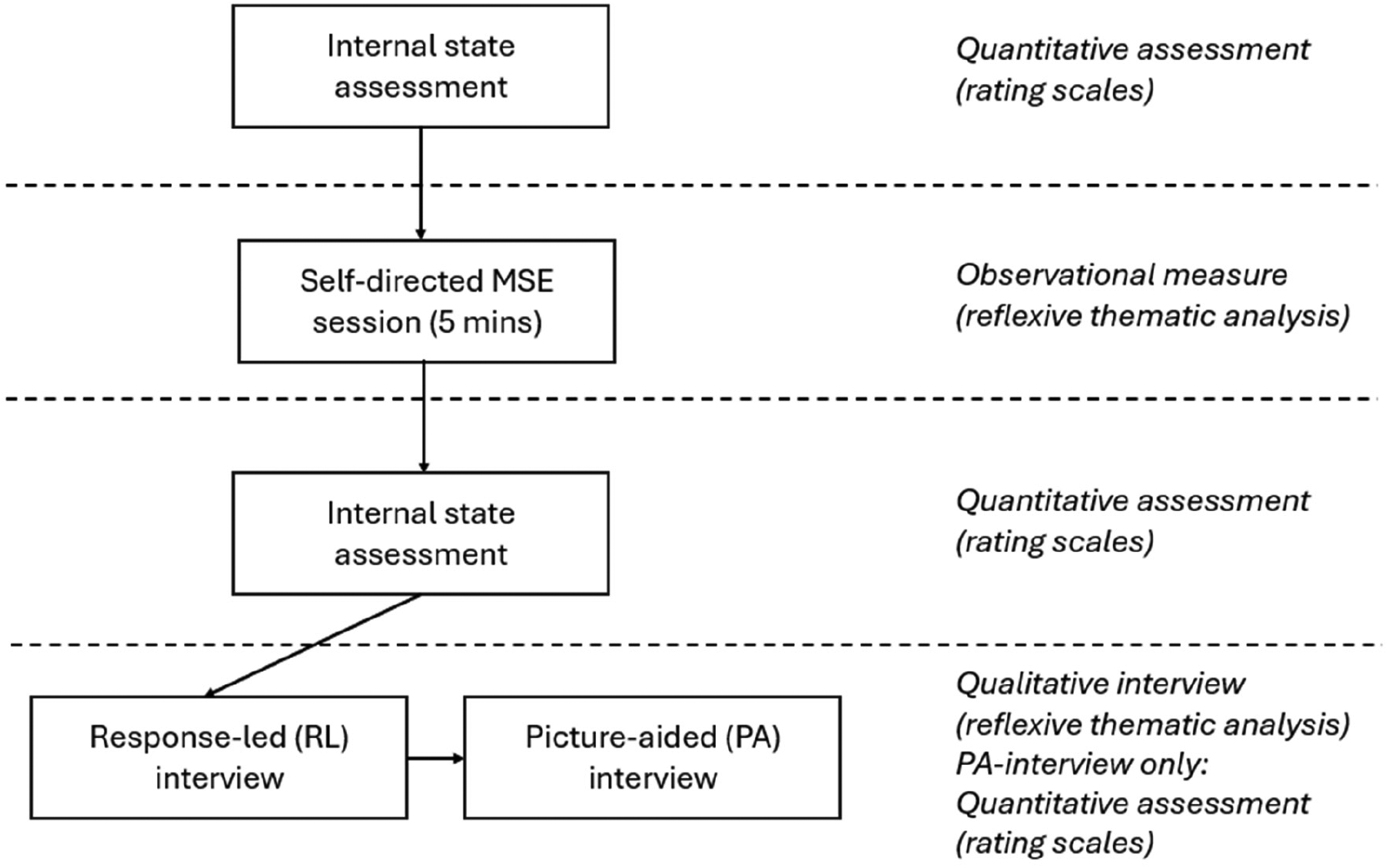
The study procedure.
First, the participant's current internal state was measured using an
Participants then spent five-minutes alone in their school MSE. For this
Participants then completed the
Finally, two types of interview were available to participants, which were inclusive of a range of communication needs and preferences: A
The PA-Interview offered more structure and had more limited communication demands. First, participants used five-point rating-scales to indicate how much they liked each piece of their MSE equipment (really like–really do not like), aided by a photo of each piece. Second, the Internal State Assessment was repeated but with the participant reflecting on how the MSE typically made them feel. For both scales, questions were presented verbally and visually on the iPad. Responding was verbal, by pointing, or by pressing iPad buttons. The researcher asked follow-up questions during the PA-Interview to understand the motivations for responses, allowing for qualitative elaboration.
Teachers confirmed the RL-Interview was appropriate for all participants. Thus, both were administered, starting with the RL-Interview. Guidelines for adapting self-report measures for disabled young people were followed, including the use of non-ambiguous language, shorter questions to reduce working memory demands, and easy-read formatting (Gilmore et al., 2022).
Analysis
Quantitative data from the Internal State Assessment and PA-Interviews were used to support understanding of participants’ engagement with their MSE. For analysis of the equipment ratings, we grouped equipment into common categories across schools to aid interpretation (e.g. different types of controllable lighting across schools were designated into a single category). Given the small sample size, statistical analysis was not conducted.
Reflexive Thematic Analysis
We used reflexive thematic analysis (Braun & Clarke, 2021) to analyse verbal responses from the RL-Interview and qualitative elaborations from the PA-Interview together. Due to its accessible design, two participants did not produce qualitative responses in the PA-Interview. We then separately used reflexive thematic analysis to analyse the videos, but with the participants’ voices from the interview analysis being used to interpret the data where appropriate. Although reflexive thematic analysis was designed for interview data, we used the same principles to analyse behaviours observed in the MSE. Instead of identifying themes from participant testimony, we identified themes from participant behaviours, with initial coding involving researcher descriptions of observed behaviours. Finally, we considered both sets of thematic analysis together to create a unified interpretation of autistic pupils’ experiences of MSEs. All analyses were conducted by two researchers, one autistic and one non-autistic.
Consideration of the researchers’ positionality and orientation (Braun & Clarke, 2021; p. 10 & 13) was considered throughout. The autistic researcher was well positioned to understand participants’ experiences, particularly regarding sensory, social, executive functioning, and emotion regulation. However, this could have led to overlooking participants’ experiences that may have felt obvious or unremarkable. Discussions with the non-autistic researcher enabled the impact of this positionality to be reflected and acknowledged. One researcher was conducting additional research focusing on negative sensory experiences, presenting a potential bias when exploring participant data. While the researchers aimed to engage a more latent focus of meaning, their lack of familiarity with MSE use at school likely increased semanticity. During analysis, we principally aimed for an inductive approach, rooting codes and themes within the data itself. However, deductive orientation may have been increased by having a pre-determined focus on a possible MSE outcome (wellbeing).
For the interview data, we aimed for an experiential qualitative framework to capture participants’ experiences and beliefs, and a realist essentialist theoretical framework to explore the impact of MSE use as presented in the data. For the video data, although the observed behaviours drove the analysis, the researchers’ positionalities were influenced by knowledge of participants’ interview responses. Thus, participants’ interviews were intentionally used to support interpretation of the behaviours and resultant themes. Where appropriate, language from participants’ interviews was used to label themes. This approach made the orientation to the video data more deductive, but made the overall orientation to the interview and video data as a whole more inductive. This approach supported a more experiential qualitative framework by purposefully capturing participants’ experiences and beliefs with relation to their own behaviours.
Results
Qualitative Themes From the Interviews
Five qualitative themes were generated from both interviews and three from the videos. The themes were organised (see Figure 2) to reflect that ‘self-direction is key’ was central to the MSE experience. Self-direction allowed participants to choose their behaviours, represented in pink in Figure 2. Consequently, MSE use led to three positive changes, represented by the outer circle in Figure 2. Finally, a descriptive theme that had overarching relevance to all themes was that MSE use could be both specific and non-specific to sensory equipment. Quotes have been selected that best reflect the themes, with anonymised participant ID provided in brackets.

Themes generated from the interviews and video observations.
Theme 1: Self-Direction Is Key
Participants described deciding when they used the MSE ‘we decide if we want to go in there’ [ID 2]. However, several participants reported that the MSE was not always available when needed due to other users. Most participants used MSEs alone, with some indicating they would decide if another pupil or a learning support assistant (LSA) could join them: ‘If I’m not fine with them [LSA] being there, I’ll say no’ [ID 6]. One participant appreciated their LSA being present (‘I know that I’m safe’ [ID 4]), whereas another reflected that sometimes the LSA would bring benefits (‘other times a conversation helps’ [ID 1]).
Pupils described engaging in self-directed MSE use to meet current needs, making MSE use context dependent. This could include emotional needs, such as ‘trying to be cheered up’ [ID 12] or ‘calming myself down’ [ID 2]. The meeting of needs was also reflected in the type of activities pupils engaged in. For example, the MSE was sometimes a retreat to work in if the classroom was too loud but also used with friends to watch YouTube videos or talk. The same participant might use the MSE variably for different needs.
Self-direction was related to the adaptability of the MSE, with participants frequently adjusting equipment, particularly lighting, to meet their needs and recognising that this adaptability of the sensory environment was not available outside the MSE. Equipment that could not be adapted was less favoured, with several participants negatively commenting on a non-adjustable light-up table (‘It's either way too bright or it's pitch dark’ [ID 1]).
Notably, self-direction over MSE use extended to decisions about when not to use the MSE: ‘If it's a really important lesson and I’ve got tests; even if I feel awful, I have to go because I can’t afford to miss those lessons’ [ID 8]. Similarly, it was reflected that the MSE was not needed if a pupil was feeling positive: ‘…because I’m feeling like on top of the world’ [ID 4].
Theme 2: MSEs Can Facilitate Emotion Regulation
Reflecting the intentional use described in theme one, participants commented that they used the MSE to help with negative feelings and cognitions, including: tiredness, worry, frustration, anger, sadness, panic and, ‘whenever I’m thinking too hard’ [ID 3].
This emotional regulation was particularly relevant when pupils felt they could not fully participate in lessons because of their negative feelings or cognitions. They said the MSE could make them feel ‘much better’ [ID 1], with many participants describing using it to relax ‘relax’ [IDs 2, 4, 7, 9, 10, 12]: It regulates them [emotions], so I’m more like myself, I guess, like I’m just normal in the sensory room. [ID 1]
Specific emotion regulation techniques were described, including emotional offloading by writing in a diary ‘about stuff, like in my day’ [ID 3], and talking to teachers or friends, because ‘I can get things off my chest’ [ID 1]. Movement was also important: I sometimes kick them [beanbags] […] if I need to let out some anger [this activity makes me feel] like I don’t have anger anymore. [ID 6]
Participants also described seeking the experience of being in a ‘trance’ [IDs 2, 3] and ‘in my own world’ [IDs 10, 11] by using lighting equipment with motion, such as bubble tubes: I mainly just like to stare into the bubble tube and the, the flashing screen beside it […] or… maybe even look at the flashing screen and the bubble tube in the reflection of it. [ID 2]
The use of the MSE to create a trance-like state was seen as benefitting wellbeing: It distracts me from, you know, being overwhelmed…it just puts me in a trance, essentially. It basically just helps calm, calm me down a lot faster. [ID 3]
Notably, one participant sought the emotional benefits pre-emptively: It's just a nice place to be even if I’m not stressed. Sometimes, I don’t realise how close to the edge I am to being annoyed, angry, or just shouting at people, so it's always helpful to just go in…and that resets me a bit. [ID 8]
Although the positive impact on emotional state was dominant, this was attenuated by concerns about other pupils in the MSE. For some, others’ presence reduced the benefits: ‘[ID 3] with other people, it just has zero effect’. There was concern over being observed, as well as the cognitive load of interactions and having, ‘something else to focus on’ [ID 8]. These intrusions impacted participants’ ability to turn off, and they were similarly concerned about ‘intruding’ [ID 2] on others. Some participants worried about others’ judgement, with one hiding MSE use from their friends: ‘I feel like a loser for being in the sensory room…it ruins my pride’ [ID 3]. Another found the handheld sensory tools, typically referred to as ‘sensory toys’, infantilising: I don’t like how they infantilise autistic people and like make people see them as childish […] because it's the kind of thing that you would give to a very young child to keep them occupied. [ID 1]
Another MSE experience that might diminish positive effects was hygiene concerns about other pupils having touched equipment or handheld sensory tools being dropped on the floor. These thoughts made participants feel, ‘icky’ [IDs 1, 2] and that it was, ‘gross’ [ID 1]. Concerns about equipment being dirtied by others was particularly strong for handheld sensory tools, with one participant [ID 2] describing that they washed their hands after use.
A final potential attenuator of these positive effects was the range of equipment available. One of the MSEs had a limited range of equipment and was described as, ‘boring’ [IDs 1, 2, 3], with one participant describing it as a, ‘padded cell’ [ID 1] as they did not consider it to have enough equipment.
Theme 3: MSEs Support Learning
Participants described their MSEs as benefitting learning. This could result from using MSEs as learning environments (either alone or with a teacher), or to prepare for lessons. Some described MSEs as free of unwanted noise and distractions, which could aid concentration and thinking clearly: There's like not a lot of objects in there and it's like clean and everything, it just helps like focus your mind on the work. [ID 2]
Pupils also described using MSEs to mentally prepare for lessons by making them feel ‘attentive’ [ID 9], ‘focused’ [IDs 2, 4, 9], and ‘ready’ [ID 8] to go back to the classroom. Reflecting the emotion regulation discussed in theme two, one pupil described how the MSE could help reduce anxiety about assessments, saying they’d go in if they felt, ‘a bit panicked and I haven’t revised’ [ID 7], and they would leave feeling, ‘a bit confident and if you fail you fail [and] if you pass, you passed' [ID 7].
Theme 4: MSEs Reduce Sensory Overwhelm
MSEs were described as providing relief from sensory overwhelm and were described as ‘quiet’ [IDs 2, 4, 5, 7, 10] and ‘dark’ [IDs 1, 3, 5, 8] where ‘there's not a lot of sensory stuff going on’ [ID 2] and ‘nothing's like bothering you’ [ID 10]. One participant described using the MSE ‘because I know it's peaceful and quiet’ [ID 4]. Participants described negative experiences of sensory spaces that did not block outside experiences, such as classroom sensory tents: ‘it could still be noisy and everything’ [ID 2] and ‘if you wanted to get away from the noise, it wouldn’t be good’ [ID 2].
The relief from sensory overwhelm related to theme three, that MSEs benefit learning: ‘I normally go in there to work if the classroom's being too loud’ [ID 2]. This theme was also related to theme two, that MSEs benefit emotion regulation, with one participant describing that the MSE made them feel calm, ‘cause it's nice and quiet in there’ [ID 5]. Another said they used the MSE ‘because it removes the things that were making me stressed’ [ID 1], which included ‘sounds I don’t like, or just the lights are too bright’ [ID 1].
Theme 5: Use of MSEs Can Be Both Specific and Non-Specific to Their Features
Participants positively described sensory equipment. Some enjoyed lighting equipment that was ‘moving and changing’ [ID 3] or has a ‘pan’ [ID 9]. Many sensory features of bubble tubes were appreciated, including observing, ‘swimming’ [IDs 10, 12] bubbles and changing colours. Handheld sensory tools were popular, with many reporting that it was, ‘nice to have something to fiddle with’ [ID 2]. Appreciation of white noise, such as, ‘buzzing because of the lights and such’ [ID 8] was frequently described: ‘I like some background noise. I like some droning’ [ID 3] and ‘[background noise] helps block all the things out from outside’ [ID 8]. Thus, sensory equipment was positively described both for sensory exploration and for blocking unwanted sensory experiences.
This use of sensory equipment was related to theme two, that MSEs benefit emotion regulation, with the intersection of positive sensory experiences and emotion regulation being particularly well-captured by one participant: It's a nice, dark, slightly lit room. It's got changing colours so that's something that your brain starts to ignore so that's always something nice to focus on. The fish - you can focus on that. […] Your eyesight starts to blur. You stop paying attention, […], I find it quite relaxing. The blanket's nice; it weighs you down. You can fiddle with something. And that's just you focus on other things. You don’t focus on what's going on or your head or constantly talking too. It's just yourself. [ID 8]
However, many participants also used MSEs for activities not-specific to their equipment. Some brought in outside equipment, such as a tablet or diary, to provide entertainment such as listening to music, drawing or reading. Others went into the MSE to ‘zone out’ [ID 10] or for ‘hanging with my friends’ [ID 10].
Themes From Observations of the Self-Directed MSE Sessions
Theme 1: ‘Turning Off’ and Relaxing
Relaxation was a prominent activity. While some participants were very active, many chose to sit [IDs 1, 2, 4, 5, 6, 7, 9, 12] or lie down [IDs 3, 4, 6, 8, 11, 13] and remained relatively still throughout. For example, one participant spent approximately four of the five minutes lying with their eyes closed on a beanbag, fiddling with a handheld sensory tool [ID 8]. In their interview, they described this as ‘really relaxing’ [ID 8] and ‘it just turns off my brain’ [ID 8]. Another spent most of the session sat, staring at the wall, moving only to drink, to blow air into their water bottle, or to wiggle their feet [ID 12].
Some participants spent some or all of their sessions reading [IDs 1, 2, 4, 5], which was described as calming because it provided a focus. Another spent their session on a sofa, writing in their diary [ID 3]. In their interview, they said that they had written about a dream from last night.
Stillness, reading and writing were perceived to reflect relaxation and ‘turning off’ from outside worries. These feelings and cognitions were described in interviews as part of theme two, MSEs benefit emotion regulation.
Theme 2: Sensory Seeking and Sensory Defence
Sensory seeking and sensory defence were commonly observed Participants in two of the MSEs used small handheld sensory tools from sensory toolboxes [IDs 2, 5, 6, 7, 8]. Some sought tactile sensory input from them, such as a participant that ran the legs of two squishy plastic octopuses between their fingers [ID 7], while others stroked and squished spikey and soft balls [IDs 2, 7]. One participant felt different items in the sensory box before selecting a spikey ball, which they then spent much of the session wrapping their hands around and stroking [ID 8]. These behaviours were interpreted as tactile sensory seeking. Tactile sensory seeking was also sought elsewhere; one participant rubbed their hand along a speaker grill and stroked their hand along a carpet wall while looking at its lights [ID 13].
Participants also sought visual stimulation, including prolonged looking at lighting equipment [IDs 1, 9, 10, 13], adapting lighting settings [IDs 1, 9, 10, 11, 13], and increasing proximity to lighting [ID 9]. One MSE contained several pieces with adaptable light settings, including a bubble tube, an LED light panel and room lights. Every participant [IDs 9, 10, 11, 12, 13] in this MSE adapted at least one piece of lighting, although one participant just reverted the lights to their initial setting after they unexpectedly turned off [ID 12]. Several participants in this MSE were observed changing between different lighting settings, looking at the room, then changing the colour again [IDs 9, 10]. One participant spent their session going between the bubble tube, the LED light panel, and room lights, changing each one and then exhibiting prolonged looking at the equipment and their combined reflection in a mirror before continuing to change their settings [ID 10]. Another participant moved their head very close to the bubble tube [ID 9], which could have been to seek visual stimulation from lighting, or auditory or tactile stimulation from the buzzing.
Sensory defence was also seen. One participant [ID 1] looked at an LED light-up table several times before turning off the table at the wall. When it failed to switch off, the participant turned the table upside down and accessed an ‘off’ button. The participant noticeably expressed frustration by throwing their arms out. In their interview, this participant discussed frustration with having no remote control, reflecting, ‘it's stuck on a not very good colour rotation’ [ID 1], which highlights the importance of adaptability. Visual sensory defence was also observed in a participant who spent much time lying face down on a sofa with their head in their arms, blocking vision [ID 11]. They briefly changed the room colour to a dark blue before returning to this light-blocking position. They additionally flicked their hair out of their face while seeming frustrated, which was interpreted as tactile sensory defence.
Theme 3: Stimming
Stimming behaviours included fiddling with handheld sensory tools [IDs 2, 5, 6, 7, 8], repetitive motor behaviours [IDs 11, 12, 13], and idiosyncratic vocal productions [IDs 13, 14]. Stimming frequently occurred through use of handheld sensory tools [IDs 2, 5, 6, 7, 8]. For example, several participants fiddled with handheld sensory tools while conducting other activities, such as using a fidget spinner while reading [ID 5] or fiddling with a spikey ball while lying down [ID 8]. Use of these tools was often repetitive, with several participants repeatedly throwing them up and down [IDs 6, 8], and one repeatedly throwing a ball at a wall [ID 6].
Repetitive motor behaviours were common, including wiggling or bouncing legs and feet [IDs 1, 11, 12]. One participant stretched their body into an idiosyncratic position and rocked side to side [ID 11], while another repeatedly blew air into a bottle [ID 12]. This produced a noise, so could also have been auditory sensory seeking. Two participants also produced idiosyncratic vocal productions [IDs 4, 13]; one without an observable context [ID 13], and another in relation to a book they were reading [ID 4].
Stimming behaviours frequently involved sensory components, relating to the theme of Sensory Seeking and Sensory Defence. Stimming is also related to the theme of ‘Turning Off’ and Relaxing because participants described fiddling as supporting ‘turning off’ and relaxing in their interviews.
Participant Ratings of Internal States Related to MSE Use
The mean responses for how the participants felt when using their MSE are presented in Table 1.
Mean Self-Reported Internal States With Typical MSE Use (Part of the Response-Led Interview) and Before and After the MSE Session.

Note. One participant was removed from the before MSE session and after MSE session results because they spent significantly longer than the allotted 5 min in the MSE.
On average, their MSE typically made participants feel really happy, calm and relaxed, confident and not afraid, and attentive and like they can pay lots of attention. These responses aligned with qualitative responses in interviews. Participants also rated their internal states before and after the five-minute MSE session.
Participant Ratings of MSE Equipment
The ratings of the MSE equipment were generally high, with a mean overall rating of 3.98/5 (SD = 1.32). Controllable lighting was most highly endorsed, with ear defenders receiving the lowest rating (see Table 2).
Self-Reported Liking of MSE Equipment.

Note. Participants could rate each piece of equipment from 1 (really don’t like) to 5 (really like); don’t know was an additional option and these responses were not scored. Some MSEs contained multiple pieces of the same equipment type (e.g. more than one type of controllable lighting). The number of ratings column shows the number of individual ratings made, while the number of participants column indicates how many participants contributed to these ratings.
Discussion
We used an innovative mixed methods design to investigate autistic pupils’ (11–15 years) self-reported experiences of using an MSE within their mainstream school. In the first investigation of its kind, we particularly focussed on how the pupils preferred to use their MSE and on how MSEs may impact mental wellbeing. Across analysis of semi-structured interviews, observational data, and quantitative data, our findings converge to suggest that MSEs benefit autistic pupils’ emotion regulation, learning, and sensory overwhelm through self-directed, context-dependent use. Our data suggest that MSEs are a valuable resource for autistic pupils in mainstream schooling.
Self-directed use of the MSE was the most prevalent form of engagement compared to, for example, predetermined activities or timetabled use. This self-direction appeared important for participants, who described using their MSEs in different ways to meet different needs, which would vary across time. Self-determination is positively related to the quality of life of autistic adults (White et al., 2018) and autistic young people have reported that autonomy is important in interventions (Cooper et al., 2024). Self-directed MSE use has been highlighted as important in a review of MSE use in sub-acute mental health settings (Doroud et al., 2025). While self-direction may lead to concern over the choices pupils might make, many participants commented that they would not use the MSE if they did not think it was necessary (e.g. if their mood state was good) or if they had important lessons or exams that they did not want to miss.
Our data indicated that adaptable equipment aids self-directed MSE experiences. Our findings also align with previous research on the importance of control over sensory equipment in MSEs, where it was shown that autistic children exhibit better self-regulation, including fewer sensory and repetitive motor behaviours, when they control sensory changes compared to passive equipment changes (Unwin et al., 2022). Adapting equipment was a clear way in which participants could meet their needs in the MSE. Autistic adolescents and adults have previously reported that being able to meet their needs, including by adapting sensory environments, is important for positive mainstream school experiences (McKinlay et al., 2025).
The benefits of MSEs for mental wellbeing that participants reported included improved emotion regulation. We also observed behaviours in the MSEs that aligned with relaxation and self-regulation. This reflects practitioner beliefs that MSEs support autistic pupils’ mood (Unwin et al., 2021), and evidence that MSE use has benefitted emotion regulation in in-patient mental health settings (Barbic et al., 2019; Sutton et al., 2013). Autistic people demonstrate a high co-occurrence of mental health difficulties (Lai et al., 2019), particularly anxiety (Kent & Simonoff, 2017). One in three autistic young people show clinically relevant anxiety symptoms, with one in five receiving a diagnosis (Thiele-Swift & Dorstyn, 2026), substantially higher than the 7.9% prevalence reported for general child and adolescent populations (Sacco et al., 2024). If MSEs can support emotion regulation then they are a potential non-invasive intervention to enhance mental wellbeing, which is a research priority for the autistic community (Cage et al., 2024).
Participants in the current study also reflected upon the benefits of MSEs for learning. MSEs were directly used as a learning environment, facilitated by the isolation from unwanted sensory experiences, and also as an environment that prepared participants for classroom learning by supporting emotion regulation. These findings support previous observations from practitioners that MSEs aid autistic pupils’ learning, either directly through lesson activities or indirectly by supporting readiness to learn outside the MSE (Unwin et al., 2021). Participant discussion reflected that improved wellbeing from MSE use supported lesson engagement, which reflects broader evidence of the negative impact of poor mental health on academic outcomes in young people (Cornaglia et al., 2015).
MSEs were reported to relieve sensory overwhelm in autistic pupils, with consequent benefits for mental wellbeing and learning. Sensory overwhelm is commonly experienced in educational settings by autistic pupils (Humphrey & Lewis, 2008; Jones et al., 2020; Sproston et al., 2017). MSEs may relieve sensory overwhelm by providing a quiet, alone space, which has previously been reported by autistic adults as necessary for sensory recovery (Neville et al., 2026). Relief could also result from the predictability of the sensory experience provided by the equipment (MacLennan et al., 2022, 2023).
While many participants described MSEs as helpful in removing unwanted sensory stimuli, many also reported enjoyment in using the sensory equipment in the rooms, and rated the equipment highly. Vivid descriptions of entering a trance-like state were also notable. These types of experience are not commonly described within autism research. However, autistic adults have described enjoyment in the feeling of ‘complete absorption’ in a sensory experience, which can lead to a feeling of detachment from the world (Wassell, 2026, p. 247). Further, there have been descriptions of autistic adults experiencing ‘immersive sensory joy’ at live music concerts (Herbert et al., 2025, p. 6).
The mental wellbeing benefits of MSEs were attenuated by concern over others’ perceptions, particularly that MSEs could be infantilising. This creates a tension between MSEs as spaces for free expression and their potential for inducing negative public judgement. Autistic adults have described mainstream schooling as anxiety-inducing due to pressures around social acceptability (Billington et al., 2024), and high rates of school bullying are well-documented (Humphrey & Hebron, 2015; Humphrey & Symes, 2010; Maïano et al., 2016). Further, autistic people report that their experience of sensory joy is inhibited by others’ lack of acceptance (Wassell, 2026). These experiences reflect that autistic pupils have reported experiencing stigma in school environments (Cohen et al., 2022). Infantilisation is also evident in the limited adult representation of autistic people in popular media (Akhtar et al., 2022; Stevenson et al., 2011), yet its direct impact on autistic people remains underexplored in research. Given that technologies for autistic people are rarely designed with their input (Spiel et al., 2019), co-producing MSE equipment may help address concerns about infantilisation. Additionally, increasing positive messaging and representation of autism in schools may aid the reduction in the broader stigma that autistic pupils experience (Cohen et al., 2022). Taken together, these approaches may support autistic pupils’ abilities to comfortably engage with accommodations such as MSEs.
We identified that the pupils’ use of MSEs could be both specific and non-specific to its features, which was a theme with overarching relevance to all themes. Overarching themes are not typical in reflexive thematic analysis (Braun & Clarke, 2021). Whereas typical themes represent patterns of shared meaning that reflect a core concept, overarching themes sit one level above and are a way of demonstrating how certain themes are conceptually linked. Thus, they are considered a structuring or organisational device (Braun & Clarke, 2021, p. 87). In the current study, our overarching theme served to highlight that beneficial engagement, including self-directed use, and beneficial outcomes, including enhanced emotion regulation and learning, and the reduction of sensory overwhelm, may not necessarily rely on use of bespoke sensory features and equipment. This also underpins the need for further exploration of the varied features and activities that facilitate positive MSE engagement.
To our knowledge, this is the first study to explore autistic peoples’ experiences through both qualitative interviews and observations. Observing autistic pupils' self-directed use of school MSEs offered valuable insights, generally aligning with their reported experiences. However, a key difference emerged: while participants spoke about stimming with handheld sensory tools, they did not mention motor or vocal stimming, both of which were observed. This may reflect social desirability bias, as handheld sensory tool use may seem more acceptable than other stims (Charlton et al., 2021; Kapp et al., 2019; Morris et al., 2025). Alternatively, given that some autistic adults describe stimming as unconscious (Kapp et al., 2019), participants may have been unaware of or not remembered these behaviours.
An important consideration is that the participants in the current study were all attending mainstream schools. Their MSE use reflects their needs and capabilities, as well as approaches within the school, which will be different for other autistic young people. Practitioners who work with autistic pupils have previously stated that MSEs were most beneficial when practitioners played an active role (Unwin et al., 2021). In contrast, participants in the current study appreciated deciding if a staff member was present, and indicated that using the MSE as a private space was important. This could reflect a fundamental mismatch between the opinions of autistic young people and their teachers. However, the practitioners participating in the previous study worked in special education schools, where the needs of the pupils will be different. Further research is needed to explore the MSE experiences of pupils in other types of educational setting.
Implications for Autistic Young People and Practitioners
Autistic pupils have reported that safe spaces are important in schools, allowing them to self-regulate and meet sensory needs (Price & Romualdez, 2025). Our findings indicate that MSEs can meet this need. However, self-directed use is key, enabling autistic pupils to meet their own individualised, context-dependent needs. This is supported by inclusion of controllable equipment. MSEs should be available for individual use, this both facilitates self-direction and control, and enables expression of self-regulatory behaviours that are often suppressed to avoid judgment (Charlton et al., 2021; Kapp et al., 2019; Morris et al., 2025). Based on our findings, schools should not overlook the potential value of activities that are not specific to the room (e.g. diary writing; spending time with friends). Stigma related to using MSEs and perceptions of infantilising equipment should be addressed, both of which may be supported by co-designing MSEs with pupils and by school-wide approaches to recognising neurodiversity and sensory needs (Davis et al., 2025; Hoyle & Hyde, 2024).
It is also important to recognise that MSEs are one small part of the school experience and therefore should not be considered by practitioners as the ‘solution’ to meeting sensory needs. There is compelling evidence of the sensory inaccessibility of classroom environments for autistic pupils (Jones et al., 2020), and if the wider school environment was more inclusive of sensory differences then the need for MSEs may be attenuated. Approaches such as becoming a Sensory Aware School (Hoyle & Hyde, 2024), which is a whole-school approach to supporting sensory needs, are important for ensuring not only increased opportunities for self-directed sensory regulation but may also lead to greater acceptance and understanding of sensory differences. Another important consideration for practitioners is how MSEs are made available to pupils. In the current study, participants reported being able to use the rooms as needed as a space for self-regulation. However, MSEs can also be used as formal learning spaces (e.g. Unwin et al., 2021), which would necessarily reduce their availability for self-directed use. Careful decision making around how MSEs are used is required, and also underpins the importance of whole-school approaches to supporting sensory needs such that pupils do not have to solely rely on use of an MSE for sensory comfort.
Limitations
The number of participants, 13, was relatively small. Some researchers have attempted to quantify optimal sample sizes for qualitative research by measuring data saturation (Fugard & Potts, 2015; Weller et al., 2018), which has been reported at six (Isman et al., 2013), nine (Coenen et al., 2012), and 12 (Guest et al., 2006). Namey et al. (2016) reported 80% saturation with eight participants, and 90% with sixteen. However, data saturation, which is often seen as a technique to remove subjectivity, is not necessarily a goal for reflexive thematic analysis as the researcher's positionality is intended to be utilised and not removed (Braun & Clarke, 2019). Our sample was sufficient to enable an in-depth understanding of autistic pupils’ experiences of MSEs and generate novel insights (Braun & Clarke, 2021).
Inclusion criteria included an autism diagnosis. However, this approach overlooks autistic children who have yet to be formally diagnosed (Fombonne, 2023), or children with significant needs that fall outside of diagnostic classification (Welsh Parliament, 2020). Reflecting both long waiting lists for diagnosis (Children's Commissioner, 2024) and calls for more transdiagnostic approaches to research (Astle et al., 2022; Fletcher-Watson et al., 2022), future research should broaden to investigate MSE use with pupils experiencing sensory differences regardless of diagnosis. Reflecting further on inclusion criteria, it is also relevant to note that teachers identified pupils for participation, which could have caused biases in the sample.
We explored whether MSEs impact mental wellbeing. Many participants used the words printed on the Internal State Cards to describe their feelings, such as calm and relaxed. While the Internal State Cards were intended to support participants in a population with a high prevalence of alexithymia (Kinnaird et al., 2019), they may also have directed participants’ language choices. However, the interviews also generated many descriptions of mood, thoughts and cognitions that were not captured in the study materials.
The time spent in the MSE during the study was shorter than most participants’ typical MSE sessions. Also, we only recorded the participants at one time point, whereas the interview data suggested that MSE use could vary depending on current need. Thus, there will have been limitations in the range and type of observed behaviours that we captured.
Relating to the type of behaviours observed, participants knew they were being recorded in MSEs, which may have led to modified or more self-conscious behaviours. This is potentially an important limitation given how commonly masking behaviours are reported by autistic people, including young people (Klein et al., 2025). Masking refers to the suppression of natural autistic responses (e.g. repetitive motor movements) and the adoption of alternatives, often to ‘fit in’ and avoid stigmatisation (Pearson & Rose, 2021). Most participants used the MSE alone, thus the presence of the camera ‘observer’ may have consciously or unconsciously prompted masking behaviours. We did not systematically probe differences in MSE use with and without other people present but given that participants often had strong feelings about sharing the space, future research would benefit from exploring the impact of others on patterns of MSE use.
Conclusions
The present study investigated autistic young people's self-reported experiences with, and observed use of, MSEs in mainstream secondary schools. The research highlights the value of a multi-method approach, which integrates interviews, observation and quantifiable measures to enrich understanding. Our findings suggest that self-directed use of MSEs in schools has a positive impact on autistic young people by allowing them to adapt their sensory environments to their context-dependent needs.
Supplemental Material
sj-docx-1-ndy-10.1177_27546330261448357 - Supplemental material for Autistic Pupil's Self-Reported and Observed Experiences of Multi-Sensory Environments in Schools
Supplemental material, sj-docx-1-ndy-10.1177_27546330261448357 for Autistic Pupil's Self-Reported and Observed Experiences of Multi-Sensory Environments in Schools by Ari MK Dyer, Georgina Powell, Eloise Crossman, Claire Bowsher-Murray and Catherine RG Jones in Neurodiversity
Footnotes
Acknowledgements
Our thanks to Mr Charles Whiddington, a Cardiff University alumnus for his generous donation to support AD's PhD. This donation funded critical research assistance that would not have otherwise been possible. Thank you to the schools and autistic young people who participated in this study. Thank you also to our two consultants, Ben Green (a trainee speech and language therapist and speech and language therapy teaching assistant at the time of the consultation) and Gabriel Evans, who advised on the procedure and materials.

Ethical Considerations
The Cardiff University School of Psychology Research Ethics Committee approved the study: EC.23.03.07.6757R. Written consent was received from parents, participating teachers and participants. Participants additionally provided verbal assent on the day of testing.
Author Contributions
AD: Conceptualisation, methodology, formal analysis, investigation and writing–original draft preparation. GP: Conceptualisation, methodology, formal analysis, supervision and writing–review and editing. CBM: Methodology, investigation and writing–review and editing. EC: Formal analysis and writing–review and editing. CRGJ: Conceptualisation, methodology, formal analysis, supervision and writing–review and editing.
Funding
The authors disclosed receipt of the following financial support for the research, authorship, and/or publication of this article: AD was supported by a Cardiff University PhD studentship and a Cardiff University alumnus donation.
Declaration of Conflicting Interests
The authors declared no potential conflicts of interest with respect to the research, authorship, and/or publication of this article.
Supplemental Material
Supplemental material for this article is available online.
Author Biographies
References
Supplementary Material
Please find the following supplemental material available below.
For Open Access articles published under a Creative Commons License, all supplemental material carries the same license as the article it is associated with.
For non-Open Access articles published, all supplemental material carries a non-exclusive license, and permission requests for re-use of supplemental material or any part of supplemental material shall be sent directly to the copyright owner as specified in the copyright notice associated with the article.
