







Abstract
The primary objective was to analyze the trend of premature homicide mortality in Mexico between 1998 and 2020 for females and males at national and state levels. Using data on deaths from Mexico's vital statistics, we estimated homicide age-standardized death rates and trends of years of life lost (YLL). To estimate the premature homicide mortality trends, we conducted a joinpoint regression analysis. In 2020, Mexico reached the maximum number of homicides in the past decades (36,773 homicides), which was more than four times the number of homicides in 2007. Homicide premature mortality increased since 2008 and in 2020 was almost double than at the turn of the century. YLL homicide rates for males were higher than for females in all age groups. Homicide premature mortality peaked between the ages of 20 and 44 years for males and 20 and 34 years for females. The trends in homicide mortality in Mexico's states were not homogeneous. Mortality studies are critical in the descriptive epidemiology of violence. Current public policies have failed to ensure the safety of the country's citizens and to decrease homicide and crime rates and should focus on premature mortality, as well as addressing the structural causes of the problem.
Violence is a complex public health phenomenon that is related to cultural, social, economic, and political factors.1,2 The effects of violence extend beyond the loss of human life because of its dramatic social and economic impact as well as the negative consequences on the physical and mental health status of the population.3,4 Violence also increases the risk of depression, alcohol abuse, suicidal behavior, psychological problems, 5 and cardiovascular health problems. 6 Homicides are the most extreme expression of violence. 7
In 2019, there were approximately 437,000 homicides worldwide (which represents a rate of 5.7 homicides per 100,000 population worldwide). 8 Men and male adolescents aged 15–29 are at the highest risk of homicide, followed by those aged 30–44 years. Approximately 81% of homicide victims in 2017 were men, with a mortality rate almost four times the rate for women. 9 More than a third of total homicides occur in the Americas (173,471 homicides), giving this region the highest homicide mortality rate in the world (17.2 homicides per 100,000 population). Male homicide rates are almost 10 times higher than female rates (31.2 versus 3.6 homicides per 100,000). Homicide disproportionately affects young males aged 15–29 years in the region (with an estimated homicide rate of 64 per 100,000 population), compared to the rest of the world (with a rate of 16.6 homicides 100,000) and other age groups (14.7 homicides per 100,000 for men aged 30–44 years, for example). 9
The situation in Latin America is heterogeneous. In 2018, Central and South America had homicide rates of 28.1 and 21.0 per 100,000 inhabitants, respectively. 10 For example, the country with the highest homicide rate in 2017 in Central America had a rate of 62.1, more than seven times that of the country with the lowest. In South America, the country with the highest homicide rate had a rate of 56.8, more than 16 times that of the country with the lowest. 9 We can also find countries with very high rates, such as Mexico, Brazil, Guatemala, Colombia, El Salvador, Honduras, and Venezuela (with rates higher than 28 homicides per 100,000 people) and countries with relatively low rates, such as Argentina, Peru, Bolivia, Chile, Cuba, and Uruguay (with rates of fewer than six homicides per 100,000 people). In contrast, the homicide rates in the United States and Canada were 5.6 and 1.5 per 100,000 people, respectively. 11
Mexico has experienced a dramatic surge in the number of homicides over the past decade following the War on Drugs and the militarization strategy followed by the Mexican government in 2006. The number of intentional homicides had declined significantly between 1990 and 2007 (with a mortality rate that decreased from 19.5 to 11.4 homicides per 100,000), 11 but rose dramatically after 2007, 12 reaching the highest homicide rate in the past 30 years in 2018. This increase in homicide mortality has not been evenly distributed across the country. In most federal states, homicide rates have stayed below the national average. Homicides first concentrated mostly in the northern region of Mexico, particularly in Chihuahua, Sinaloa, Durango, Nayarit, and Baja California, and in the southwest, in Michoacán and Guerrero, with rates between 39 and 138 homicides per 100,000. These were the states where the military first took action against drug production and trafficking. 13 Lately, homicide mortality has shifted to central Mexico, to states such as Zacatecas, Guanajuato, and Colima, with rates over 30 homicides per 100,000. 11
Most research in this subject has focused on the effects of homicides on life expectancy and longevity, as well as trying to quantify their impact on life span inequality at national and state levels.3,14–17 Yet, studies that analyze the trends of premature mortality caused by homicides at national and subnational levels are scarce. 7 In this article, premature mortality is defined as a death that occurred before the potential maximum life expectancy observed at the age of the person who died. 18 We aimed to analyze the trend of premature homicide mortality in Mexico over the period 1998–2020 for females and males at national and state levels. Understanding premature mortality due to homicides and the ages that contributed most to the observed changes 17 is important so that policymakers in Mexico can create public policies using evidence-based arguments.
Methods
This study is based on a secondary data analysis of public sources. We used data on deaths from vital statistics files available through the National Institute of Statistics and Geography of Mexico that includes information on cause of death by age, sex, and place of occurrence from 1998 to 2020. 19 In addition, we used population estimates from the Mexican Population Council to estimate age-standardized death rates and years of life lost (YLL) by age, sex, and state, which are corrected for completeness, age misstatement, and international migration. 20 We adopted the definition of homicide from 10th revision of the International Classification of Diseases (ICD-10), where it appears under the heading “Assault” (with codes X85-Y09; Y87.1).
We estimated the age-standardized homicide mortality rates by sex at national and subnational scales. Mortality rates were age-standardized via the direct method using Mexico's 2020 population as standard. This method is a weighted average of the age-specific rates for each of the populations to be compared, allowing for comparisons across time and states regardless of the Mexican population's size and age structure.
The YLL is an epidemiological measure that was developed by the Global Burden of Disease (GBD) study as a useful economic and health policy analytical tool that measures preventable loss of life. 21 The GBD defines the YLL as the amount of time a person would have lived if they had not died prematurely. The age-standardized YLL (ASYLL) can be used to make comparisons across populations 22 and is a reliable indicator for identifying demographic or regional subgroups with the highest premature mortality rate. 23 We obtained the YLL by multiplying the number of homicides in each age group by the reference life table's life expectancy at the age of death, independent of sex. The GBD constructed the reference life table based on the lowest observed age-specific mortality rates by location and sex across all estimation years from all locations with populations of more than 5 million in 2016 to establish a theoretical minimum risk reference life table. The life table includes estimates for life expectancy at age x for ages 0 to 95 + at five-year intervals. 24 This table represents the age to which people across the globe can hope to live. 25 We used templates from the GBD study to compute the YLL, using the standard parameters: discount rate (r) = 0.00, age-weighting (β) = 0.04, adjustment constant for age-weights (C) = 0.1658, and age-weighting modulation (K) = 0. Finally, we estimated the ASYLL rates per 100,000 inhabitants using Mexico's 2020 population as standard.
We conducted a segmented regression analysis or joinpoint regression using a log-linear model. This approach quantifies the changes in the trend of the age-standardized YLL rate in successive segments over time, as well as the magnitude of each change. It assumes that data can be divided into subsets, each with their own unique linear trend. 26 This model begins with a minimum of cero nodes (a straight line) to a maximum of four nodes (which divides the trend into a maximum number of five periods) and determines whether the slope of the trend in each segment is statistically different from the slope of the trend in the preceding segment.26,27 We also present the annual percent change (APC) between each cut-off point and used a statistical significance level of 5%. The trend analysis was performed using the Joinpoint Regression 4.8.0.1 program. 27
Homicide mortality data in Mexico primarily comes from the vital registration system, which, according to the GBD, has reached 100% completeness in the past decade. 28 There were 449,035 homicides registered in Mexico between 1998 and 2020. We excluded those whose records did not specify the sex (2,109 cases). Thus, we ruled out 0.5% of the total homicides. We also conducted a proration to distribute deaths of non-specified ages among the rest of the age groups. Ethical approval was not required as this study uses data from secondary sources that do not contain any individual identifiers. All databases used in this study are publicly accessible.
Results
National and Subnational Overview of Homicide Mortality
Homicides were the fifth cause of death in Mexico in 2020 and the first in the 15–49 age groups. The national number of registered homicides from 1998 to 2007 declined 35.1% (13,658 to 8,868), but from that year until 2011, homicides increased 207% (27,213), and in 2020, the country reached the maximum number of homicides (36,773) in the past 23 years (and more than four times the number of homicides in 2007). The homicide mortality rates displayed a similar trend, but there was a small decline between 2018 and 2020 (from 29.4 to 28.8 homicides per 100,000).
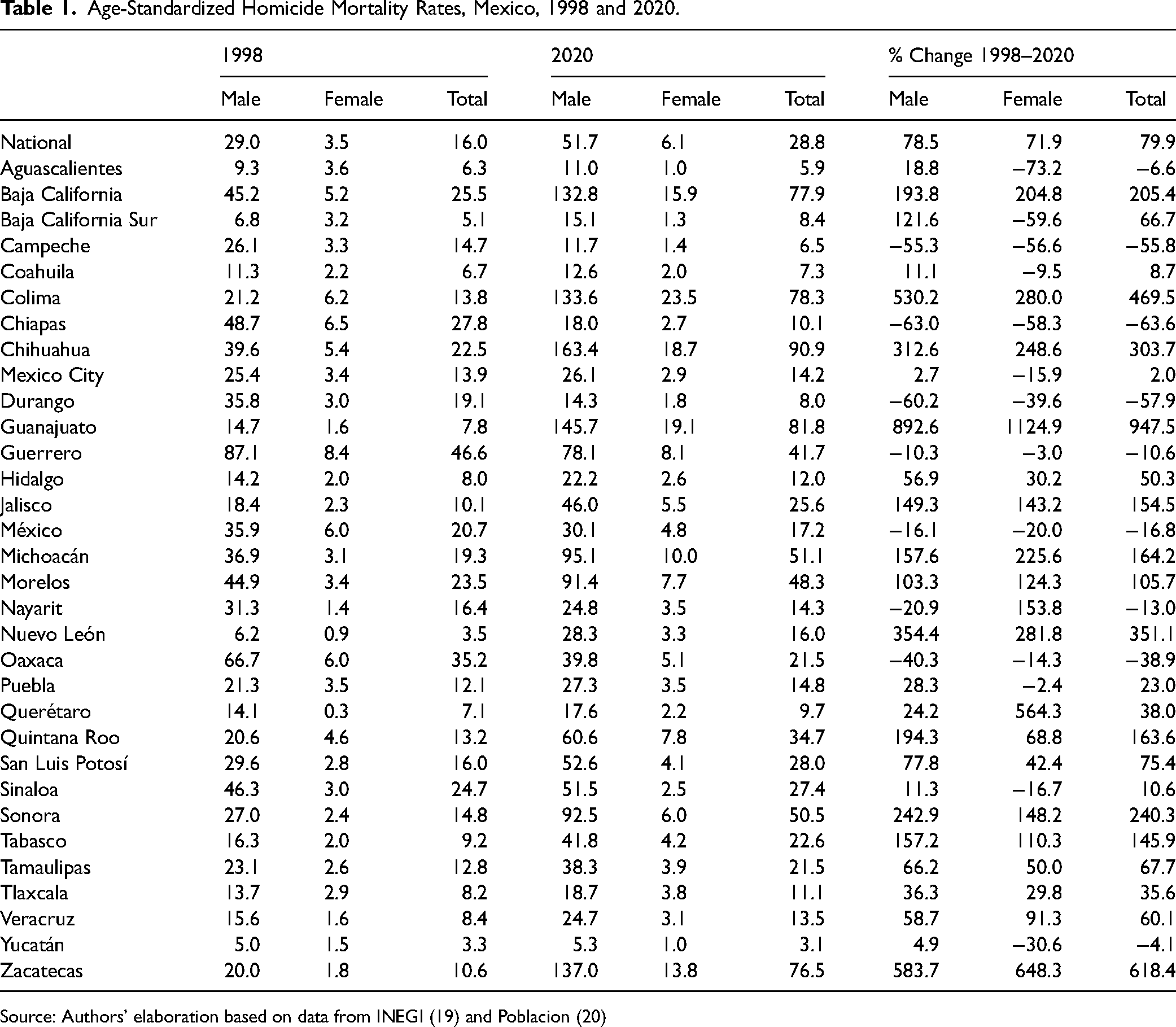
Table 1 shows the age-standardized homicide mortality rate for Mexico and its states in 1998 and 2020. The age-standardized homicide rate in 2020 was highest in Chihuahua, Guanajuato, Colima, Baja California, and Zacatecas (all above 76 homicides per 100,000); Coahuila, Campeche, Aguascalientes, and Yucatan had the lowest rates (fewer than eight homicides per 100,000) (Supplemental Figure 1). There was no discernible regional pattern after analyzing the homicide rates. Between 1998 and 2020, homicide mortality decreased in nine states, especially in Chiapas, Durango, and Campeche, where the homicide rate reduction was above 50%. In contrast, homicide mortality increased in 23 states. The highest increases occurred in Colima, Zacatecas, and Guanajuato, all located in the central region (Supplemental Figure 2). In Guanajuato, the homicide rate in 2020 was more than 10.5 times higher than in 1998 (from 7.8 to 81.8 homicides per 100,000); in Zacatecas, it was 7.2 times higher (from 10.6 to 76.5 homicides); and in Colima, it was 5.7 times higher (from 13.8 to 78.3 homicides). By sex, homicide mortality was higher for males in all states. The male-to-female homicide ratio was approximately nine male homicides per 100,000 for every female homicide. This ratio ranged from 20.9 in Sinaloa to 4.9 in Tlaxcala.
Age-Standardized Homicide Mortality Rates, Mexico, 1998 and 2020.
Source: Authors’ elaboration based on data from INEGI (19) and Poblacion (20)
National Overview of Homicide Premature Mortality
The homicide age-standardized YLL rate per 100,000 persons in Mexico increased 91% from 809 in 1998 to 1,548 in 2020 (Table 2). As with the age-standardized mortality rate, the YLL rates also increased since 2008 after an initial 45.5% decrease between 1998 and 2007. The homicide age-standardized YLL rates for men were 8.3 times higher than for women in 2020. These rates increased by 87.6% from 1998 to 2020 for males, while for women, YLL rates increased 94%. Figure 1 shows the homicide age-standardized YLL rates by age group for 2020 for females and males. This figure highlights that the YLL for males is higher than for females in all age groups. For males, YLL due to homicides were higher between the ages of 20–44, while for females, premature mortality burden was mainly located between 20 and 34 years of age. In both sexes, between 1998 and 2020, premature mortality increased in the 15–54 age groups, with the highest increments in the 15–49 age groups. The YLL rates decreased in the youngest age groups and for the elderly.
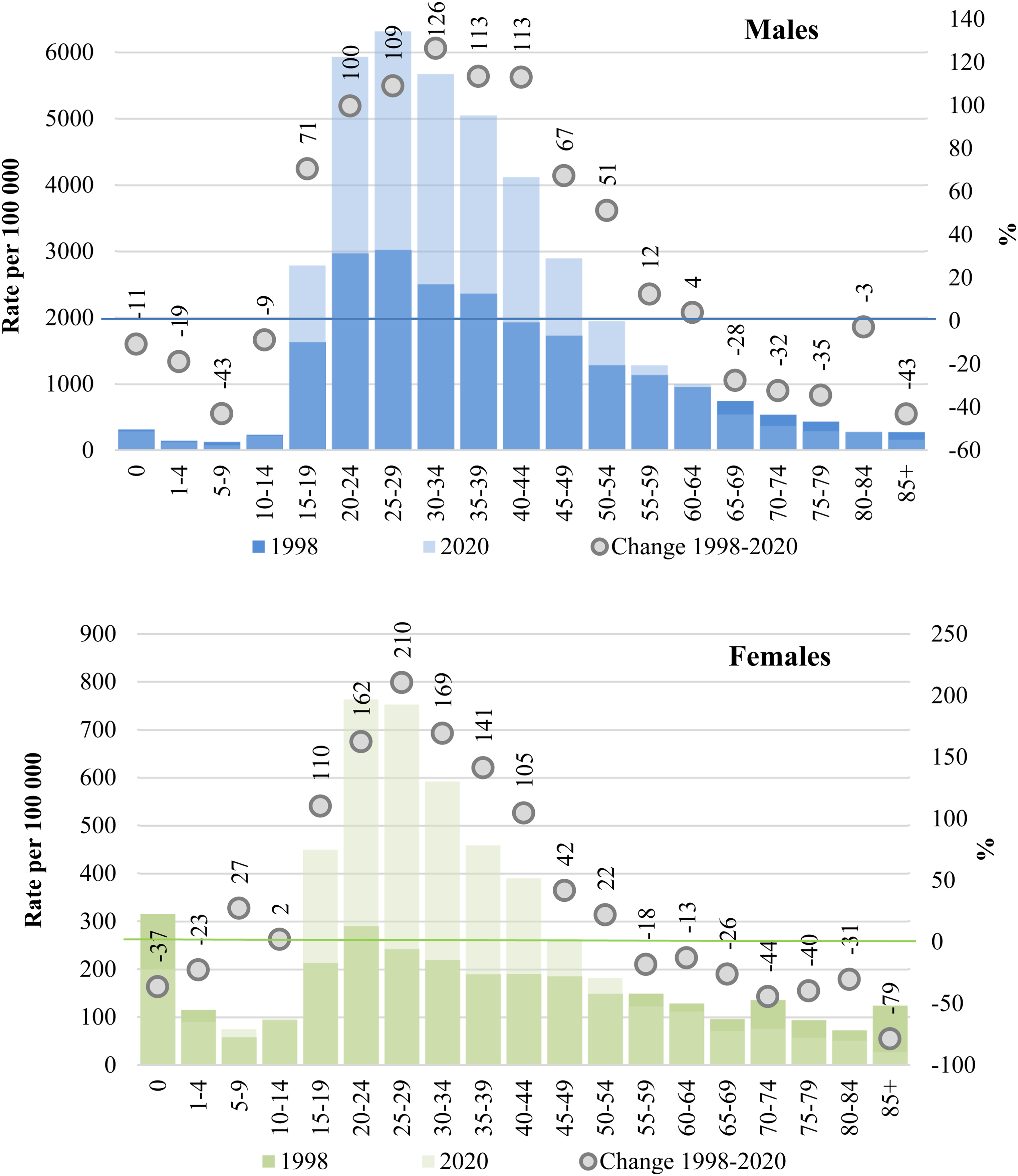
Years of life lost due to homicides by age group and sex, Mexico, 1998 and 2020.
Age-Standardized Homicide YLL Rates, Mexico, 1998–2020 (Heatmap)*. Colored version of this table is published online.
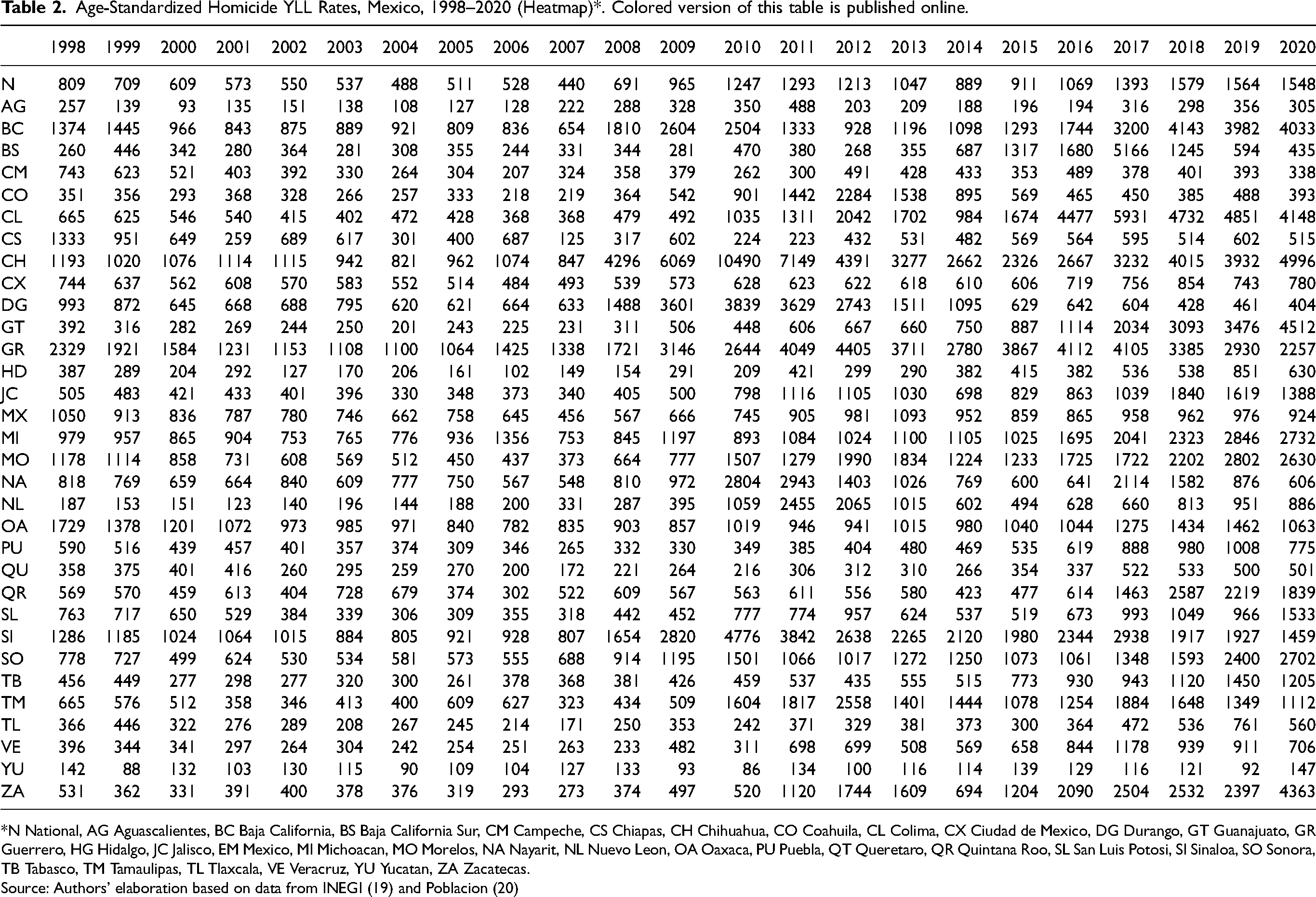
*N National, AG Aguascalientes, BC Baja California, BS Baja California Sur, CM Campeche, CS Chiapas, CH Chihuahua, CO Coahuila, CL Colima, CX Ciudad de Mexico, DG Durango, GT Guanajuato, GR Guerrero, HG Hidalgo, JC Jalisco, EM Mexico, MI Michoacan, MO Morelos, NA Nayarit, NL Nuevo Leon, OA Oaxaca, PU Puebla, QT Queretaro, QR Quintana Roo, SL San Luis Potosi, SI Sinaloa, SO Sonora, TB Tabasco, TM Tamaulipas, TL Tlaxcala, VE Veracruz, YU Yucatan, ZA Zacatecas.
Source: Authors’ elaboration based on data from INEGI (19) and Poblacion (20)
Subnational Overview of Homicide Premature Mortality
Figure 2 shows the homicide age-standardized YLL rates in Mexico's states in 1998 and 2020 by sex. As shown, YLL rates were higher for men in all states. Overall, homicide premature mortality was more than eight times higher for men compared to women (2,775.2 and 332.7 YLL per 100,000, respectively), almost 20 times higher in Sinaloa (2,746.3 per 100,000 for males and 139.7 for females), and more than 12 times higher in Sonora (4,953 versus 345.7 per 100,000), San Luis Potosi (2,888.4 versus 233.2 per 100,000), and Baja California Sur (785.3 versus 61 per 100,000). The homicide age-standardized YLL rates were highest in Chihuahua, Guanajuato, Zacatecas, and Colima for males; while for females, the states with the top level of homicide premature mortality were Colima, Guanajuato, Chihuahua, and Baja California. Guanajuato, Zacatecas, Colima, and Nuevo Leon had the highest increase for males between 1998 and 2020, with more than a fivefold increase in those states (Figure 2). For females, premature mortality increased most in Guanajuato, Zacatecas, Colima, and Quintana Roo, highlighting the case of Guanajuato, where the YLL increased more than 14 times in the period under study (from 74.2 YLL per 100,000 to 1,066.8 YLL). Aguascalientes and Yucatan had the lowest homicide premature mortality for both sexes. In Campeche, Chiapas, and Durango, the homicide YLL decreased the most for males, while Chiapas, Aguascalientes, and Baja California Sur had the highest decrease in homicide premature mortality.
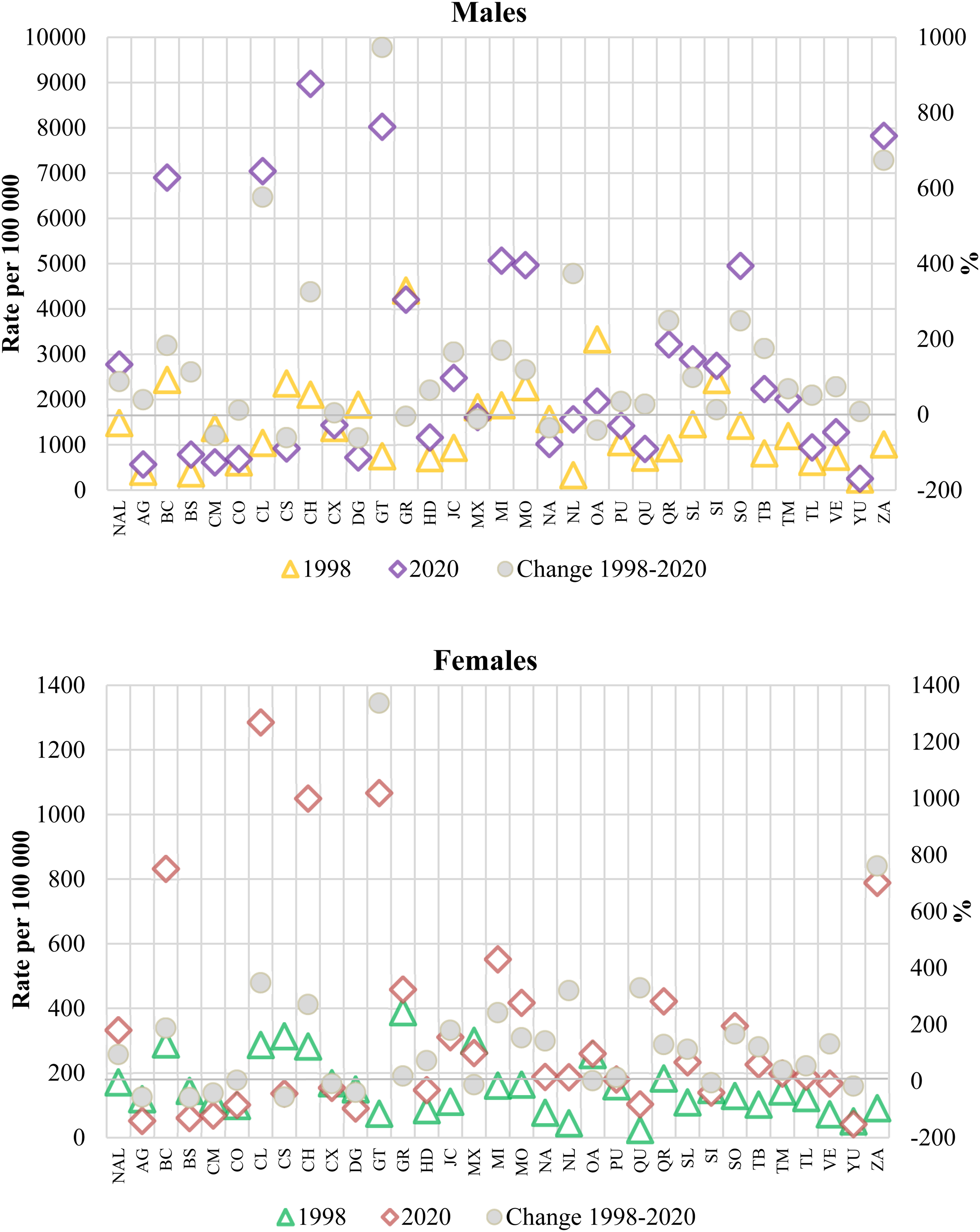
Years of life lost due to homicides by state and sex, Mexico, 1998 and 2020.
Homicide Premature Mortality Trend Analysis
Table 3 presents the findings of the joinpoint regression analysis of the homicide YLL rates. The YLL national trend was separated into five phases, while the subnational trends ranged from one period to a maximum of five periods. In Mexico, we observed a significant decline between 1998 and 2007, with an APC of 5%. A significant increase ensued in the 2007–2010 period, with an APC of 44.3%, followed by another decrease of 8.2% annually until 2015. Similarly, most states saw a significant decline in the YLL rates in the first period of analysis; however, 24 states experienced an increase after that initial period, with Oaxaca as the only state to present a significant decline in the second period. In general, a new substantial decline in rates was recorded after 2010–2011 in Coahuila, Chiapas, Durango, Jalisco, Nayarit, Nuevo Leon, and Sinaloa. Some states, such as Aguascalientes, Baja California, Chihuahua, Morelos, Nuevo Leon, Queretaro, San Luis Potosi, Sonora, Tabasco, and Zacatecas, had a significant increase in their respective last period. Finally, Baja California Sur, Durango, Nayarit, and Sinaloa had a significant decrease in the last section of the homicide YLL trend.
Joinpoint Analysis Homicide YLL Rates in Mexico, 1998–2020 Ψ.
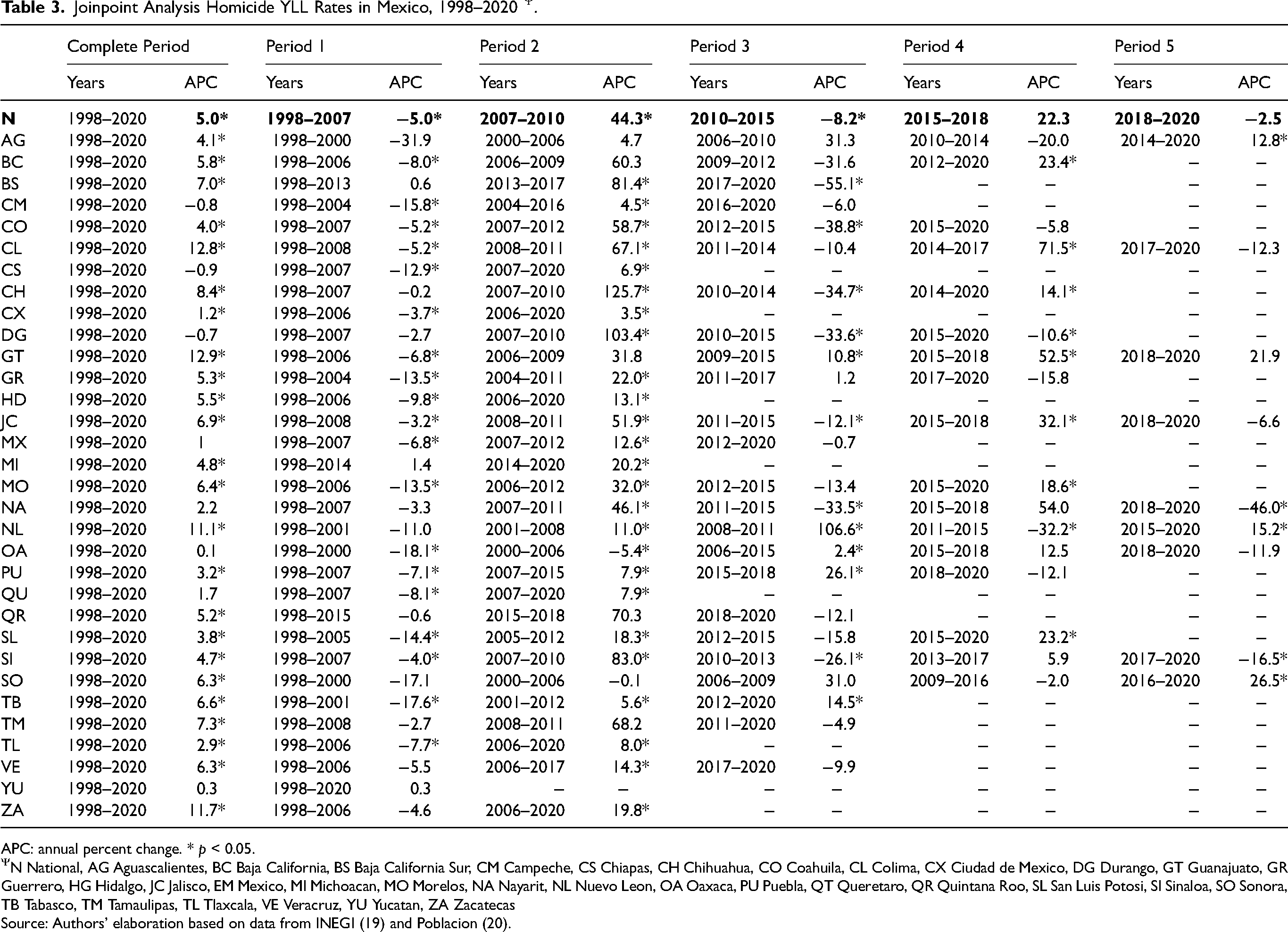
APC: annual percent change. * p < 0.05.
N National, AG Aguascalientes, BC Baja California, BS Baja California Sur, CM Campeche, CS Chiapas, CH Chihuahua, CO Coahuila, CL Colima, CX Ciudad de Mexico, DG Durango, GT Guanajuato, GR Guerrero, HG Hidalgo, JC Jalisco, EM Mexico, MI Michoacan, MO Morelos, NA Nayarit, NL Nuevo Leon, OA Oaxaca, PU Puebla, QT Queretaro, QR Quintana Roo, SL San Luis Potosi, SI Sinaloa, SO Sonora, TB Tabasco, TM Tamaulipas, TL Tlaxcala, VE Veracruz, YU Yucatan, ZA Zacatecas
Source: Authors’ elaboration based on data from INEGI (19) and Poblacion (20).
Discussion
In this article, we present a comprehensive analysis of the trends of the YLL because of homicides in Mexico at national and subnational scales. Measuring and understanding premature homicide mortality is an essential component of public health research that can help policymakers and public health planners make strategic investments for homicide prevention efforts. 17 In summary, we found that in 2020, the country reached the maximum number of homicides in the past 23 + years (36,773 homicides), which was more than four times the number of homicides in 2007 (8,868 homicides). On one hand, the age-standardized homicide rate in 2020 was highest in Chihuahua and Baja California, which have been traditionally violent states, and in Guanajuato, Colima, and Zacatecas, which before 2010 were non-violent states. On the other hand, Campeche, Aguascalientes, and Yucatan had the lowest rates, and all have been non-violent states. Homicide premature mortality increased since 2008 and, in 2020, was almost double than at the turn of the century. The YLL homicide rates for males were higher than for females in all age groups, and in general, the rate was more than eight times higher for men (2,775 YLL per 100,000) compared to women (332 YLL per 100,000) in 2020. Homicide premature mortality peaked between the ages of 20 and 44 years for males and 20 and 34 years for females. Finally, our trends analysis of homicide YLL showed shows that homicide mortality in Mexico's states was not homogeneous.
The increase in homicide mortality has been attributed to the War on Drugs and the militarization strategy followed by the Mexican government in 2006 aimed at capturing the leaders of drug-trafficking organizations.29,30 Such military strategy triggered violence, especially in states where the government launched operations, through the breakup of drug-trafficking organizations. This is reflected in the fact that in five years, the number of drug-trafficking organizations went from six to 16. 31 As a result, considerable heterogeneity in homicide premature mortality can be observed across states in Mexico. However, the rise in violence has also been related to the U.S. Federal Assault Guns Ban, which expired in 2004, making semi-automatic weapons readily available to criminal organizations 32 ; a significant decline in cocaine supply from Colombia after 2005, 33 along with a shift in the cocaine-trafficking routes to Mexico after the United States blocked the narrower Caribbean trafficking corridor in the 1980s and early 1990s 34 ; and party alternation at the state and municipal levels after 2000 that motivated drug cartels to protect themselves against incoming opposition authorities as they depended on government protection for carrying out their illegal activities.35,36 More recently, high levels of violence in Mexico's states can be associated with the presence of drug-trafficking organizations.13,37
Homicide mortality for males was higher than for females in all age groups, as in other homicide studies worldwide9,38–40 and in Mexico.17,41,42 Premature homicide mortality in 2020 was more than eight times higher for men compared to women in Mexico, while the global homicide rate for the male population is roughly four times the rate for females. 9 Violence is not an exclusive practice of men, but it is culturally related to masculine identity models, different patterns of alcohol and substance consumption, and differences in socially acceptable methods of dealing with stress and conflict.41,43,44 Men are usually assigned the roles of protectors and defenders by social norms, but they are also accepted as facilitators of violent, risky, and extreme behaviors. 41 These behaviors are most prevalent during adolescence and early adulthood, when intentional exposure to violent and risky situations becomes an expected social situation that legitimizes them as men. 45 Thus, homicide mortality has behaved as the domain of young men, who in Latin America and in Mexico are often poor and uneducated and live in surroundings of inequality and substance use and in a cultural context that overemphasizes honor and masculinity,39,46,47 which makes them much more likely to take part in organized crime (especially drug cartels).. 41
Mexico is also one of the countries with the highest levels of youth homicides in the world.48,49 We showed that homicide premature mortality mainly affected the most economically productive age groups. These results are fairly consistent across countries.38,48,49 Certain conditions in Mexico contribute to the increase in violence among young people, such as unemployment or poor working conditions and significant job insecurity, 50 marked social inequality, huge regional disparities in development, limited access to quality education, uncontrolled urban development, and shocking levels of impunity and corruption in the public security and justice systems.51,52 All these factors may push young people to engage in the commission of crimes and violent behavior, including belonging to a gang or being recruited by organized crime,9,41 which uses them to sell drugs on the streets of major cities or as heavily armed soldiers and sicarios. 37
Homicides are a critical and preventable public health problem. 42 However, the current context of high violence in Mexico implies a series of structural causes behind the phenomenon that extend beyond public health and require the involvement of all relevant sectors, as well as a failure of the social protection policies aimed at reducing homicide and crime rates. 17 This could be related to the fact that homicides have largely been approached from a security standpoint, with no clear or targeted policies to prevent homicides from a public health perspective.4,42 This approach entails defining and learning about the magnitude of a public health problem, determining which factors put people at risk of experiencing or perpetrating violence, developing and testing prevention strategies, and ensuring these strategies are implemented and adopted more widely. 53 Mexico's public health program on violence, according to the Health Sector Program for 2020–2024, sought to increase the health sector's response capability, to promote early detection of any type of violence, and to provide timely treatment. 54 Yet, Mexico's current government has established a National Guard intended to function as a sort of militarized police. As seen in this article, this institution has not yet paid dividends, 55 and it has been labeled as a continuation of the militarization policies of previous regimes. 56 As a result, the Mexican government has been unable to ensure the safety of its citizens thus far, and no significant efforts have been made to address the structural causes of the problem. 15 Thus, new public policies are needed to modify the current repressive methods used to address the problem of violence. These policies should aim to reshape the justice system, reduce impunity and corruption, combat drug cartels and organized crime, 57 and reduce the number of illegal firearms. 38 Public policies should also reduce social and economic inequalities 37,58; enhance the quantity and quality of educational levels; create adequately paid employment, especially for young adults 38 ; and reduce childhood exposure to violence and its devastating consequences. 59
This study has some limitations that should be highlighted. In brief, our estimation of homicide premature mortality could be a lower bound because of under-counting and under-reporting of vital statistics data. 17 This occurs when homicides committed during armed clashes or at the hands of illegal groups are not recorded and remain unaccounted for in national mortality records. 60 Although the coverage and quality of mortality records has significantly improved in Mexico, 61 the mortality vital statistics have limitations of their own, such as lack of uniformity in registry definitions, inadequate coverage in less developed regions, and delays in the publishing of information. 62 Thus, it is necessary to use some caution in interpreting the premature homicide mortality results presented in this article. 41
Conclusions
Homicides have a societal impact that extends beyond the loss of life 3 as they negatively affect the human, social, and economic development of countries. 63 Thus, mortality studies are critical in the descriptive epidemiology of homicidal violence. Homicide premature mortality was nearly double in 2020 compared to the turn of the century, with significant variation across Mexican states and primarily affecting young males in the most economically productive age groups. So far, current policies have failed to ensure the safety of the country's citizens and to decrease homicide and crime rates. These policies should focus on premature mortality, as well as getting to the root of violence to prevent it from spreading to young males. Future analyses should incorporate municipal-level data, which would allow researchers to dig further into the issue and consider relevant socioeconomic variables. This would allow for a better understanding of each context and the actors involved with the phenomenon of violence.
Supplemental Material
sj-jpg-1-joh-10.1177_27551938221141827 - Supplemental material for An Unrelenting Epidemic of Violence: Trends of Homicide Mortality in Mexico, 1998–2020
Supplemental material, sj-jpg-1-joh-10.1177_27551938221141827 for An Unrelenting Epidemic of Violence: Trends of Homicide Mortality in Mexico, 1998–2020 by Claudio Alberto Dávila-Cervantes and Ana Melisa Pardo-Montaño in International Journal of Social Determinants of Health and Health Services
Supplemental Material
sj-jpg-2-joh-10.1177_27551938221141827 - Supplemental material for An Unrelenting Epidemic of Violence: Trends of Homicide Mortality in Mexico, 1998–2020
Supplemental material, sj-jpg-2-joh-10.1177_27551938221141827 for An Unrelenting Epidemic of Violence: Trends of Homicide Mortality in Mexico, 1998–2020 by Claudio Alberto Dávila-Cervantes and Ana Melisa Pardo-Montaño in International Journal of Social Determinants of Health and Health Services
Footnotes
Acknowledgements
None to declare.
Funding
This research received no specific grant from any funding agency in the public, commercial, or not-for-profit sectors
Declaration of Conflicting Interests
The author(s) declared no potential conflicts of interest with respect to the research, authorship, and/or publication of this article.
Funding
The author(s) received no financial support for the research, authorship, and/or publication of this article

Supplemental Material
Supplemental material for this article is available online.
Author Biographies
References
Supplementary Material
Please find the following supplemental material available below.
For Open Access articles published under a Creative Commons License, all supplemental material carries the same license as the article it is associated with.
For non-Open Access articles published, all supplemental material carries a non-exclusive license, and permission requests for re-use of supplemental material or any part of supplemental material shall be sent directly to the copyright owner as specified in the copyright notice associated with the article.


