






Abstract
Background:
Young adults are using e-cigarettes at high rates. While the literature on the health risks associated with e-cigarettes is extensive and growing, little is known about young adults’ thoughts and perceptions of the safety and harms of e-cigarettes.
Methods:
We conducted one-on-one interviews with young adults aged 18 to 25 years in Los Angeles, California between June 2018 and June 2019. We interviewed and audio-recorded young adults (N = 62) who consented to the study and self-reported to have used e-cigarettes on a weekly basis or more for at least 5 months prior to study enrollment. Interviews examined participants’ thoughts, feelings, and experiences related to e-cigarette use. We audio-recorded, transcribed, and coded the interviews using grounded theory analysis methods.
Results:
Young adults often believed that e-cigarettes were safer than cigarettes and were safe to use, especially following positive vaping experiences. Young adults were skeptical of the available science on e-cigarette use and felt there was not conclusive data on the harms of e-cigarettes. In their selection of e-cigarettes over cigarettes, young adults felt they were making a conscious and healthier choice. Because young adults viewed e-cigarettes to be better for them based on their personal experiences with vaping, they felt e-cigarettes were a superior alternative to combustible tobacco.
Conclusions:
Young adults in our study believed that the long-term health effects of e-cigarette use are not clearly understood and were generally skeptical of the research on e-cigarette harms. Policy, education, and anti-smoking campaigns need to clarify the negative health-related consequences of e-cigarette use for young people.
Background
E-cigarettes are the most commonly used tobacco product among youth in the United States. 1 While overall normal cigarette smoking rates have declined over the last decade, the rising popularity of e-cigarettes has led to concern regarding the perpetuation of nicotine use, particularly in younger populations. 2 E-cigarettes are not subject to the same restrictions historically placed on the tobacco industry, allowing for a variety of e-cigarette device types, flavors, and practices to proliferate in the United States. 3 E-cigarettes are often marketed as a smoking cessation tool4 -6 or harm reduction product, 7 yet young adults rarely use e-cigarettes for these purposes. 8 Rather, e-cigarettes appeal to young adults for a number of reasons, including: sleek design, user-friendly functions, less aversive experiences of taste, smell, and throat irritation compared to cigarettes, appealing flavors (eg, candy, fruit, or chocolate), accessibility to purchase while underage, 9 and convenience and ability to discreetly use in places where cigarette smoking is not permitted.10,11 The consequences of e-cigarette use are well-established and include development of nicotine addiction,12,13 transition to combustible cigarette use,2,14 and adverse respiratory health effects.15,16 Despite these known risks, young people often are unaware of the negative consequences associated with e-cigarettes. Studies have shown that young people often believe that e-cigarettes are harmless and are a healthier alternative to cigarettes, and that they cannot become addicted to them. 17 Furthermore, young people often believe that the mid- to long-term effects of e-cigarette use are not yet known, 15 despite evidence to the contrary. Skepticism about e-cigarette harms and safety among young adults is particularly concerning, given the known consequences of e-cigarette use, and thus warrants continued consideration as a significant public health concern. Using one-on-one interviews with young adults who self-reported having recently used e-cigarettes on a regular basis, we examined young adult perceptions of e-cigarette use safety and harms.
Methods
Procedures have been described in detail previously (See additional information on methods in “Qualitative Interviews” and “Qualitative Data Analysis”). 18 Briefly, young adults who use e-cigarettes were publicly recruited from the Los Angeles, California metropolitan area through the use of fliers and online advertisements via social media platforms. To be included in the study, young adults had to be 18 to 25 years of age and self-report vaping on a weekly basis or more for at least 5 months prior to study enrollment. 19 Participants were compensated with $50 U.S. dollars for the completion of an in-person, one-on-one qualitative interview followed by a quantitative survey that was administered online via the REDCap system. Written informed consent was obtained from each participant prior to enrollment. Interview data were recorded between June 2018 and June 2019 at University of Southern California (USC) and lasted 30 to 90 minutes in duration. Using grounded theory methodology, 20 we reviewed and discussed the transcripts that enabled categorization, or coding, of the data into emerging topic areas.
The analysis in this article is part of a larger mixed qualitative–quantitative study to examine the role of the social environment and early e-cigarette experiences as risk predictors of smoking progression and dependence, and to uncover the novel factors that influence transitions from e-cigarettes to cigarettes among young adults. 21 Data related to perceptions of the safety and harms of e-cigarettes emerged during the qualitative interviews.
Qualitative Interviews
Unlike quantitative research, qualitative studies can more thoroughly explore how young people justify and create meaning around why they use e-cigarettes, providing a more nuanced understanding of a rapidly changing phenomenon that can involve multiple and shifting practices, products, and styles. 23 Furthermore, qualitative studies can be used to examine young adults’ subjective perceptions, meanings, and experiences related to vaping, 24 which may support young adult-centered prevention and cessation efforts.25 -27
We used a semi-structured interview guide with open-ended questions designed to elicit respondents’ subjective experiences and perspectives related to their e-cigarette and cigarette use. We followed up on questions that framed the interview guide with open-ended inquiries of topics introduced by the participant. Interview questions addressed young adults’ perspectives on e-cigarette use patterns, preferences for different tobacco and alternative tobacco products, withdrawal symptoms, quit attempts or periods of cessation, as well as other topics such as family substance use and education (complete interview guide available upon request). The interview guide was first pilot tested (N = 5), and then discussed and revised by the team before conducting the remaining interviews. Once we established a final codebook, we uploaded transcripts and codes to NVivo (Mac Version 12.6.0, www.lumivero.com), a computer-assisted qualitative data analysis software program, to facilitate consistent application of themes and memos.
Qualitative Data Analysis
Grounded theory is best used when there is little known about a phenomenon (eg, how young adults perceive the safety and harms of e-cigarettes), with the aim of generating an explanation or theory from the data. 31 To accomplish this, 7 team members (AK, KS, SS, RC, NY, JB, JBT; led by RC) first developed deductive codes from the topic areas of the interview guide (eg, “ease of access,” “terminology and dosage”). We then developed emergent inductive codes by independently coding a sample of 1 to 2 transcripts from which we closely examined and compared the frequency and strength of broad themes brought up during the interviews, including themes not necessarily specified in the original interview guide (e.g., “judgement on vaping/smoking culture,” “vaping/smoking effects on physiology,” “vaping/smoking effects on emotions”). We supplemented preliminary deductive codes with a set of inductive codes, and after successive iterations in which we generated new themes and considered alternatives, we arrived at a set of 19 thematic codes (ie, the codebook). Each transcript was analyzed and coded by 2 team members and a master file was created to merge and review coding consistency across team members. Participants’ issues surrounding misconceptions of e-cigarette safety and harms was most frequently mentioned in data coded for “judgement on vaping/smoking culture,” “vaping/smoking effects on physiology,” “why I like vaping/smoking,” and “vaping vs. smoking.”
Results
We report data from 62 interviews with young adults, of whom 48 were male (79%), 32 identified as non-White (52.4%), and 33 were enrolled in higher education (see Table 1). We found that young adults perceived e-cigarettes as safer than cigarettes and felt they were safe to use. Young adults saw e-cigarettes as being a distinct industry alternative to “Big Tobacco” corporations, and while they were aware of the risks of cigarettes, they were skeptical of information showing the negative health effects of e-cigarettes. Young adults felt that in choosing e-cigarettes, they were intentionally selecting a safer and cleaner alternative to traditional cigarettes, and this was reinforced by their positive vaping experiences. Where participant quotes demonstrate false claims, we have included footnotes to clarify misinformation and have provided related citations to support these clarifications.
Key Quotes From “Perceived Inconclusiveness of Research and Skepticism Regarding E-cigarette Harms Compared to Cigarettes.”
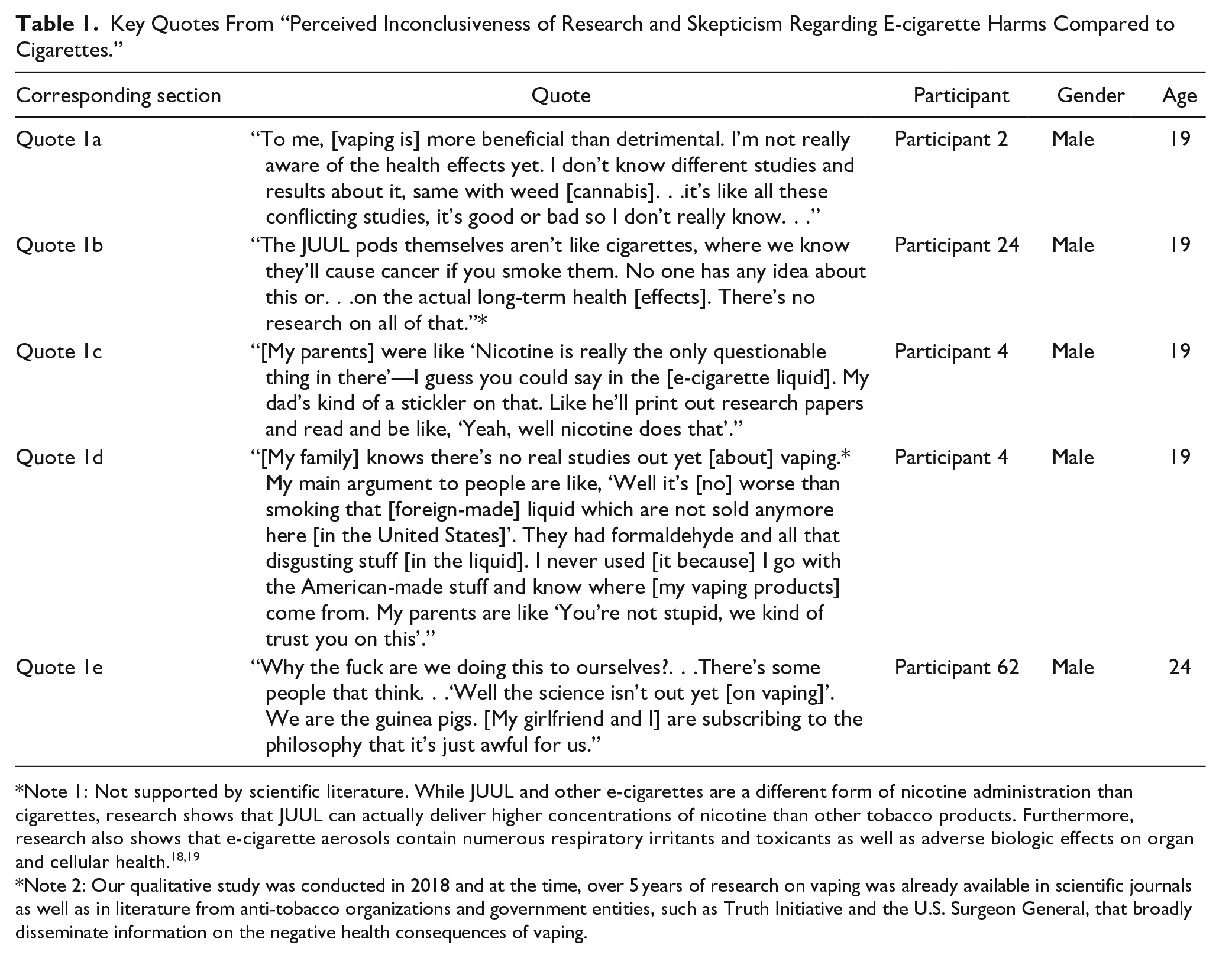
Note 1: Not supported by scientific literature. While JUUL and other e-cigarettes are a different form of nicotine administration than cigarettes, research shows that JUUL can actually deliver higher concentrations of nicotine than other tobacco products. Furthermore, research also shows that e-cigarette aerosols contain numerous respiratory irritants and toxicants as well as adverse biologic effects on organ and cellular health.18,19
Note 2: Our qualitative study was conducted in 2018 and at the time, over 5 years of research on vaping was already available in scientific journals as well as in literature from anti-tobacco organizations and government entities, such as Truth Initiative and the U.S. Surgeon General, that broadly disseminate information on the negative health consequences of vaping.
Perceived Inconclusiveness of Research and Skepticism Regarding E-Cigarette Harms Compared to Cigarettes
Several participants felt that while there was some existing research on e-cigarettes and their long-term health effects, the research seemed conflicting. Young adults explained that they were unaware of a definitive research on the negative health effects of e-cigarettes, and therefore concluded that e-cigarettes appeared safer than cigarettes and safe to use. One young person compared the conflicting research on e-cigarettes to the current research on cannabis—the research appears to be inconclusive, and therefore seems unclear if the substance has any negative health effects (Table 1: Quote 1a).
Other young adults reported that unlike cigarettes, there appeared to be no research showing that e-cigarettes were harmful (Table 1: Quote 1b). One young adult explained that they were aware of the negative health effects of cigarettes but felt that e-cigarettes were distinct from cigarettes and therefore the potential harms of e-cigarettes were still unknown to them (Table 1: Quote 1c). They believed that there was no current research on the health consequences of e-cigarette use and expressed a need for longitudinal studies that tracked the long-term health effects of e-cigarettes. While a plethora of news media and research was available at the time of our study (June 2018 to June 2019) on the immediate and long-term harms of e-cigarettes, including JUUL which uses a high concentration of nicotine and is available in many youth-appealing flavors, 22 young adults deemed e-cigarettes to be safer than cigarettes.
Some young adults explained that their family supported and trusted their decision to use e-cigarettes instead of cigarettes. One young adult mentioned that despite claiming there are no “real studies” on e-cigarettes, they felt they were being careful in choosing only e-cigarette products they deemed to be safer (Table 1: Quote 1d). For example, they would only use American-made products instead of foreign products that they felt had harmful chemicals in them. When presented with research on the harms of nicotine from their father, the young adult went on to question if nicotine was really present in e-cigarette e-liquid. They did not fully believe that the nicotine in cigarettes (and the related harms associated with inhaling nicotine) was necessarily the same nicotine used in e-liquids. Even when presented with research evidence about the negative health effects of nicotine from their father, the young adult still felt that the nicotine in cigarettes was more harmful than what was in their e-liquids.
On the contrary, some young adults questioned whether e-cigarettes were actually safer than cigarettes, given the lack of scientific research available to them (Table 1: Quote 1e). For example, one young adult felt that the limited existing research on e-cigarette harms did not necessarily make e-cigarettes harmless. As someone who used both e-cigarettes and cigarettes depending on the context, they felt they needed to be honest with themselves and accept that e-cigarettes were not harmless. Yet, despite their knowledge about the harms of e-cigarettes, the young adult persisted in using e-cigarettes.
E-cigarettes Feel and Appear Safer Than Cigarettes Based on Positive Vaping Experiences
Several young adults explained that while they enjoyed smoking cigarettes in general, they preferred to vape because it made them, as one young adult put it, “feel better” (Table 2: Quote 2a). They explained that smoking from an e-cigarette felt cleaner and less harsh than a cigarette.
Key Quotes From “E-cigarettes Feel and Appear Safer than Cigarettes Based on Positive Vaping Experiences.”
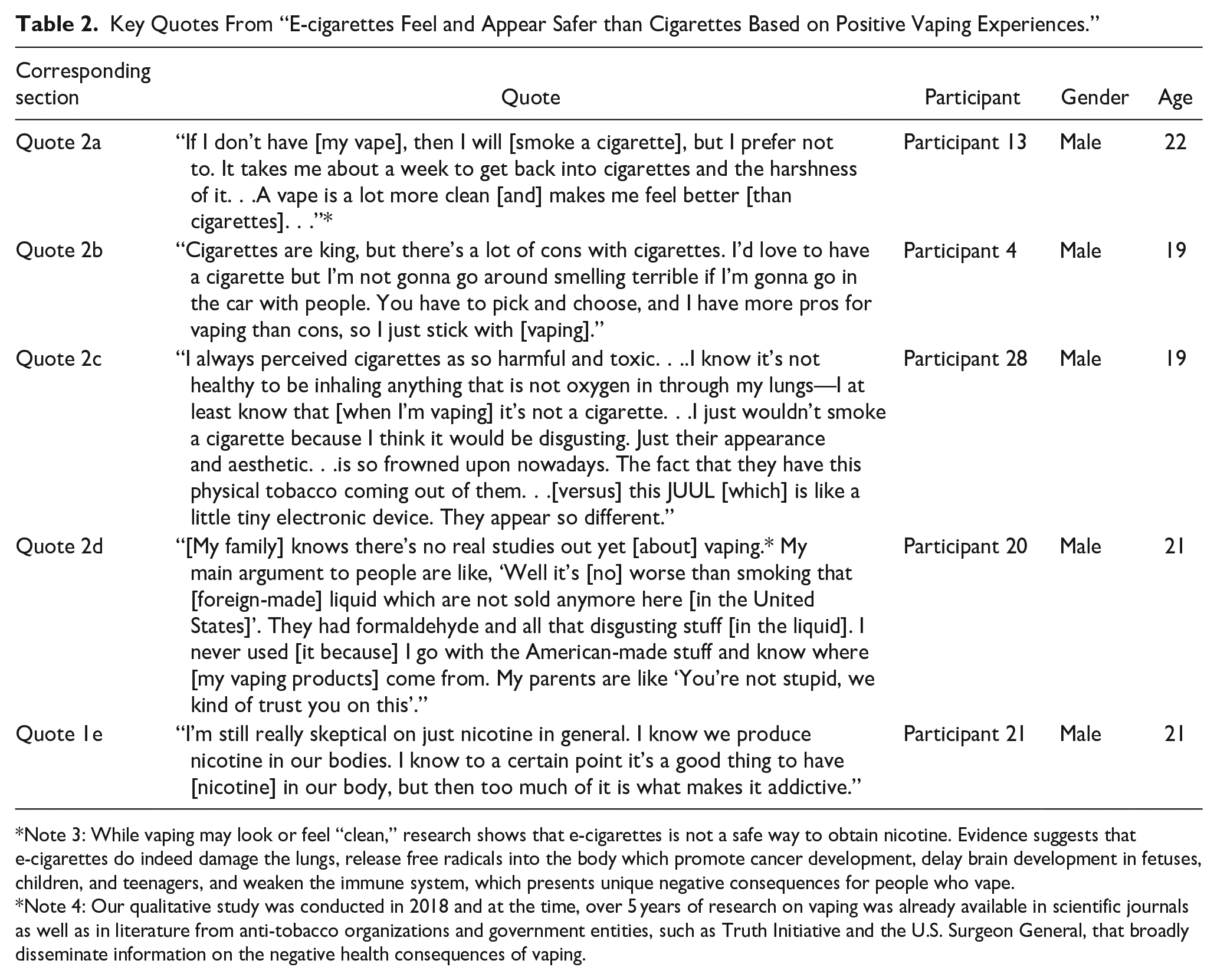
Note 3: While vaping may look or feel “clean,” research shows that e-cigarettes is not a safe way to obtain nicotine. Evidence suggests that e-cigarettes do indeed damage the lungs, release free radicals into the body which promote cancer development, delay brain development in fetuses, children, and teenagers, and weaken the immune system, which presents unique negative consequences for people who vape.
Note 4: Our qualitative study was conducted in 2018 and at the time, over 5 years of research on vaping was already available in scientific journals as well as in literature from anti-tobacco organizations and government entities, such as Truth Initiative and the U.S. Surgeon General, that broadly disseminate information on the negative health consequences of vaping.
Despite their “love” for cigarettes, many young adults often felt that smoking cigarettes in the presence of others was rude because of the harsh smells emitted by cigarettes and the resulting exposure to others in the vicinity (Table 2: Quote 2b). In this way, young adults viewed vaping as a cleaner and more socially conscientious form of smoking.
In addition to e-cigarettes feeling cleaner than cigarettes, young adults in the study also felt that e-cigarettes were visually less harmful to their bodies. For example, one young adult described their physical and visual disgust for cigarettes because they could actually see the tobacco they were consuming (Table 2: Quote 2c). In contrast, they felt that e-cigarettes did not appear anything like cigarettes in that they concealed the tobacco they were inhaling, hiding it behind “a little tiny electronic device.” Despite their awareness that smoking any substance was harmful, this young adult felt they were making a socially conscious and healthier decision for their bodies in choosing to use e-cigarettes.
Other young adults felt that in the short-term, e-cigarettes did not seem to cause the common visual harms to their health in the same way that cigarettes did, such as yellow teeth and bad breath (Table 2: Quote 2d). Because of this, they considered e-cigarettes as more socially acceptable and better for their physical health than cigarettes.
Several young adults expressed confidence in using e-cigarettes compared to cigarettes because with e-cigarettes, they could control what they were putting into their bodies. For example, one young adult explained how they felt in control of how much nicotine they were consuming, and they believed that in small amounts, nicotine was beneficial to them (Table 2: Quote 2e). Despite the scientific literature dispelling the myth that nicotine is naturally produced in the human body, this young adult felt that vaping allowed them to control and prevent large amounts of nicotine from building up in their body and becoming addictive.
Considering E-Cigarettes as the Better Tobacco Industry “Alternative.”
Compared to “Big Tobacco” (ie, the tobacco industry), some young adults saw e-cigarette companies as a small boutique business. They perceived cigarette corporations as greedy and intentionally harming consumers, whereas they saw vaping manufacturers as the more relatable underdogs in the tobacco business. For example, one young adult who had first tried smoking cigarettes in high school but then stopped and switched to e-cigarettes saw e-cigarette owners as being like them—someone who had started with harmful cigarettes and then transitioned to what they perceived as harmless e-cigarettes (Table 3: Quote 3a).
Key Quotes From “Considering E-cigarettes as the Better Tobacco Industry ‘Alternative’.”.
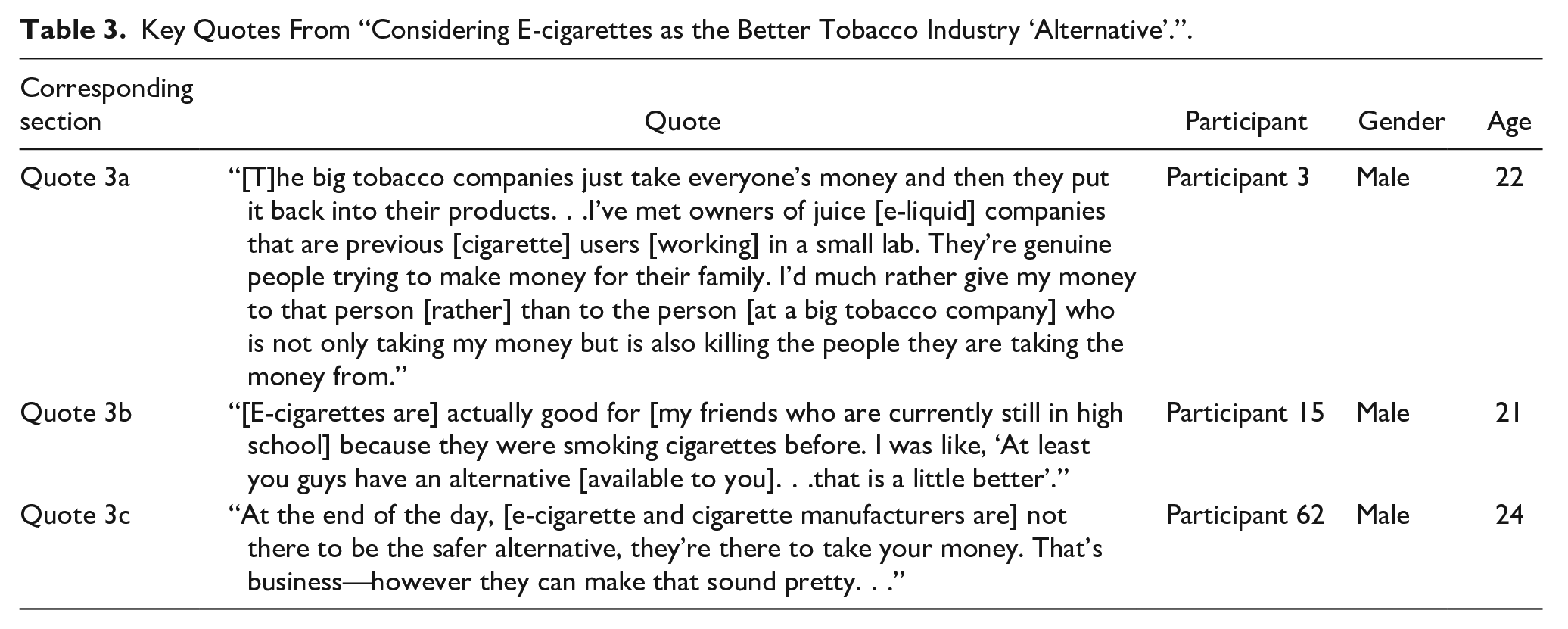
Several young adults viewed the rise of e-cigarettes as a welcomed alternative to the cigarette industry. They viewed e-cigarettes as a potentially better “alternative” product for young adults who smoke cigarettes. Many saw e-cigarettes as a product that could help young cigarette users quit smoking and shift to e-cigarettes, which they saw as a safer harm reduction option for cigarette users. One young adult described how they wished there had been “better” alternatives to cigarettes when they were in high school (Table 3: Quote 3b).
Other young adults in the study reported skepticism surrounding the assumption that e-cigarettes were actually a better alternative to cigarettes. For example, one young adult felt that both the e-cigarette and cigarette industry aimed to make a profit, even if that meant falsely marketing e-cigarettes as “the safer alternative” to cigarettes (Table 3: Quote 3c).
Discussion
Our findings demonstrate that among young adults who have vaped weekly for at least 5 months, many viewed vaping and its industry as distinct from and superior to “Big Tobacco” corporations. Young adults from our study believed that e-cigarettes provided a safer and healthier alternative to cigarettes, but that e-cigarettes were safe and at times even beneficial for their bodies. Despite the wealth of scientific literature pointing to the harms of e-cigarettes, many young adults felt justified in their decision to vape because they felt there was little research suggesting otherwise. With little knowledge about who actually sells e-cigarette products (ie, often tobacco companies) 23 and the growing body of research on e-cigarette harms, our research demonstrates that young people are mostly unaware or skeptical of the actual harms, myths, and youth-targeted marketing strategies of e-cigarettes (See Table 4 for summary of key quotes and recommendations). Our findings suggest that young adults’ views of e-cigarettes as a safer alternative to cigarettes are reflective of a successful tobacco marketing environment aimed to make e-cigarettes appear safe. Previous findings show that young adult’s positive perceptions of e-cigarettes are reflective of key marketing features, including comparing e-cigarettes to cigarettes (rather than evaluating independently) in terms of harms. 24 Research shows that e-cigarettes and vaping have rapidly become the most common tobacco products used by young adults, and this is driven in large part by marketing and advertising by e-cigarette companies, some of which are partly owned by cigarette companies. 25 For example, the Altria Group, the parent company of Philip Morris Companies and maker of Marlboro cigarettes, paid 12.8 billion dollars for a 35% stake in JUUL Labs in 2018.26,27 Our findings suggest that the industry connection between tobacco and e-cigarettes is unclear to young adults, despite the historical and current use of deceptive marketing and advertising used to target young adults and underserved populations.28 -31 This finding is consistent with a prior study on existing e-cigarette prevention media messages to young adults that showed that both youth and parents were unaware that e-cigarette companies were often closely tied to “Big Tobacco,” of which they held prior mistrust. 32
Summary of Key Findings and Recommendations.
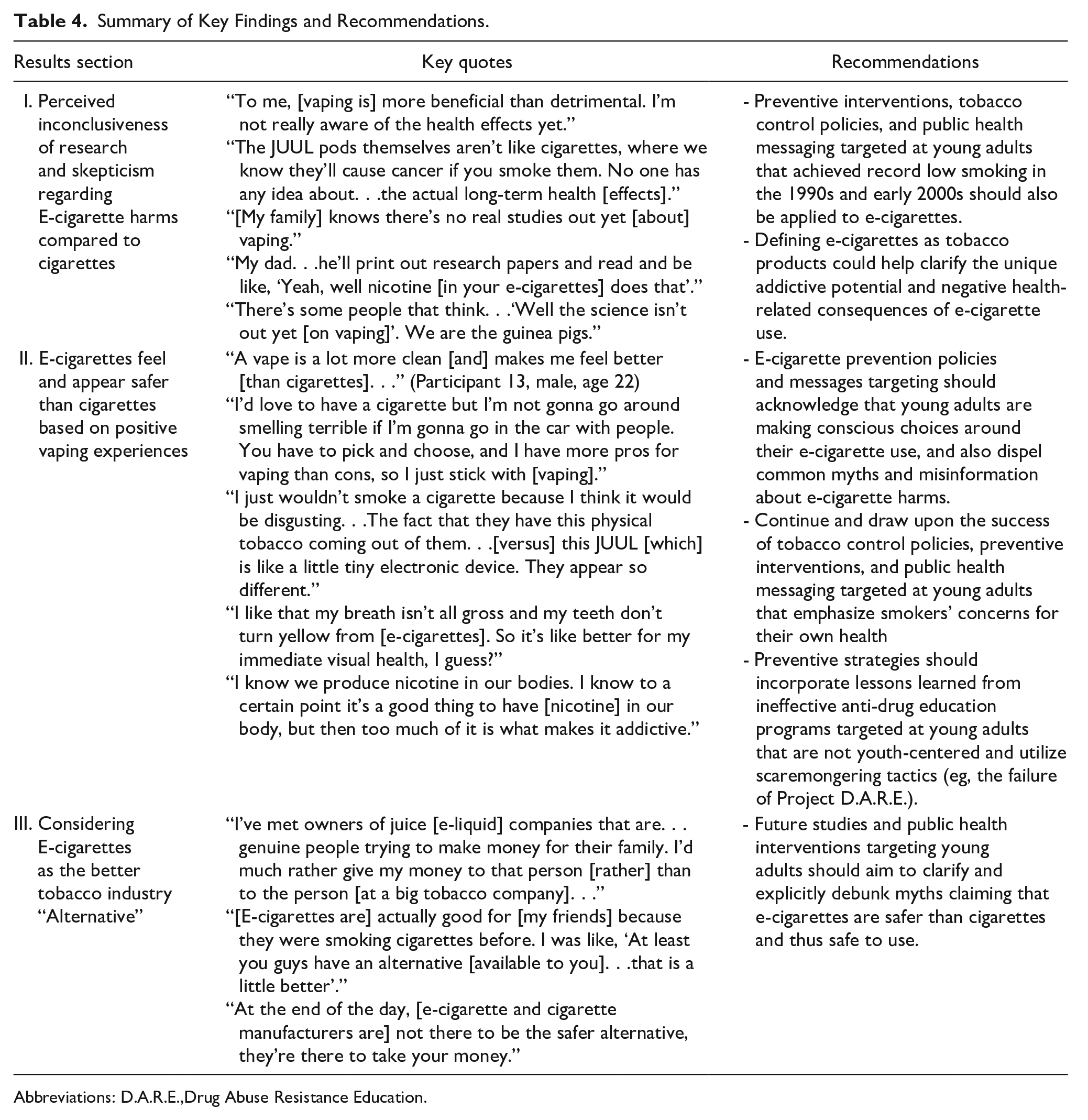
Abbreviations: D.A.R.E.,Drug Abuse Resistance Education.
Our results suggest that the preventive interventions, tobacco control policies, and public health messaging of the 1990s and early 2000s targeted at middle- and high-school-aged youth that achieved record low smoking should also be applied to e-cigarettes, as prior research has recommended (eg, Truth Initiative campaigns, anti-smoking commercials). 33 In California, for example, where our study took place, multiple laws were enacted in 2010 and 2016 that treat e-cigarettes as cigarettes through taxing and strict e-smoking regulations and has been attributed to consistently lower prevalence in the state.10,34 To counter false tobacco company marketing, more efforts in policy, education, and anti-smoking campaigns targeted at young adults who are regular e-cigarette users and/or former cigarette smokers could help clarify the unique addictive potential and negative health-related consequences of e-cigarette use.
A second notable finding in our study was that young adults perceived their selection of e-cigarettes over cigarettes as a well-informed and health-conscious decision. While growing research, social media coverage, and educational campaigns showing that e-cigarettes can lead to nicotine addiction,12,13 transition to combustible cigarettes 2,14,35 and adverse respiratory health effects15,16 had been made widely available at the time we conducted our study (June 2018-June 2019), young adults in the study felt that there were little to no conclusive research showing that e-cigarettes were harmful. Young adults in our study expressed that they knew cigarettes were harmful, yet they did not extend this level of concern to e-cigarettes. On the contrary, many young adults in our study shared theories that e-cigarettes were safer than cigarettes and even safe or beneficial to use. Young adults demonstrated that their e-cigarette use was intentional and that they possessed a level of choice and control over what they were putting into their bodies and how they were doing it.
These findings suggest that young adults in our study believe they are making intentional choices to be more cautious and healthier in their tobacco use, despite that even limited e-cigarette use can lead to addiction and other harmful health consequences.2,12 -16,35 These results are consistent with other studies that show that young adults are generally aware of the health consequences of smoking and negotiate their use of nicotine products while considering the relative risks. 36 E-cigarette prevention policies and messages targeting regular e-cigarettes users and/or former cigarette smokers should acknowledge that young adults are making conscious choices around their e-cigarette use, and also dispel common myths and misinformation about e-cigarette harms. While our data were collected in 2018 to 2019 and market offerings continue to change, the present findings point toward the importance of policy interventions to target emerging new device types. Our findings support recommendations that continue and draw upon the success of tobacco control policies, preventive interventions, and public health messaging targeted at middle- and high-school-aged youth that emphasize smokers’ concerns for their own health 37 while also incorporating lessons learned from ineffective anti-drug education programs targeted at young adults that are not youth-centered and utilize scaremongering tactics (eg, the failure of Project D.A.R.E. [Drug Abuse Resistance Education]). 38
Finally, we also found young adults’ claims about e-cigarettes being cleaner, healthier, and more natural than cigarettes to be eerily similar to the myths and marketing strategies used by tobacco corporations and debunked during the 1990s and early 2000s. For example, these myths attempted to show that “alternative” and “natural” forms of tobacco (eg, pipes, hookahs, snuff, cloves, rolling your own tobacco, “light” and “mild” cigarettes, menthol cigarettes) were safe and harmless. 39 It is unclear why these discrepancies exist between what young adult vapers believe and what scientific evidence states. It is likely that young adults are not consulting academic journals for emerging research on e-cigarette harms and instead, are using unreliable resources (eg, exposure to e-cigarette misinformation on social media such as Twitter, Instagram, and Reddit), which can make it difficult to discern what information is true and what is false. 40 In addition, the lack of conclusive research on e-cigarettes when young adults in our study initially started vaping (ie, before 2018-2019 when our study was conducted) may have led them to believe that e-cigarettes were safe, which was an early message portrayed through social media. Given the success of the tobacco industry and social media in reaching young adults with often false information, our findings suggest the importance of translating emerging research on e-cigarettes in a format that is accessible and widely disseminated to reach young adults and their communities.
While several young adults in our study denied that e-cigarettes were unsafe, others accepted that e-cigarettes were harmful and that they were the “guinea pigs” or early test subjects in proving these harms. Some acknowledged the existence of e-cigarette myths and marketing schemes targeting youth, yet they still continued to use e-cigarettes despite the adverse consequences to their health. Young adults’ denial or defiance of being the e-cigarette “guinea pigs” combined with increased access and exposure to e-cigarettes through peers and online vendors 9 with little self-awareness of their vaping consumption 41 is a deadly combination that can result in higher nicotine exposure and dependence. 18 Given the addictiveness of e-cigarettes 42 and the harm it can cause to a developing brain during adolescence, 2 it is critical for future studies and public health interventions targeting young adults to debunk myths claiming that e-cigarettes are safer than cigarettes and thus not safe to use.
Limitations
Several limitations warrant consideration. First, the qualitative research methods used in this study do not aim to determine cause and effect but rather to help identify contextual factors that contribute to how young adults perceive e-cigarette safety and harms. Second, the sample was restricted to those living in Southern California and included a substantially higher proportion of males who vape. Thus, findings from this study may not be generalizable to other demographic groups or to young adults living outside of the Southern California region. We also only studied young adults who self-reported vaping on a weekly basis or more for at least 5 months prior to study enrollment, and therefore our findings may not be generalizable to all young adults who vape. In addition, many of our participants were previous cigarette smokers and/or current dual users of e-cigarettes and cigarettes, which may have influenced their perceptions of e-cigarette safety and harms. Future studies comparing e-cigarette perceptions and harms between e-cigarette users with and without a history of smoking are needed. Despite these limitations, our methodology was well suited for the study because of the dearth of contextual data about the perceptions of e-cigarette safety and harms among young adults, whom such qualitative information has not previously been systematically collected or analyzed.
Conclusions
The current study describes accounts from young adults who vape regarding their perceptions of e-cigarette harm and safety. Many of their reasons were grounded in misperceptions rather than empirical studies in the literature, and addressing this misinformation should be a top public health priority to encourage and prevent young people from using e-cigarettes. It is unclear what young adults deem to be definitive and informative research and where they are obtaining their information from, which should be a subject for future research. Future public health interventions could target this discrepancy and better translate and disseminate emerging research to a young adult audience, promote anti-vaping campaigns that are youth-centered, and approach young adults as health-conscious consumers.
Footnotes
Authors’ Contributions
JLB-T conceptualized and designed the study, and reviewed and revised the article. RCC carried out the initial analyses, drafted the initial article, and reviewed and revised the article. JLB and AK, and KAS and SJS collected data, carried out the initial analyses, and reviewed and revised the article. NY carried out the initial analyses and reviewed and revised the article. All authors approved the final article as submitted and agree to be accountable for all aspects of the work.
Declaration of Conflicting Interests
The author(s) declared no potential conflicts of interest with respect to the research, authorship, and/or publication of this article.
Funding
The author(s) disclosed receipt of the following financial support for the research, authorship, and/or publication of this article: all phases of this study were supported by an example NIH grant, K01DA042950, from the National Institute for Drug Abuse. At the time of writing the article, Dr. Rachel Carmen Ceasar was an Affiliate Scholar with the HIV/AIDS, Substance Abuse, and Trauma Training Program (HA-STTP), at the University of California, Los Angeles and supported through an award from the National Institute on Drug Abuse (R25DA035692).
Compliance,Ethical Standards,and Ethical Approval
All study procedures were approved by the University of Southern California Institutional Review Board.
