






Abstract
Background:
Advertising for cannabis vape products (CVPs) often highlights product features related to their functions and perceived benefits. Such messages may encourage CVP use among young adults (YAs), a group with rising prevalence and heightened vulnerability to CVP use. We examined the associations between noticing product feature messages in CVP ads and product use perceptions among US YAs of varying CVP-use statuses.
Methods:
YAs (n = 2024) who either use CVPs or are susceptible to CVP use completed an online heatmap (a visualization tool representing attention data) experiment in 2024. Participants viewed 6 CVP ads that each portrayed 3 of the following 9 types of product feature messages: creativity, physical health benefits, social enhancement, mental health benefits, relaxation, positive flavor sensation, positive mood effects, convenience/discreetness, and elevated potency. Participants clicked on the message that most attracted their attention in each ad and then reported use intentions, positive use expectancy, and perceived mental and physical health benefits related to using the advertised products. We examined associations between noticing product feature messages and perception outcomes, controlling for covariates.
Results:
Noticing messages about physical health benefits was positively associated with product use intentions (coef. = 0.343, P = .000), positive use expectancy (coef. = 0.107, P = .002), and perceived physical (coef. = 0.189, P = .000) and mental (coef. = 0.171, P = .000) health benefits. Noticing messages about social effects was positively associated with product use intentions (coef. = 0.410, P = .000), positive use expectancy (coef. = 0.163, P = .000), and perceived mental health benefits (coef. = 0.229, P = .000). Additionally, noticing messages about creativity was positively associated with product use intentions (coef. = 0.164, P = .007).
Conclusions:
Attention to several product feature messages in CVP ads was associated with intentions and positive perceptions of using the advertised CVPs among YAs, which may lead to future use. Results from this study can inform strategies for reducing the appeal and influence of CVP marketing among this vulnerable population.
Highlights
Cannabis vape product (CVP) advertisements often promote product features that may shape young adults’ perceptions.
In a heatmap experiment, young adults reported the most attention to messages about physical health benefits, social enhancement, and creativity in CVP advertisements.
Attention to these features was also associated with product use intentions and several positive product perceptions.
These findings can inform policy efforts and health communication strategies to help reduce cannabis advertisement appeal and influence.
Introduction
As of 2025, 24 US states have legalized cannabis for non-medical use, 1 which has contributed to a growth in cannabis use in recent years.2,3 In 2023, cannabis vape products (CVPs) accounted for 33% of all cannabis sales across product categories, making it the second most popular product choice after flower. 4 Cannabis use in general, and vaping cannabis in particular, has become especially prevalent among young adults (YAs). Compared to adolescents and older adults, YAs have a higher prevalence of cannabis use, use cannabis more frequently, and report higher levels of cannabis dependence.5,6 The prevalence of past-month CVP use among YAs (ages 19-30) was 10.9% in 2019 and rose to 15.7% in 2024. 7 YAs are now the largest consumer group of CVPs and spend approximately 1.5 times more on CVPs than older adults. 8
Corresponding to the non-medical cannabis market expansion, the majority of US YAs who use CVPs report using them recreationally rather than for medical purposes. 9 This suggests that CVPs have become increasingly accessible to US YAs, which may lead to more frequent use, a predictor for problematic cannabis use (eg, cannabis use dependence, memory problems, using cannabis alone), especially among those who use CVPs.10,11 Cannabis use may increase symptoms of mental health conditions, such as anxiety and psychosis, 6 and hinder YAs’ ability to thrive in school and transition to adult roles.12-14 Furthermore, CVPs may be more potent than other cannabis products, as evidence suggests that cannabis concentrates consumed through vaping are more potent than those in flower cannabis products.15,16 As the projected market share of CVPs is expected to increase in the cannabis marketplace, 17 it is essential to examine the factors that drive CVP use among YAs.
Exposure to CVP commercial marketing may contribute to CVP use. A growing body of literature demonstrates that youth and YAs are exposed to cannabis and CVP advertising through various advertising channels (eg, billboards, retailers, websites, social media),18-23 and such exposure is associated with their product use behavior.18-22,24,25 Further, there is a robust body of research on the causal relationship between product advertising and the use of other harmful and addictive substances among young people, including tobacco and alcohol. 26 As such, it is important to understand how CVP advertisement (ad) exposure drives use among YAs. Marketing theories such as the means-end approach posit that features used to highlight the functions and benefits of a product may change use intentions by shaping positive expectancies and harm perceptions.27,28 Indeed, research in the tobacco literature demonstrates that certain features describing product functions and benefits shown in tobacco ads (eg, flavors, price promotions) are particularly influential in increasing product appeal and use intentions.29-32 Similarly, cannabis marketing research using content analyses33-35 demonstrates that product features (eg, flavor sensation, health benefits, positive mood effects) describing functions and benefits of cannabis and CVP use are specifically matched to cannabis use expectancies.36,37 While research has identified common product features used in CVP marketing,33,35,38 no studies thus far have assessed which features capture the most visual attention through ad exposure and their potential influence.
Visual attention to ad features is important to assess because, as illustrated by marketing and communication theories, visual attention occurs before comprehension and changes in perception/behavior.39,40 For example, McGuire’s Information-Processing (Persuasion) Model 39 proposes that persuasion begins with exposure and attention, followed by comprehension, acceptance or yielding, retention, and ultimately behavior (eg, CVP use). Examining attention to CVP marketing features is critical for identifying which features capture viewers’ attention and may contribute to CVP appeal, use intentions, and future use. This study, therefore, examined self-reported attention to common features of CVP ads and associations with CVP-related perceptions among YAs using an online heatmap experiment.29,30 Heatmaps are data visualization tools embedded in web-based surveys that capture participants’ self-reported attention to visual stimuli by having them click or tap on specific areas of the image. 41 Research demonstrates that heatmapping tasks are a suitable proxy for measuring attention to key areas of interest on advertisements in online surveys. 42 The heatmap task is therefore useful for understanding individuals’ self-reported attention and perceptions toward certain areas or features in cannabis marketing materials.29,30,43 The goal of this study is to assess the associations between paying attention to messages describing various CVP functions and benefits in commercial ads and CVP-related perceptions and use intentions among YAs.
Methods
Participant Recruitment
Between July and August 2024, YAs were recruited from an online panel administered by Qualtrics’ panels to participate in an online survey using purposive sampling (see Supplemental Material I for Qualtrics’ data quality control methods). Participants were deemed eligible if they were between the ages of 18 and 30 years old, resided in one of the 24 US states where cannabis is legal for non-medical use, and reported their CVP use behavior. Participants who use CVPs (CVP-use group) included those who reported using a CVP at least once in the past year. In contrast, participants susceptible to using CVPs (susceptible group) included those who reported no regular use of cannabis in their lifetime, no cannabis use in the past year, and were susceptible to CVP use (defined as having no firm commitment to not use CVPs).44,45 To determine susceptibility, participants were asked if they were curious about CVPs, if they thought they would try CVPs soon, and if they would use CVPs if one of their best friends offered it to them (response options: definitely not, probably not, probably yes, definitely yes). Participants who responded “definitely not” to all 3 items were classified as non-susceptible; otherwise, they were classified as susceptible to CVP use.44,45 See Supplemental Material II for specific participant eligibility.
Study Procedure and Experiment Design
YAs who were deemed eligible and provided informed consent were prompted to complete a background survey where they reported their sociodemographic and cannabis use history. Participants proceeded to a heatmap experiment where they viewed 6 static images of fictional CVP ads promoting a fictional brand “Pylii” 41 in random order. Six fictional ads were created to manipulate the types of product features and content of messages in each ad. Nine types of product features were chosen for this experiment based on common cannabis marketing claims identified in previous studies33,34 and our large-scale content analysis of CVP marketing features. 35 Each product feature type, with varying messages, appeared in 2 of the 6 ads. See Supplemental Material III for the stimuli design process and product feature types with definitions and corresponding messages.
Participants were required to view each ad image for at least 10 seconds and “click or tap on ONE area of the image that most attracts your attention.” Following the protocol of our previous heatmap experiments,29,30 prior to launching the survey, we used Qualtrics’ heatmap function to identify locations of the relevant features in each ad, pre-select these regions (regions of interest or ROIs), and assign them corresponding feature names that are hidden from participants. The heatmap visualization tool displays the least to most areas clicked in each ad represented as a magnitude of colors overlaying the images 41 (see Figure 1 for an ad example and its associated heatmaps labeled with attention data). After viewing and clicking on each ad, participants responded to questions on CVP use intentions and perceptions.
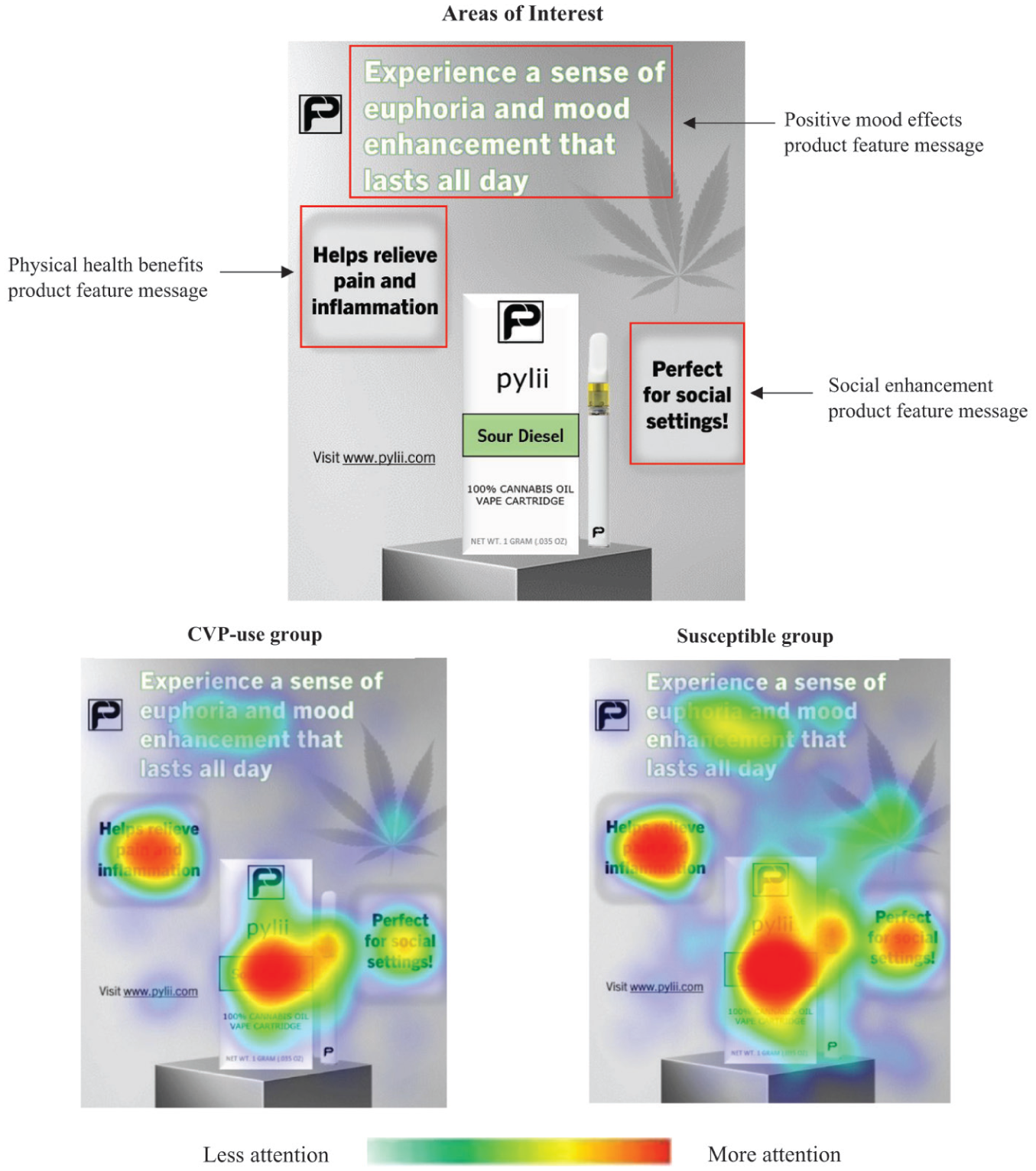
An example of a CVP ad with areas of interest and heatmaps with self-reported attention data from study participants by CVP-use status.
Before submitting survey responses, participants viewed a debriefing message that described short and long-term harms associated with cannabis use on mental and physical health, the addictiveness of cannabis use, and how it can lead to the development of substance use disorder. Lastly, information about the National Institute on Drug Abuse was provided for participants to seek additional information about health outcomes from cannabis use. Those who completed the survey received compensation in the form of points that could be redeemed for cash per Qualtrics’ policy. The study protocol was approved by the Rutgers University Institutional Review Board.
Measures of Noticing Product Feature Messages
As programmed in the heatmap experiment, participants were asked to click or tap on one area of each of the 6 ads that most attracted their attention. The pre-specified ROI areas that participants noticed were recorded as “yes,” and those that participants did not notice were recorded as “no.”29,30
Measures of Experiment Outcomes
Product use intention was the primary outcome measure of this heatmap experiment. Product use intention was assessed using the question, “If you had an opportunity to use this product, would you use it?” on a 10-point scale (1 = definitely no; 10 = definitely yes). 46 Secondary outcome measures were positive product use expectancy, perceived physical health benefits, and perceived mental health benefits. These secondary outcomes were chosen because they are important predictors of product use intentions. 47 Positive product use expectancy was measured by asking participants to indicate how much they agreed or disagreed with the statement, “I think I might enjoy, experience pleasure, or feel good using this product” on a 5-point scale (1 = strongly disagree; 5 = strongly agree).32,48 Perceived physical/mental health benefits were assessed by asking participants to indicate how much they agreed or disagreed with the statements, “I think using this product would have a positive effect on my physical/mental health” (assessed separately) on a 5-point scale (1 = strongly disagree; 5 = strongly agree).
Participant Characteristics
Participant characteristics included in the analyses were age, biological sex, race/ethnicity, sexual orientation, and subjective financial situation29-32 (see specific measure categories in Table 1). Additional participant characteristics included self-reported physical and mental health statuses, each asked on a 5-point scale (1 = poor; 5 = excellent), past-year CVP advertising exposure (1 = never; 5 = very often), and cannabis use history.
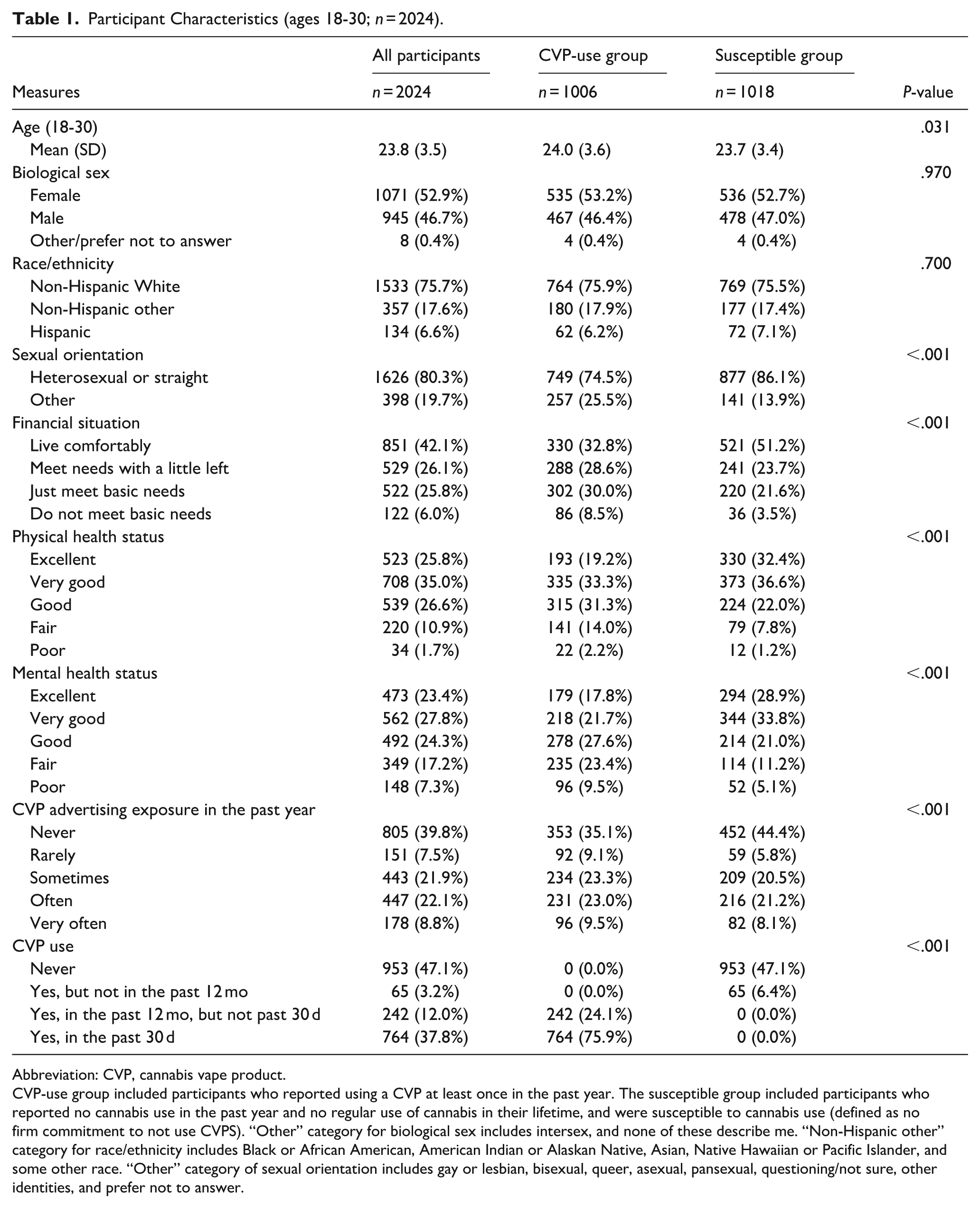
Participant Characteristics (ages 18-30; n = 2024).
Abbreviation: CVP, cannabis vape product.
CVP-use group included participants who reported using a CVP at least once in the past year. The susceptible group included participants who reported no cannabis use in the past year and no regular use of cannabis in their lifetime, and were susceptible to cannabis use (defined as no firm commitment to not use CVPS). “Other” category for biological sex includes intersex, and none of these describe me. “Non-Hispanic other” category for race/ethnicity includes Black or African American, American Indian or Alaskan Native, Asian, Native Hawaiian or Pacific Islander, and some other race. “Other” category of sexual orientation includes gay or lesbian, bisexual, queer, asexual, pansexual, questioning/not sure, other identities, and prefer not to answer.
Statistical Analysis
First, we examined the frequency of participant characteristics by CVP-use status to describe the sample. Second, we ran frequencies of participants who paid attention to at least 1 of 2 messages from each product feature type shown in the ads by CVP-use status. We also implemented Chi-square tests to assess the difference in attention to each product feature message by CVP-use status. Third, we used generalized estimating equation (GEE) models with linear regressions to test the associations of noticing various product feature messages and CVP-related perception outcomes, controlling for participant characteristics. We used GEE models for this analysis because they predict population average effects and account for the nesting of multiple correlated observations (noticing messages and CVP-related perceptions) within individual observations.49,50 Additionally, we tested the best working correlation structure for the GEE models using Stata’s QIC program and chose the exchangeable correlation structure, as it was shown to be the best fit for the GEE models for this analysis. 51 To examine whether participants with different CVP-use statuses (CVP-use group and susceptible group) are influenced by noticing various product feature messages differently, we tested for interactions between noticing messages and CVP-use status on examined outcomes, adjusting for covariates. We analyzed the data using Stata V.18.5 and set the statistical significance to 0.0125, adjusting for the number of perception outcomes (n = 4) we tested for each type of product feature. 52
Results
Participant Characteristics
Participant characteristics are presented in Table 1. The average age was 24.0 and 23.7 for the CVP-use group and the susceptible group, respectively. Among the CVP-use group, 53.2% were female, 46.4% male, and 0.4% other; among the susceptible group, 52.7% were female, 47.0% male, and 0.4% other. Most participants in the CVP-use group were non-Hispanic White (75.9%), followed by non-Hispanic other (17.9%), and Hispanic (6.2%); similarly, among the susceptible group, 75.5% were non-Hispanic White, 17.4% non-Hispanic other, and 7.1% Hispanic. Most participants in both the CVP-use group (74.5%) and susceptible group (86.1%) identified as heterosexual or straight. In terms of financial situation, “living comfortably” was reported by 32.8% of those in the CVP-use group and 51.2% of those in the susceptible group. Lastly, 35.1% and 44.4% of participants in the CVP-use group and the susceptible group reported no CVP advertising exposure in the past year, respectively.
Noticing Product Feature Messages in CVP Ads
Figure 2 presents the frequencies of participants who paid attention to at least 1 of 2 messages from each product feature type shown in the ads, by CVP-use status. Among all participants, the type of product feature message that received the most attention was creativity (38.4%), followed by physical health benefits (35.4%), social enhancement (24.2%), mental health benefits (24.1%), relaxation (23.7%), positive flavor sensation (23.3%), positive mood effects (21.8%), convenience/discreetness (17.4%), and elevated potency (17.2%). Attention to product feature messages was comparable between the 2 CVP-use statuses except for physical health benefits (P < .05).
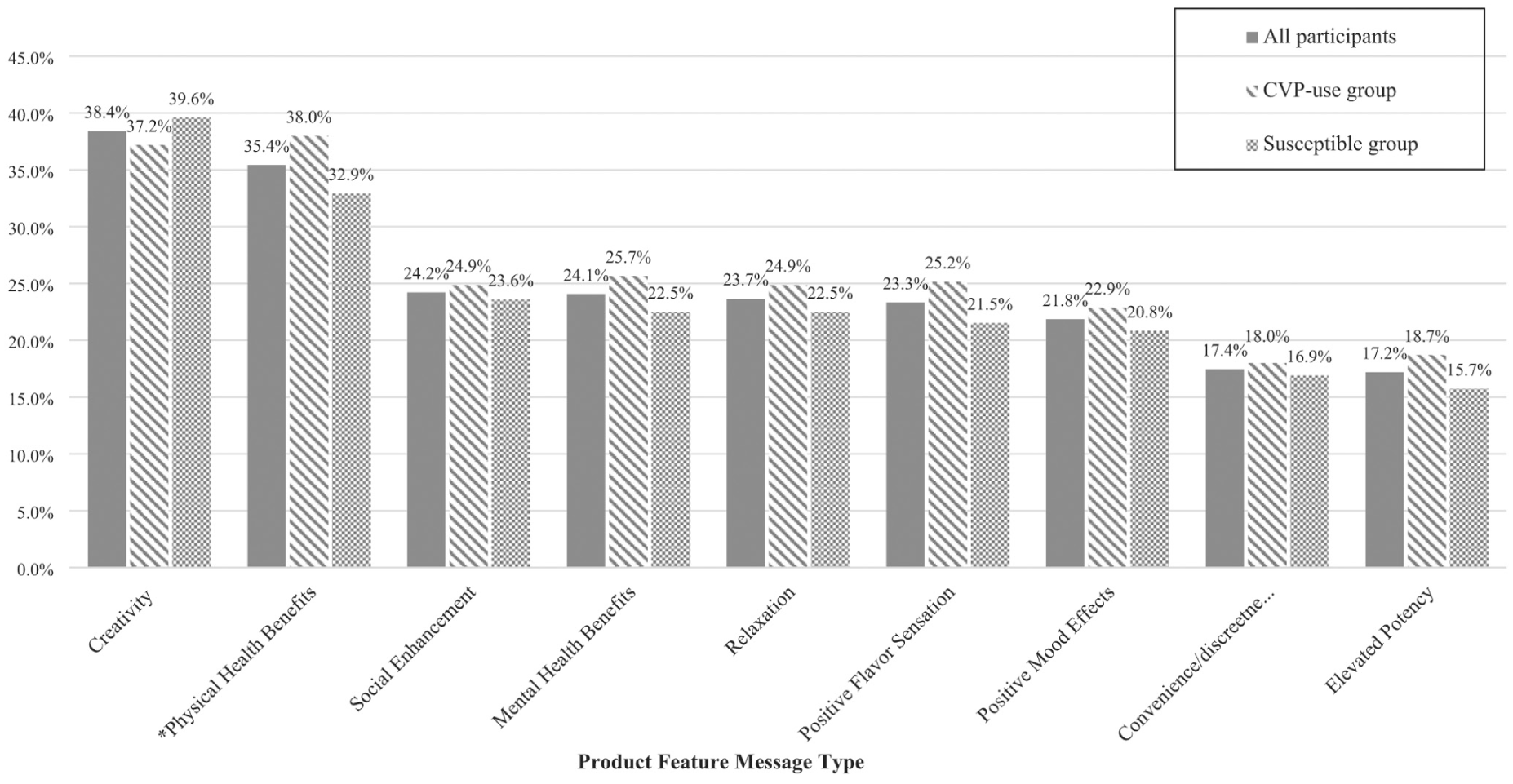
Percentages noticing at least 1 of 2 messages from each product feature type shown in the ads among all participants and by CVP-use status.
Associations Between Noticing Product Feature Messages and CVP-related Perceptions
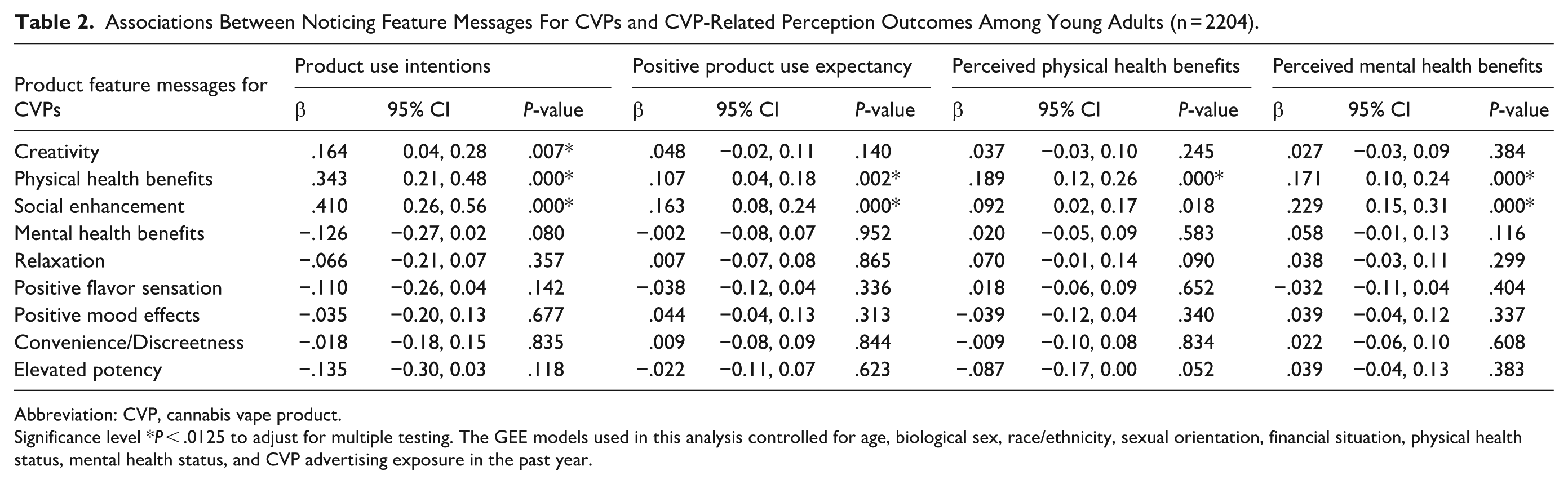
Table 2 presents the GEE model results, which revealed that noticing messages about physical health benefits was positively associated with product use intentions (β = .343, P < .001), positive product use expectancy (β = .107, P = .002), perceived physical health benefits (β = .189, P < .001), and perceived mental health benefits (β = .171, P < .001). Noticing messages about social enhancement was positively associated with product use intentions (β = .410, P < .001), positive product use expectancy (β = .163, P < .001), and perceived mental health benefits (β = .229, P < .001). Finally, noticing messages about creativity was positively associated with product use intentions (β = .164, P = .007). None of the interactions between noticing product feature messages and CVP-use status was statistically significant.
Associations Between Noticing Feature Messages For CVPs and CVP-Related Perception Outcomes Among Young Adults (n = 2204).
Abbreviation: CVP, cannabis vape product.
Significance level *P < .0125 to adjust for multiple testing. The GEE models used in this analysis controlled for age, biological sex, race/ethnicity, sexual orientation, financial situation, physical health status, mental health status, and CVP advertising exposure in the past year.
Participant Characteristics as Risk Factors For CVP Use Intentions
Based on the GEE models (which include the estimates of all covariates), several covariates served as significant predictors of CVP use intentions (Supplemental Material IV). Consistently throughout the models, being male (vs female), reporting “very good” or “excellent” mental health status (vs “poor”), and being exposed to CVP ads “sometimes,” “often,” or “very often” (vs “never”) was associated with increased product use intentions. Conversely, non-Hispanic other participants (vs non-Hispanic White) were less likely to report increased product use intentions throughout the models.
Discussion
This study examines the associations between noticing messages describing CVP functions and benefits in the context of commercial ads and CVP use intentions and perceptions among YAs. Our results indicate that among YAs, product feature messages about physical health benefits, social enhancement, and creativity appearing in CVP ads were the most likely to receive visual attention. In addition, attention to those messages was associated with increased CVP use intentions and other positive perceptions, which may drive future CVP use among this group. This study has important public health implications, as YAs show a high and rising prevalence of CVP use, driven largely by recreational motivations and increasingly pervasive CVP advertising. Understanding how such ads shape favorable perceptions and intentions to use CVPs is critical for informing effective policy actions and health communication strategies.
Our results showed that noticing messages about physical health benefits (including treating pain and inflammation and improving sleep) was positively associated with all examined outcomes, indicating its potentially strong influence in instigating future CVP use among YAs. Cannabis was initially legalized in many states for its medical benefits, 6 and has only been approved by the US Food and Drug Administration for alleviating nausea from chemotherapy treatment, treating seizures associated with epilepsy, and treating anorexia in AIDS patients. 53 However, cannabis is often wrongfully advertised as beneficial for addressing a wide range of physical health problems not supported by conclusive or substantial scientific evidence.35,54-60 It is frequently found that the physical health benefit claims featured on those marketing channels are false and misleading.54,61,62 Viewing unfounded and misleading health claims can lead to cannabis misuse, especially among consumers who already suffer from physical and mental health illnesses. 6 The US Federal Trade Commission’s truth-in-advertising law states that companies must support health-related claims for cannabis products with high-quality evidence to prevent misleading information that may impact consumers’ decisions.63,64 Therefore, our results related to the influence of viewing physical health claims call for additional efforts to adequately monitor health-related claims in cannabis marketing to reduce cannabis misuse.
Our results also reveal that noticing product feature messages in CVP ads about social enhancement may increase product use intentions, perceived positive product use expectancy, and perceived mental health benefits among YAs. Mounting research has revealed the widespread use of messages and visuals that depict tobacco use as a social activity or a way to conform to peers, which have been successful in increasing ad and product appeal, especially among young people.65,66 These messages may resonate with this population because the desire to fit in and conform to peers is especially prevalent during adolescence and young adulthood. 67 Several anti-cannabis educational programs have already leveraged this knowledge by challenging perceived social norms and social enhancement benefits from cannabis use to reduce product use among young people. 68 Public health policies and communication efforts should address not only the product features but also the social narratives that normalize use among young people. Prevention programs can integrate digital media literacy components to help youth critically evaluate such persuasive marketing cues and identify the intent behind social enhancement messaging.69,70
In addition, our study results suggest that messages about creativity, a prominent psychoactive effect of CVP use, serve as another important function noticed by YAs in CVP ads and drive use interest. Although there is inconclusive evidence regarding increased creativity as a result of cannabis use,71,72 messages and claims about creativity are frequently used in cannabis marketing materials as a positive psychoactive effect.33,35,38 Creativity and relevant cognitive enhancement, such as increased focus, 37 may be highly valued among YAs for cannabis use, especially for identity formation and enhanced self-expression. 73 Efforts aimed to reduce YAs’ interest in CVP use may leverage counter messages that highlight the risks of known psychoactive effects from cannabis use, especially with high doses, such as impaired judgment or memory. 6 High doses, however, tend to impair executive function, working memory, and attention, which are important for sustained creativity and problem-solving. 6
We did not find associations between noticing positive flavor sensation messages and any examined outcomes. Research shows that flavor is the most impactful feature type in driving product appeal and use interest when noticed in ads for nicotine vape products and other tobacco products, especially among young people.29,30 Alternatively, little has been done to explore the impact of flavors on cannabis use intentions and behavior when noticed in ads. The lack of associations found in the study may be that among YAs, flavor sensation is not a prominent reason or outcome expectancy for CVP use compared to other benefits unique to cannabis products, such as physical health benefits and psychoactive effects. It is also possible that other flavor-related features (eg, fruit images or flavor descriptors) would have been more impactful in enhancing positive perceptions and use intentions. Further research is needed to examine how flavor names and sensory descriptors presented in cannabis product descriptions may influence young adults’ intentions to use these products, given the high prevalence of such descriptors across product listings.35,38
We found no association between noticing mental health benefit messages and perceived mental health benefits of CVP use. One plausible explanation is message inoculation: YAs may be frequently exposed to communications about cannabis-related mental health harms (eg, psychosis, anxiety, suicidality) via news coverage, prevention campaigns, and mandated warning labels,74-78 which may blunt the persuasive impact of pro-mental health claims (eg, cannabis can ease or treat anxiety). Future work should examine how YAs interpret and appraise mental health benefit claims, considering prior beliefs, source credibility, and personal mental health history, and test whether these processes differ from responses to physical health benefit messages, which may have clearer behavioral implications based on our findings.
We found little variation by CVP-use status in the associations between noticing product feature messages and any outcome, suggesting that the influence of messages about CVP functions and benefits is similar for these 2 groups. We did, however, identify subgroups of YAs, including those identifying as male, those reporting very good or excellent mental health, and those with greater exposure to CVP ads, who showed increased use intentions when exposed to these messages. Further research should examine the mechanisms behind these demographic differences and inform targeted counter-messaging to reduce CVP misuse.
This study has several limitations. First, the use of an online purposive sample of YAs rather than a nationally representative sample limits generalizability. As a result, individuals from lower socioeconomic and racial and ethnic minority backgrounds may be underrepresented in our study. Second, outcomes were based on self-reported noticing of product feature messages rather than objective visual attention metrics (eg, eye-tracking).31,32 Third, although messages were drawn from a high-frequency set used to market CVPs on an e-commerce platform, 35 they do not capture the full range of messages young adults encounter in everyday settings. Fourth, while message placement within ads was randomized to minimize design artifacts, the resulting combinations may not reflect real-world advertising mixes.
Conclusion
This study revealed that CVP ad messages highlighting physical health benefits, social enhancement, and creativity drew the most visual attention, and that attention was linked to higher CVP use intentions and more favorable perceptions among YAs, which may promote future use. Notably, physical health benefit messages were associated with all outcomes, underscoring the need to monitor and curb unfounded or misleading health claims. To counter social enhancement appeals, prevention efforts should address perceived social norms around CVP use. Messaging should also foreground the risks of psychoactive effects to mitigate interest sparked by “enhanced creativity” claims. Finally, additional research should test how function and benefit-focused messages operate within real advertising contexts to guide claim monitoring and develop effective counter-messaging to reduce CVP misuse.
Supplemental Material
sj-docx-1-saj-10.1177_29767342261453196 – Supplemental material for Associations Between Noticing Product Features in Cannabis Vape Product Advertisements and Product Use Perceptions Among Young Adults: A Heatmap Experiment
Supplemental material, sj-docx-1-saj-10.1177_29767342261453196 for Associations Between Noticing Product Features in Cannabis Vape Product Advertisements and Product Use Perceptions Among Young Adults: A Heatmap Experiment by Kathryn La Capria, Sarah D. Kowitt, Kimberly G. Wagoner, Ollie Ganz, Siyan Meng and Julia Chen-Sankey in Substance Use & Addiction Journal
Footnotes

Ethical Considerations
Institutional Review Board approval was not required.
Authors contribution
KLP interpreted the findings and drafted and reviewed the manuscript. SDK edited and reviewed the manuscript. KGW edited and reviewed the manuscript. OG edited and reviewed the manuscript. SM edited and reviewed the manuscript. JCS conceptualized the study, led the study design, supervised the project, interpreted the findings, and drafted the manuscript. JCS conceptualized the study, led the study design, supervised the project, interpreted the findings, and drafted the manuscript.
Funding
The authors disclosed receipt of the following financial support for the research, authorship, and/or publication of this article: JCS’s effort was supported by the National Institute on Drug Abuse of the National Institutes of Health under award number R01DA063652.
Declaration of Conflicting Interests
The authors declared no potential conflicts of interest with respect to the research, authorship, and/or publication of this article.
References
Supplementary Material
Please find the following supplemental material available below.
For Open Access articles published under a Creative Commons License, all supplemental material carries the same license as the article it is associated with.
For non-Open Access articles published, all supplemental material carries a non-exclusive license, and permission requests for re-use of supplemental material or any part of supplemental material shall be sent directly to the copyright owner as specified in the copyright notice associated with the article.
