






Abstract
Background:
Despite the gradual shift in public policy and perception toward cannabis use, there is limited evidence on the co-use of cannabis and antidepressants, and comparative use of these substances across the 3 distinct phases of cannabis legalization. We examined the use of cannabis and/or antidepressant patterns over time, and explored potential sex differences over legalization phases.
Methods:
Data were utilized from the 2013 to 2023 Centre for Addiction and Mental Health (CAMH) Monitor study, a repeated cross-sectional survey of adults 18 years of age and older (n = 20 498; 52% female). The surveys employed a regionally stratified sampling design using computer-assisted telephone interviews and web surveys. Multinomial logistic regression modeling was performed to analyze the data.
Results:
The exclusive use of cannabis increased from 7.2% to 14.9%, and use of both cannabis and antidepressant increased from 1.3% to 5.5% between pre-and post-legalization of cannabis periods, respectively (P < .001). There was a significant interaction between legalization periods and sex on the use of cannabis and/or antidepressant (P < .001), suggesting that the relative risk ratio (RRR) of using cannabis rather than antidepressant was higher among females during the post-legalization period, compared to the pre-legalization period (RRR = 2.27, 95% confidence interval: 1.76-2.93). In both sexes, the relative risk of using both substances was significantly higher during the post-legalization period.
Conclusions:
As cannabis becomes legal and commercialized, the likelihood of using it over antidepressants seems to increase, especially among females. The growing trend of using both substances could have significant public health and clinical implications due to the potential for harmful drug interactions.
Highlights
Research examining the use of cannabis and antidepressants across different phases of cannabis legalization remains limited.
The co-use of cannabis and antidepressants increased from 1.3% in 2013 to 5.5% in 2023.
Following cannabis legalization, females were more likely to report cannabis use compared to antidepressant use.
The likelihood of using both substances increased for both males and females during the post-legalization period.
Introduction
Antidepressant drugs, commonly referred to as “antidepressants,” are the most commonly prescribed drugs to treat mainly depressive disorders. 1 In the past decades, there has been a surge in antidepressant use in industrialized countries, including Canada.1-3 In the United States, the use of antidepressants increased more than fourfold from the early 1990s to the early 2000s. 4 Similarly, in the United Kingdom, the number of prescriptions for these drugs more than tripled from 1998 to 2018. 5 In Canada, the use of antidepressants increased from 9.2% in 2006 to 12.8% in 2012, 1 and data from community pharmacies indicated a continued increase, from 14.8% in 2019 to 16.6% in 2021. 6
Increases in antidepressant use have raised concerns about the potential health impacts of the co-use of antidepressants and other substance use. 7 Recent evidence has demonstrated that individuals who engage in harmful or problematic drinking behavior are significantly more likely to use antidepressants compared to those who do not, 8 which can lead to adverse health outcomes, such as drug interactions and increased side effects. 9 Alcohol can exacerbate antidepressant-related side effects by depressing the central nervous system, slowing recovery, and altering hepatic metabolism. 10 Cannabis poses distinct risks, including disruption of the serotonergic system and increased cognitive or psychomotor impairment.11,12 In addition, cannabinoids may inhibit the metabolism of several antidepressants, leading to elevated serum drug levels and increased risk of toxicity.9,13 As cannabis legalization expands and mental health treatment becomes more common, the co-use of cannabis and antidepressants has emerged as a growing clinical concern. 13 Previous studies have shown that individuals with depression are at increased risk of cannabis use, and heavy cannabis use is associated with the development of depressive disorders.14,15 In the U.S. states where cannabis is legally accessible, there has been a notable increase in cannabis use for treating mood and anxiety disorders, suggesting that individuals might be turning to cannabis as an alternative or complementary treatment for their health concerns. 16 Since October 2018, when Canada legalized cannabis for recreational use, adults have been able to buy and consume it, 17 leading to increased cannabis consumption. 18 This policy change has not only influenced recreational use but also potentially impacted how cannabis is utilized for medical purposes. Research has shown that with easier access to cannabis, people might choose to self-medicate for their depressive symptoms with cannabis, 19 or use it as an alternative to prescription medications. 20 A meta-analysis by Kosiba et al revealed that depression is the third most commonly reported reason for using cannabis for medical purposes, with 34% of individuals who use cannabis for medical purposes reporting using it to manage depressive symptoms, following pain (64%) and anxiety (50%). 21
In addition to exploring patterns in the co-use of cannabis and antidepressants, it is important to consider how such patterns may vary by sex and age. Generally, research has shown females to be more than twice as likely as males to report depressive symptoms,22,23 and are also more likely than males to use antidepressants. 24 The association between cannabis use and depression is stronger among males during early adulthood and among females during midlife. 25 Research has also found that the strength of association between cannabis use and depression has increased among young adults following the legalization of cannabis. 26 This trend underlines the importance of considering sex and age differences when examining cannabis and antidepressant use during various phases of the legalization process (ie, pre-legalization, legalization, and post-legalization). In the initial phase of cannabis legalization, the Canadian government restricted sales to dried cannabis flower products and limited the number of stores. However, starting in January 2020, the legal market saw significant growth with the introduction of cannabis vaping products, edibles, and concentrates. 17 By April 2020, restrictions on the number of cannabis stores were also lifted, further expanding the market (ie, the phase of cannabis commercialization).
We therefore expect that the legalization of recreational use of cannabis in Canada will lead to different patterns of cannabis and antidepressant use among males and females, and younger adults, particularly during the post-legalization (commercialization) phases. This study examined the use of cannabis and antidepressants over the past decade, focusing on 3 distinct phases of cannabis legalization, and investigated potential sex and age differences in the impact of legalization on these patterns.
Methods
Study Design and Population
Data were used from the Centre for Addiction and Mental Health (CAMH) Monitor survey. The CAMH Monitor is a repeated cross-sectional survey of the general population of adults aged 18 years and older in Ontario, Canada. The survey assesses epidemiological indicators related to substance use, mental health, and general health.
The 2013 to 2019 survey cycles employed a regionally stratified design with a 2-stage probability selection of telephone numbers using list-assisted random digit dialing and a computer-assisted telephone interviewing system. Each regional stratum employed a 2-stage probability selection procedure: the first stage involved households of selected telephone numbers, and the second stage involved English-speaking respondents at least 18 years of age. The 2020 to 2023 survey cycles employed a Qualtrics-based web survey and quota sampling based on region (6 regions with equal allocation), age, sex, education, and foreign-born status, ensuring the survey sample was proportional to the respective adult population in Ontario, Canada.
In all survey cycles, post-stratification sample weights were applied to account for possible selection bias and to better reflect the Ontario adult population based on age and sex compositions. 27 The current study utilized data from the 10 cycles of the survey conducted from 2013 to 2023, resulting in a sample size of 20 498 respondents.
Measures
Antidepressant use was assessed with the survey question, “In the past 12 months, have you taken any prescription medication to treat depression?” A dichotomous measure was created to assess any antidepressant use in the past 12 months (yes/no). Cannabis use was derived from the question: “How often, if ever, have you used cannabis, marijuana, or hash during the past 12 months?” Cannabis use was defined as using cannabis at least once a month versus no use (includes those who used less frequently than once a month). A 4-level categorical variable was created to assess the combined use of cannabis and antidepressants in the past year: (1) no cannabis use and no antidepressant use, (2) exclusive cannabis use, (3) exclusive antidepressant use, and (4) use of both cannabis and antidepressants.
Covariates
The interview/survey year was segmented into 3 distinct periods of cannabis legalization in Canada: pre-legalization (January 2013 to September 2018), legalization but with restricted retail stores and cannabis products (October 2018 to March 2020), and post-legalization “commercialization” phase with unlimited retail stores and a wider range of products (April 2020 to December 2023). 28 To account for potential bias, the analysis adjusted for sociodemographic factors known to be associated with cannabis use and mental health outcomes, including age, sex, marital status, presence of children in the household, education, employment status, immigration status, racial background, and the COVID-19 period.24,29-32 Sex was assessed using a dichotomous item (male/female). Age was assessed using a 5-category item (18-29, 30-39, 40-49, 50-64, and 65+). Marital status was assessed using a 3-category item (married/partnered, widowed/divorced/separated, and never married). The presence of children at home (<18 years) was assessed as yes or no. Education was assessed using a 3-category item (less than high school diploma/completed high school, some post-secondary education, and university/college degree). Employment status was defined as a 5-category variable (full-time, self-employed, unemployed, retired, and other (eg, part-time/student)). Annual household income (CAD$) was categorized as less than $30 000, $30 000 to 49 999, $50 000 to 79 999, and $80 000 or more, and refused/don’t know. Immigration status was defined as being born outside of Canada versus not, and racial or ethnic background as non-white versus white. Given that the COVID-19 pandemic coincided with a period of increased normalization and accessibility of legal cannabis, and may have independently influenced cannabis and mental health treatments, including antidepressant use, COVID-19 was included as a confounder. The pandemic was operationalized from 2020 to 2022, with 2013 to 2019 (pre-pandemic) and 2023 (post-emergency periods where restrictions were lifted) designated as non-pandemic periods.
Statistical Analysis
Descriptive statistics (percentages) were used to present sociodemographic variables by cannabis/antidepressant use. Chi-squared tests were employed to compare sociodemographic differences across these categories. Multinomial logistic regression analyses were used to examine the association between legalization periods and the separate or combined use of cannabis/antidepressant. Relative risk ratios (RRRs) were calculated with 95% confidence intervals (CIs) for all analyses adjusted for covariates such as age, sex, marital status, having children at home, race, education status, employment status, household income, and immigration status, and the COVID-19 period. To facilitate the interpretation of RRRs, the reference categories were set as “no cannabis or antidepressant use” and “antidepressant use only,” without altering the underlying model fit. Interactions between legalization phases and sex or age on cannabis/antidepressant use were also examined while adjusting for potential confounders. All analyses accounted for the complex survey design. The data were weighted to adjust for varying selection probabilities, regional representation, and a final post-stratification adjustment to restore the age by sex distribution based on the most recently available census figures. 33 For all analyses, a complete case analysis was performed, 34 P-values were 2-tailed, and statistical significance was set at P < .05. All analyses were performed using STATA version 18.0 software. 35
Results
Sociodemographic Characteristics
Descriptive statistics of the weighted sample by cannabis use and/or antidepressant use in the past year are provided in Table 1. Among the total pooled sample (n = 20 498), about 9.7% of participants reported that they used cannabis monthly or more often in the past year, 8.5% used antidepressants in the past year, and about 2.5% used both cannabis and antidepressants. The overall percentage reporting use of cannabis and/or antidepressants by survey year is available as a Supplemental File (eFigure 1). The percentage reporting exclusive cannabis use increased from 7.1% in 2013 to 13.7% in 2023, whereas those reporting exclusive antidepressant use increased from 6.5% to 12.2% during the same period. The percentage reporting both cannabis and antidepressant use increased from 1.0% in 2013 to 6.2% in 2023 (P = .001).
Sociodemographic Characteristics of Ontario Adults by Cannabis Use and/or Antidepressant Use in the Past Year: 2013 to 2023.
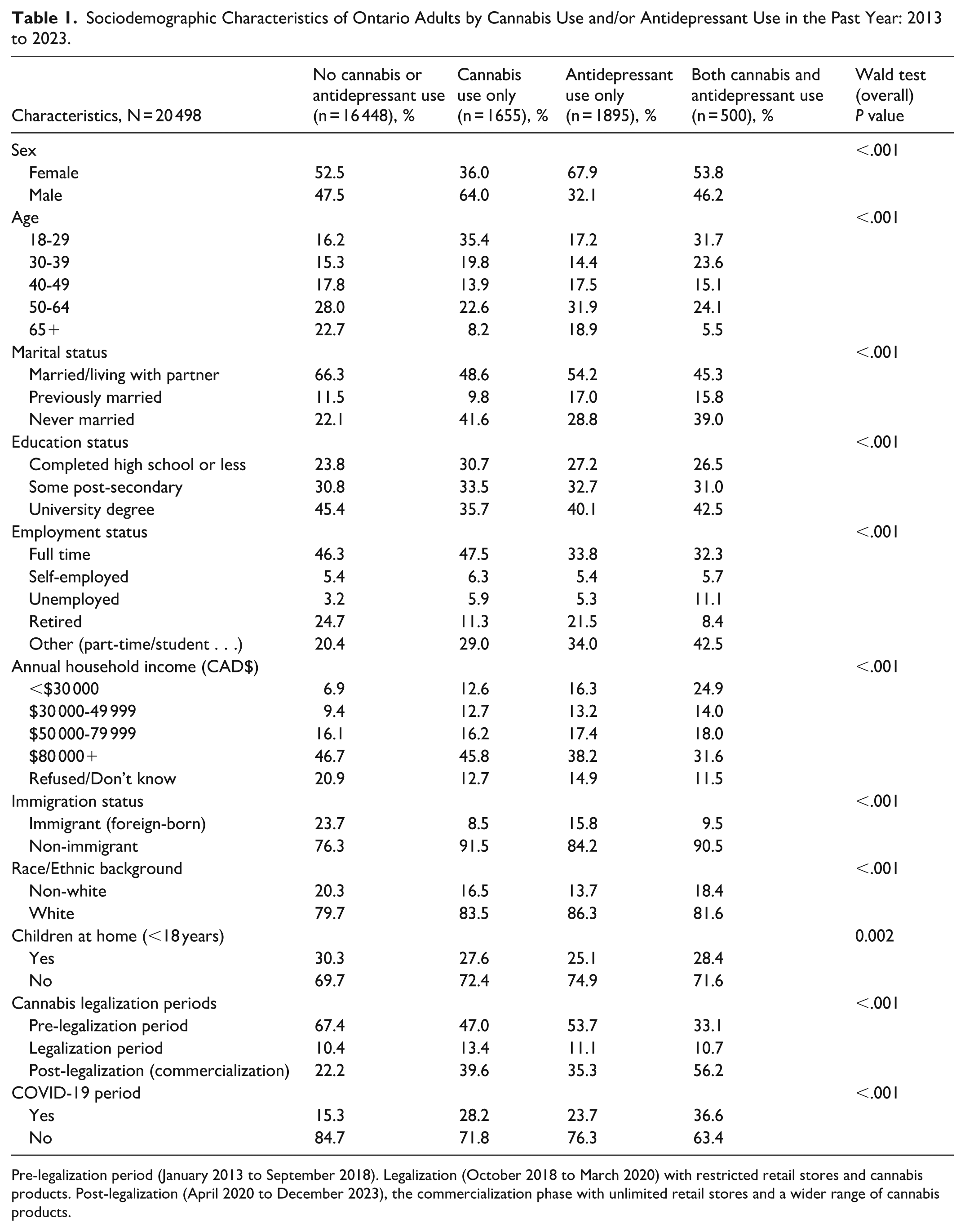
Pre-legalization period (January 2013 to September 2018). Legalization (October 2018 to March 2020) with restricted retail stores and cannabis products. Post-legalization (April 2020 to December 2023), the commercialization phase with unlimited retail stores and a wider range of cannabis products.
Overall, a higher percentage of males use cannabis exclusively compared to females (64% vs 36%), but a higher percentage of females use antidepressants exclusively (67.9% vs 32.1%), or use both cannabis and antidepressants, than males (53.8% vs 46.2%, P < .001, respectively). A higher proportion of young adults (18-29 years) use cannabis exclusively as well as use both cannabis and antidepressants, compared to older counterparts. In addition, racial background, marital status, having children at home, immigration status, educational status, employment status, and household income were significantly associated with the use of cannabis and/or antidepressant use in the past year (Table 1).
The Effect of Legalization Phases on Cannabis and/or Antidepressant Use
Overall, the results indicated that cannabis use increased from 7.2% during the pre-legalization period to 14.9% in the post-legalization (P = .001). Likewise, antidepressant use increased from 7.2% during pre-legalization to 11.6% in post-legalization (P = .001). Using both cannabis and antidepressants also increased from 1.3% in the pre-legalization period to 5.5% in the post-legalization period (P = .001).
We found a significant 2-way interaction effect between legalization periods and sex on cannabis and/or antidepressant use (Table 2). The results showed that the impact of legalization phases on cannabis over antidepressant use varied for males and females (F(6, 19 059) = 3.93, P = .001), adjusted for age, marital status, educational attainment, household income, employment, having children, immigration status, and racial background. Figure 1 illustrates the marginal probabilities of using cannabis and/or antidepressants by sex and legalization phases. The marginal probabilities of using cannabis and/or antidepressants by sex for every year are available as Supplemental File (eFigure 2). Additionally, the sex-stratified analyses revealed that the relative risk of exclusive cannabis use compared to exclusive antidepressant use among females was 1.7 and 2.3 times higher during legalization (RRR = 1.72, 95% CI: 1.17-2.54) and post-legalization (RRR = 2.27, 95% CI: 1.76-2.93), respectively, compared to the pre-legalization period (Table 3). However, these increases in relative risk of exclusive cannabis use compared to antidepressant use were not evident among males (Table 3). Age differences over legalization periods on the relative risk of using cannabis and/or antidepressants were not evident.
Interaction Between Legalization Phases and Sex on Cannabis/Antidepressant Use.
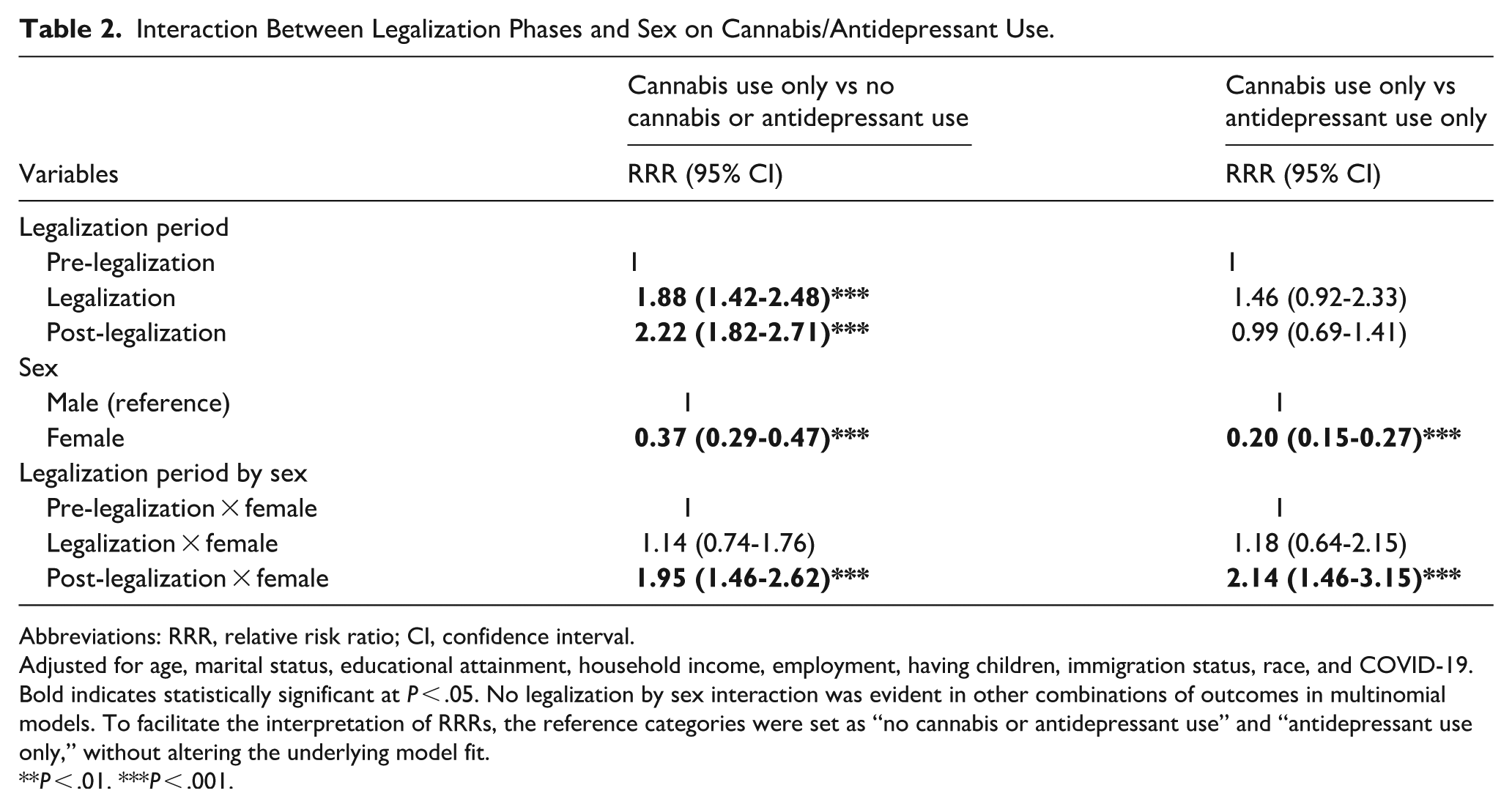
Abbreviations: RRR, relative risk ratio; CI, confidence interval.
Adjusted for age, marital status, educational attainment, household income, employment, having children, immigration status, race, and COVID-19. Bold indicates statistically significant at P < .05. No legalization by sex interaction was evident in other combinations of outcomes in multinomial models. To facilitate the interpretation of RRRs, the reference categories were set as “no cannabis or antidepressant use” and “antidepressant use only,” without altering the underlying model fit.
P < .01. ***P < .001.
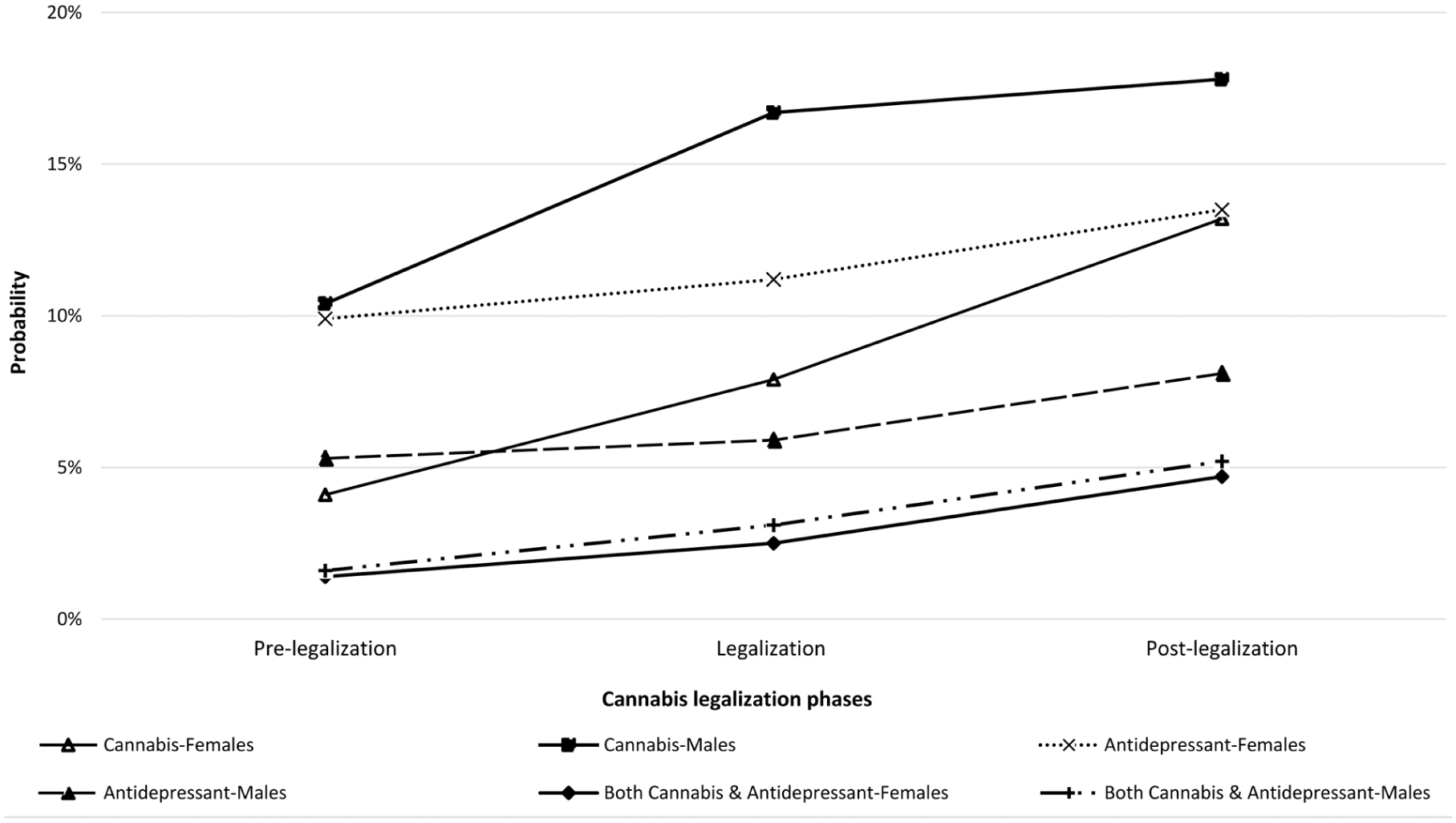
Marginal probabilities of cannabis use and/or antidepressant use by sex over cannabis legalization phases among adults in Ontario, Canada.
The Effect of Legalization Phases on Use of Cannabis/Antidepressant Use Stratified by Sex.
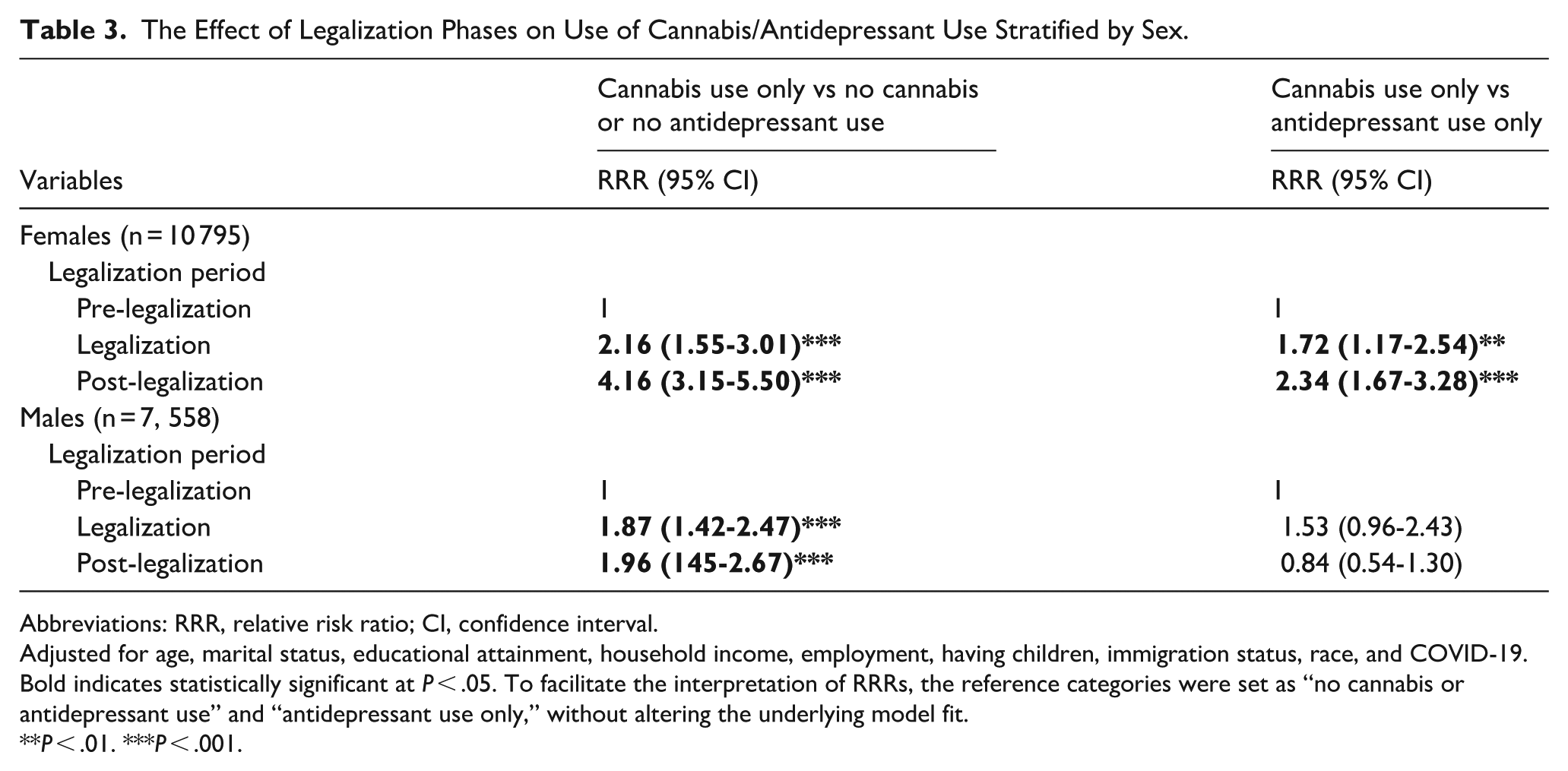
Abbreviations: RRR, relative risk ratio; CI, confidence interval.
Adjusted for age, marital status, educational attainment, household income, employment, having children, immigration status, race, and COVID-19. Bold indicates statistically significant at P < .05. To facilitate the interpretation of RRRs, the reference categories were set as “no cannabis or antidepressant use” and “antidepressant use only,” without altering the underlying model fit.
P < .01. ***P < .001.
Discussion
This study examined the effect of cannabis legalization phases on cannabis and antidepressant use patterns and the role of sex and age on these associations at a population level. After adjustment for potential confounders such as age, racial background, marital status, education, household income, having children, and immigration status, the results revealed that there is a significant interaction effect between sex and cannabis legalization phases on the use of cannabis relative to antidepressant use over the decade between 2013 and 2023.
Although previous research has shown that the use of cannabis has increased after legalization of cannabis,18,36 the present study extended existing research by using sex-specific approaches along with cannabis policy changes in our understanding of antidepressant and cannabis use patterns in the past decade. We found that the changes in cannabis use relative to antidepressant use vary significantly between females and males after legalization. The relative risk for exclusive use of cannabis among females was about 2 times higher than antidepressant use during the post-legalization period compared to the pre-legalization period; however, this was not evident among males during the same period. These findings suggest that the increased availability of legal cannabis may be associated with changes in antidepressant use patterns at the population level, particularly among females. In line with this finding, a review of studies has shown that females are more likely than males to use substances as a form of self-medication to manage stress or depressive symptoms.37,38 Females are also twice as likely to experience depressive symptoms as males,22,23 such that the higher odds of using cannabis over prescription antidepressant medications among females may reflect differences in approaches to symptom management, including the potential use of cannabis to self-medicate depressive symptoms. Previous research has highlighted a significant increase in the use of cannabis for medical purposes without formal medical authorization, 39 suggesting that more individuals may be choosing to self-medicate with cannabis rather than consulting healthcare professionals. Given that antidepressants can cause side effects like sleep disturbance, weight gain, and sexual dysfunction,40,41 some individuals taking these medications may seek alternative solutions to manage the side effects. One such alternative is cannabis, which can be used to mitigate the unwanted side effects of antidepressants.40,41 In addition, emerging evidence suggests that cannabis might have non-monoamine-based pharmacology (multimodal mechanism of action), which might interest individuals with depression to use as an alternative medication as opposed to an antidepressant with monoaminergic neurotransmission effects. 13 It is also documented that individuals with depression are twice as likely to use cannabis compared to those without depression. 14 Yet, further research is needed to ensure safe and effective use of cannabis relative to antidepressants for mental health issues.
Another important finding is that the co-use of cannabis and antidepressants has quadrupled among both males and females over the past decade. This trend could have public health and clinical implications, as there are notable dose-dependent interactions between cannabis and antidepressant medications, including Selective Serotonin Reuptake Inhibitors (SSRIs), which are the most commonly prescribed type of antidepressants. 9 While the impact of co-use of cannabis and antidepressants on health outcomes remains unclear, a review of existing studies suggests that cannabis might interfere with the liver’s ability to metabolize antidepressants, potentially leading to higher levels of medication in the bloodstream and increased risk of experiencing more side effects. 9 At the same time, research indicates that the use of cannabis was associated with a reduction of symptoms for treatment-resistant depression and other health concerns. 42 Notably, the relationship between cannabis use and depression is bidirectional, such that the problematic or heavy use of cannabis is associated with a greater risk of developing depression and may worsen the prognosis of depression by counteracting the benefits of antidepressants.43,44 These risks may be further compounded when cannabis is used concurrently with antidepressant medications.9,45
Overall, the present study underscores the importance of examining polysubstance use patterns in the context of cannabis legalization, particularly with respect to cannabis and antidepressant use, while accounting for sex differences. The findings also highlight the need for tailored health care strategies that can better support individuals facing co-occurring depressive symptoms and substance use, including improved access to resources that promote healthier coping strategies. Such considerations may be particularly important for females, who appear to report a greater burden of depressive symptoms.
Public Health and Clinical Implications of the Findings
Cannabis legalization and its subsequent commercialization appear to have sex-specific implications for public health, particularly as females increasingly substitute or supplement antidepressants with cannabis. This trend likely stems from the perceived therapeutic benefits and the increased availability of diverse cannabis products, which may alter traditional mental health care-seeking behaviors. The substantial rise in concurrent use of cannabis and antidepressants also has important clinical and public health implications due to potential pharmacological interactions that could lead to serious adverse effects and unintended treatment outcomes. Consequently, these findings underscore the need for integrated population-level monitoring of cannabis use, antidepressant prescribing, and mental health outcomes in the post-legalization context, as well as gender-responsive clinical and public health strategies. Further research is needed to better understand the health consequences of cannabis and antidepressant co-use, including potential sex-specific effects, to inform clinical guidance and policy development.
Limitations of the Study
The present study has several limitations. First, the study comprised both probabilistic (2013-2019) and non-probabilistic samples (2020, 2022, 2023), which might introduce some bias. To minimize the potential bias, each year’s data were weighted proportionally to their respective census population, and the estimates were adjusted during analyses to certain characteristics that vary across the survey modes (eg, age, sex, educational status, marital status, race, immigration status, and survey year). The present study utilized data derived from phone interviews in some survey waves or web-based surveys in others, which may complement each other by offsetting their respective limitations. Although phone interviews can facilitate engagement, respondents might still feel inclined to provide answers they perceive as more socially acceptable, especially when asked about sensitive topics. 46 In contrast, self-administered online surveys generally offer a greater sense of privacy and anonymity, which can reduce social desirability bias and encourage more candid responses. While this approach reflects the constraints of secondary data analysis, reliance on single items may increase the risk of bias and limit the ability to assess patterns and severity in greater detail. Cannabis use and other variables were assessed using single-item self-report measures rather than a validated scale. Future studies should incorporate standardized and validated instruments to more precisely capture substance use behaviors and severity. The web panel sample employed quota sampling, which might introduce selection bias. To enhance comparability across surveys 2 were taken: (1) the sample was proportionally allocated based on age, sex, region of residence, and immigration status using Canadian census benchmarks; (2) all data were weighted post-collection to reflect population distributions. 47 In addition, as the findings are based on repeated cross-sectional surveys conducted at specific points in time, causal inferences cannot be drawn. Finally, while the findings suggest important implications regarding the risk of concurrent cannabis and antidepressant use, this study was not able to evaluate the potential benefits or harms of combined use with respect to specific health outcomes. Moreover, changes in use over time may reflect shifts in underlying mental health status, symptom severity, or access to care that could not be assessed within the scope of the current study.
Conclusions
In conclusion, the findings indicate that the relative risk of cannabis use among females almost doubled during the legalization and post-legalization (commercialization) periods compared to males. Additionally, an increasing number of female adults now use cannabis over antidepressants following the legalization of cannabis. This may be reflective of increased access and availability of various cannabis products, as well as the therapeutic use of cannabis for mental health issues. Additionally, the significant rise in the co-use of cannabis and antidepressants following cannabis legalization could have clinical and public health implications as these substances interact with each other and could increase the risk of adverse health outcomes. Therefore, it is important to monitor trends in the use of both cannabis and antidepressants to better identify groups that are particularly at risk. More research is needed to improve our understanding of the impact of using cannabis and antidepressants on adverse health outcomes.
Supplemental Material
sj-docx-1-saj-10.1177_29767342261462867 – Supplemental material for Cannabis and Antidepressant Use During the Periods Before and After Cannabis Legalization in Ontario, Canada: 2013 to 2023
Supplemental material, sj-docx-1-saj-10.1177_29767342261462867 for Cannabis and Antidepressant Use During the Periods Before and After Cannabis Legalization in Ontario, Canada: 2013 to 2023 by Yeshambel T. Nigatu, Sameer Imtiaz, Sergio Rueda, Tara Elton-Marshall and Hayley A. Hamilton in Substance Use & Addiction Journal
Footnotes
Acknowledgements
We acknowledge the Institute for Social Research at York University for administering the data collection.

Ethical Considerations
The research ethics boards at CAMH and York University have approved the CAMH Monitor survey annually.
Consent to Participate
Informed consent was provided by all participants.
Author Contributions
YTN and HAH conceived the study aims. YTN, SI, TE-M, SR, and HAH conceptualized the study and methodology. YTN conducted the formal analysis, curated the data, and drafted the manuscript. SI, TE-M, SR, and HAH review and edit the manuscript.
Funding
The authors disclosed receipt of the following financial support for the research, authorship, and/or publication of this article: This research is based on the CAMH Monitor survey, a Centre for Addiction and Mental Health (CAMH) initiative that is funded in part through targeted funding from provincially funded organizations.
Declaration of Conflicting Interests
The authors declared no potential conflicts of interest with respect to the research, authorship, and/or publication of this article.
Data Availability Statement
Data will be available upon request via
Supplemental Material
Supplementary material for this article is available online.
References
Supplementary Material
Please find the following supplemental material available below.
For Open Access articles published under a Creative Commons License, all supplemental material carries the same license as the article it is associated with.
For non-Open Access articles published, all supplemental material carries a non-exclusive license, and permission requests for re-use of supplemental material or any part of supplemental material shall be sent directly to the copyright owner as specified in the copyright notice associated with the article.
