







Abstract
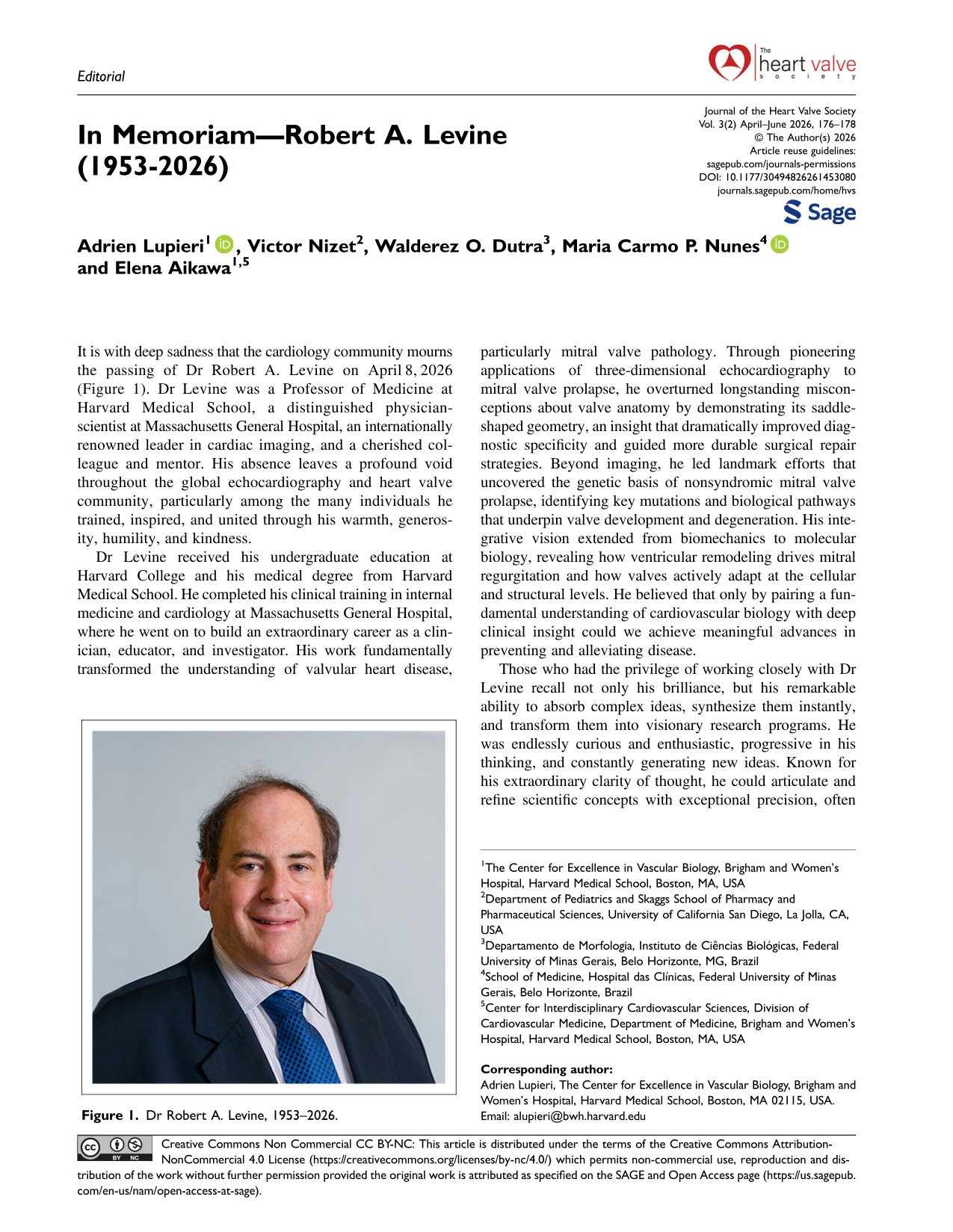
It is with deep sadness that the cardiology community mourns the passing of Dr Robert A. Levine on April 8, 2026 (Figure 1). Dr Levine was a Professor of Medicine at Harvard Medical School, a distinguished physician-scientist at Massachusetts General Hospital, an internationally renowned leader in cardiac imaging, and a cherished colleague and mentor. His absence leaves a profound void throughout the global echocardiography and heart valve community, particularly among the many individuals he trained, inspired, and united through his warmth, generosity, humility, and kindness.
Dr Levine received his undergraduate education at Harvard College and his medical degree from Harvard Medical School. He completed his clinical training in internal medicine and cardiology at Massachusetts General Hospital, where he went on to build an extraordinary career as a clinician, educator, and investigator. His work fundamentally transformed the understanding of valvular heart disease, particularly mitral valve pathology. Through pioneering applications of three-dimensional echocardiography to mitral valve prolapse, he overturned longstanding misconceptions about valve anatomy by demonstrating its saddle-shaped geometry, an insight that dramatically improved diagnostic specificity and guided more durable surgical repair strategies. Beyond imaging, he led landmark efforts that uncovered the genetic basis of nonsyndromic mitral valve prolapse, identifying key mutations and biological pathways that underpin valve development and degeneration. His integrative vision extended from biomechanics to molecular biology, revealing how ventricular remodeling drives mitral regurgitation and how valves actively adapt at the cellular and structural levels. He believed that only by pairing a fundamental understanding of cardiovascular biology with deep clinical insight could we achieve meaningful advances in preventing and alleviating disease.
Those who had the privilege of working closely with Dr Levine recall not only his brilliance, but his remarkable ability to absorb complex ideas, synthesize them instantly, and transform them into visionary research programs. He was endlessly curious and enthusiastic, progressive in his thinking, and constantly generating new ideas. Known for his extraordinary clarity of thought, he could articulate and refine scientific concepts with exceptional precision, often drafting incisive text and figures in real time during discussion. His virtuosity in communicating complex science clearly and compellingly was one of his defining gifts.
Dr Levine was a tireless and devoted physician-scientist, serving as a principal investigator on multiple NIH R01 grants and coordinator for two Leducq Transatlantic Networks (Figures 2–3), including leadership roles in long-standing international programs. His collaborations were marked by rigor, creativity, and infectious enthusiasm, and he consistently elevated the scientific ambition and quality of the work around him. Through these efforts, he helped build enduring international research networks, including the PRIMA initiative for rheumatic disease (Figure 3), fostering collaboration across disciplines and continents to support the populations most in need.
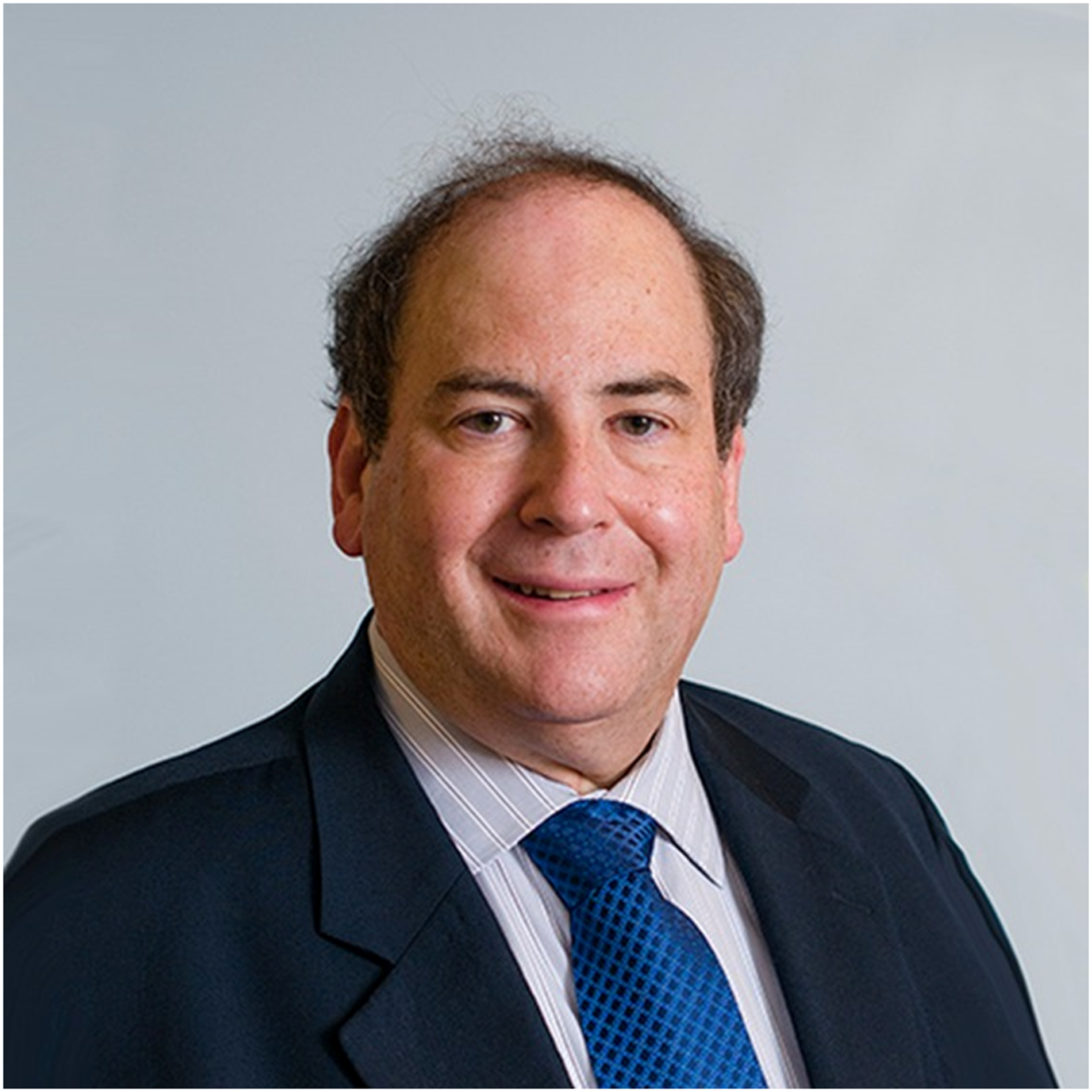
Dr Robert A. Levine, 1953–2026.
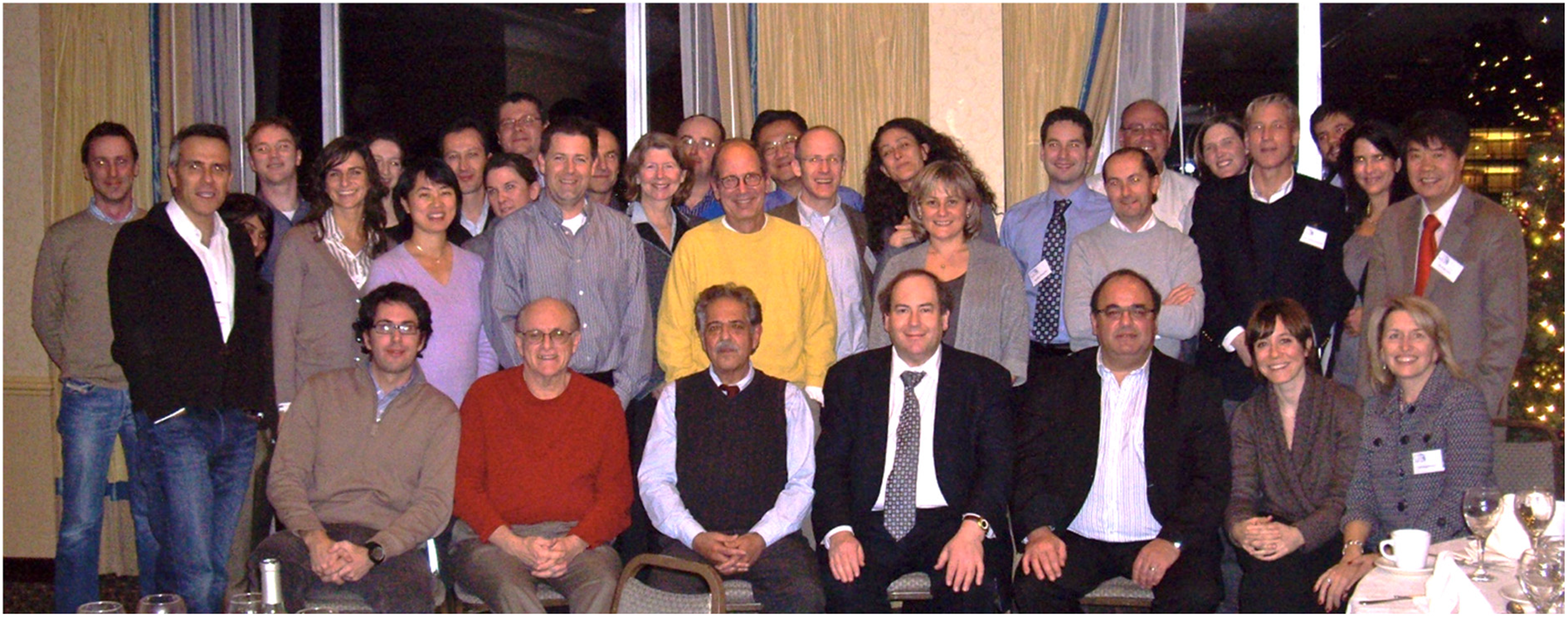
Dr Robert A. Levine surrounded by collaborators of the Leducq Foundation Transatlantic Network for Mitral Valve Disease: From Genetic Mechanisms to Improved Repair, Paris, France, 2009.
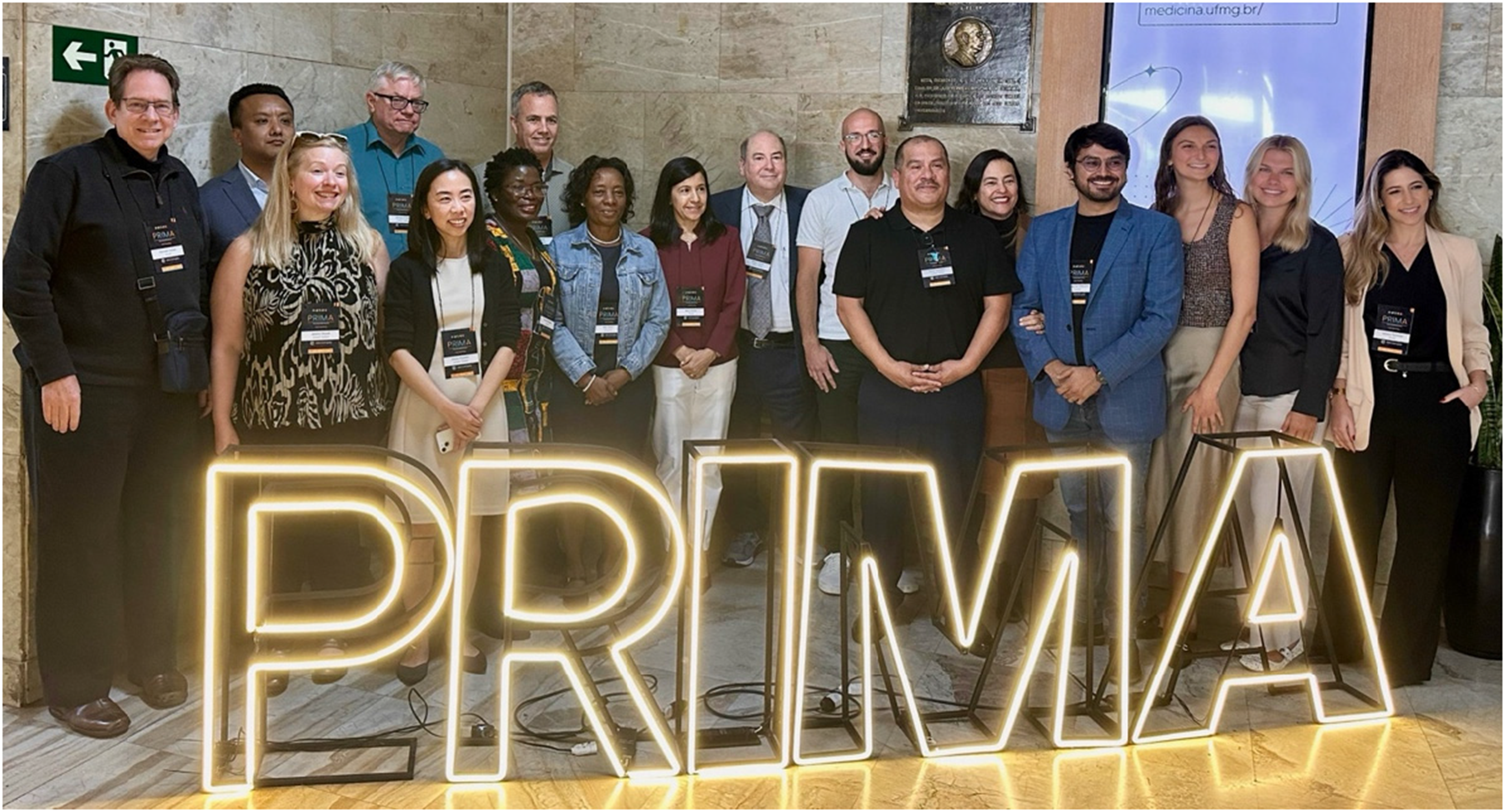
Dr. Robert A. Levine surrounded by collaborators of the Leducq Foundation Network for Preventing Rheumatic Injury Biomarker Alliance (PRIMA), Belo Horizonte, Brazil, 2025.
Equally remarkable was his generosity as a mentor. He devoted his career to guiding the growth and success of fellows, junior faculty, and investigators at all stages of their careers, taking genuine joy in their achievements and celebrating their success as his own. He was an extraordinary advocate, renowned for writing thoughtful and impactful letters of support, and he remained a mentor for life to those he trained. His influence is evident in the many leaders in cardiovascular imaging and valve disease who trace their professional roots from his guidance.
Dr Levine also had a rare ability to bring people together. His warmth, generosity, and inclusive spirit created vibrant scientific communities defined as much by mutual respect as by excellence. Guided by his deep faith, he lived with humility, kindness, and integrity, qualities that shaped both his science and his relationships. To many colleagues, he was not only a collaborator, but a trusted friend. He made everyone feel valued, heard, and inspired.
Dr Robert A. Levine leaves behind an extraordinary legacy of scientific discovery, mentorship, and humanity. His impact will endure through the people he trained, the fields he advanced, and the collaborative spirit he so deeply cultivated. He will be deeply missed as a physician, scientist, mentor, colleague, and dear friend.
May his memory be a blessing.
Footnotes

Funding
The authors received no financial support for the research, authorship, and/or publication of this article.
Declaration of Conflicting Interests
The authors declared no potential conflicts of interest with respect to the research, authorship, and/or publication of this article.