






Abstract
Introduction
Moderate to severe traumatic brain injury (MSTBI) is a leading cause of death and disability worldwide, with devastating physical, psychological, economic, and health system consequences. 1 Individuals with MSTBI require expert multidisciplinary care which often includes specialized neurosurgical care, critical care in intensive care units (ICUs), hospital-based inpatient care, and inpatient and/or outpatient comprehensive rehabilitative care. 2 Pharmacotherapies—whether prescription, nonprescription, or supplements—have long been used in the management of persons with MSTBI in all care settings and at all timepoints after injury. 3 Given their ease of administration, relatively low cost compared with surgical and/or intensive care interventions, and potential to benefit patients, pharmacotherapies have become entrenched as part of optimal management of MSTBI and comprise a common intervention in research studies for MSTBI. 3 Many pharmacotherapies have become part of the standard of care, such as levetiracetam or phenytoin for seizure prophylaxis or hypertonic saline (HTS) or mannitol for raised intracranial pressure (ICP).3,4 Given that pharmacological therapies are a critical part of MSTBI management in all phases of recovery, 5 understanding what high-quality empiric evidence supports or refutes the use of individual pharmacotherapy interventions is imperative to improve outcomes for persons with MSTBI across the health care continuum.
This review aimed to systematically characterize randomized controlled trials (RCTs) of prescription and nonprescription pharmacological interventions for the management of MSTBI across all phases of recovery, with a focus on efficacy, categorizing the interventions, study quality and risk of bias, time post-injury (TPI), study design, and outcome measures (OMs). Conducting an overview of pharmacological intervention RCTs facilitates (1) identifying under-researched pharmacological interventions meriting further study and (2) determining the scope and quality of the existing evidence.
Methods
Data Sources and Search Strategy
Systematic searches were conducted in MEDLINE, PubMed, Scopus, CINAHL, EMBASE, and PsycINFO in accordance with the Preferred Reporting Items for Systematic Reviews and Meta-Analyses (PRISMA) guidelines. The search strategy was restricted to RCTs published in the English language up to and including December 2022. Search results were imported to Endnote version 8 (Camelot UK Bidco Limited [Clarivate]) and all duplicates were removed. Title and abstract screening, full-text review, and data extraction were performed by 2 independent reviewers, with an independent third reviewer available to resolve disputes. The studies presented in this review are part of an extensive database of RCTs on MSTBI. The detailed methodology and other analyses of this database, different from the content of this article, have been published elsewhere.
Inclusion and Exclusion Criteria
Randomized controlled trials were included if they studied participants with a mean age ≥18 years and if ≥50% of participants had MSTBI, and if the study examined a pharmacological therapy (prescription or nonprescription, including a supplement), alone or in combination with other interventions. Studies were excluded if they were protocols or secondary analyses of RCTs, did not report traumatic brain injury (TBI) severity, did not report cause of injury, < 50% of the sample had a traumatic cause of injury, and/or >50% of the sample had mild TBI.
Definition of Injury Severity
Traumatic brain injury was defined as moderate to severe if participants in the study had a Glasgow Coma Scale (GCS) score of 3 to 12, a period of posttraumatic amnesia (PTA) of ≥1 hour, a period of loss of consciousness (LOC) of ≥15 minutes; or if participants had an Abbreviated Injury Score (AIS) Head of ≥2 or an Injury Severity Score (ISS) Head of ≥9, or the author’s words explicitly stated that the population studied had MSTBI.
Data Extraction
The following data were extracted from the included RCTs: type(s) of pharmacotherapy studied, control used, RCT methodology, year of publication, sample size, country of origin, TPI, severity indicators, cause of injury, and OMs. Time after injury was defined as acute (≤1 month), subacute (>1 to <6 months), and chronic (≥6 months). Randomized controlled trial methodology was defined as follows: A versus 0, when a pharmacotherapy (A) was compared with placebo or no treatment (usual care) (0); A versus B, when 2 different pharmacotherapies (A and B) were compared with each other; A1 versus A2, when different doses or duration of treatment (1 and 2) of the same pharmacotherapy (A) are compared; A + B versus C or 0, when a combination of 2 different pharmacotherapies (A and B) is compared with another pharmacotherapy (C) or to placebo or no treatment (0).
Risk of Bias
Two independent reviewers conducted risk of bias assessment of the included studies using the Cochrane Collaboration’s tool for assessing the risk of bias in randomized trials. 6 Based on the risk of bias assessment, each RCT domain was assigned an overall risk of bias level: low, unclear, or high. The risk of bias assessment was discussed with a senior reviewer, if required, to resolve disagreements.
Ethical Considerations
No human participants were involved in this review; therefore, ethics approval was not required.
Results
Characteristics of the Included Studies
Three hundred thirteen RCTs met inclusion criteria (Figure 1). The year of publication of the 313 RCTs ranged from 1978 to 2022. The number of RCTs published annually increased steadily over time, with 168 RCTs (53.7%) published in or after 2010. The included studies collectively enrolled a total of 72 114 participants; the mean RCT sample size was 230 participants (standard deviation [SD] 173) and median sample size was 60 participants (interquartile range [IQR] 80) (Table 1). The included RCTs were conducted in 34 different countries, with the majority of RCTs conducted in the United States (n = 98, 31.3%), Iran (n = 56, 17.9%), the United Kingdom (n = 29, 9.3%), and China (n = 20, 6.4%). The most commonly used measure of TBI severity was the GCS, used in 92.3% of RCTs, alone or in combination with other injury severity indicators. Table 1 summarizes additional characteristics of the included RCTs.
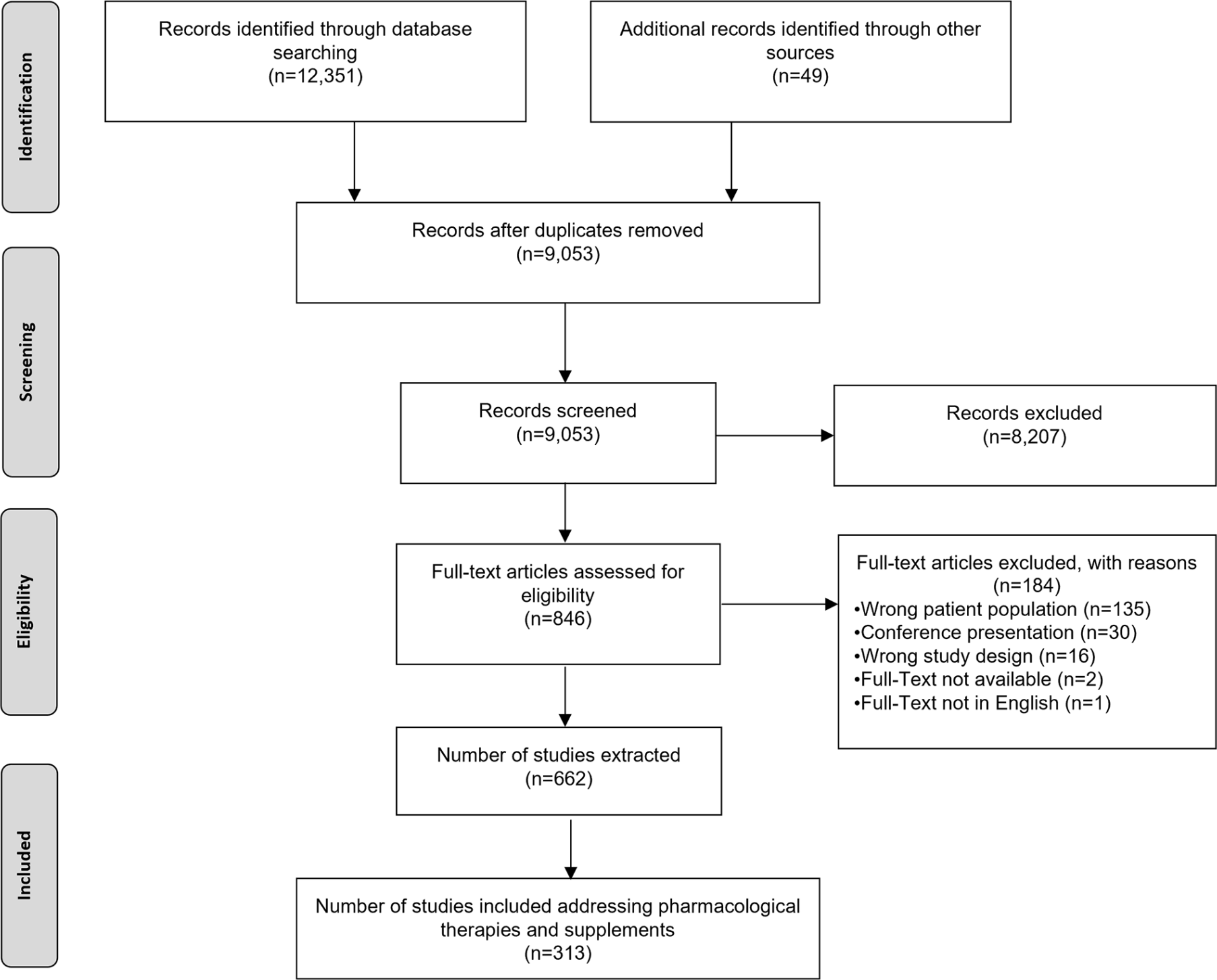
PRISMA flowchart.
Characteristics of 313 Included Randomized Controlled Trials.
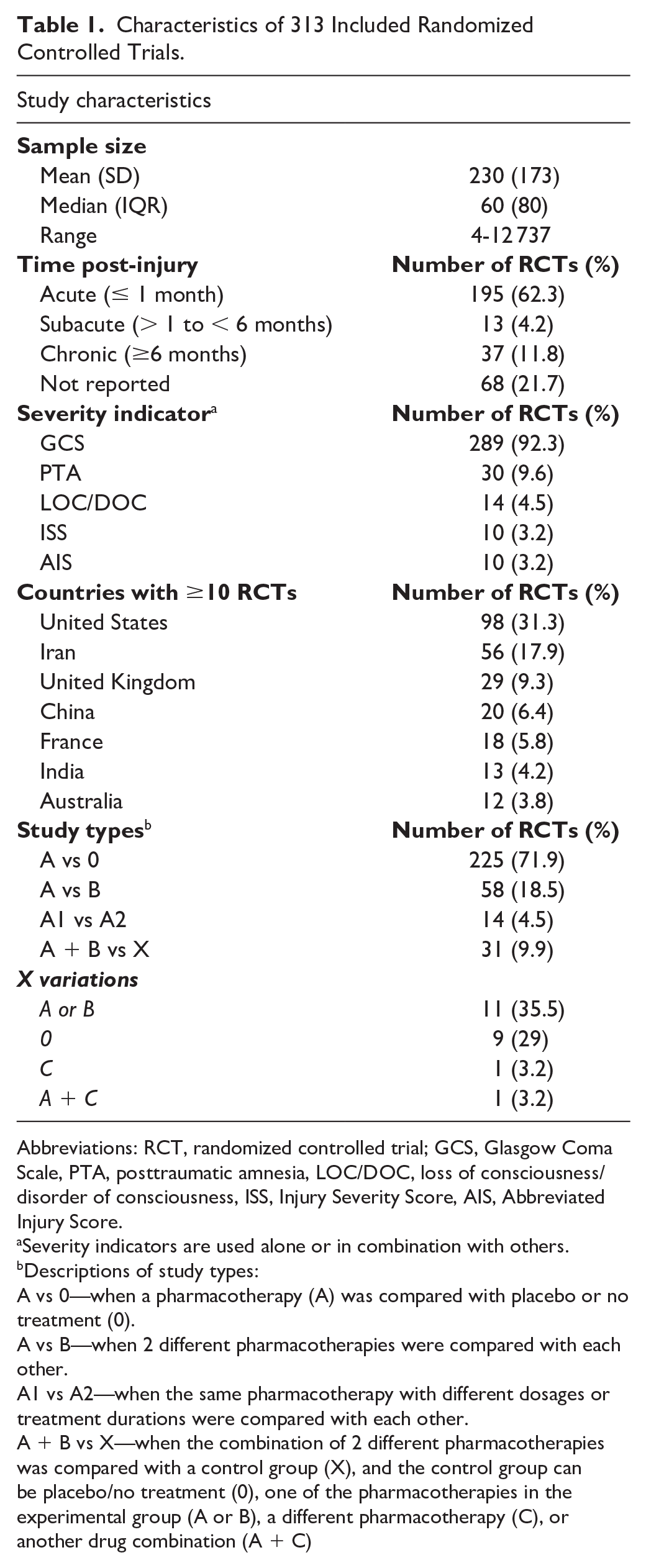
Abbreviations: RCT, randomized controlled trial; GCS, Glasgow Coma Scale, PTA, posttraumatic amnesia, LOC/DOC, loss of consciousness/disorder of consciousness, ISS, Injury Severity Score, AIS, Abbreviated Injury Score.
Severity indicators are used alone or in combination with others.
Descriptions of study types:
A vs 0—when a pharmacotherapy (A) was compared with placebo or no treatment (0).
A vs B—when 2 different pharmacotherapies were compared with each other.
A1 vs A2—when the same pharmacotherapy with different dosages or treatment durations were compared with each other.
A + B vs X—when the combination of 2 different pharmacotherapies was compared with a control group (X), and the control group can be placebo/no treatment (0), one of the pharmacotherapies in the experimental group (A or B), a different pharmacotherapy (C), or another drug combination (A + C)
Studied Pharmacotherapies
A total of 146 unique pharmacotherapies were studied (see Appendix, Table A1). Studied pharmacotherapies were used alone or in combination with other pharmacological and/or nonpharmacological interventions. The most frequently studied pharmacotherapy was mannitol, investigated in 20 RCTs, followed by methylphenidate (n = 19), and HTS (n = 18) (Table 2). Table 2 shows 18 pharmacotherapies examined in at least 5 RCTs. The remaining 128 pharmacotherapies were examined in less than 5 RCTs, with 80 of them examined in a single RCT (Appendix, Table A1). Dietary supplements studied included selenium, glycerol, branched chain amino acids, vitamins, Boswellia serrata plant, omega 3/fish oil supplementation, and probiotics. None of the individual supplements were studied in more than 4 RCTs.
Individual Pharmacotherapies Used in ≥ 5 Randomized Controlled Trials.

Pharmacotherapy RCT Sample Size
The included studies collectively enrolled a total of 72 114 participants; the mean RCT sample size was 230 participants (range: 4-12 737) (Table 1). Three RCTs had a sample size ≥ 10 000 participants, including 2 trials on examining the effect of tranexamic acid (TXA) on mortality and morbidity7,8 and 1 trial on the effect of methylprednisolone on mortality. 9 Five RCTs had sample sizes of > 1000 to < 10 000 participants, investigating TXA,10,11 progesterone, 12 HTS, 13 and tirilazad mesylate. 14 Five RCTs had sample sizes ranging from > 500 to < 900 participants, examining progesterone, 15 erythropoietin (EPO),16,17 nimodipine, 18 and dexanabinol. 19 Twelve RCTs had sample sizes ranging from > 300 to < 500 participants, examining hydrocortisone, 20 nimodipine,21 -23 HTS,24,25 phenytoin and/or valproate,26,27 magnesium, 28 pegorgotein, 29 traxoprodil, 30 and triamcinolone. 31 In all, 25 of the included RCTs (8%) studied ≥ 300 participants.7 -31 In the remaining 288 pharmacotherapy RCTs, the sample size ranged from 4 to 285.
Time Post-injury
Time post-injury was reported in 245 RCTs (78.3%). The majority of pharmacotherapy RCTs reporting TPI were conducted in the acute phase (n = 195, 62.3% of all RCTs); 13 (4.2% of all RCTs) and 37 (11.8% of all RCTs) RCTs reporting TPI were conducted in the subacute- and chronic-phase after injury, respectively. Of the RCTs conducted in chronic-phase post-TBI, the most commonly studied pharmacotherapies were methylphenidate, amantadine, rivastigmine, melatonin, and modafinil. Randomized controlled trials conducted in the chronic-phase after injury mainly aimed to improve attention, cognition, memory, sleep disorders, irritability, and depression.
RCT Methodology
The majority of RCTs (n = 225, 71.9%) compared a single pharmacotherapy with a placebo or no treatment/usual care (A vs 0 methodology, Table 1). Fifty-eight RCTs (18.5%) compared 2 different pharmacotherapies with each other (A vs B methodology, Table 1) Of these, 26 RCTs compared 2 pharmacotherapies within the same drug class and 32 RCTs compared pharmacotherapies from different drug classes. The most common comparison for different-class pharmacotherapies was between osmotic diuretics and electrolytic solutions (ie, mannitol vs HTS or sodium lactate), followed by the comparison of anesthetics and gamma-aminobutyric acid (GABA)-agonists, anesthetics and analgesics, and sedatives and anesthetics. Thirty-one RCTs (9.9%) compared a combination of 2 different pharmacotherapies with a control group (A + B vs X methodology, Table 1), with the most common combination of supplements and enteral/ parenteral nutrition. Fourteen RCTs (4.5%) compared different dosages or administration timings of the same pharmacotherapy (A1 vs A2 methodology), most commonly antiinflammatory agents and diuretics.
Outcome Measures
The 313 RCTs utilized 435 unique OMs a total of 1856 times. The most commonly reported OMs were the Glasgow Outcome Scale (GOS) used in 92 RCTs (29.4%), mortality (n = 79 RCTs, 25.2%), ICP (n = 76, 24.3%), and GCS (n = 61, 19.5%), followed by mean arterial pressure (n = 54, 17.3%), heart rate (n = 33, 10.5%), serum glucose (n = 28, 8.9%), and serum sodium (n = 25, 8%). The majority of OMs listed in 5 or more RCTs were blood tests and/or early medical measures (n = 52), or global outcome and brain-specific OMs (n = 12). Fewer OMs were included in the categories of cognition (n = 10), mental health and/or behavior (n = 4), and activities of daily living (n = 2). See Appendix, Table A2 for a list of the OM used in at least 5 RCTs by category.
Risk of bias
More than half of the RCTs (n = 177, 56.5%) had high risk of bias, more than one third of RCTs had unclear risk of bias (n = 114, 36.4%), and only 7% (n = 22) had low risk of bias (Figure 2). Selective reporting and lack of blinding of participants and personnel were the most common reasons for high and unclear risks of bias in RCTs, followed by allocation concealment, blinding of outcome assessors, and random generation (Figure 2).
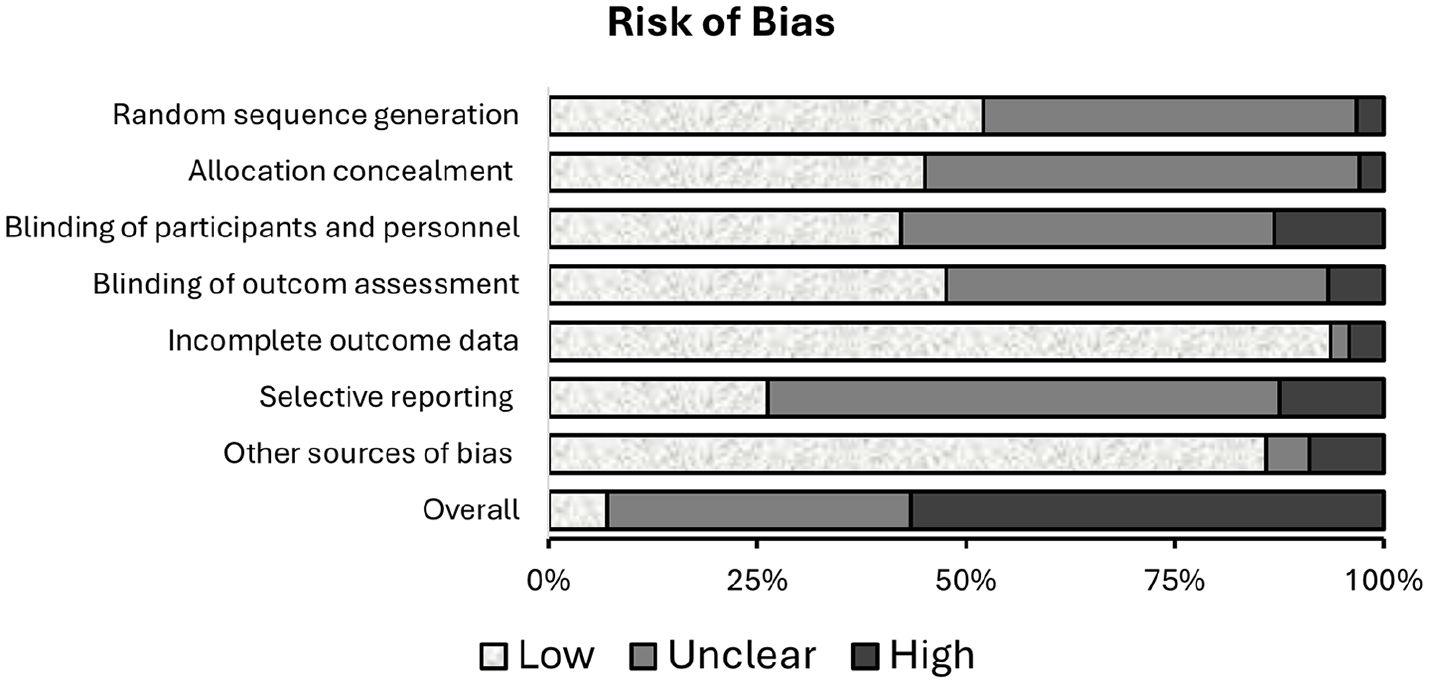
Cochrane risk of bias for the included 313 randomized controlled trials.
Discussion
The current systematic review showed that there is substantial heterogeneity in studied pharmacological interventions for MSTBI: 313 RCTs investigated 146 pharmacotherapies.
Few pharmacotherapies were studied in multiple trials. Of the 146 pharmacotherapies studied, 80 pharmacotherapies (54.8% of pharmacotherapies, 25.6% of RCTs) were studied in only 1 RCT and 128 (87.7%) were studied in fewer than 5 RCTs; 18 were evaluated in 5 or more RCTs, and only 8 were assessed in 10 or more RCTs. The problems with MSTBI pharmacotherapy RCTs persist despite increasing numbers of RCTs published annually. More than half of all included RCTs were published in or after 2010. The number of annual RCTs doubled after 2010 compared with 2000 to 2010. The continued emphasis on novelty of study rather than reproducibility or refinement—of indications, dosing, timing, or efficacy—limits the utility and impact of this body of MSTBI research for clinical knowledge translation.
This variability of interventions examined in TBI management clinical trials has also been reported in the literature. An overview of all acute interventions for MSTBI management published in 2016 identified 191 RCTs, including pharmaceuticals and nonpharmaceuticals, with a median sample size of 66 participants. 32 The authors found that there was limited translatable evidence despite the large number of RCTs due to variability in the interventions, high risk of bias, and small sample sizes; in addition, 35 RCTs that examined a unique intervention, and for those interventions with several RCTs, the study characteristics and findings were not consistent enough to provide evidence for translation into clinical practice. 32 Similarly, in our review, 80 RCTs (25.6% of all MSTBI pharmacotherapy RCTs) were the only study on a pharmaceutical agent’s efficacy. As very few interventions were examined in multiple RCTs, ultimately there is limited evidence for each intervention despite the relatively high number of 313 RCTs. This underscores the need for additional high-quality studies on the pharmacotherapies for which we have available evidence to transition the existing evidence from low quality to a more definitive and robust state for informed decision-making in clinical practice.
In this review, not only did the pharmacotherapies studied vary widely, but so also did the OMs. Four hundred thirty-five different OMs were assessed across the 313 RCTs. The OMs assessed in the majority of RCTs included measures of emergence from coma and/or functional neurological status (ie, GOS, mortality, and GCS); however, a high proportion of studies assessed physiological OMs, including ICP, mean arterial pressure, heart rate, and serum glucose. Whereas, pharmacotherapies impacting the former group of functional neurological status OMs may have potentially clinically relevant implications, pharmacotherapies resulting in changes the latter group of physiologic OMs may not translate to being sufficiently clinically significant to warrant changes in existing clinical practices. Notably, measures of cognition, mental health and behavior, as well as activities of daily living, all of which have important clinical implications for self-care, returning to vocational and avocational activities, and community integration, were much less commonly used.
The limited clinical impact of OMs used in pharmacotherapy RCTs is consistent with a 2019 overview of systematic reviews of pharmacological interventions after TBI and a 2016 systematic review of acute TBI interventions, both of which found physiological outcomes, GOS, and mortality were the most common OMs.32,33 Activities of daily living, cognition, and psycho-behavioral outcomes were much less frequently reported despite their importance for long-term clinical recovery. 33 As in our research, the authors found that the heterogeneity in measurement tools made it difficult to analyze and synthesize evidence into recommendations or guidelines.32,33
This major drawback identified by our review, that despite increasing numbers of RCTs being published, pharmacotherapies are inadequately studied to warrant changes to clinical practice, is echoed in other TBI research. For instance, Lei et al 34 analyzed systematic reviews of acute TBI of all severities, and found that of 29 high-quality systematic reviews of 22 different interventions, no conclusive evidence could be ascertained, except for adverse effects of corticosteroids. The authors highlighted the lack of translatable research evidence to support clinical practice in acute TBI management across TBI severities and heterogeneous populations and the need for RCTs with high methodologically quality. 34 This is a common finding in reviews that examined specific interventions in MSTBI. For instance, 2 systematic reviews examining the efficacy of propofol for sedation in severe TBI just found only 5 RCTs and concluded the medication was safe, but that there were inadequately powered high-quality RCTs to determine efficacy of sedative agents in severe TBI management.35,36 In addition, 2 systematic reviews of the efficacy methylphenidate in persons with TBI, 10 RCTs examined in each, recommended larger studies on the methylphenidate efficacy, safety, dosage, age, and optimal timing of treatment due to conflicting evidence of benefit.37,38 Similarly, other systematic reviews showed the need for studies to examine the optimum dosage, timing, and route of administrations, yet our review showed that only 14 RCTs compared the same drugs with different dosages and timings (ie, A1 vs A2). Moreover, knowledge translation opportunities are limited by inadequate reporting of participants’ injury characteristics, severity of TBI, and TPI, all of which provide key information to ensure the right patient receives the right treatment at the right time to translate the interventions into clinical practice.34,39
In our review, over 20% of included RCTs did not report TPI. The majority of RCTs that did were conducted in the acute-phase after injury (62.3%). Given the importance of the acute phase in addressing factors influencing secondary injury, including ICP, cerebral perfusion, and oxidative stress, the high number of pharmacological RCTs to occur in this phase is intuitive. However, physical, cognitive, behavioral, and psychological sequelae of MSTBI are common beyond the acute phase and yet only 50 RCTs reporting TPI were conducted in the subacute (n = 13) and chronic (n = 37) phases. Randomized controlled trials conducted in the chronic-phase after injury mainly aimed to improve attention, cognition, memory, sleep disorders, irritability, and depression. These impairments represent a few of the important clinical consequences experienced by persons with MSTBI who survive beyond the acute phase and for which pharmacotherapies may be effective. The relative dearth of pharmacotherapy RCTs occurring in these later phases puts patients and health care providers in an evidence vacuum with few well-studied, effective, evidence-based interventions to support community re-integration, functional independence, and return to (a)vocational activities. Even for those studies conducted in the acute phase, methodological problems, such as the emphasis on physiologic rather than functional OMs and low study quality with high risk of bias also limit patient and provider opportunities for implementing optimal practices. These findings are underscored by previous analyses of systematic reviews of acute MSTBI interventions. For instance, Synnot et al 40 analyzed systematic reviews of acute MSTBI management, including 85 systematic review and 213 RCTs that covered 12 different types of pharmaceutical and nonpharmaceuticals interventions. The authors found that systematic reviews of acute management of MSTBI synthesize low-quality studies and lack completeness. 40 Although the number of RCTs increased substantially over time, pharmacological interventions for MSTBI are relatively understudied given the high worldwide prevalence of TBI—estimated to affect over 60 million people per year—and as a leading cause of morbidity and mortality worldwide. 1 Moreover, despite the increase in number of RCTs, the heterogeneity of interventions and OMs prevent generating strong and transferrable evidence, a problem identified in previous reviews as well as ours. 41
Limitations
Data presented in this article come from a database of RCTs on MSTBI. Only RCTs published in the English language were considered. Data on intervention efficacy and adverse effects were not collected. A protocol of this review was not previously published. Risk of bias was evaluated by 1 reviewer for each included RCT.
Conclusion
From this review, it is evident that there is a paucity of high-quality studies confirming the reproducible effects of any pharmacological intervention post-MSTBI. Substantial variability in RCT methodology, including large numbers of relatively infrequently OMs, highly variable sample sizes, and few head-to-head comparisons poses a challenge for conducting meta-analyses to confirm the strength of efficacy (if any) for these interventions. The scarcity of pharmacotherapy RCTs conducted in the subacute- and chronic-phase after injury and low utilization of functional OMs contribute to these gaps. Additional high-quality RCTs, with larger sample sizes are required to ensure a stronger recommendation for informed decision-making in clinical practice.
Footnotes
Appendix
Outcome Measures Used in ≥ 5 Randomized Controlled Trials by Category.

| Global outcome and brain injury-specific | Number of RCTs (%) |
|---|---|
| Glasgow Outcome Scale (GOS) | 92 (29.4) |
| Mortality | 79 (25.2) |
| Intracranial pressure (ICP) | 76 (24.3) |
| Glasgow Coma Scale (GCS) | 61 (19.5) |
| Cerebral perfusion pressure (CPP) | 45 (14.4) |
| ICU-length of stay (ICU-LOS) | 37 (11.8) |
| Glasgow Outcome Scale-Extended (GOS-E) | 34 (10.9) |
| Hospital length of stay (LOS) | 24 (7.7) |
| Duration of mechanical ventilation/weaning from ventilation | 16 (5.1) |
| Galveston Orientation Amnesia Test (GOAT) | 10 (3.2) |
| Incidence/progression/growth of intracranial hemorrhage (ICH) | 6 (1.9) |
| Cerebral blood flow (CBF) | 6 (1.9) |
|
|
|
| Trail-making test B | 19 (6.1) |
| Trail-making test A | 16 (5.1) |
| Stroop test | 9 (2.9) |
| Wechsler Adult Intelligence Scale-III (WAIS-III) | 8 (2.6) |
| Controlled Oral Word Association Test (COWAT) | 8 (2.6) |
| Ruff 2 and 7 Selective Attention Test | 5 (1.6) |
| Symbol Digit Modalities Test (SDMT) | 5 (1.6) |
| Rating Scale of Attentional Behavior (RSAB) | 5 (1.6) |
| Buschke Selective Reminding Test (SRT) | 5 (1.6) |
| Digit span test | 5 (1.6) |
|
|
|
| Hospital Anxiety and Depression Scale (HADS) | 7 (2.2) |
| Short-Form 36 Health Survey (SF36) | 6 (1.9) |
| Beck Depression Inventory II (BDI-II) | 6 (1.9) |
| Neurobehavioral Functioning Inventory (NFI) | 5 (1.6) |
|
|
|
| Disability Rating Scale (DRS) | 29 (9.3) |
| Functional independence measure (FIM) | 14 (4.5) |
|
|
|
| Mean arterial pressure (MAP) | 54 (17.3) |
| Blood pressure (BP) | 34 (10.9) |
| Heart rate (HR) | 33 (10.5) |
| Serum glucose concentration | 28 (8.9) |
| Sodium levels/serum sodium | 25 (8.0) |
| Temperature | 22 (7.0) |
| Seizures incidence/activity | 18 (5.8) |
| Hemoglobin (Hb) | 18 (5.8) |
| Creatinine levels/serum creatinine (sCr) | 17 (5.4) |
| Serum osmolality/plasma osmolality | 17 (5.4) |
| Urine output | 16 (5.1) |
| Incidence/occurrence of infection | 13 (4.2) |
| Sequential Organ Failure Assessment (SOFA) | 13 (4.2) |
| Electrolytes | 13 (4.2) |
| Partial pressure of carbon dioxide (PaCO2) | 13 (4.2) |
| Bilirubin levels/serum bilirubin/urobilinogen | 12 (3.8) |
| Interleukin (IL)-6 | 12 (3.8) |
| Hematocrit test | 12 (3.8) |
| Platelet levels | 11 (3.5) |
| Pulse blood oxygen saturation (SpO2) | 11 (3.5) |
| Prothrombin time (PT) test | 11 (3.5) |
| Serum concentrations of S100B | 11 (3.5) |
| C-reactive protein (CRP) | 11 (3.5) |
| Serum pre-albumin/albumin levels | 10 (3.2) |
| Acute Physiology and Chronic Health Evaluation-II (APACHE-II) | 10 (3.2) |
| Blood urea nitrogen (BUN) | 10 (3.2) |
| Arterial blood gases (ABGs) | 10 (3.2) |
| Serum concentrations of neuron-specific enolase (NSE) | 10 (3.2) |
| Serum lactate levels/lactic acid concentrations | 9 (2.9) |
| Chloride levels/serum chloride | 9 (2.9) |
| Occurrence of venous thromboembolism (VTE) | 9 (2.9) |
| White blood cell (WBC) count | 9 (2.9) |
| Complete blood count (CBC) | 8 (2.6) |
| Tumor necrosis factor alpha (TNF)-α | 8 (2.6) |
| Aspartate aminotransferase (AST) test/SGOT | 8 (2.6) |
| Central venous pressure (CVP) | 8 (2.6) |
| Partial thromboplastin time (PTT) measure/active partial thromboplastin time (aPTT) | 8 (2.6) |
| Triglyceride concentrations | 7 (2.2) |
| Nitrogen balance | 7 (2.2) |
| Finger tapping test (FTT)/finger oscillation | 7 (2.2) |
| Potassium levels | 7 (2.2) |
| Alanine aminotransferase (ALT) | 7 (2.2) |
| Serum interleukin-1β (IL-1B) | 6 (1.9) |
| Pupil size/pupil reaction | 6 (1.9) |
| Electrocardiography (ECG)/cardiac rhythm | 6 (1.9) |
| Arterial blood oxygen saturation | 6 (1.9) |
| Glycerol levels | 6 (1.9) |
| Gastrointestinal bleeding/failure | 5 (1.6) |
| Calorie intake | 5 (1.6) |
| Electroencephalographic (EEG) recording | 5 (1.6) |
| Interleukin 10 (IL-10) | 5 (1.6) |
| Arteriojugular venous difference of oxygen (AVDO2) | 5 (1.6) |
Outcome measures were used alone or in combination with others.
Acknowledgements
The authors would like to acknowledge the valuable contributions of Muskan Sait and Anusha Merchant.
Author Contributions
Data Availability
The data sets generated during and/or analyzed during the current study are not publicly available but are available from the corresponding author on reasonable request.
Declaration of Conflicting Interests
The author(s) declared the following potential conflicts of interest with respect to the research, authorship, and/or publication of this article: R Teasell had received a grant from Allergan, now Abbvie (makers of Botox) for Stroke research within the last 3 years. The authors report there are no competing interests to declare.
Funding
The author(s) disclosed receipt of the following financial support for the research, authorship, and/or publication of this article: Funding was provided by the Ontario Ministry of Health and Long-Term Care through the Neurotrauma Pathways project and the St Joseph’s Health Care (London) Foundation.
Ethical Approval
No human participants were involved in this review; therefore, ethics approval was not required.
Transparency Statement
Data presented in this article come from a database of 662 RCTs on moderate to severe traumatic brain injury (MSTBI) that partially overlaps with the Evidence-Based Review of Acquired Brain Injuries (ERABI), which is freely available online at:  . Other parts of this database, different from the content of this manuscript, have been published elsewhere.