






Abstract
As teaching and learning experiences broaden to include more technological innovations, methods of instruction and resource flexibility are becoming increasingly important for educators and students. Open educational resources (OER) have gained international appeal for such flexibility, and post-secondary institutions are at the forefront of creating access to them. Although research related to OER has increased, few researchers have focused on OER in music instruction. In my cross-sectional survey of music faculty in the United States (N = 409), I found that music faculty were generally unaware of OER although most participants would consider adopting an open textbook for a course. Motivating factors for adoption included ease of use and decreased costs for students, whereas time and financial support would be necessary for adoption to be feasible.
Open educational resources (OER) are teaching, learning, and research materials that “reside in the public domain or are under copyright that have been released under an open license, that permit no-cost access, re-use, re-purpose, adaptation and redistribution by others” (UNESCO, 2019, p. 5). This definition highlights unique permissions granted through special licenses which state how OER may be used. Licenses essential for content to be OER, such as Creative Commons, provide free access to resources along with additional options related to attribution, adaptation, and sharing.
Sharing of content is an important element of OER, and post-secondary institutions have been central to creating structural capacity for sharing (Bliss & Smith, 2017). For example, California State University created an online space in 1997 for professors to access and share intellectual content (Atkins et al., 2007; Bliss & Smith, 2017). The Multimedia Educational Resource for Learning and Online Teaching, now known as MERLOT, has grown exponentially since its inception, both in resources and in support (Tuite, 2018). Other initiatives, such as the Massachusetts Institute of Technology’s OpenCourseWare and Rice University’s OpenStax, have been central to providing access to free resources for secondary and post-secondary learners (Bliss & Smith, 2017). Community colleges are also active participants in open access initiatives (Atkins et al., 2007). In addition to being early adopters of open textbooks, the Community College Consortium for OER has assisted institutions in creating degrees that only use OER, substantially decreasing students’ educational costs.
Affordability and equitable access to post-secondary education is not unique to community colleges and affect students in many disciplines, including music. Music learners are often responsible for costs not found in other disciplines (e.g., instruments, repairs, sheet music). Therefore, the use of OER could reduce some of the financial burden associated with music study. At the time this current study took place, there were approximately 717 music resources available through the MERLOT database under 19 categories including tutorials, reference materials, and collections. Available resources were suitable for elementary students to music professionals, some of which were reviewed by peers or editors. In addition, the Open Textbook Library, a repository for college textbooks, has 14 textbooks for music learning including subjects such as music theory, brass methods, and vocal techniques. Despite these available resources and the role OER may have in minimizing music learning costs, little examination of OER adoption for music instruction has been completed.
Literature Review
Before adoption of OER can occur, individuals and/or institutions must have the desire, or volition, to use or create these resources. Identified as the final factor essential to successful adoption (Cox & Trotter, 2017), volition represents the peak of a hierarchy containing five other factors: access, permission, awareness, capacity, and availability. These six factors comprise the OER adoption pyramid (Cox & Trotter, 2017), which provides an analytical framework for inquiry on the topic of OER adoption (see Figure 1).

The OER Adoption Pyramid (Cox & Trotter, 2017).
Access, the foundation of the pyramid, refers to the infrastructure necessary for the adoption of OER, such as electricity and the internet. Once infrastructure capabilities exist, permissions associated with licensing policies and institutional approval can be determined. In the United States, educational entities along with state and federal initiatives have encouraged the use of OER (Blomgren, 2018), but post-secondary faculty tended to be unsure of the legal use of OER compared with traditionally licensed materials (Jhangiani et al., 2016; Seaman & Seaman, 2019).
Legal understanding of open licenses closely connects to awareness of OER, the third factor of the OER adoption pyramid. This factor requires a conceptual understanding of OER and the user’s ability to differentiate between OER and other learning materials (Cox & Trotter, 2017). Awareness of OER in post-secondary education has been investigated several times, including through a national survey conducted annually in the United States (Allen & Seaman, 2012). In the 2019 report, survey results indicated that awareness of OER among faculty increased from 35% in 2015 to 53% in 2019 (Seaman & Seaman, 2019).
Beyond the general awareness of OER measured in the previously described national survey, results from other studies have highlighted specific aspects of awareness from individuals at singular institutions and departments (Baas et al., 2019; Bansal & Joshi, 2015; Rolfe, 2012). For example, Rolfe’s (2012) survey of educators in a health and life sciences department at a university revealed that out of 50 educators, 64% needed clarification on copyright licensing. In addition, 80% lacked familiarity with OER repositories specific to their subject areas. Another survey of 40 teacher educators revealed that while 65% of participants used OER from repositories, only 30% were familiar with OER conceptually or understood the associated licensing permissions (Bansal & Joshi, 2015). In contrast to the previous two studies, Prasad and Usagawa (2014) found 82% of surveyed teachers (n = 39) were aware of OER and understood its meaning, with 74% of teachers specifically aware of open textbooks. Participants in this study made curricular and material decisions for their course and areas, which may have factored into their responses.
Although some findings have shown that OER can be used unknowingly and outside the parameters of the OER adoption pyramid (Bansal & Joshi, 2015), other findings demonstrated that awareness of OER was essential for purposeful adoption of OER to occur (Prasad & Usagawa, 2014). Also essential were the next two factors on the pyramid, capacity and availability. Determining the technical capacity of the user and the availability of quality OER are both necessary for adoption; however, once these factors are addressed, adoption of OER can be fully implemented and associated benefits experienced.
Adoption of OER
One primary benefit of adopting OER was the associated reduction in textbook cost for students (Ozdemir & Hendricks, 2017; Petrides et al., 2011; Pitt, 2015; Zou, 2016). Saving students’ money was a primary reason to adopt OER for faculty who regularly checked textbook prices and knew what students spent on textbooks each semester (Jhangiani et al., 2016; Jung et al., 2017). An analysis of e-portfolios of 50 open textbook users found that while several factors motivated participants’ textbook choice, their main reason was to reduce costs for students (Ozdemir & Hendricks, 2017). Because of the consistency of cost benefits indicated in the research, Hilton (2016) suggested that savings to students, in tandem with quality and student outcomes, warranted a greater look at open textbooks as an option in higher education.
Providing access to learning materials for minimal costs, although persuasive for educators, did not replace the need for quality textbooks recommended by peers and developed by scholars (Baas et al., 2019; Jung et al., 2017; Petrides et al., 2011). An examination of open textbook quality conducted by Jung et al. (2017) revealed 80% of OpenStax textbook users (n = 150) believed the quality of open textbooks to be the same, or better than, traditional texts. Fischer et al. (2017) also examined the quality of open textbooks by inviting 416 faculty members from the University of Minnesota and British Columbia College in Vancouver, Canada to evaluate 121 open textbooks. Evaluation of the textbooks across ten categories on a 5-point Likert-type scale showed overall mean ratings between 4.20 and 4.71. Despite these high ratings, reviewers noted some textbooks exhibited significant variations in quality, with physics and chemistry books rated lowest.
Beyond cost and quality, both students and instructors found OER convenient to use, and research has shown OER to have a positive impact on students’ readiness for class (Bliss et al., 2013; Petrides et al., 2011; Pitt, 2015). For instance, community college teachers and students who were part of an open education initiative reported an increased use of the textbook early in the semester (Bliss et al., 2013). Ninety percent of teachers (n = 58) found students to be equally or better prepared for class when using an open textbook versus a traditional one. Other researchers reported similar results, with students accessing textbooks on the first day of class as well as utilizing the textbook after the course was complete (Ozdemir & Hendricks, 2017; Pitt, 2015). Moreover, Pitt (2015) reported that professors believed their teaching practice improved when using an OpenStax College textbook and that use of OER encouraged new approaches to teaching and learning (e.g., flipped classroom).
Another new approach available with OER was the permission to update information in the textbook or resource (Jung et al., 2017); however, this was also identified as a barrier if faculty did not receive the professional recognition and course release time to complete necessary updates (Tuite, 2018). Solutions for these barriers included institutional grants and programs that provided both monetary and professional incentives for adopting an open textbook for existing courses (Annand & Jensen, 2017; Wright, 2018; Zou, 2016). One such endeavor received support from the traditional textbook author, who provided permission to use the textbook and assisted with formatting and licensing (Annand & Jensen, 2017). Support also came from the researchers’ institution in Canada, which acknowledged the work as valid scholarly activity and part of their prescribed workload. Annand and Jensen (2017) concluded that the success of the project was due to participation by all stakeholders, such as the university and original textbook author, and a successful outcome would have been unlikely if not supported financially and professionally.
Although institutional support was helpful in the previous example, it may not alleviate all burdens associated with the adoption process (Wright, 2018; Zou, 2016). To illustrate, Wright (2018) interviewed different participants during a transition to OER, including faculty, librarians, and instructional designers. Findings indicated that adoption and integration of OER into courses could be overwhelming, even with additional time, financial support, and assistance. Similarly, Zou (2016) described difficulty locating a course-specific open textbook while participating in an OER project funded by a university grant. The search for disparate OER to meet the need of one course highlighted several barriers for the researcher including time, training, and the lack of available resources. Although both examples highlighted barriers related to adopting OER, the benefits identified were consistent with previous literature, including instructor flexibility, cost benefits, and student satisfaction with the resources (Wright, 2018; Zou, 2016). These studies suggest that the benefits outweigh the challenges associated with adopting OER; however, the participation of multiple stakeholders in providing a more seamless adoption process should not be overlooked.
OER in Music
Although OER research in music is limited, several studies have highlighted OER use both in and out of traditional music classrooms (Gullings, 2017; ISKME, 2013; Schmidt-Jones, 2012, 2017). One such case study Schmidt-Jones (2012) examined individuals’ use of music modules through the platform Connexions, now known as OpenStax. The surveyed participants (N = 488) ranged in age from 11 to 87 and resided in 41 countries. Around 40% of participants were self-directed learners interested in topics such as composing and arranging. Teachers looking for supplemental materials comprised 12% of participants, whereas other users included ensemble directors and music students aiming to augment their formal learning. Schmidt-Jones concluded that the primary use for music-specific OER was informal music learning and that creation of future resources should help support that goal. An action research study later conducted by the same author highlighted efforts toward creating OER that fulfilled the needs of students learning independently (Schmidt-Jones, 2017). Although generalizations were not drawn, both studies provided a relevant application of OER specific to music and inquiry-based learning.
The extent to which OER could be an option for formal music education has also been examined, both for K-12 and post-secondary settings (Gullings, 2017; ISKME, 2013). For K-12 education, the Institute for the Study of Knowledge Management in Education (ISKME), and Carnegie Hall’s Weill Music Institute, examined available OER and interviewed educators and providers of OER (ISKME, 2013). Of the 10 online collections examined—four were for students and six for teachers—five had openly licensed content although only three allowed users to contribute, and only three of the 10 aligned to music standards. ISKME concluded that restrictive licensing and lack of alignment to music standards created barriers to music OER adoption. From the interviews, recommendations included creating content in modular formats and ensuring that permissions related to OER were easy to understand by the user. Although both organizations believed OER could benefit schools lacking financial resources and provide engaging digital content, significant needs were identified that must be addressed for OER to be viable options for K-12 music education.
OER use in post-secondary music education did not present as many barriers, as described by Gullings (2017), who undertook a 2-year endeavor redesigning a theory course from a traditional textbook to one that was open-source. The financial and pedagogical benefits mirrored those from other post-secondary studies (Ozdemir & Hendricks, 2017; Pitt, 2015). Financially, Gullings (2017) estimated a cost-savings to students of US$17,600 over the 2 years using the text with additional savings for incoming students each subsequent year. The flexibility and adaptability of content, for both instructor and students, were also acknowledged as beneficial. Although the initial preparation time was excessive, the author believed the flexibility of the textbook improved instruction, and the adoption process increased his familiarity with the material. Although there was no meaningful difference in students’ overall perception of the course or their academic performance, Gullings still encouraged the adoption of OER for music theory instruction.
Purpose of the Study
Review of literature findings highlighted factors and associated variables connected with adopting OER through the lens of the OER adoption pyramid (Cox & Trotter, 2017). The OER adoption pyramid as a conceptual framework has been used primarily in post-secondary education, which remains a major hub for the creation and consumption of OER (Baas et al., 2019; Cox & Trotter, 2017). While OER exists for music learning and has been examined for both formal and informal learning, further studies examining the adoption of OER by music educators at all levels is needed. Therefore, the purpose of this study was to examine OER in post-secondary music instruction within the framework of the OER adoption pyramid. The primary research questions were as follows:
Method
Survey Instrument
A cross-sectional survey design provides a method for collecting data from a large sample with the intent of drawing generalizable conclusions about a population (Bryman, 2016). To develop the questionnaire for this design, I drew from questions and findings from related studies as well as the OER research toolkit (Open Education Group, n.d.). The toolkit provides a guidebook for designing OER studies along with openly licensed questionnaires to use or modify. One such questionnaire (Jhangiani & Jhangiani, 2017) utilized six statements representing levels of OER awareness ranging from “I was not aware of OER prior to this survey” to “I am aware of OER, currently use, and license my own resources for others to use.” I used these six statements to gauge participants’ level of awareness of OER and open textbooks. In addition, findings from a study by Prasad and Usagawa (2014) were used to create response choices for not adopting an open textbook, such as “My lack of knowledge about open textbooks and OER” and “The quality of open textbooks (low quality).”
The questionnaire, divided into two sections, included multiple choice, multiple answer, and open-ended questions. In the first section, participants provided pedagogical information about their primary teaching area, primary teaching method, technology use, and textbook requirement. Choices for teaching methods included face-to-face, online, blended/hybrid, and a mix of all three. I provided five statements for participants to describe their technology use ranging from “I never use technology” to “I always use technology.” The last question asked if participants were currently teaching a course that required a textbook. If they selected yes, another four choices were presented to describe the necessity of the textbook for students to achieve a “B.” These choices ranged from “not at all necessary” to “very necessary.”
Questions in the second section addressed the primary research questions. The first two questions were multiple choice and asked participants “How aware are you of Open Educational Resources (OER)?” and “How aware are you of open textbooks?” I provided a brief definition of OER and open textbooks following each question and participants chose one of the six awareness options previously described. The next question asked, “If you had the option to adopt an open textbook for a course, would you?” If participants chose yes, they provided a reason why; if they chose no they were directed to a multiple-answer question, allowing them to choose as many of the seven statements that applied to them. There was also an open-response box for them to type any additional reasons. The last required question was open-response and asked all participants, “What would encourage you to adopt or create an open textbook for your area?” Finally, participants had an option to provide additional thoughts and contact information for me to inquire further about their experiences related to OER, open textbooks, and open educational practices. To validate questions and choice options, the questionnaire was pilot-tested by three music professors not participating in the study. Their responses, as well as feedback on question clarity and validity, helped to create the final questionnaire.
Participants and Procedure
Music faculty teaching at post-secondary institutions accredited by the National Association of Schools of Music (NASM) comprised the participant pool. NASM accredited institutions show documented focus on curricula and learning resources as well as evidence of achieving high standards in teaching and learning music. In addition, NASM provides accreditation for various music entities, including post-secondary departments, schools, and colleges of music and their website includes a comprehensive list of member institutions that was utilized for this study (NASM, n.d.).
I randomized the alphabetical list of 645 accredited music institutions so that music professors at university “Z” had an equal chance of being participants as music professors at university “A.” Once I received institutional review board (IRB) approval through my institution, I began searching music websites in the order of randomization to attain email information for all music teaching faculty, which I compiled in a spreadsheet. While searching each website, if I discovered an institution was not a college or university, or if a college or university did not allow access to email addresses, I removed those institutions from the master list. Once I accumulated between 300 and 400 email addresses, I would send a batch of emails inviting music faculty to complete the questionnaire through the online platform Alchemer, formerly SurveyGizmo. The email invitation provided general information about the study as well as a hyperlink to the consent form. If participants agreed to participate, they were automatically directed to the questionnaire. Participants who did not complete the consent form received a second invitation 7 to 10 days later.
I continued to compile email addresses and send batches of emails until the number of completed questionnaires reached the recommended sample size. The recommended sample size was 381 participants with a 5% margin of error and 95% confidence; this was determined using a sample size calculator and the number of post-secondary music faculty from a 2011 report by the College Music Society (CMS, 2015). Once I reached 381 completed questionnaires, I had compiled 2,146 email addresses from 201 post-secondary institutions. Of the 2,146 music faculty emailed, 431 completed the consent form and began the questionnaire; however, only music faculty who completed all awareness and adoption questions were included for data analysis (N = 409), resulting in a 19% response rate.
The primary teaching areas of participants fell under five categories: applied lessons, foundational courses, ensembles, teacher preparation, and specialty courses. Those that taught applied lessons chose either instrumental (n = 95, 23%) or vocal (n = 41, 10%) as did ensemble directors (instrumental, n = 36, 9%; vocal, n = 27, 7%). Foundational courses included theory and composition (n = 64, 16%) and music history (n = 32, 8%). Sixty-one participants (15%) taught PK-12 teacher preparation courses and specialty courses included music technology (n = 16, 4%), musicology and ethnomusicology (n = 13, 3%), jazz studies (n = 7, 2%), music therapy (n = 7, 2%), piano pedagogy (n = 6, 2%), commercial music (n = 3, <1%), and arts administration (n = 1, <1%).
Most participants taught only face-to-face (n = 364, 89%) courses, and 16 participants (4%) used a blended/hybrid method (both face-to-face and online components). No participant taught only online courses, and 29 participants (7%) chose “a combination of all three,” which included face-to-face, online, and blended courses. For technology use, about two thirds of participants “always” (n = 98, 24%) or “regularly” (n = 178, 44%) used technology during instruction. A quarter of participants “sometimes” (n = 102, 25%) used technology and the remaining “rarely” (n = 27, 7%) or “never” (n = 4, 1%) used technology.
Over 70% of participants (n = 293) required a textbook for a course and from that group, 67% (n = 197) believed the text was “very necessary” for students to achieve a “B” or better in the course. Sixty-seven participants (23%) thought the textbook was “somewhat necessary” and 26 participants (9%) believed the text was “helpful, but not necessary.” The remaining three professors believed the text was “not at all necessary” for students to achieve a B or higher.
Data Analysis
For closed response questions, I reported the level of awareness participants had of OER and open textbooks descriptively. Chi-square and Fisher exact statistical tests were used to determine if associations existed between participants and the primary research questions. Open-response questions provided additional insight into participants’ attitudes toward the adoption of open textbooks, so I utilized accepted analysis steps for qualitative data such as data organization, coding of data, and theme representation (Creswell & Creswell, 2018).
OER adoption factors and variables as outlined in Table 2 of Cox and Trotter (2017) as well as language from related literature on the benefits and barriers of adoption was extensively referenced during the coding process. I began by creating a spreadsheet of all responses, which I then read and grouped based on one of four primary codes drawn from the OER adoption pyramid: volition, availability, capacity, and awareness. Once each response was coded and responses read again, I grouped similar responses to form categories within each primary code and if necessary, created themes based on similarities within each category. Finally, I provided illustrative data from participants to validate the choice of codes, categories, and themes. To further check reliability, 20% of responses from one open-response question were also coded by a music professor with a DMA in music education and coding experience, resulting in 95% inter-coder reliability.
Results
Awareness and Adoption
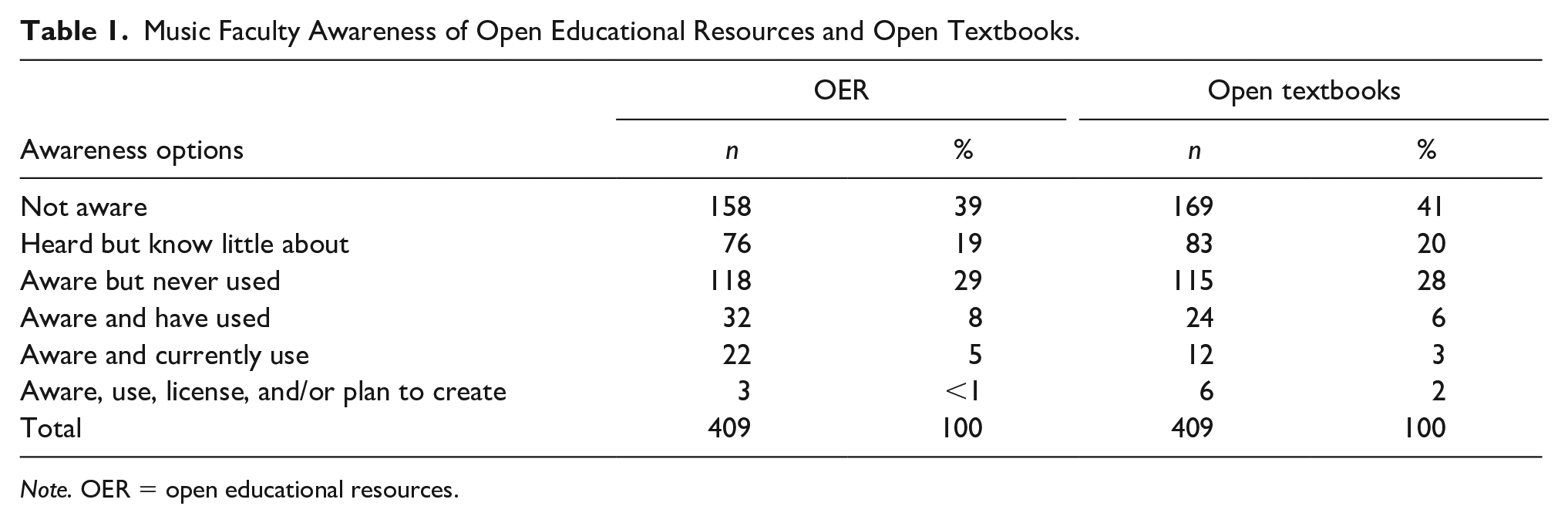
Results indicated that most participants (n = 234, 57%) lacked awareness of OER, with 76 participants (19%) having heard the term but knew little about it and 158 participants (39%) not aware of OER before completing the questionnaire. The remaining participants (n = 175, 43%) were aware of OER though most had never used them (n = 118, 67%). Fewer participants showed awareness of open textbooks specifically (n = 157, 39%), with 83 participants (20%) having heard of open textbooks but knew little about them and 169 participants (41%) completely unaware of open textbooks. See Table 1 for all awareness data.
Music Faculty Awareness of Open Educational Resources and Open Textbooks.
Note. OER = open educational resources.
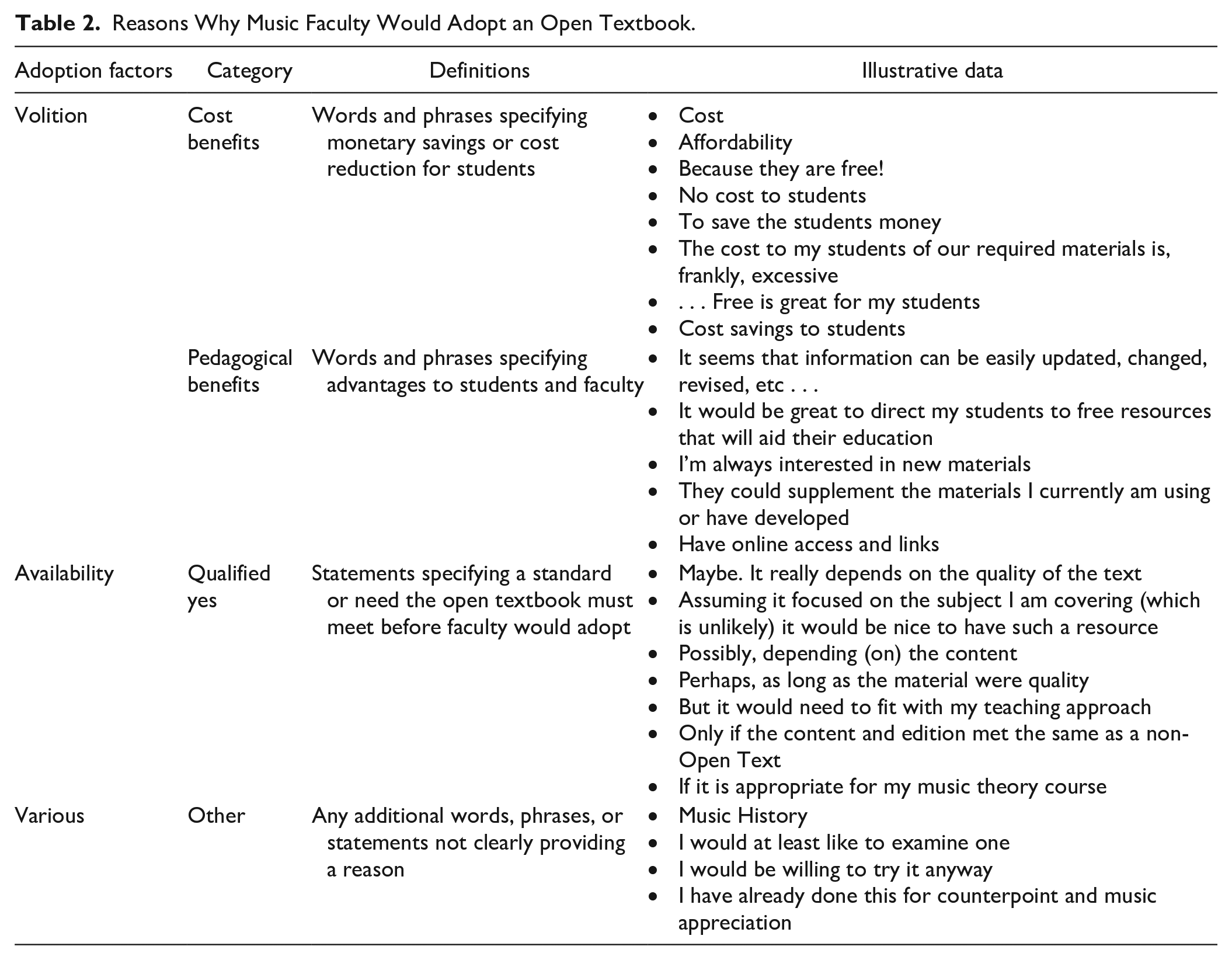
Most participants would consider adopting an open textbook if available for their area (n = 251, 61%) compared with 39% (n = 158) who would not. Two hundred and eighteen participants provided a written response for why they would adopt an open textbook, resulting in 251 statements. Coded statements formed four distinct categories: cost benefits (49%), qualified yes (27%), pedagogical benefits (17%), and other (7%). Definitions for each category and illustrative data are located in Table 2.
Reasons Why Music Faculty Would Adopt an Open Textbook.
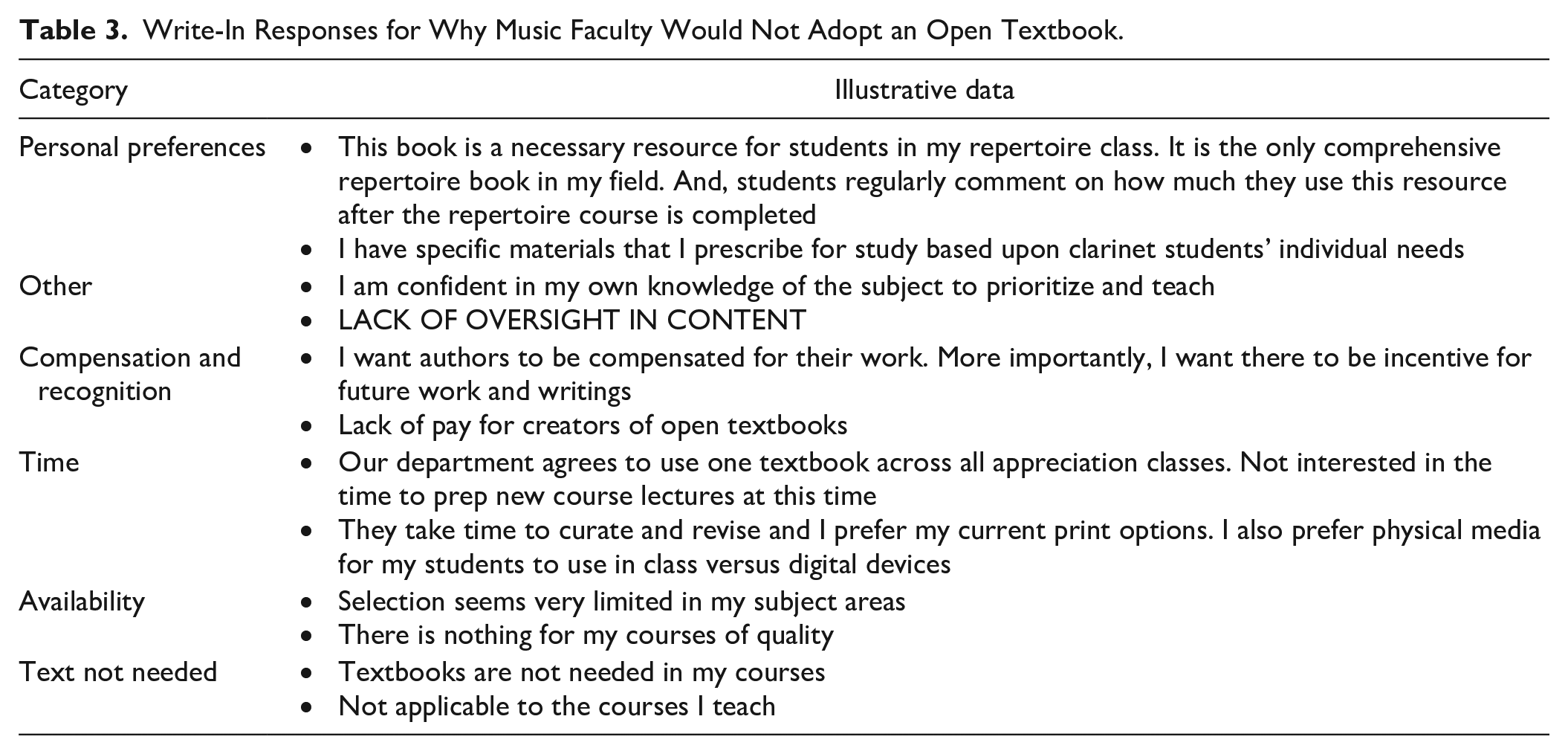
Participants who would not consider adopting an open textbook selected from a multiple-answer list of seven reasons. The reasons included “My lack of knowledge about open textbooks and OER” (n = 57, 36%), “Lack of time to search and curate open textbook options” (n = 45, 28%), “The quality of open textbooks (low quality)” (n = 42, 27%), “My lack of knowledge about OER licensing and permissions” (n = 33, 21%), “Open textbooks lack a reputation” (n = 28, 18%), “Just not interested nor see the purpose of open textbooks” (n = 21, 13%), and “Lack of support from my university, college, and or department” (n = 8, 5%). Table 3 shows the categorical analysis for the write-in responses.
Write-In Responses for Why Music Faculty Would Not Adopt an Open Textbook.
Teaching Demographics
Notable differences existed for awareness of OER and open textbooks based on participants’ primary teaching area, textbook requirement, and technology use. For primary teaching area, participants teaching foundational courses (n = 61, 64%) and music education courses (n = 36, 59%) were more aware of OER than participants teaching ensembles (n = 11, 17%) and applied lessons (n = 43, 32%). Awareness of open textbooks had similar results with participants who taught foundational courses more aware of open textbooks (n = 60, 63%) than participants who taught ensembles (n = 13, 21%) and applied lessons (n = 35, 26%). Participants who required a textbook for at least one course (n = 293, 72%) were more aware of OER and open textbooks than those who did not (n = 116, 28%), whereas participants who “regularly” or “always” used technology (n = 276, 67%) had greater awareness of OER and open textbooks than those who “rarely” or “never” used technology (n = 31, 8%).
Participants’ willingness to adopt an open textbook was not associated with any particular teaching area, although participants who required a textbook were more willing to adopt an open textbook (n = 195, 67%) than those who did not (n = 56, 48%). Associations also existed between technology use of participants and adoption, with over 60% (n = 244) of “always,” “regularly,” and “sometimes” technology users more willing to adopt an open textbook versus 23% (n = 7) of “never” and “rarely” technology users.
Variables Necessary for Adoption
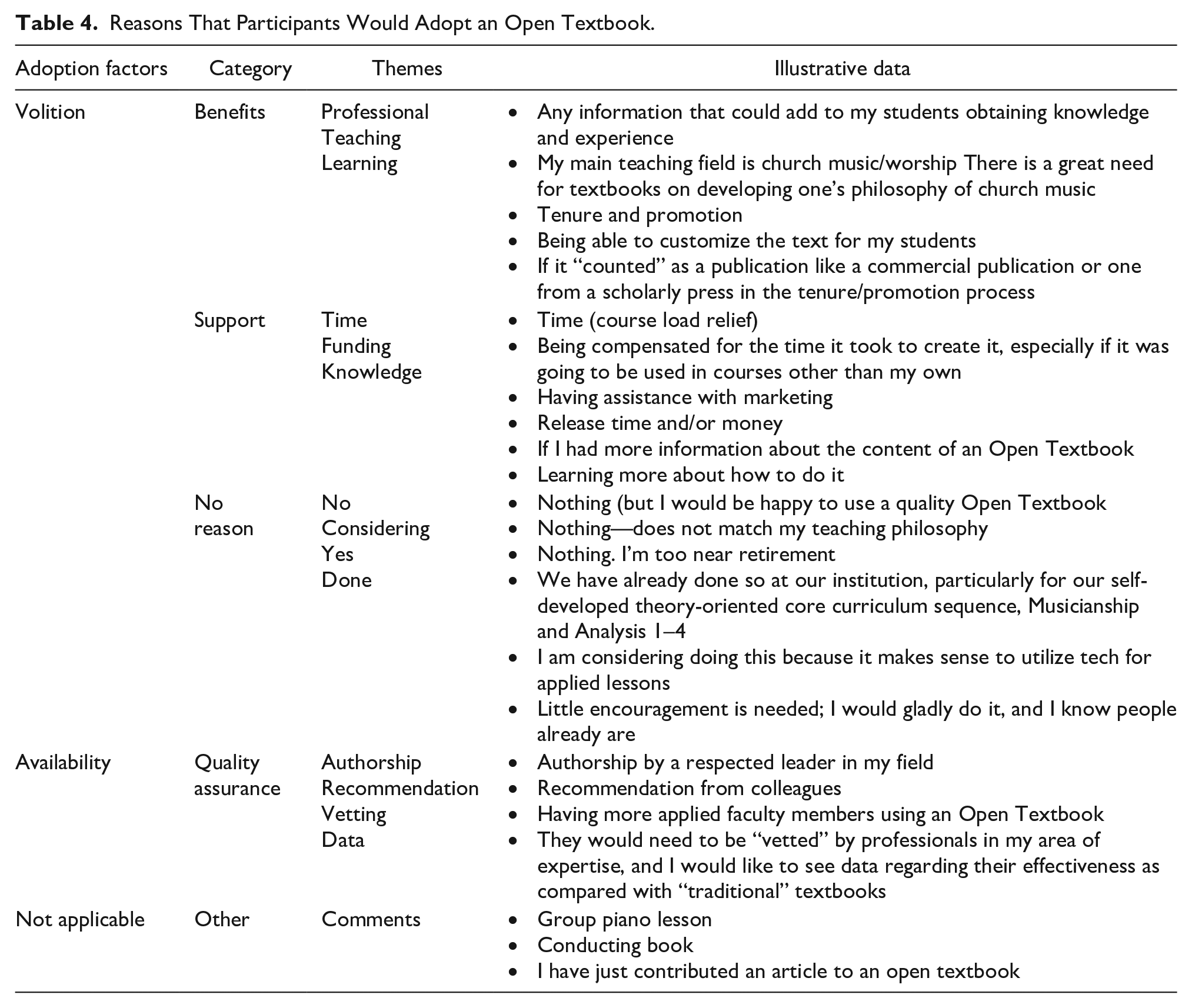
All participants had the opportunity to provide reasons that would encourage future use of open textbooks. Written responses from almost all participants (n = 403) resulted in 439 statements grouped into five categories: benefits (33%), support (30%), none (23%), quality assurance (8%), and other (6%). Benefits referenced advantages of open textbooks for faculty, students, and specific music learning. The support category referenced needs for adopting or creating an open textbook including time, money, knowledge, training, or other specific support. Words or phrases placed in the “none” category did not specify a reason; participants indicated they were either for or against adoption or creation of an open textbook. Quality assurance statements were offered solely by participants who had initially rejected adopting an open textbook and phrases related to authorship, recommendations, and the vetting process were included. Statements that could not be placed in the listed categories were categorized as “other,” including general comments and course names. Category, themes, and illustrative data are found in Table 4.
Reasons That Participants Would Adopt an Open Textbook.
Discussion
OER are teaching and learning materials licensed to encourage flexible use and are free or low-cost for students. Awareness of these resources in music is limited, with most music faculty in post-secondary institutions in the United States unaware of OER generally, and open textbooks specifically. Although these results corroborate previous awareness studies (Bansal & Joshi, 2015; Rolfe, 2012), recent data show that OER awareness and use are steadily increasing each year (Seaman & Seaman, 2019).
The results of this current study also indicate that specific pedagogical attributes of music faculty are associated with level of awareness including their primary teaching area, textbook requirement for the course, and the extent to which the music faculty used technology. For primary teaching areas and textbook requirements, it can be concluded that music courses with a set progression of knowledge and skills often require textbooks to achieve course objectives and may be used over multiple semesters (Gullings, 2017). These include foundational courses, such as music theory and history, teacher preparation courses, and some specialty courses, which warrant regular evaluation of resources to make sure information is current and relevant to students (Ozdemir & Hendricks, 2017).
Although the majority of music faculty lacked awareness of open textbooks or, if aware, had never used an open textbook, many would consider adopting them. This result is consonant with previous studies where unfamiliarity with OER did not factor into instructor’s volition to adopt (Bansal & Joshi, 2015; Prasad & Usagawa, 2014; Rolfe, 2012). Reasons for adoption fell within the high rungs of the OER adoption pyramid, many associated with volition including financial savings for students and an adaptable resource that is easy to use (Ozdemir & Hendricks, 2017; Petrides et al., 2011).
Due to OER being primarily available in repositories online, both method of instruction and technology use in teaching were identified as important descriptive information to gather; however, because 89% of participants taught courses face-to-face, method of instruction data became irrelevant. Conversely, technology use among faculty varied and was associated with awareness of both OER and open textbooks, as well as willingness to adopt an open textbook. Further investigation could identify if and how technology use and OER awareness and adoption correlate, as well as how adopting OER may affect technology use of faculty. Although Petrides et al. (2011) discovered that new adopters of open textbooks used them similarly as they would a traditional textbook, Ozdemir and Hendricks (2017) described faculty implementing new methods of teaching due to their use of open textbooks.
Finally, music faculty indicated a willingness to adopt open textbooks for their area if perceived advantageous to do so. Adoption benefits covered the availability and volition rungs of the adoption pyramid and included professional benefits, such as tenure and collaborating with colleagues; student benefits, such as cost reduction and additional resources; and pedagogical benefits, such as differentiating content and filling a void within a content area. In addition, extensive support, including time, compensation, and assistance, would be required for adoption, mirroring the results from previous research (Annand & Jensen, 2017; Baas et al., 2019; Wright, 2018). Recognition of these specific variables may assist faculty, departments, and institutions to effectively assess their readiness to create OER initiatives moving forward and provide necessary support for the adoption process.
Implications and Limitations
As OER can benefit both faculty and students in a myriad of ways, increasing the awareness of these resources is essential to encourage the creation and sharing of high-quality materials for the music education profession. Practical application of OER as well as research related to cost benefits, learning outcomes, use, and perceptions (Hilton et al., 2016) would add relevant data and provide clear evidence for considering OER for music instruction. In addition, specifying all music materials that could be an OER, such as repertoire, exercises, and method books, may engage individuals from teaching areas that showed a lack of awareness in this study. Adoption of open textbooks, a primary theme of this study, may have minimized the importance of other music teaching materials which are essential to individualizing applied instruction and foundational to ensemble learning. Although two participants mentioned using choral music and method books from the public domain and International Music Score Library Project, more data are needed to identify specific resources and uses of OER for all areas of music.
Although the participants of this study represented music faculty at accredited music institutions in the United States, many music institutions and post-secondary faculty were excluded. Differentiating between public and private institutions, as well as institutions of various sizes and Carnegie classification, regardless of accreditation, would have best provided a complete picture of OER awareness by music faculty. A comprehensive report of participants’ demographics would have also presented a more detailed picture of participants, including teaching roles and position (e.g., tenure-track, adjunct, tenured, full-time, part-time). Furthermore, examining this topic from an international perspective would determine if the adoption of music OER is more prolific in other countries and provinces than in the United States (Annand & Jensen, 2017; Jhangiani et al., 2016).
Finally, several participants who would not choose an open textbook stated they created resources for their students. Because OER are shared content, examining sharing practices of music faculty as well as benefits and barriers to sharing would provide relevant insight for OER creation and collaborative efforts moving forward (Baas et al., 2019; Rolfe, 2012).
Conclusion
Before determinations about the benefits of OER can be made, educators must be aware of their existence. In this study, I reported the awareness of OER among music faculty in post-secondary education and reiterated the benefits and barriers of adopting OER identified in past studies. OER are a developing area and while specific terms are familiar, understanding the premise and purpose of openly licensed material is still unclear to many. Although this study aimed to fill a gap in the literature, continued research into OER and other related practices will better inform all music educators while highlighting OER that can provide free, high-quality teaching materials for music instruction.
Footnotes
Declaration of Conflicting Interests
The author(s) declared no potential conflicts of interest with respect to the research, authorship, and/or publication of this article.
Funding
The author(s) received no financial support for the research, authorship, and/or publication of this article.
