






Abstract
The purpose of this literature review was to outline and explore the identity construction, developmental pathways, and potential conflicts faced by music teachers at various stages of their careers. Using thematic content analysis, we synthesized research in four areas: the structure and characteristics of music teacher identity, identity conflicts and role negotiation, critical factors influencing music teacher identity formation, and strategies for strengthening and sustaining music teacher identity. The review mapped developmental pathways from preservice through experienced practice and highlighted points where targeted support might be helpful. By clarifying how identities were formed, challenged, and adapted over time, the review offered practical implications for curriculum design, induction, and ongoing professional learning. These insights could help music teachers at different stages clarify and intentionally guide their identity development and professional growth, supporting progress toward expert practice.
Keywords
Introduction
As education plays an increasingly vital role in national development and social progress, the role of K–12 teachers has become more important and complex (Carver-Thomas & Darling-Hammond, 2019; Ghanizadeh & Jahedizadeh, 2015). Beyond imparting knowledge, teachers are expected to equip students with essential skills for navigating a multicultural and rapidly evolving world (Darling-Hammond, 2006). At the same time, schools are experiencing greater student diversity and higher academic expectations, placing increased professional demands and varied responsibilities on educators (Elyashiv & Rozenberg, 2024). Consequently, teachers are experiencing more job-related stress, particularly those new to the profession, resulting in many skilled teachers leaving the field (Darling-Hammond, 2020; Ghanizadeh & Jahedizadeh, 2015). The literature reviewed indicates that this multifaceted pressure often results in teacher exhaustion, a diminished sense of accomplishment, and burnout (Ghanizadeh & Jahedizadeh, 2015). Prolonged exposure to demanding work environments may diminish a teacher’s sense of professional identity, adversely affecting their well-being and career progression (Roeser et al., 2013). More critically, teacher turnover and well-being issues could create a ripple effect on student academic outcomes, the school environment, and the distribution of educational resources (Carver-Thomas & Darling-Hammond, 2019).
K–12 music teachers face even more significant challenges within this trend. Their teaching methods, which are closely connected to their role in humanities and arts education, often rely on performance opportunities, extra time outside of class, and additional resources. However, these needs are often not fully understood or supported by school administrators (Figueras, 2014; Hanson, 2017; McLain, 2005). As a result, music teachers are more susceptible to burnout without institutional support, which can lead to physical and mental health issues, decreased motivation, and even career attrition (Hanson, 2021). Addressing these obstacles, scholars increasingly emphasize the importance of establishing and maintaining professional identity for teachers’ continuous professional development (Albert, 2025; Haning, 2021; Jordhus-Lier, 2021; Mateos-Moreno, 2022; Ramsey et al., 2025; Tucker, 2020). Professional identity shapes teachers’ pedagogical beliefs and practices and plays a key role in their resilience and persistence when facing professional challenges.
The formation of teacher identity is a dynamic and evolving process, not an overnight achievement. Across the studies reviewed, evidence suggests that both preservice and novice music teachers often face role conflicts and uncertainties during the early stages of teaching, making it difficult to quickly develop a stable professional identity (Kos, 2018; Yang, 2022). Even experienced teachers may face identity shifts in response to changes in educational policies, school culture, or personal experiences (Isbell, 2015; Townshend, 2024). Beauchamp and Thomas (2009) emphasized that teachers must continually adapt to identity transitions and challenges as they progress from preservice training to becoming expert educators. Beijaard et al. (2004) described this process as a struggle, where teachers are constantly adjusting to different expectations and social roles. This ongoing process may occur across the novice, advanced beginner, competent, proficient, and expert phases described in Berliner’s (1988) framework. For music teachers, identity negotiation should therefore be understood as a long-term process requiring ongoing effort and reflection, even beyond Berliner’s “expert” stage.
The extensive existing research demonstrates a clear scholarly recognition of music teacher identity across various perspectives. As a major contribution to this foundation, Pellegrino (2019) synthesized the available knowledge in a review that primarily scrutinized theoretical frameworks and empirical data through the lens of teacher educators. However, a literature review that presents a comprehensive panorama of identity formation and professional development viewed directly from the perspective of the music teachers themselves remains lacking. Therefore, the purpose of this literature review is to outline and explore the identity construction, developmental pathways, and potential conflicts faced by music teachers at various stages of their careers. This exploration will help music teachers at different developmental stages to understand their professional identity progression more clearly, enabling them to manage their identity and professional growth more consciously, ultimately supporting their successful transition into expert music educators.
Method
We adopted an integrative literature review approach to synthesize research on music teacher identity across different career stages. This approach is well suited for bringing together diverse theoretical and empirical studies and for developing a more integrated understanding of complex and evolving concepts such as teacher identity (Torraco, 2005, 2016). To support systematic interpretation of the literature, we used thematic content analysis (Braun & Clarke, 2006).
Our literature search was conducted in multiple stages. We began with an initial search of SAGE, ProQuest, and Google Scholar, focusing on publications from 2000 to the present to capture recent theoretical developments and research trends related to music teacher identity. Search terms combined identity with music teaching and related descriptors, including music teacher identity, preservice music teachers and inservice music teachers, music education students or majors, novice and experienced music teachers, and music educators. This initial search yielded 336 records. We screened titles and abstracts for relevance and excluded 219 sources that did not focus on music teachers or did not address identity-related constructs. We then conducted full-text screening of the remaining 117 publications and excluded an additional 21 sources due to limited relevance to the research focus or non-scholarly formats such as reports or conference proceedings. Only peer-reviewed journal articles, dissertations, and scholarly books and book chapters were retained.
We then expanded the search to additional databases, including JSTOR, ERIC, EBSCO, and Music Index, and continued until category saturation was reached. In this phase, we incorporated alternative identity-related terms such as teacher identity, academic identity, professional identity, and occupational identity. We also screened the reference lists of included studies and integrated recommendations from experts in the field to identify additional relevant literature. Throughout the expanded search and review process, the corpus was iteratively refined through duplicate removal and the exclusion of studies that did not substantively address music teacher identity as a central analytic focus. Following this iterative search and screening process, a total of 96 studies were included in the final review (see the Online Supplementary Material).
All included studies were organized using a reference management system and analyzed through thematic content analysis. The first author led the analytic process and conducted the primary coding following Braun and Clarke’s (2006) six-phase approach (See Figure 1). During this stage, the primary analyst wrote analytic memos to facilitate researcher reflexivity, documenting key coding decisions and tracking how interpretations developed over time, creating a transparent record of the analytic process. To enhance the trustworthiness of the analysis, the second author reviewed the emerging coding structure, thematic organization, and analysis memos, providing critical feedback (Creswell & Poth, 2016). Through this collaborative process, the literature was ultimately synthesized into four overarching thematic categories: the structure and characteristics of music teacher identity, identity conflicts and role negotiation, factors influencing music teacher identity formation, and strategies for strengthening and sustaining music teacher identity.
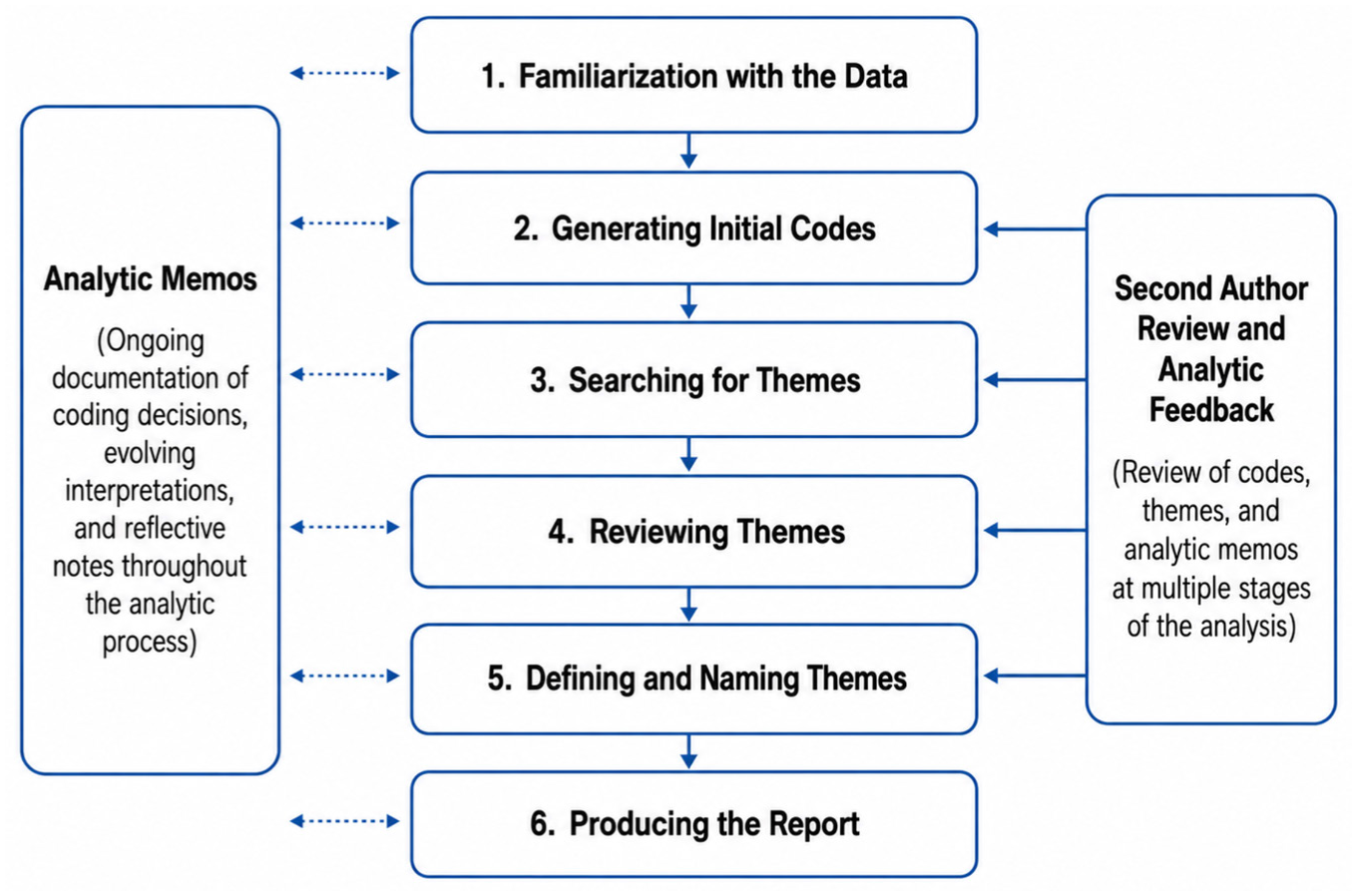
Thematic analysis process.
Findings
Structure and Characteristics of Music Teacher Identity
Defining one’s identity is crucial for personal development. Identity establishment and shaping is a multifaceted process involving self-concept, self-evaluation, and the dynamic actions of constructing, maintaining, defending, and altering one’s identity (Vignoles, 2011). This formation is influenced by emotions, personal experiences, and reflection, leading to an identity that is both diverse and dynamic (Beauchamp & Thomas, 2009). Identity construction is viewed as a continuous process that directs and manages the social cognitive approaches individuals utilize to build, preserve, or reform their self-identity (Berzonsky, 2011).
A clear sense of identity positively influences how individuals cope with difficulties, interact with others, select career paths, and make other critical life choices (Erickson & Pinnegar, 2017; Was et al., 2009). Thus, a clear identity helps maintain stable interactions between the individual and the social environment and provides guidance for life paths and decisions (Kroger, 2015). As Frankfurt (1999) pointed out: “A person acts autonomously only when his volitions derive from the essential character of his will” (p. 132), indicating that a clear self-identity is an important prerequisite for individuals to achieve autonomy and internal motivation.
Professional identity is broad and multifaceted, extending beyond an individual’s personal self to include significant others, social roles, immediate groups, and even broader social categories (Vignoles, 2011; Wagoner, 2015). Within this broader context, music teacher identity specifically refers to one’s sense of self as a music educator (Wagoner, 2011). Thus, music teachers’ identity construction involves ongoing self-examination in both personal and professional dimensions (Beijaard & Meijer, 2017; Wagoner, 2011).
A recurring finding is that music teachers often enact multiple roles. They may be versatile musicians, performers, and educators, illustrating how personal experiences intersect with professional responsibilities in teaching (Beauchamp & Thomas, 2009; Lewis, 2024). Because these roles carry different expectations, studies have noted that perceived conflict between being a musician and an educator can lead to internal identity struggles (Jordhus-Lier, 2021; McClellan, 2017; Tucker, 2020). At the same time, teachers may actively adapt and balance these identities by continuously defining an ideal teaching persona and reaffirming the meaning of their educational work (Beijaard et al., 2004; Draves, 2021).
Importantly, navigating these multiple roles is not a finite task, but rather a developmental, career-long process. From preservice preparation onward, teachers cultivate their personal selves and professional identities through an ongoing interplay between these dimensions (Beijaard et al., 2004). Moreover, their continuous interaction with people and events repeatedly prompts a reinterpretation of “Who am I?”, suggesting that development as a teacher is never fully completed (Beijaard & Meijer, 2017; Froehlich, 2015; Wagoner, 2021). Because these identity states remain open, uncertain, and subject to change over time, teacher identity is better viewed as a fluid process rather than a fixed result (Adams, 2024). Therefore, understanding music teacher identity requires viewing it as an ongoing, career-spanning evolution where personal musicianship and educational responsibilities are continuously negotiated (see Figure 2).
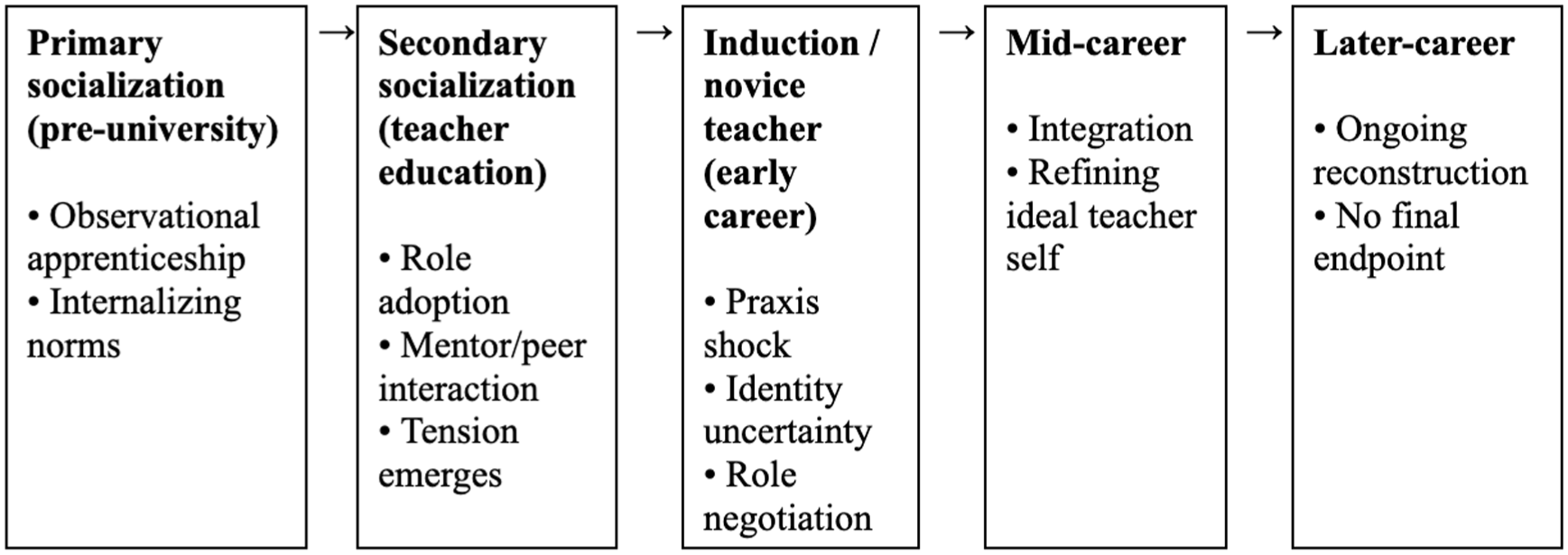
Key stages in music teacher identity development across the career span.
Identity Conflicts and Role Negotiation
Music teachers often struggle with conflicting identities, particularly the tension between their roles as performers and educators. Many studies have shown that music education students in the preservice training stage generally have a strong sense of musician identity, mainly due to their past significant music learning experiences and successful performance experiences (Froehlich, 2015; Isbell, 2015; Woodford, 2002). When these students in teacher education begin to identify as future teachers, they commonly struggle to balance being musicians and educators, often feeling pulled between the roles of performer and teacher (Pellegrino, 2009).
This tension is often traced to early music learning contexts that emphasize technical skills and stage performance, shaping students more strongly as performers than as educators (Isbell, 2008; Pellegrino, 2009). As a result, role conflict may emerge as students attempt to integrate musician and teacher identities during preservice preparation.
The university environment can further intensify this conflict. Performance talent is often more visible and readily praised than teaching competence, which can be difficult to evaluate objectively. This dynamic can strengthen preservice teachers’ performer identity through performance opportunities and external validation throughout university studies (Isbell, 2015).
Institutional priorities may also shape identity development. When faculty and administrators prioritize performance-oriented programs, the hierarchy within conservatories may hinder the formation of strong educator identities among future music teachers (Austin et al., 2012). Haning (2021) similarly noted that music in higher education often emphasizes performance, which can make reconciling performer and educator identities more difficult for undergraduate music education majors. Therefore, during the preservice stage, personal musical backgrounds and institutional environments together may produce noticeable identity tension.
Evidence suggests that identity conflict can persist into the early career stage. Novice music teachers may still view themselves primarily as musicians rather than teachers (Isbell, 2008). Pellegrino (2009) further noted that the conflict between the performer and educator roles for novice music teachers was almost inevitable, as their teacher identity was primarily built upon long-term musical skill training.
Studies also suggest that many students identify more strongly with performer-based roles even before entry into the profession, and their interests may lean toward or shift between performance and teaching (Froehlich, 2015; Pellegrino, 2009). When these graduates moved from university programs into formal K–12 teaching positions, the actual work environment provided comparatively less support for their musician roles, often resulting in a degree of disunity in their self-identity (Dabback, 2018). Simultaneously, most music teachers continued to view their refined musical skills as a crucial foundation for establishing their professional credibility as teachers (Haston & Russell, 2012; Wagoner, 2011).
Because music teachers are often the sole music specialists in a school, identity challenges may be magnified in practice (Ballantyne & Zhukov, 2017). Many novice music teachers struggled to develop a cohesive identity that combined their roles as musicians and teachers, and this identity uncertainty played a crucial role in their encounters with praxis shock and professional exhaustion (Ballantyne et al., 2012; Ballantyne & Zhukov, 2017; Sieger, 2016).
Factors Influencing Music Teacher Identity Formation
The identity formation of music teachers is influenced by multiple factors. Among these, the process of socialization is a key starting point. The professional socialization experiences of music teachers can be divided into two stages: primary socialization and secondary socialization (Isbell, 2008). Primary socialization typically occurs before university (i.e., during the elementary and secondary school years). Through extended experiences in school settings and observational apprenticeships, future music teachers develop a tacit understanding of the teacher’s role over the course of their 12 years of basic education. By observing the daily practices of their own music teachers, they gradually internalize classroom norms and teaching culture (Isbell, 2008; Pellegrino, 2009; Woodford, 2002).
Secondary socialization begins upon entry into university music teacher education programs and may play a more explicit role in shaping teacher identity (Austin et al., 2012; Isbell, 2008, 2015). This formal stage signifies the commencement of a music teacher’s career, offering chances to adopt new roles and necessitating a reevaluation of their positions within university and student-teaching environments (Ballantyne & Canham, 2023; Haning, 2021). In such academic and professional environments, through continuous interaction with mentors, peers, and students, they deepen their understanding of their teacher roles and shape and reshape their music teacher identities within their relational networks (Beauchamp & Thomas, 2009).
It becomes clear that the combined effects of primary and secondary socialization continuously shape and refine the identity of prospective music teachers, as their early life experiences and formal training both contribute to the development and evolution of their teacher identity (Isbell, 2015; Ramsey et al., 2025).
Music teacher education courses and academic engagement are also important factors that impact the construction of a music teacher’s identity. During their preservice training, music education students engage with a curriculum that spans musicology, pedagogy, psychology, and sociology, and this comprehensive professional training has a significant impact on their developing professional identity (Albert, 2023). When this knowledge acquisition is combined with actual teaching practice, the formation of music teacher identity is a result of the interaction between personal experience and the social environment.
Therefore, the degree of investment and motivation in professional knowledge learning by preservice teachers often becomes the foundation for their success in future professional careers (Darling-Hammond, 2020; Draves, 2021). In contrast, some music education majors lack clear goals in their academic pursuits, are reluctant to create their own learning plans, and even resist suggestions from teachers, school staff, or parents (Culp & Salvador, 2021; Was & Isaacson, 2008). Even when they are willing to accept academic goals set by others, they may still struggle with the academic pressure that comes with them (Lewis, 2024).
Levels of academic engagement and achievement during college play a critical role in shaping music teachers’ professional identity. For music education majors, receiving positive academic recognition can foster strong intrinsic motivation, which in turn supports greater progress in their teaching practice (Ireri et al., 2015; Kos, 2018). Under ideal identity development conditions, preservice teachers can make learning and career decisions more introspectively and systematically, and cope with future stressful teaching situations by enhancing self-esteem (Ireri et al., 2015; Kroger, 2015; Was et al., 2009). In this context, the attitude and beliefs of preservice music teachers toward professional learning are one of the key factors in shaping their self-concept as music teachers (McClellan, 2014).
Practical teaching experiences, such as internships, also profoundly impact the construction of a music teacher’s identity. During internships and early teaching practice, preservice teachers integrate classroom theory with actual teaching, thereby enriching their experience and understanding of the teacher role (Brewer, 2009; Isbell, 2008; McClellan, 2014). Whether through direct instruction or classroom observation, these hands-on experiences provide opportunities for them to explore their professional identity. However, novice teachers often face many challenges during their early teaching experiences. Difficulties such as unsuccessful lessons and unexpected classroom situations can increase their frustration, reduce their confidence and sense of teaching effectiveness, and even cause them to question their decision to pursue a teaching career (Ballantyne & Zhukov, 2017). Internships also help preservice teachers recognize the disparity between their idealized view of teaching and the actual demands of the profession (Culp & Salvador, 2021; Froehlich, 2015).
Although this dissonance between aspirations and actuality can be dispiriting, it represents an indispensable stage in development. Preservice teachers require refining through exposure to real teaching situations to deepen their grasp of the core aspects of their profession and solidify their sense of professional identity by accumulating successful teaching encounters. Successful teaching experiences (such as effectively implementing lesson plans, flexibly applying learned knowledge and skills, and timely reflection and improvement of classroom strategies) can compensate for their deficiencies in professional knowledge and skills, and enhance their understanding of teacher identity (Austin et al., 2012; Ramsey et al., 2025). Once preservice teachers begin to truly understand and identify with their teaching roles, they often develop an emotional attachment to teaching (Holland & Lachicotte, 2007; Watzke, 2007), completing the transition from student identity to teacher identity. These valuable internship experiences and initial teaching experiences lay the foundation for the consolidation of their professional identity in the future.
External environments and work contexts continue to shape music teachers’ identities through school settings and professional demands after they enter the profession. Novice music teachers often find that the knowledge and skills required in actual teaching situations are far richer and more complex than those learned in preservice education (Ballantyne & Zhukov, 2017). While teacher education and internships provide a degree of experience and psychological readiness, the actual circumstances encountered after officially beginning their careers often fail to meet initial expectations, prompting a reconsideration of their previous views on classroom teaching (Darling-Hammond, 2020; Kelchtermans et al., 2009). In adapting to their work environments, novice music teachers frequently experience instability, exhibiting a greater susceptibility to burnout and a higher likelihood of leaving the profession early (Ballantyne et al., 2012; Dabback, 2018; Paetz, 2021).
On the other hand, the degree of recognition by significant others in the school organization also significantly affects the development of music teachers’ identity. If principals, colleagues, students, or parents recognize a music teacher’s professional performance, this external affirmation can help enhance the teacher’s professional confidence and identity and improve their resilience in independently coping with difficulties (Asmus, 2021; Seligman, 2011). Conversely, when the external environment changes significantly, such as shifts in education policies or a decline in school conditions, even experienced teachers may encounter renewed tensions in their professional identity (Humphreys, 2016; Russell, 2012).
Strategies for Strengthening and Sustaining Music Teacher Identity
The professional identity of music educators is formed through the ongoing interaction between their personal motivations and skills and the specific social groups and broader educational system (Ballantyne & Zhukov, 2017; Kroger, 2015; Sivanathan et al., 2004). In professional growth, reflective practice is a key element in continuously expanding and refining teacher identity. Beyond routine review, inservice teachers strengthen their identity by constantly rethinking what effective teaching means to them and by connecting their professional selves to personal challenges, local educational settings, and their overall well-being (Ballantyne & Zhukov, 2017; Conway, 2022; Kroger, 2015). Music teachers could use reflection on their teaching experiences to identify lessons for future practice. Creating goals and envisioning a desired professional identity, which includes appreciation, connection, efficacy, and commitment, helps to explain current choices and sustain ongoing development (Dabback, 2018; Humphreys, 2016; Russell, 2012; Urzúa & Vásquez, 2008).
Reflection allows teachers to consistently compare their aspirations with reality, thereby adjusting their understanding of their professional role (Beauchamp & Thomas, 2009). The literature reviewed indicates that timely summarization of successful and unsuccessful teaching experiences helps deepen teachers’ self-understanding and enhance their professional confidence (Austin et al., 2012; Ramsey et al., 2025). As reflection deepens, music educators may be able to foster a dialogue among their identities as teachers, musicians, and mentors, allowing these roles to inform and enrich one another. This integration helps prevent a strict division between their musical and teaching roles, supporting a more multifaceted professional identity (Brewer, 2009; Dabback, 2018; Sieger, 2016). Especially in the early stages of a career, reflective practice may help novice teachers face setbacks and challenges in the classroom, identify areas for improvement, and thus turn every experience into an opportunity to further expand and nuance their teacher identity (Culp & Salvador, 2021; Froehlich, 2015).
Adapting to environmental changes and enhancing professional resilience are also important strategies for maintaining one’s identity as a teacher. The development of teacher identity is not a monotonous linear process, and even after passing the novice stage, it may still fluctuate and face new challenges at different points in a teacher’s career (Dabback, 2018; Powell, 2014). Experienced and accomplished teachers may encounter new identity tensions in response to external pressures such as shifts in educational policies, curriculum modifications, or increased work demands, which may result in a perception of diminished autonomy and constrained pedagogical creativity (Humphreys, 2016; Russell, 2012). Viewing identity work as a career-long project, with continued learning, goal setting, and periodic realignment between the envisioned professional self and current practice, tends to support adaptation while maintaining coherence (Beijaard et al., 2004; Dabback, 2018; Urzúa & Vásquez, 2008). When teachers achieve success in their work and gain recognition from those around them, this positive feedback reinforces their sense of professional identity and enhances their resilience in facing difficulties independently (Asmus, 2021; Seligman, 2011).
Implications for Music Teaching and Learning
Recognizing the importance of professional identity is essential for every music teacher, as a strong and sustainable teacher identity has been linked to “contentment, compensation, competence, and commitment” (Snyder et al., 2011, p. 107). Throughout the reviewed literature, discussions of role tension and burnout consistently appeared alongside accounts of professional fulfillment and sustained commitment. This pattern indicates that identity challenges are an inherent, recurring feature of identity work across the career span, highlighting the need for ongoing supports that help teachers sustain their professional engagement. When working conditions are consistent with a teacher’s sense of self, they are more likely to experience greater autonomy and flexibility in their teaching (Ballantyne & Zhukov, 2017). More importantly, a harmonious professional identity may positively shape self-concept, leading to enhanced well-being that represents the life fulfillment every music teacher should aspire to achieve (Ballantyne & Zhukov, 2017; Sivanathan et al., 2004).
Clarifying Teacher Identity and Its Development Pathways
For preservice music teachers, a substantial body of research highlights the important role of music teacher education programs in shaping their teacher identity (Ballantyne et al., 2012; Culp & Salvador, 2021; Isbell, 2008; Ramsey et al., 2025). Students’ reliability and motivation to learn, together with their attitudes and beliefs about music education curricula, form the foundation for their early-career achievements (Culp & Salvador, 2021; McClellan, 2017). At this stage, their teacher identities are either not yet fully developed or are still in the process of formation, and their understanding of teaching concepts and teacher identity may be limited or incomplete (Ramsey et al., 2025; Yang, 2022). In this context, preservice music teachers could begin by examining their academic identities within their teacher programs to better align them with their student roles. Regarding the curriculum of music education programs, it is important for preservice teachers to understand what it entails, why they are learning it, how to make sense of it, how to apply it, and how it could benefit their future careers. Developing a renewed understanding of music skills training may help them reconcile the tensions between their identities as musicians and teachers, while also deepening their appreciation for teaching skills.
Following the preservice period’s emphasis on academic identity, the formation of teacher identity in the inservice phase relies more on continuous calibration and situated learning within authentic classroom settings (Ballantyne & Zhukov, 2017). Teachers integrate the beliefs and goals developed during training into their curricula and rehearsals, continuously refining their understanding of effective teaching and their roles through daily reflection and future-oriented planning. Concurrently, they translate feedback from students and colleagues into more nuanced self-positioning through engagement with grade-level teams, professional learning communities, and broader professional networks (Ramsey et al., 2025). Personal musical expertise is also transformed into demonstrable teaching effectiveness during this process, gradually alleviating the role tension between musician and educator, and solidifying self-efficacy and professional commitment within the evolving school ecosystem (McClellan, 2017).
Actively Responding to Identity Conflicts and Transitional Challenges
Music teachers who identify strongly as musicians may benefit from drawing on selected principles of positive psychology to navigate identity conflicts and transitional challenges. Positive psychology is the scientific study of the conditions and processes that help individuals and communities flourish, with emphasis on strengths, positive emotions, supportive relationships, meaning, and accomplishment rather than focusing only on deficits or problems (Peterson, 2006; Seligman, 2011; Seligman & Csikszentmihalyi, 2014). In this context, a strengths-based perspective may help teachers view their performance background not as a barrier to teacher identity, but as a professional resource that can be carried into classroom practice.
For example, music teachers may draw on their musical expertise to model artistry, support expressive teaching, and build positive emotional connections with students during rehearsals and classroom music making (Ballantyne et al., 2012; Pellegrino, 2009). Reflection on successful teaching and musical moments may also help them reinterpret classroom difficulties as part of ongoing professional growth and accomplishment, thereby supporting a more integrated sense of self as both musician and educator (Austin et al., 2012; Ramsey et al., 2025; Seligman, 2011). Framed in this way, positive psychology offers not a vague sense of optimism, but a practical direction for helping music teachers recognize strengths, sustain engagement, and develop a more stable professional identity.
Positive psychology also highlights the importance of relationships and meaning in sustaining well-being and professional commitment (Seligman, 2011). Music teachers can also connect with others by leading them in musical activities, providing support and direction to help them achieve their goals. This focus on helping others, rooted in Altruism, is vital for developing a music teacher’s values and teaching abilities (Hanson, 2018). During this process, preservice music teachers gain preliminary teaching experience, begin to move away from a singular musician identity, and find personal enjoyment and fulfillment. These informal environments can also ease the transition for preservice music teachers into their professional roles, stimulating reflection on music teaching and highlighting areas for further learning, thereby emphasizing the importance of practical experience in forming a teacher’s identity (Conway, 2022).
Supporting Professional Growth Through Community and Collaboration
Beyond personal reflection, establishing a meaningful professional network is also an important strategy for strengthening teacher identity. Research suggested that consistent engagement with mentors, peers, or teaching artists helped foster a stronger sense of professional identity (Austin et al., 2012; Dabback, 2018; Gilbert et al., 2025). For instance, learning from experienced educators can assist individuals in anticipating the potential impact of educational policies and societal changes on the role of teachers (Roeser et al., 2013; Watzke, 2007).
Music teachers can also explore new classroom formats by collaborating with teaching artists, a process that may spark inspiration and encourage the integration of their roles as both musicians and educators (Gilbert et al., 2025). Actively participating in or creating supportive teacher communities provides opportunities for equal exchange among peers, fosters a sense of belonging and shared identity (Ballantyne et al., 2012; Humphreys, 2016), and further strengthens their professional identity.
Conclusion
The purpose of this literature review was to outline and explore the identity construction, developmental pathways, and potential conflicts faced by music teachers at various stages of their careers. Our review highlights that music teacher identity is a long-term developmental focus, demanding continuous engagement across a professional lifespan. While existing literature supports this premise, Pellegrino (2019) emphasized that “although music teacher identity has been well researched, there are more connections to make and more perspectives to illuminate” (p. 286). Addressing this call, and as a meaningful complement to Pellegrino’s (2019) robust review, our work expands upon previous literature by presenting a comprehensive panorama of identity formation and professional development viewed directly from the perspective of the music teachers themselves.
Building upon this comprehensive understanding, it becomes clear that because identity evolves dynamically, current reliance on cross-sectional studies fails to fully capture this progression. To address this gap, future research should pursue more longitudinal studies of music teacher identity, specifically tracking development from preservice training into inservice practice, or examining the growth from novice to experienced status. In addition, the voices of late-career teachers are currently underrepresented. We suggest that future studies prioritize late-career music teachers, as their insights into successful identity development can significantly benefit those earlier in their careers. Finally, although the teacher identity of university-level music teacher educators constitutes a separate domain, these educators typically possess foundational K–12 teaching experience (Brewer & Rickels, 2012). As individuals who have transitioned from K–12 teaching into teacher education, their retrospective perspectives may offer valuable insights into the identity development of music teachers during earlier career stages.
Supplemental Material
sj-docx-1-upd-10.1177_87551233261457142 – Supplemental material for Music Teacher Identity Across the Career Span: A Literature Review
Supplemental material, sj-docx-1-upd-10.1177_87551233261457142 for Music Teacher Identity Across the Career Span: A Literature Review by Zaiyang Xu, Zishan Xiong, Zhuoer Gu and Peng Jin in Update: Applications of Research in Music Education
Supplemental Material
sj-xlsx-2-upd-10.1177_87551233261457142 – Supplemental material for Music Teacher Identity Across the Career Span: A Literature Review
Supplemental material, sj-xlsx-2-upd-10.1177_87551233261457142 for Music Teacher Identity Across the Career Span: A Literature Review by Zaiyang Xu, Zishan Xiong, Zhuoer Gu and Peng Jin in Update: Applications of Research in Music Education
Footnotes

Funding
The authors disclosed receipt of the following financial support for the research, authorship, and/or publication of this article: This study was supported by a research grant from the National Research Center for Educational Materials (China).
Declaration of Conflicting Interests
The authors declared no potential conflicts of interest with respect to the research, authorship, and/or publication of this article.
Supplemental Material
Supplemental material for this article is available online.
References
Supplementary Material
Please find the following supplemental material available below.
For Open Access articles published under a Creative Commons License, all supplemental material carries the same license as the article it is associated with.
For non-Open Access articles published, all supplemental material carries a non-exclusive license, and permission requests for re-use of supplemental material or any part of supplemental material shall be sent directly to the copyright owner as specified in the copyright notice associated with the article.
