






Abstract
A facile route has been opted to synthesize carbon nanotubes/polyazopyridine/nanodiamonds nanocomposites. In-situ oxidative polymerization of conducting monomer in presence of nanodiamonds (functional nanodiamonds and non-functional nanodiamonds) and carbon nanotubes (functional carbon nanotubes and non-functional carbon nanotubes) resulted in nanocomposites. The physical characteristics of resulting nanocomposites were studied using various techniques such as Fourier transform infra-red spectroscopy, field emission scanning electron microscopy, energy dispersive X-ray spectroscopy, differential scanning calorimetry, thermogravimetric analysis and X-ray diffraction spectroscopy. Field emission scanning electron microscopy examination revealed the polymer fibrillars formed network structure with ordered arrangement of nanodiamonds. Fourier transform infra-red spectroscopy confirmed the structure of carbon nanotubes/polyazopyridine/nanodiamonds nanocomposite. Functional carbon nanotubes/polyazopyridine/functional nanodiamonds showed higher 10% degradation temperature (T10) 489℃ and glass transition temperature 229℃ relative to non-functional carbon nanotubes/nanodiamonds having T10 482℃ and glass transition temperature 221℃. Measured electrical conductivity (4.5 S cm−1) of functional carbon nanotubes/polyazopyridine/functional nanodiamonds nanocomposite was also remarkably improved by the incorporation of functional nanodiamonds relative to non-functional carbon nanotubes/polyazopyridine/non-functional nanodiamonds (3.9 S cm−1).
Introduction
The vital building blocks in modern nanotechnology and nanoscience have been carbon nanomaterials (e.g. nanodiamonds (NDs), carbon nanotubes, fullerenes, graphene etc.). NDs as one of the most important triad of carbon nanofamily have been extensively used in various fields. 1 Detonation technique has emerged as one of the facile routes for the synthesis of NDs. 2 Owing to broad range of useful properties such as crystallinity, dopability, non-porosity, tailorable and rich surface chemistry, narrow particle size distribution (4–6 nm), unique optical and electrochemical characteristics, superior thermal conductivity,3–5 NDs act as useful candidates for many advance technological applications. Therefore, NDs can be used as reinforcement for other materials, adsorbents, refrigerating fluids, colloidal suspension, lubricants, microabrasives, quantum dots etc.1,3,6–15 One way to improve the properties of filler is to attach distinct functional groups on its surface. Surface functionalization of NDs has been carried out with a strategy to maximize polymer-filler interaction and to minimize inter-particle interactions (aggregation) that hampered their applications. Discrete functional group of functional NDs has remarkably improved the physical characteristics of the resulting nanocomposite.16–19 NDs have been characterized as promising component for polymer matrix reinforcement because of their nanoscale size, nearly spherical shape, exceptional physico-chemical and mechanical characteristics. 20 In the past few decades, conducting or π-conjugated polymers have tunable electronic, mechanical, physical and optical properties. These conducting organic polymers have applications such as anti-corrosion coatings, electrochromic devices, battery and light emitting diodes, organic transistors and photovoltaics.21,22
We have developed nanocomposite of NDs (functional nanodiamonds (F-NDs) and non-functional NDs (NF-NDs)) with conducting polymer i.e. polyazopyridine (PAP) and carbon nanotubes (functional carbon nanotubes (F-CNTs) and non-functional carbon nanotubes (NF-CNTs)). 23 NF-CNTs/PAP/NF-NDs and F-CNTs/PAP/F-NDs hybrids were synthesized by in-situ polymerization of 2,6-diaminopyridine monomer on NDs (F-NDs and NF-NDs). To the best of our knowledge, CNTs/PAP/NDs was first time chemically synthesized using this route. Synthetic materials were physically evaluated using suitable techniques. Recently, researchers over the world have been worked on the improvement of electrical conductivity of a variety of polymers by incorporating CNT in the polymer matrix using different methods. CNTs have been found to improve the conductivity of various polymer matrices. Being very stiff and tough materials, nanotubes have also been found to give mechanical strength to the polymer composites. To further improve the properties of polymeric materials and to render them practical and commercial candidates, research efforts have been focused towards composites with more than one type of filler. The combination of conducting polymer (PAP) with two types of conducting fillers (CNT and NDs) in this research allowed us to create new polymeric materials with unique electrical properties without deteriorating their thermal characteristics, relative to literature materials. 24 Generally, polymer composites prepared as a mixture of conjugated conducting phase and polymeric phase can show quite good electrical conductivity at a relatively low content of the conducting phase. They normally show a significant jump in the electrical conductivity at a certain critical concentration of the conducting filler. Consequently, the primary interest of this research was to explain that how material properties depend on the amount and composition of conducting phase (CNT and NDs) as well as azo-polymer preparation method (in-situ polymerization). This research may contribute towards the recent progress made in the area of thermoelectric applications of conducting polymers and related composites. Furthermore, polymer composite electrolyte with better electrical and mechanical characteristics has been used in rechargeable polymer lithium ion batteries owing to stability toward environmental exposition, reasonable conductivity etc. 25
Experimental
Materials
Detonation synthesis of NDs was carried out by exploding the nitrosamine and 2,4,6-trinitrotoluene in a metallic chamber under the atmosphere of N2, CO2 and liquid H2O and then subsequently the diamond containing soot in the chamber was collected.26,27 This process may involve carbon nanocluster formulation, liquid nanodroplets coagulation and growth, as well as crystallization and agglomeration of ND. NDs were obtained with 99% purity and size of clusters 64–120 nm as confirmed by x-ray diffraction (XRD), scanning electron microscopy (SEM), transmission electron microscopy (TEM) and optical microscopic characterization. 2,6-Diaminopyridine (98%) was purchased from Aldrich. Various other reagents such as sulfuric acid (H2SO4, 98%), hydrochloric acid (HCl, 37%), nitric acid (HNO3, 70%), sodium hydroxide (NaOH, >98%) and sodium nitrite (NaNO2, >97%) were also procured from Aldrich and used as received. CNT was obtained through our reported procedure. 28 High-resolution TEM and X-ray photo-electron spectroscopy analyses were used for the nanotubes characterization. The multi-walled CNT had diameter in the range of 10–100 nm, and length ranging from 20 to 100 mm.29,30
Measurements
Infrared (IR) spectra were recorded using Fourier transform infrared (FTIR) Spectrometer, Model No. FTSW 300 MX, manufactured by BIO-RAD (4 cm−1 resolution). KBr pellets were prepared for the analysis. Field Emission Scanning Electron Microscopy (FESEM) of freeze fractured samples was performed using JSM5910, JEOL Japan. Thermal stability was verified by METTLER TOLEDO TGA/SDTA 851e thermo gravimetric analyzer using 1–5 mg of the sample in Al2O3 crucible at a heating rate of 10℃/min. Char yield measurement was made under controlled conditions using the NIST Cone Calorimeter. The sample (10 g) was placed in a dish (open to the atmosphere) and exposed to a radiant heat flux of 22 kW/m2 high voltage arc was used to ignite the off-gases. Continuous measurement of sample weight loss was made until the flame self-extinguished. Char yield was computed by dividing the weight of residue by the weight of the original sample. Differential scanning calorimetry (DSC) was performed by METTLER TOLEDO DSC 822e differential scanning calorimeter taking 5–10 mg of samples in aluminum pans and heated at a rate of 10℃/min. XRD patterns were obtained at room temperature on X-ray diffractometer (3040/60 X’pert PRO) using Ni-filtered Cu Kα radiation (40 kV, 30 mA). Energy dispersive X-ray (EDX) spectrometer EDX-720/800HS/900HS was also used for elemental analysis. Electrical conductivity of thin films was measured using a Keithley 614 electrometer and the four-probe method.
Purification of NDs
The detonation soot contained some sp2 carbon species (such as amorphous carbon, some heteroatoms and fullerene like carbon) and certain metallic impurities. Purification of NDs from non-diamond sp2 by product was performed by subjecting it to thermal oxidation in nitric acid at elevated temperature i.e. 200–250℃ under a pressure of 80–100 atm in a titanium alloy reactor. Removal of metallic impurities from the detonation soot was acquired by boiling it with HCl (80–100℃) followed by washing with deionized water until neutral pH was attained. 31
Functionalization of NDs
The purified NDs were treated with the mixture of strong acids (H2SO4 and HNO3 in the ratio of 3:1, respectively) at 30℃ with constant stirring of 24 h. The resultant mixture was poured into 200 mL hot water (70℃) and again stirred for 10 h (at room temperature). The product obtained was filtered and washed repeatedly with deionized water and dried at 80℃ (Scheme 1).
Functionalization of CNT
Firstly, CNTs were annealed at 400℃ for 0.5 h to remove the amorphous carbon content. Afterwards, CNTs were refluxed in HCl for 3 h. The purified nanotubes were refluxed and sonicated at 70℃ in a mixture of 8 M sulphuric acid: 5 M nitric acid (3:1). Then, deionized water was added to the above mixture, filtered and washed with deionized water to obtain pH ∼ 6. 28
Synthesis of NF-CNTs/PAP/NF-NDs
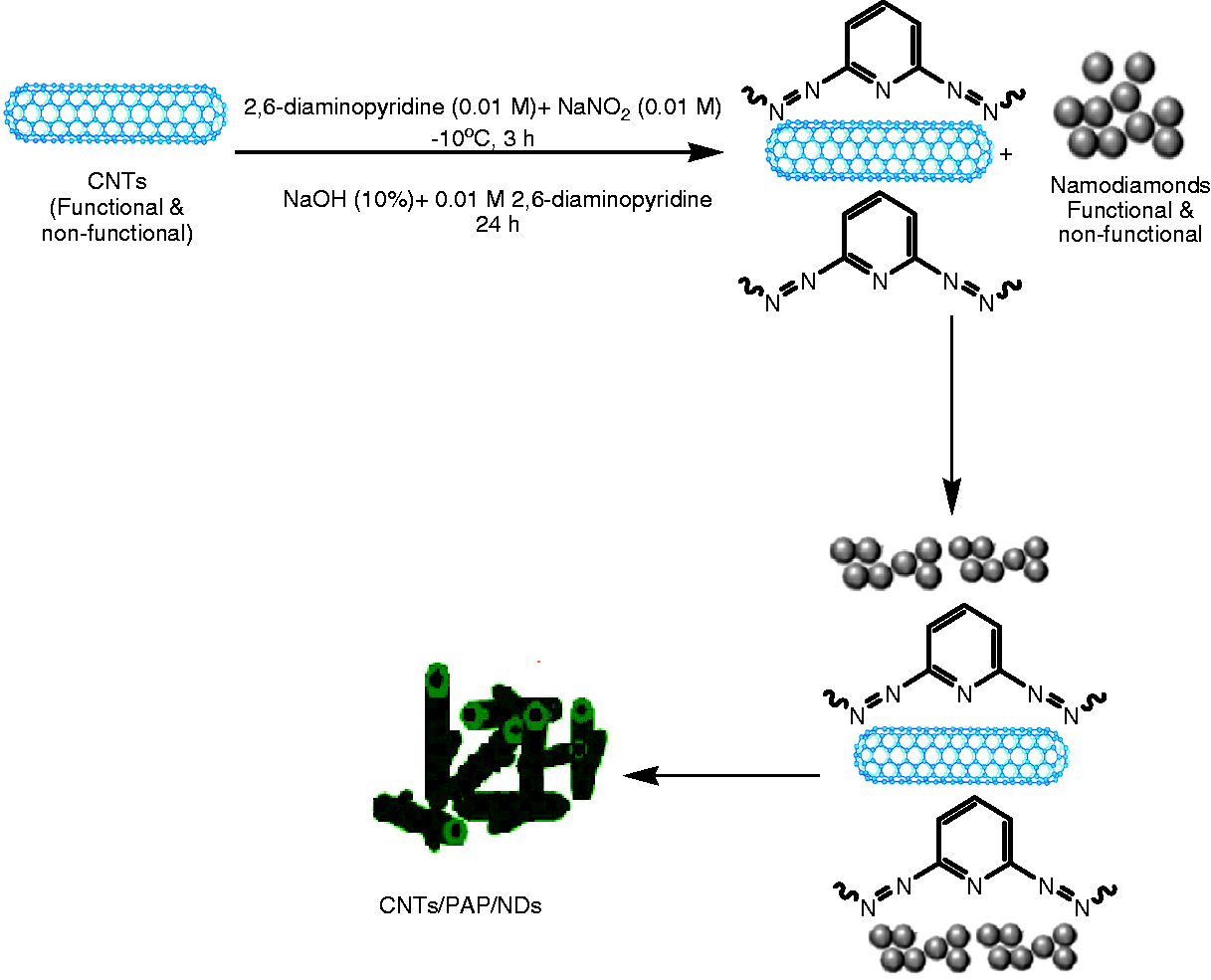
PAP-based nanocomposite NF-CNTs/PAP/NF-NDs was synthesized through the oxidative polymerization. 1.09 g 2,6-diamino pyridine was dispersed in H2O/HCl (13:4 mL, respectively) (labelled as
The residues was filtered and several times washed with distilled water till the filtrate become colorless. The product was dried at 80℃. The yield for NF-CNTs/PAP/NF-NDs composite was found to be 90%.
Synthesis of NF-CNTs/PAP/NF-NDs
For the synthesis of NF-CNTs/PAP/NF-NDs nanocomposite was prepared with the same experimental procedure as reported in only modified by the use of F-CNTs and F-NDs (Scheme 2). Here, the yield for F-CNTs/PAP/F-NDs composite was found to be 94%. The yield was higher than several analogous reported materials representing the worth of technique employed. 32
Results and discussion
Spectroscopic analysis
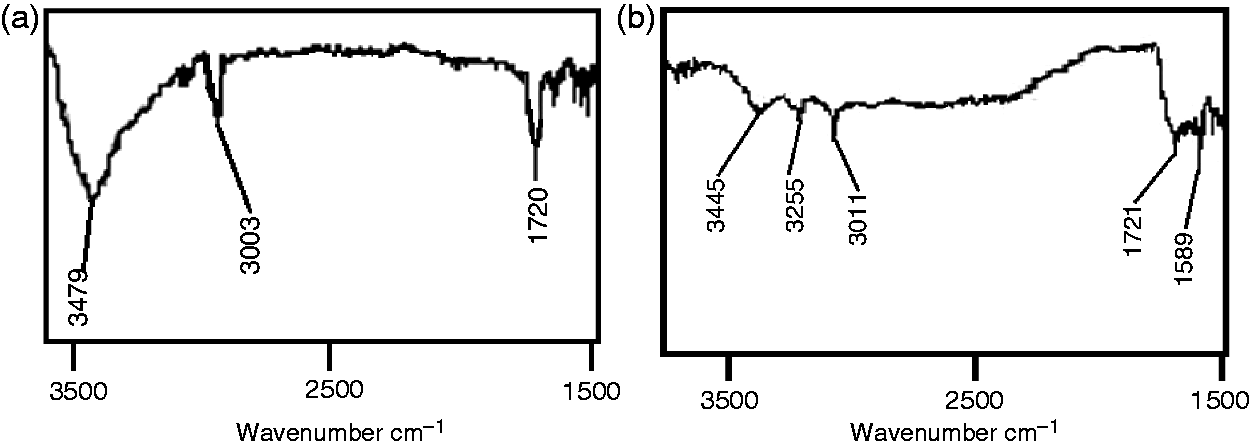
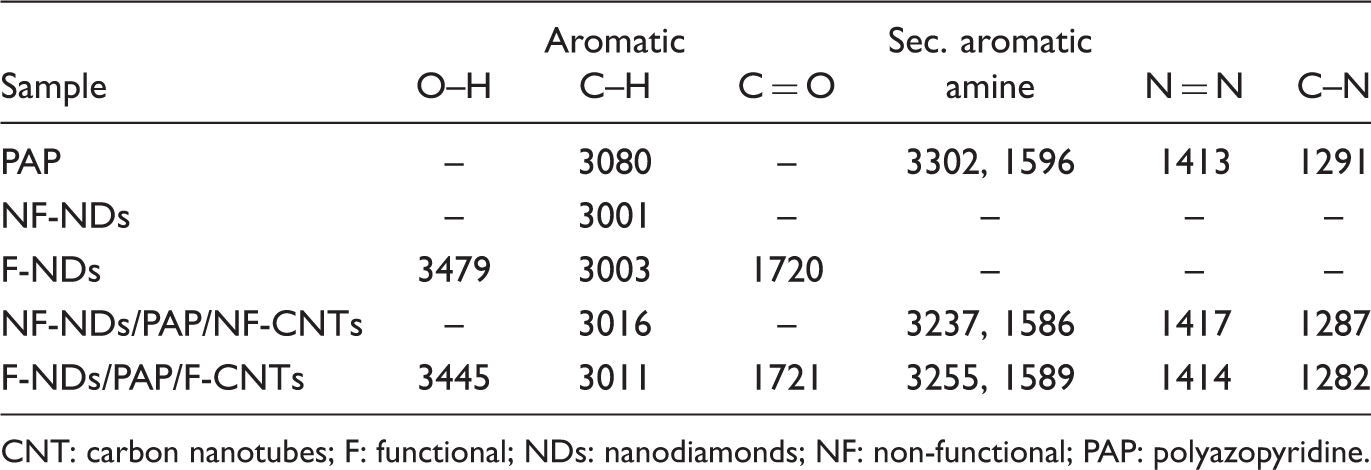
FTIR spectroscopic analysis was carried out for the structural elucidation of nanofiller and nanocomposites and the data are tabulated in Table 1. FTIR spectrum of azo-polymer is given in Figure 1, while spectra of F-NDs and F-CNTs/PAP/F-NDs are presented in Figure 2. Vibrations at 3479 and 1720 cm−1 was observed due to hydroxyl and carbonyl groups, respectively, in F-NDs (Figure 2(a)). This indicated that carboxylic group was successfully grafted on the NDs surface. The major difference between the FTIR spectra of non-functional and functional filler was the appearance of carboxylic acid functionality. The carboxylic acid group caused the appearance of O–H band at 3479 and carbonyl C = O at 1720 cm−1. While, the aromatic C–H and aromatic ring vibrations were similar in both the functional and non-functional filler. According to an interesting study by Koos et al.,
33
regarding the difference between carboxylic acid functional and non-functional filler, the large number of functional groups have been found on the filler surface which facilitate the formation of connections between filler particles. The acid treatment may also be useful to improve the mechanical interaction between the filler and matrix in composites. The binding force between the connected filler was found stronger than the van der Waals interaction between the filler. Moreover, the functionalization cause significant modifications in the electronic structure of filler, so generate the material with modified electronic properties. Figure 2(b) depicts the FTIR spectrum of F-CNTs/PAP/F-NDs. The stretching and bending vibrations of secondary aromatic amine (N–H) were found at 3237 and 1586 cm−1. A strong peak at 1414 cm−1 was ascribed to N=N vibration due to the incorporation of azo-based polymer in NF-CNTs/PAP/NF-NDs. The C–N vibration was identified at 1287 cm−1. In case of F-CNTs/PAP/F-NDs nanocomposite modified with F-NDs, peaks at 3445 and 1721 cm−1 were attributed to hydroxyl and carbonyl of carboxylic group, respectively. On the other hand, these peaks were absent for NF-CNTs/PAP/NF-NDs. The F-CNTs/PAP/NF-NDs nanocomposite also exhibited characteristics absorption peaks of N–H stretching vibration at 3255 cm−1 and N–H vibration bending at 1589 cm−1. N = N vibration was found at 1414 cm−1 and C–N vibration appeared at 1282 cm−1.
FTIR spectrum of azo-polymer. FTIR spectra of (a) Functional nanodiamond; (b) F-CNTs/PAP/F-NDs. Fourier transform infrared (FTIR) data of nanocomposites (wave number cm−1). CNT: carbon nanotubes; F: functional; NDs: nanodiamonds; NF: non-functional; PAP: polyazopyridine.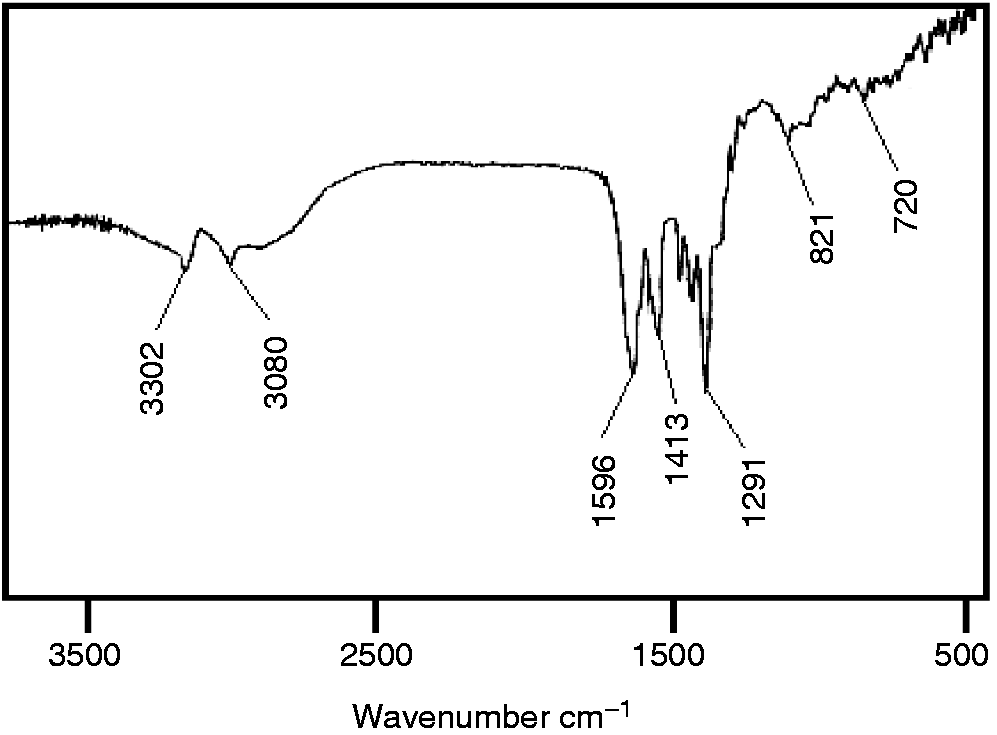
EDX of nanofillers and nanocomposites
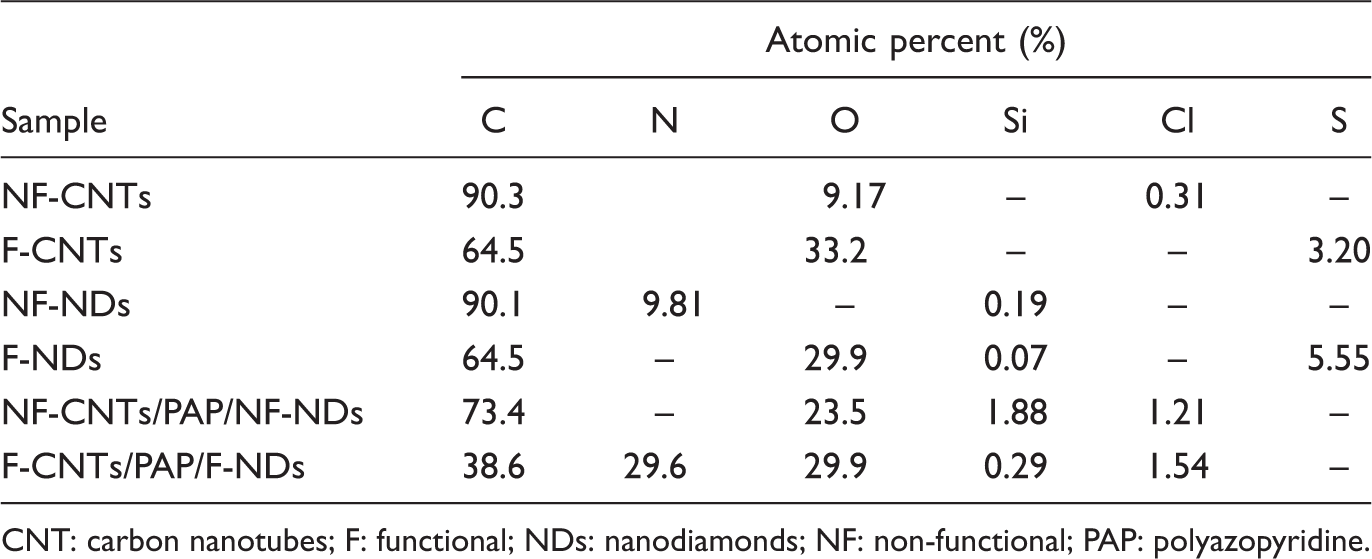
In order to get the elemental composition of ND and nanocomposites, the sample was analyzed by EDX. Corresponding EDX spectra of ND (a, b) and nanocomposites (c, d) are presented in Figure 3. Figure 3(a) represents the spectrum of raw non-functional filler used prior to purification/functionalization. NF-NDs showed the presence of carbon, nitrogen and silicon with atomic percent of 90.1 wt%, 9.81 wt% and 0.19 wt%, respectively. EDX spectrum of F-NDs (Figure 3b) indicated that ND was composed of carbon, oxygen, silicon and sulfur. Elemental composition confirmed the absence of impurities (Table 2); 5.55% sulfur in functionalized ND came from the acid treatment involved during functionalization. F-NDs also had relatively higher level of oxygen due to functionalization of ND. Some extent of chlorination was also observed as HCl treatment was involved during purification. For comparison, the elemental ratio for functional and non-functional nanotube is specified in Table 2. Figure 3(c) shows the presence of carbon, oxygen, silicon and chlorine in NF-CNTs/PAP/NF-NDs nanocomposite. Similarly, EDX spectrum of F-CNTs/PAP/F-NDs nanocomposite revealed the presence of these elements. The results showed that F-CNTs/PAP/F-NDs nanocomposite was free of impurities (Table 2). Higher oxygen content was attributed to functionalization of NDs. Trace amount of Cl was observed due to HCl used in the in-situ polymerization of PAP in both NF-CNTs/PAP/NF-NDs and F-CNTs/PAP/F-NDs nanocomposites.
EDX spectra of (a) non-functional nanodiamonds; (b) functional nanodiamonds; (c) NF-CNTs/PAP/NF-NDs; (d) F-CNTs/PAP/NF-NDs. Energy dispersive X-ray (EDX) data of filler and nanocomposites. CNT: carbon nanotubes; F: functional; NDs: nanodiamonds; NF: non-functional; PAP: polyazopyridine.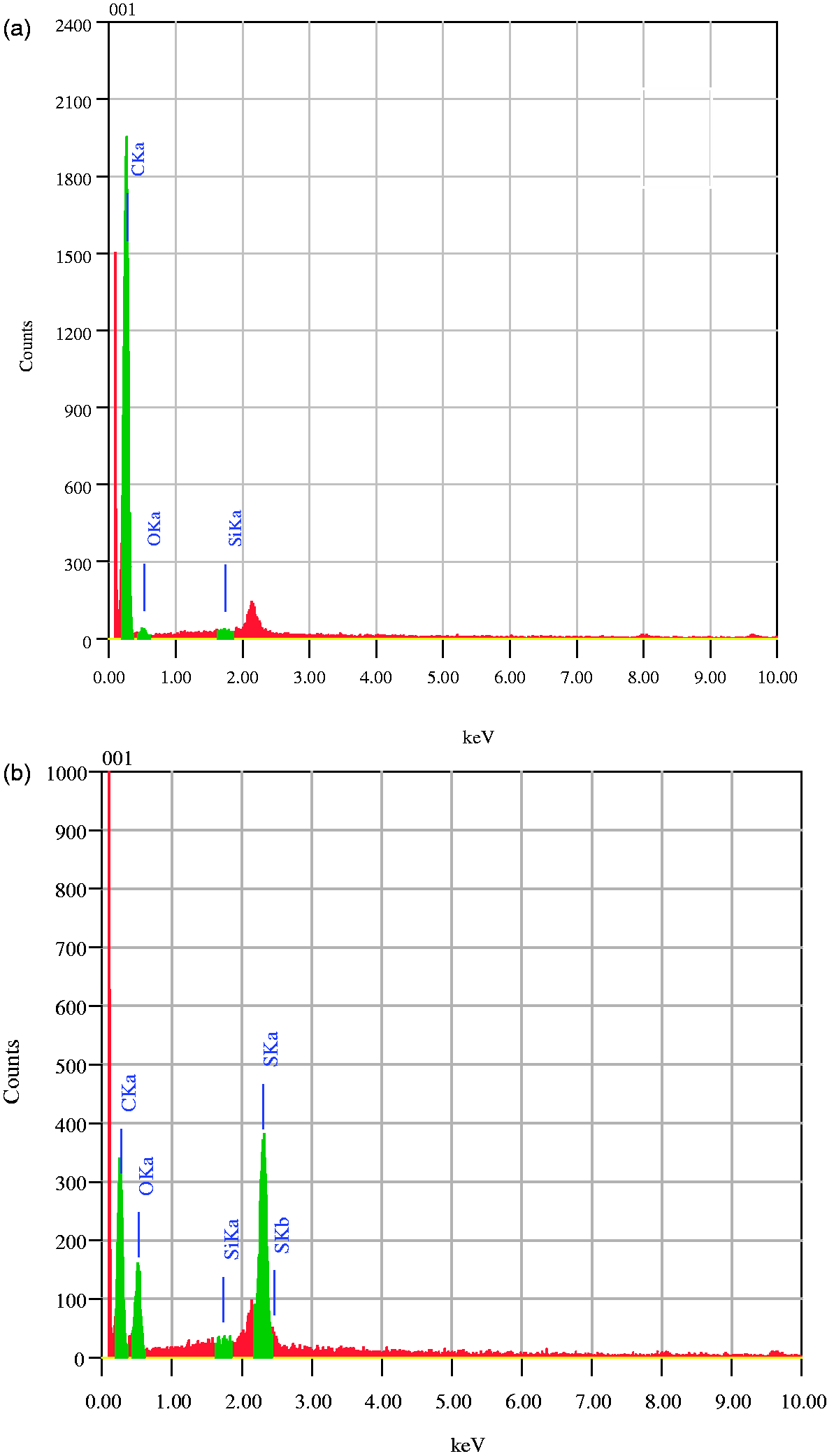
Morphological investigation
Morphology of NDs
The morphology of NDs was examined with FESEM. FESEM image of F-NDs at lower and higher magnification are shown in Figure 4(a) and (b). Nanocrystalline diamond consisting of smooth granular surface was perceived in these micrographs. Micrograph revealed typical ND with diameter in the range 90–120 nm. Functionalization of NDs was carried out with the strategy to create the maximum number of defects on their surface without damaging their structural chemistry. Moreover, the functionalization procedure busted the microcrystalline diamond aggregates.
FESEM images of (a) functional nanodiamonds at 1 µm; (b) functional nanodiamonds at 0.5 µm.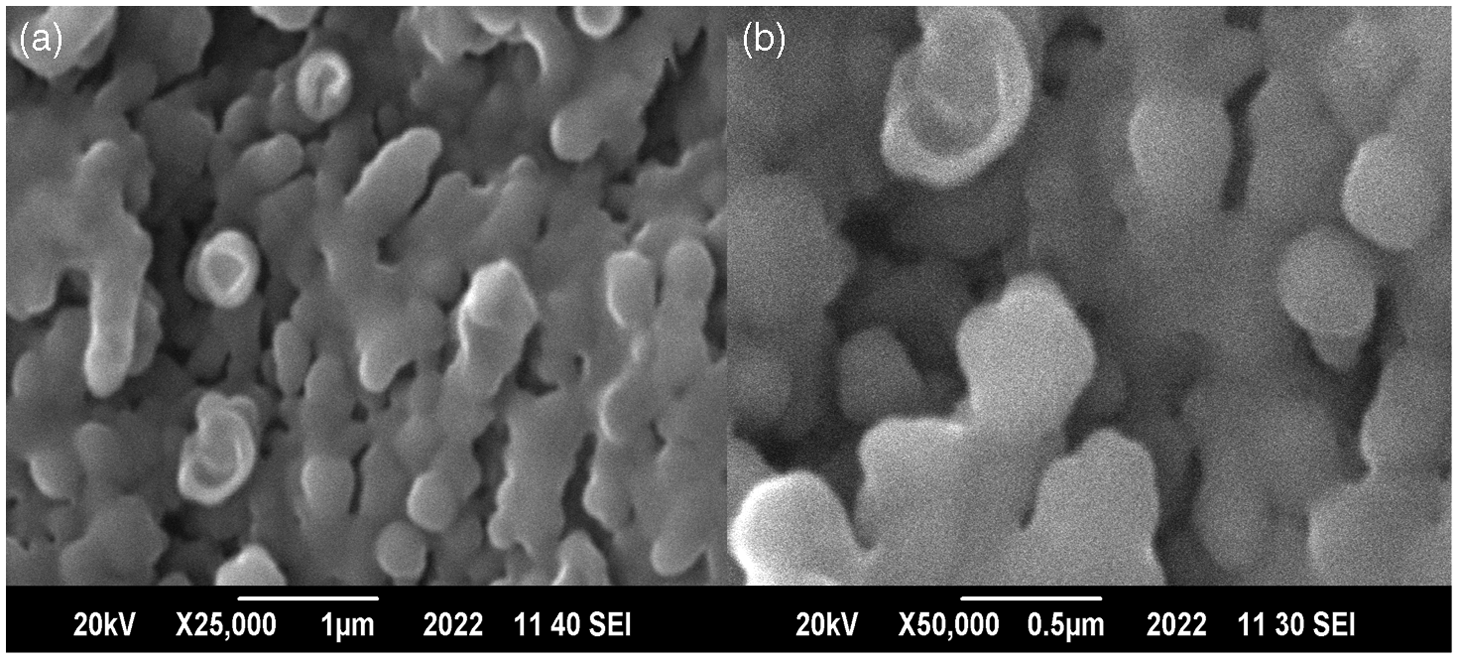
Morphology of CNTs/PAP/NDs
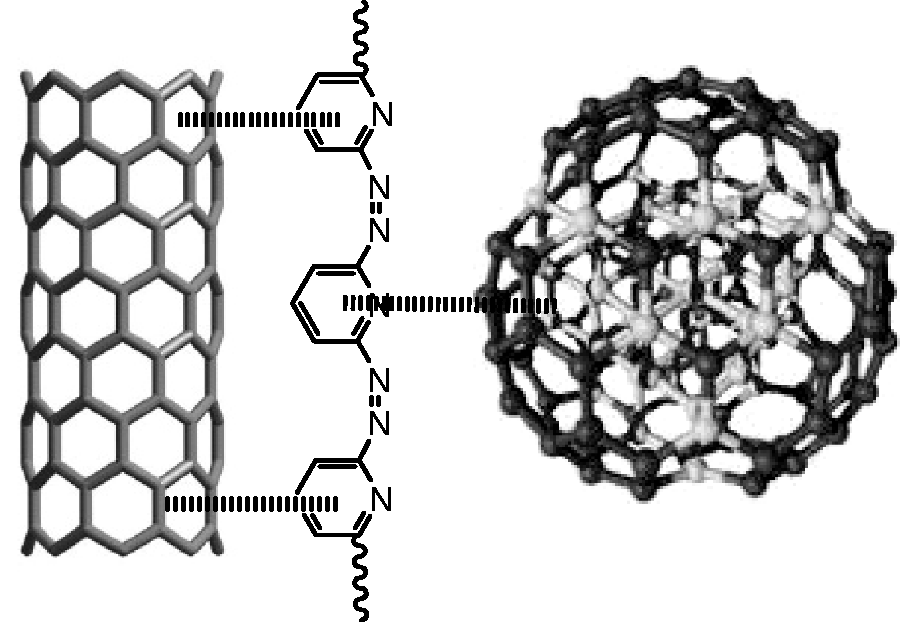
Microstructures of CNTs/PAP/NDs nanocomposites are exposed in Figure 5(a–f). F-CNTs/PAP/F-NDs showed coating of polymer on the nanotube surface (Figure 5(d–f)), which was attributed to smaller size and high specific surface area of CNTs so providing better sites for adsorption of monomers and hence facilitated polymerization. There existed π–π stacking interaction between the azo-polymer and CNT, and azopolymer and ND (Scheme 3). As can be seen, F-CNTS/PAP/F-NDs nanocomposite is characterized by polymer/CNTs network structure. NDs were arranged on the network. SEM micrograph for NF-CNTS/PAP/NF-NDs (Figure 5a) disclosed the dispersion of ND particles among the polymer matrix. Figure 5(b) depicted somewhat uneven coating of polymer. Irregular morphology of non-functional nanocomposite was observed due to lack of interaction among NDs and polymer. The micrograph revealed no fibrous polymer structure which was attributed to the lack of interaction between polymer and NDs due to the absence of external functional groups. Moreover, aggregation of polymer was also observed in the structures (Figure 5(a and b)).
FESEM image of (a) NF-CNTs/PAP/NF-NDs at 1 µm; (b) NF-CNTS/PAP/NF-NDs at 0.5 µm; (c) NF-CNTS/PAP/NF-NDs at 0.2 µm; (d) F-CNTS/PAP/F-NDs at 10 µm; (e) F-CNTS/PAP/F-NDs at 1 µm; (f) F-CNTS/PAP/F-NDs at 0.5 µm.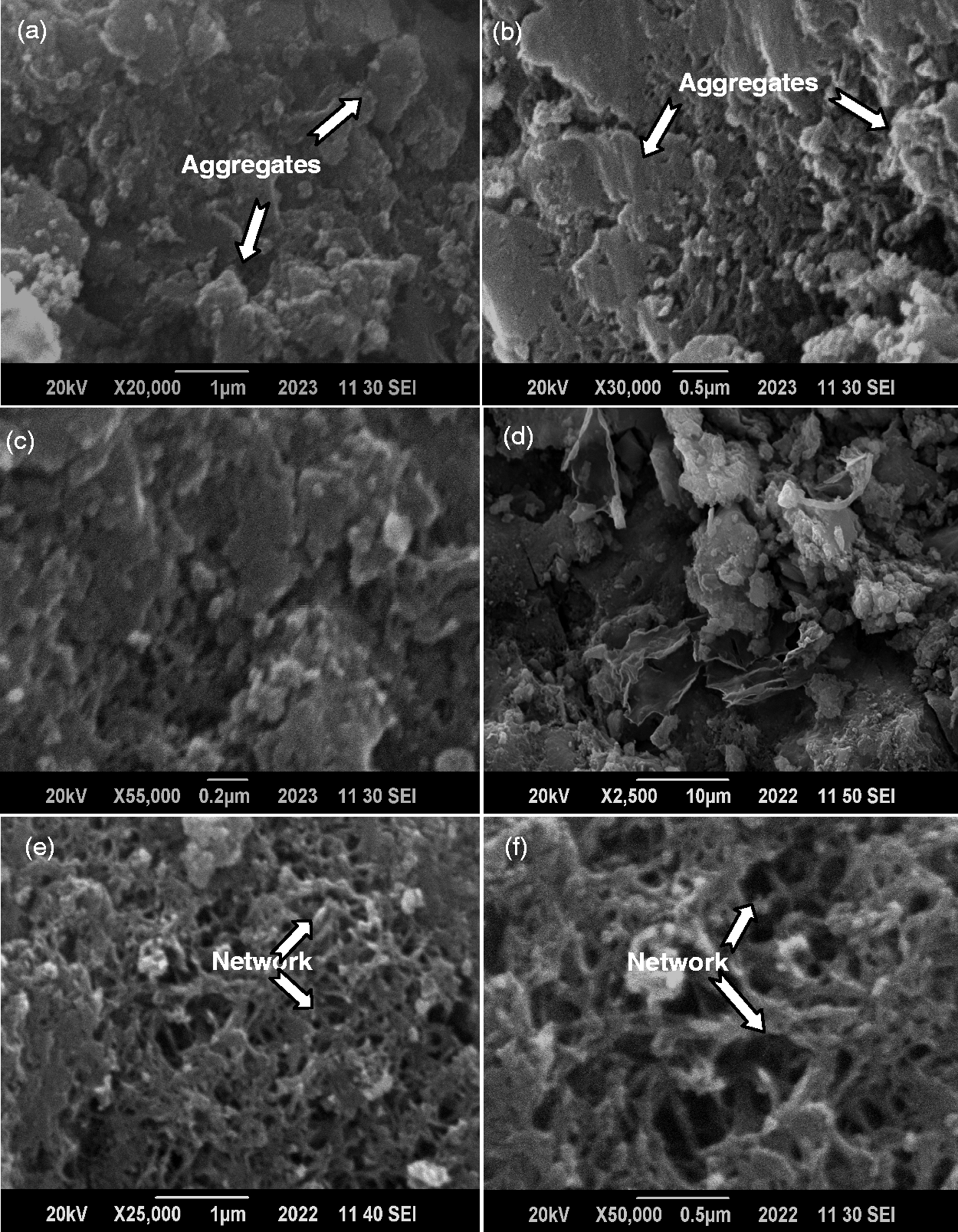
According to closer analysis of SEM imaging results, NF-CNTS/PAP/NF-NDs nanocomposite exhibited typical morphology of nanotube aggregates (Figure 5(a–c)). The aggregates do not show any distinguishable bundles and nanotubes in the matrix. Moreover, the polymer/nanotube aggregates look stuck together and the nanotubes were almost impossible to distinguish. On the other hand, F-CNTS/PAP/F-NDs showed relatively spongy morphology with distinguishable bundles and nanotubes forming some network in the main bulk. The network actually appeared from the entanglement of the polymer-coated nanotubes. However, the nanotube network formation in functional composites was not well patterned; therefore, might appear as a spongy structure. According to literature, under in-situ conditions the polymerization may be carried out very fast and the quick propagation of polymer chains happened in a limited time. Consequently, a lot of initial polymer fibers might form in early stage and aggregate on the surface of nanotube where they were self-assembled by interaction to form stable microstructures.34,35
Thermal analysis
Thermal properties of CNTs/PAP/NDs nanocomposite were evaluated using TGA and DSC and corresponding data are listed in Table 3. The glass transition temperature i.e. Tg (measured as middle point of variation in slope of base line of DSC curve) was 221 and 229℃ for NF-CNTs/PAP/NF-NDs and F-CNTs/PAP/F-NDs (Figure 6). Markedly, F-CNTs/PAP/F-NDs nanocomposite exhibited higher glass transition temperature (229℃) owing to increased chain rigidity and so led to hindrance in segmental mobility. The increased chain rigidity was ascribed to significant interaction between polymer chains and functional filler therefore enhancing the Tg values. It is worth mentioning, materials with greater thermal stability were synthesized relative to reported one using this technique.
36
Moreover, in this study the utilization of two types of thermally stable nanofillers i.e. CNT and ND enhanced the thermal stability of the resulting nanocomposites. In our previous investigation, raw CNT was found to be stable up to 500℃. While, functional CNT was stable in the range 30–260℃.
32
A weight loss was observed at 380℃, and then there was lesser stability between 380 and 420℃. Again from 420–520℃, rapid weight loss occurred. On the other hand, NDs showed excellent thermal stability accompanied by oxidation in the range 800–900℃. As evident from literature, NDs started to lose their mass from 100℃ onward and weight loss continued up to 550℃. Only 5% NDs was degraded up to 600℃ because of oxidation of amorphous carbon (sp3 phase) and graphite-like species. The 11% weight fraction of total NDs was lost at 900℃, above which all oxygenated groups were released.36,37
DSC thermograms of carbon nanotubes/polyazopyridine/nanodiamonds (CNTs/PAP/NDs) at heating rate of 10℃/min in N2. Thermal analyses data of nanocomposites. CNT: carbon nanotubes; F: functional; NDs: nanodiamonds; NF: non-functional; PAP: polyazopyridine; Tg: glass transition temperature; To: initial decomposition temperature; T10: temperature for 10% weight loss.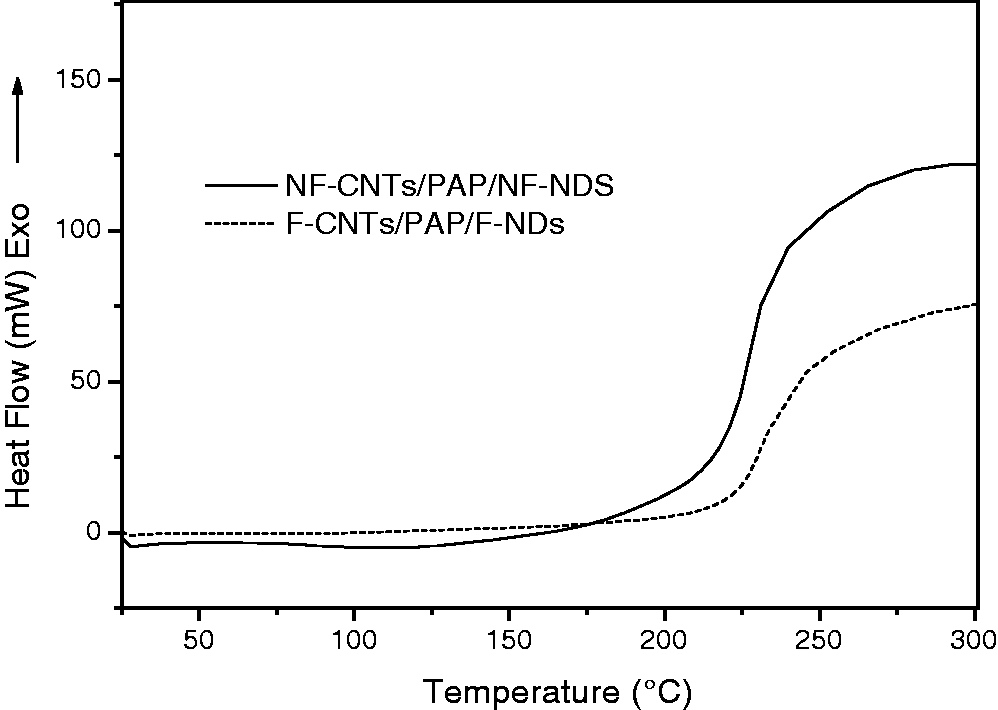
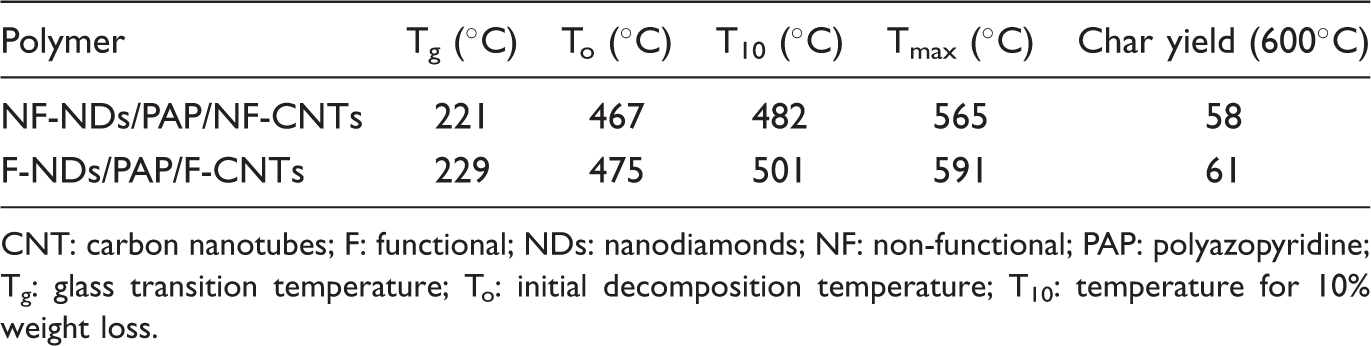
Thermal stability of CNTs/PAP/NDs nanocomposite was investigated in terms of initial degradation temperature (To), temperature for 10% degradation (T10), maximum decomposition temperature (Tmax) and residual weight loss at 600℃. Figure 7 shows a comparison of weight loss of NF-CNTs/PAP/NF-NDs and F-CNTs/PAP/F-NDs, in N2 atmosphere at heating rate of 10℃/min−1. The NF-CNTs/PAP/NF-NDs nanocomposite was very stable, exhibiting single-stage decomposition having no significant weight loss in temperature range 50–460℃. Major weight loss was observed in the range 480–565℃ due to decomposition of polymeric backbone as well as fillers into heavier fragments and further disintegration of heavier fragments into smaller ones and gaseous byproducts. NF-CNTs/PAP/NF-NDs exhibited To 467℃, T10 482℃, Tmax 565℃ and char yield of 58% at 600℃. The F-NDs-based F-CNTs/PAP/F-NDs nanocomposite was comparatively stable and no weight loss occurred in the range of 50–470℃. The thermogram of F-CNTs/PAP/F-NDs nanocomposite also exhibited single-stage decomposition starting around 470℃ having major weight loss in the range of 480–575℃. Nanocomposite also presented comparatively higher value of To 475℃, T10 501℃, Tmax 591℃. F-CNTs/PAP/F-NDs nanocomposite accompanied relatively higher value of char yield of 61% compared to NF-CNTs/PAP/NF-NDs nanocomposite.
TGA thermograms of carbon nanotubes/polyazopyridine/nanodiamonds (CNTs/PAP/NDs) at heating rate of 10℃/min in N2.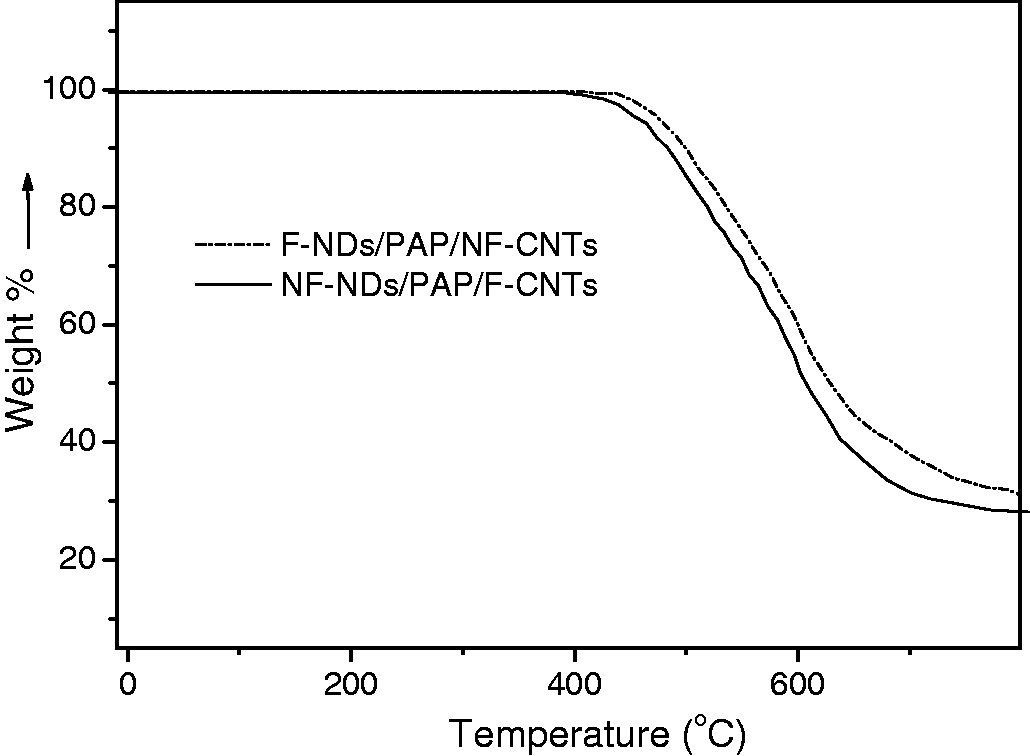
It is of note that the thermal stability was somewhat dependent upon the structure i.e. the introduction of ND and nanotube. Moreover, it has been reported that the weight of thermal residue up to 600℃ is indicative of higher thermal stability. In the present work, the synergetic effect of F-NDs and F-CNTs significantly improved the char yield and thermal stability of resulting functional nanocomposite (stable structure) relative to non-functional one.
XRD analysis
XRD study was conducted to evaluate the crytallinity in the synthesized structure, as the final characteristics of synthetic materials were strongly dependent on their crystalline structure. The 2θ scan in the region 10–60° showed the XRD pattern of NF-NDs, F-NDs, NF-CNTs/PAP/NF-NDs and F-CNTs/PAP/F-NDs nanocomposites, which are presented in Figure 8. NF-NDs exhibited diffraction peaks around 2θ = 42.01°, 43.13° and 48.99°, indicating the detonation NDs. XRD study of F-NDs also depicted the presence of characteristic peak at 2θ value of 43.46°. The diffractogram of NF-CNTs/PAP/NF-NDs nanocomposite indicated diffraction peaks at 2θ = 15.31°, 19.19°, 21.92°, 26.68° and 29.38°. F-CNTs/PAP/F-NDs diffraction peaks were found around 2θ = 15.71°, 19.76°, 26.99°, 29.50°, 31.41°, 38.06°, 39.46° and 51.42°. In nanocomposite 2θ around 43–51° showed that the NDs maintained its crystalline structure after being incorporated in the matrix because functional NDs may have better adsorption of monomers over the surface resulting in homogeneous polymerization and chain packing. However, some of the polymeric chains were not orderly packed resulting in amorphous structure. Therefore, the diffraction peaks in the range 2θ = 15–29° may correspond to polymer structure. The overall structure of the F-CNTs/PAP/F-NDs was semicrystalline.
XRD patterns of (a) purified nanodiamonds; (b) functional nanodiamonds; (c) NF-CNTs/PAP/NF-NDs; (d) F-CNTs/PAP/F-NDs.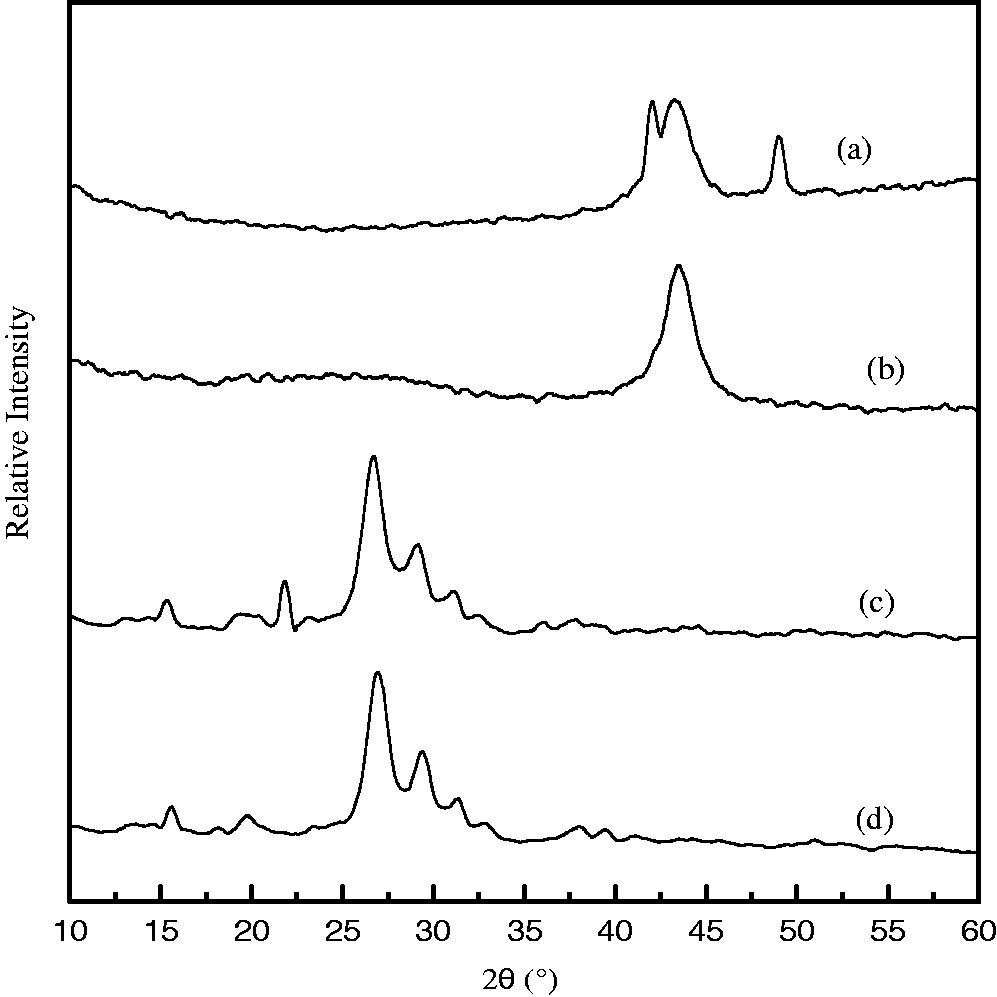
Electrical conductivity
Conductivity measurement of nanocomposites.
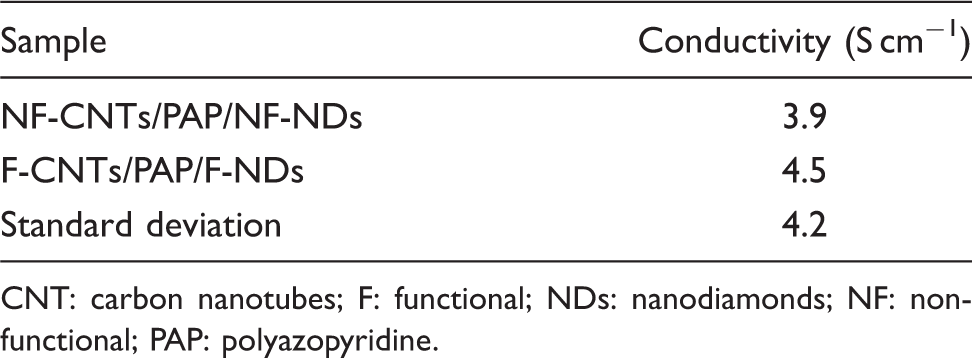
CNT: carbon nanotubes; F: functional; NDs: nanodiamonds; NF: non-functional; PAP: polyazopyridine.
Conclusions
In this study, we have discussed the rational relationship of structural, thermal, morphological and electrical properties of nanocomposites through the surface modification of filler as (i) introduction of functional groups and (ii) in-situ doping of matrix over the filler surface. New layered PAP nanocomposites filled with ND and nanotubes were obtained through facile synthetic strategy. Particularly, two types of nanocomposites were studied i.e. non-functional and functional CNT/ND-based layered PAP-based material. Consequently, NDs and CNTs were subjected to acidic functionalization to graft carboxylic groups on their surfaces. Afterwards, the in-situ oxidative polymerization of azo-polymer over the surface of nanotube and then the incorporation of ND filler consequence high-performance layered CNTs/polymer/NDs. FTIR demonstrated the successful functionalization of NDs and synthesis of nanocomposites via chemical oxidative polymerization. FESEM micrographs showed network arrangement of matrix and CNTs with embedded F-NDs. Incorporation of thermally stable CNT and ND fillers resulted in heat-stable functional nanocomposites. Consequently, functional F-CNTs/PAP/F-NDs hybrid exhibited higher T10 of 489℃ relative to NF-CNTs/NDs having T10 of 482℃. Electrically conducting nanotube and ND also improved the conductivity of the final materials. Moreover, relative to reported NF-NDs or NF-CNTs-based hybrids, material containing both the functional nanotube and ND showed better thermal and electrical characteristics.
Functionalization of nanodiamond. Scheme for the synthesis of carbon nanotubes/polyazopyridine/functional nanodiamonds (CNTs/PAP/F-NDs). π–π Stacking interaction between the carbon nanotube, azo-polymer and nanodiamond.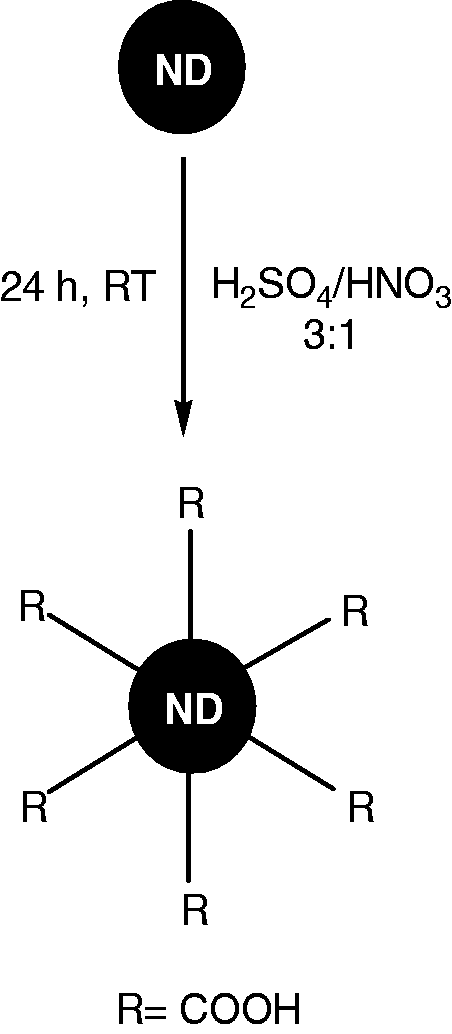
Footnotes
Funding
This research received no specific grant from any funding agency in the public, commercial, or not-for-profit sectors.
Declaration of conflicting interests
The authors declared no potential conflicts of interest with respect to the research, authorship, and/or publication of this article.