







Abstract
This article provides insights into nanowhisker nanofiller particles, different categories of polymer/nanowhisker nanocomposites, and broad span of applications. Nanowhiskers are hierarchical needle-like elementary crystallites, often used as nanofillers in polymers. Cellulose, chitin, zinc oxide, fullerene, and aluminum nitride-based nanowhiskers have been employed in matrices. Inclusion of organic and inorganic nanowhiskers in polymers has enhanced thermal conductivity, electrical conductivity, thermal stability, water resistance, and other physical properties of nanocomposites. Polymer/nanowhisker nanocomposites have found technical applications in supercapacitors, sensors, anticorrosion agents, antibacterial agents, and drug delivery systems. Future research directions for potential applications rely on material design, nanowhisker functionalization, better dispersion, better reinforcement, and better processing techniques.
Introduction
Fibrous fillers and nanofillers have been used with polymeric materials.1,2 Nanowhisker is a unique nanofiller. 3 It is a filamentary crystal with a length/width ratio greater than 100 and width of 1–100nm. Several metallic, inorganic, and carbon allotrope whiskers have been reported. Fabrication of nanowhiskers has been carried out using various techniques. Metal nanowhiskers have been widely prepared using vapor–liquid–solid growth, sol–gel method, and liquid–liquid interfacial precipitation. Nanowhiskers are several times stronger than regular crystals (nanowhiskers may or may not be stronger than other nanofillers) and possess high strength, flexibility, conductivity, water repulsion, and corrosion resistance 4 which make them attractive for polymer composites with superior properties, such as high strength, high electrical conductivity, high thermal conductivity, high specific capacitance, high power density, better gas sensing, and higher water resistance.5–7 The nanocomposites have been explored for supercapacitor, sensor, antimicrobial, anticorrosion, packaging, and biomedical applications.8–10 This is a comprehensive review on essential aspects of polymer/nanowhisker nanocomposites. To the best of our knowledge, this will be the first state-of-the-art review on polymer/nanowhisker nanocomposites. Different polymers have been reinforced with various nanowhiskers made with cellulose, chitin, fullerene, zinc oxide (ZnO), and metals. Research on polymer/nanowhisker nanocomposites has led to interesting applications in supercapacitors, sensors, antimicrobial agents, anticorrosion agents, and drug delivery systems. However, focused efforts are needed in each technical area to produce high performance polymer/nanowhisker nanocomposites and to overcome challenges.
Nanowhiskers: Unique reinforcement materials
Nanowhiskers are unique nanofillers. Nanowhiskers may be extracted or exist naturally, or they can be synthesized. Nanowhiskers are filamentary crystals having length/width ratio greater than 100 and width of 1–100nm. 11 Nanowhiskers may be straight bristles, kinked, hooked, or forked structures.4,7 Various organic and inorganic nanowhiskers have been prepared from carbon allotropes, metals, and metal oxides.12,13 A metal nanowhisker consists of single crystalline metallic hair-like structure at nanometer scale. Zinc, silver, gold, aluminum, lead, indium, and tin nanowhiskers are discussed in the literature.14,15 Nanowhiskers’ growth is enhanced at 85% relative humidity. The growth rates up to 9 mm yr−1 and diameters less than 100 nm were achieved, although the exact mechanism of metallic nanowhisker growth has not been established yet.12,16 Various nonmetallic nanowhiskers were also discussed in the literature. Fullerene nanowhiskers were prepared using sol–gel and liquid–liquid interfacial precipitation method. 13 Fullerene nanowhiskers consist of C60 fullerene molecules arranged as a hollow tube by face-centered cubic packing. Silicon nanowhiskers with length of 95-300 and width of 1.5–2nm have also been prepared. 17 Chitin nanowhiskers have also been prepared and used. 18 Cellulose nanowhiskers (CNWs) have needle-like whisker structure. CNWs exhibit high tensile modulus (∼130 GPa) and strength (10 GPa). 19 These nanowhiskers have low thermal expansion coefficients of 8–16 ppm K−1, as measured in axial direction. The whiskers themselves have interesting properties and applications. For example, SnO2 nanowhiskers have been used in gas sensors having high sensitivity of 23–50 ppm for ethanol gas. 20 NiO2 nanowhiskers have high specific capacitance, power density, and high stability for supercapacitor electrodes. 21 SiC nanowhiskers have found applications in sensors, electronic, optoelectronic, and electromechanical devices. 22 Potential and industrial use of nanowhiskers in nanocomposites, thin films, coatings, and other technical applications should be further developed for future useful products.
Polymer/nanowhisker nanocomposites
Polymer/CNW nanocomposites
CNWs are needle-like elementary crystallites obtained from natural sources. CNWs have length of 200–400nm and width of < 10nm. 23 CNWs possess high surface area and a high Young’s modulus (143 GPa). CNWs have been used as a reinforcement agent in both nonbiodegradable and biodegradable polymers, such as poly(vinyl chloride), polypropylene, epoxy, polycaprolactone, poly(hydroxyalkanoate), poly(lactic acid), and poly(ethylene glycol).24–29 The resulting nanocomposites had enhanced mechanical properties with CNW loading. Surface modifying the nanofiller may further enhance the nanocomposite properties. Spagnol et al. 30 prepared superabsorbent hydrogels based on poly(acrylamide-co-acrylate) and CNWs through free-radical aqueous copolymerization. The N,N-methylenebisacrylamide was used as crosslinker and potassium persulfate was the initiator (Figure 1). The hydrogel was responsive to changes in pH (pH range from 2 to 12).
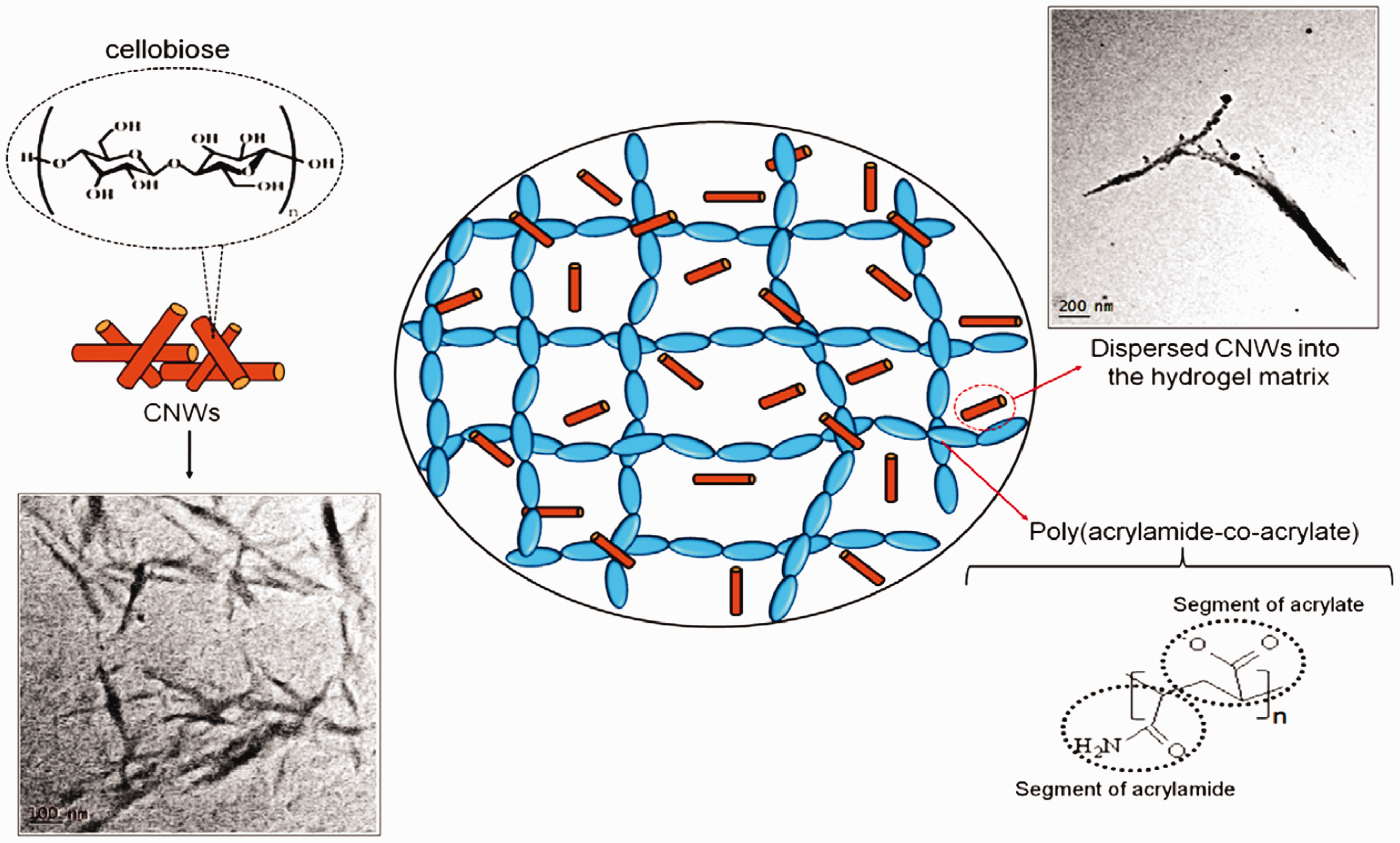
CNWs in hydrogel composite matrix. 30 CNW: cellulose nanowhisker. Source: Reproduced with permission from Elsevier.
Ten et al. 31 designed poly(3-hydroxybutyrate-co-3-hydroxyvalerate) (PHBV) filled with 1–5 wt% CNWs. Figure 2 shows Young’s modulus and tensile strength of neat PHBV and PHBV/CNW nanocomposites determined by tensile and bulge tests. The bulge test is a method to determine thin film properties including residual stresses, strain, and Young’s moduli. In this test, usually uniform pressure is applied on one side of thin film allowing it to deflect outwards. The stress and strain can be found out by determining the pressure in this method. The bulge test was found effective to measure residual stresses, whereas tensile test was useful to study linear and nonlinear deformation.32,33 The 5% CNW content enhanced the tensile modulus by 77% (via tensile test) and 91% (via bulge test).
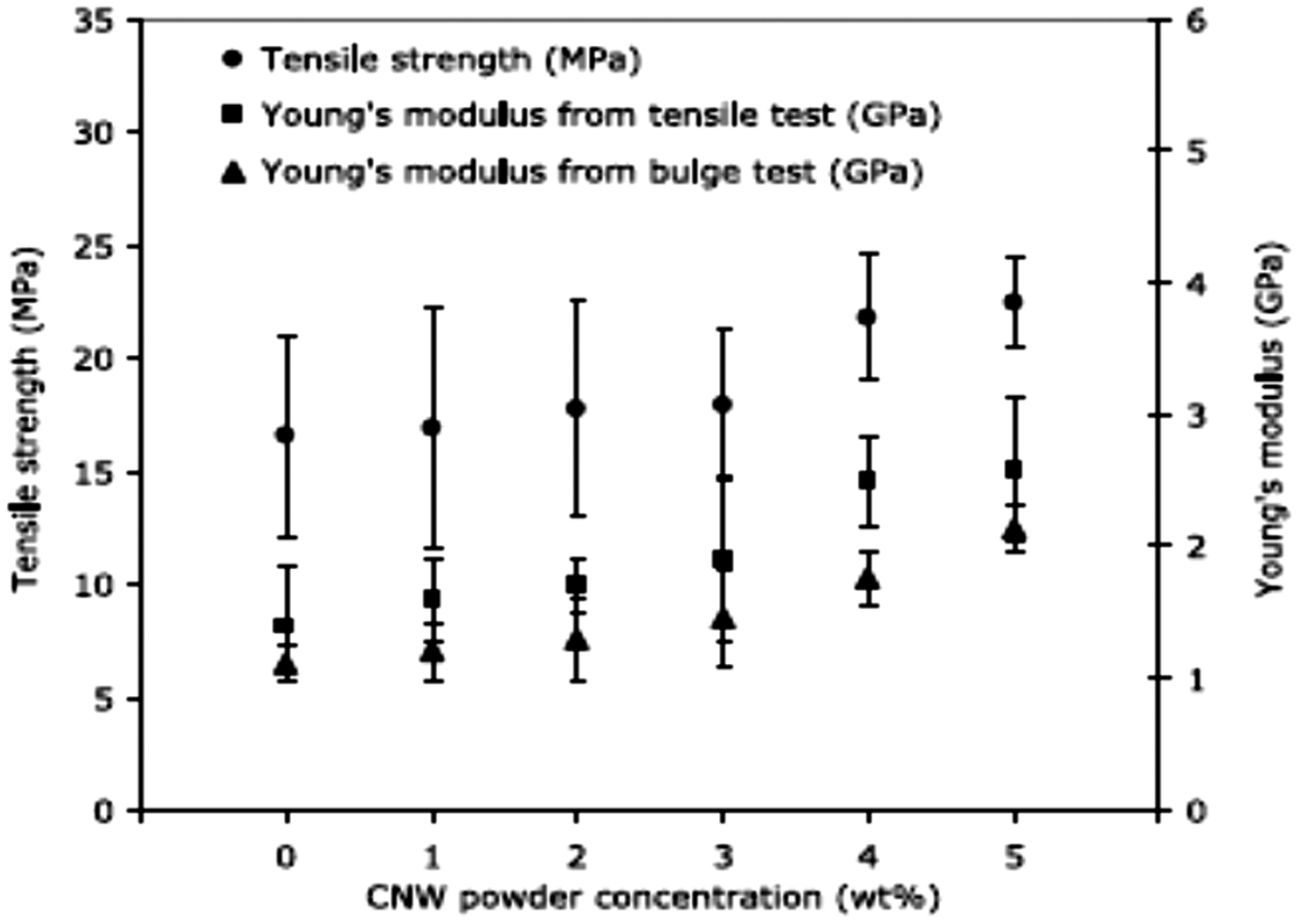
Young’s modulus and tensile strength of neat PHBV and PHBV/CNW nanocomposites determined by tensile and bulge tests. 31 The bulge test is a method to determine the mechanical properties of the thin film. CNW: cellulose nanowhisker.
Figure 3 shows storage modulus with CNW loading. 31 The increase was attributed to strong interactions between the matrix and nanowhiskers. Rosa et al. 34 prepared CNWs by hydrolyzing the coconut husk fibers with sulfuric acid. CNWs have length/width ratio of 60 and width of 5nm. Figure 4 shows the optical microscopy micrograph of unbleached and treated coconut husks. The bleaching steps were found effective in removing dark brown color. However, some pigment was still left in the bleached samples.35,36 The residual lignin content enhanced the material’s thermal stability.
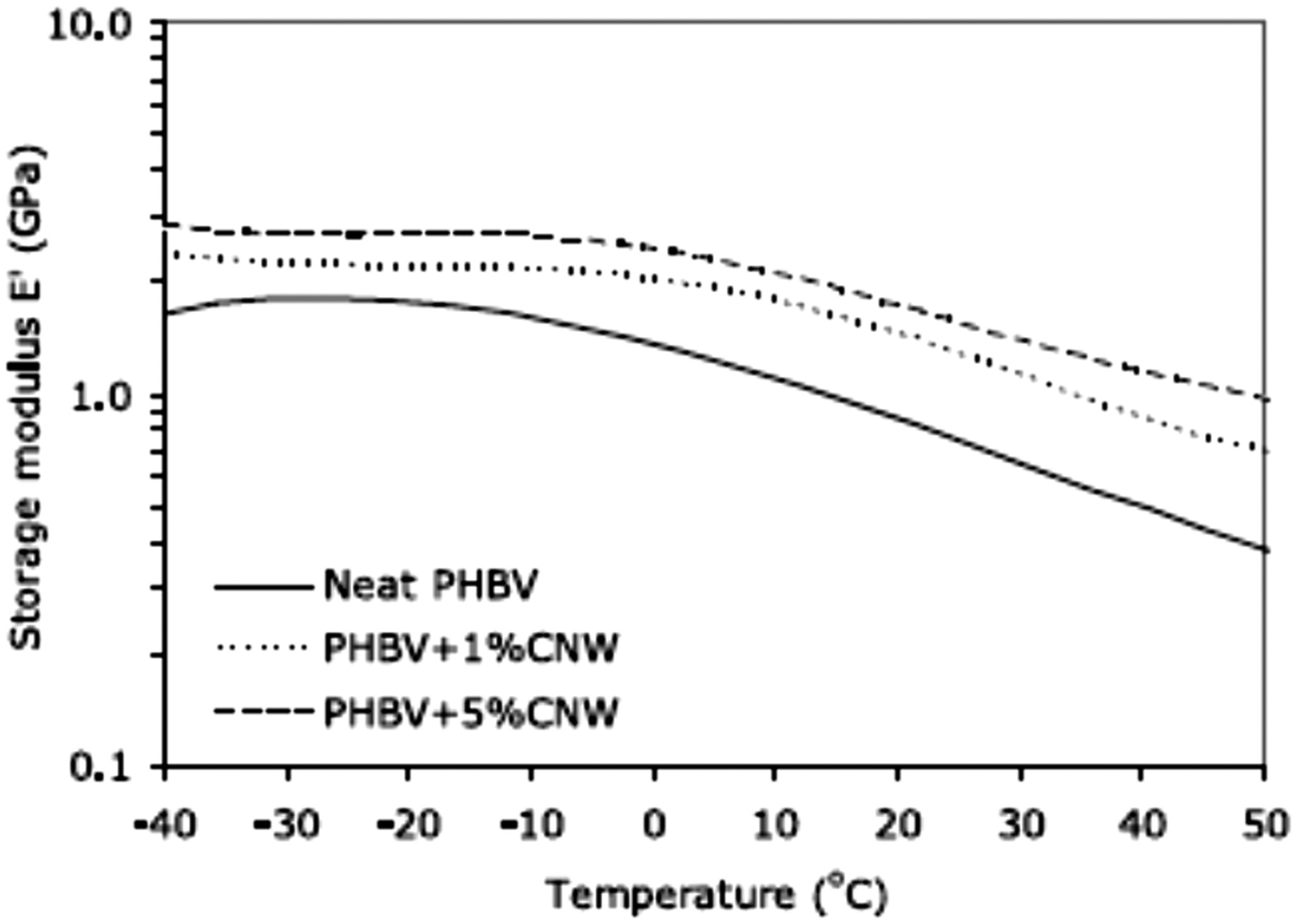
Storage modulus versus temperature for neat PHBV and PHBV/CNW nanocomposites. 31 CNW: cellulose nanowhisker; PHBV: poly(3-hydroxybutyrate-co-3-hydroxyvalerate). Source: Reproduced with permission from Elsevier.
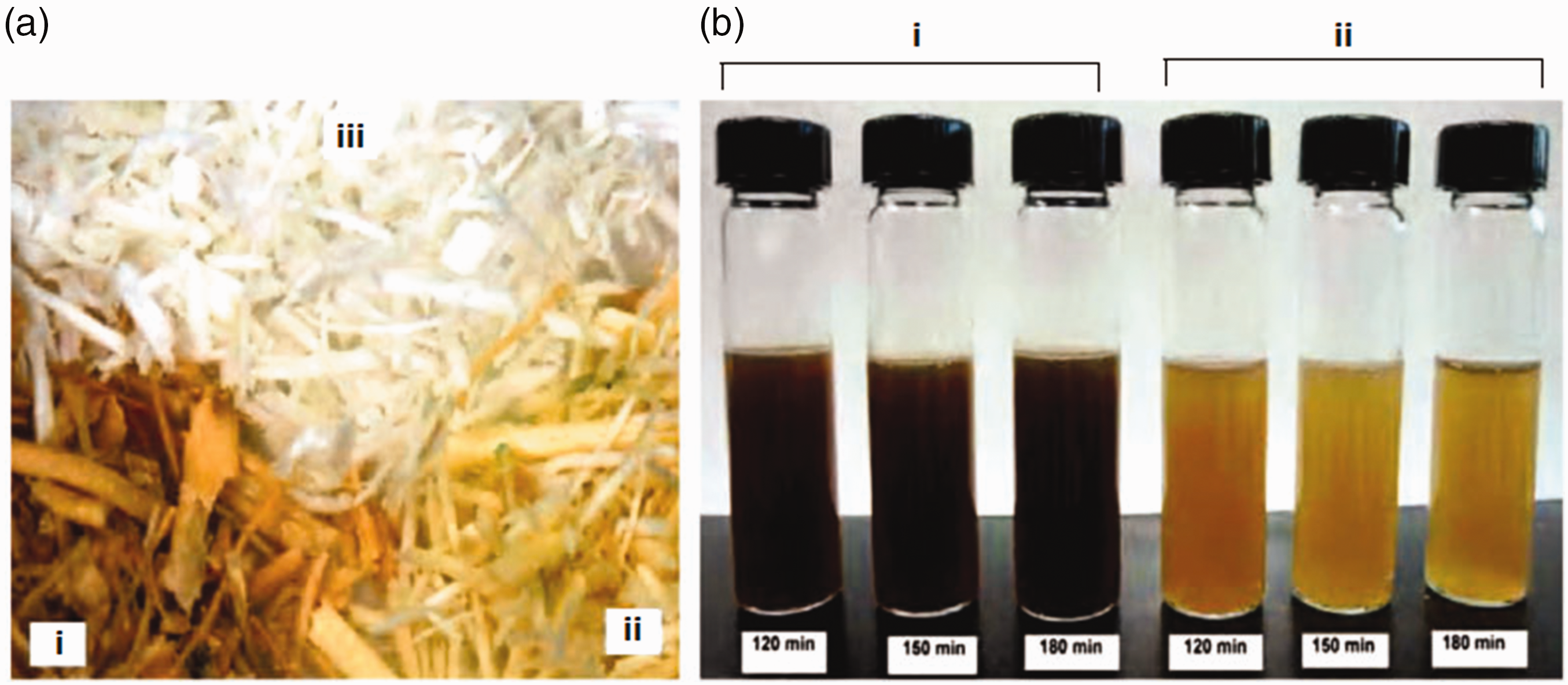
(a) Optical microscopy micrograph of coconut husks (i) unbleached, (ii) after bleaching treatment with glacial acetic acid, and (iii) after bleaching treatment with glacial acetic acid/nitric acid; and (b) vials containing nanowhisker suspensions obtained for different extraction times. The dark brown color (i) is due to the lignin remaining in the samples, while yellowish brown color (ii) is due to less lignin in the samples during extraction. 34 Source: Reproduced with permission from Elsevier.
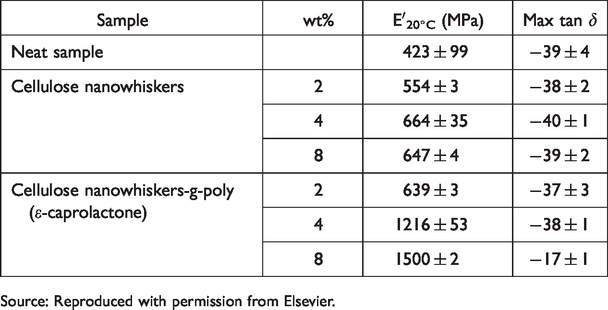
Goffin et al. 37 designed poly(ε-caprolactone)-grafted-cellulose nanowhiskers (PCL-g-CNW) using ring opening polymerization. Table 1 shows the storage modulus of the nanocomposites. Including 8 wt% CNWs increased the elastic modulus by 300%. The variation in tan δ values was linked to the changes in the polymer chain relaxation spectrum. Figure 5 shows that the PCL-g-CNW nanocomposite storage modulus (G′) increased with nanofiller loading.
Effect of cellulose nanowhisker concentration on the storage modulus (recorded at 20°C) and the tan δ values. 37
Source: Reproduced with permission from Elsevier.
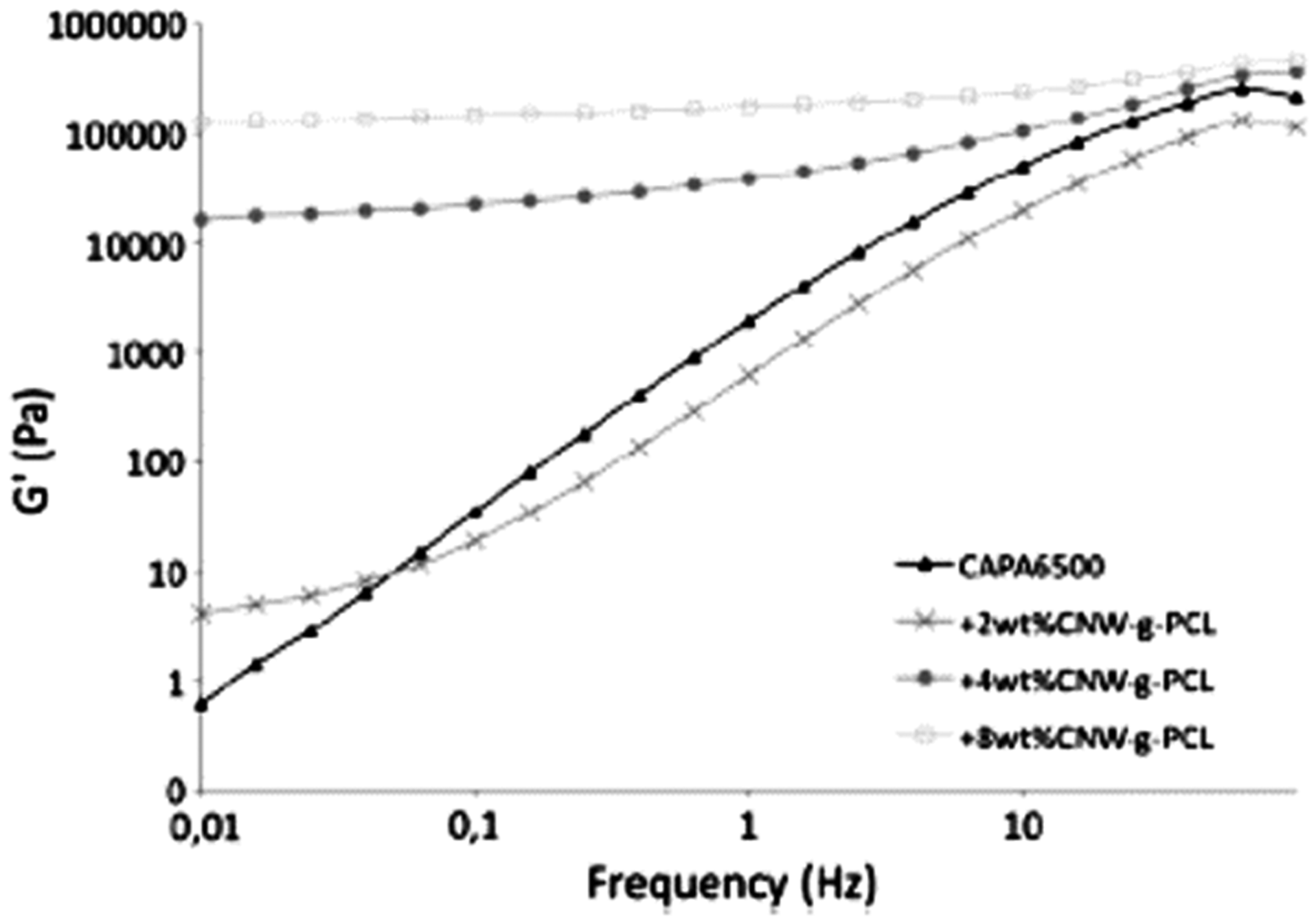
G′ (linear visco-elasticity) versus frequency for unfilled CAPA6500 and nanocomposites based on PCL-g-CNW. 37 CAPA6500 = PCL with molecular weight 6500 g mol−1. CNW: cellulose nanowhisker; PCL: poly(ε-caprolactone).
The enhancement in G′ and G″ suggested that a network structure was formed.38–40 The network structure was developed owing to surface-grafted polymer chain entanglement. Consequently, interfacial compatibility between the matrix and chitin nanowhiskers may result in enhanced thermomechanical and rheological performance of the nanocomposites. Incorporation of well-designed nanowhiskers with precise aspect ratio may result in improved elastic response, compared with that of the neat polymers.
Polymer/chitin nanowhiskers nanocomposite
Chitin nanowhiskers have been extracted from crabs and shrimp shells. The nanowhiskers possess spindle-like morphologies with length of 200 nm and width of 10–12 nm.41,42 The most common extraction method is α-chitin hydrolysis by using strong acid and high temperatures.43,44 Watthanaphanit et al. 45 prepared alginate/chitin nanowhisker nanocomposite yarn. The nanowhiskers were obtained by acid hydrolysis of chitin from shrimp shells. The nanowhiskers averaged 343 nm length and 45 nm width. The nanocomposite yarn was prepared by using a wet spinning process. The nanocomposite fibers with 2.0 wt% of chitin whiskers have shown 20% weight loss, relative to 0.1 wt% whiskers (40%) after five days. Hence, including nanowhiskers enhanced the thermal properties of the fibers.46,47 Fan et al. 48 developed chitin nanowhiskers using deacetylated α-chitin through surface cationization. Deacetylated chitin is often produced by the removal of acetyl groups from chitin using a base (NaOH). As a result, chitin has NH2 substituted group on the surface. In acidic pH, NH2 group on chitin surface is protonated to NH2+, this process is referred as cationization. According to transmission electron microscopy, nanowhiskers have averaged length of 250 nm and width of 6.2 nm. Kadokawa et al. 49 prepared poly(vinyl alcohol) and chitin nanowhisker-based nanocomposite. Chitin nanowhiskers were prepared using ionic liquid 1-allyl-3-methylimidazolium bromide. Morphology and thermal properties of the nanocomposite were evaluated. Junkasem et al. 50 also fabricated poly(vinyl alcohol)/chitin nanowhiskers. The poly(vinyl alcohol)/chitin nanowhiskers nanocomposite was also studied using X-ray diffraction (XRD) and dynamic mechanical analysis. Scanning electron microscope (SEM) studies showed chitin nanowhiskers’ dispersion in the polymer matrix. Fabrication and distribution of chitin nanowhiskers need to be explored in detail to attain high performance polymer/chitin nanowhiskers nanocomposite.
Polymer/fullerene nanowhisker nanocomposites
Fullerene (C60) is zero-dimensional nanocarbon allotrope. 51 Various structural morphologies have been reported for fullerene including nanowhiskers. 52 C60 nanowhiskers own fine mechanical strength and electrical conductivity to be employed in solar cells, batteries, sensors, and biomedical products. Fullerene nanowhiskers were prepared by using liquid–liquid interfacial precipitation. 53 Fullerene nanowhiskers were also designed by using template synthesis. 54 Nevertheless, the liquid–liquid interfacial method was found to be simple and convenient, relative to other methods. Metal ions have also been incorporated in C60 nanowhiskers. 55 The modified nanowhiskers have shown improved solubility in different solvents. 56 Functional nanowhiskers have revealed fine compatibility with organic polymers. Hsieh et al. 57 prepared aligned fullerene nanowhiskers using liquid–liquid interfacial precipitation and polystyrene matrix was incubated with fullerene nanowhiskers to form a scaffold for neural tissue engineering. Polymer/fullerene nanowhisker nanocomposites need to be further explored for useful designs for scaffolds, bone tissue engineering, and regenerative medicine.58–60
Polymer/ZnO nanowhisker nanocomposites
ZnO nanostructures have gained research interest owing to their attractive electrical, mechanical, dielectric, piezoelectric, and optical properties.61,62 Functional properties of ZnO nanostructures have been combined with the structural properties of polymeric composites.63,64 Cao et al. 65 prepared epoxy/phenolic composites reinforced with tetra-needle-like ZnO nanowhiskers and glass fiber. The matrix material used was epoxy/phenolic resin in 1:1 weight ratio. Figure 6 shows the SEM, energy dispersive spectrometry (EDS), and XRD images of tetra-needle-like ZnO nanowhiskers. Each nanowhisker consisted of 3D core with four legs. The nanowhisker needles were 10–50 µm long. In XRD spectrum, ZnO diffraction peaks were observed at (100), (002), and (101). No impurity peaks were observed in XRD or EDS.
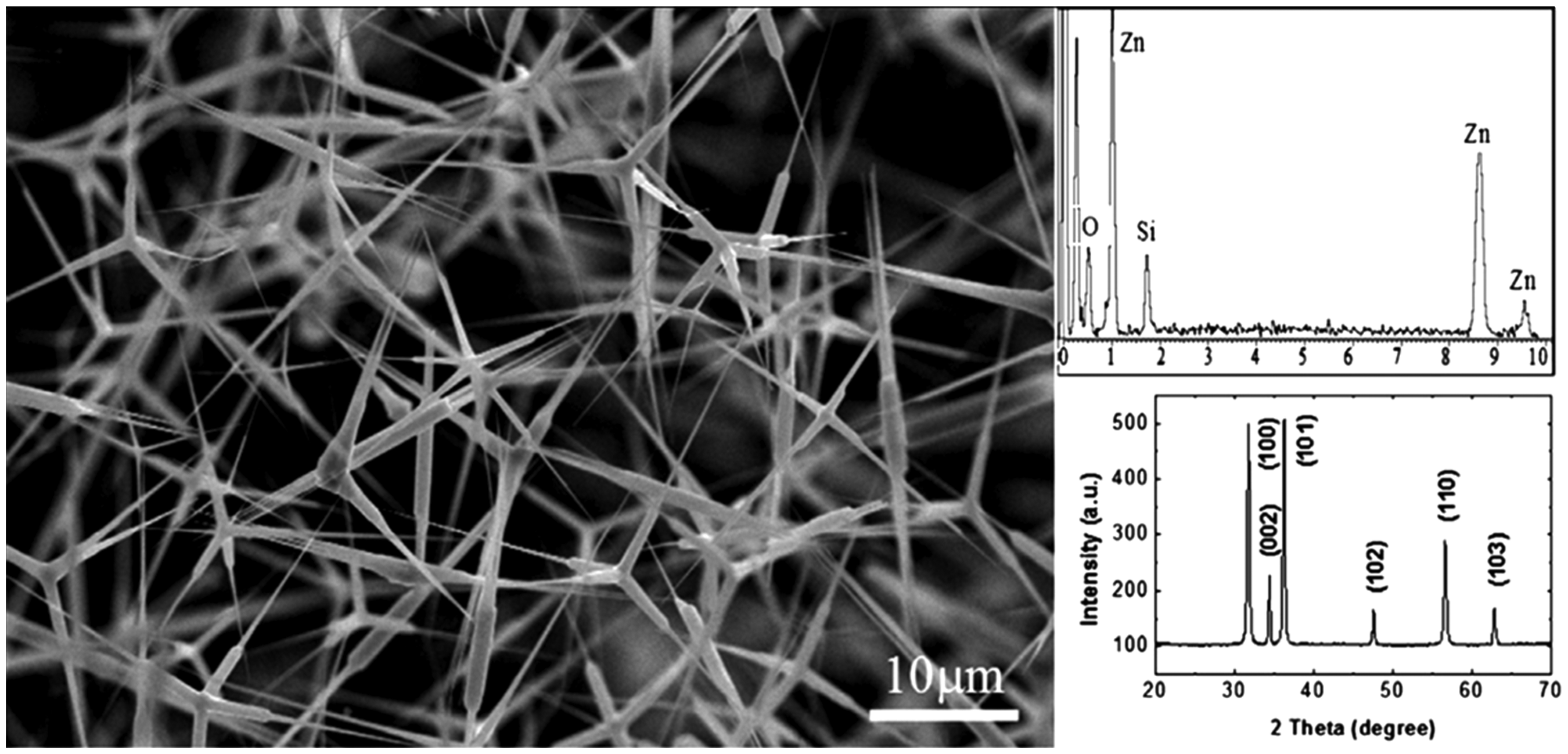
SEM, EDS, and XRD images of tetra-needle-like ZnO nanowhiskers. 65 Source: Reproduced with permission from Elsevier.
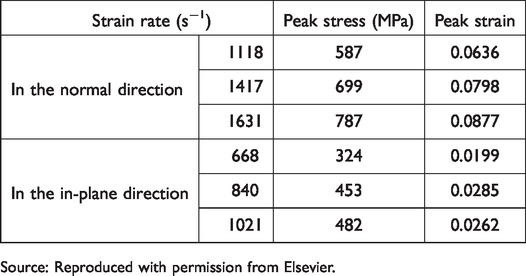
Table 2 shows the peak stresses and strains of the composites with 20 wt% ZnO nanowhiskers. The peak strain in in-plane direction was slightly reduced from 0.0285 to 0.0262 going from 840 and 1021 s−1. The composites had higher strength at increased strain rate. ZnO nanowhiskers nanofiller in polymers significantly enhanced the nanocomposite strength. Fabricating 3D ZnO nanostructures with controlled morphology may lead to high stress transfer in materials.
Peak stresses and strains of the composites embedded with 20 wt% ZnO nanowhiskers. 65
Source: Reproduced with permission from Elsevier.
Polymer/aluminum nitride (AlN) nanowhisker nanocomposites
Inherent thermal conductivity of polymeric materials is quite low, i.e. ∼0.2 W m−1 K−1. Different inorganic fillers, such as 3D AlN nanowhiskers, have been employed to enhance the thermal conductivity.66,67 Combustion synthesis has been used to form AlN nanowhiskers. 68 Polymer thermal conductivity, electrical resistivity, and chemical stability are improved when AlN nanowhiskers are present. 69 Shi et al. 70 studied the thermal conductivity of epoxy/AlN nanowhisker nanocomposites. The epoxy resin of o-Cresol Novolac cured with phenol-Novolac was used as matrix. The matrix thermal conductivity was enhanced to 4.2 W m−1 K−1 with 47 vol.% nanofiller content. Thermal conductivity of the epoxy/AlN nanowhisker nanocomposites was found to be 4.2 W m−1 K−1, which is higher than that of the neat epoxy (1.8 W m−1 K−1). Microstructure analysis revealed 3D brush-like AlN nanowhiskers dispersed in polymer matrix. The unique morphology was considered responsible for the material’s high thermal conductivity. Forming a nanowhisker percolating network in the matrix also lowered the thermal resistance. However, only a few polymers have been explored as a matrix for AlN so far. Further research may lead to better thermal conductivity and related technological applications of these nanocomposites.
Application of polymer/nanowhisker nanocomposites
Supercapacitors
Electrochemical energy storage devices such as supercapacitors have gained significant research interest owing to their high power competence and cycle life. 71 In this regard, carbon electrodes have been used to improve relatively high power density values; however, the current energy density values are still a major limitation.72,73 Polyaniline (PANI) is an important conducting polymer used in supercapacitors owing to its low cost, facile synthesis, and high conductivity. 74 However, pure PANI electrodes have disadvantages such as poor cyclability and poor thermal properties. Therefore, nanocomposites made of conducting polymers and carbon allotropes have gained attention for supercapacitors. 75 In this regard, mesoporous carbon possessed high capacitive performance, relative to the conventional carbon allotropes.76–78 Wang et al. 79 reported PANI nanowhiskers and mesoporous carbon-based electrodes for supercapacitors. The electrode had a high capacitance (∼900 F g−1) and 1300 m2 g−1 surface area. Yan et al. 80 designed vertically aligned polyaniline nanowhiskers (PANI-NWs) doped ordered mesoporous carbon (CMK-3) using chemical oxidative polymerization. Figure 7 shows the synthetic scheme. The CMK-3 particles were functionalized by using aligned PANI-NWs. Figure 8 shows the field emission scanning electron microscopy (FESEM) images of pristine CMK-3, PANI/CMK-3, and PANI-NW/CMK-3 nanocomposite. The pristine CMK-3 showed aggregated rod-like particles having smooth surface (Figure 8(a)). The PANI/CMK-3 nanocomposite revealed granular PANI particles on CMK-3 surface (Figure 8(b)). Figure 8(c) depicts change in morphology due to the presence of the cross-linker. PANI-NWs with length of 80–100 nm and width of 40–50nm were observed (Figure 8(d)).
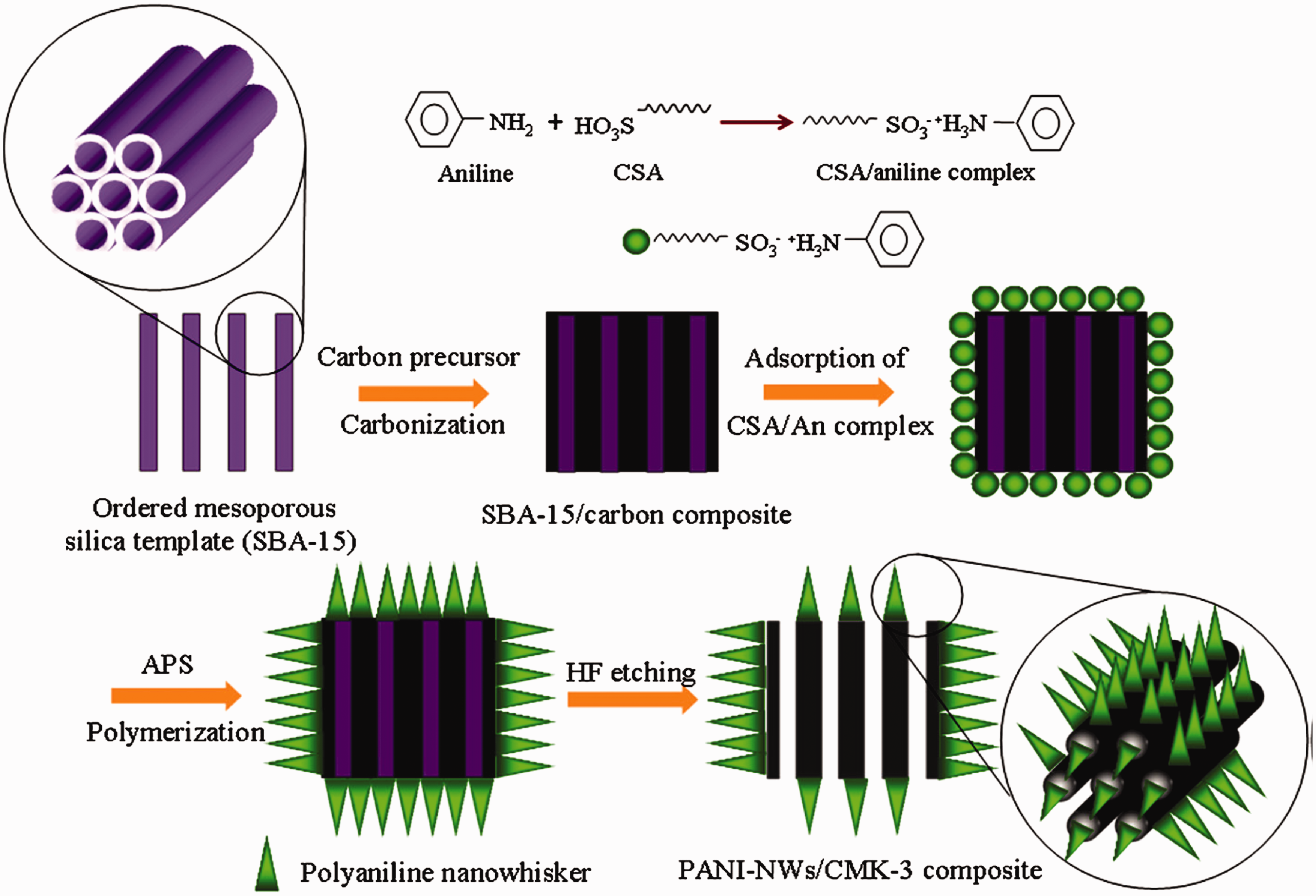
Schematic illustration of PANI-NWs/CMK-3 nanocomposite synthesis. 80 CSA: camphorsulfonic acid; CMK-3: ordered mesoporous carbon; HF: hydrofluoric acid; PANI: polyaniline.
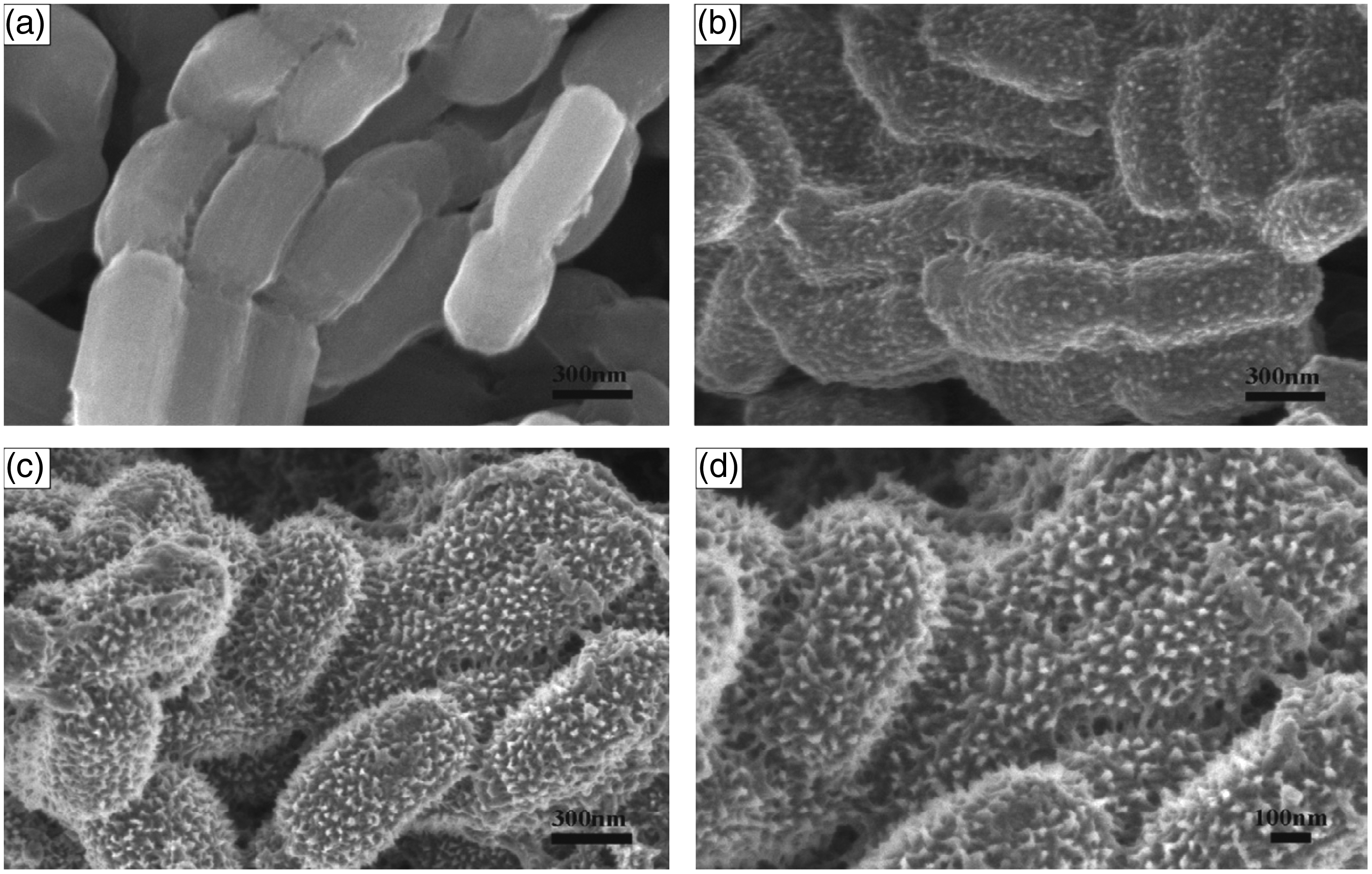
FESEM images of (a) CMK-3, (b) PANI/CMK-3, (c) PANI-NWs/CMK-3, and (d) a higher-magnification SEM image of (c). 80
Figure 9 shows the cycling stability of CMK-3 and PANI-NW/CMK-3 electrodes. The performance was measured at 1 A g−1 current density. The specific capacitance was found to be 100% after 1000 charge–discharge cycles for pure CMK-3. In the case of PANI-NW/CMK-3 electrode, there was only a trivial decrease during the initial 200 cycles. However, the final capacitance of PANI-NW/CMK-3 was much higher relative to that of the pure CMK-3. It was found that the synergetic effect of PANI nanowhisker arrays and CMK-3 provided high electrochemical capacitance and cycling stability of the supercapacitor electrode. Consequently, design of 1D conducting polymer nanowhiskers and their doping on carbon allotropes can be explored for high performance electrode materials in supercapacitors.
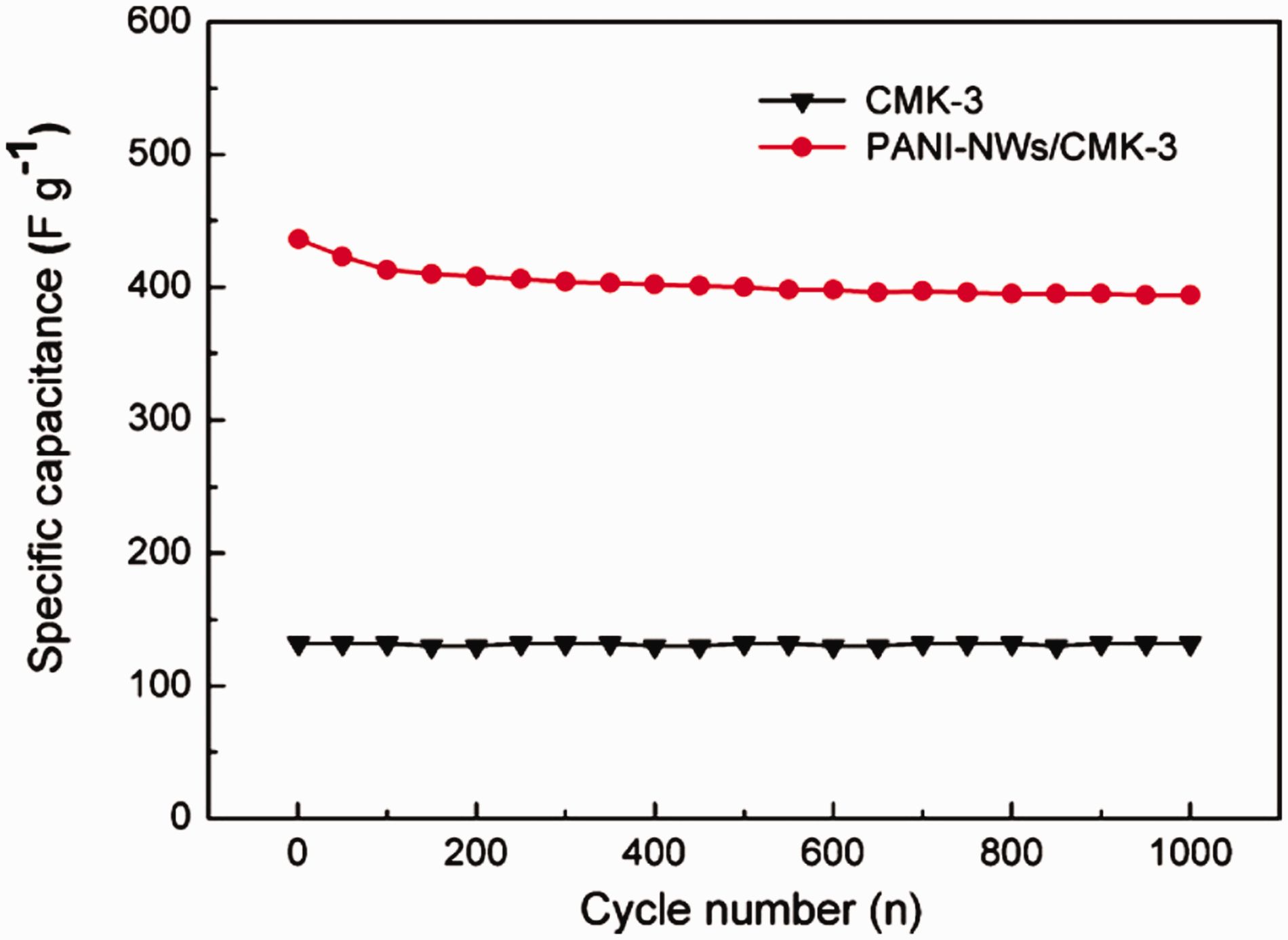
Specific capacitance versus cycle number for CMK-3 and PANI-NW/CMK-3 at 1 A g−1 current density. 80 CMK-3: ordered mesoporous carbon; PANI: polyaniline.
Sensors
Conducting polymer-based nanocomposites have several advantages such as light weight, low cost, and good processability for use in sensors. 81 Such nanocomposites may be sensitive to strain, pressure, temperature, and organic liquids.82–84 Conducting polymer-based nanocomposite sensors must have a fast response time, good reproducibility, high response intensity, and high electrical conductivity to be useful in high performance sensing devices. 85 Wu et al. 86 developed carbon black (CB)/natural rubber (NR) nanocomposite filled with CNWs by using latex assembly technology (Figure 10). The CB/NR/CNW nanocomposite sensor had a low percolation threshold (1.65 vol.%) with CB/CNW loading and revealed high liquid sensing capacity (4427). The sensor also appeared to be potentially low cost with fast response rate (168 s) and with good reproducibility. Thus, different polymer/nanowhisker nanocomposites can be designed as multifunctional sensing materials. Forming a conducting network in these nanocomposites is essential to construct desirable sensing materials. Such nanocomposites have found applications as strain sensing gages, internal microcrack monitors, and human motion detectors. 87
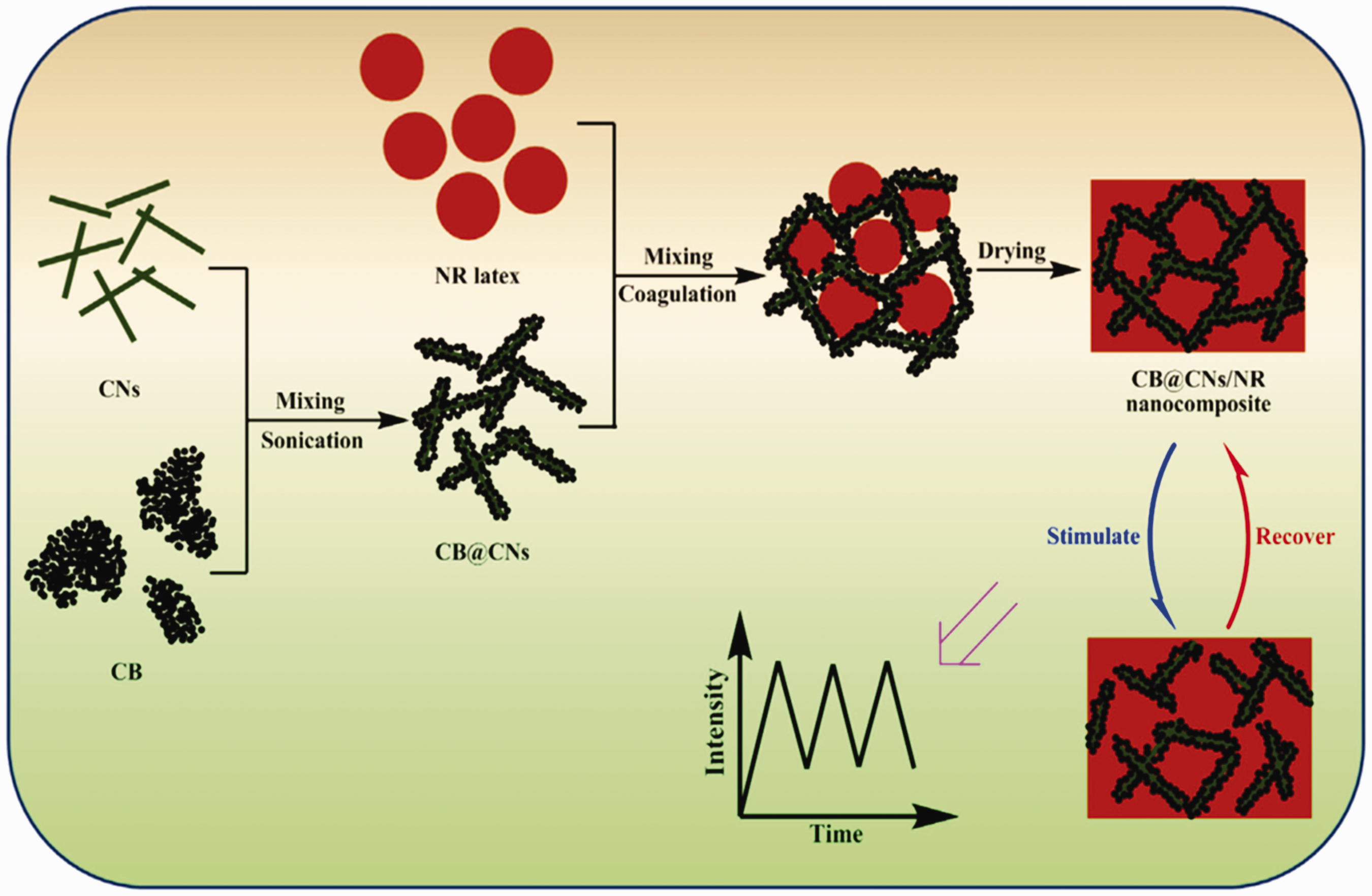
Schematic of CNW modulated fabrication of CB-based 3D hierarchical conductive structure in NR matrix for sensing application. 86 CB: carbon black; NR: natural rubber. Source: Reproduced with permission from Elsevier.
Anticorrosion coatings
Polymer/nanowhisker nanocomposites have also found potential use as anticorrosion coatings. Surface charges, size distribution, and dispersibility of nanowhiskers are essential factors controlling the corrosion prevention of polymer films. 88 Polymer/nanowhisker nanocomposites showed strong adsorption effects, renewability, nontoxicity, and biodegradability which were desirable for anticorrosion coatings. 89 In this regard, cellulose and carbon allotrope-based nanowhiskers have been frequently used as anticorrosion coatings. 90 Polyurethane/CNW coatings have been used as anodic protectors and gas barriers. 91 Tanvir et al. 92 developed epoxy and nanocellulose nanowhisker coatings. The epoxy coating filled with 1 wt% CNW had enhanced morphological, thermal, mechanical, water-resistance, and electrochemical properties. Nie et al. 91 prepared waterborne corrosion resistant coatings by using epoxy, graphene, and CNWs. The CNWs enhanced the graphene dispersion in the matrix. For 1.0 wt% graphene and CNWs loaded epoxy nanocomposite, the Young’s modulus improved by 20.5%, relative to that of the epoxy filled with only nanowhiskers. The coatings showed good barrier, water resistance, and anticorrosion properties. As presented in this section, high performance epoxy coatings have been developed by using nanowhiskers as a filler.
Antibacterial surfaces
ZnO nanostructures have been studied for a wide range of applications. 93 ZnO nanostructures have been used to reinforce polystyrene, polyamide, polyacrylonitrile, and polyacrylate matrices.94–96 Another important application of ZnO nanostructures is antibacterial surfaces. Ma and Zhang 97 developed waterborne polyurethane/flower-like ZnO nanowhiskers (WPU/f-ZnO) nanocomposite with 0–4.0 wt% nanofiller content. Fine dispersion of nanofiller in WPU matrix significantly improved the nanocomposite performance. Figure 11 shows the water swelling of WPU and WPU/f-ZnO nanocomposite films. Including f-ZnO decreased water swelling in films. The 4 wt% f-ZnO nanofiller decreased water swelling by 11.9%, so water resistance was enhanced. Figure 12 shows the antibacterial activity of the neat WPU film and WPU/f-ZnO nanocomposite films with varying f-ZnO contents against Escherichia coli and Staphylococcus aureus.
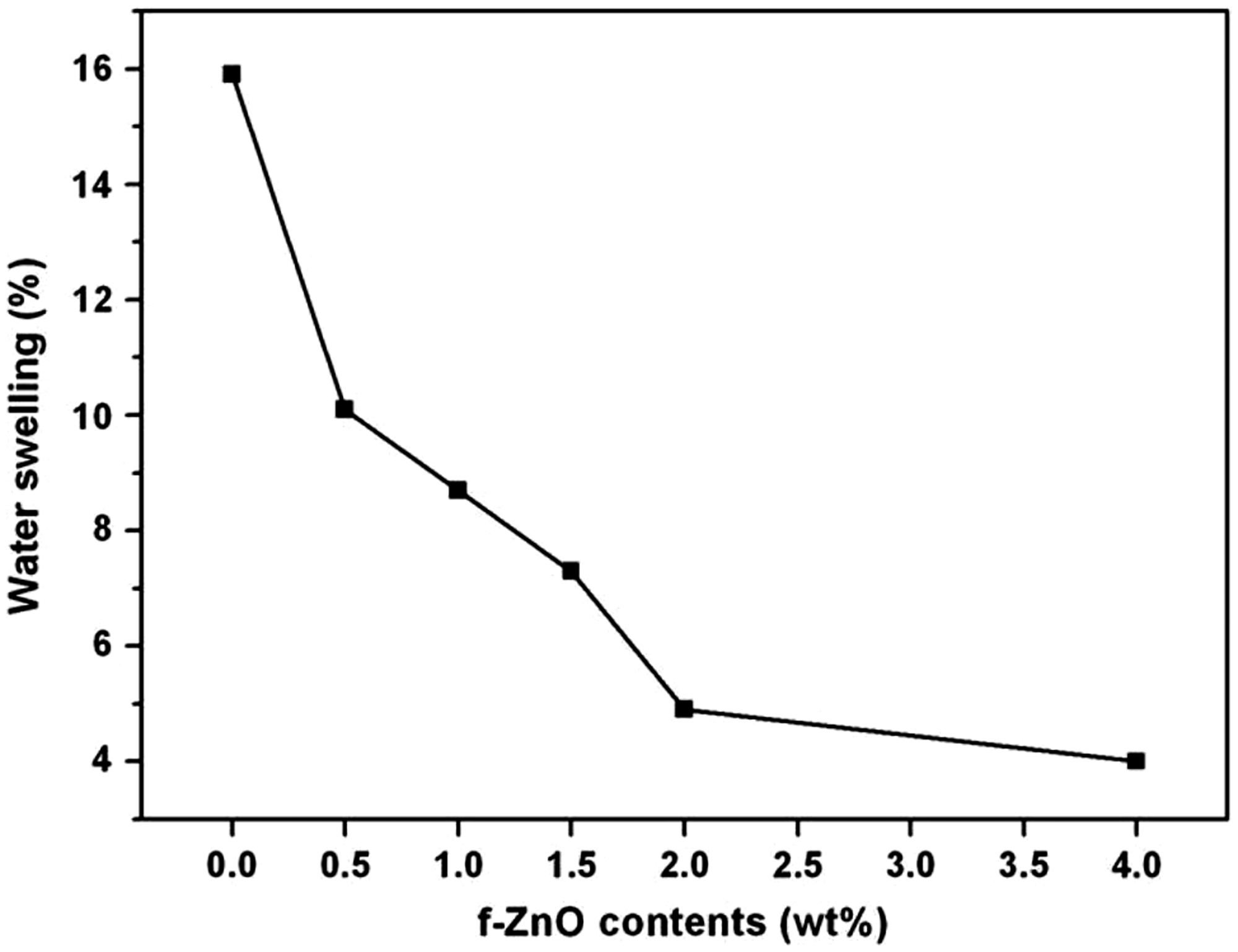
Water swelling versus f-ZnO content for WPU/f-ZnO nanocomposite. 97 Source: Reproduced with permission from Elsevier.
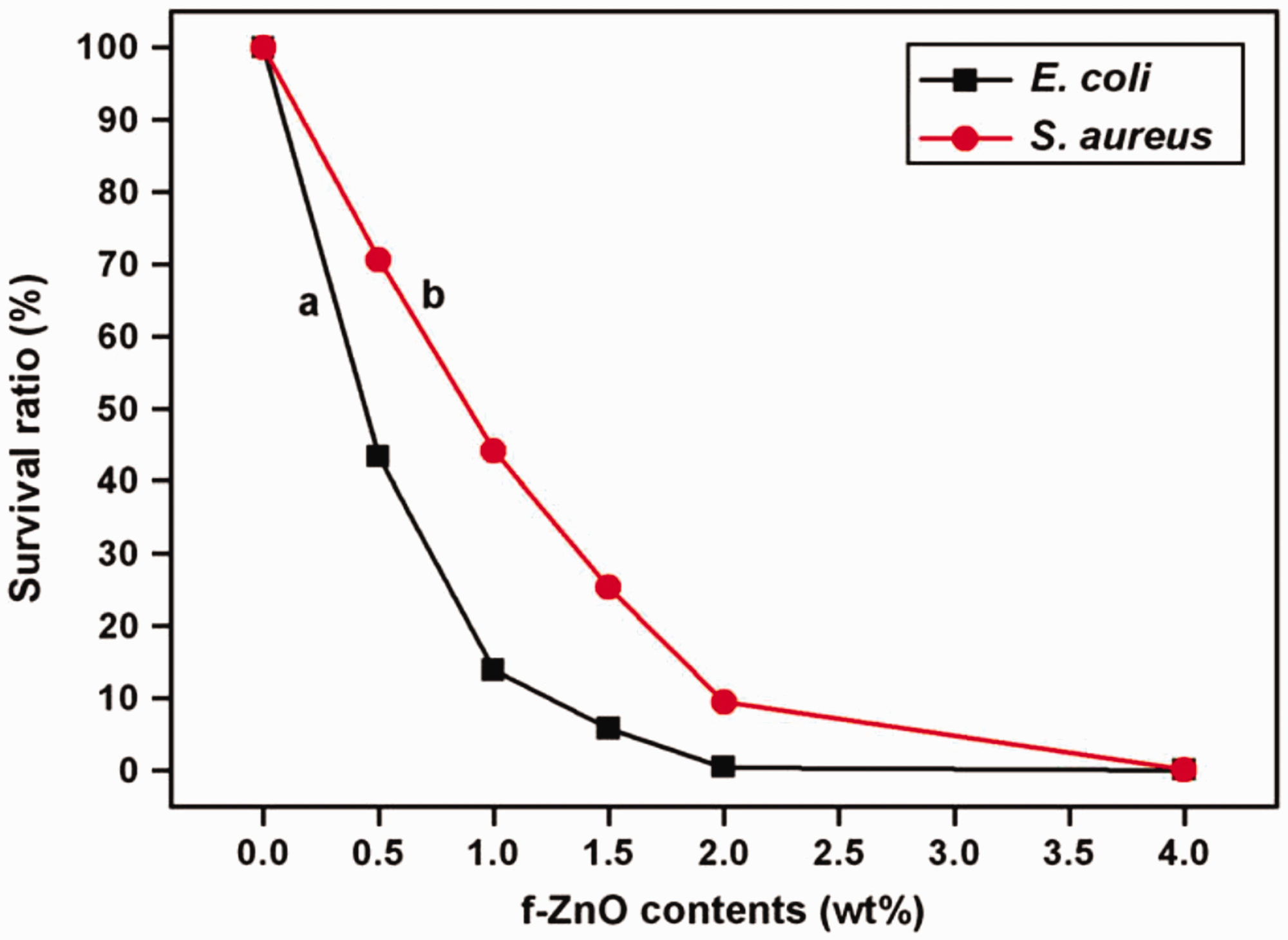
E. coli and S. aureus survival ratio versus f-ZnO content for WPU/f-ZnO nanocomposite. 97 f-ZNO: flower-like ZnO. Source: Reproduced with permission from Elsevier.
Inclusion of 4.0 wt% f-ZnO was found to considerably decrease the survival ratio of E. coli and S. aureus. Consequently, better antibacterial activity was observed at high nanofiller loading. In polyurethane matrices, inorganic nanowhiskers of silica and ZnO have been found to improve water resistance, reduce water swelling, and increase the antibacterial properties of the coatings.98,99
Drug delivery
New drug delivery systems have been used for oral solid dosage to improve a drug’s product stability, manufacturability, and bioavailability. 100 Water soluble polymers such as poly(vinyl alcohol), polyvinylpyrrolidone, polyacrylic acid, and natural gums have been used as drug suspending agents. 101 The suspending agents may act as stabilizers to prevent particle agglomeration. Polymer/CNWs have been used in drug delivery applications.102,103 Villanova et al. 104 polymerized ethyl acrylate, methyl methacrylate, and butyl methacrylate in the presence of CNWs by using the suspension technique. The nanowhiskers reduced the polymer’s particle size and narrowed the size distribution. In vitro tests revealed nontoxic behavior of these acrylate/nanowhisker beads. According to the dissolution tests, the polymer/nanowhisker beads had potential use in drug controlled release. 105 It should be noted that such materials have been used to prepare tablets by direct compression using propranolol hydrochloride as a model drug. However, only a few drug delivery systems have been designed using polymer/nanowhisker beads so far. Future research needs to exploit biodegradable natural polymers with nanowhiskers to gain success in this field.
Summary and future
This article presents a comprehensive and state-of-the-art article on polymer/nanowhisker nanocomposites. By choosing appropriate nanowhisker fillers, it is possible to produce nanocomposites with enhanced mechanical, thermal, conducting, anticorrosion, antimicrobial, and solvent resistance performance. Polymer/nanowhisker nanocomposites have interesting potential applications in supercapacitor, sensor, anticorrosion, antibacterial, and drug delivery systems. Polymer/nanowhisker nanocomposites are a relatively new and less explored area of research. Conducting polymer and nanowhisker-based nanocomposites have been successfully explored for supercapacitor applications owing to their high specific capacitance, conductivity, power density, recyclability, and capacitance performance. However, research has been limited to the PANI-NWs and PANI/inorganic nanowhisker nanocomposites. Other efficient conducting polymers such as polypyrrole, polythiophene, and their derivatives should also be explored. In sensor applications, PANI/nanowhisker and rubber/nanowhisker nanocomposites have been used for gas sensing applications. The sensors have shown fast response, high response intensity, and high electrical conductivity. Here again, the research is limited to the PANI matrix, and other polymers have not been explored yet. Anticorrosion coatings made of polyurethane and epoxy filled with nanocellulose nanowhiskers have shown excellent performance. However, enhanced performance of polyurethane and epoxy by using fullerene nanowhiskers and metal nanowhiskers needs to be explored in the future. Including nanowhiskers in polymers has resulted in fine water resistance, and antibacterial and anticorrosion properties. Polymer/nanowhisker beads have been successfully used to encapsulate drug and deliver it in living systems with sufficient nontoxicity. Nanowhiskers have not been used yet in several important polymer matrices such as polyamide, polyacrylonitrile, poly(methyl methacrylate), acrylic, and other common polymers. Future attempts on polymer/nanowhisker should focus on functionalizing nanowhiskers for better nanofiller dispersion. Moreover, nanowhiskers with precise length and width need to be developed. Studies on reinforcement mechanism and matrix–nanofiller interaction are also desirable to get better performing nanocomposites. New processing techniques should also focus on obtaining advance materials.
Footnotes
Declaration of Conflicting Interests
The author(s) declared no potential conflicts of interest with respect to the research, authorship, and/or publication of this article.
Funding
The author(s) received no financial support for the research, authorship, and/or publication of this article.
