






Abstract
Demand for polymer films with higher service temperature for use in modern industrial, automotive, and related applications has driven the development of novel composite materials. In this work, the storage moduli of PET (polyethylene terephthalate) and PPS (polyphenylene sulfide) were maintained and quantified up to 140 and 160°C respectively through nanolayer coextrusion processing against high Tg COC (cyclic olefin copolymer) support layers. Layer multiplying coextrusion was leveraged to produce nanolayered cast films with COC layers ranging from 40 to 200 nm. The nanolayered films were able to maintain a 35–40% higher modulus, up to the glass transition of the continuous COC support layers, as compared to extruded blend films with an identical composition of high temperature glassy polymer. The results demonstrate leveraging polymer processing techniques to enable advanced high temperature performance of commercial polymer materials without the need for additives or additional polymer chain modifications enabling more rapid scaling to industrial adoption.
Keywords
Introduction
Developing polymer films with improved thermal stability, mechanical toughness, and chemical resistance, without compromising other functional properties or cost
In medical packaging, films that prevent oxygen and moisture ingress for sensitive pharmaceuticals, medical devices, and bio-sample containers, must maintain integrity during heat and steam-based sterilization cycles up to 132°C. 6 The phase-out of per- and polyfluoroalkyl substances (PFAS), through regulations and supply chain disruption, has accelerated the development of potential alternatives that will also meet these thermal requirements.
Developing entirely new polymers involves significant cost and time, so combining existing commercial polymers where one polymer acts as a mechanical support at high temperature is often the preferred route to achieving the required performance. However, in many applications, blending often generates a 2-phase mixture with random, discrete phase domains that lack continuity, making them ineffective scaffolds. In contrast, the continuous in-plane phases in layered films can provide efficient mechanical reinforcement at elevated temperature. 7
An important subset of layered films are made by layer-multiplying coextrusion.8–13 Here, multiplier elements in series are used to split and re-combine the molten polymer flow to sequentially double the number of layers, after which the material is cast into a film. This method can generate films with over 4000 layers with individual layer thickness as low as roughly 10 nm, combining two or three individual polymers. These multilayered films (MLFs) can have highly targeted and engineered properties, which can exceed what is accessible through blending (which can be predicted through simple mixing rules) or macroscopic layering (which generally follow series transport models).
Compared to other methods used to combine polymers, an advantage of this technique is that it can be used to combine dissimilar or immiscible polymers in any ratio, allowing intermediate properties to be targeted. Furthermore, forming very thin layers can lead to new bulk material properties. For example, confining a semicrystalline polymer to very thin layers, on the order of the radius of gyration of the polymer, can induce confined crystallization, 14 where the structure of crystalline regions formed during cooling takes on different morphology compared to its typical bulk behavior. This phenomenon can be used to improve performance at high temperature,15–17 as well as to optimize mass transport and electrical properties.18–21 Also, as layer thickness is reduced, the fraction of the overall film structure taken up by interlayer interphase regions increases, such that the properties of the interphase region can become more dominant over the pure bulk phases.22,23
There are several emerging applications and active areas of research into MLFs. One is the layering of materials with targeted electrical characteristics (dielectric constant, loss, and breakdown strength) and thermal behavior (shrinkage and softening temperature) for high-performance capacitor films used in the DC-link applications discussed above, as well as nuclear fusion and grid-scale power systems.24–26 Other emerging applications include layering to improve the high-temperature mechanical and barrier properties of biodegradable and bio-derived materials,27,28 and to improve the recyclability of mixed polymers.29,30
Examples of reported micro- and nanolayered coextruded systems that combine amorphous and semicrystalline polymers, where the amorphous polymer has a significantly higher glass transition temperature (Tg).
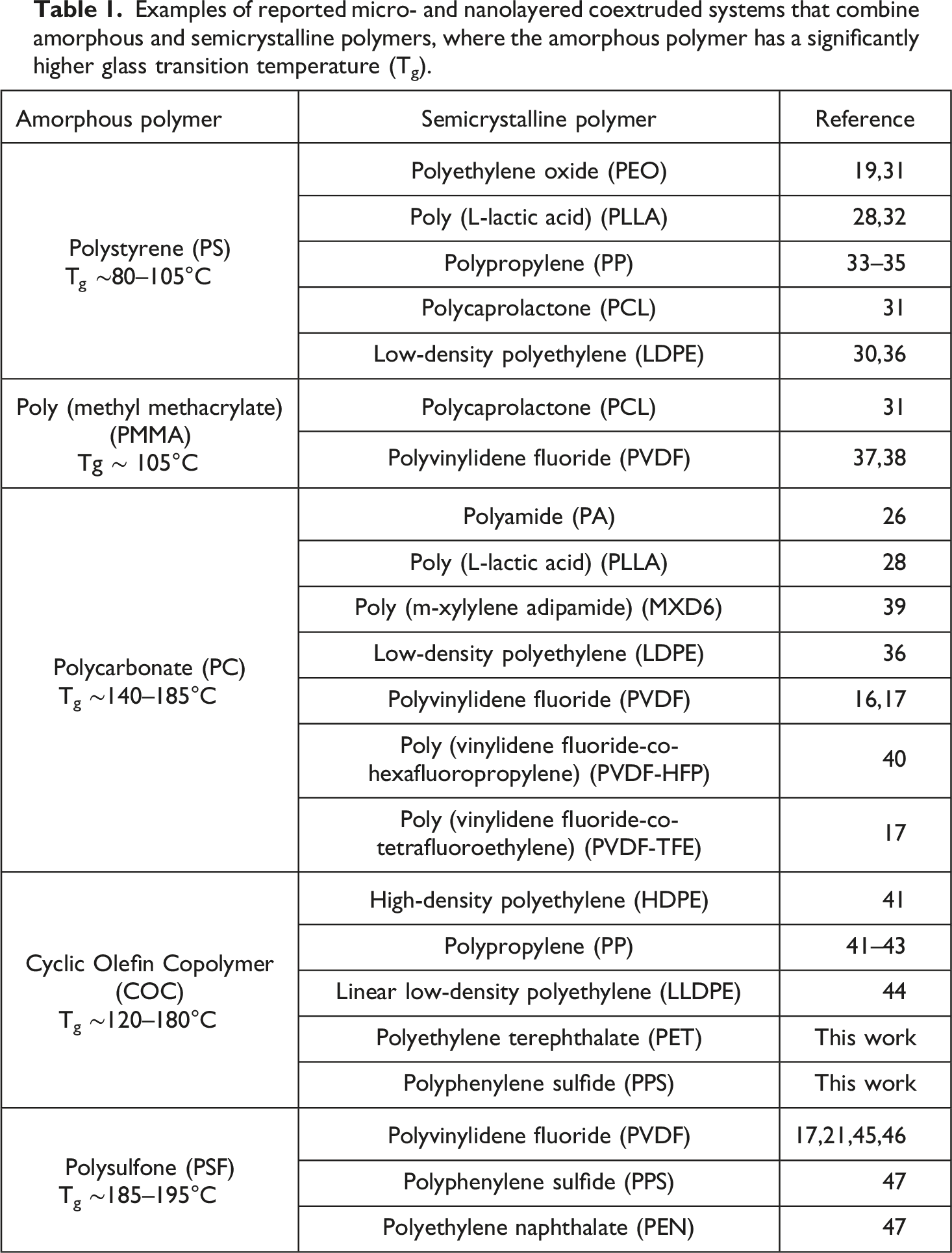
Combinations of these types have been used to extend upper service temperatures in several systems. Notable examples include using polysulfone (PSF), high-temperature polycarbonate (PC), and cyclic olefin copolymer (COC) as stable scaffolds for polyvinylidene fluoride (PVDF), polypropylene (PP), polyphenylene sulfide (PPS), and polyethylene naphthalate (PEN) to improve high-temperature mechanical and dielectric properties.16,24,25,42,47,48
Another example is using PSF layers in an alternating PSF/PVDF capacitor film to capture impurity ions and hold them in place at elevated operating temperatures in the high-Tg PSF layers. 45 COC layers have also been combined with PP to improve barrier properties and electrical performance at high temperature,43,49 and with linear low-density polyethylene (LLDPE) to take advantage of the mechanical and thermal properties of both materials. 44
In this work, improvements to extend the mechanical stiffness of semicrystalline materials PPS and PET to higher temperatures were examined by incorporating thin layers of high Tg COC as thermal stabilizer in the MLF structure. The ability of COC nanolayers to act as a thermally stabilizing scaffold for the PPS and PET semicrystalline polymers at temperatures above their typical service temperature was tested. This approach can be used to make novel composite materials with high service temperature that combine advantageous properties of multiple polymers, such as barrier performance, mechanical strength, optical clarity, dielectric properties, and chemical resistance, to expand their use in applications including biomedical, electrical, and other demanding high-temperature engineering and industrial environments.
Materials and methods
Multilayered polymer films generated in this study combined a semicrystalline polymer with an amorphous polymer. The semicrystalline polymers utilized in coextrusion were: • Polyethylene terephthalate (PET, Tg ∼78°C, Tm ∼243°C, 0.8 IV Eastman Chemical Company 9921W) • Extrusion grade linear polyphenylene sulfide (PPS, Tg ∼90°C, Tm ∼280°C, Celanese Corporation Fortron 0320C0).
The amorphous polymer counter layer material was: • Cyclic olefin copolymer (COC, Tg ∼158°C, TOPAS 6015S), selected in part because of its relatively high Tg.
Figure 1 shows how the multilayered films with alternating COC and PET or PPS layers were fabricated via a layer multiplication coextrusion process previously described.8,9 The extruders, multiplier elements, and die were set at temperatures to ensure the two polymer melt viscosities matched during coextrusion processing. Films with 129 alternating COC and PET or PPS layers were coextruded to an overall 25 μm target film thickness. The composition ratio for the COC/PPS system was varied as (v/v) 10/90 and 25/75. For the COC/PET system composition ratio was varied as (v/v) 10/90, 25/75, and 50/50. In order to improve adhesion between the COC and PET layers, the pure COC layer was replaced by a 75/25 volume % COC/PET blend. Monolayer equivalent composition control blend films were produced for each system along with 100% COC, PET and PPS films. Schematic of the extrusion equipment used in this work, showing the position of the layer-multiplying dies (left) and the process of splitting and recombining the melt flow to achieve layer multiplication.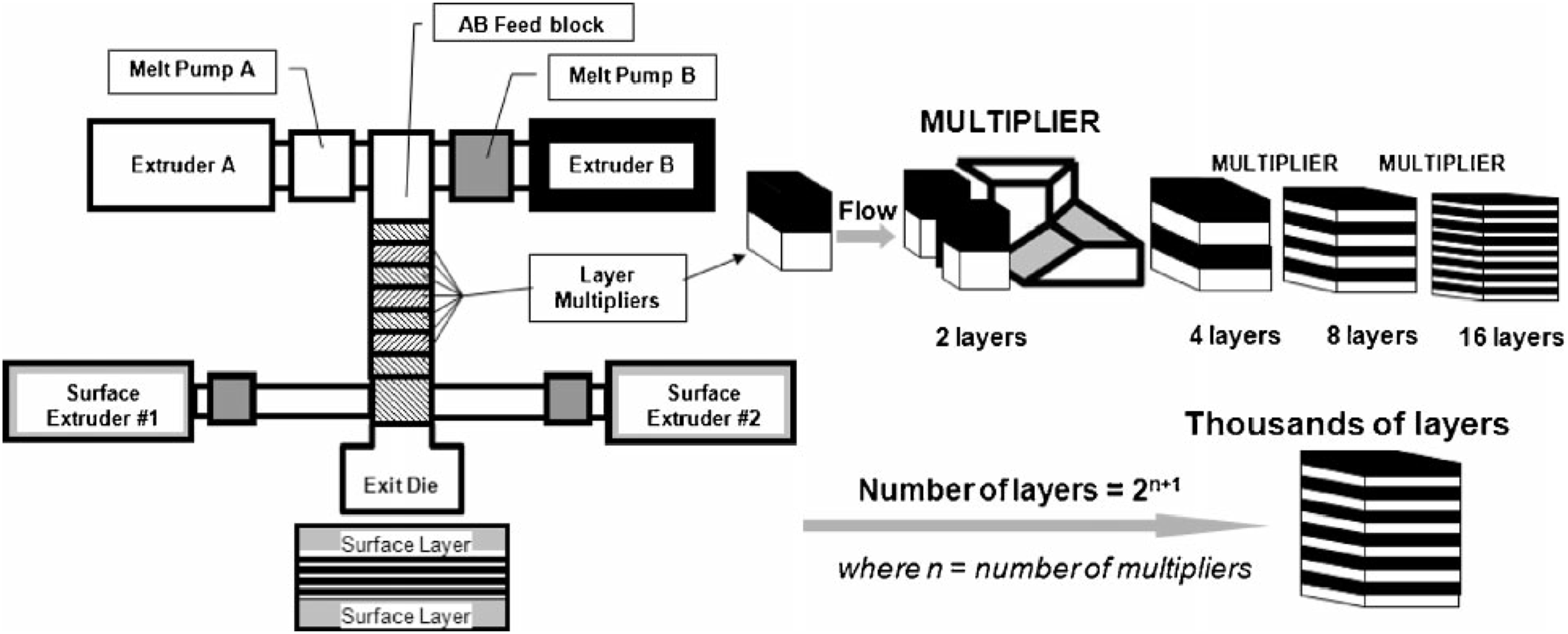
Differential scanning calorimetry (DSC) and dynamic mechanical analysis (DMA) were used to characterize the thermal and mechanical behavior of the samples. DSC was performed on as-cast films with no additional thermal preparation, using a PerkinElmer DSC 4000 with a constant ramp rate of 10°C/min. DMA was performed using a PerkinElmer DMA 8000 with a ramp rate of 5°C/min, 1 Hz frequency, and 0.2% strain with 1 N pre-tension. Before DMA testing, samples were annealed at 150°C for 1 hour to reduce measurement artifacts from cold crystallization. For cross-sectional imaging, films were first mounted in epoxy, then polished to expose cross-sections, then coated with 5 nm of silver. A Thermo Fisher Scientific Apreo 2 field emission scanning electron microscope with a backscattered electron detector was used for cross-sectional imaging of the polished epoxy mounted samples. Images were collected using an accelerating voltage of 20 kV and a beam current of 0.2 nA.
Results and discussion
Scanning electron microscopy, shown in Figure 2, was used to confirm the formation of a well-ordered layer structure in the 129-layer films. Figure 2(a), a cross-sectional image of a 129-layer, 25% COC-PPS film, shows a clear layer structure. In contrast, Figure 2(b), the cross-section of a film made from a 25% COC-PPS blend, shows evidence of phase separation with no periodic structure. Cross-sectional SEM images of 25% COC-PPS films: (a) 129-layer, (b) blend.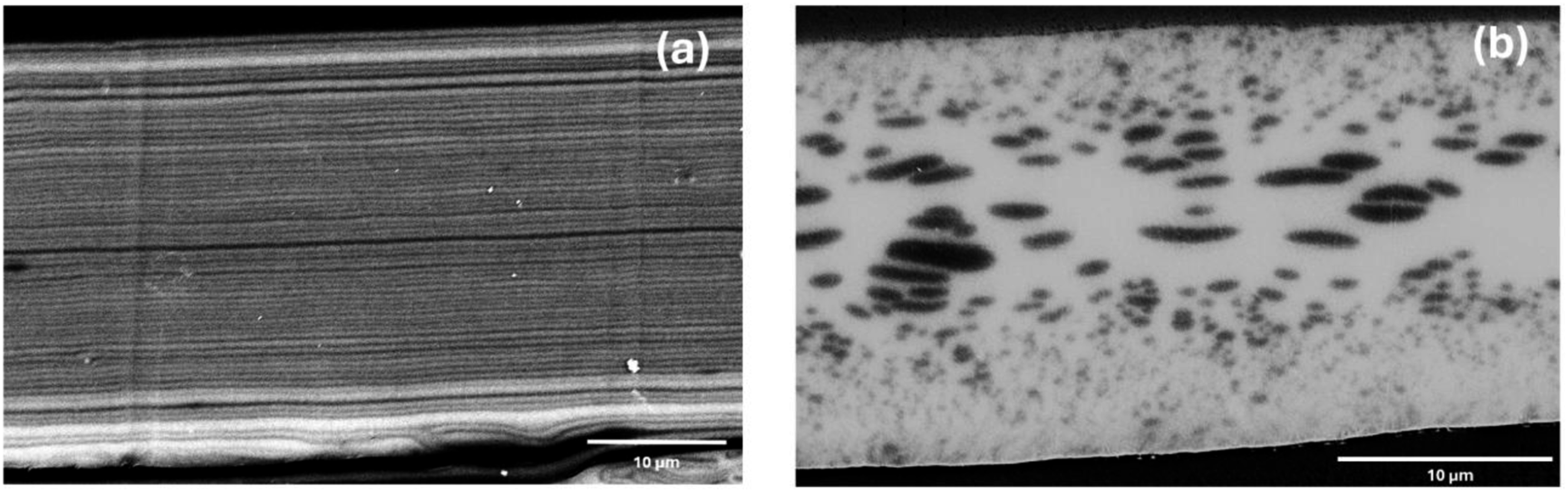
DSC thermograms of COC-PET film samples are shown in Figure 3(a). Three major features are present: a glass transition of PET at roughly 80°C, cold crystallization at 140–147.5°C, and a melting transition at 241–243.7°C (peak temperatures). Figure 3(b) summarizes the fraction of PET that crystallizes when the film is cast, and the fraction of PET that cold-crystallizes when the film is first heated during the DSC measurement. Figure 3(c) summarizes the peak cold crystallization and peak melting temperatures as determined from DSC. Cast COC-PET films: DSC thermograms (a) crystallinity fraction (b) and phase transition peak temperatures extracted from DSC thermograms (c).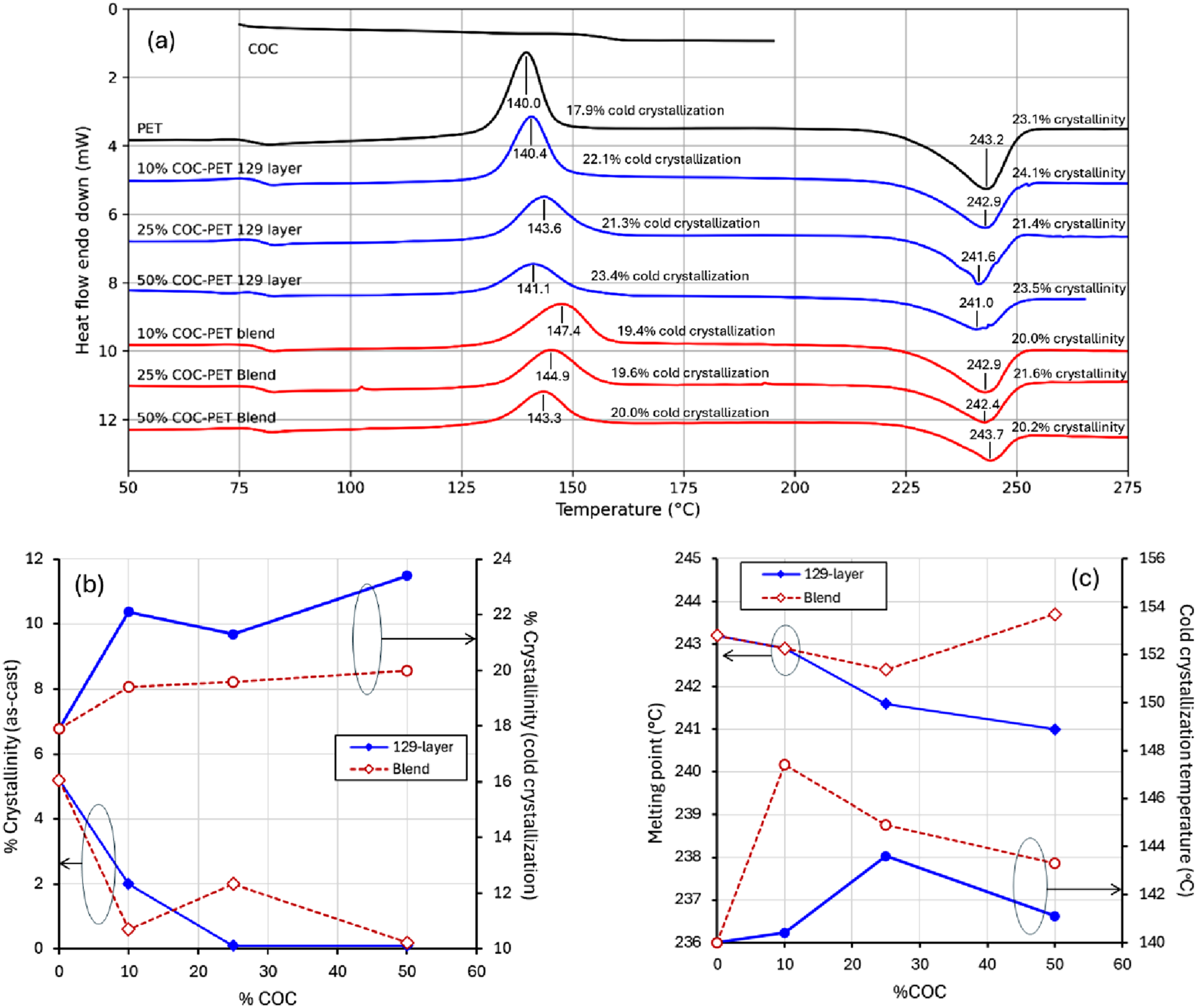
The 129-layer COC-PET films exhibited an as-cast crystallinity decrease as the fraction of COC in the films increased, as shown in Figure 3(b), with almost no as-cast crystallization detected in the 25% and 50% layered COC films. The fraction of PET that cold crystallizes in this film also exhibited an increase, from 17.9% in the pure PET film, to 23.4% in the 50% COC-PET layered film. This indicates that crystallization was inhibited by the presence of COC layers when the film was coextruded. It is important to note that the nominal thickness of the PET layers also decreases with increasing COC volume fraction, from 350 to 290 to 200 nm. This had an effect of increasing the degree of confinement of the PET layers and also increases the thickness of the COC-PET interface regions relative to the overall PET thickness, both of which could lead to stronger inhibition of crystallization with increasing COC volume %. This reduction in crystallinity would normally be expected to reduce the thermo-mechanical properties of the material. However, the realized effect of reduced crystallinity is countered by the continuous layers of high-Tg COC present in the film as shown in Figure 2, and the DMA data discussed below and shown in Figure 5. The increased relative thickness of the COC-PET interfused region could also benefit the high temperature mechanical properties of the film, depending on the nature of the interdiffused mixture.
Comparing films made using blends of COC-PET versus 129-layered films at equivalent material volume fractions, DSC in Figure 3 shows that the amount of overall crystallinity is lower, and the cold crystallization temperature is higher, in the blended films. This indicates that COC also inhibits PET crystallization in blends. Reduction in crystallinity of PLLA and PA6 has been reported in PLLA/COC and PA6/COC blends made using solvent casting and melt blending respectively,50,51 which is consistent with COC disrupting crystallization of semicrystalline polymers in these immiscible systems also.
Figure 4 shows the DSC thermograms of COC-PPS films. The effect COC has on the PPS thermal transitions is similar, but not identical to the effect it has on PET. Similar to PET witnessed results, the COC layers increase the cold crystallization peak temperature, from 134 to 141.8°C, and decreases the melting point, from 279.7 to 276.9°C at 25% COC. These changes for both temperatures are larger in the COC-PPS system compared to COC-PET, at both 10% and 25% COC. Differences between PPS and PET in terms of the effect of COC on crystallization could be caused by the difference in their interaction energy with COC. Based on Hansen solubility parameters, the interaction between COC and PPS is more favorable than between COC and PET,52–56 which could lead to more extensive interdiffusion between COC and PPS and, as a result, a larger effect on crystallization kinetics. For the COC-PPS blends, the COC generally has the same directional effect as layered films, but the change is smaller, which could indicate a larger fraction of interdiffused material in the layered sample, as expected for a 129-layered system. Cast COC-PPS films: DSC thermograms (a) crystallinity fraction (b) and phase transition peak temperatures extracted from DSC thermograms (c).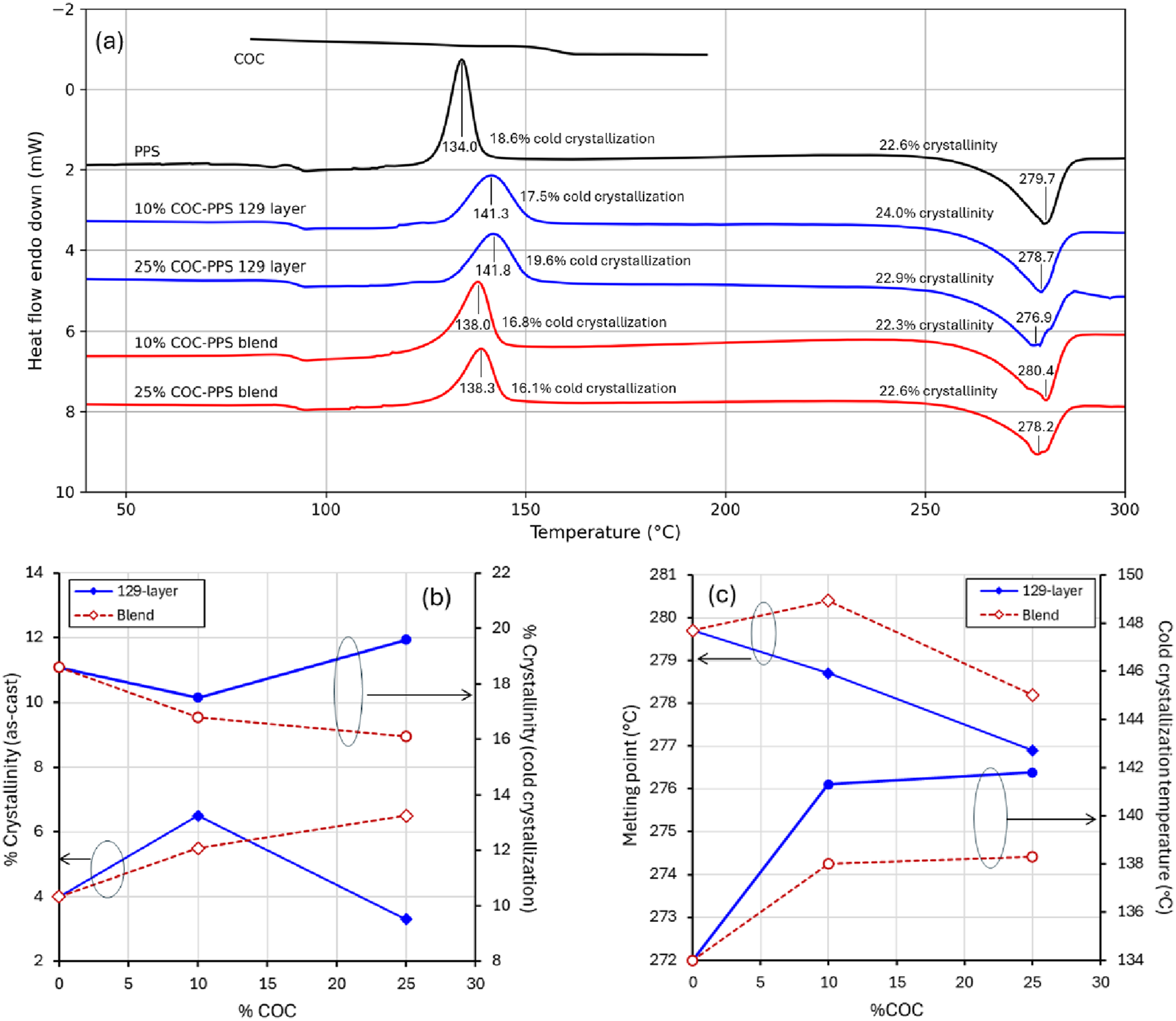
In the COC-PPS system, COC does not monotonically affect the cold and as-cast crystallization fraction and the effect is not as strong as in the COC-PET system. This, combined with how COC affects the PPS crystallization temperature, suggests that how COC inhibits PPS crystallization is not identical to PET. In addition to the differences in interaction energy between layers in the two systems, the 25% PET in the COC layers in COC-PET systems could also be playing a role. One possibility is that the interaction between PET and 75–25% COC-PET layers lead to inhibiting of the PET crystallization altogether. In this scenario, interfacial mixing would affect the peak crystallization temperatures in both systems, while having a stronger effect on crystallized fraction in the COC-PET system.
Figure 5(a)–(c) shows the Storage modulus (E′, a measure of mechanical stiffness) versus temperature (as measured by DMA on annealed COC-PET films). As a comparison, data for pure COC and pure PET films are also shown. At 140°C (which is between the PET and COC Tg), E′ is higher for 129-layer films compared to pure PET in all cases. At 50% COC, the 129-layer film storage modulus at 140°C is roughly equivalent to 100% COC. Figure 5(d) compares the layered and blended films. The layered film E′ is higher than the blend at all compositions at 140°C. The difference being more pronounced (a 32–36% difference) at 10 and 25% COC compared to 50% COC (a 7% difference). The larger relative difference in modulus at lower COC compositions indicates that the thermal-mechanical scaffolding of high-Tg COC is highly effective even at lower concentrations. DMA for annealed COC-PET films (a)–(c) and storage modulus versus COC volume % extracted from DMA (d).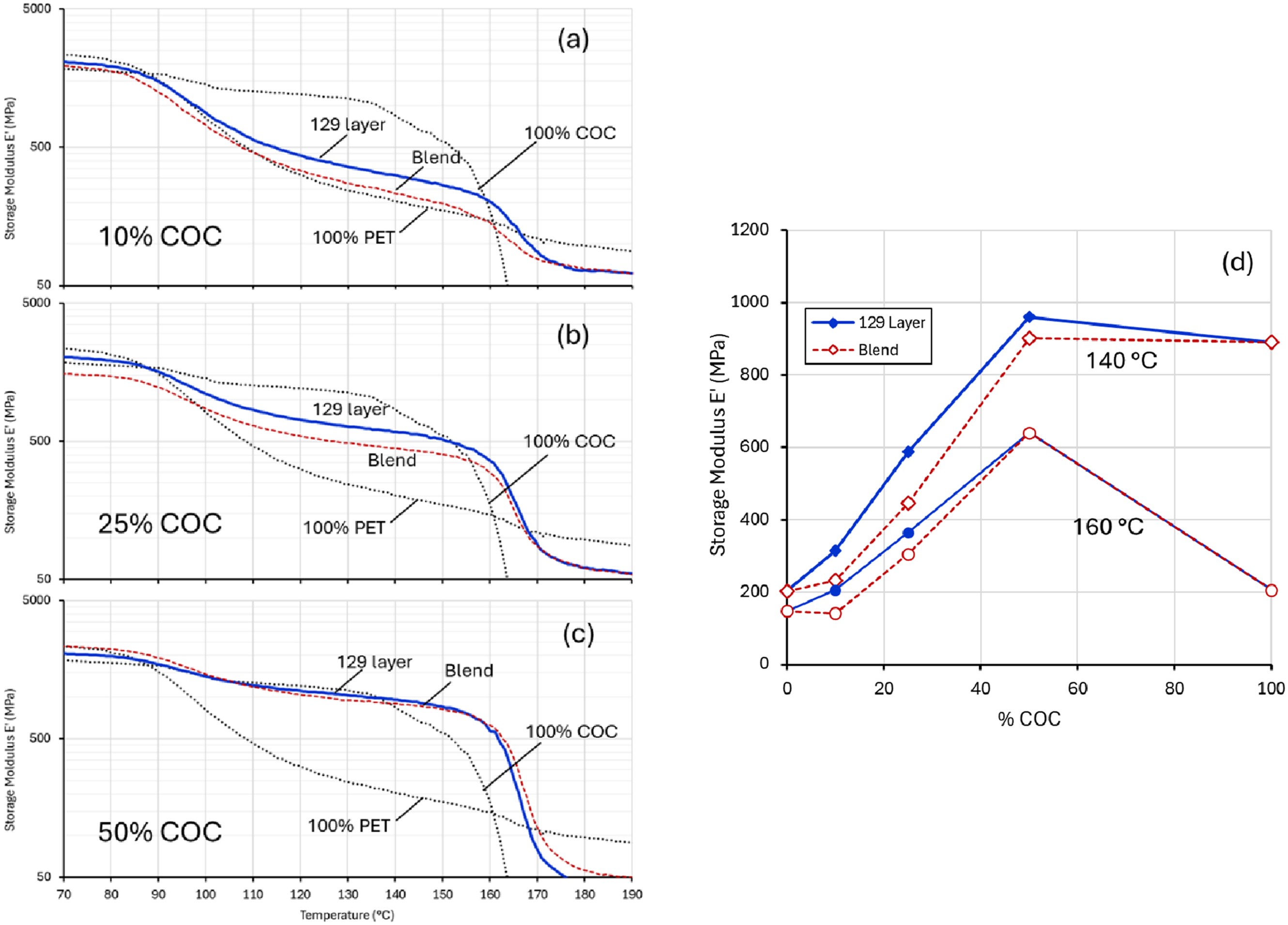
At 160°C, which is above both the PET and COC Tg, a notable result is that the storage modulus for 25% and 50% COC concentrations are superior to pure COC, whether the polymers are layered or blended. This indicates a synergy between the two polymers that improves the high-temperature mechanical properties beyond what is possible with either polymer in its pure form. Because this phenomenon is observed for both layered and blended films, it suggests that it is because the polymers interdiffuse
In addition, the layered structures show higher storage modulus compared to blends at 10% and 25% COC. Similar to the trends at 140°C, this indicates an advantage to layering compared to blending at these lower COC concentrations. One possible explanation for this is that the layered structure has a higher interfacial surface area between PET and COC compared to the blend, resulting in a higher fraction of interdiffused material. Another is that the layering process generates continuous COC layers, enhancing its stabilizing effect in the transverse direction. This hypothesis is further supported by the similarity of E′ versus temperature for the blended and layered 50% COC-PET combinations. In the 50% COC-PET blend, it is likely that a bicontinuous 2-phase mixture is formed, where the COC is continuous, more closely resembling the internal structure to that of a layered film.
Finally, Figure 5(a)–(c) shows that the E′ of all COC-PET films falls above 160°C, but the fall-off is less severe compared to the pure COC control.
Figure 6 shows analogous DMA curves for the COC-PPS system. At 10% and 25% COC, we observed similar trends as in the COC-PET system, where the E′ of layered films exceeds that of blended films. Again, this is most likely because the COC layers in the layered films are continuous, and the COC regions in the blends are discontinuous. DMA for COC-PPS films (a) and (b) and storage modulus versus COC volume % extracted from DMA (c).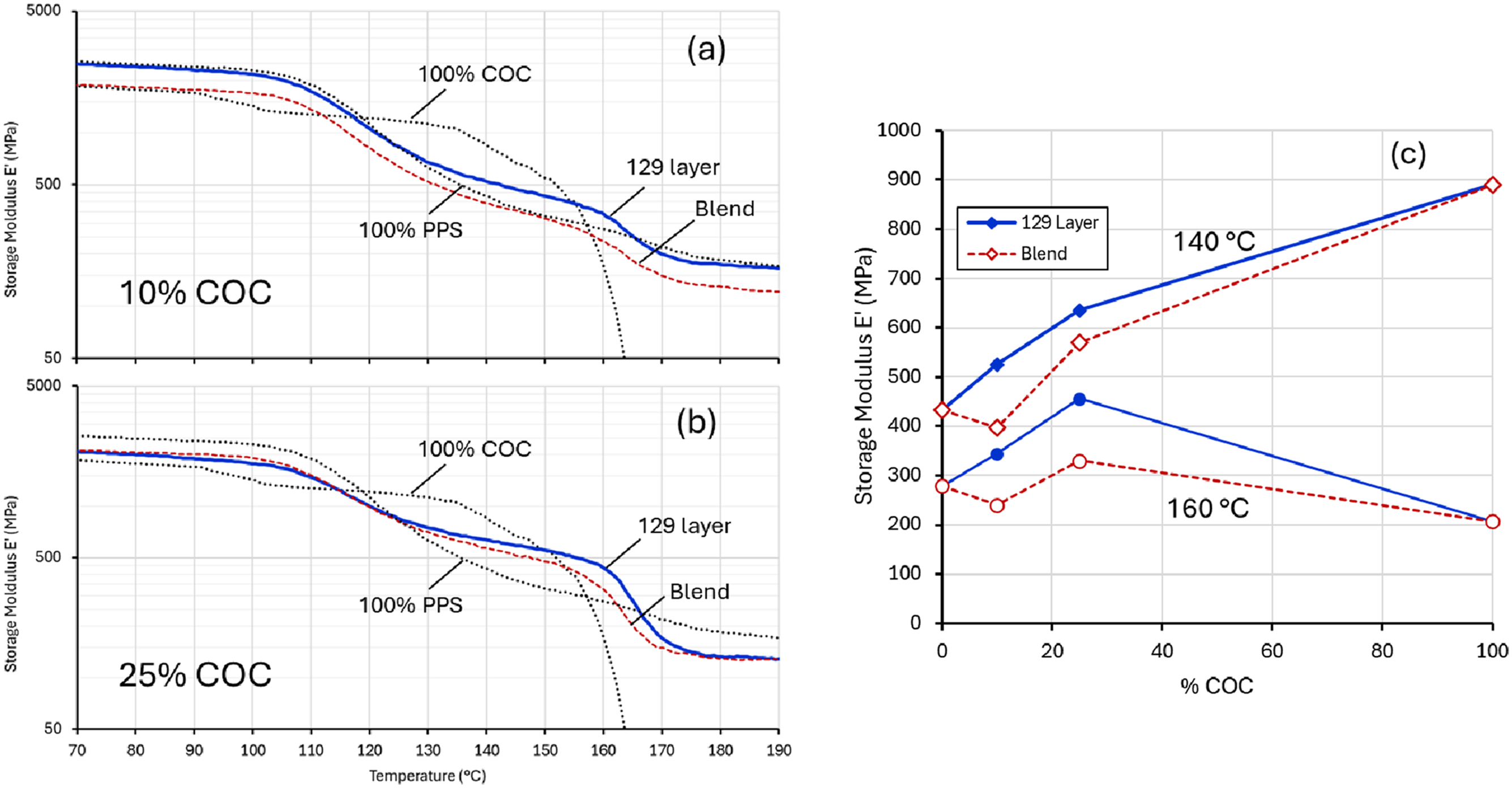
At 160°C, the E′ of layered films also exceeds the E′ of both pure COC and PPS, and that of blended films, by roughly 40%. In this case, interdiffusion forming a COC-PPS mixed interface is likely to play a role, as discussed above in reference to the DSC thermograms for the COC-PPS films.
Considering both the DSC and DMA data, these results are consistent with COC layering affecting both the PPS and PET crystallization
Overall, both the PET and PPS layered systems exhibited a reduction in crystallinity due to COC layers, while COC simultaneously increased the overall film storage modulus up to 160–165°C. This indicates that continuous COC layers beneficially extended the overall film high temperature mechanical properties, likely by combining thermal scaffolding and interdiffusion holding together the layered semicrystalline polymers domains. This result demonstrates a two-polymer system with improved high-temperature mechanical performance, beyond what is possible with traditional blending. This is an approach that can be applied to other polymer systems to extend applications of industrially relevant polymers, without the need for chemical modification, inorganic fillers, or lamination, and using an extrusion method that can be scaled to high volume manufacturing.
Conclusions
In this study, the semicrystalline polymers PET (78°C Tg) and PPS (90°C Tg) were combined with an amorphous polymer, COC (with a relatively high 158°C Tg), to form 25 μm COC-PET and COC-PPS films. The polymers were combined by either coextruding an alternating 129-layer structure using a series of multiplier dies, or by simply blending them together. The objective of the layered combination was to use the high Tg COC as a mechanical scaffold to extend the upper service temperature of the semicrystalline polymers. At 140°C, which was above the PET and PPS Tg but below the COC Tg, COC effectively increased the storage modulus in almost all cases. Moreover, the effect of COC was more pronounced in multi-layer films compared to blends. At 160°C, above the Tg of both the semicrystalline and amorphous polymers, layering increased the storage modulus to above that of both pure materials in COC-PET and COC-PPS films.
DSC indicated that COC strongly affects the PET crystallization, with the degree of as-cast crystallinity dropping from roughly 5% to negligible when COC is increased from 0 to 50%. The PPS crystallization is also affected by the COC, however the overall degree of crystallinity was maintained with only the cold crystallization peak temperature affected. Overall, multilayer coextrusion of PET and PPS films indicated that COC was an effective mechanical scaffold up to temperatures exceeding the glassy layer Tg. COC thermal enhancement of PET or PPS was significantly more effective in a layered structure compared to a blend, due to the COC layer morphological domain continuity. Furthermore, above the COC Tg, there is a synergistic effect which improves the COC-PET and COC-PPS stiffness beyond either of the pure materials. This effect appears to be due to a combination of scaffolding by COC, and the formation of an interdiffused mixture with enhanced thermal stability.
Footnotes

Funding
The authors disclosed receipt of the following financial support for the research, authorship, and/or publication of this article: This work was supported by Army Research Laboratory (HQ0034-24-2-0008).
Declaration of conflicting interests
The authors declared no potential conflicts of interest with respect to the research, authorship, and/or publication of this article.