







Abstract
Teacher retention remains a significant concern for U.S. schools. This is particularly true in rural areas, with recent research showing that rural schools have significantly lower teacher retention compared to other school locales. The purpose of this longitudinal study was to examine whether schools in Missouri that were recognized for implementing Positive Behavioral Interventions and Supports (PBIS) for more years had statistically significantly higher teacher retention rates. To answer our research questions, we analyzed extant data using multiple regression models with cluster robust standard errors from 1,261 public or charter K–12 schools in Missouri that were either trained on or implementing PBIS. Our key findings showed that years of PBIS school recognition were not statistically significantly associated with 3-year or 1-year teacher retention rates as main effects. However, we did find a statistically significant interaction effect between school locale and years of PBIS school recognition on 3-year teacher retention rates, indicating that school locale moderates the relationship between PBIS implementation and teacher retention. Implications for future research to expand upon these preliminary study findings are discussed.
Keywords
Introduction
Teacher retention in the United States remains a national crisis. According to the National Center for Educational Statistics (NCES), National Teacher Principal Survey (NTPS), in 2020 to 2021, 84% of public school teachers stayed in the profession and 16% either left their school or the profession completely (National Center for Education Statistics, 2024). Similarly, according to the RAND Corporation, findings from the American School District Panel found that although teacher turnover has decreased since the pandemic, turnover rates remain above prepandemic levels (Diliberti & Schwartz, 2025). Unsurprisingly, approximately 86% of school districts are struggling to fill open teaching positions, and 60% of schools are having difficulty finding substitute teachers (National Center for Education Statistics, 2023).
Unfortunately, teacher retention rates are disproportionately associated with a number of school-related variables, including school locale (e.g., schools in cities/urban areas), schools with more students from economically disadvantaged backgrounds (e.g., higher percentages of students receiving free or reduced-price lunch [FRL]), and schools with more minoritized students (Ingersoll & Tran, 2023; Papay et al., 2017; Redding & Nguyen, 2020; Simon & Johnson, 2015). The relationship between school locale and teacher retention, particularly in cities, is well documented (Papay et al., 2017; Simon & Johnson, 2015). For example, Simon and Johnson (2015) conducted a review of six studies examining the challenges of teacher turnover and retention in high-poverty schools within cities. Variables identified to be associated with teacher retention in cities included a lack of school culture, professional collaboration, parent engagement, and challenging student behavioral issues (Simon & Johnson, 2015). Moreover, using longitudinal data from 16 urban school districts, Papay and colleagues (2017) examined variations in teacher retention rates across 1-year, 3-year, and 5-year periods. The authors found that novice teachers (within their first year of teaching) had substantially lower 1-year, 3-year, and 5-year retention rates in all 16 urban school districts. In addition, among all teachers (novice and veteran), 58% left their school within their first 5 years of teaching.
Although there is a strong research base showing that teacher retention varies by school locale, less research has focused on teacher retention and turnover in rural schools compared to schools located in cities (Ingersoll & Tran, 2023). Recently, Ingersoll and Tran (2023) conducted a longitudinal extant data study with over 23,000 schools to better understand national patterns of teacher shortages in rural schools, the rate of teacher turnover, and perceived reasons for turnover among teachers in rural schools. The authors found that secondary rural schools experienced the largest percentages of teaching vacancies in the content fields of English, science, and special education. In addition, high-poverty schools in rural areas had more than twice the amount of teacher turnover compared to low-poverty schools in rural areas. Finally, job-related teacher dissatisfaction was rated as the biggest reason for teacher turnover. One of the highest reported reasons for job-related dissatisfaction was due to teachers having too many students with challenging behavior (Ingersoll & Tran, 2023).
Teacher Burnout and Student Behavior
In addition to school locale, another major contributor to high teacher turnover rates is burnout within the profession. According to Gallup Inc., K–12 educators reported the highest levels of burnout compared to all other professions, with 44% indicating that they felt burned out “always” or “very often” (Marken & Agrawal, 2022). Related, in a report by the Pew Research Center, 77% of public K–12 teachers said their job was frequently stressful, 68% said their job was overwhelming, 70% said their school was understaffed, and 52% said they would not advise others to become a teacher (Lin et al., 2024).
According to the National Education Association (NEA), one of the main contributors to teacher burnout and stress is managing students who engage in challenging behaviors (C. Long, 2025). For example, a study by the Pew Research Center reported that 80% of teachers needed to address students challenging behavior problems “at least a few times a week” and 58% reported that student challenging behavioral problems needed to be addressed daily (Lin et al., 2024). Special education teachers are at especially high risk of teacher burnout, given that they are likely to experience students with more challenging behaviors, have high teacher workloads, receive less autonomy (Olsen & Mason, 2023), and experience greater ambiguity and conflict with their assigned teaching roles (e.g., confusion on responsibilities for job-related roles; Brunsting et al., 2014). Further, special educators’ experiences may vary by school locale, with those in rural settings reporting professional isolation, feeling solely responsible for providing services and instruction to students with disabilities, and lacking consistent access to relevant professional development opportunities (Berry & Gravelle, 2013; Toman & Maag, 2024). There is a need to examine whether schools that implement systems-level approaches to address student challenging behavior can buffer the negative effects of teacher burnout and improve teacher retention rates. This would be especially important for schools with historically lower teacher retention rates (schools in rural areas and cities; Ingersoll & Tran, 2023; Papay et al., 2017).
One well-documented and well-studied systems-level approach to addressing student behavior is Positive Behavioral Interventions and Supports (PBIS) (Sugai & Horner, 2006). The PBIS is a type of multitiered system of support (MTSS) designed to prevent challenging behavior before it occurs and to provide a series of responses along a continuum of supports for when it does occur. The PBIS includes installing systems to support implementing evidence-based practices to teach and reinforce positive student and staff behaviors, collecting and reviewing data to monitor implementation and outcomes, and installing systems to facilitate implementation. More specifically, PBIS systems ensure that: (a) school staff have adequate resources and training to implement practices, (b) implementation fidelity and outcome data are collected and reviewed regularly, and (c) progress updates are disseminated to all relevant and affected parties (Sugai & Horner, 2006).
Moreover, PBIS implementation occurs across a three-tiered continuum of supports, with each successive tier serving students who demonstrate increased social, emotional, or behavioral needs. At Tier 1, all students are taught universally applicable behavior expectations that are systematically reinforced across all settings. At Tier 2, approximately 10% to 15% of the student population may require increased supports to address a need not met at Tier 1. These supports are typically delivered in small-group settings, where students receive increased adult attention and feedback, differentiated instruction on behavioral expectations, and more frequent data monitoring. Students who demonstrate persistent and severe behavioral challenges and are at risk for school failure are referred to Tier 3, which includes intensive, individualized, and function-based interventions. Students may advance to higher tiers as their outcome data demonstrate unmet or increasing needs, or they may return to a lower tier as they demonstrate social, emotional, or behavioral improvements. Throughout all tiers of implementation, staff are provided ongoing professional development and coaching to ensure high implementation fidelity.
Research on PBIS has demonstrated improvements across a variety of domains associated with teacher burnout, including reductions in school disciplinary instances (Lee & Gage, 2020) and improvements in school climate, organizational health, teacher stress, and teaching conditions (Bradshaw et al., 2009; Charlton et al., 2021; Houchens et al., 2017; Ross et al., 2011). Lee and Gage (2020) conducted a meta-analysis of PBIS Tier 1 implementation, and across their sample of 32 peer-reviewed studies, the authors found that Tier 1 supports reduced student problem behavior as demonstrated through statistically significant reductions in office discipline referrals, suspensions, expulsions, and interactions with law enforcement. Reductions in problem behavior, alongside improved school-wide systems, have the potential to improve working conditions and job satisfaction for teachers (Richter et al., 2011). In a randomized controlled effectiveness trial on Tier 1 PBIS, Bradshaw and colleagues (2009) found that schools trained in PBIS yielded statistically significant improvements in school climate and organizational health (e.g., friendly and collegial relationships among staff, supportive leadership, and consistent discipline). The authors further reported that organizational health improved to the highest level at 3 years posttraining and that schools with the lowest starting levels of organizational health demonstrated the greatest improvements. In a related study, Ross and colleagues (2011) examined the impact of Tier 1 PBIS implementation across 40 elementary schools on teacher burnout and teacher self-efficacy. Findings indicated that PBIS implementation was significantly associated with reduced teacher burnout and increased teacher self-efficacy, and that results were even stronger for teachers in schools with large populations of students from low socioeconomic backgrounds. Although these research studies indicate improvements in factors associated with teacher retention, there is a lack of research examining the direct association between PBIS implementation and teacher retention.
Purpose of the Study and Research Questions
To our knowledge, there has been no research examining the association between PBIS implementation and teacher retention rates in U.S. schools. Therefore, the purpose of this exploratory study was to examine whether years of PBIS school recognition improved teacher retention rates. Given the organizational systems within PBIS designed to support teachers (e.g., professional development, screening and identification of students needing Tier 2 and Tier 3 support, and implementation of Tier 1 classroom systems), our first hypothesis was that increased years of PBIS school recognition would show improved rates of teacher retention compared to nonimplementers. We also hypothesized that the relationship between years of PBIS school recognition and teacher retention rates would be moderated by school locale (e.g., schools in cities, suburbs, towns, and rural areas), given the varying levels of resources (e.g., professional development, teacher salaries, and behavioral support provided by district coaches; Ingersoll & Tran, 2023). To evaluate these hypotheses, we sought to answer the following research questions:
a. What is the relationship between years of PBIS school recognition and 1-year teacher retention rates in rural Missouri schools?
a. What is the relationship between years of PBIS school recognition and 3-year teacher retention rates in rural Missouri schools?
Method
Settings and Participants
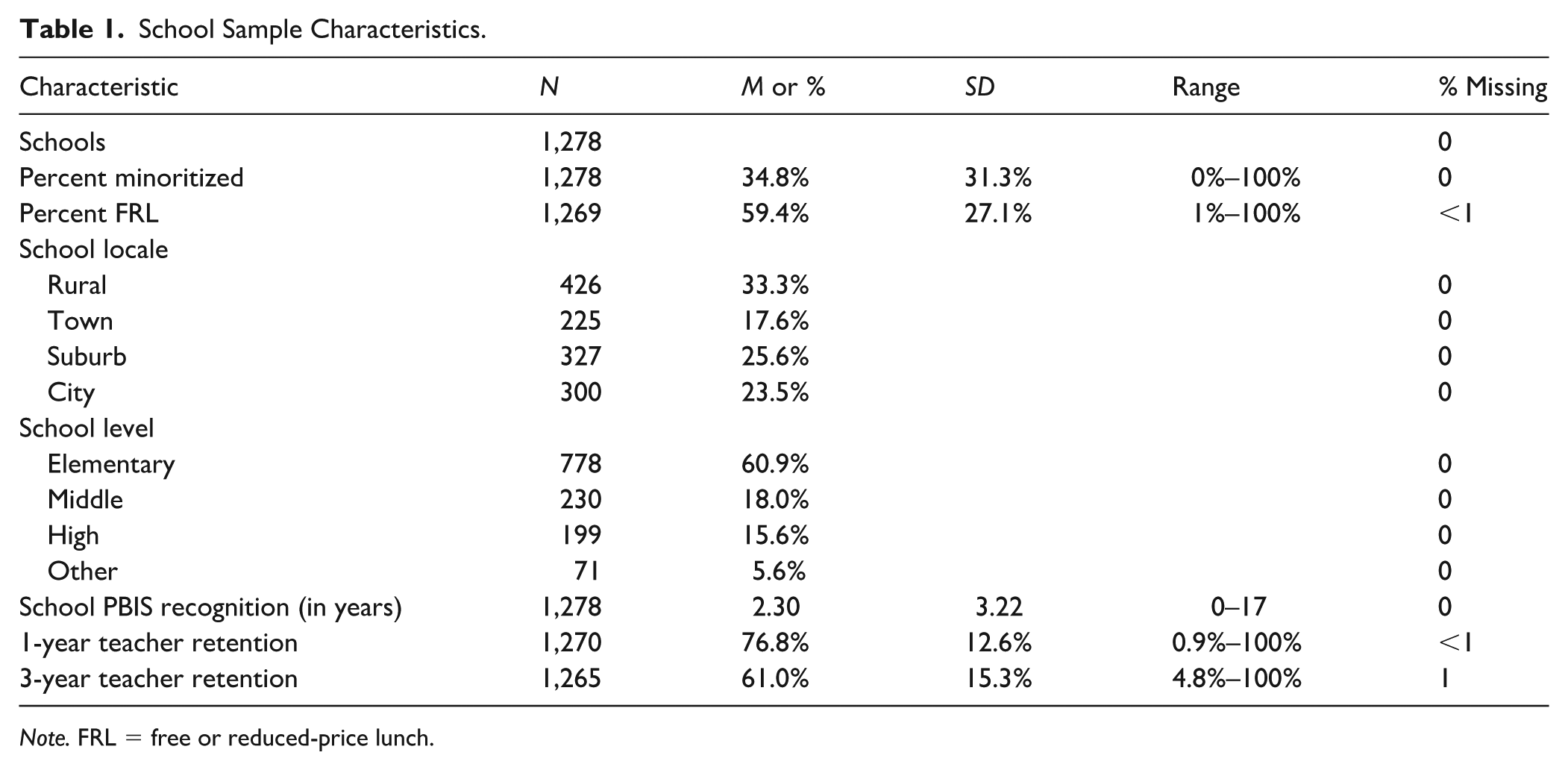
The sample included 1,278 schools in Missouri. All schools were either trained to implement PBIS or received school recognition for their PBIS implementation efforts by the Missouri Schoolwide Positive Behavior Support (MO SW-PBS) leadership team between the 2006 and 2007 and 2023 and 2024 school years. Schools were either identified as public (n = 1,253) or charter schools (n = 25). According to the NCES, the majority of schools were elementary (60.9%), followed by middle (18%), high (15.6%), and other (e.g., prekindergarten and early learning center [5.6%]). In addition, the largest percentage of schools were from rural areas (33.3%), followed by schools in suburbs (25.6%), cities (23.5%), and towns (17.6%). Definitions of these locale variables can be found here on NCES (https://nces.ed.gov/programs/edge/Geographic/LocaleBoundaries). The average student-to-teacher ratio in the schools was 12.6. Table 1 includes additional school demographic characteristics, in addition to the percent of missing data per variable. After accounting for missing data, our final analytic sample was 1,261 schools.
School Sample Characteristics.
Note. FRL = free or reduced-price lunch.
Measures
Teacher Retention
The two outcome variables included 1-year and 3-year teacher retention rates for public or charter schools in the state of Missouri. Retention rates were calculated by the Missouri Department of Elementary and Secondary Education and included the rate at which teachers continue teaching in the classroom 1 year (1-year teacher retention) or 3 years (3-year teacher retention) after their first year of teaching. Table 1 shows the average teacher retention rates across the study sample, and Figure 1 shows the average teacher retention rates by school locale.
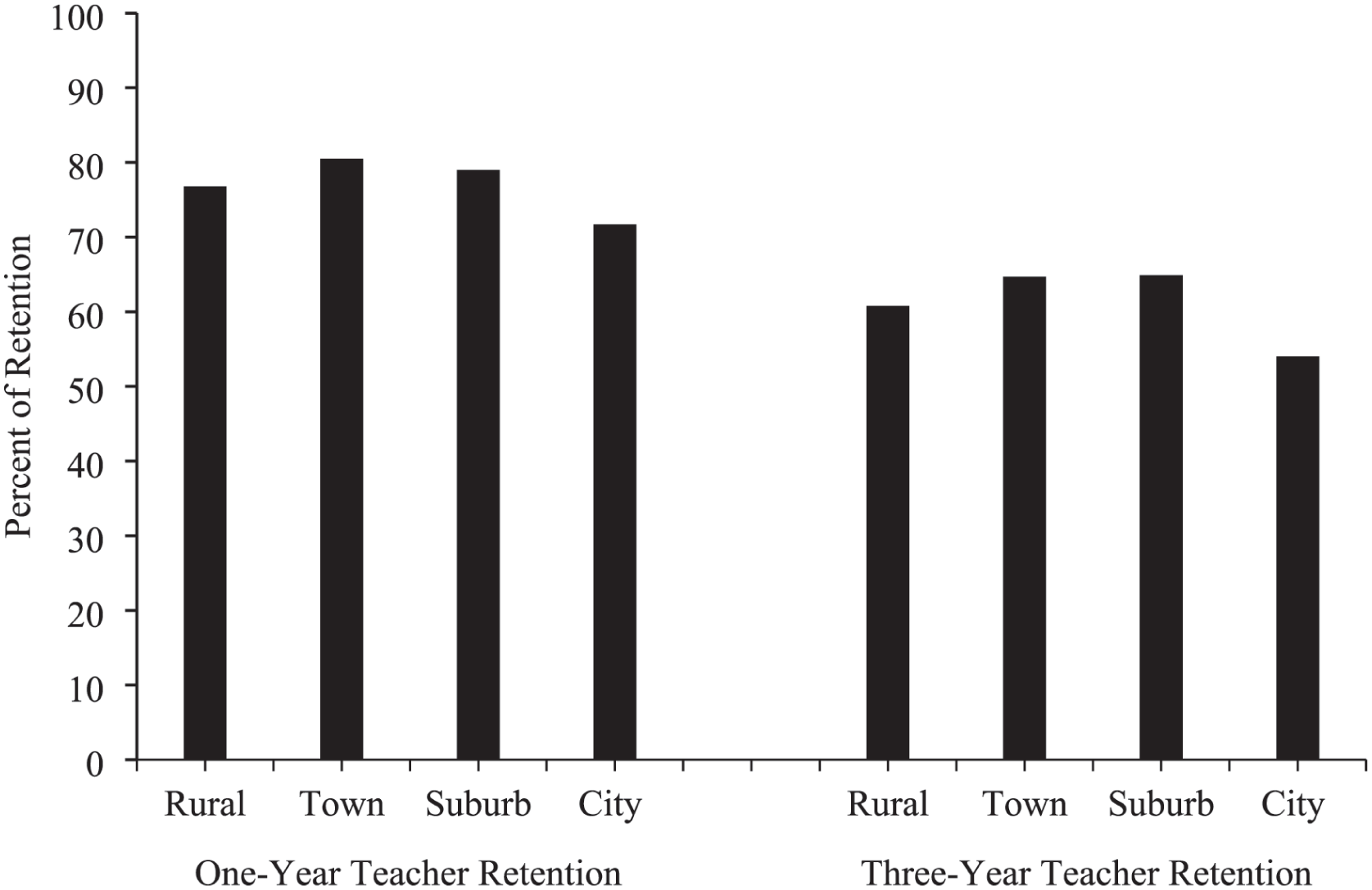
1-Year and 3-Year Teacher Retention Rates by School Locale.
School-Level Predictors
School PBIS Recognition
School PBIS recognition included the number of years that schools received recognition (minimum at Tier 1) for their PBIS implementation efforts by the MO SW-PBS state-wide technical assistance organization. Schools were eligible to receive recognition for their Tier 1 (Tier 1 Award of Excellence), Tier 2 (Tier 2 Award of Excellence), or Tier 3 (Tier 3 Award of Excellence) implementation efforts. The criteria for schools to receive recognition included school leadership teams choosing to submit data on (a) systems, (b) interventions, (c) data-based decision-making, and (d) student outcomes. For example, to receive Tier 1 recognition, school leadership teams needed to document (a) implementation of their Tier 1 systems (meeting a Tier 1 implementation fidelity threshold criterion using a validated PBIS implementation measure [e.g., ≥ 70% Tier 1 scale of the Tiered Fidelity Inventory; Algozzine et al., 2014]), (b) implementation of Tier 1 interventions (e.g., ≥ 90% of school personnel can identify school-wide behavioral expectations), (c) Tier 1 school leadership teams using data for decision-making (e.g., evidence of a school implementation or improvement plan), and (d) evidence of improved student outcomes (e.g., decreased number of students with 0–1 office discipline referrals).
To receive Tier 2 recognition, schools needed to meet all the Tier 1 recognition criteria and document their implementation of Tier 2 systems, interventions, data-based decision-making, and student outcomes. Similarly, to receive Tier 3 recognition, school leadership teams needed to meet all Tier 1 and Tier 2 recognition criteria and document implementation of Tier 3 systems, interventions, data-based decision-making, and student outcomes. A detailed description of the recognition criteria used by MO SW-PBS for each tier is found here (https://pbismissouri.org/recognition-application/). Table 1 shows the average years of PBIS recognition for the study sample. If schools were trained by the MO SW-PBS state leadership team but did not apply for or receive Tier 1, 2, or 3 PBIS recognition, these schools were coded as “0.” Note that years of recognition were not required to be consecutive, and some schools may have received recognition intermittently.
School-Level Demographic Variables
School-level demographic variables included the percent of minoritized students within schools (non-White students), the percent of students within schools receiving FRL, school type (elementary, middle, high, or other), and school locale (schools in cities, suburbs, towns, and rural areas, as defined by NCES). According to NCES, a “rural territory” is defined as being less than or equal to 5 miles from an “urbanized area” (“Fringe”) or more than 25 miles from an “urbanized area (“Remote”; https://nces.ed.gov/surveys/annualreports/topical-studies/locale/definitions). Elementary schools and rural schools were included in the regression models as reference groups.
Procedure
Data were obtained from multiple sources. Specifically, we obtained PBIS school recognition data from MO SW-PBS. In partnership with the National Technical Assistance Center on PBIS, MO SW-PBS supports districts and schools in implementing PBIS across the state and is one of the oldest state-wide PBIS technical assistance organizations (Gage et al., 2024). The MO SW-PBS school recognition data were obtained from the first school year that state-wide recognition criteria were implemented (2006–2007) to the most recently available school year (2023–2024). Missouri teacher retention data (1-year and 3-year retention rates) were obtained for the Missouri Department of Elementary and Secondary Education for the most recent available school year (2023–2024). Last, we obtained school demographic data (e.g., percent of students on FRL, school type, and school locale) from the NCES for the 2023 to 2024 school year.
Data Analysis
Data for this study were analyzed using four multiple regression models with standard errors adjusted for clustering (McNeish et al., 2017), built in stages to evaluate changes across variables. All continuous variables were standardized (M = 0, SD = 1) for ease of interpretation and so they could be interpreted as standardized regression coefficients. This also allowed binary variables to be interpreted as effect size measures. Cohen’s (1992) effect size interpretation guidelines were used, where 0.20 = small effect size, 0.50 = moderate effect size, and 0.80 = large effect size.
Model 1 included all variables on the 1-year teacher retention rate. Model 2 included all variables with the moderation effect of interest (years of PBIS implementation: school locale) on the 1-year teacher retention rate (Research Questions 1 and 3). Model 3 included all variables on the 3-year teacher retention rate, and Model 4 included all variables on the 3-year teacher retention rate, including the moderation effect of interest (Research Questions 2 and 3). All data analyses were conducted in R (R Core Team, 2025) using packages such as “dplyr” (Wickham et al., 2023) for data management, “clubSandwich” (Pustejovsky, 2025) for estimating cluster-robust standard errors, and “interactions” (J. A. Long, 2024) and “sjPlot” (Lüdecke, 2024) for the moderation effects.
Results
Effects of PBIS on 1-Year Teacher Retention
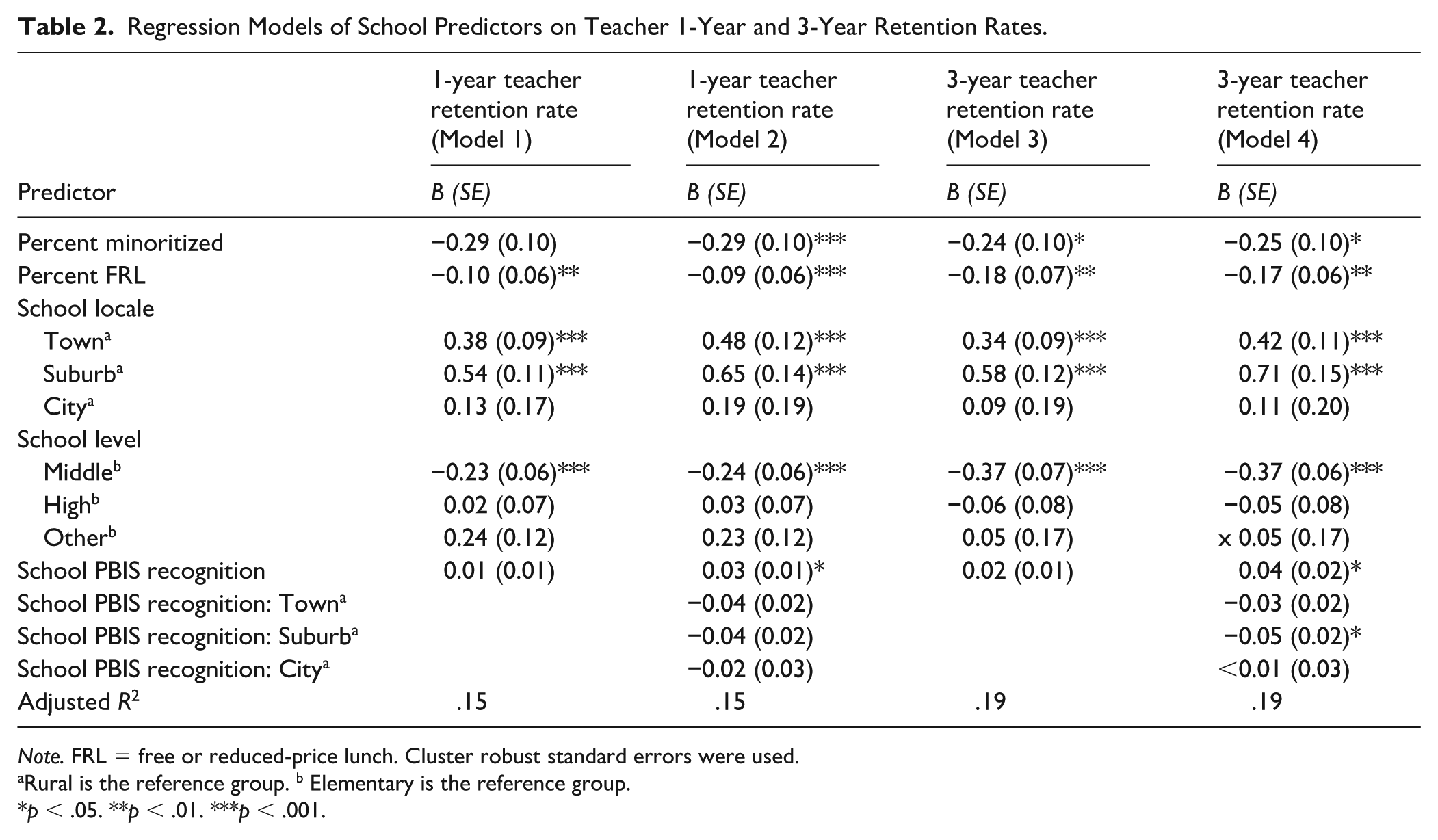
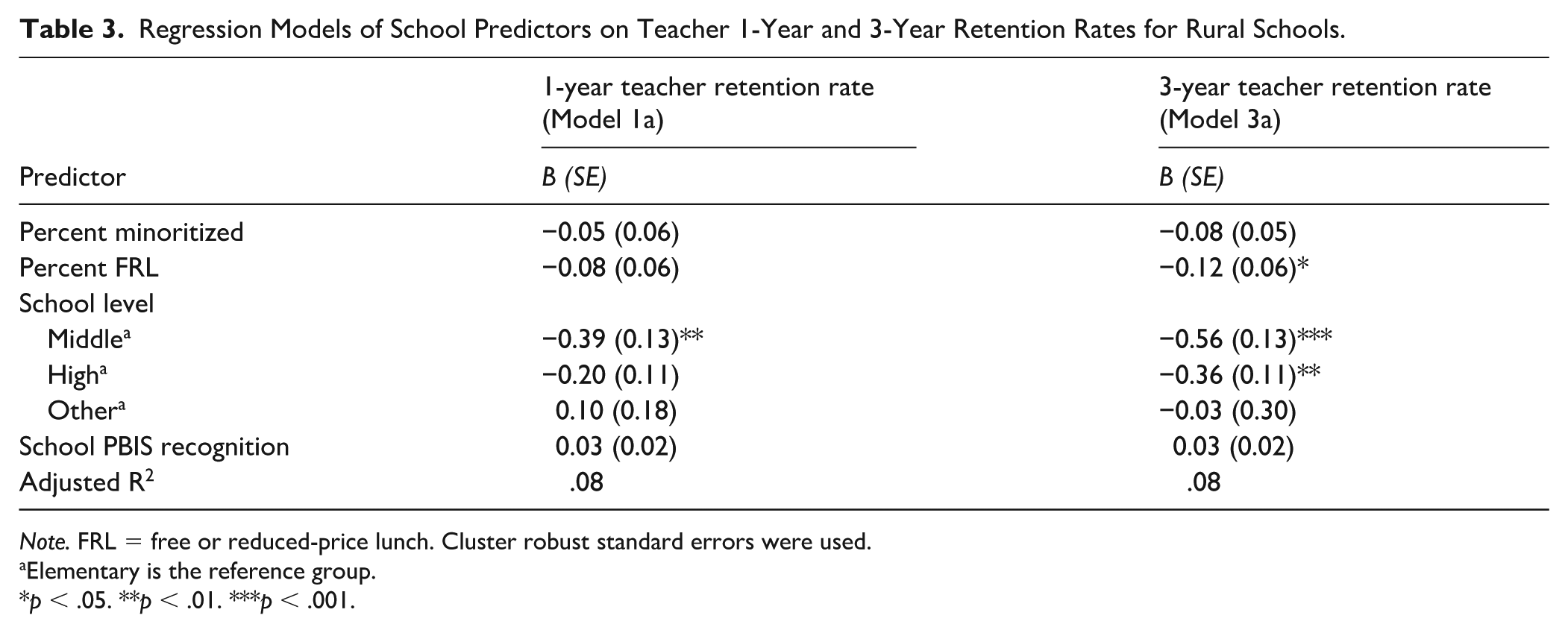
Results from the regression analysis investigating the relationship between years of PBIS school recognition and the 1-year teacher retention rates indicated that PBIS was not a statistically significant predictor (p > .05; see Model 1 in Table 2). However, towns (B = 0.38, p < .001) and suburbs (B = −0.54, p < .001), compared to rural locales, reported statistically significantly higher 1-year teacher retention rates. Further, although not one of the primary variables related to our research questions, the percent of FRL (B = −0.10, p < .01) predicted statistically significantly lower 1-year teacher retention rates. In addition, middle schools (B = −0.23, p < .001) reported statistically significantly lower 1-year teacher retention rates compared to elementary schools. As seen in Table 3, Model 1a, which only included rural schools, middle schools compared to elementary schools had statistically significantly lower 1-year retention rates (B = −0.39, p < .01).
Regression Models of School Predictors on Teacher 1-Year and 3-Year Retention Rates.
Note. FRL = free or reduced-price lunch. Cluster robust standard errors were used.
Rural is the reference group. b Elementary is the reference group.
p < .05. **p < .01. ***p < .001.
Regression Models of School Predictors on Teacher 1-Year and 3-Year Retention Rates for Rural Schools.
Note. FRL = free or reduced-price lunch. Cluster robust standard errors were used.
Elementary is the reference group.
p < .05. **p < .01. ***p < .001.
The Effects of PBIS on 3-Year Teacher Retention
As seen in Model 3 (Table 2), years of PBIS school recognition was not a statistically significant predictor of 3-year teacher retention rates (B = 0.02, p > .05). However, towns (B = 0.34, p < .001) and suburbs (B = 0.58, p < .001) continued to report statistically significantly higher 3-year retention rates compared to rural locales, and percent minoritized was also statistically significant (B = −0.24, p < .05). In addition, all variables from Model 1, where the outcome variable was 1-year retention rate, remained statistically significant when the outcome was the 3-year retention rate, p < .001 (see Table 2). When including only rural schools (see Table 3), percent free or reduced-priced lunch negatively predicted the 3-year retention rate (B = −0.12, p < .05). In addition, middle (B = −0.56, p < .001) and high schools (B = −0.36, p < .01) compared to elementary schools had statistically significantly lower 3-year teacher retention.
PBIS and School Locale on Teacher Retention
Although the main effect of school PBIS recognition was not statistically significant in Model 3 (see Table 2), when investigating the moderation effect between PBIS and school locale on the teacher retention rate, there was a statistically significant interaction only when 3-year retention was the outcome (see Models 2 and 4 in Table 2 and Figure 2). To probe the statistically significant moderation effect, we conducted a simple slopes analysis as recommended by Hayes and Montoya (2017).
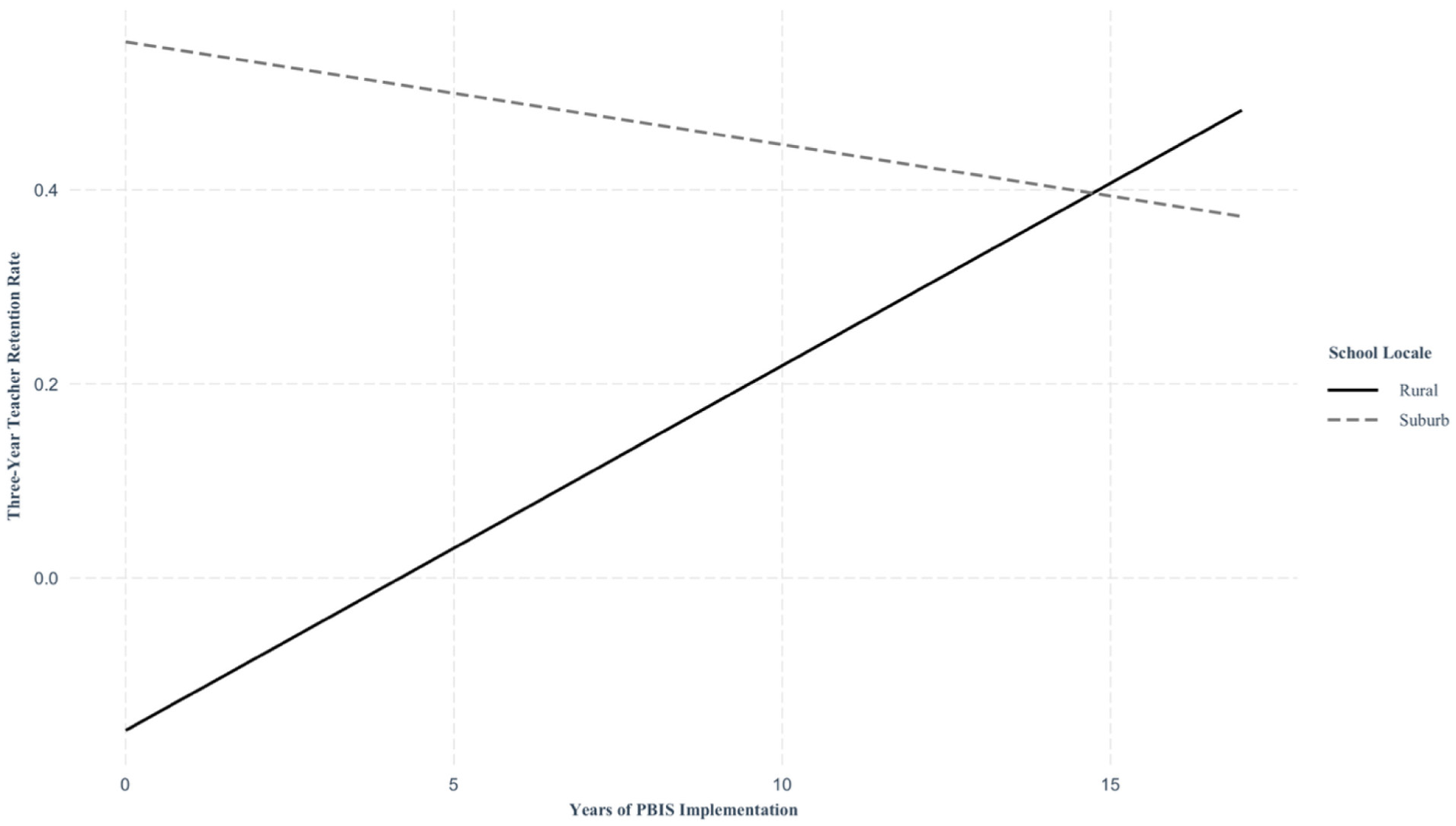
The Interaction Between School Locale and Years of PBIS Implementation on 3-Year Teacher Retention Rates.
Results from a simple slopes analysis demonstrated that PBIS was positively associated with the 3-year teacher retention rate in rural schools (B = 0.04, p = .01, 95% CI = [−0.09, −0.002]), but not in town, city, or suburban locales (see Figure 2). Pairwise comparisons of the slopes across the locales were not statistically significant (p > .01), although rural schools did show a descriptively stronger effect compared to schools located in the suburbs.
Discussion
Teacher shortages are a significant national concern in U.S. schools. Moreover, patterns of teacher shortages and turnover vary significantly across school locales, with substantial teacher shortages and turnover documented in rural schools (Ingersoll & Tran, 2023). A unique contribution of this study is that it is the first to examine whether years of PBIS school recognition serve as a protective factor against teacher turnover. Specifically, we examined whether the total number of years Missouri schools were recognized for implementing PBIS was associated with higher 1-year and 3-year teacher retention rates (for all schools and only the subsample of rural schools) after their first year of teaching in a public or charter school. Findings from this large exploratory study demonstrated that years of PBIS school recognition were not statistically significantly associated with higher 1-year or 3-year teacher retention rates (Table 2). Therefore, our first hypothesis that years of PBIS school recognition would be associated with higher rates of teacher retention was not supported, and our subquestion for the first hypothesis using only rural schools was also not supported.
For our second hypothesis, we examined whether school locale would moderate the relationship between years of PBIS school recognition and teacher retention rates. However, in partial support for this hypothesis, when including all schools, we found that school locale, specifically rural schools compared to suburban schools, moderated the association between years of PBIS school recognition on 3-year teacher retention rates (see Figure 2). Alternatively, we did not find that school locale moderated the relationship between years of PBIS school recognition and 1-year teacher retention rates; nor did we find differences between rural and city locales on either 1- or 3-year teacher retention rates.
The results of this study both replicate and extend previous literature on teacher turnover and teacher burnout. First, in alignment with previous literature, we found that rural schools, compared to schools located in towns and suburbs, schools with more economically disadvantaged students (a greater percentage of students on FRL), and schools with more minoritized students had statistically significantly lower teacher retention rates (Ingersoll & Tran, 2023; Redding & Nguyen, 2020; Simon & Johnson, 2015). Yet, despite this broader evidence base, research specifically examining retention in rural schools remains limited (Ingersoll & Tran, 2023). Using national teacher turnover data, Ingersoll and Tran (2023) found that both schools in rural areas and cities had higher teacher turnover compared to schools located in the suburbs. However, high-poverty rural schools (≥ 80% students on FRL) were found to have statistically significantly higher rates of teacher turnover compared to high-poverty schools in cities. The authors also found that two of the leading reasons for teacher dissatisfaction and turnover in both rural and urban areas, like cities, were dissatisfaction with school administration and having a high number of students with challenging behaviors (Ingersoll and Tran, 2023). Therefore, the findings from our study replicate and extend the limited research demonstrating that variables such as school locale, rates of FRL, and rates of minoritized students are associated with teacher turnover.
Next, there is a large body of research demonstrating that PBIS implementation improves student behavior (e.g., disruptive, off-task, attendance, and academic engagement) and teacher outcomes (e.g., teachers’ use of classroom management interventions; see Santiago-Rosario et al., 2023). Given these documented outcomes, it is reasonable to hypothesize that years of PBIS school recognition would serve as a protective factor against teacher turnover and improve teacher retention. Although previous research has examined the relationship between PBIS implementation and variables related to teacher turnover (e.g., teacher well-being, stress, and school climate; Bradshaw et al., 2009; Ross et al., 2011; Santiago-Rosario et al., 2023), this study was the first to directly examine the association between PBIS and teacher retention. In addition, this study was also the first to examine whether years of PBIS school recognition moderated the relationship between school locale and teacher retention, with findings indicating a statistically significant interaction only between rural and suburban schools.
Study Limitations and Implications for Future Research
Although the findings from this large exploratory study are novel, there are several limitations that should be noted. First, the main findings examining the relationship between years of PBIS school recognition and teacher retention were still small. This is especially true when comparing the effects of the other school predictors (school locale, percent of minoritized students, and percent of students on FRL). Future research could examine whether there are other predictors of PBIS implementation that might be more significantly predictive of teacher retention. For example, we did not have access to district-level variables that support PBIS implementation (e.g., leadership teaming, training and coaching, funding, and alignment of initiatives; Kittelman et al., 2022) within our extant state-level analyses. Given that previous research has shown that district-level variables are statistically significantly associated with school PBIS implementation variables (Kittelman et al., 2022; McIntosh et al., 2018), it is likely that district-level variables could also predict teacher retention rates. Moreover, because of limited school resources, especially for schools in rural areas, it is likely that behavioral supports provided to schools to address challenging student behaviors (Tier 2 and Tier 3 supports) would come from the district. Future research could include a large-scale study to examine the relationship between district-level predictors and teacher retention rates using district-level and research-validated implementation measures (e.g., Kittelman et al., 2022).
Another limitation of the current study is that we could not examine the relationship between years of PBIS school recognition and different teacher demographics. For example, we could not compare teacher retention rates for general and special educators by grade level or by different teacher demographic characteristics (e.g., race/ethnicity and gender). It is likely that years of PBIS school recognition could shape teacher retention differently (e.g., increased retention rates for special education teachers), given the varying roles teachers have in supporting student behavior and the degree to which challenging behaviors contribute to teacher dissatisfaction (Ingersoll & Tran, 2023). It would be worthwhile for future research to examine the differential relationship between years of PBIS school recognition and teacher demographic variables using data from national teacher retention surveys (e.g., NTPS; Ingersoll & Tran, 2023) or by using state-level government extant datasets.
Another limitation of this study is that we only examined the effects of PBIS implementation within one U.S. state. There are likely state-level variables (e.g., salary, district and school resources, professional development, and variations in how state-level PBIS leadership teams provide support to schools) that could moderate the relationship between years of PBIS school recognition and teacher retention rates. Exploring these variables could be an important direction for future research.
In addition, we acknowledge that PBIS school recognition was measured as the cumulative number of years schools were recognized for their PBIS implementation, meaning that some schools may have been recognized in nonconsecutive years and/or intermittently. Therefore, it is possible that PBIS recognition that occurred in earlier years may be less strongly associated with current teacher retention practices.
Implications for Practice
Given the study findings, there are important implications for general and special education teachers working in rural K–12 schools. As the number of years of PBIS school recognition was positively associated with increased teacher retention after their first three years of teaching, when moderated by school locale, new teachers entering the workforce and planning to teach in rural schools may want to consider whether the systems (e.g., teaming structures, student referral systems, and professional development) and interventions associated with PBIS implementation would benefit them and improve their job satisfaction (Bradshaw et al., 2009). For example, as previously noted, one key reason for teacher job dissatisfaction in both schools in rural areas and cities was related to challenging student behaviors (Ingersoll & Tran, 2023). When schools implement PBIS, they implement systems that include screening and identifying students who need additional behavioral support, in addition to providing professional development (training and coaching) to teachers on how to support students with challenging behaviors. Also, when schools implement PBIS, they implement a framework with three tiers that are designed to be matched to students’ needs (preventative, moderate, or intensive; Nese et al., 2023). Because of this, new teachers working in rural schools may feel that they have more systems and interventions to support them while teaching (Ross et al., 2011), especially in underresourced school districts where there may be limited levels of behavioral support (e.g., school districts in rural areas). For example, rural districts and schools are likely to have fewer counselors and behavior specialists to address students’ challenging behaviors. However, rural districts and schools implementing PBIS can compensate for these limitations by creating behavioral support teams, comprised of individuals with varying levels of behavior skills and expertise, that have clearly defined team roles and meet regularly to support students. These behavioral support teams can assist rural teachers by helping them understand the process for referring students, providing support quickly to students based on their level of need and providing regular feedback to teachers on student progress. By having these PBIS support structures in place in rural schools, teachers will spend less time attempting to address student challenging behaviors without the behavioral expertise and skills needed to do it effectively.
Finally, although we did not examine special education teacher retention rates in rural or nonrural schools specifically, the benefits of PBIS implementation noted above may be particularly helpful to combat the concerns of special education teachers working in schools in rural schools (i.e., professional isolation and access to professional development; Berry & Gravelle, 2013; Toman & Maag, 2024). For example, without interventions and professional development provided to general education teachers, these teachers may feel unprepared to meet their students’ needs and may overly rely on referring them for special education services (Skiba et al., 2008). High rates of referrals to special education would likely increase the workload and stress of rural special education teachers and ultimately increase the chances of them leaving the profession or relocating to a new district or school. Alternatively, when rural general education teachers are implementing Tier 1 interventions (e.g., opportunities to respond and reinforcing school-wide expectations) consistently, it can prevent the number of students who may need more intensive Tier 2 and 3 interventions later. This, in turn, can help to reduce the overall workload and stress of special educators in supporting higher numbers of students being referred for special education and/or needing Tiers 2 and 3 interventions.
Conclusion
The focus of this exploratory study was to examine whether years of PBIS school recognition were associated with higher teacher retention rates in Missouri K–12 schools. This area of research is critical, given the national patterns of teacher shortages occurring across the United States. Using a sample of over 1,261 schools, our findings suggest that PBIS implementation can potentially offset disadvantages associated with school locale in relation to teacher 3-year retention rates. Future research is needed to replicate and extend these findings using a national sample of schools and additional teacher demographics.
Footnotes

Funding
The research reported here was supported by the Spencer Foundation (#202600016) and the Office of Special Education Programs, U.S. Department of Education (H326S180001). The opinions expressed are those of the authors and do not represent the views of the Spencer Foundation or the Office of Special Education Programs, U.S. Department of Education.
Declaration of Conflicting Interests
The authors declared no potential conflicts of interest with respect to the research, authorship, and/or publication of this article.