






Abstract
To raise awareness of the value of behavioral competencies of project managers, we carried out a quantitative survey to identify the importance and influence of competencies on efficient project performance. We were also interested to learn whether or not managers are aware of the importance of competencies and which competence they consider to be the most crucial of all. Data were collected via a web-based questionnaire in which respondents evaluated levels of behavioral competencies, reported on the performance of projects in their enterprises, and provided opinions on the competencies’ importance. Regression analysis identified the most influential competencies and verified the overall impact of behavioral competencies on project performance. As shown by the research, the most important competence was project manager assertiveness.
The manager is the biggest driving force behind a project—he or she will approach the project in his or her own way and the project team’s work will depend greatly on his or her leadership style. Verzuh (2005) believes a project manager adds magic to a project much like the conductor of a symphonic orchestra who brings out the magic in music; he or she unites various groups or parts of projects in harmony. In so doing, he or she relies on characteristics intrinsic or learned skills, which can be technical or professional in nature, stem from personality, or are connected to the environment.
Westland (2003) emphasizes three important factors in successful project management: the manager’s competencies (specialized knowledge, skills, and experience); management tools (documents, templates, knowledge bases, and information tools); and a series of different management techniques, which help manage the time, costs, quality, and scope of work on a project.
Over the past few decades, the cooperation between coworkers has changed due to information technology (IT; email and the internet); modern managers feel a greater need to form relationships and manage time and less for administrative and organizational skills. However, communicating and decision-making skills remain important (Gentry, Harris, Baker, & Leslie, 2008). Many authors warn of a shift from technical competencies toward soft, behavioral ones (Cheng, Dainty, & Moore, 2005). In IPMA Competence Baseline Version 2.0 (ICB 2.0; International Project Management Association [IPMA], 1999), the authors emphasized five behavioral competencies (teamwork, leadership, communication, solving of conflicts, and crisis management), whereas in the third version, as many as 15 were emphasized, giving the sense that professional circles are becoming ever more aware of the importance of behavioral competencies for project performance (IPMA, 2006).
Gemünden (2014) also states that the human side of project management has become much more important over the past 15 years and will further increase in relevance not only in practice but also in project management research. The author’s own research shows that works on planning and controlling issues have been published much less often than 10 years ago, yet articles on issues regarding the human side of project management have seen a great increase in publication frequency. Further, various questionnaires for managers’ self-evaluation have emerged, such as the self-evaluation of task delegation and leadership (Martin & Tate, 2001) or The 108 Skills of Natural Born Leaders (Blank, 2001).
Many researchers have studied and explained the importance and impact of project managers’ behavioral/personal competencies on project performance in different ways: The majority have been qualitative, based on practitioner (project stakeholders’) opinions—Brill, Bishop, and Walker (2006), Rose, Pedersen, Hosbond, and Krammergaard (2007), Skulmoski and Hartman (2009), Anantatmula (2010), Fisher (2011), and Ortiz-Marcos, Cobo Benita, Mataix Aldenueva, and Uruburu Colsa (2013); some conducted qualitative research with executives, senior, and line managers—Crawford (2005), Starkweather and Stevenson (2010), and, indirectly, also Ahsan, Ho, and Khan (2013); and a few employed a quantitative approach, measuring the real impact of competencies on project performance through regression analysis—Müller and Turner (2007, 2010) and Geoghegan and Dulewicz (2008).
Like other similar research studies, we also wanted to help project managers become more successful in project management; senior managers in their selection of the best managers for important projects, personal departments and project offices to know which competencies to develop, and enterprises to increase their projects’ performances. Our research differs, however, in three ways. First, in one study we analyzed the actual impact of competencies on project performance and also asked managers to assess the competencies’ importance according to their experience. This helped us ascertain the discrepancy between what they think and what really works. Second, we analyzed the competencies’ impact directly (competencies assessment) and indirectly by assessing their subdimensions. Moreover, we used a different range of behavioral competencies than authors of previous studies.
In a way, we also intend to critically analyze the IPMA ICB 3.0 set of behavioral competencies. Namely, in informal discussions with project managers and other professionals prior to the study, we had often heard comments that ICB 3.0 includes too many behavioral competencies and that the authors included too many details (8–9 topics/subdimensions for each competence).
Finally, we also wished to know whether the same competencies were most important in an environment with a different national (and thus organizational) culture (Majcen, 2009; Bertoncelj, 2010); where project work is less systematically organized, in an environment where the mainly technically oriented project managers prefer to rely on improvisation (Jerbrant & Karrbom Gustavsson, 2013); where engineering skills are more valued than managerial and leadership; and in an environment where projects often finish with delays and over budget (Stare, 2012, and see Table 2 in this article).
Researched Behavioral Competencies and Their Subdimensions.
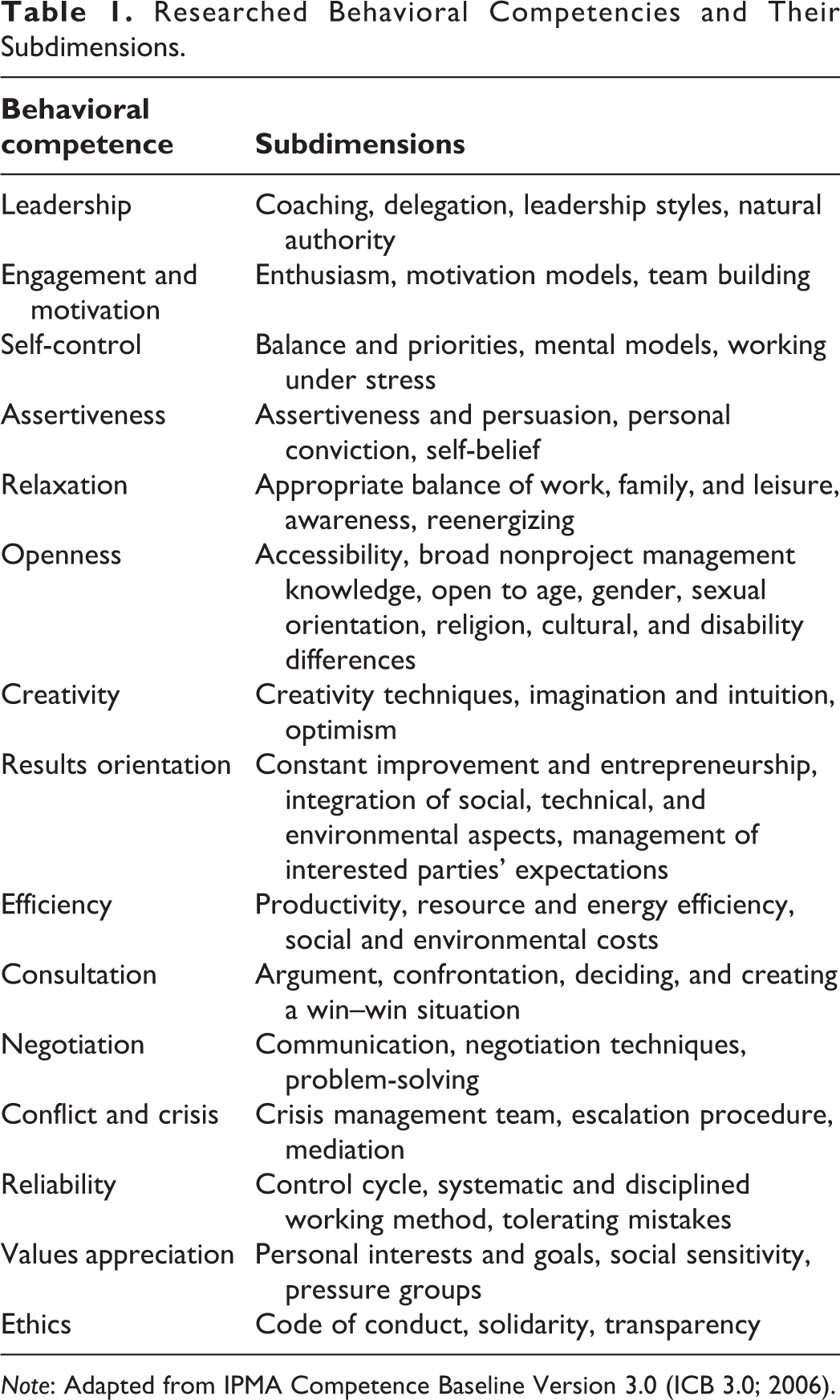
Note: Adapted from IPMA Competence Baseline Version 3.0 (ICB 3.0; 2006).
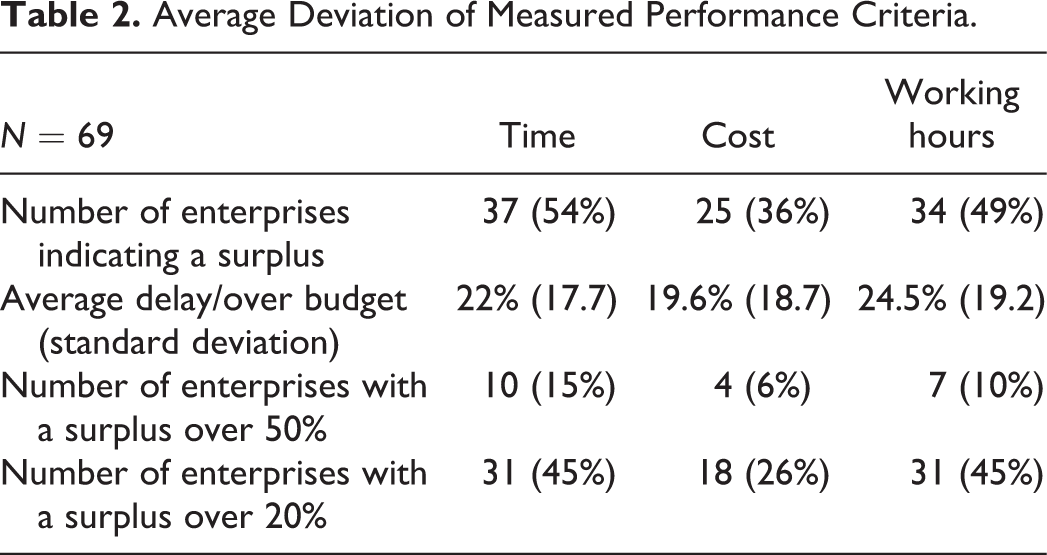
Average Deviation of Measured Performance Criteria.
Our main research questions were as follows: Do behavioral competencies importantly influence efficient project performance, and what is their actual impact on project performance? Additional sub-questions were Which behavioral competencies are the most important? Do managers consider as important those behavioral competencies actually proven to be most important for project performance? Do project managers wish to improve their behavioral competencies?
A considerable limitation of the research was that we only looked for the behavioral competencies project managers need to have and develop, not for an approach or system for how to develop those competencies (Capaldo, Iandoli, & Zollo, 2006; Takey & De Carvalho, 2015).
In the first section, we define competencies in more detail, show competence divisions, and summarize recent studies on the importance of behavioral competencies. The literature study helped in developing the research hypotheses. In the second section, we present the empirical research—procedure, data collection, sample, and data analysis methods. The research results are presented and discussed in the third section, where the hypotheses are also verified. The article concludes by outlining the study’s most important findings and suggestions for further consideration.
Theoretical Background
Managers’ Competencies
Competence is an individual’s ability to use and connect acquired knowledge and experience in complex, varied, and unpredictable situations (Perrenoud, 1997). It has a broader meaning than skill: Competence is the ability to use knowledge and/or skills as well as personal characteristics, at work (IPMA, 2006); it is an individual’s ability to mobilize and combine knowledge, skills, and attitudes in order to implement an activity in a situation, in a specific context (Capaldo et al., 2006). A competent individual is one with the suitable personal characteristics, knowledge, skills, and abilities needed to work well or successfully achieve planned goals (Sanghi, 2007; Majcen, 2009).
Because competencies fall into a broad range, experts usually divide them into several groups, most commonly behavioral or soft and technical or hard competencies (Miller, Rankin, & Neathey, 2001); or visible or noticeable (e.g., knowledge, skills, and abilities), which can be developed with education and training, and invisible or hidden (e.g., characteristics, behaviors, values, and convictions), which are harder to develop (Dialogos, 2007). Most often, competencies are placed into three groups: technical, human, and conceptual (Hunsaker, 2001; Robbins & Judge, 2013; Rue & Byars, 2003), or even more detailed, including Peršak (2003) and Kasper, Mühlbacher, and Von Rosenstiel (2005): self-dispositive, methodological, social–communicative, leadership, and personal competencies. Whetten and Cameron (2002), Müller and Turner (2007, 2010), and Geoghegan and Dulewicz (2008) divide only soft ones into three groups: the first two authors divide them into personal, interpersonal, and group competencies; the others divided them into intellectual, emotional, and managerial.
Le Deist and Winterton (2005) developed a holistic model of competencies in which the combination of conceptual, operational, occupational, and personal competencies forms cognitive, meta, functional, and social competencies. Their findings are important for understanding the competencies concept, but not important for our research because it is a general model that is not focused on projects.
Global project management associations such as the IPMA and the Project Management Institute (PMI) arrange competencies into three groups. IPMA’s behavioral competencies are similar to those of PMI, although IPMA names the other two groups, Technical and Environment (ICB 3.0; IPMA, 2006), and PMI refers to Knowledge and Performance competencies (Project Manager Competency Development [PMCD] Framework; PMI, 2007).
Behavioral Competencies
Since our goal is to analyze only behavioral (soft/personal) competencies, we now consider which competencies the authors have classified among them. PMI (2007) lists communicating, leading with motivating, managing the team and conflicts, cognitive ability, effectiveness, and professionalism. IPMA’s range is more extensive and includes 15 competencies with a total of 111 topics (subdimensions) addressed. In addition to those of PMI, their behavioral competencies include assertiveness, relaxation, openness, consultation, values appreciation, and ethics. Other authors (Thomsett, 1990; Kralj, 2001; Whetten & Cameron, 2002; Wysocki, 2004; Schulte, 2004; Brill et al., 2006; Rose et al., 2007; Kerzner & Saladis, 2009; Clarke, 2010; Müller & Turner, 2010; Skulmoski & Hartman, 2010; Ahsan et al., 2013; and Takey & Carvalho, 2015) have referred to many different competencies, all of which are included in both the PMI and IPMA sets as competencies or their subdimensions.
Many researchers have studied the innate characteristics of behavioral competencies and how they influence them. Clarke (2010) and Davis (2011) examined and proved the meaningful impact of project managers’ emotional intelligence behavioral competencies. Brill et al. (2006) found that 78 of 117 factors of managers’ success can be learned, whereas the other 39 factors (33.3%) cannot. However, those issues lie beyond our research field and goals, so we neither analyzed them in detail nor included them in our research.
After considering all the mentioned sources, we decided to use the IPMA ICB 3.0 set of behavioral competencies (Table 1) because it is the most extensive and we also wanted to critically analyze the set, as explained in the introduction. In so doing, we only included three subdimensions (four in the case of leadership) to avoid an overly extensive questionnaire, which would extend the time to complete the survey or discourage respondents from participating.
Hypotheses
Do behavioral competencies significantly influence efficient project performance? In 2007, Müller and Turner researched whether different leadership competencies are appropriate for different project types. Their main findings were that the project manager’s leadership style did influence project success and that different leadership styles were appropriate for different types of projects. The analysis also showed that certain leadership competencies were correlated with project success for all project types (emotional resilience, communication, sensitivity, motivation, self-awareness, and conscientiousness). Three years later, they conducted similar research in which critical thinking, influence, motivation, and conscientiousness proved to be important for all types of projects (Müller & Turner, 2010), whereas in 2012 they researched relationships between leadership and success in various types of project complexities. Their analyses again confirmed that emotional and managerial skills positively and directly impacted projects (Müller, Geraldi, & Turner, 2012).
Geoghegan and Dulewicz (2008) performed a similar survey as that of Müller and Turner’s in 2007; they also investigated whether project managers’ leadership competencies contribute to project success and used the same competence range and classification. Their analyses showed that the leadership dimensions of managing resources, empowering, developing, motivation, critical analysis, and influencing were significantly correlated with the success variables “usability” and “delivery on budget.”
Many other researchers have studied the characteristics and competencies of excellent project managers, and behavioral competencies have always proved to be very important. Skulmoski and Hartman (2009) found that the most important competencies are creativity, innovation, resourcefulness, flexibility, proactivity, problem-solving orientation, positive thinking, a helicopter view, a results orientation, and problem-solving. Critical for project managers is to encourage open and transparent communication, and communicating expectations must take place prior to developing a system of monitoring and managing the outcomes (Anantatmula, 2010). Moreover, establishing trust should be a gradual process that demands openness, transparency, and clarity in communication. Trust will, in turn, lead to collaboration and teamwork. A successful leader in a global, intercultural, and connected world environment should mainly develop intellectual (international business, learning ability), psychological (openness to various cultures and preparedness for changes), and social capital (ability to connect people; Javidan, Teagarden, & Bowen, 2010).
Starkweather and Stevenson (2010) and Dillon and Taylor (2015) explored the competencies of IT project managers and, again, behavioral competencies were shown to be more important than technical ones. Dillon and Taylor also discovered some significant differences between the competencies of experienced and inexperienced project managers, especially communication. They suggested that junior IT project managers should develop both their functional communication skills and skills related to communication decisions (what to communicate, who to communicate to, how to communicate, and when to do so). The results support the need for more than basic communication skills when dealing with different communication situations. Ahsan et al. (2013) researched the competencies enterprises use through project manager job advertisements. The analysis showed that job advertisements emphasize “soft skills”; again, the top competency was communications, whereas the ability in most demand was “results-oriented project manager.”
Building on the preceding findings, we set the first hypothesis of our research: Hypothesis 1: Behavioral competencies significantly and positively influence project performance.
Which behavioral competencies are the most important? Many claim it is leadership, followed by communication, eliminating lack of clarity and crises, and implementation of changes (Starkweather & Stevenson, 2010), and building a relationship with and maintaining trust between team members, care for communication, and engagement in a project (Derosa & Lepsinger, 2010; Yang, Huang, & Wu, 2011; Fisher, 2011). However, other researchers showed other behavioral competencies had to be more important: good oral and written communication skills, a problem-solving orientation, results, quality, and clients; as well as interpersonal and leadership skills (Abraham, Karas, Shaw, & Mena, 2001), scope management, cooperative teamwork, and integration management (Ortiz-Marcos et al., 2013; this research was based on the PMCD framework set of competencies [PMI, 2007]).
Through the literature study, we found that authors and practitioners define leadership differently, especially in terms of which skills leadership includes (Bierhoff & Müller, 2005; Müller & Turner, 2007; Schmid & Adams, 2008; Anantatmula, 2010; Hölzle, 2010). In this sense, leadership could be equated with behavioral competencies as discussed in this article. However, following the findings of other researchers, we believe that leadership (which, according to IPMA, includes coaching, delegation, leadership styles, and natural authority) is the most important behavioral competency; thus, we propose the second hypothesis: Hypothesis 2: The most important behavioral competency is leadership, whereby a good leader also has other behavioral competencies developed above average.
Given that many researchers have observed the importance of behavioral competencies in such a way that they verified the personal opinions of project stakeholders, mostly managers (Brill et al., 2006; Rose et al., 2007; Skulmoski & Hartman, 2009; Anantatmula, 2010; Fisher, 2011; Ortiz-Marcos et al., 2013), we believe that project managers are aware of the importance of behavioral competencies and those competencies that are expected to be significant. Therefore, if we limit ourselves only to behavioral competencies, our third hypothesis is
Hypothesis 3: Project managers are aware of the importance of behavioral competencies and wish to improve them.
Research Methodology
Sampling Process
Nine hundred project stakeholders from the ZPM (the Slovenian project management association) database were invited to participate in the research: members, certified project managers, and training and conference participants. With this probabilistic sample, we assured that respondents had sufficient knowledge and experience in project management to be able to provide high-quality answers. Unfortunately, only 70 people responded, which, to some extent, could indicate a low level of awareness of the importance of behavioral competencies. Fifty-eight percent of the respondents were project managers (+ 8% project coordinators), 22% were project team members, 8% were sponsors, and 5% were project directors. Of the respondents, 44 (63%) were male and 26 (27%) were female. The average age was 40 years, the majority (37%) was ages 40 to 50 years, 34% were between 30 and 40, 15% between 20 and 30, and 13% between 50 and 60. The majority (85%) had a university-level education or higher (40% were master’s or PhD).
Data Collection
To test the hypotheses, an empirical quantitative study was selected and a web-based online questionnaire was used to collect the data (we used the SurveyMonkey platform). An invitation to participate in the study was sent to potential participants via email. Individuals were asked to complete the questionnaire and provide demographic information. The introductory email with a link to the questionnaire also explained the purpose and time frame of the research. We asked for a respondent’s email address if he or she was interested in receiving a summary of the research results. The questionnaire was available for completion over a period of six weeks. At the beginning of the last week, we sent out an additional invitation to complete the questionnaire in order to increase the sample size.
The questionnaire had four parts: (1) evaluation of the level of competencies in the enterprise and assessment of a given competence’s importance for project performance; (2) selection of five key behavioral competencies; (3) information on project performance; and (4) demographic information.
To ensure the respondents equally understood the competencies (and subdimensions), we described each in two sentences. The respondents evaluated the enterprise managers’ average level of each competency’s subdimensions in their enterprise, using a 5-level Likert scale (5, very high; 4, high; 3, satisfactory; 2, low; and 1, it is not present in the enterprise), and provided their own assessment of the given competence’s importance for project performance (5, indispensable; 4, important; 3, of medium importance; 2, not important; and 1, insignificant). The purpose of evaluating the level of competencies was to provide independent variables for testing the first two hypotheses. The purpose of assessing a competence’s importance was to test the third hypothesis.
The second part of the questionnaire had the same purpose—to test the third hypothesis, but in a different way. From the list of 15 behavioral competencies, respondents were asked to point out the five key competencies, which they believed are the most vital for project performance.
The questionnaire’s third part aimed to gather project performance data. The information presented the dependent variables for testing the first two hypotheses. Project performance indicators were based on the traditional project management triple constraint triangle representing time, cost, and quality (Barnes in Lock, 2007), but we replaced quality with work hours spent. There were two reasons we excluded quality: (1) Enterprises keep data on project delays and cost overruns, but not about quality deviations; and (2) teams usually correct quality deviations before project delivery, which is expressed in additional time and cost. We introduced work hours instead, since an excess of work hours is not always reflected in an increase in costs (e.g., unpaid overtime work). With this change, we moved closer to the second version of Barnes’s triangle: time, cost, and performance. The respondents had to report the average end-project deviations from the baseline (in %) in their enterprise.
Data Analysis
Data multivariate analysis was performed using the SPSS statistical software. Since respondents evaluated the level of the competencies’ subdimensions, the level of competency was calculated as an average of the scores for the subdimensions. Using bivariate correlation analysis, we then examined the relationships of both the individual competencies and their subdimensions with project performance indicators. Next, a series of linear regression tests was conducted to analyze the degree to which competencies (independent variables) reduced (or increased) the performance (dependent variables: project delay, costs overrun, and above-plan work hours) and to expose the most influential competencies. We used a multivariate linear regression because we predicted that a higher level of competencies would improve project performance. The choice of this method proved to be correct with the initial correlation analyses and when examining the linear regression assumptions: The linearity, equal variance, and normal distribution of residual assumptions were all met.
Results and Discussion
The research showed that as many as 54% of projects in the researched enterprises miss the final deadline, and in 49% of projects, the quantity of working hours is larger than planned. Costs usually remain at the planned level (as stated by 49% of respondents), which can be explained by project managers having very limited budgets and it is not possible to exceed them without the approval of the project client, director, or investor. On average, delays in projects are 22%, costs are exceeded by 19.6%, and the number of actual working hours is exceeded by 24.5% (see Table 2).
The most developed competencies in the researched enterprises proved to be efficiency (level 3.3), relaxation (3.2), followed by conflict and crisis management (3.0), engagement and motivation (3.0), and results orientation (2.9). Among the subdimensions of efficiency, the respondents evaluated social and environmental cost management as the best developed (3.5), followed by resource and energy efficiency (3.4); whereas the most developed subdimensions of relaxation are reenergizing (3.2), awareness of relaxation (3.2), and the balance between work, family, and leisure time (3.1). The respondents gave the lowest scores to the subdimensions of openness: openness to differences (2.4) and broad nonproject management knowledge (2.6), so we assume that project managers have difficulties existing within the project framework, do not adapt to various situations, and do not communicate in a way that ensures it is understood by various recipients. The topics of ethics—solidarity (2.4) and transparency (2.8)—were also poorly evaluated.
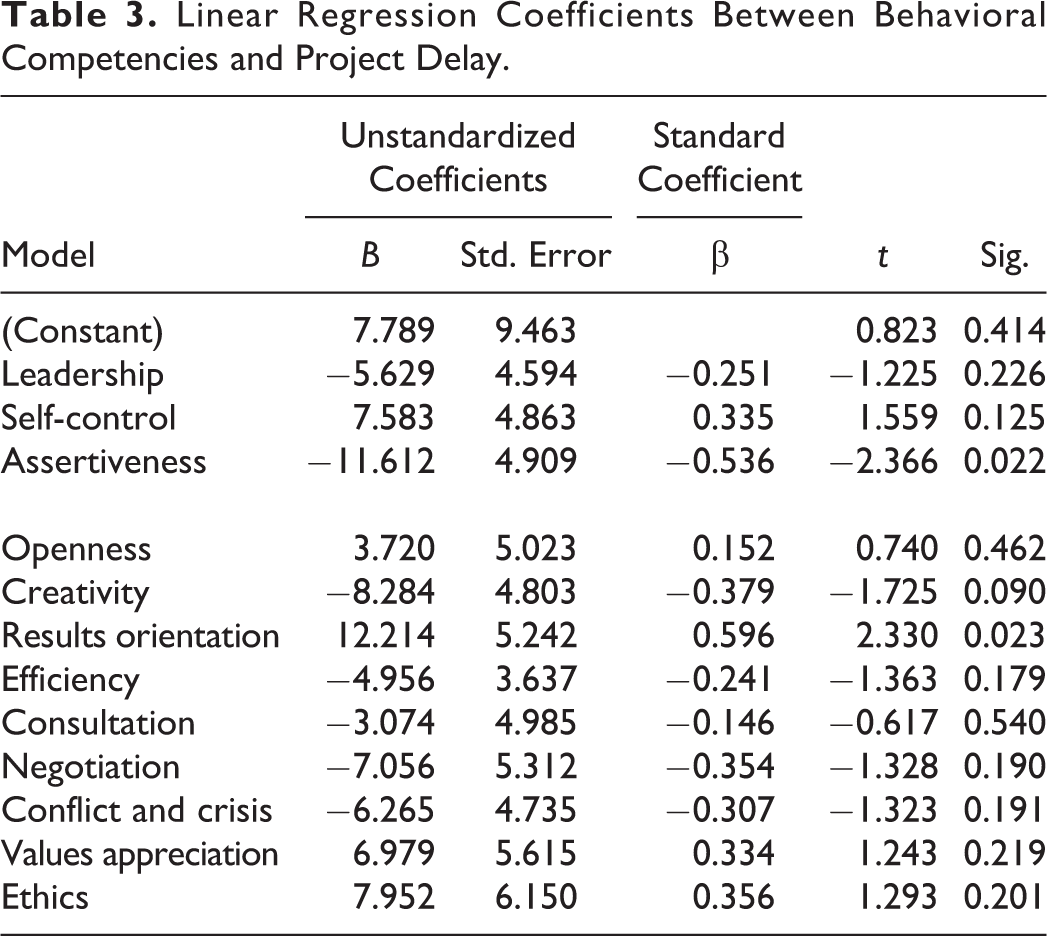
Our first hypothesis (H1) was “Behavioral competencies significantly and positively influence project performance.” We considered competencies important if a regression analysis was to show that they could influence by more than 20% project delays, exceeded costs, and work hours. In the analysis of the influence of competencies on the delay of the project, we gradually eliminated the least reliable competencies (engagement and motivation, relaxation, and reliability) to achieve a suitable level of reliability (0.045). We found that behavioral competencies influence 30% (R2) of delays in project realization, with a correlation of 0.548 (R).
The shortening (delays) of projects is reliably influenced by manager assertiveness (Sig. 0.022), and another six competencies influence the shortening with less reliability (Table 3). As mentioned earlier, the competencies together influence as much as 30% of project delay, and more than one third of competencies reduce delays; thus, the hypothesis can be confirmed from the perspective of time management.
Linear Regression Coefficients Between Behavioral Competencies and Project Delay.
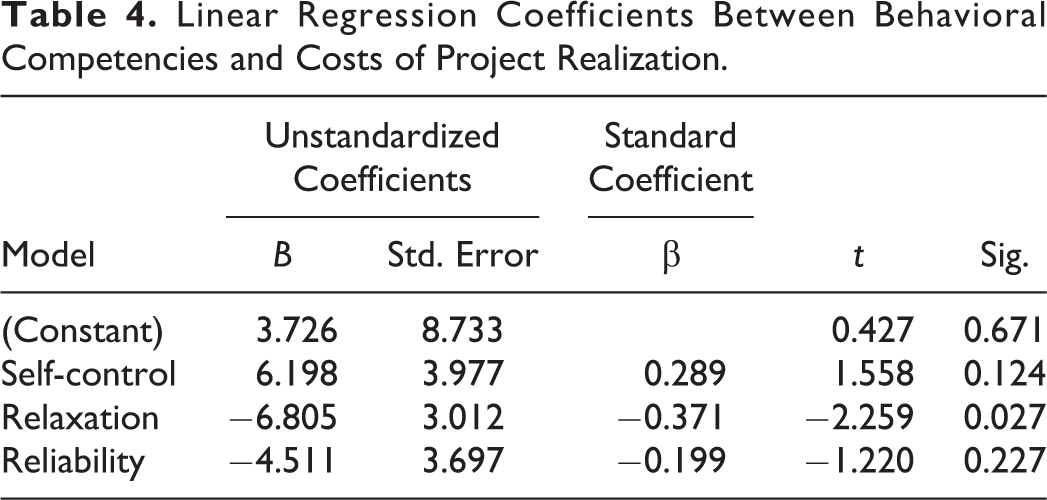
In the regression analysis of the influence of behavioral competencies on project costs, we eliminated up to 12 competencies to achieve a suitable level of reliability. We found that three behavioral competencies (self-control, relaxation, and reliability) influence 12% of a cost increase in project realization, with a correlation of 0.345 (R). It is only the competency of relaxation where we can claim with certainty that it reduces project costs (Table 4). Since the influence is lower than 20%, we reject the hypothesis from the perspective of the costs; nonetheless, we found that behavioral competencies do influence smaller deviations from planned costs.
Linear Regression Coefficients Between Behavioral Competencies and Costs of Project Realization.
In verifying the influence of behavioral competencies on the spending of work hours, to achieve reliability, we had to eliminate four competencies (creativity, negotiations, reliability, and values appreciation). Other competencies influence 27.8% of work hour increases, with a correlation of 0.528 (R). The reduction of excess work hours is reliably influenced by consultation between the manager and team members (Table 5), whereby one third of competencies have a negative sign (reduction of work hours); thus, the hypothesis can also be confirmed from the perspective of work hour requirements.
Linear Regression Coefficients Between Behavioral Competencies and Work Hours Spent.
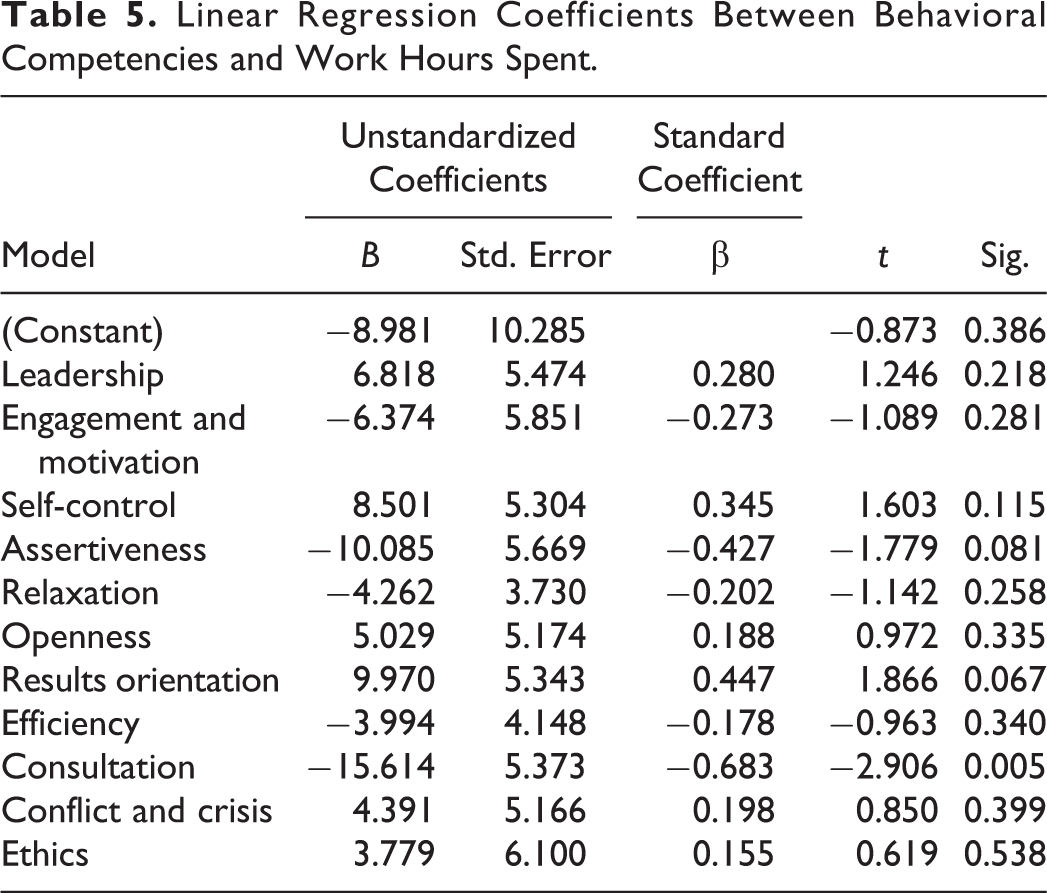
We partly confirmed the first hypothesis—from the perspective of time and hours spent, whereas we did not manage to prove the influence of competencies on project costs. However, we also cannot reject it from the perspective of costs: On average, respondents expend 19.4% more work hours on the realization of projects than planned, but the actual costs are only 14.2% higher than planned. Additional work hours typically increase a project’s costs, but the minor deviation may be explained by the fact that additional work hours are not always paid for (additional work, unexpected activities, or problem removal is solved by longer workdays). Another reason for this of course, is that the cost of employees’ work, which may be influenced by a project manager, can be very low compared with the investment costs and external contractor services, which behavioral competencies do not influence. Accordingly, nonconfirmation of the hypothesis from the cost perspective is fairly understandable.
Our findings are not surprising, because the importance of behavioral competencies has already been discovered and confirmed by many researchers. However, only a few studies have confirmed it by way of quantitative analysis (Müller & Turner, 2007, 2010; Geoghegan & Dulewicz, 2008). Our main theoretical implication arises from confirming previous qualitative research with our quantitative research, which is all the more important given the comprehensive set of competencies and subdimensions used in the research (in contrast to previous studies). Practical implications are similar to those suggested by other authors: Project managers should develop behavioral competencies (Müller & Turner, 2010), senior and human resource managers need to pay attention to candidates’ behavioral competencies when hiring project managers or selecting them to manage a new project (Starkweather & Stevenson, 2010), and enterprises should allocate budget funds for project management competency training (Skulmoski & Hartman, 2009). We also suggest that more experienced project managers act as mentors.
The second hypothesis (Hypothesis 2) was “The most important behavioral competency is leadership whereby a good leader also has other behavioral competencies developed above average.” We considered “above average” to mean where the level of other competencies is higher than 3 on a scale ranging from 1 to 5.
We verified the first part of the hypothesis in three ways. According to the respondents’ selection of the five most important competencies, leadership truly proved to be the most important, followed by results orientation, engagement and motivation, reliability, and efficiency. By assessing the importance of the competencies’ subdimensions, we obtained a different result. It turned out that the most important competency was efficiency (score of 2.6); followed by the competency relaxation (score of 2.4); values appreciation (score of 2.3); and creativity, reliability, and openness, as well as consultation (all scoring 2.1). The difference in scores can be explained by the fact that managers understand competencies differently than the authors of IPMA’s ICB 3.0.
Leadership was also not shown to be the most important competency in the regression analysis of the influence of competencies on efficient project realization (see Hypothesis 1, Tables 3 –5). Thereby, the most important competency for ensuring realization within deadlines was assertiveness (leadership was placed fifth); in terms of cost management, it was relaxation (leadership, based on the regression analysis, does not influence costs); and for work hours, it was consultation (leadership supposedly even increased the work hours spent). Since the regression analysis assumes a synergy in the functioning of the variables included in the model, however, we also used correlation analysis to check the independent influence of competencies on the criteria of efficient realization. We found that leadership is negatively correlated with the time of realization (a higher level of competency shortens a project; Pearson’s coefficient of correlation: −0.309), while it does not influence the costs and work hours. Based on a correlation analysis, the biggest influence on time is held by creativity (−0.340), and other competencies that are more influential than leadership include assertiveness, conflict management, and negotiations.
Even though a subjective evaluation by the respondents of the importance of competencies put leadership in first place, based on the other analyses, we must reject the first part of the hypothesis, namely, that the leadership competency is the most important. Since three of the four analyses of the importance of this competency were made based on the evaluations of the competency topics, the rejection of the hypothesis can also be explained in another way—when preparing ICB 3.0, the experts did not suitably define the topics of leadership.
The second part of the hypothesis—the correlation of the competency—was verified by the level of correlation between leadership and other competencies. The high Pearson coefficients in Table 6 show a connection between leadership and other competencies, so we can confirm the second part of the hypothesis—that a good leader also has above-average levels of development of other behavioral competencies.
Correlation Level Between Leadership Competency and Other Competencies.
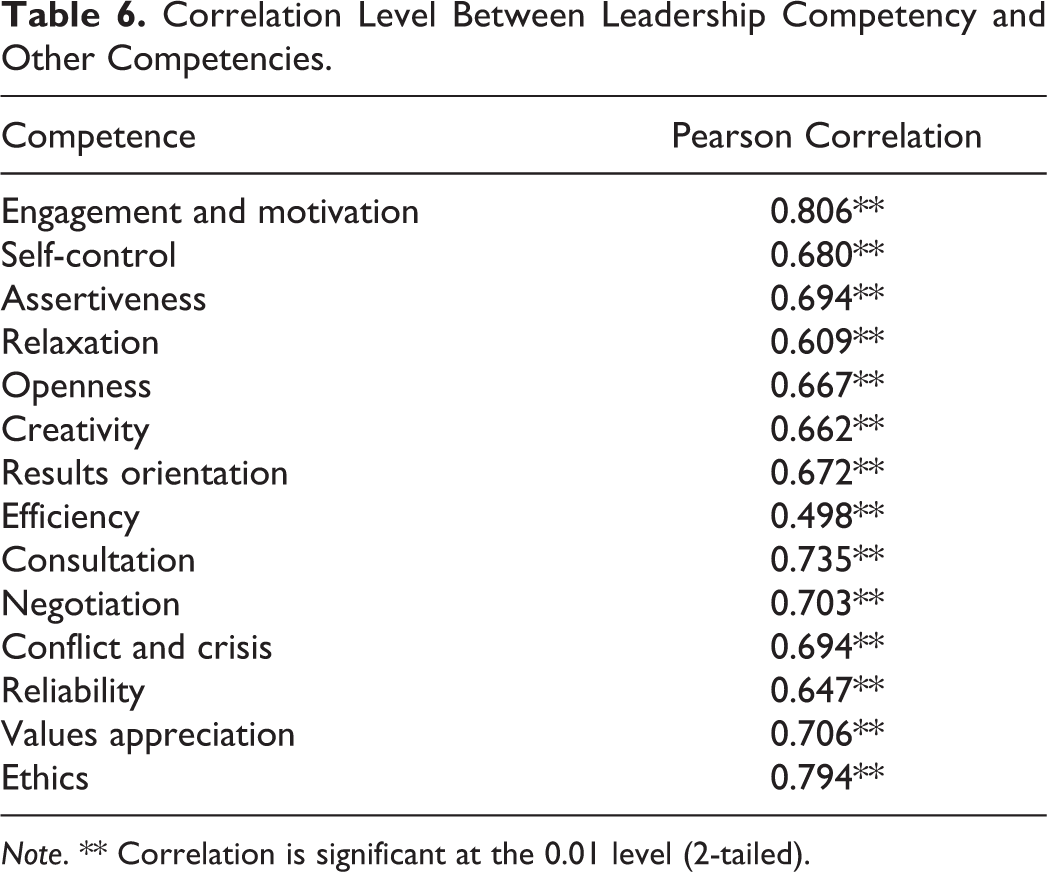
Note. ** Correlation is significant at the 0.01 level (2-tailed).
The previous literature study identified different competencies that are “most important:” Brill et al. (2006), Starkweather and Stevenson (2010), Derosa and Lepsinger (2010), and Fisher (2011) found leadership to be the most important behavioral competency, whereas other authors did not. For them, the most important is emotional resilience (Müller & Turner, 2007), managing resources (Geoghegan & Dulewicz, 2008), creativity (Skulmoski & Hartman, 2009), and social competence (Hölzle, 2010). One of the reasons different competencies were identified as most important was that different people participated in the research. Crawford (2005) found that project managers and their supervisors perceive project management competence differently. Another reason could be the different types of research undertaken (qualitative or quantitative). We believe, however, that different perceptions of leadership could be the main reason. Since scientists define leadership differently (PMI, ICB, Geoghegan & Dulewicz, 2008, and others), it is reasonable to believe that project managers understand it in other ways. Accordingly, we hope that we have stimulated scientific discussion on a unique definition of leadership.
As for the second part of the hypothesis—the connection of other behavioral competencies with leadership—the results are also not surprising. The question emerges when someone has several highly developed behavioral competencies: Are highly developed competencies the result of different trainings, practical experience, or personality? Brill et al. (2006) claim that 78 out of 117 factors of managers’ success can be learned, whereas the other 39 factors cannot. The set of innate competencies can help resource managers identify the right types of people for future project managers, especially in an early-career stage.
The next hypothesis (Hypothesis 3) was “Project managers are aware of the importance of behavioral competencies and wish to improve them.”
Awareness of the importance of behavioral competencies was identified by the respondents’ average score for the importance of competencies (a common score was higher than 3). Thereby, we assumed they wished to improve a behavioral competency in which the average score of importance is 1 point higher than the average score of the state—we studied this for the full range of behavioral competencies, as well as for the individual competencies.
We verified the importance of competencies with the average score provided by the respondents and found that the evaluated value of all competencies had an average of 2.051, meaning that Slovenian managers’ awareness of the importance of behavioral competencies is very low (grading scale of 1 to 5; we assumed that a score above 3 shows awareness about the importance of competencies). Slovenian project managers are not aware of the importance of behavioral competencies for project performance; thus, we reject the first part of the hypothesis. In Table 7, we gathered the processed competencies with regard to the evaluated state and importance for an efficiently realized project.
Average Evaluated Levels and Importance of Behavioral Competencies.
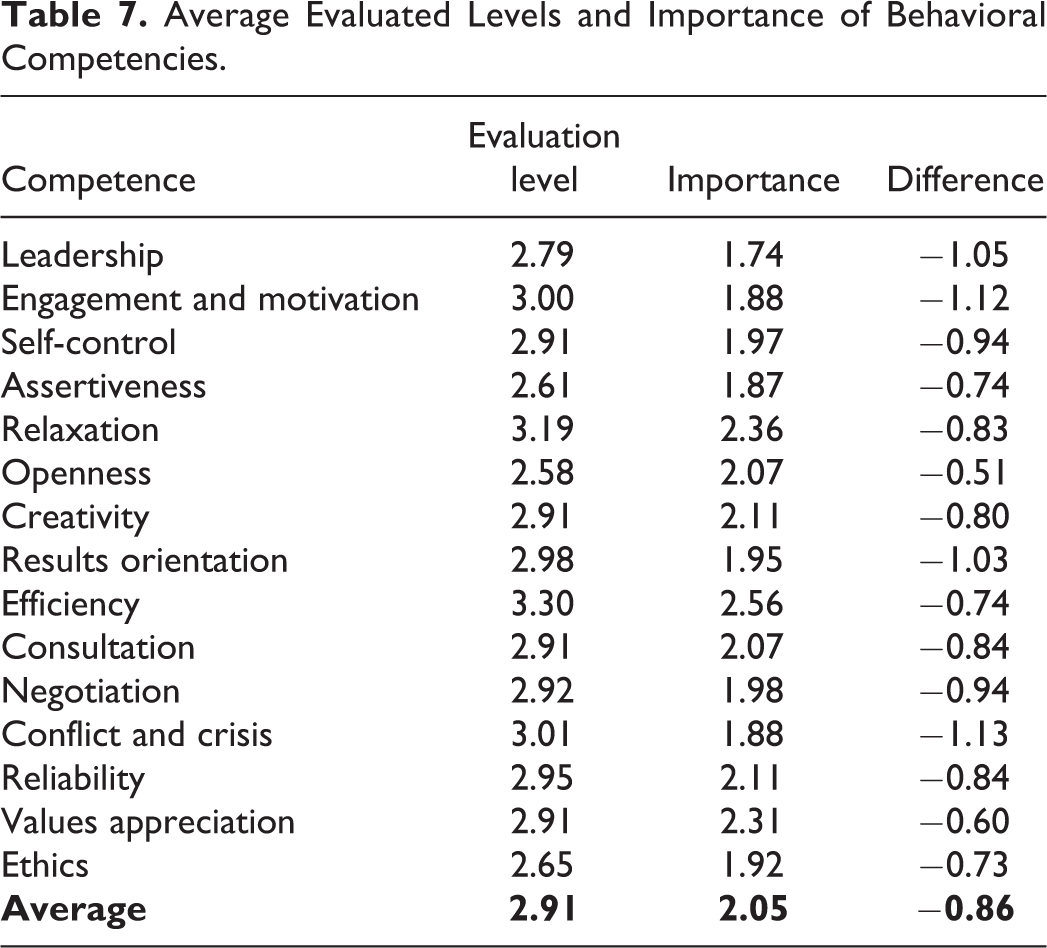
In the second part of the hypothesis, we assumed that the average score for importance must be 1 point higher than the average competency level (see Table 7). As shown, all scores are even lower in importance than those for the development of competencies are, so the second part of the hypothesis and thus the whole hypothesis can be rejected.
In relation to the findings, we can claim that managers do not intend to improve their competencies. It is somewhat understandable that they do not consider behavioral competencies as important, because projects in Slovenia are mostly managed by technically educated personnel. Slovenian project managers are more focused on technical solutions than on relationships with people; the reason for this could lie in their personality and in the educational process because technical schools provide few or no courses that address leadership, teamwork, motivation, and other behavioral/personal competencies. On the other hand, it is interesting to note the higher competency development–level score compared with the competency’s importance. This could indicate another problem or shortcoming of our research—that the respondents evaluated the state of competencies with insufficient criticism. This is indicated by the above-average level of competency development and the mostly inefficiently carried out projects—half the projects missed their deadline (on average by 18.8%) and consumed more work hours than planned (by 19.4%). Costs were exceeded by 14% on average.
We hope this research triggers project managers to think about opportunities that can lead to behavioral competencies being developed at a higher level and start working on developing their own critical competencies. We also believe universities can and should put more effort into increasing awareness of behavioral competences (Ortiz-Marcos et al., 2013), not only at social sciences schools but also at technical and natural science schools because their students typically lack behavioral competences. Finally, project management offices are typically responsible for developing competencies within their enterprises (Hobbs & Aubry, 2007), so we suggest they introduce regular competencies-level testing and encourage managers to develop them.
In addition to the hypotheses, we posed two research questions: Research Question 1: Which behavioral competencies are most important for the efficient realization of projects? Research Question 2: Do Slovenian managers consider as important those behavioral competencies actually proven to be most important for efficient project realization?
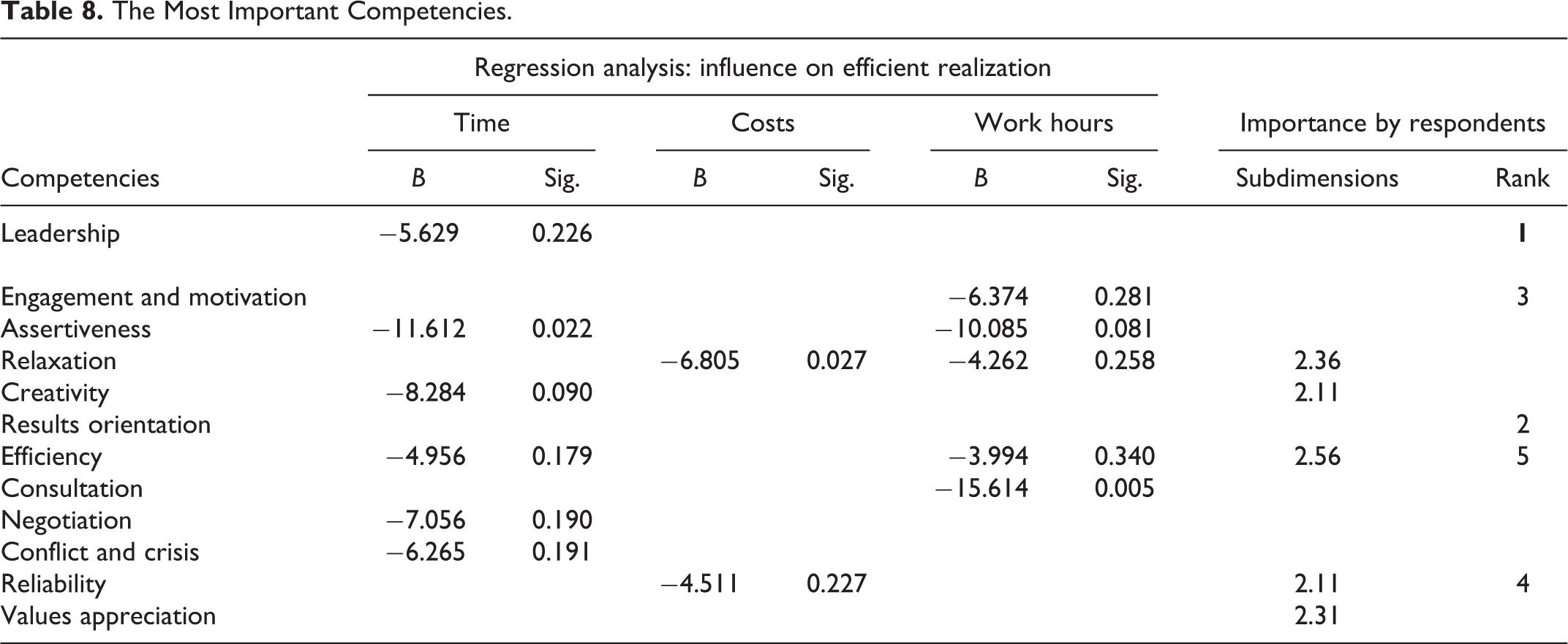
Both research questions were indirectly answered while verifying the hypotheses, but let us summarize the findings here once more. The following competences were the most important for project realization in the regression analysis of competency influence on efficient realization: assertiveness (time), relaxation (costs), and consulting (work hours; Table 8). In fact, based on regression analysis, we may claim that the most important competency is assertiveness, which reliably influences the realization time; with a little less reliability, we can prove its influence on the hours spent. There is no doubt that the manager’s self-confidence and conviction that the project can be carried out within the set limits is important, especially if the manager is capable of transferring this conviction to team members. Belief in the possibility of achieving a goal could certainly compensate for other potential shortcomings that would lead to inefficient realization of a project. We can also reliably claim that the quantity of work hours is influenced by consulting coworkers. This is entirely understandable as consulting is a part of team planning and the agreements on the way of performing activities. The synergy of team planning clearly enable more efficient project realization.
The Most Important Competencies.
In the comments concerning verification of the second hypothesis, we already discussed the key behavioral competencies and the reasons that leadership has not always proved to be the most important one, with that title going instead to emotional resilience (Müller & Turner, 2007), managing resources (Geoghegan & Dulewicz, 2008), creativity (Skulmoski & Hartman, 2009), and social competence (Hölzle, 2010). In order to unify the research studies, rather than using a clearer, unified definition of leadership, researchers could only assess only subdimensions. This would create a much broader set of competencies, although results of research studies could be similar (under similar research conditions). Yet we cannot neglect the role of organizational or national culture (Müller & Turner, 2010). Knowing the level of both cultures in the Slovenian project management environment (Stare, 2012), assertiveness certainly plays an important role in ensuring efficient project performance. However, we must once again point out the dilemma of innate and trained competencies: Can assertiveness be learned?
The second research question (Research Question 2) was as follows: Do Slovenian managers consider as important those behavioral competencies actually proven to be most important for efficient project realization? In Table 8, along with the competencies that most significantly impact the efficient realization of a project, we have added the evaluation of a competency’s importance according to the respondent managers. The respondent managers consider the most important competency to be leadership (last column—Rank). We expected this because the authors recognized this competency the most; thus, the managers know it well and ascribe other key personality characteristics and abilities of a successful project manager to it. An entirely different ranking of the importance of competencies was generated by the evaluation of the importance of competency subdimensions (the column before the last) where, as an evaluation of a competency’s importance, we used the average score of its subdimensions. In this “indirect” way, the respondents chose efficiency as the most important but also placed relaxation and value consideration among the most important ones.
Regardless of the evaluation of importance, the exposed competencies are not those that proved to be the most important in the regression analysis, so we can conclude that the answer to the second research question is “no.” The respondent project stakeholders do not list as important behavioral competencies those shown to be the most important for efficient project realization. On the other hand, the respondents’ selection of important behavioral competencies (leadership, results orientation, engagement and motivation, reliability, and efficiency) was not far from the results of other qualitative research studies, especially those that put leadership in first place (Brill et al., 2006; Starkweather & Stevenson, 2010; Derosa & Lepsinger, 2010; Fisher, 2011). This also indicates that further research into this important area for project performance is needed.
Conclusion
Although we used a range that differed from that of previous researchers, we reconfirmed that behavioral competencies significantly influence project performance—more than one third of the competencies reduce delays and work hours. The influence of competencies on project costs was not detected, but there is an explanation for this: With behavioral competencies, a manager may mainly influence labor costs, which are, in certain types of projects, negligible compared with the costs of material, equipment, and services. The following were found to be the most important competencies for effective project performance: assertiveness (influencing the duration and work hours), relaxation (costs), and consultation (work hours).
It was interesting to learn that managers and experts have different ideas about the term “leadership,” which everyone pointed to as the most important competency but when evaluating the importance of the subdimensions included, it was not among the most important. To be precise, the literature survey already demonstrated a varying understanding of behavioral competencies, especially leadership, which could be the main contribution of our research to science. If it is already theoretically not coherent, it is even more difficult for people working in the field to understand it. Of course, there is also the question of whether it makes sense to deal with so many topics (111 subdimensions of behavioral competencies!).
A practical contribution of this research is the reaffirmation of leadership’s importance for effective project performance, with additional information on which competencies should be given priority in further training. However, should project managers receive assertiveness training, which proved to be the most important competence, and, if so, how? We believe this could be more innate than learned competence. We, therefore, recommend that personnel departments and project offices, when identifying candidates for future project managers, look for highly assertive individuals.
Before conducting this research, we had predicted that project managers were aware of the importance of competencies and wished to improve them. Faced with the results, we can now claim the opposite. It is to some extent understandable that mainly technically educated managers consider behavioral competencies less important; yet, it is interesting that the score for the competency development levels is higher than the evaluated importance. This could indicate a significant shortcoming of our research, namely, that the respondents evaluated the level of their competencies with insufficient criticism, mainly, because, on the other hand, they admitted that their projects are mostly inefficiently realized. This of course, could be because they lack suitable technical competencies (knowledge of methods and techniques); however, we are more inclined to believe that their evaluations are somewhat too high and unrealistic. The research would, of course, be considerably more realistic if the level of one’s competencies were to be evaluated by one’s coworkers, which is a suggestion for further research. In in-depth research, it would perhaps make sense to study the importance of individual competencies in relation to a specific nature of work. We believe the range of the most important competencies varies by the type of project (IT, construction, organizational, or development of products or services).
It is true that we did not include all 111 topics of behavioral competencies in the research, yet we recommend the authors of ICB consider whether the topics of competencies are truly suitably defined. Upon completion of our research and in preparation for this article, we realized that IPMA had published a new version of ICB 4.0 in the beginning of 2016. The new version of ICB 4.0 altered the range of behavioral competencies, which indicated that the experts in the field were aware that the earlier versions of these competencies had not been adequately defined.
Last, but not least, based on the findings, we can partly agree with Loufrani-Fedida and Missonier (2015) who recommend that we stop looking for the perfect, “ideal” project manager with many necessary critical competencies. However, project managers still want and need to be aware of the competencies that most contribute to their success and develop them.
Footnotes
Declaration of Conflicting Interests
The author(s) declared no potential conflicts of interest with respect to the research, authorship, and/or publication of this article.
Funding
The author(s) received no financial support for the research, authorship, and/or publication of this article.