







Abstract
This systematic literature review explores the megaproject management literature and contributes by improving our understanding of the causes and cures of poor megaproject performance. The review analyzes 6,007 titles and abstracts and 86 full papers, identifying a total of 18 causes and 54 cures to address poor megaproject performance. We suggest five avenues for future research that should consider examining megaprojects as large-scale, inter-organizational production systems: (1) designing the system architecture; (2) bridging the gap with manufacturing; (3) building and leading collaborations; (4) engaging institutions and communities; and (5) decomposing and integrating the supply chain.
Introduction
Megaprojects are the delivery model used to produce large-scale, complex, and one-off capital investments in a variety of public and private sectors. With a total capital cost of US$1 billion or more, megaprojects are extremely risky ventures, notoriously difficult to manage, and often fail to achieve their original objectives (Altshuler & Luberoff, 2003; Flyvbjerg, Bruzelius, et al., 2003; Merrow, 2011; Priemus & Van Wee, 2013). In 2013, McKinsey suggested that US$57 trillion would be spent on infrastructure investment between 2013 and 2030 (McKinsey Global Institute, 2013). Similarly, Flyvbjerg (2014) estimated the global spending on megaprojects at US$6 to US$9 trillion annually, emphasizing a statement made by The Economist (2008): “The biggest investment boom in history is under way.”
Established as a standalone temporary organization, megaprojects can be led by a client team, prime contractor, or some form of temporary alliance, joint venture, or coalition of multiple parties (owners, sponsors, clients, contractors, suppliers, and other stakeholders) that work jointly on a shared activity for a limited period of time in an uncertain environment (Jones & Lichtenstein, 2008; Merrow, 2011). Each megaproject is usually decomposed into many smaller inter-related projects and organized as a program. A large organization—the client, prime contractor, and/or delivery partner—is established to coordinate and integrate the efforts of numerous subgroups and suppliers involved in project activities (Davies & Mackenzie, 2014; Davies et al., 2009; Merrow, 2011). This organization manages the overall program and the interfaces between projects; deals with external suppliers through separate contracts; and is accountable for meeting time, cost, and quality performance goals.
Most of the extant research is concerned with understanding why megaprojects fail so frequently and seeks to identify some of the dimensions that make megaprojects so difficult to manage, including their size (Flyvbjerg, Bruzelius, et al., 2003; Flyvbjerg, 2017; Merrow, 2011; Morris & Hough, 1987), uncertainty (Lenfle & Loch, 2010; Miller & Lessard, 2000; Stinchcombe & Heimer, 1985), complexity (Brady & Davies, 2014; Davies & Mackenzie, 2014), urgency (Morris & Hough, 1987; Shenhar & Dvir, 2007), and institutional structure (Scott et al., 2011).
This research aims to deepen and extend our understanding of the causes and cures of poor megaproject performance, a question raised by Flyvbjerg (2014). To achieve this aim, the objectives of our systematic literature review were to identify prior research on megaprojects, including adjacent literature on large engineering projects, major projects, grand-scale projects and other related terms, and categorize the research according to how it identifies the main causes of poor megaproject performance. We then categorized the research according to the cures—the strategies and practices of megaprojects around the world—offered to resolve poor megaproject performance. We identified five research avenues with emerging topics that can offer novel insights into the causes and cures of poor megaproject performance.
A variety of concepts and theoretical frameworks have been developed and applied to understand the causes and cures of poor megaproject performance. Our research findings categorize the literature under six themes. Under each theme we identify the three predominant concepts and discuss the causes and cures of poor megaproject performance. We found that each concept draws upon its own distinct theoretical foundations and frameworks, although there is no space in this article to explore each in detail. For example, optimism bias applies cognitive psychology to understand how managers of megaprojects deal with uncertain outcomes, and systems integration draws upon the organizational capabilities and design literature to identify how megaprojects are decomposed and integrated. While significant efforts have been made to improve our understanding of megaproject performance, each contribution alone provides insights into a partial or isolated phenomenon. There is no overarching theory or framework that can connect the disparate contributions into a complete picture identifying how performance depends on various components—such as decision making, integration, leadership, and teamwork—working together as an integrated whole. We conclude the article by suggesting that new research and theory building should adopt a systemic view, taking into account some of the different aspects impacting megaproject performance. We suggest the literature could be enhanced by research that considers a megaproject as a system of production and by studying their individual topics through a systems lens.
Research Methods
Originally developed in the medical sciences to consolidate information from several sources, a systematic literature review is a transparent, rigorous, and detailed methodology used to support decision making (Tranfield et al., 2003). This research method is used to build theory by accumulating knowledge and evidence after analyzing a large number of studies and methods, thereby increasing the consistency of the results and the conclusions (Akobeng, 2005). Informed by Denyer and Tranfield (2009) and Tranfield et al. (2003), our systematic literature review was undertaken in three stages. First, a planning stage identifies the needs of the review and develops the protocol, which defined the overall strategy, the keywords, and its interactions in the search for articles. Second, a development stage selects articles for data extraction, assessment, and data synthesis. Third, a dissemination stage connects the research findings with ongoing conversations in the academic literature and with practice through accessible material for practitioners.
Planning Stage
The rigid protocol of systematic reviews is a major limitation when analyzing the research field of management and organization studies. In our study, the terminology is not convergent as in medical sciences, but rather divergent with many authors developing different conceptualizations and terminologies to refer and explain the same phenomenon. We identified keywords on the subject based on our prior experience through the mechanism of brainstorming during two 1 hour meetings. The strategy was to include a wide range of words and synonyms, in which the keywords were grouped in three categories: Megaproject synonyms, Success synonyms, and Failure synonyms. The full list of synonyms for each category can be found in Appendix 1 at the end of the article. The keywords were organized into two search strings, which were used to search the papers on academic databases. The first search string included all Megaprojects synonyms associated with Success synonyms, such as (“large scale project*”) AND (“success*”); the second included all Megaproject synonyms associated with failure synonyms, such as (“grand scale project*”) AND (“failure*”).
Development Stage
We carried out a systematic search for academic articles in two of the largest academic online databases: Web of Science and Scopus, from all years until September of 2017. The search for articles was conducted through the combination of keywords in three areas of interest: Synonyms for the term Megaproject most commonly used in the literature, Success synonyms, and Failure synonyms. The review process was conducted according to the following steps:
The academic databases Scopus and Web of Science were chosen to conduct the search for papers using the strings identified in the Development Stage.
The first string related to Megaprojects and Success returned Scopus (3,423) and Web of Science (2,498). The second string, related to Megaprojects and Failure, returned Scopus (1,659) and Web of Science (880). The papers from the two search engines were then consolidated on Mendeley aiming to exclude duplications (8,460), resulting in a final folder called Megaprojects AND Success AND Failure (6,007), as illustrated in Figure 1. Journal articles were included, whereas conference papers, reports, and book chapters were excluded. On Scopus the papers were limited to the following subject areas: Business, Management Accounting; Computer Science; Decision Sciences; Economics, Econometrics, and Finance; Energy; Engineering; Social Sciences; Environmental Science; Materials Science; Multidisciplinary and Undefined. On Web of Science the papers were limited to the following subject areas: Architecture; Area Studies; Business Economics; Computer Science; Construction Building Technology; Energy Fuels; Engineering; Environmental Sciences Ecology; Geography; Government Law; International Relations; Materials Science; Metallurgy Metallurgical Engineering; Operations Research Management Science; Public Administration; Science Technology; Social Sciences; Telecommunications; Transportation; Urban Studies; Water Resources.
Titles and abstracts of articles were analyzed according to the inclusion and exclusion criteria (see Appendix 2 at the end of the article), reducing the number from 6,007 to 1,075.
We met to cross-check and discuss the results of the evaluation by title and abstract and given the remaining high number (1,075) decided to further categorize the papers into three categories. This strategy was adopted aiming to isolate and exclude the high number of papers about deterministic models and algorithms and financial mechanisms (mainly organized around the public–private partnerships [PPPs] literature).
Using the inclusion and exclusion criteria, the articles were separated into categories A (248), B (216), and C (611). Category A represented articles of Size, category B represented articles where the focus was around Complexity, and the category C list represented articles of quantitative models, contractual arrangement, funding, and financing and had little focus on the managerial aspects of megaprojects.
The papers included categories A (248) and B (216), which were consolidated again (464); in light of the high number we adopted the strategy of employing the impact factor as a measure to maintain quality and reduce the number of papers entirely reviewed (Aliaga-Isla & Rialp, 2013; Crossan & Apaydin, 2010; Klang et al., 2014; Papamitsiou & Economides, 2014; Podsakoff et al., 2005; Pölkki et al., 2014; Richards et al., 2014; Tompkins & Arendt, 2015; Überbacher, 2014; Wielenga‐Meijer et al., 2010; Zhang et al., 2011). We analyzed the list of 464 papers and concluded that the megaproject literature is still concentrated in project management journals; therefore, it was necessary to limit the impact factor to include only the main journals in the field. We clarify that by applying an impact factor filter, two categories of papers were excluded, namely: (1) papers from journals with an impact factor below the threshold, and (2) papers from journals without an impact factor found via Scopus. It was agreed that papers published in academic journals with an impact factor above (1.70) would be included for this review. By limiting the impact factor to above (1.70), it was possible to include the main journals of project management: Journal of Engineering Construction and Management (ASCE) (1.73), Journal of Management in Engineering (2.01), Project Management Journal® (PMI) (2.71), Automation in Construction (2.91), and the International Journal of Project Management (4.03).
The final list contained (145) articles that were filtered from the initial search (6,007) following steps (3 – 6). Although the abstract of the (145) articles fit the inclusion criteria, several of them did not meet the criteria after reading them from start to finish; therefore (86) were considered to inform the review. Using an extraction sheet on Microsoft Excel, relevant information related to descriptive data (title, authors, journal, year, and so forth), and information that answered the initial research questions (aims and objectives, causes, cures, and future research) was extracted in a structured fashion. The full description of the extraction spreadsheet can be found in Appendix 3 at the end of the article.
The articles were reviewed to extract the causes and cures of poor megaproject performance. The process of extracting the causes and cures through an in-depth analysis of each paper followed the coding method presented by Saldaña (2016), where the reviewer used each cause or cure as a first order code, which represented one entry in the extraction Excel spreadsheet. The first order codes were clustered into categories, which were later organized into themes. We provide an illustrative example of this process. Cure extracted from Brady and Davies (2014): Establish an integrated project team approach including the client, the system integrator, and first-tier contractors. Category: Integration. Theme: Strategy, Governance, and Procurement. Concept: Delivery model strategy. Combined concept cure: Adopt integrated project teams to deliver the project, involving key decision makers from institutional to supply chain levels (owner, sponsor, client, system integrator, delivery partners, first-tier contractors, second-tier suppliers, and operator).
After all papers were reviewed and the extraction finished, we met again to discuss our independent analysis and consolidate the categories into themes. The categories of each reviewer were analyzed over 1.50 hours and six themes emerged from its consolidation.
After the six themes were defined, we identified three predominant concepts in each theme that helped to explain the causes and cures of poor megaproject performance. The division of the themes into smaller units (concepts) allowed us to increase the level of detail, aiming to contribute to theory and practice. Each concept was explored by the identification of its main cause and three potential cures, drawing upon material extracted from the analyzed 86 papers.
In an effort to connect the findings of the systematic literature review with industrial debates and inform our two workshops, we identified industrial reports from the last five years where those concepts were discussed. Although those reports are not part of our dataset, the quotes extracted provided an extra contextualization layer aiming to stimulate lively discussions in the workshops with academics and senior practitioners.
The six themes were validated by professor Peter Hansford from University College London, who served as chief construction adviser for the UK government and has considerable industrial experience, often providing strategic advice on megaprojects and infrastructure policy.
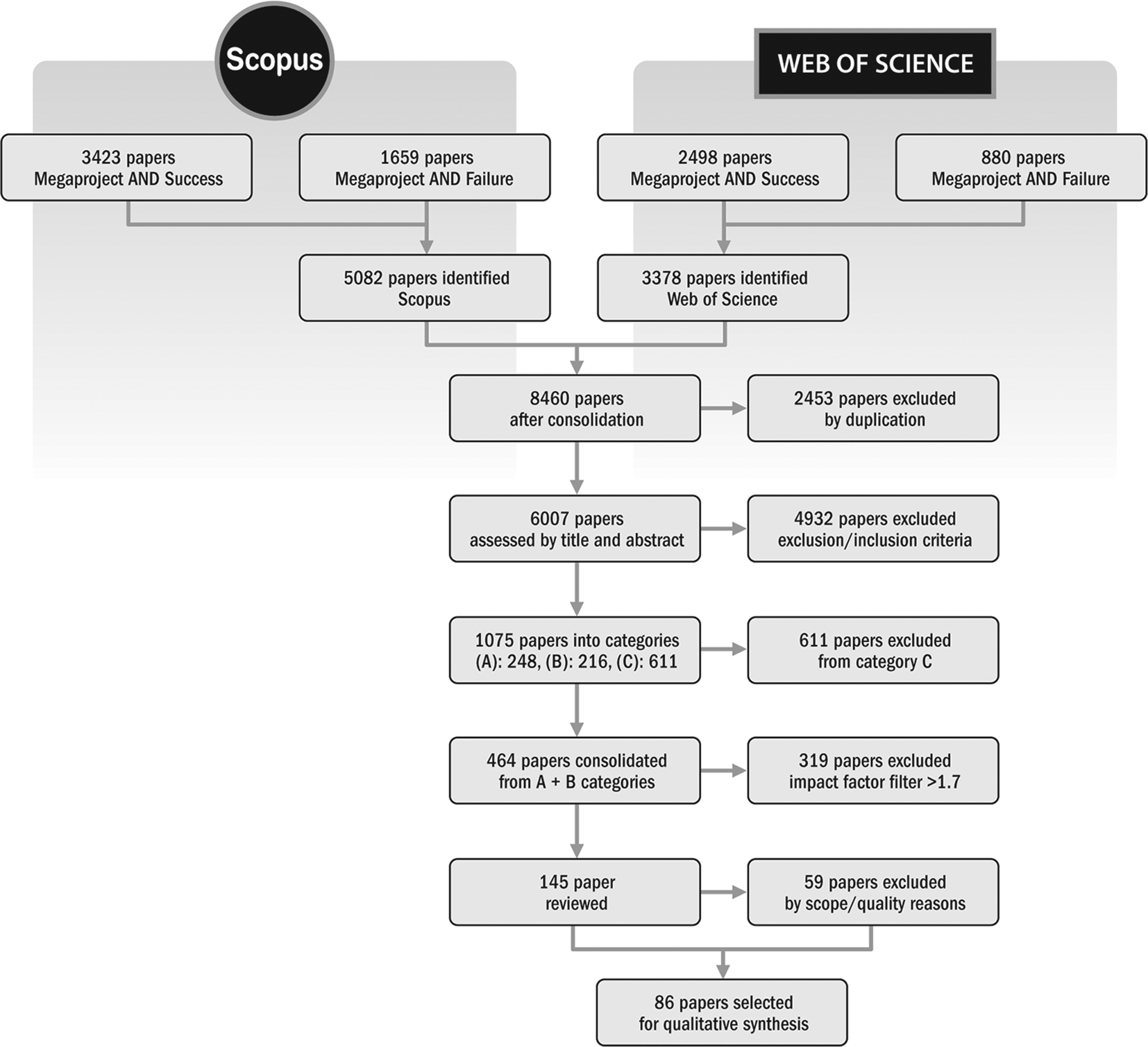
Steps of the systematic literature review.
Our decision to exclude highly influential books on large-scale projects is recognized as one of the limitations of the systematic review methodology. However, the exclusion is common practice given their classification as gray literature (Adams et al., 2017), supported by the often-missing peer-review process, which is perceived as an indication of rigor and quality, and the inconsistency of searches in books when compared to articles included in academic databases. Many pioneering project management ideas first developed in books, such as the concept of a strong owner (Morris & Hough, 1987), the front-end definition in Morris (1994), and the owner–contractor interface in Merrow (2011), which appear as key references in the papers identified in our literature review. Therefore, although these books are not identified in our review, their profound influence on the research undertaken on megaprojects is evident in many of the articles appearing in our review.
Dissemination Stage
The findings were presented, assessed, and verified in two workshops: the first with Professor Peter Morris and academics in the School of Construction and Project Management at University College London; and the second with senior practitioners from some of the United Kingdom’s largest infrastructure megaprojects (Crossrail, Thames Tideway Tunnel, High Speed Two, and Hinkley Point C). Both workshops generated a productive, lively, and hugely insightful discussion. Participants recognized the value of the categorization but were critical of the existing literature exploration in silos. They encouraged us to think about more engaged and comprehensive research to understand the variety of institutional, behavioral, organizational, and other factors affecting the performance of megaprojects—from front-end planning, through execution, to operational outcomes.
Results
After executing the analysis as outlined in the Methods section, the literature dataset of 86 articles were clustered into six themes: (1) decision-making behavior; (2) strategy, governance, and procurement; (3) risk and uncertainty; (4) leadership and capable teams; (5) stakeholder engagement and management; and (6) supply chain integration and coordination. These six themes make sense of the sample and reveal the main causes and cures of poor megaproject performance as found in the academic literature. Each theme is further subdivided by concepts that help to discuss the causes and cures of poor megaproject performance and contribute to the ongoing conversations in the literature. For each concept, the main cause of poor megaproject performance is identified and a list of three associated cures (strategies and practices) is presented. The reason we deliberately selected to illustrate only the main cause for each concept is twofold: (1) physical limitation in the paper, given that the addition of another cause per concept would result in a significantly larger document, and (2) an attempt to move the academic conversation to a more positive (at least less pessimistic) discourse emphasizing solutions rather than problems, enabling the focus on an expanded number of cures. Therefore, this research presents six themes, 18 concepts, 18 main causes, and three cures associated with each concept (therefore, 54 cures in total). The papers categorized under each theme are documented along with a comprehensive list of extracted strategies and practices.
Theme 1: Decision-Making Behavior
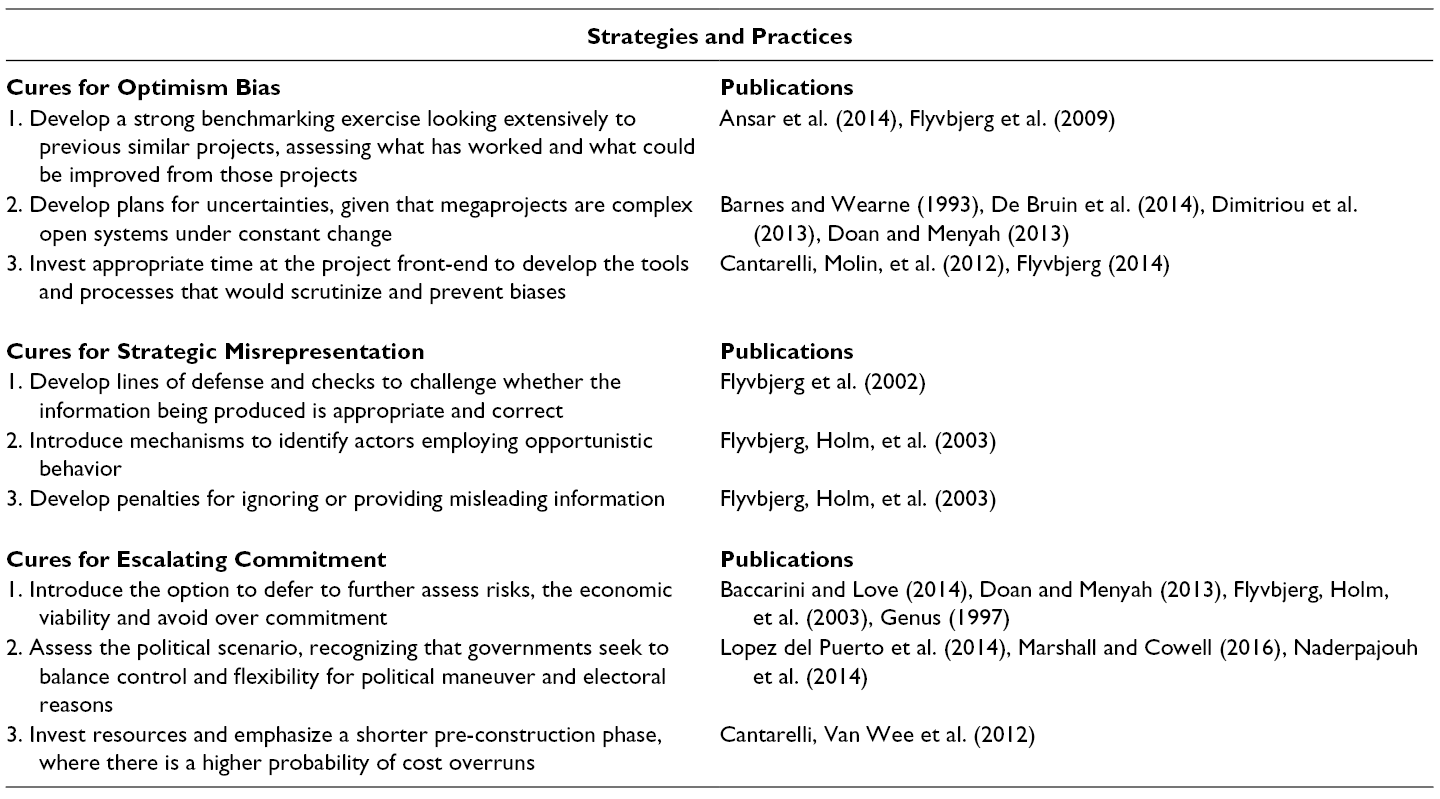
A significant body of literature on megaproject performance is related to decision-making behaviors. Theme 1 identifies how behaviors in the front-end and during execution are associated with poor performance in decision making. This theme rejects technical explanations as the main reason for inadequate forecasting and discusses poor performance as a result of psychological and behavioral reasons and how those affect decision making. The three most predominant concepts in this theme are: (1) optimism bias (delusion): executives are overly optimistic and thus overestimate benefits and underestimate costs; (2) strategic misrepresentation (deception): executives strategically misrepresent the truth and seek to satisfy their own interests; and (3) escalating commitment: executives continue to follow the pattern of behavior leading to unsuccessful outcomes rather than follow an alternative course of action.
The main cause of poor performance associated with optimism bias is biased judgment and advice provided by experts in their fields who tend to create an optimistic scenario and circumvent known risks and unforeseeable uncertainties. This is an unconscious phenomenon that psychologists classify as the planning fallacy, leading executives to underestimate costs in several areas of complex projects. The leading cause related to strategic misrepresentation refers to diverse pressures (political, organizational, and individual) forcing the decision maker to manipulate the situation by usually underestimating costs and ignoring risks. Early estimates and forecasts are used deceptively to inform decision making and achieve the necessary alignment and support from stakeholders (including the taxpayer) to proceed with that preferred project. The primary cause connected to escalating commitment is the overall perception, which mostly works as a norm, that, once started, a megaproject is too big to fail and too costly to stop. Managers allocate resources in order to complete the project, even when subsequent assessments and audits indicate a decision in another direction, where the final benefits are no longer superior to the necessary investment. A list of strategies and practices to cure the causes of each concept of theme 1 is presented in Table 1.
Cures for the Causes Associated with Theme 1’s Concepts
Theme 2: Strategy, Governance, and Procurement
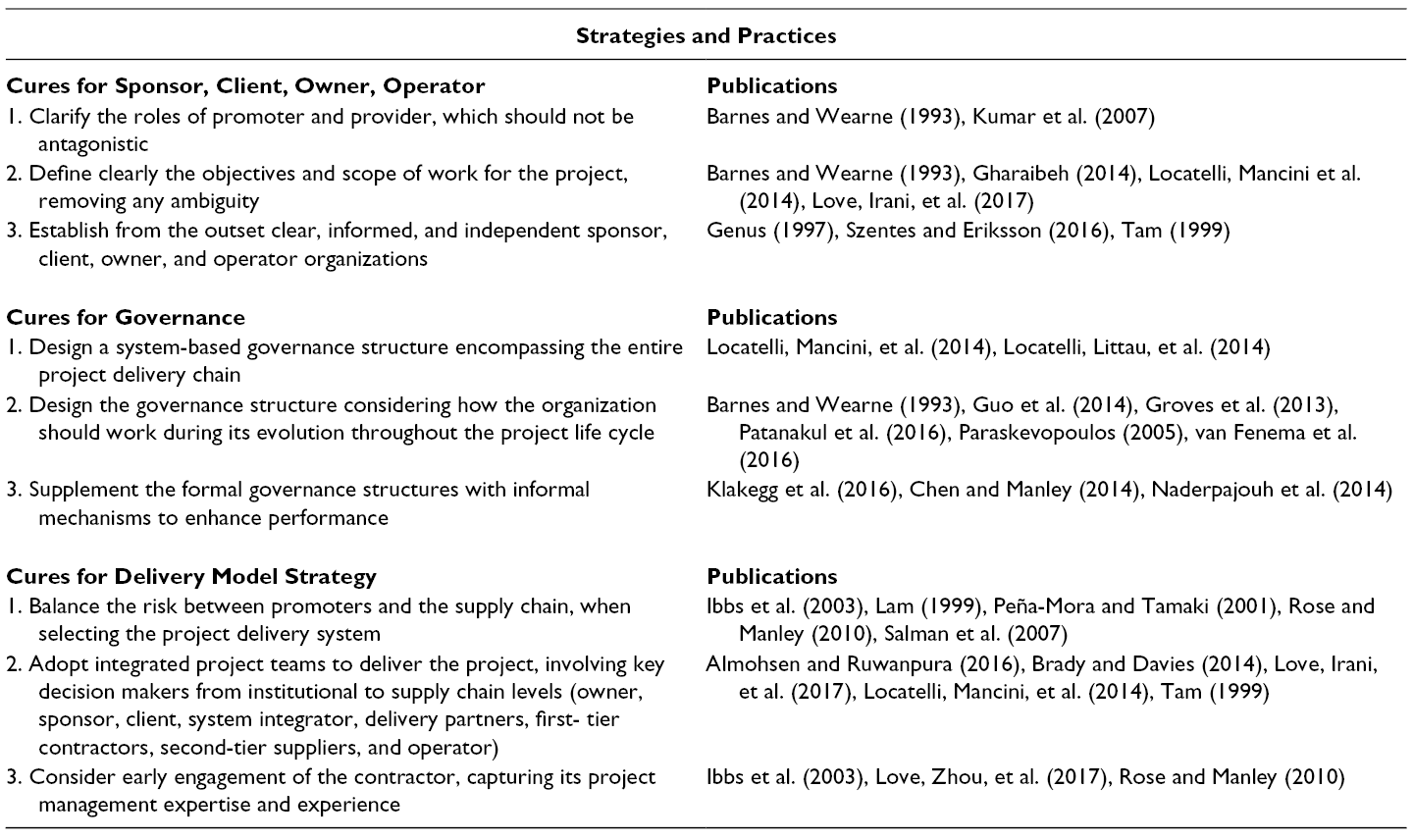
The second theme encompasses the definitions of strategy, governance, and procurement, including the processes during the initiation and planning phases of a megaproject, which the literature typically addresses as the front-end stage of projects. Decisions made at this stage may influence subsequent stages and the ability to achieve successful project outputs and outcomes. The three most predominant concepts in this theme are: (1) sponsor, client, owner, operator: associated with the roles and responsibilities of these entities throughout the project life cycle, with particular emphasis on the front-end stage; (2) governance: linked to the delegation of authority formally and informally, at the organizational and individual levels; and (3) delivery model strategy: related to the strategy adopted by firms to organize themselves in combination with partners and suppliers, and combining in-house and external capabilities to best organize and deliver the project.
The main cause of poor performance associated with the sponsor, client, owner, and operator relates to inadequate definitions of roles and responsibilities during the project life cycle, the need to clarify which entity is the sponsor, where the ownership resides, who the intermediary client is, and who is going to operate the asset. In the absence of a long-term vision and clear definitions of roles, the entity promoting the project often seeks to transfer the risk to the supply chain. As a result, client organizations are rarely willing to bear the risk. The leading cause related to governance is an inadequate attention to the design of the governance structure and its evolution over time, including the balance between formal (hard, rigid) and informal (soft, gut-feeling, emerging) governance structures. The leading cause connected with delivery model strategy is the poor understanding and definition of the balance between the in-house capabilities of the client organization and those outsourced to the market and allocated to partners and contractors. Often, the mechanisms used to procure capacity and capability from the market result in transactional and adversarial relationships with the supply chain, rather than integrative and collaborative ones. A list of strategies and practices to cure the causes of each concept of theme 2 is presented in Table 2.
Cures for the Causes Associated with Theme 2’s Concepts
Theme 3: Risk and Uncertainty
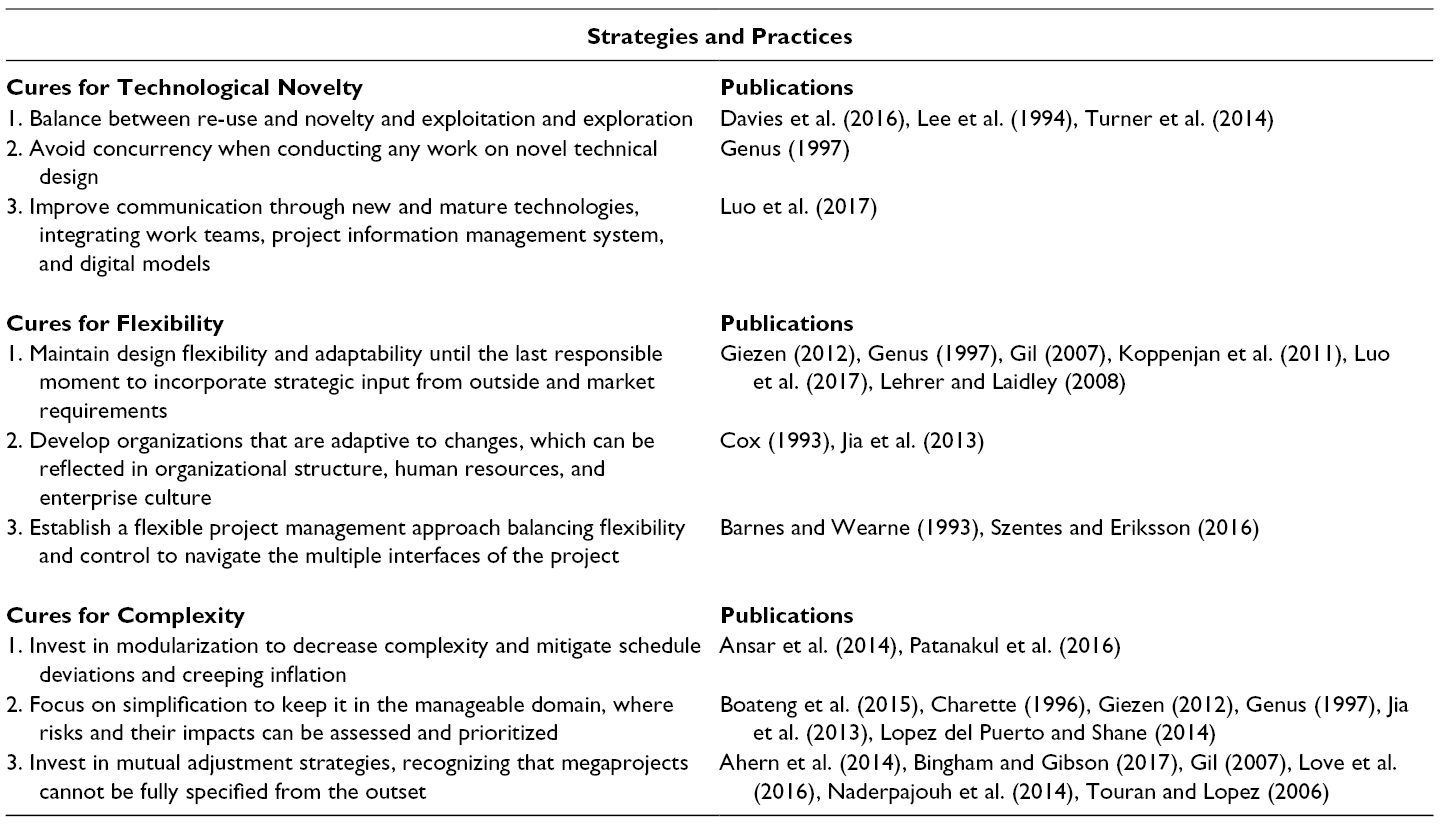
This theme captures the literature that addresses risk and uncertainty, where articles covered technology development processes and analyzed strategic decisions to overcome risks in megaprojects across several industrial sectors. The three most predominant concepts are: (1) technological novelty: first-of-a-kind technologies have frequently being introduced in large innovative projects and are associated with risks; (2) flexibility: the ability to be adaptive and responsive to changing and uncertain circumstances; and (3) complexity: the underlying factor of megaprojects that can be defined by the large number of parts and its relationships among each other and with the external environment.
The main cause of poor megaproject performance associated with technological novelty is the introduction of unproven technology leading to cost and time overruns. The uncertainty about how to deal with a new technology often requires longer design and development phases of the project. The leading cause related to flexibility refers to early decisions (formal and informal) that constrain the necessary adaptability by mutual adjustments in a complex, dynamic, and uncertain environment. Many factors restrict project flexibility, including centralized decision making, financing, regulatory frameworks, design, commercial arrangements, contracts, and technology, among others. The primary cause connected with complexity is the uncertain interactions between a large number of moving and evolving parts within the megaproject system, as well as their relationships with the external environment. The system can be affected by many dimensions, such as regulations, information, technical, and organizational components. A list of strategies and practices to cure the causes associated with each concept of theme 3 is presented in Table 3.
Cures for the Causes Associated with Theme 3’s Concepts
Theme 4: Leadership and Capable Teams
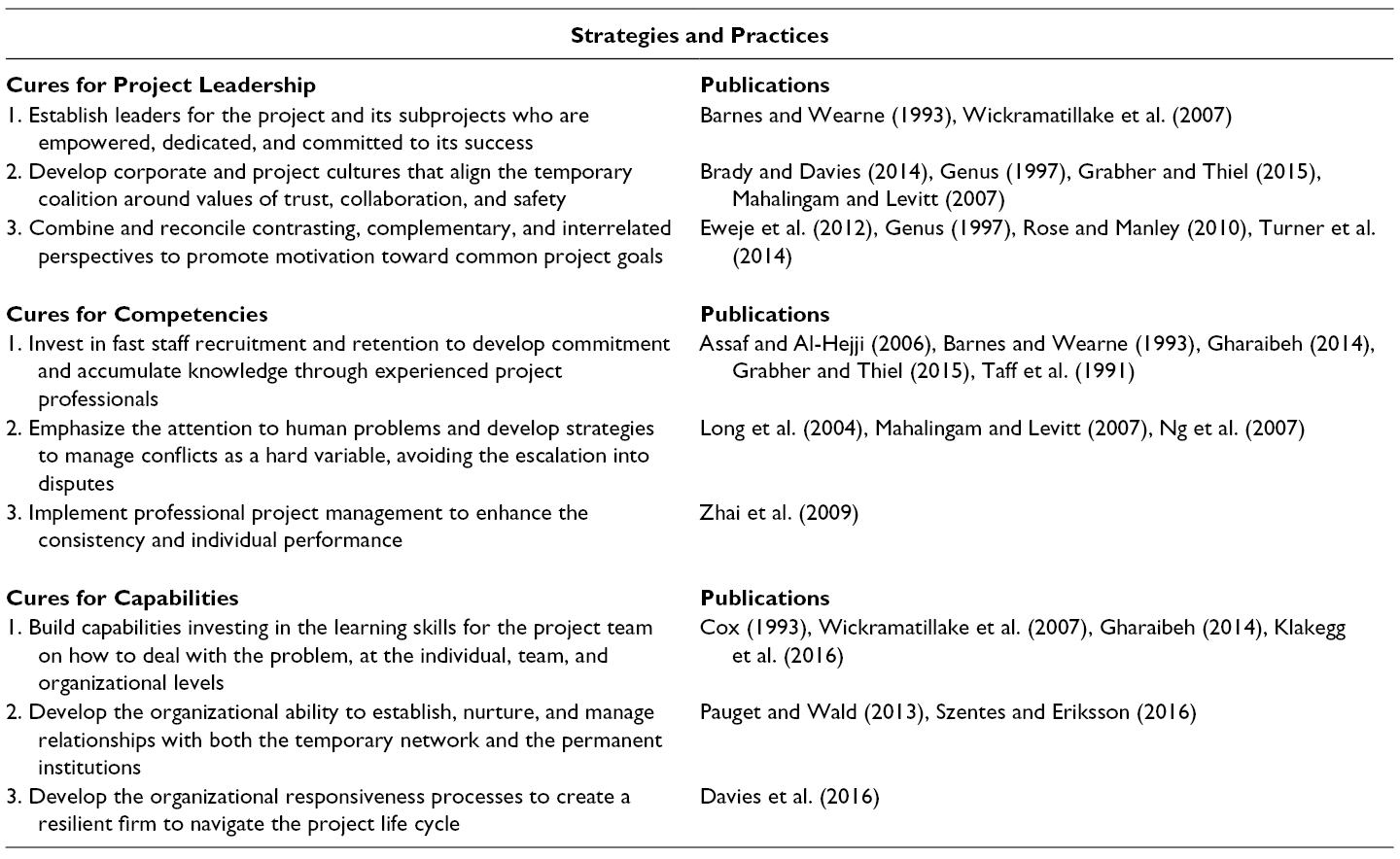
This theme refers to relationships among project team members, individual competencies, required skills, and organizational capabilities that contribute to the performance of megaprojects. The three most predominant concepts are: (1) project leadership: the need for project champions, dedicated leaders who are committed to the success of the project; (2) competencies: competencies and skills that individuals forming project teams need to possess; and (3) capabilities: the ability that firms have to produce specific products or services relying upon collective organizational knowledge.
The main cause of poor performance associated with project leadership is an inappropriate definition of the project culture and sense of purpose, which lead to intra- and inter-organizational misalignments. It promotes dysfunctional structures that encourage behaviors driven to attend to individual goals rather than the collective vision and objectives. The leading cause related to competencies is a poor definition, recruitment, and maintenance of the right team. It stimulates high staff turnover, impacts the appropriate level of expertise necessary to deliver the project, and creates a reinforcing negative loop given the shortage of qualified resources. The primary cause connected with capabilities is the inability to assemble the organizational capabilities to address the requirements of different phases of the project as well as its transitions. It impacts entities throughout the supply chain (Tier 1 main contractors or Joint Ventures, Tier 2s, Tier 3s, etc.), as well as client and institutional organizations. A list of strategies and practices used to cure the causes of each concept of theme 4 is presented in Table 4.
Cures for the Causes Associated with Theme 4’s Concepts
Theme 5: Stakeholder Engagement and Management
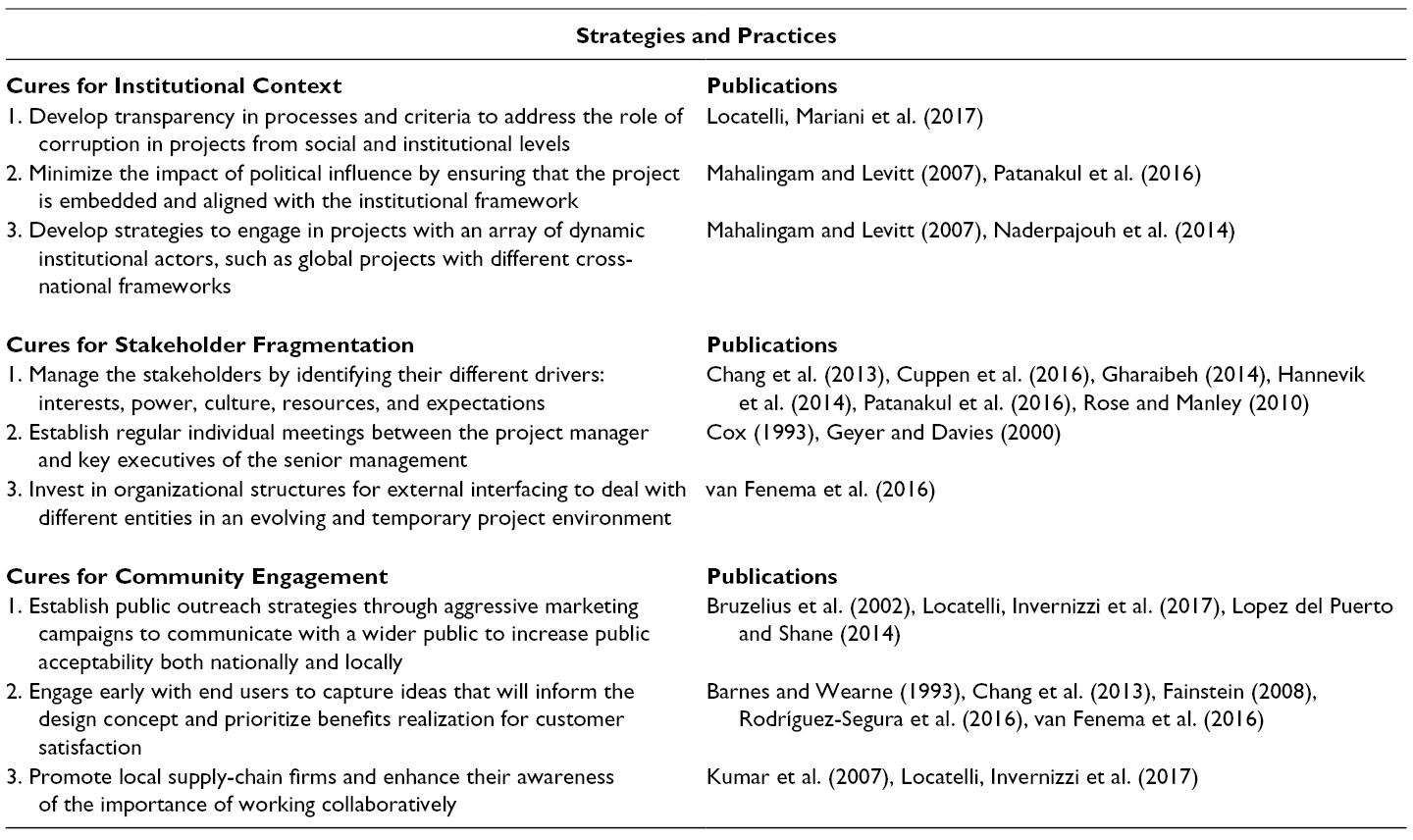
The fifth theme is about engaging and managing stakeholders. This part of the literature addresses various factors considered to be outside of the project environment. The three main concepts are: (1) institutional context: the set of formal organizational structures, rules, and informal norms; (2) stakeholder fragmentation: the number of parties, which often results in an intense level of interaction among involved stakeholders; and (3) community engagement: the processes and engagement activities by which the project involves the local population in the project.
The main cause of poor performance associated with institutional context is an inadequate understanding of the parties, interests, and the power relationships surrounding the project. Conflicts, inefficiencies, and delays often arise as the various parties involved attempt to deal with governmental agencies and comply with regulations. The leading cause related to stakeholder fragmentation is due to the numerous parties involved in a project and the inability to achieve an alignment with the competing and often conflicting priorities, goals, and interests. The primary cause connected with community engagement is due to the poor engagement, communication, and transparency with external parties affected by the project during its life cycle. Local communities negatively impacted by a project often become mobilized to ensure their interests are realized, often exploiting the media to achieve their objectives. A list of strategies and practices used to cure the causes of each concept of theme 5 is presented in Table 5.
Cures for the Causes Associated with Theme 5’s Concepts
Theme 6: Supply Chain Integration and Coordination
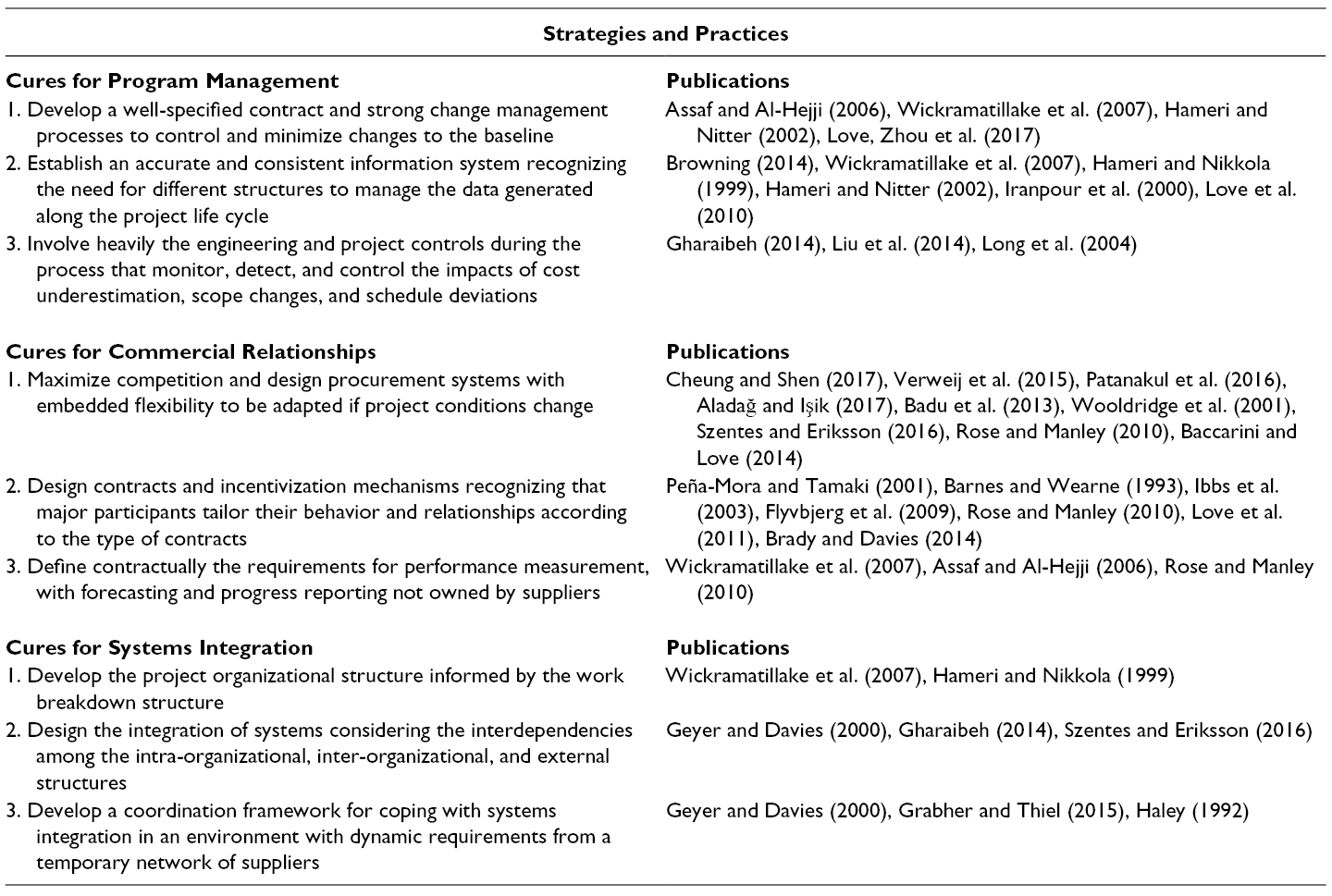
The sixth theme refers to the coordination and integration of the supply chain. This part of the literature is associated with the mechanisms used by different types of organizations (clients, delivery partners, main contractors, and Tier 2 suppliers) to coordinate and integrate a large network of suppliers. The three main concepts in this theme are: (1) program management: associated with systems, procedures, and tools to monitor, control, consolidate, optimize, and achieve benefits from a number of individual inter-related projects; (2) commercial relationships: linked to the establishment of formal relationships with the organizations delivering projects and subprojects, as well as the management of those interfaces throughout several phases of the project; and (3) systems integration: related to the technical and managerial capabilities required to integrate several components produced by different parties in order to deliver an operational asset to the client. This integration happens at the system level as intermediary products (projects and subprojects) and at the system of systems level as final products (programs and portfolios).
The main cause of poor performance associated with program management is an inability to obtain the information and program-wide visibility required to coordinate projects and subprojects at the right time during various phases of the project life cycle. The leading cause related to commercial relationships is the limited systemic understanding about interdependencies during the life cycle, which impact the project at different levels: the intra-organizational, inter-organizational, and external environments. The primary cause connected to systems integration is poor understanding of the design of the systems architecture at the front-end, which provides a structure for integration across different megaproject levels including projects, the program, and system. The systems integrator organization has to be established with the capabilities required to coordinate and integrate the temporary coalition of suppliers delivering the project. A list of strategies and practices to cure the causes of each concept of theme 6 is presented in Table 6.
Cures for the Causes Associated with Theme 6’s Concepts
Discussion
To deepen and extend our understanding of the causes and cures of poor megaproject performance, our research systematically reviewed the academic literature on the performance of megaprojects and, drawing upon 86 papers, has suggested six themes with concepts contributing to their performance across the project life cycle. The six themes summarizing our research findings are: Decision-Making Behavior; Strategy, Governance, and Procurement; Risk and Uncertainty; Leadership and Capable Teams; Stakeholder Engagement and Management; and Supply Chain Integration and Coordination. Three predominant concepts under each theme were identified to illustrate some of the causes of poor performance and practices used to improve megaprojects, as well as to contribute to the ongoing conversations in the literature. In addition, we tested and validated the findings from the systematic review through a session with an experienced industrial policy adviser and two workshops with leading academics and practitioners.
Our research categorized what is known about megaprojects, unpacked what is unknown, identified potential impacts for practice, and outlined a research agenda. We found that no single concept or framework—no matter how far we stretch it—can account for the multiple and varied causes and cures for the poor performance of megaprojects. For example, a large body of the literature claims that the main causes of poor megaproject performance are due to inadequate definition of risk and poor decision making in the front-end. While the concept of optimism bias can be used to discuss cost and schedule overruns, it provides little or no explanation of how performance may be improved by making decisions to address unforeseen events and circumstances when a megaproject is underway (Flyvbjerg et al., 2018; Lavagnon, 2018; Love & Ahiaga-Dagbui, 2018).
Upon reflection of our themes, we suggest the following five avenues for future research, which may help scholars develop a more comprehensive theory for megaproject management:
1. Designing the system architecture
There is a need for more conceptual research to better understand how novel organizational forms and governance structures between owners, operators, sponsors, clients, delivery partners, and suppliers are being developed to improve the performance of megaprojects (Gil & Pinto, 2018). Research is required to explore hybrid public and private organizational forms and entrepreneurial structures in megaprojects (Quélin et al., 2017). Researchers might focus on improving our understanding regarding the roles, responsibilities, and capabilities of permanent and temporary organizations that are part of the network—from owners to suppliers such as meta-systems integrators (Davies & Mackenzie, 2014), network orchestrators, supply chain architects (Denicol, 2020a), supply chain managers, and systems integrators (Nambisan & Sawhney, 2011; Wind et al., 2009). Scholars might explore how clients that undertake operations and a portfolio of major capital projects to expand or change their business are organized to achieve their strategic objectives. Research is required to improve our understanding of temporary pop-up organizations, created with a single purpose of delivering the project and disbanding when the task is completed (Denicol et al., 2019). Future research on this avenue could be primarily stimulated by concepts from themes 2 and 6.
2. Bridging the gap with manufacturing
Considering the productivity gap between construction and other industries, there is a need for more research to examine how manufacturing production strategies (e.g., Engineer-to-Order, Assembly-to-Order, and Make-to-Stock) and advanced digital technologies (e.g., augmented reality and artificial intelligence) may be applied to complete megaprojects more efficiently and effectively (Gosling & Naim, 2009). Future research is needed to revisit the literature on off-site manufacturing in high-volume sectors and consider how these practices apply to the construction industry, building on the concept of modularity in megaprojects (Tee et al., 2019). Comparisons with other manufacturing industries could help to understand how the dynamic of innovation is pushed or pulled in complex megaproject supply chains. Researchers might examine how off-site manufacturing, modularity, platforms, just-time-time logistics, and new techniques such as Design for Manufacture and Assembly (DfMA) and artificial intelligence are being applied to enhance the performance of megaproject production systems. Scholars interested in the exploration of this avenue could analyze the interface and combination of concepts from themes 3 and 6.
3. Building and leading collaborations
Researchers might explore how different leadership approaches can be adopted to address, match, and cope with current and new organizational forms. Another opportunity is to study the interplay between the formation of the team, recruiting and building the necessary competencies in a bottom-up approach, and the desired organizational capability (Edmondson & Harvey, 2017). A dynamic capability lens could be used to research the evolution and adaptability of enterprise capabilities over the stages of the project, building upon complementarities from the inter-organizational network (Davies et al., 2016). In addition, research could consider how collaboration depends on the varying roles of the organization—such as the client, delivery partner, and systems integrator—in the temporary coalition during different phases of the project. Academics considering future research on this avenue would benefit of further reflections on concepts from themes 4 and 5.
4. Engaging institutions and communities
Given the extensive infrastructure development in emerging regions—such as Africa, parts of Asia, and South America—there are concerns about the strength of the institutional environment in those places and how mature practices from developed centers could be transferred and applied (Gil et al., 2019). Researchers might explore how the infrastructure will be constructed when embedded in a context with weak institutions, changing and emerging regulatory frameworks, and high levels of corruption (Locatelli, Mariani et al., 2017). There is a need to identify and explore how institutional and cultural contexts impact on the planning and execution of megaprojects in different parts of the world. More research needs to be undertaken on the roles of stakeholders and how their often-conflicting interests, needs, and priorities impact the benefits generated by megaprojects. Corporate diplomacy can be explored to understand how the coalition delivering the megaproject is engaging with actors at different levels to foster advocacy—from funders and regulators to affected communities and end-users (Henisz, 2014). This avenue could be further examined by the exploration of concepts from themes 1 and 5.
5. Decomposing and integrating the supply chain
Megaprojects have complex supply chains comprised of hundreds of contracts with contractors, consultants, and subcontractors. While prior studies have identified some of the capabilities that system integrators require to coordinate suppliers and forge collaboration between them (Davies et al., 2009; Davies & Mackenzie, 2014), we still know little about how much capability clients and systems integrators need to build in-house and how they should decompose megaprojects into components of a production system undertaken by contractors and suppliers (Denicol, 2020b). There is a need for more guidance on the rules, procedures, and methods enabling clients to know how to break down each project supply chain into manageable packages and modules. Research could explore how clients use influence and negotiation skills to manage multiple contracts, including how to balance the competing interests, different behaviors, and priorities of numerous suppliers involved in a megaproject (Pryke, 2020). Studies might examine how suppliers are incentivized to achieve their objectives during different stages and transitions in the life cycle of a megaproject—from the front-end planning, through design and construction, to the back-end handover to operations (Hart, 2015). Researchers interested in developing studies on this avenue are encouraged to draw inspiration from the concepts of themes 2, 5, and 6.
Conclusions
What is missing in current research is an understanding of megaprojects as a complete production system—from planning, through design, manufacturing, and construction, to integration and handover to operations. New research and theory building are required to identify how different elements impacting megaproject performance interrelate and work together to achieve a project’s goals and deliver valuable outcomes, drawing inspiration from studies on how production is organized and managed in other industries, such as the automotive and aerospace industries. The consideration of their interdependencies may inform discussions on how megaprojects could be more comprehensively studied to improve our understanding of topics, such as the (co)creation of value, its evolution, extent, organizational boundaries, and transferability across the ecosystem (Jacobides et al., 2018).
The achievement of high-performing organizations like Toyota, for example, lies in their ability to integrate, coordinate, and manage components of a lean production system, involving multiple partiers, extending from product planning through manufacture, supplier coordination, and assembly to the customer (Womack et al., 1990). Informed by theories of industrial organization and operations management, several scholars call for research to consider complex projects as systems of production located at the novel end of a spectrum of industrial organization, extending from one-off units to high-volume standardized production (Hobday, 1998; Maylor et al., 2018). The recent call for research to focus on innovative project delivery models may be an interesting way of conceptualizing megaprojects as systems of production for value creation and capture (Davies et al., 2019). Denicol (2019) explores megaprojects as dynamic inter-organizational systems —including stages of development, delivery, and operations—and identifies strategies to design the architecture of the evolving system. By thinking about megaprojects as production systems, future research may help us understand how the different dimensions—the six themes identified in our research—work together to achieve improvements in performance.
Footnotes
Appendix 1. Lists of Synonyms
Appendix 2. List of Exclusion/Inclusion Criteria
Appendix 3. Extraction Form
Acknowledgments
We would like to acknowledge the funding received from the 2017 Project Management Institute Sponsored Research Program. Special thanks to JC Nogueira who acted as the PMI project liaison. We are grateful for the research grant received from the Brazilian research agency CNPq (National Council for Scientific and Technological Development). We also thank all the professionals who shared their knowledge and expertise to produce this study, in particular Amanda Clack, Sue Kershaw, Ken Owen, Martin Rowark, and Mark Thurston. We also thank the academics for responding to our call and offering feedback, including Peter Morris and colleagues from the School of Construction and Project Management (UCL), Atif Ansar, Brian Collins, Nuno Gil, Peter Hansford, Harvey Maylor, Jens Roehrich, Jennifer Whyte, and Graham Winch.
Declaration of Conflicting Interests
The author(s) declared no potential conflicts of interest with respect to the research, authorship, and/or publication of this article.
Funding
The author(s) disclosed receipt of the following financial support for the research, authorship, and/or publication of this article: This research was funded by the Project Management Institute (PMI).
Author Biographies