







Abstract
Employing self-determination and social identification theories, we examined how servant leadership, which focuses on employees’ needs, influences project success. Based on 453 responses from project team leader–project team member dyads working in a single organization, our findings suggest that servant leadership enhances project success predominantly by mitigating project work withdrawal, rather than accentuating work engagement. Additionally, when team members’ project identification is high, the servant leadership–work engagement relationship is weakened, whereas the servant leadership–project work withdrawal relationship is strengthened. We contribute to the nascent literature that positions servant leadership as an effective style in the project context.
Keywords
Introduction
Traditionally, project management has been primarily concerned with managing projects as technical systems (Imam & Zaheer, 2021). However, with the increasing emphasis on human behavior and dynamics as key determinants of the success of projects (Dalcher, 2019), the project management literature is now inclined toward viewing managing projects as behavioral systems (Belout & Gauvreau, 2004; Martin, 2017; Merrow & Nandurdikar, 2018). Recent trends indicate that leadership and people skills are among the most important competencies for future project managers (Project Management Institute [PMI], 2017, 2020).
Prior literature suggests that people-oriented leaders tend to be more effective in achieving successful project delivery (Lee-Kelley & Kin Leong, 2003; Mäkilouko, 2004). In particular, servant leadership is gaining greater attention as an effective leadership style in the project management literature (Holtzhausen & de Klerk, 2018; Krog & Govender, 2015a). However, according to Aga et al. (2016), there remains a need to understand the underlying mechanisms and boundary conditions through which project managers and team leaders invigorate team members to achieve superior project performance. Accordingly, our central research question is: How does servant leadership influence project success? Project success here refers to the project leaders’ perspective on whether the project team was effective in completing its tasks and skilled in its collaborations with project stakeholders (Aga et al., 2016; Imam & Zaheer, 2021).
Servant leaders help team members grow and succeed by placing their benefits first and promoting increased collaboration among them (Hunter et al., 2013; Liden et al., 2008). Followers of such leaders are expected to be more engaged (De Clercq et al., 2014) and feel positive emotions toward their assigned work (Page & Wong, 2000). This would, in turn, lead to greater performance at individual and organizational levels (Halbesleben & Wheeler, 2008; Rurkkhum & Bartlett, 2012; Shuck et al., 2013; Shuck et al., 2011). Additionally, servant leaders are also likely to foster a serving culture within their projects (Liden et al., 2014), which would encourage their followers to prioritize the needs of their own subordinates and peers above their own. Therefore, the positive effects of servant leaders may spill over beyond their direct followers. We further posit that servant leaders would foster positive energy among their team members (Schaufeli & Bakker, 2004) and invigorate them to work toward stakeholder needs fulfillment (Lemoine et al., 2019). This would likely decrease team members’ proclivity to exhibit work withdrawal behaviors such as arriving late for work, thinking of excuses to avoid work, and increased absenteeism, while also enhancing work engagement, which refers to a positive and fulfilling work-related state of mind. Accordingly, we propose work engagement and project work withdrawal as two key mediators through which servant leadership would likely boost project success.
We adopt the lens of self-determination theory (Deci & Ryan, 1985) to explain how servant leadership influences project success through the dual intervening mechanisms of work engagement and work withdrawal. We additionally employ social identity theory (Tajfel & Turner, 1979) to explain how project team members’ degree of identification with the project influences the indirect effect of servant leadership on project success via the proposed dual intervening mechanisms.
In sum, the objective of this study is to examine how servant leadership affects project success by probing the roles of work engagement and project work withdrawal as mediators, as well as the role of project identification as a moderator. Our research contributes to the literature mainly in four ways. First, we answer the call by Aga et al. (2016) to examine how leadership styles impact project success by proposing a parallel moderated mediation model. Second, in response to Eva et al. (2019) to extend the nomological network of servant leadership research, we present project work withdrawal as a new mediator. Antecedents of employee turnover have been scarcely examined in project context (Ekrot et al., 2016). Prior research suggests that project work withdrawal has detrimental effects on the organization’s performance (Kacmar et al., 2006). It is, therefore, essential to examine how work withdrawal influences the success of the temporary project organization, as well as how it can be mitigated. Third, we extend the application of self-determination and social identity theories to the context of projects. Fourth, we additionally apply the organizational identification construct to the context of projects and contribute to the nascent literature on project identification (Ding et al., 2017) by examining its role as a first-stage moderator of the indirect effect of servant leadership on project success via the two mediators.
Theoretical Background and Hypotheses
Servant Leadership
Although examples of servant leaders date as far back as thousands of years (Gandolfi & Stone, 2018; Langhof & Güldenberg, 2020), the term servant leadership was initially coined by Robert K. Greenleaf (1970, 1977). In contrast to the traditional approaches to leadership, servant leadership purports that the prime role of a leader is to serve other people (Greenleaf, 1970), particularly those working directly under them in an organizational setting. Hence, it falls under the category of moral approaches to leadership (Gandolfi & Stone, 2018; Liden et al., 2015). In the project management literature, debate on servant leadership is still fairly limited, although there is an increasing interest in examining its effectiveness in the context of projects (Bilal et al., 2020; Harwardt, 2020; Holtzhausen & de Klerk, 2018; Krog & Govender, 2015a).
Servant leadership comprises multiple dimensions and is based on altruism, ethics, empathy, and, most importantly, a priority of serving the followers, which is also referred to as organizational stewardship (Barbuto & Wheeler, 2006; Gandolfi & Stone, 2018). Hence, servant leaders can be defined as those who “place the needs of their subordinates before their own needs and center their efforts on helping subordinates grow to reach their maximum potential and achieve optimal organizational and career success” (Liden et al., 2008, p. 163).
While a universally accepted definition of servant leadership is still unavailable in the literature (Chughtai, 2016; Langhof & Güldenberg, 2020), researchers’ interest has begun to coalesce around a few key studies (Eva et al., 2019; Langhof & Güldenberg, 2020; Liden et al., 2015; Liden et al., 2008; Parris & Peachey, 2013). Among these, the work of Liden and colleagues (Liden et al., 2015; Liden et al., 2008) are generally regarded as some of the most important contributions toward capturing the essence of the servant leadership concept, as described by Greenleaf (1970), in a manner that lends itself to empirical research in a broad range of contexts (Eva et al., 2019; Langhof & Güldenberg, 2020; Parris & Peachey, 2013). Accordingly, this study employs the conceptualization and operationalization of servant leadership established and refined by Liden et al. (2015), which comprises seven dimensions: emotional healing; creating value for the community; conceptual skills; empowering subordinates; helping subordinates grow and succeed; putting subordinates first; and behaving ethically.
Servant leadership is a distinct leadership style that contrasts from similar morality-based types of leadership, such as ethical leadership and authentic leadership, in that ethical leadership is primarily focused on adherence to moral and ethical norms while authentic leadership mainly includes “leader’s self-awareness and moral self-concordance” (Lemoine et al., 2019, p. 149). In contrast, an essential element of servant leadership is a deep emphasis and prioritization of stakeholder success (Eva et al., 2019). Similarly, servant leadership is distinct from transformational leadership, as “transformational leaders tend to focus more on organizational objectives while servant leaders focus more on the people who are their followers” (Gregory et al., 2004, p. 349). Specifically, servant leadership is distinct from transformational leadership along three key aspects: (1) it is a follower-centric approach, rather than leader-centric; (2) it is essentially a morality-based approach to leadership, unlike transformational leadership and other similar styles; and (3) it carries a universal inclination for serving, which not only pertains to the organization, but also the followers as well as the broader community (Huang et al., 2016).
We employ two theories to explain our proposed theoretical framework. First, self-determination theory is employed that is fundamentally an organismic-dialectic theory (Deci et al., 1994). It views human beings as proactive, growth-oriented organisms whose behaviors, experience, and development are influenced by their social context (Deci et al., 1994). Self-determination theory purports that there are three basic psychological needs namely, autonomy, competence, and relatedness, which are described as nutriments that are necessary for an individual’s well-being and psychological growth (Deci & Ryan, 2000). Self-determination theory further posits that when an individual’s social context supports the accomplishment of these basic needs, they tend to exhibit greater intrinsic motivation and the integration of extrinsic regulations into their core sense of self (Deci & Ryan, 1985, 2000; Gagné & Deci, 2005). In contrast, when their social context impedes the fulfillment of these needs, self-determination theory suggests that individuals would be inclined toward self-protective, antisocial, or even malevolent and destructive behaviors (Deci & Ryan, 2000). Servant leaders, due to their inherent strong emphasis on the needs of others (Greenleaf, 1970, 1977), would likely be able to identify and satisfy the basic psychological needs of their team members (Chiniara & Bentein, 2016), thereby contributing to creating a supportive social context. This would, in turn, lead to positive team member outcomes, such as greater work engagement (Van Dierendonck et al., 2014) and the reduction of negative work withdrawal behaviors.
Second, we employ social identity theory to clarify how project team members’ degree of identification with the project influences the indirect effect of servant leadership on project success. Social identity theory posits that individuals’ self-perceptions and behaviors are influenced by the social categories or groups that they perceive themselves to be a part of (Tajfel & Turner, 1986). Accordingly, we propose that the salience of team members’ social identity as members of a particular project, represented in this study through project identification, would influence their behaviors and, consequently, the overall project performance.
Servant Leadership and Project Success
There is a wide range of definitions and conceptualizations of project success in the literature (Albert et al., 2017; Baccarini, 1999; Ika, 2009). An inherent challenge in measuring project success is that it may vary when examined from various stakeholders’ perspectives, such as project team members, project managers, sponsors, senior managers, and customers (Pinto & Slevin, 1988). The Project Management Institute (PMI) defines project success as “balancing the competing demands for project quality, scope, time, and cost, as well as meeting the varying concerns and expectations of the project stakeholders,” which was later expanded to include support for organizational strategy and benefits realization as well (PMI, 2017). In the academic literature, project success was initially measured by evaluating three core success criteria of time, cost, and scope/quality, collectively referred to as the “triple constraints” or the “iron triangle” (Atkinson, 1999; Belassi & Tukel, 1996; Jha & Iyer, 2007). These base measures were based on the philosophical premise that projects are primarily technical systems (Imam & Zaheer, 2021). However, as the project management discipline matured over time and as project management practices became widely applied in a range of industries, additional criteria were developed to provide a more comprehensive assessment of project success, which covered areas such as customer satisfaction and achievement of organizational strategic objectives (Aga et al., 2016; Ika, 2015; Joslin & Müller, 2015), as well as creation of future opportunities (Khan et al., 2013), and long-term sustainability (Taherdoost & Keshavarzsaleh, 2016).
According to Müller and Jugdev (2012), one of the most comprehensive and all-inclusive frameworks of project success was developed by Pinto and colleagues, who proposed a model focusing on three key factors pertaining to the project itself: time, cost, and performance, as well as three key factors pertaining to the client: use, satisfaction, and effectiveness (Pinto & Slevin, 1988). These factors collectively formed the basis of the composite measure referred to as the Project Implementation Profile (Pinto & Prescott, 1990; Pinto & Slevin, 1988), which was later adapted and slightly expanded by Aga et al. (2016). Our study employed the latter to define and assess project success.
While the literature on the measurement of project success is quite rich, there appears to be comparatively limited discourse on the contribution of leadership and leadership styles in influencing project success (Turner & Müller, 2005; Tyssen et al., 2014a). An examination of the literature indicates that people-oriented leaders tend to be more successful in achieving project success (Lee-Kelley & Kin Leong, 2003; Mäkilouko, 2004; Müller & Turner, 2010; Tyssen et al., 2013). For example, both empowering leadership and transformational leadership are considerably associated with project success in the context of projects (Aga et al., 2016; Anantatmula, 2010; Ding et al., 2017; Keegan & Den Hartog, 2004; Raziq et al., 2018; Tyssen et al., 2014a).
However, there is a general scarcity of literature in the project management discipline on servant leadership, including empirical research on its effect on project success (Bilal et al., 2020; Krog & Govender, 2015a). Additionally, while there are several studies on servant leadership in the general management literature, the dynamics of temporary organizations are markedly different from permanent organizations (Hanisch & Hulin, 1990; Tyssen et al., 2014a), thus indicating a need to explore the interplay of servant leadership in the context of projects. Servant leadership could be particularly useful in managing projects because servant leaders inspire followers by creating swift trust, which, consequently, results in improved follower performance (He et al., 2019). Moreover, studies indicate that servant leadership is a more effective style relative to other leadership styles. For example, Chiniara and Bentein (2018) observed that servant leadership was more successful in improving team performance as compared with leader–member exchange, another people-oriented style, by reducing perceived differentiation between group members. Servant leadership was also found to be a more significant predictor of individual performance and career satisfaction (Kaya & Karatepe, 2020), as well as group-level outcomes (Schaubroeck et al., 2011), as compared to transformational leadership. Hence, it is clear that there is a plausible case to examine the effectiveness of servant leadership as a predictor of overall performance in the context of temporary organizations as well. Accordingly, we hypothesize:
Servant Leadership, Project Work Withdrawal, and Project Success
Works withdrawal behaviors are perhaps one of the most widely investigated negative work behaviors in the general management literature (Wang & Walumbwa, 2007), though this concept has received scant attention in the project management literature. Work withdrawal may present itself either as turnover intentions or as a lack of interest or engagement with the job, such as arriving late for work, thinking of excuses to avoid work, becoming irregular, and increased absenteeism (Walumbwa et al., 2004), which are collectively referred to as work withdrawal behaviors (Lehman & Simpson, 1992). The literature is abundant with studies showing various leadership styles affecting employee turnover intentions and work withdrawal behaviors (Ferris, 1985; Graen et al., 1982). For example, it is quite well established that transformational leadership has an inverse relationship with turnover intentions (Ding et al., 2017; Martin & Epitropaki, 2001; Wells & Welty Peachey, 2011) and work withdrawal behaviors (Walumbwa & Lawler, 2003; Walumbwa et al., 2004). Servant leadership has been scarcely explored with work withdrawal, although it considerably impacts other workplace attitudes and behaviors (Barbuto & Wheeler, 2006; Neubert et al., 2008; Wang et al., 2017b). For example, one study revealed that servant leadership is inversely related to turnover intentions and disengagement (i.e., work withdrawal) in U.S. retail organizations (Hunter et al., 2013).
Most of the studies on work withdrawal behaviors and turnover intentions have examined them as work outcomes (Chi & Liang, 2013; Cropanzano et al., 1997; Liao et al., 2008; Scott & Barnes, 2011), while there are relatively fewer studies that explore their effect as antecedents of organizational outcomes (Ekrot et al., 2016). However, a few studies do indicate that work withdrawal behaviors could be damaging for the organization, for example, turnover intentions caused negative effects on sales, profits, and efficiency of a work unit (Kacmar et al., 2006), as well as overall firm performance (Glebbeek & Bax, 2004; Shaw et al., 2005). Additionally, the findings of Guthrie (2001) suggest that turnover itself may not be as harmful to the organization as poor performing employees who stay on and engage with on-the-job work withdrawal behaviors. Therefore, it can be expected that work withdrawal behaviors, which may manifest as reduced effort and interest in the job as well as turnover intentions, can produce detrimental outcomes. Turnover intentions have been studied in project management literature and have been found to have a harmful impact on individual, project-level, and organizational-level performance (Nuhn et al., 2019). However, we were unable to identify any existing research on the consequences of work withdrawal behaviors in project settings.
Most studies on servant leadership employ social exchange theory as the overarching theoretical standpoint for relating servant leadership to its outcomes (Lemoine et al., 2019). However, we propose that a more specific theoretical lens is required to explain why servant leaders may be able to elicit positive work outcomes from their followers while simultaneously mitigating negative work behaviors. Therefore, we apply self-determination theory, which posits that individuals are primarily driven to act in order to fulfill their fundamental needs of autonomy, relatedness, and competence (Deci & Ryan, 2000). We propose that servant leaders support the fulfillment of all three needs through their serving nature, thereby creating a conducive social context that (1) encourages positive behaviors by creating intrinsic motivation; and (2) encourages the integration of extrinsic regulations by followers, which, in turn, mitigates negative behaviors (Deci & Ryan, 1985, 2000).
Specifically, we posit that servant leaders enable their followers to improve their abilities and reach their potential (Eva et al., 2019; Greenleaf, 1977), thus satisfying their competence needs. Servant leaders are empathetic toward their followers and believe in building lasting relationships built on trust and care, hence responding to their relatedness needs (Lumpkin & Achen, 2018). Finally, in developing the capabilities of their followers, servant leaders enable them to become leaders in their own roles (Greenleaf, 1977; Langhof & Güldenberg, 2020), hence fulfilling the autonomy needs. Accordingly, by serving these needs, we propose that servant leaders will be able to reduce work withdrawal behaviors in followers, which will, in turn, improve project success. Therefore, we hypothesize:
Servant Leadership, Work Engagement, and Project Success
Work engagement, which is defined as “a positive, fulfilling, work-related state of mind that is characterized by vigor, dedication, and absorption” (Schaufeli et al., 2002, p. 74), has been established as a desired work attitude and shown to serve as a driver of positive work outcomes, including productivity, task and contextual performance, loyalty, and organizational citizenship behaviors (Babcock-Roberson & Strickland, 2010; Bakker & Bal, 2010; Christian et al., 2011; Harter et al., 2002; Salanova et al., 2005). Servant leadership comprises a distinct combination of supportive behaviors and relationship dynamics that are directed toward the benefit of the followers, which result in several positive behaviors in followers, such as job satisfaction (Barbuto & Wheeler, 2006; Neubert et al., 2016), commitment (Benevene et al., 2018; Rego et al., 2016), OCBs (Mahembe & Engelbrecht, 2014; Newman et al., 2017), knowledge sharing (Trong Tuan, 2017), and creativity and innovation (Yoshida et al., 2014).
A review of the management literature suggests that servant leadership also contributes toward increasing followers’ work engagement (Carter & Baghurst, 2014; De Clercq et al., 2014; Ling et al., 2016; Van Dierendonck et al., 2014). Supportive leadership positively influences affective commitment and OCBs of temporary workers (Djibo et al., 2010), which are behaviors that are similar in nature to work engagement. Recently, Goetz et al. (2021) have proposed the person–environment fit model of temporary organizations, in which they suggest that individuals having greater need for autonomy and flexibility, willingness to trust, and the ability to work in teams as well as independently would better fit in the less hierarchical, more specialized, and team-oriented project work environment. It is argued that servant leaders can be successful in such circumstances because of their ability to foster an environment of trust, interdependence, learning, and teamwork. Servant leaders’ personal involvement in facilitating and enabling subordinates is likely to encourage the latter to be more actively involved in achieving project goals. This would result in an increased level of work engagement, which, consequently, would improve project success. Accordingly, we propose that:
The Moderating Role of Project Identification
We also introduce project identification as a boundary condition in our framework, which is a concept derived from organizational identification, which itself is derived from the broader concept of social identification. Social identification is a group-level dynamic in which each member of a group identifies with the overall group as well as other members of the group, because of the salience of an implied shared expectation to hold similar norms, adhere to idiosyncratic stereotypes (Haslam et al., 1992), and work toward common goals (Hornsey, 2008; Mael & Ashforth, 1992). Social identification, when applied to the identity of individuals within organizations, leads to the concept of organizational identification (Mael & Ashforth, 1992), which is embedded in the social identity approach, and is defined as “the cognitive and emotional oneness that an individual perceives to hold with his organization” (Smidts et al., 2001, p. 1051). When organizational identification is applied to the context of temporary organizations, it leads to the concept of project identification, which can be described as the degree to which a project participant shares in the collective vision and mission of a particular project (Ding et al., 2017). Where work is organized in projects, project members are likely to develop some level of social identification with their respective projects (Ding et al., 2017).
Though the literature on project identification is extremely limited and we could only find a single empirical study on this construct (Ding et al., 2017), we have found in various studies that organizational identification plays an important role in influencing institutional outcomes directly or indirectly. For example, it is significantly related with individual performance, involvement, and satisfaction (Aga et al., 2016; Walumbwa et al., 2008; Walumbwa et al., 2011). Similarly, we have found several studies in literature demonstrating a clear, positive association between organizational identification and work engagement (Demirtas et al., 2017; Karanika-Murray et al., 2015; Ötken & Erben, 2010).
The level of overlap between a person’s individual identity and the organizational identity constitutes their organizational identification (Van Knippenberg & Sleebos, 2006). If employees identify strongly with the organization, their attitudes and motivations will be directed toward organizational goals, in this case project goals, through their self-concept, which may reduce their need for leadership (Breevaart et al., 2016). For example, in a study exploring the relationship of organizational identification, ethical leadership, and employee voice (i.e., employee reactions that involve voicing their concerns about work-related issues (Mowbray et al., 2015), organizational identification fully mediated the effect of ethical leadership, thereby demonstrating that when organizational identification comes into play, the effect of the leader becomes less significant in guiding employee voice behaviors (Qi & Ming-Xia, 2014). Therefore, the need of being led is reduced, because of already existing resonance with the project goals and purpose. Accordingly, we posit that when project participants carry a strong identity with the project, the effect of servant leadership on work engagement will be attenuated, and vice versa. Hence, we propose that:
Compared to the abundant literature on organizational identification with work engagement (see preceding), we found relatively little empirical evidence indicating that work withdrawal behaviors tend to be lower for those individuals who identify strongly with their organization (Van Knippenberg et al., 2007). Another study showed that organizational identification strengthened the inverse influence of leader–member exchange, another people-oriented leadership style, on knowledge hiding behaviors (Zhao et al., 2019), which carry some similarity with the concept of withdrawal. Turnover intentions have also been found to reduce performance outcomes in the context of projects (Nuhn et al., 2019), and a lack of commitment to the project can exacerbate turnover intentions (Nuhn & Wald, 2016).
We can take direction from Herzberg’s motivation-hygiene theory for the converse propositions regarding work engagement and work withdrawal behaviors, which posits that motivating factors are intrinsically rewarding while hygiene factors are extrinsically driving (Herzberg et al., 1959). In this case, project identification is essentially an intrinsically driven motivation factor that may influence positive outcomes such as work engagement, in the presence of which servant leadership, which is more of an extrinsic factor, may become less useful. However, work withdrawal, being a negative outcome, can be managed through external factors, in this case, servant leaders. Therefore, we propose that even if employees identify strongly with the project, the external effect of a servant leader would have a strong effect on their work withdrawal behaviors. Accordingly, we propose that similar to organizational identification, project identification will strengthen the inverse relationship between servant leadership and project work withdrawal behaviors. This would, in turn, also strengthen the positive indirect effect of servant leadership on project success via project work withdrawal. Accordingly, we formulate our final two hypotheses:
Methodology
Sampling and Data Collection Procedure
Data were gathered from a large public sector vocational training organization in Pakistan, specifically from its north zone projects being conducted in the cities of Lahore, Jhang, Shorkot, Faisalabad, Sargodha, and Sialkot. The organization employs several specialist staff that possess expertise in their respective areas, including technical education in various engineering and technology fields, as well as apprenticeships and vocational training. Additionally, owing to the project-based nature of the organization’s work that focuses on a few key project types, the majority of the workforce is engaged on a full-time permanent basis.
The target respondents were team leader–team member dyads that were engaged in various projects, mainly training and development projects relating to a wide range of technical trades, such as electricians, mechanical draftsmen, general fitters, welders, computer hardware technicians, instrument technicians, industrial electronics technicians, professional cooks, computer operators, apparel production supervisors, machinists, safety inspectors, and so forth. The organization also provides training in more general skills such as entrepreneurship and e-commerce. On average, the organization conducts approximately 1,800 projects in a year. The average project team size is approximately four to five members. The average project duration is approximately six months.
Following the call by Eva et al. (2019) for better survey designs to investigate the relationship between servant leadership and its outcomes, data were gathered at two time points from the project team leader–team member dyads to create temporal separation and mitigate common source bias (Podsakoff et al., 2012), which is a limitation in the project context where self-rated data are common (Blomquist et al., 2016).
To ensure that both the team leaders and team members responded with respect to the same project, all respondents rated all variables based on their last completed project with their current leader or team member, in line with the approach used in other survey-based studies in the literature (Lai et al., 2018; Serra, 2015). Team members were asked to assess their supervisors’ leadership behaviors during the last completed project. It is to be noted here that, although the projects are temporary in nature, the project team members are mostly permanent employees, since the organization in question is a public sector project-based organization. These instructions were further stated on the cover pages of both Time 1 and Time 2 questionnaires as well as at the beginning of each section of each questionnaire. As a result, only those employees who had completed at least one project with their current supervisor or team members participated in the survey. The unit of analysis in this study was the individual project.
A total of 600 paper questionnaires were administered to team members at Time 1. This questionnaire asked team members to indicate whether they had completed their last project with their current supervisor and collected their demographic information. It further included the measures for the independent variable (servant leadership), moderating variable (project identification), and one mediating variable (work engagement), all of which were rated by the team members; 522 completed Time 1 questionnaires were returned by the respondents.
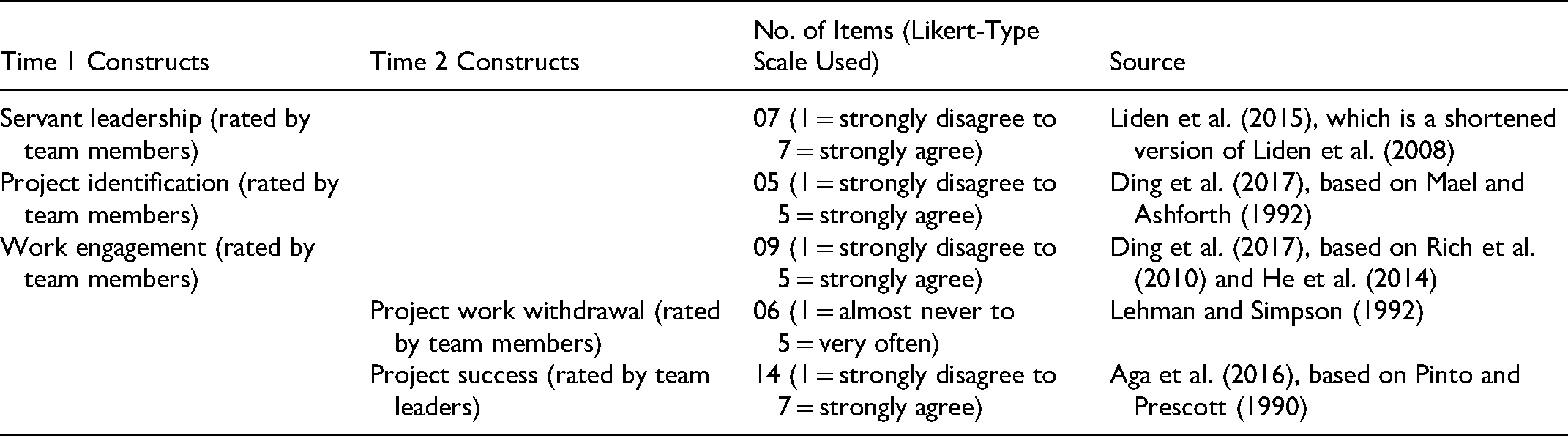
After three weeks, the Time 2 questionnaire was distributed to the same 522 team members, which included the measure for the second mediator (project work withdrawal). At the same time, a separate questionnaire was administered to their respective team leaders, which included the measure of the dependent variable (project success). Project success responses were collected from the team leaders as they typically have a better understanding of the overall project success than individual team members. Overall, we received 470 matching pairs of questionnaires at the end of Time 2, which is a response rate of 78.3%. During data screening, we removed 17 sets of questionnaires that were incomplete, which led to the final usable sample size of 453 combined sets of questionnaires from both Time 1 and Time 2, representing an effective response rate of 75.5%. The details of measures used both at Time 1 and Time 2 are provided in Table 1. All measures were adapted from their respective source papers with minor adjustments to the statements, which mainly involved switching them to the past tense, since data were collected with respect to the respondents’ last completed project.
Details of Measurement Instruments
Common Method Variance
In order to preempt the possible influence of common method variance (CMV), two procedural remedies were applied regarding questionnaire design as suggested by Podsakoff et al. (2012). First, data on the predictor variable (servant leadership) and response variable (project success) were gathered from different sources, in other words, from team members and team leaders, respectively. Second, temporal separation was created between the measurements of the predictor and criterion variables by collecting the data at Time 1 and Time 2, respectively. Furthermore, Harman’s single-factor method was used as a post hoc statistical technique for CMV (Podsakoff et al., 2003). The results revealed the variance of that factor was under the threshold of 50%, thus showing that there is no significant CMV in the dataset (Podsakoff & Organ, 1986).
Data Analysis Procedure
The study employed the Partial Least Squares–Structural Equation Modeling (PLS-SEM) technique, via SmartPLS (Version 3.3.2), in order to validate and test the hypothesized model. Furthermore, to assess the moderated mediation hypotheses, the latent variable scores produced in SmartPLS were examined using Hayes’ PROCESS macro for Statistical Package for Social Sciences version 3.0 (Hayes, 2017). The index of moderated mediation effects was analyzed by using the 95% bias-corrected confidence intervals (5,000 samples).
Results
Measurement Model
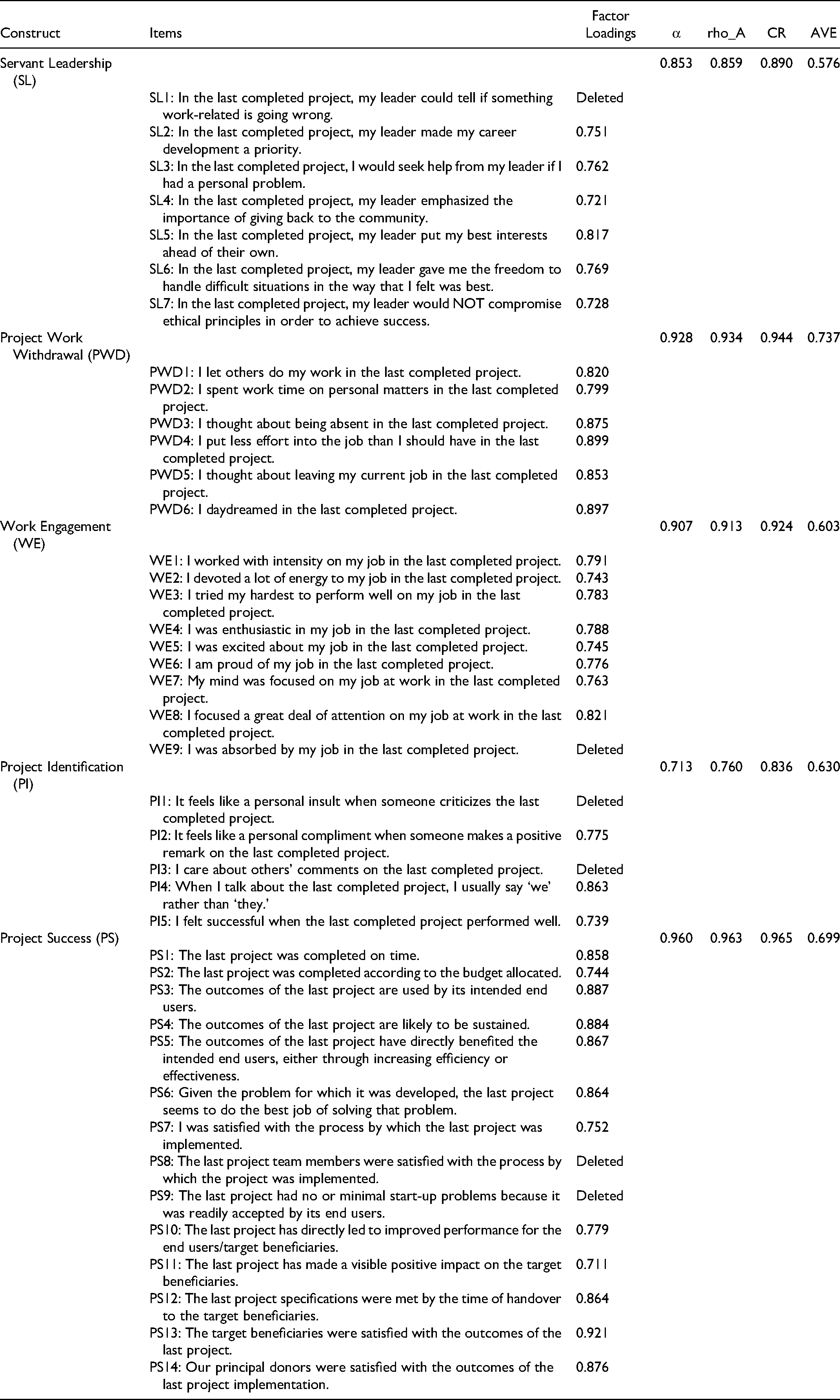
This study first assesses the convergent validity. All of the values of outer loadings are above 0.7 threshold value as shown in Table 2, apart from the loadings of items PS8, PS9, SL1, WE9, PI1 and PI3. Following Hair et al. (2017), we removed these items with low-factor loadings. The Cronbach alpha, rho_A, and composite reliability (CR) values of all variables were above the threshold value of 0.7, and the average variance extracted (AVE) values also met the 0.5 threshold value (Hair et al., 2017). Hence, convergent validity was established for all constructs (see Table 2). Furthermore, to assess discriminant validity, this article used the Fornell and Larcker (1981) and the heterotrait–monotrait (HTMT) criteria. Table 3 indicates that the values of correlations among all of the variables are less than the square root of AVE, thus meeting the first discriminant validity criterion (Fornell & Larcker, 1981). Additionally, the values of HTMT, also shown in Table 3, are all below the 0.85 benchmark, demonstrating adequate discriminant validity (Henseler et al., 2015).
Details of the Measurement Model
Discriminant Validity and Correlations
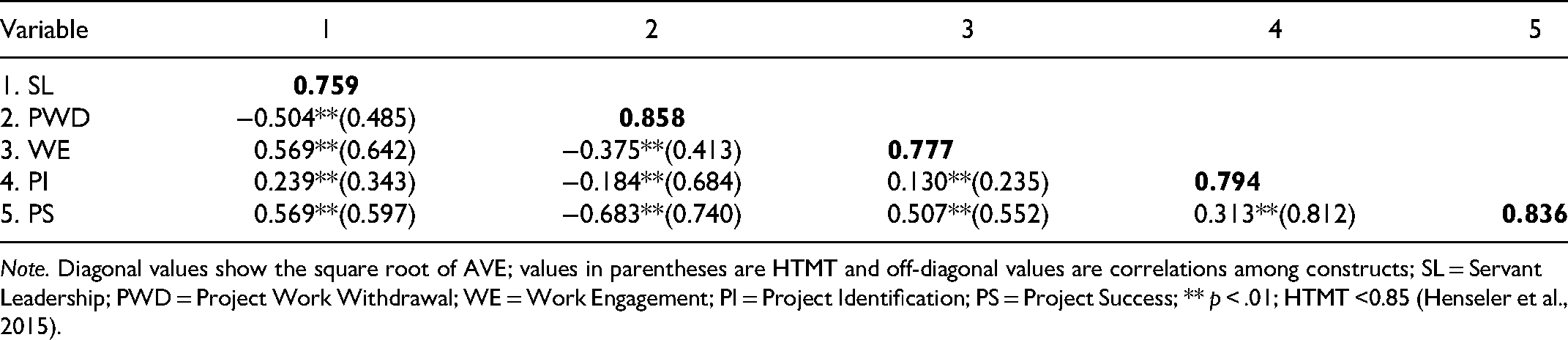
Note. Diagonal values show the square root of AVE; values in parentheses are HTMT and off-diagonal values are correlations among constructs; SL = Servant Leadership; PWD = Project Work Withdrawal; WE = Work Engagement; PI = Project Identification; PS = Project Success; ** p < .01; HTMT <0.85 (Henseler et al., 2015).
Structural Model
After evaluating the measurement model, we assessed the significance of the structural model in order to test the hypothesized model. This study employed the bootstrapping technique and t-statistics method to report the path-coefficient results. Since PLS-SEM estimation uses a series of regression analyses in order to link the path coefficients with the constructs, it is therefore necessary to check for collinearity issues. As shown in Table 4, all of the inner variance inflation factor (VIF) values were under the threshold value of 5 (Hair et al., 2017). Hence, it is evident that there were no collinearity issues for all of the path coefficients. The results of the coefficient of determination (R2) show the variance explained in the endogenous variables because of the exogenous variables. R2 values indicate in-sample predictive power of the model (Sarstedt et al., 2014). R2 values for project success, project work withdrawal, and work engagement were 0.725, 0.436, and 0.359, respectively (see Table 4). The effect sizes (f2) values show each exogenous constructs’ contribution toward the endogenous variables. The f2 values for servant leadership, project work withdrawal, and work engagement were 0.065, 0.155, and 0.122, correspondingly, which can be interpreted based on the threshold values of 0.02, 0.15, and 0.35 that indicate small, medium, and large effect sizes, respectively (Hair et al., 2017). Furthermore, the values of and predictive relevance (Stone-Geisser’s Q2 value) for endogenous constructs (i.e., project success, project work withdrawal, and work engagement) were above zero, showing the predictive relevance of the model (Geisser, 1974; Stone, 1974).
Assessment of Structural Model Results and Hypotheses Testing
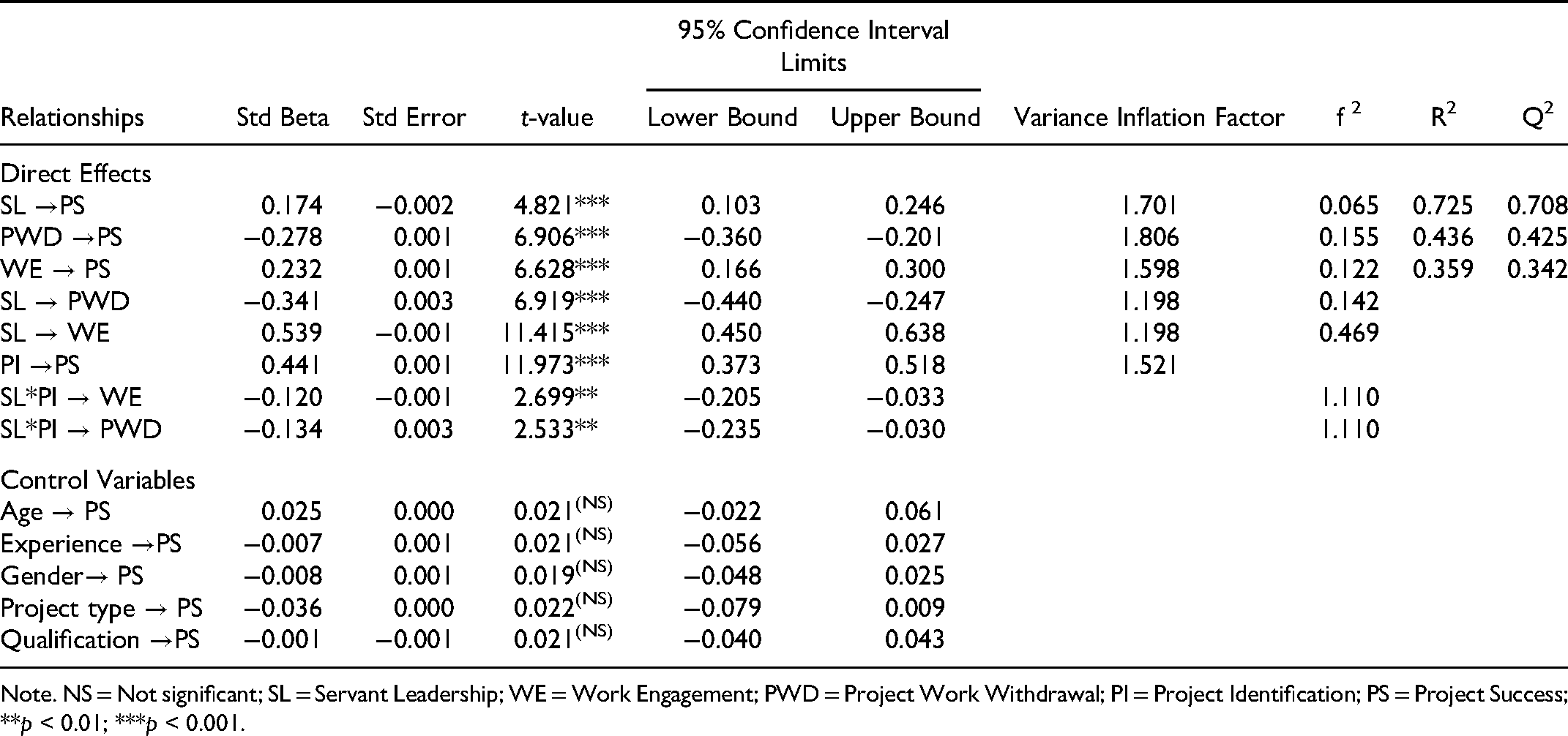
Note. NS = Not significant; SL = Servant Leadership; WE = Work Engagement; PWD = Project Work Withdrawal; PI = Project Identification; PS = Project Success; **p < 0.01; ***p < 0.001.
Hypotheses Testing
Bootstrapping technique with 1,000 subsamples was employed to test the significance of the direct and indirect paths (Streukens & Leroi-Werelds, 2016). The results, shown in Table 4, indicate that servant leadership has a significant positive effect on project success (β = 0.174, t = 4.821, p < 0.001, f2 = 0.065), thus supporting H1. Furthermore, the results show that servant leadership has a negative significant effect on project work withdrawal (β = −0.341, t = 6.919, p < 0.001, f2 = 0.142), and that project work withdrawal has a negative significant effect on project success (β = -0.278, t = 6.906, p < 0.001, f2 = 0.155), hence supporting H2a and H2b, respectively. Finally, the results indicated that servant leadership has a positive significant effect on work engagement (β = 0.539, t = 11.41, p < 0.001, f2 = 0.469), and that work engagement has a positive significant relationship with project success (β = 0.232, t = 6.628, p < 0.001, f2 = 0.122), thereby supporting H3a and H3b, correspondingly. Figure 1 also shows the significance of all statistical paths. The present study used age, gender, experience, project type, and qualification as control variables; however, based on the results in Table 4, all of the control variables have insignificant effects on the dependent variable (i.e., project success).
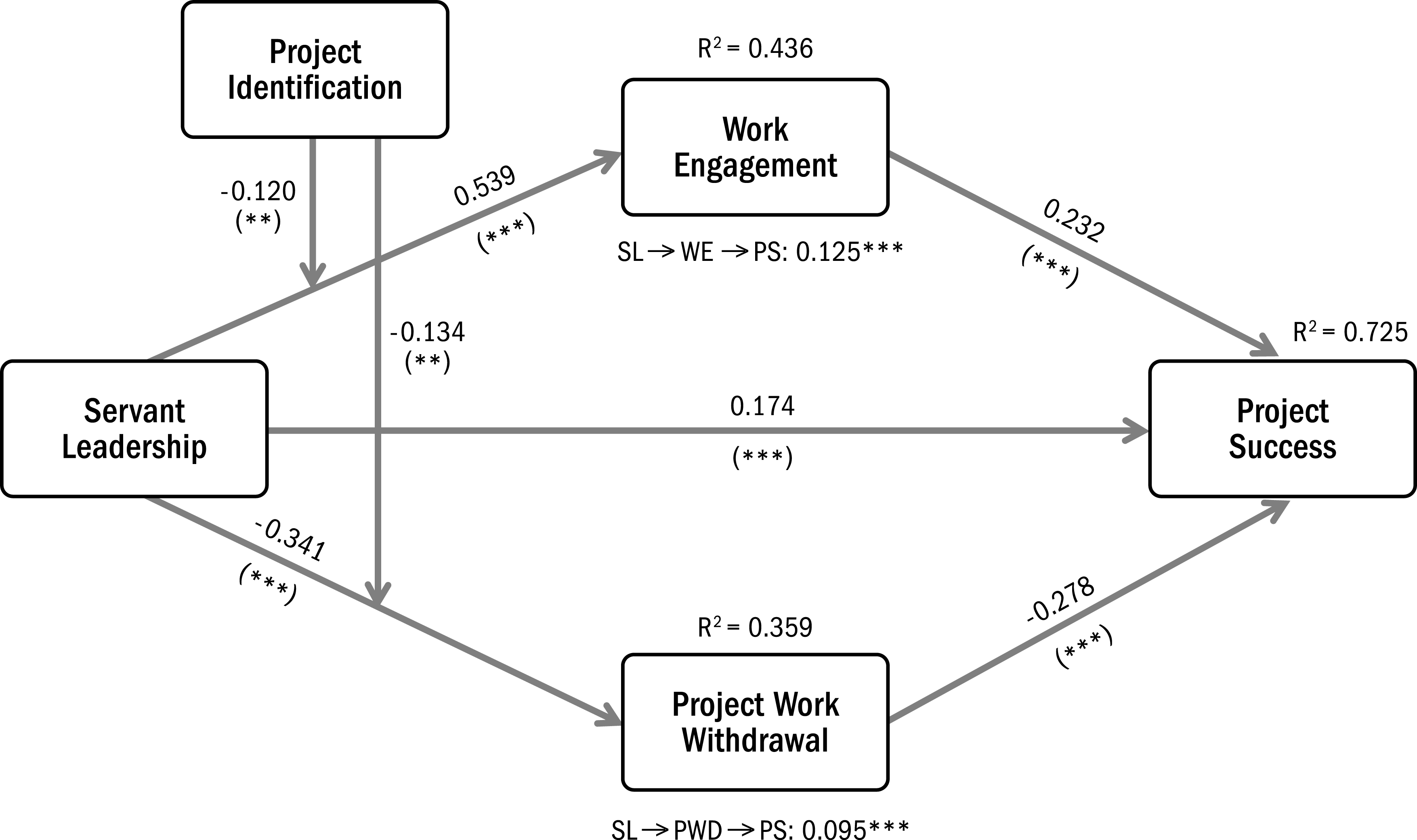
Results showing path, moderation, and mediation effects.
Mediation Effects
For mediation hypotheses (H2c and H3c), we used the analytical procedure recommended by Nitzl et al. (2016). First, the bootstrap analysis with 1,000 resamples at 95% bias-corrected bootstrap confidence intervals was used to generate specific indirect effects in order to test the presence of mediation by work engagement and project work withdrawal (Preacher & Hayes, 2008). The results in Table 5 indicate that the 95% bias-corrected bootstrap confidence interval values for both mediators do not include the zero-point, thus exhibiting the presence of mediation in both cases (Hayes, 2017). The mediation effect for work engagement (SL → WE → PS) was found to be significant (β = 0.095, t = 4.416, p < 0.001), and the mediation effect for project work withdrawal (SL → PWD → PS) was also found to be significant (β = 0.125, t = 5.396, p < 0.001). Hence, both H2c and H3c are supported by the results. Additionally, as the direct relationship between servant leadership on project success is significant, this indicates partial mediation in both cases.
Assessment of Mediating Effects
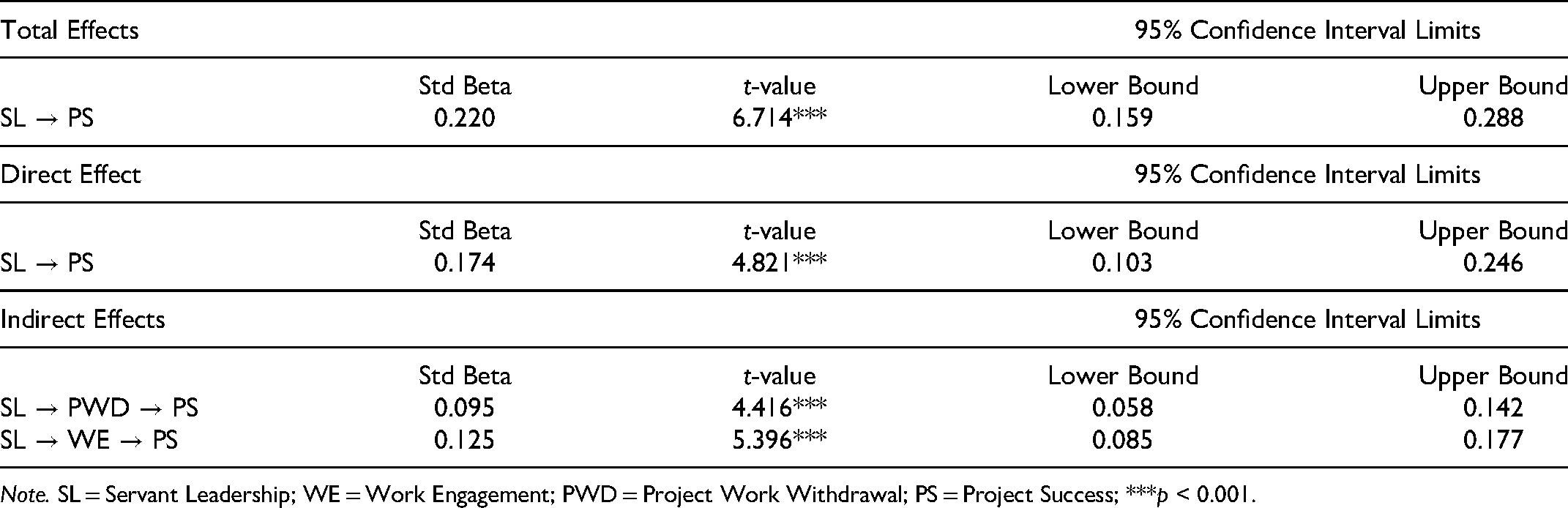
Note. SL = Servant Leadership; WE = Work Engagement; PWD = Project Work Withdrawal; PS = Project Success; ***p < 0.001.
Moderation Effects
Regarding the moderation hypotheses (H4a and H4b), the results indicate that project identification moderates the relationship between servant leadership and work engagement (β = −0.120, t = 2.699, p < 0.01) (see Table 4). Additionally, Figure 2 also shows that the positive relationship between servant leadership and work engagement is moderated by project identification, indicating that the relationship is weaker at higher levels of project identification, thus supporting H4a. Furthermore, the results indicate that project identification moderates the relationship between servant leadership and project work withdrawal (β = −0.134, t = 2.533, p < 0.01) (see Table 4). Moreover, it can be seen in Figure 3 that the negative relationship between servant leadership and project work withdrawal is moderated by project identification, exhibiting that the relationship is stronger at the high levels of the project identification, thus supporting H4b.
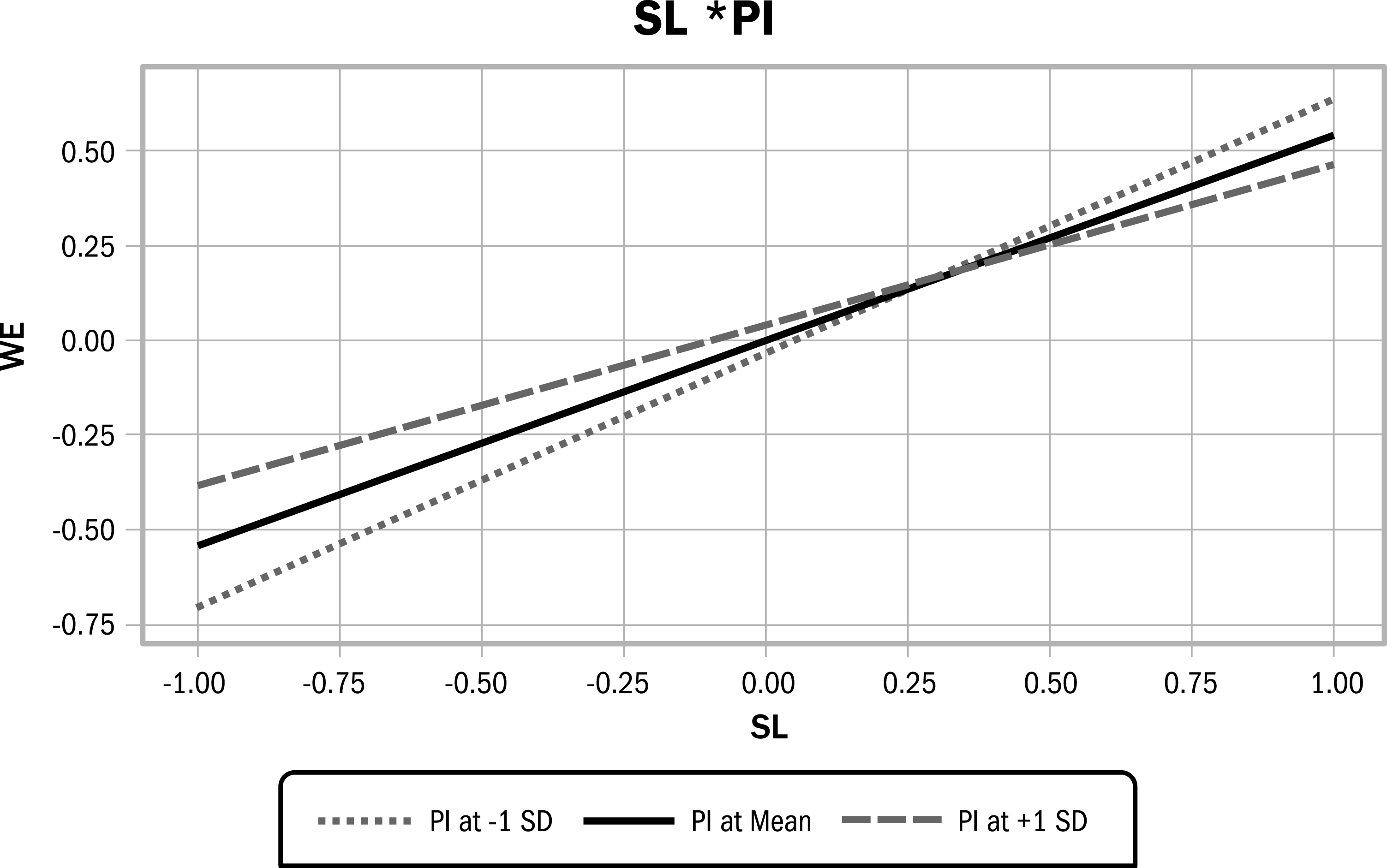
The Plot of Conditional Effect of SL on WE at values of PI (moderator).
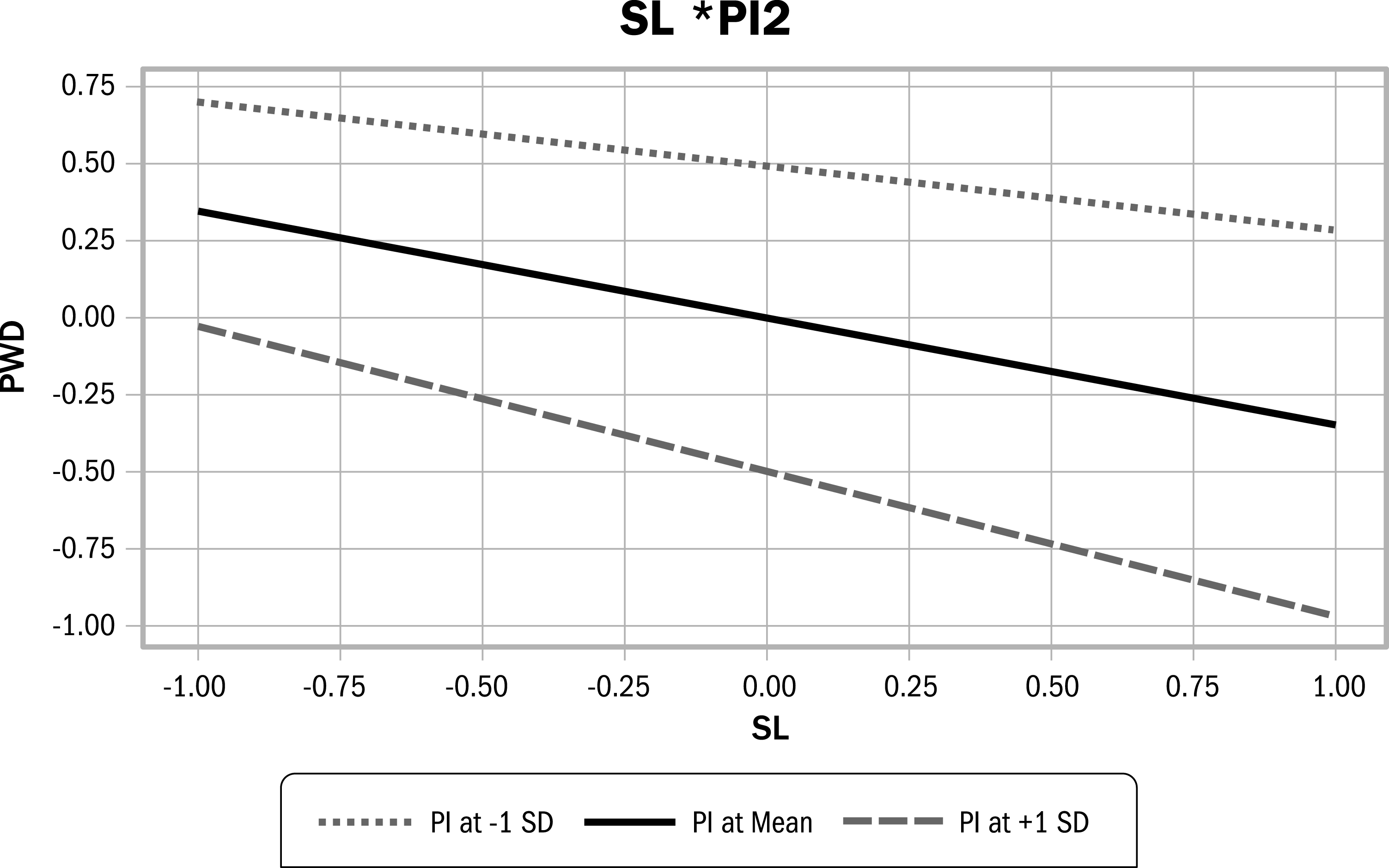
The Plot of Conditional Effect of SL on PWD at values of PI (moderator).
Moderated Mediation Effects
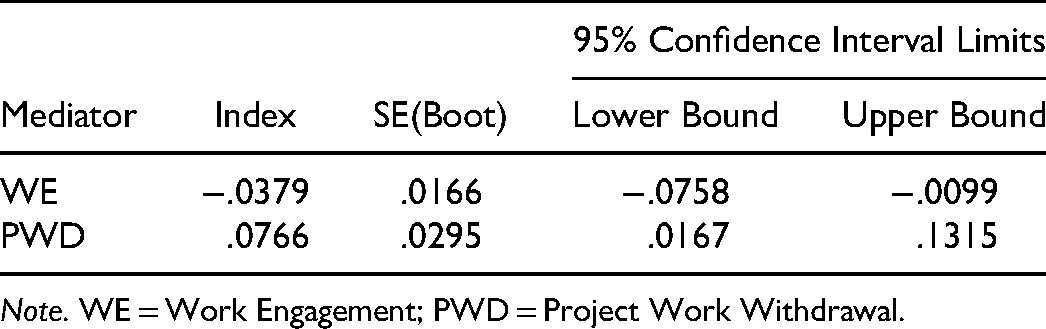
Finally, the existence of moderating effects on the relationships that form the indirect effect of servant leadership on project success, suggests the presence of first-stage moderated mediation (Hayes, 2017). These indirect effects are dependent upon the values of the moderating variables (i.e., project identification). In order to evaluate the index of moderated mediation and to further validate these conditional indirect effects, a test of moderated mediation was conducted (Hayes, 2015). This index presents the quantification of the linear effect between the moderating variable and the indirect effects. As shown in Table 6, the index of moderated mediation for the indirect effect of servant leadership on project success through work engagement is significant (−.0379, 95% BCCI [−.0758; −.0099]), since the 95% bias-corrected bootstrap confidence interval does not contain the zero-point (Hayes, 2017).
Index of Moderated Mediation
Note. WE = Work Engagement; PWD = Project Work Withdrawal.
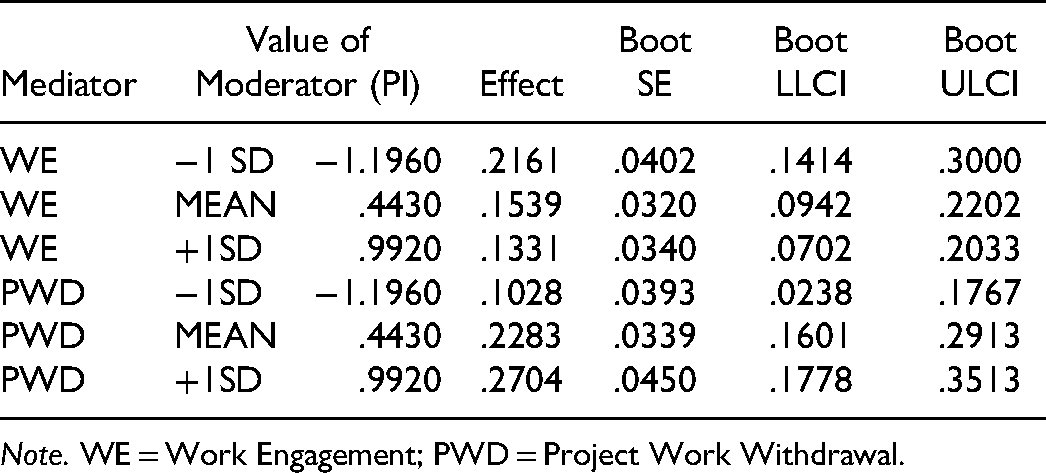
Subsequently, since the results of the index of moderated mediation were significant, we examined the conditional indirect effects at the values of the moderating variables in order to determine at what conditions (high, medium and low) the mediating effect is present (Preacher et al., 2007). The results are reported in Table 7. The conditional indirect effect values of work engagement show that as the value of the moderator (i.e., project identification) increases, the conditional indirect effect decreases, which indicates that the indirect effect of the servant leadership on project success via work engagement is smaller at higher values of the project identification. Thus, H5a is supported.
Conditional Indirect Effect(s) of SL on PS at Values of PI (Moderator)
Note. WE = Work Engagement; PWD = Project Work Withdrawal.
Likewise, the index of moderated mediation for the indirect effects of servant leadership on project success via project work withdrawal was significantly moderated by project identification (0.766, 95% BCCI [0.167; 0.1315]). Furthermore, the conditional indirect effect values for the project work withdrawal indicate that when project identification increases, the conditional indirect effect also increases. Thus, H5b is accepted.
Discussion
This research sought to contribute to the literature on servant leadership in the domain of project management by empirically examining its influence on project team members’ work-related behaviors. Drawing on self-determination theory (Deci et al., 1994; Deci & Ryan, 1985), we posited that servant leadership has a positive influence on project success through the dual intervening mechanisms of improving employees’ work engagement while simultaneously mitigating employees’ work withdrawal behaviors. Additionally, in line with social identity theory (Tajfel & Turner, 1979), we posited that team members’ identification with the project would moderate the indirect effect of servant leadership on project success differently via the two mediators. The results support the proposed parallel moderated mediation model.
We found that servant leadership has a positive effect on project success, which supports the results of previous studies that found relationship-oriented leaders to be more effective in achieving favorable project outcomes through their followers (Harwardt, 2020; Lee-Kelley & Kin Leong, 2003; Mäkilouko, 2004). Leadership in the context of projects is subject to various challenges arising from their limited duration of existence, the relatively higher levels of uncertainty and complexity involved due to the non-routine nature of the work, and the involvement of individuals from a diverse range of backgrounds (Tyssen et al., 2013; Tyssen et al., 2014b). Some of the major challenges in this context include creating and maintaining team members’ commitment and providing them with adequate autonomy to adapt to the emerging circumstances, while simultaneously mitigating intrateam conflict and maintaining the integrity of the overall project (Tyssen et al., 2014b).
Based on our findings, we suggest that servant leadership is uniquely positioned to address these challenges due to its people-oriented focus that serves to foster trust, commitment, empowerment, team cohesion, and team performance (Bilal et al., 2020; Holtzhausen & de Klerk, 2018; Krog & Govender, 2015b). As employees increasingly become specialists in their field of work, the role of project managers, as well as team leaders, must accordingly shift their focus from oversight to facilitation, in order to invigorate followers to perform at the peak of their abilities (Liden et al., 2014). Furthermore, project managers often have limited control over team members’ remuneration and access to only a limited range of disciplinary measures. Under these circumstances, building trust-based social relationships becomes vital (Müller et al., 2018; Schmid & Adams, 2008), and hence, an effective strategy for project managers and team leaders is to build mutually rewarding relationships with project team members (Malmström & Johansson, 2015; Martin & Epitropaki, 2001). Therefore, based on the results of this study, we argue that servant leadership, due to its inherent focus on facilitating team members by prioritizing the fulfilment of their needs (Greenleaf, 1970), is particularly well suited to address the challenges faced by managers in the context of projects.
Our results further indicate that servant leaders enhance project team members’ work engagement, thereby corroborating the results of previous studies in the context of projects (Krog & Govender, 2015b), as well as other contexts (Carter & Baghurst, 2014; De Clercq et al., 2014; Ling et al., 2016; Van Dierendonck et al., 2014). Additionally, we found that servant leadership has a strong negative effect on team members’ work withdrawal behaviors, which corroborates the findings of Hunter et al. (2013). In line with self-determination theory theory, we argue that servant leaders help to create a social context that is conducive to fulfilling project team members’ fundamental psychological needs of autonomy, competence, and relatedness (Deci & Ryan, 2000). This leads to greater intrinsic motivation (Gagné & Deci, 2005), which, in turn, translates into increased team members’ work engagement. Additionally, this leads to the integration of extrinsic regulations by team members, wherein they become motivated to pursue their assigned tasks out of their own volition (Deci et al., 1994; Gagné & Deci, 2005), which consequently leads to the reduction of project work withdrawal behaviors.
We additionally examined the intervening effects of work engagement and work withdrawal, both of which were found to partially mediate the effect of servant leadership on project success. The parallel mediation model also enabled the relative comparison of the indirect effects via the two paths, which revealed that the indirect effect via project work withdrawal is clearly stronger, in other words, as compared to the enhancement of work engagement, the mitigation of work withdrawal behaviors is a relatively more efficacious mechanism through which servant leadership improves project success. The findings suggest a need to look beyond self-determination theory and toward, perhaps, motivational theories to explain how servant leaders inhibit work withdrawal behaviors in their team members. For instance, Herzberg’s motivation-hygiene theory posits a dichotomy between factors that cause satisfaction and factors that cause dissatisfaction (Herzberg et al., 1959). When considered in light of this theory, our findings suggest that servant leadership may be more effective in mitigating factors for dissatisfaction that lead to work withdrawal in the context of projects, as compared to enhancing factors of satisfaction.
Furthermore, our results indicate that project identification moderates the relationship between servant leadership and work engagement, which is in line with the findings of a similar previous study in the project context (Ding et al., 2017). The simple slopes plot (see Figure 3) indicates the presence of a disordinal interaction (Aiken et al., 1991), and therefore suggests the need for careful interpretation (Widaman et al., 2012). The diagram indicates that team members who strongly identify with their project possess an intrinsically higher level of work engagement than their counterparts. Hence, the results indicate project identification functions as a substitute for servant leadership (Kerr & Jermier, 1978), and thus may replace or attenuate part of its effect on work engagement. This result is similar to the findings of Wang et al. (2017a). Consequently, project identification also weakens the indirect effect of servant leadership on project success via work engagement.
Finally, our results show that project identification strengthens the negative effect of servant leadership on project work withdrawal as well as its indirect effect on project success via this path. This is in line with the findings of previous studies (Van Knippenberg et al., 2007; Vondey, 2010), and is further in congruence with the tenets of social identity theory, which imply that employees who identify more strongly with their organization tend to exhibit greater loyalty and commitment to the organization (Ashforth & Mael, 1989). Our findings indicate that a higher level of project identification not only reduces work withdrawal but also translates into better project performance overall. Therefore, servant leaders and their projects would benefit from engendering greater project identification among their team members by providing them with greater work autonomy (Spanuth & Wald, 2017), as well as through activities that help promote and strengthen the salience of a common group identity (Gaertner et al., 1993; Van Dick et al., 2005).
Implications
This study contributes to the extant literature on project management, particularly project leadership, by examining the relationship between servant leadership and project success. We respond to various calls for additional research: on the outcomes of servant leadership (Eva et al., 2019), particularly in the context of projects (Bilal et al., 2020; Harwardt, 2020); on examining the role of the project identification construct and how it interacts with different leadership styles (Ding et al., 2017); and on elucidating the intervening mechanisms through which leaders influence project outcomes (Aga et al., 2016). In the proposed parallel moderated mediation model, we highlight two key mechanisms through which servant leadership behaviors influence project success: work engagement and project work withdrawal, both of which have received limited attention in the extant project management literature. Additionally, we contribute to the scarce literature on project identification by highlighting its role as a key factor that moderates the indirect effect of servant leadership on project success through both parallel paths. Furthermore, we contribute to the literature on self-determination theory and social identity theory by applying them to the context of projects to explain how servant leadership and its synergistic interaction with team members’ project identification serves to fulfill the psychological needs of project team members, which in turn translates into positive individual outcomes. Our results are consistent with, and hence support, both theories.
For project management practitioners, the results of this study contribute to a growing body of evidence that indicates that the servant leadership style is effective for overcoming the challenges inherent to temporary organizations and achieving positive project outcomes (Bilal et al., 2020; Harwardt, 2020; Krog & Govender, 2015a). A further benefit of servant leaders is that they help to inculcate a serving culture that induces their subordinates to exhibit servant leadership behaviors as well (Liden et al., 2014). This would be particularly advantageous in larger, more complex projects that tend to involve additional hierarchy levels and greater information asymmetry between managers and team members. Another implication of this research is that organizations engaging in projects should sensitize their monitoring and control systems to identify and address work withdrawal behaviors exhibited by project team members. If left unchecked, such behaviors can have a detrimental impact on project performance. Finally, the results of this study indicate that servant leaders may be able to enhance their effectiveness in improving project outcomes by fostering greater project identification in their team members.
Limitations and Future Research Directions
There are some limitations that need to be taken into consideration when generalizing the results of this study. First, the use of a cross-sectional design that restricts our ability to draw causal inferences from the data. Second, owing to the lack of a reliable sampling frame, probability sampling techniques could not be used, which limits the representativeness of the study sample, and thus the generalizability of the results. Third, project managers and team leaders were asked to rate the success of their respective projects, which may introduce bias in their responses. This is a known limitation in empirical research on project success (Aga et al., 2016; Harwardt, 2020; Raziq et al., 2018), and had to be accepted in this case due to the lack of availability of independent measures of project success. Lastly, the data were collected from a single, large, vocational training organization and the projects considered in this study were quite small in terms of team size and duration, which may limit the generalizability of the results to projects in other contexts. However, the findings presented in this article corroborate and add to the growing literature indicating that servant leadership is an effective approach for improving project outcomes (Harwardt, 2020; Krog & Govender, 2015b; Thompson, 2010).
Further research on servant leadership is needed in order to shed light on its comparative benefits over other leadership styles under various project contexts, as well as for determining which specific contexts are most conducive to the emergence and effectiveness of servant leaders. Additionally, an important direction for future research is to examine the role of work withdrawal in the context of projects. Despite being a significant predictor of project success, this construct has been largely neglected in project management research. In particular, there is a need to elucidate the antecedents of work withdrawal and examine how they interact with project managers’ leadership styles. Furthermore, an interesting direction for future studies would be to investigate which circumstances may cause project identification to evolve into projectitis, which is defined by Meredith et al. (2017, p. 177) as an “inappropriately intense attachment to the project,” at which point such behaviors begin to do more harm than good. For example, projectitis may manifest as a strong resistance by team members to closing the project, or the development of an us versus them mentality leading to divisiveness that may jeopardize the broader aims of the parent organization (Meredith et al., 2017). Finally, we suggest that greater emphasis is needed on the human side of project management, which has historically been an under-researched area in project management (Keegan et al., 2018) and is rife with opportunities for generating insights to improve theory and practice.
Footnotes
Declaration of Conflicting Interests
The author(s) declared no potential conflicts of interest with respect to the research, authorship, and/or publication of this article.
