







Abstract
We employed a longitudinal, grounded theory approach to investigate the management of an innovative product developed in the context of a life-or-death global emergency. This project involved about 40 multidisciplinary researchers, multisector companies, and open-source collaboration. Inductively, we identified the emergence and evolution of project coordination approaches, roles, and the project network along with the project's life cycle. The present study shows how configurations of these elements coevolve as the project moves forward with no predefined structures or procedures. Therefore, it provides insights for coordinating innovative projects in the face of extreme time constraints and ill-defined institutional frameworks.
Introduction
Innovation takes time, but the COVID-19 pandemic brought challenges that needed quick answers. It demanded innovative local solutions due to the lack of global supplies and a fast-paced innovation process to have products and services in time to save lives. Unlike the regular innovation-driven environment, this singular setting demands even faster organizational adaptation to develop new products. In addition, these projects may be developed in a less precise, less stable, and less structured work environment, infusing the work process with further ambiguity.
This research aims to answer the question: How is a successful new product development (NPD) coordinated in an emergency context? This unique setting differs from what organizational theorists call a dynamic or turbulent environment that demands adaptation within the existing process. It is more of a tsunamic environment in which projects are designed to solve specific, unprecedented challenges under extreme time pressure; it is an emergency context. It is not a mere question of creating or capturing value; the point is to save lives by creating innovative solutions within structures that may not exist thus far. To learn about project management in this context, we unpack and explain how a project that fits these characteristics was developed.
We tracked the development of “Project-X,” a pulmonary mechanical ventilator controlled with several innovative functionalities, 15 times less expensive than existing equipment, with a time frame of only seven months, from its first beginning until its use in hospitals. This project involved about 40 multidisciplinary researchers, multisector companies, open-source collaboration, and crowdfunding. The testing and manufacturing involved another set of players, quickly articulated. Project-X was chosen for its revealing potential: it had evident innovation achievements; it was the only known mechanical ventilator in the country in which it was successfully developed (maybe one of the few worldwide) during the pandemic and approved by the regulatory authority as a piece of intensive care unit equipment (which is a complex kind of approval). In addition, we had access to data from the project's very beginning, providing rich research material.
For exploring this case, we first attempted to define the scope by making sense of the initial data. Project-X was neither an exploratory project (Lenfle, 2008) nor a traditional NPD process (Bagno et al., 2017; Cooper, 1990; Salerno et al., 2015). Additionally, the case has some features of entrepreneurial action, like building an ecosystem and managing uncertainties (Gomes et al., 2021). Nevertheless, it is neither a startup nor an internal endeavor led by a champion or a specific organizational function in an incumbent company (O’Connor et al., 2018, 2008).
Because we used a grounded approach, the theoretical framework emerged from the data. However, the researchers’ background is from the organizational theory domain, which shaped the theoretical perspective that oriented the abstraction of categories from the data. Thus, we defined the problem domain within the organizational theory core themes, which is how the project was organized and coordinated. After a noncommittal phase of theoretical sensitivity in the field, we moved to an integrative phase. Finally, we compared the emergent concepts with extant theories to render the new theory in the context of existing knowledge (Urquhart & Fernández, 2013).
Our findings clarify the management dynamics of an NPD project in the context of an emergency. Although researchers have been studying coordination for a long time in organizational theory, recent research still addresses its challenges, such as accelerating innovative projects in emergencies (Cooper, 2021) and achieving project success under time pressure (Lifshitz-Assaf et al., 2021). We contribute to this discussion by addressing, empirically, an essential question about developing a new product for a life-or-death situation with no preestablished governance structure. Our study resulted in an evolutionary perspective of project governance, integrating the coordination approach with other governance elements that were not predefined but emerged inductively from data.
The following section presents the theoretical perspective, in which we address the discussion about project coordination within the organizational theory, focusing on innovative projects and time constraints context. Then, we describe how we collected and analyzed data based on an interpretive approach and through a longitudinal view. This approach helped identify concepts that were part of configurations of a governance structure for coordinating the project and the dynamism of these elements over the project development, which we explore in the Discussion section. In the Findings section, we describe the elements and the grounded model. Finally, we articulate this model with the discussion of project coordination, innovative projects and business process integration, and governance evolution.
Theoretical Perspective
Organizational theorists have long been interested in the theme explored in this research: organizing to succeed. They argue that there are different mechanisms, strategies (Thompson, 1967), and a combination of conditions for organizing to succeed, giving rise to complex structures (Meyer et al., 1993). Among several components that form an organization, coordination is one of the main issues, widely discussed by classical organizational theorists. Furthermore, coordination is the other inseparable and umbilical side of the division of labor, as treated by the acknowledgeable discussion of differentiation and integration (Lawrence & Lorsch, 1967). From two dichotomic approaches, the rational and the natural (Gouldner, 1959), research moves forward in understanding how a company should organize and adapt to improve performance through a contingency view (Lawrence & Lorsch, 1967; Thompson, 1967).
The rational approach considers that organizations can be consciously shaped, whereas the natural one views organizations as organic systems, evolving through adaptation. This discussion is aligned with Burns and Stalker’s (1961) terminology of mechanistic versus organic organizations, which reported the latter more adherent to innovation. Our objective is to understand how the company (or other embedded levels, such as the project) organizes to succeed, be it mechanistically, organically, or a mix of both. However, most organizational theory research has a typical incumbent company as a paradigm in a dynamic environment related to business challenges, not in a pandemic context. This is why we are interested in the case explored in this research, which brings a new context to this discussion.
A project can focus on exploitation to achieve predefined goals with a given set of resource constraints and sequencing tasks (the routine projects), or focus on exploration, which involves a high degree of novelty and complexity being challenging to plan (the innovative projects) (Davies & Brady, 2016). For managing it, coordination mechanisms are used, which are administrative tools for achieving integration among different units (Galbraith, 1982) or workers (Mintzberg, 1983). Even though the discussion on project coordination mechanisms has been on the academic agenda for a long time (Burns & Stalker, 1961), contingencies regarding the type of project, team structure, task interdependencies, and other contextual factors still challenge the existing knowledge. Moving forward on understanding contingencies helps to provide a more nuanced view of coordination within project management (Aubry & Lièvre, 2010; Barbosa et al., 2020, 2021; Lifshitz-Assaf et al., 2021; Péréa & von Zedtwitz, 2018; Pitsis et al., 2003).
Studies about coordination mechanisms are influenced by the classical work of Burns and Stalker (1961), which explained them through a spectrum of more or less bureaucratic approaches. At the less bureaucratic level is the organic coordination approach. It relies on less formal rules, open channels, and the free flow of communication. It is more flexible and has informal controls (Chenhall, 2003). Besides, it favors mutual adjustment (Thompson, 1967), being associated with contexts in which rapid and frequent decision-making is necessary such as the case of innovative projects.
On the other side of the spectrum, the mechanistic coordination approach relies on formal rules and standardized operation routines (Chenhall, 2003; Péréa & von Zedtwitz, 2018). In this approach, interactions are planned (Thompson, 1967), reducing coordination efforts and facilitating control mechanisms (Parente et al., 2011). Consequently, this mechanistic approach is better associated with more stable environments that rely on planning such as routine projects. Note that Burns and Stalker (1961) address a spectrum, not a dichotomy, which means that there may be some combinations in between, which are not so clear and are influenced by diverse factors, which we discuss next.
Recently, researchers (Barbosa et al., 2020; Péréa & von Zedtwitz, 2018) advocated a hybrid coordination approach in the collaborative, innovative project management domain. In such cases, both approaches (mechanistic and organic) could be applied to foster team integration according to the characteristics of the project team structure and task interdependencies (Péréa & von Zedtwitz, 2018). These researchers explain that due to the intense knowledge exchange and interactive work in innovative projects, and consequently high task interdependency, the organic coordination approach would be the most appropriate for this type of project.
In contrast, complex, innovative projects might involve diverse organizational partners (diverse functional areas) and partners beyond organization boundaries, which leads to the need to combine unique tasks and new procedures with standardized ones (Engwall, 2003), as part of business processes (Gann & Salter, 2000). Consequently, formal and control mechanisms might be applied at macrolevel project management, focusing on sharing general project information such as objectives, project evolution, and main challenges. As a result, both approaches may apply to the same project.
Projects developed to face the pandemic have some of the coordination complexities explored in prior-mentioned research (Aubry & Lièvre, 2010; Barbosa et al., 2021; Lifshitz-Assaf et al., 2021; Péréa & von Zedtwitz, 2018), such as innovation, collaboration, geographic dispersion, and also extreme time and resource constraints due to the pressure of the need for saving lives. Despite recognizing that the topic is underresearched, recent studies suggest some approaches for this context such as having a focused team, applying new digital tools, adopting a lean manufacturing approach, and agile approaches (Cooper, 2021). The path suggested by Cooper (2021) supposes improving existing NPD structures with existing management tools. Differently, fast NPD in a context with no preestablished organizational governance structure for product development could provide a fresh view on organizing and coordinating the project (not being an incremental improvement in an existent process). A time-limited ad hoc project was recently explored in the context of a hackathon, which is a way to accelerate innovation and address the idea of not being embedded in an organizational context with clear structures and processes (Lifshitz-Assaf et al., 2021). Lifshitz-Assaf et al. (2021) advocated the need to completely redesign the innovation process instead of simply compressing the existing one. Their article also reported more successful outcomes when adaptative coordination was applied, which means moving from a minimal basis of coordination to increasing it as the work progresses. Thus, although the literature has moved forward in understanding coordination in less precise, less stable, and less organized work environments, past work still does not provide insights into the coordination process over the development of a lifesaving product in such an extreme context. Therefore, this research aims to understand the coordination of successful NPD in an extreme context by engaging in the data collection throughout an ad hoc NPD to face a pandemic-related problem.
Methodology
We employed a qualitative, grounded theory research approach, which is appropriate given the (not yet studied) special conditions of the context, that is, coordinating a lifesaving product development project during a pandemic with extreme time and resource constraints. Although there is plenty of research on coordinating innovation projects, the grounded approach is used to generate new theory in a specific context, exploring a process view; we can also elaborate on existing theory. In this research, we followed the systematic steps of Gioia et al. (2013) and Patvardhan et al. (2015), routed in the grounded theory approach (Glaser et al., 1968). They adopted an interpretive stance while also using elements of a process approach (Langley, 1999). Interpretive research focuses on building an emergent theory from a perspective that gives voice to the interpretations of those living an experience. The process orientation was adopted to help cope with the dynamic phenomena of project development without precluding its temporal dependencies.
Through narratives from interviews and documents (30 videos from the project team reporting the project development; 15 news items published in an internal newspaper; 10 media news; five formal interviews; three informal talks), we observed the dynamic of the fast-paced, innovative project development in a pandemic context over seven months, until the product was launched in the market.
Data Collection
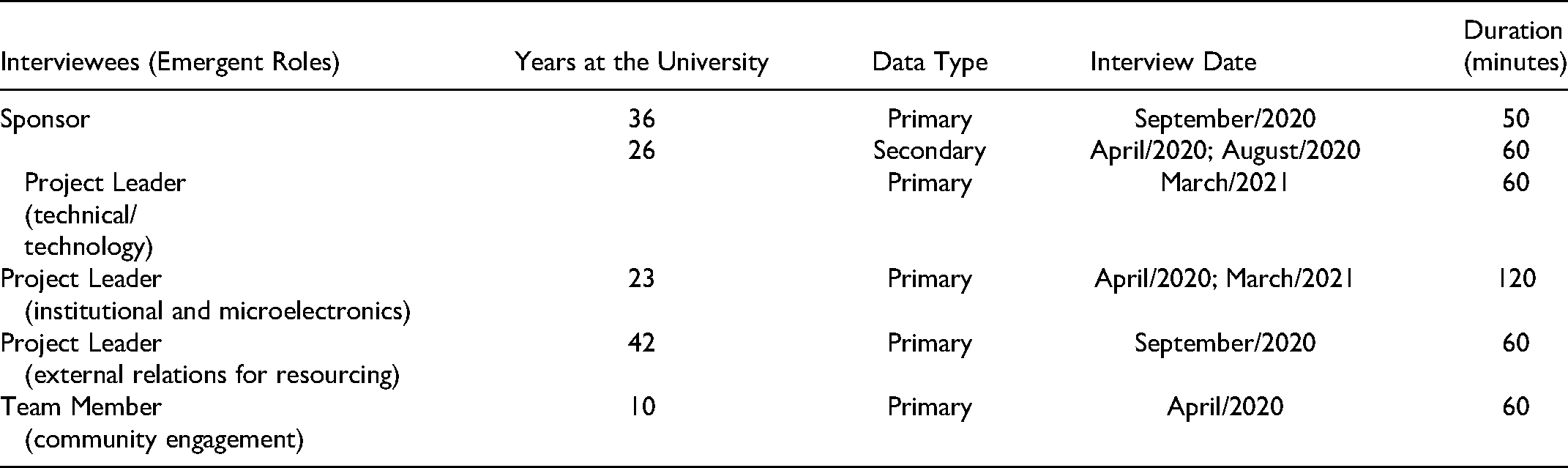
Since the project's very beginning, we collected data from Project-X (our unit of analysis). The data collection starts at the call for projects that could face challenges related to COVID-19 (internal documents) and follows the whole project development through documents and interviews. Documents include emails shared among professors of the university (via a school newspaper); the project's website; news (the university press, the broadcast media, and the local newspapers, which broadly covered the project); speeches of team members (recorded); and informal interviews with team members. Interviewed data include nonstructured interviews with participants of the project (project leaders and project team members) and with the dean of the faculty responsible for the project (see Table 1). Some interviews were recorded, and researcher notes registered others.
Interview Data
Interview and Sampling Technique
We conducted the interviews in a narrative mode, initially asking the informants to tell their stories about the project from its very beginning. Then, we asked the interviewees to give more details about specific information that emerged during the interview related to the research. Through that, we focused on parts of their story when concepts for theoretical insights emerged. We initially identified project participants through an internal newsletter shared with faculty members and media news. Next, we focused on those who seemed more able to inform us on our primary research issues. Then, we moved to theoretical sampling by orienting the search for new informants and documents based on the concepts that emerged from previous documents and interviews, aligned with the grounded theory approach (Glaser et al., 1968). Subsequent interviews became progressively more structured as themes emerged in the data. Finally, we continued sampling until we achieved theoretical saturation, with no further concept arising from new interviews or documents.
Data Analysis
We took several steps to ensure the reliability of our data (Lincoln & Guba, 1985). First, we meticulously managed it using NVivo software (Version 12) to organize the files and categorize the sources. Then, we transcribed the interviews and built the events’ chronology. Two researchers qualitatively analyzed data and codified statements. Afterward, we chronologically organized the documents to help identify the sequence of events, build the project time line, and codified them using NVivo. We initially categorized direct statements (where possible) through an open-coding approach (Strauss & Corbin, 2008), also using NVivo software. In Table 3, the first-order code refers to informants’ statements that could be assembled to compose a theoretical perception based on researcher-centric themes (second-order code searches for relationships among the initial categories through axial coding). Finally, more general theoretical concepts (overarching dimensions) resulted from selective coding that aggregated the second-order codes. The theoretical concepts were defined based on semantic relationships among themes, which resulted in three overarching configurations.
Data Structure
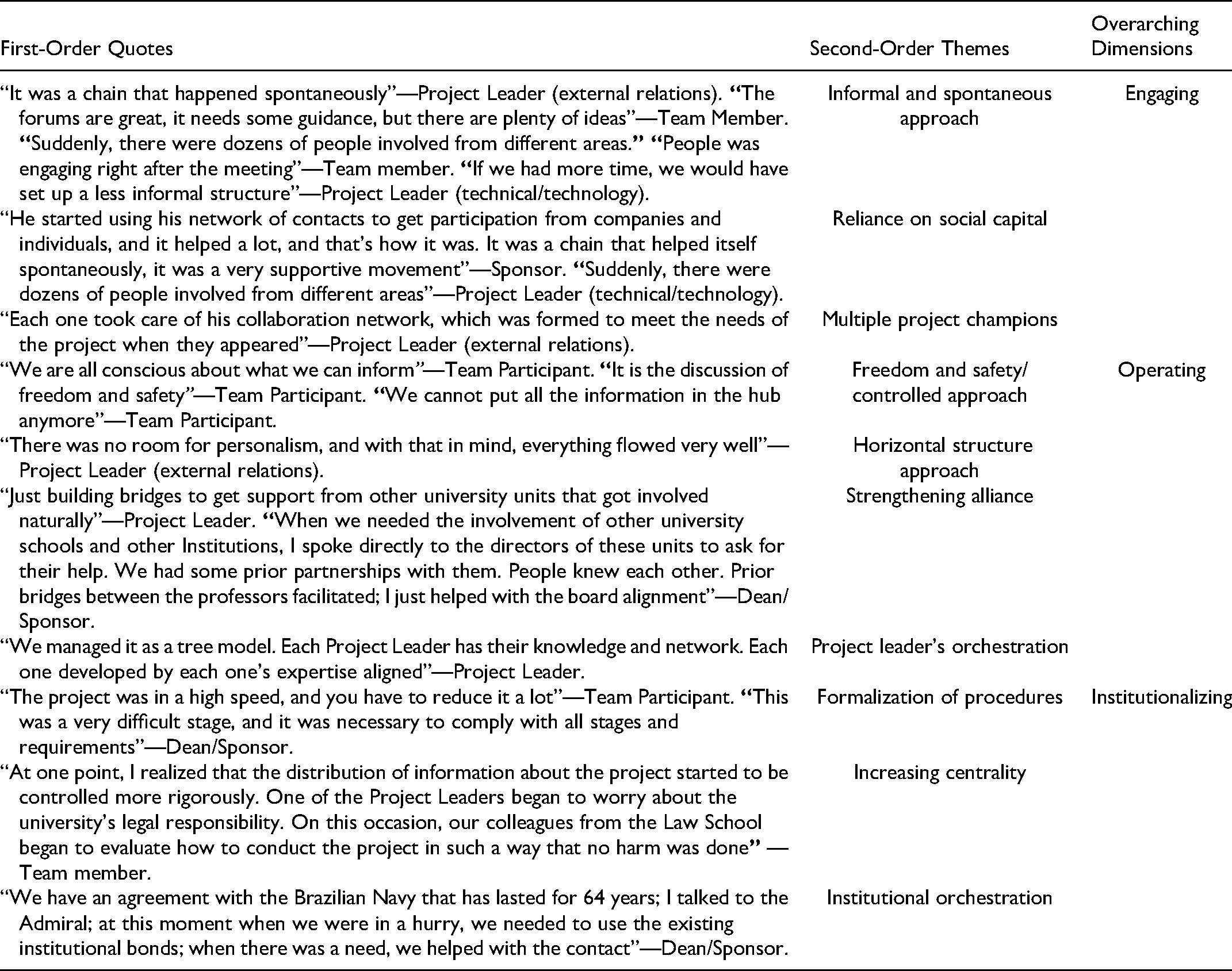
Data collection and analysis were iterative over the whole research period. Codes were recursively refined through grounded theory's constant comparison method, in other words, constantly comparing data over time and across informants and sources. Codes from interviews, documents, and research notes from informal talks were individually identified by two researchers and then compared and discussed to verify if they were analytically distinct. When new data were analyzed, we coded them based on previously identified codes, compared them, and identified new codes. Additionally, we used peer debriefing, which entails the field researcher engaging other researchers not directly involved in the study to serve as a sounding board for evolving propositions (Corley & Gioia, 2004). In this study, the peers were members of a research lab.
We arrived at the grounded process model by organizing the concepts sequentially with their interactive relations. We offered a rich, detailed database (see Tables 2 and 3) as well as thick descriptions in the Findings section that allow readers to assess the transferability of the emergent themes and grounded model. Different from a project development process with one dimension, we provide an integrated project development model with two levels dynamically associated with the configurations that emerged over the project.
Time Line of the Project’s Key Events
Findings
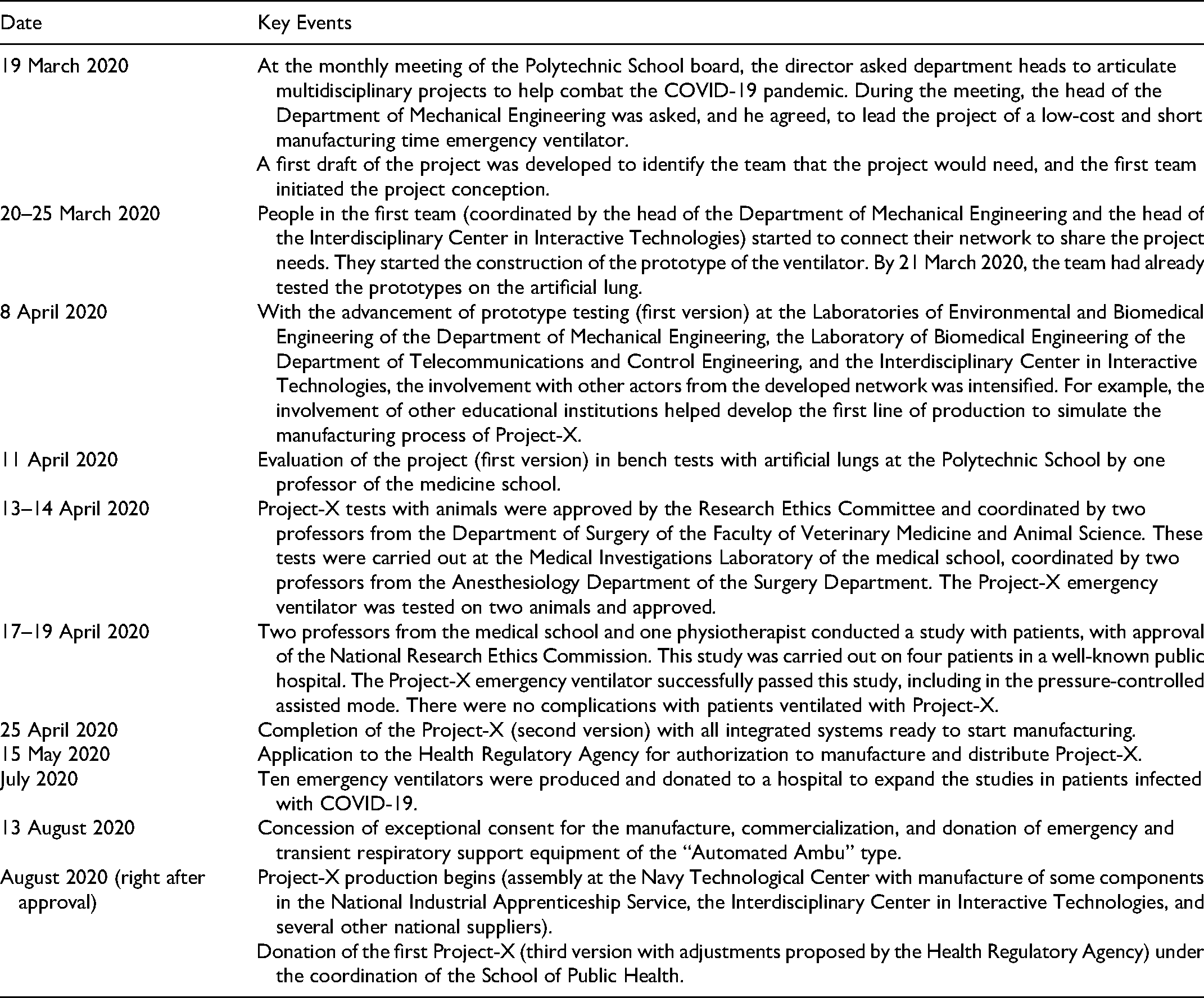
In this section, we first describe the case, organizing the data in an event table (see Table 2), through which we expect to facilitate understanding of the case narrative. After that, we present the data structure (see Table 3), which is expected to help the reader identify and assess the concepts from the data. For organizing the codes, we “aggregated the informant-based, first-order codes (left-hand side) into researcher-induced, second-order themes (middle of the figure), which we further distilled into overarching theoretical dimensions (right-hand side)” (Patvardhan et al., 2015, p. 141). We explain these codes right after Table 3. Finally, we present an abductive model at the end of the Findings section, as it emerged by making sense of data presented in this section. After that, we discuss the findings.
Overview of the Case: A Life-or-Death Situation
In February 2020, information began to spread about the necessity of mechanical pulmonary ventilators to treat COVID-19 patients. Unfortunately, there was a shortage of respirators in the global market and they were also costly. This information quickly caused great concern in various societal sectors, including the university where the project under analysis was later developed.
At the Polytechnic School leaders’ meeting on 19 March 2020, the dean requested solutions that could help the country face the COVID-19 pandemic, stating that such efforts would be fully supported. Thus, despite the great challenge of developing a solution in a short time and with a shortage of foreign components, one of the future project leaders said that he was “already convinced that although the regulatory process is very long, it is worthwhile trying to make the emergency pulmonary ventilator because the humanitarian crisis could be dramatic if there were no such ventilators available in Brazil.” Furthermore, he had prior knowledge of pulmonary simulations and biomedical devices owing to his research links with the university's medical school.
As we describe in the following paragraphs, the project evolved to have three central leaders: the technical (or technological) one, legitimized by his technical expertise in the field; the institutional one (who was also related to the microelectronics aspects of the project, as he leads a major microelectronics design lab at the faculty); and the external relations one, who orchestrated a sizeable external network based on the faculty’s alumni association.
Engaging Configuration
As mentioned earlier, the first phase started at the leaders’ meeting on 19 March 2020. A significant hallmark of this period was the formation of the team from diverse areas and definition of the product's initial design principles, based on the constraints of time and resources that guided the team's ideas. This phase resembles the forming stage of team development (Tuckman, 1965) as there was the initial structuralization of the team, but for a larger group. This stage of the project life cycle is constituted by informal and spontaneous approach for group setup and project coordination, reliance on social capital, and multiple champions articulating project needs.
Informal and Spontaneous Approach
Faced with this great challenge, right after the meeting, the technical project leader, who had been long involved in studying the technology used in mechanical ventilators to raise the positive pressure of the lungs, quickly began to sketch an initial diagram of the equipment. From this diagram, he started to identify the needs for an initial team, especially what types of specialists would be needed right at the beginning of the project.
However, this team did not grow in a controlled way, which resonates with the organization's knowledge coproduction beyond traditional boundaries (Arazy et al., 2016). In the first two weeks of the project, the team already had 40 specialists from different areas of knowledge, as the informal communication that the equipment was being developed spread over the campus. As the project leader said: “Suddenly, there were dozens of people involved from different areas.” In the same vein, said a team member: “People were engaging right after the meeting.” It is worth mentioning that the campus was already closed, with no classroom activities, only remote work was allowed, which would make it difficult to gather people around the enterprise. Due to its nature, the endeavor did not follow any of the established processes for the articulation of multidisciplinary research projects of any nature since they are pretty bureaucratic (slow, normative, rule based). Contacts to develop the project were individual to individual, not by the formal institutional ways of bureaucratic organizations like a university.
For instance, the Polytechnic School dean contacted the university's provost and the Veterinary School dean. The technical project leader contacted the colleagues he had already worked with at the medical school. The institutional and microelectronics project leader contacted his network in China to produce the SoCs (system-on-chips) his groups had designed specifically for the pulmonary ventilator. Finally, the external relations project leader orchestrated with companies, donors, and an extensive external support network. Thus, accountability was accomplished through emergent dialogue with those involved in the project and not through formal mechanisms.
Reliance on Social Capital
At the beginning of the project, the technical project leader decided the project should be open to resolving the technological uncertainties more quickly. It meant that information could be widely shared (providing a basis for action), which attracted a vast set of collaborators, companies, and individuals—the social capital (Coleman, 1988). They started to contribute to solving the problems that arose during the product's design and development. As in complex projects (Pitsis et al., 2003), the collaborations followed some design principles clearly defined by the project leader to meet restrictions regarding time and resources. Examples of such principles were: manufacturing and distribution simplicity, the minimum possible number of imported components, and, more importantly, the minimum necessary characteristics that would allow its approval by the regulatory agency.
The idea of having an open-source project from the beginning was to have people working parallel on the project (the makers). This helped to make decisions faster by multiplying efforts in the search for alternatives and testing viability as soon as possible, which provided flexibility of time in a high-pressure setting (Lenfle, 2011). Thus, it helped to mitigate significant uncertainties promptly. Community participation was intense, mainly in the prototyping phase. In a few days, the project's initial idea evolved in the form of successive prototyping cycles (build, test, and evaluate), implemented very quickly until it became a minimum viable product that was already working with its most basic functionalities.
One role highlighted in this phase of the project, mainly due to the adopted open-source character, was that of community engagement. This role synchronized the collaboration of the community with the developments of the multidisciplinary team of specialists (“Dozens of people involved from different areas,” as the technical project leader said). The purpose of this engagement was mainly mediation and encouragement. Certain strict design principles guided the community and were used to select the numerous solutions and alternatives it offered. In this context, even the ideas that proved to be unfeasible helped base the decisions and confirmed that the team's path was correct.
Multiple Champions
The engaging phase put together an informal and spontaneous coordination approach with an intense connection relying on social capital. The articulation occurred in a very fluid way. People initially involved began to search their contacts in other faculties for the competencies that became necessary throughout the project, as mentioned by the external relations project leader: “Each one took care of their collaboration network, which was formed to meet the needs of the project when they appeared.” No one was solely responsible for searching, but multiple champions intensified connections in an informal coordination setting.
Operating Configuration
In April 2020, there was a need for specialized testing of initial design solutions. The hallmark of this phase is the well-defined expertise and specialized resources needed to advance the project. Therefore, there was an effort to identify and integrate these resources. The three project leaders emerged with different roles: technical orchestrator, external relations resources orchestrator, and institutional resource orchestrator (also working on the microelectronics project domain). It is worth mentioning that these roles were not predefined (aligned with the idea of emergent roles in self-organizing knowledge coproduction [Arazy et al., 2016]). They emerged as people brought their social capital and knowledge to the project, so some intersection existed. Freedom, horizontally structured and controlled approach, strengthening alliances, and project leaders as orchestrators constitute this phase.
Freedom, Horizontally Structured and Controlled Approach
In this phase, with design moving to a definition, core alliances were strengthened with trustful partners that could provide resources (such as labs) and highly specialized knowledge. The community continued to participate, but the project leaders filtered and centralized the information. We notice the freedom to explore alternative paths in a nonhierarchical structure (“No room for personalism” as mentioned by the external relation project leader) coexisted with the demand for procedures in this phase, a hybrid approach (Barbosa et al., 2020).
Still, the less structured and informal approach happened within the project team, whereas a formal approach was emphasized for external relations. For example, to engage with the external collaboration community, which was accessed through a well-known collaboration web platform, project results were shared, information was organized, and the collaboration rules were clearly defined, such as what kind of solution would be considered (only tested and not general ideas) and the restriction to ideas aligned with the design principles. In addition, one person was responsible for managing the interface between the colocated project team and collaborations from the platform. This person said: “We cannot put all the information in the hub anymore.” Thus, as the number of interactions within the developers’ online community was high, there were specific procedures.
Strengthening Alliances
When the first mechanism was ready to be clinically tested, there was a need to ensure the expected safety. There was no proper bench within the Polytechnic School, but there was a research lab at the medical school. Before this pulmonary ventilator project, previous efforts had been made to enhance the partnership between the medical school and the Polytechnic School to develop health equipment research. Consequently, there was a prior relationship that favored the partnership.
In the same vein, specialists from the law school and external institutions installed within the university campus and who had a prior relationship with one of the project leaders were involved in the project. The importance of having connections for getting the resources for this phase was clearly explained by the project sponsor: “When we need the involvement of other university schools and other institutions, I spoke directly to the directors of these units to ask for their help. We had some prior partnerships with them. People knew each other.”
Project Leaders as Orchestrators
In this phase, project leaders were the focal point of the connections, as they knew the needed resources and where to find them. With a great network due to their professional history, they were the orchestrators of the network for the project development. One of them said, “We managed it as a tree model. Each project leader has their knowledge and network.”
Institutionalizing Configuration
The last phase starts with the clinical tests. The hallmark of this phase is the intensification of institutional relationships and the centralization of communication. It is composed of formalization of procedures, increasing centrality, and institutional orchestration.
Formalization of Procedures
Formal coordination was the primary approach with centralized communication, process control, and interaction focused on core partners. As some definitions emerged, the project pace slowed down at this phase compared to the initial one. One of the interviewees mentioned that when the project evolved to a higher critical phase (such as in vivo testing), the free flow of information was reduced. This formalization emerged as a concern that external collaborators might not have the safety protocols needed to deal with this phase and would misuse the information provided. At this moment, the flow of information was reduced and controlled.
Consequently, the speed of the project slowed down. In this stage, there was higher institutional participation (such as top administration in connection with the Navy), as the objective here was to scale up the project based on a decade-long relationship between the Polytechnic School and the Navy, which had the facilities to house an experimental plant, where assembly eventually took place.
Increasing Centrality
In the clinical trials phase, relationships were concentrated in crucial partnerships, reducing interaction with other actors. Such a reduction in interaction reflected a more controlled share of information, as illustrated by one team member: “At one point, I realized that the distribution of information about the project started to be controlled more rigorously. One of the project leaders began to worry about the university's legal responsibility. On this occasion, our colleagues from the Law School began to evaluate how to conduct the project in such a way that no harm was done.”
The partners were the medical school, represented by its specialists with previous engagement with one of the team leaders, and the veterinary school, which was activated for animal tests, prior to tests on humans; the university board supported these partnerships. In addition, the university and the Navy formed a partnership for manufacturing.
Institutional Orchestration
The university provost and the Polytechnic School dean acted as facilitators of institutional relationships, including the Navy and the Health Regulatory Agency. During the pandemic, the Health Regulatory Agency prioritized the analysis of COVID-19–related issues. Through an institutional articulation, the priority for analyzing the ventilator project was successfully obtained.
The team made an intense effort to prepare all of the necessary documents at the project level. It was a task never done before: “At that moment, when we were in a hurry, we needed to use the existing institutional bonds.”
The Grounded Model
The model (see Figure 1) articulates the themes highlighted in the data structure (see Table 3). By understanding the project over time, we notice changes in its coordination, its relation to the network, and the emergent role in each stage. Despite being presented in a sequence of phases, it is not the aim of the model to inform that there is a clear cut between them.
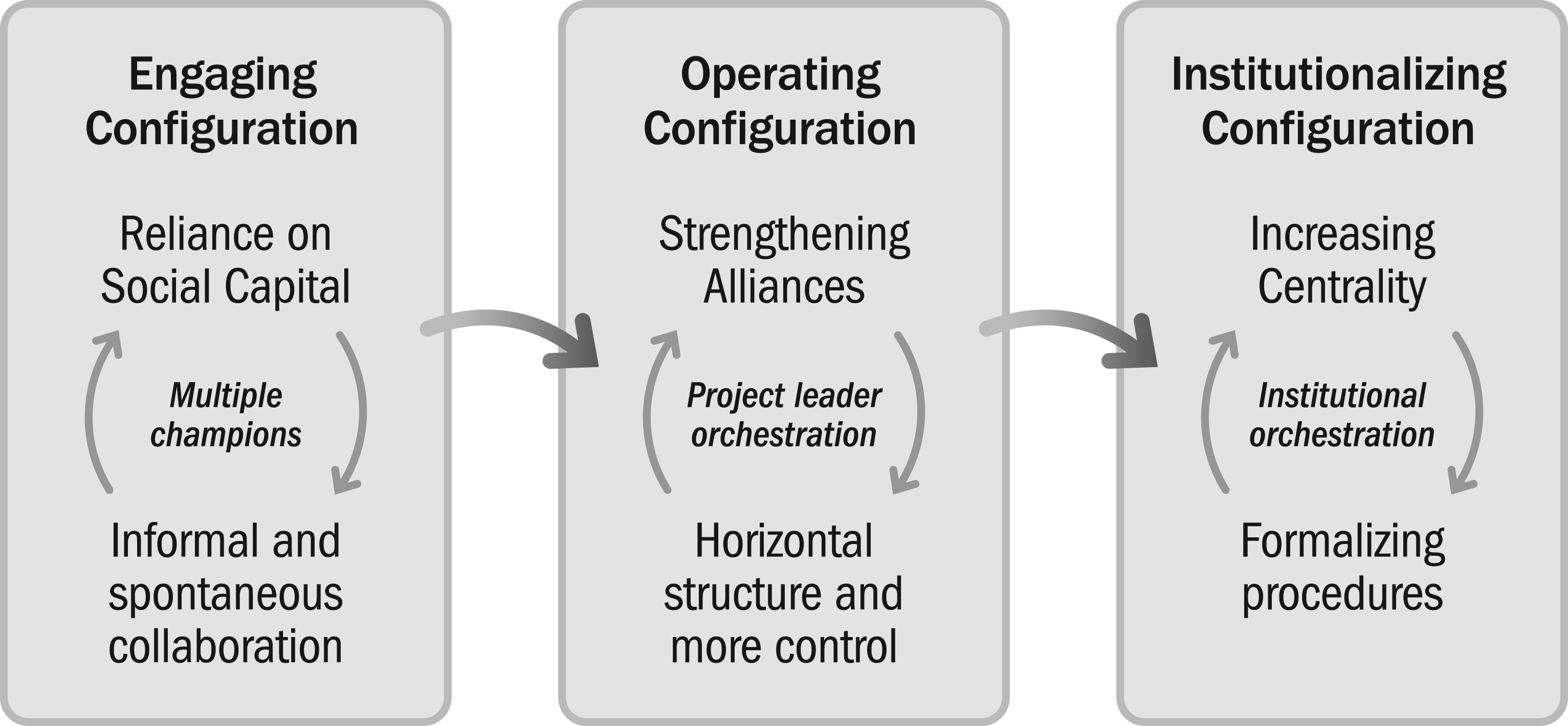
Coordination dynamics of a lifesaving product development project with no preestablished organizational governance structure.
Discussion
The classical organizational theory sets the overarching understanding of organization adaptation that still guides current discussions. From a contingency to a configurational view, it is still challenging to understand how to succeed as context changes. Because studies in this field typically come from two types of contexts, stable or dynamic, and have an incumbent company as the research object, they tend to focus on predefined processes and elements. However, scholars have advocated that, to succeed in modern complexities and uncertain environments, individuals must work together in unexpected, innovative ways (Edmondson, 2012; Lifshitz-Assaf et al., 2021). Furthermore, the studies recognize the need for further research where roles are not predefined, and structures, control, and coordination mechanisms are unclear (Arazy et al., 2016; Lifshitz-Assaf et al., 2021; Pitsis et al., 2003). This was precisely the case we studied to answer the research problem about how a successful NPD is coordinated in an emergency context. It allowed us to introduce our findings in the current debate on organizing NPD projects in the kind of work environment that seems to be becoming more common.
Unlike the idea that the organization should adopt a mechanistic or an organic structure depending on the environment’s level of complexity (Burns & Stalker, 1961), our findings suggest an adaptation of the coordination approach over the development of the project. The longitudinal view of the project development demonstrated phases with a horizontal structure (related to the idea of organic coordination) with increasing control and formalization over the project (associated with the idea of the mechanistic approach), suggesting an intermediary phase. This phase is aligned both with the idea of a transitional phase of governance evolution (Derakhshan et al., 2020) discussed in the program life cycle context and with an intermediate step in the projectification process (Midler, 1995), discussed in the firms’ evolution context, characterized by the autonomy of the temporary organization and control via permanent firm logics.
However, our findings demonstrated a different path from that of Derakhshan et al. (2020). While they found governance moving from a more formal to more informal approach, we found the opposite. The common point is the transitional phase, where there is a coexistence of both. The study focuses on a different object, as they focused on a collaborative program with diverse goals and well-defined participants, including a strategic planning phase. On the other hand, our study is about an emergent project, more like an entrepreneurial action (actually intrapreneurial) oriented toward a mission in a context with extreme time pressure and resource constraints. These different objects and contexts may justify the difference in the order of the approaches over time, reinforcing the idea that the project strategy is not given at the beginning. On the contrary, “projects appear as a way to make a strategy” (Lenfle, 2011, p. 371).
In the context of intense time pressure, prior studies describe more flexible approaches to project management (Lenfle, 2011; Lenfle & Loch, 2010), demonstrating that exploration situations do not allow for an ex ante definition of the goals and means to achieve them. In the same context of time pressure, a recent study identified that successful innovative projects developed over a hackathon were the ones where “actors begin their work process with only a minimal basis for coordination and increase their coordination as the work progresses by swiftly sensing and adjusting to one another's work” (Lifshitz-Assaf et al., 2021, p. 703). This result is similar to ours, despite not being a hackathon but an ad hoc, self-organizing (Mintzberg, 1983) innovative project within the context of time pressure.
For example, in our case, the project leader defined the design principles and gave the individuals the alignment for searching for solutions without following any bureaucratic procedure. Studies in the context of complex projects also describe a similar approach highlighting that no a priori strategy was defined; consequently, work was developed on an unfolding basis relying on a set of criteria by which the entire project would be judged (Pitsis et al., 2003).
Additionally, in our case, we noticed that the project challenges were shared with the crowd, which fostered parallel developments during the prototyping phase and the use of a trial-and-error approach. The parallel development resembles the Manhattan Project, in which a group of scientists raced to invent the atomic bomb (Lenfle, 2011; Lenfle & Loch, 2010). However, in our case, there is additional pressure from resource constraints.
Moreover, prior project management studies highlight that when the project is innovative and radically new to the people involved, a significant amount of exploration is required to learn the new tasks and deal with discoveries (Engwall, 2003), which might challenge the knowledge base and structure of the parent organization (Davies & Brady, 2016). While this exploration may be a source of new project capabilities (Davies & Brady, 2016), organization core rigidities (Leonard-Barton, 1992) can hinder project development. We found that Project-X's first and second phases fostered exploration while adopting an organic approach to coordination, being less sensitive to organizational routines that could hinder rather than support the project.
The Project-X leaders are well-experienced professionals in the parent organization, which means that they have a history in developing projects (what Davis & Brady [2016] call project capabilities) and know what could hinder the development of this kind of innovative project. Thus, their project capabilities in a daily context might have helped move the innovative project forward through an emergency. Moreover, they were able to integrate the innovative project in business processes (Gann & Salter, 2000), not by following business routines and project plans, but by mobilizing and integrating the resources as the project unfolded.
Our model illustrates the development of a new combination of resources and capabilities (a vanguard project), which can, over time, contribute to building dynamic capabilities (Davis & Brady, 2016; Teece, 2007). Literature suggests that ad hoc problem-solving to unprecedented events does not constitute a capability itself (Winter, 2003), as routines are building blocks of organizational capabilities (Winter, 1995). However, the vanguard project may be the first attempt to establish (what may become) new routines and resources for dealing with exploratory projects.
Knowing how an exploratory project was developed provides an idea (in project setting) about resources reconfiguration and sensing and seizing activities (Teece, 2007). However, our model for a turbulent context does not provide the same linear sequence of the dynamic capabilities microfoundations as in a nonproject setting. Actually, similar to Steen et al. (2021), the activities related to these microfoundations are interrelated and embedded in our model phases. For example, the engaging phase encompasses activities related to sensing and seizing, such as early engagement with the network to get feedback on initial solutions (sensing activity) while also identifying technology opportunities, working on problem-solving (seizing activity), and conducting parallel development. Similarly, the operating phase encompasses search activities (sensing) for the needed knowledge and assets for new problems that emerged to be resolved (seizing).
Additionally, our findings showed the emergence and coevolution of ad hoc innovative project governance (van Assche et al., 2014). In our case, the elements that emerged from observing this evolution were the social capital (with diverse types of actors and dynamism), the coordination mechanisms, and the roles of key participants, assigning governance configurations to the project.
At first glance, it seems that such a project would approach Mintzberg's (1983) adhocracy or missionary configurations of organizational design considering an established organization. However, it is not that simple since the project comprised different people from different organizations; not all were colocated and worked in small groups, although all were working for a cause. Moreover, we identified three governance configurations during the project development: engaging, operating, and institutionalizing, as presented in the grounded model. Our findings offer an evolving configurational view and its dynamic behavior over the project development, exploring its microfoundations.
The project was an open innovation one, involving different institutions (that joined the project along with its development) and the crowd. There was no predefined governance structure with a set of formal rules. Instead, more formal procedures, structures, and roles emerged along with the project development, which differ from the idea that emergent roles are part of an organization's informal and marginal activity (Okhuysen & Bechky, 2009).
Our findings align with a new form of online community organization: a self-organizing coproduction. It relies mostly on these emergent roles, which become more stable along with the project development (despite the absence of traditional stabilizing mechanisms such as predefined work procedures or role expectations) (Arazy et al., 2016) and are integrated into business processes (Gann & Salter, 2000).
Our findings also complement prior research within innovation management literature that identifies the changing roles of orchestrators for radical innovation management (O’Connor et al., 2008), demanding a different professional profile according to the innovation phase (O’Connor et al., 2018).
In line with a recent study (Derakhshan et al., 2020), our findings expand the evolutionary governance theory, demonstrating the project governance dynamics over its development for a different context and object of analysis. In sum, we found an adaptative way to organize the project development (Pitsis et al., 2003) and went even further by describing the governance configurations changing throughout the project in terms of the coordination approach, the emergent roles, and the interaction with the network.
However, our research found mechanisms evolving from informal to formal regulations in the same project and not the opposite. Actors established their relationship based on a joint mission and reputation—even not having a shared history in previous projects—and gradually formal procedures and more hierarchical roles emerged. Additionally, we provide a configuration view of elements of a governance structure, which means the coordination approach interacts with orchestrators’ roles and network activity.
In so far as the coordinating capability involves balancing mechanistic and organic approaches (and also adapting other elements of the configuration) over the project life cycle, future studies might explore this coordination capability through the lens of ambidexterity, balancing exploration, and exploitation (March, 1991), as a dynamic capability (Davies & Brady, 2016; O’Connor, 2008; O’Reilly III & Tushman, 2013; Parente et al., 2011).
Moreover, this study enhances our understanding of developing a project in a context where extreme time pressure and innovation requirements coexist, contributing to a recent discussion in the NPD domain (Lifshitz-Assaf et al., 2021). In our study, with a less precise structure, coordination happened through a common understanding of project goals (mission oriented, similar to complex projects [Pitsis et al., 2003]) and without prescribed structures and roles, with participants self-organizing. This differs from compressing existent procedures to fit time restrictions, which has already proved to not work in an innovative setting (Amabile et al., 2002). Our study advances in identifying the emergence roles, procedures, and coordination suitable to the project life cycle.
Conclusion
This research explores an NPD for health purposes in the pandemic context, with extreme time pressure and resource constraints, through a grounded theory approach. It answers the research question: How is a successful NPD coordinated in an emergency context? Although the project analyzed emerged within a university, it was a self-organizing, ad hoc innovative project, more like a new organizational form outside traditional boundaries, using online communities, volunteers, and partnerships. Despite all challenges, the product developed achieved its objective on time.
By studying how a new product project was developed in this context, we contribute to the discussion about aspects of the organizational theory related to developing a lifesaving product. This study aligns with current research on coordination, which is concerned with how coordination happens, regardless of the organizational design, but understanding action in context (Lifshitz-Assaf et al., 2021; Okhuysen & Bechky, 2009). Additionally, the study contributes to discussing the innovative project and business processes integration (Davies & Brady, 2016; Gann & Salter, 2000) and governance evolution (Derakhshan et al., 2020). Inductively, some concepts emerged from our data, revealing the coordination approach and its interaction with other governance elements on a product developed in an emergency context: roles, work coordination, and network interaction.
We expect our study to encourage other investigations on new ways of organizing that succeed in developing innovative projects, especially in the face of emergent social challenges. Emergencies bring additional complexities to project development. They may happen suddenly with no predefined plan or preexistent structure and demand a fast-paced work organization. Therefore, there are opportunities for research in this complex project setting. How to organize? is a multifaceted question that can still be explored from different perspectives. For example, future research can explain the mechanisms that favor this fast-paced work organization in a complex project setting. Moreover, it can go deeper in understanding different life cycle stages of the project, such as group setup (Tuckman, 1965) in diverse group types and sizes.
Footnotes
Acknowledgments
This research was funded by grants from the São Paulo Research Foundation (FAPESP).
