






Abstract
This study investigates how organizational ambidexterity manages innovation paradoxes in construction megaprojects. Using fuzzy-set qualitative comparative analysis of 429 survey responses, it identifies distinct pathways leading to exploratory and exploitative innovation. Project complexity, project importance, and learning capability emerge as common triggers of both innovation modes. Exploratory innovation is more likely to rely on cooperative R&D and loose formal control with strong informal control, whereas exploitative innovation is more likely to depend on independent R&D and tight formal control. These findings extend understanding of innovation governance in megaprojects and provide implications for tailoring innovation strategies to different project conditions.
Keywords
Introduction
Complex construction megaprojects are increasingly expected to deliver innovative solutions in response to rising demands associated with industrial advancement and societal development (Whyte, 2019; Shenoy et al., 2025). However, governing innovation in megaprojects is arduous because their one-off feature and huge investments leave little tolerance for trial and error and amplify the consequences of failure (Flyvbjerg, 2014; Ma et al., 2021). This creates a practical challenge that megaprojects need to pursue innovation to meet evolving technical and societal expectations, while the delivery logic that underpins project viability simultaneously constrains how innovation can be undertaken. This study addresses this challenge by examining how megaproject organizations can govern innovation more effectively.
Innovation in an organization is commonly discussed in terms of exploration and exploitation (Duodu et al., 2024). Exploratory innovation emphasizes novel and discontinuous solutions, whereas exploitative innovation focuses on refinement and adaptation of existing technologies (Andriopoulos & Lewis, 2010; Zhang et al., 2020). In megaproject settings, both modes are required, but pursuing them in parallel often creates tensions as they need paradoxical resource commitments and managerial logics (Chen, 2017). The tensions can be understood as an innovation paradox, in which contradictory yet interdependent demands must be continuously managed rather than resolved through simple trade-offs. If such a paradox is not properly managed, organizations may either focus on short-term project innovation at the expense of long-term capability development, or prioritize firm-level technologies advancement that are difficult to adapt to specific engineering contexts. A key organizational capability for engaging with such competing logics is organizational ambidexterity, defined as the ability to pursue exploration and exploitation simultaneously (Raisch & Birkinshaw, 2008; O’Reilly & Tushman, 2013; Mom et al., 2009). This perspective is especially relevant to construction megaprojects, where project-based organization, temporariness, and customization intensify the difficulty of balancing experimentation with reliable delivery (Söderlund & Tell, 2009).
Prior research has devoted substantial attention to balancing exploratory and exploitative innovation (Benner & Tushman, 2003; Duodu et al., 2024; Eriksson et al., 2017; He & Wong, 2004; Ma & Lu, 2025), and has demonstrated that ambidexterity helps organizations accommodate contradictory demands such as incremental versus radical innovation (Colbert, 2004), stability versus transformation (Meyer & Stensaker, 2006), and efficiency versus flexibility (Jansen et al., 2005). However, existing studies have largely treated the exploration-exploitation challenge as a general balancing problem, paying insufficient attention to the underlying paradoxical demands that generate and sustain this tension in megaproject innovation. As a result, ambidexterity is often discussed as a broad both–and capability, while there is limited knowledge about how it can be enacted as a governance solution to address the concrete contradictions embedded in megaproject innovation. This also limits the development of practical insights on how organizations can govern innovation under the contradictory demands embedded in megaproject decision-making.
In particular, innovation in megaprojects is shaped by multiple interdependent organizational and project conditions (Wang et al., 2025), suggesting that innovation outcomes are more likely to emerge from configurations of conditions than from the net effect of any single factor. As such, this study aims to explore how different configurations of ambidexterity-related conditions enable megaprojects to pursue exploratory and exploitative innovation under paradoxical demands. To address this question, fuzzy-set qualitative comparative analysis (fsQCA) is adopted to identify multiple pathways through which ambidexterity-related conditions combine to produce innovation outcomes in construction megaprojects. By uncovering these configurational pathways, this study contributes to a more nuanced understanding of ambidexterity as an innovation governance approach in megaprojects and offers practical guidance for project managers and firm leaders in configuring organizational conditions to execute appropriate innovation.
The remainder of this article is organized as follows. The innovation paradox and organizational ambidexterity in construction megaprojects are discussed in the theoretical background. Then, the theoretical framework of this study is presented. The research method section further describes the methodology, questionnaire design, data collection, and validation. The analytical processes of fuzzy-set qualitative comparative analysis and the results are presented in the section of empirical results. The discussion section analyzes the configurational results, elaborates theoretical contributions, and managerial implications. The final section concludes this study by summarizing the main findings, limitations, and directions for future research.
Theoretical Background
Innovation Paradox in Construction Megaprojects
Construction megaprojects, characterized by complexity, temporariness, and unique resource constraints, are inherently paradoxical environments for innovation (Zhang et al., 2020; Zhang et al., 2021a). Prior studies have documented multiple tensions surrounding megaproject innovation, including the balance between project efficiency and novelty (Gong & Wang, 2022; Liu & Leitner, 2012; Zhang et al., 2020; Zhu et al., 2025), the coexistence of creative and disciplined managerial approaches in innovation process (Bollinger, 2020; Kratzer et al., 2008; Liu & Chan 2017; Smith & Lewis, 2011; Zaman et al. 2024), and the tension between control and flexibility in megaproject implementation (Atli & Krystallis, 2025; Awe & Church, 2021; Loch & Sommer, 2019; Sun et al., 2024; Szentes & Eriksson, 2016; Szentes, 2018). Synthesizing these studies, several focal paradoxical tensions can be conceptualized across multiple interconnected levels of megaproject innovation.
At the strategic level, relevant organizations need to decide whether innovation activity serves immediate project delivery or longer term organizational development, thereby forming a paradox of strategic intention. This paradox is obvious, especially in the competitive bidding environment of construction projects that often incentivize cost efficiency over innovation, tending to reinforce exploitative behaviors at the expense of exploration (Eriksson, 2017; Gong & Wang, 2022). Although the reliance on existing capabilities can ensure immediate project delivery, it runs the risk of creating competence traps that impede long-term adaptability and growth (Zhang et al., 2020). By contrast, an overemphasis on exploratory innovation may place pressure on immediate project objectives. This tension means that innovation in megaprojects cannot be directed solely toward either immediate project delivery or future organization development, but must be continuously adjusted between the two.
Furthermore, this strategic tension will cascade down to the level of management, giving rise to a management style paradox. Since innovations in construction are typically driven by project teams comprising both on-site personnel and off-site technology departments within construction firms (Zhou et al., 2022), project managers and firm leaders from these entities play important roles in reconciling competing demands of creativity and discipline (Ozorhon et al., 2016). A passion-driven management style encourages risk taking and novelty, while a discipline-oriented management style emphasizes control and efficiency (Andriopoulos & Lewis, 2009). These two styles are not mutually exclusive but represent a persistent paradox, wherein successful innovation requires both generative freedom and procedural constraint (Smith & Lewis, 2011). Empirical work further indicates that combining seemingly contradictory styles may enhance project success (Zaman et al., 2024), and different styles tend to align with exploratory versus exploitative innovation orientations (Liu & Chan, 2017).
Finally, these tensions materialize in the operational relationship between contractors and project teams, creating a control mechanism paradox. Contractors must decide how to exert control over project teams to achieve project goals, while also empowering them with the autonomy necessary to foster creative problem-solving and leadership (Chang et al., 2017). Excessive control can stifle the free flow of ideas, but too much autonomy may lead to opportunistic behavior and escalating risks (Yang et al., 2022). Consequently, project governance must navigate the tension between control, which is enacted through planning and monitoring, and flexibility, which is enabled through adaptive leadership and agile organizing (Atli & Krystallis, 2025; Awe & Church, 2021; Loch & Sommer, 2019). A significant body of research has been devoted to integrating control and flexibility in project management practices, highlighting the influence of attitudes and leadership (Sun et al., 2024; Szentes & Eriksson, 2016; Szentes, 2018).
More importantly, these paradoxes are not isolated; rather, they exhibit intertwined and mutually reinforcing relationships across different organizational levels. Strategic choices shape how innovation is managed, and managerial practices further influence performance at the operational level. Meanwhile, feedback from project execution can travel upward and affect subsequent strategic decisions. In summary, megaproject innovation is jointly driven by the strategic intention paradox, management style paradox, and control mechanism paradox. Governing innovation in megaprojects, therefore, requires adaptive organizational mechanisms capable of addressing these interconnected paradoxical demands.
Organizational Ambidexterity in Construction Megaprojects
Organizational ambidexterity has been regarded as a central theoretical lens for addressing paradoxical tension between exploration and exploitation, as it can manage the tension without simplifying the conflicting demands into trade-offs (March, 1991; Tushman & O’Reilly, 1996;Raisch & Birkinshaw, 2008; O’Reilly & Tushman, 2013). In this sense, ambidexterity can be understood as a governance mechanism that enables organizations to continuously navigate innovation paradoxes across multiple levels, rather than attempting to eliminate them. As a duality that endows organizations with dynamic capability, ambidexterity is especially relevant to megaprojects, where organizations must combine efficiency-driven routines that safeguard delivery objectives with experimentation that responds to emergent challenges (Pellegrinelli et al., 2015; Killen et al., 2023). Some scholars have examined how organizational ambidexterity supports innovation in construction, highlighting its manifestations at different levels ranging from firm-wide learning (Sumanarathna et al., 2025) to project-level managerial practices (Awojide et al., 2018; Filho, 2025). However, there is still a lack of systematic research on how different forms of ambidexterity work together to address the multilevel innovation paradox.
Several modes of achieving organizational ambidexterity have been identified in previous research (Wang & Rafiq, 2014; O’Reilly & Tushman, 2013; Zheng et al., 2023; Mom et al., 2009), among which structural and contextual ambidexterity are the most frequently theorized and empirically examined (Gupta et al., 2006; Raisch et al., 2009; Turner et al., 2014; Taródy, 2016). Structural ambidexterity is grounded on the spatial separation of organizational units that are each equipped with one of the paradoxical activities, while contextual ambidexterity aims to simultaneously demonstrate alignment and adaptability across an entire business unit (Gibson & Birkinshaw, 2004). Beyond these, leadership-based ambidexterity has been increasingly emphasized, highlighting the responsibility of top management teams and project leaders in reconciling tensions between conflicting activities through shaping strategic vision, mediating conflicts, and integrating competing demands (Jansen et al., 2008; Raisch & Birkinshaw, 2008). Accordingly, ambidexterity in this study focuses on structural, contextual, and leadership-based aspects, which have been jointly explored in literature on corporate innovation, organizational digital transformation, and strategic management (da Silva et al., 2023; Michl et al., 2013; Raisch & Birkinshaw, 2008; Ouyang et al., 2020).
The relevance of these three ambidexterity forms to this study derives from their fundamental alignment with the structural characteristics of construction megaprojects. Megaprojects are typically organized around project-form (P-form) structures, a characteristic of project-based corporations. P-form exhibits three key characteristics of task decomposition, product customization, and temporary decentralization (Morris et al., 2010). It naturally creates and sustains a conducive environment where ambidexterity is not merely enabled but also fundamentally operationalized as a core organizational capability. First, task decomposition enables large and complex problems to be broken down into manageable subtasks with clear objectives, responsibilities, and deadlines (Mohamed et al., 2025). This provides the foundation for structural ambidexterity, as different units within the project can be designated to focus on either exploitative refinement or exploratory breakthroughs. Second, the P-form’s emphasis on product or service customization requires organizations to continuously reconfigure project teams and processes to meet highly specific and dynamic client demands. This flexibility aligns well with the concept of contextual ambidexterity, where individuals and teams must integrate diverse components and services to provide customized solutions tailored to customer needs (Smith & Tushman, 2005). Finally, the mechanism of temporary decentralization, which allows project units substantial autonomy while maintaining strategic oversight from the permanent organization (Söderlund & Tell, 2011), supports leadership-based ambidexterity by enabling managers to adjust control and support based on project needs.
Overall, the three forms of organizational ambidexterity provide complementary mechanisms to address the paradoxes at the strategic, management, and operational levels. They do not operate independently but interact with each other in different ways, jointly influencing the outcome of innovation. The relationship between the innovation paradox and organizational ambidexterity is illustrated in Figure 1.
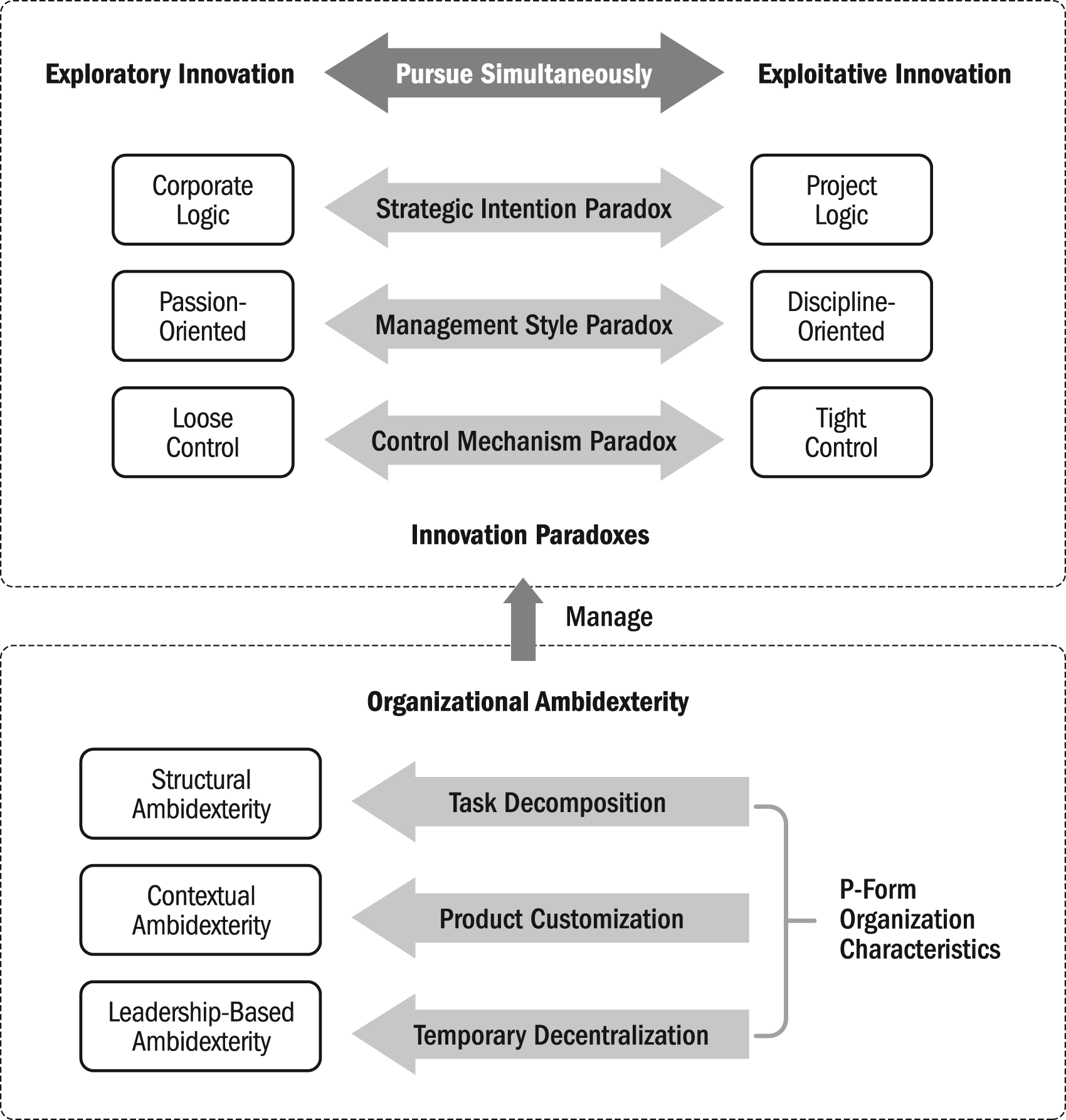
Relationship between the innovation paradox and organizational ambidexterity.
Theoretical Framework
Building on ambidexterity as an integrative lens for managing paradoxical demands (Andriopoulos & Lewis, 2010), this study theorizes a set of influencing factors through three complementary perspectives of structural, contextual, and leadership-based ambidexterity, each highlighting distinct influence mechanisms and antecedent conditions.
Formal and Informal Control in Structural Ambidexterity
As firm resources are inherently limited, exploration and exploitation often compete for attention and inputs, creating tensions that require deliberate organizational responses (March, 1991; Russo & Vurro, 2010). Structural ambidexterity addresses this challenge by operating exploratory and exploitative activities under distinct structural conditions (Gibson & Birkinshaw, 2004; Song et al., 2024). For instance, prior research revealed that mechanistic structures facilitate exploitative innovation with formalized routines and standardized procedures, whereas exploratory innovation is better supported by more organic and flexible arrangements (Sun et al., 2020; Kang & Snell, 2009). In the context of megaprojects’ innovation, structural ambidexterity manifests through the multilevel organization of firms and projects (Zhang et al., 2013). The project team, established by the contractor for a specific project, operates under the control of its parent contractor firm primarily regarding resource allocation and process management (Chang et al., 2017; Yang et al., 2022). This structural setup allows for differentiated control mechanisms to be applied across projects and subunits based on innovation objectives.
Within such arrangements, how control is exercised becomes central to enabling structural ambidexterity. Drawing from organizational control theory (Ouchi, 1979), control mechanisms can be broadly categorized into formal and informal ones. On the one hand, two key forms of formal control are particularly relevant in the context of megaproject innovation. First, the allocation of resources, including funding, personnel, and equipment, determines the project team’s ability to engage in exploration versus exploitation (Chang et al., 2017). Second, behavior controls embedded in formal procedures, reporting systems, and performance evaluation shape how team members act and align their efforts with organizational priorities (Yang et al., 2022). On the other hand, informal control mechanisms, such as shared culture, interpersonal trust, and common values, foster flexibility and collaboration across organizational boundaries, particularly important in complex, innovation-driven megaprojects involving multiple stakeholders (Stouthuysen et al., 2017). Taken together, resource control, behavior control, and informal control represent core organizational levers through which firms enact structural ambidexterity in megaproject environments.
Project Characteristics in Contextual Ambidexterity
In addition to creating structural arrangements, contextual ambidexterity emphasizes the importance of a supportive organizational context that enables individuals to make dynamic decisions between exploratory and exploitative innovation according to situational demands (Reischl et al., 2022). Particularly in complex construction megaprojects, the innovation approach is shaped not only by organizational structure but also by project-specific contingencies. According to contingency theory, there is no one-size-fits-all approach to innovation; rather, the optimal innovation strategy depends on situational factors such as task complexity and strategic relevance (Cantarelli, 2022; Donaldson, 2001). Therefore, we propose that project-level characteristics, including strategic importance and technical complexity, serve as key contingencies that influence how innovation should be implemented. Meanwhile, strategic choice theory posits that organizational actors make deliberate decisions by weighing internal capabilities and external constraints (Child, 1997). In this process, the anticipated innovation benefits, such as long-term competitive advantage or short-term cost benefits, serve as a crucial evaluative criterion (Yacob & Peter, 2022). For instance, when a project entails intricate technical requirements or holds significant importance for corporate development, it may face a paradox in which the pursuit of profit conflicts with the achievement of technological breakthroughs. Consequently, this necessitates proposing that project importance, project complexity, and innovation benefits will influence the choice of innovation approach.
Learning Capability and Partnership Management in Leadership-Based Ambidexterity
Innovation outcomes are not solely the result of structural or contextual arrangements but are also deeply influenced by behavioral and relational enablers fostered by leadership (Liu & Chan, 2017). Leadership-Innovation outcomes are not solely the result of structural or contextual arragements but are also deeply influenced by behavioral and relational enablers fostered by leadership (Liu & Chan 2017). Leadership-based ambidexterity requires senior executives to dynamically switch between behaviors that support exploratory or exploitative innovation (Rosing et al., 2011). Scholars argue that leaders serve as the central integrators who orchestrate resources within and across organizational boundaries, and cultivate distinct sets of organizational capabilities (Gumusluoğlu & Ilsev, 2009; Schweitzer, 2014). Internally, leaders need to carry out top-level design to activate the team’s knowledge absorption capability, which is foundational to innovation (Liu et al., 2024). Externally, leaders act as vital boundary spanners who bear the responsibility of coordination, trust building, and alliance development (Cao et al., 2021; Williams, 2013).
To elucidate both internal and external mechanisms through which leadership-based ambidexterity translates into innovation, two complementary theoretical lenses were drawn upon. First, the knowledge-based view argues that integrating knowledge is a firm’s primary role (Grant, 1996), during which internal learning mechanisms such as organizational learning routines, absorptive capability, and reflective practices determine whether it can translate accumulated and newly acquired knowledge into innovative outcomes (Alblooshi et al., 2021). In construction megaprojects, learning from complex technical challenges and project retrospectives is critical to assimilating and applying knowledge for innovation. Second, the dynamic capabilities theory contends that in dynamic environments, firms must build external competencies (Teece et al., 1997). Specifically, the external relational capability to effectively manage partnerships is a critical dynamic capability that allows firms to leverage complementary resources (Su et al., 2009). This is particularly salient in megaprojects, where innovation is inherently multiactor, and strong partnerships reduce transaction costs and create a relational infrastructure for continuous joint problem-solving (Zhao et al., 2023). Therefore, synthesizing these perspectives, learning capability and partnership management represent two key conduits through which leadership-based ambidexterity enables innovation in construction megaprojects.
The preceding discussion synthesizes the key antecedents and mechanisms across structural, contextual, and leadership-based perspectives on ambidextrous innovation. To integrate these elements into a cohesive whole, a comprehensive theoretical model is proposed. This framework, depicted in Figure 2, illustrates that eight antecedents, including behavior control, resource control, informal control, project complexity, project importance, innovation benefit, learning capability, and partnership management, are interrelated and may jointly influence the exploratory innovation and exploitative innovation.
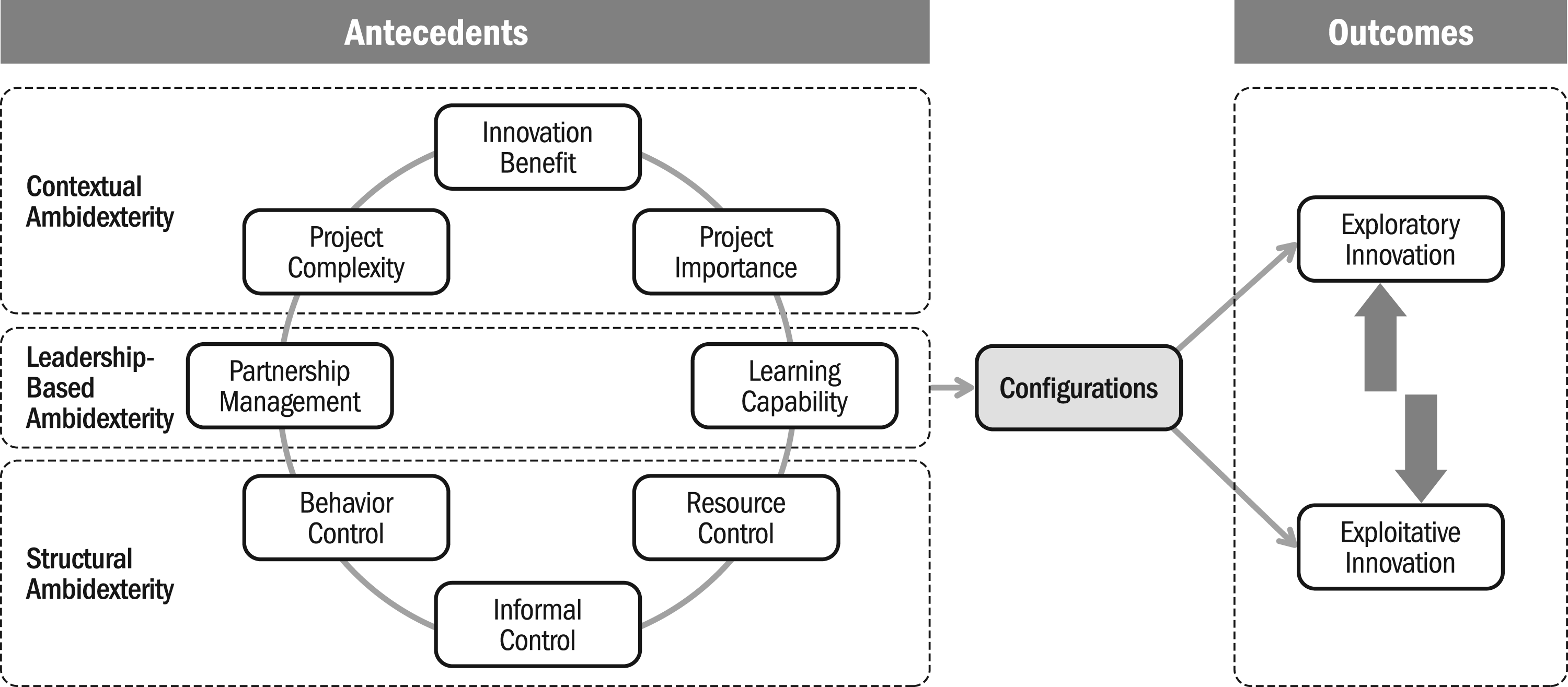
Theoretical framework.
Research Method
Qualitative Comparative Analysis
This study uses fsQCA, a technique for analyzing social phenomena based on sets, to demonstrate the complex attributes needed for a specific outcome. By employing Boolean algebraic rules, fsQCA addresses the limitations of traditional multilevel regression analysis by identifying antecedent combinations that act as sufficient or necessary conditions. The application of this method in management research has increased in recent years (Du & Kim, 2021; He et al., 2022; Wang et al., 2021). This approach allows for several analytical possibilities in this study. It can identify whether factors based on structural, contextual, and leadership-based ambidexterity are necessary for exploratory and exploitative innovation. More importantly, it can explore multiple configurations associated with different innovations using a variety of paths.
Questionnaire Design
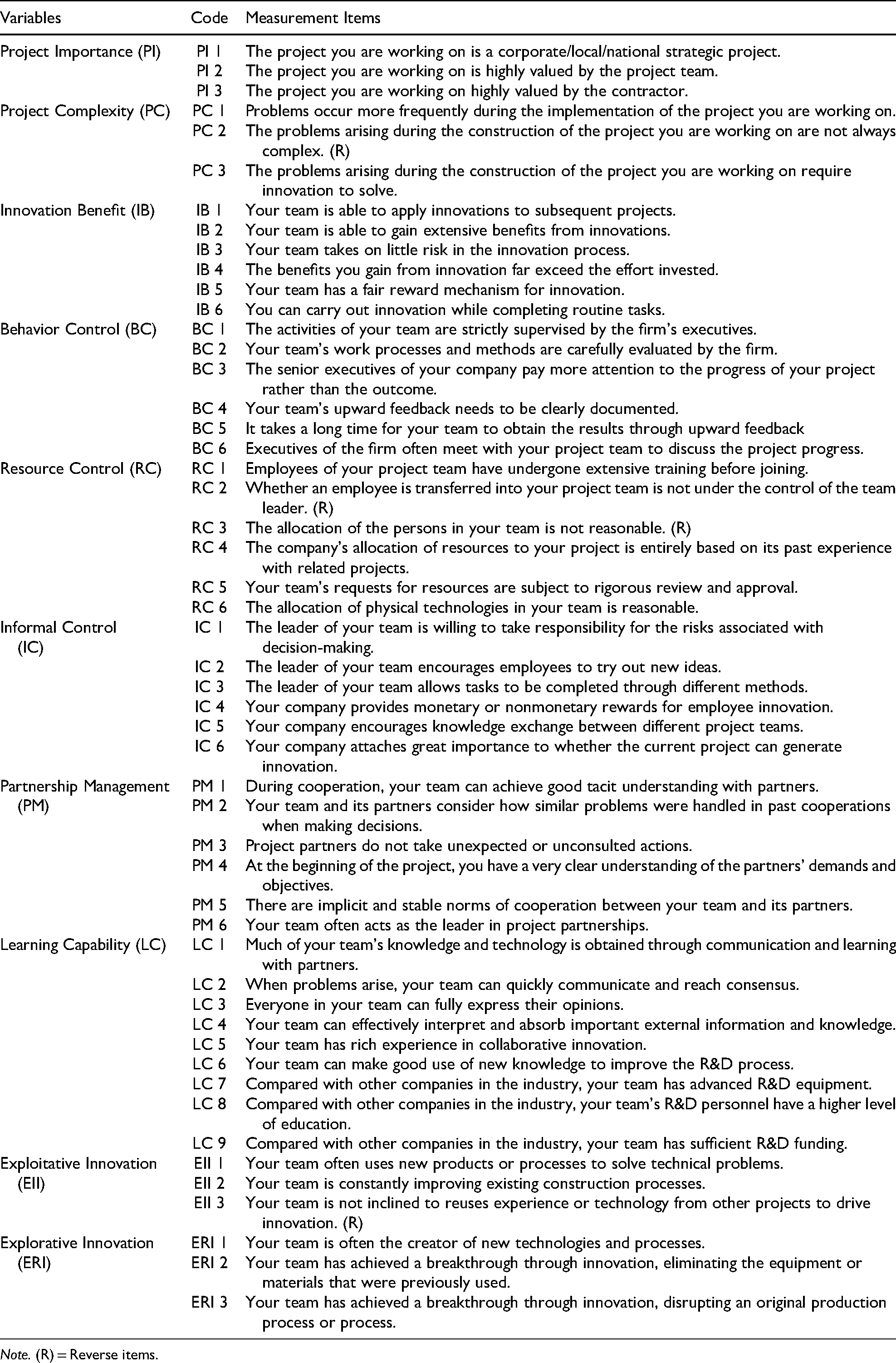
To conduct the empirical analysis, a structured questionnaire was designed based on well-established scales to measure all constructs. A total of 51 items covering the constructs and some basic information were included in the questionnaire (see the Appendix at the end of the article). All items were rated on a five-point Likert scale ranging from 1 = strongly disagree to 5 = strongly agree. To reduce potential response and social desirability bias, respondents were assured of anonymity, and several items were reverse coded.
Project characteristics, including the variables of project importance, project complexity, and innovation benefit, were measured with several items. Three items of project importance were adapted from Meng and Brown (2018) to capture whether the focal project is perceived as a strategic project and the extent to which it is highly valued by both the project team and the contractor. Three items of project complexity were adapted from Gong and Wang (2022) to reflect the frequency and difficulty of problems during construction and whether these problems require innovation to solve. Innovation benefit was measured with six items derived from Ling et al. (2007) and Ozorhon et al. (2016), by taking into account the direct monetary and reputational benefits of innovation output to teams and individuals, the indirect benefits of possible future project reuse, and the negative benefits of innovation risk.
Regarding the control mechanism, behavior control was measured from the aspects of control means design, control node selection, process supervision rigor, and upward feedback effectiveness, using six items developed by Lou et al. (2022) and Youndt et al. (1996). Resource control was assessed using six items to reveal human and physical resources (Barney, 2000). The measurements of informal control were adapted from Howell et al. (1990), using six items from the perspectives of leadership support and an innovative atmosphere.
Concerning team characteristics, partnership management was measured based on action logic and implicit norms between project teams and partners through six items, referring to the research of Faraj and Yan (2009) and Brion et al. (2012). Then, learning capability was measured from communication ability, technical ability, and knowledge absorption ability, with a nine-item scale referred to Colakoglu et al. (2013), Jansen et al. (2005), Popp (2005), and Simonin (1999).
As for ambidextrous innovation, exploitative innovation and exploratory innovation were respectively measured with three items adapted from Duodu and Rowlinson (2019). The items of exploitative innovation capture the extent to which the project team refines and improves existing products, processes, and solutions; whereas the items of exploratory innovation capture the degree to which the team generates breakthrough technologies or processes that replace or disrupt existing ones.
Descriptive Analysis
Data collection was carried out in various project teams across different regions. The target population comprised managers, technical workers, engineers, and general employees, who were directly involved in the construction of megaprojects such as highways and tunnel projects. Potential respondents were identified through project networks within contractors and most of them are from subsidiaries of China Communications Construction and China Railway Group Co., Ltd., which are two of the largest contractors in China. All respondents were approached via an anonymous online questionnaire distributed electronically. A purposive and snowball sampling method was employed to obtain enough samples and guarantee the multiplicity. Specifically, researchers first distributed the online questionnaire to project managers and reminded them to complete their own questionnaire and send it to their team members. In total, over 440 questionnaires were collected and 429 valid questionnaires remained after removing ineffective and short response times. Table 1 presents the descriptive statistics for the basic information of the respondents and their projects. The findings indicated that 62% of the respondents had more than 5 years of work experience, while 67% had been involved in the project for over a year. Furthermore, 81% of the respondents reported that their project teams consisted of more than 20 persons, with nearly 70% stating that more than five parties were involved in their projects. These results demonstrate that most respondents possessed engineering experience and were well acquainted with their projects. Additionally, more than half of the respondents held midlevel managerial positions, which suggests that they possessed considerable knowledge of innovation-related decision-making processes. All of these ensured the enhanced effectiveness of the collected questionnaires.
Demographic Characteristics of the Sample
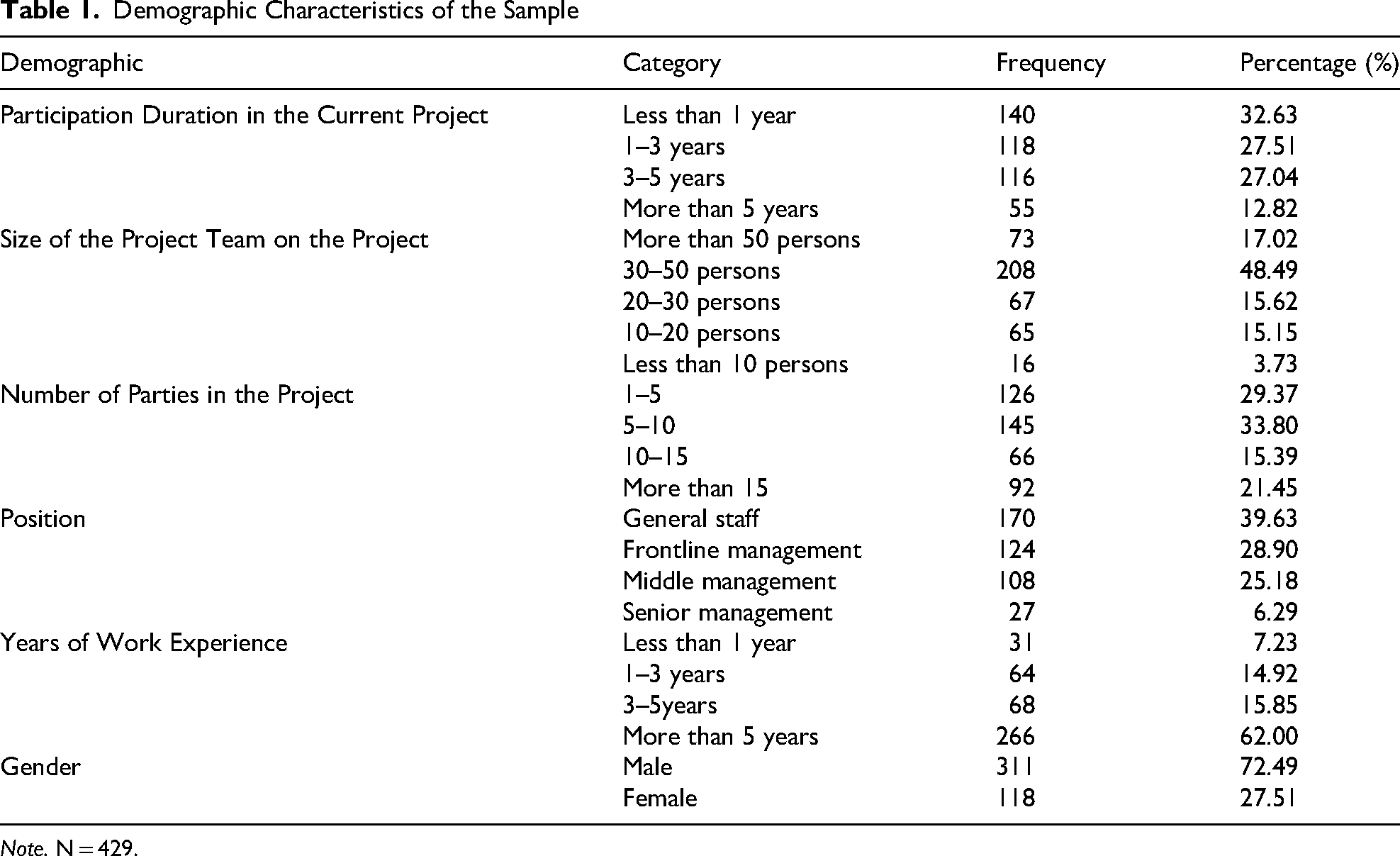
Note. N = 429.
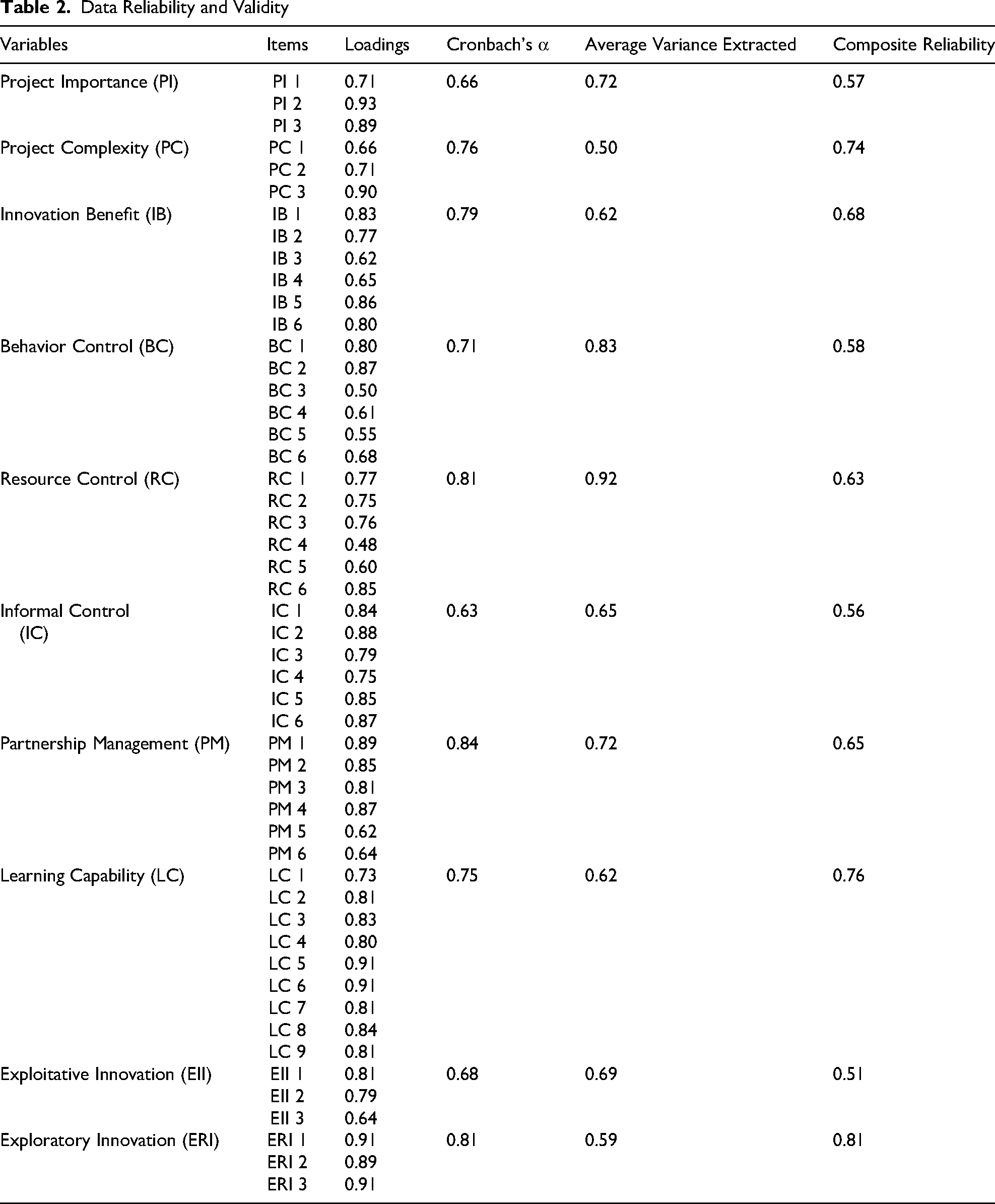
Data Reliability and Validity
The reliability and validity of the collected data were analyzed. As shown in Table 2, Cronbach’s α values for all constructs exceed 0.6, meeting the commonly accepted minimum threshold for reliability. The overall Cronbach’s α coefficient is 0.915, indicating that the overall reliability of the questionnaire is good and the measurement results have good internal consistency. Meanwhile, the composite reliability of each variable is between 0.5 and 0.9, further confirming the variables’ reliability. Data validity is verified using convergent and discriminant validity. The average variance extracted results are all above 0.5, indicating acceptable convergent validity (Fornell & Larcker, 1981). Further evidence of convergent validity is supported by the factor loadings of the items, all of which exceed the threshold of 0.4. Moreover, as shown in Table 3, the square roots of the average variance extracted values for each variable are greater than the correlations between the variables, ensuring good discriminative validity.
Data Reliability and Validity
Discriminative Validity
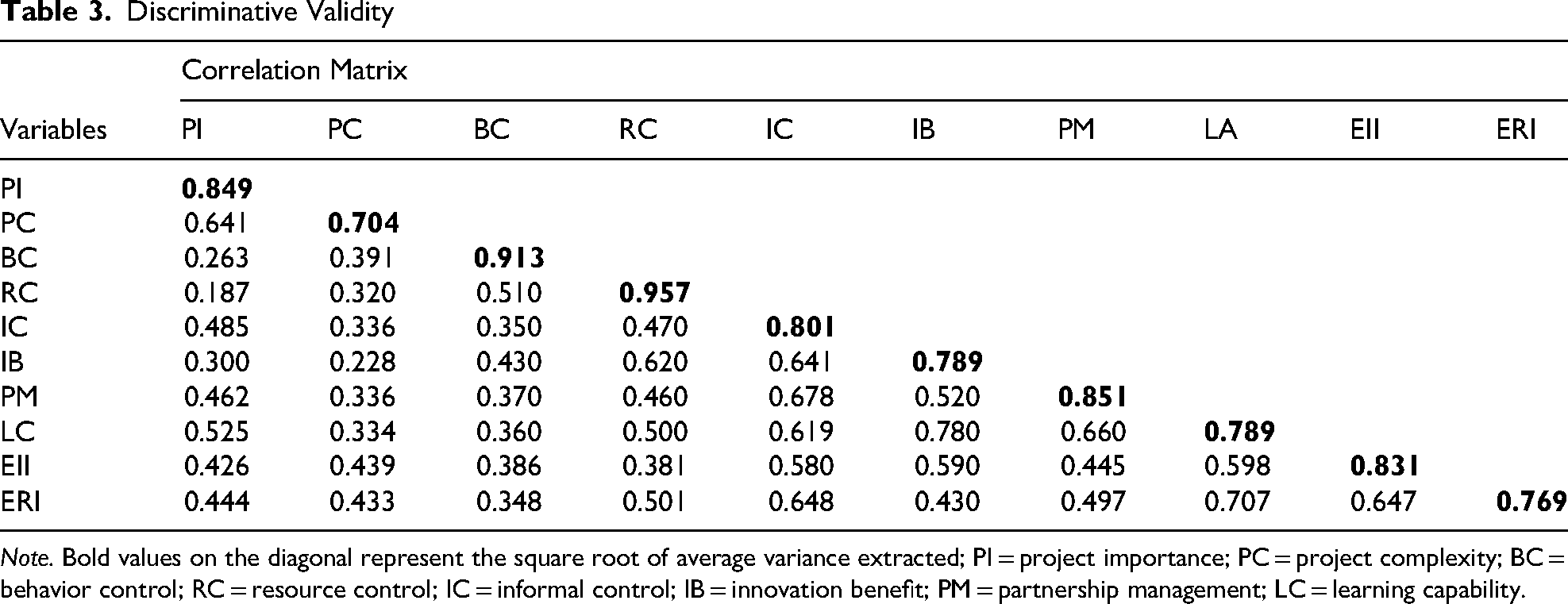
Note. Bold values on the diagonal represent the square root of average variance extracted; PI = project importance; PC = project complexity; BC = behavior control; RC = resource control; IC = informal control; IB = innovation benefit; PM = partnership management; LC = learning capability.
Empirical Analysis
Variable Calibration
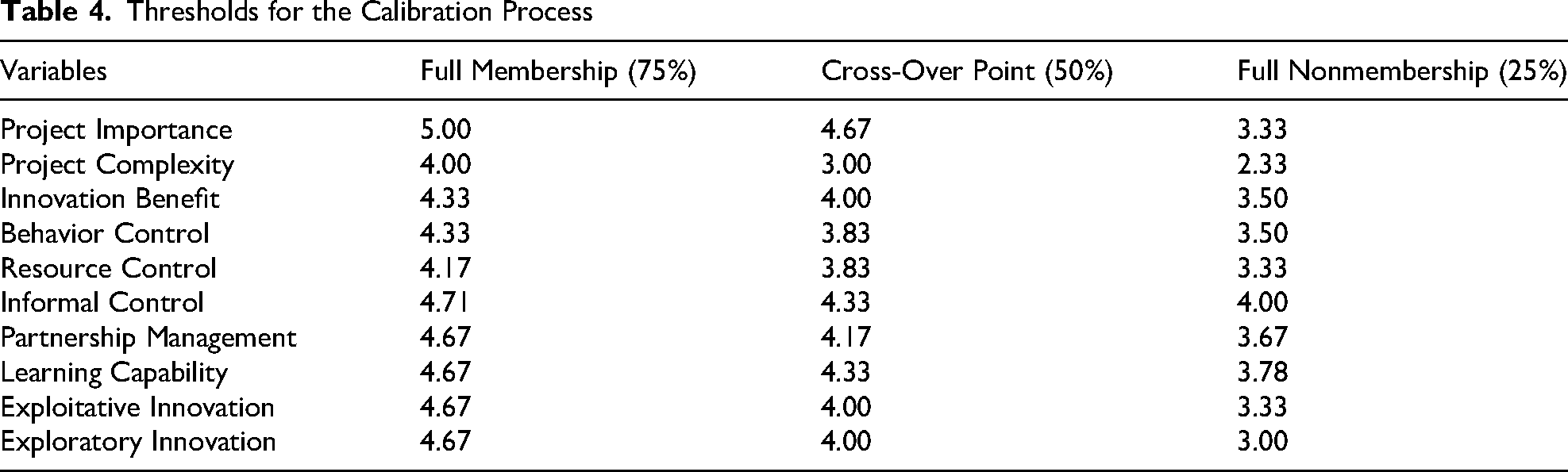
Calibrating variables is a pivotal initial step in fsQCA (Ragin, 2008). Drawing on prior research, this study employed a scale that can be adapted through percentile divisions (Cheng & Yin, 2024; Lou et al., 2022). First, multiitem measures for each variable were averaged. Subsequently, three cutoff points, including the full membership threshold, crossover point, and full nonmembership threshold, were set as the upper quartile (75%), median (50%), and lower quartile (25%) of the sample, respectively (Fiss, 2011). To ensure that no samples were excluded from the standardized analysis, and following Fiss’s (2011) practice, a small constant was added to any fuzzy set with a membership score of exactly 0.5, changing it from 0.5 to 0.501. Table 4 lists the specific thresholds utilized in calibrating each variable.
Thresholds for the Calibration Process
Necessary Conditions Analysis
After variable calibration, necessary condition analysis should be conducted to identify the necessity of a single antecedent to the presence of different innovation outcomes. According to Schneider and Wagemann (2012), if the consistency value of a condition is above 0.9, it can be considered a necessary factor and appears in all configurations leading to the results. The results in Table 5 suggest that the consistency scores of all conditions were below 0.9. Therefore, regardless of the target outcome, no condition can be the necessary condition.
Analysis of Necessary Conditions by fsQCA
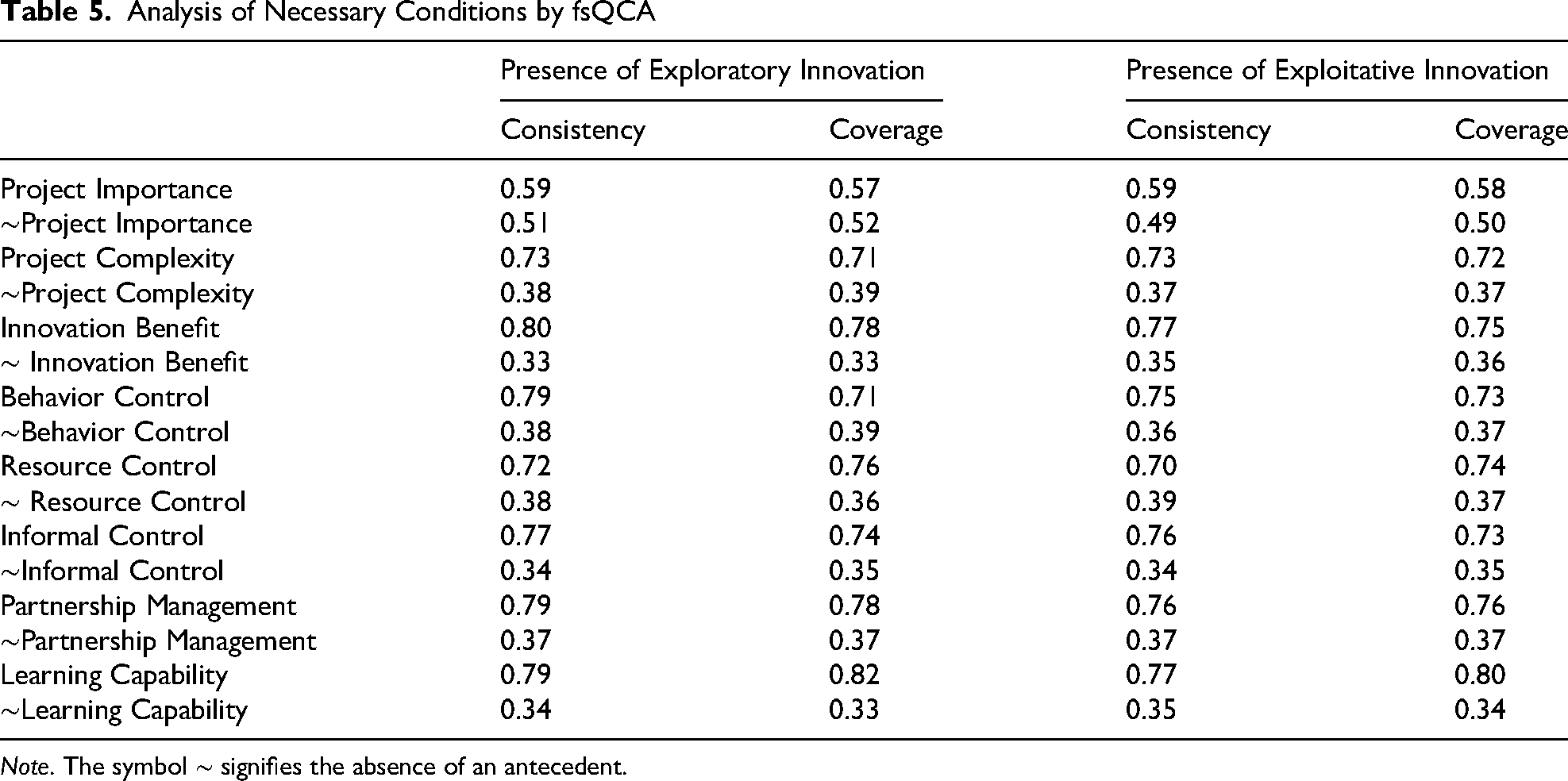
Note. The symbol ∼ signifies the absence of an antecedent.
Sufficiency Analysis
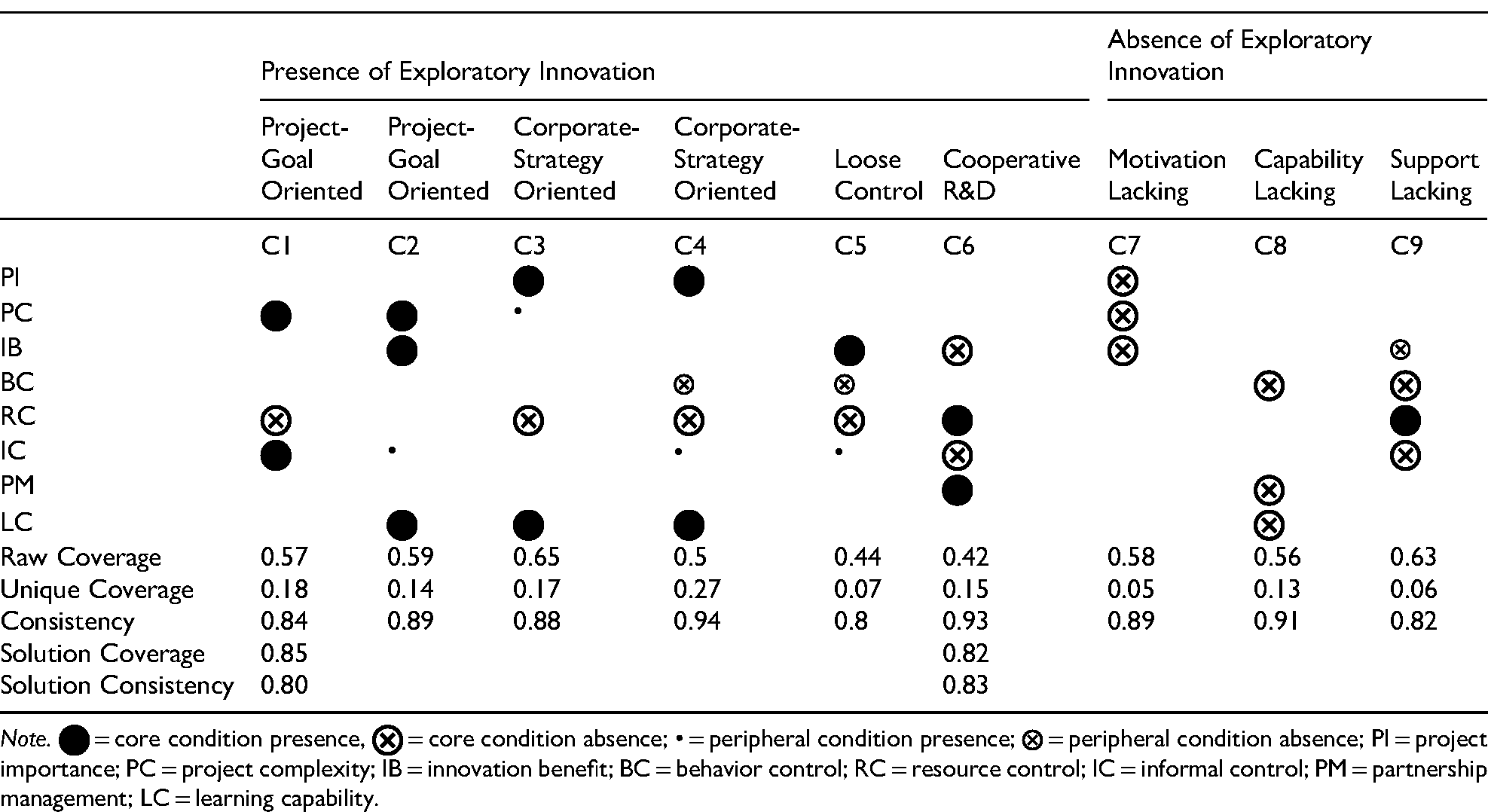
Sufficiency analysis involves examining all possible combinations of causal conditions and filtering out configurations that lack empirical evidence based on frequency and consistency thresholds. According to Fiss (2011), the case frequency was set to 1 and the consistency threshold was set to 0.9, both exceeding the minimum acceptable value. Furthermore, the proportional reduction in the inconsistency threshold was established as 0.7 (Du & Kim, 2021). The solutions for the presence and absence of exploratory innovation are presented in Table 6 and those for the presence and absence of exploitative innovation are shown in Table 7. Notably, fsQCA can generate three types of solutions: complex, intermediate, and parsimonious, which help identify the core and peripheral conditions leading to the results (Fiss, 2011). Core conditions are those showcased in both parsimonious and corresponding intermediate solutions annotated with large notations, whereas peripheral conditions marked with small notations refer to those that appear only in intermediate solutions.
Configurations for the Presence and Absence of Exploratory Innovation
Configurations for the Presence and Absence of Exploitative Innovation
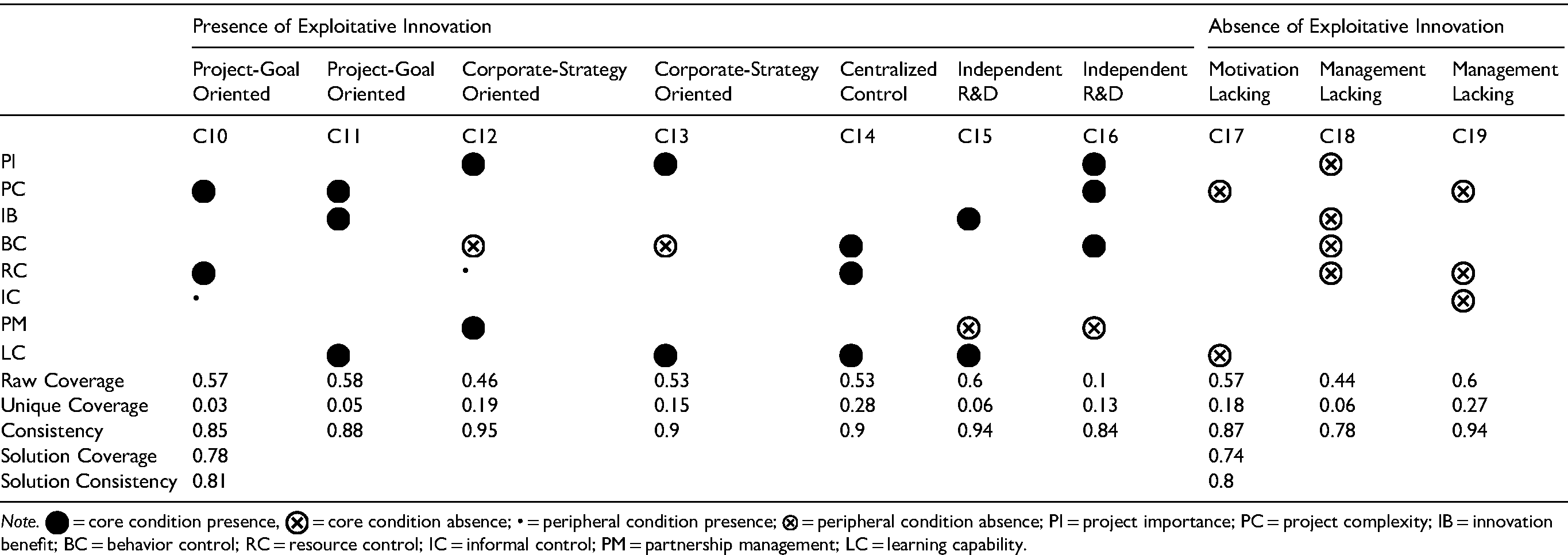
Consistency and coverage are the main indicators used to assess the model fit (Ragin, 2008). Consistency refers to how cases with the same conditions consistently produce the target result. Coverage includes raw coverage and unique coverage; the former assesses the degree to which the result instance is interpreted by a particular path, whereas the latter explains the members of the result that are not covered by other paths or configurations. Generally, a good fit is achieved when the coverage is above 0.4, and the consistency level is above 0.8 (Ragin, 2008).
Analysis of Sufficient Conditions for Exploratory Innovation
This study identifies six configurations that lead to exploratory innovation and three that do not. C1 (PC * ∼RC * IC) (the symbol * denotes and; the symbol ∼ denotes absence of the antecedent) suggests that complex tasks, combined with relaxed resource control and a supportive innovation climate, promote exploratory innovation. Complex projects usually offer abundant innovation opportunities, and when paired with sufficient resources and leadership support, teams are more likely to engage in innovative behaviors. C2 (PC * IB * IC * LC) represents another pathway toward exploratory innovation in complex projects. It indicates that expected innovation benefits and strong team learning capability stimulate exploratory innovation, with innovation climate playing a peripheral role.
The two corporate-strategy oriented pathways leading to exploratory innovation possess the same core conditions of project importance, loose resource control, and learning capability. C3 (PI * PC * ∼RC * LC) indicates that strategic projects with complex tasks, loose resource control, and high learning capability enable exploratory innovation. C4 (PI * ∼BC * ∼RC * IC * LC) highlights that even without task complexity, relaxing behavior control and fostering an innovation climate help identify opportunities and explore new technologies. Since project importance can affect the generation of opportunities, whereas resource allocation and innovation capabilities can jointly strengthen firms’ resource integration capabilities, the two pathways echo prior research emphasizing the role of opportunity identification and resource integration (Gielnik et al., 2014).
In addition to project characteristics, project team scenarios also shape exploratory innovation. C5 (IB * ∼BC * ∼RC * IC) represents a loose control path, where relaxed controls, innovation benefits, and a strong climate encourage exploratory innovation. C6 (∼IB * RC * ∼IC * PM) suggests that under tight resource control, teams without internal support may rely on external partners for innovation, highlighting the role of cooperative R&D. This pathway also highlights the distinctiveness of exploratory innovation, which surpasses existing knowledge accumulation or technological advancements within an enterprise or team.
This study also identifies three configurations that inhibit exploratory innovation, highlighting the asymmetry emphasized in the configuration analysis. C7 (∼PI * ∼PC * ∼IB) reflects a lack of motivation in routine projects with no innovation incentives. In such cases, the team relies on normal methods and processes to achieve task goals without additional effort. C8 (∼BC * ∼PM * ∼LC) involves teams with weak capabilities and lacking strong partnerships, where loose control fails to promote innovation. C9 (∼IB * ∼BC * RC * ∼IC) can be seen as a path lacking innovation support, showing that even with loose behavior control, strict resource control and poor innovation atmosphere and expectation hinder innovation efforts.
Analysis of Sufficient Conditions for Exploitative Innovation
This study identifies seven configurations that lead to exploitative innovation and three that do not. C10 (PC * RC * IC) and C11 (PC * IB * LC) focus on complex projects. C10 indicates that tight input control combined with a favorable innovation climate supports exploitative innovation. This aligns with the structured, goal-driven nature of exploitative innovation. C11 emphasizes the team’s perceived benefits and learning capability, highlighting a more autonomous, team-driven approach to innovation. Strategic project contexts also offer two exploitative pathways. C12 (PI * ∼BC * RC * PM) combines loose behavior control, strong partnerships, and tight resource support, while C13 (PI * ∼BC * LC) involves relaxed behavior control and strong learning capability. Both suggest that strategic projects, typically innovation-friendly environments, enable proactive innovation when the goal and node inspection measures are loose. Partnerships and team capabilities work complementarily by either drawing on external knowledge or leveraging internal experience.
C14 (BC * RC * LC) is characterized by tight behavior and resource control, aligning with learning capability to enable exploitative innovation. It exhibits the characteristics of centralized management and a command-based leadership style (Rowlinson et al., 1993). C15 (IB * ∼PM * LC) highlights independent innovation without external partnerships, where internal capability and expected benefits drive R&D. C16 (PI * PC * BC * ∼PM) demonstrates that tight behavior control and independent innovation can lead to successful exploitative innovation in projects with significant and intricate attributes. In this context, pursuing independent R&D without disclosure, is a logical way to protect knowledge and safeguard business value.
Conversely, three configurations explain the absence of exploitative innovation. C17 (∼PC * ∼LC) involves simple projects with low team capability, resulting in reliance on conventional methods. C18 (∼PI *∼IB * ∼BC * ∼RC) reflects a lack of team motivation and weak enterprise control in nonstrategic projects with minimal expected returns, leading to a passive, noninnovative stance. This configuration extends the findings of Lou et al. (2022), who indicated that a lack of control over the innovation process and outcomes inhibits innovation. C19 (∼PC * ∼RC * ∼IC) indicates that when a project task is not difficult, exploitative innovation does not occur with loose resource control and a negative innovation atmosphere.
Discussion
Main Findings
Unlike traditional studies, which mainly focus on the analysis of single factors and the correlation path between factors, this study combines the innovation paradoxes of a project with the ambidexterity of an organization to explore how the configurations of different factors form multiple pathways for exploratory and exploitative innovation in megaprojects. The configuration results can be categorized into several classes, which is shown in Figure 3.
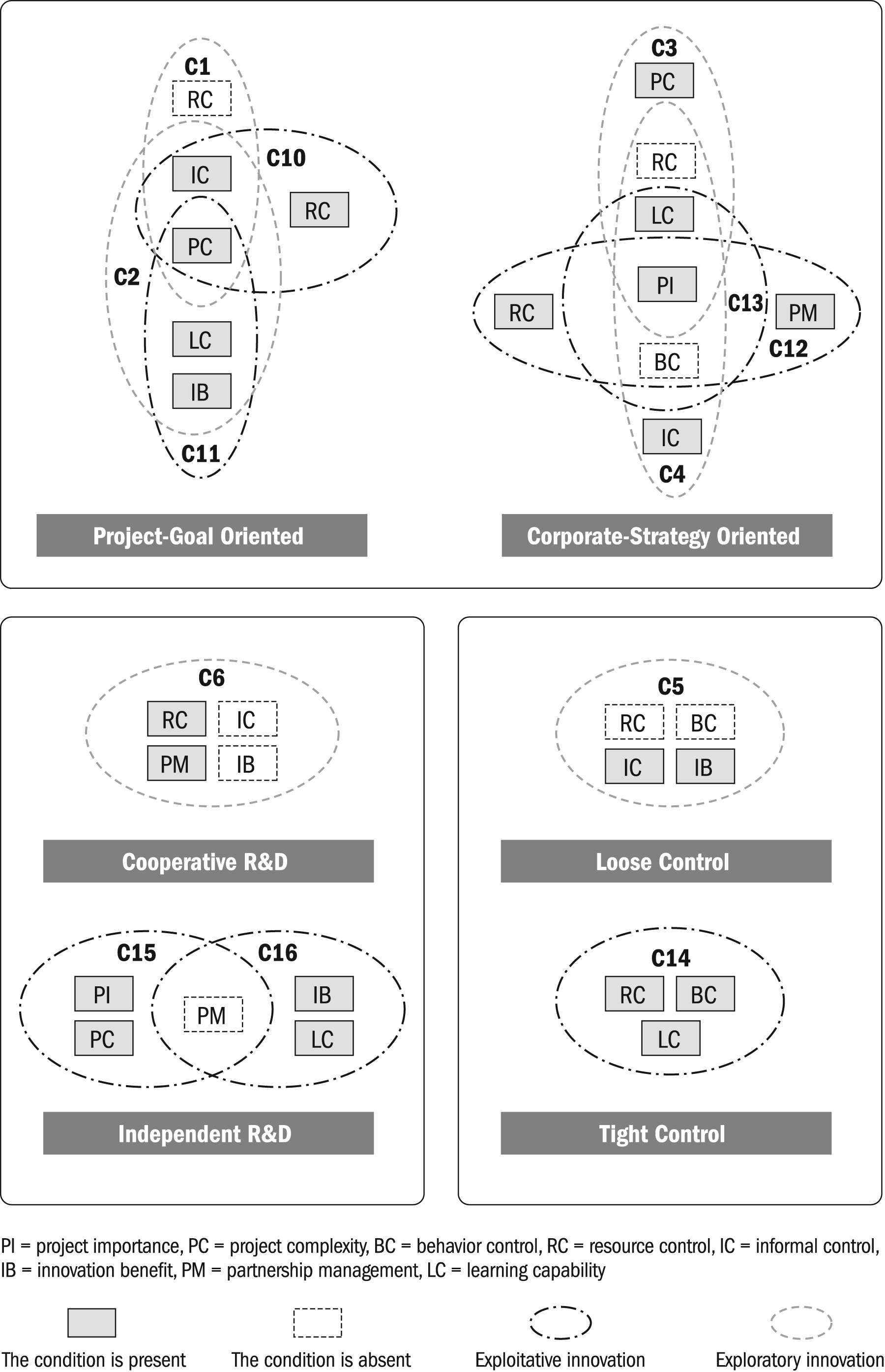
Patterns of exploratory innovation and exploitative innovation.
Key Triggers for Construction Innovation
From the whole perspective, the findings indicate that project complexity, project importance, and learning capability are key triggers for innovation, whether exploratory or exploitative. It can be found that almost all of the configurations that lead to innovation include the presence of project importance or project complexity, or both (e.g., C1–C4, C10–C13, and C16). This suggests that innovation in megaprojects is more likely to be activated under conditions of greater project complexity and strategic importance. This is also demonstrated in a previous study, which stated that innovations are easier to achieve in more complex and important projects (Chen et al., 2020). Meanwhile, within the total 13 configurations that lead to dual innovation, seven contain the variable of learning capability as the core antecedent. Therefore, learning capability also plays an important role in the occurrence of explorative and exploitative innovation. This is because a stronger learning capability can quickly accumulate and gather the knowledge needed for innovation tasks, especially for megaprojects that address specific problems within a limited time and resources. This leads to the first proposition of this study:
Proposition 1: The presence of project complexity, project importance, and learning capability constitutes a main prerequisite configuration for triggering construction innovation, regardless of whether the innovation is exploratory or exploitative.
Distinct R&D Organization for Exploratory Versus Exploitative Innovation
The configuration results further suggest a structural divergence in how R&D is organized across different innovation modes. As shown in Figure 3, C6, C15, and C16 indicate that exploratory innovation primarily relies on cooperative R&D, whereas exploitative innovation relies on independent R&D. This is attributed to the fact that exploratory innovation in megaprojects often involves high uncertainty and integrative problems that exceed the knowledge boundary of any single organization, thereby requiring cooperative R&D to access complementary expertise. By contrast, exploitative innovation, focusing on efficiency improvement within stable technical trajectories, calls for independent R&D to avoid collaboration-related transaction costs and goal misalignment. Previous studies have paid attention to the relationship between R&D and different innovations. Wen et al. (2021) emphasized that interfirm R&D networks rich in unrelated knowledge diversity benefit exploratory innovation, while related knowledge diversity supports exploitative innovation. Xia and Roper (2016) found that exploratory innovation depends on the continuity of R&D activities, whereas exploitative innovation is more reliant on firms’ absorptive capability. Different from prior research, this study highlights the role of the organizational structure of R&D efforts in shaping innovation outcomes. This perspective goes beyond knowledge diversity and internal capability, offering new insights into how R&D configurations should be aligned with innovation objectives under the complex demands of megaprojects. Drawing on this configurational contrast, the following proposition on R&D organization and innovation alignment is proposed:
Proposition 2: Cooperative R&D is more likely to enable exploratory innovation by broadening access to complementary external knowledge, whereas independent R&D is more likely to enable exploitative innovation by strengthening internal efficiency-oriented refinement.
Distinct Control Recipes for Exploratory Versus Exploitative Innovation
Finally, the configuration results reveal differences in control recipes among innovation modes. Comparing C5 with C14 indicates that loose formal control is conducive to exploratory innovation, while tight formal control is conducive to exploitative innovation. This contrast is reinforced by the comparison between C1 and C10, where resource control is absent in exploratory innovation, while present in exploitative innovation. Moreover, most exploratory innovation paths contain the variable of informal control (C1, C2, C4, C5), while it only appears in one path of exploitative innovation (C10), indicating that a positive innovative atmosphere contributes more to exploratory innovation. Taken together, these recipes suggest that exploratory innovation in megaprojects tends to emerge under loose formal and strong informal control, while exploitative innovation is underpinned by tight formal control.
These findings resonate with the foundational tenets of the mechanistic-organic framework articulated by Kang and Snell (2009), which posits an alignment between organizational structures and innovation types. Subsequent research has further examined the substitutive or complementary nature of exploration and exploitation in different organizational structures (Su et al., 2011) and the interaction effects of mechanistic-organic control on performance of different innovation projects (Ylinen & Gullkvist, 2014). Extending this line of work, this study identifies and configures the distinct control recipes of formal and informal elements in specific ways that underpin different organizational structures, leading to exploratory and exploitative innovation paths. Our findings thus move from affirming the need for structural separation to specifying the actionable control levers that managers can deploy within such a separated structure. On this basis, the following proposition regarding control recipes and innovation alignment is proposed:
Proposition 3: Exploratory innovation in megaprojects is more likely to emerge under a control recipe characterized by loose formal control combined with strong informal control, whereas exploitative innovation is more likely to emerge under tight formal control.
Theoretical Contributions
This study makes three distinct theoretical contributions. First, it advances megaproject innovation research by theorizing exploratory and exploitative innovation as outcomes shaped by multiple paradoxical demands. Unlike prior studies focusing on innovation processes (Aaltonen et al., 2020; Gong & Wang, 2022), ecosystem (Chen et al., 2020; Jin et al., 2022), or network dynamics (Zhang et al., 2021b), this study conceptualizes strategic intention, management style, and control mechanism as paradoxes underlying innovation in megaprojects. In this way, this study moves beyond viewing innovation paradox as a general exploration-exploitation balance and specifies the concrete tensions that make innovation governance difficult in megaprojects. On this basis, the findings further identify project complexity, project importance, and learning capability as key conditions for triggering both exploratory and exploitative innovation.
Second, this study bridges organizational ambidexterity and megaproject innovation by showing that ambidexterity in megaprojects is not merely a general capability to balance exploration and exploitation, but a differentiated governance architecture whose elements are activated in distinct ways across innovation modes. While previous ambidexterity research has provided valuable insights into how organizations address exploration-exploitation tensions, it has rarely been theorized as a governance solution tailored to the temporary, complex, and highly customized setting of construction megaprojects. By integrating structural, contextual, and leadership-based ambidexterity into a unified framework, this study demonstrates that ambidexterity operates differently depending on how specific elements are combined within project and organizational conditions. For example, the presence of partnership broadens access to complementary external knowledge, which is more likely to enable exploratory innovation than exploitative innovation. These findings move beyond treating ambidexterity as an abstract both-and logic and instead explain how it is enacted as a governance arrangement in megaproject innovation.
Third, from a methodological perspective, this study contributes to the megaproject innovation literature by introducing a configurational approach. Existing relevant research has mainly relied on qualitative case studies to explore the relationship between ambidexterity and paradox, or has explored only a single dimension of paradox or ambidexterity (Andriopoulos & Lewis, 2010; Ouyang et al., 2020; Zeng et al., 2017). By applying fsQCA, this study shows that exploratory and exploitative innovation are not enabled by the same governance conditions, but by qualitatively different combinations of conditions. For instance, exploratory innovation is more likely to emerge under loose formal control combined with strong informal control, whereas exploitative innovation is more likely to emerge under tighter formal control. The contribution therefore lies not simply in identifying significant factors, but in revealing that the same antecedent may play different roles depending on how it is combined with other conditions. This provides a novel explanation of innovation governance in megaprojects and extends configurational thinking in ambidexterity research.
Managerial Implications
To translate these insights into actionable guidance, three forms of ambidexterity can be deployed to address the strategic intention, management style, and control mechanism paradoxes, respectively. Figure 4 proposes some ways to manage the innovation paradoxes.
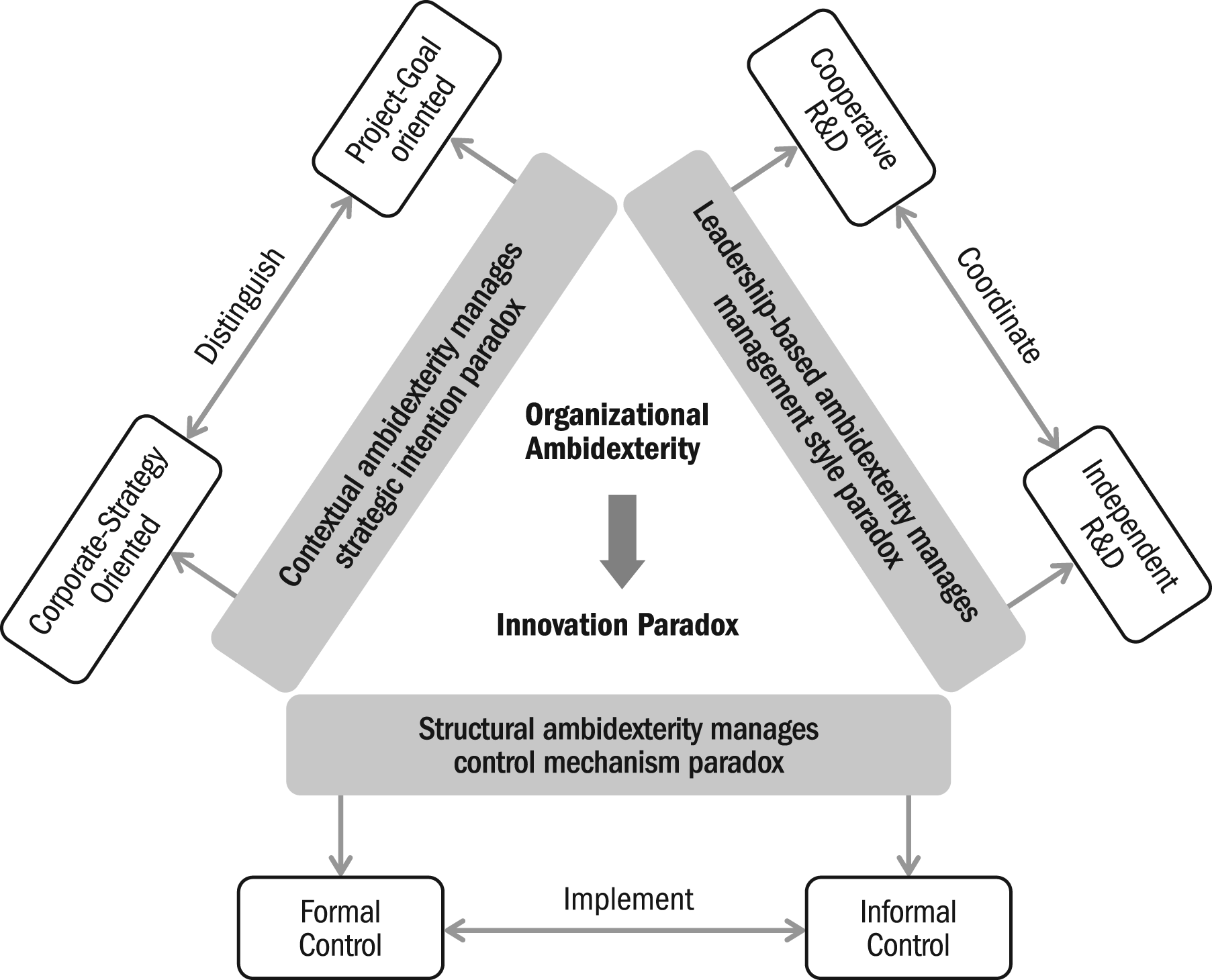
Ways to manage innovation paradoxes based on organizational ambidexterity.
Distinguishing project-goal oriented and corporate-strategy oriented innovation through contextual ambidexterity is useful for managing the strategic intention paradox. The results show that innovation in megaprojects should be aligned with the project’s strategic relevance and complexity. Drawing on the P-form structure, contextual ambidexterity can be operated across the project portfolio by prioritizing and decomposing projects. This enables firms to dynamically reconfigure resources and adapt managerial focus according to project goals. For profitable projects, the motivation for innovation is to solve engineering problems with a greater emphasis on efficiency to generate profits. Informal control should be highlighted to create an innovative culture that can stimulate employees’ creative thinking and encourage team members to propose novel solutions, thereby improving project execution efficiency and profitability. By contrast, strategically important projects in the P-form portfolio are often used as experimental platforms for developing key common technologies that will be reused across future projects. In these cases, the permanent organization should enhance its learning capability to obtain feedback from each decomposed work package and continuously improve technological solutions across the wider projects.
Coordinating independent and cooperative R&D through leadership-based ambidexterity can resolve the management style paradox. The findings demonstrate that independent R&D is associated with exploitative innovation, whereas cooperative R&D leads to exploratory innovation. Independent and cooperative R&D represent the primary avenues for fostering innovation. The former typically emphasizes resource allocation within a single project organization, whereas the latter prioritizes resource sharing across organizational boundaries. Leaders need to flexibly switch between directive and participative styles. In a megaproject setting, the P-form arrangement of product customization and task decomposition provide a favorable platform for the switching and combination of cooperative and independent R&D. For exploratory innovation, especially in motivated or strategically important teams, a hands-off and empowering approach is more effective. In contrast, when pursuing stable and incremental innovation, a hands-on and goal-focused style should be adopted. Effective ambidextrous leadership requires aligning R&D collaboration modes with the project’s innovation objectives and the team’s absorptive capacity. This alignment helps prevent underperformance caused by a mismatch between leadership behavior and innovation needs.
Implementing differentiated control recipes across the permanent and temporary layers of a project-based organization emerges as the key mechanism through which structural ambidexterity resolves the control mechanism paradox. Previous studies have largely focused on the theoretical benefits of structural separation in ambidextrous organizations (Park et al., 2020; Stoiber et al., 2023), but few have examined how control mechanisms operate across organizational layers in project-based sectors like construction. The findings indicate that within the complex system of a megaproject, achieving structural ambidexterity requires managers to move beyond simply labeling units as mechanistic or organic. Instead, it necessitates the deliberate design of an asymmetric control configuration. For exploitative innovation, ambidexterity is achieved through tight formal control that spans both resource and behavioral dimensions, creating an integrated rigid execution framework to ensure efficiency and reliability. For exploratory innovations, the focus shifts from imposing formal rules to strategically investing in and cultivating a strong informal climate that guides and motivates innovation culture and mission. Accordingly, this study advances structural ambidexterity from the principle of structural separation to the operational domain of cross-level control configuration design, providing a fine-grained solution to the ongoing debate in project literature on how to manage ambidexterity.
Conclusion
Employing the fsQCA method, this study seeks to answer the question of how different configurations of ambidexterity-related conditions enable megaprojects to pursue exploratory and exploitative innovation under paradoxical demands. The configuration results show that different combinations of antecedents can motivate exploratory and exploitative innovation differently. Across these configurations, project complexity, project importance, and learning capability consistently appear as core conditions for triggering both exploratory and exploitative innovation. Furthermore, configurations favoring exploratory innovation tend to feature cooperative R&D arrangements, whereas those leading to exploitative innovation rely more on independent R&D. Finally, a loose formal climate combined with a strong informal, innovation-supportive climate is conducive to exploratory innovation, while tight formal control is conducive to exploitative innovation. These findings show that there is no single best way; instead, several distinct configurations instantiate different forms of organizational ambidexterity to manage innovation paradoxes. Thus, project managers and corporate leaders can employ suitable innovation approaches to match project and organizational contexts, enabling more effective implementation and higher innovation performance.
However, this study has some limitations. First, although the fsQCA method provides configurational insights of innovation in megaprojects, this study’s exclusive use of survey quantitative data limits its ability to unpack the causal pathways underlying the observed configurations. Integrating qualitative methods (e.g., case study or grounded theory research) would further decode the microlevel mechanisms and enrich the interpretive depth. Meanwhile, the single-data-source approach may compromise the robustness of findings; triangulating with case-specific narratives would cross-validate the configurational patterns derived from survey data. Second, only Chinese infrastructure projects were selected as the survey topic. A wider range of project types, such as those from different countries or those delivered by different methods, would lead to more robust and generalizable research findings to address these limitations. Finally, in addition to the factors derived from the perspective of organizational ambidexterity, future studies should further explore other contextual factors. Given that stakeholders of megaprojects often operate under strong institutional constraints, such as regulatory norms and industry standards, organizations may tend to adopt similar innovation strategies to gain legitimacy or reduce uncertainty. It would also be worthwhile to include factors such as isomorphic pressure and study how they influence innovation in megaprojects.
Footnotes
Acknowledgments
This work is supported by the National Natural Science Foundation of China (Grant No. 72071105, 72201125), the Major Program of the National Social Science Fund of China (Grant No. 21&ZD174), the Postgraduate Research & Practice Innovation Program of Jiangsu Province (Grant No. KYCX24_0113), and the Science and Technology Project of Jiangsu Provincial Department of Transportation (Grant No. CT-GLZT-6).

Author Biographies
Appendix. Survey Questionnaire
| Variables | Code | Measurement Items |
|---|---|---|
| Project Importance (PI) | PI 1 | The project you are working on is a corporate/local/national strategic project. |
| PI 2 | The project you are working on is highly valued by the project team. | |
| PI 3 | The project you are working on highly valued by the contractor. | |
| Project Complexity (PC) | PC 1 | Problems occur more frequently during the implementation of the project you are working on. |
| PC 2 | The problems arising during the construction of the project you are working on are not always complex. (R) | |
| PC 3 | The problems arising during the construction of the project you are working on require innovation to solve. | |
| Innovation Benefit (IB) | IB 1 | Your team is able to apply innovations to subsequent projects. |
| IB 2 | Your team is able to gain extensive benefits from innovations. | |
| IB 3 | Your team takes on little risk in the innovation process. | |
| IB 4 | The benefits you gain from innovation far exceed the effort invested. | |
| IB 5 | Your team has a fair reward mechanism for innovation. | |
| IB 6 | You can carry out innovation while completing routine tasks. | |
| Behavior Control (BC) | BC 1 | The activities of your team are strictly supervised by the firm’s executives. |
| BC 2 | Your team's work processes and methods are carefully evaluated by the firm. | |
| BC 3 | The senior executives of your company pay more attention to the progress of your project rather than the outcome. | |
| BC 4 | Your team's upward feedback needs to be clearly documented. | |
| BC 5 | It takes a long time for your team to obtain the results through upward feedback | |
| BC 6 | Executives of the firm often meet with your project team to discuss the project progress. | |
| Resource Control (RC) | RC 1 | Employees of your project team have undergone extensive training before joining. |
| RC 2 | Whether an employee is transferred into your project team is not under the control of the team leader. (R) | |
| RC 3 | The allocation of the persons in your team is not reasonable. (R) | |
| RC 4 | The company's allocation of resources to your project is entirely based on its past experience with related projects. | |
| RC 5 | Your team’s requests for resources are subject to rigorous review and approval. | |
| RC 6 | The allocation of physical technologies in your team is reasonable. | |
| Informal Control (IC) |
IC 1 | The leader of your team is willing to take responsibility for the risks associated with decision-making. |
| IC 2 | The leader of your team encourages employees to try out new ideas. | |
| IC 3 | The leader of your team allows tasks to be completed through different methods. | |
| IC 4 | Your company provides monetary or nonmonetary rewards for employee innovation. | |
| IC 5 | Your company encourages knowledge exchange between different project teams. | |
| IC 6 | Your company attaches great importance to whether the current project can generate innovation. | |
| Partnership Management (PM) | PM 1 | During cooperation, your team can achieve good tacit understanding with partners. |
| PM 2 | Your team and its partners consider how similar problems were handled in past cooperations when making decisions. | |
| PM 3 | Project partners do not take unexpected or unconsulted actions. | |
| PM 4 | At the beginning of the project, you have a very clear understanding of the partners’ demands and objectives. | |
| PM 5 | There are implicit and stable norms of cooperation between your team and its partners. | |
| PM 6 | Your team often acts as the leader in project partnerships. | |
| Learning Capability (LC) | LC 1 | Much of your team’s knowledge and technology is obtained through communication and learning with partners. |
| LC 2 | When problems arise, your team can quickly communicate and reach consensus. | |
| LC 3 | Everyone in your team can fully express their opinions. | |
| LC 4 | Your team can effectively interpret and absorb important external information and knowledge. | |
| LC 5 | Your team has rich experience in collaborative innovation. | |
| LC 6 | Your team can make good use of new knowledge to improve the R&D process. | |
| LC 7 | Compared with other companies in the industry, your team has advanced R&D equipment. | |
| LC 8 | Compared with other companies in the industry, your team’s R&D personnel have a higher level of education. | |
| LC 9 | Compared with other companies in the industry, your team has sufficient R&D funding. | |
| Exploitative Innovation (EII) | EII 1 | Your team often uses new products or processes to solve technical problems. |
| EII 2 | Your team is constantly improving existing construction processes. | |
| EII 3 | Your team is not inclined to reuses experience or technology from other projects to drive innovation. (R) | |
| Explorative Innovation (ERI) | ERI 1 | Your team is often the creator of new technologies and processes. |
| ERI 2 | Your team has achieved a breakthrough through innovation, eliminating the equipment or materials that were previously used. | |
| ERI 3 | Your team has achieved a breakthrough through innovation, disrupting an original production process or process. |
Note. (R) = Reverse items.