







Abstract
Although construction projects often encounter conflicts with local communities, particularly landowners, limited research explains how such conflicts lead to value creation. This article examines how project organizations respond to collective opposition from landowners in contentious construction projects in Vietnam. Based on a grounded theory study comprising 25 interviews and four case studies, the findings reveal that organizations can follow a sequential resolution process, beginning with understanding landowner contexts and ending with enforcing legal compliance. This process results in unexpected social value, as conflicts become a mechanism through which unplanned benefits and community value emerge. The study conceptualizes conflict as a dynamic process of value cocreation.
Keywords
Introduction
Within the context of project management, value is defined as the difference between project benefits, disbenefits, and costs over the product life cycle (Zwikael & Huemann, 2023). Project value can be approached through valuation practices, where stakeholders express their values and consider alternative options to keep the project moving forward (Çıdık & Bowler, 2022). Alternatively, as Martinsuo (2020) asserts, value encompasses various dimensions, including economic, technical, social, environmental, and symbolic aspects. Value is not always predetermined before project initiation; rather, it is often shaped during the project (Gillier et al., 2015). In summary, project value is dynamic, shaped by stakeholder interactions, and comprises various dimensions, which can vary across different projects. In this article, we use the term value to describe the broad economic, technical, environmental, and social aspects of construction projects, while social value, as the main analytical focus of the study, refers to social outcomes of projects that affect stakeholders.
Given the multifaceted nature of project value, projects can easily become controversial due to differing perspectives—particularly between public and private objectives or over how value should be created and distributed (Cui & Osborne, 2023; Gil & Fu, 2022). Although projects such as hydropower often face resistance from affected communities due to their adverse impacts, they also contribute significantly to societal development by delivering infrastructure, technologies, discoveries, and land improvements (Lehtinen & Aaltonen 2024; Ninan & Sergeeva, 2022; van den Ende & van Marrewijk, 2019; Zwahlen, 2022). Scholars have suggested that managers should invest greater effort in projecting and balancing value across different stakeholder interests to minimize conflict (Panahi et al., 2017). However, finding solutions for controversial projects is challenging because the benefits and, consequently, the value of projects can be adversely affected by the chosen solutions or delays (Tobiasson & Jamasb, 2016).
Construction projects in particular can present numerous challenges for local communities and the environment despite their contributions to local, regional, and national economic growth and infrastructure development (Follmann, 2015; Balaban, 2012; Giang and Pheng, 2015; Martinsuo, 2020; Zerjav et al., 2021). As a result, such projects frequently provoke negative responses from affected stakeholders (Huang et al., 2015; Yetiskul et al., 2016). While internal stakeholders typically support project development, external groups—who lack formal contractual relationships with the project organization—can freely exert influence and cause significant disruptions (Chan & Oppong, 2017; Cleland, 1988; Teo & Loosemore, 2017; Winch, 2004). These stakeholders can influence managerial decision-making, potentially leading to resistance against a project (Aaltonen & Kujala, 2010; Ngo, 2016).
Research has also shown that local communities—a prominent group of external stakeholders—often oppose controversial construction initiatives by employing various collective actions, such as organizing protests, demonstrations, and blockades; launching online campaigns; and even boycotting (Hanna et al., 2016; Lobo & Abid, 2020; Teo & Loosemore, 2011; van den Ende & van Marrewijk, 2019). Such collective actions become more severe when affected stakeholders possess critical inputs, such as land and property. In these situations, they may withhold these inputs, potentially leading to project termination, or agree to the transactions under conditions that negatively impact the budget, scope, or schedule (Aaltonen & Sivonen, 2009; Nguyen et al., 2019). Numerous studies have shown that landowners are increasingly opposing development projects involving building activities and land acquisition due to the adverse impacts of displacement and relocation, especially in developing countries such as Iran (Kamjou et al., 2024), South Africa (Jordhus-Lier, 2015), India (Chakravorty, 2016), China (Tang et al., 2016), and Vietnam (Nguyen et al., 2018). In short, landowners represent a unique subgroup within community stakeholders, as they can exert direct influence on projects—an influence that becomes more disruptive when the number of opponents increases (Nguyen et al., 2019; Strauch et al., 2015).
Stakeholder engagement can be either proactive—anticipating potential stakeholders and preparing preventive actions—or reactive—addressing stakeholder demands when conflicts arise (Eskerod & Jepsen, 2016). Nevertheless, project organizations adopting a proactive approach may still struggle to deal with collective actions, particularly from landowners, due to difficulties in identifying and reaching all stakeholders, inadequate consultation and engagement processes, unclear responsibilities, and long-lasting conflicts of interest (Babaei et al., 2023; Collinge, 2020; Harsh et al., 2017; Li et al., 2012; Martinez-Avila & Olander, 2024; Yu et al., 2022). In such complex situations, reactive stakeholder engagement may serve as a practical approach for project teams, leading to important questions about how organizations respond when facing collective opposition from landowners.
There have been some investigations into how project organizations respond to pressures from external stakeholders (cf. Aaltonen & Sivonen, 2009; Collinge, 2016). Notably, only a limited number of studies in the project management field have systematically examined organizational responses to pressure from community stakeholders in conflict situations. A notable exception is the study by Ninan et al. (2019), which identifies a set of response strategies used by project teams, particularly in megaprojects involving land acquisition, service disruption, and general management challenges. Other studies have examined specific actions organizations can take to address such collective actions, such as legal action, claim denial, media framing and even collaboration with opponents (Hanna et al., 2016; Ninan et al., 2022; Salverda, 2019).
Despite these contributions, there remains limited attention to how project organizations respond to direct, collective opposition from landowners in contentious projects, particularly in ways that preserve or enhance the social aspects of project value (with exceptions found in the works of Ojuri et al. [2023] and Rodhouse et al. [2023]). Recent research conceptualizes value cocreation as a process through which stakeholders jointly define and realize project benefits (Kier et al., 2023; Martinsuo, 2019; Takahashi & Takahashi, 2022; Thomas & Ambrosini, 2021). However, little is known about how this process unfolds when organizations encounter direct, collective opposition from external stakeholders such as landowners. Therefore, this article aims to investigate how project organizations address conflicts and collective opposition from landowners while cocreating value in the process at the same time. Specifically, it addresses the following two research objectives:
To identify the response strategies that project organizations adopt when facing direct influence from landowners To examine the factors that shape these organizational responses
This study employed a grounded theory research design involving two sequential phases of data collection. Phase 1 consisted of 25 interviews with project managers, while Phase 2 examined four construction projects. Both interviewees and case studies were selected using a theoretical sampling strategy. The interview data underwent three rounds of analysis—open coding, axial coding, and selective coding—consistent with grounded theory methodology. In contrast, the case studies in Phase 2 were primarily used to validate the core category that emerged from the selective coding process. Further details on the research design and analytical procedures are provided in the research methodology section.
The remainder of this article is structured as follows: First, we review the current literature on stakeholder behaviors in conflict situations, organizational responses to stakeholder pressure, and the process of cocreating value through stakeholder engagement; second, we introduce the research methodology, describing the grounded theory approach, which includes data from 25 interviews and four case studies; third, we present the results, discussions, and practical implications for managers and authorities; lastly, we conclude the article with a summary of findings, the significance of the study, limitations, and future directions.
Literature Review
Stakeholder Reactions in Controversial Projects
Although there is a significant body of research on stakeholder influence, most studies focus primarily on classifying and prioritizing project stakeholders (cf. Aragonés-Beltrán et al., 2017; Nguyen et al., 2009; Olander, 2007; Rajablu et al., 2015; Young, 2006). Past studies have focused on exploring factors affecting stakeholder behaviors (Hill & Jones, 1992), forecasting the timing of stakeholder influences (Rowley & Moldoveanu, 2003), and investigating why they can cause significant pressures (King, 2008). It should be noted that the strategies or tactics that stakeholders can use also attract attention from researchers. Hunter et al. (2013) identified three phases through which stakeholders leverage social media to influence firms: broadcasting criticism to undermine trust, mobilizing opposition to spread issues using media, and allying with others to control agendas. Zietsma and Winn (2008) outlined a sequence of tactics that stakeholders and their targets use to influence each other: issue-raising to attract public attention, strengthening their position, and engaging in solution-seeking through consensus-building. Extending stakeholder theory, Frooman (1999) proposed a typology based on how stakeholders control resources and influence firms, either through withholding or conditioned usage strategies and influenced by varying degrees of mutual dependence.
While Hunter et al. (2013) focused on stakeholders’ communication activities, Zietsma and Winn (2008) adopted a broader perspective on stakeholder actions. Both groups of authors draw from social movement theory, which emphasizes stakeholders’ mechanisms for collective action in social or political conflicts (see Buechler, 1995; Diani, 2013). As a result, their studies primarily highlight processes that enable stakeholders to increase their influence. In contrast, Frooman’s (1999) model offers a more in-depth understanding of the actions that stakeholders take to influence organizations, providing a foundational framework for empirical studies on stakeholder influence strategies (Tsai et al., 2005). Frooman’s stakeholder-influence strategies have been applied in project management in recent years with particular focus on external stakeholders (Aaltonen et al., 2008; Cvijović et al., 2021; Gonzalez-Porras et al., 2021; Ma et al., 2022; Nguyen et al., 2019; Vuorinen & Martinsuo, 2019).
Organizational Responses to Stakeholder Influence
Effective stakeholder management requires consideration of a range of stakeholder behaviors as highlighted by Freeman et al. (2018), where influence strategies act as first-mover attempts and response strategies represent second-mover reactions (Windsor, 2004). In the field of organizational studies, researchers have developed models that propose response strategies to stakeholder pressure. Based on corporate social responsiveness theory, Carroll (1979) proposes four strategies—reactive, defensive, accommodative, and proactive—that span from denial of responsibility to exceeding stakeholder expectations; the author, however, did not explain the underlying reasons for each response. Similarly, Oliver (1991) introduces a theoretical framework with five strategies—acquiescence, compromise, avoidance, defiance, and manipulation—that range from passive conformity to active resistance. Notably, this framework also consists of factors affecting the use of these strategic responses; many researchers have tested and applied it (cf. Clemens & Douglas, 2005; Etherington & Richardson, 1994; Ingram & Simons, 1995; Oates, 2013; Rowley, 1997).
Zietsma and Winn (2008) highlight how organizations employ suppressing, positioning, and solution-seeking tactics in conflict situations by integrating stakeholder, social movement, and institutional theories. Lawrence (2010) further points out that resource dependence, firm power, and the urgency of disputes shape an organization’s responses to activist stakeholders, drawing parallels to Oliver’s (1991) framework. Collectively, the previously discussed studies can be categorized into two research streams. The first stream focuses on responding to stakeholders’ pressure and requirements in general (Carroll, 1979; Lawrence, 2010; Oliver, 1991), while the second concentrates on investigating response tactics to stakeholders in specific situations (Coombs, 2006; Randel et al., 2009; Zietsma & Winn, 2008). It should be noted that both streams share two common points: First, the organization and objectors are in conflict, and second, the objectors are external stakeholders. In project management, reactive approaches to stakeholder management have attracted attention from scholars, with Oliver’s (1991) model remaining influential (e.g., Aaltonen & Sivonen, 2009; Eskerod & Jepsen, 2016).
Stakeholder Value Cocreation in Projects
As outlined in the introduction, project value is dynamic and shaped by stakeholder interactions, forming the basis for exploring how value can be cocreated, particularly in complex or conflict situations. From a strategic management viewpoint, value is reflected at three levels: (1) organizational, encompassing economic and process performance, product/service utility, and availability; (2) the dyadic relationship between the firm and its customers or suppliers; and (3) the business network level, involving multiple partners and a life cycle perspective (Martinsuo 2019).
Within the field of organizational management, value cocreation is an emergent process through which organizations cultivate more direct and frequent interactions with internal groups, followed by external parties (Thomas & Ambrosini, 2021). Such stakeholder interactions can enhance the social value of firms, even within controversial industries such as gaming tourism (Guan et al., 2022). Research has also highlighted that stakeholder interactions should be examined through the lens of ecosystems to ensure that all parties involved jointly create value (Leone et al., 2021; Mason et al., 2024; Matarazzo et al., 2024). The effectiveness of value cocreation through stakeholder engagement depends on several factors, including the stakeholder network; the positions, perceptions, and capabilities of key stakeholders within the network; and their interrelationships (Najda-Janoszka & Sawczuk, 2023; Polat, 2022; Shuyi et al., 2023). There seems to be a strong relationship between stakeholder engagement and the activity of cocreating value within an organization.
In recent years, project managers have increasingly recognized the importance of stakeholder engagement in creating value. Since a project’s success depends on how value cocreation impacts stakeholder satisfaction, project managers must carefully consider the strategies they employ to engage stakeholders (Change et al., 2013; Asiedu & Iddris, 2022). Previous studies have explored specific approaches to value cocreation through stakeholder engagement. For example, project delivery professionals can involve organizational stakeholders in value cocreation by fostering a shared ideology, participating in dialogical inquiry, and addressing temporal tensions (Kier et al., 2023). Project value can also be jointly created through alliancing arrangements, where all parties engage in processes that enhance their capabilities and motivation (Pargar et al., 2019). To ensure an effective value cocreation process, stakeholder relationships need to evolve through three stages: understanding each other’s interests, strengthening ties with those who share similar interests, and cocreating value based on established positive relationships (Takahashi & Takahashi, 2022). Conversely, value codestruction can occur when decision-makers and stakeholders focus solely on political, financial, and temporal risks, such as time and cost constraints (Smyth et al., 2018). While most studies have concentrated on proactively engaging stakeholders in value cocreation in projects, the existing literature offers limited insights into how project organizations respond to collective actions from landowners and how social value is cocreated as a result of these responses.
Research Methodology
Grounded theory is particularly suitable for studies where there is limited understanding of a phenomenon (Mills et al., 2014). It is also effective for analyzing people’s actions, identifying the factors influencing their decisions, and exploring social processes (Braun & Clarke, 2013; Creswell, 2015; Corbin & Strauss, 2014). Notably, this research methodology is especially appropriate when the goal is to develop models or processes grounded in empirical data (cf. Adu, 2019; Buckley & Waring, 2013; Ubochi et al., 2021). Hence, we employed the grounded theory approach in this study. In particular, the study applied grounded theory procedures to previously collected interview data and supplemented them with new archival materials for validation, which together form a qualitative secondary data analysis (see Hughes & Tarrant, 2019). Moreover, this study aims to address gaps in the existing literature rather than solve practical problems within a specific circumstance. It is, therefore, not restricted to a single site and can be conducted across various locations (Marshall & Rossman, 2014).
Vietnam was selected for data collection because the country has many controversial construction projects resulting from economic development (Nguyen et al., 2021; Lam, 2020). Notably, there have been many deficiencies and inappropriate implementations of the Vietnamese government’s policies on compensation and resettlement (Nguyen et al., 2016; Labbé, 2015; Phan & Spitzer, 2023). In addition, stakeholder consultation during the development of construction projects has been inadequate, leading to the exclusion of important landowners (Thi et al., 2021; Tuan, 2022). Consequently, these external stakeholders typically resist land acquisition and relocation. The literature provides ample evidence of landowner resistance to contentious projects in Vietnam (Chau, 2019; Nguyen, 2023; Nguyen & Kull, 2023). Another reason for selecting Vietnam is the relative ease of access to research sites; the availability of relevant participants; and the openness of project-related processes, people, and interactions to the research team (Lune & Berg, 2016). As discussed earlier, landowners represent a unique and prominent group within local communities and are considered key external stakeholders in construction projects.
The research methodology section includes two main subsections: data collection and data analysis. The former covers the interview process and case selection, with specific details and examples illustrating the unique sampling strategy associated with grounded theory. The latter explains the procedures through which interviews and cases were analyzed, including a brief description of the findings and examples of Phase 1 codes to illustrate the data analysis process.
Data Collection
The data of this study were collected in two different phases. In Phase 1, the interviews were conducted in 2017 as part of the first author’s doctoral research. The present article reanalyzes these interview data with a new focus on how social value cocreation emerges during conflict resolution. Phase 2 data were collected in September 2024 using digitized news archives to validate the emerging theory with additional perspectives from landowners and governmental authorities.
In Phase 1, 25 face-to-face interviews with project managers were carried out, with each session audio-recorded and transcribed for further analysis. Interviewing is the data collection method in Phase 1 due to two reasons. First, this method has the potential to provide rich and detailed accounts of the interviewee’s experience, enabling interviewers to control the types of information received (Creswell, 2015; Goulding, 2002). Second, qualitative interviewing fits perfectly with grounded theory research since both of them “are open-ended yet directed, shaped yet emergent, and paced yet unrestricted” (Charmaz 2014, p. 85). The interviewees were selected following the theoretical sampling process, in which the researchers collect and analyze the data from each interview immediately and then decide who the next participants should be (Creswell & Báez, 2020; Glaser & Strauss, 2017). Notably, theoretical sampling does not use predetermined selection criteria for choosing interviewees or case studies like other qualitative strategies; instead, it focuses on collecting the data that best support the development of theoretical constructs (Charma, 2014; Locke, 2000). Accordingly, participants were chosen to maximize the opportunity to explore variation within emerging concepts.
As a result of using theoretical sampling, four main groups of participants emerged, each representing a different situation in which project organizations encounter opposition from landowners. The first group, Situation I, comprises managers involved in projects financed by government entities and companies; such projects are generally designed to meet the specific requirements of these organizations and their clients. Projects in this situation tend to bring benefits and value to sponsors rather than to the broader community. The second group, Situation II, consists of individuals engaged in private investment initiatives. The third group, Situation III, includes officials involved in development projects managed by local governments; these projects are community-based and often bring long-term value to local regions or across multiple localities. The final group, Situation IV, pertains to managers involved in build-transfer agreements, where construction firms develop infrastructure projects for local authorities and receive land in exchange. Situation IV is distinct in that the managers serve the investors, whereas the project sponsors oversee the other three groups. These four situations also reflect variation in the types of construction projects represented, including residential developments, urban upgrades, industrial zones, hydropower plants, amusement parks, highways, general infrastructure, resorts, and manufacturing facilities.
An essential characteristic of theoretical sampling is its emphasis on maximizing variation across the contexts studied, as participants’ experiences may differ depending on specific settings, situations, or circumstances (Morse & Clark, 2020). After the discussion with the first interviewee, who was associated with Situation I, we noted some valuable insights. This participant acknowledged that their reactions tended to be reactive and suggested that managers of privately funded projects might behave differently. This observation led us to select the second interviewee, who belonged to Situation II, to explore alternative dimensions of response strategies. In addition, Interviewee 1 frequently referenced manufacturing facility projects, prompting us to recruit Interviewees 4, 6, 12, and 15 to enhance variation in project types and reinforce findings within Situation I.
A notable insight came from Interviewee 3, who emphasized that they would have relied solely on persuasive strategies if they had been working on a build-transfer project as a contractor. In such projects, contractors are reluctantly caught between landowners and local authorities but are still expected to ensure project continuity. We anticipated that participants with build-transfer project experience would offer unique perspectives on both response strategy selection and the underlying explanatory factors, even if their available strategies were more limited. As a result, we designated build-transfer arrangements as Situation IV and selected Interviewees 8, 9, and 10 accordingly.
Following the principles of theoretical sampling, we also added new interview questions gradually during Phase 1 to diversify the dimension within each emerging category. For instance, we observed that some initial interviewees mentioned they were more likely to negotiate with landowners when the number of opponents was low. Consequently, we asked subsequent participants about their responses in situations where the majority of affected residents opposed handing over their properties. Another example relates to the characteristics of the properties: Interviewee 2 highlighted differences between acquiring ordinary land and acquiring religious or spiritual structures located within the project site. In response, we aimed to recruit more participants with experience in handling such cases and added questions to further explore their responses and the reasoning behind their chosen approaches.
Phase 2 includes four projects involving land acquisitions and the relocation of residents, aimed at validating the core category that emerged from data analysis in the previous phase. While the findings from Phase 1 reflect the perspectives of project managers, Phase 2 seeks to maximize variation in viewpoints by incorporating data that captures landowners’ perspectives across the four case studies. Consistent with the principles of theoretical sampling, we began by selecting the first case and analyzing the data in relation to the emerging core category. We chose subsequent cases based on their potential to further diversify and enrich the conceptualization of social value cocreation (see the next sections for more details). Although we employed theoretical sampling in both phases, the focus differs between them. Phase 1 aimed to maximize variation in managers’ responses to identify explanatory factors and ultimately develop the core category. In contrast, Phase 2 adopts a more abstract approach, aiming to verify the core category by seeking both confirming and disconfirming cases from the landowners’ point of view (see Morse & Clark, 2020).
The four case studies are labeled Case A, B, C, and D, reflecting the chronological order of their selection. Data in this phase were drawn from online newspaper articles, as digitized newspaper archives enable researchers to locate information, trace the evolution of discourse, and explore the movement of ideas, people, and narratives in ways previously unavailable (Nicholson, 2013). News items were sourced from multiple news agencies to ensure triangulation and enhance reliability (Yin, 2011). The number of news articles we collected for each case is as follows: 46 for Case A, 55 for Case B, 25 for Case C, and 72 for Case D. All articles were published in Vietnamese, and each case included papers from different media outlets (see Appendix A). Figure 1 illustrates the data collection process and sampling strategy used in this study.
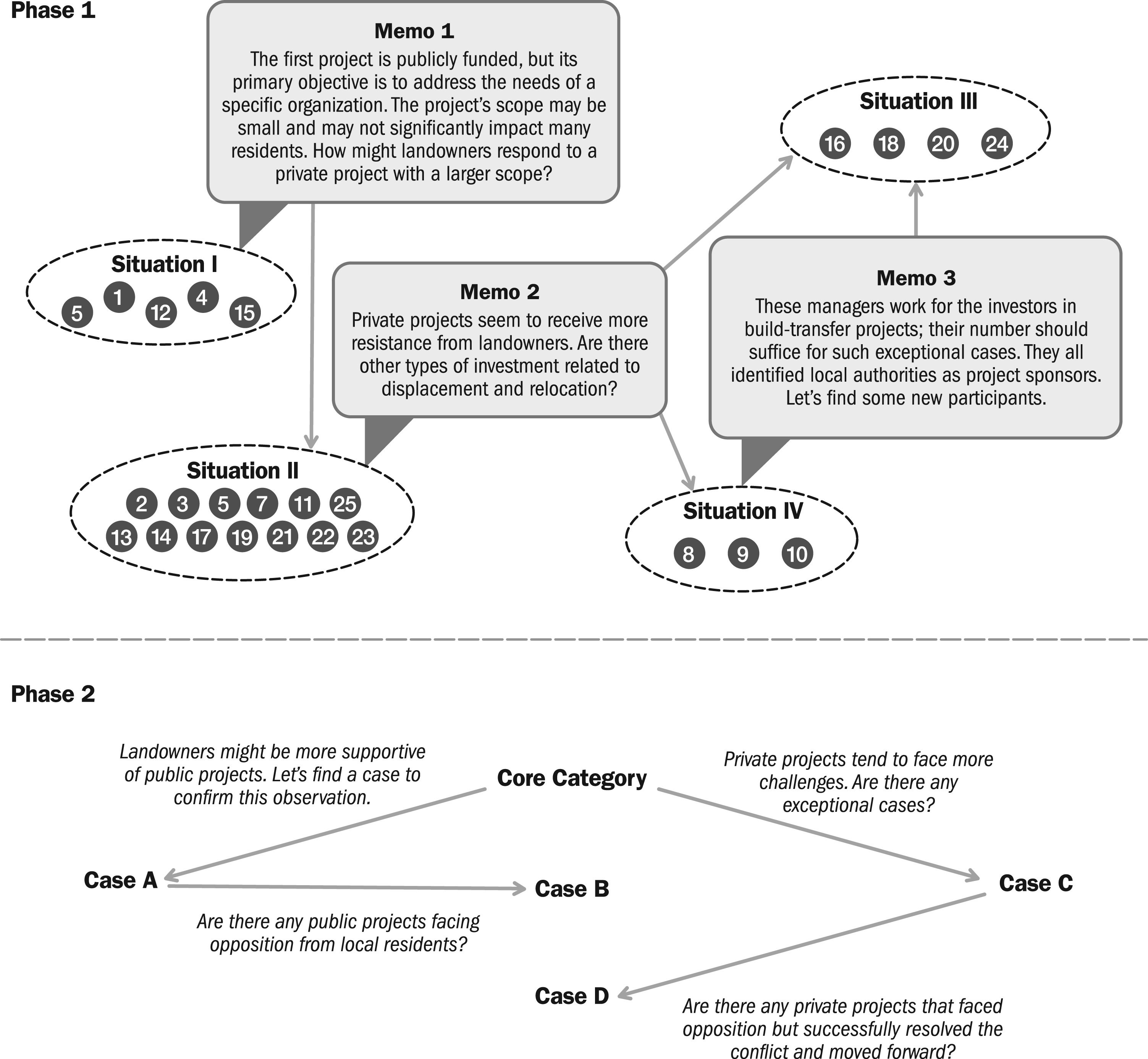
Data collection process via theoretical sampling.
Data Analysis
Given that data collection and data analysis occur simultaneously in grounded theory studies, we followed this approach in Phase 1 and then in Phase 2; however, we did not collect and analyze data from both phases concurrently (Mills et al., 2014; Corbin and Strauss, 2014). In particular, theoretical sampling and constant comparison often go hand in hand as two key characteristics for grounded theory studies (Goulding, 2002; Patton, 2014). The former supports the latter during data analysis, where comparisons are continuously made—within an individual interview transcript, across interviews within the same situation, and between different situations or case studies. Such comparisons, as Charmaz (2014) points out, are the reason the data analysis process in grounded theory studies becomes abductive. Not only has constant comparative analysis been a means to get more valid findings in qualitative research, but it also plays a crucial role in bolstering the credibility of theories grounded in empirical data (Glaser & Strauss, 2017; Silverman, 2018). The data analysis for this study consists of two phases, which are aligned with the two phases described in the previous section (Figure 2).
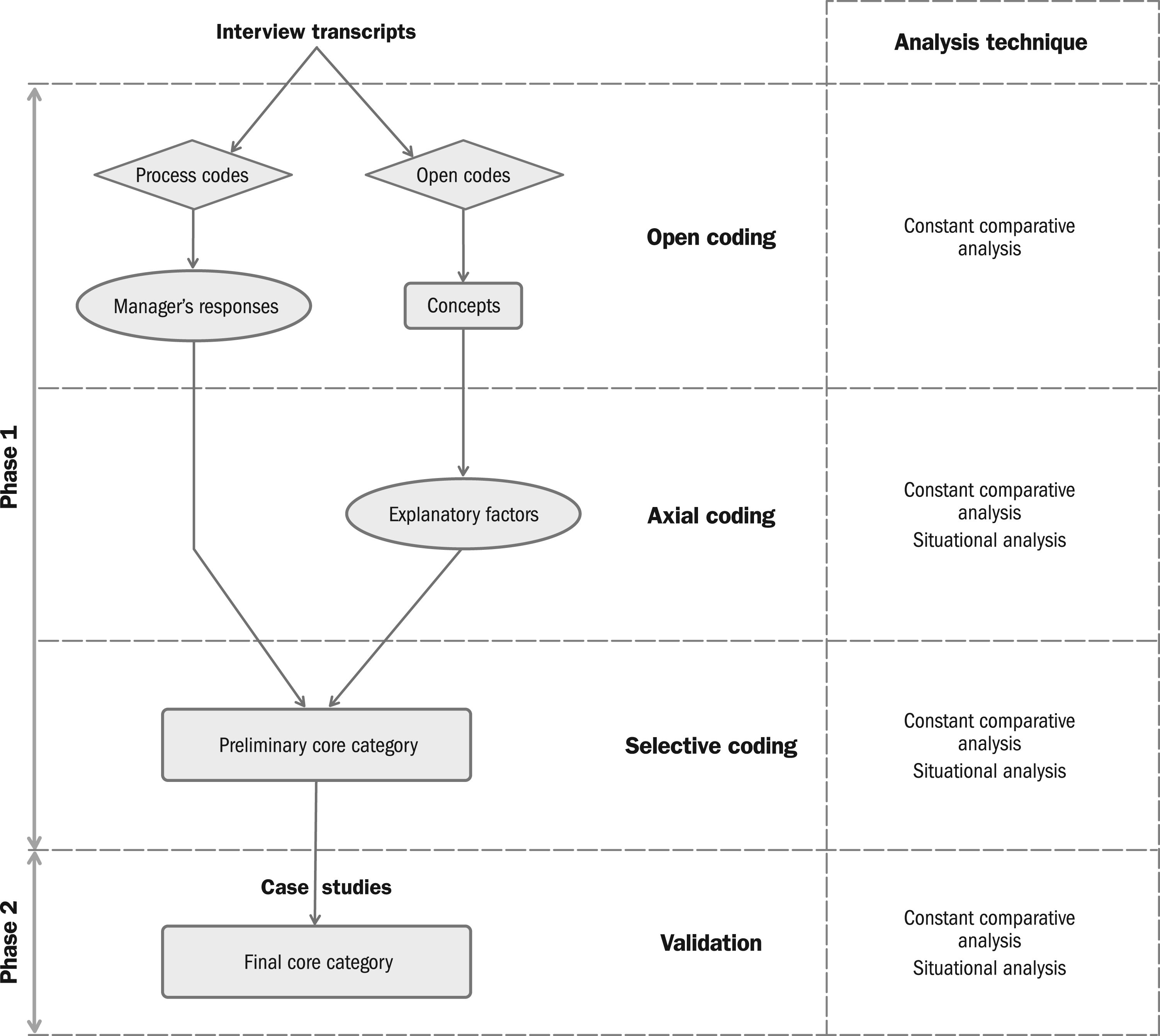
Data analysis process.
The analysis for Phase 1 follows the Straussian school of grounded theory and involves three steps of coding: open, axial, and selective coding (Corbin & Strauss, 2014). Open coding served as the foundational step for identifying managers’ response strategies and the underlying explanatory factors. In this step, transcripts were coded sentence by sentence. Figure 3 illustrates the coding process for Interview 9, with translated excerpts from Vietnamese included for illustrative purposes. In this figure, process codes—which summarize the project manager’s actions—are expressed using gerund phrases, while open codes related to explanatory factors are presented as noun phrases. As outlined in the introduction, we consistently began by coding the responses (aligned with Research Objective 1), followed by coding the explanations (aligned with Research Objective 2) for each interview.
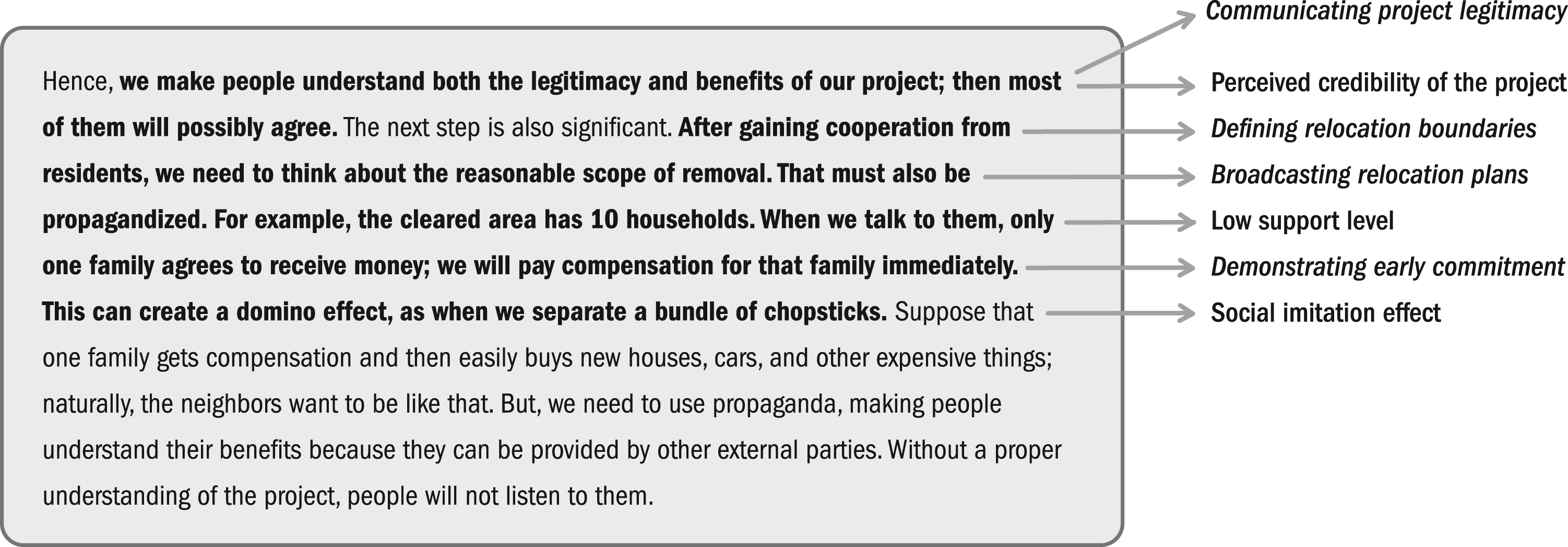
Exemplar of the basic coding process.
To prepare for axial coding, we paid particular attention to conditional clauses such as because or since in the transcripts, where participants explained why they chose specific strategies for certain scenarios. This step is crucial for finalizing the relationship between managers’ responses and explanatory factors. The results that emerged from the raw data included three levels of analysis: codes, concepts, and categories. The codes were derived from ongoing comparisons of the first level from the transcripts, the concepts emerged after constant comparative analysis of the codes, and the categories emerged after constant comparative analysis of the concepts. For instance, when analyzing the transcript from Interview 2, we compared the initial sentence-by-sentence codes with the codes, concepts, and categories generated from the previous interview. This process was repeated for all subsequent interviews. These comparisons often led to either confirmation or refinement of existing codes or the emergence of new findings. Due to the large number of open codes generated during the open coding step, Figure 4 presents a more abstract level of analysis, focusing primarily on the concepts and categories related to explanatory factors.
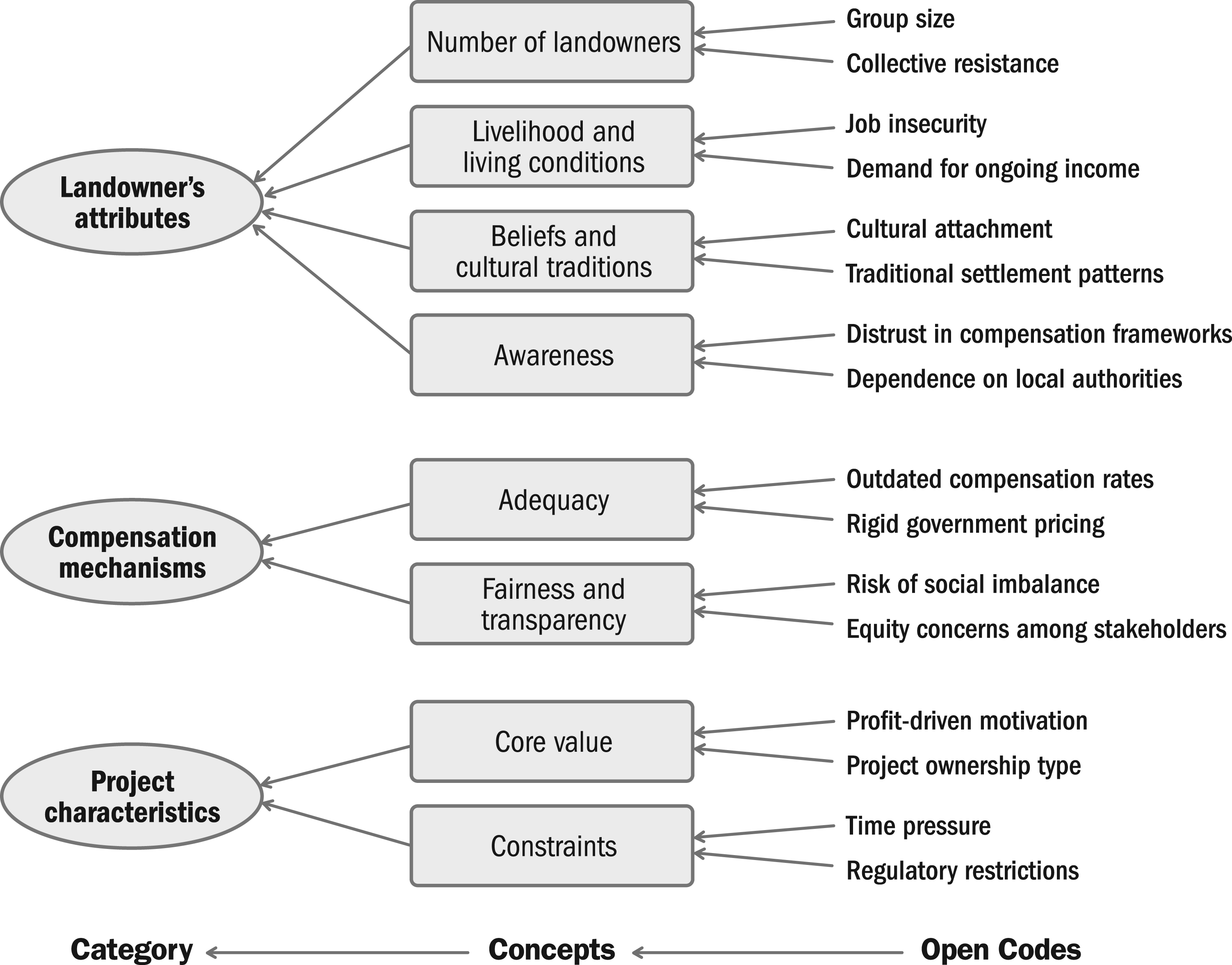
Coding hierarchy of explanatory factors influencing organizational responses.
At the end of Phase 1, the core category of the social value cocreation process emerged as a result of the constant comparison of findings on responses and explanatory factors from the previous steps. Since the interviewees primarily represented the perspectives of project sponsors, we conducted Phase 2 to capture the voices of other parties, particularly landowners, through four additional case studies. Each case reflects a unique scenario to validate the core category. Instead of focusing on coding, the emphasis in these four cases is on social value and the interactions among project sponsors, governmental authorities, and landowners. For example, in Case D, we observed a conflict of interests between landowners and developers. At the same time, we recognized both the potential economic benefits of the project to the region and the spiritual value of the church to local residents. We then turned our attention to how different parties involved in this project attempted to influence—and counter the influence of—others, as well as how these dynamics shaped the final outcome of relocation and displacement.
Moreover, methodological triangulation can help researchers maximize the validity of findings by combining different approaches within a single qualitative research design, particularly different data analysis methods (Denzin, 2017; Flick, 2018; Leech & Onwuegbuzie, 2007). Therefore, we also used the social worlds/arenas mapping technique as a supplement to constant comparative analysis to capture the actions and perspectives of stakeholders in controversial projects (Clarke et al., 2022). Social world/arena maps illustrate the key stakeholder groups engaged in contested projects that face resistance from landowners. These groups—project organizations, governmental authorities, private investors, and local communities, for example—operate with distinct missions and agendas. This mapping technique was used during axial and selective coding of Phase 1 and then Phase 2. It served as an additional validation strategy and was also used to visualize the core category, as shown in Figure 5.
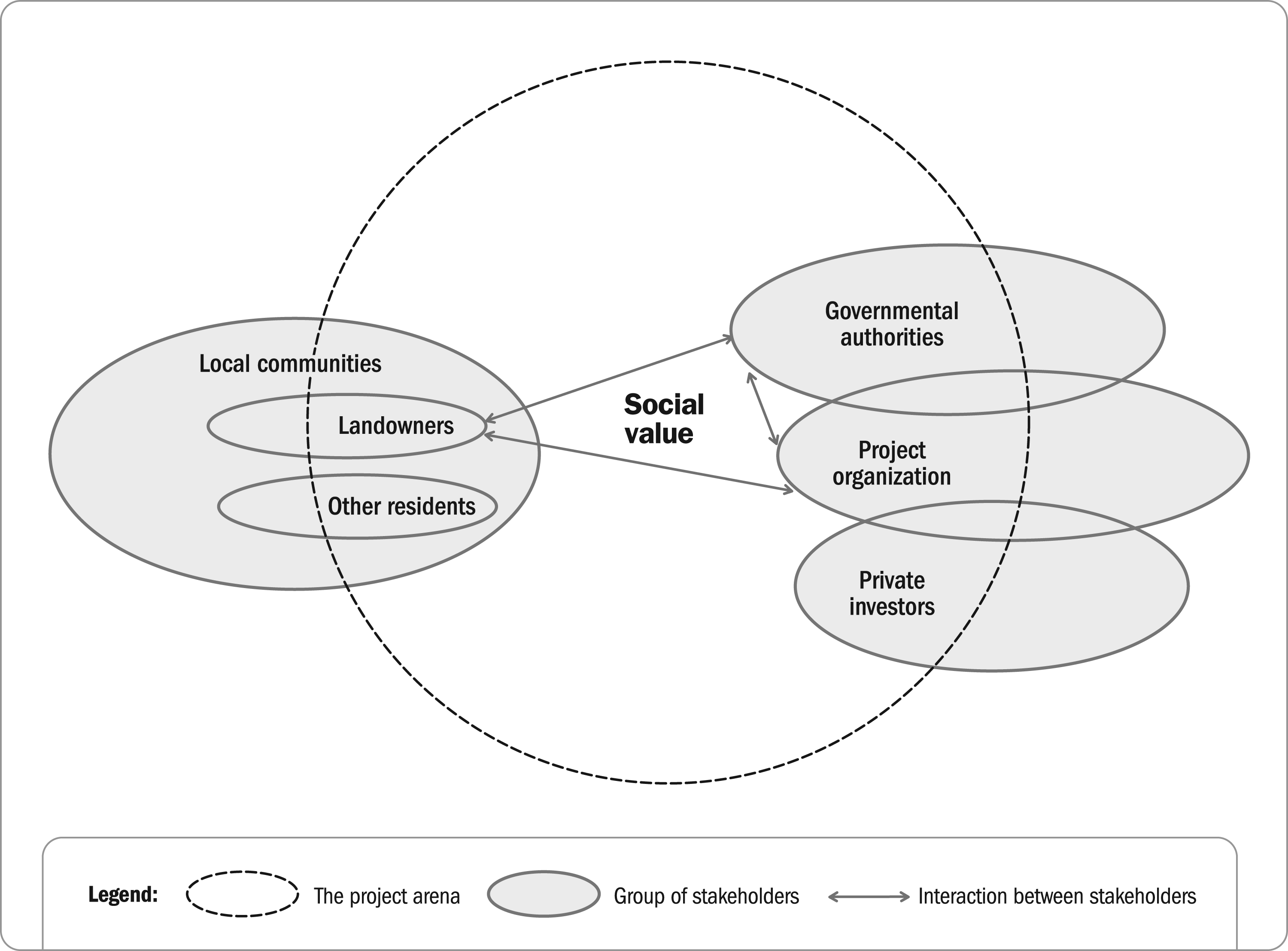
Social value cocreation process in controversial construction projects.
Results
Project organizations can employ six different strategies to respond to opposition from landowners: (S1) understanding landowner contexts, (S2) accommodating landowner demands, (S3) promoting project value, (S4) offering enhanced compensation, (S5) mediating through local authorities, and (S6) enforcing legal compliance. (When appropriate, we refer to these strategies throughout the article with the labels S1–S6.) These response strategies are influenced by three categories: landowners’ attributes, compensation mechanisms, and project characteristics. The strategies and categories will be illustrated with direct quotations translated from Vietnamese transcripts for illustrative purposes. In this paper, the term landowners is used to describe a specific external stakeholder group whose land or properties are acquired for project development. Affected residents is used mainly to emphasize the impacts of relocation and acquisition on landowners, while the term local communities is used to describe the broader social environment in which the project is developed.
Responses to Landowners’ Influence
Understanding landowner contexts (S1) occurs in 14 interviews and serves as a key approach for understanding and responding to pressures from landowners. It involves identifying the motives and interests of landowners and mapping their demographic and socioeconomic characteristics to anticipate and respond effectively. This strategy also includes reassessing the existing compensation and relocation mechanism, leveraging data from similar projects for context and insights, and building rapport with landowners to foster mutual trust and more open communication throughout the project. Depending on the characteristics of each project, those who are important should be dealt with immediately; those who live on the roads or are located on the transport infrastructure of the project will be moved first, while those who are in the center of the project site can be handled later. (Interviewee 8) It is just partial adjustment; the project will be approved by the provincial authorities because the partial change is okay. It means that we have to gentrify the obstructed area; then we place the building elsewhere instead of the problematic site. (Interviewee 2) Because when the local people understand the project, they will agree. In many projects, we organized meetings with residents and then set up specialized teams to spread information. A group of about ten people, including the Front Committee, the Retirement Committee, the Youth Committee, and the Party Committee, generally consisting of common social classes, will be formed. (Interviewee 9) The local people put forward demands, while the investors want to ensure their profits. We would consider whether the benefits can be shared between the two parties at some level. The investors can reduce the scope or do something else to uphold the rights of the local people, as well as secure their benefits. (Interviewee 6) In general, we must cooperate with local authorities; the investor must contact each village head or commune chief to organize meetings with the locals. Local governments play a key role; they meet with the investor and the opposing households to discuss what the gains and losses are when the project is implemented. (Interviewee 19) In cases where people require higher levels of support or compensation, we cannot address their needs, as the city government has already set specific limitations. If we have exhausted all options to support the locals and they still do not comply, we must resort to coercive measures. (Interviewee 20)
Sequencing and Combinations of Response Strategies Employed by Project Organizations
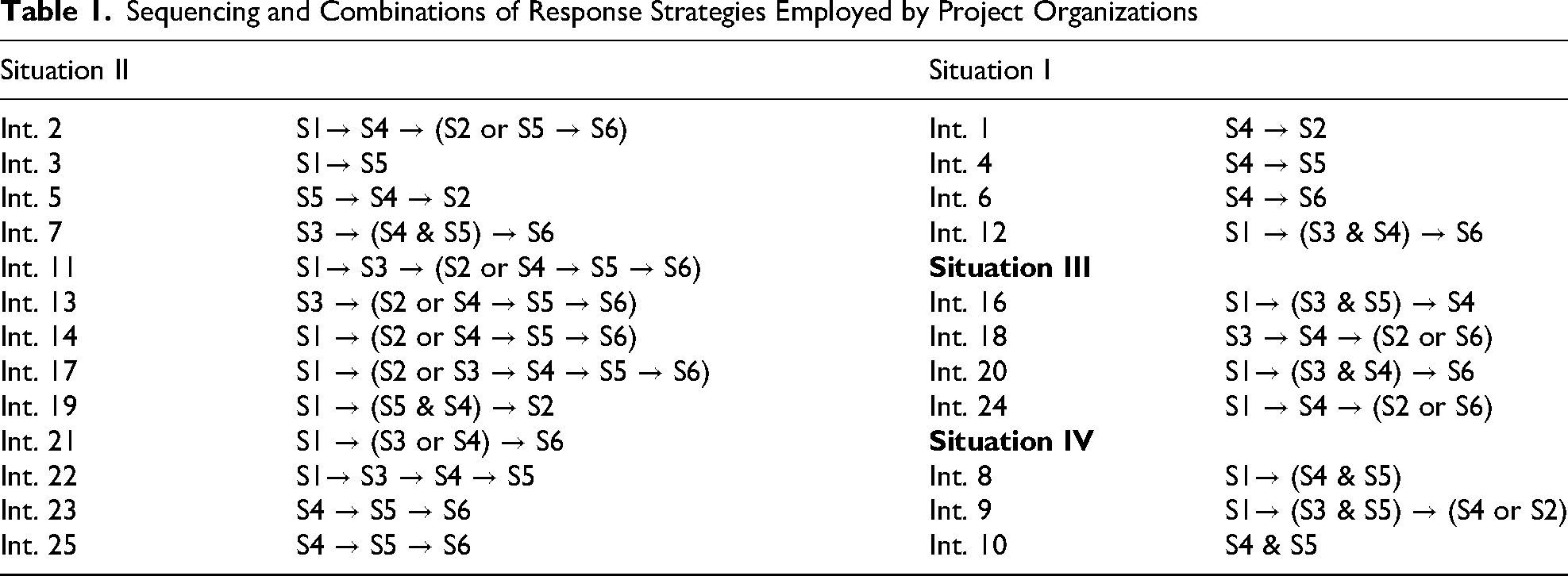
We can observe several patterns of response strategies across the interviews and situations. First, project organizations tend to employ multiple strategies to address resistance from landowners. Second, those organizations typically start with understanding landowner contexts and conclude with enforcing legal compliance. Third, the combinations and sequencing appear to be a progressive escalation, such as persuasion to coercion (e.g., S4 → S5 → S6) and investigating to acceptance (e.g., S1→ S4 → S2). Fourth, some strategies are frequently used together, especially promoting project value, offering enhanced compensation, and mediating through local authorities (e.g., S4 & S5, S3 & S4, S3 & S5). Based on these patterns, we propose that:
Factors Affecting Project Organizational Responses
Landowners’ Attributes
The first category affecting project organizational responses pertains to the attributes of the landowners and comprises four key concepts. The first concept is the number of landowners opposing the project (observed in 12 interviews). Managers often find it more challenging to address the demands and pressures of larger groups compared to smaller ones. In situations involving fewer landowners, managers can typically employ a broader and more flexible range of strategies to influence these resisting owners. If the number of objectors is small, it will be easier to handle the issue than the case of a large number. In the former case, we can negotiate to reach a compensation payment that satisfies both sides. In the latter case, we must review the compensation mechanism. (Interviewee 21) For example, although receiving monetary compensation money, their lands are acquired, and they lose their jobs; they only work in agriculture as farmers, you know? In general, they don’t know what to do after spending all the compensation money. Therefore, they demand the investor to help them earn monthly after the project completion. Where does that source of income come from? It comes from what the investor plans in developing that project, generating new jobs, for instance.” (Interviewee 2) For example, people are currently in low-lying areas which are often flooded when there is rain; then they will be relocated in higher areas. If they are living near an alley, we will move them to a new place having roads, electricity, lighting, greenery, sidewalks . . . In general, if everything is better in comparison with the current place, they will accept the offer. (Interviewee 20) That is, when conducting site clearance, I will arrange for the locals to be relocated to a nearby area, because Vietnamese people usually have a tradition of living near their grandparents and parents. I will move them to a new position which is not far from the old one. (Interviewee 20) In reality, the affected residents are very vulnerable. They often believe the information presented on television and in newspapers. As a result, [the organization] frequently influences the residents in this way (via news outlets). . . . There is a particularly humorous case in Sa Pa. According to state regulations, the compensation payment for a cardamom plant is đ80,000 (Vietnamese dong). However, the locals counted đ80,000 for a branch and then multiplied it by three generations, calculating the compensation for one cardamom to be đ240 million. They claimed that a cardamom plant would last for three family generations before dying. . . . We must explain the situation to the stakeholders. In such cases, we need to ask the government for support to resolve the issue. (Interviewee 22)
Compensation Mechanisms
The second category focuses on the mechanisms used to compensate affected residents after organizations acquire their properties, encompassing two main concepts. The first concept pertains to the adequacy of the compensation frameworks project organizations apply to acquire land from landowners, observed in seven interviews. These frameworks are determined by the government and may not always reflect timely increases in real estate market values. When the compensation rate is lower than the market value, managers often opt to compromise and provide additional support to landowners. Conversely, when the rate aligns with current market values, managers may resort to more assertive strategies. We must review the compensation framework to assess whether it is reasonable. If the compensation is too low compared to market prices, we can propose adjusting the payment to residents. If the compensation is already high, we will resort to coercive measures and may ask the government to intervene. (Interviewee 21) The general problem is that the locals think they have not received adequate compensation. . . . Also, we can compensate a little bit higher than the surrounding areas. However, doing so can lead to social imbalance. Some difficult persons will get more benefits compared to those who accepted to move earlier. It will encourage people to be more sluggish and stagnant. (Interviewee 13)
Project Characteristics
The third category relates to the nature of the project, comprising two concepts. The first concept, core value, refers to the outcomes and benefits that stakeholders will receive upon project completion. In six interviews, managers specifically pointed out the differences between community-based and privately funded projects; such differences were also confirmed in all interviews after situational analysis. In the former type of project, the main beneficiaries would be the public or local community, while in the latter, the project values are primarily for the project organization. Managers will consider the core value of the project when formulating strategies to deal with landowners. We need to clarify what the project’s objectives are, [whether] they are profit-oriented or anything else. We don’t focus on profits but on the society instead, you know. Once we aim at public benefits, I feel that people often support our projects. . . . For profit-oriented projects, we are quite decisive. If spending a large amount of money can help us address the issue and protect profits, we’ll go ahead. Otherwise, if it is too difficult, we’ll ignore the project and find another one to develop. (Interviewee 5) [We consider] the profitability of the project, if it is delayed for 1.2 months, how much we will bear. After that, the project manager can consider spending a little money called fostering, or giving a bit more support to affected residents. However, such support must not violate regulations and does not affect the project’s profitability. (Interviewee 4)
Social Value Cocreation Process
The previous sections examined how project organizations respond to landowner resistance and identified three main determinants that shape these responses. This section focuses on the core category that emerged through constant comparative analysis of the findings, as described in the research methodology. The social value cocreation process, the core category, is a higher-order concept that captures the main findings derived from both the response strategies and explanatory factors (see Strauss, 1987; Corbin & Strauss, 2014). First, it links to project organizations’ responses through the process of resolution, in which specific sequencing and combinations of strategies are employed to address resistance. Second, social value encompasses many aspects of the three categories that explain why project organizations choose particular strategies during the resolution process. Third, the interactions among the parties involved result in unexpected project value arising from the implementation of response strategies, such as accommodating landowner demands and offering enhanced compensation. Based on these analytical integrations, we propose the following core proposition:
The core proposition reflects a recurring pattern that we observed from the interviews. Landowners often oppose construction projects involving land acquisition and relocation. In such conflict situations, project organizations can employ several strategies to influence the residents. Particularly, local authorities, who also have power and stakes in the projects, are often asked to intervene to resolve the conflicts. Interactions among the three parties typically lead to an increase in social value, first for the affected landowners and second for the whole local community. Social value includes respecting religious and spiritual beliefs and adhering to local traditions and customs; it also includes fairness, transparency, improved living conditions, and increased socioeconomic infrastructure. Notably, sponsors in community-based projects tend to be less flexible in responding to objectors’ demands, whereas sponsors in other types of projects show greater flexibility, resulting in enhanced social value through the influencing process. Figure 5 illustrates a situational map of the process of cocreating social value through conflicts.
The following four cases validate the social cocreation process by demonstrating how this reactive process unfolded in different project contexts:
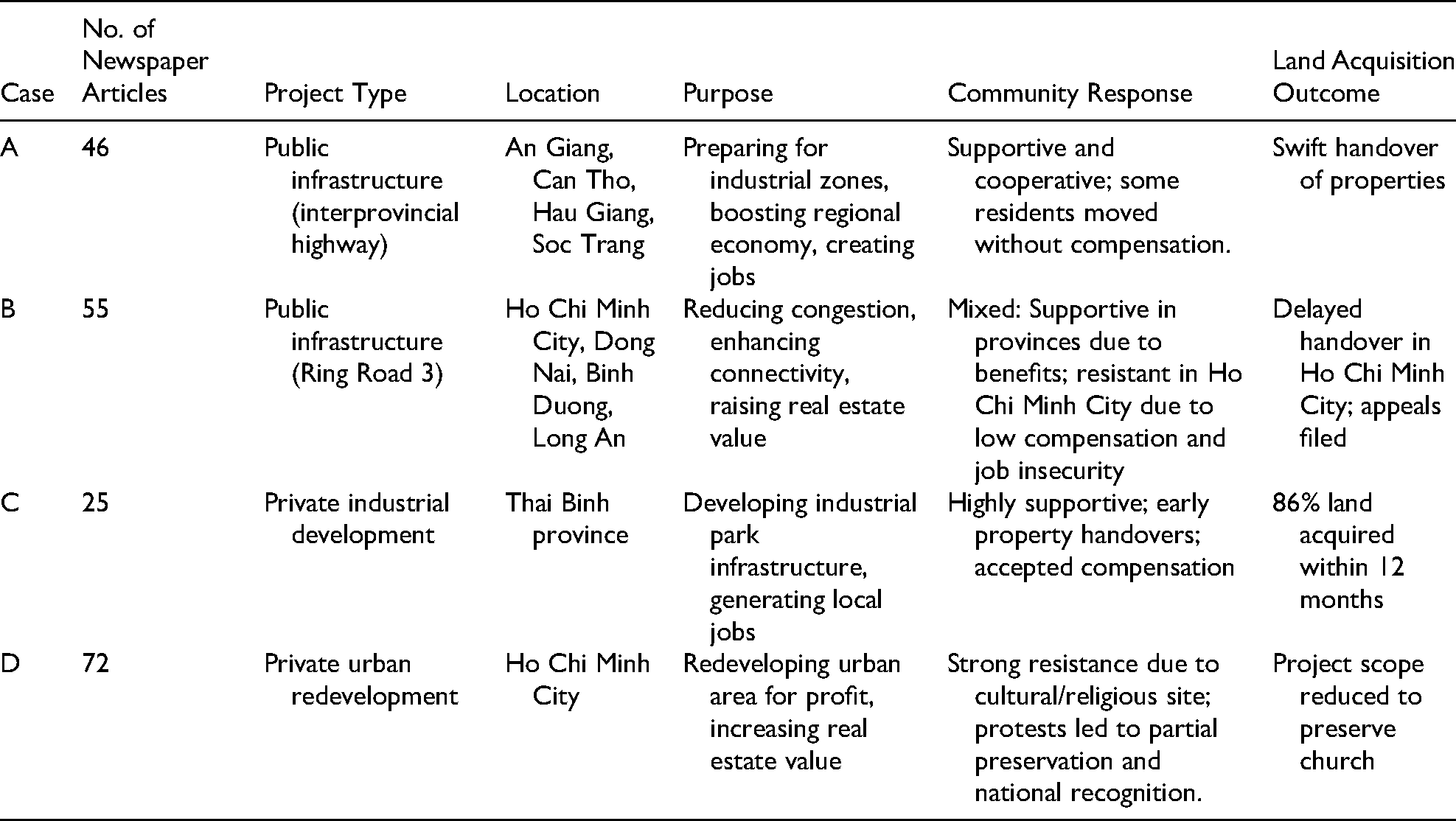
Case A is an interprovincial highway project that passes through four provinces in the southern region: An Giang, Can Tho, Hau Giang, and Soc Trang. This public project seeks to improve infrastructure in preparation for the development of industrial zones, which will support the regional economy and create job opportunities for local residents. As a result, the majority of affected landowners are willing to support and cooperate with the authorities to hand over their properties within a short period. Some households have even agreed to move to make way for the project despite not having received compensation yet. This case illustrates that resistance is minimal when a project delivers long-term socioeconomic and infrastructure value, not only to affected landowners but also to the wider region. Case B, Ring Road 3, is an infrastructure project connecting Ho Chi Minh City—the largest city in Vietnam—with three neighboring provinces: Dong Nai, Binh Duong, and Long An. The primary aim of this project is to reduce traffic congestion and increase connectivity among the four municipalities. Despite being a public project, it received mixed reactions from landowners in different areas. In particular, the project enhances connectivity among the three provinces, which is expected to improve local economic conditions and increase real estate value in these regions. Residents in satellite cities often support the project and are willing to move due to the benefits to their communities and potential gains in the real estate market after the project’s completion. In contrast, the main benefit for Ho Chi Minh City is reduced traffic congestion. However, landowners in the city hesitated to hand over their properties because the compensation was not enough for them to settle in new areas, particularly in an expensive and overpopulated city. They also found it difficult to secure new jobs after relocation. Unlike the residents in the three provinces, those affected in Ho Chi Minh City tend not to cooperate and often appeal to the local government. This case highlights that even community-based projects can face resistance when landowners perceive unfairness and inequality across different localities. Case C, Lien Ha Thai Industrial Park, is a privately funded project aimed at developing the infrastructure of an industrial zone in Thai Binh province. The project involved the clearance of around 600 hectares and the relocation of 3,297 households. Construction was completed exceptionally quickly, with 86% of the land acquired within 12 months. The compensation framework was transparent and reasonable, and the project also was expected to bring better infrastructure and more job opportunities to the local community. As a result, affected residents were extremely supportive, willingly relocating their spiritual structures and handing over properties before the deadlines. This case exemplifies how a private project gained local support because its social value was already evident and acknowledged by landowners. Case D, Thu Thiem New Urban, is an urban redevelopment project in Ho Chi Minh City, and it is a profit-oriented project. The project faced numerous protests from affected landowners due to the relocation of their homes, particularly the demolition and relocation of a Catholic church that was more than 160 years old. The priest and parishioners fought and protested strongly from 2014 to 2018, eventually succeeding in preserving the integrity of the church. The investors and authorities agreed to reduce the scope of the project to retain the church. Recognizing the needs of the parishioners and the value of the church, the central government officially designated the structure as a national relic, which means it is protected under the Cultural Heritage Law. The heritage church is now considered an iconic structure offering historical and spiritual value to property buyers, which has led to an increase in property value in the area. This case demonstrates how intense conflict and mediation generated cultural and spiritual value for the local community.
Cases A and C represent cooperative contexts in which the cocreation process was active from the beginning in both project types, while Case D confirms the reactive nature of social value cocreation in private projects. The mixed outcomes in Case B indicate that the cocreation process can be proactive or reactive depending on the actual value different groups of landowners perceive within a community-based project. Collectively, these cases confirm that conflict can evolve into a resolution process through which community value is cocreated.
We should note that governmental authorities consistently communicated the benefits and long-term value of the four projects to residents to accelerate the site clearance process. Authorities were directly involved in the two public-funded projects, while in the other two, they actively participated in explaining and persuading the landowners alongside the project sponsor organizations. Examples of affected residents’ opinions can be found in Appendix B. The aforementioned propositions are presented in the results section to reflect their direct emergence from empirical data analysis; the following section elaborates on their theoretical and practical implications.
Discussion
Several studies have explored specific activities that local communities undertake to oppose controversial projects, such as organizing protests and demonstrations (Hanna et al., 2016; Teo & Loosemore, 2011; van den Ende & van Marrewijk, 2019), using social media (Lobo & Abid, 2020), or taking legal action (Jordhus-Lier, 2015). However, with the exception of the work of Ninan et al. (2019), relatively little attention has been paid to how project organizations respond to such community pressure in conflict situations. The response strategies we discuss in this study share some similarities with Ninan et al. (2019), likely due to both studies addressing issues related to landowners. A key contribution of this study is that it highlights the potential sequencing and combinations of response strategies. This contribution is significant not only for studies related to addressing landowners’ opposition but also for emphasizing the process dimension of organizational responses within the reactive approach to stakeholder engagement. As stakeholders can amplify their influence on projects through specific combinations and sequencing of tactics (Nguyen et al., 2019), we believe that employing response strategies in the right order can also help managers effectively address collective influences from landowners. Also, it is worth noting that the strategy of understanding landowner contexts appears to be distinctive to this study, as it has not been reported in previous studies on addressing local communities’ resistance.
We emphasize that understanding landowner contexts is an essential strategy for managers to uncover the root causes of opposition from local communities. During resettlement, different groups of residents may have specific and varying needs (Nikuze et al., 2022). Assigning personnel who share a common identity with residents can facilitate land acquisition and public engagement (Fu et al., 2022). This approach can help managers identify core groups that often remain hidden or become invisible but play a crucial role in sustaining protests against controversial construction projects (Teo & Loosemore, 2014). Building rapport with affected residents is a key activity in the understanding landowner contexts strategy and can be an effective strategy for project organizations to move forward with minimal resistance during the early stages (Ninan et al., 2024). Understanding these root causes also helps managers select appropriate communication strategies to engage with landowners. Since different stakeholders are often connected to different types of values, project representatives can enhance communication by identifying the specific value associated with each stakeholder group (Eskerod & Ang, 2017). Effective communication strategies from project teams can help local communities understand the fairness of decision-making and its outcomes (Di Maddaloni & Derakhshan, 2024).
External stakeholders, such as local communities, should be actively involved during project development to achieve social value and benefit realization in construction projects (Di Maddaloni & Sabini, 2022). However, engaging community stakeholders in projects can be challenging, and project organizations may not always provide sufficient social value to meet these communities’ needs (Babaei et al., 2023). Social value has been described at different levels and classifications in the literature. For example, Zerjav et al. (2021) propose that the value of infrastructure projects can impact residents, the transportation sector through optimized service provision, and the individual experiences of users. Local communities engage with and enact the social value of such projects through three dimensions: societal, environmental, and economic (Caron et al., 2024). In contrast, Martinsuo (2020) categorizes social, environmental, and economic aspects into distinct dimensions. This study highlights that social value can include dimensions related to affected residents as well as impacts on the region's socioeconomic infrastructure. Regarding the former, we emphasize that the mental and psychological well-being of residents is a critical factor that should not be overlooked, as it can be challenging to quantify and evaluate the emotional impact on residents when they lose their land (Lavoie & Hébert, 2022).
Research has shown that inadequate land acquisition processes, relocation and compensation mechanisms, and a lack of trust in government and developers often lead to community resistance, which can profoundly impact social stability (Dong et al., 2022; Cheng & Cheng, 2021; Han et al., 2018; Scott, 2003; Tang et al., 2016). Similarly, social injustice arising from urban regeneration projects often includes economic disparities and inequalities between those displaced and those who remain, along with a lack of recognition for intangible cultural heritage (Xian & Gu, 2020). As a result, affected residents tend to focus on fairness and transparency in projects involving land acquisition, economic compensation, relocation, and resettlement (Wang et al., 2023). Resistance often diminishes when residents perceive improvements in compensation mechanisms, educational opportunities, and job prospects (Tang et al., 2016). Therefore, effective communication plans and transparent compensation schemes are crucial in such construction projects (Nikuze et al., 2019). We believe that establishing adequate and transparent compensation options for affected landowners forms the foundation for increasing the social value of development projects.
To build on this understanding of social value, it is also important to consider how different types of project value influence landowner resistance and stakeholder dynamics (De Nito et al., 2024; Vuorinen & Martinsuo, 2019). If we consider the four situations along a spectrum of project value, based on their primary focus, Situation II lies at one end as it is oriented toward private value. In contrast, Situation III sits at the opposite end due to its emphasis on community-based projects. Situation I can be positioned in the middle, as the projects in this group primarily generate value for the project sponsor. Situation IV stands as an outlier but offers valuable insights into the complexity of stakeholder engagement and value creation in projects. From this perspective, private projects tend to encounter more resistance from landowners compared to projects in the other situations. However, as previously discussed, such resistance can be mitigated by enhancing the project's secondary value—its social contribution to the broader community. There is growing evidence in the literature highlighting the importance of this secondary dimension of value in shaping stakeholder responses (Alkahlout, 2025; Baba & Brunet, 2024; Rao et al., 2018). We believe that clearly categorizing, specifying, and planning for the different types of value a project offers is an effective way to manage the risks associated with landowner opposition.
The findings of this study align with previous works in the context of developing countries, highlighting that, given the benefits of economic development, governmental authorities may willingly intervene in conflicts between project organizations and community stakeholders (Ehrnström-Fuentes & Kröger, 2017; Jiang et al., 2021). The involvement of authorities in privately funded projects may be a critical success factor. Moreover, the social value that projects bring to a community extends beyond the affected community itself; it can be developed into a solid framework and applied to similarly affected communities in the future (Smyth & Vanclay, 2017).
Past studies have highlighted the strong connection between a proactive approach, where stakeholder engagement is well planned in advance, and the value cocreation process (cf. Asiedu & Iddris, 2022; Change et al., 2013; Pargar et al., 2019; Takahashi & Takahashi, 2022). Our study suggests that a reactive approach, where stakeholders are recognized and involved in projects as a result of conflicts or crises, can also lead to value cocreation (see Eskerod & Jepsen, 2016). Also, it has been proposed that stakeholders can cocreate project value through risk management processes (Willumsen et al., 2019). In particular, the social value of community-based projects can be either cocreated or destroyed depending on how effectively managers engage with stakeholders (Ojuri et al., 2023). Similarly, societal value can still be generated through joint efforts between project organizations and stakeholders when management understands potential conflicts of expectations and synthesizes these diverse values into a coherent approach (Rodhouse et al., 2023). During periods of uncertainty or crisis, managers can protect project value by avoiding issue escalation caused by overreactive behaviors, often influenced by biases and reporting errors (Wang et al., 2017). Therefore, conflicts should not be viewed solely as threats; they can present opportunities for all parties to cocreate and enhance project value.
Positive social impacts, emerging as a result of the influencing and counterinfluenceing interactions between project sponsors and local communities, are also evident in the literature. In particular, in a longitudinal study by van den Ende and van Marrewijk (2019), the authors conducted two case studies in which local residents resisted infrastructure projects for an extended period. This resistance led to two significant changes within the project organizations. First, public sector project personnel recognized their weaknesses and improved their communication and stakeholder engagement skills, while at the same time paying more attention to the societal environment. Second, personnel also shifted from a technical focus to a relationship-oriented approach, seeking more collaborative practices with contractors. If we revisit these case studies in light of the social value cocreation process, we can conclude that the core category has demonstrated external validity (Hancock et al., 2021; Taylor et al., 2011; Yue, 2010). Noticeably, previous studies can be used to verify the core category of a grounded theory, and this practice is not uncommon (see Charmaz, 2014; Glaser & Strauss, 2017).
Conclusion
While construction projects can deliver benefits and value across various socioeconomic levels of a country, they also can have negative impacts on the environment and local communities. Landowners, who can exert direct influence on construction projects, often engage in collective opposition due to issues of displacement and relocation. To address this pressure, project organizations employ various strategies, frequently involving local authorities—who also have stakes in the projects—to resolve conflicts with objectors promptly. These interactions among the parties typically contribute to an increase in social value within the community. This social value encompasses respecting religious and spiritual beliefs, adhering to local traditions and customs, promoting fairness and transparency, improving living conditions, and enhancing socioeconomic infrastructure.
Given the tension between project organizations and local communities, project teams must navigate these conflicts and strive to achieve an optimal balance between differing perspectives throughout the project life cycle (Cuganesan & Floris, 2020). This study is one of the first to deliberately identify the underlying context to address such tensions and conflicts with landowners—a critical group within the community affected by the project—focusing on the social value of the affected residents and the broader community. As this study follows the grounded theory methodology, it has some unavoidable limitations related to the research design itself, data collection techniques, interviews and online documents, the Straussian approach to data analysis, and the sample size (Corbin & Strauss, 2014). We tried to overcome these limitations by conducting a validation step with four case studies and by combining situational analysis and constant comparative analysis, as discussed in the research methodology section. Given the context of Vietnam, the findings of this study might only be applicable to developing countries with similar social and political conditions.
As discussed previously, social value encompasses various dimensions and levels. Future studies could focus on examining more specific dimensions of this value in different settings and project types that remain controversial. Additionally, in this study, landowners were found to have significant power to influence projects directly, and managers exercised caution in addressing such power. Future research could explore how project organizations cocreate value with external stakeholders who use indirect strategies to oppose projects, such as NGOs, activists, and environmentalists.
In conflict situations, stakeholders often use various strategies to exert influence on projects with the aim of protecting their interests (Mok et al., 2015). Managers can utilize a range of response strategies to help make timely decisions when facing pressure from landowners. However, the root cause of controversial projects often lies in the imbalance between the strategic value of the project and the material and mental losses experienced by affected residents. On one hand, landowners can vary significantly depending on the location and nature of the community. For example, in ordinary communities, landowners might primarily be concerned with financial compensation and the impact on their livelihood. In contrast, in spiritual or Indigenous communities, landowners may place greater value on the cultural and spiritual significance of the land. When it comes to site clearance and relocation, decision-makers may find it difficult to justify prioritizing the interests of a majority stakeholder group at the expense of the rights of a minority group (Aaltonen et al., 2019). Managers can analyze the social value associated with specific groups of residents and develop suitable strategies to ensure a smooth land acquisition process, considering that these values can vary significantly based on cultural backgrounds, beliefs, and legal and political systems.
On the other hand, authorities should be selective when approving development projects in their regions. The ideal approach is to prioritize projects that bring long-term benefits and value to the communities while simultaneously ensuring the quality of life and mental well-being of affected residents. It would be beneficial if the positive impacts of the project on residents align with those on the entire region. In community-based projects, authorities also serve as project sponsors, which may lead to bias during the decision-making process. It is recommended that a third, independent party be involved in such projects to facilitate effective stakeholder engagement and ensure transparency.
Footnotes

Funding
The authors received no financial support for the research, authorship, and/or publication of this article.
Author Biography
Appendix A. Profile of the Case Studies
| Case | No. of Newspaper Articles | Project Type | Location | Purpose | Community Response | Land Acquisition Outcome |
|---|---|---|---|---|---|---|
| A | 46 | Public infrastructure (interprovincial highway) | An Giang, Can Tho, Hau Giang, Soc Trang | Preparing for industrial zones, boosting regional economy, creating jobs | Supportive and cooperative; some residents moved without compensation. | Swift handover of properties |
| B | 55 | Public infrastructure (Ring Road 3) | Ho Chi Minh City, Dong Nai, Binh Duong, Long An | Reducing congestion, enhancing connectivity, raising real estate value | Mixed: Supportive in provinces due to benefits; resistant in Ho Chi Minh City due to low compensation and job insecurity | Delayed handover in Ho Chi Minh City; appeals filed |
| C | 25 | Private industrial development | Thai Binh province | Developing industrial park infrastructure, generating local jobs | Highly supportive; early property handovers; accepted compensation | 86% land acquired within 12 months |
| D | 72 | Private urban redevelopment | Ho Chi Minh City | Redeveloping urban area for profit, increasing real estate value | Strong resistance due to cultural/religious site; protests led to partial preservation and national recognition. | Project scope reduced to preserve church |