






Abstract
Autonomy is not the same as independence, but a psychological experience of volition and self-endorsement in one’s actions that drives motivation to work on projects. Agile project environments promote autonomy through self-organization and empowerment. Despite widespread recognition of autonomy's importance, a critical gap exists in understanding how individuals subjectively experience autonomy in agile project teams. By applying Q methodology, this study reveals five perspectives on individuals’ experienced autonomy in agile project teams. This study contributes to project management research by providing a nuanced understanding of autonomy's role for motivation in agile project teams. Instrumental contribution is achieved by providing a set of statements to analyze experienced autonomy. For practice, this research gives agile leaders and managers insights into creating a motivating workplace that considers individual differences in autonomy experiences. Future research could further investigate the contextual dynamics that foster and develop these perspectives.
Keywords
Introduction
Autonomy is not the same as independence (Koestner & Holding, 2021); rather, it refers to the psychological experience of volition and self-endorsement in one’s actions (Vansteenkiste et al., 2020). As a core psychological need in self-determination theory, autonomy receives special emphasis for its profound impact on motivation, enabling individuals to regulate their actions with a sense of ownership and responsibility (Ryan et al., 2021). In project settings, autonomy has been identified as a fundamental driver for motivation to work on projects (Lechler & Huemann, 2023).
This distinction between autonomy and independence is particularly relevant in agile project environments. Agile principles emphasize self-organization and empowerment, shifting responsibility and ownership to individuals. This decentralization of power is giving teams and team members autonomy and enabling them to make decisions quickly (Dong et al., 2024). However, autonomy in agile settings is not uniform; it involves different aspects of self-directed action while also demanding a commitment to collective outcomes, thereby creating a subjective experience of autonomy (Armbruster & Huemann, 2025). This relational and restraining attitude toward autonomy suggests that the motivational impact of autonomy may be more nuanced than previously understood.
Despite widespread recognition of autonomy's importance, a critical gap remains in understanding how individuals in agile project teams subjectively experience autonomy. Existing research has evidenced that individuals in self-organizing contexts experience greater autonomy in decision-making (Doblinger & Class, 2023) and that agile structures provide autonomy-supportive conditions (Alexandrino et al., 2024). However, individual perceptions lack analysis, suggesting that the subjective and nuanced experience of autonomy—not just its existence—drives its motivational effect.
Addressing this research gap offers valuable insights both for theory and practice. For project management research, the goal of the study is to examine experienced autonomy by systematically identifying and comparing subjective viewpoints of autonomy using Q methodology (Q). By revealing distinct perspectives of experienced autonomy among individuals in agile project teams, this research advances knowledge on the multifaceted and subjective nature of autonomy in agile work contexts. For practice, providing a clearer understanding of autonomy's role in motivating individuals in agile teams may lead to more targeted autonomy support from leaders and to supportive organizational conditions.
This article addresses the following research question (RQ):
RQ: How is experienced autonomy relating to the motivation of individuals in agile project teams?
To address this research question, Q methodology was applied to conduct interviews with members of agile project teams, thereby analyzing this highly subjective phenomenon and strengthening the multidisciplinary approach of self-determination theory. The interviews were conducted in software development departments across five companies, all of which were involved in mechanical engineering. The participants include individuals in various roles within agile teams, including developers, agile coaches, product owners, and agile managers. This research identifies five distinct perspectives on experienced autonomy related to motivation in agile project teams. The team-oriented perspective highlights a collaborative approach, characterized by shared knowledge and collective development. The clarity-seeking perspective aims for individual clarity supported by situational context. The third perspective, innovation driven, emphasizes maximum individual flexibility and innovation. The resource-oriented perspective prioritizes practical efficiency. The task-centric perspective seeks structured independence with task-level control.
This study contributes to project management research by providing a differentiated understanding of how autonomy motivates individuals in agile project teams. In addition, it provides an instrumental contribution by offering a validated set of statements for analyzing experienced autonomy. For practice, the findings offer insights for agile leaders and managers seeking to design motivating work environments that account for individual differences in autonomy experiences.
The article is structured as follows: First, it provides a theoretical background on research on autonomy in project management, its relevance for agile project teams, autonomy in self-determination theory, and perceived autonomy support. Next, it outlines the research design, explaining Q methodology as a suitable approach for delineating different views on experienced autonomy. The findings are presented, describing the five perspectives on individuals’ experiences of autonomy within agile teams. These findings are discussed and presented within a model that frames different levels in agile project teams. Last, the article concludes with its contributions, limitations, and recommendations for future research.
Theoretical Background
This section offers an overview of research on autonomy in project management. Then, it highlights the specifics of autonomy in the context of agile work, its roots in self-determination theory, and perceived autonomy support. Based on this theoretical background, four levels of autonomy for motivating individuals are identified as a research model: individual, team, organizational, and leadership.
Autonomy in Project Management Research
Research on autonomy in project management builds upon foundational theories of workplace autonomy, particularly the job characteristics model (Hackman & Oldham, 1975) and self-determination theory, which establish autonomy as a basic psychological need and motivational concept explaining energy for action (Deci & Ryan, 1985; Deci et al., 2015; Ryan & Deci, 2019). Autonomy in this research is conceptualized based on self-determination theory in a relational sense, where it “is not defined by the absence of external influences but rather by one’s assent to such influences or inputs” (Ryan & Deci, 2006, p. 1561).
The context of projects introduces unique complexities that set it apart from general work autonomy research: the limited timeframe, the temporary organizational structures, the presence of multiple stakeholder interests, and the tension between project-level independence and organizational integration. These qualities introduce a multifaceted research area on autonomy in projects, as shown in Table 1, expanding beyond individual job design to include autonomy at the project, team, and individual levels, as well as autonomy as a project outcome.
Overview of Autonomy in Project Management Research
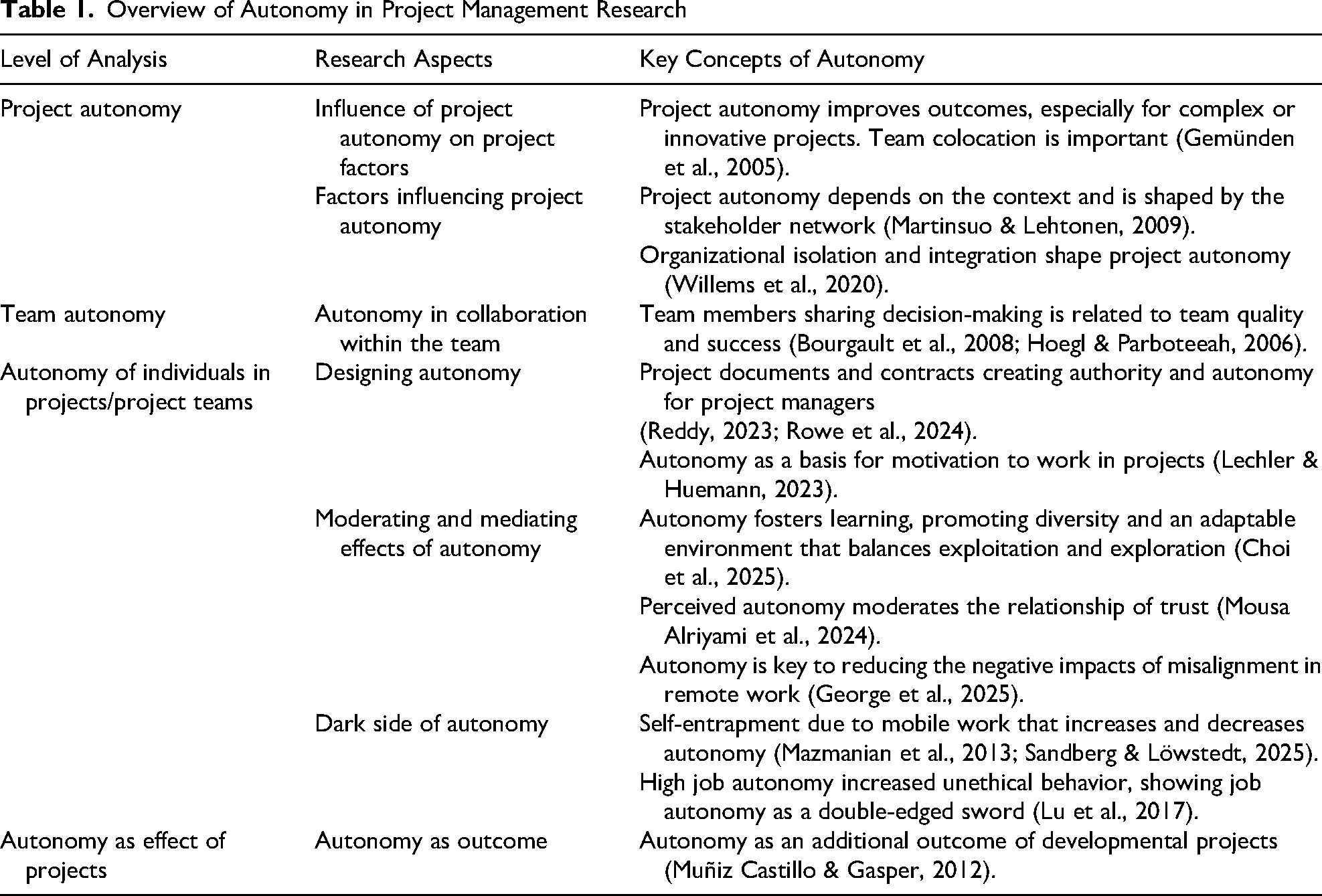
Although Table 1 summarizes autonomy research in project management more broadly, only a subset of these studies explicitly examines agile project contexts. Most agile-related insights emerge from research on software development or self-organizing teams, rather than from project management research per se, as detailed in the section about autonomy in project contexts.
At the project level, Gemünden et al. (2005) describe four distinct dimensions of autonomy: (1) goal-defining autonomy as the capacity to shape project objectives, (2) structural autonomy as the control over organizational arrangements, (3) resource autonomy as discretion in resource allocation, and (4) social autonomy as independence in managing external relationships. These dimensions illustrate the multiple interfaces shaping project autonomy. Further investigation into how project autonomy can be achieved, including its enablers and barriers, was conducted by Martinsuo and Lehtonen (2009). The results show that project autonomy is a constant negotiation with the environment.
Research on team autonomy similarly focuses on boundaries with the organization, providing insight into internal team dynamics, particularly the distribution of decision-making authority. Autonomy is perceived not only through the project's vertical integration within the organization but also through horizontal integration among team members. It is notable that research on team autonomy is less common in projects and much more prevalent in related contexts such as the field of software development (Kakar, 2018; Gustavsson et al., 2022; Šmite et al., 2023), self-organizing teams (Sauer & Nicklich, 2021), and creative teams (Grabner et al., 2022; Hodgson & Briand, 2013). As a result, insights into autonomy in agile project teams are often inferred from these domains rather than studied directly in project-based settings.
At the individual level, research reveals both the mechanisms by which autonomy is designed and its double-edged consequences. Formal structures such as project documents and contracts confer authority and autonomy on project managers (Reddy, 2023; Rowe et al., 2024), demonstrating that autonomy is actively framed through organizational artifacts. Autonomy of the individual fosters learning activities (Choi et al., 2025), builds a basis for the relationship between trust and outcomes (Mousa Alriyami et al., 2024), and mitigates the negative impacts of misalignment in remote work contexts (George et al., 2025). In project-based contexts, autonomy is emphasized as a critical motivator for project professionals, as highlighted by Lechler and Huemann (2023) in their model for motivating young project professionals.
Finally, a small stream of research examines autonomy not as an input that influences project success but as an output that projects produce. Developmental projects, for instance, can generate autonomy as an additional outcome beyond stated objectives (Muñiz Castillo & Gasper, 2012).
Research positions autonomy as a crucial boundary condition, operationalized at various levels of the project, shaping and influencing how individuals experience their autonomy. Nevertheless, the studies show a dominance of quantitative, survey-based research that has established correlational relationships between autonomy and outcomes but has underexplored the practices and lived experiences of autonomy. Qualitative research is necessary to understand how autonomy is experienced and negotiated within project contexts, where autonomy is a continuous source of tension across individual, team, and organizational levels (Bjerre & Leimbach, 2026).
Autonomy in Agile Project Contexts
Although the agile approach to projects lacks a universal definition, it evolved from agile practices in software development (Dong et al., 2024). In this study, agility isn't tied to specific approaches or practices; instead, it emphasizes principles of self-organization as key features of agile project teams (Prommegger et al., 2019). Accordingly, autonomy plays a central role in the agile project approach. Research examines how self-organizing teams balance independence with organizational control, particularly in large-scale, complex environments (Moe et al., 2021; Šmite et al., 2023). Autonomy is discussed across organizational, team, and individual levels (Bjerre & Leimbach, 2026; Meier & Kock, 2023).
At the organizational level, Meier and Kock (2023) conceptualize autonomy based on an empirical study as one of five dimensions, alongside culture, customer integration, working methods, and cross-functional skills. They define autonomy as self-directed behaviors within specific limits of managerial control, meaning employees are given authority and opportunities for decision-making. In this framework, the autonomous team is not considered.
Team autonomy is defined as the team’s independence and authority to decide which tasks to work on, when to do them, and how to approach them (Alexandrino et al., 2024; Gustavsson et al., 2022). Thus, the team is a vital decision-making unit for delivering project results. Within agile teams, individual team members are granted increased autonomy, as collective responsibility assigns them additional responsibilities, thereby providing opportunities for decision-making (Collin et al., 2021).
Individual autonomy in agile settings encompasses decisions about work methods and accountability for outcomes; however, autonomy varies depending on factors such as job position or role, as well as organizational structure (Doblinger & Class, 2023). Moreover, individuals are tasked with managing not only their work but also their learning paths (Collin et al., 2021), which represents an expansion rather than mere delegation of responsibility. Autonomy functions as increased self-governance that may constitute additional labor rather than freedom.
Autonomy as a Motivator in Agile Project Teams
Prior research has predominantly reported positive relationships between autonomy and motivational outcomes. Research on autonomy in agile contexts has shown mostly positive effects, as it is viewed as a key component of job quality (Yates, 2023) and fosters creativity and innovativeness (Malik et al., 2021). Furthermore, autonomy orientation has been shown to influence innovative work behavior positively (Papachristopoulos & Arvanitis, 2024). Individuals who experienced autonomy in experimental settings exhibited higher levels of identified motivation, which in turn reduced their likelihood of engaging in rule-breaking behavior (Bureau et al., 2018). However, these studies focus on the presence of autonomy rather than on how individuals in agile project teams subjectively experience it.
Overall, existing research emphasizes the positive motivational effects of autonomy in agile approaches of project management while acknowledging the need to balance autonomy within multilevel organizational structures (Bjerre & Leimbach, 2026). What remains underexplored is how experienced autonomy serves as a motivator for individuals, and how autonomy experiences vary across individuals and contexts.
Autonomy in Self-Determination Theory
Self-determination theory conceptualizes autonomy not only as one of the three basic psychological needs—alongside competence and relatedness—(Deci et al., 2015) but as a regulatory quality along a continuum from externally controlled to self-endorsed behavior (Ryan & Deci, 2000). Autonomy refers to a sense of volition and willingness, in which actions are experienced as self-endorsed and aligned with personal values (Ryan & Deci, 2006; Vansteenkiste et al., 2020). When autonomy is thwarted, individuals experience pressure and internal conflict, feeling pressured to act in unwanted directions. Agentic engagement extends this view by emphasizing individuals’ capacity to actively shape their environment to support need satisfaction (Patall, 2024).
Self-determination theory further differentiates causality orientations: Autonomy-oriented individuals regulate behavior through perceived choice; control-oriented individuals respond primarily to external pressures; and impersonal-oriented individuals feel ineffective or beyond intentional control (Ryan & Deci, 2019; Weinstein et al., 2012). This variability creates a challenge that has not been sufficiently addressed in project research: Uniform approaches to providing autonomy may privilege some orientations over others.
High-quality motivation depends on the joint satisfaction of autonomy, competence, and relatedness (Ryan & Deci, 2019). In projects, these basic needs interact closely, as Lechler and Huemann (2023) highlight, because projects serve as environments for growth through developing tasks that require solutions and encouraging cocreation with others. However, project management research often reduces autonomy to operational discretion or decision authority, leaving the relational and orientation-based nuances of self-determination theory underintegrated.
Autonomy Support
As previously outlined, autonomy relies on contextual factors that enable its exercise. In self-determination theory, autonomy support is defined as the right conditions and interpersonal interactions that promote autonomous actions. An autonomy-supportive environment contrasts with a demanding or restrictive one (Ryan & Deci, 2017). Autonomy support operates across team, organizational, and leadership levels.
Managerial autonomy support satisfies basic psychological needs and promotes autonomous motivation (Jungert et al., 2021; Slemp et al., 2018). Although direct external interventions undermine autonomy (Hoda & Murugesan, 2016), enabling and empowering leadership creates protective spaces for self-organized processes, facilitates external interfaces, and provides support when needed (Sauer & Nicklich, 2021).
In addition to leadership styles and power structures, flexible working arrangements and remote work policies are cited as autonomy supporting (Bal & Izak, 2021; Kunzl & Messner, 2023; Peters et al., 2016). Similarly, digital transformation supposedly facilitates autonomy by enabling distributed alignment within new organizational structures and across time and space (Ravn et al., 2022) while also providing individuals with the opportunity to exercise autonomy.
Research distinguishes structural empowerment as a system delegating responsibility from psychological empowerment, the felt sense of control (Malik et al., 2021). The “dark side” literature complicates this claim, because flexibility can simultaneously enable autonomy and generate self-entrapment (Mazmanian et al., 2013). Whether these practices support or undermine autonomy may depend on internalized norms and on organizational boundaries. For a positive experience of autonomy, the individual must have a rationale for voluntary compliance (Ryan & Deci, 2006). This acknowledges that autonomy is subjectively experienced rather than objectively granted. Understanding how organizational boundaries at various levels shape the experience of autonomy is, therefore, critical for fostering motivation in project work.
Research Design
Experiencing autonomy in agile teams is a subjective topic, as it emerges through individual perceptions of agency in everyday decisions, team coordination, and interpersonal dynamics. This makes Q methodology an appropriate and proven method for unpacking the diverse outcomes of subjective experiences. Q methodology adopts a holistic approach that guides the design of the various phases of Q methodology research (Watts & Stenner, 2012): gathering a concourse and defining the Q-set, selecting participants, conducting the Q-sort, and analyzing and interpreting the results as described in the following.
About Q Methodology
Q methodology is a para-quantitative method that combines the strengths of qualitative and quantitative research within a single interaction to reveal different perspectives on subjectivity through objective measures (Damar & Sali, 2022). Para-quantitative in Q methodology refers to the combination of a quantitatively analyzed sorting exercise with the qualitative expression of participants’ subjective viewpoints. This is also reflected in the presentation of the results, which emphasize holistic perspectives rather than isolated variables. The methodology provides participants with a set of statements that encourages engagement and deep connection, helping them gather thoughts on aspects they might not have considered and on tacit knowledge that is difficult to articulate. In the context of agile project teams, tacit knowledge may relate to implicit decision-making boundaries, the informal influence of leadership, or routine actions that encourage or discourage the individual's agency within the team. This is an advantage of Q methodology over interviews, where the main focus is on exploring a specific interviewee's narrative. Q methodology opens up the range of viewpoints that support the researched phenomenon, making it a suitable and practical approach, particularly when participants struggle to express their thoughts using more traditional methods (Bartlett & DeWeese, 2015; Ellingsen et al., 2010; Watts & Stenner, 2005).
Q methodology allows participants to share their attitudes and positions on the research topic with minimal researcher interference. This is especially supportive of the authentic expression of autonomy-related perspectives. Thus, Q methodology appropriately addresses the research question, as it helps reveal viewpoints toward experienced autonomy while managing the complex nature of autonomy. It improves understanding by highlighting differences in how agile project team members experience autonomy, drawing on both measurable data and qualitative insights.
In project management research, Q methodology has been employed to examine perspectives on sustainability (Silvius et al., 2017), megaprojects (Machiels et al., 2023), collaboration (Suprapto et al., 2014), and stakeholder engagement (Cuppen et al., 2016; Sastoque-Pinilla et al., 2022).
Concourse and Q-Set Design
The basis for designing Q methodology research is to build a concourse, which involves a broad collection of existing opinions and arguments related to autonomy as raw material for the study. This reflects diverse viewpoints and perceptions as the basis for participants’ rankings of statements. A wide selection enables participants to associate their interpretations and meanings with the statements rather than imposing predefined meanings on them (Damar & Sali, 2022).
The study’s concourse was developed based on a research model derived from an initial literature review that analyzed related factors of autonomy as a motivator. In the literature, four key levels that influence autonomy in agile project teams were identified: individual, team, organizational, and leadership. These levels reflect a multilevel conceptualization of autonomy in agile project teams, capturing how motivational experiences are shaped by individual perceptions, team dynamics, organizational structures, and leadership practices. Based on these four levels, statements were clustered during a broad gathering phase to build the concourse. It consists of three sources, each offering a different view, combining naturalistic statements directly from participants with statements from well-grounded scientific literature and current practitioner-focused discussions on social media: (1) Participant-generated statements were gathered during initial interviews in a multiple case study involving 61 agile team members in various roles across five companies, to capture firsthand, context-specific experiences of autonomy and motivation as perceived by practitioners themselves. (2) Scientific literature was reviewed for mediating and moderating factors related to autonomy and motivation, to ground the concourse in established theoretical and empirical discourse. (3) Social media posts on LinkedIn were searched and screened for factors influencing autonomy, to include contemporary, practitioner-driven discourse and emerging themes from a broader agile community.
The selection criteria for statements included that they discussed work-related aspects of motivation in relation to autonomy or self-organization; non-work-related aspects of personal well-being were excluded. Statements were gathered until the authors determined that saturation had been reached and no new aspects emerged from further literature screening. Duplicates were merged and similar statements combined, resulting in a list of 143 statements collected in the concourse.
The statements for the Q-set were derived from the concourse by summarizing and combining them to create a smaller set of statements without losing the breadth of content. The statements were clustered by topic and reformulated to incorporate the various aspects from the concourse. The statements should be provocative yet carefully worded to encourage open dialogue with the participants. The statements were rephrased to complete the introductory phrase for the Q-sort task: “I experience my individual autonomy as motivating when…”. The statements were designed to be understandable, meaningful, and open to nuanced interpretation (Damar & Sali, 2022; Webler et al., 2009).
The ideal number of statements ranges between 30 and 70 (Damar & Sali, 2022). In this study, an initial selection of 50 statements was made, which was iteratively refined through pilot testing in five interviews with representative individuals, including agile team members in various roles. These pilot interviews evaluated the clarity of the statements and the comprehensiveness of the Q-set, highlighting, for example, closely related meanings and unfocused formulations. The Q-set was refined after each interview and, by the fifth one, there were no issues with understanding or comprehension. The final Q-set used for the Q-sort contains 43 statements. This final selection covers the four levels of the research model: the individual level describing personal perceptions of autonomy and decision-making (13), the team level addressing team dynamics such as coordination and shared responsibility (13), the leadership level focusing on leadership practices influencing autonomy (9), and the organizational level capturing organizational conditions such as structures and processes (8). The Q-set is attached in the Appendix (Table A1) at the end of the article.
Selection of Companies and Participants
In a Q methodology study, participants are viewed as variables rather than as a traditional sample. This makes the method effective with a small number of participants (Ellingsen et al., 2010).
The Q methodology study was conducted with individuals from five companies to mitigate the bias of a single company culture and to include a variety of participants, thereby enabling the selection of a broad range of viewpoints on the topic (Yang, 2016). A purposive selection approach was used to select companies and team members of agile project teams as participants within those companies.
All companies operate within the mechanical engineering sector, and teams from the development and engineering departments participated. This provides an interesting research context because they have a steady volume of development projects focusing on the new and further development of software for machines. All five companies are embracing agile working and have at least 2 years of experience using agile approaches, as well as an organizational commitment to them.
This Q methodology study was part of a larger research project investigating the autonomy experienced by agile team members. This led to an iterative approach involving various forms of interaction with the companies before conducting the Q-sort, including individual interviews as the primary means of gathering information for building the concourse. Workshops were held to present and discuss results, which were used to enhance the comprehensiveness of the findings.
The companies were chosen based on their size, project types, experience with agile working, and availability to strike a balance between collecting comparable datasets and covering a wide range of participants’ views on experienced autonomy in agile project teams. Table 2 provides an overview of the companies’ key attributes and the interview participants.
Overview of Companies
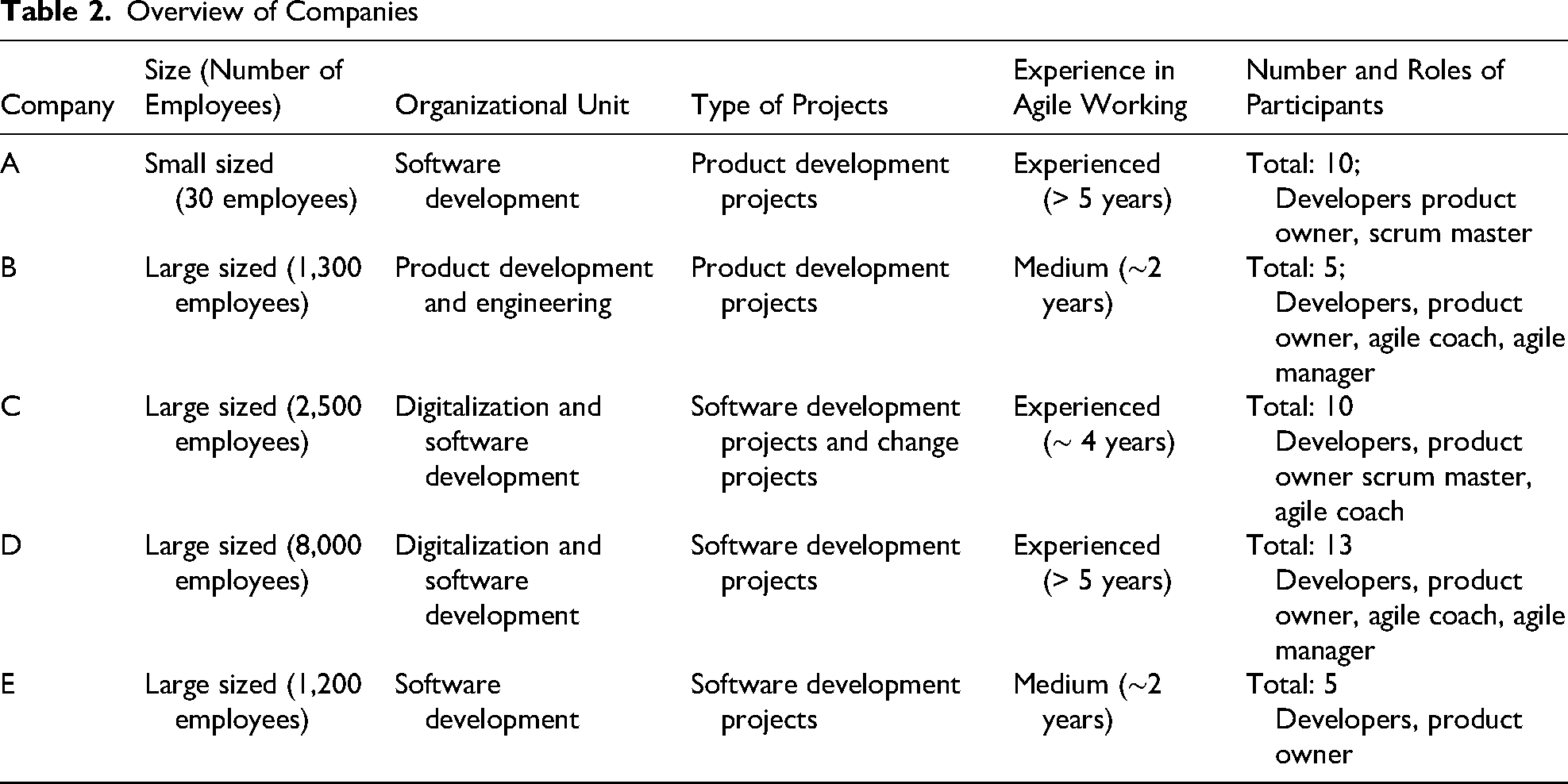
To ensure diversity among participants, they were selected based on their roles and experience levels in agile project teams. Participants held various roles within agile project teams, including product owners, scrum masters, agile coaches, developers, and agile managers, and had varying degrees of experience. They were all invited to participate voluntarily, thus demonstrating their openness to the research and interest in the topic. Forty-three interviewees participated in the Q-sorting activity. An overview of roles and attributes is shown in Table A2 in the Appendix at the end of the article.
Conducting the Q-Sort
The Q-sort was conducted in a small group setting. The groups within each company were arranged by role, with sizes ranging from one to four people. Each participant completed the Q-sort individually, followed by a group discussion. During the sorting process, participants began with a presorting phase, grouping the statements into three categories—highly relevant, somewhat relevant, and irrelevant—to familiarize themselves with the statements. They then, in a second step, sorted the statements onto the Q-grid shown in Figure 1.
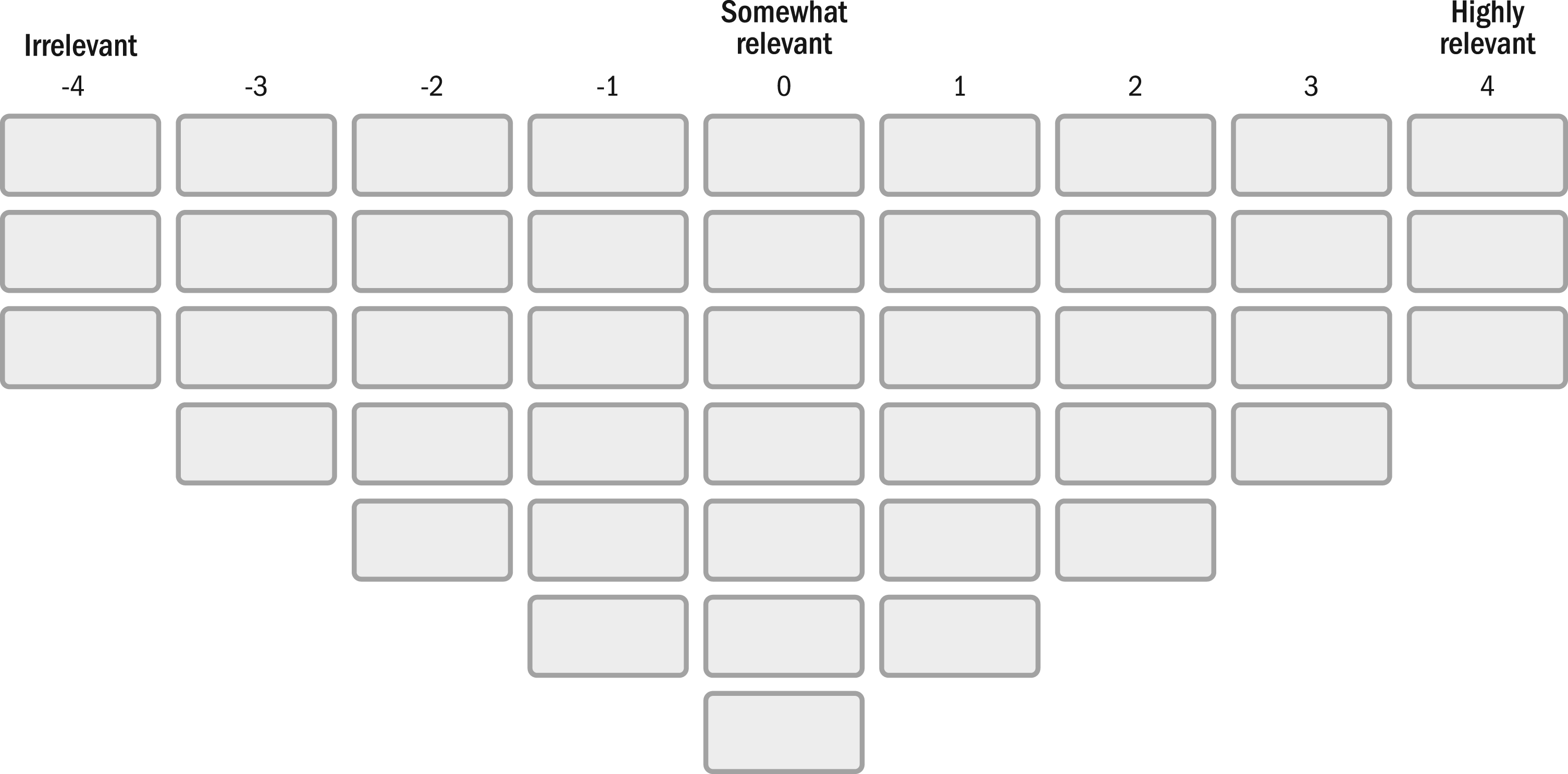
Q-grid used in the study.
The introductory statement “I experience my individual autonomy as motivating when…” guided the sorting of statements into the Q-grid. The Q-grid is designed to follow a normal distribution, resulting in fewer placement options at the extreme ends of the scale and emphasizing the strongest expressions of opinion. Most participants indicated that more statements were relevant than irrelevant. However, the structure of the Q-grid required participants to carefully prioritize and rank the statements.
Upon finishing the sorting process, the participants presented and explained their three statements at the extreme ends of the Q-grid during a qualitative part of the interview.
Participants were then encouraged to engage in a group discussion to compare their sorting outcomes. Three questions guided this interview phase: (1) Why did you choose the three most relevant statements? (2) Why did you select the three least relevant statements? (3) Which additional aspects do you see that were not included in the provided statements?
All interviews were conducted virtually via video calls using Microsoft Teams from 14 November 2024 through 14 February 2025. They were held in German and lasted between 50 and 75 minutes. The data was collected digitally using Q methodology software. The presentation and discussion of participants’ sorting were recorded and transcribed for qualitative analysis. This was used to supplement the interpretation of the statistical analysis and provide qualitative insights for developing the perspectives.
Statistical Analysis and Interpretation
Q methodology is based on activity-based data collection, which is statistically analyzed using by-person factor analysis. Quantitative data analysis leads to the identification of different perspectives extracted from groups of participants with shared views on the sorted statements (Watts & Stenner, 2012). The analysis clusters participants based on their shared views using a by-person factor to identify groups of correlated Q-sorts. This results in exemplary Q-sorts, which represent each identified perspective. Further, the researcher narratively interprets the sorting of statements for each factor, developing a description of each perspective enhanced by insights from the qualitative part of the interviews. Thus, the analysis process differs from traditional factor analysis, which identifies correlations between variables solely based on objectivity. (Newman & Ramlo, 2010).
In the quantitative analysis using Q method software, Pearson’s correlation coefficient was used to show the relationship between the individual Q-sorts. Principal component analysis (PCA) was conducted for data reduction, and varimax rotation was applied to ensure the factors accounted for the maximum variance in the study (Watts & Stenner, 2012). Objective criteria were applied to determine the factors to extract. The Kaiser-Guttman criterion, which suggests retaining factors with eigenvalues greater than 1.0, was met for five factors (Watts & Stenner, 2012). Humphreys’ rule supported the extraction of four factors. The scree test and parallel analysis also indicated the extraction of four factors. Therefore, factor analyses were performed and compared with both four- and five-factor models. Exploratory analysis of the exemplary Q-sorts showed that the five-factor solution was more meaningful, as it adds an extra fifth perspective to the results from a content perspective. Thus, the five-factor model formed the basis for further analysis of the results.
Using the five-factor model, a total of 35 Q-sorts were found to be significantly correlated with these factors at p < 0.05, based on a threshold of 0.29 for the factor loading. Eight Q-sorts were excluded because they did not load significantly on any factor. The five factors account for 51% of the variance in participants’ responses. Detailed statistics of the factor analysis, along with the characteristics of the factors, are presented in Table 3. The factors are distinct, as evidenced by the low correlations between them shown in Table A3 in the Appendix at the end of the article.
Factor Analysis and Factor Characteristics
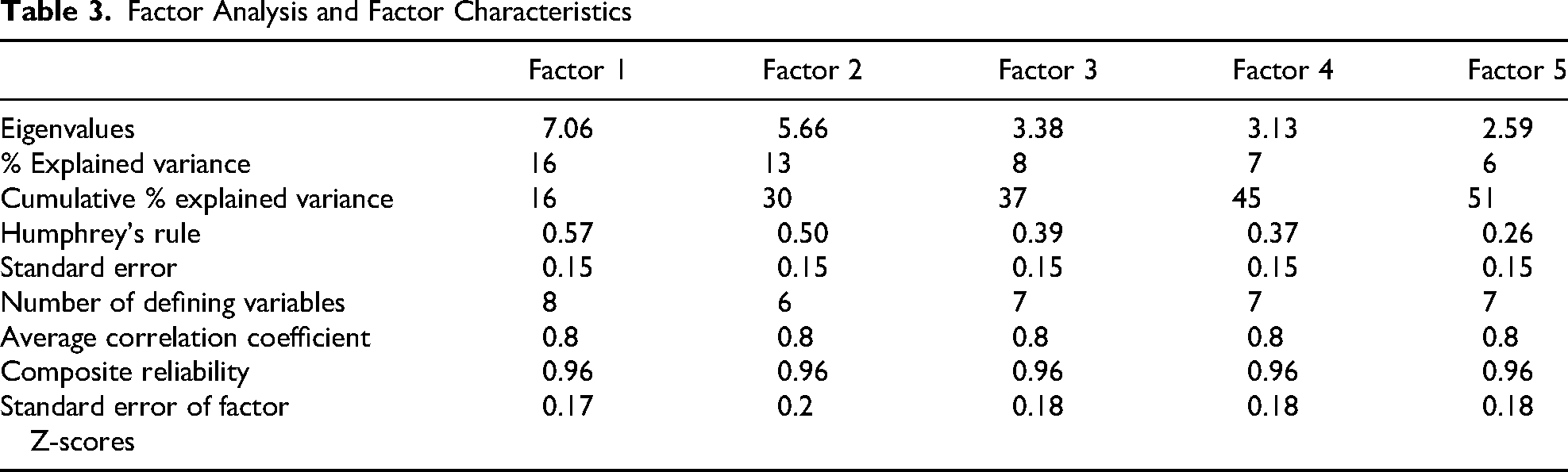
Each perspective was interpreted and described using factor-specific Z-scores constructed during the quantitative data analysis. These Z-scores rank all statements according to their relevance to each factor, thereby compiling one exemplary Q-sort for each factor that represents the best fit of all associated Q-sorts from the participants. The analysis of this exemplary Q-sorts highlights the most and least relevant statements for each perspective and the distribution of relevance across the four levels of the research model.
To deepen the interpretation, an analysis was conducted across the perspectives. It compared all statements across the factors to identify which statements received the highest and lowest scores compared to other perspectives—these reflect specific aspects of each perspective, even if they may not be ranked as most relevant. Furthermore, to develop a comprehensible description of each perspective, these statements—identified as specific to each factor—were grouped by content, and underlying beliefs were identified, supported by qualitative insights collected from the interviews. Based on this analysis and interpretation, the authors wrote narrative descriptions of the five perspectives and assigned descriptive names to each factor to make them more tangible clusters of results.
In a subsequent step, the qualitative interviews were analyzed to identify which underlying convictions and beliefs influenced how individuals sorted the statements, thereby uncovering indicators for assessing experienced autonomy. Combined with the analysis of how the levels of the research model are reflected across different perspectives, this enabled the development of a model showing how these levels shape an individual's experienced autonomy within an agile team. The results are detailed in the findings and discussion sections.
Findings
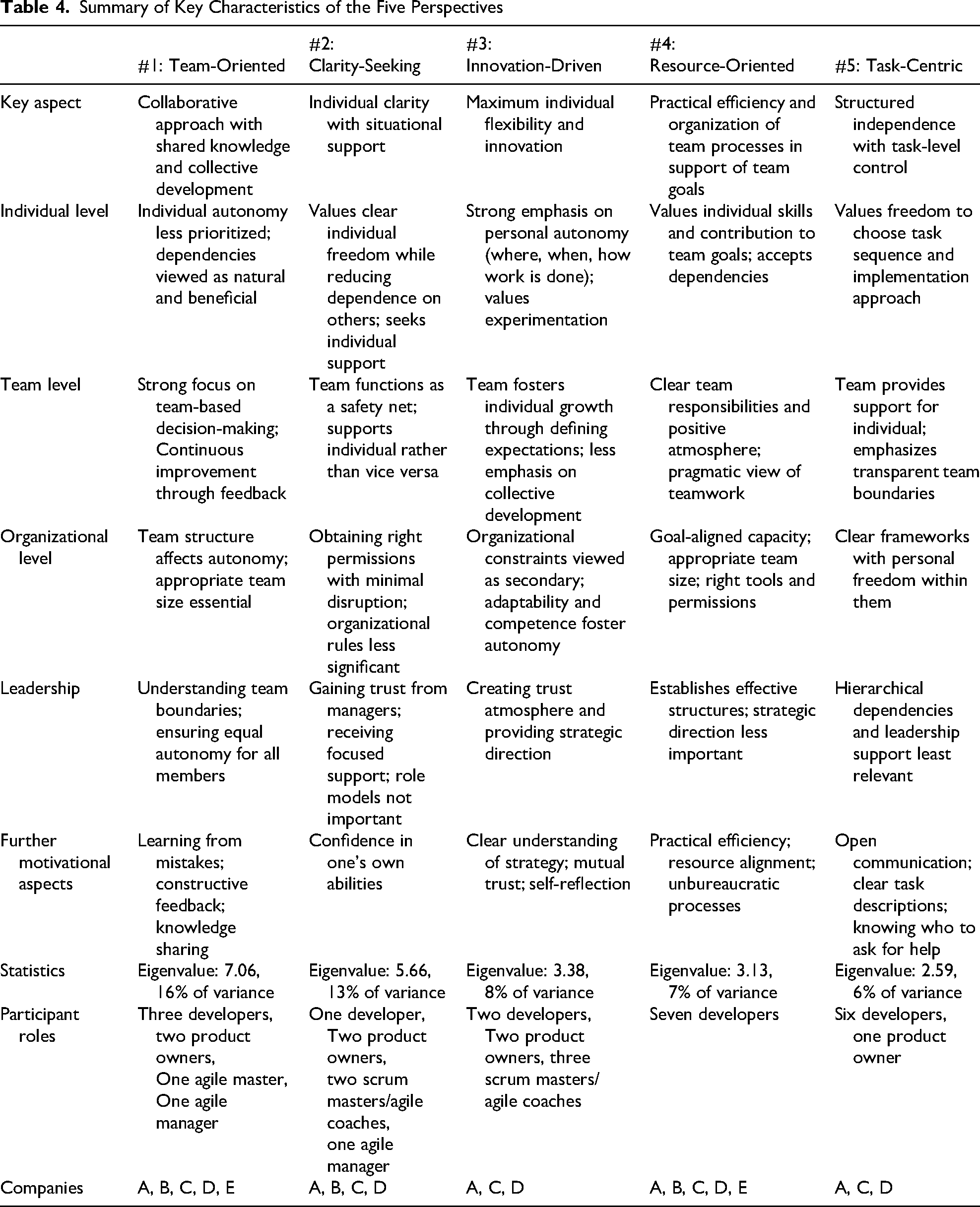
The Q-sorts reveal five distinct perspectives on individuals’ experienced autonomy within agile project teams, in relation to individual team members’ motivation. Through the interpretation of statement rankings, these perspectives highlight different ways in which autonomy is operationalized to motivate various team members. Individual attitudes, team dynamics, organizational support structures, and leadership influence these perspectives in distinct ways. Table 4 presents the main characteristics of the five perspectives.
Summary of Key Characteristics of the Five Perspectives
Descriptions of the Five Perspectives
A narrative description of each perspective highlights its unique aspects in the following sections, making the main characteristics and motivators tangible.
Perspective #1: Team-Oriented Perspective
Perspective 1 reflects a team-oriented view of autonomy, in which motivation arises primarily from collective self-regulation, shared learning, and contributing to team success rather than from individual freedom. Autonomy is experienced through participation in team-based decision-making, knowledge sharing, and continuous collective development, whereas individual independence or operational autonomy, for example, choosing tools or work arrangements, is not perceived as a central motivator. This perspective is characterized by a strong emphasis on team-level autonomy, with shared responsibility, constructive feedback, and openness to others’ ideas, fostering a sense of agency. Agile practices such as retrospectives and continuous improvement routines are experienced as mechanisms of self-regulation that enhance autonomy by enabling reflection, mutual learning, and collective problem-solving.
Eight participants are significantly associated with this perspective, including developers, product owners, and team leaders with varying levels of experience. Across roles, autonomy is primarily experienced through enabling others and contributing to collective outcomes rather than through personal achievement or control, suggesting that roles involving coordination and responsibility reinforce a team-centered understanding of autonomy. In contrast to perspectives that emphasize individual discretion or structural autonomy, this perspective prioritizes shared decision-making and collective growth, positioning autonomy as a relational and team-embedded experience.
This first perspective challenges traditional notions of autonomy by presenting a fundamental rethinking, shifting from individual freedom to collective self-governance, implying that motivation driven by positive experienced autonomy can be achieved through interdependence rather than independence.
Perspective #2: Clarity-Seeking Perspective
Perspective 2 reflects a clarity-seeking view of autonomy, in which motivation arises from structured independence, clear expectations, and predictable frameworks rather than flexibility or collective decision-making. Autonomy is experienced through confidence in one’s scope of action, reduced dependence on others, and a transparent understanding of responsibilities and boundaries. This perspective is characterized by a strong emphasis on the individual level, supported by leadership and organizational structures that provide guidance, permissions, and stability. Leadership autonomy support is experienced through trust, focused facilitation, and clear direction, whereas organizational structures are valued for minimizing disruptions and creating a controlled environment for independent action. Flexible arrangements, such as self-managed working hours or role modeling, are perceived as less relevant or even potentially constraining.
Six participants are significantly associated with this perspective, including product owners, scrum masters/agile coaches, and a smaller number of developers, with relatively limited and homogeneous experience levels. These roles often involve independent problem-solving and facilitation responsibilities, which may reinforce a preference for autonomy grounded in clarity, permissions, and reliable frameworks rather than open-ended flexibility.
In contrast to the team-oriented perspective, this view downplays the motivational role of collective goal achievement, team reflection, and shared growth. Agile practices are valued primarily for establishing routines that support experimentation within defined boundaries, rather than for fostering collective self-regulation. As such, autonomy is experienced as structured independence rather than interdependence, prioritizing stability and clarity over adaptability or spontaneous innovation. Thus, this perspective presents a more traditional view of autonomy, which aligns with autonomy as given control tempered by contextual constraints.
Perspective #3: Innovation-Driven Perspective
Perspective 3 reflects an innovation-driven view of autonomy, in which motivation arises from maximum individual flexibility and the freedom to experiment beyond established frameworks. Autonomy is primarily experienced through control over where, when, and how work is performed, with operational autonomy, such as flexible working hours and locations, being central to individual motivation. This perspective is characterized by a strong emphasis on individual autonomy, innovation, and low reliance on formal structures. Experimentation, creativity, and adaptability are prioritized over predefined tools, processes, or role models, which are perceived as potentially constraining. Support structures at the task, team, and leadership levels are therefore considered less relevant, provided individuals retain the freedom to explore new approaches and adjust their work dynamically.
Seven participants are significantly associated with this perspective, including developers, product owners, and scrum masters/agile coaches with varying levels of experience. Roles involving coordination and facilitation appear to reinforce this perspective, as individuals use their autonomy to flexibly adapt tasks and schedules to meet stakeholder needs and address team challenges, thereby shaping their contributions to collective outcomes.
In contrast to perspectives emphasizing structured independence or collective self-regulation, this view treats team coordination, formal leadership oversight, and organizational constraints as secondary to individual initiative and creative contribution. Leadership is valued primarily for establishing trust and strategic orientation, whereas organizational conditions should enable experimentation. Autonomy is thus experienced as creative agency, allowing individuals to redefine practices and contribute novel solutions when opportunities arise. Overall, this perspective interprets experienced autonomy as a creative contribution to the team and its goals.
Perspective #4: Resource-Oriented Perspective
Perspective 4 reflects a resource-oriented view of autonomy, in which motivation arises from practical efficiency, clear responsibilities, and well-aligned team conditions rather than from individual choice or innovation. Autonomy is experienced through having the right tools, permissions, and capacities to execute work effectively, with aligned team responsibilities, goal-aligned capacity, and a positive team environment. This perspective is characterized by a pragmatic balance across individual, team, leadership, and organizational levels, with a strong emphasis on structure and predictability. Team goals guide individual action, and experienced autonomy emerges from role-appropriate empowerment. Dependencies and cooperation are accepted as parts of effective teamwork, whereas experimentation, openness to new ideas, and high degrees of individual discretion are considered less relevant.
Participants associated with this perspective are exclusively developers, with experience ranging from early to more established roles. Their autonomy experience is closely linked to execution-oriented work, where clear task criteria, technical permissions, and streamlined processes enable progress and foster motivation. Professional development is valued to the extent that it supports effective delivery, whereas independence from others or freedom in task sequencing is less central.
This view conceptualizes autonomy as the ability to exercise control within constraints. Leadership and organizational structures are expected to provide clarity, resources, and stable frameworks, rather than to actively stimulate experimentation or challenge existing practices. While a positive team climate and mutual trust support efficient collaboration, this perspective prioritizes alignment and execution over creative exploration, positioning autonomy as practical empowerment through structure. Overall, this perspective views autonomy as a form of given control. It is people-centered, valuing team members’ individual skills and needs while advancing progress.
Perspective #5: Task-Centric Perspective
Perspective 5 reflects a task-oriented view of autonomy, in which motivation arises from individual control over task execution within clearly defined boundaries. Autonomy is primarily experienced at the task level through flexibility in how tasks are carried out, supported by clear task descriptions and open communication that enable individuals to complete work effectively. This perspective is characterized by a strong focus on immediate task completion rather than long-term development or experimentation. Individuals value operational clarity and bounded freedom, prioritizing problem-solving within predefined frameworks over exploration, tool choice, or broader decision-making. Learning occurs implicitly through task execution rather than through deliberate experimentation or reflective development.
Seven participants are significantly associated with this perspective, predominantly developers with relatively limited experience. Their experience of autonomy is closely linked to clear task criteria, knowing whom to approach for support, and maintaining transparent communication within the team, which helps them assess the implications of their actions and deliver assigned work successfully.
Contrasting the other perspectives, this view conceptualizes autonomy as limited, task-bound agency. Leadership and hierarchical dependencies are perceived as less relevant, whereas team, organizational, and leadership levels primarily serve to provide structure and boundaries. This perspective can be interpreted as a learner-oriented autonomy experience that may evolve as individuals gain experience and seek broader forms of autonomy beyond task execution. Overall, the five perspectives suggest that effective teams need diverse autonomy orientations that complement rather than compete.
Qualitative Insights in Assessing Experienced Autonomy
Alongside the quantitative identification of five perspectives, the qualitative interviews provided insight into how participants interpreted autonomy as a motivator. A recurring challenge was distinguishing autonomy from general work satisfaction. Participants sometimes ranked highly valued aspects lower when they were not directly linked to autonomy, indicating that the sorting process surfaced largely tacit assumptions about what autonomy means.
Work-life boundaries emerged as a central theme, particularly regarding flexible hours and remote work. When organizational regulations, such as mandatory in-office days, lacked a clear purpose or individual benefit, participants experienced a reduction in autonomy. Although company affiliation did not differentiate perspectives quantitatively, structural changes in single organizations affected the experience of autonomy situationally across all perspectives. This suggests that autonomy-supportive arrangements function primarily as enabling conditions rather than direct motivators.
Past experiences strongly influenced participants’ evaluations of the statements, with participants frequently referencing situations in which autonomy had been constrained. This reveals a tipping-point effect in the experience of autonomy, where basic enabling conditions function as hygiene factors rather than motivators, becoming salient only when absent. Their presence was taken for granted, whereas their absence had a strong demotivating effect. Well-functioning team processes and established routines were often rated as neutral, indicating that autonomy-supportive practices lose motivational salience when they become normalized.
Overall, these qualitative findings show that experienced autonomy is a dynamic and contextual construct shaped by contrast effects, situational changes, and individual development. Autonomy varies not only across perspectives but also across time and work situations, revealing the underlying mechanisms that explain both commonalities and differences among the identified perspectives.
Commonalities of the Perspectives
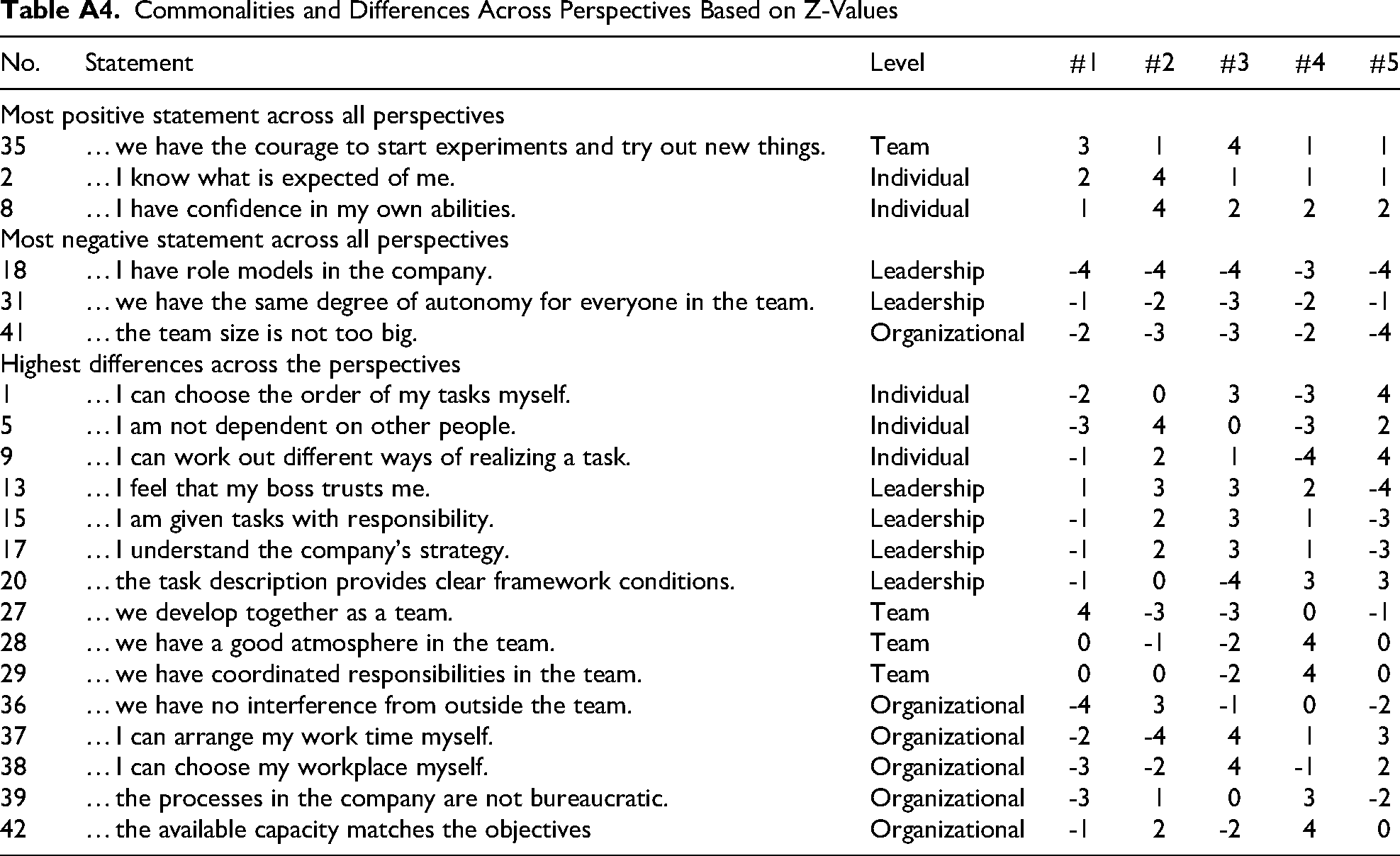
Although the five perspectives highlight different aspects of experienced autonomy, three universal aspects emerged: courage to experiment, transparency in expectations, and self-confidence in competencies. These statements received consistently positive Z-values, whereas rejection of role models, equal autonomy distribution, and small team sizes were consistently rated negatively (see Table A4). This pattern suggests a shared emphasis on individual and team-level factors, whereas organizational and leadership-level structural elements were seen as less central.
The convergence of these six aspects indicates meta-aspects of experienced autonomy that enable motivation across perspectives. The three positively rated aspects align with core agile values in the Scrum framework (Schwaber & Sutherland, 2020), particularly transparency, openness, and commitment. This alignment suggests that these aspects represent not just individual preferences but systemic requirements for experienced autonomy in self-organizing teams. Conversely, structural elements were perceived as background conditions over which individuals have limited influence. The rejection of role models reflects a preference for horizontal, collaborative problem-solving over hierarchical authority.
Overall, the small number of universally shared aspects underscores both common ground and substantial divergence across perspectives, highlighting that experienced autonomy combines shared systemic foundations with pronounced individual variation.
Differences Across the Perspectives
The comparison of participant characteristics suggests that roles and experience contribute to differences across perspectives, whereas company affiliation plays a minor role, as all perspectives include participants from multiple organizations. Further differentiation emerges from the most distinctive statements (see Table A4 in the Appendix at the end of the article).
At the individual level, perspectives range from high autonomy and creative freedom (innovation-driven) to structured execution with dependencies (clarity-seeking and task-centric), whereas team- and resource-oriented perspectives place less emphasis on individual discretion. Key differences concern dependencies on others and control over task sequencing and methods. Although both the resource-oriented and task-centric perspectives value structure, the former frames tasks within broader goals, whereas the latter focuses on bounded task execution, resulting in a smaller scope for planning and overall development.
At the team level, perspectives reflect different interpretations of the relationship between the individual and the team. Team-oriented individuals derive autonomy through collective empowerment, innovation-driven individuals utilize team support to enhance their individual creativity, and task-centric individuals view teams as helpful but not central. Team development is particularly salient for the team-oriented perspective, whereas coordinated responsibilities and atmosphere matter most for the resource-oriented perspective. These variations illustrate differing degrees of relational embeddedness across perspectives.
Despite these differences, the team level exerts a medium-to-strong influence across all perspectives, with the team-oriented perspective accounting for the greatest variance. This underscores the importance of relatedness in shaping experienced autonomy, however, in different forms.
Leadership reveals the most differentiated pattern. Perspectives range from preference for directive, structure-oriented leadership (clarity- and resource-oriented) to empowering, autonomy-supportive leadership (innovation-driven and task-centric), and collective boundary-setting leadership (team-oriented). For example, trust in leadership and strategic alignment are least relevant for the task-centric perspective but central for the innovation-driven perspective. These contrasts suggest that leadership effectiveness in agile teams requires adaptive approaches rather than standardized empowerment models.
Organizational constraints, including flexible work policies and resource allocation, show similarly divergent effects. Structural autonomy functions as a baseline condition: its presence is taken for granted, whereas its absence is demotivating. While innovation-driven individuals advocate broad flexibility, clarity-seeking individuals prefer bounded frameworks, and team-oriented individuals prioritize team-level empowerment over structural discretion. Thus, organizational structures simultaneously provide common ground and generate friction across perspectives.
Overall, the analysis demonstrates that experienced autonomy is regulated across all four levels of the research model, with each level contributing differently depending on the autonomy perspective.
Discussion
The five perspectives on experienced autonomy revealed through Q methodology demonstrate that autonomy in agile project teams is neither universally perceived nor uniformly achieved through structural conditions. This study advances autonomy research in agile project teams by showing that experienced autonomy is not a uniform perception but a differentiated, multi-level phenomenon. Based on empirical evidence, it reconceptualizes autonomy as an experiential phenomenon rather than merely a basic need and adds to self-determination theory in the understanding of how autonomy relates to motivation. This shift suggests that existing research measuring autonomy on a spectrum from thwarted to satisfied may miss how a positive experience of autonomy can be designed in heterogeneous ways to meet diverse patterns of autonomy perspectives.
The study highlights four interconnected levels that frame experienced autonomy in agile project teams (Figure 2): individual, team, leadership, and organizational levels.
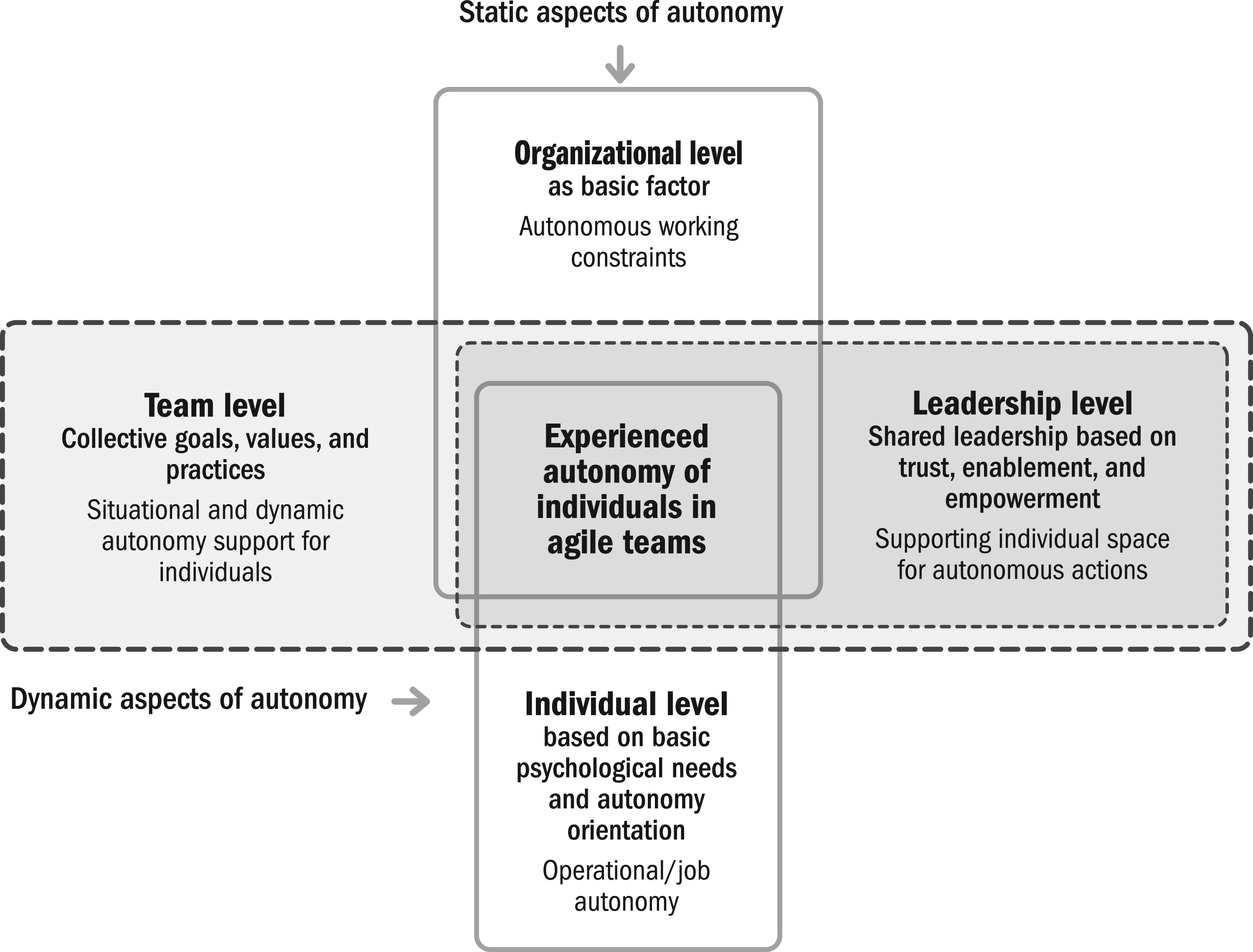
Levels framing the experienced autonomy of individuals in agile teams.
The individual level is grounded in fundamental psychological needs, as well as personal traits, values, and preferences. This forms the inner core of each individual’s experience of autonomy. Together with the organizational level, which includes established structures, policies, and cultural norms, these two levels create relatively stable, lasting frameworks that define the boundaries of experienced autonomy. This idea aligns with self-determination theory, which views individuals as actors within a context. They evolve gradually over time, providing static aspects that frame experienced autonomy.
In contrast, the team and leadership levels operate with greater fluidity, responding to immediate project demands, interpersonal dynamics, and shifting priorities. These levels adapt more situationally and, in the short term, represent dynamic aspects that actively reshape autonomy experiences through daily interactions, decision-making processes, and collaborative practices. As a specific aspect of agile project teams, the team level incorporates leadership through a strong orientation toward enabling individuals, empowerment, and shared leadership.
Individual Level
While the individual level provides a stable reference point for how autonomy is experienced, the findings demonstrate that individuals differ not only in how much autonomy they prefer, but in which forms of autonomy they find motivating. This relational view of autonomy adds to self-determination theory research the insight that autonomy satisfaction may be differently satisfied across perspectives while integrating the balancing of the dark side effects of autonomy. Further, the findings show that autonomy is experienced in qualitatively different ways even under similar structural conditions.
Consistent with prior research on job and task autonomy (Doblinger & Class, 2023; Hackman & Oldham, 1975) operational autonomy, such as control over task execution, emerges as a common motivational baseline. However, the five perspectives identified in this study reveal that operational freedom is valued differently: for some, it represents creative flexibility, whereas for others, autonomy is experienced through clear structures, permissions, or bounded task control. This extends the concept of autonomy orientation from self-determination theory by suggesting that autonomy orientations vary not only in degree but in qualitative form. In this sense, autonomy is not simply more or less satisfied but differently constituted across individuals and contexts. Furthermore, these findings refine the model of experienced autonomy proposed by Armbruster and Huemann (2025), by empirically illustrating how autonomy is enacted across interconnected individual, team, leadership, and organizational levels. Autonomy in agile project teams, therefore, emerges through continuous interaction across levels rather than through structural design choices that provide a given level of control.
A particularly important contribution concerns the role of learning and competence development. While self-determination theory highlights competence as a basic need alongside autonomy, project management research has examined less how autonomy and competence coevolve in agile contexts. Across perspectives, experienced autonomy is closely linked to opportunities to learn through task performance, indicating a developmental cycle in which autonomy enables competence growth, which in turn expands the scope for autonomous action. This highlights an important boundary condition: Granting autonomy without sufficient competence or guidance may undermine motivation and lead to anxiety rather than empowerment, especially for less-experienced team members.
At the same time, the findings point to potential negative consequences of experienced autonomy. The continuous negotiation across levels may demand significant emotional and cognitive effort, particularly in highly dynamic teams. Excessive or poorly supported autonomy can contribute to work overload, decision fatigue, or role ambiguity, especially when individuals are expected to self-regulate without adequate resources or alignment. These “dark side” effects suggest that autonomy-supportive environments require ongoing calibration and assessment of the conditions that foster autonomy in a positive way. This extends the emerging “dark side” literature on autonomy by specifying how these risks materialize in the lived experience of agile project teams. Further, this challenges universal approaches to empowerment in agile work and suggests that autonomy support must be less structural and more developmentally and role sensitive when supported at the team, leadership, and organizational levels.
Team Level
At the team level, the findings highlight a central contribution to project management research: Experienced autonomy in agile teams is a relational and collective phenomenon, not merely an individual action supported by the team. This challenges both traditional project management views of autonomy as individual freedom through granted authority and the predominantly individualistic conceptualization of autonomy needs in self-determination theory. While recent research demonstrates that autonomy affects performance and effectiveness, it treats autonomy primarily as a structural property of the team. In contrast, our findings show that autonomy is enacted and experienced through ongoing interaction among team members.
Across the five perspectives, team-based decision-making, shared goals, and collective development are experienced heterogeneously. This helps explain why identical team structures can be motivating for some individuals and constraining for others—a variance that prior quantitative studies have not sufficiently accounted for (Howard et al., 2021). Further, this shows that team autonomy simultaneously enables and constrains individual autonomy. Participation in collective decisions supports agency, whereas interdependence introduces obligation and alignment pressures. Rather than resolving this tension, agile teams sustain it, a pattern prior research suggests can foster creativity and adaptive performance (Grabner et al., 2022).
Additionally, the team level in agile project teams offers a responsive structure and security through iterative decision-making, revealing that structure enables rather than constrains autonomy. This reconceptualizes the autonomy-control dichotomy prevalent in project management research. Our findings suggest that in agile teams, well-designed structures such as iterative processes, fluid role coordination, and a sustained team atmosphere through reflection create a predictability that makes autonomous action motivating. However, the findings also indicate the need for ongoing balancing among creative expression and team objectives, individual capabilities and collective needs, and experimentation and technical constraints. This balancing act shows that experienced autonomy in team contexts involves tolerating tensions and reframing it from comfortable self-direction to effortful negotiation. The relational dynamic between structurally granted team autonomy and the team members’ experienced autonomy is not self-sustaining and requires ongoing recalibration.
Leadership plays a facilitating role in this dynamic, particularly in agile contexts characterized by shared or distributed leadership. Leaders contribute to experienced autonomy less through directive control and more by shaping decision-making arenas, maintaining boundaries, and supporting reflection. This helps sustain autonomy as a motivating force at the team level rather than allowing it to drift into isolation or work overload.
Leadership Level
The consistently low salience of leadership across all five perspectives constitutes a novel contribution to project management research, as it challenges dominant assumptions about the centrality of autonomy-supportive leadership practices such as empowerment and enablement (Nicklich et al., 2021). Prior research on agile leadership frequently positions it as a driver of autonomy through empowering behaviors, delegation, and vision setting. Our findings support that leadership is experienced as a distributed and embedded function that permeates team interactions rather than operating as a distinct hierarchical role. This highlights leadership as a relational process embedded in team dynamics.
In practice, distributed leadership manifests through everyday coordination activities such as facilitating decision-making discussions, clarifying boundaries when uncertainties arise, or temporarily assuming responsibility during critical moments. These leadership functions are enacted by different team members depending on role, context, expertise, and situational demands, reinforcing autonomy by enabling individuals to self-regulate rather than by directing action.
Leadership's low salience as a separate category may reflect its effective integration into team dynamics rather than its insignificance. Leaders in agile project teams remain accessible and responsive without imposing guidance prematurely. Thus, the leadership level is included within the team level in the model's visualization. The interpretations of low leadership salience cannot be resolved with the current data. However, the data suggest that effective leadership in agile contexts operates through conditional availability. From an autonomy perspective, leadership is experienced as supportive when interventions are timely and context sensitive, for example, when mediating conflicts, resolving decision deadlocks, or balancing team autonomy with external constraints. Conversely, misjudged or excessive intervention may be perceived as autonomy undermining (Hoda & Murugesan, 2016).
Leadership influence is experienced as autonomy supportive when leaders make themselves available for context-specific support without imposing it. This refines autonomy-supportive leadership theory by emphasizing temporal sensitivity and boundary management rather than behavioral empowerment alone. Such leadership is supported by organizational conditions that enable the balance of autonomy and alignment, empowering individuals to contribute their strengths, according to their autonomy perspective.
Organizational Level
At the organizational level, the findings show that enduring structural conditions set the outer boundaries of experienced autonomy in agile project teams, consistent with prior research (Meier & Kock, 2023). Prior studies on agile organizations have emphasized structural empowerment, flexible work arrangements, and decentralized decision-making as mechanisms to enhance autonomy. In contrast, these structures, such as technical permissions, mobile work arrangements, and flexible scheduling, function as baseline enablers in this study—their presence is taken for granted, whereas their absence or restriction creates acute awareness and demotivation. For example, limited system access, rigid approval processes, or mandatory on-site requirements were described as directly constraining individuals’ ability to act autonomously, particularly for developers who depend on technical permissions to execute tasks efficiently.
Importantly, identical organizational policies are experienced differently across perspectives and roles. Flexible work arrangements may be enabling for some, whereas others experience them as insufficient or even limiting, depending on role requirements, prior experiences, and task interdependencies. Autonomy-supportive policies do not operate uniformly but are filtered through role-specific and experiential conditions. This adds to research highlighting the paradoxical effects of autonomy, where flexibility can simultaneously enable and entrap (Mazmanian et al., 2013). However, this study extends that paradox by showing how these contradictory effects are distributed across distinct autonomy perspectives within the same organizational setting.
Further, critical boundaries of autonomy are revealed through structural elements, such as team size, external interference, and resource alignment, which are perceived as relatively fixed conditions that individuals must navigate rather than influence. These organizational constraints remain beyond team discretion, demonstrating that project and team autonomy exists within, and must be negotiated against, broader contextual constraints (Martinsuo & Lehtonen, 2009; Ravn et al., 2022; Willems et al., 2020).
Taken together, the organizational level represents the most structurally persistent layer of experienced autonomy, simultaneously enabling action by providing baseline conditions and constraining it by setting nonnegotiable boundaries. While self-determination theory emphasizes individuals as agents within context (Ryan & Deci, 2017), our findings show that all four levels define the practical boundaries within which autonomy can be experienced and negotiated.
Contributions, Limitations, and Future Research
This research reveals that experienced autonomy among individuals in agile project teams is not a universal concept but rather a nuanced, subjective experience. The findings show that a motivating experience of autonomy is formed through collective interdependence rather than solely individual independence. Thereby, individuals’ perceptions were clustered into perspectives using Q methodology, revealing how experienced autonomy is perceived as a motivator within agile project teams. The study reveals that individuals’ experience of autonomy in agile teams is a dynamic, context-dependent construct, regulated at four levels: individual, organizational, team, and leadership.
Contributions
This study advances autonomy research in project management by conceptualizing autonomy in agile project teams as a subjective, experienced phenomenon shaped by interacting individual, team, leadership, and organizational levels. This study demonstrates that autonomy is not a structural feature of agile work but is experienced in qualitatively different ways by individuals within the same project team. By identifying five distinct perspectives on experienced autonomy, the study extends existing project management research on motivation and autonomy in agile teams by showing that autonomy-supportive practices are not uniformly perceived. Instead, the findings suggest that autonomy in project environments must be understood as a multilevel and perspective-dependent construct. This contributes to debates on team composition, role design, and leadership in projects based on an agile approach.
Building on these project management insights, the study contributes to self-determination theory by conceptualizing autonomy not only as a basic psychological need but as an experiential construct regulated across interconnected organizational levels. In doing so, it empirically supports the definition of experienced autonomy proposed by Armbruster and Huemann (2025) and extends motivational profiles based on the self-determination continuum (Howard et al., 2021) by outlining how different contextual aspects shape individual autonomy experiences. The identification of five autonomy perspectives further suggests that autonomy orientation may be more differentiated than currently reflected in the causality orientation framework.
In addition, the study offers an instrumental contribution by providing a validated set of autonomy-related statements that can be used as a research tool to assess experienced autonomy in agile project environments, enabling future comparative and longitudinal studies.
For practice, this research enhances individuals’ awareness of autonomy, making them more conscious of their individual perspectives on autonomy. Practical implementation could include performing perspective assessments during team formation or adjusting retrospective formats to discuss autonomy perspectives. This opens a dialogue for the team to explore the similarities and differences among its members, promoting understanding and improving cohesion and teamwork. At the leadership level, the findings indicate that autonomy support should be perspective adaptive: team-oriented individuals benefit from boundary-setting leadership that enables collective decision-making; clarity-seeking individuals require clear expectations and regular alignment; innovation-driven individuals benefit from strategic vision with fewer operational constraints; resource-oriented individuals require structure that supports efficient workflows; and task-oriented individuals benefit from accessible guidance with clear task boundaries. At the organizational level, the results suggest that autonomy-supportive environments should be designed as flexible systems rather than standardized frameworks, using guiding principles and boundary conditions that allow teams and leaders to calibrate autonomy support according to contextual and individual needs.
Limitations and Future Research
The Q-sorting process presented practical challenges. The 43-statement set caused cognitive overload for some participants, with a few reporting a loss of focus during sorting. The group setting encouraged participants to discuss their decisions and share their thoughts on specific organizational structures. However, conducting Q-sorts in a group setting can also lead to social pressure through team dynamics, which might have limited the depth of reflection during the sorting. The risk of organizational bias is less apparent in the results, as the participants from the five organizations represent all perspectives; however, including more diverse organizations could further reduce this bias. Still, selecting companies as German knowledge-intensive organizations that use agile work practices limits the study's generalizability because of their specific cultural and organizational contexts.
The interpretation of Q-sorts and perspective clustering relies on subjective analysis by the researchers, which can introduce bias. While several analytical criteria supported a four- or five-factor solution, alternative interpretations remain possible. The qualitative analysis of perspectives, though based on distinguishing statements and participant interviews, reflects the researchers’ theoretical frameworks and may miss subtle nuances. Additional theoretical perspectives on autonomy, drawing on psychological, organizational, and philosophical research, could offer additional lenses for interpretation.
Additionally, participants varied in their comfort with abstract thinking, which may have unconsciously influenced their sorting patterns. Some also struggled to differentiate between autonomy as a motivator and autonomy as well-being, as they were reminded of these concepts during the sorting. Since some Q-sorts were not significantly associated with any factors and were therefore excluded, these limitations may also be naturally addressed during the analysis. Nevertheless, the focus on work-related autonomy may overlook important dynamics of work-life boundaries. While flexible work arrangements emerged as polarizing, the study did not systematically examine how personal life circumstances interact with workplace autonomy needs.
Three priority areas emerge for future research. First, and most immediately, research may explore how individuals navigate tensions perceived within and between perspectives, and how they collaborate as an agile project team. Second, future research could conduct experiments using autonomy-supportive interventions to investigate how agile practices support multiple perspectives and to examine the effects of routinization. Third, longer-term investigations could explore the implications for personal and career development, and for team composition, based on the analysis of the development of experienced autonomy over time. This could be addressed in a longitudinal study across different project phases and within various organizational contexts. Future studies can deepen our understanding of autonomy as a dynamic and context-dependent phenomenon.
Notice: Use of AI
In this article, GenAI (Claude.ai and Grammarly) is used to ensure the accuracy and quality of the English language.
Footnotes

Funding
The author(s) received no financial support for the research, authorship, and/or publication of this article.
Declaration of Conflicting Interest
Author Biographies
Appendix. Q-Methodology Supporting Materials and Statistical Outputs
Commonalities and Differences Across Perspectives Based on Z-Values
| No. | Statement | Level | #1 | #2 | #3 | #4 | #5 |
|---|---|---|---|---|---|---|---|
| Most positive statement across all perspectives | |||||||
| 35 | … we have the courage to start experiments and try out new things. | Team | 3 | 1 | 4 | 1 | 1 |
| 2 | … I know what is expected of me. | Individual | 2 | 4 | 1 | 1 | 1 |
| 8 | … I have confidence in my own abilities. | Individual | 1 | 4 | 2 | 2 | 2 |
| Most negative statement across all perspectives | |||||||
| 18 | … I have role models in the company. | Leadership | -4 | -4 | -4 | -3 | -4 |
| 31 | … we have the same degree of autonomy for everyone in the team. | Leadership | -1 | -2 | -3 | -2 | -1 |
| 41 | … the team size is not too big. | Organizational | -2 | -3 | -3 | -2 | -4 |
| Highest differences across the perspectives | |||||||
| 1 | … I can choose the order of my tasks myself. | Individual | -2 | 0 | 3 | -3 | 4 |
| 5 | … I am not dependent on other people. | Individual | -3 | 4 | 0 | -3 | 2 |
| 9 | … I can work out different ways of realizing a task. | Individual | -1 | 2 | 1 | -4 | 4 |
| 13 | … I feel that my boss trusts me. | Leadership | 1 | 3 | 3 | 2 | -4 |
| 15 | … I am given tasks with responsibility. | Leadership | -1 | 2 | 3 | 1 | -3 |
| 17 | … I understand the company's strategy. | Leadership | -1 | 2 | 3 | 1 | -3 |
| 20 | … the task description provides clear framework conditions. | Leadership | -1 | 0 | -4 | 3 | 3 |
| 27 | … we develop together as a team. | Team | 4 | -3 | -3 | 0 | -1 |
| 28 | … we have a good atmosphere in the team. | Team | 0 | -1 | -2 | 4 | 0 |
| 29 | … we have coordinated responsibilities in the team. | Team | 0 | 0 | -2 | 4 | 0 |
| 36 | … we have no interference from outside the team. | Organizational | -4 | 3 | -1 | 0 | -2 |
| 37 | … I can arrange my work time myself. | Organizational | -2 | -4 | 4 | 1 | 3 |
| 38 | … I can choose my workplace myself. | Organizational | -3 | -2 | 4 | -1 | 2 |
| 39 | … the processes in the company are not bureaucratic. | Organizational | -3 | 1 | 0 | 3 | -2 |
| 42 | … the available capacity matches the objectives | Organizational | -1 | 2 | -2 | 4 | 0 |