







Abstract
Scaffolds for bone tissue engineering are highly porous materials having interconnected and homogeneously distributed pores to facilitate the formation of new bone tissue. At the same time, appropriate mechanical strength is required in the scaffolds to withstand stresses in the in vivo environment. The space holder method has been used to fulfil these contradictory requirements in the fabrication of titanium scaffolds. Space holding particles are mixed with titanium particles then removed before or during sintering, to leave pores in the scaffolds. Despite its importance, the removal of space holders has rarely been studied. In the present study, removal by water leaching was investigated. Leaching was characterised using a novel real-time measurement technique adopted from ASTM B963-08 that achieved precise scaffold weight loss data reflecting the removal of space holding particles. The acquired data fit existing solvent debinding models for powder injection moulded parts, allowing the mechanism involved during water leaching to be determined.
In recent years, tissue engineering has been increasingly used as an alternative approach in bone reconstruction. In this approach, the formation of new bone tissue and vascularisation are facilitated by a synthetic ‘scaffold’ implant. 1 The scaffold is designed with an architecture of interconnected and homogeneously distributed pores, favourable for bone cell growth and transport of nutrients and oxygen.2,3 At the same time, appropriate mechanical strength is required of the bone tissue scaffold, to withstand stresses in the in vivo environment. To fulfil these two requirements, titanium has been chosen as a preferred material for scaffolds because of its excellent mechanical properties and biocompatibility.4,5
Traditional powder compaction and sintering is a well established method suitable for the fabrication of titanium scaffolds.4,5 With this method, however, the pore architecture is determined by the arrangement of titanium particles after compaction and sintering; the maximum porosity level achievable 6 is 35% and pore shape and size is dependent on the shape and size distribution of the initial titanium particles.6,7 The pore sizes of 100–500 μm required to promote bone cell development and growth into scaffolds, 4 are difficult to achieve by powder compaction and sintering. 8
To overcome these limitations, the space holder method has been introduced as a complement to compaction and sintering. 9 Titanium and space holding particles are mixed and compacted to create a scaffold preform. Space holding particles are then removed either before or during sintering, leaving additional pores in the titanium scaffold preform. Sintering is performed at the end of the scaffold fabrication chain to enhance bond strength between titanium particles. In this way, porosity and pore geometry can be controlled by adjusting the volume fraction and geometry of space holding particles embedded in the titanium matrix.
Space holder removal is of critical importance, because it determines the final pore characteristics, structural integrity and purity of the scaffold. Both heat treatment and water leaching have been reported as methods for space holder removal in the fabrication of titanium scaffolds.10,11 Water leaching is, however, preferred on grounds of environmental impact.12,13 Space holder removal by water leaching is rarely reported in the open literature, largely because information on the testing procedures and leaching behaviour is considered proprietary.
The aim of the present study was to characterise space holder removal by water leaching in the preparation of biomedical titanium scaffolds. Characterisation was performed using a novel real-time weight measurement technique based on ASTM B963-08. In earlier studies, space holder removal by water leaching was investigated through weight loss measurement on scaffold preforms dried after immersion.12,14,15 The results obtained were, however, of limited accuracy since weight loss measurements could be taken only every 10–30 min.12,14,16–18 Handling during drying and weighing after extraction from the water reduced the structural integrity and in some cases even destroyed the scaffold preform. 12 In addition, drying at temperatures of 40–110°C for 0·5–6 h12,14,15 was time consuming and may lead to inaccuracies from the evaporation of residual water together with dissolved space holder. The real-time weight measurement technique developed in the present study allows accurate measurement of the weight losses of scaffold preforms resulting from leaching. The results were then verified against existing models for solvent debinding of powder injection moulded parts. The effect of space holder volume fraction and the mechanisms operating during leaching and removal of carbamide space holding particles have been established.
Materials and methods
A gas atomised grade 1 titanium powder (TLS Technik GmbH & Co., Germany), of spherical shape and size distribution 63–90 μm, and a cubic carbamide powder (Merck, Germany), of particle size 250–710 μm, were chosen for matrix and space holder materials respectively. The volume fraction of carbamide space holding particles was varied from 38 to 60%. A binder solution was prepared by dissolving 4 wt-% polyvinyl-alcohol (PVA) particles (Alfa Aesar GmbH & Co KG, Germany) in water at 80–90°C. The titanium and carbamide particles were mixed in a cylinder mixer for 2 h. Stepwise particle filling of a mixing container was conducted with 1 vol.-% binder solution. Carbamide particles only and granules of carbamide particles surrounded by smaller titanium particles resulting from mixing were cold-compacted in a single-action uniaxial press (Carver Inc., USA) under a pressure of 400 MPa and held at that pressure for 5 min. Carbamide compacts and scaffold preforms with a diameter of 12 mm and a height of 3–5 mm were used for immersion and leaching tests.
The experimental set-up for the leaching tests based on the ASTM B963-08 standard is shown schematically in Fig. 1. The scaffold preform was immersed in 250 mL distilled water at room temperature (21°C), supported by a basket with a mesh structure that allowed carbamide space holding particles to leach out from all surfaces of the scaffold preform. Non-corrosive wires and frame were used to connect the basket to a weight balance (Denver Instrument, AA-160, USA). The leaching tests were carried out in triplicate for each group of the scaffold preform.
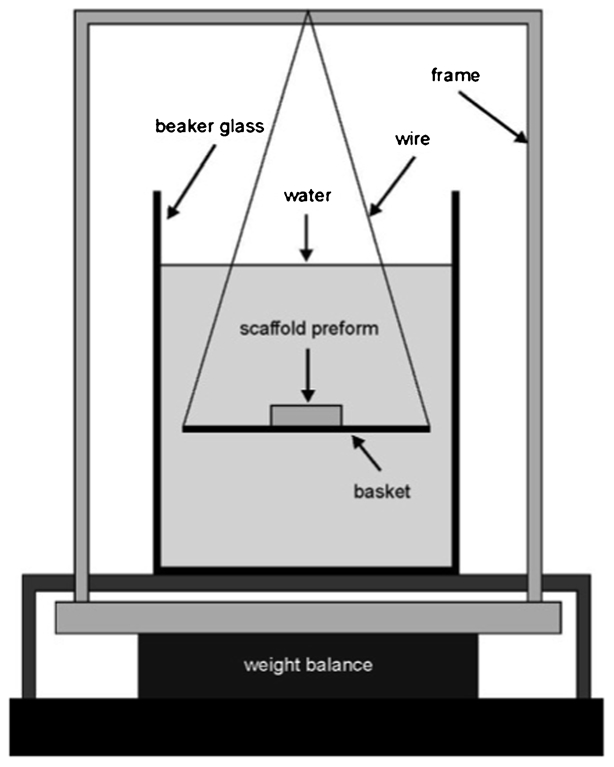
Schematic illustration of experimental setup
The initial weight of the scaffold preform in water W0,w was calculated as

 is the initial weight of scaffold preform in air and
 and
and
 are the density of water and scaffold preform respectively. The density of the scaffold preform consisting of titanium matrix particles and space holding particles was calculated as

 and
and
 are the densities of titanium matrix and carbamide space holding particles (4·5 and 1·32 g cm–3 respectively) and x is the space holder volume fraction in the scaffold preform.
Space holder removal was quantified by measuring the weight of the preform after time t of immersion
 , which was expressed as the relative weight

The leaching behaviour of the space holder could also be expressed quantitatively as the fraction of removed space holder during immersion
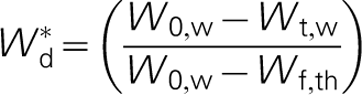
 , the expected final weight of the scaffold preform after complete removal of the space holder, is given by

The space holder removal efficiency was determined from the percentage of removed space holder at saturation.
Mathematical models
The space holder removal process by water leaching is in principle similar to solvent debinding during production of powder injection moulded parts. Hence, the existing solvent debinding models were applied in this study to evaluate and determine possible mechanisms operating during the leaching process of space holding particles. The existing solvent debinding models used in this study are the modified Lin–German model 19 and the square-root debinding model.20,21
Lin and German
19
developed a solvent debinding model based on Fick's law in one dimension, in which F, the fraction of remaining binder or space holder in the component (i.e.
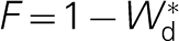 ), is described as
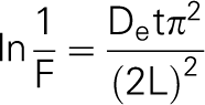
In this case, t and De are the debinding or leaching duration and the effective diffusion coefficient respectively and L is the shortest distance travelled by the dissolved binder or space holder from the symmetry plane to the surface of the component. This model was modified by replacing L with an effective length scale ψ in three-dimensional cases
19
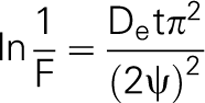
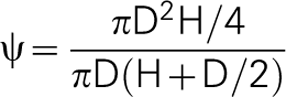
Kim et al.
20
proposed that the weight fraction of the binder
 removed from powder injection moulded parts is proportional to square-root of debinding time

A similar model was also developed by Krauss et al.
21
Both models were developed for one-dimensional conditions and are here adapted by replacing L by ψ to give for the three-dimensional case

Results and discussion
The influence of the PVA binder solution on the dissolution of carbamide particles was studied through weight loss measurement of carbamide compacts during water immersion. Rapid removal of carbamide can be seen in Fig. 2a, confirming the high solubility of carbamide particles in water reported by Salman. 22 In contrast, only ∼20 wt-% of the PVA compact was dissolved in water over a total immersion period of 10 min. The carbamide compact with an addition of 4 vol.-% PVA binder showed significant retardation of dissolution; the binder solution coated the carbamide particle surfaces and acted as a barrier to contact with water. The removal of carbamide particles from titanium scaffold preforms by water leaching is indicated in Fig. 2b. Greater weight loss occurred for scaffold preforms with a larger space holder volume fraction. However, the characteristics of space holder removal by water leaching were difficult to analyse from this plot, considering the remaining titanium matrix.
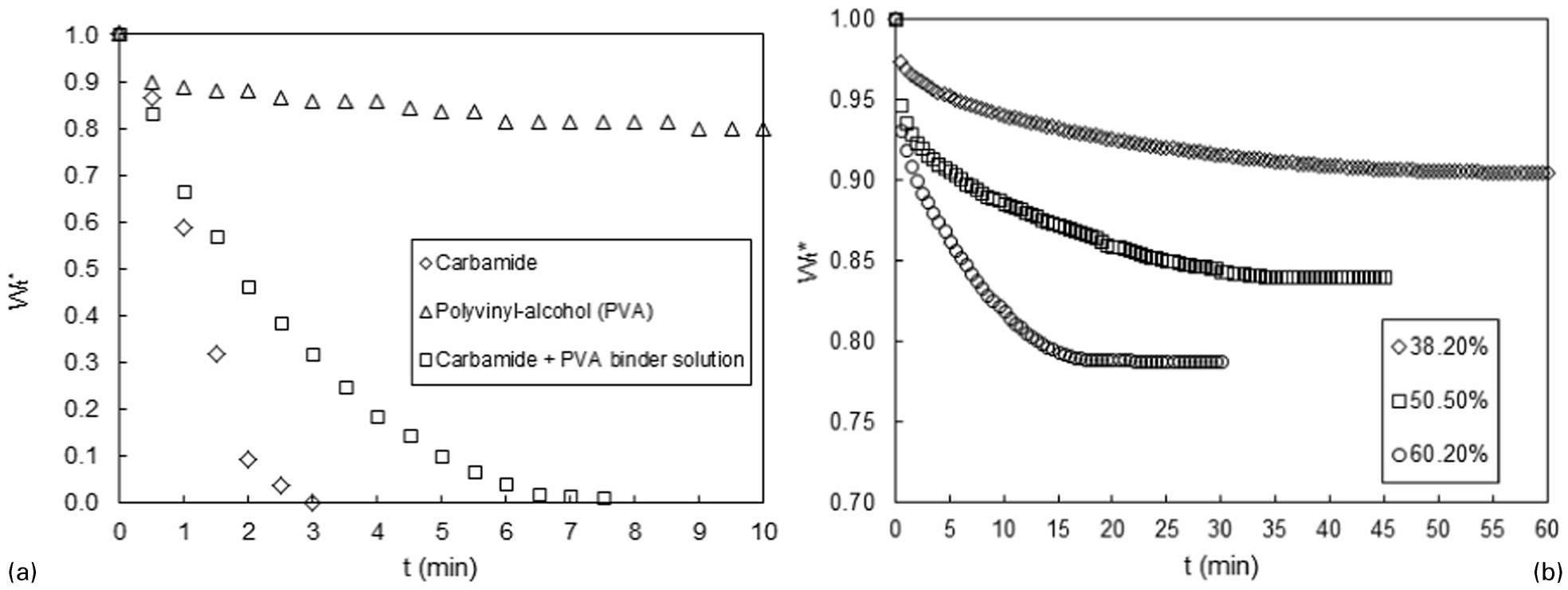
Measured weight losses of a carbamide and PVA compacts; b titanium scaffold preforms in water
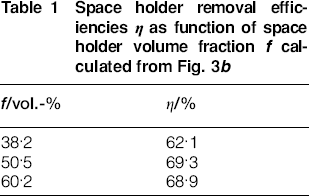
The weight loss data of the scaffold preforms are plotted according to the modified Lin–German and square-root solvent debinding models in Figs. 3 and 4. It is obvious in Fig. 3 that space holder removal rate increases with increasing volume fraction of space holder in the scaffold preform. From Fig. 3b, the efficiency of space holder removal by water leaching η can be determined from the maximum fraction of carbamide particles removed from the preform (Table 1). A higher space holder removal efficiency was found with greater volume fraction. Although the removal efficiency of the 50·5 vol.-% preform was slightly greater than that of the 60·2 vol.-% prefrom. It is, however, important to note that saturation of the leaching process of the 60·2 vol.-% preform occurred more quickly, indicating a higher space holder removal rate.
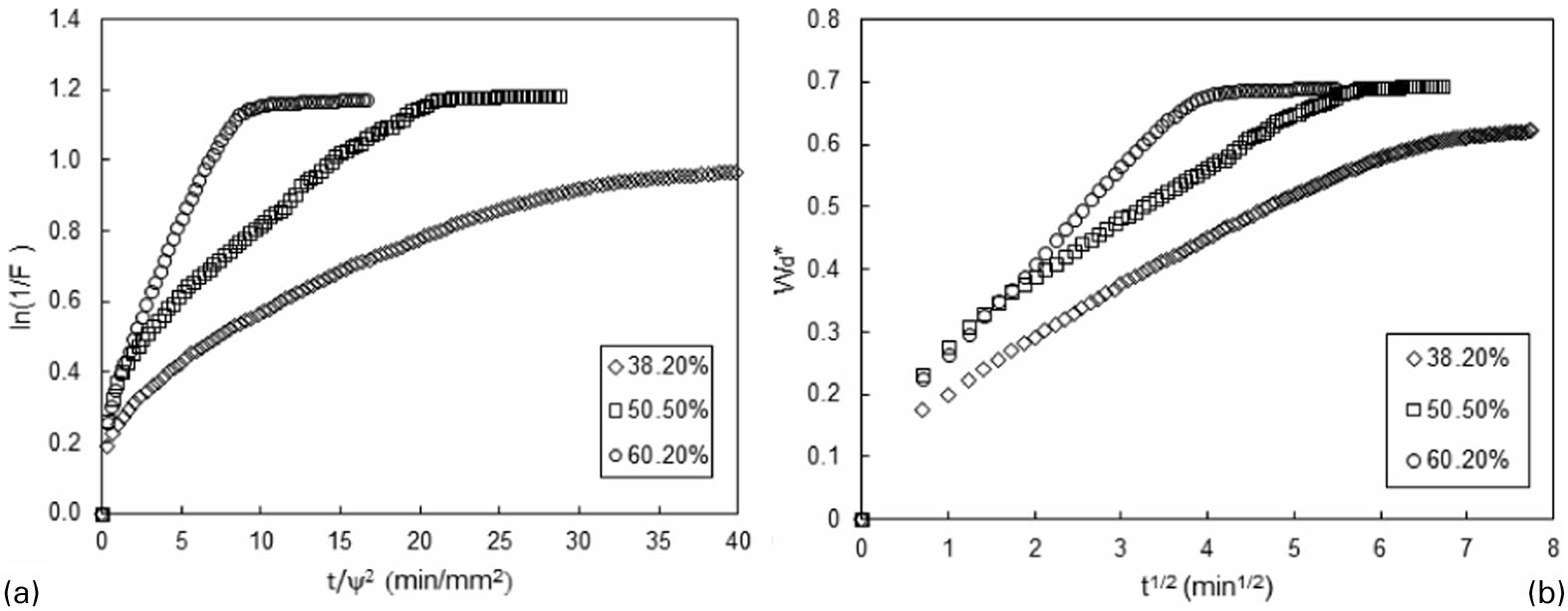
Plots of leaching data for carbamide space holder in scaffold preform with various space holder volume fractions: a modified Lin–German model; b square-root model
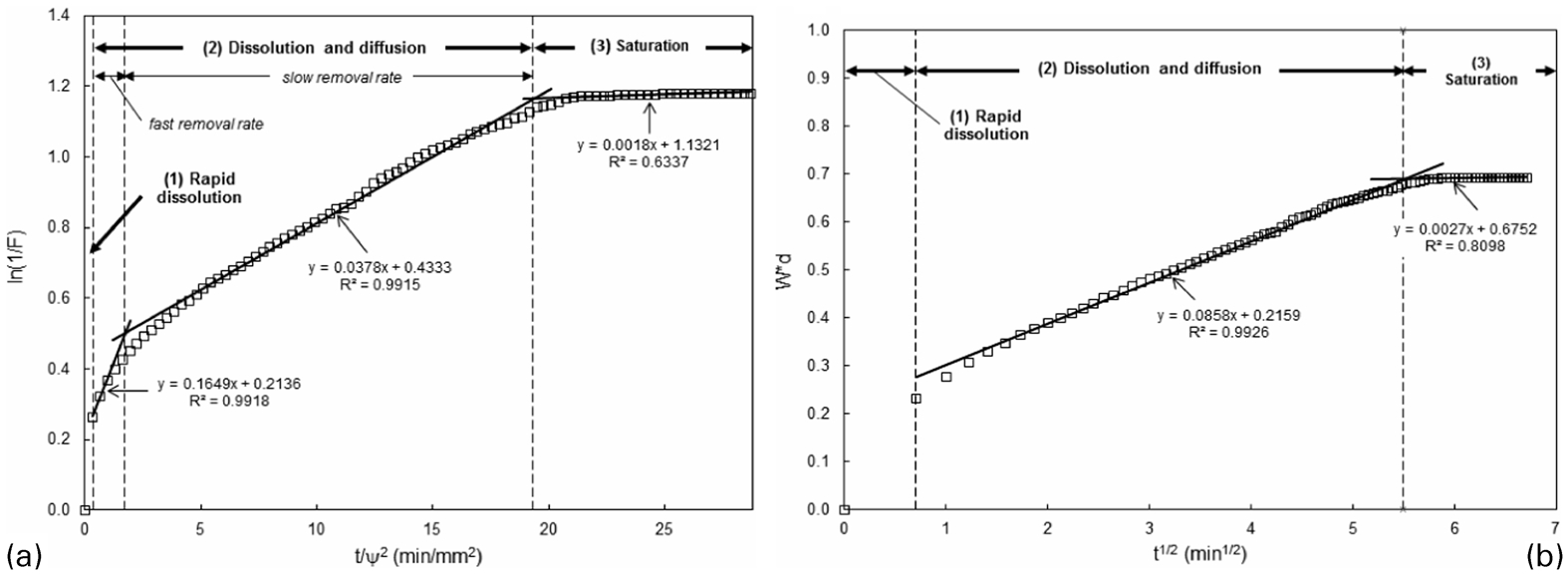
Regression plots of leaching data for scaffold preform with 50·5 vol.-% space holder according to: a modified Lin-German model; b square-root model
Space holder removal efficiencies η as function of space holder volume fraction f calculated from Fig. 3b
From the regression plots in Fig. 4, the mechanisms involved in the leaching of carbamide particles could be assessed for both models. The regression lines showed R2 values close to 1 in both cases. The intersections of the extended regression lines were used to determine transitions of regime during the leaching process. Three primary regimes were recognised: (1) rapid dissolution control, (2) dissolution and diffusion control and (3) saturation. The rapid dissolution regime corresponds to the immediate removal of carbamide particles at the surface of the preform on immersion in water. In this regime, openings are formed at the surface of the scaffold preform. As a consequence, water can penetrate further to dissolve carbamide particles and form interconnected pores in the interior of the scaffold preforms. According to the modified Lin-German model, the dissolution and diffusion regime could be subdivided further into regions with fast and slow removal rates. In the square-root model, however, the transition from fast to slow removal rates was not observed.
Effective diffusivities De in the leaching process of carbamide space holder determined from the data in Fig. 4 are given in Table 2. Use of the modified Lin-German model resulted in slightly higher De values than use of the square-root model. However, both models indicated increasing De values with increasing space holder volume fraction. This implies that at greater fractions of space holder more channels and interconnected pores were formed in the scaffold preform, which resulted in increased water diffusivity. With the modified Lin–German model, a transition from fast to slow removal rates in the scaffold preforms was identified, except for the preforms with 60·2 vol.-% space holder.
Effective diffusivities of carbamide space holding particles in scaffold preforms during leaching
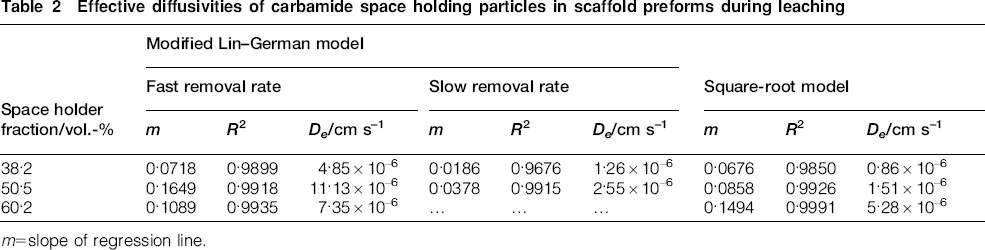
m = slope of regression line.
Conclusions
Space holder removal by water leaching in the fabrication of biomedical titanium scaffolds was investigated using a novel, high accuracy weight measurement technique.
The mechanisms of space holder removal by water leaching have been determined based on two existing solvent debinding models for powder injection moulded parts. Three primary regimes for leaching of carbamide particles from the titanium scaffold preforms were identified: rapid dissolution; dissolution and diffusion; and saturation.
Higher effective diffusivity values and space holder removal efficiency in the leaching process were found in the scaffold preforms with greater space holder volume fraction.
Footnotes
Acknowledgements
This work was performed as part of the first author's PhD project at Delft University of Technology, The Netherlands, with financial support from Directorate General of Higher Education, Ministry of Education and Culture, Republic of Indonesia. This paper is based on a presentation at Euro PM 2013, organised by EPMA in Gothenburg, Sweden on 15–18 September 2013.