






Abstract

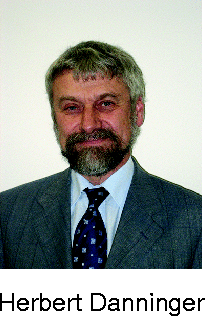
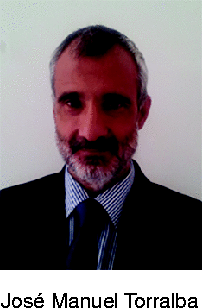
It is with pleasure that we, Jose Manuel Torralba from Universidad Carlos III de Madrid and IMDEA Materials Institute, Getafe, Spain, and Herbert Danninger from Technische Universität Wien, Austria, write our inaugural editorial for Powder Metallurgy, having succeeded Graham Schaffer as joint Editors on 1 November 2014. Graham, formerly professor and Dean of Engineering at the University of Queensland, Brisbane, Australia, and now Pro-Vice Chancellor at La Trobe University, Melbourne, served as editor of the journal from 2010 to October 2014.
We wish to thank Graham for his engaged and tireless work as a critical and quality-minded Editor that has further established Powder Metallurgy as the internationally leading scientific journal in the field of powder metallurgy. As have the previous editors of the journal, Graham consistently kept his focus on maintaining a high standard of the articles published in Powder Metallurgy, and it will be our objective to maintain this scientific-technical level. This of course means strict quality requirements for the submissions, established by peer review by at least two reviewers and also a look by us, the Editors. Therefore we have to ask all current and prospective authors for their understanding that this approach may imply rejecting or asking for major rewriting of submissions if the reviewers have recommended accordingly. This is ‘part of the game’ in the scientific world, and we encourage authors not to be discouraged by critical remarks but to rewrite their manuscript following the reviewers‘ reports. Peer review is the basis of scientific publishing and the only way to attain and maintain top quality of publications as can be expected from a journal like Powder Metallurgy.
In this context we also want to thank the reviewers who have done an excellent job in the past. All of us – authors, editors and publishers – know that reviewing of submitted manuscripts has to be done by our reviewers in addition to their daily workload, which is already very heavy regardless of whether the reviewers are working at academic establishments, research institutes or the industry. Therefore we appreciate the careful and elaborate work they have been doing, and we hope they will continue to do so in the future and thank them in advance for their efforts, for the benefit of Powder Metallurgy and its scientific-technical standard.
Powder Metallurgy is a journal that covers all aspects of the technology its name is derived from. This includes the various processing steps, from powder production to the various consolidation techniques such as die and isostatic compaction, as well as pressureless, pressure-assisted and field-assisted sintering mechanisms and processes, as well as the large group of secondary and finishing operations. There are, however, also maturing technologies, such as metal injection moulding, and the rapidly growing range of additive manufacturing techniques, many of which are based on the use of metal powders and therefore definitely can be included within the term ‘powder metallurgy’ and thus in our journal.
Powder Metallurgy is, however, open not only to the different techniques and processing steps of powder metallurgy but also to contributions ranging from fundamental research to application-oriented R&D and also to industrial practice and PM applications. It is this wide scope that enables the journal to serve the entire PM community, thus also enhancing interdisciplinarity within the different aspects of PM. We welcome submissions on applications of PM in developing, ‘non-traditional’, sectors such as biomaterials and energy materials.
In contrast to former days, it is usually not a problem today for us, as members of the scientific community, to find that literature we are specifically looking for. A journal such as Powder Metallurgy also gives you the chance to find literature you have not been looking for but which is interesting to you anyhow. There is no doubt that PM has become more and more specialised, into hardmetal experts, ferrous PM specialists or MIM technologists, and all these are top quality in their fields; but they should not forget that other branches of PM also make progress and have interesting developments to offer. The benefit of Powder Metallurgy compared to an internet literature survey is the chance to learn about progress in PM as a whole. Therefore our recommendation is to take time to have at least a short look at each article contained in a new issue of Powder Metallurgy; learning from one another is a ‘must’ also in PM. This holds, however, not only for the recent literature: from our own experience we can confirm that it pays off to browse through older issues of Powder Metallurgy: you always find some interesting articles you would not have expected. To support the dissemination of information from this earlier work, Maney has now digitised all the remaining issues of the journal, back to 1958; these issues are now available online, making the work of PM pioneers readily accessible.
Powder Metallurgy is also the official scientific organ of the European Powder Metallurgy Association. Both of us have been active in the EPMA and its working groups more or less since the founding of the association, and we therefore regard a close cooperation with EPMA both necessary and easy. We are also pleased that the journal's sponsorship of the EPMA Keynote Awards will continue in 2015.
One of us – JMT – has been the chairman of the EPMA Education and Training Committee for many years and also the organiser of the EPMA Summer Schools, and both of us have been teaching PM at universities for many years. From this background we are highly interested in addressing the young members of the PM community, both as readers and also as authors. Therefore our special welcome goes to the ‘emerging powder metallurgists’, those who are doing their master's or PhD thesis in PM or have just started to work in the PM industry. Since a lot of innovative work on PM is done within academic theses, we would be happy to publish such work in Powder Metallurgy, positive reviewing anticipated. The impact factor of Powder Metallurgy may not be as high as that of other materials-related journals with a more general approach, but on the other hand when publishing in Powder Metallurgy you can be sure to directly address those persons who read the article with deep understanding, i.e. the members of the PM community.
Last, but not least, we want to thank the Institute of Materials, Minerals and Mining (IOM3) for its confidence in us and the publisher, Maney, in particular Mark Hull and his team, for their excellent work and for their support which has made it easy for us to get accustomed to our tasks as Editors and to introduce us to the editorial aspects of the manuscript processing system; handling this tool is also part of the job.
We are looking forward to a fruitful cooperation with IOM3 and Maney Publishing, as well as with you as readers, reviewers and authors, for the benefit of the journal and our common interest, powder metallurgy.