







Abstract
Utilising an institutional, inter-organisational and inter-personal framework, longitudinal qualitative data are used to examine the changing nature of state–voluntary sector relationships in the area of social care outsourcing and its implications for the terms and conditions of those employed by Scottish voluntary organisations. Over the period 2002 to 2008/09, against the background of funders seeking to pass on efficiencies to voluntary organisations, these relationships have become increasingly cost-based and ‘arm's-length’. This has been accompanied by downward pressure on staff terms and conditions, which are intensifying because of more draconian public expenditure cuts. Consequently, voluntary sector employers are increasingly converging on an employment model based on low pay and more limited access to sickness, pension and other benefits that is informed strongly by narrow financial logics.
Introduction
In an era of increased outsourcing of goods and services to external suppliers, attention has been paid to the implications this has for employees within supplier/provider organizations (Marchington et al., 2005; Rubery et al., 2003). This research has shown such implications to vary considerably. It has further revealed them to be contingent on the nature of the relationships between purchasers and providers that are themselves shaped by a range of inter-related institutional, inter-organizational and inter-personal factors (Marchington & Vincent, 2004: Vincent, 2005).
Much of this research, despite its value, has been located within a fixed point in time, thereby limiting our understanding of the dynamics of change within the institutional, inter-organizational and inter-personal arenas. More particularly, it means that we have limited understanding of how these three dimensions of interorganizational relations change during periods of economic and regulatory shocks and subsequently impact on employment conditions, especially in supplier firms.
This article seeks to shed light on these gaps in our knowledge through an exploration of one of the most significant areas of outsourcing growth, both in the UK and overseas; namely, the transference of public services delivery to voluntary organizations. It does so by drawing upon longitudinal qualitative research undertaken in Scottish voluntary organizations between 2002 and 2008/09 to explore the following questions.
How (and why) have state-voluntary sector outsourcing relationships been changing over the past decade, including during the current era of public sector financial austerity?
In what ways have voluntary organizations sought to adapt to the changes taking place?
What has been the impact of these changes on the terms and conditions of employment of those working in voluntary organizations?
Findings from the first phase of research revealed how voluntary organizations existed along a continuum encompassing varying combinations of ‘arm's-length’ and obligational elements. This variation was, in turn, associated with differences in their ability to protect terms and conditions of employment from the cost-saving tendencies of the New Public Management (NPM) based quasi-market in care. Later phases of the research, however, illustrated that changing inter-organizational relations driven by austerity and retendering were leading to the imperatives of cost savings subverting institutional mechanisms that previously favoured the construction of obligational relations between the parties. As a result, the boundaries between organizations along the ‘arms-length’ (short-term, insecure funding, cost-based relations) — obligational (joint, mutuality-based, partnership working, less emphasis on measurement, a greater acceptance of non-specific outcomes and relatively high levels of funding security) spectrum were beginning to erode, with even previously relatively secure voluntary organizations converging around employment regimes based on low pay, and the erosion of other terms and conditions of employment.
What follows is divided into five main sections. In the first, we outline the institutional, inter-organizational and inter-personal framework developed by Marchington and Vincent (2004) to analyse the factors shaping contracting relations between purchasers and suppliers, along with its virtues. This is followed by an outline of how these factors shape British social care outsourcing and relations between the state and voluntary sectors against a background of current government austerity measures in the public sector. The potential employment implications of these changing relationships are then discussed, while the third and fourth sections, respectively, outline the methodology of the authors' study and report its key findings. Finally, these findings are drawn together and their implications discussed.
Inter-organizational relations: Forms and determinants
Relations between the purchasers and providers of public services can, as with other supply chains, be characterized by power imbalances embedded in arm's-length market exchanges that are of a price based, short-term, transactional nature — labelled ‘market bureaucracies’ (Adler, 2001; Considine & Lewis, 2003; Sako, 1992). Such relations, however, can also extend to encompass more long-term, qualitative obligational elements (Considine, 1996; Lavoie et al., 2010; Reeves, 2008).
As with similar classifications, such as that drawn between ‘arm's-length’ and ‘obligational’ contracting, the available evidence indicates that these different types of contractual arrangement should be viewed as lying at each end of a spectrum of relationships (Adler, 2001; Grimshaw et al., 2002; Sako, 1992). It further highlights that such arrangements are shaped by a range of institutional, inter-organizational and inter-personal influences (Marchington & Vincent, 2004).
More specifically, Marchington and Vincent identify how obligational type relations are produced and reproduced as a consequence of institutional forces forging common obligations on both parties. That is, there is a mutual dependency between the parties based upon a degree of trust, risk sharing, information disclosure and sharing, joint problem solving and long-term relationships. Mutuality between the parties is based on strong dependency by purchasers on a provider's niche, quality products/services, and the latter's need to retain the former as a customer. These relations are further supported by long-term contractual relations and agents from each party having close personal ties and working on joint projects, including secondments (Adler, 2001; Sako, 1992). At the same time, the character of interorganizational relations, most notably the nature of the goods and services being supplied and the relative dependency of the contracting parties, are also seen to be highly influential. These two factors, although recognized as the most dominant, are, in turn, seen to be influenced by the activities of boundary-spanning agents and how they develop practice and relations between organizations over the long term (Marchington & Vincent, 2004).
Research lends clear support to this framework. For example, it shows how the wider institutional contexts within which supply chain relationships are established can differ considerably with regard to the extent to which they facilitate collaborative, as opposed to more adversarial, relations between buyers and sellers (Lane, 1997; Sako, 1992). Meanwhile, the interplay between the cultural and material characteristics (and associated interests) of the contracting parties, as well as the history of past relations between them, have been found to exert a crucial influence in this respect (Hunter et al., 1996). There is evidence, for example, that purchasers are less likely to seek ‘arm's-length’ relationships where relevant suppliers are in short supply, the goods/services to be supplied are of relatively high strategic importance and there is a good deal of mutual dependency between purchasers and suppliers (Cousins & Lawson, 2007; Gereffi et al., 2005). Finally, it has been noted that such institutional and inter-organizational influences can potentially not only structure the nature of the interactions occurring between boundary-spanning agents working across organisational lines but also be mediated by them (Williams, 2002) — even to the point where such interactions potentially lead to the sustaining of otherwise dysfunctional business relationships (Van de Ven et al., 1989).
From an analytical perspective, this multi-level approach highlights the need to analyse inter-organisational contractual relations, not only in relation to the economic rationales and related market forces, but also in the context of the way in which these interact with surrounding institutional structures and norms, as well as the activities of boundary-spanning agents. The framework's authors nevertheless recognize that there remain gaps in our understanding of inter-organizational relations. In particular, it has been argued that more information is needed on how such relations, and their employment implications, adjust in the face of specific types of regulatory change (Vincent, 2005) and also in periods of economic downturn, where it is likely that the weaker party (usually the supplier) becomes more vulnerable and exposed to the risks in the market (Marchington & Vincent, 2004). The next section therefore outlines how the voluntary sector, and more particularly the Scottish social care market, provides a useful focus of analysis for these issues.
Inter-organizational relations in the Scottish social care market and its employment implications
Outsourcing to voluntary sector organizations has been shaped by powerful institutional pressures (DiMaggio & Powell, 1983) flowing from a neoliberal, New Public Management (NPM) agenda. That is an agenda encompassing the advocacy of market-based competition in public services, demands for cost savings, efficiency and value for money, and the encouragement of a more ‘business-like’ approach to management (Cunningham, 2008; Hemmings, 2011). At the same time, it has also occurred alongside other competing institutional pressures from the state, leading to conflicting demands and a fragmentation of state controls (Oliver, 1991). The NPM agenda in the UK has, for example, existed alongside a desire to capture a number of alleged virtues of voluntary organizations in delivering public service provision, such as closeness to clients, independence and innovativeness, through the promotion of closer, ‘partnership working’ (Davies, 2009). Consequently, the NPM agenda has co-existed with government attempts to influence, not to say constrain, some of the contracting behaviour of service commissioners that can undermine these virtues. This has been undertaken through institutional rhetoric around ‘partnership’, with the sector and its mechanisms intended to support the development of more obligational relationships. These are contractual relationships that are relatively lengthy, marked by a substantial degree of mutuality and embodying high levels of trust, and which accord a priority to quality (rather than just cost) issues (see, for example, Sako, 1992). These mechanisms have included the advocacy of longer-term funding arrangements, the co-production of services and the promulgation of the principle that funding should provide voluntary organizations with ‘full cost recovery’ (Audit Commission, 2007; HM Treasury, 2002; Home Office, 2005; National Audit Office, 2005).
Data shows a substantial degree of dependence in the UK voluntary sector on state income. Thus, in England the sector's income during 2007/08 stood at £35.5 billion, with that from statutory sources accounting for £12.8 billion of this — a little over one-third of the total (Funding Commission, 2010; NCVO, 2010). In Scotland, where the focus of this study is located, public sector funding was higher, constituting just over 40 per cent during the year 2008/09.
Against the background of an overall rise in statutory income over the period 2000/01 to 2007/08, the English voluntary sector saw a growing proportion (from 50 to 71 per cent) of this income arising from contracts rather than grants, with the former type of funding amounting to 26 per cent of total income. While a similar detailed breakdown is not available for Scotland, available statistics indicate that contract income rose as a proportion of total income from 18 to 23 per cent over the period 2006/07 to 2008/09. They also, however, indicate that, in contrast to England, grant income remains slightly higher than contract income (SCVO, 2010).
It can be further seen that significant employment growth has occurred as funding from the state has increased. Thus, over the period 2001 to 2010 the UK voluntary sector workforce increased from 547,000 to 765,000, a rise of two-fifths (Clark et al., 2011) The majority of employees in the sector are situated in the larger organizations, with women accounting for over two-thirds of that workforce. Moreover, almost four in 10 of those in the workforce are part-timers. If attention is focused more narrowly on social care, there has also been significant change in workforce numbers over this period. For example, the period 1996–2008 saw a significant increase in the number of sector workers employed in social work activities — from 202,000 to 374,0 — an increase of 85 per cent (Clark & Wilding, 2011).
This increase in employment is seen to reflect the transfer of social care services from the public to the voluntary sector (NCVO, 2010). It has consequently also coincided with a significant growth in the role of voluntary sector and other independent providers. In 1992, 2 per cent of home care hours in England were delivered by private and voluntary organizations, but by 2005, this had increased to 73 per cent. Moreover, by March 2006 80 per cent of domiciliary care agencies were owned by voluntary or private providers (Davies, 2011).
It does also, however, need to be noted that Scotland's social care market has generally developed at a slower pace than England's. Nevertheless, policies such as Best Value were introduced through the Local Government in Scotland Act (2003), along with various regulatory bodies such as the Care Commission and Scottish Social Services Skills Council (Harrow, 2009). In addition, the Scottish quasi-market between purchasers and providers, as in England, has been operationalized through service contracting, involving a competitive tender and contract mode, negotiated tenders and to a lesser, but growing, extent individualized funding to service users through Direct Payments (Scottish Government, 2010).
Several regulatory changes have more recently added further complexity and tensions to the institutional environment of Scottish voluntary organizations. One has been the pursuit of a personalization agenda in social care (Kessler & Bach, 2011; UNISON, 2009), which commits local authorities and providers to transform social care around the objectives of choice, person-centredness and individual care, via the provision of Direct Payments and Individual Budgets which enable people accessing services to choose and switch providers/carers (Leece, 2010). Although sharing characteristics of NPM, such as ‘choice’, power to the user and lower costs, personalization also has strong civil rights elements emerging in response to demands for recognition and autonomy from the disability rights movement (Needham, 2011). These latter civil rights aspects of personalization can be seen to represent a potential ideological force promoting common interests between local authority service commissioners and voluntary sector providers.
Another external regulatory change threatening to push the parties to more arm's-length relations has been the Public Contracts Regulations 2006 (and Public Contracts (Scotland) Regulations 2006), introduced to transpose the Public Contracts Directive 2004/18/EC. Thus, in supporting the retendering of services from one provider to another, these regulations add to the NPM-inspired climate of insecurity faced by providers, while also increasing opportunities for purchasers to obtain competitively generated reductions in contract prices (Cunningham & Nickson, 2009).
In this contradictory institutional context, it is useful to distinguish between two different levels of pressure. The first of these relates to the meta-environmental level that embodies overall societal frameworks and attitudes to the voluntary sector, including national government policies. The second refers to macro-level pressures that operate within the immediate organizational field of organizations such as local councils. Here, local authorities by providing much of the sector's funding also provide a range of locally-generated quality standards to which voluntary organizations must adhere in order to gain legitimacy in regional markets (Osborne, 1998). NPM and ‘partnership’ represent meta-environmental influences shaped by central government, which are to some degree contradictory The key contradictions being how, on the one hand, ‘partnership’ involves joint purchaser-provider discussions around quality of service provision, while NPM, on the other hand, involves an emphasis on the contradictory priorities of cost-cutting and continual drives for efficiencies asking ‘more for less’ from providers (Davies, 2011). Meanwhile, at the macro-level, local authorities are charged with operationalizing this contradictory framework, as well as contributing to the construction of the ‘institutional/organizational fields’ that provide access and legitimacy to voluntary organizations in the social care market through, for example, the quality standards previously mentioned. The term ‘organizational fields’ is defined in this context as a group of organizations that constitute a recognized area of institutional life; that is, producing similar products and services, overseen by common regulatory agencies and involving interaction of professional groups through the proliferation of various forums (DiMaggio & Powell, 1983). As regulatory agencies, local authorities can therefore be seen to not only act as individual purchasers, but also as architects of local contracting market places; a role that in turn highlights the need not to view contracting organizations as merely passive recipients of surrounding institutional pressures (Marchington & Vincent, 2004).
Alongside such institutional dynamics, the inter-organizational dimension of social care contracting has itself been undergoing transformation. Many of the charities engaged in the delivery of public services are highly dependent on income derived from this activity (Clarke et al., 2009). Against this background, research suggests that they are often not well placed to act proactively by taking the initiative and shaping the nature of the relationship they have with service commissioners (Johnson et al., 1998), many operating on a restricted geographical basis and therefore reliant on obtaining income from a relatively small number of (often much larger) local authority service commissioners (Charity Commission, 2007).
This vulnerability has arguably been exacerbated by deteriorating market conditions arising from governmental responses to the 2008 financial crisis. In June 2010, the UK coalition government formed by the Conservative and Liberal Democrat parties announced £1.2 billion worth of cuts in local government grants. Reports from the voluntary sector indicate that pressure for related cuts from funders quickly emerged as a consequence of this reduction in central government support (NCVO, 2010). In particular, a survey in 2011 showed that 65 per cent of voluntary sector organizations expected their financial situation to worsen over the next 12 months (NCVO, 2011). Meanwhile, in Scotland, the devolved administration pledged to make £3.3 billion in savings over three years (almost 10 per cent of current spending) (Carrel, 2010) and similar cost-saving pressures were anticipated.
These shifting institutional and inter-organizational features can be reasonably anticipated to impact in turn on employment arrangements in non-profit organizations given evidence regarding how supply chain relationships can have both positive and negative implications for employment regimes within provider organizations (see, for example, Beaumont et al., 1996; Cunningham & James, 2009; Parry & Kelliher, 2009; Scarborough, 2000; Truss, 2004; Wright & Lund, 2003). Thus, on the one hand, research has shown that purchasers can positively shape the management of provider staff by specifying training requirements, (minimum) pay rates and other employment conditions, and requiring the introduction of more empowering work systems and processes (Truss, 2004). On the other hand, however, other research has also highlighted how, conversely, cost, delivery and quality pressures can more indirectly lead suppliers to marketise (McGovern et al., 2007) their employment conditions through worse working time arrangements, increased casualization, intensified workloads and reduced staffing levels, pay and other employment conditions.
In the context of the voluntary sector, it would consequently seem reasonable to postulate that the aforementioned changing patterns of inter-organizational relations will be leading to significant changes in employment conditions.
Method
The data for the study were gathered during two phases of fieldwork undertaken over the period between 2002 and 2008/090. Their longitudinal nature of the study consequently both enables the shortcomings of ‘snapshot’ case studies to be overcome while also facilitating a rich understanding of the dynamic processes shaping the operation of the social care market place and its employment-related implications.
Sixty-three semi-structured qualitative interviews were undertaken. In addition, supporting background information was obtained on the organizations within which interviews were conducted (see Table 2 later in the article) and a range of relevant organizational documentation, such as annual reports, financial statements, and marketing and publicity materials, scrutinised.
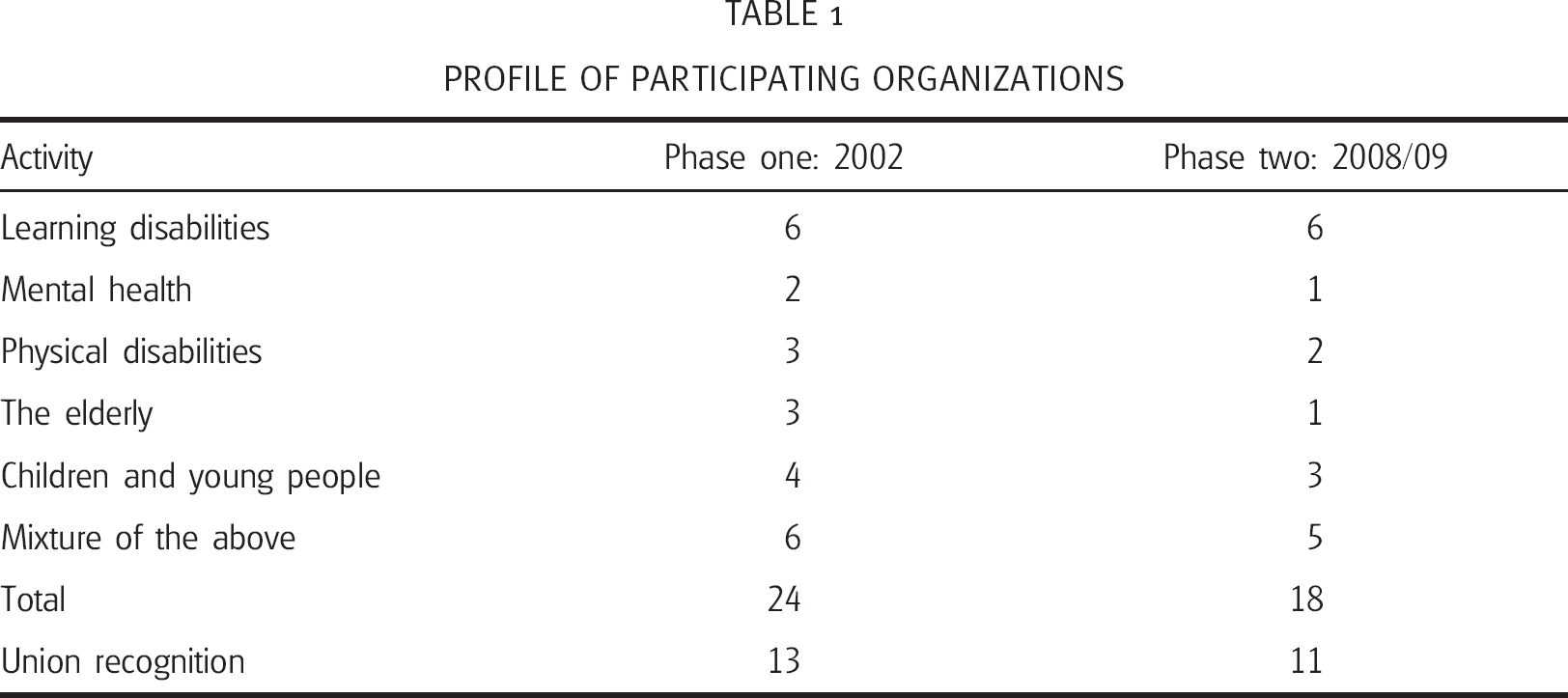
PROFILE OF PARTICIPATING ORGANIZATIONS
VARIABILITY IN VULNERABILITY TO NPM COST PRESSURES
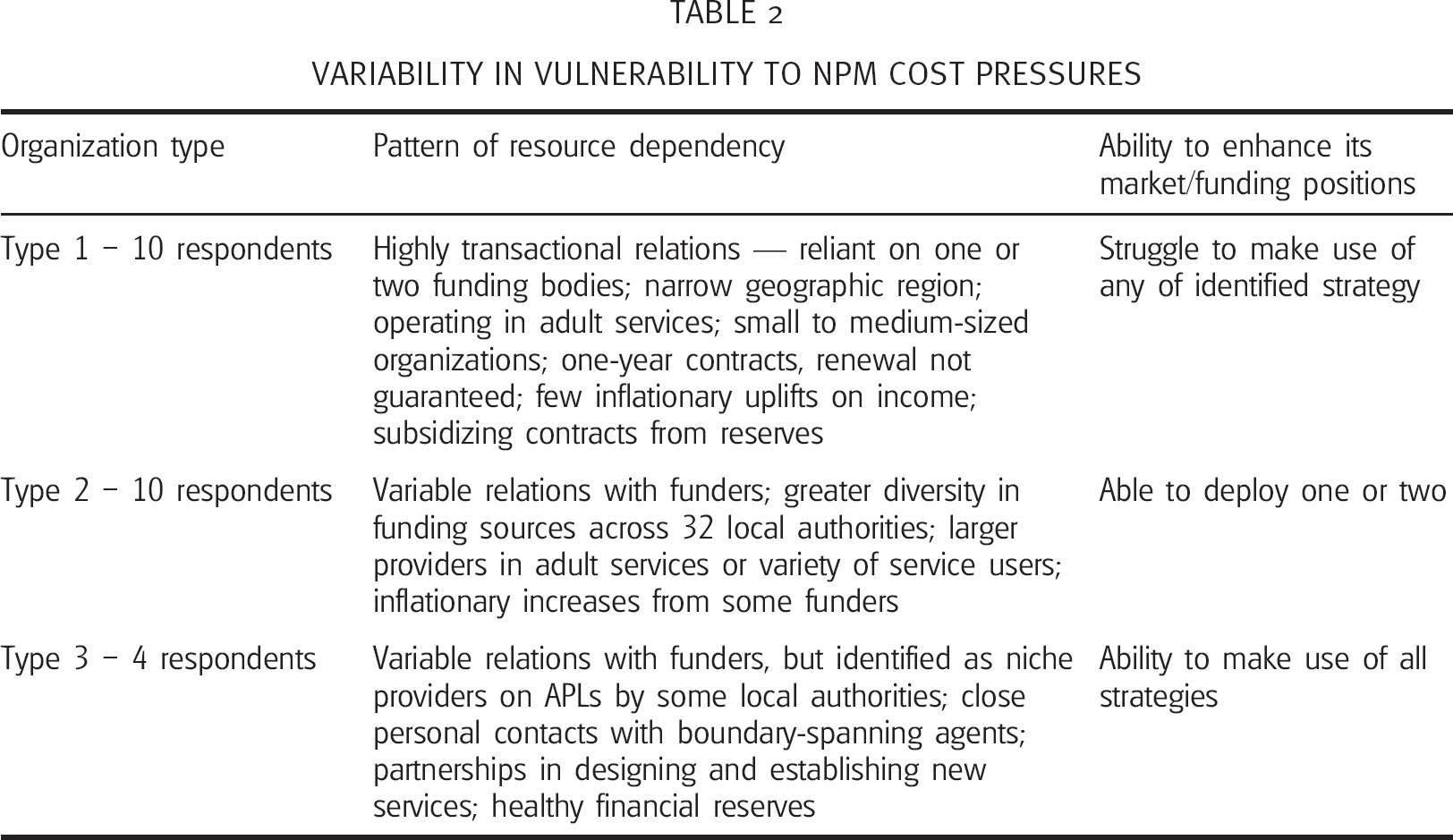
Table 1 outlines the profile of organizations within which these data were collected in terms of their activities. In the two phases of fieldwork, participants covered a range of services, while in each of them the majority of organizations claimed to recognize a union. Similar to the wider voluntary sector (see Clark & Wilding, 2011), the workforces within these organizations were largely female (with proportions ranging from two-thirds to 80 per cent). In all of them front-line care work was delivered by paid staff, with volunteers involved largely in retail outlets and fund-raising.
Phase one of the research (2002) involved interviews in 24 voluntary organizations. Those interviewed primarily encompassed either human resource (HR) staff (22 cases) or operational managers responsible for personnel issues (two cases). Further interviews with managers responsible for negotiations with local authorities were additionally undertaken (11 cases). Phase two of the research was undertaken in 2008/09 and involved interviews within 18 of the original 24 voluntary sector organizations. Those interviewed comprised HR respondents (17 cases) or managers with that responsibility (one case), as well as managers who were responsible for negotiating with local authorities (10 cases).
In order to address the study's central research questions, the interviews conducted during the first phase of fieldwork were designed to (a) elicit background profiles of the organizations within which they were undertaken; (b) provide data on the nature of the contractual relationships that the organizations had with service commissioners and how (and why) these were changing; (c) obtain information on how the organizations were reacting to such change; and (d) gather details of the way in which these (changing) relationships were impacting on employment policies and practices.
All interviews were transcribed verbatim. From the first interviews the process of coding data into a framework began with a ‘start-list’ of codes, around the themes outlined in the previous paragraph. To aid this process, and influenced by Miles and Huberman's (1994) approach, ‘marginal remarks’ were frequently used to highlight, clarify, reflect on and question various pieces of data. This led to revisions to the original codes.
Findings
Shifting institutional, inter-organizational and interpersonal boundaries of voluntary sector state relations
In 2002, the institutional influence of the NPM agenda on the sector was apparent. Using the processes of constructing ‘approved provider lists’ (APLs — a list organizations had to be on to be considered by authorities to take on/bid for a contract), local authorities operationalizing NPM were requiring voluntary organizations to adhere to new quality standards in service provision and become more ‘business like’ in their HR policies and practices, notably in relation to discipline, recruitment and equal opportunities. Consequently, such processes were forging uniformity in such practices across organizations eager to gain legitimacy and acceptance onto funders' APLs.
The competing institutional pressures of NPM and ‘partnership’ were producing a pattern of relationships between purchasers and providers characterized by complexity, and varying degrees of vulnerability among the latter to cost pressures from the competitive market. Nevertheless, government policies that encouraged three-year contracts, discussions on quality of service and full funding of overhead costs were found to generally be having a relatively limited impact on the climate of relations between service commissioners and providers.
Table 2 outlines the variability in vulnerability to cost pressures from NPM among respondents from phase one of the research. It can be seen that three types of organization could be identified, with Type 1 being the most vulnerable, and Types 2 and 3 less so. State-voluntary sector relationship at this point were, therefore, like other inter-organizational relations, operating on a continuum, with providers being able, under certain conditions, to influence their position along it.
The existence of these different organizational types pointed to a varying capacity to resist powerful pressures from funding bodies. This capacity, and hence an organization's location on the above continuum, depended on the extent to which it was able to deploy one or more of the following methods to reduce resource dependence, and improve market and funding positions:
Building reputations as experts in niche services (e.g. children's services).
Offsetting funding shortages in one area through subsidies from more generous contracts secured elsewhere.
Turning down ‘arm's-length’ short-term, cost-based contracts because of sufficient amounts of alternative work.
Drawing from their own resources (financial reserves or the donation of a building) and using these resources to embark on ‘partnership’ projects with local authorities.
Column 3 of Table 2 illustrates the variability of scope in utilizing such strategies. Only Type 3 organizations with more interdependent relations were able to make use of them all. In contrast, Type 2 employed one or two of them, while Type 1 struggled to apply any. It was also notable among Type 3 (and to some degree Type 2) nonprofit organizations that their reputations as experts in niche services and efforts to build partnerships were carefully developed, supported and sustained by close personal ties between organizational agents and representatives of various social services departments. This included incidences (among Type 3 respondents) of receiving phone calls asking about developing and establishing new services in partnership rather than embarking on a competitive exercise with other providers.
The 18 organizations that participated in phase two of the fieldwork reported elements of continuity and change in the purchaser-provider relationship in 2008/09. Continuity came in the form of a continued dominance of the principles of NPM characterized by on-going funding insecurity through service commissioners not providing full-cost of living increases or imposing cuts or freezes in funding while demanding the same or improved levels of service. Other contributory factors were the short-term nature of the contracts awarded and the failure of organizations to receive ‘full-cost recovery’. The impact of these practices was often severe, with one organization reporting how one in four of its 80 projects were operating on a deficit, compared to just four in 2002.
The EU Public Contracts Regulations 2006 were found to have added further NPM-style pressure through introducing more competitive tendering and retendering for contracts. As a result, it had become more likely that organizations would experience the open tendering of their existing contracts, with the consequent greater risk of their loss and related financial and workforce consequences, or feel the need to bid for those held by other competing organizations. Private sector competitors were, for example, increasingly gaining contracts, including in children's services. Retendering and associated contract losses had at times resulted in significant financial losses, with one adult services respondent (Type 2) reporting a £4 million loss of income and over 100 staff transferred to another organization. Indeed, retendering and competition could threaten the survival of some organizations. Thus, one Type 1 respondent was facing the prospect of all of its projects being retendered.
Greater competition, in turn, commonly diminished previously close inter-personal relationships between purchaser and provider organizations. Several of the children's services providers (Type 3 organizations) reported that not only had several existing services been retendered, but that they were now less likely to receive a phone call from close contacts to pilot new services as a member of a select group of providers. Instead, contracts were increasingly awarded on the basis of cost, with professional procurement teams from the finance and accountancy departments of local authorities managing such processes, rather than familiar officials from social services. Indeed, one provider outlined how having received the traditional phone call asking for advice on how to establish a new service (which was duly given), the purchaser then put the service out to tender and awarded it to another provider at a lower cost.
In response to this changed funding environment in 2008/09, organizations invariably recognized the need to diversify funding and reduce resource dependency. Five had recruited ‘business development managers’ (BDMs) to respond to new tenders or retendering and another six had devolved responsibility for such matters to regional service managers/directors. Moreover, as part of moves to further commercialize and introduce more business-like cultures, regional managers were commonly provided with additional training in finance, negotiation and presentation skills:
A lot of our core values remain the same, but the one that probably has come on-board is this notion of being more business-like. We need to start thinking about not just the quality of the service we deliver, but how we deliver that quality of service in a value for money, cost-effective way. (HR director, children's services)
Other rare, but apparently effective, strategies included one respondent's report of a collaboration between the chief executives of four organizations that led them to refuse to apply for a tender because they had made an independent judgement, as heads of experienced providers, that the price at which the local authority was prepared to pay for the contract was too low to sustain an effective service. The respondent reported how these organizations were able to do this because they represented the ‘big five’ providers in children's services, and hence had considerable market power.
More generally, despite the ‘credit crunch’ one or two (Type 3) organizations continued to sustain themselves because of a high level of financial reserves:
I think financially we have been fairly well off in terms of we do save for a rainy day. We have had good investments over the years. We have had good legacies that we have used to maximum effect. (HR director, children's services)
Others, however, continued to struggle and to face a situation in which market pressures led to cuts that in turn acted to compound them. For example, one Type 1 organization had, rather than cut front line services, dismissed its BDM, but subsequently faced difficulties gaining new business.
The impact on employment policies
Table 3 highlights how purchaser-provider relations were having a significant impact on pay and other terms and conditions of employment over the two stages of fieldwork. In 2002, the majority of organizations had moved away from public sector pay scales and introduced new rates based on some nominal notion of a ‘going rate’, sometimes with no associated increments or with increments tied to skills acquisition. Where unions were present, collective bargaining could still occur if management was able to award some form of cost of living increase. Table 3 also reveals how in 2002 not all of the 24 organizations were equally vulnerable to this shift away from public sector pay.
CHANGES TO TERMS AND CONDITIONS, 2002–2008/09
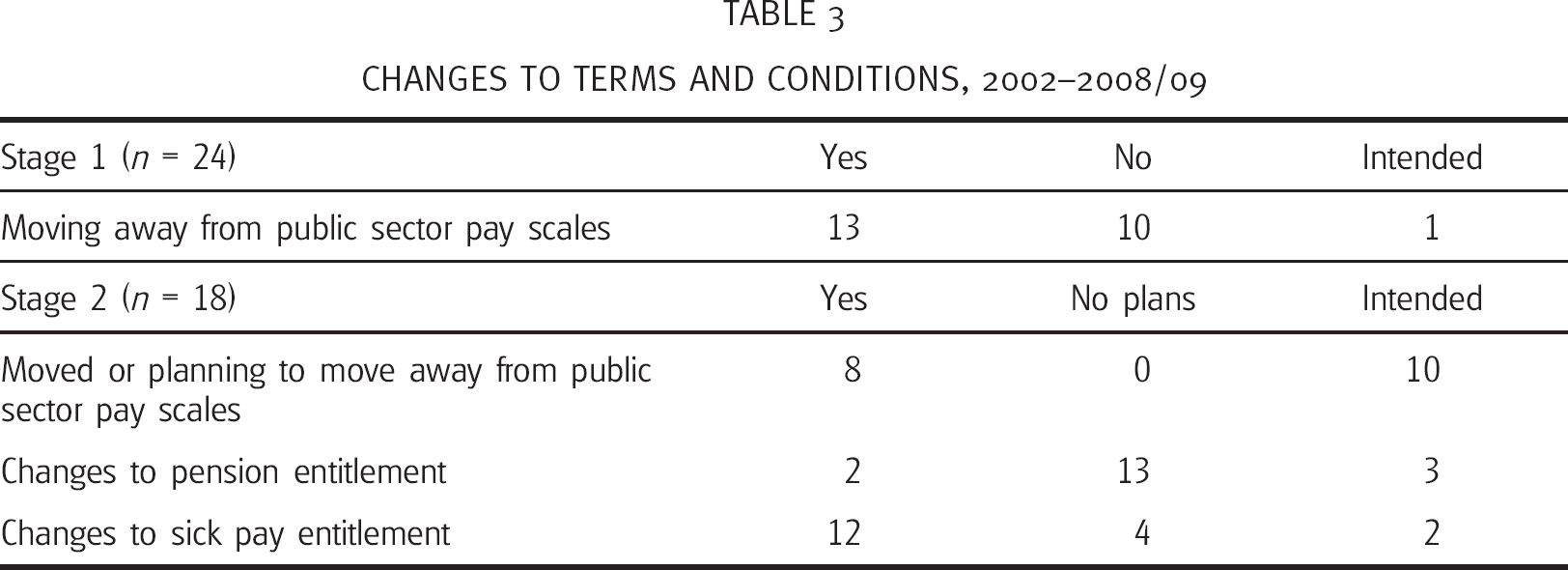
Table 4 shows how in phase two of the research — that is, in 2008/09 — eight respondents were drawn from the group that in phase one had moved away from using national local authority (SJC) pay scales (a mixture of Type 1 and 2 respondents), while the remaining 10 organizations were drawn from those that had remained aligned to public sector terms and conditions (mixture of Type 2 and 3 respondents). It also, however, shows how all those in this second group were considering changing their approach to pay because of tighter funding regimes by setting pay rises, where they could be offered, at a lower percentage rate than in the local authority sector and/or introducing new pay bands.
CHANGES TO TERMS AND CONDITIONS – PHASE ONE
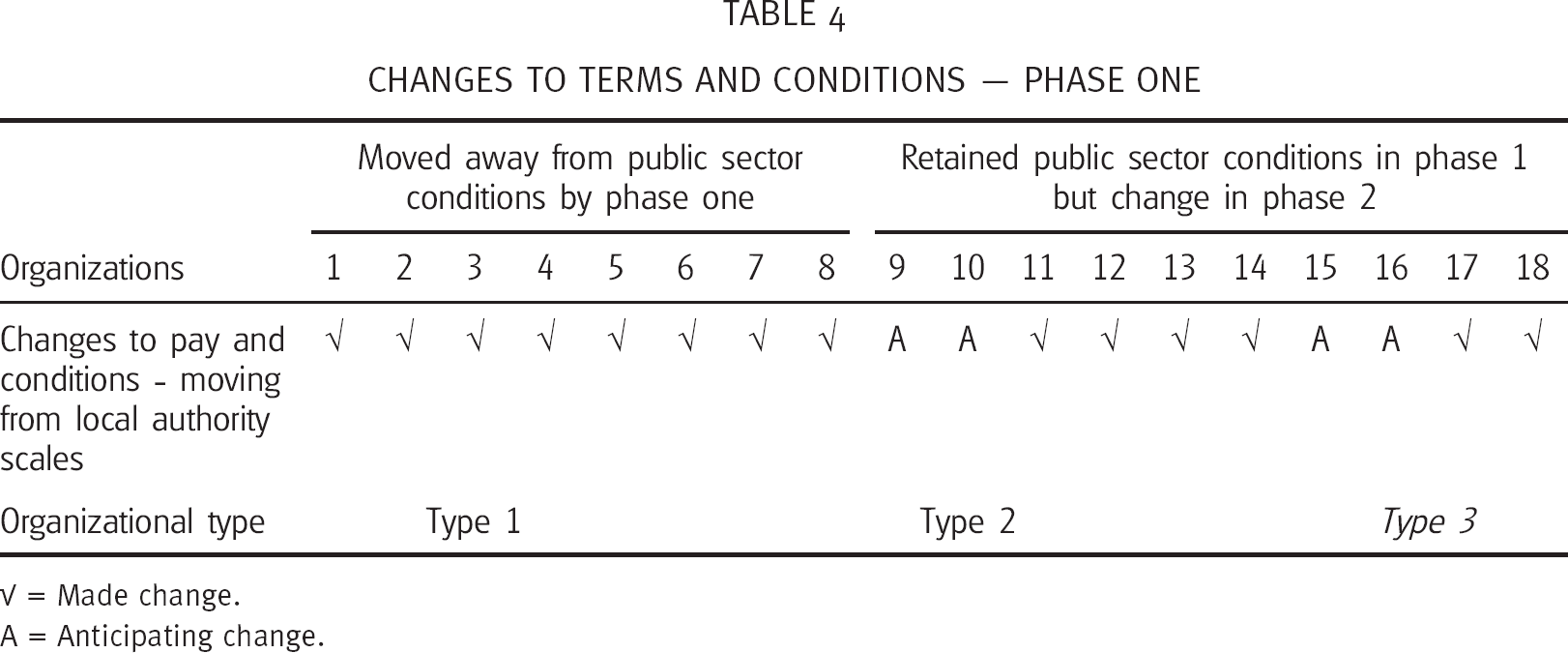
√ = Made change.
A = Anticipating change.
The aforementioned organization that was running deficits in one in four of its projects, and previously had maintained the link with public sector pay scales ‘through thick and thin’ (HR director) was anticipating being unable to do so in 2008/09, and was also recruiting lower paid support assistants, rather than support workers. There were also problems emerging among Type 3 organizations that were on the ‘inside track’ of funding. In one of these, where a new reward structure was being introduced at the time of the interviews, the senior accountant outlined how the introduction of narrower pay bands was designed to reduce future pay inflation to secure ‘the long-term survival of the trust’ (senior accountant).
In addition, all 18 organizations, whether they paid public sector rates or not, were striving to make savings in wider employment conditions including through pensions, sick pay, downtime and travel allowances, and the recruitment of lower paid and less skilled support assistants. Changes to pension and sick pay arrangements targeted new starts, for example, through removing entitlements that mirrored the public sector and introducing ‘waiting days’ (no pay for the first three days of absence). More robust attendance management was also commonly linked to more business-like cultures among respondents driven by financial pressure from funders:
I think the social work ethos has always been somebody is ill, they need time to rest and recuperate, but the business side is saying this is costing us a great deal of money, we cannot sustain that level of sickness because it's having an impact on the way our finances are working. So it's a bit more hard-nosed … the financial pressures are greater and greater and you have to be a lot more unscrupulous. (HR director, adult services)
Local authorities were also reportedly scrutinizing the balance between front-line service work and opportunities for workers to be supervised, fulfil administrative responsibilities and participate in team meetings:
Now you're having to account for every hour basically. Like workers' time. If somebody is employed full time, thirty-six hours, the local authority wants to see thirty-six hours. And so where do the additional bits come in, the supervision of staff, the team meetings, the admin, those bits? (Manager, adult services provider)
There were additionally suggestions of more radical changes to employment conditions as a consequence of the emergence of the personalization agenda. The Type 1 organization experiencing the retendering of all of its services reported how it had gone as low as it could with making cuts to its current approach to terms and conditions. Management was therefore considering moving to administering Direct Payments (DP). That is, asking people accessing its services to move out of the local authority's block grant provision by requesting an individual (DP) budget which they could use to purchase services from a provider of their choice. At the time of the study the number of DPs in Scotland was low and it was the exception for providers to switch to their provision in a context where many local authorities were reluctant to adopt them because of the administrative difficulties they caused and their association with the privatization of care. The HR respondent in the aforementioned organization reported, however, that, by reacting to individual service user demands for care at a time that suited their needs, considerable savings could be made. Specifically, staff could be moved onto an hourly rate of pay rather than receive an annual salary, and self-governing teams could organize shifts and rotas, thus leading to the removal of a layer of management. In terms of the implications for job security, the HR director stated:
Up until the individual no longer wanted you, we look to redeploy somewhere else, but the future may look a bit more scary. The actual contract may be more — that's your job and if something goes wrong we might look to have another job for you, but we might not.
In addition, a Type 2 organization was implementing dramatic changes to pay and conditions, including pay cuts as a consequence of one of its key local authority funders linking the move to personalization with austerity cuts of 20 per cent. Unlike the aforementioned case, this local authority was taking the initiative because it was one of six of Scotland's 32 authorities piloting the expansion of such individualized forms of funding.
Within this context of deteriorating employment conditions, although 10 of the organizations recognized trade unions, there appeared limited opportunities for workers to express discontent through collective bargaining. Tensions were, however, apparent, with one organization having experienced a ballot for industrial action and the above Type 2 organization having suffered two strikes between 2007 and 2009 over pay cuts and changes to contracts and sick pay. Each of these actions led to concessions by management, but not without reports of tensions with union representatives and workers: the latter fearing the impact of their action on service users.
In all but a few of the other workplaces union organization struggled to make an impact, with membership density reportedly not reaching higher than 10–15 per cent. Reasons put forward for this included problems recruiting shop stewards, and the difficulties of organizing a geographically dispersed workforce. There were also examples of anti-unionism. Thus, one organization was reported to be actively considering de-recognition. The HR director of another, a traditionally non-union organization which had acquired a union agreement and union members from another organization following a successful tender, admitted that it was waiting for current membership to diminish through natural wastage rather than encourage a further union presence.
Conclusions
Using an institutional, inter-organizational and interpersonal framework (Marchington & Vincent, 2004), this article has utilized longitudinal data, gathered through three phases of fieldwork over the period 2002–2011, to explore the changing nature of social care outsourcing and its implications for employment conditions within Scottish voluntary organizations. Findings from phase one illustrated how the interplay between institutional, inter-organizational and interpersonal factors created relations between service commissioners and voluntary sector providers which varied in terms of how far they encompassed obligational dimensions, and how far the latter were dependent on the former and consequently capable of resisting unfavourable demands from them. In doing so, these first-phase findings allowed early articles from this study (Cunningham, 2008) to argue that, in terms of theorizing voluntary sector-state relations, there was a need to move away from the dichotomy of ‘partnership’ versus ‘control and subordination’ and to instead recognize that, like other inter-organizational relations, they exist along a continuum encompassing varying combinations of ‘arm's-length’ and obligational elements. In effect, the study's initial findings therefore showed that voluntary sector providers could at times utilize favourable market conditions, as well as long-established inter-personal relationships, to influence the nature of the contractual relationships they had with service commissioners.
In contrast, the evidence presented from the latter stages of the research highlighted that this capacity to influence had markedly declined against the background of a shift in the ‘negotiated order’ of inter-organizational relations in the social care market place (Truss, 2004). Central to this shift had been a tougher financial and competitive climate. Austerity had reinforced a tendency towards NPM-inspired prescriptions and encouraged the pursuit of more ‘arm's-length’, cost-based contracting. As a consequence, the article revealed the way in which the boundaries between organizations exhibiting varying degrees of obligational and ‘arm's-length’ relations in an area of activity were becoming eroded and leading to convergence around employment conditions.
Marchington and Vincent's (2004) framework therefore proved, as anticipated, a useful analytical tool for understanding the evolving dynamics of social care outsourcing. Indeed, the findings obtained can be seen to lend substantial support to its validity. At the same time, however, they also served to further reinforce the argument that contracting parties should not be assumed to be mere passive recipients of institutional pressures by highlighting how local authorities, acting as market architects, had played a crucial role in operationalizing, and prioritizing between, wider (governmental) institutional pressures. The fact, moreover, that their actions in this regard were, for the most part, of a similar nature additionally suggests that, in exploring how meta-level institutional pressures impact on the contracting behaviour of outsourcing organizations, account potentially needs to be taken of the way in which horizontal learning and other linkages between them can serve as an important channel of mediating influence: at least in monopolistic or oligopolistic market contexts.
More specifically, the findings revealed how local authorities operating in a context of austerity have commonly been creating market dynamics whereby softer institutional pressures designed to forge collaborative relationships between purchasers and providers have tended to become subverted to meet the paramount objective of cost savings. In particular, they were shown to have been utilizing Approved Provider List (APL) processes, previously designed to regulate quality standards and human resource policies and processes, to exert downward cost pressures, while also dismantling the antecedents of ‘partnership’ through replacing close personal ties between voluntary organization boundary spanners and purchaser personnel with more distant links with experts in finance and procurement. With regard, for example, to the introduction of personalization, it appeared that potentially common purchaser-provider interests in such goals as user choice and person centredness were tending to be undermined by NPM style demands for efficiency and value for money.
In this environment of austerity, retendering and an emerging focus on personalization, the capacity of voluntary organizations to protect staff terms and conditions had declined as the boundaries between the different types of organization eroded. This trend was highlighted by the fact that all of the organizations that had persisted in paying local authority terms and conditions in the first phase of fieldwork were now considering or were definitely moving away from retaining this linkage. As a result, the notion of voluntary organizations mimicking public sector employment conditions was found to be evaporating. Instead, they appeared to be being increasingly dragged towards a converging employment model based on low pay and skills, and limited access to sickness, pension and other benefits.
This weakening of the market positions of voluntary sector providers had occurred alongside a limited ability on the part of unions — where recognized — to significantly counter the downward trend in employment conditions. As a result, developments in the social care market can be seen to add weight to the argument of Greer et al. (2011) that the employment implications of public service outsourcing are fundamentally shaped by the nature of the funding regimes involved, rather than the surrounding industrial relations institutions. Insofar as this is correct, it consequently points to the importance of unions focusing their activities beyond the workplace and organizational levels in order to more effectively influence funding arrangements both directly and indirectly through the regulation of external labour markets and the related removal of terms and conditions (see, for example, Cunningham & James, 2010; Wills, 2009); for example, by pursuing such actions as the re-establishment of the recently rescinded ‘two-tier code’ that extended public sector terms and conditions to those working on transferred public services in the voluntary sector, and the promotion of bi-partite/tri-partite ‘sectoral forums’ that engage in collective bargaining over pay and conditions, skills and training (Short, 2011; UNITE, 2011).
Two (somewhat contradictory) caveats to the above analysis must, however, be voiced. The first is that it is uncertain to what extent all of the noted employment-related changes in the sector are permanent. Such changes to employment conditions in the sector, particularly reducing pay in response to competitive financial pressures, eradication of other employment benefits and dilution of skills do admittedly resemble changes associated with the marketization thesis (Sennett, 1998). However, other studies have highlighted how pressures to marketize employment conditions are particularly acute in times of recession as employers react to short-term turbulence. In times of recovery, however, there may be efforts by employers to recover and reinvest in things such as internal career systems because employees' commitment and loyalty continue to need to be nurtured (McGovern et al., 2007). In the case of this study there may be some, albeit limited, recovery in employment conditions. In general, however, such a process of recovery would appear unlikely given the apparent permanence of the changes to pay and other terms and conditions within the organizations that first experienced them in phase one of the fieldwork.
In a similar vein, it is necessarily unclear how far the present findings can be extrapolated to other areas of public service outsourcing. It cannot, for example, be simply assumed that external providers, particularly where they comprise large private sector organizations, will always occupy vulnerable market positions vis-a-vis public sector commissioners (Grimshaw et al., 2002). That said, the analysis provided does suggest that in times of austerity public service commissioners have leant towards price-based, short-term ‘arm's-length’ contracting that is not easily challenged by ‘soft’ government prescription, particularly in a period of significant financial stringency. Given also the existence of much international and domestic evidence pointing more generally to how the competitive dynamics involved in the outsourcing of public services commonly lead to downward pressure on workers' terms and conditions (Baines, 2004, 2011; McDonald & Charlesworth, 2011; Wills, 2009), it would therefore seem at least reasonable to argue that this study's findings may be a harbinger of things to come in some other areas of public service outsourcing.
What does seem clear, however, is a continued need for research centred on the changing nature of public service outsourcing and its impact on employment conditions in areas of expanding public service externalization. On the basis of this study, it would also seem important that this research agenda encompass a strong longitudinal dimension given the capacity of such research to provide valuable in-depth insights into the dynamics of such outsourcing and its employment-related implications.