







Abstract
The interaction process between void and migrating interface grain boundary (IGB) in the bonding interface of 1Cr11Ni2W2MoV steel joints produced by diffusion bonding has been examined, and the corresponding interaction mechanism was analysed. The results showed that there were two cases occurring in void–IGB interaction by comparing the IGB velocity with void velocity: if the IGB velocity exceeded the void velocity, the void would separate from the IGB and be trapped inside the grain; otherwise, the void would attach to and migrate with the IGB. It was also found that the void–IGB interaction was related to the radius of void. The bigger voids easily separated from the migrating IGB, while the smaller voids tended to attach to it. The approximate theoretical values of critical radius of voids for separation/attachment were derived, and they agreed well with the experimental values obtained.
Keywords
Introduction
Diffusion bonding is a process by which two nominally flat interfaces can be joined at an elevated temperature using an applied pressure for a time ranging from a few minutes to several hours. The temperature is usually in the range of 0·5–0·8 Tm, where Tm is the absolute melting point of the materials.1–4 This advanced and precise bonding technique has been widely adopted to manufacture the metal components with large area, multipoint and complex interior structure in aerospace, nuclear and other application.5–7 Compared with conventional melting–solidification bonding techniques, there is no fusion, heat affected zone and residual stress in the joints produced by diffusion bonding. If the bonding process is conducted properly, a joint having properties indistinguishable from those of base metal of the same composition is produced.8, 9
During diffusion bonding, two processes, including void shrinkage and interface grain boundary (IGB) migration, play significant roles to achieve metallurgical bonding. The elimination of voids in the bonding interface is the necessary condition of achieving high quality joint and has been widely investigated via experiments. Liu et al. 10 employed diffusion bonding technology to join commercially pure titanium and hydrogenated Ti–6Al–4V alloy and indicated that the amount of voids in the bonding interface decreased evidently as the hydrogen content increased. Li et al. 11 investigated the bonding interface of Ti–17 alloy joint and showed that voids disappeared gradually with the increasing of bonding time. Meanwhile, some theoretical models for void shrinkage have been carried out to quantify the kinetics of the bonding process and to predict the process of void evolution.12–15 Moreover, the phenomenon of IGB migration has also been investigated by some scholars. Martinez et al. 16 studied the annealing of Cu–Cu joints, and their results showed that the IGB at triple junctions would bulge to form the wedges among grains. The microstructural changes during diffusion bonding of superplastic 7075 aluminium alloy were studied by Huang et al., 17 and they indicated that the strengths achieved after bonding were dependent on the extent of IGB migration. On the other hand, the phenomenon that some residual voids are trapped inside the grains has been observed in the final stage of diffusion bonding by Elliot et al. 18 and Basuki et al., 19 and this phenomenon implies that there exists the interaction between voids and migrating IGB so as to separate voids from the IGB. Once the voids are separated and trapped inside the grains, they can only be eliminated by volume diffusion, which is a much slower process than grain boundary diffusion. Consequently, the voids remaining in the joint will weaken the mechanical properties of the joint. In order to fabricate high quality joints without defects, it is necessary to understand the interaction mechanism between void and migrating IGB. Despite the importance of void–IGB interaction in diffusion bonding, little work has been reported about it in publish.
In the present work, the diffusion bonding of 1Cr11Ni2W2MoV steel was performed at a bonding temperature of 1000°C and pressure of 20 MPa for different bonding times ranging from 10 to 150 min. The phenomenon of void–IGB interaction was observed, and the void–IGB interaction mechanism has been discussed. Additionally, expressions for the critical radius of voids that characterise the separation event were derived.
Experimental
The chemical composition (wt.-%) of as received 1Cr11Ni2W2MoV steel is as follows: 0·16C, 11·45Cr, 0·44Mo, 1·58Ni, 0·21V, 1·81W and bal. Fe. The dimensions of specimens to be joined are 35 mm×32 mm×20 mm.
Before diffusion bonding, the specimen surfaces were conducted by finish milling machining to a surface roughness (Ra) of 1·6 μm, which Ra is the arithmetic mean surface roughness measured by a C130 laser scanning confocal microscopy. Then, they were ultrasonically cleaned in ethanol for 15 min and then dried by hair drier. Two cleaned specimens were matched together and put into a typed ZYD-60L hot press furnace with a vacuum, and the schematic diagram of the diffusion bonding apparatus is shown in Fig. 1. As the vacuum degree in the furnace reached to 5·0×10−3 Pa, the specimens were heated to 1000°C at a heating rate of 15°C min−1. A bonding pressure of 20 MPa was subjected to the bonding specimens and kept for a given bonding time, and the bonding time was chosen as 10, 60, 90 and 150 min respectively. After bonding, the pressure was released, and the as joined specimens were cooled to room temperature.
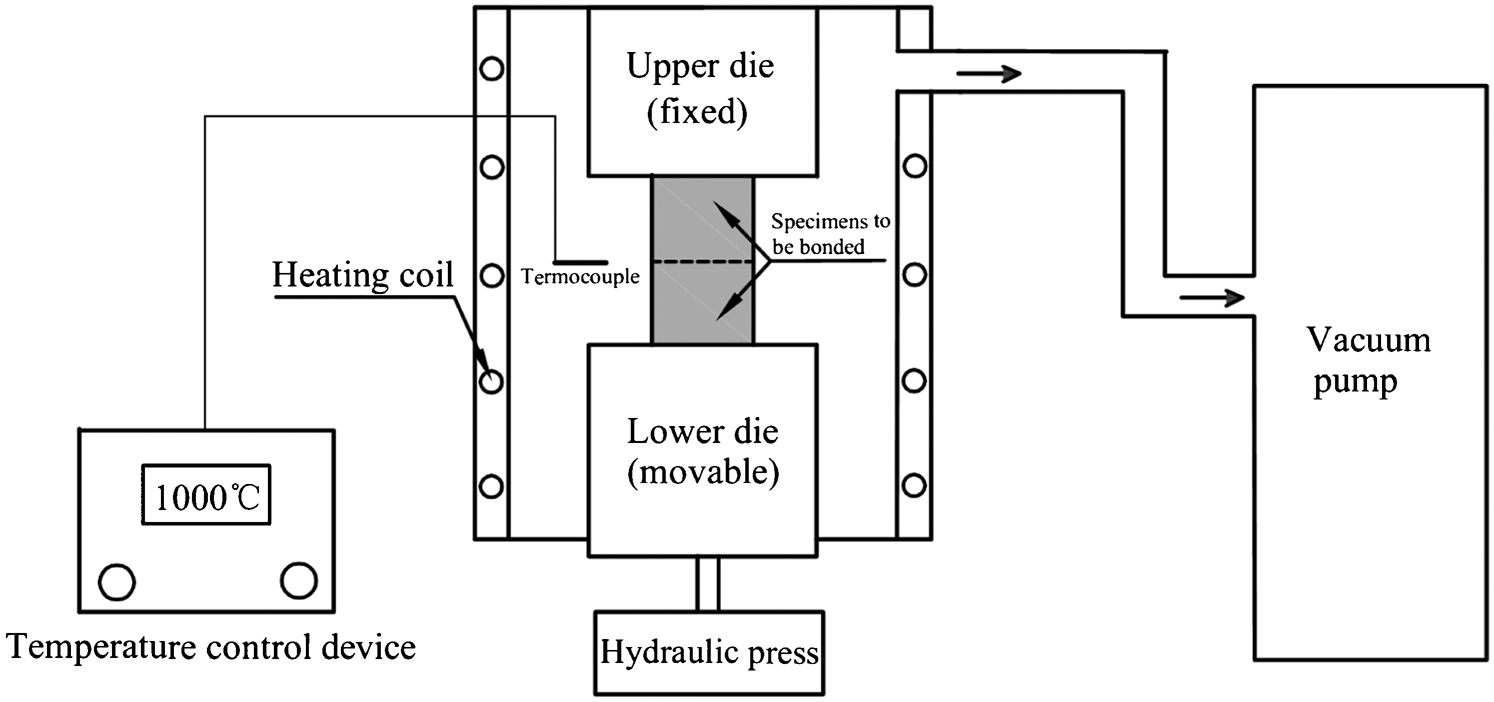
Schematic diagram of diffusion bonding apparatus
The cross-sections of as joined specimens were ground sequentially by 80#, 600#, 1000#, 1500# grit SiC paper and buff polished with diamond pastes with a diameter of 2·5 μm. Then, they were etched for 2 min in a solution of 4 mL HCl+4 mL HNO3+92 mL H2O. The interface characteristic was observed at a Leica DMI3000M metallographical microscopy. Moreover, the grain size and the radius of the voids in the areas of IGB migration per 1 mm along the bonding interface were measured by ImagePro Plus software.
Results and discussion
Interface characteristic
The effect of bonding time on interface characteristic is shown in Fig. 2. The black hollow arrows represent the original bonding interface positioned horizontally in the centre of each micrograph. When joined at 10 min, the large size voids are distributed in the bonding interface, and only a few contact areas can be observed from Fig. 2a. To further increase bonding time to 60 min, the sizes of voids decrease evidently, and many elliptic voids can be seen from Fig. 2b. In addition, it can also be seen that the bonding interface transforms into a grain boundary, we refer to this grain boundary as an IGB in this study. It is obvious that most sections of the IGB are still straight, but local IGB at triple junctions initiates to bugle to form the wedge among grains, and some voids are separated from the IGB and trapped in grain. As the bonding time increases to 90 min, more sections of IGB at triple junctions migrate to form wedges, and the similar phenomenon that some small and round voids are separated from IGB and trapped inside the grains is observed from Fig. 2c. When joined at 150 min, the original bonding interface is confused by IGB migration and cannot be distinguished, as shown in Fig. 2d. Meanwhile, a row of voids are trapped inside the grains and some voids attach to the migrated IGB.
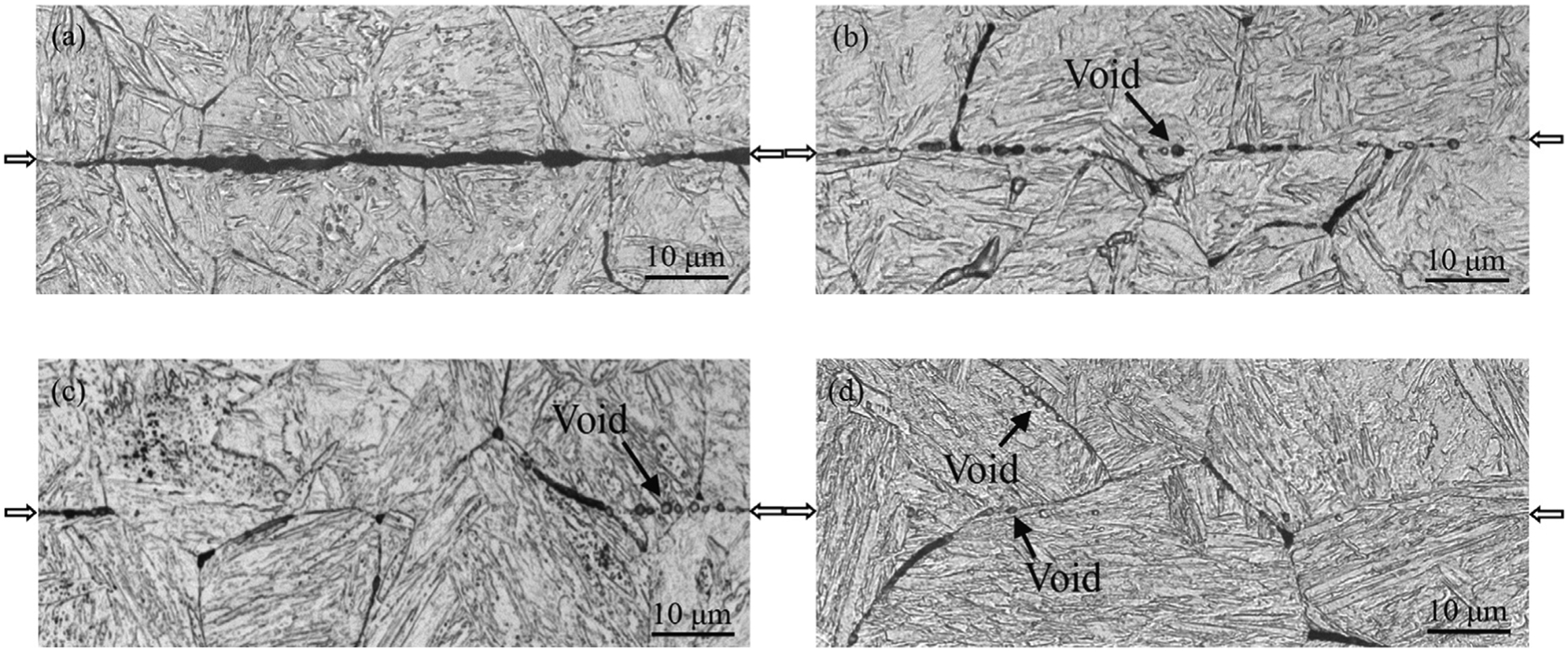
Micrographs of 1Cr11Ni2W2MoV steel joints at bonding temperature of 1000°C and pressure of 20 MPa for bonding time of a 10 min, b 60 min, c 90 min and d 150 min
Interaction process between void and migrating IGB
Figure 3 shows the selected process of the void–IGB interaction. The detail process can be divided into three stages. The first stage can be seen from Fig. 3a, in which an isolated void resides in the straight IGB and the phenomenon of IGB migration does not occur. As the IGB migrates and exerts a force on the void, the process evolves to the second stage, as shown in Fig. 3b. This stage can be regarded as the adjustive stage, in which the deformable void will adjust itself to a shape with the leading surface and trailing surface under the influence of the migrating IGB, and the leading surface of the void becomes less strongly curved than the trailing surface of the void.20–22 It is widely known that the atoms beneath a curved surface will have their chemical potentials altered by the curvature of the surface, and this difference in chemical potential will drive the diffusional flux of atoms to reduce the free energy of the system. The surface will play a dominant role in the process of diffusional flux of atoms, and surface diffusion was regarded as the main mechanism for atom flux from leading surface to the trailing surface to realise the void motion.23–25 The details of the atom flux from leading surface to the trailing surface by surface diffusion are shown in Fig. 4, in which the atoms beneath the leading surface have a higher chemical potential than the atoms beneath the trailing surface, and this difference in chemical potential drives the diffusional flux of atoms from the leading surface to the trailing surface. The result of atom flux from the leading surface to the trailing surface is that the void can move forward in the direction of the IGB migration. The third stage is shown in Fig. 3c and d. There are two situations occurring in this stage: if the void is unable to keep up with the migrating IGB, the void will gradually separate from the IGB and be trapped inside the grain. Afterwards the void will no longer be affected by the migrating IGB and evolve to a round void by surface diffusion; if the void can keep up with the migrating IGB, the void will attach to and migrate with it.
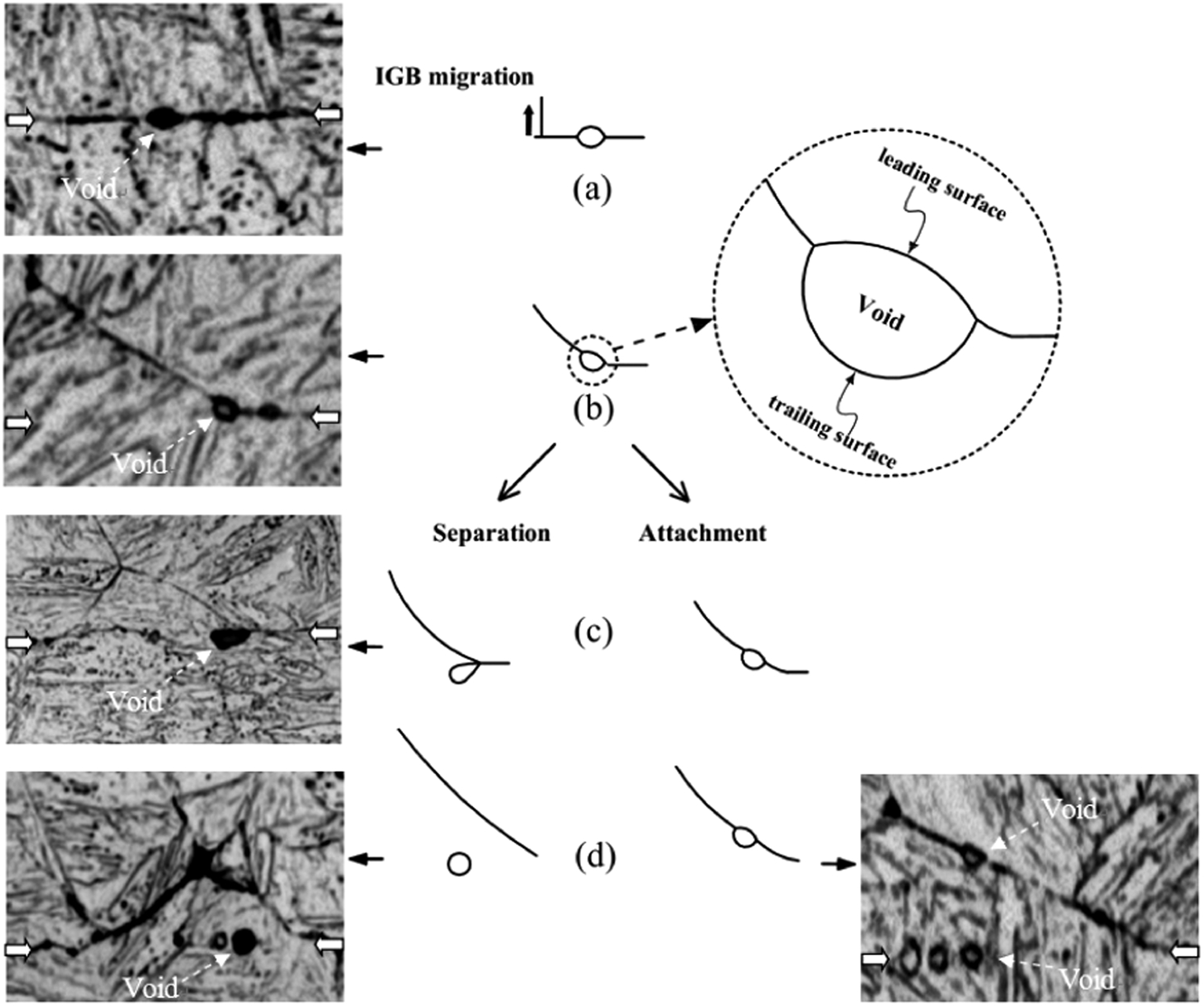
Interaction process between void and migrating IGB
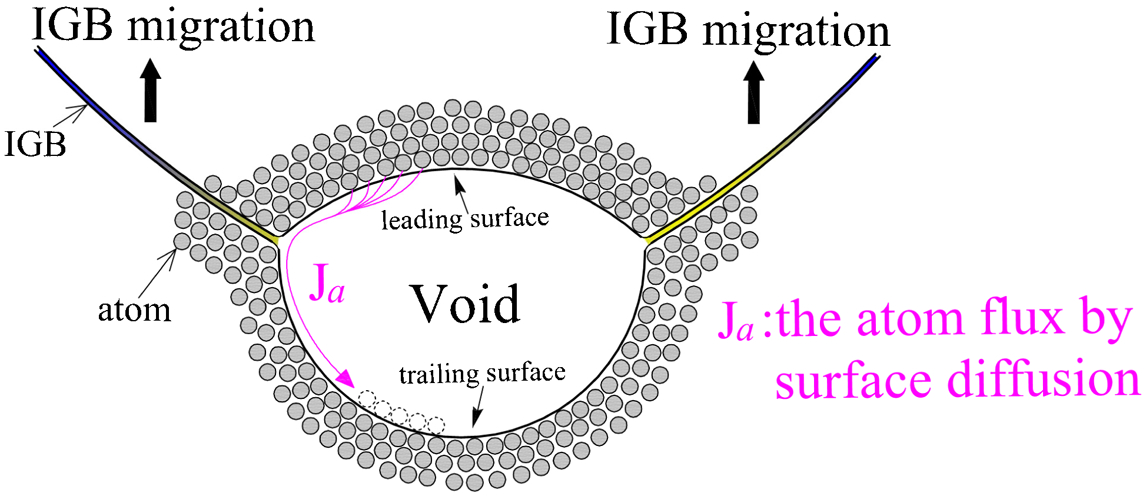
Atom flux from leading surface to trailing surface by surface diffusion
Interaction mechanism between void and migrating IGB
The flux of atoms from the leading surface to trailing surface of a void can be analysed to derive an equation for the void mobility Mv, and the void velocity vv can be defined by a force–mobility relationship
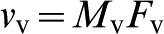
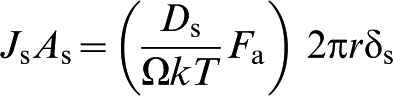
If the void moves forward a distance dx in a time dt (shown in Fig. 5), the volume of atoms which must be moved per unit time is πr2
dx/dt, and the number of migrating atoms per unit time is πr2
dx/Ωdt. Equating the number of atoms moved to the net flux gives as follows

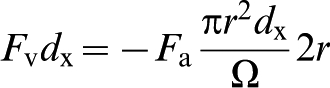
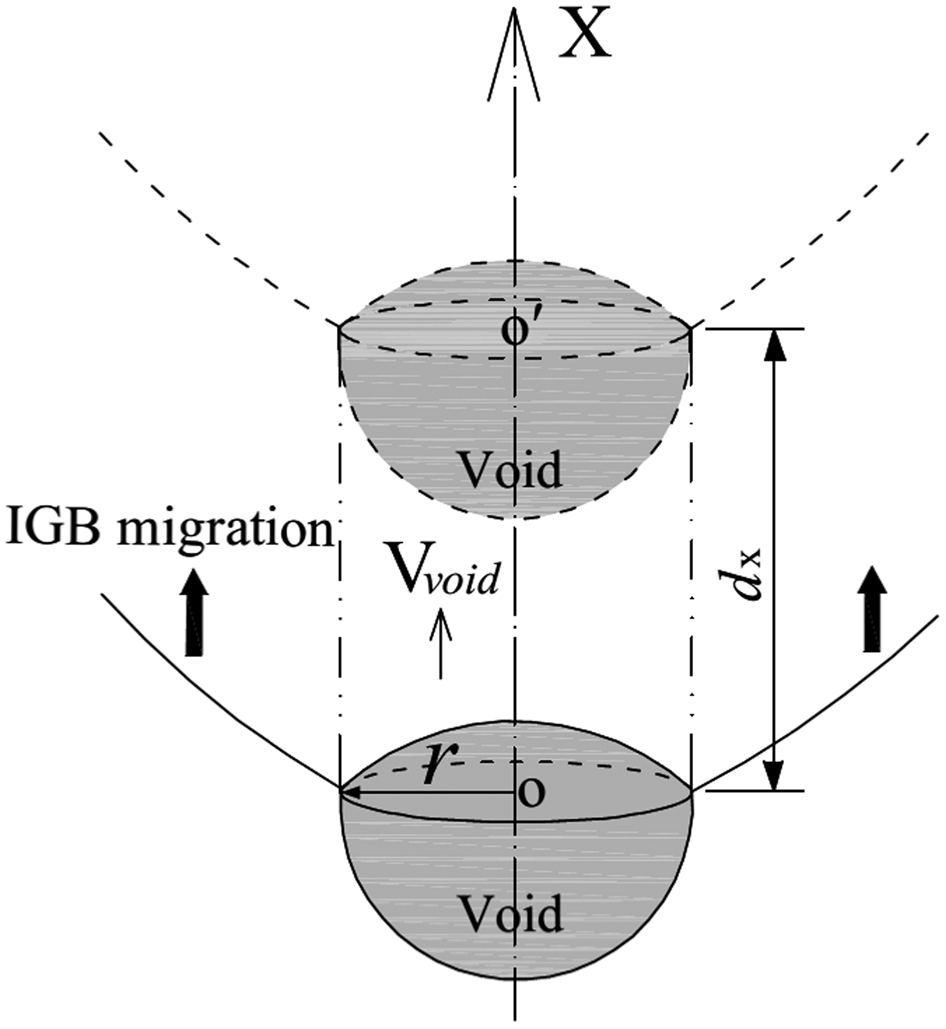
Void migrates from position O to position O′ along X direction for distance dx in time dt
Combining equations (3) and (4) and substituting for Fa, Fv is given as follows
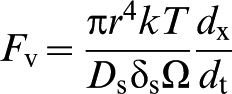
The vv is equal to dx/
dt. On the basis of equation (1), the void mobility Mv can be given as follows
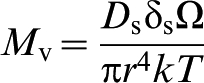
On the basis of equation (1), the drag force exerted by the migrating IGB on the void Fv is required so as to acquire the vv. The Fv can be derived from the Zener-like equation.26–30 In order to determine the force, the void is assumed as a spherical shape. As shown in Fig. 6, the Fv can be given as follows
25

 and gives as follows

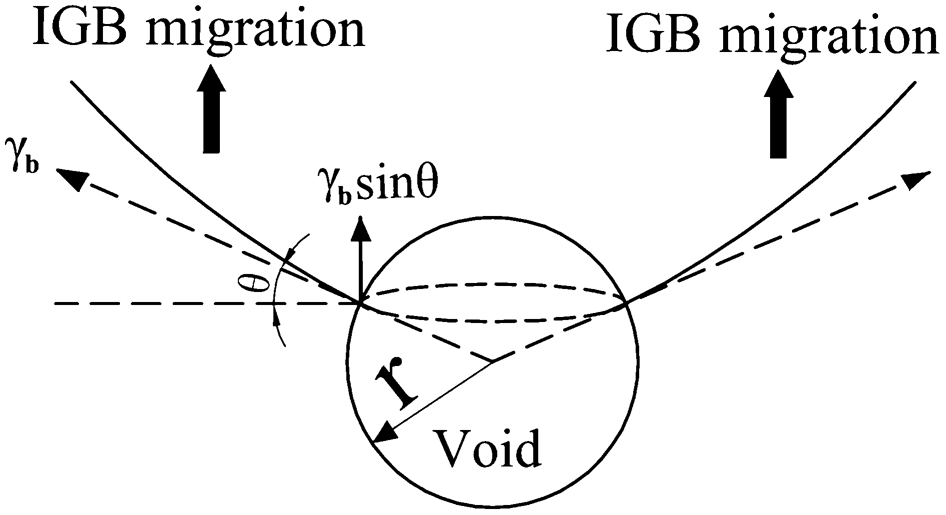
Driving force acting on void by migrating IGB
Combining equations (1), (6) and (8), The maximum void velocity
 gives as follows

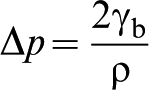
The mechanism of IGB migration is shown in Fig. 7a, the driving force for IGB migration arises from the high energy of red ‘⊥’ grain boundary intersection configurations. In order to lower the high grain boundary energy, the IGB initiates to migrate to form the wedges. The details are that the triple point O is subjected to grain boundary surface tension per unit area γ1, γ2 and γ3 from three grain boundaries. If the triple point O tends to be in equilibrium, the IGB will be forced to become curved (dotted lines) and tends to migrate in the direction of the arrows so as to minimise their length. The result is that the migrating IGB has a velocity, and this IGB velocity can be regarded as vb in this study. The pressure difference across the IGB, which drives the IGB to migrate, can be given by the equation of Young and Laplace
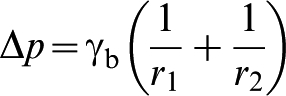
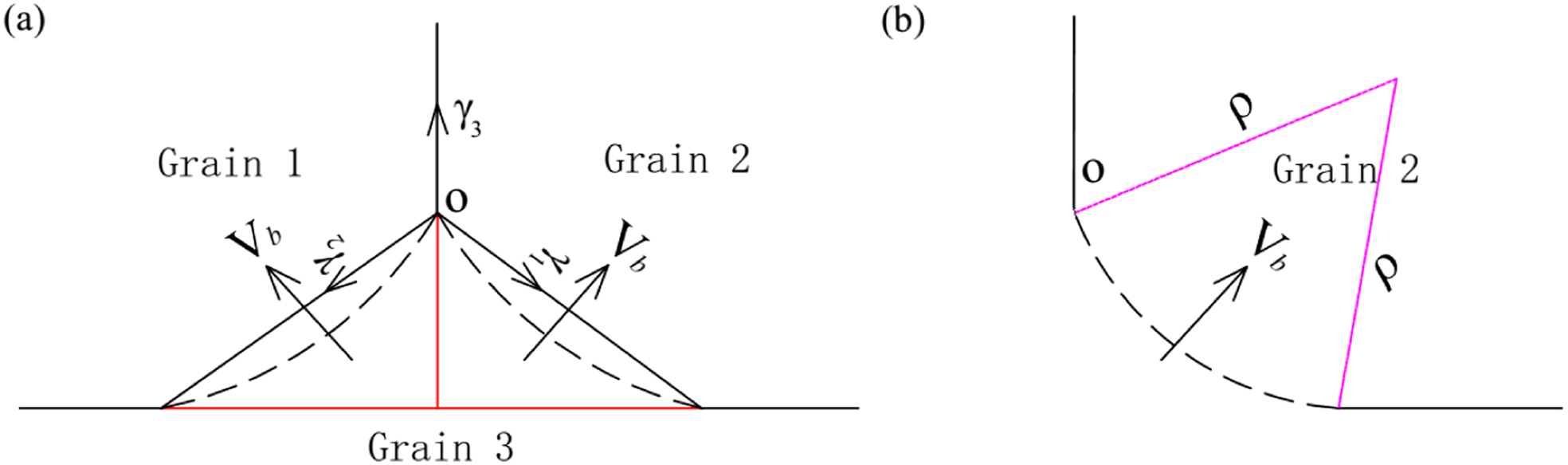
a details of IGB migration; b migrating velocity of curved IGB with constant radius of curvature ρ
It can be proposed that ρ = αG, α is a geometrical constant that depends on the shape of the boundary and G is the corresponding grain size. Taking the driving force Fb for atomic diffusion across the IGB to be equal to the gradient in the chemical potential, Fb can be given as follows
24

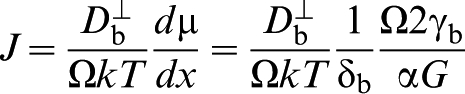
 is the diffusion coefficient for atomic motion across the IGB. The IGB velocity can be given as follows
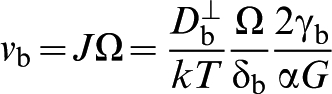
The treatment of void–IGB interaction focuses on a comparison of the relative values of the void velocity
 and the IGB velocity vb. Combining equations (9) and (14), a critical radius of void rcrit will be obtained when vvmax = vb
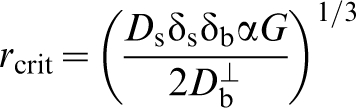
 (Ref. 23), α≈2 (Ref. 23), G≈25–55 μm, Dob = 2·4×10−4 m2 s−1 (Ref. 31), Qb = 40 kcal/mol−1 (Ref. 31), Dos = 10 m2 s−1 (Ref. 31), Qs = 55·6 kcal mol−1 (Ref. 31), δs =
 (Ref. 31), Ω = 1·127×10−29 m3 (Ref. 31) and δb≈5×10⁻¹⁰ m (Ref. 31). Moreover, Db = Dobexp(−Qb/RT), Ds = Dosexp(−Qs/RT), R = 8·3145 J mol−1 k−1, T = 1000°C. Putting these data into equation (15), the calculated results are rcrit≈0·18–0·23 μm.
Void attachment is considered to occur when the IGB velocity vb becomes smaller than the maximum void velocity, namely r≤rcrit, and void separation will occur when the IGB velocity vb exceeds the maximum void velocity, namely r>rcrit. Therefore, it can be concluded that the bigger the void is, the bigger the possibility of separation is.
Figure 8 shows the distribution of voids in the areas of IGB migration per 1 mm along the bonding interface of 1Cr11Ni2W2MoV steel joint. It can be seen that the radius of attached voids is significantly smaller than that of separated voids. In addition, it is worth noting that the theoretically predicted critical radius of voids is nearly the dividing line between the radius of attached voids and the radius of separated voids. Therefore, it can be verified that quantitative agreement between theoretically predicted and experimentally observed separation/attachment conditions has been obtained.
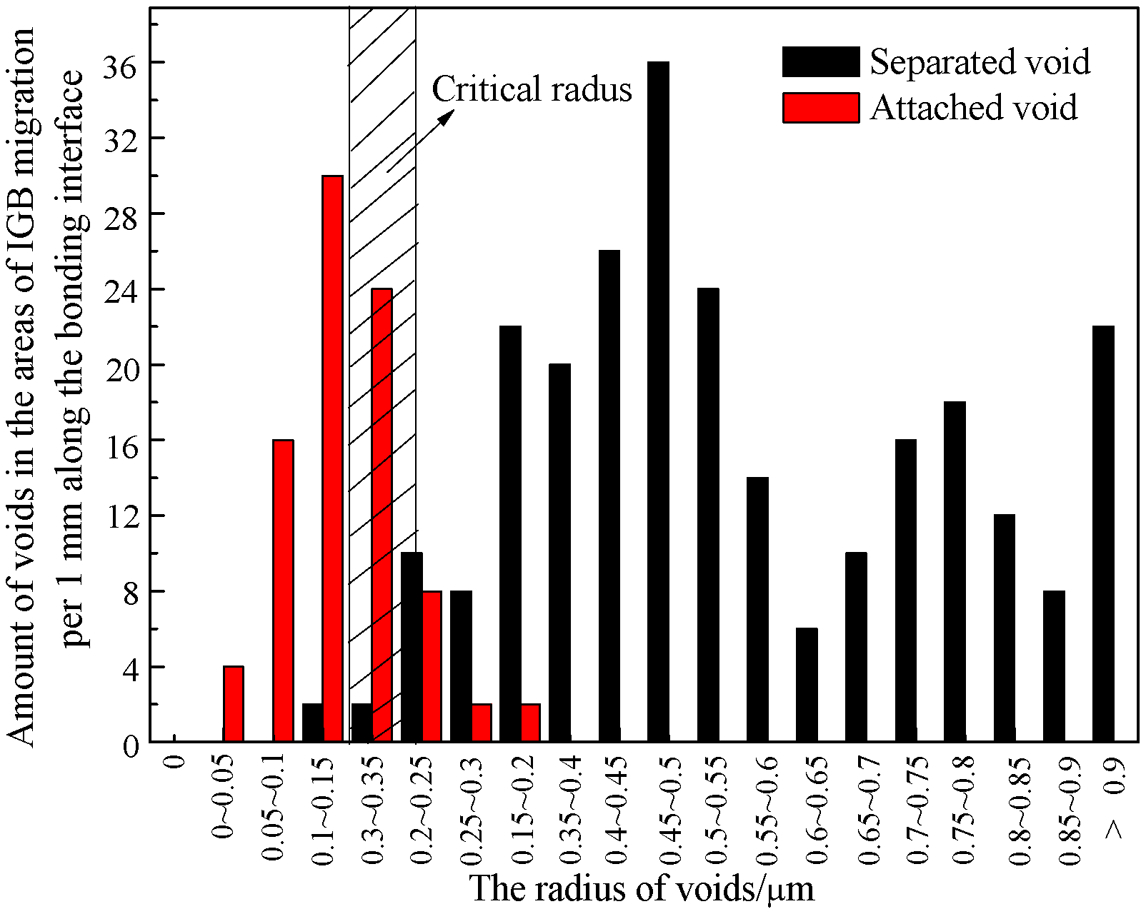
Distribution of voids per 1 mm in areas of grain boundary migration along IGB
Conclusions
In this study, the diffusion bonding of 1Cr11Ni2W2MoV steel was performed at a bonding temperature of 1000°C and pressure of 20 MPa for different bonding times ranging from 10 to 150 min. The phenomenon of void–IGB interaction was observed, and the void–IGB interaction mechanism has been discussed. The main conclusions are as follows.
As the bonding time prolongs, the conversion of bonding interface to an IGB and sequencing its migration are observed.
The void adjusts itself to a shape with the leading surface and trailing surface under the influence of the migrating IGB, and the difference in curvature between the leading surface and the trailing surface causes a chemical potential difference that drives atoms flux from the leading surface to the trailing surface to realise the void motion.
There are two situations occurring in the void–IGB interaction: if the void velocity is less than the IGB velocity, the void will separate from the IGB and trapped inside the grain: otherwise, the void will attach to and migrate with the IGB.
The approximate theoretical values of the critical radius of voids for separation/attachment are derived, and these theoretical values of critical radius agree well with the experimental values.
Footnotes
Acknowledgement
This work was supported by the Natural Science Foundation of China (grant no. 51275416).