







Abstract
Biomass oil obtained by the fast pyrolysis of straw is an acidic fuel with pH of 3·4-3·5. It contains a large amount of organic acids, phenol and water and, hence its application in varied industrial fields may result in the corrosion of different metals. In the present study, the corrosion performance of four kinds of iron, lead, steel and copper in biomass oil from the fast pyrolysis of straw was studied at different temperatures and for different test durations using a simulation corrosion evaluation apparatus for internal combustion engine fuel. The corroded metal surfaces were observed by optical micrography and analysed by X-ray photoelectron spectroscopy respectively. The experimental results showed that iron and lead were corroded seriously by the present biomass oil, while the corrosion extents of AISI 1045 steel and copper were significantly less. Layers of oxide and/or hydroxide were formed on these metal surfaces according to surface analysis. However, these layers were not protective of the underlying metals from further oxidation.
Keywords
Introduction
The accelerated rate of growth of energy consumption in the world, particularly in Asia, raises the incentive for developing renewable energy sources.1 In addition, the burning of fossil fuels, which produces carbon dioxide, has serious environmental consequences. In contrast to fossil fuels, the use of biomass for energy provides significant environmental advantages. Many research groups have studied the use of biomass oil as a fuel for burners, gas turbines and diesel engines.2–4 Although biomass oil has been considered as a new clean resource of energy, it has some disadvantages, such as a low calorific value, a higher oxygen content and greater corrosivity.2,5 Thus, it has been observed that, even at low temperatures, biomass oils will strongly corrode aluminium, mild steel and nickel based materials, whereas stainless steel, cobalt based materials, brass and various plastics are much more resistant.6 The corrosiveness of biomass oil is attributed to the relatively high concentrations of organic acids (e.g. formic, acetic and propanoic acid) present. Furthermore, the corrosiveness of biomass oil increases as the temperature and its water content each increases.7 This type of corrosion has important consequences for the construction of heating boilers and international combustion engines, because materials that are suitable for petroleum derived oils may be more strongly corroded by biomass oils.8
In the authors’ previous work the lubrication and biodegradation performance of biomass oil and the corrosion resistance of coatings was studied.9–11 In the present work, the authors focus on the corrosion performance of several kinds of metals used frequently in engines. Corrosion phenomena are mainly attributed to the presence of acid and water in the biomass oils.12 Four metals were brought into contact with biomass oil obtained by the fast pyrolysis of straw/biomass, and the variations on the metal surface were analysed by optical micrography and X-ray photoelectron spectroscopy (XPS). The purpose of this research was to gain a better understanding of the corrosion mechanism of metals by biomass oil and to predict the corrosion resistance of metals used in common engines.
Experimental procedure
Biomass oil
Biomass oil with a capacity of 120 kg h−1 of oil yield was obtained via the fast pyrolysis of straw in a circulating fluidised bed at the Laboratory of the Biomass Clean Energy (Anhui, China). The pyrolysis temperature ranged from 420 to 540°C in the biomass oil production process. The main products of the fast pyrolysis of biomass consisted of liquid biomass oil (55-70 wt-%), a mixture gaseous products (e.g. CO2, CO, CH4, etc.), and charcoal.13 More details of the process of pyrolysis and the reactor design can be found elsewhere.1,13,14
Corrosion test
The corrosion test was carried out according to National Test Standard of China GB/T 391-88. Before the corrosion tests, the surface of the metal strips was firstly ground to a 500 grit silicon carbide finish then ultrasonically cleaned in acetone and finally dried by filter paper in vacuum box at 100°C for 5 min. The corrosion tests were performed using metal strips including iron, lead, AISI 1045 steel and copper respectively. The schematic diagram of the corrosion apparatus is shown in Fig. 1. The area of the metal sample surfaces was ∼20 cm2. After the metal strips were weighed, they were individually placed in glass container which was then filled with 80 mL biomass oil. The metal strip was agitated by dipping in and out of the biomass oil at 15 times per minute using a motor drive in order to expose the strip and the biomass oil to air. The experiments were performed at different temperatures of 25, 40 and 55°C for 5 and 10 h. After the corrosion tests, the metal strips were dipped in ethanol for 5 min to remove adsorbed biomass oil, the strips were then ultrasonically cleaned in benzene and wiped with filter paper, and finally dried in vacuum drying box at 100°C for 5 min. After that, their weight variations could be measured.
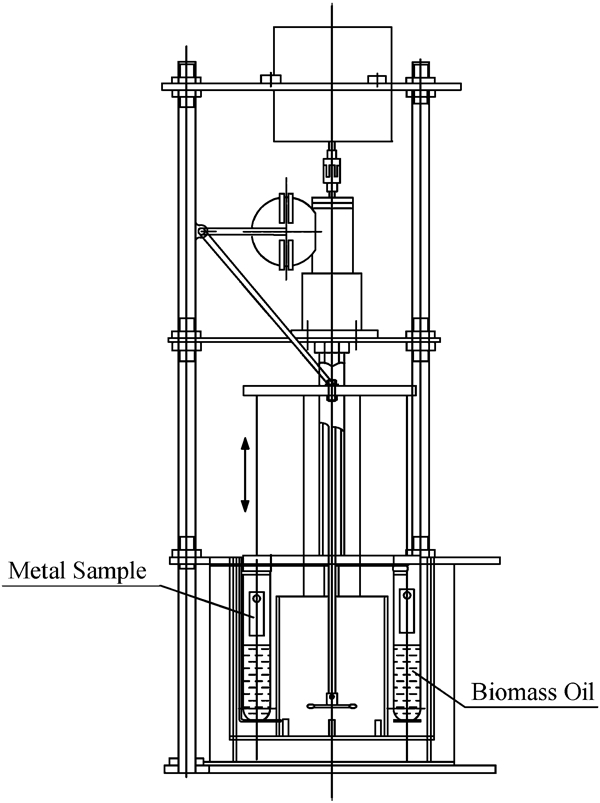
Schematic diagram of corrosion test apparatus, metal strip was dipped intermittently with frequency of 15 times per minute
Analysis of corroded surface
The chemical elements of the metal surface were analysed by XPS (ESCALAB 250, Thermo-VG Scientific Co.). The pressure in the analytical chamber was 10−12 Pa; the spot size was 500 μm; energy step size was 0·1 eV and the pass energies were 20·0 eV.
Results and discussion
Properties of biomass oil
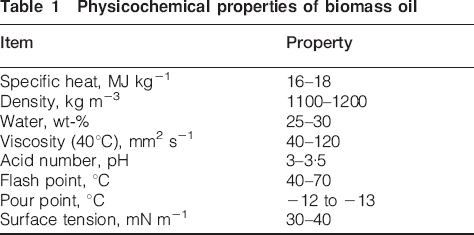
The as prepared biomass oil is a dark brown, free flowing organic liquid that is composed of oxygen containing organic compounds, as shown in Fig. 2. The properties of biomass oil relevant to metal corrosion are summarised in Table 1. The biomass oil contained 30% of water and is relatively acidic due to its organic acid components (pH = 3·4 to 3·5). From the results of gas chromatography mass spectroscopy the main components are listed in Table 2. It is well known that the input biomass consists of three major components: hemicellulose, cellulose and lignin.15 In the case of rice straw based biomass oil, additional organic acids, esters, phenols, etc. are also present. In the process of the corrosion tests it was found that the dynamic viscosity of biomass oil increased with the test duration. The explanation could be the volatilisation of water and other compounds with lower boiling point from the biomass oil. Moreover, the dissolved metal might also change the characteristic of the crude biomass oil.
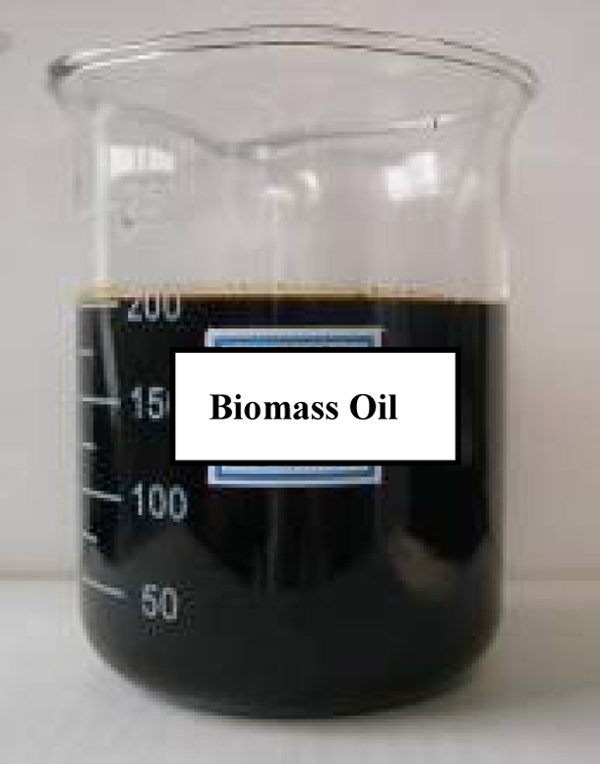
Biomass oil from straw
Physicochemical properties of biomass oil
Main components in biomass oil
Weight variation of metal strips
Corrosion information can be obtained from the weight increase of the metal strips when immersed in the biomass oil. The chemisorption of oxygen and other gases in the atmosphere will initially increase the weight of the strips. Furthermore, after contacting with biomass oil, some organic components like oxides and/or hydroxides are formed on the surface of the metals. These cannot be removed washed by physical methods and, hence, will result in an increase in weight of the samples.
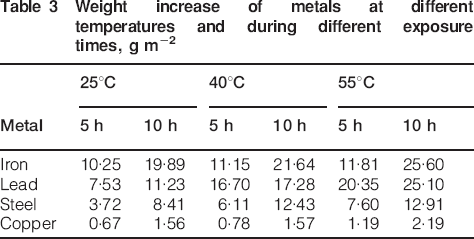
The mass variation rates of four metals at different temperature for 5 and 10 h are summarised in Table 3. Every experiment was repeated three times, and the final results were obtained by calculating the average values. A significant weight variation was found for iron, lead, AISI 1045 steel, which increased with temperature. The weight increase for copper was the smallest compared with the other metals, which indicated its positive performance. After 10 h the corrosion rates of iron, lead, AISI 1045 steel increased compared with those after 5 h immersion. However, the corrosion of copper was small after either 5 or 10 h.
Weight increase of metals at different temperatures and during different exposure times, g m−2

Surface variation of metal strips
The surface appearances of the metal strips after corrosion are shown in Fig. 3. On the surface of steel and copper strips some discoloured spots were evident, which are likely to result from corrosion by the biomass oil. The process of metal corrosion can use this formula to donate: metal material+corrosion medium→outcome of corrosion. It is well known that some kinds of organic compounds are corrosive, such as organic acids, aldehydes, halogen and sulphur containing compounds. These organic compounds are contained mainly in the biomass oil, and they can be hydrolysed to acid relevantly and bring a small quantity of hydrogen ion.
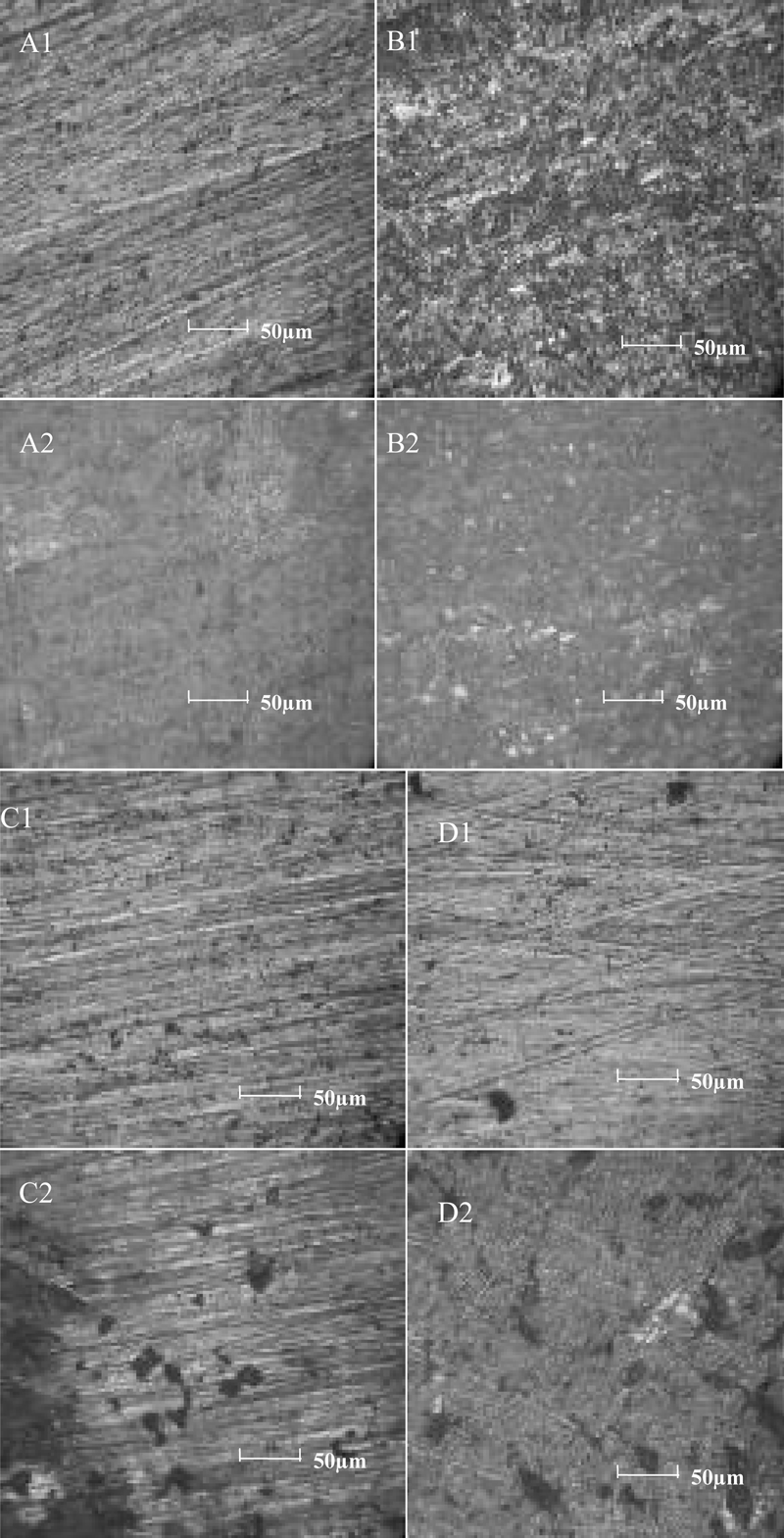
Surface image of metal strips before (A1, B1 C1 and D1) and after (A2, B2 C2 and D2) corrosion by biomass oil
X-ray photoelectron spectroscopy results of the four exposed metals are shown in Figs. 4–8 and Table 4. For the iron and steel samples the results are consistent with the presence of Fe2O3 and Fe3O4. The peak of Fe(II)2p3/2 in Fe-O bond should be at a binding energy (BE) of about 708-710 eV. However, Table 4 and Fig. 6a showed that this peak occurred ∼711·5 eV and was thus caused by Fe2p3/2 in Fe(III)-O. Therefore the corrosion products on the iron and steel strips may contain Fe2O3 (710·7-711·6 eV) or Fe3O4 (708-711·4 eV). However, the O1s binding energy (531·59 eV) in Table 4 was different from that of Fe2O3 and Fe3O4 (∼530 eV), but similar to the O1s in hydroxide (531·3 eV). Hence, these results show that the corrosion products were mainly hydrated iron (III) oxide or hydroxide. In Fig. 6a, the peak at ∼707·5 eV can be attributed to Fe2p3/2 from the iron, but the peak area was small which means its content was low and the corrosion product thickness correspondingly relatively thick. Figure 6b shows no peak at ∼707·5 eV; an interpretation consistent with this data is that the corrosion product on the steel surface was thicker than on iron (no signal for metallic iron from the substrate).
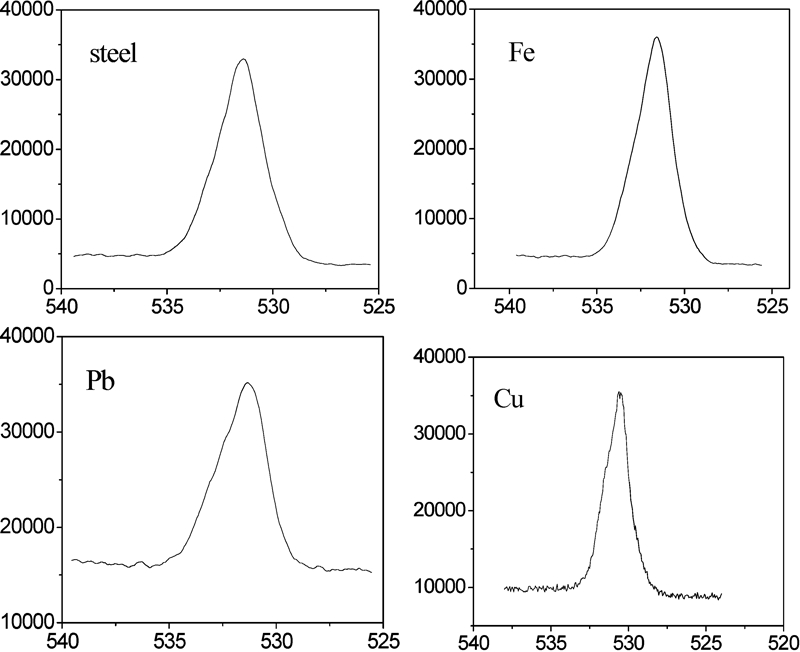
O1s XPS spectra of metal strips after corrosion
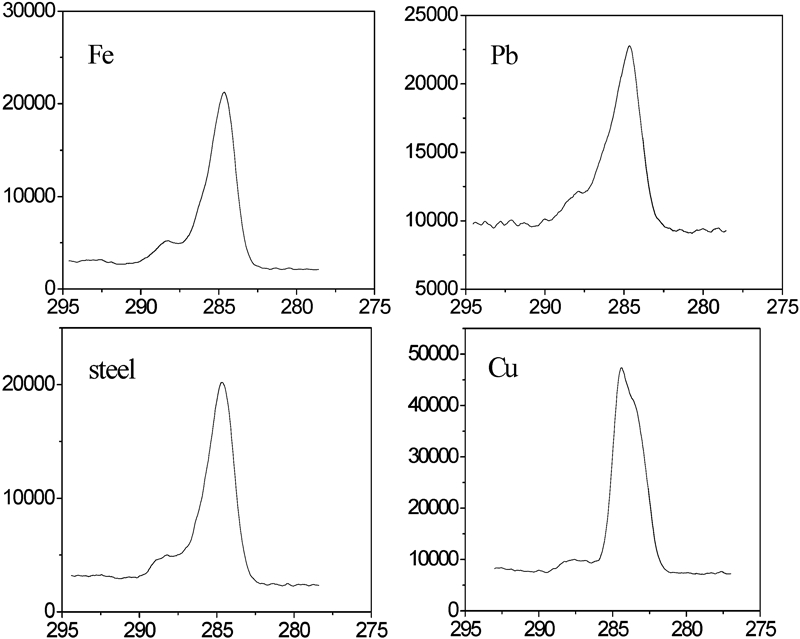
C1s XPS spectra of metal strips after corrosion
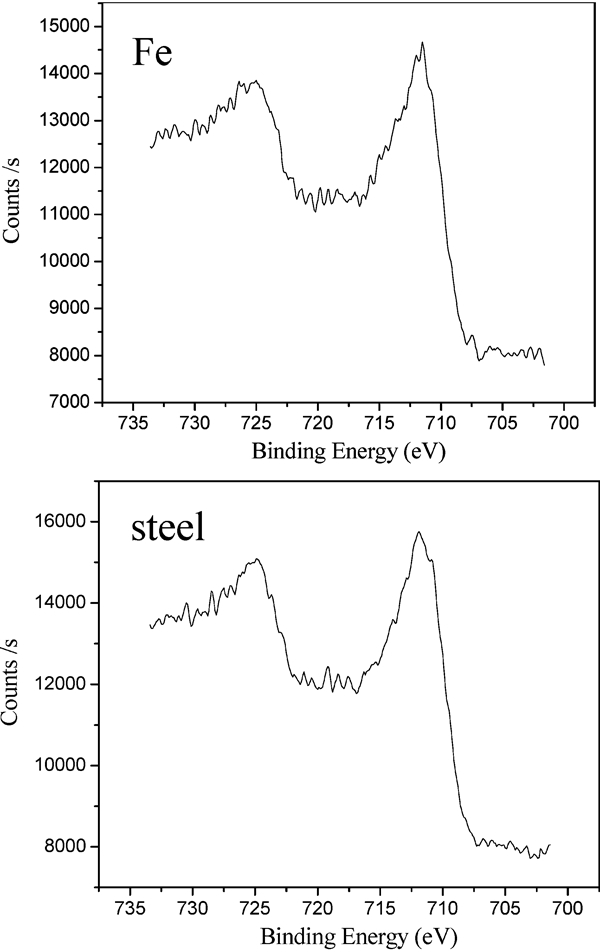
Fe2p XPS spectra of a iron and b steel metal strips after corrosion
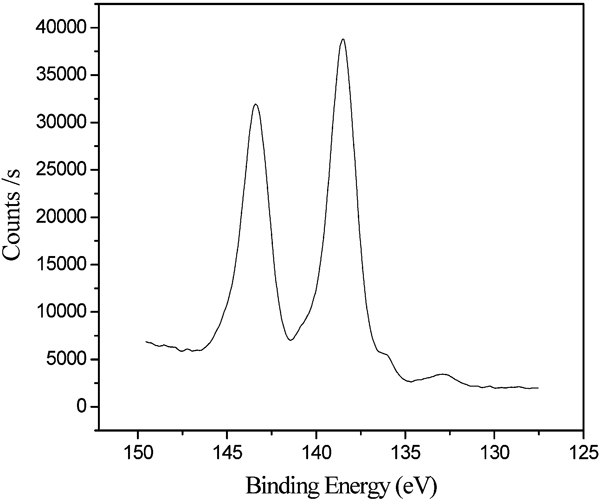
Pb4f XPS spectra of Pb metal strips after corrosion
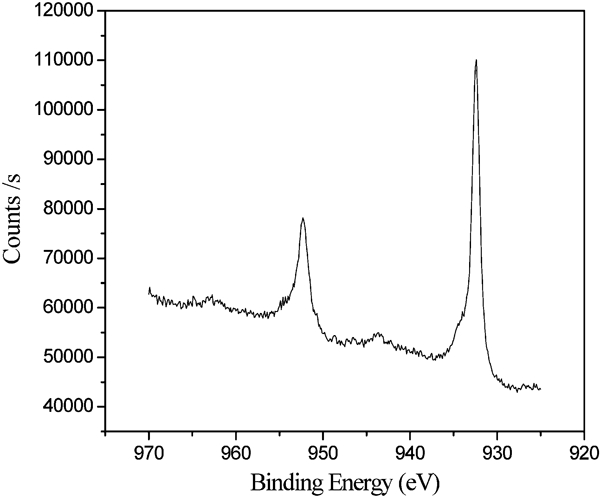
Cu2p XPS spectra of Cu metal strips after corrosion
X-ray photoelectron spectroscopy results of surface of iron, lead, steel and copper metal strips
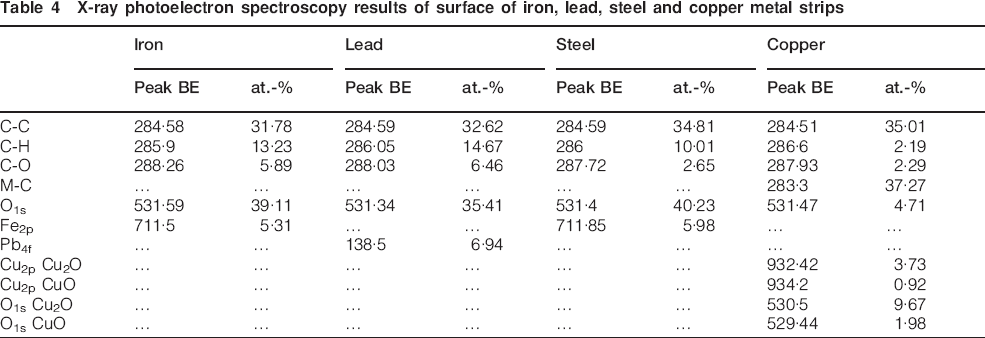
Regarding lead, the peak at ∼138·5 eV shown in Table 4 and Fig. 7 can be attributed to Pb4f in Pb (II)-O. The O1s binding energy (531·34 eV) was very close to the O1s binding energy in PbO (531·6 eV), which means that the corrosion product was PbO although a component of the surface is consistent with Pb4f in Pb(OH)2 (138·5 eV). While the binding energy peak between 136 and 137 eV of free lead was not apparent at all. This indicates that the surface of the lead metal strips was covered with a relatively thick oxide layer.
The peaks at 529·44 and 934·2 eV from Table 4 and Fig. 8 are attributed to O1s and Cu2p in CuO respectively, while the peaks at around 530·5 and 932·42 eV are attributed to O1s and Cu2p in Cu2O respectively. This means that the corrosion product contains both Cu2O and CuO. The quantitative analysis in Table 7 showed that the content of Cu2O was higher than that of CuO, which indicates that the main corrosion product was Cu2O.
Conclusions
Straw based biomass oil prepared by the process of fast pyrolosis contains a large amount of organic acids and water and consequently is relatively acidic. This kind of biomass oil leads to higher corrosion to metals. In cases of iron and lead, their corrosive extents were relatively severe compared those of AISI 1045 steel and copper, while the copper showed the best anticorrosion ability. Their corrosion volumes increased with corrosion time and temperatures in cases of iron, lead, mild steel and copper. After corrosion layers of oxide and/or hydroxide are formed on the metal surface. However, these layers cannot protect the metal from further oxidation.
Footnotes
Acknowledgements
The authors wish to express their thanks to Mr M. J. Deng, Mr M. Chen and Mr M. Tian for their assistance in the present work. The financial support by National Natural Science Foundation of China (grant no. 50875071) and National Key Technology R&D Programme (grant no. 2007BAD34B02) are also acknowledged.