






Abstract

EUROCORR is an annual conference organised on behalf of the European Federation of Corrosion (EFC) and is generally regarded as the premier corrosion conference in Europe. The conference moves from country to country and this year took place at the Congress Centre of the World Trade Centre in Moscow, Russia. The organisation was split between an international scientific committee mainly composed of working party chairmen, a Russian scientific committee, a local organising committee and Dechema. The international scientific committee was chaired by Alexander V. Muradov, Gubkin Russian State University of Oil & Gas, Moscow, Russia and the local organising committee by Yury i. Kuznetsov, A. N. Frumkin institute of Physical Chemistry and Electrochemistry of Russian Academy of Sciences, Moscow, Russia.
The focus of the 2010 meeting was ‘From the Earth's Depths to Space Heights’ and the talks certainly lived up to this. There were many presentations devoted on how best to get oil and gas out of the depths of the earth although fewer space-focused talks. Your correspondent did attend one on ‘Exposure of silver to atomic oxygen about a metal corroding in the stratosphere’ given by A. De Rooij from the European Space Agency, Noordwick, The Netherlands, which will be covered in a later report.
The Congress Centre of the World Trade Centre in Moscow, Russia
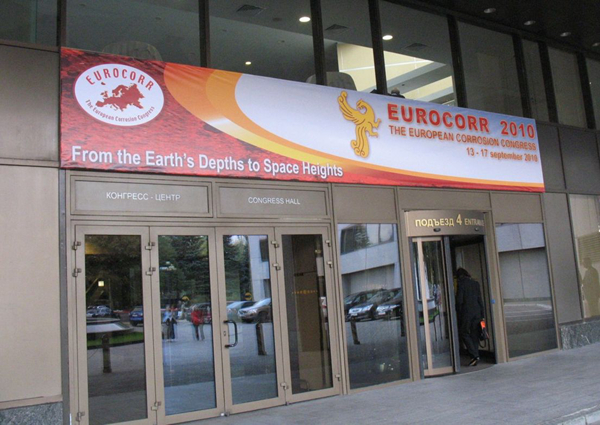
The conference itself was successful and the number of delegates topped the 600 mark; a good turn out considering the distant (and rather expensive) location and challenges of language, the Cyrillic alphabet and Metro system (mastering this is key). There were 26 sessions, 18 of which were run by working parties, plus 4 joint sessions and 4 workshops with over 300 oral presentations and 200 posters. At the main congress centre there was a good sized exhibition area and posters were displayed and coffee and lunches served close by.
Within the conference were the usual EFC business activities with working party meetings and the General Assembly (GA). The resignation of Paul Mcintyre as Scientific Secretary of the EFC due to ill health was announced at the GA and accepted with regret. Much appreciation was expressed to Paul for the sterling work he had done in the role over the last thirteen years. Social events included; a welcome reception on the Monday evening, a whistle-stop, night time bus tour of Moscow on the Tuesday and the conference dinner on the Thursday.
Opening session and plenary lectures
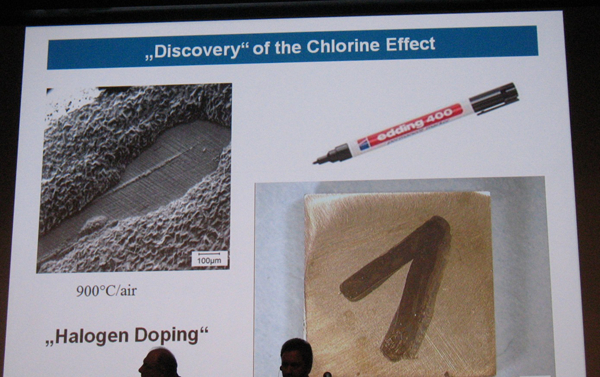
The conference opened on Tuesday morning with a welcome from Alexander Muradov. This was followed by the presentation of the Cavallaro medal to Michael Schutze (Dechema) who gave a good talk summarising his activities in the field of high temperature corrosion. One particularly interesting slide was of the apparent beneficial effect of chloride, normally considered to be highly deleterious as far as corrosion is concerned! This was discovered serendipitously after oxide was found not to grow at the point where a marker pen continuing an ink with chloride in was used on a specimen.
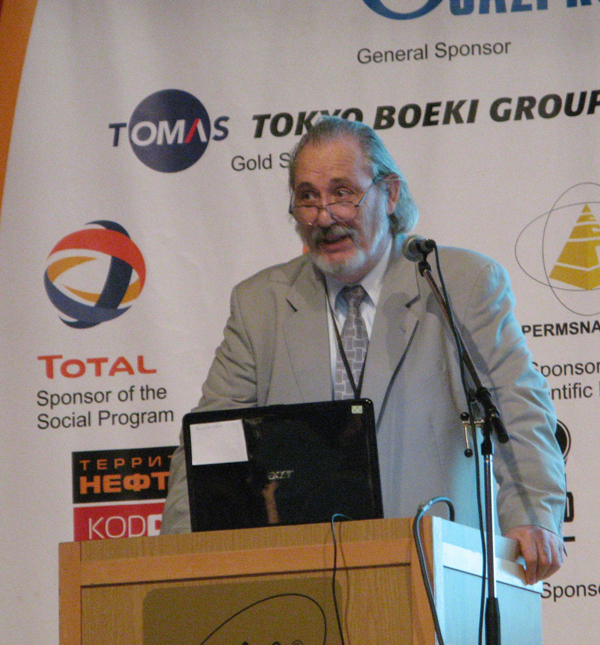
Yury I. Kuznetsov, Chair of the local organising committee
An invited plenary lecture was given by Yu. i. Kuznetsov from the A.N. Frumkin, institute of Physical Chemistry and Electrochemistry, Moscow Academy of Science, Russia entitled ‘Progress in corrosion inhibition and modification of protective nanolayers on metals’. Although passivation of iron by sodium phenylanthranilate (SPA) was known in the mid 1970s, compounds based on the same material e.g. sodium fluphenaminate (SFP) which start to inhibit at concentrations six exponents lower compared to SPA have been developed subsequently. Examples of the positive impact of a change of design of protective films of organic inhibitors on their protective capability e.g. in moist atmosphere were given. The conclusion was that a ‘layer by layer’ method provides the best passivating treatment of a metal surface against atmospheric corrosion. Progress in aqueous non-toxic compositions to obtain conversion coatings and their passivation were also discussed together with state-of-the-art of research dealing with the development and perfection of complex-forming inhibitors.
Plenary lectures were also given on the other days of the conference. No papers are available on the conference proceedings CD-ROM so a somewhat longer than usual summary is being provided instead. On Wednesday, Yu Zuo, Beijing University of Chemical Technology, China presented a plenary lecture on ‘Study on the current fluctuations during the early stage of pitting corrosion’. The relationship between peak current and average growth rate of metastable pits on 316 L stainless steel had been analysed. it was found that the peak currents of metastable pits did not increase simply with increase of the propagation rate. A middle growth rate was beneficial for formation of relatively larger metastable pits. As the chloride concentration increased, the growth rate range was found also to increase. For carbon steels and pure iron, the pit size distribution calculated from the current fIuctuations was very close to that observed with SEM, indicating good correlation between current fIuctuations and growth process of metastable pits.
Plenary lecture by Michael Schutze
A rather different type of talk was given on Thursday with ‘The effects of air pollution and climate on materials including cultural heritage’ by Johan Tidblad, Swerea KiMAB AB, Stockholm, Sweden. Having pointed out that in many industrialised countries SO2 levels are today very low, nonetheless due to a range of different pollutants the levels can be more than twice of that in surrounding rural areas. Also SO2 levels in many tropical and subtropical countries are still high and show no substantial decreasing trend. There is a risk of increased corrosion of cultural heritage in the future, depending on the location, due both to changes in the climatic situation and to changes in the pollution situation (a theme issue of CEST on corrosion of archaeological and heritage artefacts was published in 2010 (CEST 2010, 45, 5), interested readers may refer to this for further information) Finally on Friday, V.A. Golovin again from N.A. Frumkin institute of Physical Chemistry and Electrochemistry, Russia gave ‘Composite polymer protective coatings for use in aggressive media’. Mass transfer processes notably sorption and diffusion were analysed and integrated data provided on profiles of aggressive media concentration in anticorrosive polymers and on anticipated rates of aggressive component penetration through the coating. Although development of polymer coatings which would act as a total diffusion barrier lacked feasibility, nonetheless it was demonstrated how a sandwich construction consisting of linings with diverse physical and chemical properties could dramatically reduce permeability to highly aggressive media. This talk was of particular interest to this correspondent as it highlighted the inherent inhomogeneous nature of polymers and, in a nutshell, theoretically justified the use of multi-coats.
Technical programme
Moving away from the plenary lectures and awards and looking at the technical side of the meeting, in addition to technical sessions there were a number of workshops including; corrosion in natural environments, corrosion and corrosion protection in the aerospace industry, standards and regulations in corrosion protection of oil and gas production equipment and pipelines and nanotechnologies. Joint sessions included; EFC-CEOCOR: Materials and disinfection and Local microprobes to study surface treatments and coatings produced by nanotechnologies.
The papers from these and the technical sessions appear on the conference proceedings CD-ROM and selected presentations will be reported in subsequent conference reports. This year working party chairmen have been asked to suggest the best papers from their session, to assist reporting of the conference.
Automotive corrosion
The automotive corrosion session was quite a large one and ran all day on Tuesday and Wednesday. A dozen or more good papers appear on the CD-ROM of which half have been selected for comment. The session was chaired by F. Hannour from Tata Steel RD&T, ijmuiden, The Netherlands with assistance from B. Normand from Université de Lyon, Villeurbanne, France. The opening plenary lecture on ‘Recent trends of surface coated steel for automotive panels’ was delivered by J. Kim from POSCO, Gwangyang, Jeonnam in South Korea. Novel functional coating technologies both for automotive panels and general purpose were introduced together with a brief technical description of representative coating products. This was good presentation which your correspondent attended but unfortunately there is no full paper on the CD-ROM.
The session followed with ‘Corrosion resistance of different metallic coatings on press hardened steels for automotive use’ by L. Dosdat, ArcelorMittal, Maizières-les-Metz, France. Aluminised, galvanised (both normal and for cold forming) and galvannealed boron steels were evaluated using a cyclic test developed specifically for the automotive industry. Corrosion resistance was quantified by measuring the delamination of electro-deposited paint on scribed panels. Zinc-coated boron steels were found to be much more resistant to cosmetic corrosion than the other materials and slightly more resistant to cut-edge corrosion than the aluminised one. Just before lunch, P Volovitch from the Ecole Nationale Supérieure de Chimie de Paris, France presented ‘Role of alloying elements for improved corrosion resistance of Zn-Al-Mg coatings on steel’. The role of Mg and Al was assessed after various exposure times in cyclic corrosion tests with NaCl or NaSO4 containing atmospheres by corrosion product characterisation using X-ray diffraction, infra-red spectroscopy, scanning electron microscopy with x-ray microanalysis. Early on, the crystalline forms of basic zinc salts (simonkolleite, zinchydroxysulphate etc) were found to stabilise. This was attributed to the presence of Mg ions which bind the excess carbonate or sulphate anions. At a more advanced stage, the pH of the system increased sufficiently for Al dissolution to occur. The authors claimed that the presence of Al3+ inhibits corrosion by two different mechanisms, firstly at low concentrations by buffering the pH of the electrolyte around 9 and secondly by the precipitation of Al(OH)3 thereby preventing the transformation of zinc based corrosion products into soluble hydroxide complexes.
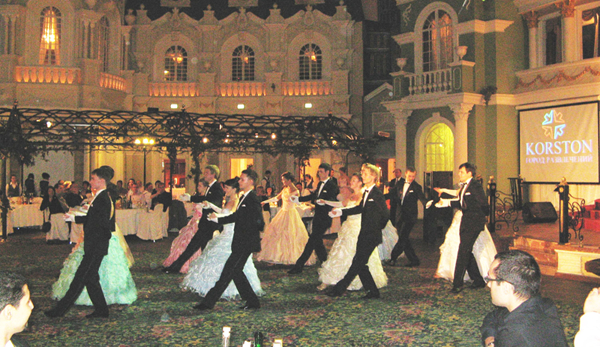
Conference dinner. Image provided by Kristof Wolski
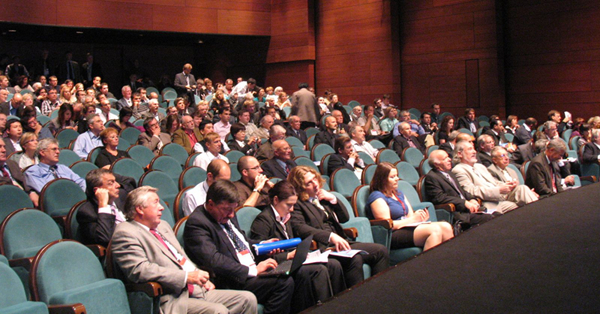
Audience for plenaries
After lunch, Nathalie LeBozec from the French Corrosion institute, Brest, France gave ‘Corrosion performance and mechanical properties of joined materials used in the automotive industry’. The joining techniques which were investigated were spot welding, laser welding, arc welding, MiG brazing, clinching and adhesive bonding with epoxy. Materials were carbon steel, high strength carbon steel, zinc coated steel, different aluminium alloys and magnesium alloy. These were joined and assessed after cyclic accelerated corrosion tests. The results indicated a relationship between the amount of corrosion inside the confined joint and the degree of decrease of the mechanical properties of the assemblies.
Towards the end of Tuesday, Cristina Hoffmann from University of Applied Sciences in Konstanz, Germany presented ‘Electrochemical measurements for testing the corrosion behaviour of stainless steels in automotive exhaust systems’. Austenitic (+/− molybdenum), ferritic (different chromium, molybdenum, manganese contents) and austenitic-ferritic types were tested in acidic chloride bearing media, under alternating wet-dry conditions in the presence of soot particles. The results of separately conducted electrochemical tests showed that active carbon has a significant infIuence on corrosion attack. The authors recommend that this should be considered in any future test methods for stainless steels being developed for use in automotive exhaust systems.
The keynote presentation on Wednesday was entitled ‘Multi-level protection of materials for vehicles by smart nanocontainers (MUST)’ given by M. L. Zheludkevich from University of Aveiro, Portugal. The perspectives, challenges and limitations of the application of self-healing coatings and adhesives in future car designs were discussed. Later in the day came ‘Evaluation of the corrosion protection of coolants for combustion engines at elevated temperatures via electrochemical methods’ by Torsten Troßmann from Technische Universität, Darmstadt, Germany. Fleet tests, system checks on engine test benches and use of a modular hot test apparatus (MHTA), all simulating service like stresses, had been carried out at high temperature and high heat flux (these latter are required to reduce friction). These conditions were found to reduce the corrosion protection offered by the coolants. To understand the cause, cyclic current potential curves and impedance spectroscopy methods were applied. The results indicated the infIuences of the coolant temperature, the coolant technology and concentration and especially the heat flux on the corrosion damaging process.
The final paper of the session (available on the CD-ROM) was ‘improvement of Electrochemical Noise Measurements (ENA) - No Contact to Substrate (NOCS) set-up - using Artificial Neural Networks (ANN) approach for the detection of corrosion’ by M. Halama from the Technical University of Koiice, Slovakia in work done in conjunction with David Jerolitsch from the Centre of Electrochemical Surface Technology and A P Linhardt from the Vienna University of Technology, Austria. Experiments had been conducted on well defined hot dip galvanised (HDG) and Al/Zn alloy coated steels with and without organic paints applied, both on samples which had been artificially pre-corroded in the lab and on others which had been corroded by exposure to outdoor conditions. A large number of parallel measurements were done to create a dataset which was used to train an ANN. This was then applied to samples in an unknown state of degradation. The authors claim that currently the monitoring system can distinguish five levels of degradation (very active/active/medium/passive/very passive) for both types of steel. it was one of your correspondent's students, Christopher Woodcock, who invented the NOCS method and he would just comment that although it works well when applied to organically coated carbon steel, the interpretation will require modification for metallically coated steel.
Environmentally sensitive fracture
The session on environmentally sensitive fracture was chaired by Krzysztof Wolski from the Ecole Nationale Supérieure des Mines de Saint Etienne, France. The session ran all day on the Tuesday and consisted of oral presentations and posters. Thirteen full papers are available on the CD-ROM but space precludes writing about more than a handful. Most of the papers selected for comment were identified as the best papers from the session by the working party Chair.
The opening presentation was given by V. V. Kharionovsky working at GAZPROM VNiiGAZ, Russia on ‘Scientific and technical aspects of stress-corrosion in trunk gas pipelines’. Because in-pipe inspection is difficult to conduct on compressor station fIow lines, particularly as in many cases pigs cannot be run, specific corrosion control and pipeline maintenance methods need to be developed. The paper described a set of pipeline maintenance methods (including methods of inspection, evaluation of strength properties and scope of repair) as well as how a pipeline re-insulation program has been instituted where a large variety of coatings have been developed to ensure reliable corrosion-proof operation of pipelines. Examples of these approaches were given.
Early after lunch came ‘The infIuence of surface film modification on the mechanical and electrochemical properties of austenitic stainless steel’ delivered by Salah Gnefid from Sheffield Hallam University, UK (the coauthor was Robert Akid from the same establishment). The system consisted of a miniature fatigue rig and electrochemical droplet cell both contained in a Faraday cage. The original surface film was modified electrochemically using an alternative voltage passivation process (AVPP) Potentiodynamic polarisation and electrochemical impedance spectroscopy (EiS) tests were performed in artificial seawater, on both the original and the modified passive film. Results showed improvement in the corrosion resistance off material surface with the modified film. Shortly after, Anna Smirnova from SiNTEF Trondheim, Norway gave ‘Cohesive simulation of hydrogen assisted crack initiation in ×70 steel and welded joints’. This was originally due to be delivered by Vigdis Olden but she, like quite a few other people, was prevented from getting to Moscow by visa and other problems. Note that a published article covering some of the same ground can be found in Engineering Fracture Mechanics 2008, 75, p. 2333—2351. Fracture mechanics SENT testing and FE modelling had been performed. Base metal and weld simulated coarse grained heat affected zone were included. it was found that base metal ×70 did not fail at net section stresses lower than 1·29 times the yield strength and revealed low sensitivity to hydrogen embrittlement. Weld simulated coarse grained heat affected zone was prone to fracture at stresses above 70% of the yield strength, which indicates hydrogen embrittlement susceptibility. Cohesive parameters were δc = 0·3 mm and σc = 1700 MPa (3·5 σy) for base metal and σc = 0·3 mm and σc = 3900 MPa (4·8 σy) for coarse grained heat affected zone.
The first poster was ‘Hydrogen solubility and diffusion in austenitic stainless steels studied with thermal desorption spectroscopy’ by O. Todoshchenko from Aalto University, Espoo in Finland. AiSi 310, AiSi 301LN, AiSi 201 and duplex stainless steel LDX 2101 were studied after electrochemical potentiostatic hydrogen pre-charging using thermal desorption spectroscopy (TDS). it was shown that the temperature dependencies of hydrogen desorption for all studied steels manifested a complex main peak caused by hydrogen releasing from the steel lattice by diffusion. Depending on the steel and heating rate the peak is situated from 350 to 500 K and its shape refIects a specific of hydrogen diffusion in stainless steels. Another good poster was ‘Stress corrosion cracking (SCC) detection of sensitised stainless steel 304 in chloride media by using electrochemical impedance spectroscopy (EiS)’ given by B. Adib, islamic Azad University, North Tehran, iran. U-bend (to ASTM G30) specimens of stainless steel 304 alloy were exposed to 40 wt% MgCl2 at 120°C and EiS measurements performed simultaneously under stress and without stress. Results showed that changes in phase shift versus time could be related to the stress corrosion cracking process. Stress corrosion cracking was detectable for 600 and 1200 mm2 samples at a frequency of 23·95 and 72·79 Hz, respectively. Analysis of the fracture surface using metallography and SEM confirmed the EiS results. The final poster chosen for comment here was ‘Formation of hydrosulphuric and hydrogen cracks in steel constructions’ by V. M. Kushnarenko, Orenburg State University, Russia. Hydrosulphuric cracking (HSC) is generally accepted to be initiated by strain concentrators such as technological defects of the welding sealing and core metal, corrosive pits, etc. whereas Hydrogen Cracking (HC) type is caused by welding defects. Results were given of the laboratory experiments with a 280×20×10 steel pattern and welding seals in the NACE medium, which were performed using an ultrasonic crack detector and the process of the HC was compared with the HSC processes. The mechanisms appeared to be identical. Hence it was concluded that the nature of steel metal corrosion caused by hydrogen is common and the processes of hydrogen ions sorption by the metal and hydrogen ionisation in a discontinuity micro fIaw play a controlling role (Note to reader – you'll need to brush up on your Russian if you want to read the original!).
Corrosion and scale inhibition
The corrosion and scale inhibition session organised was by WP 1 whose chair is Gunter Schmitt from iserjohn University of Applied Sciences, Germany. it ran through the day on the Tuesday and Wednesday of the meeting. There were 18 papers and 28 posters of which somewhat under half appear as full papers on the CD-ROM. The first paper chosen for comment was given on Tuesday morning by A. Chirkunov from the A.N. Frumkin institute Russian Academy of Sciences, Russia and was entitled ‘Metal passivation by phosphorous-containing inhibitors in a humid atmosphere’. Ultrathin (nano) layers based on zinc complex of 1-hydroxyethane-1, 1-diphosphonic acid were formed on mild steel and it was shown that the efficiency of these alkylphosphonates in providing inhibition depended on the length of hydrocarbon radicals and also on the exposure time. The geptyl- and octylphosphonates were the most effective passivators in neutral aqueous solutions whereas dioctylphosphate was the best inhibitor for preventing local depassivation.
On Tuesday afternoon, Edouard Reny working at Nalco Europe B.V., Oegstgeest, The Netherlands delivered ‘Cyclic polarisation applied to industrial corrosion inhibitors in order to measure their localised corrosion inhibition capability’. Steel samples had been anodically polarised in a 3-electrode cell and electrochemical measurements carried out. These were complemented by visual observation that allowed statistical analysis to be conducted on the pits formed (maximum pit depth and pit depths’ distribution). Indicators of the intensity and of the industrial criticality of localised corrosion were extracted from the data and it was shown how these indicators could be used to evaluate the effectiveness of a pre-selected inhibitor compound.
Later that day, ‘Application experience and new approaches for volatile corrosion inhibitors’ was given by Patrick Lynch from Northern Technologies international Corporation, Beachwood, Ohio, USA. Data, gathered from experiences in application of a wide range of volatile corrosion inhibitors VCis during the last 10 years, was presented. it was shown that both existing and new VCi systems introduced either as films/diffusers or plastic strips could achieve efficient corrosion protection of ferrous, non-ferrous and multi-metal parts and equipment during storage, shipping, and use in oil and gas, military, automotive, electronic, electrical and other industries.
On Wednesday, a presentation on ‘Complex approach to the estimation of copper pitting corrosion inhibition by benzotriazole (BTAH) in alkaline media under different temperatures’ was given by Svetlana Kaluzhina from Voronezh State University, Voronezh, Russia. Estimation of BTAH efficiency at varying concentrations had been determined in the presence of Cl− and SO42− ions. it was shown that BTAH inhibits copper in both systems by an adsorption polymerisation mechanism at 20°C, Cinh⩾4×10⁻⁵ M in alkaline chloride solution, Cinh⩾8×10⁻⁴ M in alkaline sulphate and at 60°C, Cinh⩾2×10⁻⁷ M and Cinh⩾5×10⁻⁷ M respectively. The difference was attributed to the stabilising effect on the polymers benzotriazolate copper of Cl− ions and additional hardening of the protective film on the copper surface due to the formation of hydrogen bonds between oxygen and hydrogen oxide benzene ring (C-N) benzotriazole molecule.
The first of three posters was ‘Cu(II), Co(II) AND Ni(II) complexes of -Br and – OCH2CH3 substituted Schiff bases as corrosion inhibitors for aluminium in acidic media’ by A. Aytac, Gazi University, Ankara, Turkey. Aluminium, immersed in 10 ppm of the compound to 0·1 M HCl at 25°C, was investigated using potentiodynamic polarisation, LPR, electrochemical impedance spectroscopy and gas evolution tests. Results showed that the Ni(ii) complex was the best inhibitor with a mean efficiency of 69%. The potentiodynamic polarisation curves showed that both cathodic and anodic processes were suppressed. The Nyquist plots of impedance gave mainly a capacitive loop and scanning electron microscopy (SEM) examination revealed a uniform film on the surface. Another good poster was ‘Protection of bronze by an environment friendly corrosion inhibitor’ from Katarina Maruiic, University of Zagreb in Croatia. Cu-6Sn bronze in 4-methyl-1-p-tolylimidazole (TMi) (an innocuous imidazole compound), was immersed in a solution consisting of 0·2 g L−1 Na2SO4+0·2 g L−1 NaHCO3 at pH 3 and 5, which simulate strong and mild acid rain in urban environments. Potentiodynamic and electrochemical impedance spectroscopy (EiS) measurements showed that the optimal concentration of TMi is 5 mmol dm−3 at both pH values. The adsorptive behaviour of TMi in the sulphate/carbonate solution could be approximated by the Langmuir type isotherm at pH 3 and by the Freundlich type isotherm at pH 5. Values of activation energy indicated that the inhibitor adsorbs to the surface by physisorbtion at both pH values.
The final poster being selected for comment is ‘The partial contributions of the phase coating and inhibitor as the united system to its protective action estimate method’ by L. E. Tsygankova from Tambov State Technical University, Tambov, Russia. Results using the polarisation resistance method were obtained from St3 carbon steel in mineralised chloride medium (5 wt % NaCl containing 50-400 mg L−1 H2S) with addition of an iNKORGAS-T30 inhibitor. it was found that the steady state of the polysulphide film is reached after 1·5-2·0 hours from the beginning of its formation and the inhibitor deposit contribution to the combined protective efficiency is equal to 20% after 6 hours exposure (Cinh = 200 mg L−1). The sum protective efficiency of the film and the iNCORGAS-T30 inhibitor reached 92-99%.
Nuclear corrosion
The nuclear corrosion session ran on the Thursday morning and was chaired by D. Feron from CEA/Saclay, Gif-sur Yvette in France and V. Peretrukhin from the RAS, Moscow, Russia. There were six papers on the CD-ROM and five of these (all recommended by the Chairman) have been selected for comment here. it is interesting to note that of the five papers, two are from italy, one is from the Czech Republic and one from india. Only the last paper comes from a country expected for this work i.e. France where 80% of its power is provided by nuclear stations.
In the morning session, Marco Utili from ENEA CR Brasimone, Camugnano in italy discussed ‘Development of new kinds of corrosion protection coatings in lead at temperature of 500°C’. Ti and Zr carbide, BLUE coating, Ti/Al nitrides and three kinds of T91 FeAl coatings on martensitic steel T91 were tested in the CHEOPE iii loop at 500°C under controlled oxygen atmosphere (10−6%) in fIowing lead at 1 m s−1 for 2000 and 4000 hours. it was found that FeAl made by DC sputtering showed the best corrosion resistance. A second paper from the same group was given by Alessandro Gessi in the afternoon session entitled ‘Corrosion experiments of reference steels in fIowing LBE and Pb’. This described the experimental data, EDX imaging and elemental analyses, gathered from the LECOR and CHEOPEiii loop, after 10,000 hours of exposure of T91 and AiSi 316L steels’ specimens in fIowing LBE at 450°C and Pb at 500°C. This environment was chosen as representative for relatively high temperature areas in the LFR reactor concept.
This was followed by ‘Fe crystal plasticity contribution for SCC mechanism understanding’ by Andrey Musienko from Saint Petersbourg State Polytechnical University, Russia. The crystal plasticity method is known to be able to predict important properties like texture effect and give realistic results for the local strain stress fields in 3 d polycrystalline specimens. The authors showed how the method also has application to account for crack initiation criterion and even to indicate the fracture mechanism. Stress based criterion was found to be in qualitative agreement with experimental data obtained when two secondary tension arms were exposed at 360°C in an environment consisting of; 1000 ppm B (as boric acid), 2 ppm Li (as lithium hydroxide) and 30 ml kg H2, typical of the primary circuit of PWR.
Two posters are selected for comment; the first is ‘in-situ electrochemical characterisation of zirconium alloys corrosion in high temperature power cycle environment’ by Petr Sajdl from the institute of Chemical Technology, Prague, Czech Republic. Corrosion of different types of zirconium alloys was investigated in-situ under high pressure, high temperature conditions using EiS. The chemical conditions were those applied in the VVER type of reactor coolant (boric acid, potassium hydroxide, lithium hydroxide). Experimental impedance spectra were approximated by equivalent circuits (EC) based models. The optimal model was selected and parameters characterising time evolution of oxide parameters were obtained. EC parameters were correlated with those obtained by independent methods (weight gain, electron spectroscopy). The second poster was ‘Corrosion of stainless steels in nitric acid service: corrosion degradation issues and control measures’ by Vivekanand Kain, Bhabha Atomic Research Centre, Mumbai, india. End grain corrosion affects all grades of stainless steels including NAG stainless steels. Controlled solution annealing, laser surface re-melting, weld overlay and welding of a material over the exposed end faces were shown to be highly effective in avoiding this kind of corrosion. Other factors that were shown to cause problems were the presence of halide ions in nitric acid streams and cold working. it was also observed that the presence of highly oxidising fission products in the process stream caused intergranular corrosion, even of solution annealed stainless steel.