






Abstract

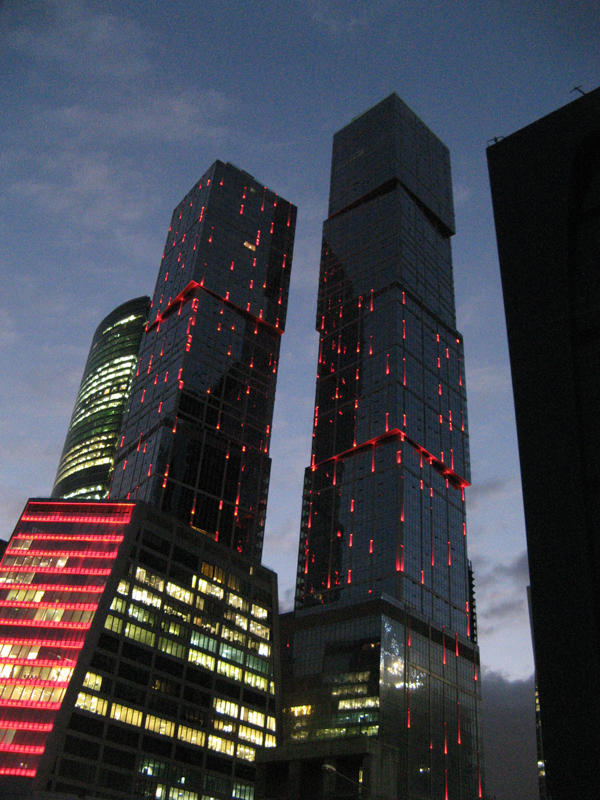
Central Moscow by night
Microbiological corrosion
The session on microbiological corrosion took place after lunch on Thursday until Friday morning and was chaired by R. Gubner from Curtin University of Technology, Perth, Australia. There are 13 full papers available on the proceedings CD of which five have been chosen for review here.
Starting the session on the Thursday afternoon was a keynote paper by a doyen of the field Barbara J. Little from the Naval Research Laboratory, Stennis Space Center, USA entitled, ‘Tubercles and localised corrosion on carbon steel’. The tubercles investigated were from diverse fresh water environments and of varying ages. All tubercles had a core region but the structure and chemistry of the cores differed. They consistently had an outer crust of goethite and lepidocrocite and an inner shell of magnetite. Sheaths produced by iron bacteria were located in tubercles from two locations but not the third. It was concluded that the term ‘tubercle’ does not describe a single morphology for corrosion products on carbon steel. This paper provides a good introduction to the literature in this subject.
Later came ‘A study of electron transfer processes through biofilms in marine environments’ by A. Heyer, Materials Innovation Institute, Delft, The Netherlands. Electrochemical impedance measurements (EIS) were used to investigate conductive properties under laboratory culture conditions. Experiments were conducted in modified artificial seawater with single or mixed bacterial strains; from one to fourteen days of exposure. Parallel microscopy work by fluorescent staining and AFM imaging gave additional information regarding the topography of the biofilm. The conclusion was that, although the conductivity of some species of marine bacterial biofilms was proven, further studies on the biological and physical properties of marine biofilms are necessary to fully understand this electron transfer process and its underlying mechanism. This paper was immediately followed by, ‘Physicochemical aspects of microorganisms interaction with passive films on alloys’ by U. V. Kharchenko from the A.V. Zhirmunsky Institute of Marine Biology, Vladivostok, Russia. The influence of biochemical activity of microorganisms on composition, structure, physical and chemical properties of passive films on the metal surface had been studied. The strain Pseudomonas sp. was isolated and applied to corroding samples of stainless steel, titanium alloy, nickel and chromium surfaces in tropical seawater. Using the combined approach of surface science and electrochemical methods, a relationship between chemical composition and semiconductor properties of passive films and the activity of microorganisms was established.
The session continued on the Friday with ‘Characterisation of biofilm deposit complexes associated with Microbiologically Influenced Corrosion (MIC) in European harbours’ delivered by F. Marty from Delft University of Technology, The Netherlands in work done in collaboration with groups in Spain, Turkey and France. At least 12% of European harbours have been affected by a particularly aggressive localised MIC phenomenon, called Accelerated Low Water Corrosion (ALWC) occurring at or below the low water zone of steel waterfront structures. To investigate this several samples of corroded and non-corroded zones had been recently taken from several European harbours affected by ALWC. These samples were studied using different analytical methods including; cultivation targeting, for the first time, almost all MIC associated-bacterial metabolic groups; 16S rDNA PCRDGGE fingerprinting methods; microscopic methods and analytical methods to determine chemical composition. It was found that all targeted bacterial groups could be enriched from samples originating from ALWC and from the reference sites confirming that the presence of specific metabolic groups is not an exclusive criterion for characterising ALWC biofilms. However, Iron Oxidising Bacteria (IOB) activities appeared to be higher in ALWC than in reference samples indicating a potential implication of this metabolic group, which was not previously considered in ALWC.
Finally there was a useful poster entitled ‘Use of sodium hypochlorite and xanthan as strategy for control of biocorrosion in static system’ by M Andrade Lima, Universidade Federal de Pernambuco, Recife, Brasil. The addition of a biodispersant, which itself neither eliminates the microorganisms nor inhibits their growth, aims to significantly reduce the concentration of biocide needed. In this study the effect of a specific biodispersant, xanthan, used with sodium hypochlorite biocide, on the reduction of microbial activity and the rate of carbon steel SAE 1010 corrosion, in a static system using seawater from the SUAPE region in Brazil, was evaluated. Metal coupons were monitored for a period of 28 days and assessed for corrosion rate and XRD. The results showed that in systems where the sodium hypochlorite was present with xanthan, the corrosion rates were lower than in the system where there was only sodium hypochlorite, indicating that the xanthan had a key role in decreasing rates of corrosion.
Oil and gas
Corrosion in oil and gas production was a large session with 58 papers available on the CD- ROM, 30 of which are full papers. The session ran from Tuesday to Friday and was chaired by Thierry Chevrot from Total SA, Paris le Defense, France and Jean Kittel, Institut Francais du Petrole, Solaize, France. On Tuesday there was a Joint EFC/NACE session on Corrosion in oil and gas production and on the Thursday a joint session between the Mechanisms, Inhibitors and Oil and Gas working parties and NACE. And if that were not enough there was also a parallel workshop on Standards and regulations in corrosion protection of oil and gas production equipment and pipelines chaired by S. V. Alimov from OAO Gazprom, Moscow Russia and held at a separate venue on the Wednesday. That session provided a further two full papers on the CD-ROM although neither of these are included in this report. The large number of papers and variety of sessions demonstrates the importance of oil and gas research to the host country. The papers reviewed below have been selected by the Chair of the working party, Jean Kittel, as the best presentations given during all the sessions (a further one of his choices ‘SCC resistance of X70’ is reviewed in the Refinery section). Apart from the papers discussed below there were many other interesting papers including quite a number from the host country. Interested readers are recommended to access session 10 on the proceedings CD-ROM to find out more.
Starting with a couple of papers from the Joint EFC/NACE session; the first was ‘Recovery of initial SSC resistance in OCTG pipe ends after end-sizing and stress relieving for integral connections threading’ by Arnaud Gateaud from V&M Oil & Gas, Aulnoye-Aymeries, France. Laboratory experiments changing the process variables for treating as-deformed OCTG pipe end coupons has helped define optimum heat treatment conditions to enable effective stress-relieving of HSLA (High Strength Low Alloy) sour service grade steel (this is done in order to recover initial pipe properties in the deformed areas). The robustness of the industrial stress-relieving process was discussed in terms of the compatibility between material response and heating apparatus consistency. Practical cases of SSC resistance recovery in C110 and C125 sour service grades casing pipe ends after end-sizing and stress-relieving operations were also presented. This was followed by a paper from Anna Smirnova, Norwegian University of Science and Technology, Trondheim, Norway on the ‘Effect of tensile stress on hydrogen permeation in 13% Cr super martensitic stainless steel’. New equipment to realistically simulate subsea conditions based on the Devanathan-Stachurski permeation method has been developed. Using this it was found that the hydrogen diffusion coefficient increased moderately as stresses from 0-100% of the yield stress were applied. This was attributed to the deformation induced martensitic transformation. The effective sub-surface hydrogen concentration was found not to vary with tensile stress.
On the Wednesday there were two interesting papers both delivered in the morning session. The first was ‘Environmentally assisted cracking (EAC) behaviour of super 13Cr stainless steel under cathodic polarisation condition in carbon dioxide environment’ by T. Haruna, from Kansai University, Japan. The effect of strain rate and applied cathodic potential were investigated for steel with either a base metal microstructure or with a simulated high temperature HAZ, when exposed to an aqueous solution containing 20% NaCl at 333 or 373 K under CO2 or N2 gas bubbling. It was found that the fracture strain decreased with lowering of the applied potential. The base steel fractured in the plastic deformation region at any potential but the HAZ-simulated steel fractured in the elastic deformation region and then only at a potential of −1·4 V. The EAC was more enhanced by CO2 than by N2 and also low test temperature enhanced the EAC susceptibility at relatively small cathodic charge density. This was followed by ‘The effect of environmental factors on SCC Resistance of 110 Kpsi Strength Grade Super 13Cr steel’ from Hideki Takabe, Sumitomo Metal Industries, Ltd, Amagasaki City, Japan. The 110 Kpsi strength steel was evaluated in CO2 and CO2+0·01 bar H2S environments at 175°C by using the 4 point bent test technique with various pH and Cl− concentrations (pH = 2·5 to 4·5, Cl− = 1 to 181 g L−1). This led to the creation of SCC domains (maps) as a function of pH and Cl− concentration. Because the SCC cracking initiated from the base of corrosion pits, the effect of H2S gas and Cl− concentration on the stability of the passive film was also investigated. It was found that the effect of changing these on the ‘no-SCC’ domain at 175°C was consistent with the trend on the pH at 24°C. Moving on to the joint session on the Thursday, there were three good papers in the morning session. The first was ‘Effect of oxygen and temperature on aqueous sour corrosion systems’ by Yuan Song from Institute for Energy Technology (IFE), Kjeller, Norway. Short term glass cell corrosion experiments showed that the aqueous solution with H2S containing oxidised sulphur-containing species e.g. SO4 2−, S2O3 2− and elemental sulphur was more aggressive than that containing only H2S. When these species were in a N2 purged system, no localised corrosion was observed at 25°C. However, small pits formed at 60°C in the H2S purged environment: the ionic sulphur species caused pitting corrosion while in the presence of elemental sulphur the local attacks were deeper and wider. This was followed by ‘Materials behaviour in extreme conditions: influence of large amounts of H2S on steel toughness in low temperature environments’ delivered by P. Fassina from ENI, San Donato Milanese, Italy. Hydrogen charging was conducted using either electrochemical charging or by gaseous exposure in an H2S containing environment in an autoclave on two as received pipeline materials, X65 and F22. Charpy, J-R curves and crack propagation tests were carried out while varying the temperature. The results showed that hydrogen affects materials fracture toughness at low temperatures. Some differences were found between the two applied charging modes and such phenomena have been interpreted as being caused by the interaction between hydrogen and lattice traps (reversible vs. irreversible).
The final paper on the Wednesday was given by Jean Kittel from IFP-Lyon, Solaize, France who discussed ‘Acid gas removal by amine solvents: bridges between CO2 capture and natural gas treatment’. The corrosivity of amine solvents had been investigated and extrapolated corrosion rates were found to be several tens of mm/year for the highest temperature and acid gas loading conditions. However the effects were shown to be different between natural gas processing and CO2 capture from flue gas, particularly in the lean amine sections. Under the former, zero loading occurs and an extremely low corrosivity is expected. On the contrary when CO2 is captured from flue gas, the lean solvent still contains some acid gas, and subsequently causes higher corrosivity. The general principles for material selection were also reviewed.
Refinery
The refinery session ran all day on Tuesday and Wednesday until after tea. There are twelve full papers available on the CD-ROM of which five were selected for review by the Chair of the working party, F. Ropital from IFP Energies Nouvelles, France.
On Tuesday morning, Laisa Candido from the Federal University of Rio de Janeiro, Brazil gave ‘Electrode selection for electro oxidation’. This was partly about the treatment of refinery sour waters by pulsed electrochemistry, whereby the process leads to the break down of hydrogen sulphide into hydrogen and sulphur. It can also be used for electro oxidation of ammonia. Various electrodes were evaluated using cyclic voltammetry. This showed the effectiveness (electroactivity) of Ni electrodes and Pt and DSA electrodes in bringing about the decomposition. The other electrodes (graphite and anodised Al) showed little or no activity. The possible influences of the polarisation sweep rate and number of cycles were evaluated. Overall the Ni electrode has shown promising results comparable with more expensive materials.
On Tuesday afternoon, ‘The SCC resistance of X70 SAW helical seam welded pipes in fuel grade ethanol’ was given by M. Hörstemeier, Salzgitter Mannesmann Forschung GmbH, Duisburg, Germany. Corrosion tests were carried out under aerated and unaerated environmental conditions. Slow strain rate tests were evaluated with regard to ductility parameters such as plastic elongation ratio (EPR) and reduction in area ratio (RAR) and by means of fractographic analysis. All specimens presented EPR and RAR values indicating high resistance to SCC in the tested environments. No indication for SCC was found in fractographic analyses. Results of 4-Point-Bend tests revealed no SCC cracks in the base material or in the weld seam for both oxygen free and oxygen rich ethanol environments. In summary the developed X70 steel grade proved to be non sensible to SCC corrosion by ethanol issued from cane sugar.
On Wednesday the first paper was ‘Hydrogen damage, monitoring, and prevention in the oil refinery’ given by Alec Groysman, from Oil Refineries Ltd., Haifa, Israel. Monitoring methods for hydrogen permeation including; manometric (hydrogen pressure,) or vacuum method, electrolytic (hydrogen ionisation from H atoms into H+ ions), heat conduction (gas chromatography), vacuum extraction at 400°C and hydrogen effusion were critically reviewed. Preventive measures of hydrogen failures were differentiated into two groups according to low and high temperature mechanisms. The first group includes change of environmental conditions and use of organic, inorganic, and metallic coatings. The second group includes metallurgical measures, and heat treatment.
In the afternoon came ‘High temperature corrosion of sulphided steels in naphthenic acid environments’ by Meriem El Kamel from Total Chimie ParisTech, Paris, France in collaboration with Total. Iron sulphide layers were formed in pure gaseous H2S at 300°C on carbon steel (XC18), Fe-2·25Cr-1Mo (P22) steel, Fe-5Cr-0·5Mo steel (P5) and Fe- 18Cr-8Ni stainless steel (304 L). The sulphide layers were characterised by grazing X-Ray Diffraction (XRD), X-ray Photoelectron Spectroscopy (XPS) and Time-of-Flight Secondary Ion Mass Spectrometry (ToF-SIMS). Among other findings the diffraction patterns showed that the pyrrhotite (Fe1-xS) phase was formed, thus confirming that the iron sulphide layers were satisfactorily modelling the sulphidation occurring in industrial conditions i.e. in refinery sulphur crude oil at 300°C. This was followed by ‘Progress in petroleum refinery high temperature sulphidic corrosion inhibition’ by C. Claese from Nalco, Kontich, Belgium. The important factors in this area e.g. specific type of inhibitor used, the application technology, corrosion monitoring, unit metallurgy, operational conditions and the quality of the processed crude oil were all discussed. In particular, the impact of specific crude contaminants and different high temperature sulphidic corrosion inhibitors especially phosphorus-based additives were evaluated. New refinery applications in the high temperature, high shear conditions of a crude distillation unit furnace and the monitoring of the inhibitor performance with FSM technology were also highlighted.
Mechanisms and methods
The mechanisms and methods was a large session with 92 papers available on the CD-ROM, of which 52 were full papers. The session ran for all four days of the conference as well as having a large poster session and the two working party Chairs, P. Marcus, Ecole National Supérieure de Chimie de Paris, France (Corrosion Mechanisms WP) and JMC Mol from Delft University of Technology NL (Physico-chemico methods of corrosion testing WP) presided over most of the sessions. Eleven papers have been chosen for review in this report and the help of JMC Mol with these choices is gratefully acknowledged. Figure 2
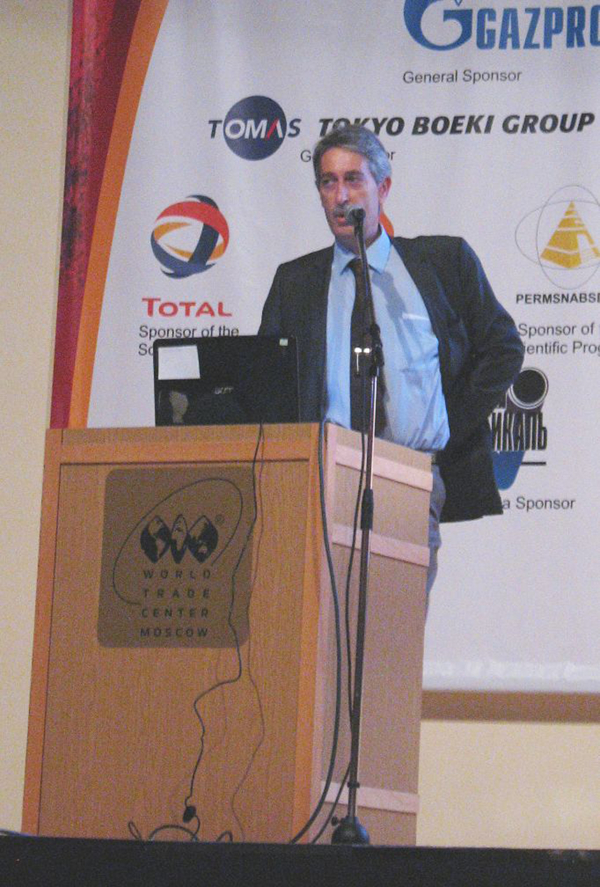
Philippe Marcus, Chair of the Corrosion Mechanisms WP
The first presentation started after the opening session on the Tuesday and was ‘Application of high resolution techniques to characterise sensitisation of a highly alloyed material’ given by M. Prohaska from University of Leoben, Austria. The grain size and the type of precipitates in sensitized alloy 625 L has been investigated with respect to its microstructure using high resolution scanning electron microscopy (HR-SEM). Scanning auger electron spectroscopy (SAES) was also employed to determine the size and morphology of molybdenum depleted zones around precipitates and the distribution of elements adjacent to grain boundaries was measured using ToF-SIMS and TEM-EDX. The results were used to explain the extent of attack after corrosion testing in the Streicher- and DL-EPR-tests.
After lunch came ‘On reproducibility of measurements obtained by means of electrochemical micro-cell technique’ by F Andreatta from University of Udine, Italy. The electrochemical micro-cell has high spatial resolution, defined by the size of the glass capillary (in the range 10-800 μm), and has the additional advantage that aggressive electrolytes can be used. The effect of capillary size on reproducibility of measurements obtained on low carbon steel was investigated employing two different instruments, one developed by T. Suter at the University of Udine, the other constructed at the UNESP - Instituto de Química. Potentiodynamic polarisation measurements obtained with the two instruments under the same experimental conditions are discussed in the paper.
This was followed by two papers from P Moeller's group at the Technical University of Denmark, Lyngby, Denmark. The first, delivered by Morten S. Jellesen, was ‘Effects of lead free soldering on corrosion of electronics’. Higher soldering temperature will result in degassing of aggressive chemicals, such as tetrabromobisphenol A (TBBA), a flame retardant known to decompose at 250°C, from the printed circuit board laminate. ElectroChemical Migration (ECM) of chip capacitors carried out under a potential bias of 6 V on a TBBA containing laminate at a temperature of 270°C was investigated using an in-house built Single Component ECM (SCECM) tester. Control ECM experiments were carried out using similar capacitors heated on a clean glass plate. Results showed increased migration susceptibility. Daniel Mizari then presented ‘Mechanisms of electrochemical migration of tin by in-situ optical and electron microscopy’. A novel chip has been developed, where a nanoscale silicon nitride window allows the making of in-situ electron microscopy observations of electrochemical phenomena, such as electrochemical migration. The paper provided an overview of the chemical, electrochemical and thermodynamic mechanisms of the electrochemical migration of tin. Particularly the work showed that the formation of a pH gradient inside the condensed nucleus is of crucial importance for dendrite formation.
Early the following day, C. Luo from George Thompson's group at the Corrosion and Protection Centre, University of Manchester, U.K. discussed ‘Probing continuous localised corrosion in AA2024-T3 aluminium alloy’. As well as SEM and TEM-EDAX, X-ray tomography was performed to investigate the development of intergranular corrosion. This showed continuous localised corrosion sites with a relatively large volume of S-phase cluster buried beneath the alloy surface with only a small area of connection to the testing environment. This special geometry restricted diffusion between the bulk solution and anolyte underneath the alloy surface, therefore, maintaining the necessary acidity at the corrosion front for aluminium dissolution. It was also found that corrosion propagation tends to follow the grain boundary. This was followed by a paper from Russia on ‘Studying, modelling and predicting pitting corrosion of stainless steels in moving liquids’ by K. Tarantseva from Penza State Technological Academy, Penza, Russia. A hydrodynamic system of two coaxial horizontal disks: the upper, rotating and the lower, immobile disk having a model cylindrical cavern with a totally activated bottom and inert walls, was used to correctly simulate pitting corrosion in moving media and then carry over the results to industrial objects. Estimation and prediction of pitting resistance of equipment was based on a deterministic mathematical model that describes dissolution in a pit taking into account diffusion, migration and convection. One conclusion was that the formation potential of a salt film (which has a clear thermodynamic meaning) is critical and enables explanation of the current oscillations, which are a typical feature of the pitting corrosion.
After lunch came a paper that lived up to the second part of the conference theme entitled, ‘Exposure of silver to atomic oxygen’ delivered by A de Rooij from the European Space Agency-ESTEC, Noordwijk, The Netherlands. Several materials undergo corrosion in space (not deep space but the upper atmosphere (low earth orbit) where satellites typically travel) and this is caused by the effect of atomic oxygen. The metal which was most affected is silver. The transport of oxygen through the oxide layer was modelled using two transport mechanisms, namely gas flow through micro-pores and Fickian diffusion. The interfacial reaction between oxygen and silver is taken as linear, resulting in a linear parabolic oxidation with flux and time. The model results in a low-temperature oxidation by gas flow while at higher temperature the diffusion mechanism controls the kinetics of the oxidation. This was followed by ‘Mechanisms of corrosion of thin silver films in alkaline Na2S solutions’ given by N Li from CNRS/Chimie ParisTech, France. Aspects of the corrosion of silver films (10 nm, 360 nm and 1 μm thick) in 1 mM Na2S+0·1 M NaOH solution (pH 13) were investigated. In the solution, the OCP value was in agreement with the spontaneous formation of Ag2S observed visually. Cyclic voltammograms showed for −0·520⩽E⩽−0·105 V, an anodic wave corresponding to the 3D formation of Ag2S. The multilayer stacks were structurally and chemically characterised by XRD and ToF-SIMS. From curves plotted for different Na2S concentrations (1 and 10 mM), it was concluded that Ag2S growth was limited by the diffusion of HS− from the bulk solution to the electrode surface.
No papers have been selected from the Thursday session but on Friday morning a notable paper was delivered by F J J Kellner from the University of Erlangen-Nuremberg, Erlangen, Germany entitled ‘The corrosion behaviour of VC- and Cr3C2-doped WC-Co hard metals in alkaline solutions’. Electrochemical methods were used to investigate the corrosion of the grain refiners vanadium carbide (VC) and Cr3C2. It was found using STEM and TOF-SIMS analyses that the refiners occupy different positions in the hard metal: Cr3C2 is almost dissolved homogeneously in the binder, whereas VC is segregated mostly along the WC/binder interface, and this influences their corrosion properties. It was concluded that the chemical instability of VC in alkaline solutions is the reason for it dissolving completely out of the binder. Galvanic coupling effects of the two metallic phases were shown to intensify the dissolution of the binder due to the nobler oxidation potential of WC compared to Co.
An interesting poster was ‘Electrochemical testing of inhibition efficiency of some types of anti-corrosive pigments for pitting corrosion of carbon steel at ambient temperature’ by Boleslav Eremias from SVUOM Ltd., Prague, Czech Republic. The effect on Epit of carbon steel was examined using cyclic voltammetry for extracts of anticorrosive pigments in water with low chloride concentration. This environment typically causes carbon steels to exhibit rather weak protective passive films which mean they do not undergo deep penetration by pitting corrosion. It was demonstrated how this method could be used to rapidly screen the inhibition efficiency of some anticorrosive pigments for pitting corrosion of carbon steel. This was done by determining Epit during the first scan as well as identifying during the reverse scan possible pitting initiation within occluded regions. This reviewer would comment that this is similar to ‘Pot Tests’ used successfully in Dr J EO Mayne's lab in Cambridge as a routine inhibition assessment test. These were based on potential measurement and visual observation using the actual extract from paints with and without chloride added. It was found that it was critical whether the chloride was added initially or after some time. These kind of tests were used as recently as 1995 to investigate the different effectiveness of a red and of a yellow alkyd paint by this reporter.
Finally we come to another poster which uses an increasingly popular electrochemical technique. This was ‘Electrochemical noise of SCC in austenitic stainless steels: combined macro- and microelectrochemical approach’ by Mathias Breimesser, from the Paul Scherrer Institute PSI, Villigen PSI, Switzerland. An electrochemical microcapillary technique developed at EMPA, combined with the EN measuring technique was applied to the model system of thermally sensitised austenitic stainless steel (AISI 304) in aqueous solutions of potassium tetrathionate at room temperature. Preliminary results of macroscopic EN measurements during tensile tests, as well as measurements of discrete initiation events of intergranular cracking, using the micro-capillary technique, were presented. An attempt had been made to obtain a basic understanding of the EN signals during intergranular SCC initiation on a microstructural level and to identify noise patterns on a macroscopic level and correlate them with the onset of SCC. Figure 3
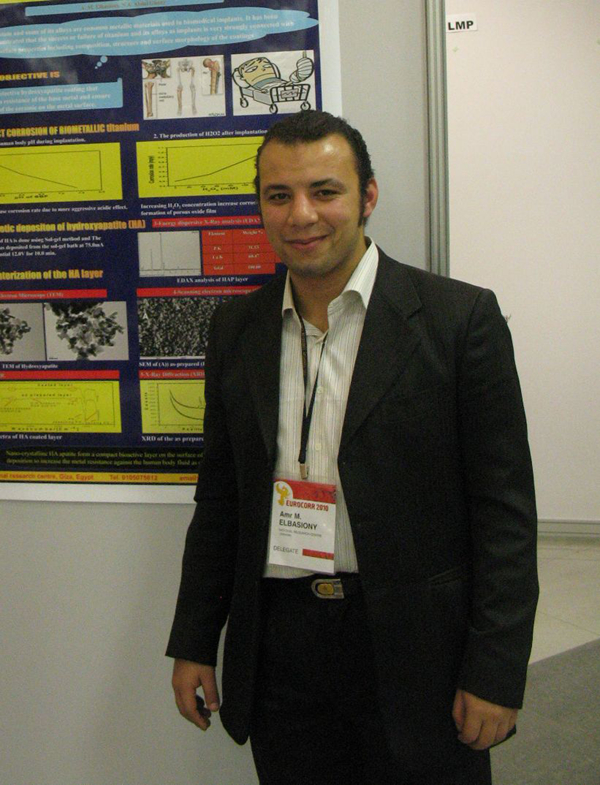
Poster presenter