






Abstract

Professor David Scantlebury (1943-2012)
David Scantlebury: teacher and researcher in corrosion science and engineering at UMIST then The University of Manchester; born 23rd October 1943, died 13th July 2012; survived by his wife Ilma and children, Michael, Liz and Andrew
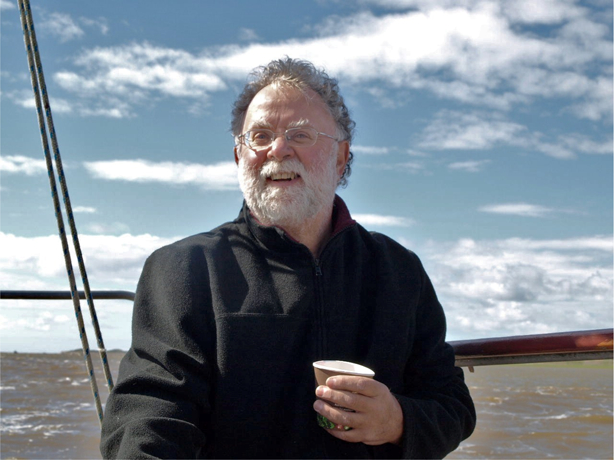
David was a larger-than-life character, who left an indelible mark on all those who met him. He was a raconteur, a bon-vivant, a sailor, a singer, a Cornishman, a scholar, a potter, a gentleman, a family man, but most of all he was a teacher. Born in Penzance in 1943 to an old Cornish family (the name Scantlebury is said to signify a craftsman), his father was headmaster of the local school that he attended. Some of that early environment must have rubbed off because education and teaching was in his bones while Cornwall was in his blood; his accent always returned either when he was reminiscing about his childhood or on the odd occasion when he was annoyed with you.
David attended Downing College, Cambridge and graduated in 1965 in Natural Sciences with his final year (Part II) in Metallurgy. His contemporaries in corrosion included: John Sykes, Chris Page, José Galvele, Eamonn Kinsella, Douglas Mills, Bob Cottis and Robin Procter while his undergraduate director of studies was T.P. ‘Sam’ Hoar. He would have been taught by (or met) those that were then famous, or became famous, in the field: Cottrell, Hoar, Evans, Davies, Ralph, Kelly, Chilton, Mayne to name a few. He loved his time at Cambridge being a keen rower and singer, as well as meeting and marrying Ilma, and was encouraged to stay on to undertake his PhD by Jack Mayne studying ‘The Mechanism of Conduction in Pigmented Polymer Membranes’. Thus began his lifelong passion for paint.
After a short period as a post-doctoral researcher in Mayne's group, David joined Portsmouth Polytechnic in 1970 as Lecturer and he helped establish the corrosion group there with Des Barker. However, the newly formed Corrosion and Protection Centre at UMIST proved a big attraction and he was appointed to a Lectureship by Graham Wood in 1974 and moved to Manchester with a remit to develop a research group in protective organic coatings. In recognition of the important work he did with industry, much in collaboration with Les Callow and Jane Lomas, he was appointed some ten years later to the International Paint plc Lectureship in 1984 with promotion through to Reader following several years later. After the merger between UMIST and The University of Manchester, he was promoted to a personal Chair in Corrosion Science and Engineering in 2006. After nominal retirement in 2009, rather than following the Emeritus Professor route, he continued to be actively involved in teaching and research.
Over the years David's research interests expanded to include: paints and organic coatings for the protection of metals in a range of environments, cathodic protection, corrosion of reinforcing steel in concrete, marine corrosion and the development of calcareous films. During his long career, he pioneered novel tools for the measurement of interfacial properties between coatings and substrates including the accurate measurement of adhesion using the ‘blow-off’ method. With colleagues at UMIST, he pioneered the application of electrochemical impedance spectroscopy to the measurement of organic coatings degradation. He made major steps in the elucidation of the mechanisms of underfilm corrosion and inhibition and developed detailed understanding of coating disbondment and filiform corrosion. He also undertook significant research on the cathodic protection of steel reinforcement in concrete particularly in the measurement of chloride ion migration using ion-selective electrodes. Latterly, after his retirement, he re-visited one of his first interests in the nucleation and growth of calcareous films on steel.
David liked to travel and greatly liked academic discourse and was never happier than when he managed to combine the two. He was particularly fond of the Far East and Australasia and at various times was a Visiting Professor in Xiamen University (China), Chulalonghorn University (Bangkok), Murdoch University (Western Australia) and the Science University of Tokyo as well as undertaking an extended period of sabbatical leave at Curtin University in Perth, Australia. He was a keynote speaker at many conferences, memorably twice for the Libyan Corrosion Society and three times at the Australasian Corrosion Association Congresses. Where he could not find an appropriate conference to attend, he organised one for himself as he put it: ‘to combine excellent discourse, good food and wine with Cambridge is the ideal package’. Hence, in 1989, his quinquennial Christ's College series on ‘Advances in Corrosion Protection by Organic Coatings’ commenced, the most recent of which was held in 2009; the 2014 event, which he was planning before he died, will go ahead in his memory.
Overall, David successfully supervised 68 PhD students, published over 220 papers and was, in 2007, awarded the U.R. Evans award of the Institute of Corrosion for research excellence. However, notwith standing these achievements it will probably be for his teaching that he will be most remembered. David never forgot that the primary aim of an academic at a University is to teach, and at that he excelled. David's influence over 40 years of teaching corrosion science and engineering is unparalleled. At Manchester, he was MSc course leader and Chair of the Board of Examiner for over 20 years and admissions tutor for 8 years; he also organised the annual short course in Corrosion Control Technology for over 30 years. His annual teaching contact hours were commonly double those of his colleagues and he continued teaching almost at the same level right to the end. I remember visiting him in St. Ann's Hospice in May this year where the first thing he did was to hand me his marked questions from the Spring semester examinations. Although was then no longer able to handle a pen, he had arranged for his family to read the scripts to him and to write in comments and the marks. He taught widely across the Faculty and was an exponent of traditional methods – death by Powerpoint was definitely not for David. One of his proudest moments came in 2001 when he was awarded the UMIST Millennium Prize for excellence in teaching with supporting comments such as: ‘most enjoyable’, ‘refreshingly energetic’, ‘best lecturer we've ever had’,’ inspiring and fun too’, ‘tremendous teaching skills’. It is not an exaggeration to say that David directly influenced an entire generation of corrosion engineers.
David's passions were for education and for corrosion science, but he was also very much a Renaissance man, excelling in many areas. He would have been at home in any century with his intelligent and inquisitive nature and outgoing personality and warmth. Beyond work, he loved that his family were of an artistic nature and he himself tried to match them by becoming a skilled potter, installing a kiln in the basement of his house. He also loved nature and owned an allotment on which he grew summer vegetables and fruit. As a Cornishman, the sea was particularly close to his heart. He became a Royal Yacht Association qualified sailboarding instructor and a PADI approved open water diver. Latterly, he bought a Cornish rigged gaff sloop, which he kept moored on a creek near Lytham St. Annes. He frequently asked me to crew for him and to my regret I was not always able to oblige. When I did the hospitality on his boat was exemplary – providing drink and snacks while the visit to the local fish and chip shop (‘the best outside Cornwall’) on the way home was always memorable.
David had a remarkably open relationship with his illness, documenting his ups and downs in the ‘D6 News’ blog (now sadly unavailable). First appearing as bowel cancer in the early 2000's and requiring an operation to remove his large intestine, it re-occurred with increasing frequency over the years. Finally, a neck tumour was found to be causing increasing pain and immobility in his arms and left him fatally weakened. Although he was rallying and planning to return to lecturing in November, unfortunately this was not to be. He leaves us all missing him terribly.
Stuart Lyon, Corrosion and Protection Centre, School of Materials, University of Manchester.