







Abstract
The South Mathiatis deposit in the Troodos ophiolite of Cyprus is located within Lower Pillow Lavas in the central part of the Mitsero (Ayios Epiphanios) graben, and is characterised by elevated Zn contents, and a hydrothermal mineral assemblage in which galena is locally an important component and barite is a common gangue mineral, features which place it apart from other Cyprus-type deposits. The mineralisation is hosted within a gently dipping sheet flow-dominated sequence of lavas with common autobrecciation textures and associated hyaloclastites, and is stratigraphically controlled between lava flows, locally floored by unmineralised hyaloclastites. The environment of extrusion is interpreted as a ponded sequence, similar to the adjacent Agrokipia deposit. The Zn-rich mineralisation appears to be controlled by local structures which allowed access to the hydrothermal fluids, which then migrated laterally along lithologically favourable concordant zones. The sulphide assemblage is dominated by sphalerite together with ubiquitous pyrite; however, both chalcopyrite and galena are locally important; quartz and barite comprise the gangue-mineral assemblage. Red jasper is spatially associated with the sulphide mineralisation and displays abundant filamentous structures similar to forms identified in other VMS environments. Wall rock alteration associated with the mineralisation is weak, and this is reflected in the absence of a magnetic signature, in contrast to typical Cyprus deposits. The Zn mineralisation is also transparent to electrical methods suggesting that other similar deposits may be present in the ophiolite but remain as yet undetected.
Introduction and previous work
Cyprus sulphide deposits are located within the Pillow Lava Series of the Troodos ophiolite, which is generally considered to be a fragment of Mesozoic ocean floor uplifted as a result of the collision between Eurasia and Africa (Gass and Masson-Smith, 1963; Moores and Vine, 1971). The deposits are predominantly Cu-rich with subordinate Zn, although entirely pyritic deposits devoid of either Cu or Zn are also common. Their morphology, mainly typified by studies of the Skouriotissa and North Mathiatis deposits (Hutchinson and Searle, 1971; Constantinou and Govett, 1973), is characterised by an upper zone of massive sulphide underlain by a stockwork of quartz–sulphide veining in chloritised host rocks, considered to be the channel ways of the hydrothermal fluids for the deposition of the massive exhalative mineralisation.
The South Mathiatis prospect is located 2 km south of Agrokipia village (Fig. 1) and was known since the beginning of modern exploration, briefly mentioned by Bear (1963). Early work included a shallow shaft, the extracts of which are still visible; however, no mining was carried out. Subsequently, Hellenic Mining Company Ltd (HMC) explored the prospect by rotary drilling and performed preliminary metallurgical test work. On the basis of the drilling information, EMED Mining Public Ltd (EMED), the current holder of the ground, estimated an inferred resource of 1·2 Mt averaging 0·9% Zn with negligible Cu and Pb (Adamides, 2007).
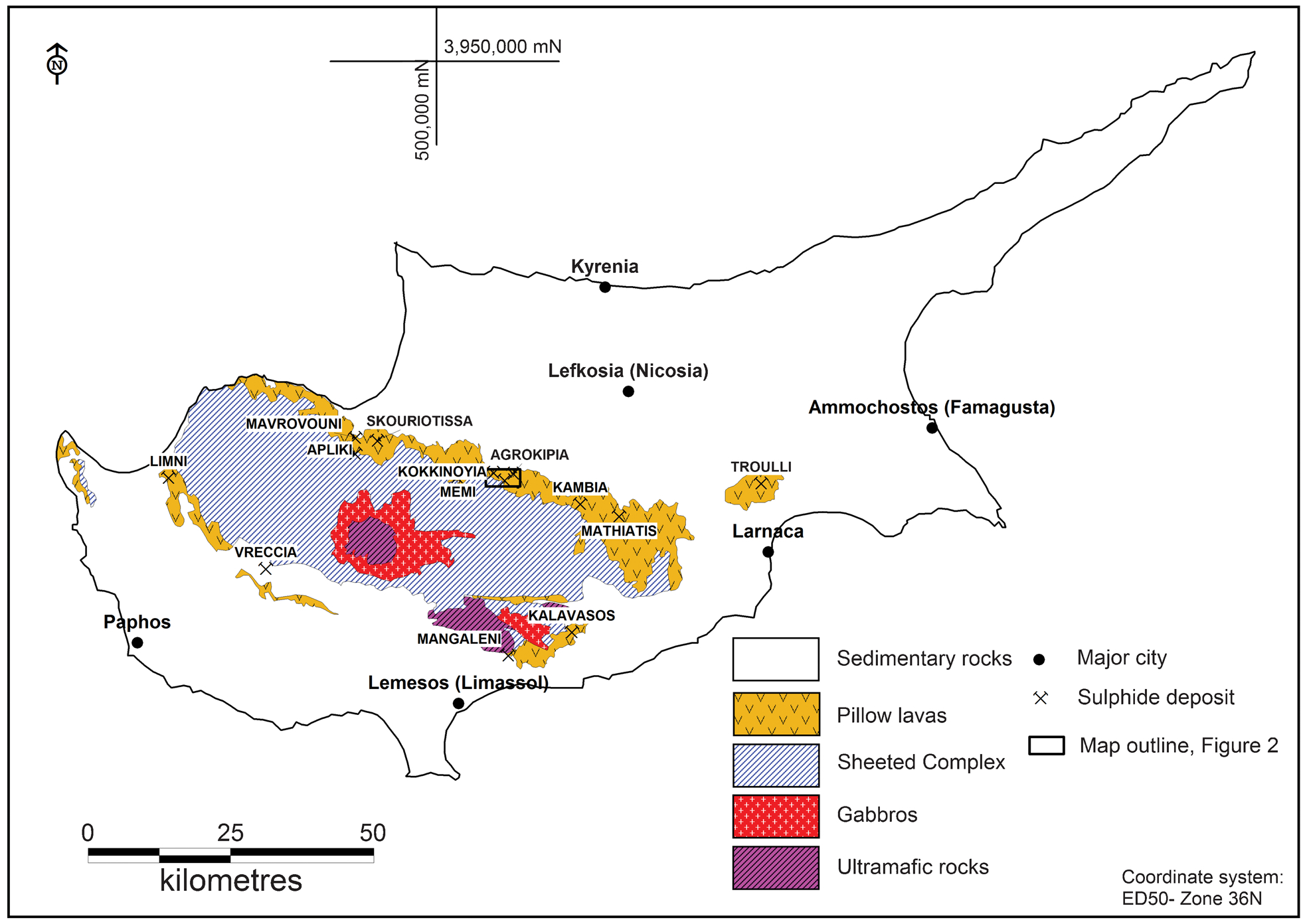
Generalised geological of the Troodos ophiolite showing sulphide deposits and location of selected sulphide deposits. The Mitsero region is outlined
The geology of the prospect is briefly described in internal HMC reports, and by Maliotis (1978) as part of geophysical investigations. Christoforou (1974) described a soil geochemical survey which identified coincident Cu and Zn anomalies over the ground hosting the mineralisation. The geochemical survey also highlighted the presence of a structure limiting the mineralisation to the east. The author mapped the prospect as part of regional work and subsequently re-examined the local geology during the current study. EMED recently carried out diamond drilling to obtain material for metallurgical tests and selected samples were used for mineralogical investigations.
Since most of the drilling was performed over a period of many years and, apart from graphical logs and assay information, no records of the intersected lithologies remain, detailed interpretation of the structure and lithological associations of the deposit is not possible. The main aim of this study, therefore, is to describe some unusual characteristics of this occurrence and correlate them with features of equivalent deposits in modern and ancient settings.
Sample collection and analytical techniques
Polished thin sections of selected mineralised samples from diamond drill core were prepared at the University of Keele, United Kingdom, and the University of Bratislava, Slovakia. Petrographic work was performed at the University of Leicester using a Zeiss combined transmitted and reflected microscope with digital camera attachment, and in Cyprus using a Meiji Techno transmitted/reflected microscope with digital camera attachment. Sphalerite analyses were performed at the Geological Institute of Dionyz Stur in Bratislava, Slovakia, with the use of a CAMECA SX100 microprobe, using a 5 μm beam, voltage 20 kV and current 20 nA. Back-scatter electron images were captured using the same instrument (P. Zitnan, pers. com., 2008).
Geological setting
The geology of the area around the South Mathiatis prospect and its relationship to the other deposits of the Mitsero region is shown in Fig. 2. The deposit is located in the central part of the Mitsero (or Ayios Epiphanios) graben, one of a series of interpreted tectonic features correlated with the evolution of the ophiolite at a spreading centre (Varga and Moores, 1985). The graben is oriented in a northerly direction, a feature reflected in the predominant orientation of the dykes in the Sheeted Complex and Lower Pillow Lavas. Several sulphide deposits are associated with this tectonic feature, and these have been exploited both in ancient times as well as more recently. Details of tonnage and grade of individual deposits are shown in Table 1.
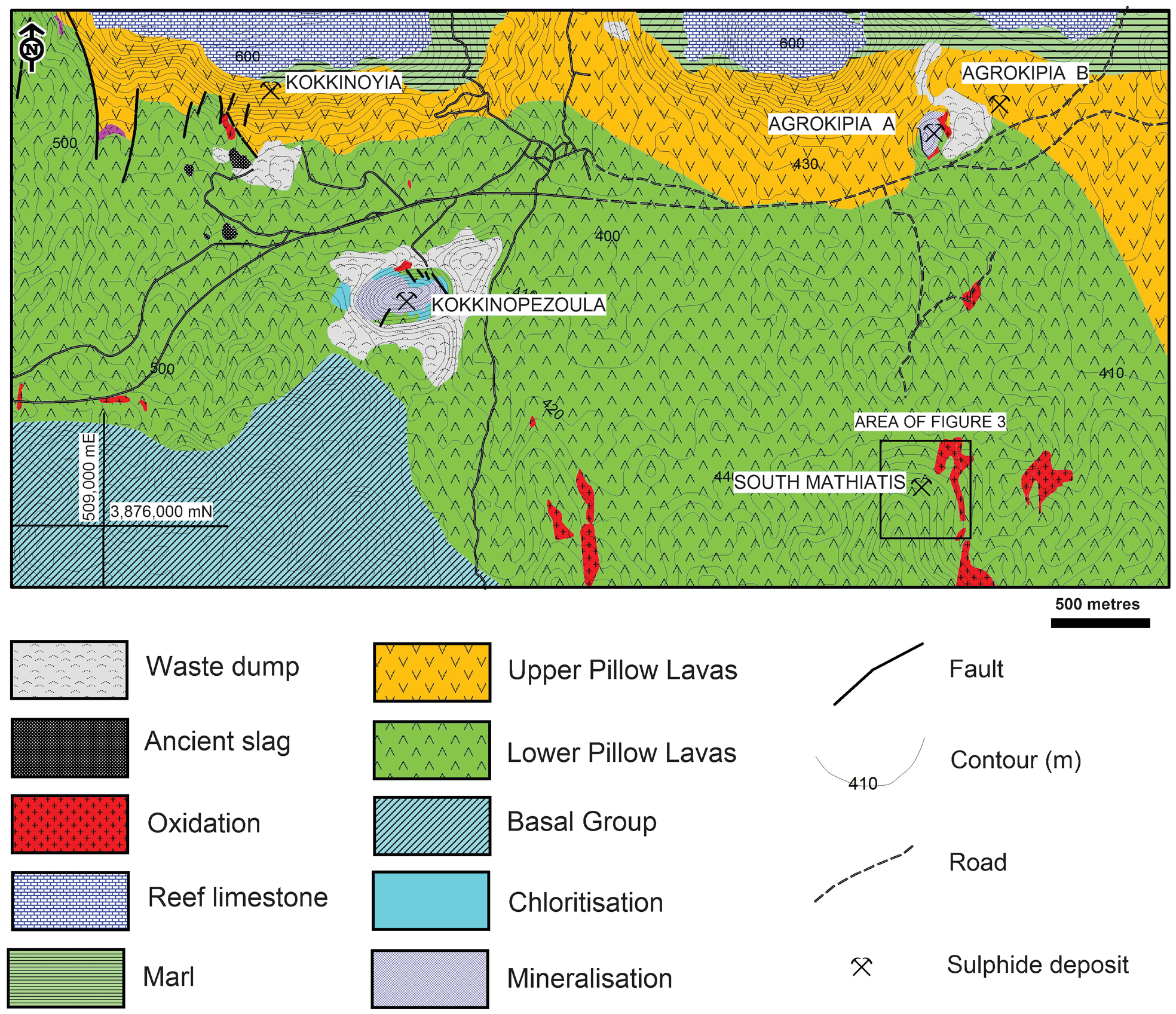
Geological map of the Mitsero region, showing location of South Mathiatis with relation to other sulphide deposits
Details of tonnage and grade for the deposits of the Mitsero region
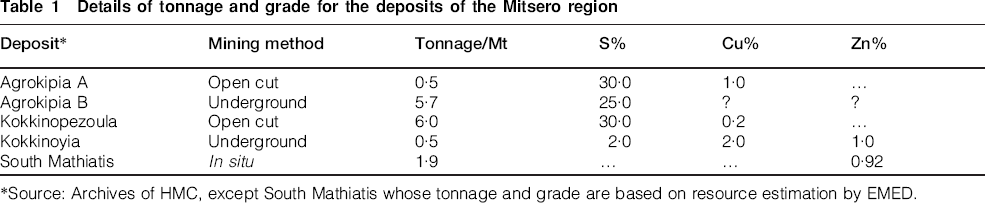
Source: Archives of HMC, except South Mathiatis whose tonnage and grade are based on resource estimation by EMED.
Agrokipia A was a small massive sulphide deposit localised at the contact between Upper and Lower Pillow Lavas (Bear, 1960; Constantinou and Govett, 1973). The mineralisation comprised massive cupriferous pyrite, and was a classic Cyprus-type deposit, with a lens of massive sulphide underlain by a stockwork zone of quartz–sulphide veining.
Agrokipia B, separated from Agrokipia A both stratigraphically and structurally, was located beneath a thickness of Lower Pillow Lavas and its deposition was lithologically controlled by the presence of thick glassy units (Adamides, 1984). The deposit was partly mined by underground methods; however, mineralisation was found to be too erratic to be economically extracted and the operation was abandoned at an early stage. Recent drilling has highlighted the Zn-rich nature of the mineralisation, and the resource may eventually be exploited for its Zn as well as its Cu content.
West of the Agrokipia deposits, Kokkinopezoula was localised within Lower Pillow Lavas close to the contact with the Basal Group and was predominantly pyritic. North of Kokkinopezoula, the Kokkinoyia deposit was mined by underground methods and was localised at the contact between Upper and Lower Pillow Lavas in the form of lenses of massive sulphide enclosed within weaker mineralisation (Christoforou, 1975).
Local geology
Geological mapping in the vicinity of the mineralisation (Fig. 3) indicates that the predominant rock type comprises interbedded non-pillowed and pillowed units associated with local interstitial hyaloclastite. Immediately to the northeast, autobrecciated units predominate (Fig. 4A), comprising massive sheet flows enclosing blocks of lava of the same composition whose rounded outlines and local flattening imply a plastic behaviour during flow (Fig. 4B and C). The dip of the rocks is northeasterly, of the order of 20–30°. The lavas are celadonite-stained with local chalcedonic silica, an alteration assemblage which is typical of this unit. Zeolites, mainly of the fibrous variety, are widespread as vein and cavity fillings.
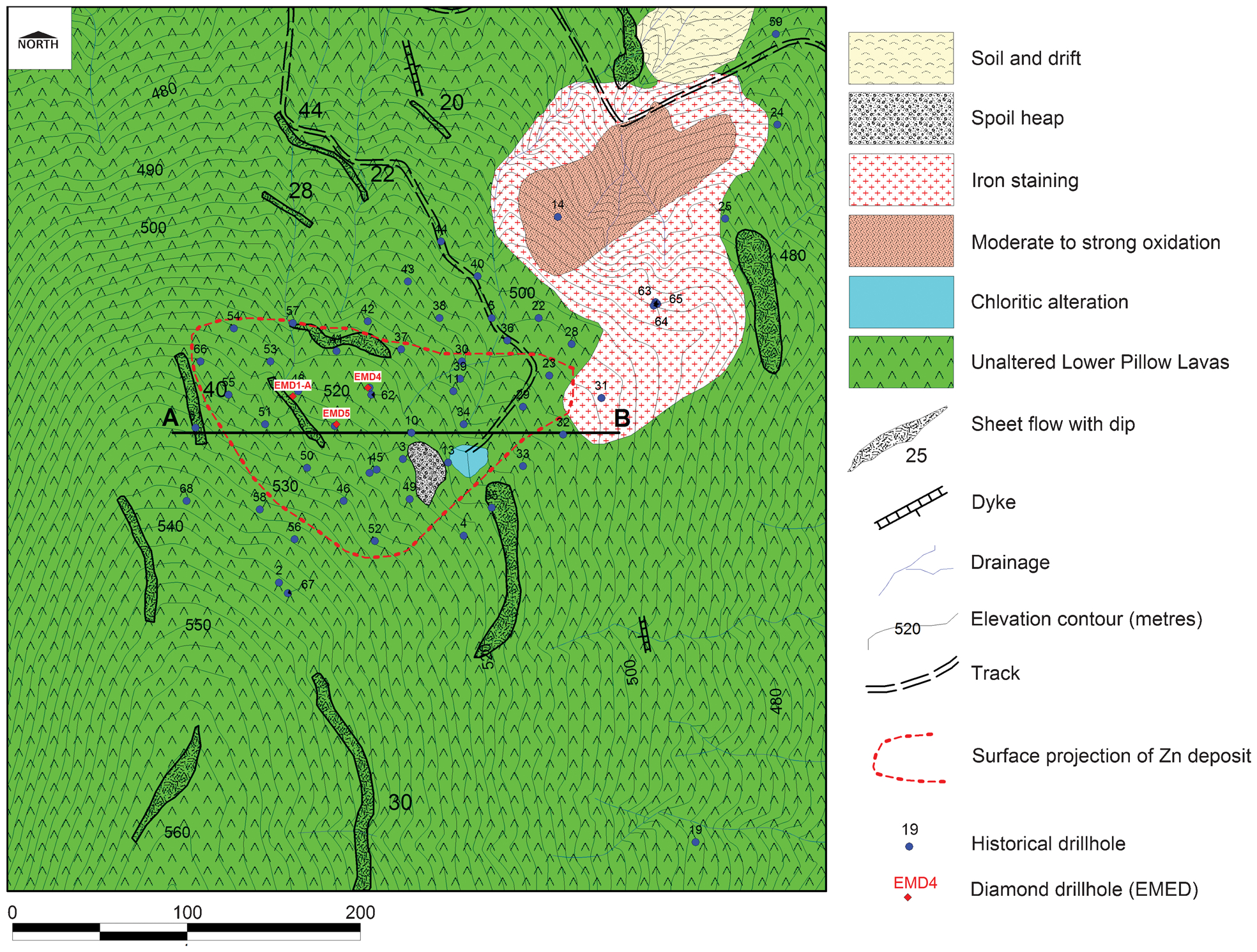
Geological map of the South Mathiatis prospect showing main geological features. Location of diamond drillhole EMD1A (Fig. 6) is also shown
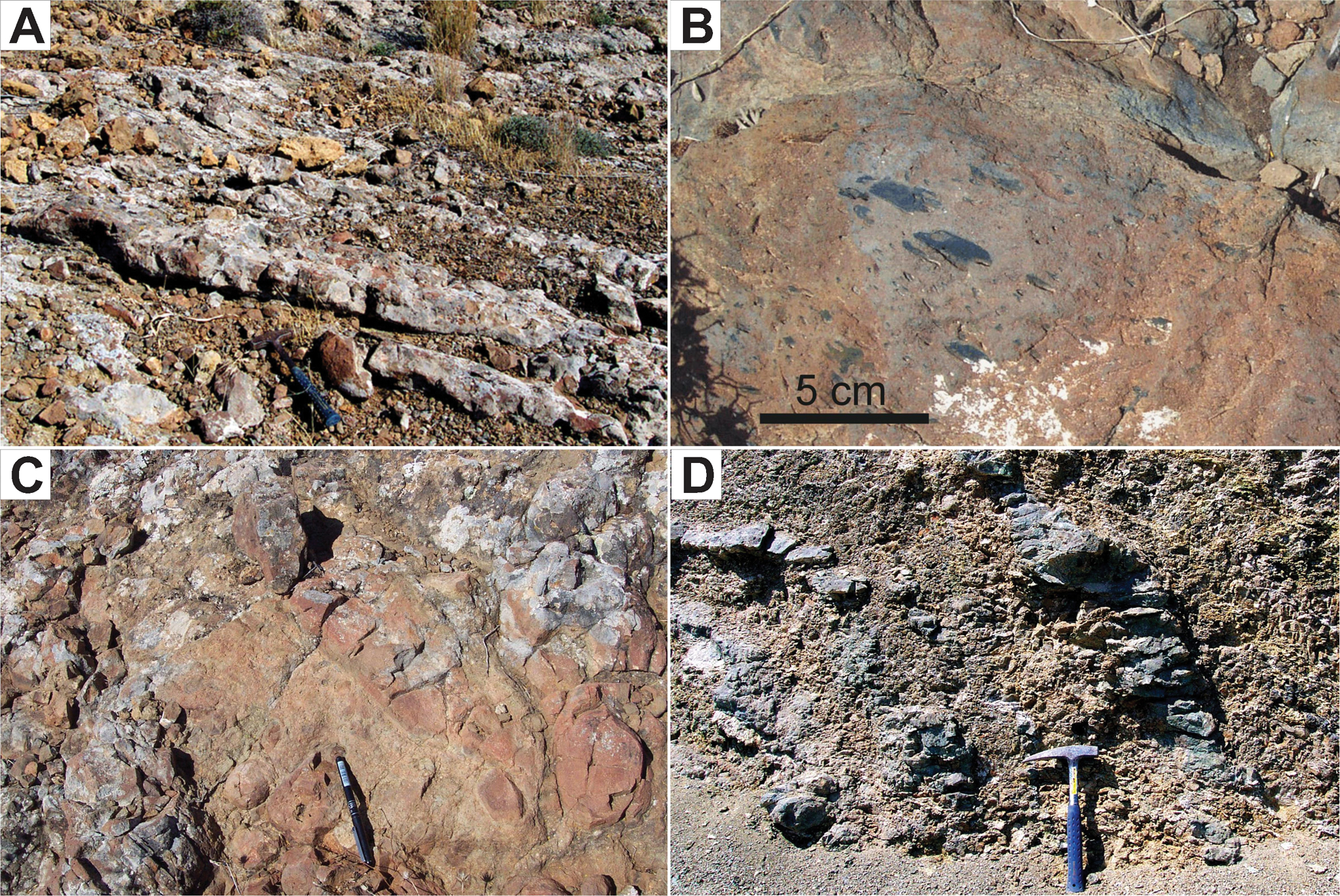
Lithological characteristics of the lavas around the South Mathiatis deposit. (A) Thin autobrecciated flows east of the deposit; (B) Fiamme texture of lava clasts enclosed in uniform massive lava, implying incorporation of the former whilst still in semi-plastic state; (C) Blocks of lava with associated chilled rims, incorporated into later flow; (D) Hyaloclastite incorporating blocks of non-pillowed lava, in the area south of the deposit
South of the deposit, hyaloclastites become locally dominant (Fig. 4D). Dykes are rare and inconspicuous in the environs of the deposit and are represented by thin subvertical north-trending dykelets not exceeding a few centimetres in thickness. The contrast with the abundance, thickness, and linearity of dykes in the Lower Pillow Lavas elsewhere in the ophiolite strongly suggests a tectonic setting of lava extrusion where viscous magma slowly welled upwards, cooling as it ascended, with further lava pulses breaking the solidifying carapace and incorporating the fragments into the mass of still-fluid magma.
Mineralisation
It must be mentioned at the outset that, although both massive and stockwork facies occur within the South Mathiatis deposit, these occurrences are very local and minor in comparison with the bulk of the deposit which predominantly comprises disseminated mineralisation within variably but mostly weakly altered lavas. These characteristics are displayed in a geological section compiled from historical information, which also illustrates the distribution of Zn within the deposit (Fig. 5).
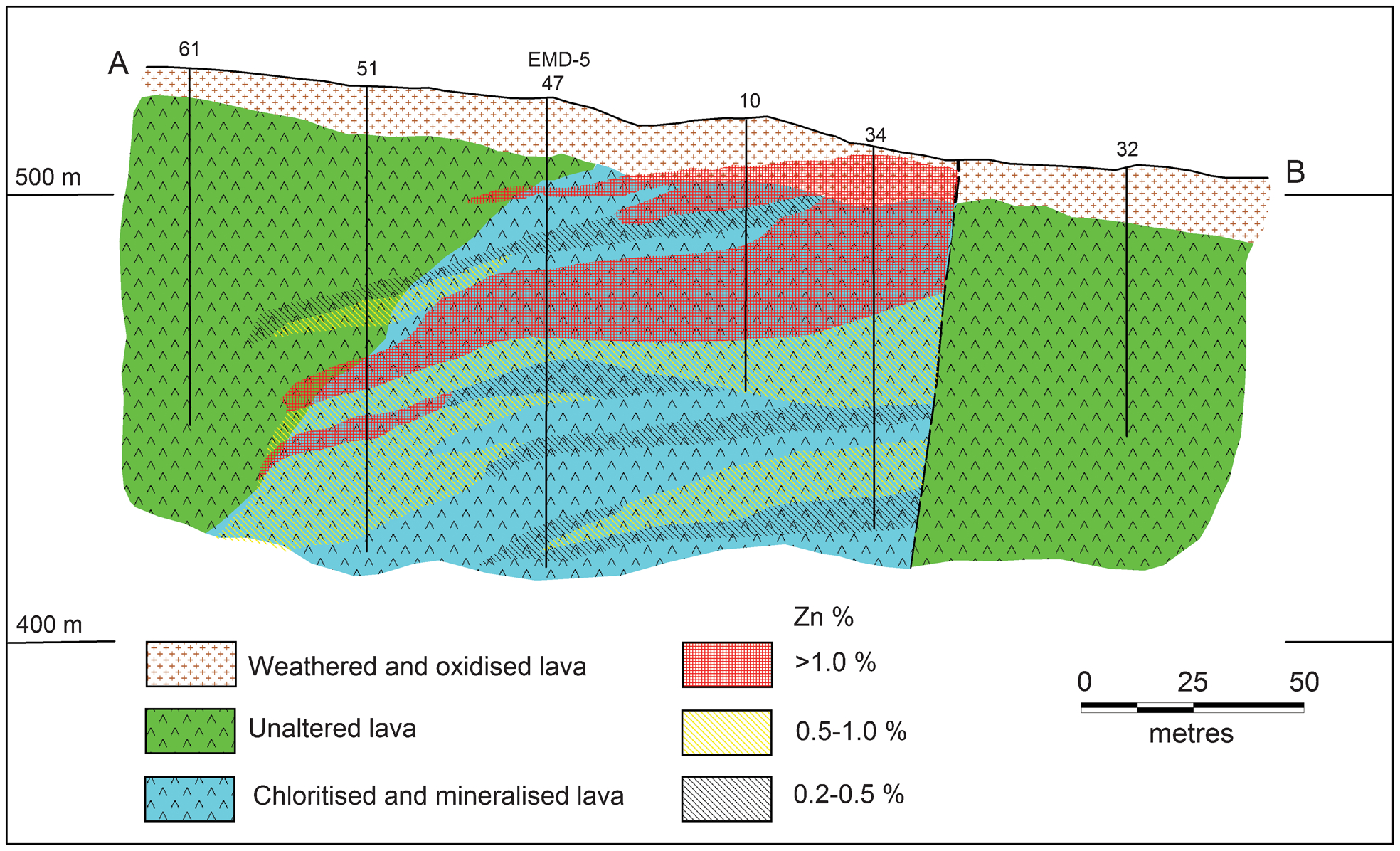
Geological section through the South Mathiatis deposit, mainly based on historical drilling, showing distribution of alteration and Zn mineralisation
Pyrite and sphalerite are the predominant sulphide minerals; quartz and barite are the main gangue minerals, with barite being in places dominant. Galena locally reaches appreciable amounts; however, it is in most cases a subordinate component. Grey siliceous veins commonly traverse the mineralised ground and are associated with dense impregnations of sulphide; these may be the reduced equivalent of hematitic jaspers which occur elsewhere in the sequence. The mineralisation is locally floored by unmineralised hyaloclastic breccia, highlighting the control imposed by lithology and structure in the guiding of the hydrothermal fluids along lithologically favourable zones.
Petrography and wall rock alteration
The host rocks enclosing the mineralisation are characterised by abundant plagioclase laths or crystallites in a fine-grained to glassy matrix (Fig. 6A), and are typical of the fractionated sequence that characterises the Lower Pillow Lavas (Robinson et al., 1983). Plagioclase often occurs in two generations and is locally replaced along fractures by chlorite, although in the majority of the samples examined during this study it is unaltered with only the central parts of the crystals replaced by clays (Fig. 6B).
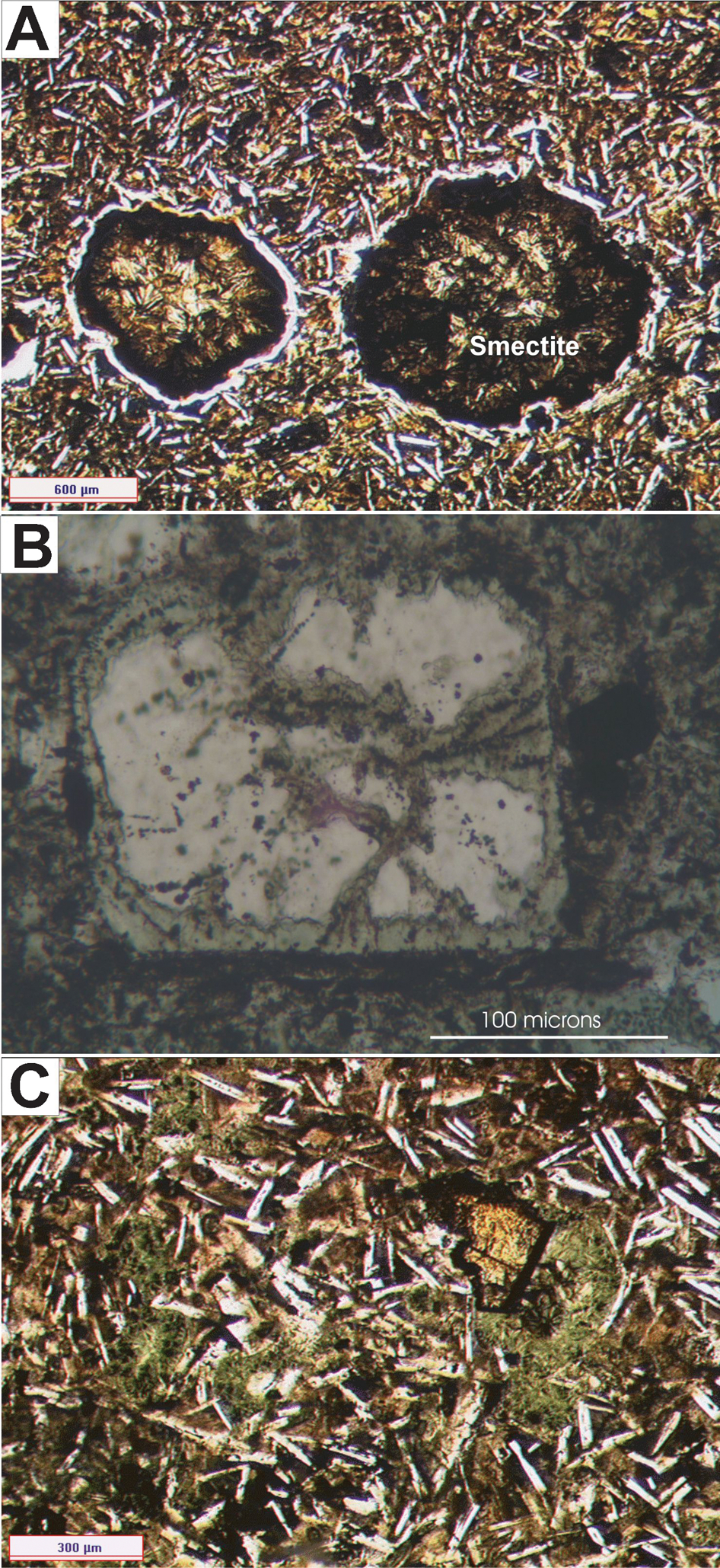
Petrographic features of lavas at South Mathiatis. (A) Microcrystalline plagioclase-rich lava with smectite infilling vesicles; (B) Fracture-guided replacement of plagioclase microphenocryst by chlorite; (C) Incipient chloritisation of lava, with plagioclase almost totally unaltered and glassy matrix partly replaced by apple-green chlorite
Hydrothermal alteration is subdued and consists of partial replacement of volcanic glass by low-birefringence clays, probably of the smectite group. In areas of more intense sulphide mineralisation, both plagioclase phenocrysts as well as the matrix of the rock are replaced by an assemblage of quartz and chlorite.
The optical characteristics of the clays vary with location in the hydrothermal system, with more typical green chlorite characterising more intensely altered zones, with higher birefringence acicular minerals, probably of the illite group, typical of the marginal parts of the system. The chlorite commonly exhibits low first-order grey birefringence with complete absence of anomalous colours and low pleochroism suggesting a low iron content (Deer et al., 1966). Apple-green, possibly iron-rich, chlorite was identified in incipiently altered lava in which plagioclase was mostly unaltered and volcanic glass partly preserved (Fig. 6C).
Mineralogy
Colloform pyrite is an early phase in the history of the mineralisation, as suggested by the occurrence of this type of pyrite totally enclosed by later sphalerite (Fig. 7A). Later galena infills cracks in the colloform pyrite, and the occurrence of euhedral galena poikilitically enclosed by sphalerite implies penecontemporaneous deposition of the two minerals (Fig. 7B).
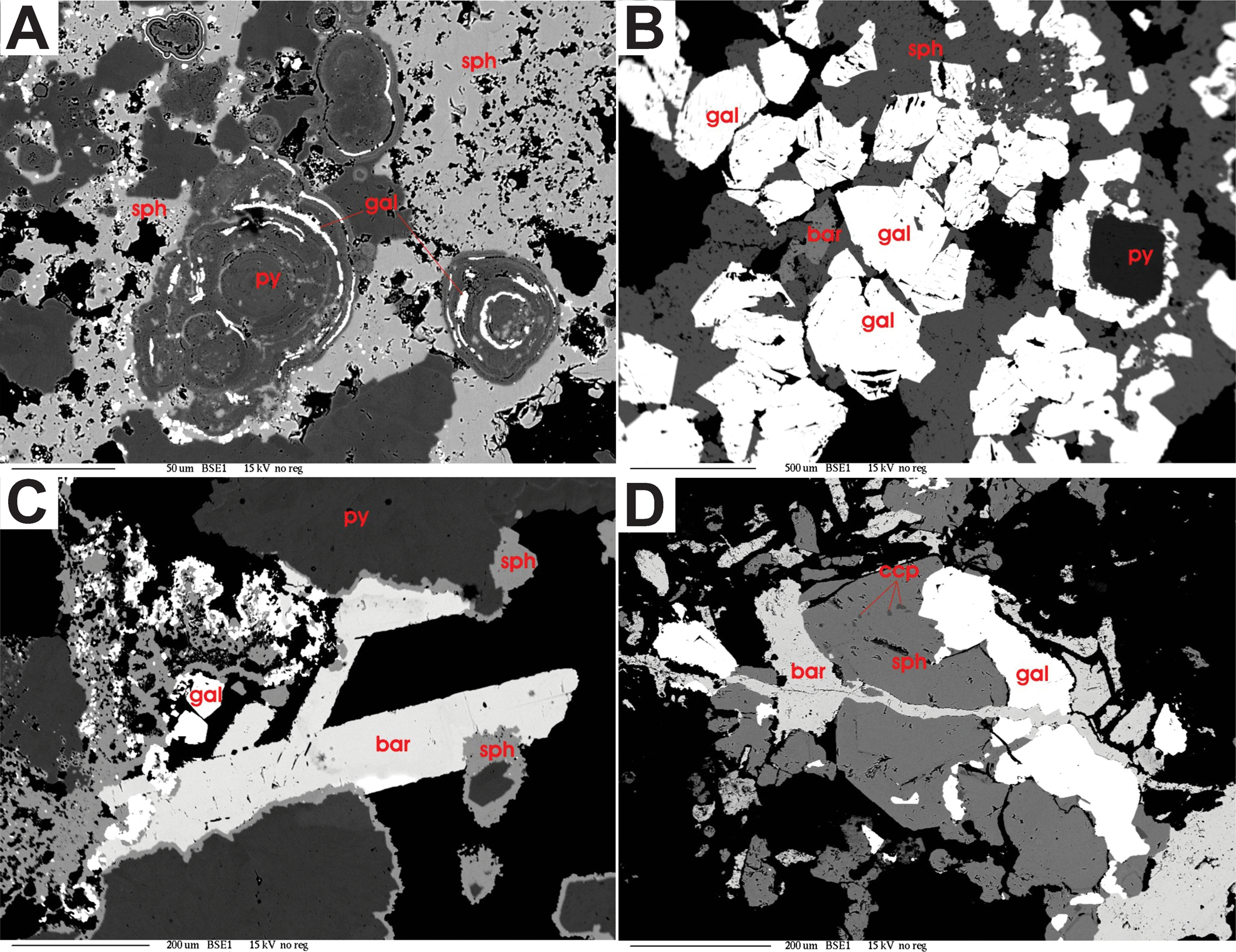
Back-scattered electron images of assemblages from South Mathiatis: (A) Early colloform pyrite enclosed in sphalerite, with galena (white) infilling colloform cracks; (B) Euhedral galena poikilitically enclosed in sphalerite; (C) Euhedral barite is partly replaced by sphalerite and veined by galena; (D) Late-stage barite cutting sphalerite and galena
Chalcopyrite is commonly closely associated with sphalerite, either in the form of irregular inclusions in the Zn sulphide, or as oriented blebs of chalcopyrite within sphalerite. Later replacement of both pyrite and sphalerite by chalcopyrite suggests introduction of copper-rich fluids under higher-temperature conditions. Sphalerite replacement takes the form of abundant blebs of chalcopyrite in the Zn sulphide, resulting in a texture that has been termed chalcopyrite disease (Barton and Bethke, 1987).
Sphalerite predominantly occurs in veins and vesicles; however, in some cases it is disseminated in the matrix of the rock (Fig. 8A). In the latter paragenesis, the mineral occurs either in association with pyrite or alone and it may be the product of primary introduction, as there is no textural evidence of pseudomorphous replacement of pyrite.
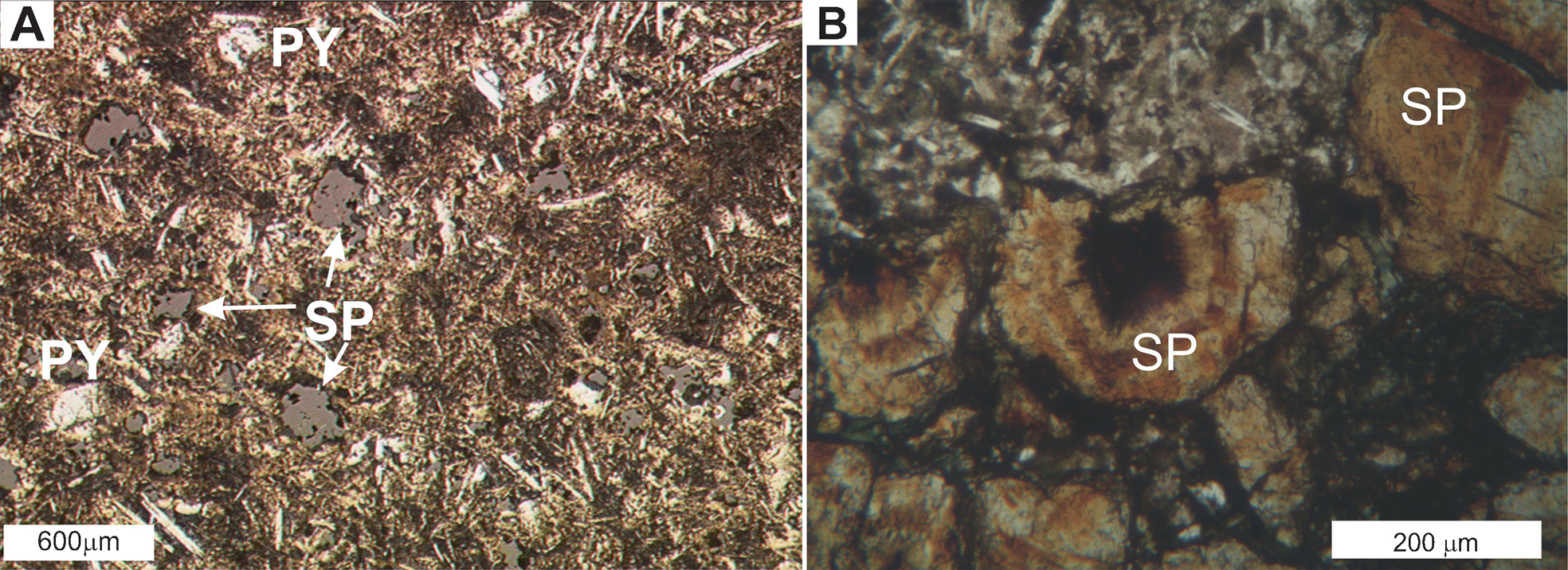
(A) Sphalerite and pyrite disseminations in incipiently altered lava. Combined transmitted and reflected light; (B) Transmitted (plane-polarised light) of zoned sphalerite, with dark iron-rich core and lighter rim reflecting variations in iron content during crystallisation
A characteristic feature of the sphalerite is the presence of well-defined zoning, in most cases from a dark core to clear translucent margins (Fig. 8B). Such zoning, reflecting variations in the iron content of the mineral, is common in both ancient as well as modern VMS deposits (see e.g. Koski et al., l984) and has been interpreted as the result of variations in aS2 or the introduction of fluids of variable oxidation state into the hydrothermal system (Barton et al., 1977). Analyses of sphalerites from South Mathiatis and other geological settings are presented in Table 2, and in diagrammatic form in Fig. 9.
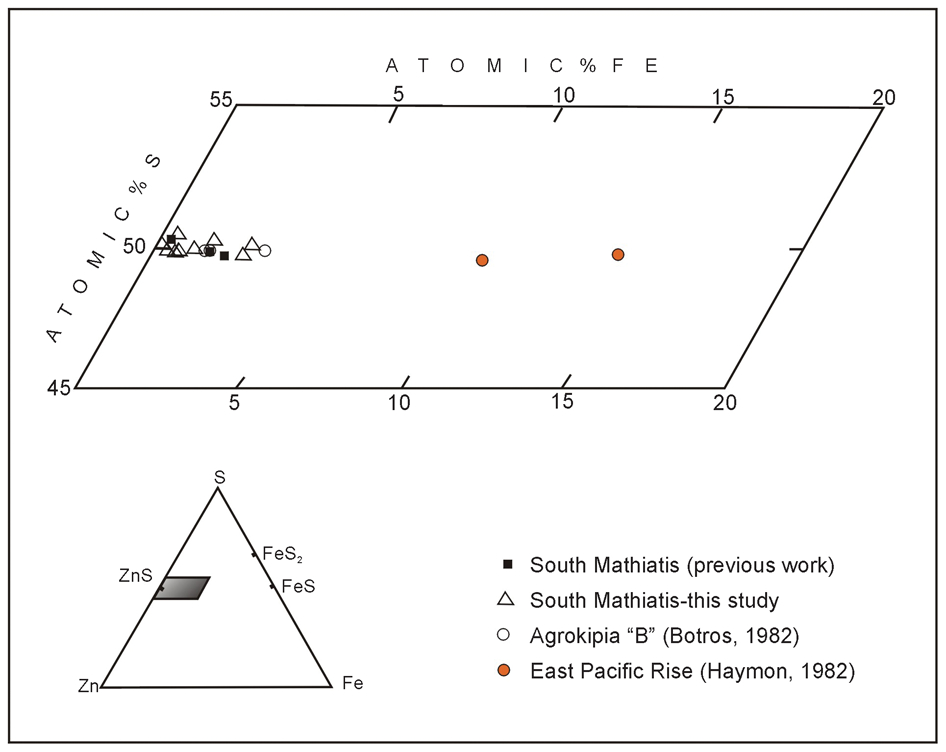
Plot of electron probe analyses of sphalerites from South Mathiatis and other geological settings on the Fe–Zn–S diagram
Electron microprobe analyses of sphalerite from South Mathiatis and other geological settings*
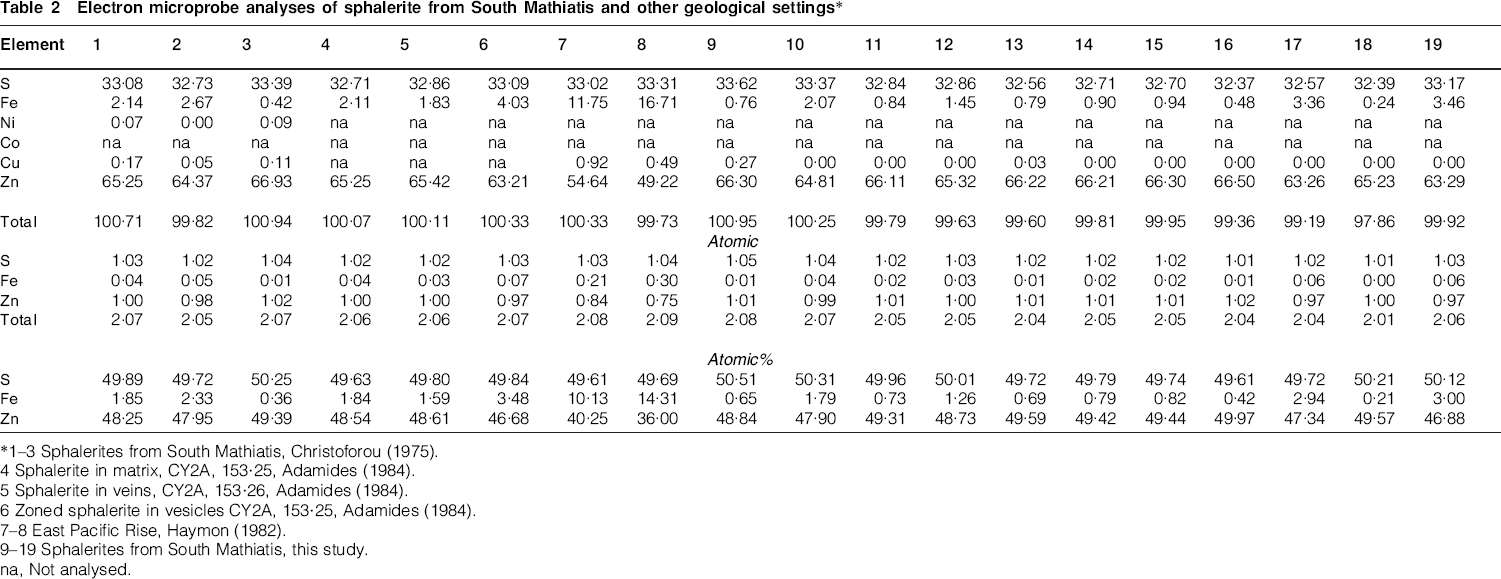
1–3 Sphalerites from South Mathiatis, Christoforou (1975).
4 Sphalerite in matrix, CY2A, 153·25, Adamides (1984).
5 Sphalerite in veins, CY2A, 153·26, Adamides (1984).
6 Zoned sphalerite in vesicles CY2A, 153·25, Adamides (1984).
7–8 East Pacific Rise, Haymon (1982).
9–19 Sphalerites from South Mathiatis, this study.
na, Not analysed.
Barite is a widespread and locally abundant gangue mineral, in contrast to the majority of Cyprus-type deposits where it occurs very locally at the margins of the mineralised zones. The mineral may appear early in the paragenesis, as indicated by the presence of euhedral barite partly replaced by both sphalerite and galena (Fig. 7C); however, later generations of barite are also observed, with the mineral veining and replacing pre-existing sulphides (Fig. 7D). Locally barite is entirely enclosed in and euhedral against quartz, whereas elsewhere it is overgrown by late-stage chalcedonic silica in a corona-type texture. The above relationships are consistent with introduction of Ba at various stages in the history of the hydrothermal system.
Zeolites, mainly of the acicular variety, are abundant in the weakly altered hanging wall of the South Mathiatis deposit, and vesicle associations with quartz rims and zeolite cores imply that zeolitisation may be partly related to the hydrothermal activity, being preceded by the introduction of quartz in the initial stages of hydrothermal alteration. The veining of such zeolites by sulphides further highlights their early formation in the paragenesis.
Jasper layers are present at various intervals in the diamond drill core, and bear a close spatial relationship to the mineralisation. Typical textures comprise delicately banded silica suggesting colloidal deposition and enclosing globules of iron oxide. Uniform, slightly wavy, extinction of large areas of this colloform material indicates recrystallisation of this originally amorphous precursor to megaquartz, and spherulitic textures (Fig. 10A) are similar to those interpreted by other workers (Hopkinson et al., 1999; Jorge et al., 2005) to be generated by diagenetic maturation of a silica gel. Other textures in the jasper include finely laminated facies comprising alternating layers of light and dark siliceous bands due to variations in amounts of cryptocrystalline opaque material, whereas fingerprint patterns of microscale laminae are interpreted to be the products of microbial precipitation.
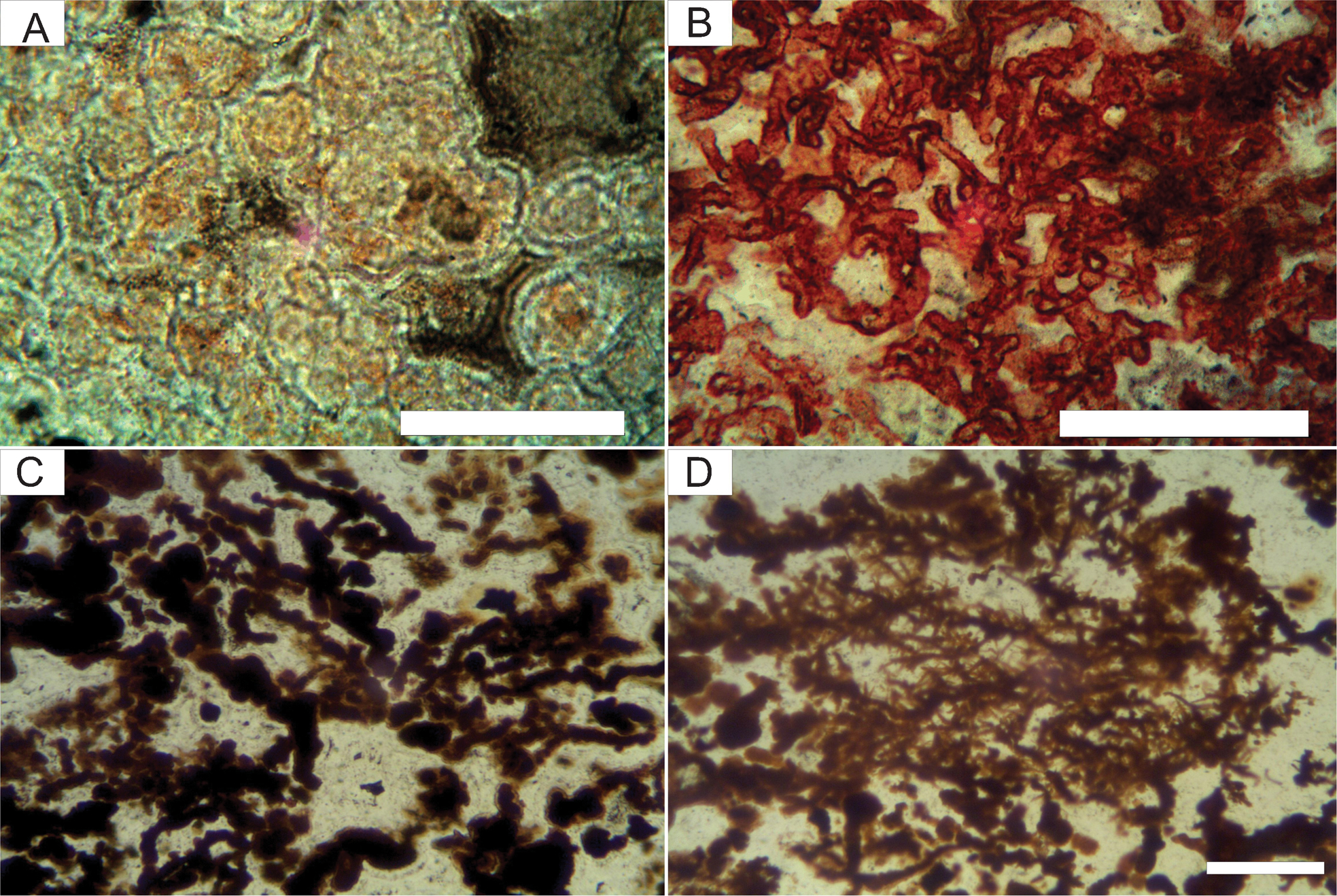
Textures in jaspers from South Mathiatis. Scale bar is 100 μm in all cases. (A) Spherulitic texture in silica, attributable to recrystallisation of a silica gel precursor; (B, C) Filamentous and ellipsoidal structures of probable biogenic origin; (D) Dendritic structures comprising iron oxide, the result of inorganic self-organisation of iron oxide during diagenesis
Ordered chains and globules of hematitic oxide in silica (Fig. 10B and C) strongly resemble structures of biogenic origin and are in most respects identical to filamentous microfossils from the Silvermines deposit in Ireland (Boyce et al., 2003), and from modern settings such as at the Loihi Seamount (Emerson and Moyer, 2002). Other branching forms (Fig. 10D), spatially associated with the filamentous types, are morphologically similar to structures interpreted to be the result of inorganic self-organisation (Hopkinson et al., 1998) and may not be related to biogenic activity, although superficially identical structures have also been ascribed to organic activity (Duhig et al., 1992a).
Repeated periods of silicification are evident in the jasper by its brecciation and healing by quartz, as well as by the presence of cross-cutting relationships between coarsely crystalline megaquartz, and fine-grained chalcedonic or amorphous silica. Length-fast chalcedony, spatially associated with crystalline quartz, is a late-stage phase in cavities. The jasper is affected by the mineralising episode and is commonly transected by sulphide veins, suggesting that jasper deposition was initiated at an early stage in the history of the hydrothermal system. Analogies may be drawn with modern hydrothermal systems, where low-temperature fluids with high concentration of dissolved silica are found proximal to higher temperature black smoker vents and result in the formation of silica–hematite precipitates containing abundant filamentous bacteria (Herzig and Hannington, 1995).
Geophysical signature of the deposit
Aeromagnetic signature
One of the effects of hydrothermal alteration in VMS environments is the destruction of the magnetic minerals in the rocks, so that subdued magnetics are a characteristic feature of sites of ore deposition (Rona, 1978). Figure 11, covering the same area as the geological map (Fig. 2) displays the magnetic characteristics of the area as obtained from a helicopter-borne magnetic survey, and highlights the following features:
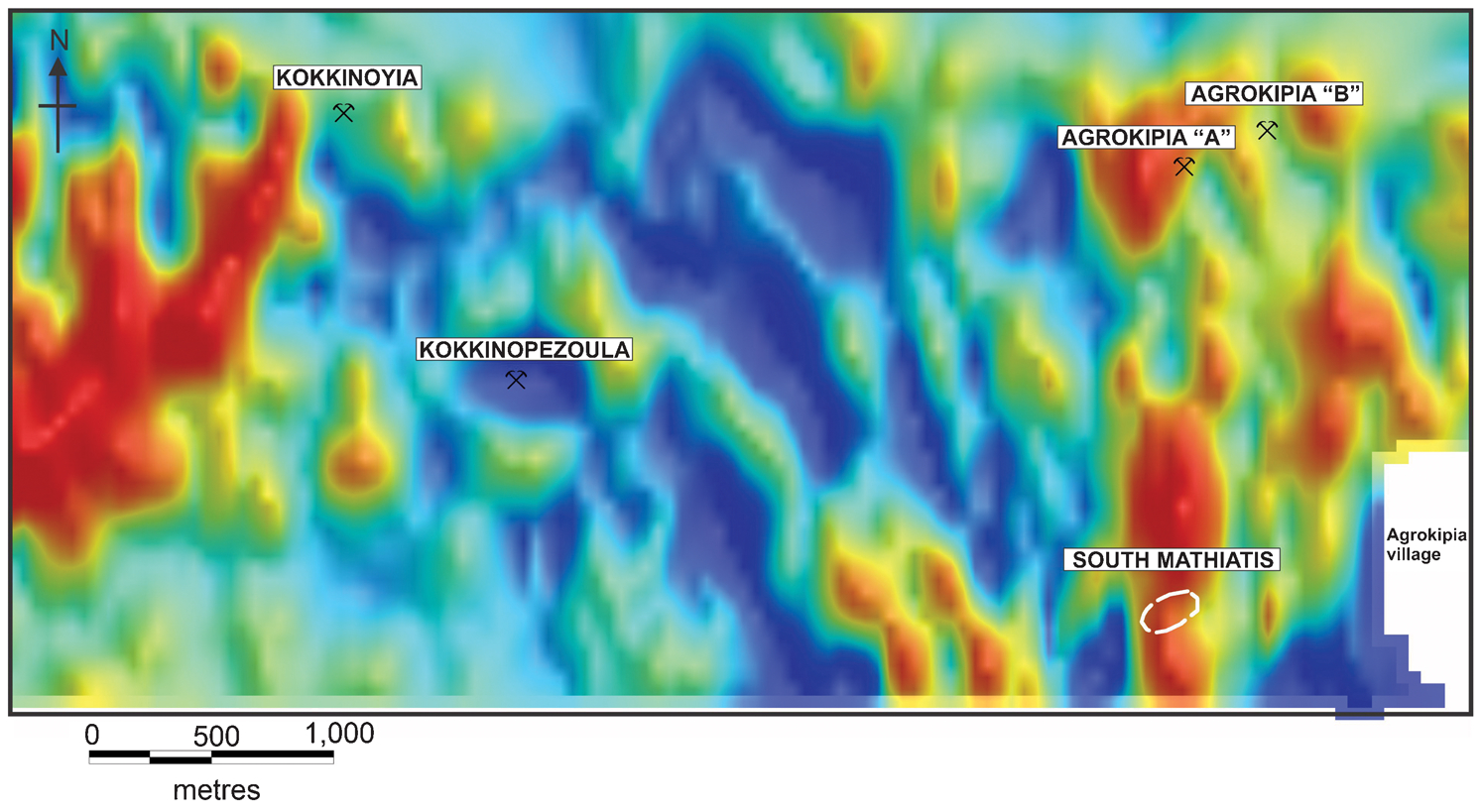
Aeromagnetic image of the Mitsero region, showing association of sulphide deposits with regions of reduced magnetic intensity. The South Mathiatis mineralisation is not associated with reduced magnetisation, a feature interpreted as due to the incipient nature of alteration. Magnetic intensity varies from low (blue colour) to high (red colour)
The location of the Kokkinopezoula deposit is well defined by a deep magnetic low, consistent with the intense hydrothermal alteration associated with the formation of approximately 6 Mt of sulphide. Similarly subdued magnetics are associated with the location of the much smaller Kokkinoyia deposit, which is localised at the intersection between northeasterly structures and a northwest-trending structure which links the deposit with Kokkinopezoula. The magnetic signature of the Agrokipia deposits is more subdued, and consists of regions of lower magnetic responses that overprint two north-trending belts of highly magnetic lithologies. However, South Mathiatis does not have any effect on the magnetic pattern, a feature which implies that hydrothermal alteration was not of sufficient intensity to destroy the magnetic properties of the rocks, a conclusion also supported by the preservation of original textures and primary silicates in the mineralised ground.
Three-dimensional induced polarisation
A ground geophysical survey utilising three-dimensional induced polarisation was performed over the area containing the deposit. Stations were spaced 100 m apart with line spacing also at 100 m. The purpose of the survey was the evaluation of the geophysical signature of the deposit and the search for extensions to the known mineralisation. The results of the survey for the resistivity and chargeability parameters are summarised in Fig. 12A and B respectively, and highlight the fact that the deposit is completely transparent to this geophysical method. A low-resistivity trough in the environs of the mineralisation may reflect increased clay formation due to hydrothermal activity, although this trough extends far beyond the confines of Zn deposition. Similarly, the deposit is located within the central parts of an annulus of increased resistivity at depth, probably suggesting enhanced silicification associated with hydrothermal activity; however, similar regions of low resistivity within the high-resistivity annulus are devoid of mineralisation.
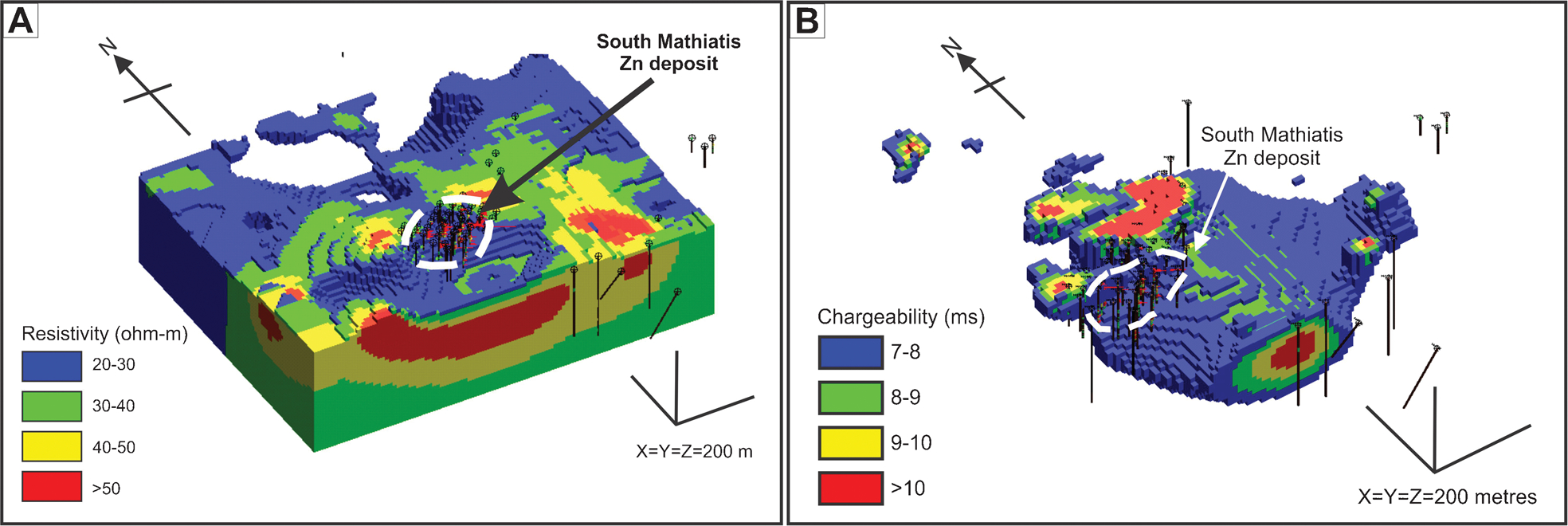
Results of 3D induced polarisation survey at South Mathiatis. (A) Resistivity; (B) Chargeability. See text for discussion
The chargeability image (Fig. 12B) similarly fails to predict the location of the Zn mineralisation. A belt of high chargeability east of the deposit correlates well with zones of pyritic disseminations devoid of base metals. A break in the chargeability pattern directly north of the deposit reflects the presence of a fault which terminates the mineralisation in that direction and may have provided one of the local controls for ore deposition. The deposit itself, however, is devoid of any chargeability signature and would be missed as a target in the event of buried mineralisation.
Discussion and conclusions
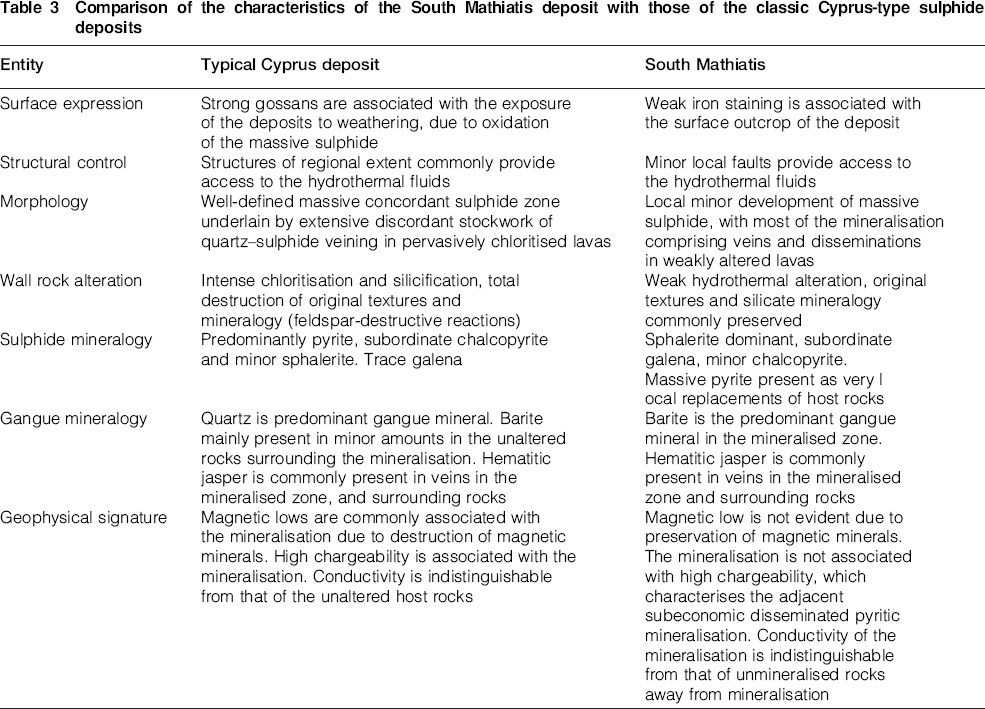
The South Mathiatis deposit represents a local concentration of Zn-rich mineralisation in an axial setting at a spreading axis, and is dominated by autobrecciated sheet flows, pillow lavas and local hyaloclastic units that probably form a ponded volcanic sequence comparable to the interpreted setting of the adjacent Agrokipia B deposit (Hall, 1987). Although very minor massive sulphide is locally present, the bulk of the mineralisation is disseminated, comprising mainly sphalerite and pyrite in lavas whose alteration is markedly subdued. The differences between South Mathiatis and the classic Cyprus-type deposits are summarised in Table 3, and will be discussed in the following paragraphs.
Comparison of the characteristics of the South Mathiatis deposit with those of the classic Cyprus-type sulphide deposits
The general lack of Zn in many of the Cyprus-type sulphide deposits has been attributed to the fact that, in contrast to Cu which is deposited immediately above the vent, precipitation of galena and sphalerite takes place higher in the plume and the minerals are lost in most cases into ambient sea water (Solomon and Walshe, 1979). The presence of disseminated sphalerite in the altered rocks of the South Mathiatis deposit is consistent with preservation of mineralisation by sub-seafloor deposition and associated reaction between the fluids and the sheet flow-dominated sequence.
The presence of various generations of barite probably indicates early introduction of Ba by the hydrothermal fluids during the main period of mineralisation, followed by later Ba deposition as a result of the ingress of sulphate-enriched seawater in the closing stages of hydrothermal activity.
Jasper units with associated biogenic structures are compatible with formation at the proximity of hydrothermal vents by fluids rich in iron and silica. Such rocks are widespread both in ancient (Duhig et al., 1992a; 1992b; Grenne and Slack, 2003; Juniper and Fouquet, 1988) and modern settings (Hannington et al., 1998; Hopkinson et al., 1999) and are the lithological equivalents of the tetsusekiei (literally iron quartz) lithology of Japan (Kalogeropoulos and Scott, 1983; Kalogeropoulos, 1985), which have been used as geochemical indicators of mineralisation. The veining of the jasper by sulphide minerals formed during the main mineralising episode suggests early formation by cooler fluids at the initial stages of hydrothermal activity, overprinted by the base-metal mineralisation of the main episode.
It is noteworthy that the neighbouring Agrokipia B deposit is also characterised by enhanced Zn values and minor Pb (Constantinou and Govett, 1973; Herzig, 1988). The latter deposit has also been interpreted as the result of subsea-floor replacement, with Ba enrichment considered to be due to a combination of leaching from basement rocks and downwelling sea-water (Herzig, 1988). A similar genesis is inferred for the South Mathiatis deposit, with the weaker mainly defocussed nature of the alteration and mineralisation being the result of a correspondingly weak lithological and structural control and limited availability of metal-enriched hydrothermal fluid.
A zonation from higher to lower Cu/Zn ratios is considered characteristic of the normal evolution of a hydrothermal system (Franklin et al., 1981). If the deposits of the Tamasos (Mitsero) mining district are considered coeval, the lower Cu/Zn ratio characterising both Agrokipia B and South Mathiatis may reflect their location at the marginal parts of a hydrothermal system, with lower prevailing temperatures, and with the associated hydrothermal fluids depleted in Cu, which was deposited at sites central to the spreading axis by higher temperature fluids. The predominantly Cu-rich Kokkinoyia deposit may therefore represent deposition from hotter fluids at sites proximal to the heat source. The same may apply for the Kokkinopezoula deposit, whose purely pyritic nature may be attributed to a process of extreme zone refining (Rona, 2005; Galley et al., 2007) resulting in the leaching of Cu from the system. The situation may thus be comparable to the TAG hydrothermal field, where high-temperature venting characterises sites proximal to the spreading axis and low-temperature hydrothermal activity (Alvin zone) takes place away from the axis. The size of the TAG hydrothermal field is of identical extent to the span of ground enclosing the deposits of the Mitsero mineral field (Hannington et al., 1998).
The results of the ground geophysical survey by electrical methods suggest that such techniques are inappropriate for use during exploration for deposits of the South Mathiatis type, primarily as a result of the poor electrical properties of the Zn mineralisation, with adjacent areas of pyritic disseminations giving a much stronger signal. This is compatible with the conclusions of other workers which highlight the fact that sphalerite has no salient properties that allow its detection by geophysical methods (Bishop and Emerson, 1999). In addition, as a result of the inferred low temperature of the hydrothermal fluids, intense alteration of the rocks is absent, resulting in the preservation of magnetic minerals and lack of the characteristic magnetic lows associated with most other deposits.
The conclusion that may be drawn from the above is that deposits similar to South Mathiatis may be present elsewhere in the Troodos ophiolite, but remain as yet undetected due to their poor geological and geophysical signature. One possible guide for their detection may be the presence of barite veining in weakly altered and oxidised lavas, which may indicate low-temperature hydrothermal activity with associated disseminated Zn mineralisation. Rock geochemistry may also be used as an additional guide; however, in view of the widespread signs of weak oxidation associated with barren pyritic mineralisation in the lava sequence, the detection of further deposits of the South Mathiatis type remains a challenge.
Footnotes
Acknowledgements
The author thanks the Management of EMED Mining Public Limited, and in particular Harry Adams (Managing Director) and Ronald Cunneen (Group Chief Geologist) for permission to publish this work. Thanks are also extended to the University of Leicester for allowing use of their petrographic microscope facilities, and to the University of Bratislava for electron microprobe analyses and back-scattered images of mineral assemblages. Constructive comments by Patrick Williams, Wayne Goodfellow, and an anonymous reviewer on an earlier version of the manuscript are gratefully acknowledged. Clifford Patten, Iain Pitcairn and an anonymous reviewer are thanked for helpful comments, and Simon Jowitt is thanked for useful suggestions and for the editorial handling of this publication.