







Abstract
Metallurgical characterisation of uranium mineralisation at the Central Jordan Uranium Project (CJUP) used 13 bulk samples chosen using a novel approach to confirm their representativeness. The bulk samples are considered to be representative of the entirety of the studied deposit if they provide good spatial coverage of the deposit, and their composition matches every fifth percentile or, at least, fifth, twenty-fifth, fiftieth, seventy-fifth and ninety-fifth percentiles, of the selective mining unit (SMU) compositions. The compositional representativeness of bulk samples is checked by plotting against histograms of SMU blocks, including comparisons of metal grades and metallurgically deleterious elements. This approach used bulk samples collected from the Khan Azabib and Siwaqa domains of the CJUP deposit. The test work results indicate that surficial uranium mineralisation within the CJUP deposit is amenable for leaching under alkaline conditions. Uranium can be recovered by heap leach technology, yielding a recovery of 80–90% during testing. One alternative approach is beneficiating the ore by wet scrubbing, another technology that may be a viable approach to exploiting the CJUP deposit and an area that certainly warrants further metallurgical studies.
Introduction
Estimation and reporting of resources of the Central Jordan Uranium Project (CJUP) was supported by metallurgical testing, as outlined as necessary in the JORC Code (JORC Code 2012), which states that ‘all reports of Mineral Resources must satisfy the requirement that there are reasonable prospects for eventual economic extraction, regardless of the classification of the resource’.
The metallurgical characteristics of the mineralisation within the CJUP deposit were determined by a series of tests performed on bulk samples, which form the main source of empirical data for the optimisation of ore processing technologies. This testing enabled the estimation of metallurgical recovery and the quantification of the factors that control the recovery process, thereby assisting in the estimation of processing costs, an essential step for estimating the modifying factors that control the conversion of mineral resources to ore reserves (JORC Code 2012).
However, the validity of metallurgical testing depends on the representativeness of the bulk samples used, which in this case were several hundreds of kilogrammes each. The large volumes of these bulk samples meant that only a limited number of individual samples were used during metallurgical testwork, indicating that the effectiveness of metallurgical testing is limited by the degree to which these samples are representative of the orebody as a whole and by the appropriateness of the metallurgical testing methodology used during this characterisation.
Here, the authors briefly describe a novel approach that was used to assure the representativeness of bulk samples from the CJUP project, together with the characteristics of the collected bulk samples and the results of this testing.
Methodology
The methodology of estimating bulk sample representativeness implemented at the CJUP deposit was initially developed at an iron-ore project in Australia and was presented at the World Sampling and Blending Conference (Abzalov 2013). The approach requires two studies: first, analysis of the spatial distribution of the bulk samples assuring that they cover the whole deposit, and, second, analysis of statistical data to assure that the composition of the bulk samples are statistically representative of the entirety of the deposit.
Spatial distribution of bulk samples
The locations used for bulk sampling should cover the entire deposit and all types of mineralised material within the deposit in order to be considered as representative for the entirety of deposit. This means that the bulk samples are chosen from different locations representing the different parts of the deposit (Fig. (1a–c). Samples should be evenly spread over the entire deposit and should not be clustered in small areas that may represent preferential samples from the more accessible parts of a deposit (Fig.(1d ).
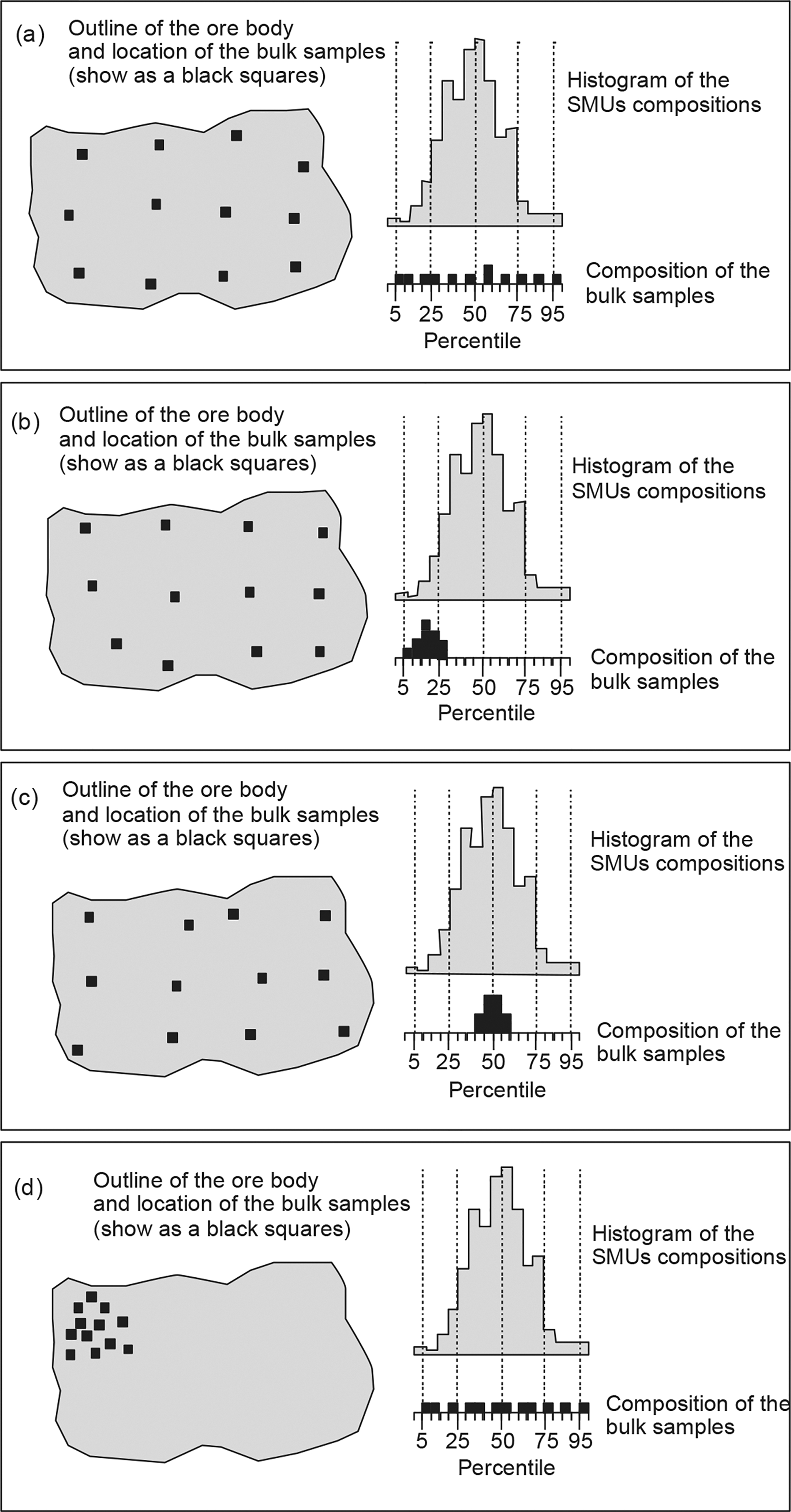
Sketch showing representative and non-representative bulk sample configurations: a representative bulk samples; b spatial distribution of samples representative but compositions are biased towards low-grade mineralisation; c representative spatial distribution of samples but their compositions are non-representative as the sampling did not include both low and high-grade mineralisation; d samples are statistically representative but spatial distribution is non-representative
If data quantity permits the construction of variograms, then the spatial continuity of the metallurgical characteristics can be geostatistically estimated and used to create a metallurgical model for the deposit. In particular, if a robust spatial correlation has been found between ore body characteristics (metal grades, mineralogy, textures) and metallurgical recovery, the test work results can be extrapolated to all blocks in the model using multivariate geostatistical techniques (Abzalov and Pickers 2005).
Bulk samples composition representativeness: Method overview
The approach used during this study checks the representativeness of bulk sample compositions by plotting bulk samples versus histograms of the blocks whose size is equal to a smallest selective mining unit (SMU) at the given project (Fig. 1). The comparison should not be limited to mineralisation grade, but should also include metallurgically deleterious elements. If the quantitative mineralogical composition was systematically analysed through entire deposit, the histograms of the metallurgically important minerals should be also created for the SMU size blocks and compared with the mineralogical composition of the bulk samples.
The histogram of the SMU blocks is created by geostatistically adjusting the resource block model to the proposed mining selectivity at the studied project, meaning that the blocks are regularised to the size of the SMU. This adjustment, known as ‘change-of-support’, requires transforming the block model using non-linear geostatistical methods such as Localised Uniform Conditioning (Abzalov 2006). This technique splits the blocks estimated by kriging into smaller cells matching the size of the SMU, with the grade modification honouring a principle of the volume–variance relationship.
The bulk samples are considered to be representative of the deposit characteristics if their grade, concentration of the deleterious elements and other non-grade variables of economic significance are representative of the deposit (Abzalov 2013). Comparison of the arithmetic means of these two sets of data is insufficient to assure the representativeness of bulk samples because equal mean values are no guarantee that the spread of the bulk sample compositions encompasses the entire range of the ore grade classes within the deposit (Fig. 1c).
The best practice is to conduct testing using the bulk samples that approximately correspond to every fifth percentile of the SMU histograms (Fig. 1a). However, if the number of samples is less than 10, they should match at least the fifth, twenty-fifth, fiftieth, seventy-fifth and ninety-fifth percentiles of the SMU compositions. This statistical distribution of the test work data is well suited for metallurgical characterisation of the deposit and has previously been suggested as a valid criterion to ensure the statistical representativeness of bulk sample compositions (Abzalov 2013).
This criterion is then used to select locations for bulk sampling and analysis within the block model. In a situation where a deposit contains several metallurgically different domains, for example oxidised gold mineralisation, free milling ore and refractory ore, every metallurgically different domain should be studied considering them as a separate ore body. Results obtained at one domain (e.g. oxidised gold mineralisation) can be absolutely different, and therefore inapplicable to another part of the mineralisation (e.g. sulphide-associated gold lode).
After the bulk samples have been processed, their representativeness is checked again by plotting them versus the histograms of the SMUs (Fig. 1). This stage is necessary because the actual grade and concentration of the deleterious components within a bulk sample may differ from the model because of geostatistical estimation errors. The results obtained from individual bulk samples are used to infer the dependence of the metallurgical characteristics of the studied mineralisation on the variations of both metal grades and deleterious components.
Metallurgical tests at the CJUP deposit
Metallurgical tests included analysis of uranium grade distribution by size fraction and subsequent leach testing. Both dynamic and static testing procedures were undertaken to develop a better understanding of the leaching parameters and uranium recovery during processing of surficial mineralisation within the CJUP deposit. The tests conducted were as follows (Abzalov et al. 2014):
agitated leaching tests; rotating bottle tests; the laboratory tests using 1 m columns and simulating heap leaching processes; beneficiation of the ore by dry and wet scrubbing.
Results
The CJUP deposit contains ‘surficial’ and ‘deep’ mineralisation types that are mineralogically different and therefore potentially have different metallurgical properties (Abzalov et al. 2014, 2015). The metallurgical test work focused on the ‘surficial’ mineralisation in the Khan Azabib and Siwaqa areas within the CJUP deposit as these areas are the most likely sites for proposed initial mining.
Representativeness of the bulk samples
Grades were estimated using small blocks (50 × 50 × 0.5 m) using Localised Uniform Conditioning (Bessin, Deraisme and Renard 2015), and this model was used to assess the representativeness of the bulk samples compared to the overall deposit.
Thirteen bulk samples were collected from trenches specially excavated for bulk testing within the Khan Azabib and Siwaqa areas, with an objective to obtain representative material for the metallurgical tests outlined above (Fig. 2). Trenches were dug at different parts of these domains to ensure a good spatial coverage of the data obtained during testing (Fig. 2b).
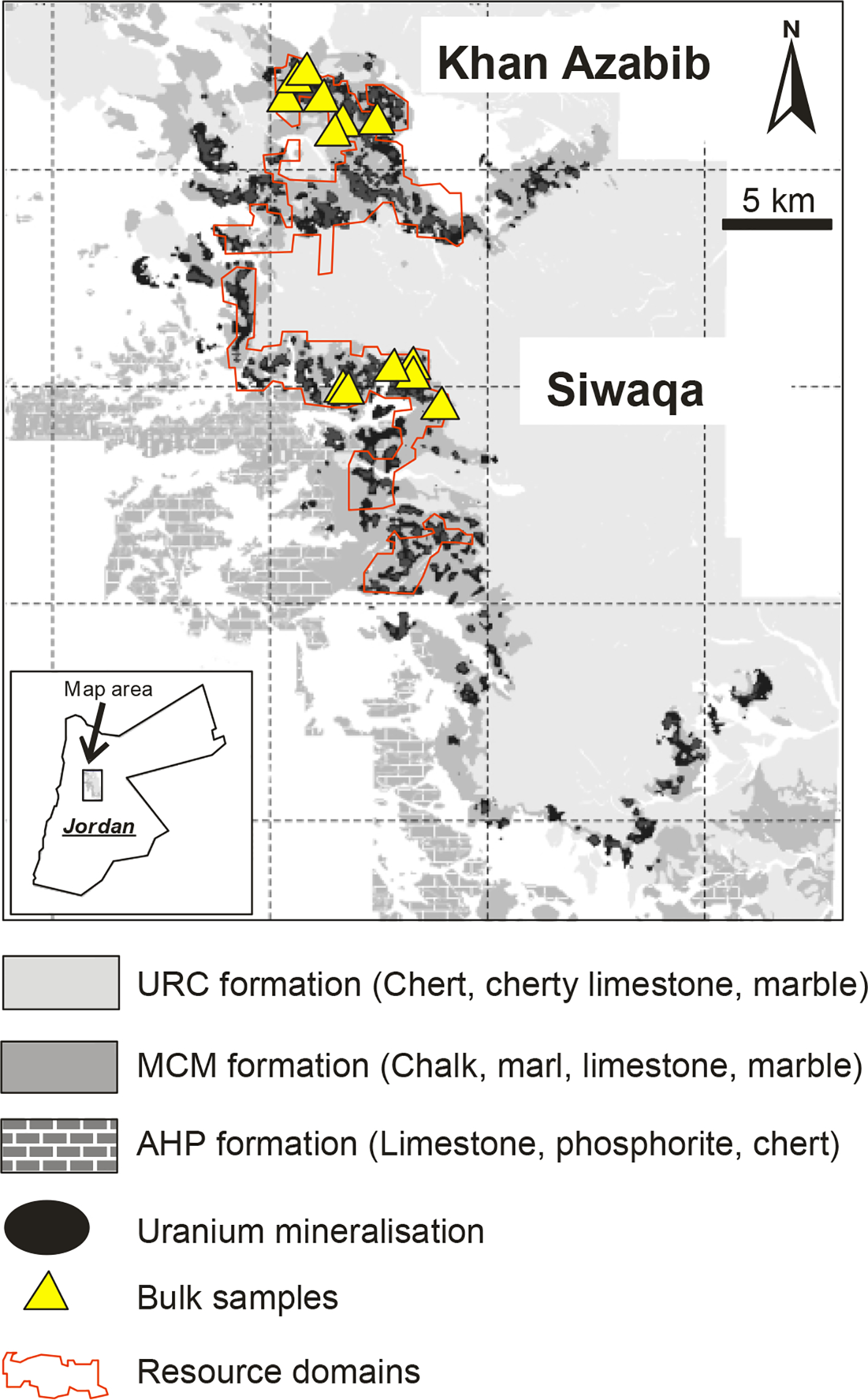
Geological map showing the spatial distribution of bulk samples within the Central Jordan Uranium Project (CJUP) deposit (generalised after Abzalov, van der Heyden, Saymeh and Abuqudaira 2015)
Sampling locations were initially chosen from the CJUP resource model to assure that the composition of the bulk samples is representative of the ‘surficial’ mineralisation before being corrected by comparison to the composition of the surrounding exploration trenches. The bulk samples contain between 81 and 289 ppm U, indicating they have a good coverage of SMU block grades (Fig. 3). Mineralisation containing less than 80 ppm U was excluded from metallurgical testing because this material is considered uneconomic (Abzalov et al. 2014).
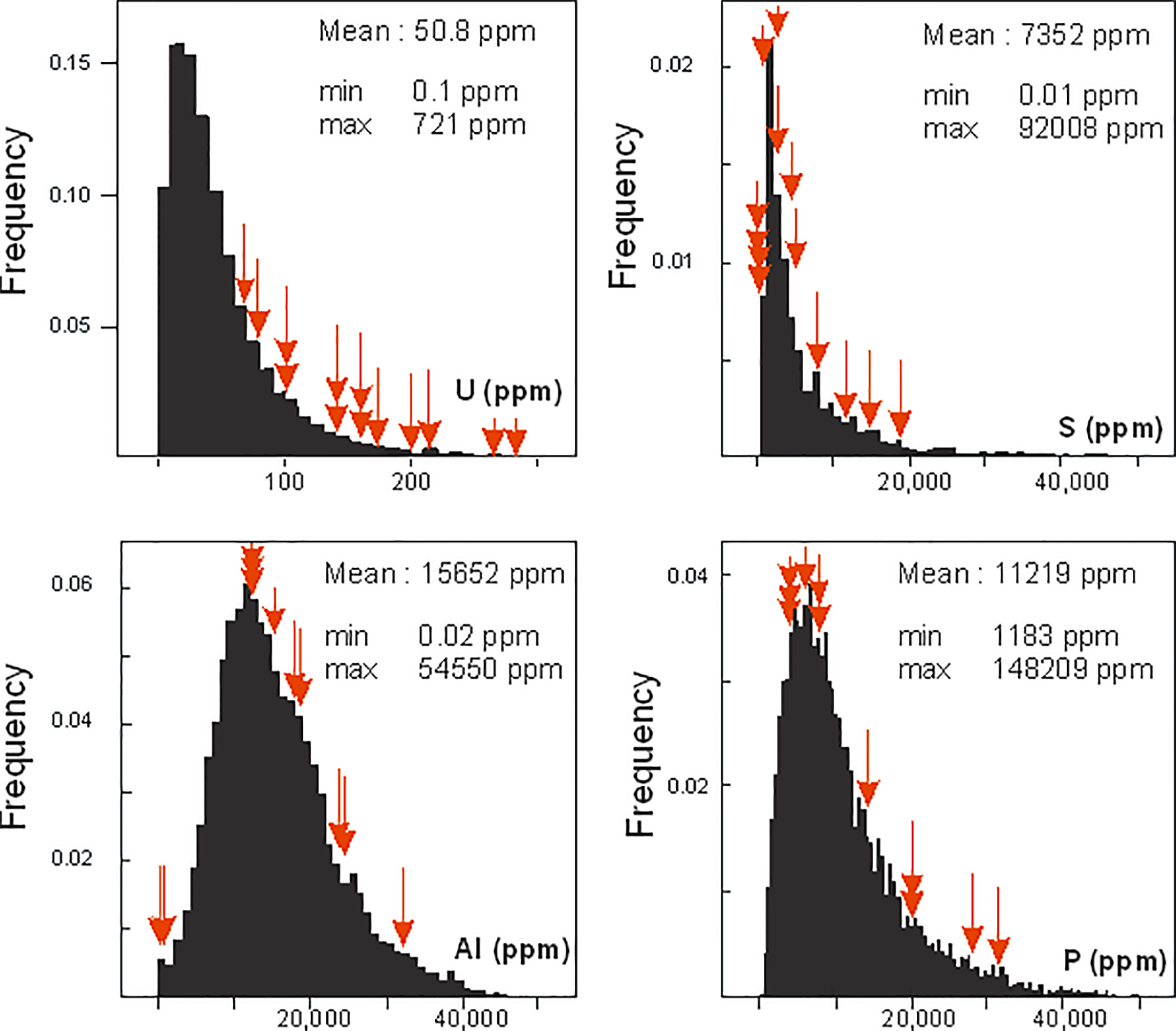
Composition of bulk samples (arrows) plotted on the histograms of SMU (50 × 50 × 0.5 m) compositions, with resources are reported using an 80 ppm U cutoff
In addition to the estimated uranium grade, each block was also characterised by deleterious components; sulphur, phosphorous and clay (Abzalov et al. 2014). Alumina concentrations were used to determine the clay concentrations in bulk samples and within SMU blocks, primarily as the clay minerals within the CJUP deposit are dominated by alumina.
The location of bulk samples was chosen close to exploration trenches where the required uranium grade and concentration of the deleterious elements were detected during resource estimation. This ensured that the bulk samples obtained during this testing had compositions that covered the majority of the SMU block histograms (Fig. 3). In general, the principles of representativeness of the bulk samples composition (as shown in Fig. 1a) were correctly implemented at the CJUP project, as bulk samples compositions are close to fifth, twenty-fifth, fiftieth and seventy-fifth percentiles of the SMU block compositions. However, the material with highest concentrations of deleterious components (ninety-fifth percentile) was not present in the bulk samples analysed during this testing (Fig. 3). In particular, the processed bulk samples contain less than 2 wt-% sulphur (Fig. 3), therefore additional samples containing 4–6 wt-% of sulphur will be collected and processed during the next phase of metallurgical tests.
Uranium distribution by grain size classes
The distribution of uranium by size fraction was estimated using a conventional Retsch AS200 Analytical Sieve Shaker (Allaboun, Allawzi, Al-Otoom and Abu Al-Rub 2011) as follows:
samples were sieve screened using sieve sizes: +1 cm, 2 mm, 500 μm, 250 μm, 125 μm, 64 μm, 45 μm, and the pan; each size cut was chemically assayed; each size cut was weighed and properly labelled for future referencing and testing.
Taking in consideration the maximum sieving capacity, screening was conducted in stages after cleaning with screens inspected before commencing each round of sieving. Screens were continuously monitored to prevent overloading and consequent blinding of the meshes.
The average values obtained by sieving the bulk samples indicates that almost 57% of the samples consist of particles of 0.5 mm in size or less (Fig. 4). This corresponds to almost 52% of the total uranium within these samples as calculated on a weighted average basis. These estimates indicate that the fine-grained fraction is equally important as the medium and coarse grained material within the deposit and must be processed in order to achieve a good uranium recovery.
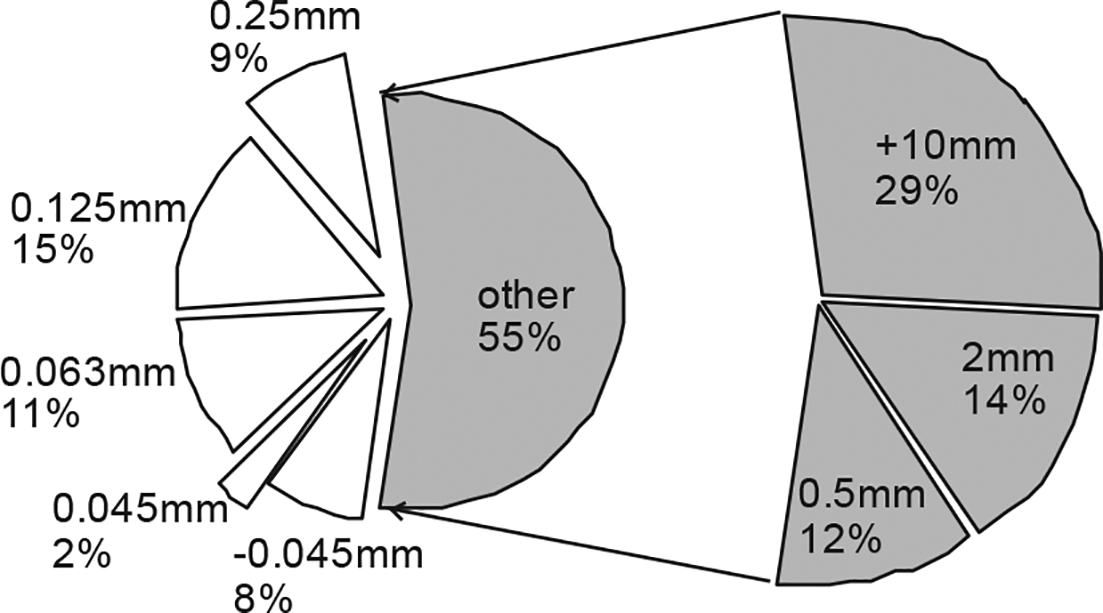
Distribution of uranium by size fractions based on bulk sample testing
Alkaline leach test results
The uranium mineralisation within the CJUP deposit is hosted by units containing carbonate minerals (mainly calcite) that are locally abundant, meaning that uranium leaching was tested using alkaline reagents. Three leach reagents were used with material containing 15, 10, and 5% carbonates, with bicarbonate concentrations maintained at 2% throughout the entire sequence of experiments. The effect of contact time was monitored by conducting the above described experiments at 1, 5, and 16 h agitation times, with trends of uranium recovery as shown in Fig. 5.
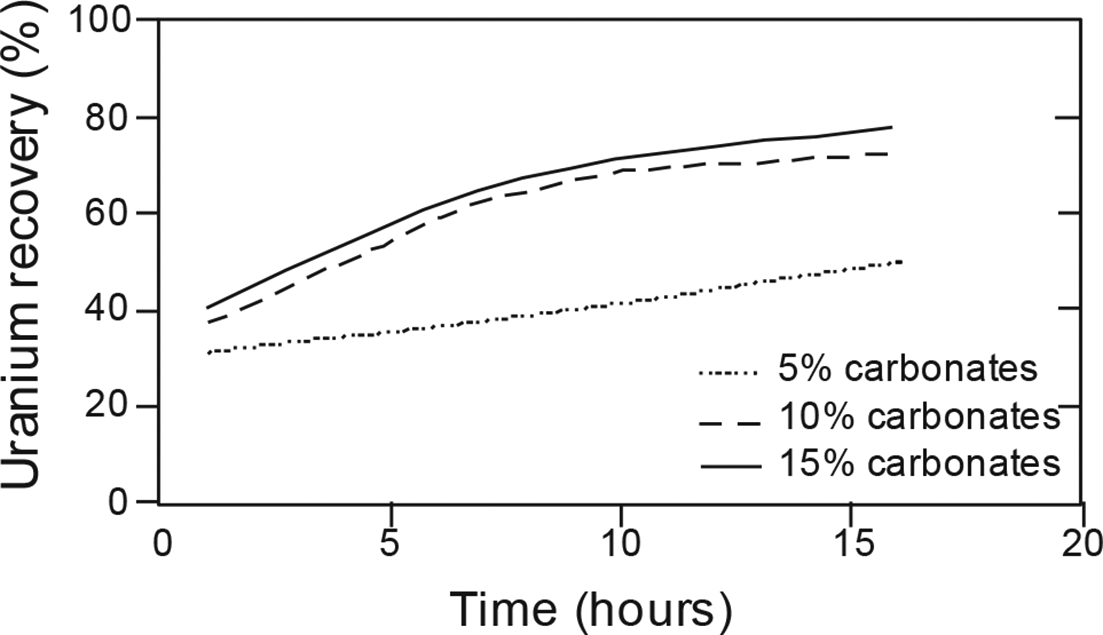
Uranium recovery by alkaline leach as a function of time and concentration
The only significant increase in recovery percentage occurs during the first 5 h, when recovery increases from 30 to 60% (Fig. 5), with only marginal increases in recovery achieved during the last 11 h of testing. However, process kinetics and recovery limits cannot be extrapolated using these results without further testing of various particle sizes and over longer agitation times.
Scrubbing beneficiation
A series of special tests were carried out in order to estimate if the ore within the CJUP can be beneficiated before uranium is recovered. Of particular interest was the distribution of uranium in fine fraction material that can be extracted separately as crushing or grinding fines. Two approaches were investigated, namely dry and wet scrubbing, with better results obtained by wet scrubbing, where a significant amount of uranium minerals were released from coarse fragments and were redistributed to the fines (Fig. 6). It was noted that the best results were obtained at approximately 4 min of scrubbing, when uranium minerals are preferentially liberated and transferred into fines, whereas rock forming minerals (i.e. the gangue) remains largely unchanged. Continuing scrubbing leads to further fragmentation of the ore and crushing of barren gangue minerals, eventually diluting the fine fraction (Fig. 6).
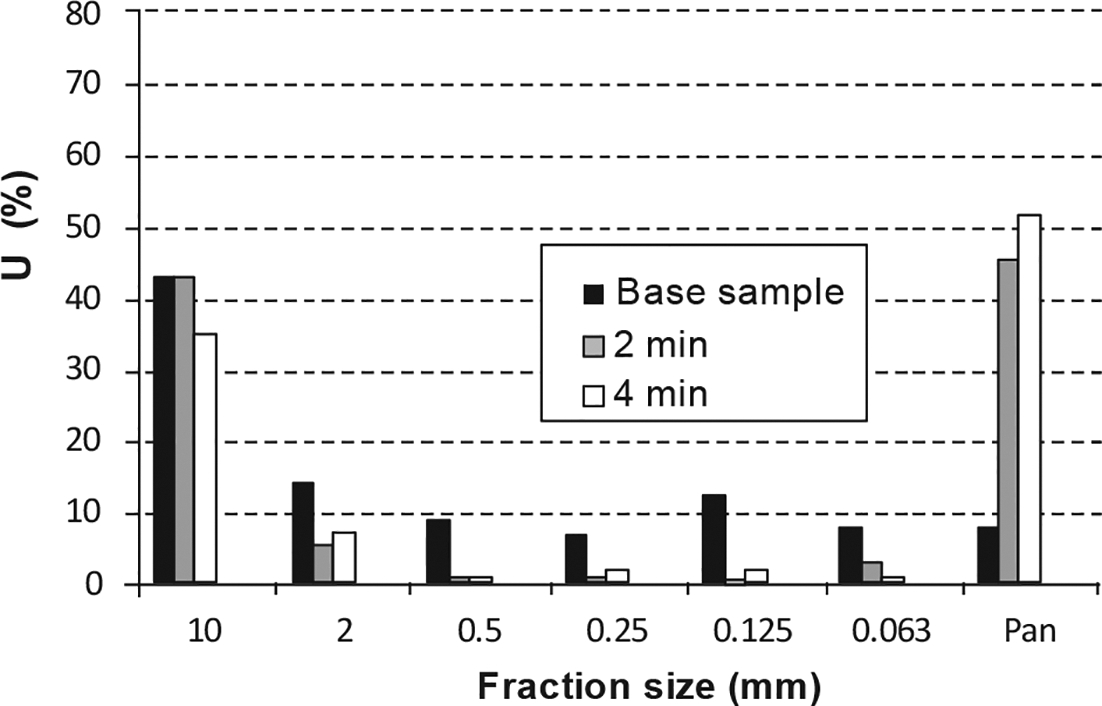
Diagram showing changes in uranium grade caused by the wet scrubbing of the bulk sample
The test shows an increase in the uranium content within the fines but does not justify a stand-alone beneficiation unit operation. Other options are still to be explored before adapting beneficiation as a proofed process concept.
Heap leach tests
Heap leaching is one of the preferred methods for processing uranium mineralisation within the CJUP deposit, therefore testing the applicability of the heap leach technology for exploitation of the CJUP deposit commenced at an early stage of the project when the maiden Inferred Resources were estimated (Abzalov et al. 2014). These tests were carried using a set of 1 m high leach columns and changing application rates and reagent compositions. This testing confirmed that the surficial mineralisation was amenable to processing by heap leaching (Fig. 7), yielding an average uranium recovery of 80–90%, an excellent result for heap leaching (Fig. 7).
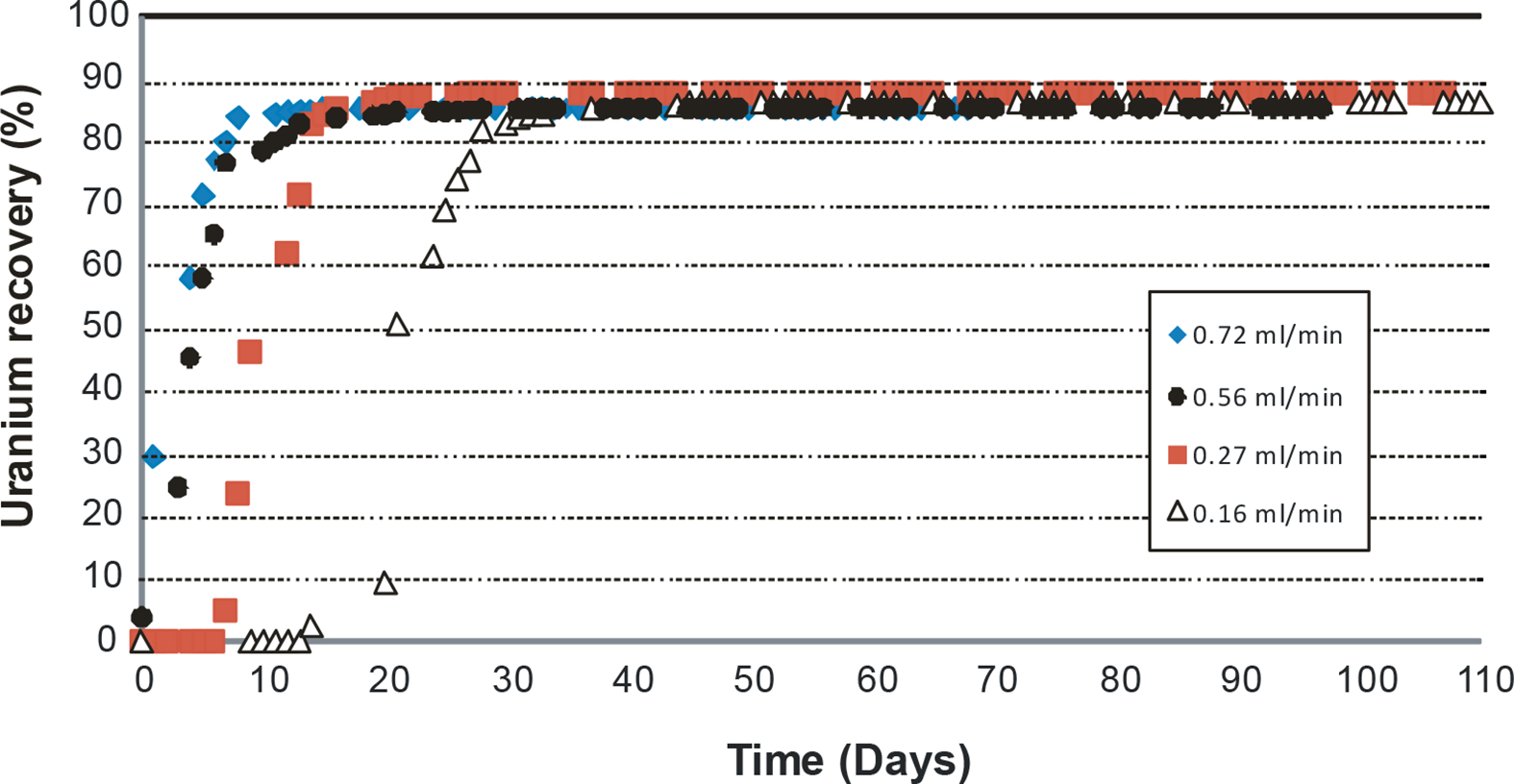
Results of the heap leach testing undertaken during this study
Testing continues in order to optimise heap leach reaction kinetics and consumption of reagents, including investigation of the facilitation of heap leaching by agglomerating clay rich mineralised material. Conventional agglomerating technologies (Bouffard 2008) have been tried and have yielded highly encouraging results.
Summary and conclusions
The CJUP project has used a novel approach for assuring the representativeness of bulk samples (Abzalov 2013). The method requires validating representativeness of their spatial distribution and composition (Fig. 1), with the latter checked by plotting the bulk samples against histograms of the compositions of the SMU blocks. The bulk sample compositions should match every fifth percentile or, at least, the fifth, twenty-fifth, fiftieth, seventy-fifth and ninety-fifth percentiles of the SMU compositions, including metal grades and deleterious elements (Abzalov 2013). This approach emphasises the importance of planning metallurgical tests after the deposit geology is well understood, the resource model has been constructed and mining parameters are defined accurately enough to be used as guidelines for collecting bulk samples.
The first phase of the metallurgical tests was preliminary by its nature and has included analysis of the uranium grade distribution by size fraction and a series of leach tests that were conducted in order to develop a better understanding of the leaching parameters of the surficial mineralisation at the CJUP deposit and estimate the uranium recovery. The tests have shown that surficial uranium mineralisation at the CJUP deposit are amenable to alkaline leaching, as confirmed by dynamic and static testing methods. This testing is highly encouraging and shows that uranium can be recovered by heap leach technology using alkaline reagents. Recovery in the bulk sample tests were in the range of 80–90% uranium, which is exceptionally good for heap leach technology.
Acknowledgement
The authors wish to thank management of the Jordanian Uranium Mining Company, Dr H. Toukan and Dr S. Kahook, for permission to publish results of the metallurgical testing and their support and encouragement through the course of the project. The authors also thank A. Abzalov for correcting the English and the Applied Earth Science reviewers for useful comments.