







Abstract
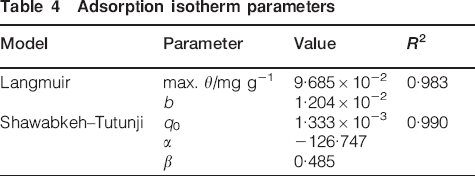
The effect of an amine based inhibitor (CORTRON AR-505) on the corrosion of 1018 carbon steel in seawater was studied using weight loss, adsorption isotherm analysis, polarisation resistance and potentiodynamic polarisation techniques. AR-505 is adsorbed on the steel surface according to the Shawabkeh–Tutunji adsorption isotherm equation. A maximum adsorption capacity of 0·097 mg AR-505 was obtained to cover a monolayer of adsorption. Corrosion kinetics illustrated that inhibition efficiency has increased with increasing inhibitor concentration and solution pH, while it decreased with increasing solution temperature and stirring speed. Polarisation data fitted by the Butler–Volmer equation showed that the values of anodic and cathodic transfer coefficients are in the average of 0·84 and 0·15 respectively. Corrosion resistance measurements provided a rapid decrease in corrosion rate from 7 to 1 mm/year.
Introduction
Oil and gas industries experience corrosion problems in their production and transportation pipelines carrying petroleum fluids from remote locations. The flow pattern in the petroleum pipelines is a multiphase complex mixture (gas, liquids and solids). The simultaneous flows of crude oil, water (usually seawater), sand particles and some corrosive gases such as CO2 and H2S are commonly present in petroleum pipeline systems. The presence of seawater as a corrosive solution in petroleum pipelines causes severe corrosion attack.1
Carbon steels (CSs) have been extensively utilised as construction materials for transmission pipelines in the oil and gas production sector. Corrosion can reduce the structural integrity of pipelines and make them an unsafe vehicle for transporting potentially hazardous materials. The failure of in-service components as a result of corrosion has long been responsible for major safety concerns, waste in production time and cost in the maintenance of the materials in petroleum industries.
Corrosion inhibitors (CIs) are widely used to reduce the internal corrosion in transmission pipelines and the key solution to extend the lifetime of those pipelines. However, it is not easy to select the proper CI due to the variable corrosive environments in the system. The inhibitor efficiency depends on its ability to occupy the respective vacant sites forming a chemisorbed inhibitor film.2 – 4 Furthermore, it depends on the composition of the metal and corrodent, inhibitor structure and concentration as well as temperature.5 The mechanism of corrosion inhibition can be elucidated by the adsorption of CI to the metal surface.
Several studies are reported on CIs in seawater, such as amines, carboxylic acids or heterocyclic compounds, which are in contact with the CS.6 – 9 It was reported that bis-[trimethoxysilylpropyl]amine filled with silica nanoparticles inhibits 1018 CS corrosion in NaCl solution when added up to a certain amount, i.e. 300 ppm.6
CORTRON AR-505, which belongs to the alkyl pyridine benzyl chloride quaternary family of inhibitors, is the typical chemical used in Saudi Aramco facilities for reducing the seawater corrosion problems in their transmission pipelines. Saudi Aramco is one of the largest producers worldwide. No study has been carried out, however, to evaluate the effect of a CORTRON AR-505 inhibitor in reducing the corrosion rate (CR) of 1018 CS in seawater solution. There are no available data in the literature about the effect of the CORTRON AR-505 inhibitor in reducing the CR of 1018 CS in seawater solution.
Electrochemical techniques are used to detect and monitor the performance of CIs in the laboratory. These techniques are selected based on the objectives of the study. Recently, many researchers have used some electrochemical techniques, such as electrochemical impedance spectroscopy, linear polarisation resistance, potentiodynamic polarisation and weight loss techniques.
The aim of this work is to study the effect of the amine based inhibitor (CORTRON AR-505) on the corrosion of 1018 CS in seawater solution using linear polarisation resistance, potentiodynamic polarisation and weight loss techniques. In addition, the adsorption isotherm analysis and scanning electron microscopy (SEM) were used. Moreover, the adsorption equilibrium for AR-505 by CS surface was investigated. This CI was evaluated based on the most important parameters, such as inhibitor concentration, temperature, stirring speed and pH.
Experimental
The apparatus which was used in this project is an autoclave with a flow circulation system. The experimental apparatus was manufactured by Cortest. The main components of the corrosion testing apparatus are the following.
Autoclave
The autoclave acts as a reservoir for the solution. It is a 5·6 L pressure vessel. It is surrounded by an electric heater to heat the solution. The autoclave is made from 316 stainless steel internally clad with Hastelloy C276. It is equipped with a variable speed motor to rotate the impeller, a pocket to house a thermocouple for measuring the temperature of the solution inside the autoclave and a gas connection. The design pressure is 20·7 MPa at 260°C. The diagram of the autoclave is shown in Fig. 1.
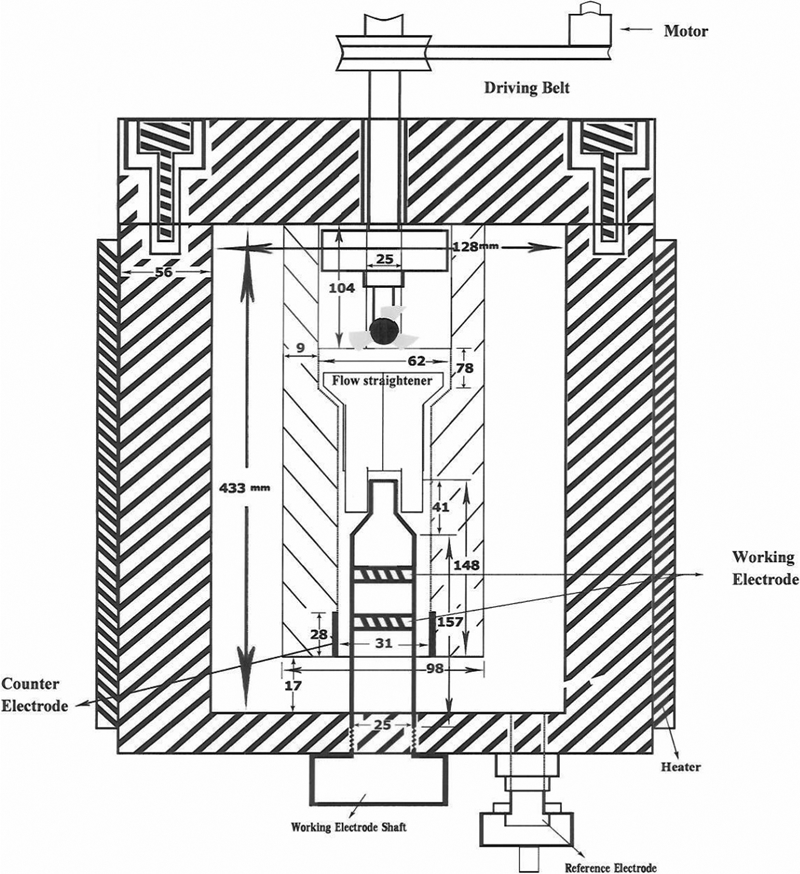
Schematic diagram of experimental apparatus
Electrodes
The autoclave is equipped with the following electrodes in order to perform electrochemical measurements.
Reference electrode
There is only one external Ag/AgCl reference electrode attached to the autoclave. The reference electrode is a simple Ag rod (1·5 mm diameter and 50 mm long) coated by AgCl, which was prepared by anodically polarising the Ag rod in a saturated KCl solution at room temperature. A current density of 10 mA cm−2 was used for 3 min in order to coat the rod with a durable AgCl layer. In the experiments, the reference electrode was continuously wetted by the solution, which was extracted from the autoclave and cooled to room temperature, by natural convection. The (IR) drop resulting from the varying distance between the reference electrode and the two working electrodes was measured to be very small due to the high conductivity of the solution.
Counter electrode
The counter electrode is a circular ring placed around the working electrodes, as illustrated in Fig. 1, in order to ensure a symmetrical current distribution during electrochemical polarisation measurements. The counter electrode is made from Hastelloy C276.
Working electrode
There are two working electrodes inserted on the working electrode shaft, as illustrated in Figure 1 Figs. 1 and 2. One electrode was used for electrochemical measurements, while the other electrode was used for weight loss measurements. The working electrode is a circular ring inserted on the working electrode shaft. The dimensions of the working electrode are illustrated in Fig. 3. The working electrodes are made from the material to be tested, which is 1018 CS in this study.
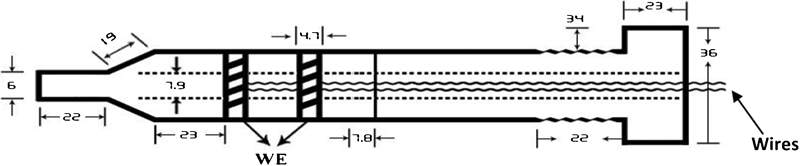
Working electrode shaft (mm)
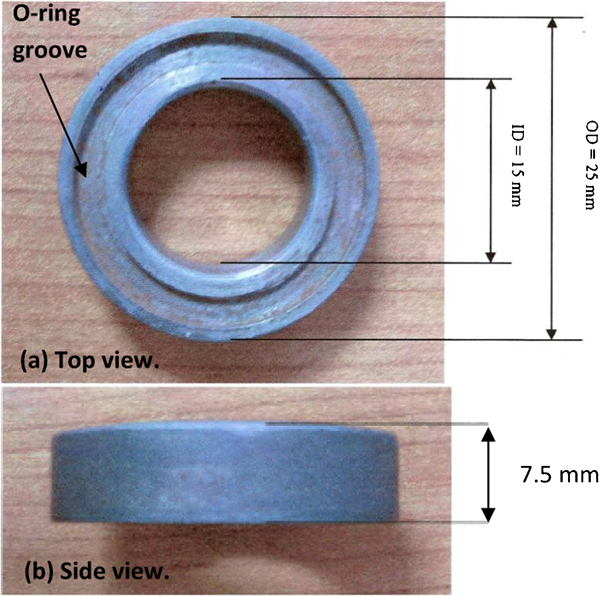
Dimensions of working electrode
Flow straightener
The flow straightener is placed just before the working electrode shaft, as shown in Fig. 1, in order to stabilise the flow. The flow straightener allows the flow to pass through four separate paths and recombine again before passing over the working electrode shaft.
Test solution
In this investigation, the test solutions for all experiments were prepared from substitute ocean water ASTM 1141D that was produced by Lake Products Company, Inc. The chemical, substitute ocean water, is of analytical reagent grade. The chemical compositions of the sea salt mixture are illustrated in Table 1.
Chemical composition of sea salt
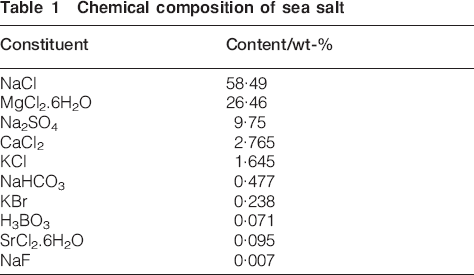
The test solution was prepared by dissolving 41·9534 g of sea salt in distilled water, and the solution pH was adjusted to 8·2 using 0·1 N solution of either NaOH or HCl.
The solution was placed in the autoclave and heated to 55°C while running the motor at a speed of 1000 rev min−1; then, the electrochemical measurements were recorded.
Corrosion inhibitor
An amine based CI (CORTRON AR-505) was used in this work. It is manufactured by Champion Technologies USA and was provided by Saudi Aramco. It belongs to the alkyl pyridine benzyl chloride quaternary family. It is a dark brown liquid with specific gravity of 1·05 at 15·5°C. Fourier transform infrared spectroscopy for this compound is illustrated in Fig. 4. It has six major peaks at 1248, 1456, 1636, 2068, 2855 and 3446 cm−1, all of which are mainly related to N–NO2, N–N = O, C = N–, –N = C = S, –CHO and –NH2 functional groups respectively. The other peaks for alkenes and hydroxyl groups appeared at 937, 1346 and 2949 cm−1. These amines are generally chemisorbed at the metal surface and displace the adsorbed water and electrolytes from the surface. It is assumed that these N containing functional groups act as electron pair donors to electron depleted dehydrated metal surface.
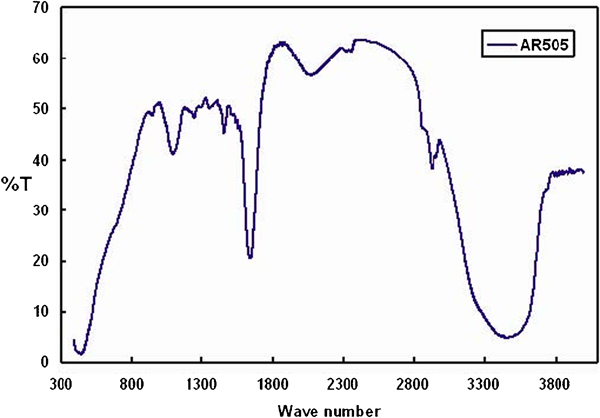
Fourier transform infrared spectrum for AR-505 corrosion inhibitor
Corrosion testing methods
Potentiodynamic polarisation method was used to investigate the corrosion mechanism of 1018 CS in substitute ocean water and to estimate the anodic and cathodic Tafel slopes. An EG&G Princeton/Applied Research (potentiostat/galvanostat model 263A) was used to perform the electrochemical measurements.
Linear polarisation resistance method was used to obtain the polarisation resistance R p from the slope of the potential versus current curve. The R p was determined at different time intervals during the experiment. The measurements were performed by polarising the working electrode at 6 mV above and below the open circuit potential CR of 0·1 mV s−1.
The corrosion current i corr was calculated using equation (1)


Weight loss method was used to determine the CR for each completed experiment by weighing the specimen before and after the experiment. The CR measured by weight loss was calculated by using equation (4)

Results and discussion
Kinetic experiments were conducted to study the effect of inhibitor concentration (5, 10 and 15 ppm), solution temperature (25, 40 and 55°C), agitation speed (0, 500 and 1000 rev min−1) and solution pH (4, 7 and 8·2) on the rate of corrosion of the 1018 CS specimens and compare the results with that in the absence of inhibitor. Thus, the inhibition efficiency (IE) of AR-505 was investigated at different kinetic conditions using weight loss, polarisation resistance and potentiodynamic polarisation methods.
Surface analysis
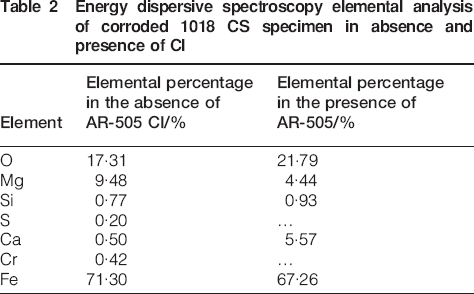
The SEM images of the corroded 1018 CS surfaces after exposure to salt solution for 48 h in the presence and absence of AR-505 are shown in Fig. 5. Figure 5a shows the corrosion layer on the specimen in the presence of AR-505, where part of the surface (left hand side) was polished by sand paper. It is clear that the corroded surface is very porous, which could be attributed to the corrosion product of γ-FeOOH. 10 10,11 Moreover, the corrosion is uniformly distributed over the whole surface area. Figure 5b shows the presence of intense white spots as compared to that in Fig. 5c. This is probably due to the presence of calcium on the inhibited surface, as illustrated by energy dispersive spectroscopy analysis in Fig. 6 and Table 2. The surface was mostly composed of oxides of iron, calcium and magnesium with trace amounts of S, Cr and Si. The specimen that was exposed to the solution containing the AR-505 inhibitor shows a distinctive peak of calcium with 5·57%. On the other hand, the percentage of iron on this surface is low compared to that not treated with CI. This presumably is due to the enhancement of the adsorption of calcium ions by the surface in the presence of CI, which blocks part of the surface from being exposed to the solution. The percentages of oxygen to iron on the surface of the specimen in the presence and absence of CI are 32·3 and 24·4% respectively. The higher oxygen content at the surface that was exposed to the CI is attributed to the formation of the oxides of Mg, Ca and Si, which prevents part of the surface from corroding.
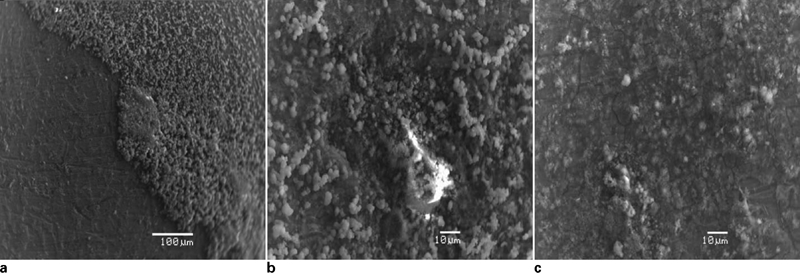
Image (SEM) taken on surface of specimen exposed to sea salta, b mixed with 10 ppm AR-505 and c without corrosion inhibitor
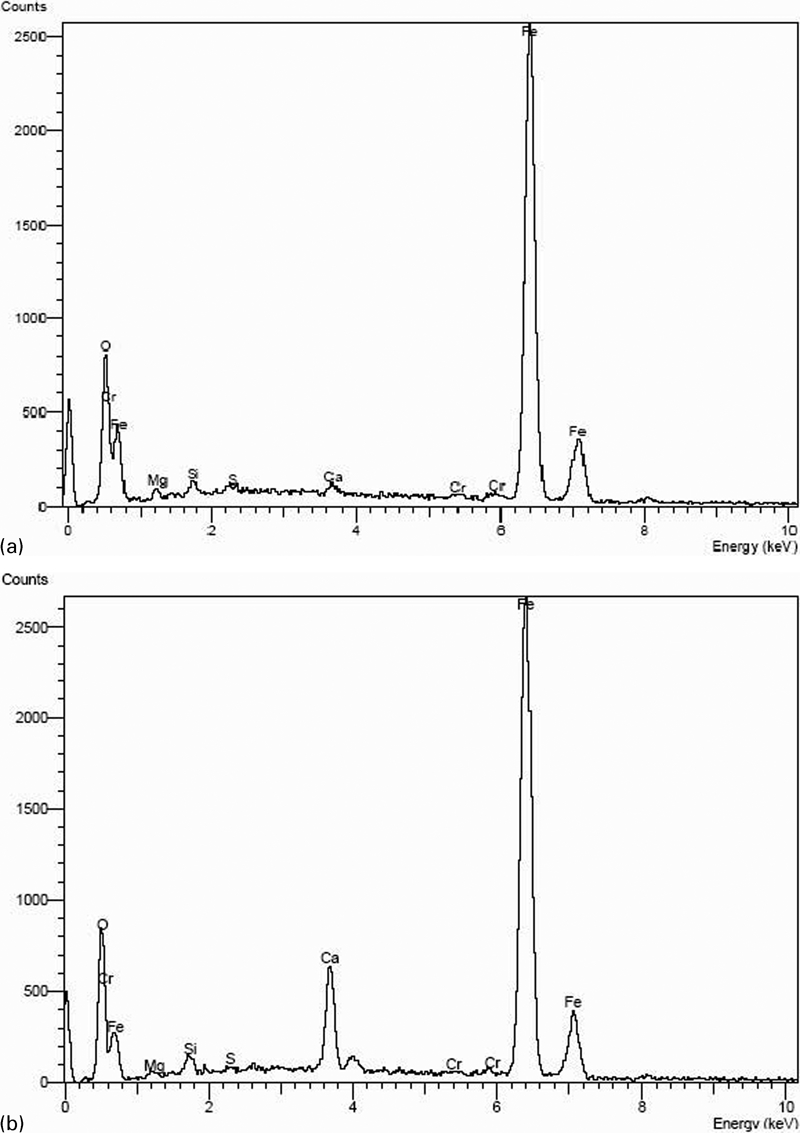
Energy dispersive X-ray analysis of corroded 1018 CS specimen a in absence and b presence of corrosion inhibitor
Energy dispersive spectroscopy elemental analysis of corroded 1018 CS specimen in absence and presence of CI
Weight loss studies
The CR as measured by the weight loss method of the 1018 CS specimen in saltwater solution as a function of CI concentration is shown in Fig. 7 and Table 3. As can be observed, the CR is decreased with increasing inhibitor concentration. For the sample that was immersed in inhibitor free solution, the CR was 2·47 mm/year, while this value decreased to 1·52 mm/year when 5 ppm of the inhibitor was added to the solution. Increasing the concentration of the inhibitor had a significant effect in reducing the CR, where 0·868 mm/year was achieved when the inhibitor concentration was 15 ppm.
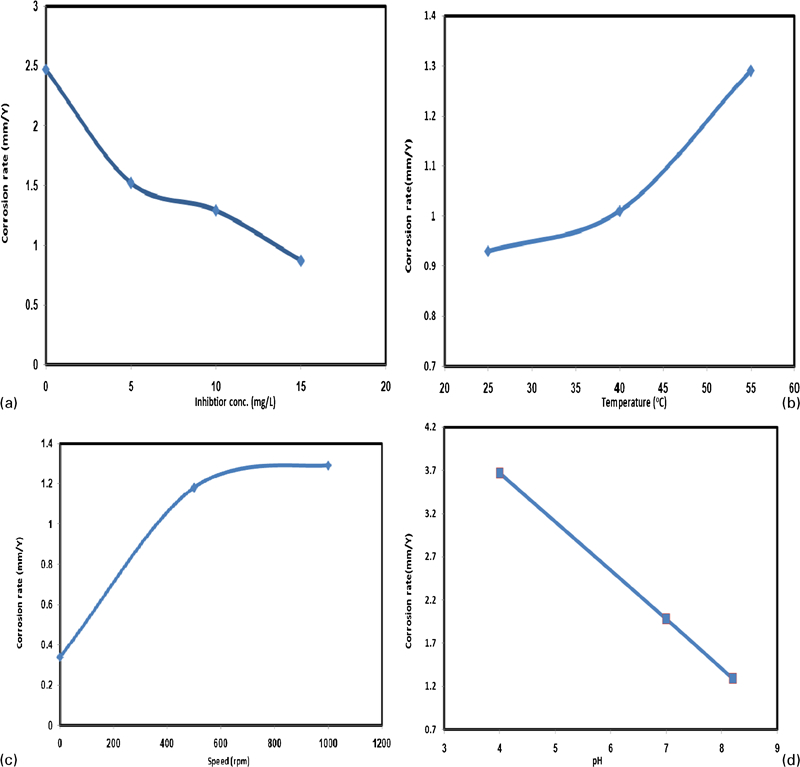
Corrosion rate versus inhibitor concentration of 1018 CS in seawater obtained by weight loss method
Corrosion rate and inhibition efficiency for 1018 CS at different kinetic conditions
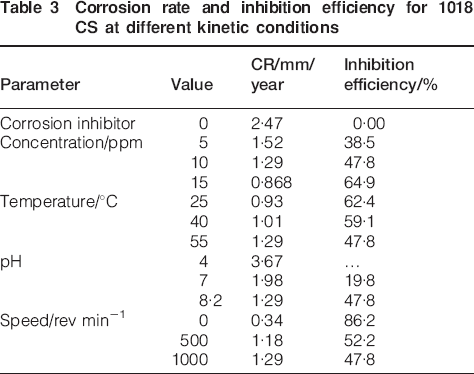
In addition, the CR has increased with increasing temperature and mixing speed, as shown in Fig. 7b and c respectively, and decreased with increasing pH, as shown in Fig. 7d.
The IE (%) was calculated using equation (5) as a ratio of the difference between the CR in the presence of the inhibitor to that in the absence of inhibitor

Furthermore, the IE has decreased with increasing temperature and mixing speed and increased with increasing pH, as illustrated in Table 3.
Adsorption isotherm analysis
The mechanism of corrosion inhibition can be explained by adsorption of CI to the surface of the metal. The efficiency of this inhibitor depends on its ability to occupy the respective vacant sites, forming a chemisorbed inhibitor film. This efficiency depends on the composition of the metal and corrodent, inhibitor structure and concentration as well as temperature. Therefore, the adsorption equilibrium for AR-505 by CS surface was investigated. The degree of surface coverage by the inhibitor θ m can be related to the weight loss in the absence and presence of CI, m free and m inh respectively, as illustrated by equation (6)

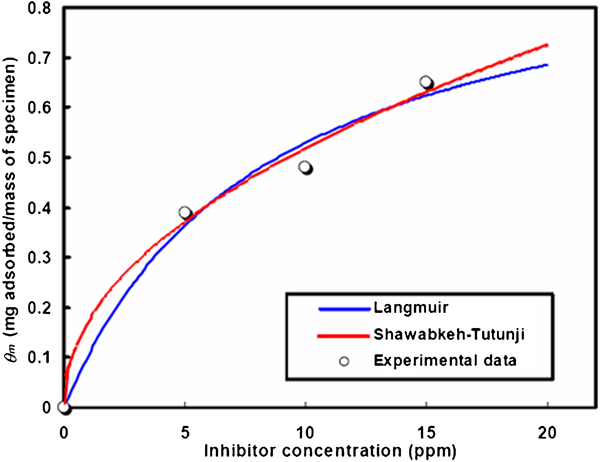
Adsorption isotherm of AR-505 CI using 1018 CS
Langmuir model11


Adsorption isotherm parameters
Linear polarisation resistance method
The CRs versus time for different experimental conditions are shown in Fig. 9. Figure 9a shows the effect of different CI concentrations on the CR. It is apparent that the increase in CI concentration has decreased the CR. A rapid decrease in CR was achieved within the first hour of conducting the experiments, which is related to the formation of a protective oxide film. However, it is shown that the increase in CI has little effect on the percentage of inhibition. It is also concluded that a 10 ppm CI could be assumed as an optimum concentration to inhibit the surface where the approximate CR is 1 mm/year regardless of the amount of inhibitor in the solution. At 10 ppm CI, the CR was further studied by varying the solution temperature (Fig. 9b). The solution temperature has a noticeable effect on CR, where a value of 0·88 mm/year was achieved at 55°C within 4 h compared to 0·3 mm/year obtained at 25°C within the same period of time. As expected, the higher solution temperature yields a higher CR. This is due to the increase in desorption of the inhibitor with increasing temperature and hence increasing the rate of electrochemical reactions and diffusion processes, which stimulates corrosive attack. The effect of mixing speed is presented in Fig. 9c. The CR has increased after 20 h, when the system stabilised, from ∼0·2 mm/year for stagnant solution to ∼0·67 mm/year at a mixing speed of 500 rev min−1. The CR was slightly increased to ∼0·85 mm/year when the mixing speed has increased to 1000 rev min−1. Increasing the mixing speed will reduce the thickness of the diffusion layer at the electrode surface, and thus, maintaining the concentration of the salt adjacent to the surface is relatively equal to that in the bulk of the solution.2 The CR at 1000 rev min−1 was severely affected by decreasing the solution pH (Fig. 9d). It is expected that decreasing the solution pH will increase hydrogen ions in the solution, and the latter become more aggressive to attack the surface. A value of 2·6 mm/year was reached within 4 h at this condition.
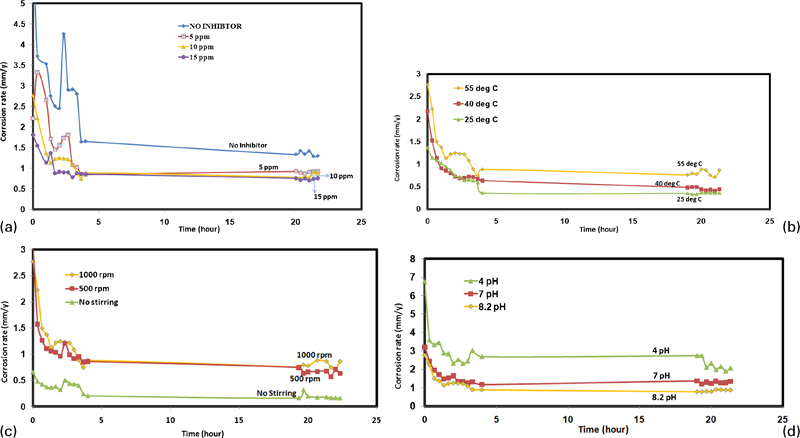
Corrosion rate versus time for 1018 CS at different experimental conditions
The studies of the corrosion potential E corr versus time noticeably show the capability to maintain the passivity of the 1018 CS at different experimental conditions, as shown in Fig. 10. Figure 10a shows that E corr became more positive as the inhibitor concentration increased. However, it can be seen from Fig. 10b that the decrease in temperature assists the passivation of the steel surface, and the adherence of the passive film is high. The passivity of the CS was decreased as the rotating speed increased, as illustrated in Fig. 10c. It is seen that under the static condition, E corr shifts to the highest positive values. Apparently, an increase in rotation speed leads to the acceleration of the diffusion of oxygen; thus, the oxide film will be removed. It is extrapolated from Fig. 10d that the corrosion potential decreases with increasing acidity, and this demonstrated that the oxide film has a tendency to dissolve in the solution swiftly when it reached pH 4.
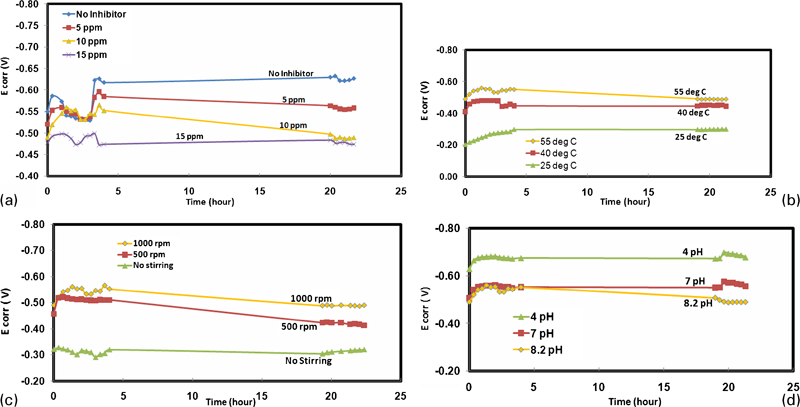
Corrosion potential E corr versus time for 1018 CS at different experimental conditions
Potentiodynamic polarisation
The potentiodynamic polarisation curves are shown in Fig. 11 where the corrosion potential E corr has shifted to a more positive value with increasing concentration of the inhibitor, which indicates that the anodic process of CS is inhibited by AR-505 (Fig. 11a). The relation between current density and potential in the experimental data was fitted using the Butler–Volmer equation to obtain the anodic (α a) and cathodic (α c = 1−α a) transfer coefficients and, hence, to estimate the value of both anodic and cathodic current densities according to equation (9)

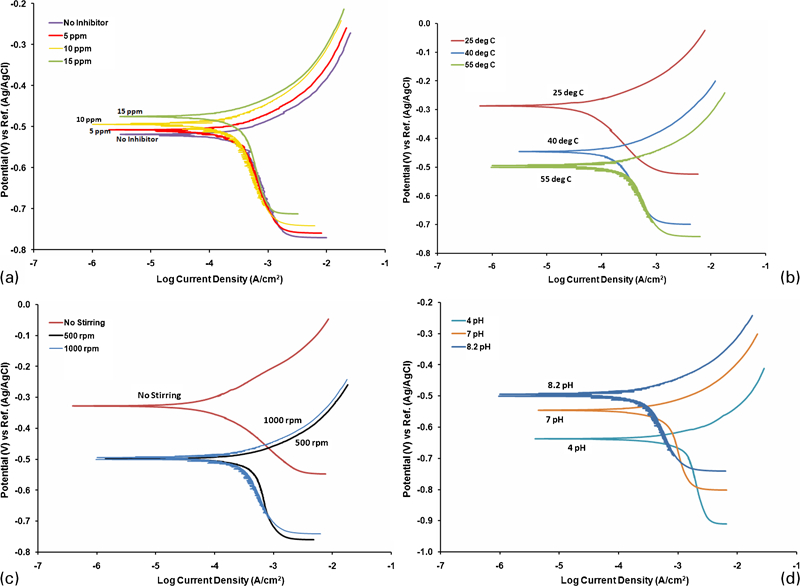
Potentiodynamic polarisation curves of 1018 CS in seawater at different experimental conditions
Polarisation kinetic parameters for corrosion of 1018 CS in seawater solution
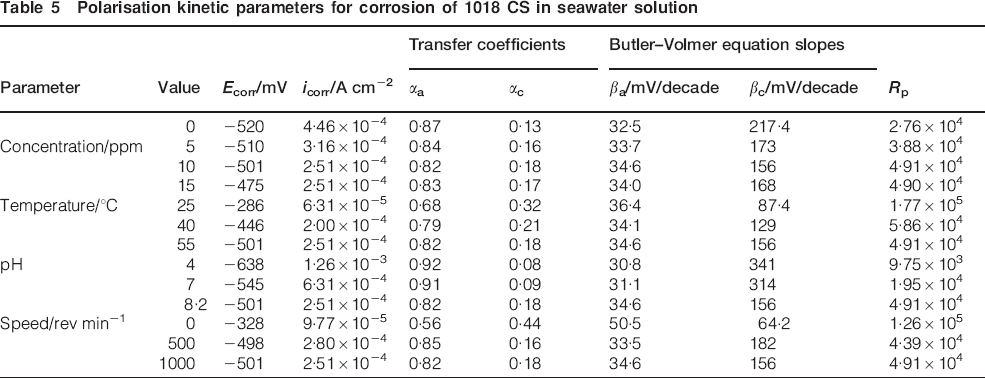
The corrosion of CS has noticeably been affected by both solution temperature and pH (Fig. 11b and c). The current density has increased with increasing temperature, which suggests a higher CR at 55°C. With increasing temperature from 25 to 55°C, the corrosion potential decreased from −286 to −501 mV, while the corrosion current is increased from 63·1 to 251 μA cm−2. The anodic transfer coefficient has also increased from 0·68 to 0·82. Increasing the temperature will increase the rate of electrochemical reaction and thus the CR. Similarly, the decrease in solution pH from 8·2 to 4 resulted in a decrease in potential from −501 to −638 mV (as shown in Fig. 11d) and an increase in the total current and anodic transfer coefficient from 251 to 1260 μA cm−2 and 0·82 to 0·92 respectively. This is due to the increase in hydrogen ions in the solution, which is adsorbed to the CS surface and reduced to the hydrogen gas. The increase in H ion concentration (lower pH) has an effect on the cathodic branch of potentiodynamic polarisation curves by increasing the cathodic Tafel slope β c, as illustrated in Table 5, which indicates that the addition of H ions into the solution has a great effect in accelerating the cathodic H evolution on the steel surfaces. Figure 11c shows the polarisation curves for the effect of stirring speed on the corrosion parameters. As the stirring speed increases from 0 to 500 rev min−1, the potential decreased from −328 to −498 mV, and the total current is increased from 97·7 to 280 μA cm−2. However, a further increase in the mixing speed has little effect on corrosion. Increasing the mixing speed will decrease the external mass transfer resistance for the electrolytes to reach the CS surface, where this resistance will become negligible at higher agitation speed of the solution.
Activation energy calculation
The apparent activation energy E a for the corrosion of 1018 CS in the presence of CI was calculated from the Arrhenius equation (equation (10))

A plot of ln (k) versus T −1 (Fig. 12) yields a straight line with a slope of −1060·7 K, and hence, the activation energy is 8·818 KJ mol−1. Abdullah et al. (2006) showed similar results for C steel in the presence and absence of different concentrations of aminopyrimidine derivative inhibitor in 0·05M HNO3, where the activation energy was varied from 8·63 to 12·04 KJ mol−1 when the inhibitor concentration was varied from 0 to 15 ppm respectively.12
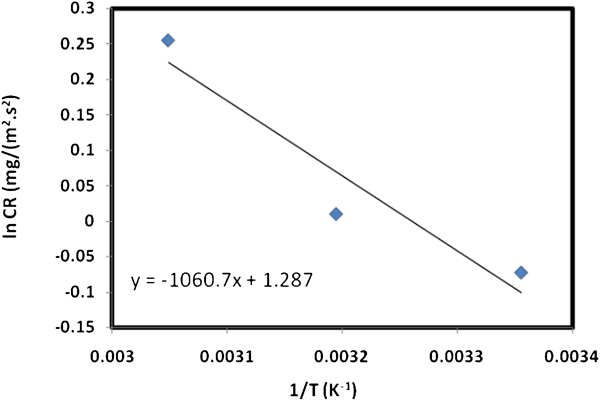
Log CR versus T −1 for 1018 CS in presence of AR-505 CI
Conclusions
Amines are considered as both efficient dehydrating agents and film forming organic compounds. CORTRON AR-505 was selected as an amine based CI for 1018 CS in seawater. The results demonstrate that the IE was enhanced with increasing inhibitor concentration and solution pH and decreasing both solution temperature and mixing speed. Surface analysis showed that a distribution of corrosion products occurred over the whole surface area with uniform appearance, where the inhibitor was adsorbed immediately on the steel surface. Polarisation data fitted by the Butler–Volmer equation showed a deviation of anodic and cathodic transfer coefficients from 0·5 with an anodic current of 80% of the total corrosion current. The CRs decreased rapidly within the first hour from conducting the experiments, which is related to the formation of a protective oxide film.
Footnotes
Acknowledgements
The authors would like to acknowledge the Center of Engineering Research and the Center of Research Excellence in Corrosion (CoRE-C) at KFUPM for conducting the research, Saudi Aramco for supporting this research and Dr B. Bremberg at Research Institute–KFUPM for editing the manuscript.