







Abstract
In the present investigation, corrosion inhibition study of two synthesised amino acid compounds 2-amino-N-dodecylacetamide (ADA) and 2-amino-N-dodecyl-3-(4-hydroxyphenyl) propionamide (ADHP) has been performed for oil well tubular steel (N80) in 15%HCl using weight loss, electrochemical polarisation, ac impedance, Fourier transform infrared spectroscopy and SEM. The inhibition efficiencies of the inhibitors follow the sequence ADHP>ADA. The results showed that the inhibition efficiency of inhibitors increased with the increase in their concentration in 15%HCl solution. Both inhibitors act as mixed inhibitors and obey the Langmuir adsorption isotherm. The adsorption of the corrosion inhibitors at the surface of the N80 steel is the root cause of its corrosion inhibition.
Introduction
N80 steel is widely used as a construction material for pipe work in oil and gas production, such as down hole tubular, flow lines and transmission pipelines in the petroleum industry. However, one of the major problems related to its use is its low corrosion resistance in acid environments. An important method of protecting metallic materials against deterioration due to acid corrosion is by the use of corrosion inhibitors. Acidising of petroleum oil well through N80 steel tubes is a frequently used stimulation technique for increasing crude oil productivity. Generally, in the petroleum industry, usually, ∼15%HCl is used for acidisation treatment because it leaves no insoluble reaction product. To reduce the aggressive attack of the acid on tubing, casing and bore channel materials (N80 steel), inhibitors are added to the acid solution during the acidifying process. Organic compounds containing polar groups including nitrogen, sulphur, oxygen and heterocyclic compounds with polar functional groups and/or conjugated double bonds have been reported as good corrosion inhibitors.1 – 11 The effective acidising inhibitors that are usually found in commercial formulations are acetylenic alcohols,12 alkenyl phenones,13 aromatic aldehydes,14 nitrogen containing heterocyclics and their quaternary salts15 and condensation products of carbonyls and amines.16,17 However, these inhibitors are effective only at high concentrations, and they are harmful to the environment due to their toxicity, so it is important to search for new eco-friendly and effective organic corrosion inhibitors for N80 steel–15%HCl solution system. In this regard, amino acid compounds such as cystine, 3,5-diiodotyrosine and decylamide of tyrosine, glycine and alanine are promising alternatives for the design of eco-friendly corrosion inhibitors,4,18 – 20 which will satisfy the environmental requirements.
With a view to find out better eco-friendly corrosion inhibitors, amino acid compounds like 2-amino-N-dodecylacetamide (ADA) and 2-amino-N-dodecyl-3-(4-hydroxyphenyl) propionamide (ADHP) have been synthesised, and their inhibitive properties for oil well tubular steel (N80) in 15%HCl have been studied.
Materials and methods
Materials
The working electrode and specimens for weight loss experiments were prepared from oil well N80 steel sheets having the following composition of Fe–0·31C–0·92Mn–0·19Si–0·01P–0·008S–0·20Cr (wt-%).
Weight measurements
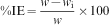
The specimens for the weight loss experiments were of size 3×3×0·1 cm, and for electrochemical studies, the size of the electrodes was 1×1m×0·1 cm with a 4 cm long tag for electrochemical contact. Both sides of the specimens were exposed for both techniques. The specimens were mechanically polished successively with 1/0, 2/0, 3/0 and 4/0 grade emery papers. After each polishing step, the surface was thoroughly washed with soap, running tap water and distilled water and finally degreased with acetone. The samples were dried and stored in a vacuum dessicator before immersing in the test solution. N80 steel specimens, in triplicate, were immersed in 200 mL test solutions both in the absence and presence of various concentrations of the inhibitor for a period of 6 h. The weights of the specimens before and after immersion were determined. The inhibition efficiencies were evaluated after a preoptimised time interval of 6 h using 10, 20, 50, 100 and 150 ppm of inhibitors. The specimens were removed from the electrolyte, washed thoroughly with distilled water, dried and weighed. The percentage inhibition efficiencies (%IE) were evaluated using the following equation21
Electrochemical measurements
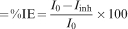
The electrochemical experiments were carried out in a three-necked glass assembly containing 150 mL of the electrolyte with different concentrations of inhibitors (20, 100 and 150 ppm by weight) dissolved in it. The potentiodynamic polarisation studies were carried out with N80 steel strips having an exposed area of 1 cm2. A conventional three-electrode cell consisting of N80 steel as working electrode, platinum as counter electrode and saturated calomel electrode as reference electrode was used. Polarisation studies were carried out using VoltaLab 10 electrochemical analyser, and data were analysed using Voltamaster 4·0 software. The potential sweep rate was 10 mV s−1. All experiments were performed at 25±0·2°C in an electronically controlled air thermostat. For calculating %IE by electrochemical polarisation method, we use the following formula22
Alternating current impedance studies
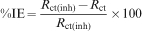
Alternating current impedance studies were carried out in a three-electrode cell assembly using a computer controlled VoltaLab 10 electrochemical analyser, using N80 steel as the working electrode, platinum as counter electrode and saturated calomel as reference electrode. The data were analysed using Voltamaster 4·0 software. The electrochemical impedance spectra were acquired in the frequency range 10 kHz to 1 mHz at the rest potential by applying 10 mV sine wave ac voltage. The charge transfer resistance R ct and the double layer capacitance C dl were determined from Nyquist plots. The inhibition efficiencies were calculated from charge transfer resistance values using the following formula23
Fourier transform infrared spectroscopy (FTIR) spectra
Fourier transform infrared spectroscopy analysis was performed on pure inhibitors as well as the surface products deposited on the N80 steel surface after 6 h exposure test in 15%HCl in the presence of 150 ppm concentration of the inhibitors at 25°C using a PerkinElmer FTIR spectrometer (model Spectrum-2000) by KBr pellet technique. The N80 steel specimens (size 1·0×1·0×0·1 cm) were abraded with emery paper (grade 320-400–600-800–1000-1200) and then washed with distilled water and acetone. After immersion in 15%HCl in the presence of 150 ppm of inhibitors for 6 h exposure period at 298 K, specimens were taken out from the test solution, cleaned with double distilled water and dried using a hot air dryer. The deposited corrosion products on the N80 steel surface were scratched gently with the help of a blade after the 6 h exposure test. The spectral grade KBr has been kept in an oven at 383 K for 2 h to make it free from moisture. About 5 mg of dried corrosion product was mixed with ∼70 mg of dried KBr and made into fine powder using mortar and pestle and subjected to required pressures at ∼7·5 tons to make a pellet using the die. The pellet made by this method was used for recording the spectra. Before recording the spectra of the sample, one blank KBr pellet has been scanned and set as background spectra for the tested samples to minimise the noise. The FTIR spectra were recorded in the range 400-4000 cm−1.
Scanning electron microscopy
The N80 steel specimens (size 1·0×1·0×0·1 cm) were abraded with emery paper (grade 320-400–600-800–1000-1200) and then washed with distilled water and acetone. After immersion in 15%HCl in the presence of 150 ppm of inhibitors for 6 h exposure period at 298 K, specimens were taken out from the test solution, cleaned with double distilled water and dried using a hot air dryer, and then the surface was investigated with the help of an SEM model JEOL JSM-5800.
Synthesis of inhibitors
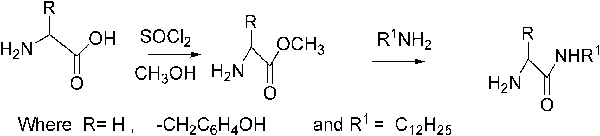
The inhibitors were synthesised according to Scheme 1 from methyl esters of amino acids and dodecylamine.24 The purity of the product was checked by Thin Layer Chromatography (TLC).
Scheme 1
Results and discussion
Weight loss tests
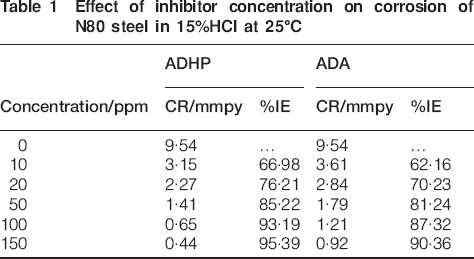
The percentage inhibition efficiencies (%IEs) in the presence of 10, 20, 50, 100 and 150 ppm of ADA and ADHP have been evaluated by weight loss technique after 6 h of immersion and at 25°C. The corrosion rate (CR) and inhibition efficiency obtained by weight loss data are shown in Table 1. It is evident from these values that both inhibitors are significantly effective even at low concentrations, like 10 ppm, and there is a linear increase in %IE in the whole range of concentrations studied.
Effect of inhibitor concentration on corrosion of N80 steel in 15%HCl at 25°C
Electrochemical polarisation studies
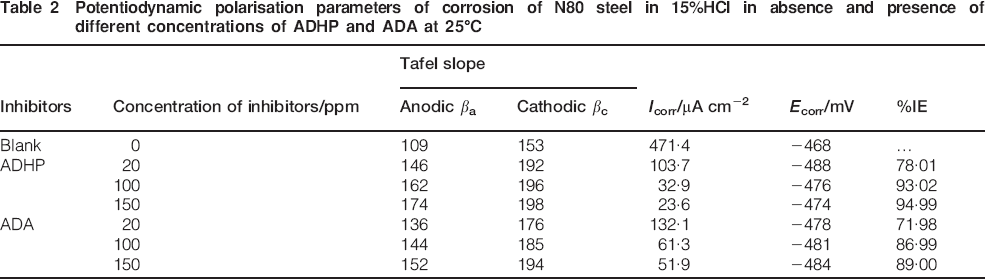
Electrochemical polarisation curves in the presence of 20, 100 and 150 ppm of ADA and ADHP for N80 steel in 15%HCl at 25°C are shown in Figs. 1 and 2, and the various parameters obtained are given in Table 2. The curves in Figs. 1 and 2 illustrate that the nature of the curve remains almost the same even after the addition of inhibitors and also with the increasing concentration of the inhibitor, indicating that the inhibitor molecules retard the corrosion process without changing the mechanism of the corrosion process in the medium of investigation.25 The anodic and cathodic polarisation curves shifted towards lower current density in the presence of both inhibitors, indicating the mixed nature of the inhibitors. The increases in the cathodic and anodic Tafel slopes (β c and β a) are related to the decrease in both cathodic and anodic currents. The minor shift in the value of corrosion potential (E corr) in the presence of both inhibitors also supports the mixed nature of the inhibitors.26
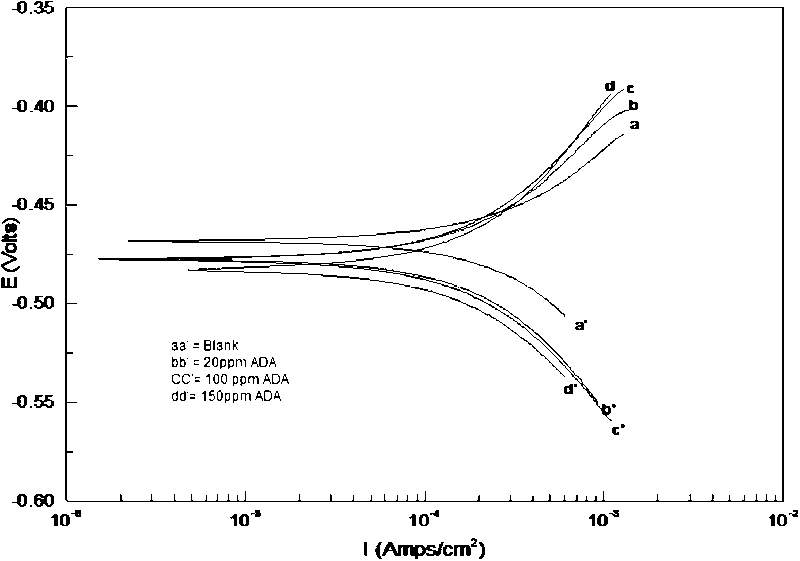
Polarisation curves for N80 steel in 15%HCl containing various concentrations of ADA at 25°C
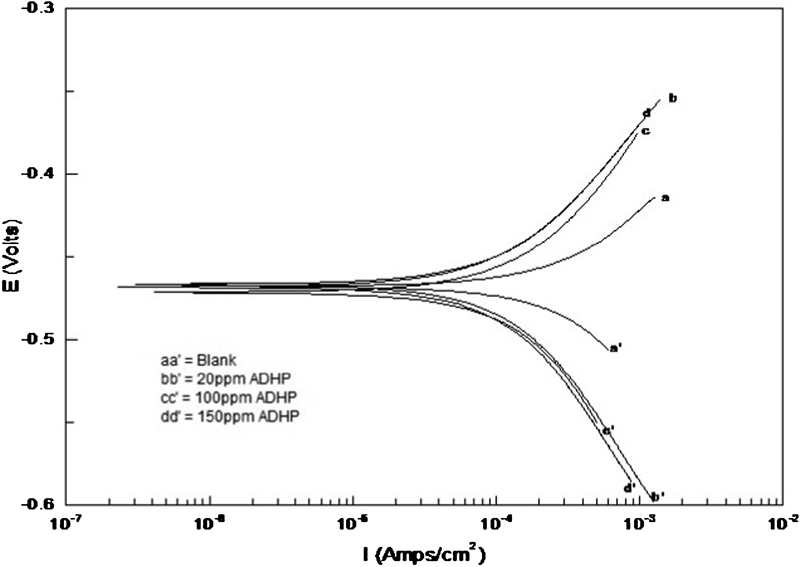
Polarisation curves for N80 steel in 15%HCl containing various concentrations of ADHP at 25°C
Potentiodynamic polarisation parameters of corrosion of N80 steel in 15%HCl in absence and presence of different concentrations of ADHP and ADA at 25°C
Alternating current impedance studies
The impedance data of N80 steel recorded in the presence of 20, 50, 100 and 150 ppm of the inhibitor ADHP in 15%HCl solution at 25°C as Nyquist plots are shown in Fig. 3. The calculated equivalent circuit parameters for N80 steel in 15%HCl solution at 25°C in the presence of 20, 50, 100 and 150 ppm of the inhibitor are presented in Table 3. From the data in Table 3, it is clear that the value of R ct increases with the increasing concentration of the inhibitor, indicating that the CR decreases in the presence of the inhibitor. It is also clear that the value of C dl decreases on addition of inhibitor, indicating a decrease in the local dielectric constant and/or an increase in the thickness of the electrical double layer, suggesting that the inhibitor molecule function by the formation of the protective layer at the metal surface.27
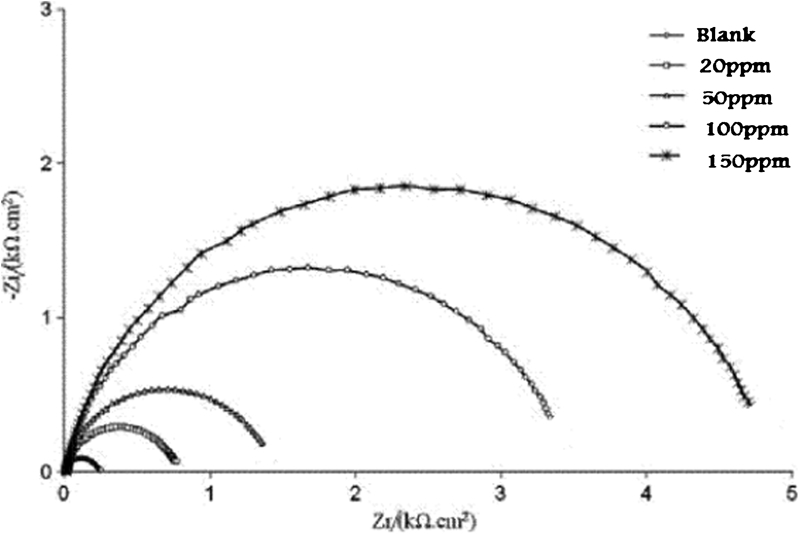
Nyquist plot for N80 steel in 15%HCl acid containing various concentrations of ADHP at 25°C
Equivalent circuit parameters and inhibition efficiency for N80 steel in 15%HCl in presence of ADHP at 25°C
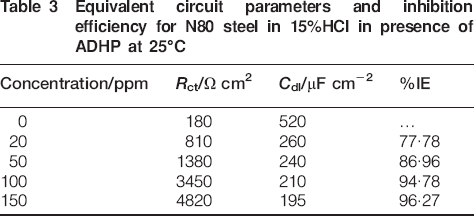
In order to confirm the potentiodynamic results, the corrosion inhibition efficiency (%IE) in the presence of 20 50, 100 and 150 ppm concentration of the inhibitor ADA in 15%HCl acid at 25°C was also calculated from the corresponding electrochemical impedance data and is given in Table 3. The corrosion inhibition efficiencies calculated from the impedance data are in good agreement with those obtained from electrochemical polarisation data and weight loss measurement.
Effect of temperature and thermodynamic parameters
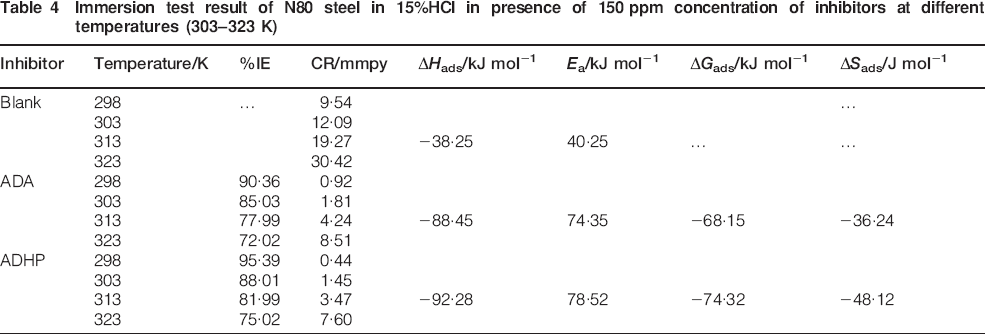
Experiments were carried out at different temperatures (298-323 K) in the presence of 150 ppm of inhibitors. It has been found that the CR increases with the increase in temperature for both inhibitors (Table 4). The CR of N80 steel in the absence of inhibitors increased steeply from 303 to 323 K, whereas in the presence of inhibitors, the CR increased slowly. The inhibition efficiency was found to decrease with temperature. The results show that the inhibition efficiencies offered by ADA and ADHP were 72·02 and 75·02% respectively at 323 K. The corrosion parameters in the absence and presence of inhibitors in the temperature range 298-323 K have been summarised in Table 4.
Immersion test result of N80 steel in 15%HCl in presence of 150 ppm concentration of inhibitors at different temperatures (303-323 K)
The apparent activation energy E a for dissolution of N80 steel in 15%HCl was calculated from the slope of plots using the Arrhenius equation

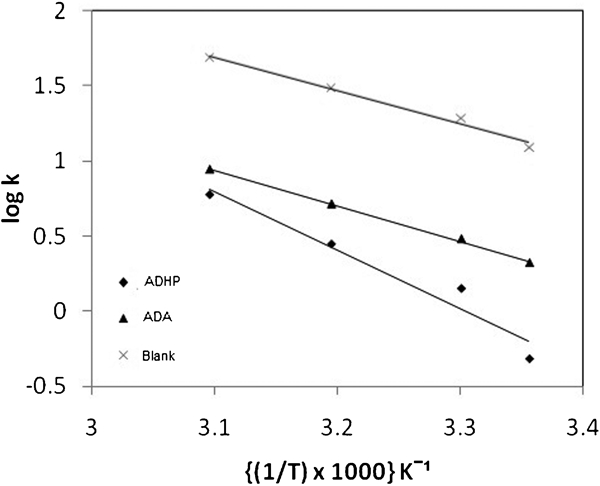
Arrhenius plot for ADA and ADHP
The values of the change of entropy ΔS ads and the change of enthalpy ΔH ads can be calculated using the formula

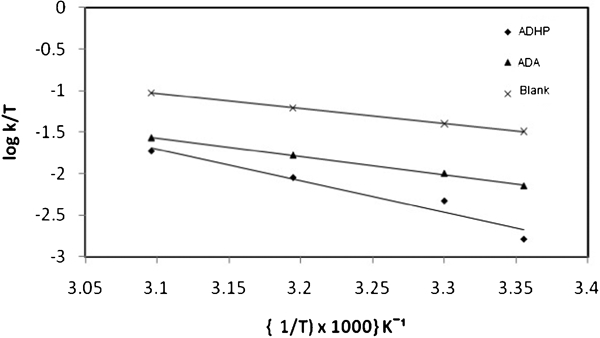
Transition state plot for ADHP and ADA
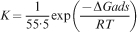
The negative value of ΔS ads (Table 4) for both inhibitors indicates that the activated complex in the rate determining step represents an association rather than dissociation step, meaning that a decrease in disorder takes place during the course of transition from reactant to the activated complex.3 The negative sign of ΔH ads indicates that the adsorption of inhibitor molecules is an exothermic process. Generally, an exothermic process signifies either physisorption, chemisorptions, or a combination of both. Typically, the enthalpy of the physisorption process is lower than 40·00 kJ mole−1, while the enthalpy of the chemisorption process approaches 100kJ mole−1.29 In the present study, the absolute values of the heat of adsorption ΔH° for ADA and ADHP were −88·45 and −92·28 kJ mole−1 (Table 4), indicating the chemisorptions of the inhibitors at the surface of N80 steel. The average values for free energy of adsorption (ΔG ads) were calculated using the following equation
 .
.
By plotting log k against 1/T, the value of ΔG ads can be calculated (ΔG ads = −2·303×R×Slope) from the slope of the straight line obtained (Fig. 6). The standard free energies of adsorption (ΔG ads) for ADA and ADHP were found to be −68·15 and −74·32 kJ mol−1 (Table 4) respectively, indicating that the inhibitors were adsorbed on the metal surface by chemisorptions.30 The negative values indicate the spontaneity of the adsorption process and the stability of the adsorbed layer on N80 steel surface.
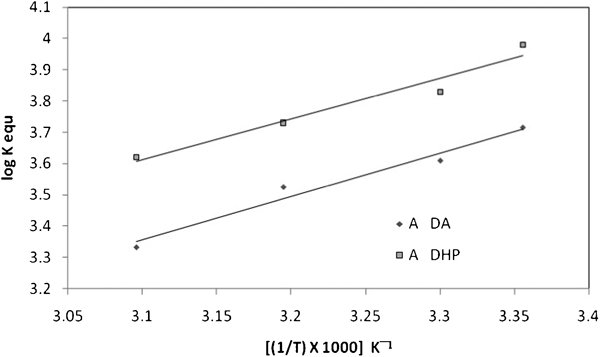
Variation of log K equ with 1/T for N80 steel in 15%HCl in presence of ADHP and ADA
Adsorption isotherms
The mechanism of corrosion inhibition may be explained on the basis of the adsorption behaviour. The most frequently used adsorption isotherms are Langmuir, Temkin and Frumkin. The degree of surface coverage θ for different concentrations of inhibitor in 15%HCl has been evaluated by weight loss value. The data were tested graphically by fitting to various isotherms. A straight line is obtained by plotting log (θ/1−θ) against log C (Fig. 7), suggesting that adsorption of the compound on the surface of N80 steel follows the Langmuir adsorption isotherm.31
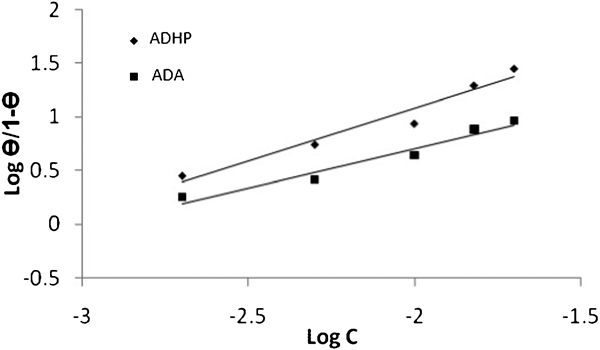
Langmuir plots for ADA and ADHP
Scanning electron microscopy study
Figure 8a–c shows the microphotographs for N80 steel in 15%HCl in the absence and presence of 150 ppm of ADHP and ADA respectively at ×200 magnification. On comparing these micrographs, it appears that in the presence of ADHP and ADA, the surface of the test material has improved remarkably with respect to its smoothness.25 The surface is smoother in the presence of ADHP as compared to the surface in the presence of ADA. The smoothening of the surface is caused by the adsorption of inhibitor molecules on the surface of N80 steel.
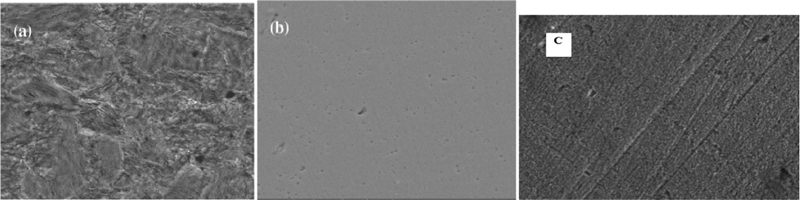
Scanning electron microscopy of sample in presence of a 15%HCl, b 150 ppm of ADHP and c 150 ppm of ADA
Fourier transform infrared spectroscopy analysis of corrosion product
The FTIR spectra of pure ADA (Fig. 9) show bands at 3200, 2900, 1640, 1560, 1480, 1380, 1020 and 840 cm−1 corresponding to ν(N-H), ν(C-H), ν(C = O), δ(NH2), δ(N-H), δ(C-H), ν(C-N) and para-disubstituted benzene respectively.32 The FTIR of the product formed on the metal surface after the corrosion test in acid in the presence of 150 ppm of ADA (Fig. 10) shows bands at 3150, 2920, 1620, 1520, 1460, 1320, 980 and 880 cm−1 corresponding to ν(N-H), ν(C-H), ν(C = O), δ(NH2), δ(N-H), δ(C-H), ν(C-N) and para-disubstituted benzene respectively; in addition to these bands, new bands at 540 and 750 cm−1 indicating the presence of iron oxide and oxyhydroxides in the corrosion product are shown. The pure ADHP and the metal surface product after inhibition by 150 ppm of ADHP were analysed using an FTIR spectrophotometer (Figs. 11 and 12). The bands at 3400, 3200, 2940, 1700, 1660, 1540, 1470, 1140 and 860 cm−1 correspond to ν(O-H), ν(N-H), ν(C-H), ν(C = O), δ(NH2), δ(N-H), δ(C-H), ν(C-N) and para-disubstituted benzene respectively in the FTIR spectra of pure ADHP. The metal surface product in the presence of 150 ppm of ADHP shows bands at 3200, 3100, 2900, 1680, 1600, 1500, 1460, 1080 and 840 cm−1 corresponding to ν(O-H), ν(N-H), ν(C-H), ν(C = O), δ(NH2), δ(N-H), δ(C-H), ν(C-N) and para-disubstituted benzene respectively; additional bands at 760 and 560 cm−1 indicating the presence of iron oxide and oxyhydroxides are also shown. The presence of bands of all the groups present in pure ADA and ADHP in the infrared spectrum of the surface product indicates the adsorption of inhibitors ADA and ADHP at the surface of N80 steel.
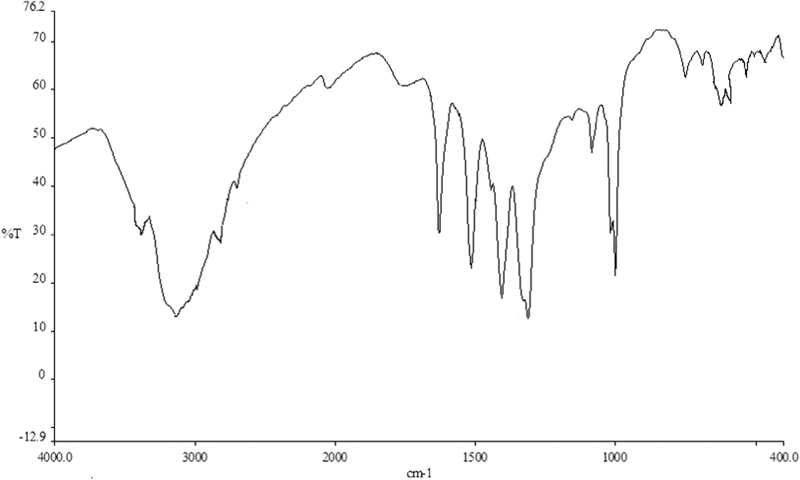
Spectrum (FTIR) of pure ADA
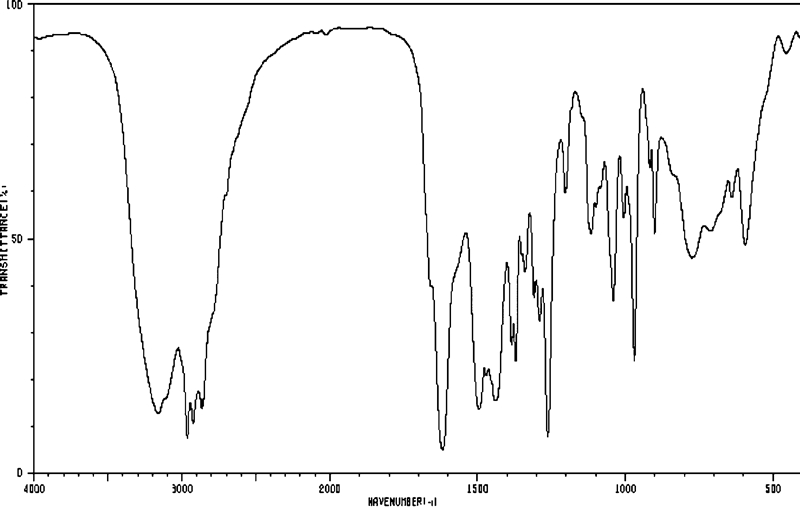
Spectrum (FTIR) of surface product formed on metal after corrosion test in presence of 150 ppm of ADA
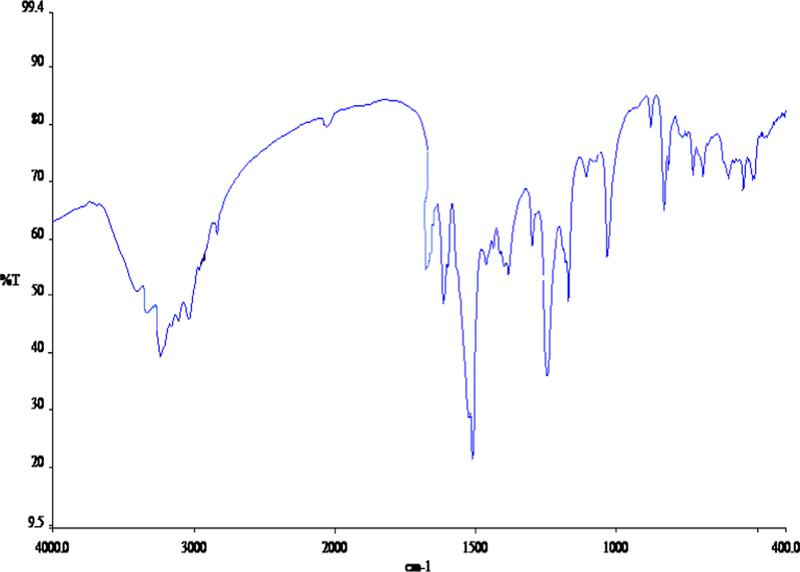
Spectrum (FTIR) of pure ADHP
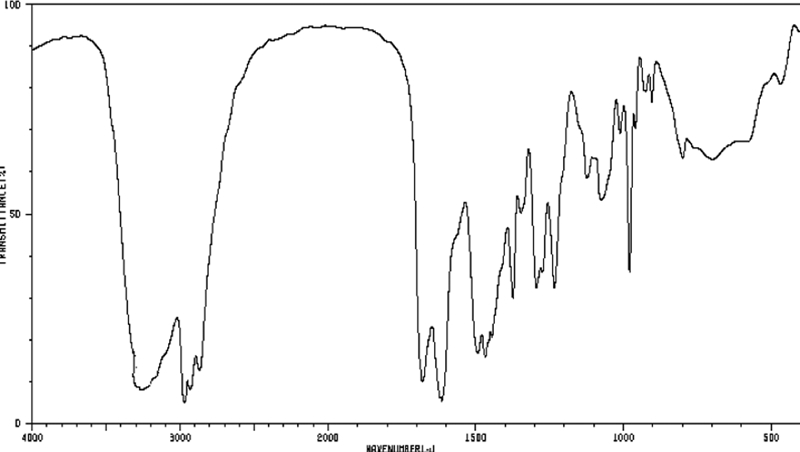
Spectrum (FTIR) of surface product formed on metal after corrosion test in presence of 150 ppm of ADHP
Discussion
The protective action of the inhibitors ADA and ADHP was considered in the context of their adsorption on the metal surface. In acid solution, the inhibitors can exist as protanated species that may be adsorbed through electrostatic interaction between the positively charged inhibitor molecules and the negatively charged metal surface. Adsorption of the unprotonated inhibitors ADA and ADHP on the metal may occur by the interaction between the vacant d orbital of the iron atom at the surface and the lone pair electron of nitrogen atom present in the inhibitors. The mechanism of inhibition of corrosion is believed to be through the formation of a protective film on the metal surface. Further, when log(θ/1−θ) is plotted against log C, a straight line is obtained (Fig. 7), suggesting inhibitor adsorption following Langmuir isotherm. The inhibition efficiency of ADHP is higher than the ADA due to its larger size and presence of more number of active atoms. The adsorption is occurring in case of ADHP through nitrogen of amino group and delocalised π electrons of the benzene ring. The presence of π electrons of the benzene ring and large hydrophobic hydrocarbon chain facilitates the adsorption process at the surface of the metal. The lowering of inhibition efficiency with temperature may be due to the higher desorption rate at higher temperature. The increase in activation energy in the presence of inhibitors is due to the formation of a barrier at the surface of the steel that prevents the dissolution of the metal. The negative values of G ads and ΔH ads indicate that the adsorption is a spontaneous and exothermic process.
Conclusions
Both ADA and ADHP act as efficient corrosion inhibitors for N80 steel in 15%HCl solution. The ADHP shows appreciably higher efficiency than the ADA due to the presence of more number of active centres and larger size as compared to the inhibitor ADA. Both of the inhibitors act as mixed inhibitors. It is suggested from the results obtained from SEM and Langmuir adsorption isotherm that the mechanism of corrosion inhibition is occurring through the adsorption process. Electrochemical impedance spectra measurements show that the charge transfer resistance R ct increases and double layer capacitance C dl decreases in the presence of inhibitors, indicating the adsorption of the inhibitors at the surface of N80 steel.