






Abstract
X80 steel exhibits two different steady states in 0.5 mol L− 1 NaHCO3+0.25 mol L− 1 Na2CO3 solution with and without precathodic polarisation, which are activation and passivation respectively. Different amplitudes of alternating voltages were superimposed to the pre- and non-prepolarised steels. The results demonstrated that passivation of the non-prepolarised steel was enhanced by low amplitude alternating voltages but was destroyed by high amplitude alternating voltages. Moreover, the corrosion of the prepolarised steel was worsened with the application of alternating voltages.
This paper is part of a special issue on ‘Pipeline corrosion’
Introduction
Given the increasing development of high voltage power transmission, rail transit systems and their sharing common right of way with buried pipelines, alternate current (ac) corrosion has become the new threat to pipeline integrity and has received great attention in the past few years.1–6 Alternate current corrosion is induced by Faradic rectification caused by a non-linearity of interface behaviour, the ac field effect and the impact of the ac current transfer on the chemistry of the electrolyte near the interface in the presence of cathodic protection (CP). 7 Yunovich and Thompson 8 performed extensive laboratory based studies of carbon steel specimens exposed to soil under the influence of 60 Hz ac and discussed the corrosion caused by the discharge of ac. They reported that the oxidation current produced by the anodic half wave of ac was greater than that during the cathodic half wave because of the non-linear relationship between the potential and current, which resulted in a net oxidation current greater than the free corrosion current. Nielsen et al. 9 developed an electric equivalent diagram to model the ac corrosion process. They indicated that the ac corrosion rate was controlled by kinetic parameters and amplitude of the ac voltage subtracted by the IR drop existing across soil resistance. Xiao and Lalvani 10 and Zhang et al. 11 attempted to model the effects of ac on polarisation curves mathematically. A relation that kinks the ac induced voltage with the corrosion potential and the corrosion rate was derived. They pointed out that the ratio of the anodic and cathodic Tafel slopes (indicated as r = βa/βc) determined the sensitivity of the corroding system with regard to the ac caused polarisation. Nielsen et al. 12,13 proposed that the alkalisation of the environment caused by the CP current density and the potential oscillation among the passive, the immunity and the high pH corrosion region of the Pourbaix diagram in the presence of ac interference may induce corrosion attack.
Nowadays, studies are focused on the ac corrosion of pipeline steels in a high pH concentrated carbonate/bicarbonate solution, which is consistent with the actual environment developed under a permeable coating in the presence of CP. Fu and Cheng 14 and Kuang and Cheng 15 performed polarisation tests to investigate the passivation properties of pipeline steels in the high pH solution. They found that the application of ac resulted in a negative shift of the corrosion potential and the critical pitting potential. When the ac current density was increased, both the corrosion rate and the passive current density increased, and the passivation region was narrowed. Zhu et al. 16 also reported the degradation of passivation caused by the ac current. In addition, they found that ac superimposition accelerated the initiation of intergranular cracks, thereby increasing the stress corrosion cracking susceptibility of X80 steel in the high pH solution. Currently, all the investigations are focused on steels that are activated before the application of ac. The influence of ac on passivation of steels, which was developed before the application of ac, remains unknown.
Another common ground of the abovementioned studies is that they all focused on the effect of ac interference on single holiday by connecting one pole of the ac current source with the testing specimen and the other pole with an auxiliary electrode. When the ac current invariably flows into the pipe substrate through one holiday and flows out of the other, both sides of the ac source should connect the testing specimens to simulate the real condition. Jiang et al. 17 investigated the influence of holiday size on ac corrosion by connecting two specimens with different exposing areas to the two poles of the ac power. They found that the size difference between coating holidays is an important factor in accelerating the ac corrosion of buried pipelines. The effects of the two coating holidays having the same size need to be clarified, and the findings can be helpful in understanding the mechanism of ac induced corrosion.
In this work, we investigated the influence of alternating voltages (AVs) on the passivation and corrosion properties of X80 pipeline steel in a high pH concentrated carbonate/bicarbonate solution by connecting two specimens with the same size to the two poles of an ac generator. The open circuit potentials (OCPs) of the specimens were recorded. After ac corrosion, the corrosion morphologies of the specimens were analysed, and the electrochemical impedance spectroscopy (EIS) was tested.
Experimental
Material and solutions
The material studied was the API X80 pipeline steel with the chemical composition of Fe–0.036C–0.197Si–1.771Mn–0.012P–0.002S–0.223Cr–0.278Ni–0.22Cu–0.021Al–0.019Ti–0.184Mo–0.001V–0.11Nb–0.005N (wt-%). The X80 steels with a dimension of 10 × 10 × 3 mm were used as working electrodes. The specimens were coated with epoxy resin, leaving an exposure surface area of 1 cm2. The working surface of the electrodes was ground sequentially up to 2000 grit emery paper, followed by rinsing with double distilled water and finally dried with ethanol.
The test solution was a carbonate/bicarbonate solution with a concentration of 0.25 mol L− 1 Na2CO3+0.5 mol L− 1 NaHCO3 (pH 9.4), which is a simulation solution of the high pH environment under coating effects formed by a reaction between carbon dioxide in soil and hydroxyl ions produced by CP, and these ions protect the pipeline steel surface from corrosion. The solution was made from analytic grade reagents (Fisher Scientific) and ultrapure water (18 MΩ cm in resistivity).
Electrochemical measurement
The electrochemical measurement of X80 steel in the concentrated carbonate/bicarbonate solution without superimposition of AVs was performed using a three-electrode cell through a Princeton 2273 electrochemical system. The X80 steel electrode was used as the working electrode, a platinum sheet as counter electrode and a saturated calomel electrode (SCE) as the reference electrode. The OCP of X80 steel in the solution with and without cathodic prepolarisation [ − 1.3 V(SCE) for 5 s] was recorded from 0 to 5 h. The potentiodynamic polarisation curve was measured in the potential range from − 1.0 to 1.1 V(SCE) with a scanning rate of 0.5 mV s− 1. Electrochemical impedance spectroscopy measurement was performed after the X80 steel was immersed in the carbonate/bicarbonate solution for 0 and 5 h. The ac disturbance signal of the EIS was 10 mV peak to peak and in a frequency range from 100 kHz to 0.01 Hz. The surface morphology of the X80 steel in the solution before and after immersion was observed using a Nikon S4200 digital camera.
Alternate current experimental procedure
The ac experimental set-up is shown in Fig. 1. The sinusoidal ac voltage signals were supplied through a slide rheostat using a Tektronix AFG3000 signal generator. The X80 steel was used as the working electrode, and two working electrodes, namely, WEleft and WEright, which were the same in material and exposure area, were connected to the two poles of the ac generator. The ac voltage amplitude between the two WEs was measured using a FLUKE289 electric multimeter. The OCP values of the two WEs (versus SCE) were also measured using the FLUKE289 electric multimeter. To investigate the influence of ac voltage amplitude on the corrosion of X80 steel in the concentrated carbonate/bicarbonate solution, sinusoidal ac voltages of 100, 300, 500 and 700 mV(rms) in amplitude and 50 Hz in frequency were superimposed to the two WEs. The ac voltage was applied for 5 h, and the OCP of the two WEs was recorded. The EIS of the two WEs was then measured using a Princeton 2273 electrochemical system, and the corrosion morphology was observed through a Nikon S4200 digital camera. All tests were performed at ambient temperature (∼22°C) and repeated several times to ensure the accuracy and reproducibility of the results.
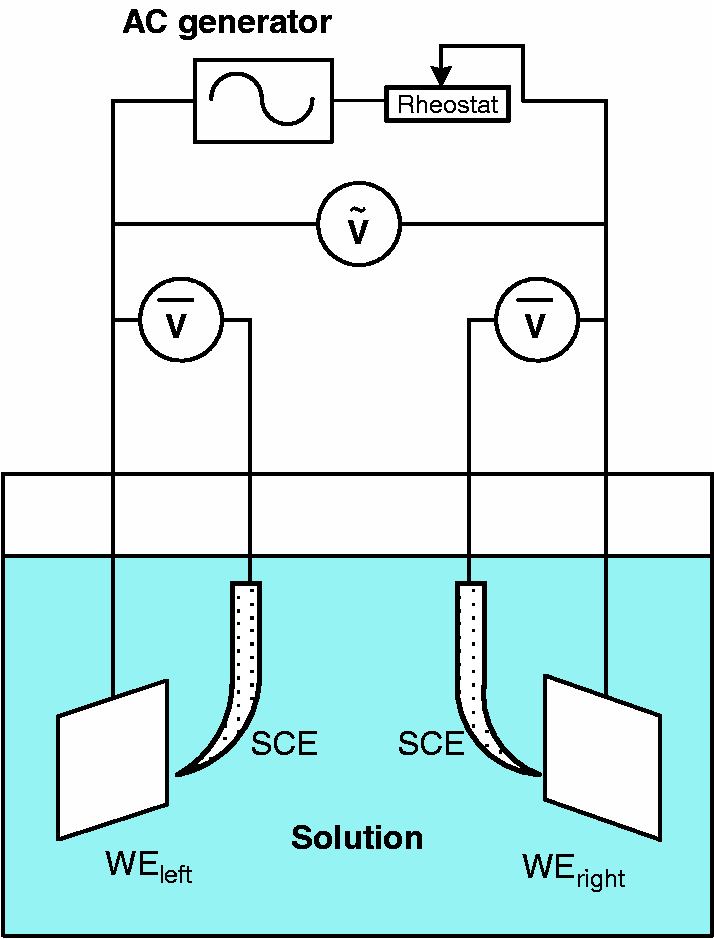
Experimental set-up of application of alternating voltages on X80 pipeline steel
Results and discussion
Electrochemical properties without AV application
Figure 2 shows the polarisation diagram of the X80 steel in 0.5 mol L− 1 NaHCO3+0.25 mol L− 1 Na2CO3 solution. The metal displays an active–passive transition when anodically polarised, and two anodic current peaks are observed in the polarisation curve. The current peak at the lower potential [ − 0.67 V(SCE)] is attributed to the reactions below 18


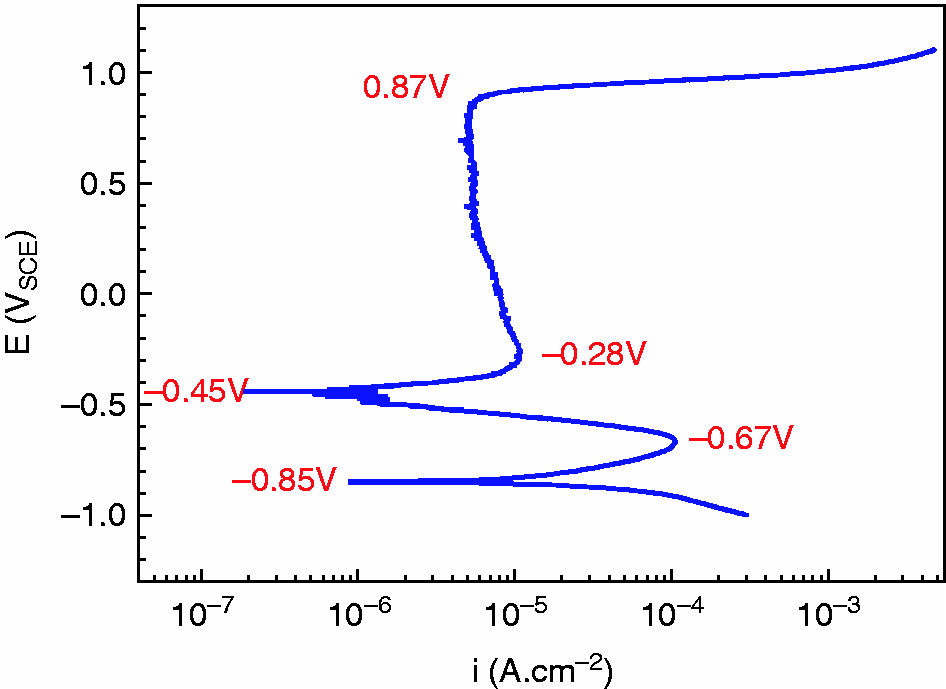
Potentiodynamic polarisation curve of X80 steel in 0.5 mol L− 1 NaHCO3+0.25 mol L− 1 Na2CO3 solution
The iron carbonate is a rust layer on the steel surface, which can slow down the corrosion process by presenting a diffusion barrier for the species involved in the corrosion process and by covering up a portion of the steel surface and preventing the underlying steel from further dissolution.
The second current peak at higher potential [ − 0.29 V(SCE)] is ascribed to the formation of γ-Fe2O3/Fe3O4 film
19



Therefore, a more compact passive film is formed, and passivation of the steel occurs. From Fig. 2, two corrosion potentials are observed, which means that a self-passivation will be achieved if the X80 steel is immersed in the solution, which can be explained by the Evans diagram in Fig. 3. Figure 3 illustrates that the equilibrium potential of the cathodic reaction E e,c is higher than the passivation potential E P, thereby resulting in the two corrosion potentials, one at the activated potential region E corr1 and the other at the passive potential region E corr2. The cathodic reduction current density at E p is equal to the passive current density. Thus, self-passivation can be achieved when the steel is immersed in this solution. 20
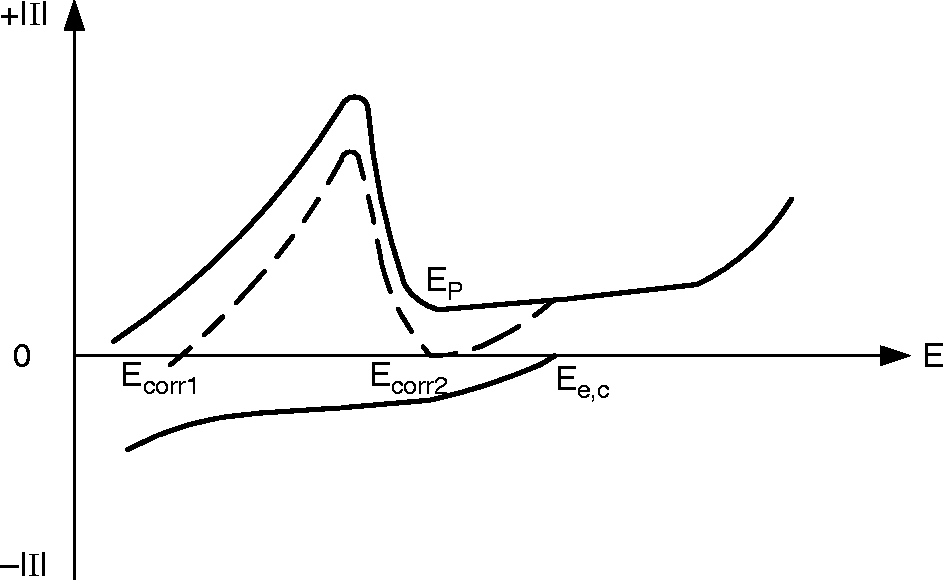
Evans diagram of X80 steel in 0.5 mol L− 1 NaHCO3+0.25 mol L− 1 Na2CO3 solution
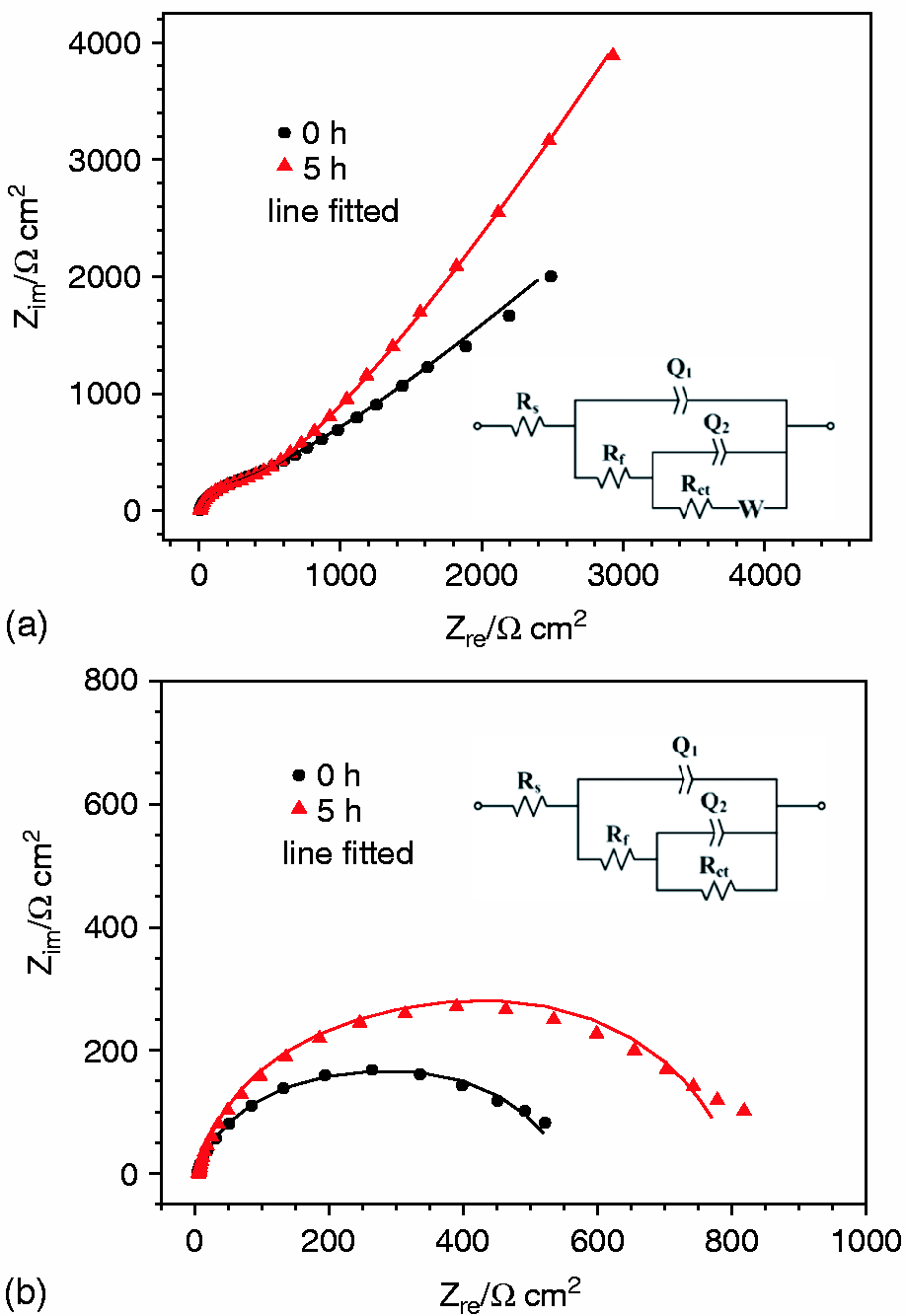
The above analysis was proved by the OCP measurement (Fig. 4) and EIS testing (Fig. 5). Figure 4 shows that the OCP of the non-prepolarised steel rapidly increases and then stabilises at about − 0.36 V(SCE) in the solution. In this situation, the surface of the steel is covered by a compact passive film. On the contrary, when a − 1.3 V(SCE) cathodic potential was applied to the steel before OCP testing, the OCP stabilises at about − 0.85 V(SCE), indicating that the steel is active. This is because the cathodic prepolarisation creates a fresh surface that promotes the anodic reaction and shifts the OCP negatively.
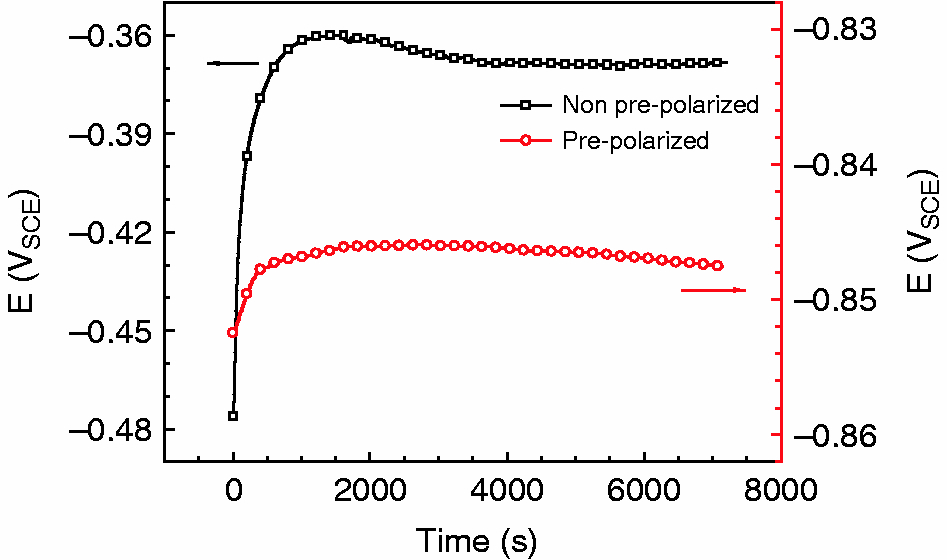
Open circuit potential of X80 steel in 0.5 mol L− 1 NaHCO3+0.25 mol L− 1 Na2CO3 solution
a non-prepolarised; b prepolarised
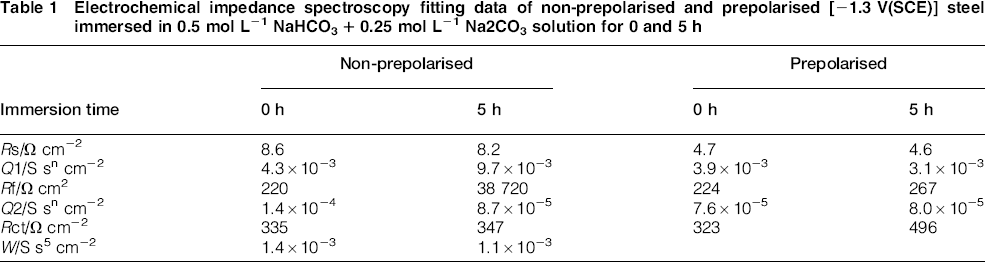
Figure 5 shows the EIS of the non-prepolarised steel and the prepolarised steel in 0.5 mol L− 1 NaHCO3+0.25 mol L− 1 Na2CO3 solution. Fitting of the spectra was performed using equivalent electrical circuits. Several models of circuits that can fit the experimental data were created, and the best results (best agreement between experiment and fitting) were obtained with the equivalent electrical circuits presented in the figure. The equivalent electrical circuit in Fig. 5a comprises solution resistance R S, in series with a Q 1/[R fQ 2/(R ctW)] parallel combination. Q 1 represents the capacity of the passive oxide film, including the semiconductor space charge layer in parallel with the resistance of the passive film R f. Q 2/(R ctW) represents the contribution of the charge transfer process, in which the Warburg impedance W describes the diffusion behaviour. Electrochemical impedance spectroscopy collected from the prepolarised steel follows the equivalent electrical circuit shown in Fig. 5b. In this equivalent electrical circuit, R S is the solution resistance, Q 1 and R f are the capacity and resistance of the corrosion scales respectively and Q 2 and R ct represents the double layer capacitance and the charge transfer resistance respectively. The EIS fitting results of the two circumstances are given in Table 1. The results indicate that a compact passive film is formed on the surface of the non-prepolarised steel and thickens with increasing of the immersion time based on the fact that the R f value significantly increases from 0 to 5 h. On the contrary, corrosion scales which are loose and poor in protection are formed on the surface of the prepolarised steel. This phenomenon suggests that more corrosion scales are formed with increasing immersion time.
Electrochemical impedance spectroscopy fitting data of non-prepolarised and prepolarised [ − 1.3 V(SCE)] steel immersed in 0.5 mol L− 1 NaHCO3+0.25 mol L− 1 Na2CO3 solution for 0 and 5 h
Influence of AVs on passivation behaviour
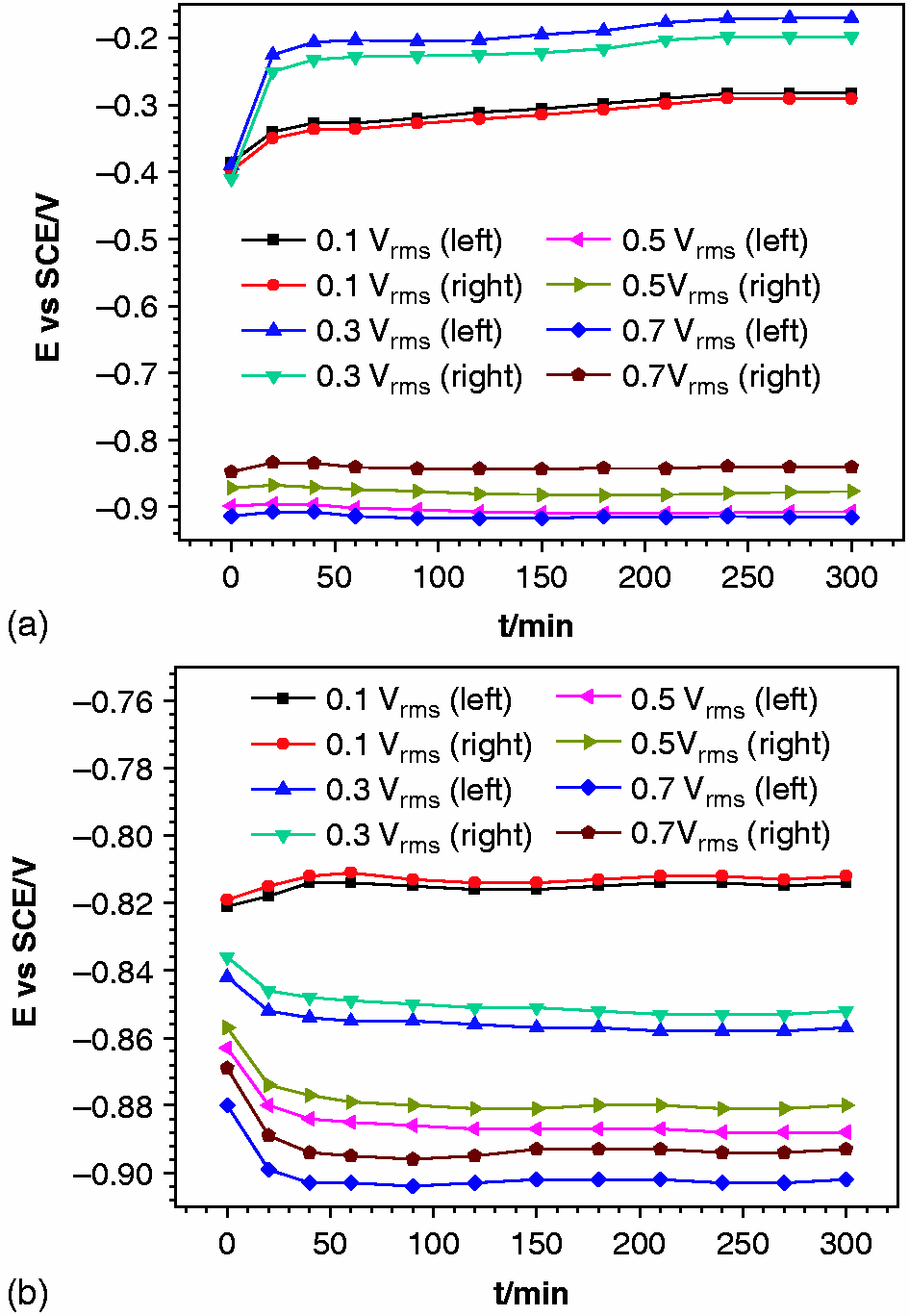
To investigate the influence of AVs on the passivation behaviour of X80 steel in 0.5 mol L− 1 NaHCO3+0.25 mol L− 1 Na2CO3 solution, different amplitudes of AVs were applied to the non-prepolarised steel, and the OCP of the samples were recorded. Figure 6a shows the OCP values of the two WEs under the influence of AVs. The OCP increases when low amplitudes of AV were superimposed to the steel, indicating that the passivation of steel is enhanced by low amplitude AVs, which is confirmed by the corrosion morphology in Fig. 7 and the EIS in Fig. 8a.
a non-prepolarised; b prepolarised
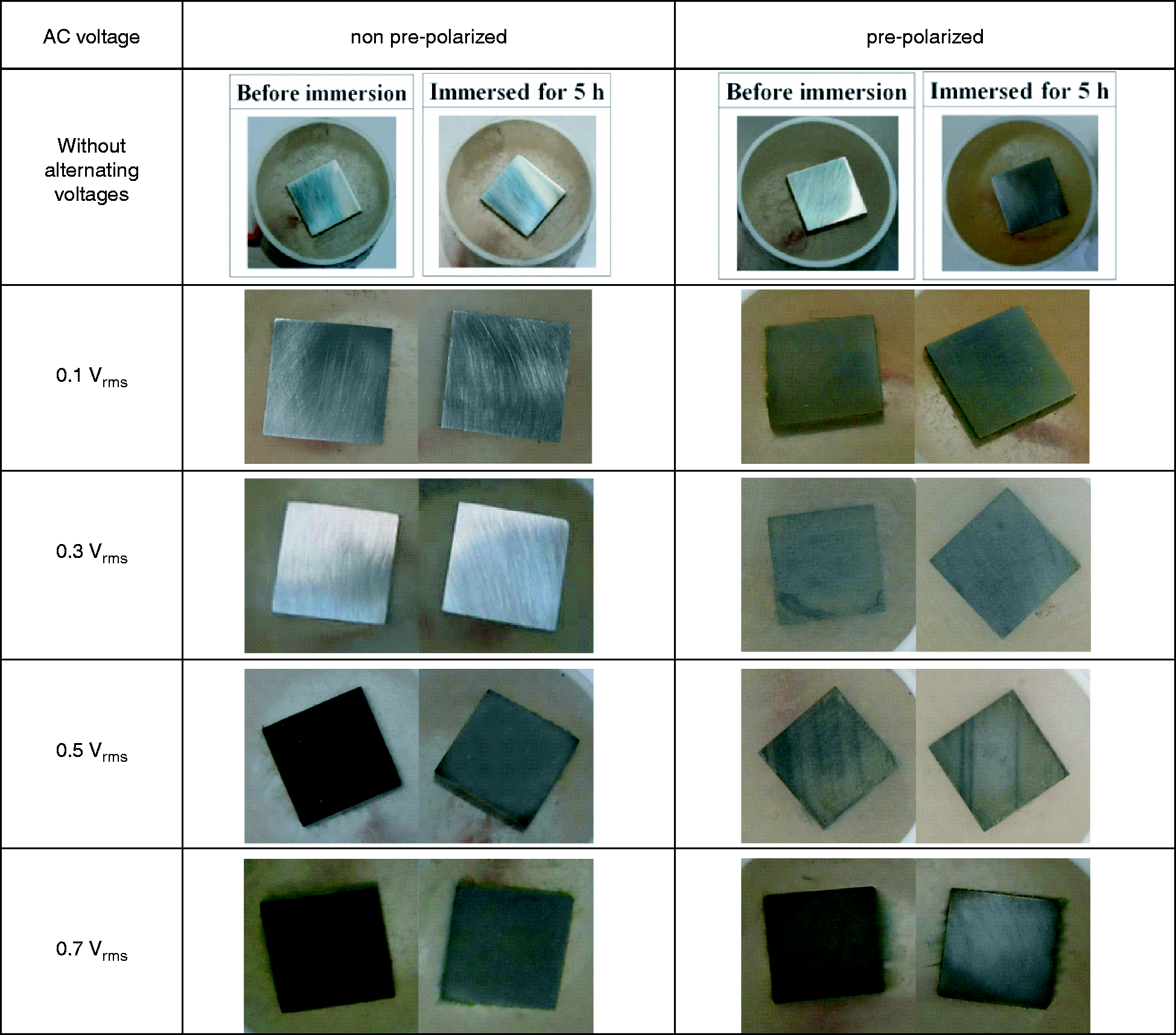
Surface morphologies of X80 steel before and after application of alternating voltages
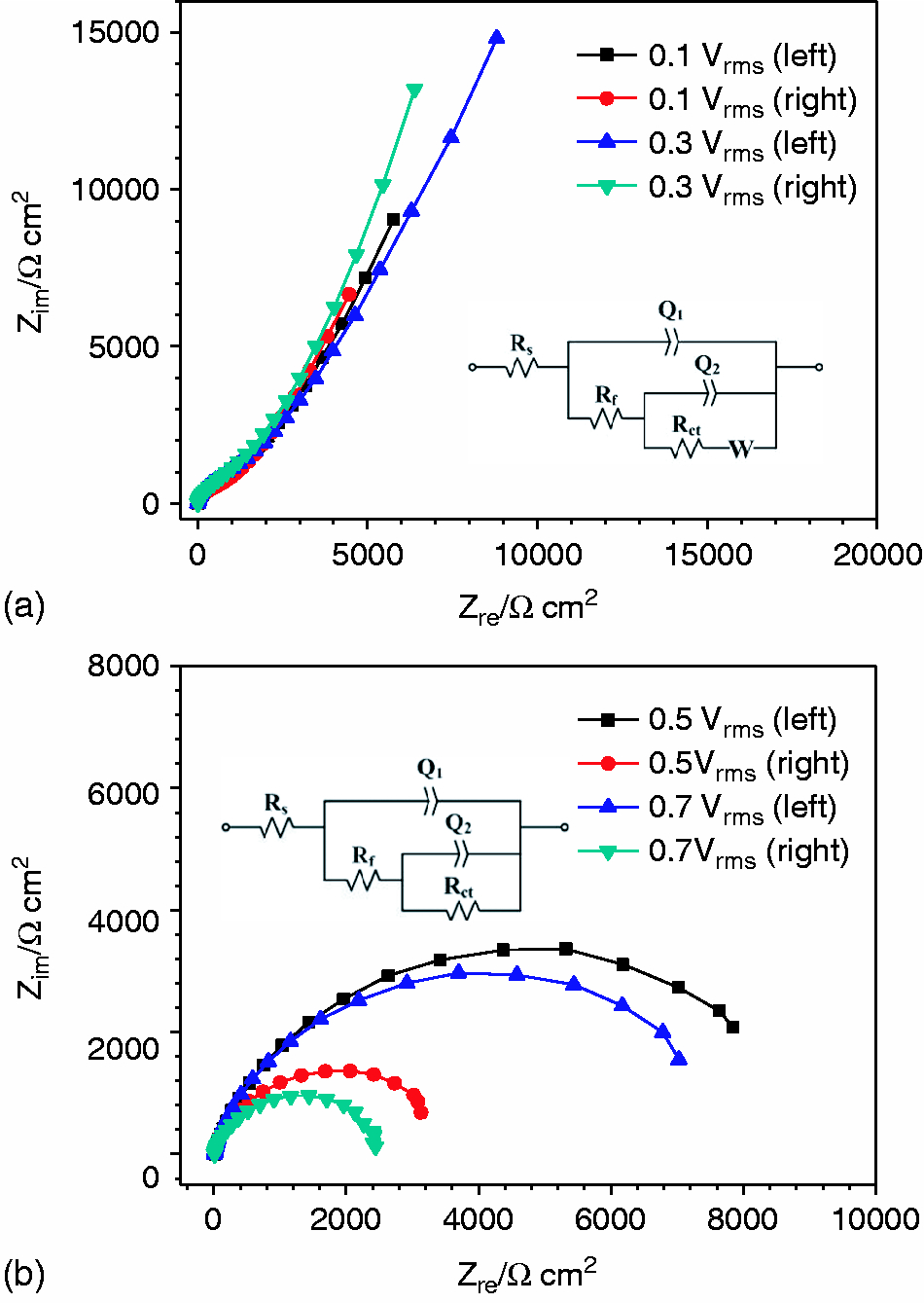
Electrochemical impedance spectroscopy diagrams of non prepolarised steel in 0.5 mol L− 1 NaHCO3+0.25 mol L− 1 Na2CO3 solution after application of alternating voltages
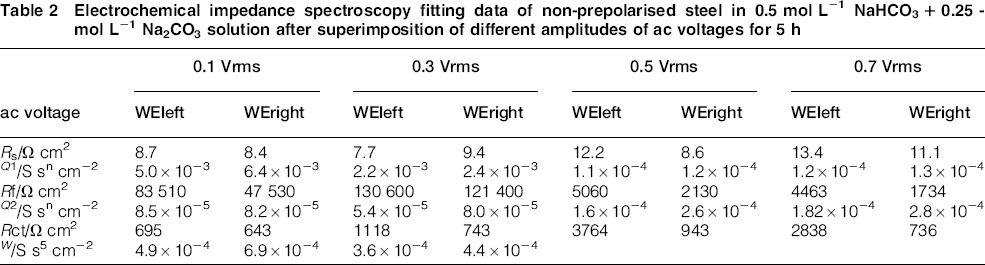
Figure 7 shows that the surface of the two WEs are bright, and no corrosion occurs when the AV amplitudes are not higher than 0.3 V(rms). Figure 8 shows the EIS Nyquist diagrams of the non-prepolarised steel in 0.5 mol L− 1 NaHCO3+0.25 mol L− 1 Na2CO3 solution after the application of ac voltages for 5 h. The equivalent electrical circuits are also presented in the figure, and the fitting data are given in Table 2 and Fig. 9. The fitting results show that the protectiveness of the passive film increases when 0.1 and 0.3 V(rms) AVs are applied to the system. This phenomenon is consistent with findings of Kwiatkowski and Mansfeld, 21 who found that an alternating potential step (AV) passivation can significantly improve the corrosion resistance of stainless steels in acid media. As shown by Song et al., 22 the AV increased the thickness of the passivation film, which consequently resulted in an increase in corrosion protectiveness. Figure 10 illustrates the schematic diagram of X80 steel under different AV interferences. The steel is speculated to always be in the passivation potential region when 0.1 and 0.3 V(rms) oscillations are superimposed to the WEs. The thickness of the passive film increases with the superimposition of the low amplitude AVs based on the fact that the R f values keep an upward tendency with the increasing AV amplitude when it is no higher than 0.3 V(rms) (Fig. 9).
Electrochemical impedance spectroscopy fitting data of non-prepolarised steel in 0.5 mol L− 1 NaHCO3+0.25 mol L− 1 Na2CO3 solution after superimposition of different amplitudes of ac voltages for 5 h
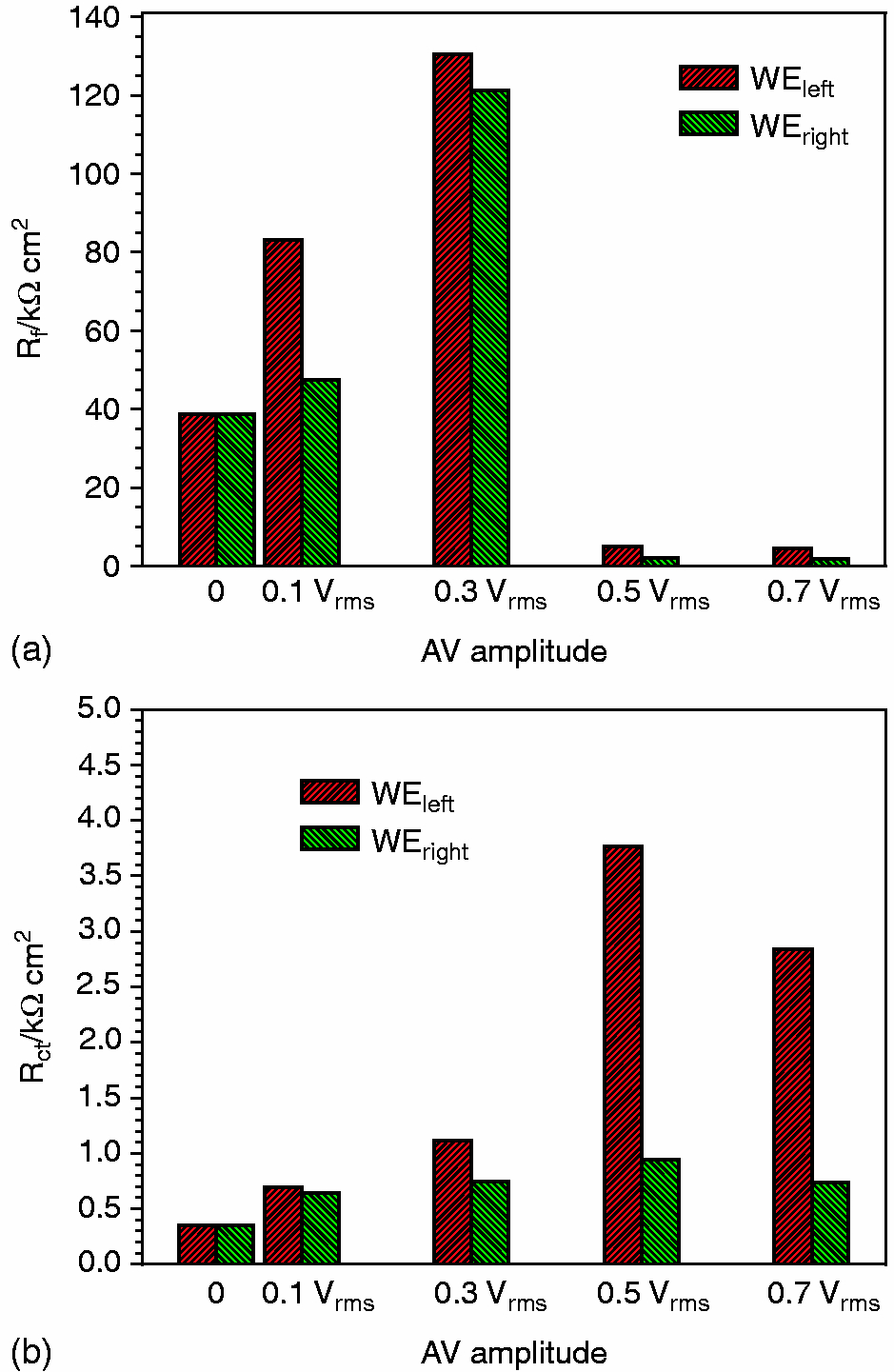
a Rf; b Rct
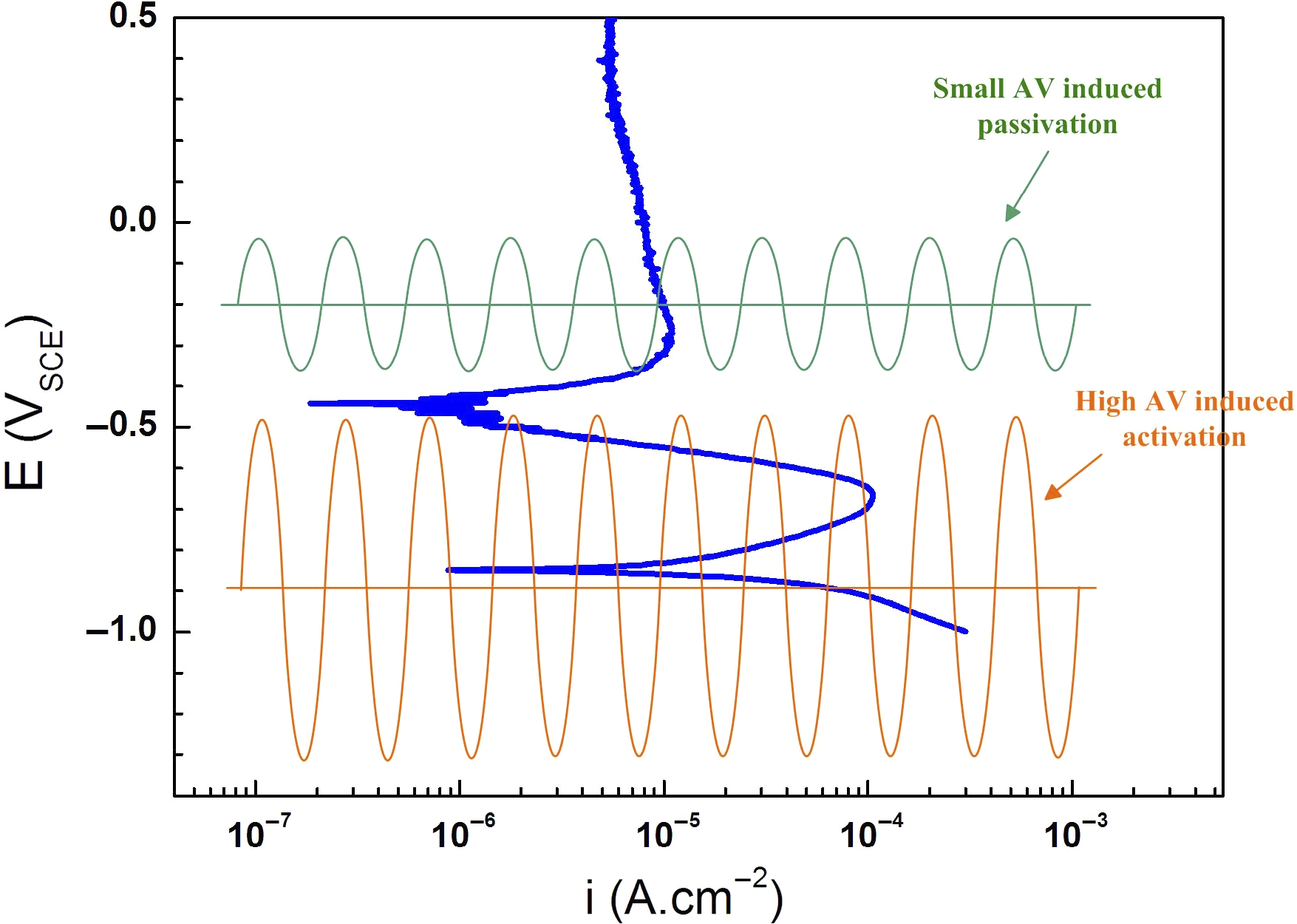
Schematic diagram of X80 steel under different alternate voltages with small and big amplitudes
With the application of low amplitude AVs, the OCP of the WEs shifts positively as shown in Fig. 6, resulting in the enhancement of the passive film. This has the same effect as anodic potentiostatic polarisation, by which the passive film is enhanced through potential augmentation. To investigate the relationship between the polarisation effect induced by AVs and the anodic potentiostatic polarisation effect, − 0.2 and − 0.3 V(SCE) potentiostatic polarisations were applied to the steel for 5 h, and the EIS after the polarisation are shown in Fig. 11. The EIS of the alternating and direct polarisation can be fitted by the same equivalent electrical circuit as shown in Fig. 11. When 0.1 V(rms) AV was applied to the system, the OCP of the left WE shifts positively to about − 0.3 V(SCE), resulting in the same extent of increase in R f and R ct as that of the − 0.3 V(SCE) potentiostatic polarisation. Similarly, with the application of 0.3 V(rms) AV, the OCP of the left WE shift positively to about − 0.2 V(SCE), resulting in an increase in R f and R ct values similar to the − 0.2 V(SCE) potentiostatic polarisation. Thus, the same effect on passivation between low amplitude AVs and anodic potentiostatic polarisation is confirmed.
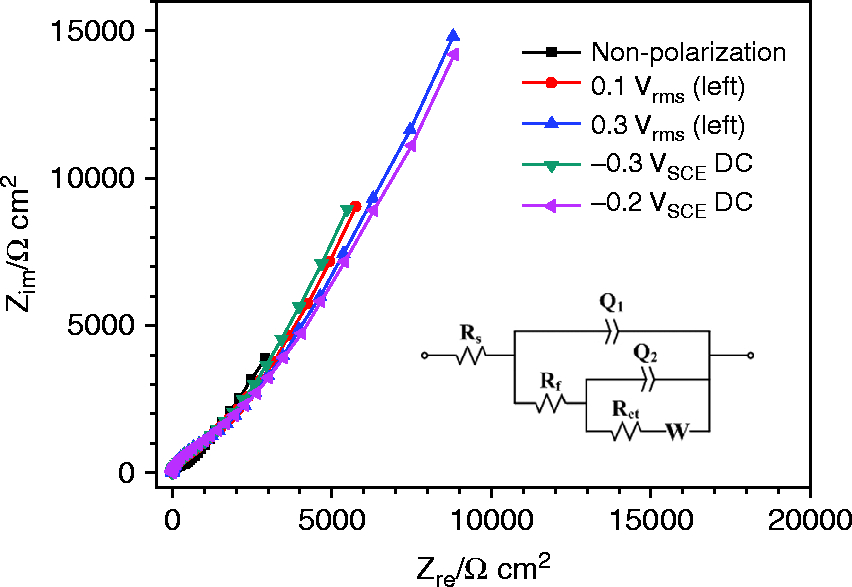
Electrochemical impedance spectroscopy diagrams of non-prepolarised steel in 0.5 mol L− 1 NaHCO3+0.25 mol L− 1 Na2CO3 after anodic potentiostatic polarisation and application of low amplitude alternating voltages
When the AV amplitude was further increased to 0.5 and 0.7 V(rms), the OCP of the WEs shifts dramatically in the negative direction (Fig. 6a), and the film resistance declined markedly (Fig. 9a), indicating that the passive film is broken down and the steel is corroded. This result is verified by the surface morphology in Fig. 7.As shown in Fig. 7, after the application of 0.5 and 0.7 V(rms) AVs for 5 h, the surface of the WEs is not bright anymore and is covered with grey and brown corrosion products. From Figs. 6a and 7, we can speculate that a more negative OCP shift by the AVs indicates a more serious WE corrosion and that more corrosion products are generated.
It is worthwhile to note that the left and right WEs have several differences. The OCP of the left WE shifts more positive than the right one by low amplitude AVs, resulting in a thicker passive film and a higher resistance against corrosion. On the contrary, the right WE exhibits a more negative OCP value than the left one after the application of high amplitude AVs. Figure 7 shows that the left WE is corroded more severely than the right one by 0.5 and 0.7 V(rms) AVs, and more corrosion products are formed on it. The existence of the corrosion product layer blocks the diffusion of the reaction ions and suppresses the dissolution of the steel. Thus, the R f and R ct values of the left WE are higher (Fig. 8). Based on the above experimental facts, we suggest that the polarisation effect of the AVs on the two WEs, which are completely the same, is not identical, and a dc flowing from one to the other is generated. Higher AV amplitudes indicates that more dc is produced, thereby resulting in bigger differences in OCP between the two WEs (Fig. 6a).
Influence of AVs on activation corrosion behaviour
Different amplitudes of AVs were superimposed to the prepolarised samples to investigate the influence of AVs on the activation corrosion behaviour of X80 steel. The OCP of the WEs is recorded and shown in Fig. 6b. As previously discussed, no passive film is formed on the prepolarised steel, and corrosion scale, which is poor in protection, is formed instead. Consequently, the OCP of the steel is much more negative than that of the non-prepolarised steel (Fig. 4). With the application of AVs, the OCP of the steel shifts negatively, and the shift magnitude increases with increasing AV amplitude. Similarly, a dc flowing from one WE to the other is produced and caused the difference in OCP of the two WEs. Higher AV amplitudes indicated that more dc is produced.
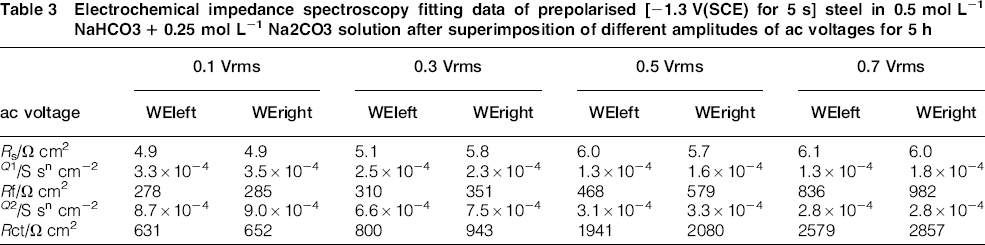
After the application of AVs for 5 h, the corrosion morphologies are observed and shown in Fig. 7. Some grey and brown corrosion products are formed on the surface of the steel. To investigate the characteristics of the corrosion products produced by AV polarisation, EIS of the WEs was carried out on the WEs. Figure 12 shows the Nyquist diagrams of the two WEs under the influence of AVs and the equivalent electrical circuit that fits the EIS. The fitting results are shown in Table 3 and Fig. 13. The lower R f value in comparison with R ct for the same sample implies that the charge transfer process is the rate controlling step rather than the diffusion of ions through corrosion scales. The increase in the R f and R ct values implies that more corrosion scales are formed on the surface of the steel with increasing AV amplitudes.
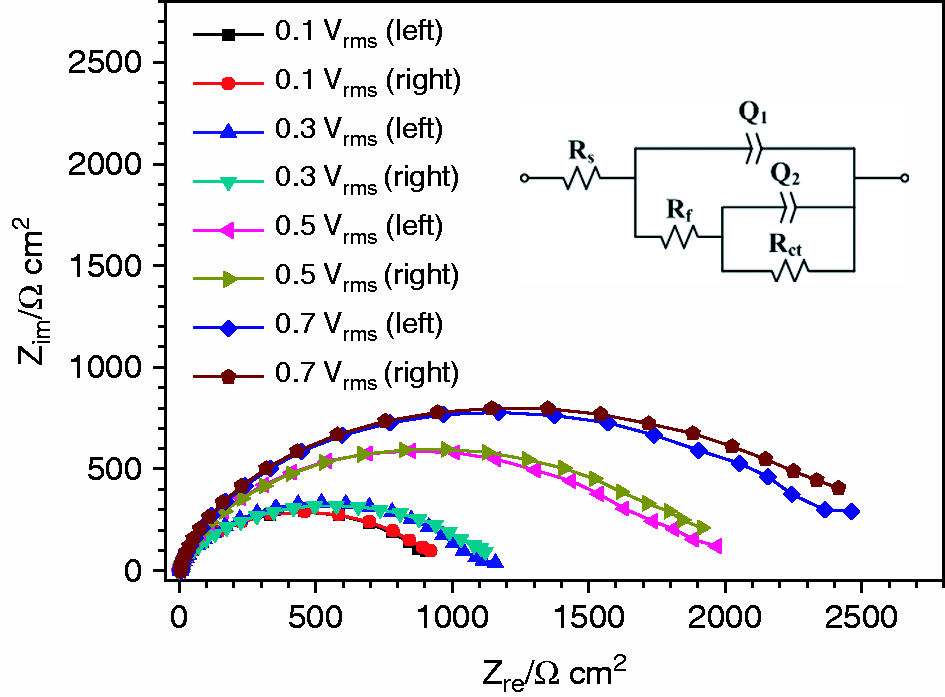
Electrochemical impedance spectroscopy diagrams of prepolarised steel in 0.5 mol L− 1 NaHCO3+0.25 mol L− 1 Na2CO3 solution after application of alternating voltages
Electrochemical impedance spectroscopy fitting data of prepolarised [ − 1.3 V(SCE) for 5 s] steel in 0.5 mol L− 1 NaHCO3+0.25 mol L− 1 Na2CO3 solution after superimposition of different amplitudes of ac voltages for 5 h
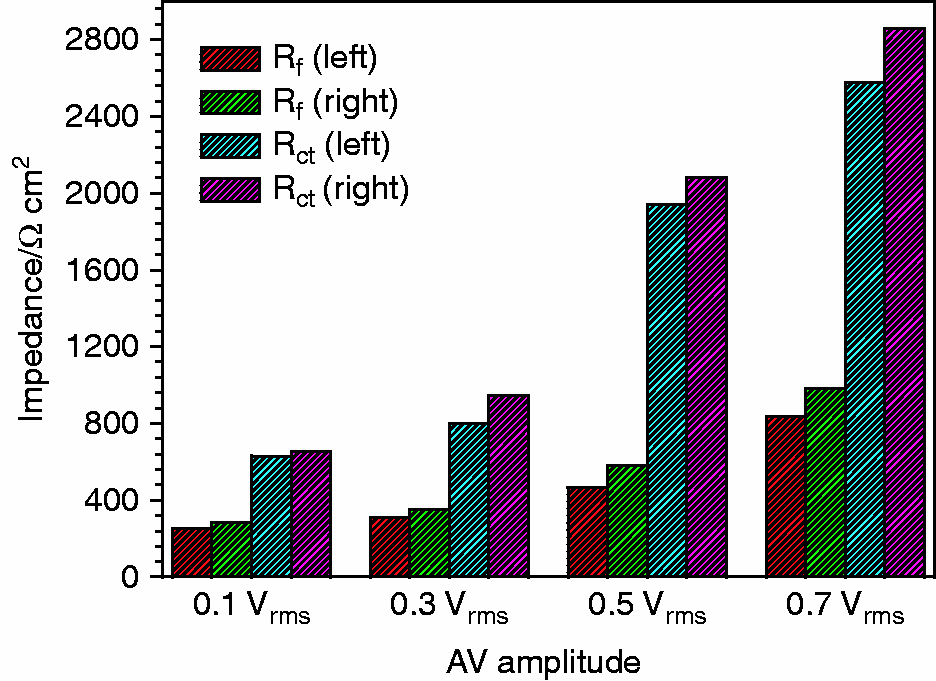
Electrochemical impedance spectroscopy fitting data of prepolarised steel in 0.5 mol L− 1 NaHCO3+0.25 mol L− 1 Na2CO3 solution after application of alternating voltages
Conclusions
X80 steel has two corrosion potentials in 0.5 mol L− 1 NaHCO3+0.25 mol L− 1 Na2CO3 high pH solution, and two steady states exist in the steel. When the steel is immersed in the solution, self-passivation occurs. However, when the steel is precathodically polarised with − 1.3 V(SCE), it suffers from active corrosion. To investigate the influence of AVs on the passivation and corrosion properties of the steel, two same working electrodes were connected to the two poles of the ac generator and different amplitudes of AVs with the same frequency were superimposed to the prepolarised and the non-prepolarised steels. The conclusions are as follows.
After the application of AVs to the non-prepolarised steel, passivation of the steel is enhanced by low amplitude AV [no higher than 0.3 V(rms)] but is destroyed by high amplitude AV.
With the application of AVs to the prepolarised steel, the OCP of the steel shifts negatively, and more corrosion products are formed on the steel with increasing AV amplitude.
The polarisation effect of the AVs on the two same working electrodes is not identical and induces the dc to flow from one working electrode to the other.
Acknowledgements
This work was supported by the National Natural Science Foundation of China (grant nos. 51131001 and 51471034) and National Basic Research Program of China (973 Program project no. 2014CB643300).