







Abstract
In this study, corrosion behaviour of porous NiTi modified by plasma sprayed alumina coating has been investigated. Scanning electron microscopy and X-ray diffraction techniques were applied for the morphology and microstructure characterisation, while linear sweep voltammetry and electrochemical impedance spectroscopy were used for investigation of corrosion behaviour of coated and uncoated NiTi specimens. Induced couple plasma was conducted to measure ion release of the specimens in simulated body fluid at 37°C. The plasma sprayed Al2O3 coating on the porous NiTi improved the surface characteristics for biomedical applications. The alumina coating significantly hampered Ni ion release from the surface. In spite of slight decrease in corrosion resistance of the coated specimens, the corrosion mechanism changed from pitting to general corrosion. The breakdown phenomenon was not detected in the coated specimens, as well. Overall, it can be concluded the longevity of the coated specimen in the simulated biological system was enhanced, comparing to bare NiTi specimens.
Introduction
Porous NiTi alloy has attracted much interest as capable biomaterials for use in orthopaedic and orthodontic biomedical applications due to the combination of unique properties such as superelasticity and shape memory effect. As compared with bulk NiTi alloy, similarity of Young's modulus of porous NiTi to bone tissue, and open pore structure for ingrowth of body tissue to better fixation in body as well as high recoverable strain (>2%) in contrast to other metallic biomaterial, high strength and toughness are the brilliant aspects of this biomaterials. 1 In our previous works, the potential of porous NiTi parts for use as a hard bearing material for replacement of bone tissue was discussed.2–3
A major concern with the use of NiTi alloys as a biomaterial is nickel release from the surface of the implants into the human body. Nickel is an essential element for the human body, and the dietary exposure to nickel is 160-600 mg/day. In addition, nickel is one of the structural components of the metalloproteinase. 4 However, it should be taken into consideration that nickel is known as a toxic element and causes allergic reaction in human body. This element contributes to the formation of oxygen radicals, DNA damage and thereby inactivation of tumour suppressor genes. Moreover, Ni inhibits enzymes important for the protection of tissues against oxidative agents. Moreover, nickel is harmful in bone tissue cultures, and nickel chloride decreases the proliferation of both chondrocytes and fibroblasts.4–5
Whether the amount of Ni released from surface of NiTi implants is in critical value has been disputed in the recent years. Some researches show formation of barrier titanium oxide on surface of the implants that inhibits nickel release for the bulk specimens in normal corrosion condition.6–7 Compared with conventional dense NiTi, porous structure has more contact surface area that increases the amount of Ni ion releases and raises the risk of allergy and adverse reactions. In addition, in catastrophic situation and in situations that corrosive wear and fretting corrosion are important, the amount of nickel release was increased. 8 In the recent years, significant attention has been attracted on surface modification of porous nitinol parts as a noteworthy branch in study of NiTi alloys. Several methods were conducted to improve the corrosion behaviour of nitinol implants such as surface oxidation, electrophoretic deposition, ion implantation, chemical treatment, biomimetic deposition and plasma surface treatment.9–13
It was stablished that Al2O3 could be applied as a biocompatible material for coating of implants. Al2O3 is a stable compound and bioinert material without any adverse effects on body tissue. Moreover, alumina has characteristics of high hardness and high abrasion resistance. These properties and high strength as well as chemical inertness of alumina have made it to be recognised as a biocompatible ceramic for use in dental and bone implants. Artificial hip and knee, vertebrae spacers and extensors and end osseous tooth replacement implants are the examples of using Al2O3 in biomedical applications. Moreover, Al2O3 has high melting and boiling point that makes it suitable for plasma spray process. Al2O3 layer deposited by plasma spray method forms adhesive bonding to metallic substrates, and it is suitable for wear condition. 14
Up to now, Al2O3 coating was applied on bulk NiTi parts by sputtering, arc oxidation and atomic layer deposition methods.15–17 However, studies on the surface modification of porous NiTi alloys using plasma spray method by Al2O3 powders have not been reported in literature. In the present research, Al2O3 layer was deposited by air plasma spray method on porous NiTi alloys and corrosion behaviour as well as nickel release of specimens was investigated.
Experimental
Highly pure powders of nickel (99.9% purity, Merck, GmbH) and titanium hydride (99.99% purity, Alfa Easar) were used to fabricate porous NiTi specimens using elemental powder sintering. The powders were mixed together and then pressed up to 750 MPa by uniaxial hydraulic press to green compacts. Subsequently, sintering was carried out at 1050°C for 2 h in a vacuum furnace. An air plasma spray unit (Metco 3MB, USA) was used to produce alumina coating from α-Al2O3 powders with 50 μm size. Sand blast treatment was applied on the surface of the NiTi specimens to create a sufficient roughness before plasma spraying. Morphology of the coating was observed by scanning electron microscopy (SEM). Specimens were then characterised by X-ray diffraction to investigate the phase constituent of the substrate and coating. The specimens were polished in ethanolic HNO3 solution by implying 2 V for 10 min and rinsed with distilled water. Then, electrochemical behaviour of NiTi specimens was evaluated via linear sweep voltammetry (LSV) and electrochemical impedance spectroscopy (EIS) with three-electrode set-up by Autolab PGSTAT30 instrument using simulated body fluid (SBF) solution at 37°C at pH 7.4. Electrochemical impedance spectroscopy and LSV were conducted after 24 and 2 h of immersion respectively. The EIS results were fitted using equivalent circuit models to investigate the surface corrosion process. Induced couple plasma was conducted to measure nickel release of the coated and uncoated NiTi specimens in a severe situation after corrosion tests.
Results and discussion
Microstructure and morphology
Surface morphology of the substrate, porous NiTi, with porosity of ∼40% is shown in Fig. 1a. 2 The size of the pores varied from 10 to 200 μm. Interconnecting the smaller pores formed the larger ones, which are more suitable for tissue integration. 1 However, this porous structure accelerates corrosion of the NiTi specimens. The porous NiTi is more susceptible to corrosion than dense NiTi due to larger real surface area in contact with body fluids.15,18 Sun et al. 19 have reported that such a porous NiTi alloy is likely to undergo more pitting corrosion than the dense NiTi alloy. In addition, the corrosion current density of the porous NiTi alloys was about two orders of magnitude higher compared to the dense NiTi alloys. Therefore, surface treatment of NiTi with the porous structure is inevitable when using them in biomedical applications.
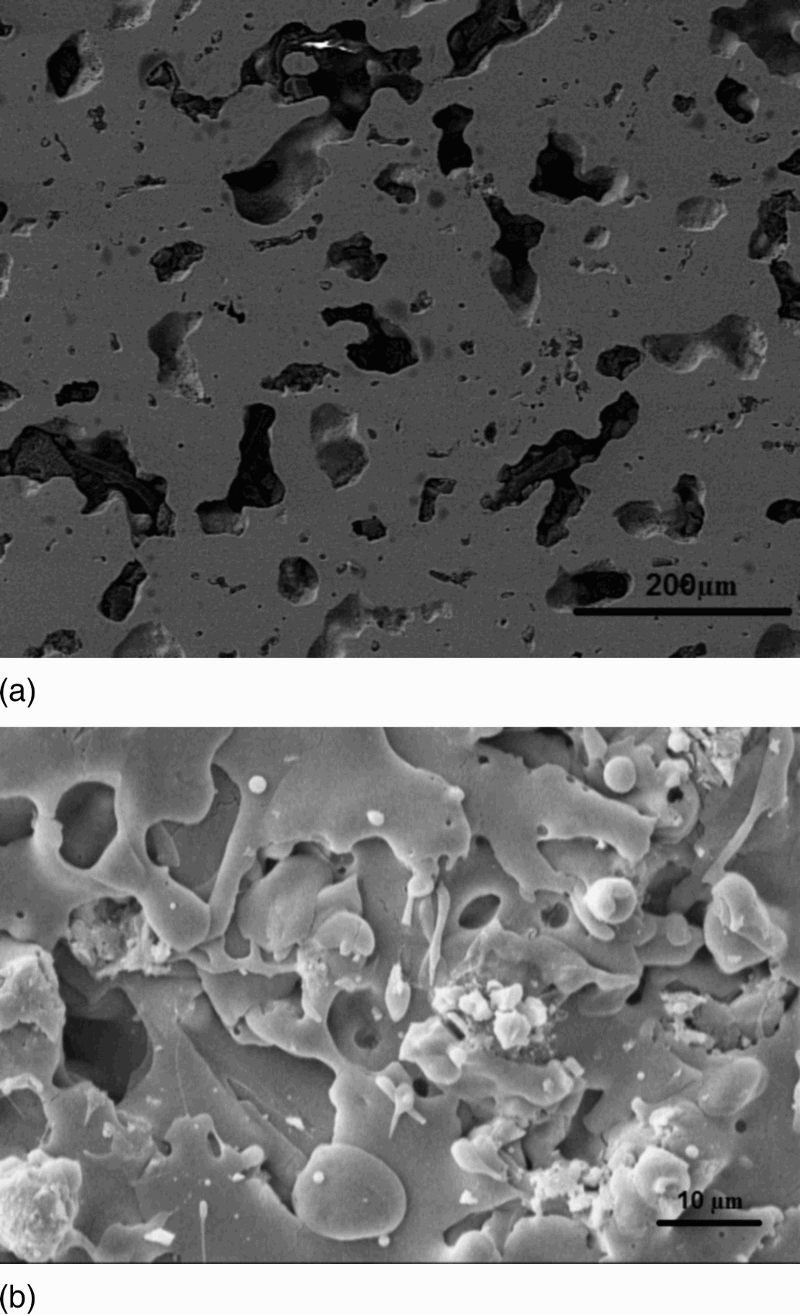
Micrographs of a porous NiTi substrate that was produced via powder metallurgy and b plasma sprayed alumina coating on porous NiTi
The SEM image shows the surface roughness and structure of plasma sprayed alumina coating (Fig. 1b). Formation of liquid phases and splash at high temperature of plasma produces the porous structure of the coating. Such a rough and porous layer is suitable for biomedical application due to better cell adhesion as well as bone tissue ingrowth that brings better fixation of implant to body tissues.20,21
Cross-section examination shows the thickness of coating is ∼75μm (Fig. 2). On the basis of the SEM observation, the coating is adhered to substrate entirely without any observable defects. This coating completely covered exposed surface area of the specimen, both on the surfaces and inside the pores, so that intercept contacts the surface of the NiTi and surrounding off. According to X-ray diffraction patterns of the coating and substrate (Fig. 3), the substrate completely consists of B2-NiTi phase, and no elemental nickel and titanium were detected in the spectrum. The absence of elemental Ni demonstrates full diffusion of Ni at sintering temperature and formation of metallic bounds, which hinders Ni ion release in human body.
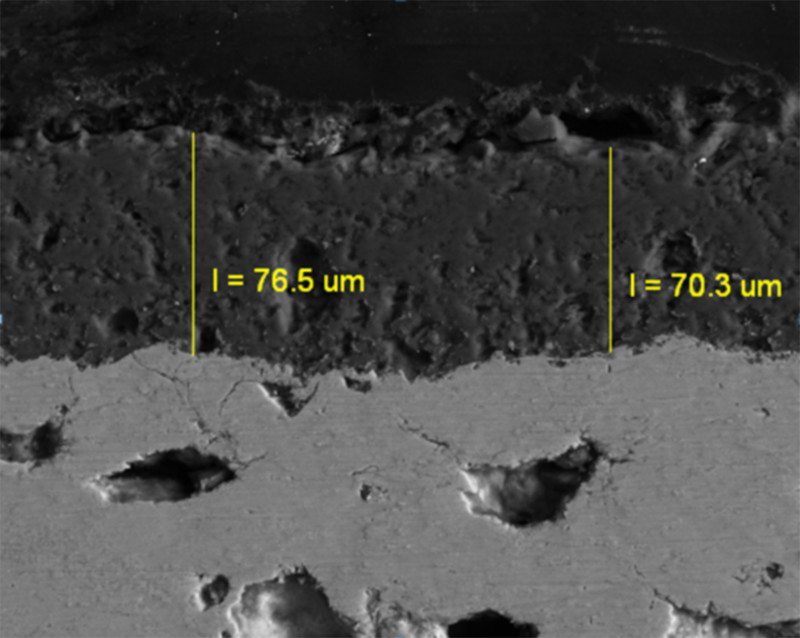
Cross-section overview of Al2O3 coating on porous NiTi
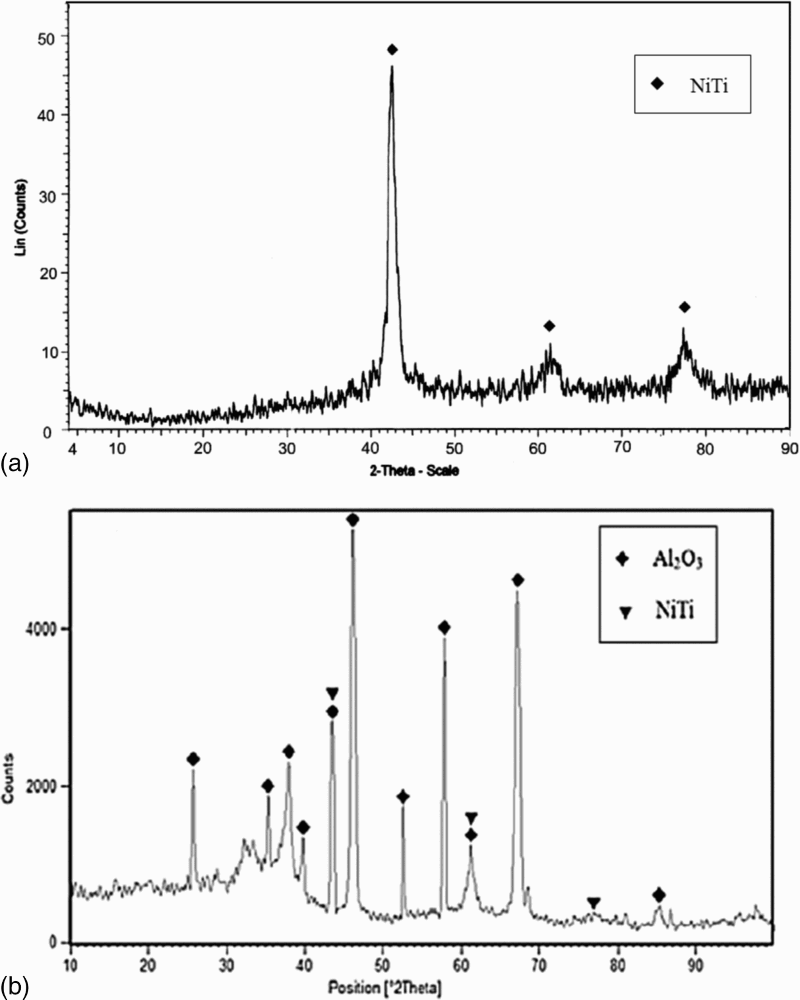
X-ray diffraction patterns of a porous NiTi substrate and b alumina coating
X-ray diffraction pattern of the coated NiTi specimens (Fig. 3b) indicates that fully crystalline and pure α-Al2O3 (alpha alumina) was formed on the substrate. The high hardness crystalline alumina coating is more suitable for biomedical application. 14
Corrosion behaviour
Linear sweep voltammetry
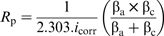
Linear sweep voltammograms of coated and uncoated specimens in SBF at 37°C are shown in Fig. 4. Quantitative information on corrosion currents and corrosion potentials can be calculated from the slope of the curves using the Stern–Geary equation as follows
22
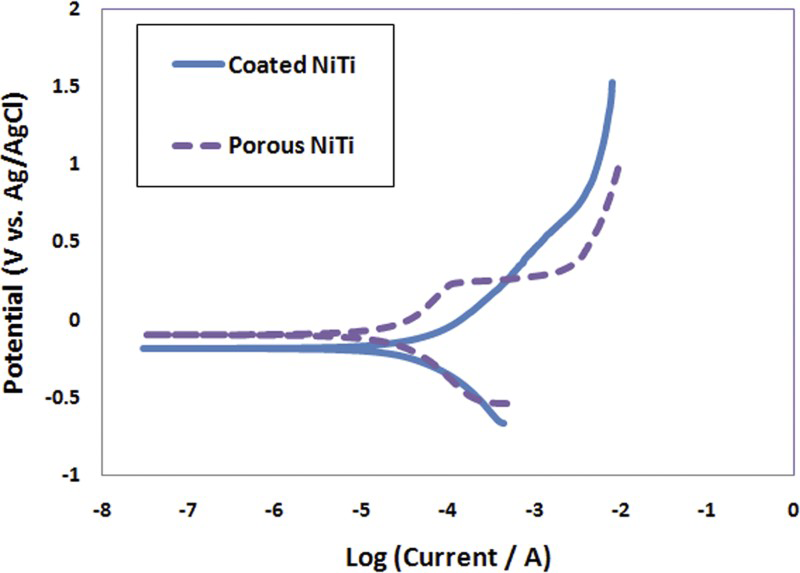
Linear sweep voltammograms of coated and uncoated specimens in SBF at 37°C
Corrosion parameters obtained from LSV curves of coated and uncoated specimen in SBF solution

From illustrated data, it can be recognised that alumina coating slightly changed the corrosion potential of the specimen to less noble potentials. The corrosion potential is shifted to more negative values for alumina coated NiTi ( − 0.12 V for uncoated and − 0.21 V for coated NiTi). Moreover, the corrosion current density (or corrosion rate) of the alumina coated specimen is higher than uncoated NiTi (∼4% in logarithmic scale). For Al2O3 coated NiTi, corrosion current density is 3.16 × 10− 5 A cm− 2, whereas for the uncoated specimen is 1.1 × 10− 5 A cm− 2.
From the LSV diagram, corrosion mechanism of the uncoated specimen changes from general corrosion to pitting at potential ∼240 mV. This point nominates potential breakdown E bd that is defined as the least noble potential where pitting or crevice corrosion, or both, initiates and propagates. The value of the E bd is in agreement with aforementioned results for NiTi. 7 At higher potential, passivation films start to break down, and pitting starts to occur; consequently, current density rises sharply and corrosion rate increases rapidly. It is reported that for binary NiTi alloy, pitting occurred at the site of the intermetallics compounds, especially Ti rich NiTi2 phase. 23 Formation of undesirable non-equiatomic compounds such as Ni3Ti and Ti2Ni has always been a challenge in production of porous NiTi parts by powder metallurgical methods. 24 It is confirmed that the presence of nickel and titanium rich compounds forms favorable sites for pitting and finally deteriorate corrosion resistance of the porous specimens. 7
The breakdown phenomenon, on the other hand, was not detected for the alumina coated specimen, and mechanism of the corrosion is general corrosion. In case of the general corrosion, specimen will be corroded uniformly without facing the pitting corrosion. Meanwhile, passivation current densities for the coated specimens are lower compared to uncoated porous NiTi.
Conclusively, LSV showed that the uncoated porous NiTi alloy is more susceptible to local corrosion attack, and it might lead to catastrophic fall down. However, corrosion resistance and corrosion potential of the uncoated NiTi are slightly higher than alumina coated specimens in general corrosion mode.
Impedance test
The Nyquist (the real component of impedance versus negative imaginary component) and Bode (the modulus and phase shift of the impedance vs. log frequency) plots are used to represent the impedance result in Fig. 5. Single semicircle was appeared for uncoated specimen, which is related to the charge transfer reaction from the alloy to the electrolyte through the double electrochemical layer. For the coated specimen, a straight line tail also observed in the low frequency region is related to diffusion of charge to the porous alumina coating. The higher semicircle diameter of the bare porous NiTi than the coated specimen indicates higher corrosion resistance of uncoated one (Fig. 5a) that is in agreement with voltammetry results.
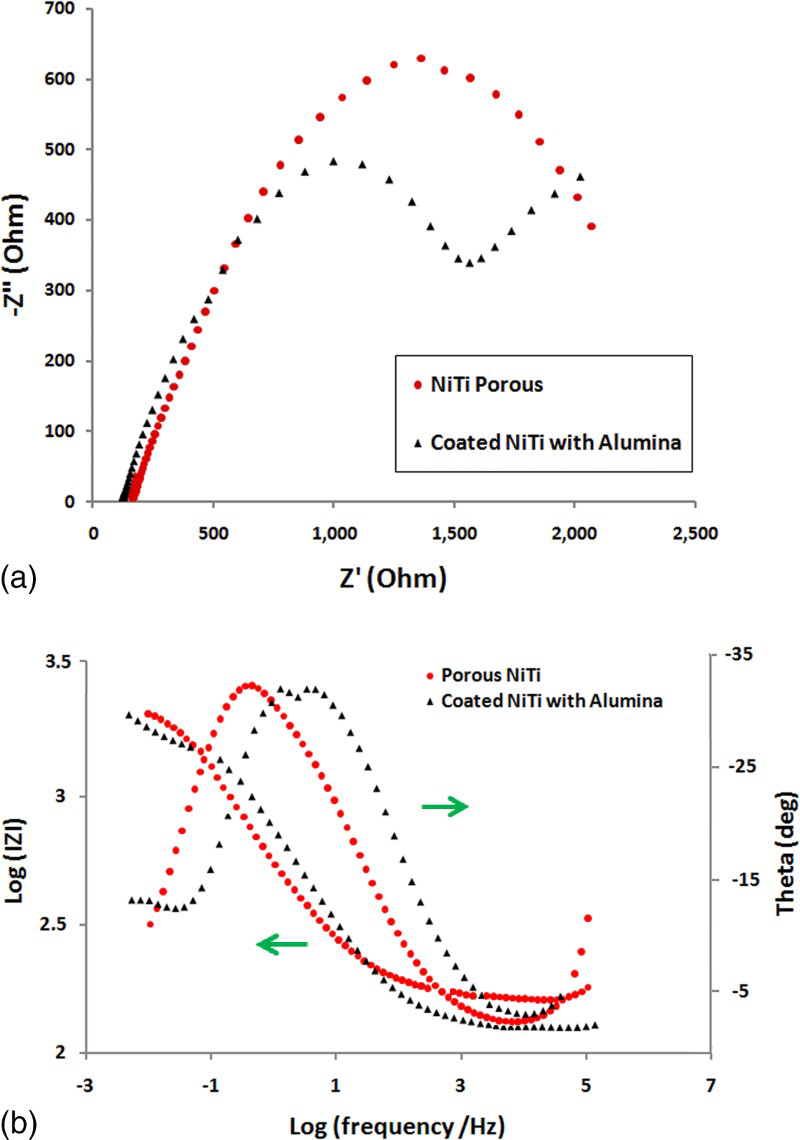
a Nyquist and b Bode plots of coated and uncoated specimens in SBF at 37°C
Based on the Bode plots of the coated and uncoated NiTi specimen (Fig. 5b), total resistance can be calculated from the difference in impedance modulus between the low frequency and the high frequency regions of the modulus plot. A slight difference was observed between resistances of two specimens. In the phase shift of Bode plot, a pure capacitive behaviour is plotted as a positive value of 90°. For this experiment, the phase angle remains close to 30° over an intermediate range of frequencies implying a near capacitive response. Higher phase angles, which are characteristic of a material, indicate passivation behaviour and result in higher corrosion resistance. The impedance spectrum of the uncoated NiTi reveals a phase angle close to 30° over a shorter range of frequencies. The spectrums of the alumina coated specimens, however, specify a passive process with a wider range of frequencies by the modified surface structure. It is difficult for the solution to penetrate the specimens with the existing barriers properties. According to the results, alumina coated porous nitinol represents slight decline in corrosion resistance.
Table 2 lists the EIS well fitted results for porous NiTi and alumina coated specimens according to Randles equivalent circuits. In these models, resistance R1 devoted to electrolyte resistance (SBF solution) was measured between reference electrode and working electrode. Capacitance and resistance of the double layer against uncoated nitinol are shown with CPE1 and R2 respectively. Constant phase element (CPE) is used instead of pure capacitance due to non-homogeneity of the system. The CPE is defined by two elements, CPE-T (capacitance) and CPE-P (non-homogeneity constant). CPE2, R3 and W1 are the capacitance, resistance and Warburg elements to represent alumina coating. The Warburg impedance has two components, a resistive part (W1-R) and the inductive part consisting of W1-T component and W1-P exponent. A Warburg element occurs when charge carrier diffuses through a material, 25 in here porous alumina coating layer. Because after a certain amount of time, water penetrates into the coating and forms a new liquid/metal interface, there is R2 and CPE1 in the coated specimen circuit as well and corrosion phenomena could occur at this interface.
Impedance results obtained using ZView software after fitting procedure of curves according to presented circuits

The polarisation resistance value calculated with Stern–Geary formula from LSV diagrams is in good agreement with that obtained from impedance measurements. From LSV curves, the polarisation resistance for alumina coated sample is 1.95 kΩ cm2. The polarisation resistance drawn from impedance diagrams (R2+R3) for coated sample is 1.83 kΩ cm2.
In addition, it can be seen from Table 2 that resistance was decreased for alumina coated specimen. Since the resistance of the alumina layer (R3 = 189.4 Ω cm2) is lower than that of uncoated NiTi (R2 = 2658 Ω cm2), it is not able to enhance the corrosion resistance of the porous NiTi. Moreover, a decrease in CPE1-T and R2 indicates the lower corrosion resistance of the coated specimen. Although, an improvement in corrosion resistance of the dense NiTi substrate is reported by Xu et al. when they prepared an alumina coating on the NiTi bulk samples by microarc oxidation process. However, they stated that the corrosion resistance of the Al2O3 is lower than that of NiTi. 26 It should be considered that in their experiment, alumina possessed a compact inner layer that improves corrosion behaviour of NiTi. In the case of porous NiTi, which is coated with a porous alumina layer, electrolyte solution penetrates into the interface of the coating and substrate and set the substrate large surface area (porous NiTi) in contact with the solution and maintains this corrosive term for longer times.
Nickel release
Although porous NiTi alloy demonstrates acceptable corrosion behaviour for clinical applications, nickel release remained as a serious health concern associated with biocompatibility of this material. Nevertheless, nickel has strong metallic band with titanium atom and is in a tightly bound intermetallic form; nickel release from surface of nitinol specimens is inevitable especially in simultaneous corrosion and wear condition. Depending on the stoichiometry of the equiatomic NiTi, the amount of nickel released from nitinol varies in wide range. Nickel content of the nitinol might be varied between 49 and 52 at-%, and in superelastic nitinol alloy (Ni rich NiTi alloys), nickel release is of particular concern. 7 Existence of other intermetallic compounds such as Ti2Ni, Ni3Ti and even elemental nickel, which might remain in specimens due to incomplete sintering treatment, could raise corrosion rate and nickel release from the surface. Moreover, in porous structure due to the large exposed surface area of the specimens in direct contact with adjacent bone and tissue nickel release is more critical. To illustrate, the amount of Ni release from porous NiTi was found to be two orders of magnitude greater than that from a solid one. 1 Various approaches are currently under development to prevent undesirable Ni release and ensure implant safety. Table 3 shows a comparison of Ni release levels for coated and uncoated NiTi samples in SBF solution after LSV, measured by induced couple plasma method. Based on the table, coating of nitinol specimens results in remarkable decrease in nickel release as approaching to zero. Subsequently, nickel release of the alumina coated specimen decreased considerably, which can increase biocompatibility of the implants coated by this type of the coating. This shows that alumina coating covered the entire surface of the specimen both on the surfaces and inside the pores and adhered to porous substrate properly. Interestingly, porous structure of the coating prevents diffusion of the nickel to solution in a great extent. Porous structure, therefore, improves biocompatibility and tissue adhesion of the coating without deteriorating effect on nickel release.
Nickel concentration of SBF solution after LSV

Conclusions
Effect of plasma sprayed alumina coating on corrosion behaviour of porous nitinol was investigated. Elemental sintering of the nickel and titanium powders yielded porous nitinol parts, which is suitable for biomedical application. However, this porous structure is more favorable to corrode due to large surface area. Plasma spray method has been applied to form full crystalline and pure biocompatible alumina coating on the porous NiTi substrate. Biocompatibility of the coating could be improved by its porous and rough structure originating from plasma sprayed method nature. Corrosion mechanism of the specimens changes from pitting to general corrosion after coating. Despite a slight decrease in corrosion resistance of the coated specimens compared to bare specimen, the breakdown potential was not observed. Therefore, general corrosion mechanism made specimen corrode evenly. Furthermore, surface modification of porous NiTi minimises the amount of Ni released from surface of the specimen. Overall, plasma sprayed biocompatible alumina coating improved the corrosion behaviour of the NiTi implants and hampered nickel ion release from the surface in simultaneously corrosive and abrasive wear situation.