







Abstract
As an integral part of developing a novel flash ironmaking technology at the University of Utah, the activity of iron oxide in the slag was studied under three different gas atmospheres: H2/H2O (H2), CO/CO2/H2/H2O (reformed natural/coal gas), and CO/CO2. The conditions of the slags investigated were MgO-saturated CaO–FeO–Al2O3–SiO2–MnO (0·2–0·8 wt-%)–P2O5 (0·1–0·9 wt-%) in the temperature range 1550–1600°C with wt-% CaO/wt-% SiO2 of 0·8 to 1·2, and under pO2 = 2×10⁻¹⁰–2×10⁻⁹ atm. Water increased the activity coefficient of FeO in the slag and accordingly lowered the FeO content. The average FeO content was found to be 10, 11 and 16 wt-% under H2/H2O (H2), CO/CO2/H2/H2O (reformed natural/coal gas), and CO/CO2, respectively. An empirical correlation for γFeO in slags under H2/H2O atmospheres was formulated to givelog γFeO = −3·0623 X FeO−3·1421 X CaO−2·5068 X MgO+2·1957
Introduction
Iron oxide plays an important role in metal–slag reactions including those involved in sulphur and phosphorus distribution. In addition, FeO in the slag is considered as a loss in ironmaking and steelmaking processes. Moreover, FeO content in the slag affects its viscosity, corrosivity, and redox potential of the slag. 1 Thus, FeO activity (a FeO) in slag and the related thermodynamics attracted the attention of many researchers. 2–6 The present work is an integral part of a research project that aims to develop a novel green ironmaking process based on the direct gaseous reduction of iron oxide fine concentrate in a flash process. The ultimate goal of this new process is to significantly reduce CO2 emissions, energy consumption, and environmental pollution in the steel industry. 7 Hydrogen, natural gas and coal gas are the proposed reducing agents in that new process. To date, only a few studies have been performed to measure FeO activities under gas atmospheres containing H2O and H2. 8–10 Thus, as part of the development of this new green ironmaking project, there was a need to investigate thoroughly the behaviour of FeO in H2/H2O and CO/CO2/H2/H2O atmospheres, corresponding to an oxygen partial pressure (pO2) range of 10−10–10−9 atm. In addition, the activity of FeO under CO/CO2 was investigated for comparison. The major slag components were CaO, MgO, SiO2, Al2O3 and FeO. The FeO activity coefficient was studied in the temperature range 1550–1650°C encompassing the expected operating temperatures in the proposed process.
There are two main methods to determine FeO activity. The first method is the thermodynamic relationships and EMF (electromotive force) measurements. In this method, FeO activity is measured using an oxygen sensor and thermodynamic relationship between Fe(l)–FeO(slag) expressed as follows
11
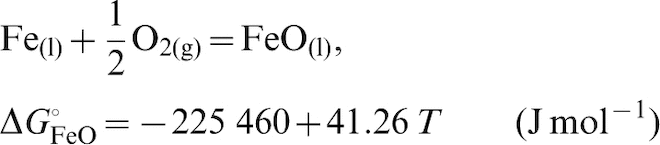
Using the EMF reading from an oxygen sensor, the equilibrium pO2 can be calculated by the Nernst equation. 12 This technique was adopted by Liu et al., 12,13 Ogura et al., 14 Iwase et al., 15 and Hamm et al. 16
The second method is the thermodynamic equilibrium technique with chemical analysis. This technique is the most common one used to measure a FeO in which the slag sample is equilibrated with liquid iron or solid iron at a fixed temperature and under a stable atmosphere. In this technique, different principles could be employed to calculate the FeO or FetO activity in the slags. These principles are listed as follows.
Slag–metal equilibrium technique
This technique is based on the following reactions

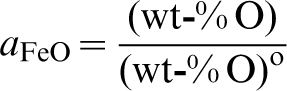
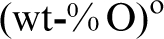
This technique was adopted by Winkler and Chipman 17 and Bishop et al. 18 The technique was further modified to become more accurate by replacing the weight per cent oxygen in equation (4) with the activity (by multiplying both the numerator and denominator by the corresponding Henrian activity coefficients). Furthermore, the interaction between other impurities and alloying elements was considered. 12
Alternatively, molten slags contained in an iron crucible would be brought into equilibrium under a CO/CO2 or H2/H2O atmosphere. The FeO activity can be obtained from the expression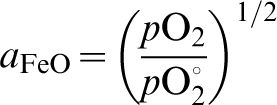

This technique was used by Schuhmann and Ensio. 19 This technique requires a relatively complex experimental setup and long duration. 15
Gas–slag–metal equilibrium technique
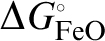
A different method to calculate the FeO activity considering the gas–slag–metal equilibria uses reaction (1), for which the equilibrium constant is given by
Minor elements distribution techniques
Alternatively, FeO activity can be obtained from sulphide capacity or phosphate capacity.
12
Using the following equation from Bell’s work
20
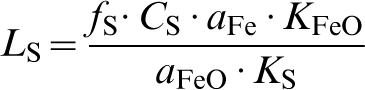
Also, using a relation obtained by Lee and Fruehan, 21 FeO activity can be obtained from the phosphorus distribution and phosphate capacity data.
FeO activity has been studied under different atmospheres. Basu et al., 3 Hamm et al., 16 Liu et al., 12,13 Morales and Fruehan 22 and Park and Lee 23 used argon atmosphere. More commonly, a larger number of researchers 4,24–26 determined FeO activity by controlling pO2 through the CO/CO2 equilibrium. Among the few studies performed to determine the free energy of formation of FeO using H2/H2O mixtures are that of Chipman 8 who used the equilibrium between liquid electrolytic iron and H2/H2O gas mixtures. Also, Chipman and Marshall 27 studied the equilibria between solid iron and both liquid and solid wüstite (separately) under H2/H2O gas mixtures. To the best of the authors’ knowledge, there were no available data on the FeO activity coefficient under H2/H2O gas mixtures in ironmaking slags.
In this study, the following mass concentration ratio was used as slag basicity index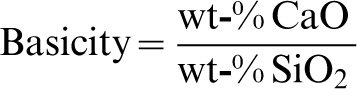
The non-stoichiometry of ferrous oxide observed by Darken and Gurry 28 was found to be of negligible significance by Deo and Boom. 29 They suggested that the free energy of formation of ‘FeO’ and that of FexO may be considered as the same. Thus, this convention was adopted in the present work.
Experimental details
Mixtures of dry powders of SiO2, Al2O3 and MgO were pre-melted at 1600°C for homogeneity. The pre-melted slag was ground to less than 40 μm particle size and mixed for 36 h in a tumbler mixer (Bioengineering Inc., Cambridge, MA, USA). This was done to achieve homogeneity of the slag powder and reduce time to reach equilibrium in the subsequent experiments. Then the synthetic slag was stored in a desiccator to be used in the experiments. A horizontal electrical resistant furnace, shown in Fig. 1, heated by MoSi2 heating elements with an alumina reaction tube (8 cm OD, 7 cm ID, 120 cm length) was used in the experimental set-up, which was equipped with a water vapour generator system. Temperature was controlled and monitored inside the tube by two B-type thermocouples (Pt6%Rh/Pt30%Rh): One was connected to a 708P temperature controller (MTI Corporation, Richmond, CA, USA) with an advanced PID adjustment to control the power supplied to the heating elements in the furnace to a temperature accuracy of ±1°C. The other thermocouple monitored the experimental temperature near the sample, indicating a constant temperature within 0·2–0·5°C. The gas flowrates were controlled by mass flow controllers (AALBORG, Orangeburg, NY, USA) with an accuracy of ±0·1, ±2, ±1·5, ±1·5 mL min−1 for SO2, H2, CO and CO2 gases, respectively. Water was injected as a liquid using a MASTERFLEX digital peristaltic pump drive (Cole-Parmer Instrument, Vernon Hills, IL, USA), which provided flowrates from 0·001 to 3400 mL min−1 (using a set of 10 different diameter tubing) with the same brand pump head with an accuracy of ±0·1% of the flowrate.
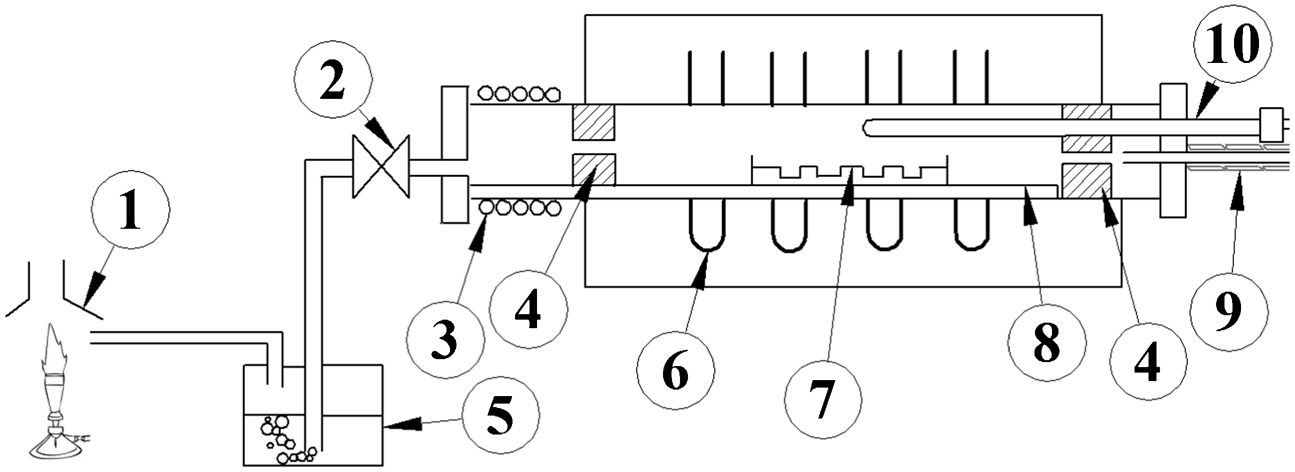
1: fume hood; 2: valve; 3 water cooling jacket; 4 alumina shield; 5 NaOH scrubber; 6 MoSi2 heating elements; 7 alumina sample holder; 8 alumina gutter; 9 heating tape; 10 B-type thermocouple
The initial slag composition other than FeO was chosen to be close to that in the blast furnace. The temperature and oxygen partial pressure ranges were chosen to be 1550–1650°C and 10−10–10−9 atm, respectively, which were wide enough to encompass the expected operating temperature of the new process based on the hydrogen or natural gas reduction of iron ore concentrate.
The samples were prepared as 2·5 and 1·0 g of slag mixed with 2·5 and 1·0 g of iron powder, respectively, for experiments under H2/H2O and the comparison experiments under the three gas atmospheres. They were mixed well to reduce the time to reach equilibrium in magnesia crucibles (1·8 cm OD, 4 cm height, 0·25 cm wall thickness) supplied by Ozark Technical Ceramics, Inc. (Webb City, MO, USA). The furnace was heated to the target temperature under a flow of N2. At the target temperature, a four-sample alumina holder was placed in the even temperature zone of the furnace, which was measured accurately prior to the actual experiment by measuring the temperature profile inside the tube over its entire length. Then, N2 was switched to the experimental gas mixture. From preliminary experiments, 30,31 it was confirmed that no measurable change in FeO content in the slag occurred after 4 h. To assure three-phase (gas–slag–metal) equilibria, 10 and 15 h were chosen in this work. After equilibrium, the system was purged with ultra-high purity N2 for 5 min. The sample holder was quickly pulled out of the furnace, and the samples were quenched in ice bath or cold water. The crucible itself together with the sample was crushed, and iron was separated from the slag. Then, the slag was finely ground.
The composition of the slag phase was analysed by inductively coupled plasma optical emission spectroscopy. Prior to the analysis, the samples were digested in closed Savillex microwavable vessels. The chemical analysis results are listed in Tables 1 and 2, respectively. The equilibrium partial pressures of gases calculated by HSC 5·11 (Outokumpu Oyj, Riihitontuntie 7, Finland) are presented in Tables 3–5. Reproducibility of the experiments was confirmed by the consistency of the results of repeated experiments under the same conditions, as well as the reproducibility of the analysis method. 30,31 The experimental accuracy was within ±10%. Other details of the experimental procedure have been discussed elsewhere. 30–32
Chemical analysis of samples under H2/H2O atmosphere
Calculated gas partial pressures at experimental temperatures and P T = 0·85 atm* using CO/CO2/H2O/H2 gas mixtures (1 atm = 101·3 kPa)
*Atmospheric pressure at Salt Lake City.
†Flowrates are calculated at 25°C and 0·85 atm (atmospheric pressure at Salt Lake City).
Calculated gas partial pressures at experimental temperatures and P T = 0·85 atm* using H2/H2O/SO2 gas mixtures
*Atmospheric pressure at Salt Lake City.
†Flowrates are calculated at 25°C and 0·85 atm (atmospheric pressure at Salt Lake City).
Calculated gas partial pressures at experimental temperatures and P T = 0·85 atm* using CO/CO2 gas mixtures
*Atmospheric pressure at Salt Lake City.
†Flowrates are calculated at 25°C and 0·85 atm (atmospheric pressure at Salt Lake City).
Calculated gas partial pressures at the experimental temperatures and PT = 0·85 atm* using H2/H2O gas mixtures
*Atmospheric pressure at Salt Lake City.
†Flow rates are calculated at 25°C and 0·85 atm (atmospheric pressure at Salt Lake City).
Results and discussion
The first part of this paper is devoted to the discussion of the effects of different slag parameters such as basicity, FeO concentration and MgO on γFeO under H2/H2O, which were calculated using equation (6). In addition, various models to estimate γFeO were evaluated to predict γFeO under an H2/H2O atmosphere. An empirical formula was developed to correlate γFeO under the experimental conditions adopted in this work. The second part of this paper compares the effect of gas composition on γFeO. A separate set of experiments was carefully carried out under the same conditions but different gas atmospheres (CO/CO2/H2/H2O, CO/CO2 and H2/H2). It is noted that although CO/CO2 mixtures in the similar pO2 range were tested for comparison, this does not closely represent the blast furnace conditions in which the 4–5 wt-%C 33 in iron in the hearth makes pO2 at the interface between molten iron and the slag much lower (10−15–10−14 atm) 11,34–36 than the 10−10 to 10−9 atm range expected in the new flash ironmaking process. Thus, the FeO content in the blast furnace slag is expected to be accordingly lower at around 1%.
Effect of X FeO on its activity a FeO
Figure 2 presents the variation of a FeO with X FeO obtained in this work. It is apparent that FeO exhibits a positive deviation from ideality for all slag compositions investigated. Similar behaviour was reported by several authors, 13,37,38 whereas Basu et al. 3 observed the positive deviation only up to X FeO = 0·4 as shown in Fig. 3.
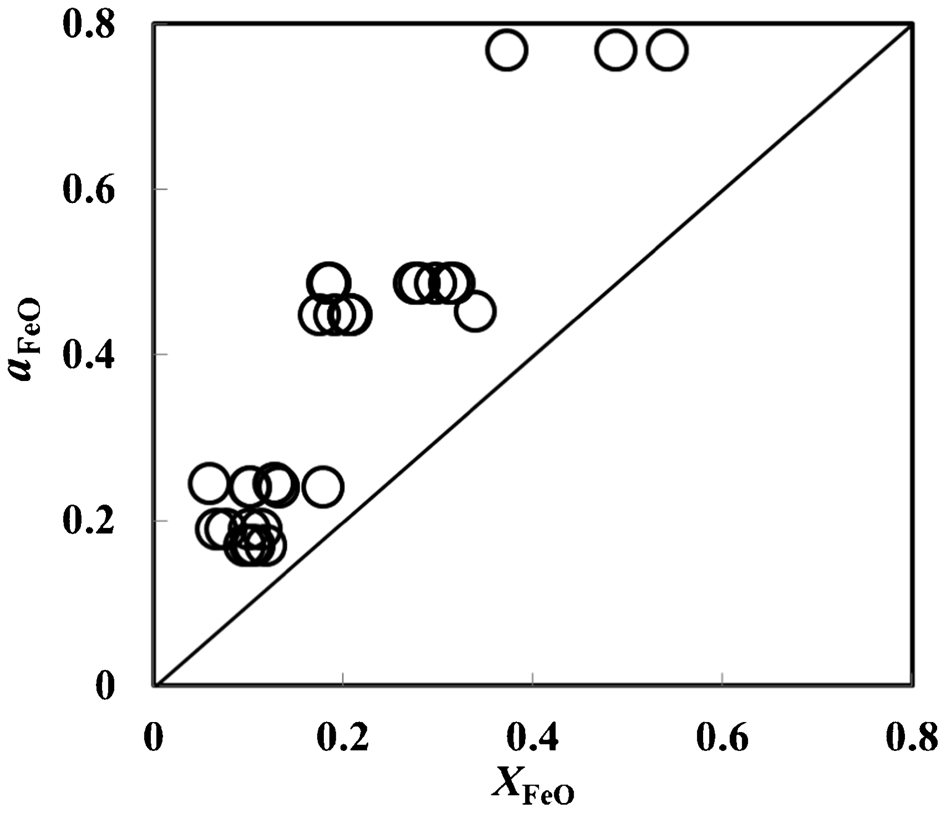
Variation of activity of FeO with mole fraction under H2/H2O atmospheres in temperature range 1550 to 1650°C for slags with CaO/SiO2 of 0·8 to 1·4
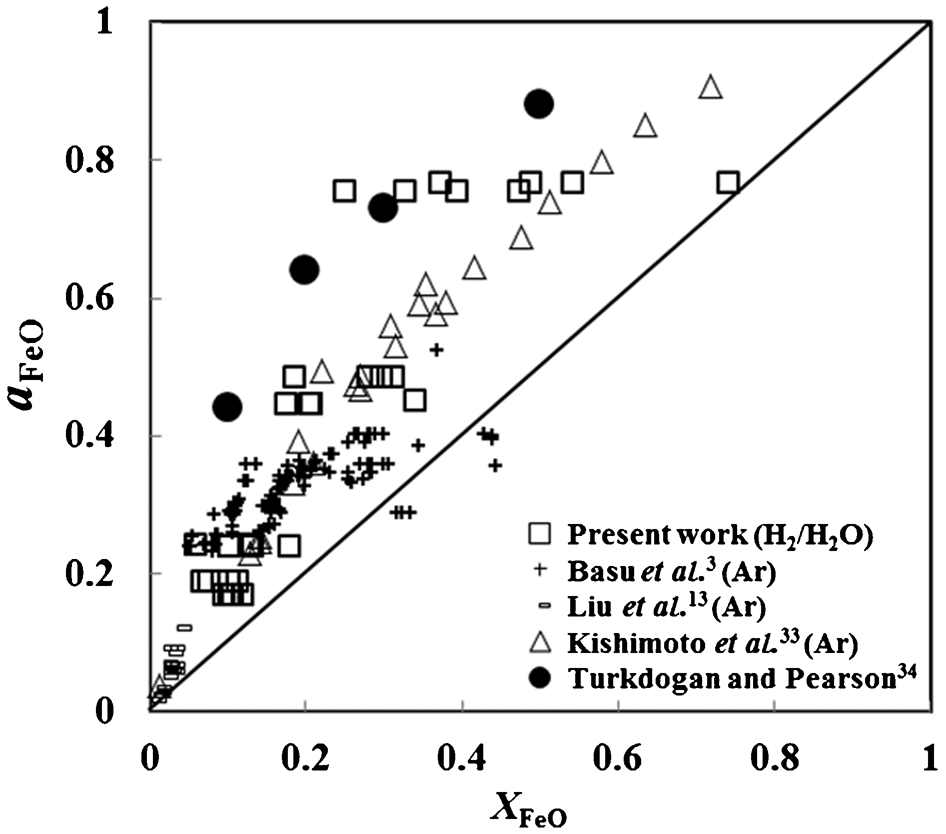
The results of the present work have been presented in Fig. 3 along with those of the earlier work 3,13,37,38 for comparison. Positive deviation of the activity of FeO was observed by these workers. Turkdogan and Pearson 38 had reported positive deviation of a FeO in CaO–MgO–MnO–FeO–SiO2 slags at all FeO concentrations with the exception of negative deviation only when X SiO2 was less than 0·008. Ichise and Iwase 39 observed negative deviation in a few cases at low iron oxide concentrations (X FeO<0·1), whereas Wrampelmeyer et al. 40 observed some incidents of negative deviation of FeO at intermediate concentrations (X FeO = 0·25 to 0·4). In contrast, Chipman 8 reported no positive deviation at all, but a small negative deviation of a FeO at X FeO exceeding 0·4.
Effect of basicity on γFeO
Figures 4–7 show the variation of γFeO with basicity, defined as (wt-% CaO/wt-% SiO2), equation (8), for different pO2, corresponding to different FeO concentrations, and temperatures. Other more comprehensive basicity indices were attempted but the results were too scattered to draw a conclusion. The current work used slag composition resembling ironmaking conditions and thus the basicity was in the range of 0·8–1·4. It is notable that γFeO showed a small decrease with an increase in basicity over the studied range at 1550°C, as shown in Fig. 4, whereas at 1600 and 1650°C γFeO decreased significantly with an increase in basicity, as shown in Figs. 5 and 6.

Effect of basicity on γFeO at 1550°C and different gas compositions under H2/H2O
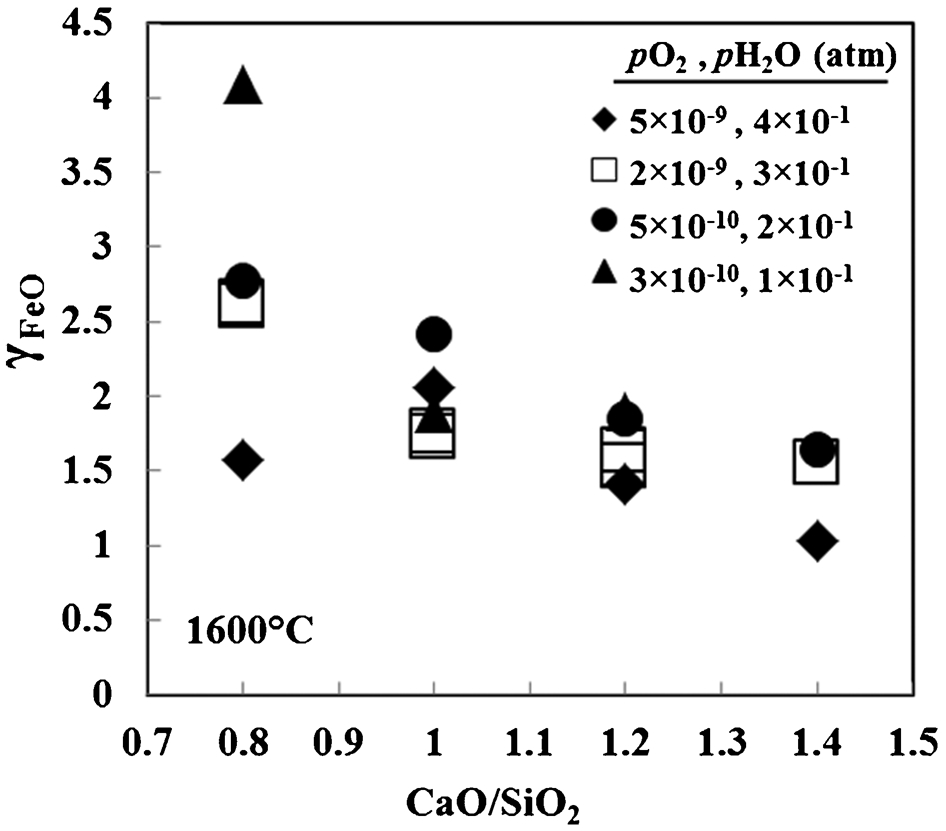
Effect of basicity on γFeO at 1600°C and different gas compositions under H2/H2O
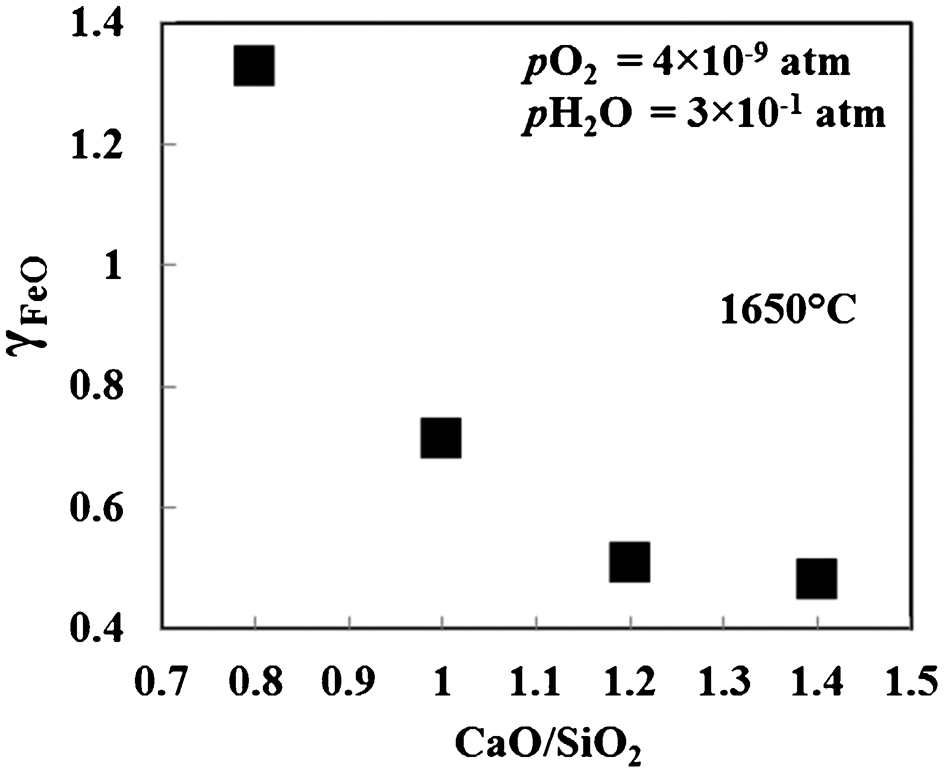
Effect of basicity on γFeO at 1650°C and pO2 = 4×10⁻⁹ atm under H2/H2O
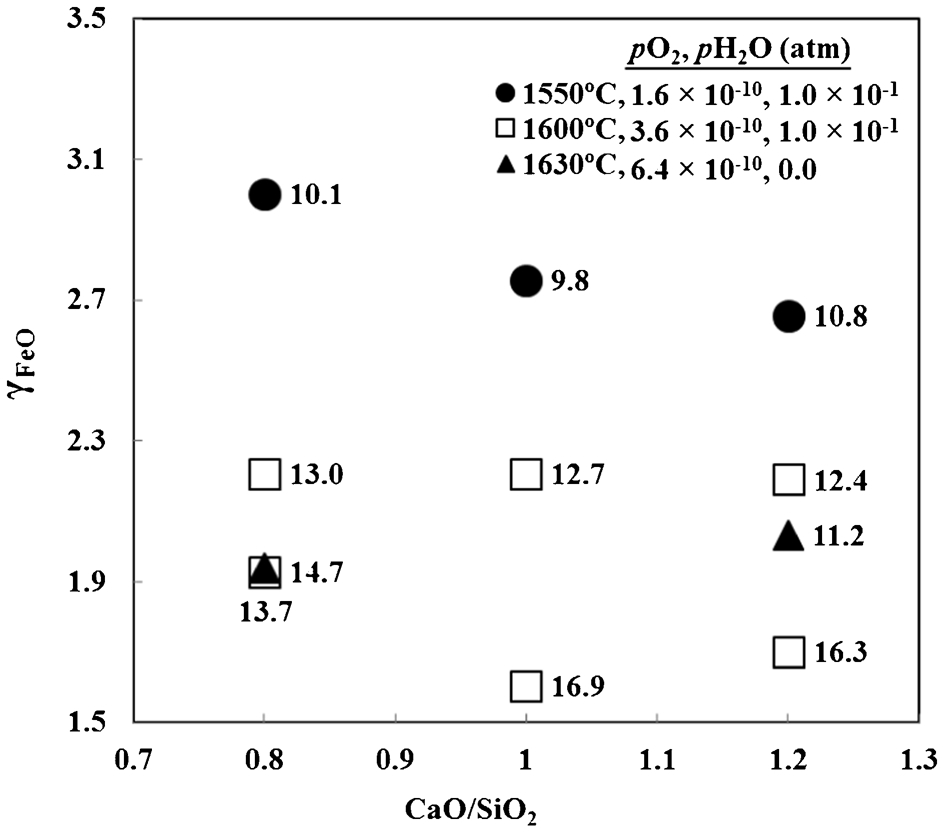
Effect of basicity on γFeO at 1550–1600 and 1630°C under CO/CO2/H2/H2O and CO/CO2, respectively
Basu et al., 3 in their experiments under an Ar atmosphere in the temperature range 1600 to 1650°C, reported that the change in basicity as well as temperature has only a negligible effect on the activity coefficient of FeO for any given range of FeO concentrations. In their work, basicity was varied in the range of 1·2 to 3·5 resembling the conditions in a basic oxygen furnace. Over this wider range of basicity, only a moderate decrease in γFeO with increasing basicity was observed. In the present study, smaller increments in basicity were used, 0·2, over a narrower range where a noticeable decrease in γFeO with increasing basicity was observed, especially at 1600 and 1650°C, as shown in Figs. 5 and 6.
Kishimoto et al. 37 also reported a similar trend to that of Basu et al. 3 under an Ar atmosphere. They concluded that the increase in basicity over the range X CaO/X SiO2 = 2·0 to 6·0, at any level of FeO concentration, caused only a marginal decrease in the activity coefficient of FeO. Bishop et al. 18 reported a small decrease in aFeO when the basicity, defined as the mole % ratio (CaO+MgO+MnO)/(SiO2+PO2·5+Al2O3), increased beyond 2, for FetO concentrations within the range of 10 to 60 mol.-%. It is seen that all the above-mentioned authors reported smaller effects of basicity on γFeO than that in the current work over a wider basicity range.
Effect of MgO concentrations on γFeO
Figure 8 shows the effect of X MgO on log γFeO over different ranges of FeO concentrations and at different temperatures under H2/H2O. It can be seen that γFeO increases with X MgO in the investigated slag compositions, regardless of the temperature, for a slag with small X FeO (≤0·1); whereas MgO has a negligible effect on γFeO in slags with higher X FeO. Park and Lee 23 concluded that MgO has a negligible influence on γFeO for X FeO>0·04 whereas an increase in X MgO decreases γFeO for slags with lower X FeO in the CaO–Al2O3–MgOsat.–SiO2–FetO–MnO–P2O5 system. Basu et al. 3 showed that γFeO was unaffected by the change in MgO content regardless of X FeO in the CaO–MgOsat.–SiO2–FeO–MnO–P2O5 slag.
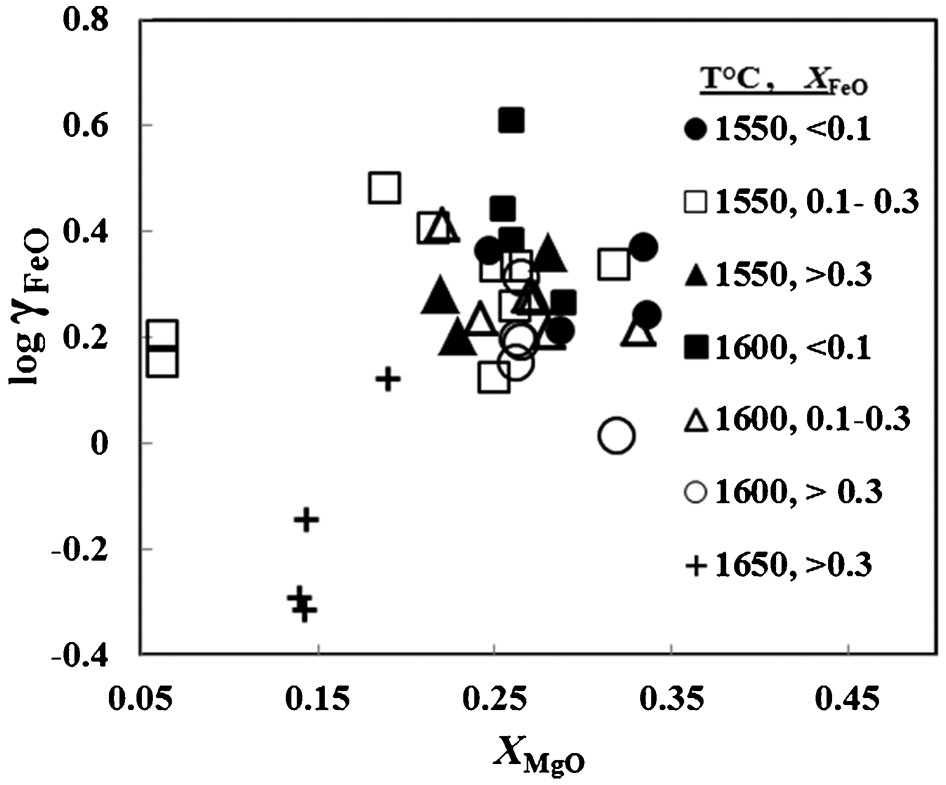
Effect of X MgO on log γFeO at different FeO concentrations and temperatures under H2/H2O
Thermodynamic and mathematical models of γFeO
In this section, an assessment of five models, available in the literature, for predicting γFeO in multicomponent slags was made with the experimentally obtained γFeO. These models will be referred to as Ohta and Suito’s model, 41 Tao’s model, 42 Yan’s model, 43 Park and Lee’s model 23 and Yang’s model. 6
Ohta and Suito’s model 41 is an empirical model developed based on experimental data at 1600°C under deoxidised Ar atmosphere. They used MgO, Al2O3, SiO2 and CaO as the only variables that affect γFeO. Ohta and Suito 41 used multiple regression analysis to obtain this empirical model without using any thermodynamic basis. Thus, the validity of this model is confined to the ranges of slag compositions and conditions used in their work. The model predicts values that are quite different from the measured values in this work. Thus, it was excluded from the evaluation of the experimental data. Tao’s model 42 is only applicable to CaO–SiO2–FeO ternary slag system, which is quite different from the slag of the current study. Moreover, Tao’s model is too complicated, many parameters of which need to be measured from binary slag systems. As a result, Tao’s model was not evaluated further.
Yan’s model
43
was derived by quadratic formalism based on the regular solution model, which is expressed as follows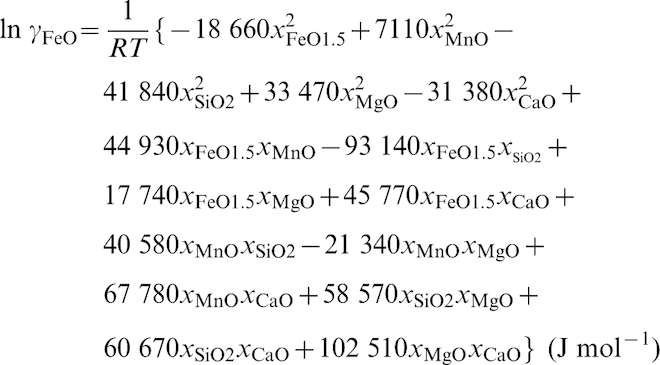
Park and Lee’s model
23
is also based on the regular solution model, as follows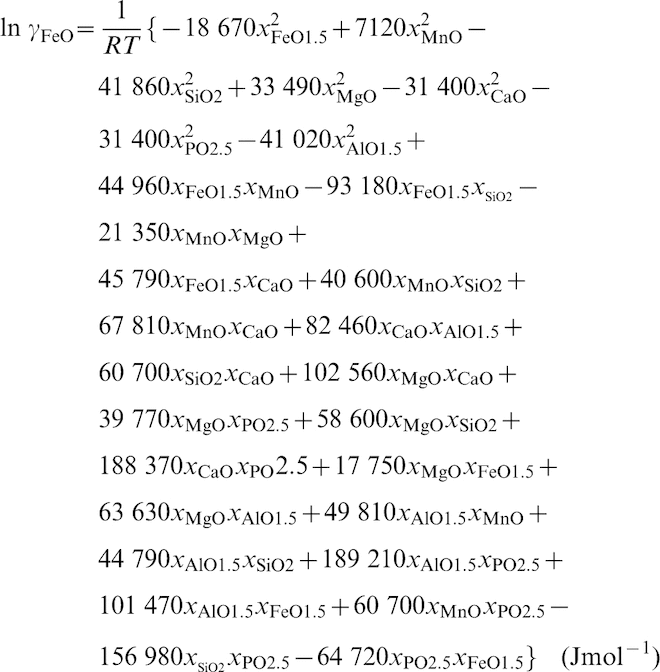
In equations (9) and (10), x i is the mole fraction of slag component i, T is absolute temperature, and R is the universal gas constant (J mol K−1).
Yang et al. 6 developed their model based on the ion and molecule coexistence theory (IMCT) to quantify γFeO. This model is composed of a set of non-linear equations to be solved using relevant thermodynamic data to predict the equilibrium X FeO and a FeO accordingly. The predicted γFeO using these three models was compared to the observed γFeO from this work, it was found that the coefficient of determination (r 2)<0·5 that implies a poor ability of these models in calculating γFeO for the studied slags under H2/H2O. This is attributed to the fact that none of the aforementioned models considered the effect of gas atmosphere on γFeO. It is worth noting that the range of the obtained γFeO values under H2/H2O was comparable to those ranges reported in the literature under Ar or CO/CO2 atmospheres, 3,4,13,23,37,44 as summarised in Table 6.
Comparison of measured values of FeO activity coefficients in complex slags under different gas atmospheres
An empirical correlation was formulated using linear regression to adequately predict γFeO under H2/H2O in the studied slags. As mentioned earlier the temperature was found to have a negligible effect on γFeO under the investigated conditions. Thus, it was excluded from the empirical correlation
Figure 9 used equation (11) to compare the measured values of γFeO to the predicted results. It is concluded that γFeO can be adequately estimated using this correlation. Incorporating additional compositional variables did not yield any significant improvement.
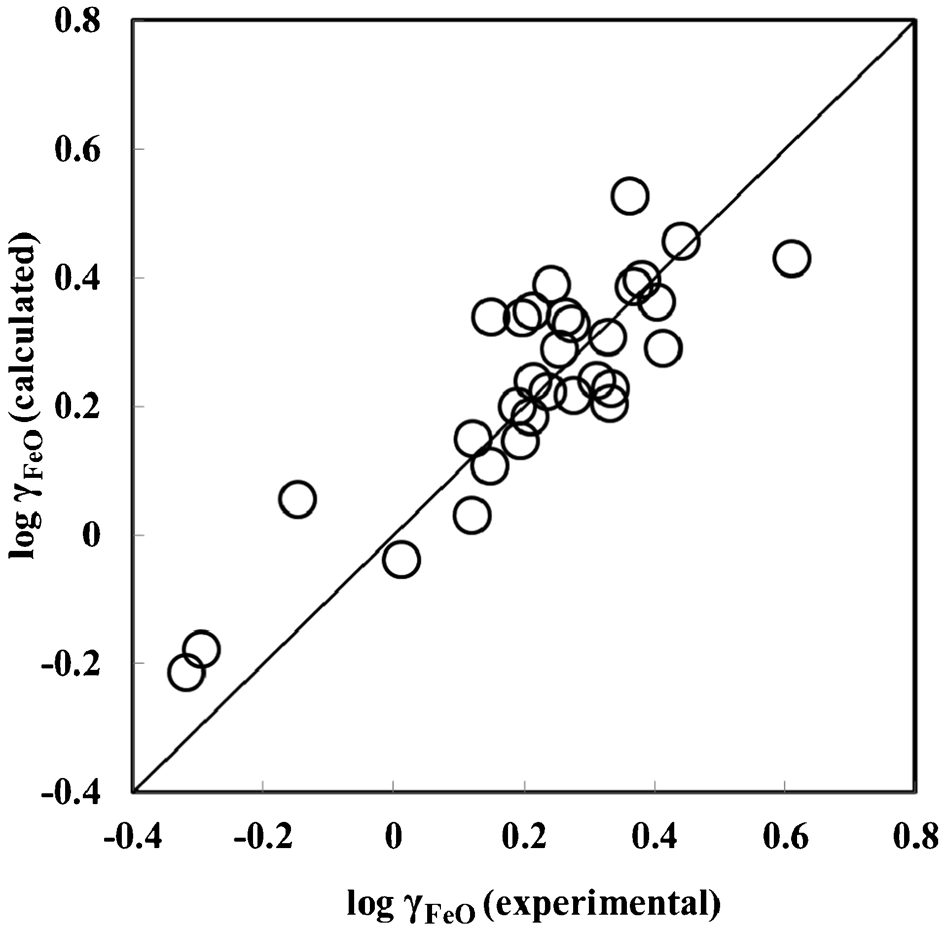
Comparison of measured γFeO versus calculated using equation (6)–(11) under H2/H2O atmosphere in temperature range 1550 to 1650°C and wt-% CaO/wt-% SiO2 range of 0·8 to 1·4 under pO2 range of 10−10 to 10−9 atm
Effect of gas atmosphere on γFeO
The major reactions involving FeO in the investigated slags under the experimental conditions are as follows, according to IMCT
6


It is worth noting that according to IMCT, SiO2 and Al2O3 exist as simple oxides, SiO2 and Al2O3, equilibrated with complex molecules such as Fe2SiO4 and FeAl2O4. Iron oxide exists in the form of ion couples Fe2+ and O2−, equilibrated with complex compounds such as Fe2SiO4 and FeAl2O4. We will focus on reaction (12) for the following reasons:
no previous research reported the interaction of H2O with aluminate
the higher silica content, at least 2–4 times higher, compared with alumina
no change was observed in spectroscopic analyses that could be related to alumina species as a result of changing the gas composition. Therefore, FeO would be stabilised in the slag mostly in the form of Fe2SiO4, i.e. Fe2+ forms stable silicates with the least polymerised silicate anion, 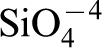
Previous research
45–51
has shown that water has a significant solubility in slag in the temperature range of 1500–1650°C. In weakly to moderately basic slags, water dissolution may involve the following reaction
51

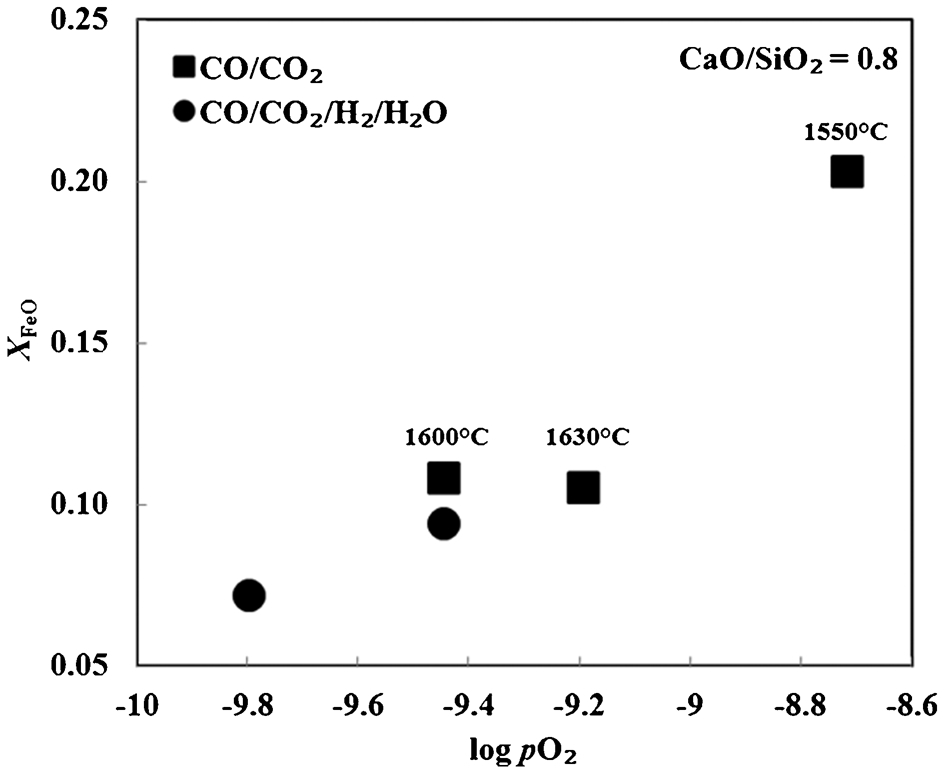
Effect of gas atmosphere on X FeO at various pO2 and temperature values for slags with wt-% CaO/wt-% SiO2 of 0·8 and pH2O of 0 and 0·1 atm in CO/CO2 and H2/H2O/CO/CO2, respectively
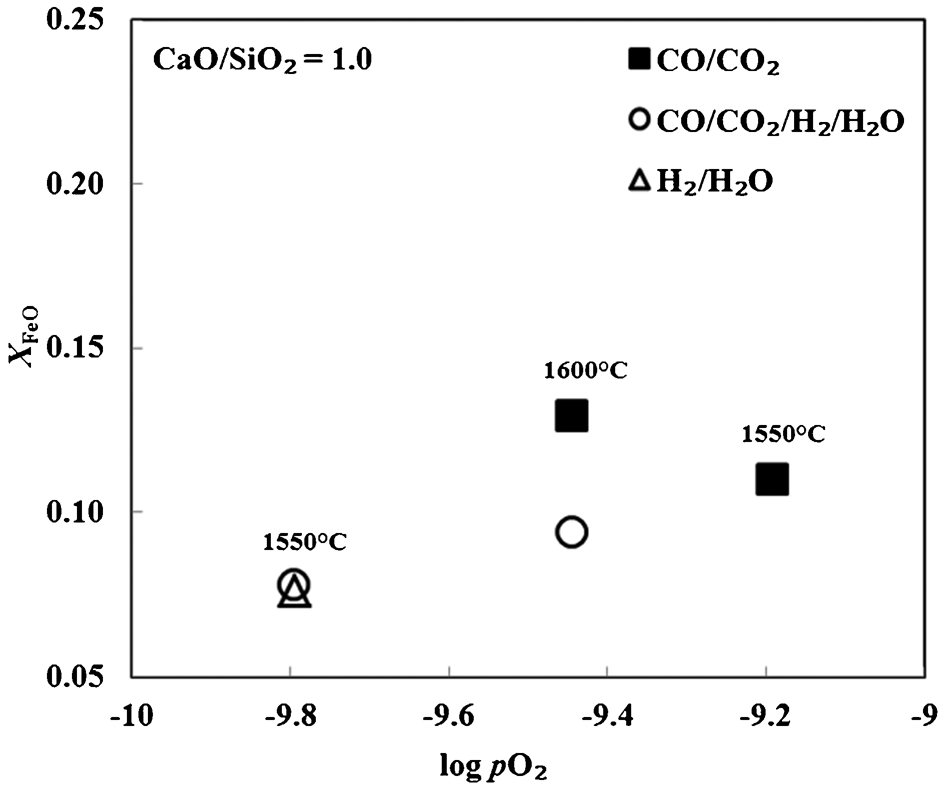
Effect of gas atmosphere on X FeO at various pO2 and temperature values for slags with wt-% CaO/wt-% SiO2 of 1·0 and pH2O of 0, 0·1 and 1·0 atm in CO/CO2, H2/H2O/CO/CO2, and H2/H2O/CO, respectively
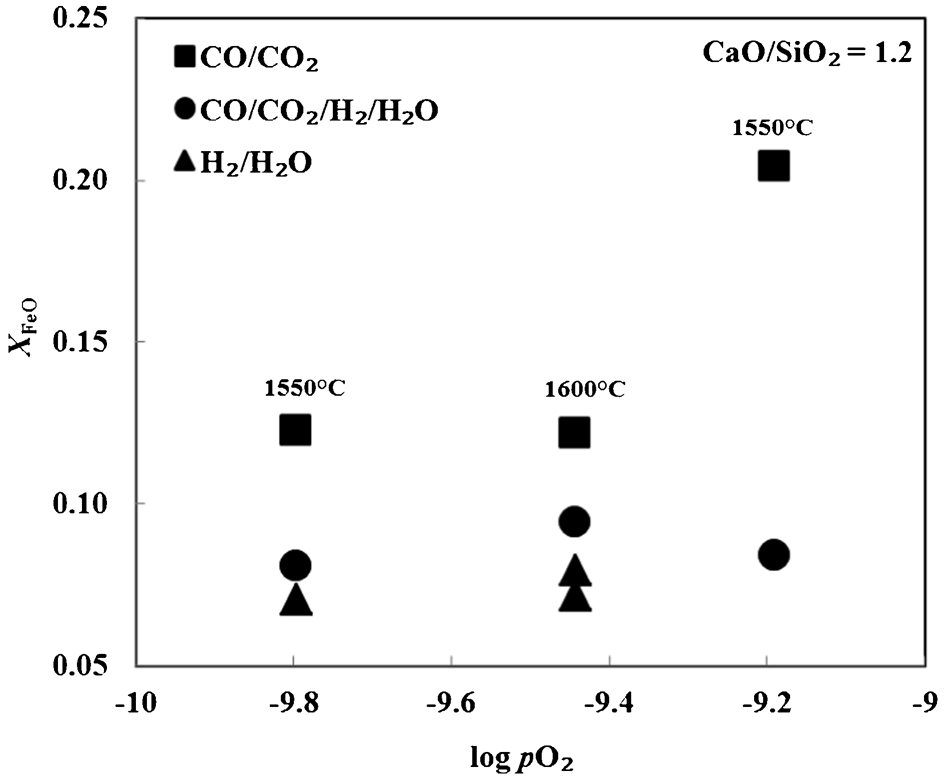
Effect of gas atmosphere on X FeO at various pO2 and temperature values for slags with wt-% CaO/wt-% SiO2 of 1·2 and pH2O of 0, 0·1 and 1·0 atm in CO/CO2, H2/H2O/CO/CO2, and H2/H2O/CO, respectively
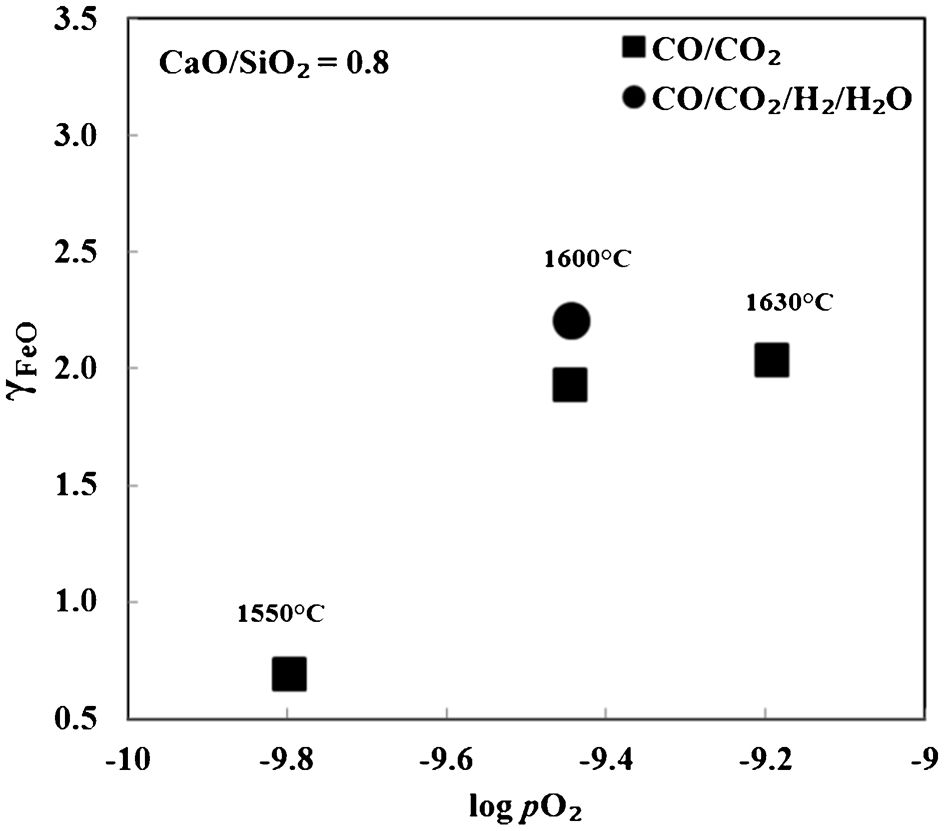
Effect of gas atmosphere on γFeO at various pO2 and temperature values for slags with wt-% CaO/wt-% SiO2 of 0·8 and pH2O of 0 and 0·1 atm in CO/CO2 and H2/H2O/CO/CO2, respectively
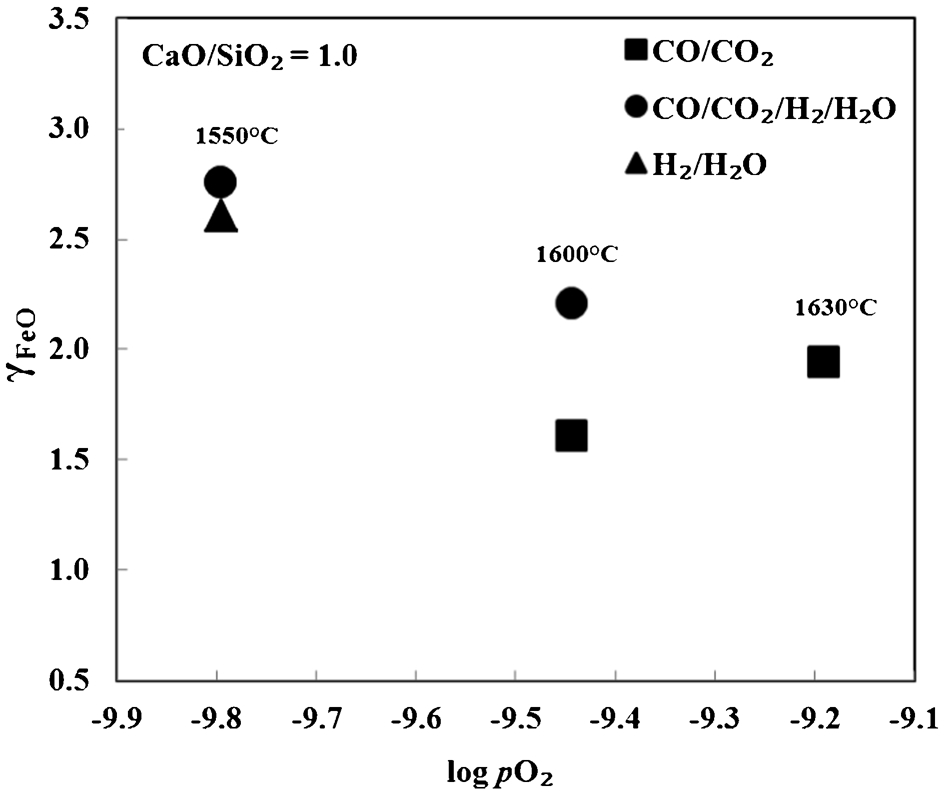
Effect of gas atmosphere on γFeO at various pO2 and temperature values for slags with wt-% CaO/wt-% SiO2 of 1·0 and pH2O of 0, 0·1 and 1·0 atm in CO/CO2, H2/H2O/CO/CO2 and H2/H2O/CO, respectively
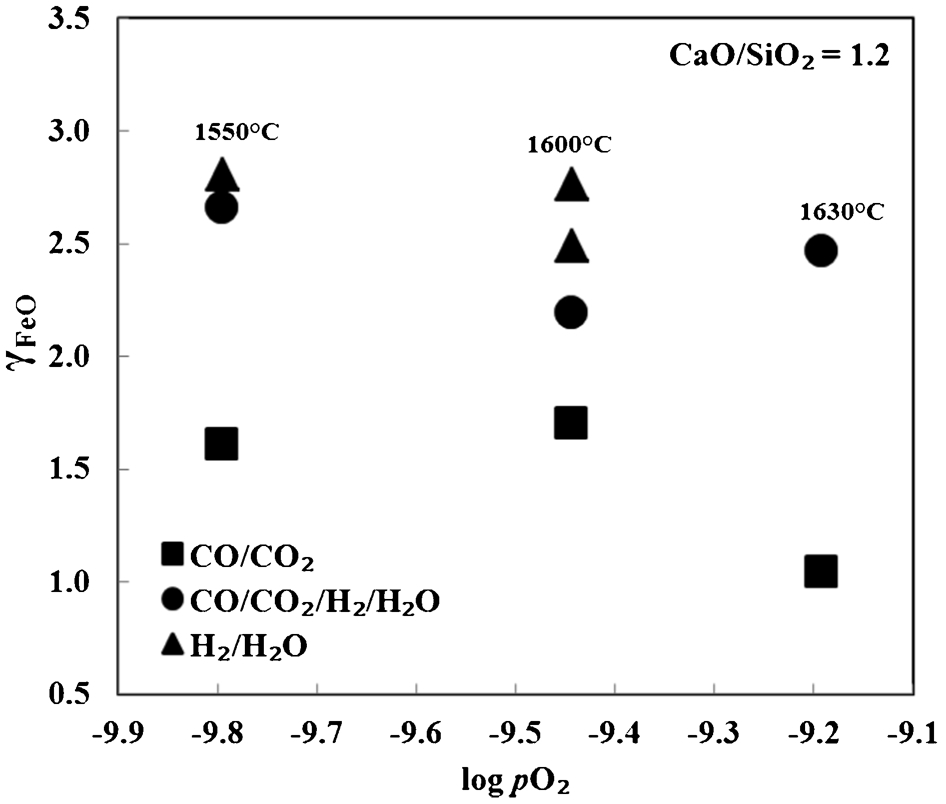
Effect of gas atmosphere on γFeO at various pO2 and temperature values for slags with wt-% CaO/wt-% SiO2 of 1·2 and pH2O of 0, 0·1 and 1·0 atm in CO/CO2, H2/H2O/CO/CO2 and H2/H2O/CO, respectively
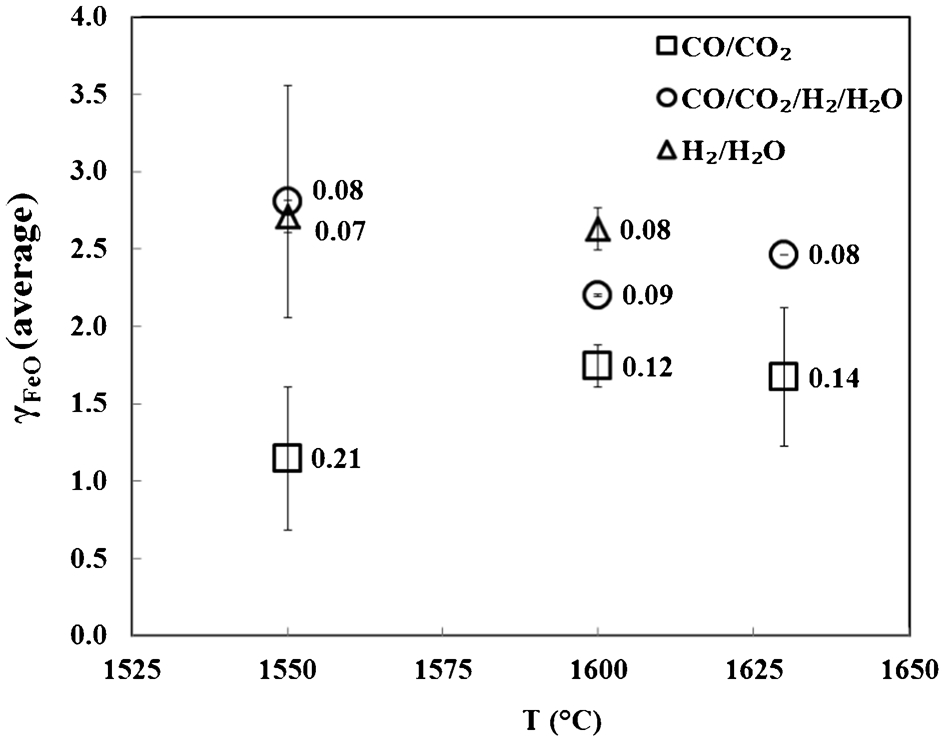
Comparison of average values of γFeO of three gas atmospheres at experimental temperatures for slags with wt-% CaO/wt-% SiO2 of 1·2 and pH2O of 0, 0·1 and 1·0 atm in CO/CO2, H2/H2O/CO/CO2 and H2/H2O/CO, respectively, and pO2 range of 10−10 to 10−9 atm. Error bars are experimental standard deviation and labels are average X FeO
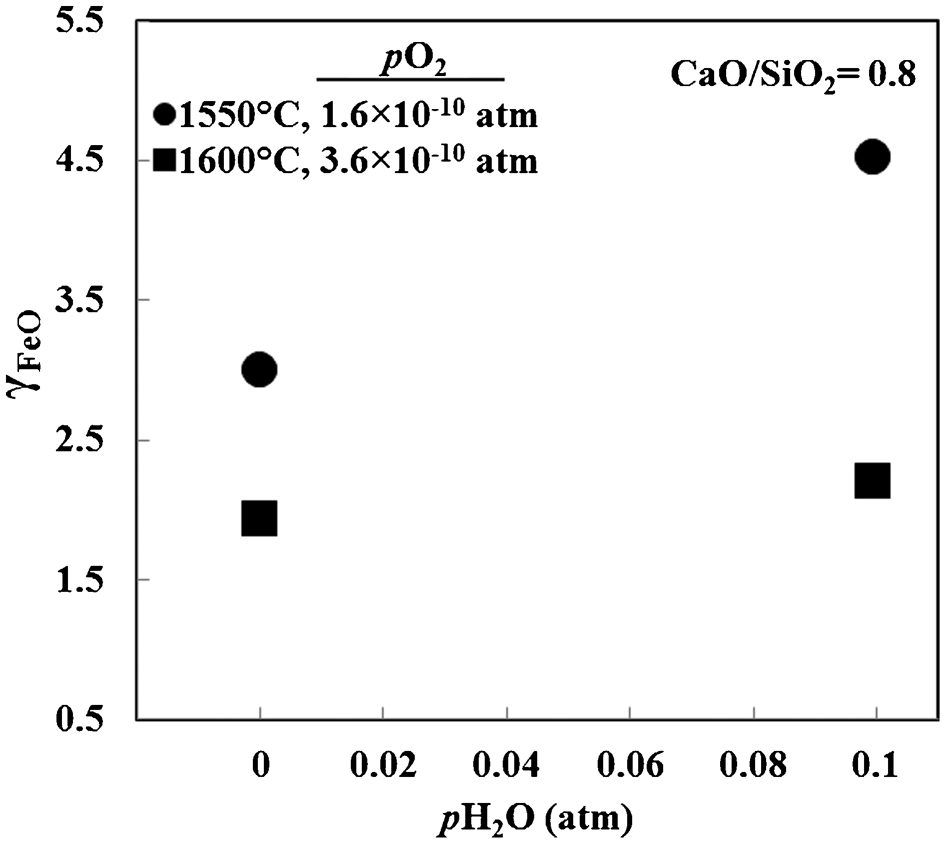
Effect of pH2O on γFeO wt-% CaO/wt-% SiO2 of 0·8 at different temperatures and pO2
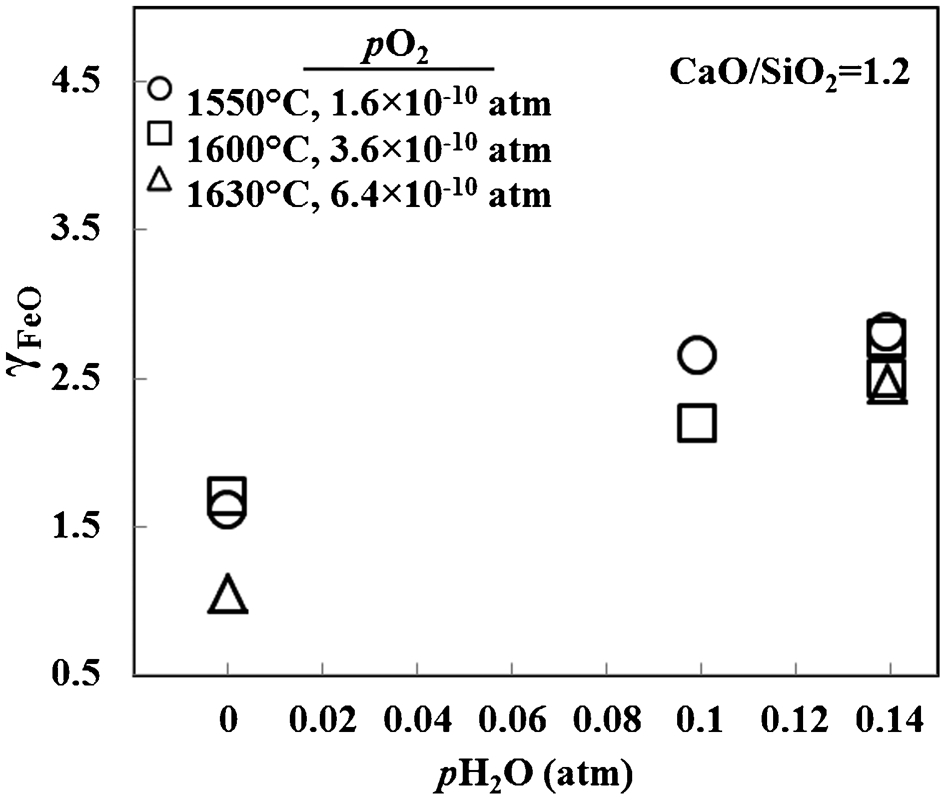
Effect of pH2O on γFeO wt-% CaO/wt-% SiO2 of 1·2 at different temperatures and pO2
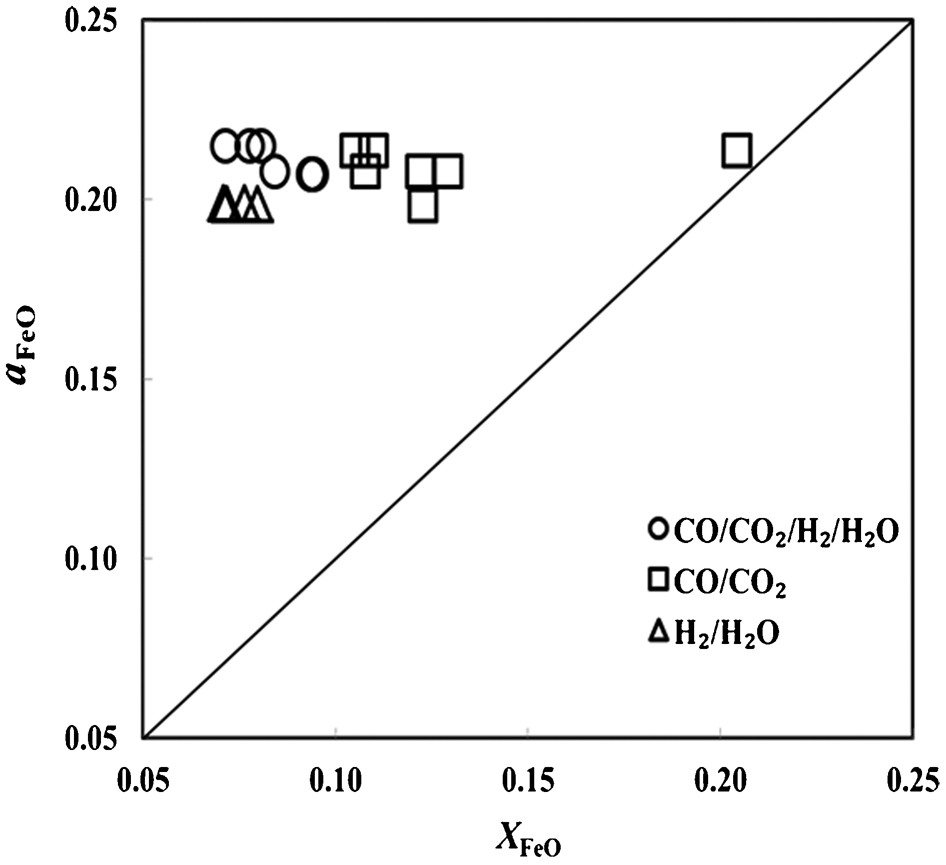
Variation of activity of FeO with FeO mole fraction under different gas mixtures in temperature range of 1550–1630°C, wt-% CaO/wt-% SiO2 range of 0·8 to 1·2, and pH2O ranges of 0, 0·1–0·2, and 0·1–0·2 atm in CO/CO2, H2/H2O/CO/CO2 and H2/H2O, respectively, and pO2 range of 10−10–10−9 atm
For the slag compositions investigated, MgO-saturated CaO–FeO–Al2O3–SiO2–MnO(0·2–0·8 wt-%)–P2O5(0·1–0·9 wt-%), in the temperature range 1550–1600°C, with CaO/SiO2 range 0·8 to 1·2, and under pO2 = 2×10⁻¹⁰–2×10⁻⁹ atm, the average FeO wt-% was found to be 10 (9·5–10·5), 11 (9·8–13) and 16 (14·7–16·9) under H2/H2O, CO/CO2/H2/H2O, and CO/CO2, respectively. These gas mixtures resemble H2 reductant, reformed natural or coal gas (NG/CG), and CO/CO2 conditions, respectively. The average content of FeO under H2 and NG/CG was presented relative to that under CO/CO2 conditions in Fig. 20. The effect of gas atmosphere on slag chemistry was further explored in this laboratory via spectroscopic techniques. 52 In addition, it was found that water in the gas atmosphere affected the distribution of the elements between slag and molten iron such as Mn. 53 Moreover, water was determined to affect the interaction between the furnace ceramic lining and the slag. 54
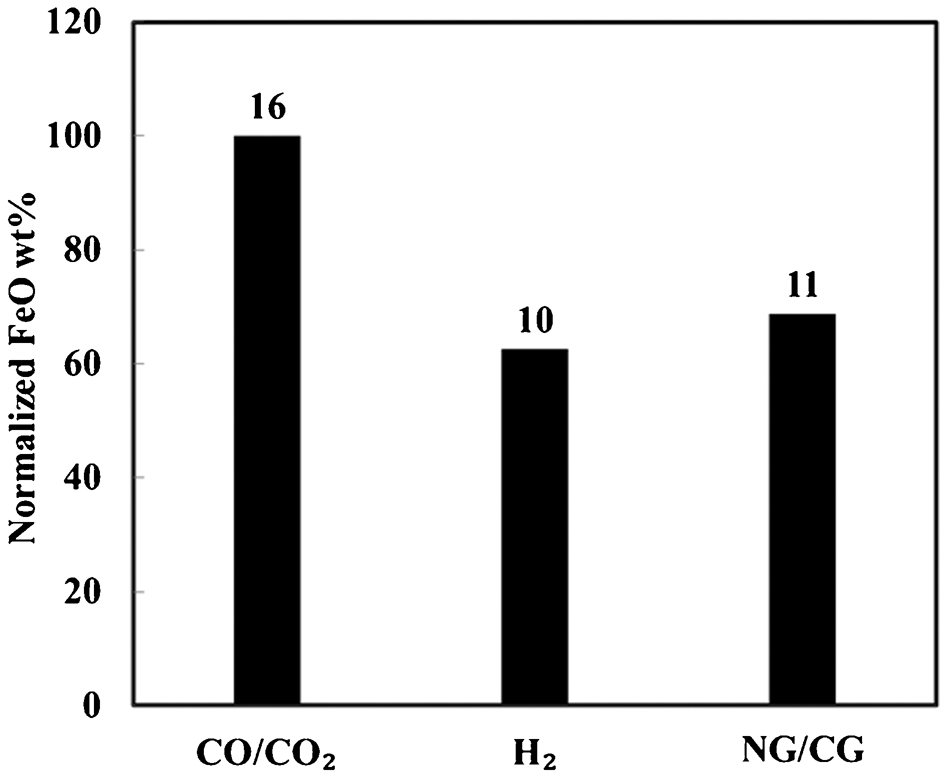
Influence of type of reductant gas on FeO content in slag. Labels show average FeO wt-%
It is noted that although CO/CO2 mixtures in the similar pO2 range were tested for comparison, these conditions are not close to the blast furnace in which the FeO content in the slag is of the order of 1% because of the presence of carbon in molten iron. The 4–5 wt-% C in iron in the hearth of the blast furnace makes pO2 at the interface between molten iron and the slag equal to 10−15–10−14 atm. 11,34–36
Conclusions
Water was found to decrease the content of FeO by increasing its activity coefficient in the slags investigated, MgO-saturated CaO–FeO–Al2O3–SiO2–MnO(0·2–0·8 wt-%)–P2O5(0·1–0·9 wt-%), in the temperature range 1550–1600°C, with wt-% CaO/wt-% SiO2 of 0·8 to 1·2, and under pO2 = 2×10⁻¹⁰–2×10⁻⁹ atm. The average FeO content was found to be 10, 11 and 16 wt-% under H2/H2O (H2), CO/CO2/H2/H2O (reformed natural/coal gas), and CO/CO2, respectively. In other words, the slags under H2 and reformed natural/coal gas contain, respectively, 37 and 31% less FeO wt-% than under CO/CO2.
The following correlation for γFeO in slags under H2/H2O was formulated using linear regression
Footnotes
Acknowledgements
The authors thank Adirek Janwong for help with the analytical work using inductively coupled plasma. In addition, the authors would like thank the staff of Micron Microscopy Core at the University of Utah, especially Dr Brian Van Devener, for the valuable help with characterisation work. The authors acknowledge the financial support from American Iron and Steel Institute (AISI) through a Research Service Agreement with the University of Utah under AISI’s CO2 Breakthrough Program. This material also contains results of work supported by the US Department of Energy under Award Number DE-EE0005751.