







Abstract
The effects of Mg on the inclusions and the as-cast microstructure of high carbon and high chromium die steel, a grade of cold working die steel with high C content of 1.4–1.6% and high Cr content of 11.0–13.0%, were systematically investigated. It is found that inclusions vary with the route as Al2O3 (No Mg) to MgO·Al2O3 + Al2O3 (5 ppm Mg), and then to MgO+MgO·Al2O3 (11 and 15 ppm Mg). The average diameter of the inclusions decreased from 1.91 μm (no Mg) to 1.29 μm (15 ppm Mg), while the number density increased from 2.69 × 104 mm− 3 (no Mg) to ∼5.62 × 104 mm− 3 (15 ppm Mg). The changes in the size and the number density were discussed in terms of the effect of inclusions on the nucleation process and the wettability of them with steel melt. The as-cast microstructures were greatly refined with Mg addition that correlated with the evenly dispersed fine Mg containing inclusions.
Introduction
The inclusions existing, grain size and evenness have great influence on the mechanical properties of steel. Large and hard inclusions are harmful to steel performance, such as strength, toughness, cold forming ability, 1 fatigue resistance 2 and delayed fracture resistance. 3 Grain refinement is generally accepted to be an effective way of improving strength and plasticity of steels without deteriorating toughness. 4
Mg is very important for the metallurgical processing of several steels. Mg or Mg alloys are added for deoxygenation, desulphurisation, inclusion shape control, grain refinement and improvement in castability in continuous casting. Recently, more and more researchers have focused on the effect of trace Mg added into the steel. The dissolved Mg not only can refine grain to improve the plasticity and toughness but also can modify the inclusion to be harmless. Saxena, who have studied the effect of Mg as the refining agent on the inclusions, indicated that areatus Al2O3 inclusions became smaller and random distribution spines (MgO·Al2O3) inclusions with Mg addition. 5 Mg has a strong affinity with O and S, so it is more easier to react with O and S to reduce the harm of MnS on the steel properties, and the oxygen in the steel could be reduced so low after deoxygenation of Mg that the inclusions were refined and distributed evenly. 6–8 In well deoxygenation steels, Mg can dramatically influence the non-metallic inclusion composition and hence the steel performance. Chang et al. 9 and Kim et al. 10 have researched separately the variation of inclusions and microstructures during the solidification of steels with Mg addition after deoxidised by Mn–Si–Ti. The result showed that, with the increasing of Mg, the microstructures of as-cast steel were obviously refined and the phase of inclusions were changed with the route as Ti2O3(core) + MnS(periphery) → MgTiO3(core) + MnS (periphery) → MgO(core) + MnS(periphery). The particles have a size distribution that strongly affects the grain growth inhibition by pinning. It is known that Mg containing oxides have an even dispersion in steel melt, and heterogeneous nucleation sites facilitate the heterogeneous nucleation of grain and result in the finer microstructure. 11 The fine and uniform microstructure present a good combination of high strength and high toughness.
In the present study, the laboratory steel specimens in as-cast state with different Mg contents were prepared by adding Mg to the high carbon and high chromium die steel to investigate the evaluation of inclusions and the change of microstructure. Various traits of non-metallic particles such as composition, phase, morphology, size and number density were analysed in each steel. The microstructure of each specimen correlated with the size and number density of inclusions in order to reveal the relationship between them.
Experimental procedure
In order to clarify the effect of Mg addition on the inclusions and the microstructure in high carbon and high chromium die steel, Mg was added into a steel with the chemistry (1·54 mass%C–0·36 mass%Si–0·37 mass%Mn–11·94 mass%Cr–0·92 mass%V–0·83 mass%Mo–0·22 mass%Ni–0·016 mass%Al–0·006 mass%S–0·027 mass%P–0·002 mass%O–0·01 mass%N). Then, the characteristics of non-metallic inclusions and the final microstructure of steel matrix were studied after solidification and subsequent cooling process.
Steel specimen preparation
In order to investigate the evolution of inclusion traits and the change of microstructure with Mg addition, four laboratory specimens of high carbon and high chromium die steels with different Mg contents were prepared by melting about 800 g of high carbon and high chromium die steel in MgO crucibles using a MoSi2 furnace. The schematic diagram of experimental device is shown in Fig. 1. Magnesium vapour transformed from granular magnesium was injected into molten steel by using the high purity Ar, which acted as the current-carrying gas to have treatment. Sample #1 was obtained using quartz tube after constant temperature of 1600°C for 10 mins. Then, the corundum tube was inserted into the deep of molten steel to inject Ar, and subsequently, 0·2 g granular magnesium was put into corundum tube every 3 min. Samples #2, #3 and #4 were obtained.
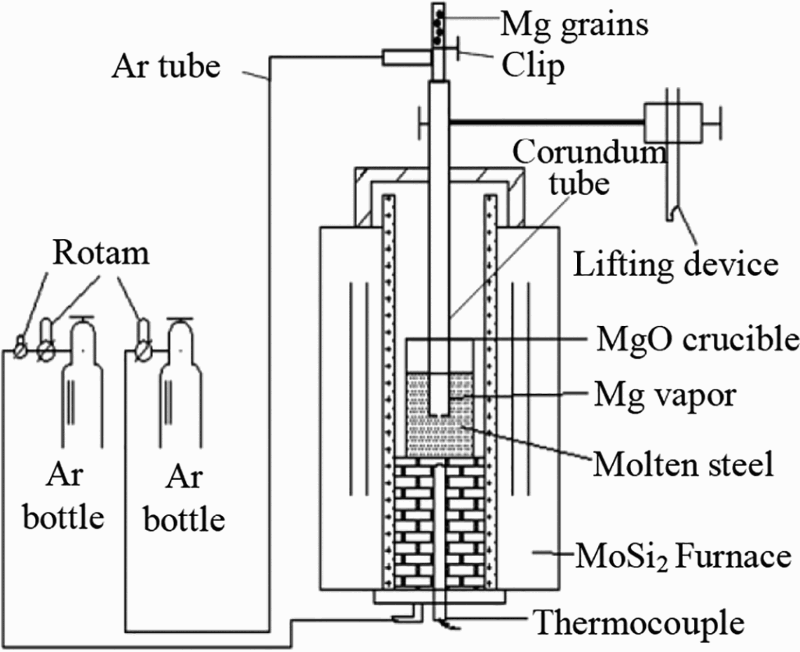
Schematic diagram of experimental device
Analyses
The chemical compositions of the prepared steel samples were analysed by chemical analysis method. The T.O, N, C, S and Mg contents in steel were measured separately using a Leco TC 500 N2/O2 simultaneous analyser, an infrared C/S simultaneous analyser and an iCAP 6300 ICP-OES analyser. The chemical compositions of prepared samples are shown in Table 1.
Chemical composition of prepared steels/mass%
After mechanically inlaid, ground and polished, all of steel specimens were prepared as metallographic samples and then subjected to analyse using optical microscopy to obtain the statistical information on the average size and the number density of inclusions. The photos of steel samples were adopted in the view of 500 times to analyse by an image analysis technique. Then, the steel specimens for inclusions were analysed by scanning electron microscopy (SEM) equipped with energy dispersive spectrometry (EDS) and electron probe microanalysis to study the evolutions of phase, composition and morphology of complex inclusions in steels with different Mg contents.
For observation of the microstructures of the steel matrix, the samples were etched using a mixture solution of 4% nitric acid alcohol, and their photos were taken using optical microscopy under the magnification of 200 field. Then, an attempt was made to analyse the effect of Mg addition on the microstructural evolution of steel matrix with respect to traits of inclusions in order to investigate the relationship between them.
Results and discussion
Effect of Mg addition on phase and morphology evolutions of inclusions
Figure. 2 shows the morphological changes of the non-metallic inclusions with Mg addition. The typical morphology shows the inclusions comprising Al2O3, MgO·Al2O3 and MgO. However, the phase composition changes as Mg content varies.
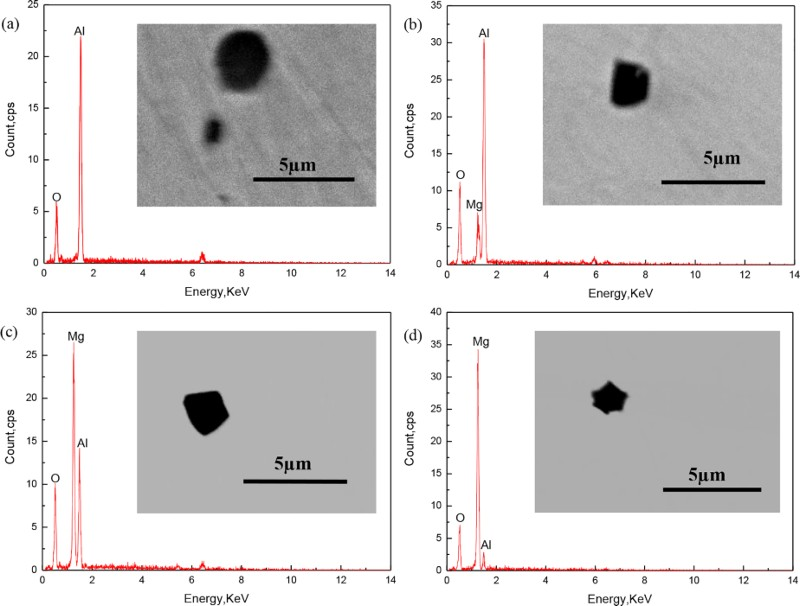
Morphological evolution of inclusions typically found in each steel: a 0 ppm; b 5 ppm; c 11 ppm; d 15 ppm
In the No. 1 specimen containing no Mg (Fig. 2a , the typical inclusion was composed of Al2O3. In the No. 2 specimen containing 5 ppm Mg (Fig. 2b ), complex inclusions comprising Mg–Al oxide were dominant. The ratio of Mg to Al content in the oxide phase was measured to be unity in atomic percent. Thus, it is thought that the oxide formed as MgO·Al2O3 and Al2O3 phase and the mole percent of which was 52·56 mass% MgO·Al2O3+47·44 mass% Al2O3. In the No. 3 specimen containing 11 ppm Mg (Fig. 2c ), the constituent of the oxide was similar to that of the No. 2 specimen. However, a new MgO phase was observed and there was no pure Al2O3 phase. The oxide phase composition was 69·18 mass% MgO+30·82 mass% MgO·Al2O3. In the no. 4 specimen containing 15 ppm Mg (Fig. 2d ), the oxide phase was the same to the No. 3 specimen, but the mole percent of phase changed. The typical inclusion was measured to be the complex inclusion comprising 94·72 mass% MgO and 5·28 mass% MgO·Al2O3. Compared with the inclusions in No. 3 specimen, the content of MgO in the oxide phase increased greatly as the Mg content increased.
The average compositions of inclusions with Mg addition are given in Fig. 3, and it shows that the Al2O3 content of inclusions decreases from 100 mass% to ∼22 mass%, and the MgO content increases from 0 mass% to ∼77 mass%. Finally, it can be deduced that the pure MgO inclusions will be formed when the Mg content increases sequentially.
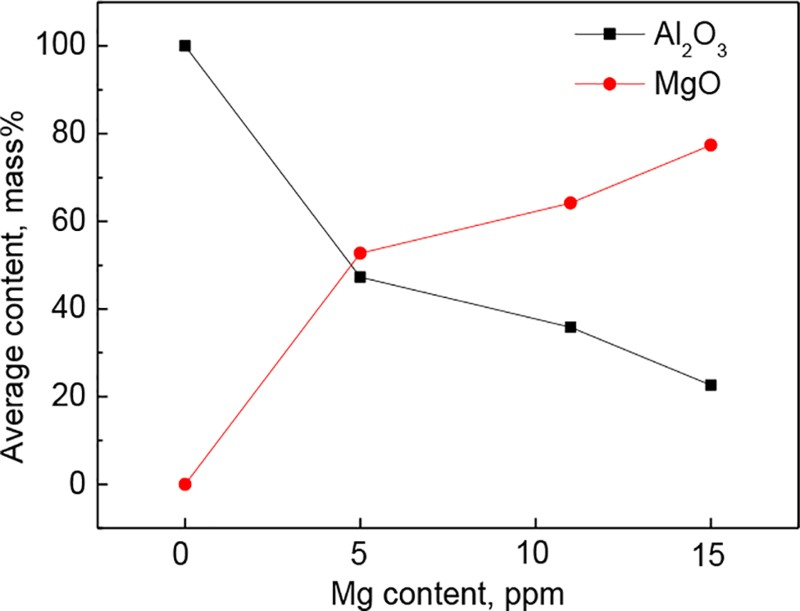
Average compositions of inclusions with Mg addition
Thermodynamic calculations were carried out to explain the evolution of the inclusions in steels. Al2O3 would react with dissolved Mg to form MgO·Al2O3 as shown in equation (1)
11
when a trace of Mg is generated in liquid steel.




Interaction coefficients used in thermodynamic calculation at 1873 K
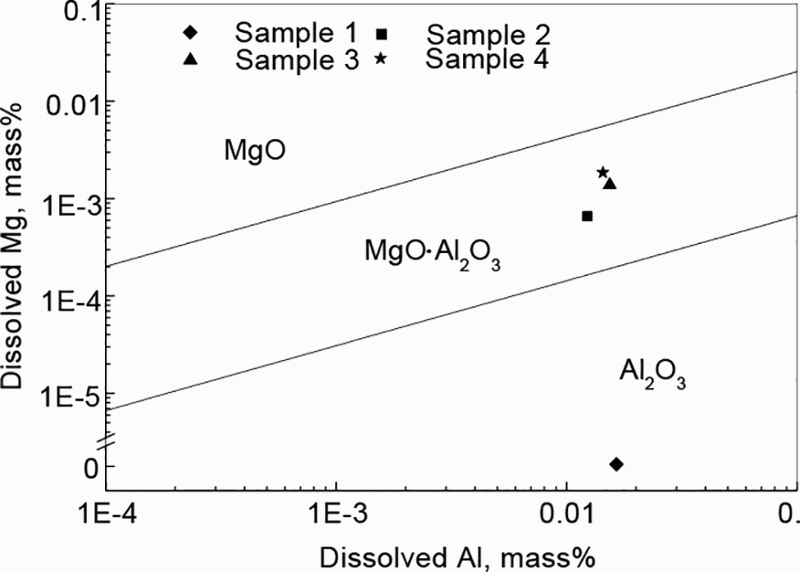
Phase stability diagram of MgO/MgO·Al2O3/Al2O3
Effect of Mg addition on size and number density of inclusions
The relationship between two-dimensional (2-D) and three-dimensional (3-D) particle diameters derived by Fullman
24
is expressed as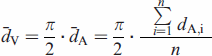


Meanwhile, the number of particles per unit volume, N
V, can be expressed in terms of that of per unit area, N
A ( = n/A
obs, where n is the number of particles on observed area, A
obs) and the average particle diameter, 


It is clearly seen in Fig. 5 that the average diameter of inclusions decreases, and the number density increases with the increase of Mg content in the steel matrix. As seen in Fig. 6, most inclusions in No. 1 specimen were >2 μm, the percentage of inclusions in sizes 2–5 μm was 69·21% and the inclusions < 2 μm were only 27·22. However, the inclusions were fined obviously as Mg content varies. In No. 2–4 specimens, the inclusions < 2 μm increased to 67·73%, 77·68% and 90·30%, while the sizes of 2–5 μm decreased to 30·44%, 22·32% and 9·71% respectively. The inclusions >5 μm decreased to 0% when the Mg contents was 0·0011% and 0·0015%.
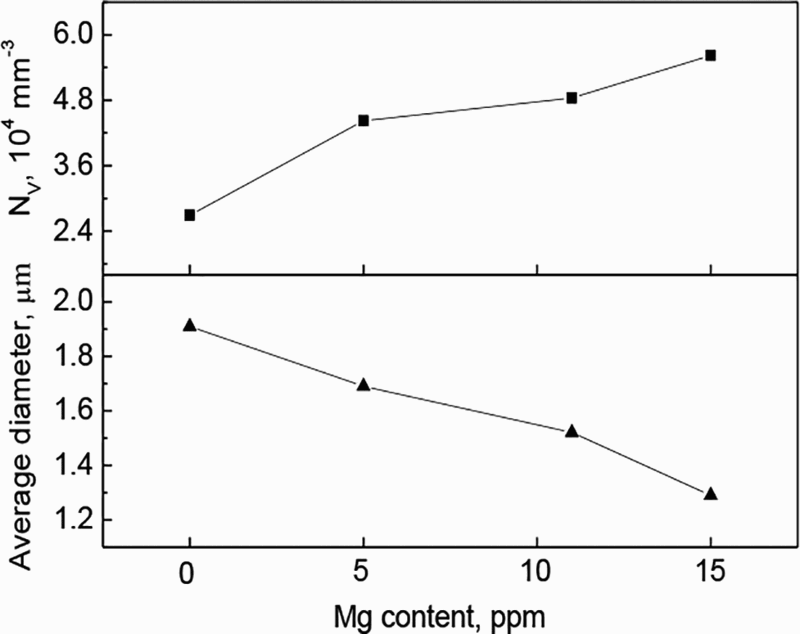
Variation in average diameter and number density of inclusions with Mg addition
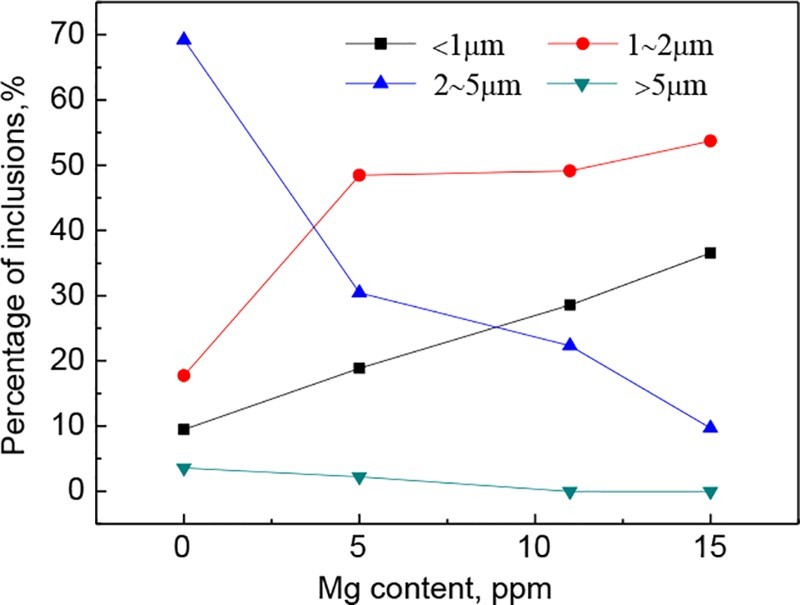
Variation in inclusions size distribution of samples with Mg addition
It can be clearly seen from the above results that a trace of Mg in the steel can obviously refine the inclusions. The refinement mechanism can be mainly described that the fine Mg containing inclusions can significantly affect the nucleation process of the composite inclusions in molten steel.
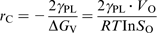
The critical nucleation radius of the inclusion can be expressed as follows
25
:


Parameters and critical nucleation radius of inclusions

The critical nucleation radius of MgO in the molten steel is less than that of Al2O3, which is only less than a half of it. Thus, it is easy for Mg containing oxides to nucleate and the nucleation rate is so high that the particle is very fine. According to the heterogeneous nucleation mechanism, a large number of fine Mg containing particles existing in the steel melt will be the nucleation sites of other subsequently precipitated inclusions. So, more and finer inclusions are obtained in the steel melt. When the critical nucleation radius decreases, the nucleation rate increases and the inclusions in steel are refined. Owing to its small liquid buoyancy in the steel melt, the remaining fine inclusions increase, resulting from the fact that floating exclude power is small. At last, the number and size of inclusions change significantly.
Moreover, Kimura et al. 11 indicated that the distribution of inclusions in the steel melt result from the contact angle between the inclusion and the steel melt. In the present study, Mg containing inclusions are not susceptible to growth by collision and agglomeration because they have optimum wettability for even dispersion in the steel melt, and the fact results in the changes in the size and the number density of inclusions in Mg containing specimens. 10
Effect of Mg addition on microstructure of as-cast steels
The microstructural evolution of as cast steel with Mg addition is shown in Fig. 7. It is can be observed that the as-cast microstructures with Mg addition were well refined in the specimens, and the grain size decreased from 6·5 to 7·5, 7·8 and 8·5. In the no. 1 specimen containing no Mg (Fig. 7a ), the crystalline grains were coarse, and some columnar crystals were observed. With the increase of Mg content in the steels, the crystalline grains were greatly refined and the number of equiaxed grains increased, all shown in Fig. 7b–d . In the No. 4 specimen containing 15 ppm Mg (Fig. 7d ), the grain size was much finer than that of the No. 1 specimen.
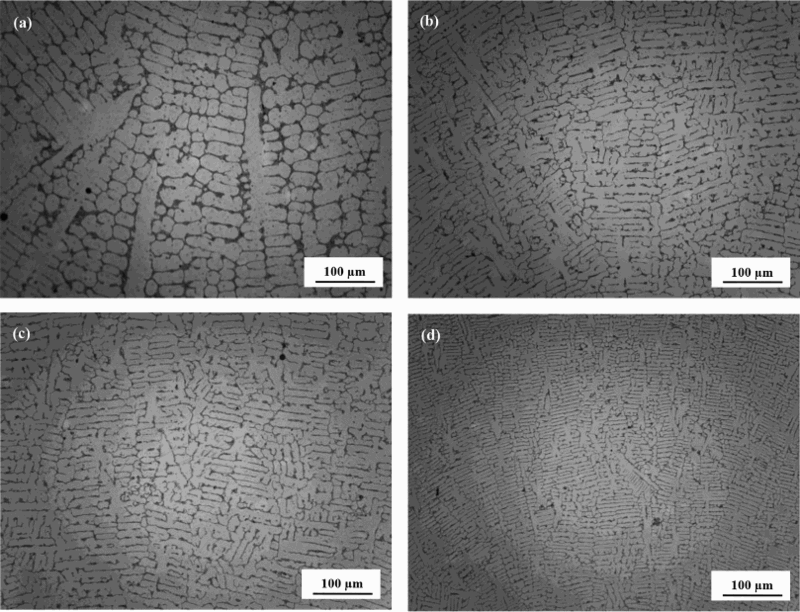
Microstructural evolution of each steel with Mg addition: a 0 ppm; b 5 ppm; c 11 ppm; d 15 ppm
The chemical compositions of the specimens listed in Table 1 are virtually the same except for Mg content, and the other experimental conditions are also the same. Thus, it seems reasonable to infer that the changes of the solidification microstructure were caused by the changes in the compositions and distribution of fine inclusions but not caused by the phase transformation of the solidification process.
First, the impact of inclusions on the microstructure is achieved by pinning effect. When the crystal plane goes through inclusions, the inclusion particles will produce a drag force to the crystal plane to prevent its extension; thereby, the nucleation and growth of grain growth are restricted and the grain is finer, and that is the pinning function of second phase particles. The finer the inclusion particle is and the more the unit volume number is, the stronger the pinning effect is and the finer the grain is. The even dispersion of the Mg containing oxides can be obtained much more easily than that of Al2O3 inclusions, which are clustered, so that the grain growth is restricted effectively by the pinning effect of the fine inclusions on the grain boundary.
Second, Turnbull and Vonnegut 26 proposed the heterogeneous nucleation theory that the disregistry between some low index plans of inclusion and metal phase can be very small. The interfacial energy required for the transformation is much lower when the disregistry is much smaller, so the nucleation of inclusion phase takes place much more easily and the grain size becomes smaller.
Conclusions
The typical morphology of the inclusions found in the steels was that of inclusions comprising Al2O3, MgO.Al2O3 and MgO. The phase of the inclusions changed sequentially from Al2O3 (no Mg) to MgO.Al2O3 + Al2O3 (5 ppm Mg), and then to MgO+MgO.Al2O3 (11 and 15 ppm Mg). The content of dissolved Mg in the steel is not enough high to form MgO phase. With the increase of Mg content in the steels, the average diameter of the inclusions decreased from 1·91 μm (no Mg) to 1·29 μm (15 ppm Mg), while the number density increased from 2·69 × 104 mm− 3 (no Mg) to ∼5·62 × 104 mm− 3 (15 ppm Mg). These changes in size and number density are thought to result from the fact that the fine Mg containing inclusions significantly affect the nucleation process of the composite inclusions in molten steel that the inclusions in steel are refined when the critical nucleation radius decreases and the nucleation rate increases and from the optimum wettability of Mg containing oxides with steel melt for their even dispersion in it. The final microstructure of the as cast steel was greatly refined with Mg addition, and the grain size decreased from 6·5 to 7·5, 7·8 and 8·5. It is thought that, first, the evenly dispersed fine Mg containing inclusions had a pinning effect on the microstructure. The finer the inclusion particle is and the more the unit volume number is, the stronger the pinning effect is and the finer the grain is. Second, they took place in the heterogeneous nucleation easily and resulted in the finer microstructure in Mg containing steels.
Footnotes
Acknowledgements
This work was financially supported by the National Natural Science Foundation of China (grant no. 51174050), the Fundamental Research Project of the Ministry of Education of China (grant No. N110402010) and the National High Technology Research and Development Program of China (grant No. 2012AA03A503).