







Abstract
The instrumented indentation test has been widely used for the non-destructive evaluation of the tensile properties of metal materials. The true stress–strain curve, yield strength and tensile strength can be obtained by this method. In the present study, a new modified indentation algorithm was used to determine the tensile properties of austenitic stainless steel 316L by taking into account its linear hardening characteristic. As received 316L was solution treated at four different temperatures in the range of 1223–1473K for 2 h followed by water quenching. The effect of solution treatment temperature on the tensile properties of 316L was investigated by the instrumented indentation test using the modified indentation algorithm. Results reveal that the new modified indentation algorithm can be used to estimate the tensile properties of austenitic stainless steel with linear hardening.
Keywords
Introduction
Determination of the mechanical properties of metal materials is essential for the assessment of structural integrity. Mechanical properties, such as true stress–strain relationship, yield strength and tensile strength, can be evaluated by conventional tensile tests. However, the standard specimens for the conventional tensile test must be extracted from structural materials, which is destructive and cannot be performed on in-service components. For this reason, the instrumented indentation test is applicable as a reliable and non-destructive technique to measure the tensile properties of metal materials. 1
The instrumented indentation test was originally proposed to evaluate hardness.2,3 It has been widely used in recent decades to characterise additional mechanical properties such as tensile properties using a ball indenter. In 1951, Tabor 4 proposed that the mean indentation pressure and relative indentation size could be respectively transformed into stress and strain in a uniaxial tensile test based on the experimental results. Following Tabor's discovery, Haggag 5 set up a stress–strain microprobe system. Recently, Ahn and Kwon 6 developed the instrumented indentation technique on the basis of a representative stress and strain method to find out the tensile properties of materials through analysing the indentation load–depth curve obtained using a spherical indenter. It has been extensively used to measure the tensile properties of power law hardening materials.7–10 Nevertheless, the tensile properties of linear hardening materials have rarely been assessed by the indentation technique, or they have been estimated without taking the difference between power law hardening materials and linear hardening materials into account in previously published studies. Lee et al. 11 subsequently proposed using a simple linear equation to represent the true stress–strain curve of linear hardening materials, and evaluated the tensile strength by an empirical equation.
In the present work, a modified indentation approach is developed to evaluate the tensile properties of 316L austenitic stainless steel by taking its linear hardening characteristic into account. 316L is widely used as a structural material because of its outstanding corrosion resistance and good formability. The effect of solution treatment temperatures on the tensile properties of 316L has been studied. Microstructural analysis and conventional tensile tests have also been performed for comparison.
Methodology
General indentation algorithm
The instrumented indentation test is a continuous indentation test involving multiple loading and partial unloading cycles using a ball indenter at an invariable location of the specimen surface. Tensile properties of materials are obtained by analysing the indentation load–depth curve. Some indentation parameters are defined by each cycle, as shown in Fig. 1. The depth hmax is the total displacement between material surface and indenter at the peak load Lmax, which includes elastic and plastic displacement. The slope S of the initial unloading curve is defined as the contact stiffness. The depth hi is calculated by extrapolating the initial unloading curve to zero load. Real contact depth of indentation at a certain load is calculated by taking both elastic deflection and pile-up or sink-in behaviour into account. According to the analysis of Sneddon
12
, Doerner and Nix
13
, and Oliver and Pharr,14,15 contact depth  without considering pile-up or sink-in phenomenon is expressed as


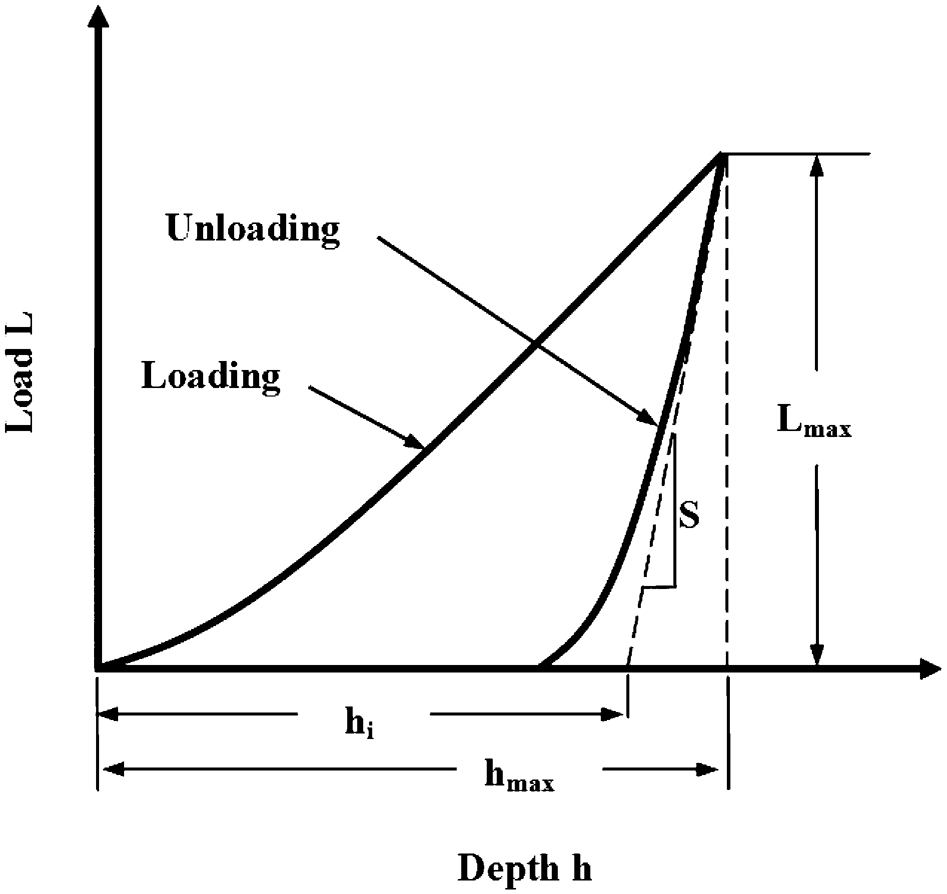
Schematic diagram of typical indentation load–depth curve
During the ball indentation, metal material deformations can be divided into three stages: elastic, elastic–plastic and fully plastic stages.
18
Since elastic and elastic–plastic stages generally take place at low indentation load, the representative stress is expressed as4,18

Based on the experimental results, a representative strain was proposed by Tabor
4

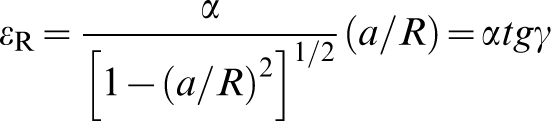
A series of representative stress–strain points can be obtained using the instrumented indentation test. These points can be fitted to the Hollomon equation
19
using the least squares method
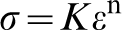


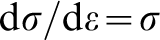
The general indentation algorithm is based on the hypothesis that the true stress–strain curves of most metal materials obey the Hollomon equation. However, it cannot be directly applied to linear hardening materials. There is an obvious difference between power law hardening materials and linear hardening materials in the shape of true strain–stress curves, such as pressure vessel steel 16MnR and austenitic stainless steel 304, shown in Fig. 2. It is found that the rate of strain hardening (dσ/dϵ) of 16MnR decreases continuously after the yield point and that of 304 is constant. This difference is mainly because linear hardening materials have lower values of stacking fault energy than power law hardening materials. 21 The representative strain proposed by Tabor is more suitable for describing linear hardening than that suggested by Lee et al. 11 and Kim et al. 22 In the present study, a new constitutive equation for linear hardening materials and the corresponding algorithm are presented.
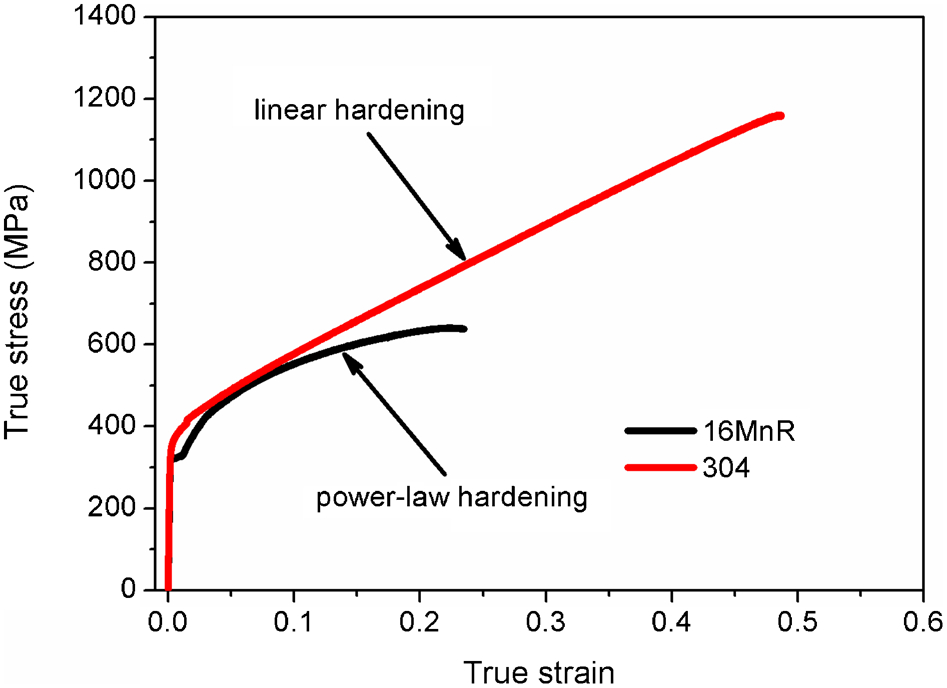
Comparison of true stress–strain curves obtained from tensile test for 16MnR and 304
A modified indentation algorithm
The Ludwigson
21
and Voce
23
equations are two well known constitutive equations used to represent the true stress–strain curves of materials with linear hardening behaviour. However, neither of them is suitable to be applied in the instrumented indentation test. The Ludwigson equation contains four parameters, making its determination difficult through limited representative stress–strain points obtained from the instrumented indentation test. The Voce equation has similar difficulties to that of Ludwigson. In order to express linear hardening behaviour via the instrumented indentation test, a new constitutive equation is proposed by the following equation
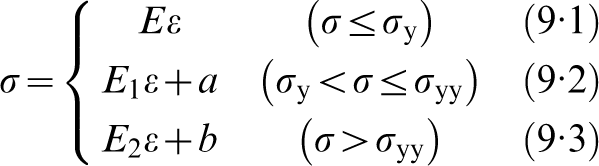
All of the parameters in equation (9) can be determined from the instrumented indentation test. A schematic plot of the model is given in Fig. 3. The true stress–strain curve is divided into three stages: elastic, transitional and plastic stages. Each stage is expressed by a simple linear relation. The stress–strain relation in the elastic stage starts from the origin, and its slope is the elastic modulus of the material. Equation (9·3) is easily obtained by fitting with a series of representative stress–strain points. The stress–strain point A can be determined by extrapolating equations (9·1) and (9·3). Since the transitional stage is not transient, stress at yield point B is generally lower than that at A. An approximate method, which makes distance of AB equal to distance of AC and expresses line segment BC by equation (9·2), is used to describe the stress–strain relation in the transitional stage. This means that the prediction of unknown yield point B is necessary to derive the stress–strain relation in transitional stage. In the present study, σy is obtained by Meyer's hardness correlation
24
through the instrumented indentation test

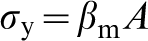
 for a ball indenter, D is the diameter of the ball indenter and m and A obtained from the regression analysis are the Meyer's exponent and material yield parameter respectively. βm is a material type constant irrespective of heat treatment. The value of βm is 0·191 for stainless steel. The yield strain is calculated by inputting σy in equation (9·1), then the coordinates of the yield point B on a two-dimensional graph can be determined.
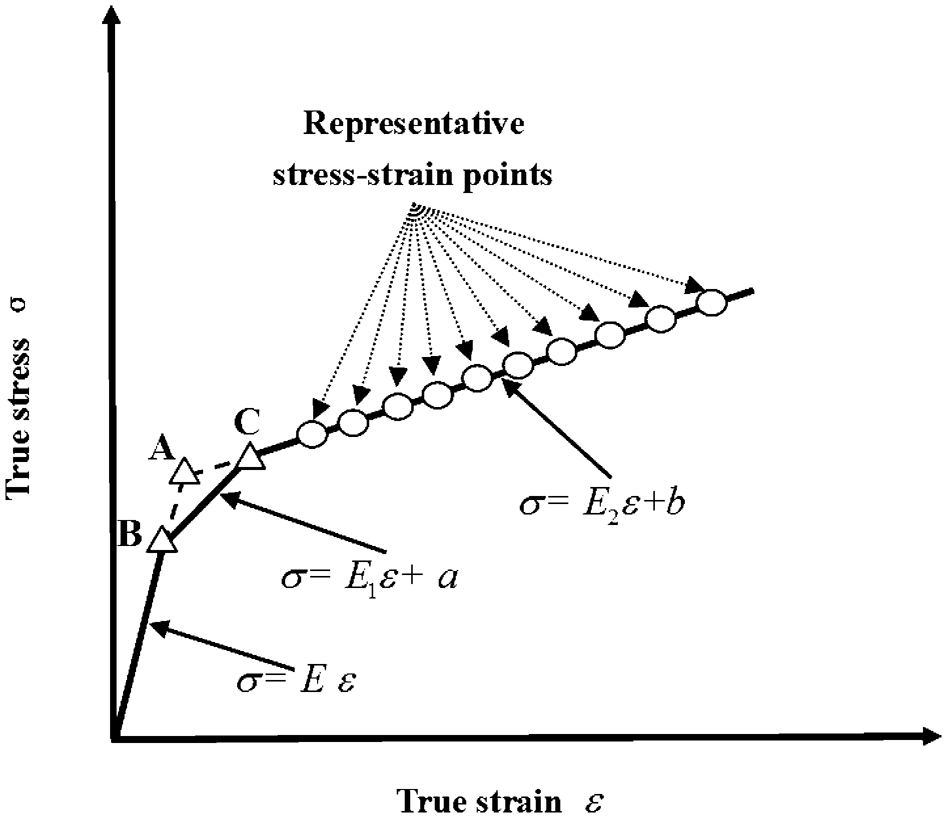
Schematic diagram of determining true stress–strain curve by modified indentation algorithm
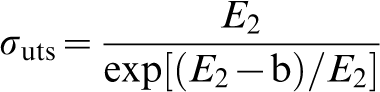
The tensile strength of material with power law hardening behaviour can be calculated using the concept of instability, in which the tensile strain is the same as the workhardening exponent. Nevertheless, it cannot be directly applied to linear hardening materials since the workhardening exponent is not suitable for describing linear hardening behaviour. In the present study, the tensile strength of linear hardening material was derived from the assumption of constancy of volume and the concept of instability in tension.
20
Necking takes place at maximum load during the tensile deformation. The condition of instability leading to necking can be defined as




Experimental
Experimental material
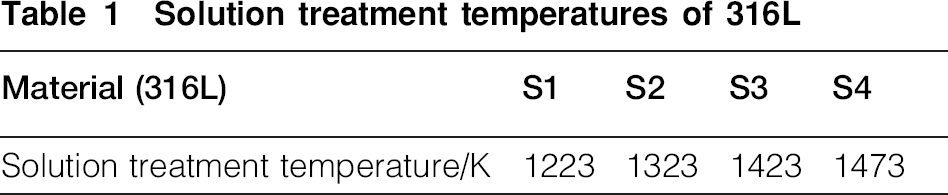
The material used in the present investigation is 316L austenitic stainless steel. As received 316L was solution annealed at different temperatures for 2 h followed by water quenching for altering grain size. The solution annealed samples are designated as ‘S’, as described in Table 1.
Solution treatment temperatures of 316L
Instrumented indentation test
The specimens with dimensions 25×25×5 mm were mechanically ground and polished using emery paper (2000 grit) and 1 μm alumina powder respectively. The ball indenter with 0·5 mm diameter was made of tungsten carbide. Instrumented indentation tests were performed according to ISO/TR29381 standard 25 using Instron 5965 system of 5 kN capacity. Specimens were restrained on the test bed by a clamp. During the indentation process, crosshead speed was controlled at 0·3 mm min−1, the maximum depth was 0·15 mm, and 15 unloadings were conducted by depth control. Three indentations per specimen were used to examine repeatability.
Microstructure and conventional tensile test
To evaluate the microstructure after solution treatment, cross-sections of specimens were mechanically ground and polished using standard metallographic techniques. The microstructure was revealed by electrolytic etching in a solution of 10 g oxalic acid in 100 mL distilled water. Optical microscopy was used to observe the microstructural changes.
To verify the tensile properties obtained through the instrumented indentation test, conventional tensile tests have been conducted at room temperature using Instron 8800 system of 100 kN capacity. The tests were conducted at crosshead speed of 1 mm min−1 for specimens with gauge length of 25 mm and diameter of 6 mm according to the ASTM E-8M standard. 26
Results and discussion
Derivation of true stress–strain curve
The indentation load–depth curves of 316L by solution treatment at four temperatures obtained from the instrumented indentation test are shown in Fig. 4. It can be seen that the maximum load decreases gradually as the solution treatment temperature increases from 1223 to 1473 K. The indentation loads of S1, S2, S3 and S4 at maximum indentation depth of 0·15 mm are 420·4, 396·2, 375·5 and 355·4 N respectively. The decrease of indentation load is due to softening of solution treatment, and the degree of softening is sharp with the increase in temperature.
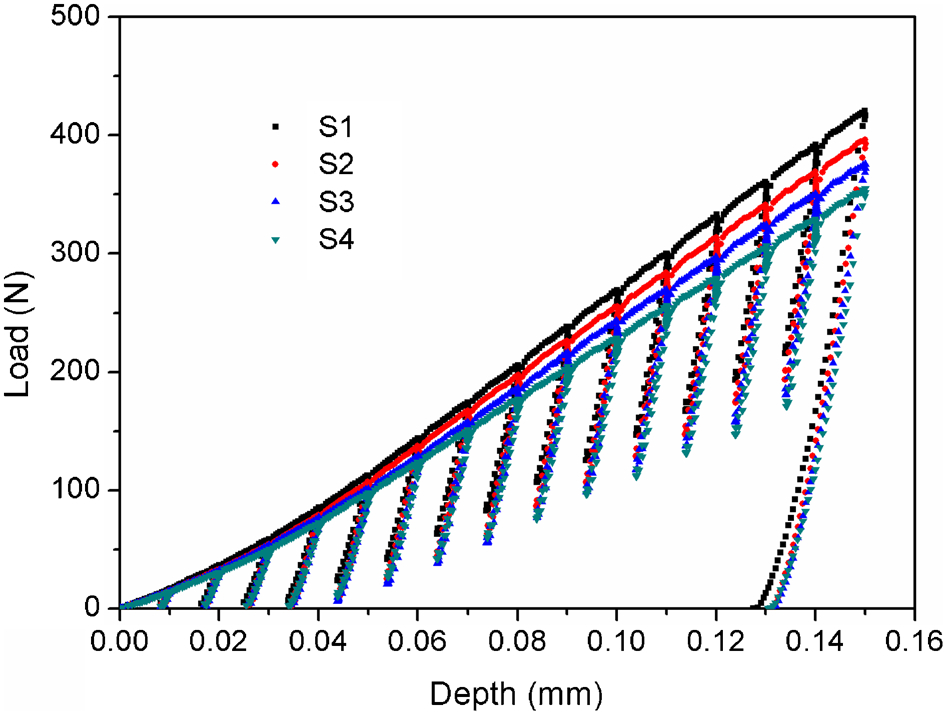
Comparison of indentation load–depth curves for S1 (1223 K), S2 (1323 K), S3 (1423 K) and S4 (1473 K)
The true stress–strain curves derived from indentation load–depth curves were compared with those measured by conventional tensile tests as shown in Fig. 5. The results from the indentation test using the modified constitutive equation show good agreement with those from conventional tensile tests for linear hardening material 316L. As shown in Fig. 5, the true stress–strain curves evaluated by tensile testing exhibit a good linear relation in the plastic stage, and its slope decreases with increasing solution treatment temperature. Although the representative stress–strain points are limited to low strain values <0·2, those points are sufficient to represent the linear hardening. It is also found that the linear relation can be used to represent the true stress–strain curves in the transitional stage. The modified constitutive equation is successful in the description of the linear hardening behaviour of 316 L.
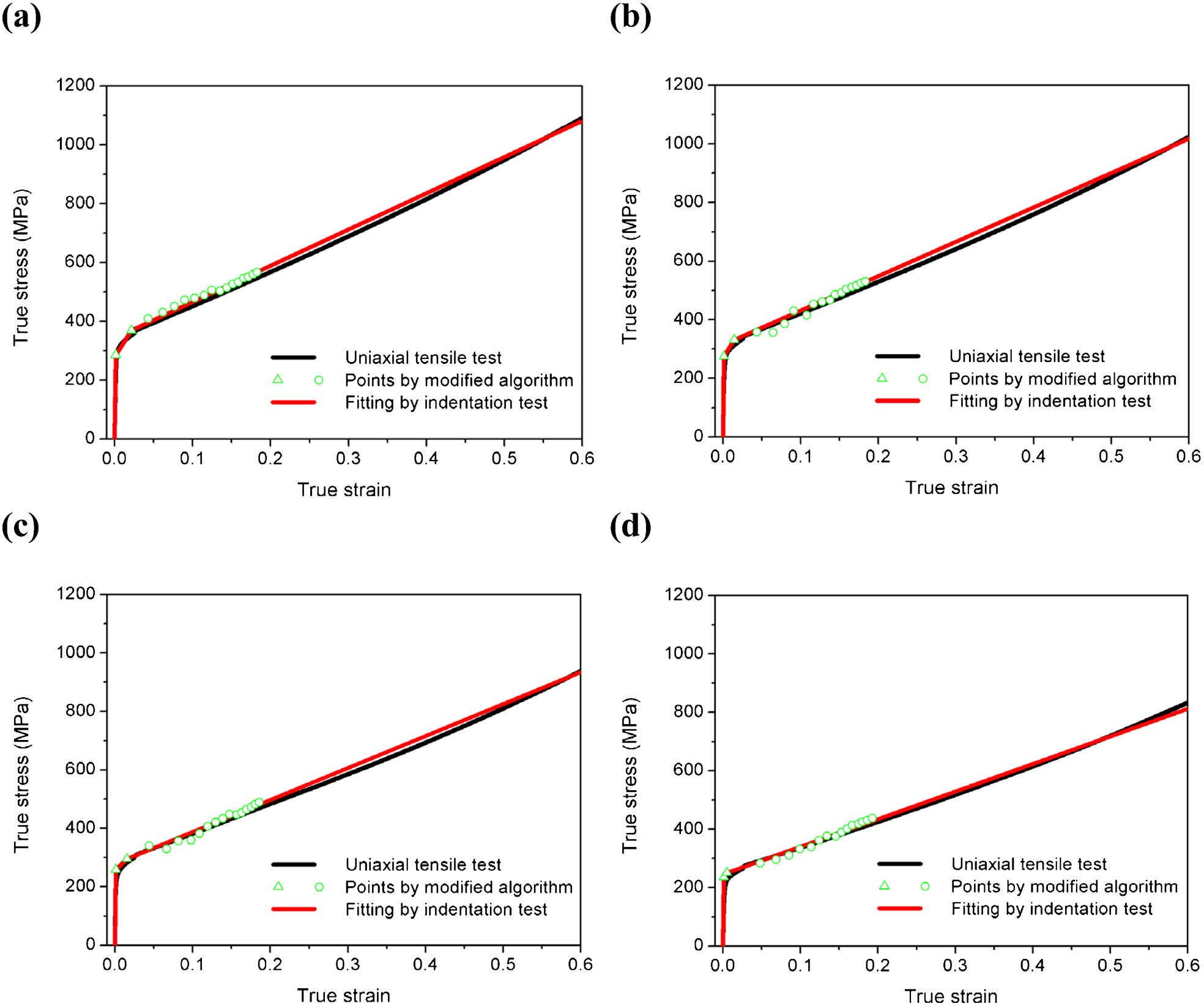
Comparison of true stress–strain curves obtained from indentation test and tensile test for a S1, b S2, c S3 and d S4
Determination of strength properties
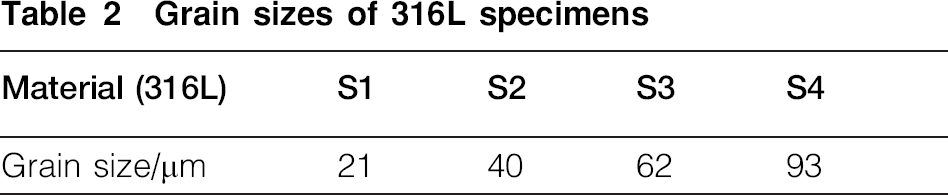
The strength properties of 316L were evaluated by the instrumented indentation test using the modified indentation algorithm as shown in Fig. 6. The yield and tensile strengths decrease with increasing solution treatment temperature. The tensile strength decreases faster than the yield strength. With temperature increasing from 1223 to 1473K, and the yield strength and tensile strength decrease by 50·7 and 118·5 MPa respectively. The microstructure of solution annealed samples was observed using optical microscope and shown in Fig. 7. As shown in Fig. 7, the grain size of austenite is increased with increasing temperature. The average grain size is measured by the linear intercept method and presented in Table 2. It is well known that grain refining is an effective method to improve the strength of metallic materials. In other words, the grain growth leads to decreasing strength. The strengths obtained from the indentation test show good agreement with the changes in microstructure. All of the yield and tensile strengths are validated by the conventional tensile results as shown in Fig. 6. It is found that the calculated strengths show small difference within 8 and 10 for yield strength and tensile strength respectively. The result also indicates that the modified indentation algorithm is promising for determining the strength properties of linear hardening material 316L.
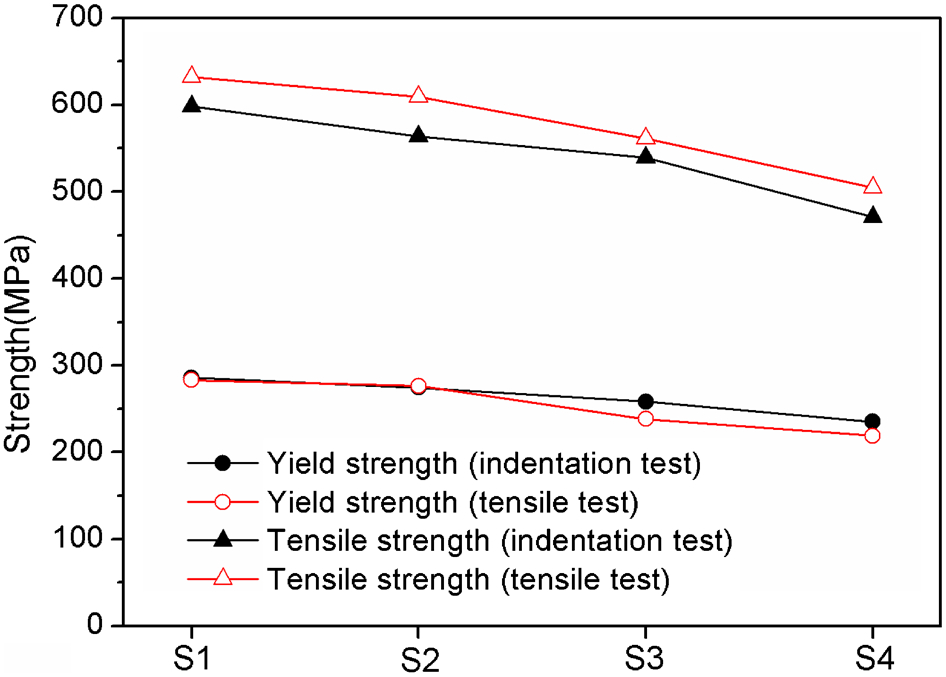
Variation of yield strength and tensile strength obtained from indentation test and tensile test for S1 (1223 K), S2 (1323 K), S3 (1423 K) and S4 (1473 K)
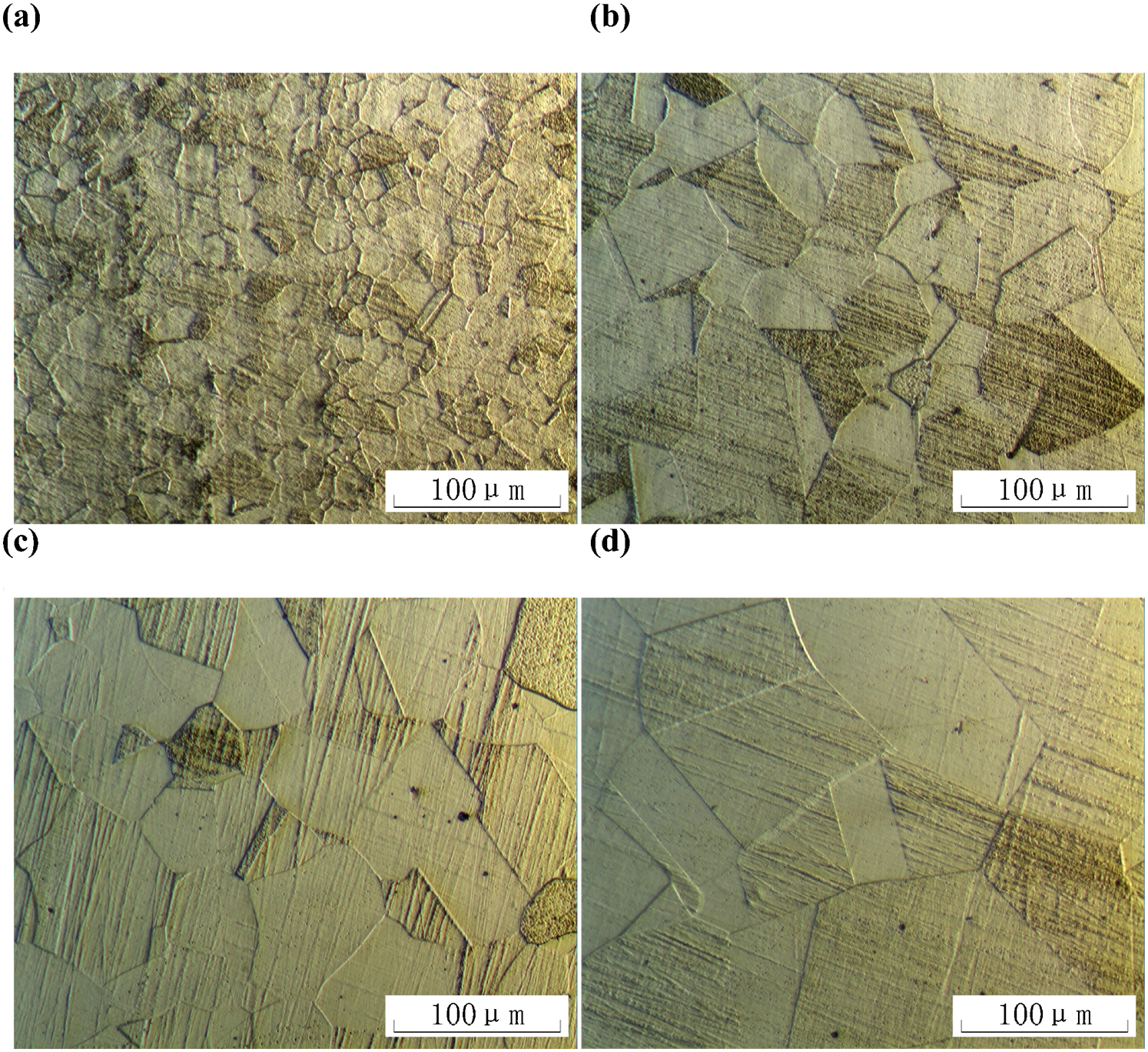
Optical micrograph of a S1, b S2, c S3 and d S4
Grain sizes of 316L specimens
Conclusions
A modified indentation algorithm is proposed to estimate the tensile properties of austenitic stainless steel with linear hardening. For austenitic stainless steel, the true stress–strain curves exhibit approximate constant hardening characteristic, which is clearly different from those of power law hardening materials. A piecewise linear function is used to describe the linear hardening behaviour. In addition, a new equation for calculating tensile strength is proposed based on the assumption of constancy of volume and the concept of instability in tension. The tensile properties of 316L with four solution treatment temperatures are derived from the modified indentation algorithm. It shows good agreement with those obtained from conventional tensile tests. The yield strengths and tensile strengths have small difference within 8 and 10 respectively. Results show that the modified indentation algorithm is a promising technique for quantitative measuring of the tensile properties of austenitic stainless steel.
Footnotes
Acknowledgement
The authors are grateful for the technical consultation from Instron (Shanghai) Limited.